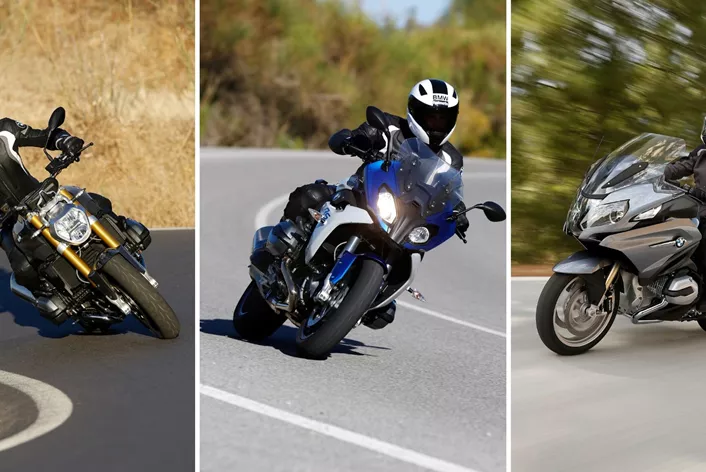
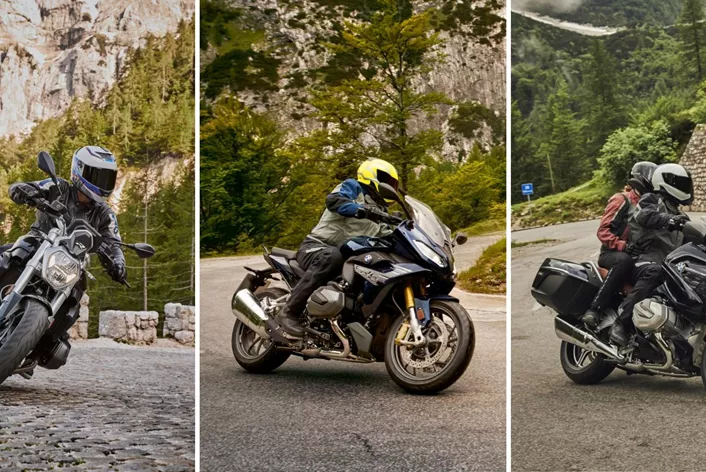
The BMW R 1200 R, R 1200 RS and R 1200 RT do not form a model family developed entirely in parallel in the classic sense. Instead, they interpret the big BMW boxer for three different purposes: the R 1200 R is the unfaired roadster for everyday riding, country roads and classic motorcycle aesthetics. The R 1200 RS combines sporty riding with touring qualities, while the R 1200 RT, as a fully faired tourer, is designed for maximum long-distance comfort. Technically, the models share numerous basic components, but their development was staggered over time. While the R 1200 RT appeared as early as 2005 and the R 1200 R followed in 2006, the storied RS badge only returned to the boxer line-up for the 2015 model year.

Buyer's guide: buying a used BMW R 1200 R, RS & RT
Which BMW R 1200 suits you and what to look out for
BMW R 1200 R, RS or RT? All three share proven boxer technology, but differ significantly in comfort, handling and features. Our used buyer's guide shows which version suits you, where the typical weak spots lie and what you should look out for when buying.

Der Horvath
published on 27/09/2026
6,630 Views
Three characters, one technical base
2004/2005: The R 1200 RT kicks off the new boxer generation
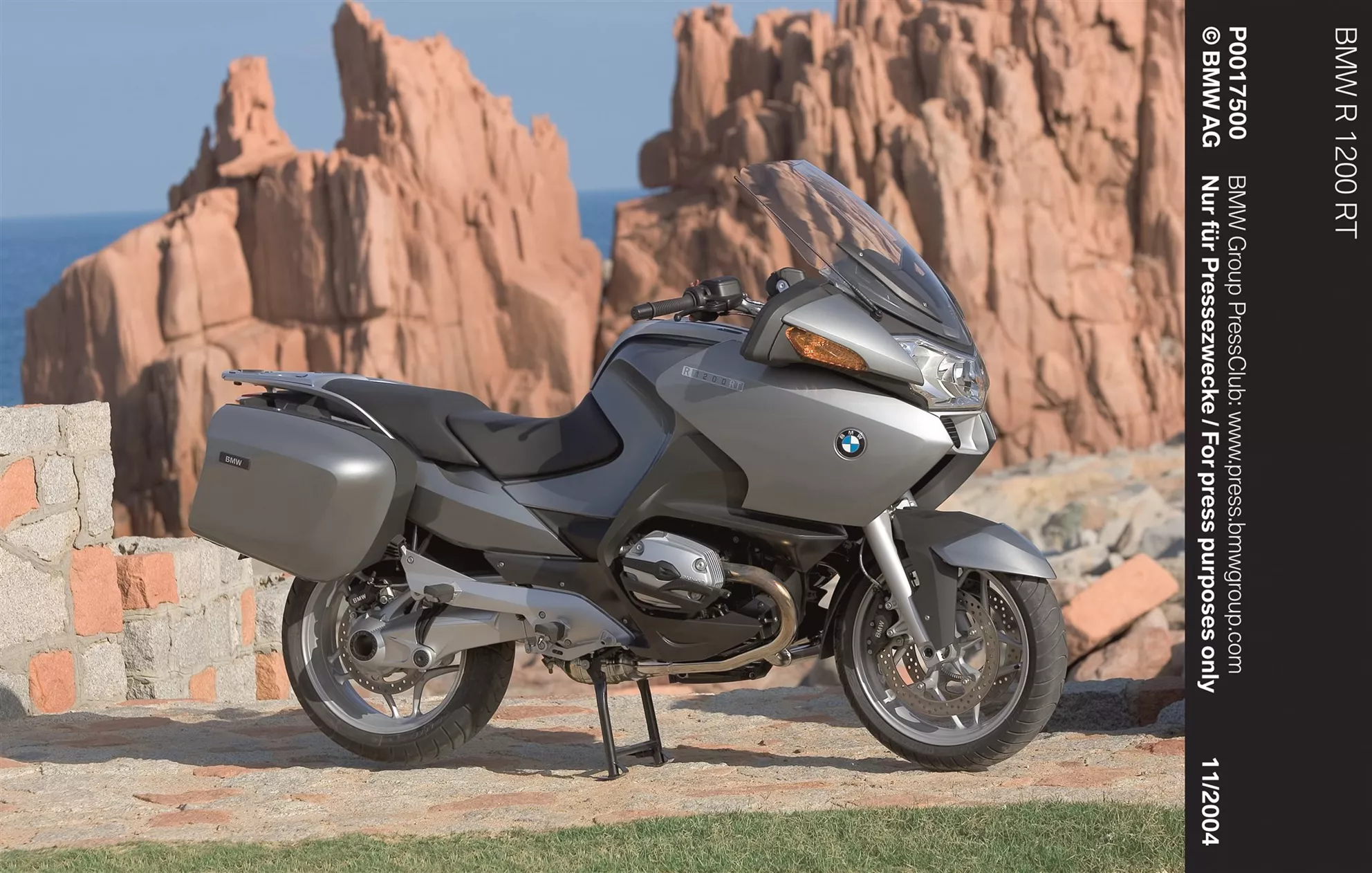
The BMW R 1200 RT led the way. It was unveiled at the Bologna Motor Show at the end of 2004 and arrived on the European market in early 2005 as the successor to the R 1150 RT. Its technical base came from the R 1200 GS introduced in 2004 and marked a fundamental generational change within the boxer range. Compared to the R 1150 RT, the new bike was meant to be lighter, more powerful and more engaging to ride, without giving up the traditional RT virtues – excellent wind protection, outstanding pillion comfort and effortless touring ability.
The air/oil-cooled two-cylinder boxer engine displaced 1,170 cc and initially produced 110 hp. Power was transmitted via a six-speed gearbox and BMW's traditional shaft drive. Up front worked the Telelever, at the rear the further developed Paralever single-sided swingarm. Despite its extensive full fairing and standard panniers, the R 1200 RT turned out lighter than its predecessor. At the same time, more and more electronics found their way on board: depending on model year and spec, options included Integral ABS, electronically adjustable suspension, cruise control, on-board computer, heated seats, heated grips, audio system and an electrically adjustable windscreen.
In the early model years, the technically elaborate Integral ABS with brake servo was a defining feature. As part of a model update, BMW later switched to a less complex Integral ABS without an electric brake servo. For used buyers this distinction matters, because the different brake system generations differ significantly in terms of lever feel, maintenance effort and potential repair costs.
2006: The first BMW R 1200 R replaces the R 1150 R

A year after the RT, BMW added the R 1200 R to the range. Presented in 2006, the roadster succeeded the successful R 1150 R and also adopted the air/oil-cooled 1,170 cc boxer. With its upright seating position, unfaired build and classic round headlight, it deliberately stayed closer to the traditional image of a motorcycle than other BMW models of the time. In its first version the engine produced a nominal 109 hp and was paired with a comparatively low vehicle weight. As a result, the R 1200 R felt considerably livelier and more nimble than the previous R 1150 R. On the chassis side, BMW also relied on Telelever and Paralever for the roadster. Decoupling suspension and braking forces kept dive under braking to a minimum and gave the bike the very stable riding performance typical of this BMW generation.
Right from the start, the R 1200 R could be extensively customised with optional extras. ABS, tyre pressure monitoring, on-board computer, heated grips, various seat heights, panniers, windscreens and later the electronically adjustable ESA suspension could turn the purist-looking roadster into a fully fledged touring partner if desired. Equipment packages such as "Touring Special" underlined this versatility.
The missing RS: Between the R 1150 RS and the R 1200 ST
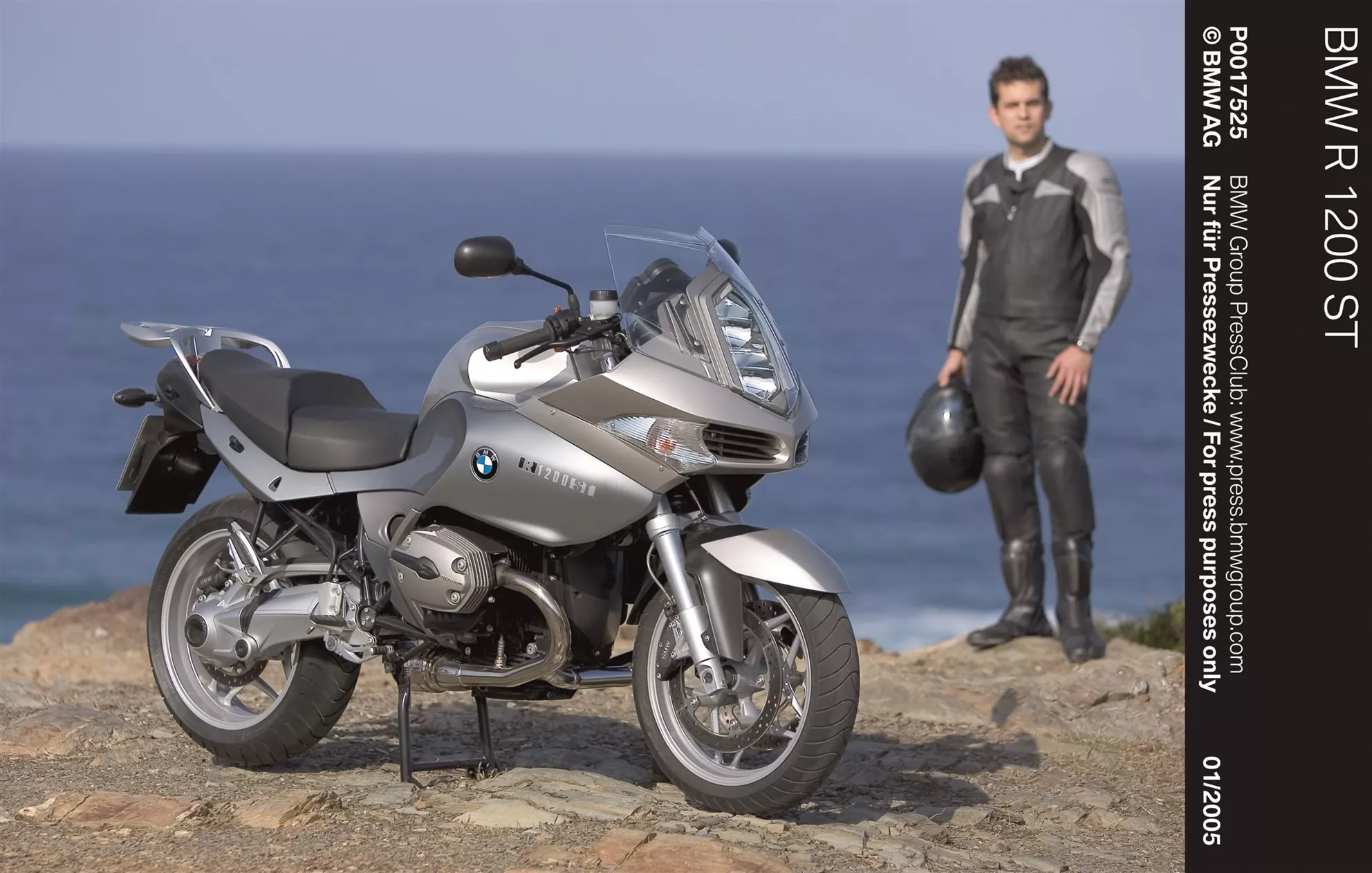
At the start of the new boxer generation, there was initially no direct R 1200 RS. From 2005, the role of the sport tourer was taken over by the BMW R 1200 ST. It was positioned as the successor to the R 1150 RS and combined the new 1,170 cc boxer with a frame-mounted half fairing, sportier ergonomics and Telelever suspension. However, the R 1200 ST remained far less successful than the roadster, GS and RT. Above all, its idiosyncratic front-end design divided opinion. After it was discontinued, the classic RS slot in BMW's line-up remained vacant for several years.
2010/2011: The DOHC boxer modernises the R and RT

The next important development step came with the DOHC boxer engine derived from the HP2 Sport and the revised R 1200 GS. In this still air/oil-cooled engine, each cylinder had two overhead camshafts. The new design improved revviness, throttle response and pulling power. The R 1200 RT received the DOHC engine for the 2010 season. Peak output remained at 110 hp, but maximum torque rose to 120 Nm. At the same time, BMW revised the fairing, cockpit, wind protection and controls. The basic design with Telelever, Paralever and the big touring layout remained unchanged.
The R 1200 R followed with the changeover for the 2011 model year. Here too the new boxer produced 110 hp, while maximum torque rose to 119 Nm. In parallel, the R 1200 R Classic appeared. Technically it was largely identical, but stood out from the regular R 1200 R thanks to spoked wheels, classic paintwork and further retro details.
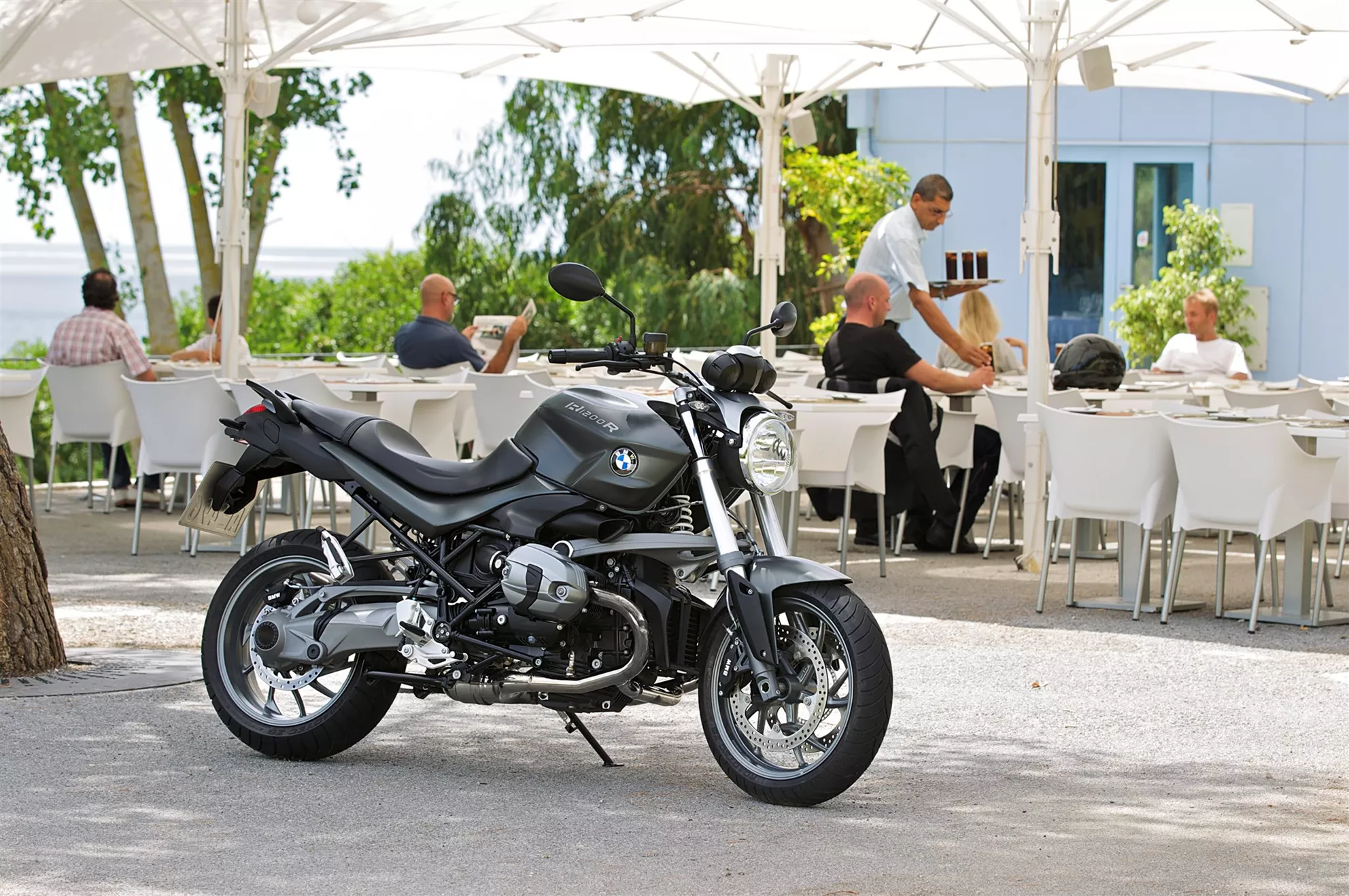
The DOHC versions are therefore regarded as the final evolution of the classic air/oil-cooled 1200 boxer. They combine the familiar Telelever chassis architecture with a noticeably livelier engine and more modern features. Special models such as the sportily styled R 1200 R DarkWhite added extra accents towards the end of the production run.
2014: The R 1200 RT switches to the water-cooled boxer
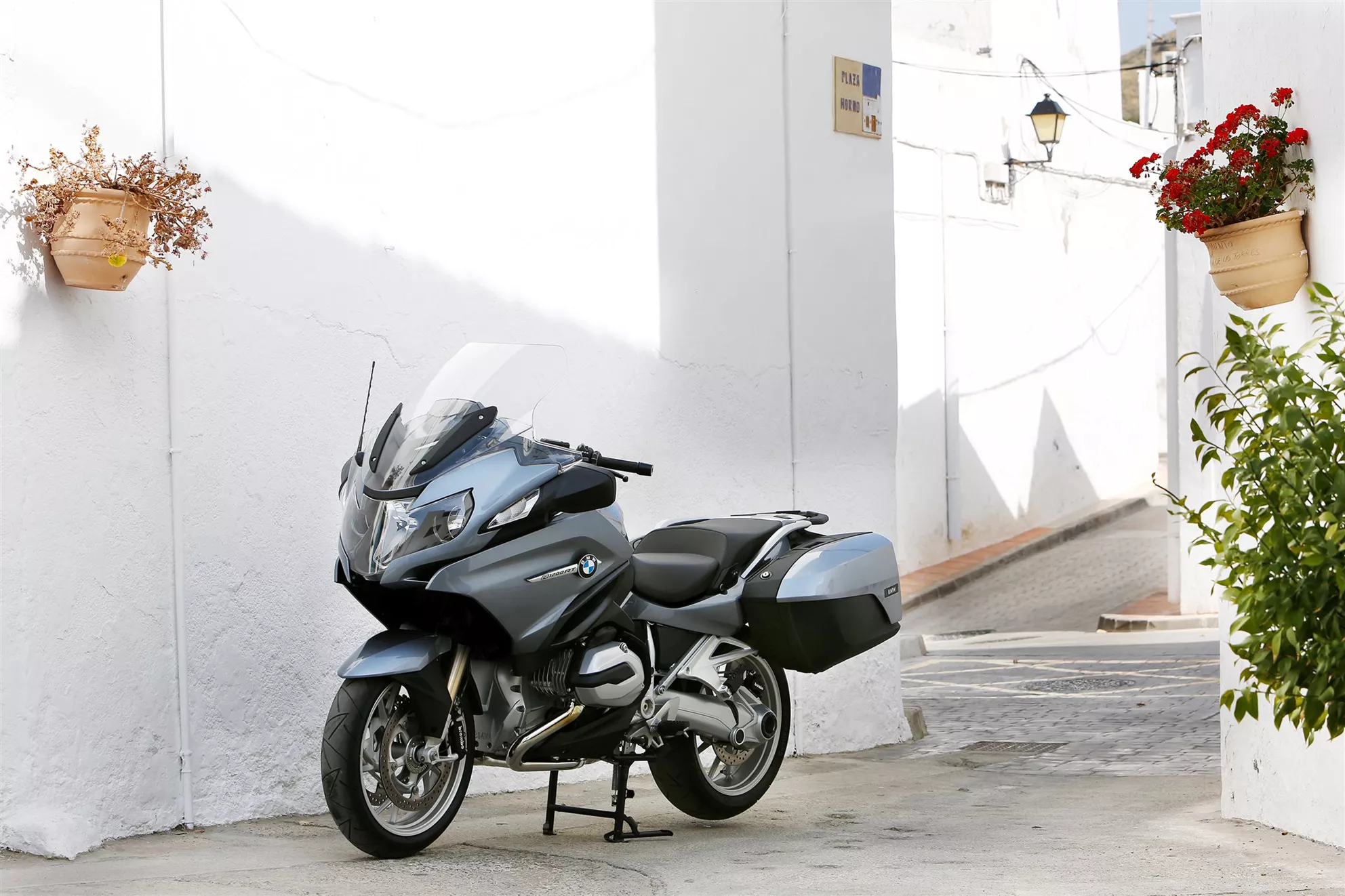
With the 2014 model year, the R 1200 RT made the next big generational leap. It received the partially liquid-cooled boxer already familiar from the R 1200 GS. In this design, the most thermally stressed areas of the cylinder heads were specifically supplied with coolant. At the same time, the clutch and gearbox moved into a common engine housing; the clutch was now a multi-plate wet clutch running in an oil bath.
In the RT, the new engine produced 125 hp and a maximum of 125 Nm of torque. A larger flywheel mass than on the GS was intended to deliver smoother running and particularly silky power delivery. The chassis architecture with Telelever at the front and Paralever at the rear was retained, but extensively developed further. The semi-active Dynamic ESA suspension was available as an option. On top of that came riding modes, hill start assist, a shift assistant for clutchless up- and downshifts, as well as extensive infotainment and comfort features.
Visually, the new RT took more cues from BMW's big six-cylinder tourers. The cockpit became more modern, the fairing was aerodynamically revised and the integration of panniers, audio system and navigation device was further improved. With that, the RT finally transformed from a classic boxer tourer into a highly complex luxury touring bike.
The first model year of this generation is known for the recall concerning the rear shock absorber. In 2014, BMW temporarily issued a stop-riding order for affected vehicles before the shocks were replaced. For used bikes on offer today, it should be possible to verify from the vehicle's history that this measure was carried out.
2015: New R 1200 R and the return of the R 1200 RS
- How much does a BMW R 1200 RT cost?
- Here you will find an overview of the price level of new and used motorbikes!
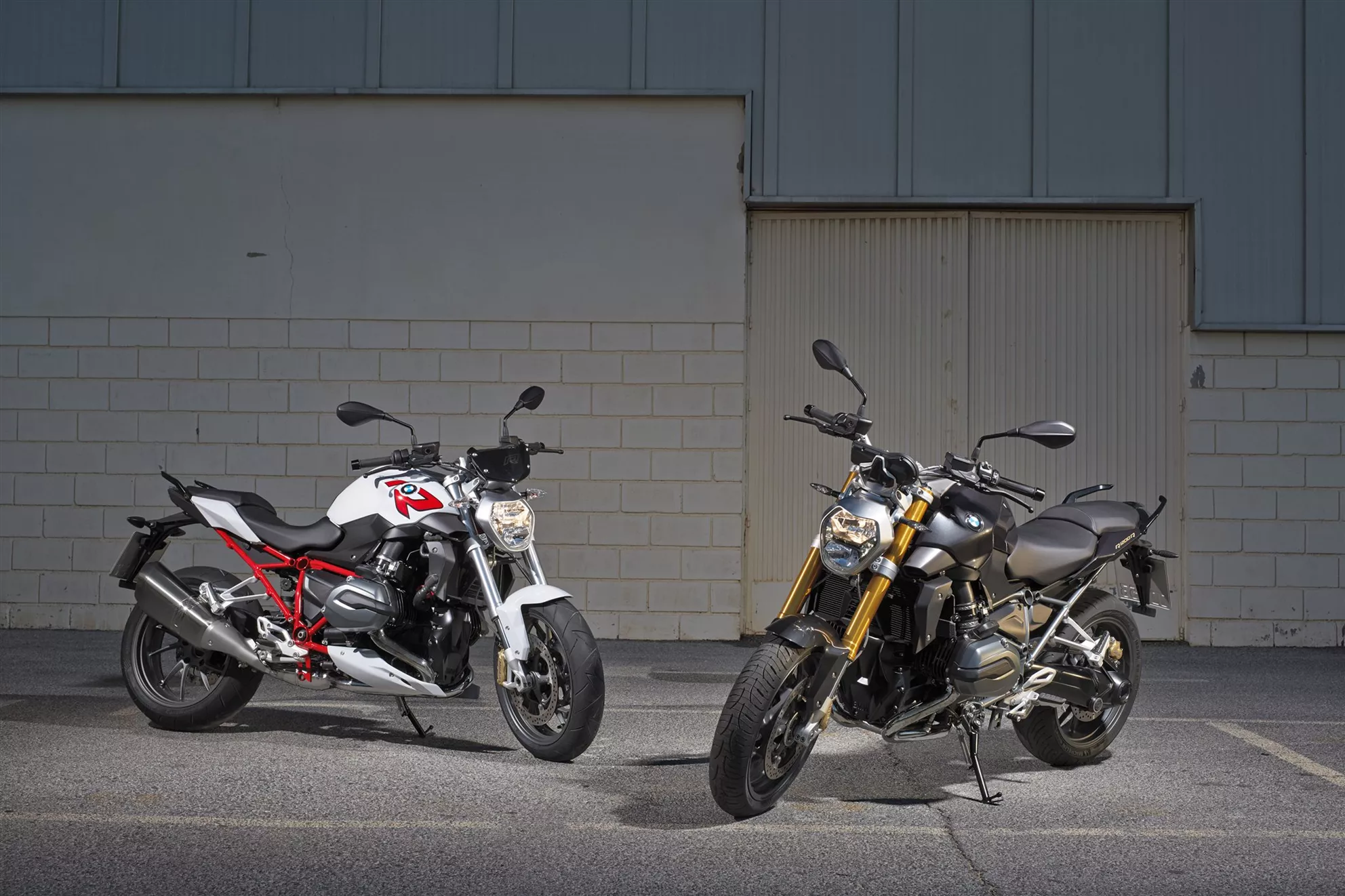
For the 2015 model year, BMW presented the completely redeveloped, water-cooled R 1200 R. With it, the roadster's character changed more than with any previous generational change. The engine was essentially the same as the one in the R 1200 GS and R 1200 RT and likewise produced 125 hp and 125 Nm.
Particularly significant was the farewell to the Telelever. Instead, the R 1200 R received a conventional upside-down fork. This was intended to make front-end feel more direct and the handling sportier. At the rear, Paralever and shaft drive remained. The new chassis layout, more compact ergonomics and more modern design moved the R much closer to sporty naked bikes without sacrificing its everyday usability.
At the same time, the R 1200 RS made its comeback. It used the engine, frame concept and key chassis components of the R 1200 R, but added a frame-mounted half fairing, a height-adjustable screen, a slightly forward-leaning seating position and aerodynamics tuned more for high speeds. The RS also relied on an upside-down fork up front rather than the Telelever.
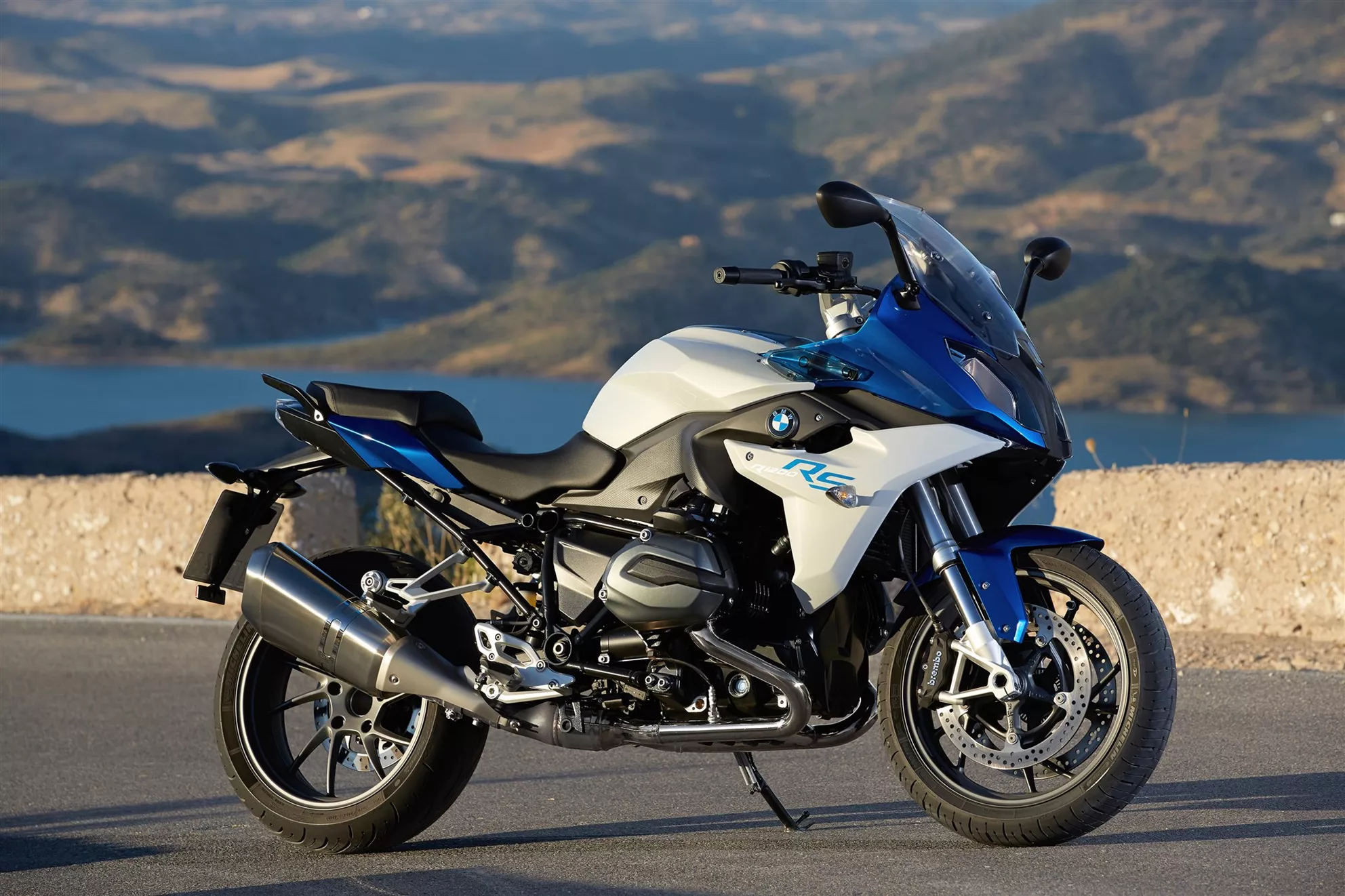
For the first time, the R, RS and RT were thus available simultaneously with the same basic generation of the 1,170 cc boxer. Nevertheless, the differences remained clear: the R was the purist roadster, the RS the sporty all-rounder with wind protection, and the RT the comfort-oriented full tourer with Telelever and extensive touring equipment.
Electronics and features of the last R 1200 generation
In the liquid-cooled generation, features played an even bigger role than before. ABS was a given, while systems such as Dynamic ESA, various riding modes, dynamic traction control, Shift Assistant Pro, cruise control, Keyless Ride, tyre pressure monitoring and navigation preparation were added depending on model, model year and equipment package.
For the 2017 model year, the liquid-cooled boxers were adapted to the Euro 4 emissions standard. To this end, BMW made technical changes to the drivetrain and exhaust system. At the same time, some standard and optional features changed. For buyers, 2017 therefore marks a recognisable dividing line within the last R 1200 model years.
2018/2019: The end of the R 1200 era
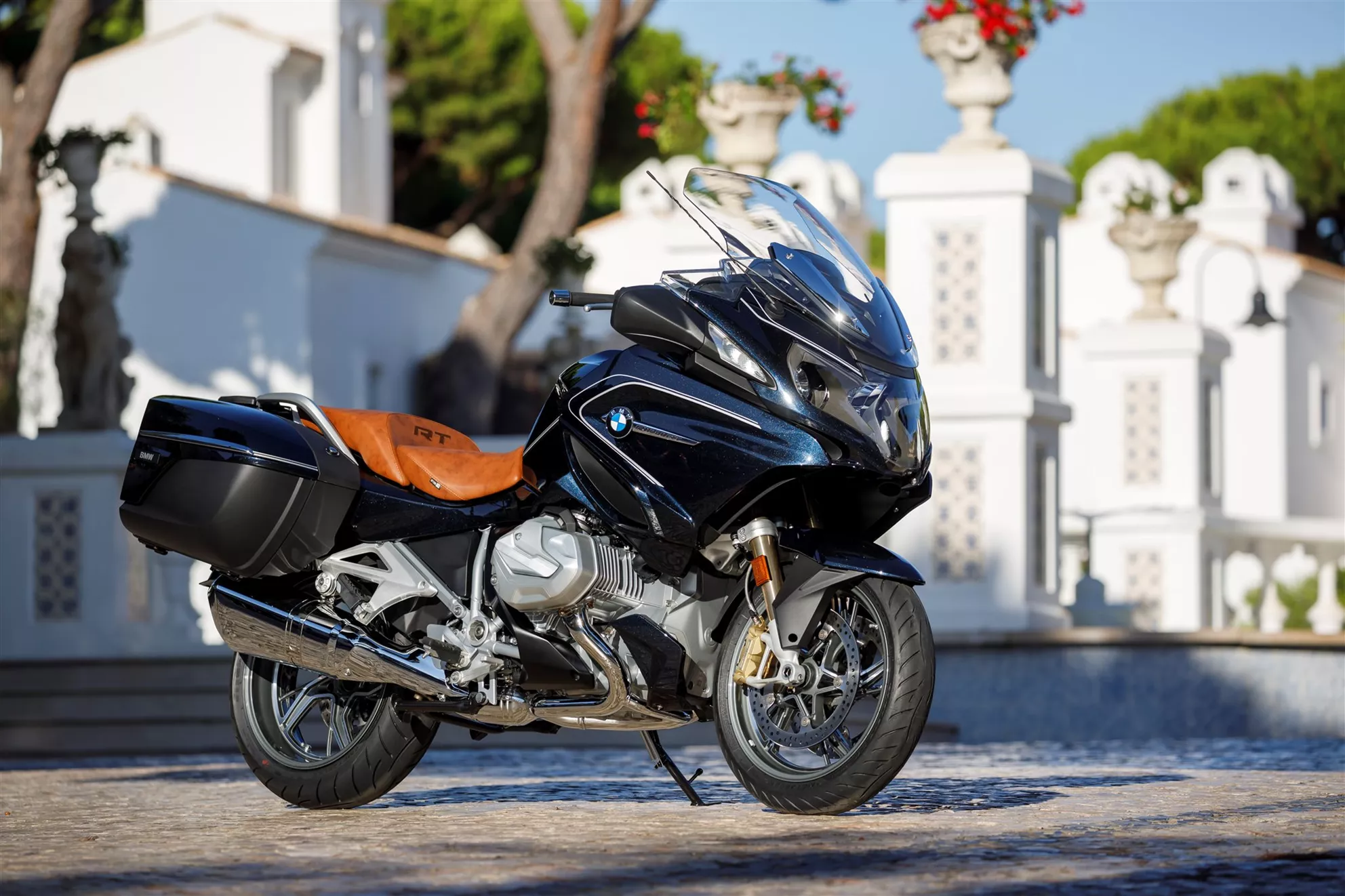
The era of the R 1200 models ended with the introduction of the larger ShiftCam boxer. In September 2018, BMW first presented the R 1250 GS and the R 1250 RT. The R 1250 R and R 1250 RS followed shortly afterwards. The new engine displaced 1,254 cc, featured variable valve timing and produced 136 hp. Depending on model and market, the changeover took place around the transition from model year 2018 to 2019. The R 1200 RT was replaced by the R 1250 RT, the R 1200 R by the R 1250 R and the R 1200 RS by the R 1250 RS.
Buying a used BMW R 1200 model
The R 1200 models can essentially be divided into three technical eras. The early air/oil-cooled models stand for comparatively classic boxer technology, Telelever chassis and already extensive, but still manageable electronics. The DOHC models from 2010 and 2011 respectively represent the most mature and most powerful stage of this design. The water-cooled models from 2014 and 2015 respectively offer significantly more power, more modern assistance systems and more dynamic handling, but are technically more complex.
You can find all listings here: Buy used BMW R 1200 models.
To do your used bike a favour, we recommend regular oil changes. 1000PS relies on lubricants from Motorex, and here you can find the right oil for your bike.
Expert assessment from Gady BMW Motorrad
For this used buyer's guide, we spoke to the BMW Motorrad experts at Gady in Baden. From a workshop and dealer perspective, two things stand out with the R 1200 R, R 1200 RS and R 1200 RT: within the boxer range, BMW consistently relied on shared parts, but specifically adapted gearing and chassis geometry to each bike's intended purpose. Accordingly, many technical strengths and weaknesses are similar. The differences lie more in character, features and individual model-specific details.
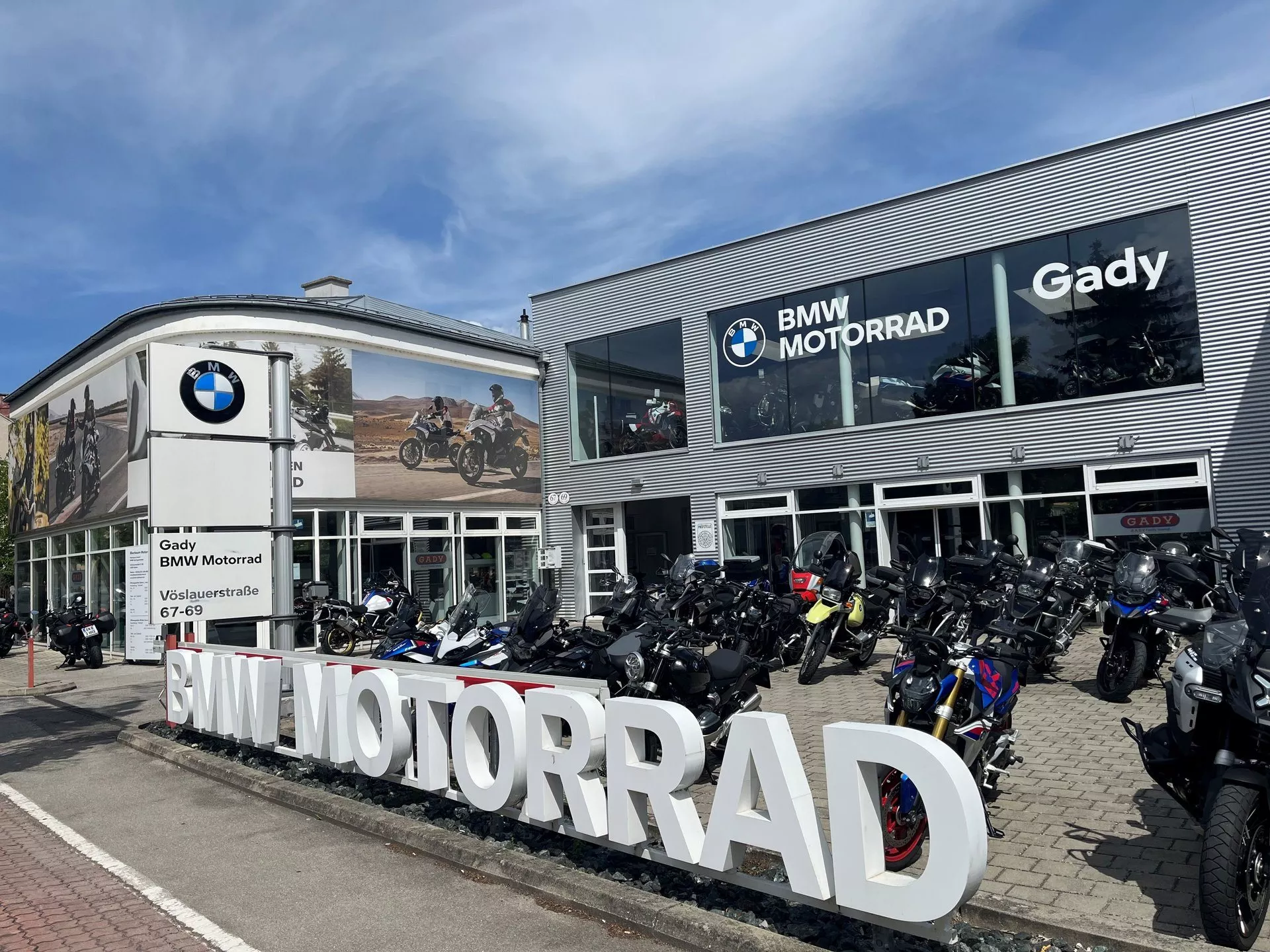
Gady BMW Motorrad in Baden near Vienna.
Lots of shared parts under different fairings
According to the experts, the models are technically more closely related than their different appearances might suggest. Engine ancillaries, switches, the multi-controller wheel, combination switches, handlebar brake controls and numerous other components were used across models. In principle, this makes spare parts supply easier and means that many known issues don't affect just a single model.
According to Gady, the electrical routing also follows a clear BMW pattern. The main or CAN bus wiring harness runs neatly along the frame and over the engine, largely regardless of whether the bike is unfaired or fully faired. On the R 1200 RT, a considerable part of the fairing first has to come off for any work, but underneath there is no sloppily routed wiring. Under its plastic dress, the fully faired RT is basically just as cleanly built as its more naked sister models. From a used buyer's point of view, this shared-parts strategy has an advantage: many engine ancillary components are identical across several models. Spare parts are therefore not necessarily limited to a single model, and pricing for shared components doesn't differ significantly either.
The RS and RT are designed more for straight-line stability
The R 1200 RS and R 1200 RT differ from the more agile variants of the boxer family in terms of their gearing and chassis geometry, among other things. According to the Gady experts, the gearbox and final drive are geared taller. This suits the focus of both models, which are designed more for brisk, relaxed touring and stable straight-line running.
The technical kinship nevertheless remains close. Reliability, maintenance issues and many potential weak spots largely correspond to those of other BMW models with the same boxer engine generation. Anyone who has already gained experience with a contemporary R 1200 GS or R 1200 R will therefore come across many familiar components and solutions on the RS and RT.
Known boxer issues also affect the R, RS and RT
According to workshop experience, the air/oil-cooled R 1200 models basically suffer from the same technical issues as other BMW boxers of these model years. As an example, the experts cite leaks in the area of the crankshaft or gearbox input shaft. Since the engines and key components are identical or closely related, these are not typical traits unique to the R, RS or RT. The experts could not name a clearly defined weak spot affecting only the RS. On the R 1200 R, too, the crucial inspection points essentially correspond to those of the other boxer models of the same generation.
The R 1200 RT's top case can become a problem
A model-specific quirk of the water-cooled R 1200 RT concerns the luggage, especially the top case. The problem is not necessarily durability in normal use, but removing and recoding the lock cylinder. Anyone who buys a used top case and wants to switch its lock to their own ignition key can face a serious problem. On other BMW cases, the lock cylinder can usually be removed and recoded relatively easily. On the RT top case in question, however, Gady says this step is extremely difficult and sometimes hardly possible without causing damage.
Removal may require drilling. If the lock cylinder spins along in the process or the internal plastic part gets damaged, the case can become unusable. From a dealer's perspective, the experts put the chance of removing it without damage at around 50 percent. According to their rough estimate, a complete new case costs around 500 euros, while the relevant lower section alone is likely to be around 350 to 390 euros.
For used buyers this means: a supposedly cheap top case without the matching key can end up being expensive. Ideally, clarify before buying whether the existing lock cylinder can be removed and coded to the ignition key. That's why a top case that already matches the ignition key is particularly valuable. When buying, check that all locks work with the same key and that the lid, locking mechanism and mounting mechanism function flawlessly.
- How much does a BMW R 1200 R cost?
- Here you will find an overview of the price level of new and used motorbikes!
The RT's phone compartment comes from a different smartphone era
A less serious but annoying everyday gripe concerns the storage compartment in the R 1200 RT's cockpit. Among other things, it was intended to hold a mobile phone. According to the Gady experts, however, modern smartphones often no longer fit inside. Technically this isn't a defect, but you should still try it out at the viewing. If you want to stow your phone protected in the cockpit while riding, you can't rely on the existing compartment being big enough.
The radio can't simply be retrofitted
When it comes to the R 1200 RT's audio equipment, a distinction must be made between bikes with radio preparation and those with a factory-fitted radio. Simple retrofitting isn't provided for on every bike. Prospective buyers who care about the audio system should therefore check carefully which preparation is actually present. A bike with a seemingly suitable cockpit doesn't automatically have all the cables, controls and components required for full radio operation. Retrofitting can turn out to be considerably more involved than initially assumed.
BMW Navigator: different generations and sizes
On the R 1200 RT, the navigation device is integrated into the cockpit. There are different generations and mounting sizes. Up to the BMW Navigator IV, a different cockpit cut-out was used than from the Navigator V onwards. Switching requires a different plastic part in the cockpit. According to the experts, this conversion is basically manageable; the required plastic part costs roughly 40 euros.
Due to the integration, however, the choice of device is limited. You can't automatically fit just any Garmin navigation device into the existing cut-out. Even though the older BMW Navigators are technically based on Garmin devices and Garmin software, they differ in housing shape, rear side and contacts. Individual Garmin devices can basically fit the external sat-nav mounts of other BMW models. But caution is advised: if a device has to be forced into the mount with a lot of pressure, the contact pins on the back can be damaged over time.
Navigator VI: ghosting due to moisture
According to workshop experience, the BMW Navigator VI has a clearly identifiable weak spot. BMW had the device, which essentially comes from Garmin, fitted with an additional polarising layer to improve readability in sunlight. However, moisture or condensation can form between the touchscreen and the polarising layer.
The result is the well-known so-called ghosting: the device seemingly registers inputs on its own, jumps through menus or operates functions even though the rider isn't touching the screen. According to Gady, this specific problem affects the Navigator VI, but not the earlier Navigator generations. A lasting fix can be a specialised repair in which the display is professionally sealed. For this, the experts send affected devices to a specialist company in Germany. After such an overhaul, the Navigator VI can work reliably again.
Limited map support for older devices
Another issue is the long-term support of the old Garmin-based BMW Navigators. European map data has grown considerably over the years, while the devices' internal memory has stayed the same. In some cases, memory could be expanded with an additional SD card. According to the experts, Garmin no longer supports this solution in the same way. If the internal memory isn't enough for the entire European map data, the user may have to select individual regions.
1000PS tyre recommendation:
The Metzeler Roadtec 02 is a good tyre recommendation for the BMW R 1200 R, R 1200 RS and R 1200 RT. This modern sport touring tyre suits the model family's broad range of use well: on relaxed tours, the long tread grooves are designed to support fast warm-up, good water dispersion and high comfort, while the adaptive tread design stabilises when riding sportily, enabling more precise steering feel. The rear tyre combines a mileage-oriented compound in the centre with softer shoulders for extra cornering grip. Full-silica compounds front and rear are also designed to provide reliable grip on wet roads.
YUASA motorcycle batteries - the 1000PS recommendation for your used bike:
Especially with used bikes, it pays to go for a high-quality battery: with its AGM and gel batteries, YUASA supplies maintenance-free, leak-proof powerhouses "Made in Japan" that impress with high cranking power, vibration resistance and long service life. Less maintenance, more performance - ideal for anyone who wants to get their bike going reliably. Here you can find the right YUASA battery for your bike.
Possible alternatives to the BMW R 1200 models
Moto Guzzi Griso 1200 8V
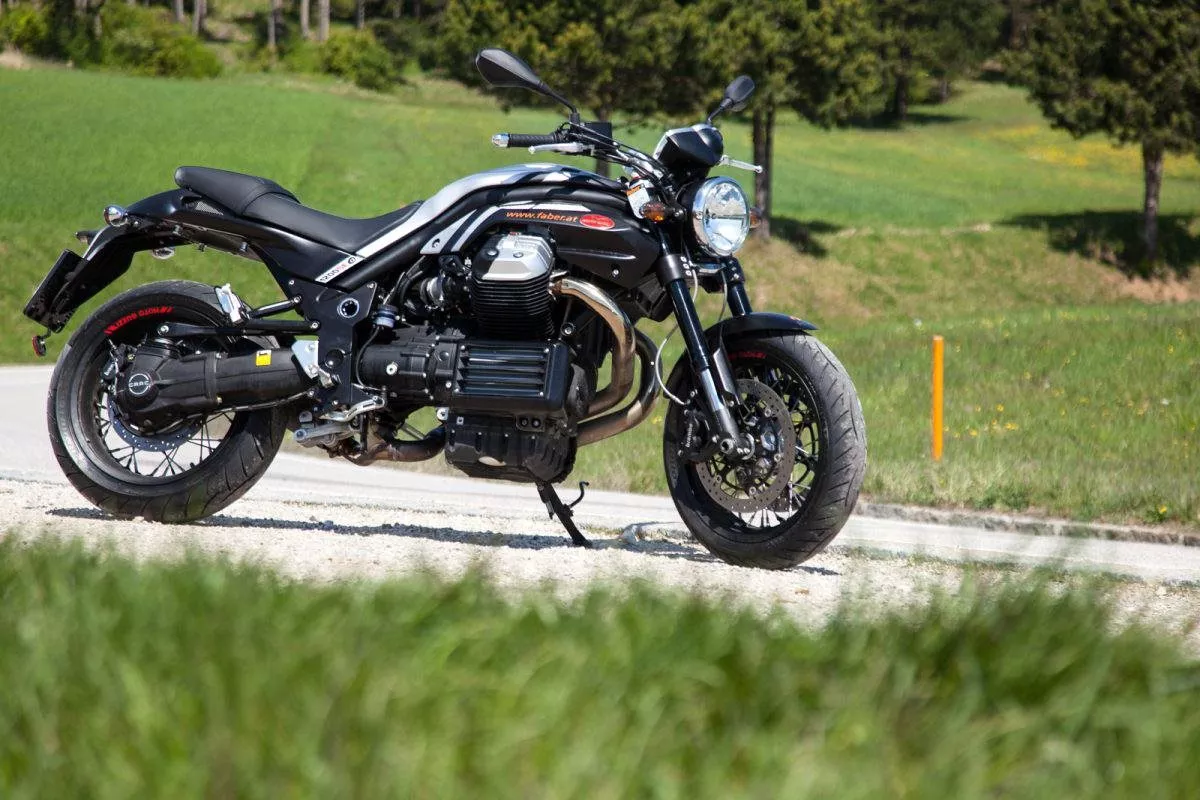
The Moto Guzzi Griso 1200 8V is an alternative to the BMW R 1200 R. It too relies on a characterful air/oil-cooled twin, shaft drive and its own take on the classic roadster. With its longitudinally mounted V-twin, distinctive single-sided swingarm and muscular design, the Griso feels more emotional and exotic than the more matter-of-fact BMW. However, it's heavier, less nimble and much rarer on the used market. In return, it offers plenty of mechanical character and clearly stands out from the crowd visually.
Honda VFR 1200 F
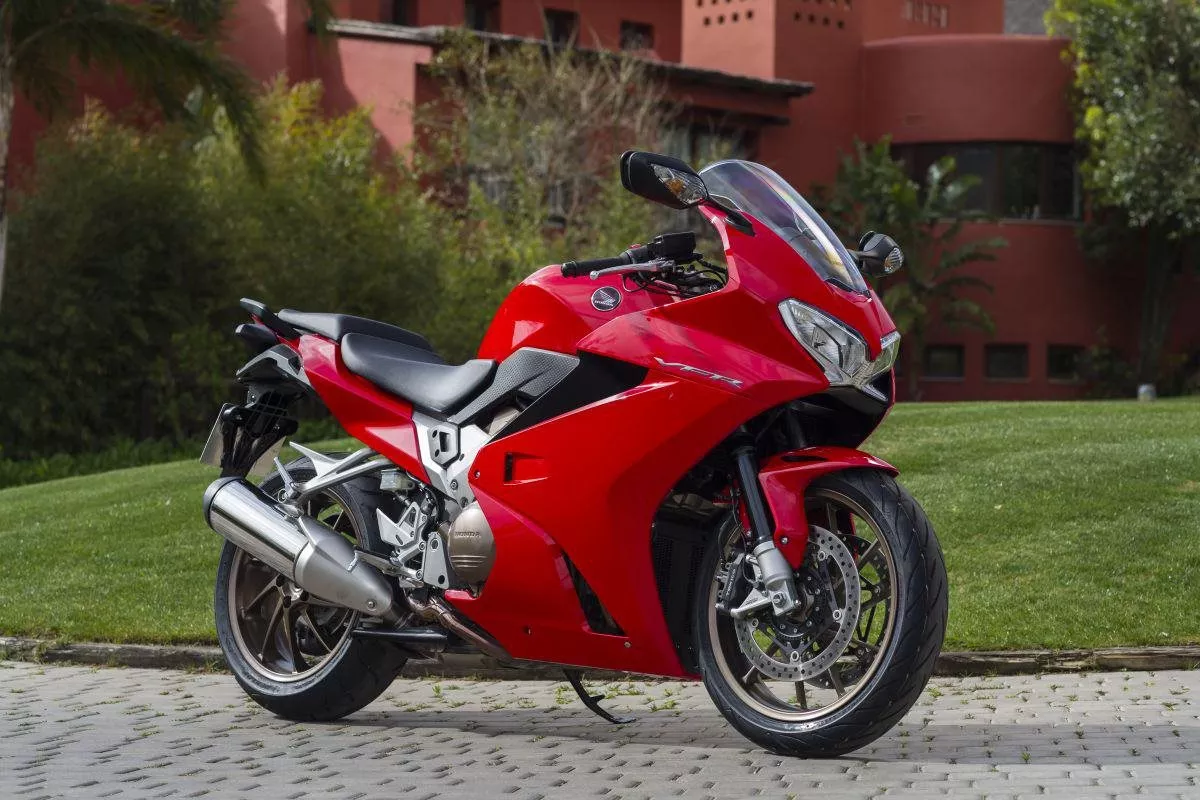
The Honda VFR 1200 F is an interesting alternative to the R 1200 RS. Its powerful V4 engine, shaft drive and very stable chassis set-up make it a fast and composed sport touring bike. It was also optionally available with the DCT dual-clutch transmission. Compared to the BMW, the Honda feels more engine-focused and particularly composed at high speed, but demands compromises due to its high weight and comparatively thirsty fuel consumption. The seating position is also sportier, while the RS usually feels more nimble and versatile in everyday use.
Yamaha FJR 1300
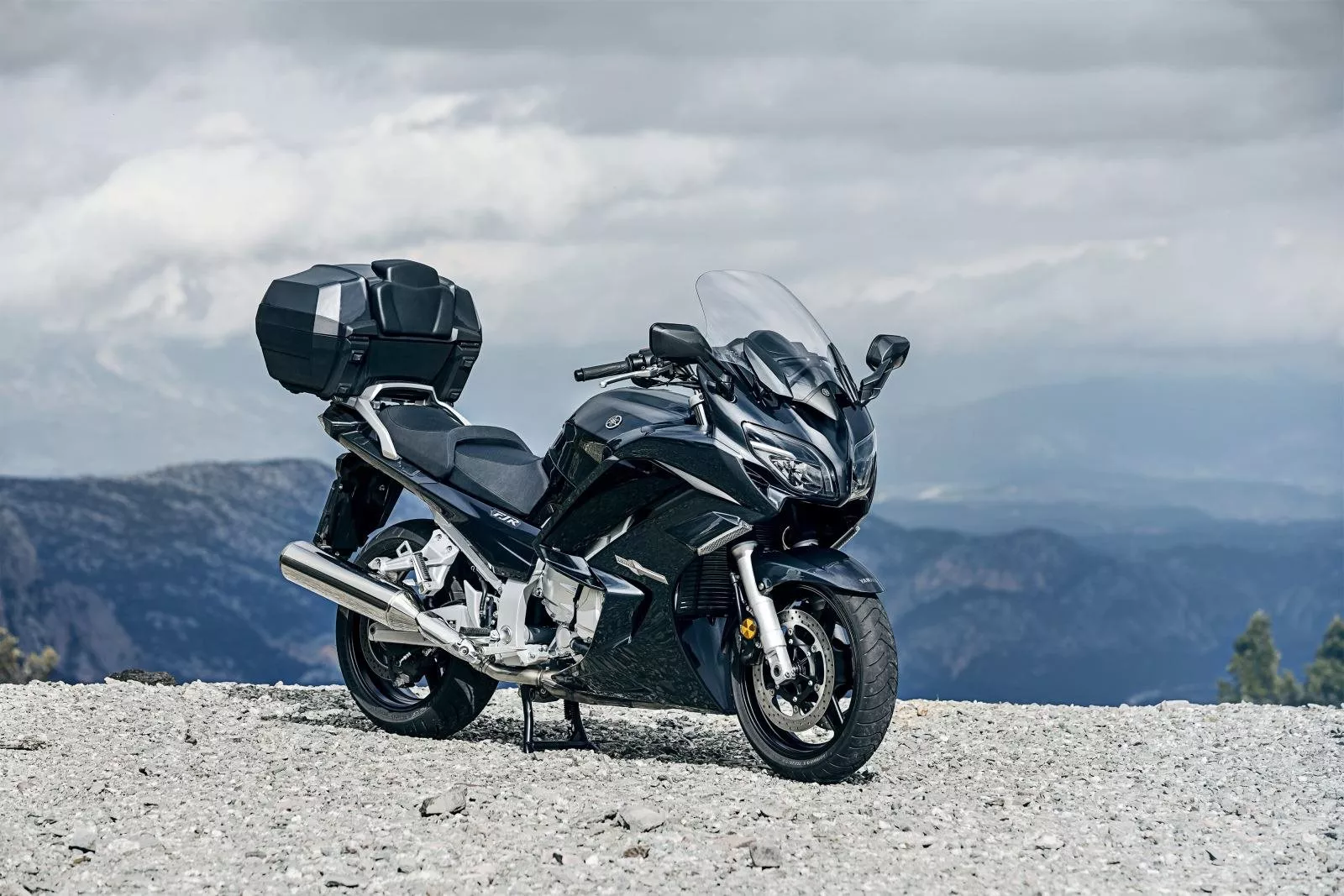
If you're mainly looking for an alternative to the R 1200 RT, you should consider the Yamaha FJR 1300. The big inline four runs smoothly, the shaft drive is low-maintenance and the comfortable seating position is ideal for long two-up trips. Depending on the model year, the FJR offers an electrically adjustable screen, integrated panniers and extensive touring equipment. In direct comparison to the RT, it feels less light-footed and makes its weight more noticeable when manoeuvring. On the other hand, its drivetrain is considered pleasantly effortless, and the used market offers a wide range of model years and price points.
Verdict on the BMW R 1200 R, R 1200 RS and R 1200 RT
Even used, the BMW R 1200 R, R 1200 RS and R 1200 RT are among the most interesting ways to ride a big boxer with shaft drive. Thanks to the extensive shared-parts policy, many components are proven, well known and available across models. What matters is less the fundamental reliability than the condition of the specific bike: a traceable service history, completed recalls, a dry drivetrain and working electronics are more important than the lowest possible mileage.
Which model suits you best depends mainly on your intended use. The R 1200 R is the lightest, most stripped-back and often underrated choice for everyday riding and country roads. The R 1200 RS combines sportier riding with useful wind protection and strong touring ability, but remains a comparatively rare niche model on the used market. The R 1200 RT offers the most comfort, the best weather protection and the most extensive features, but brings more weight and technical complexity in return.
On the RT, the top case and its hard-to-recode lock cylinder deserve special attention. Navigation systems should also be checked carefully before buying, especially the BMW Navigator VI with its well-known ghosting problem. With older Garmin-based devices, dwindling map support and limited memory come on top. Accessories such as panniers, top case, windscreen or radio can significantly increase the value of an offer, but should be complete, fully functional and professionally fitted.
More used buyer's guides










- How much does a BMW R 1200 RS cost?
- Here you will find an overview of the price level of new and used motorbikes!
Buyer's guide: buying a used BMW R 1200 R, RS & RT Images
Source: 1000PS


