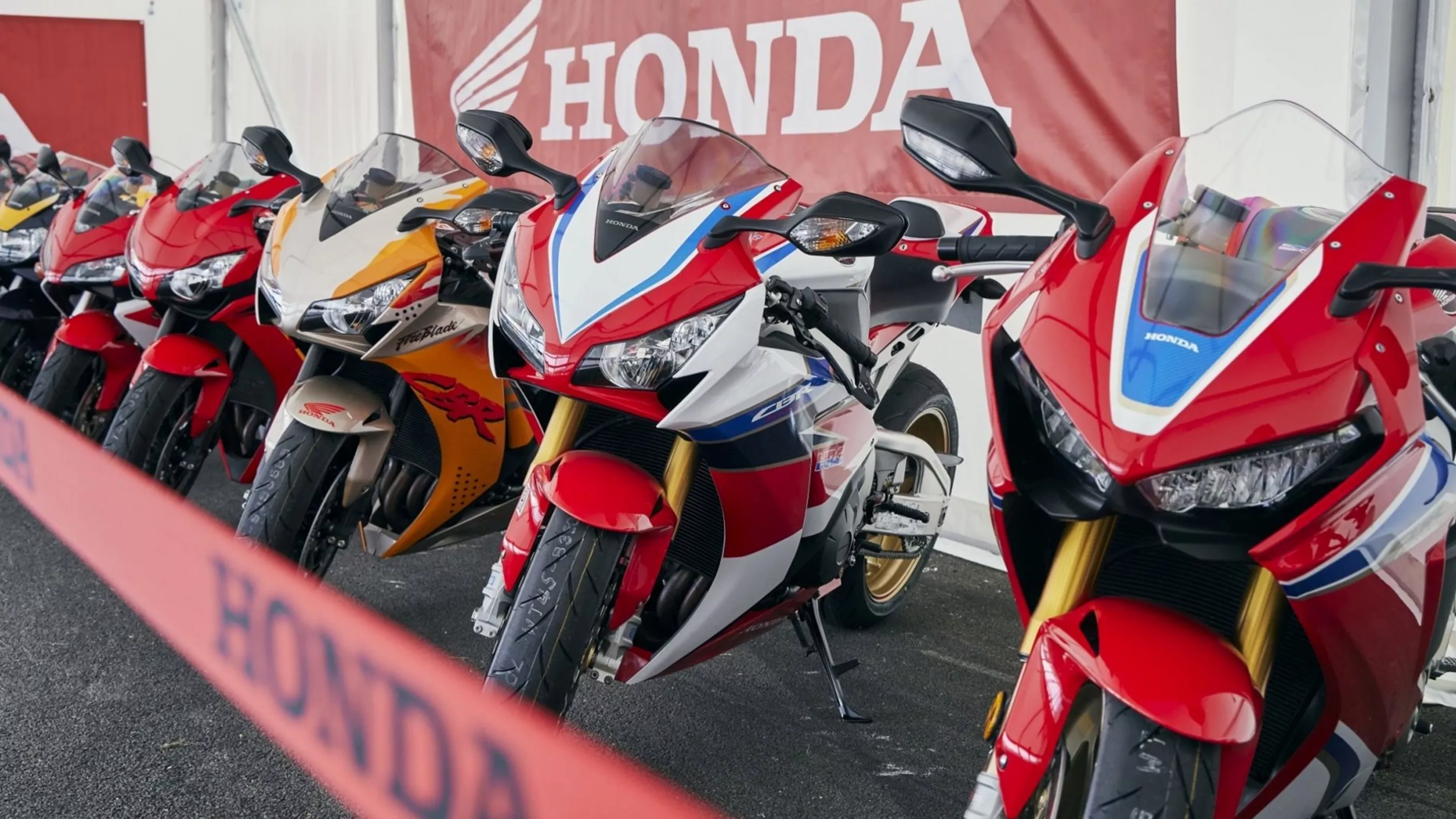
Buying a used Honda Fireblade: tips and weaknesses
What buyers really need to watch out for
The Honda Fireblade is regarded as a durable superbike with a genuine long-term reputation. But when buying used, it's not just the engine that matters - above all, it's the history. Race track use, modifications, servicing and fairing damage can quickly turn a dream sportbike into an expensive trap.

Der Horvath
published on 7/19/2026
8,627 Views
History of the Honda Fireblade (from the SC57 onwards)
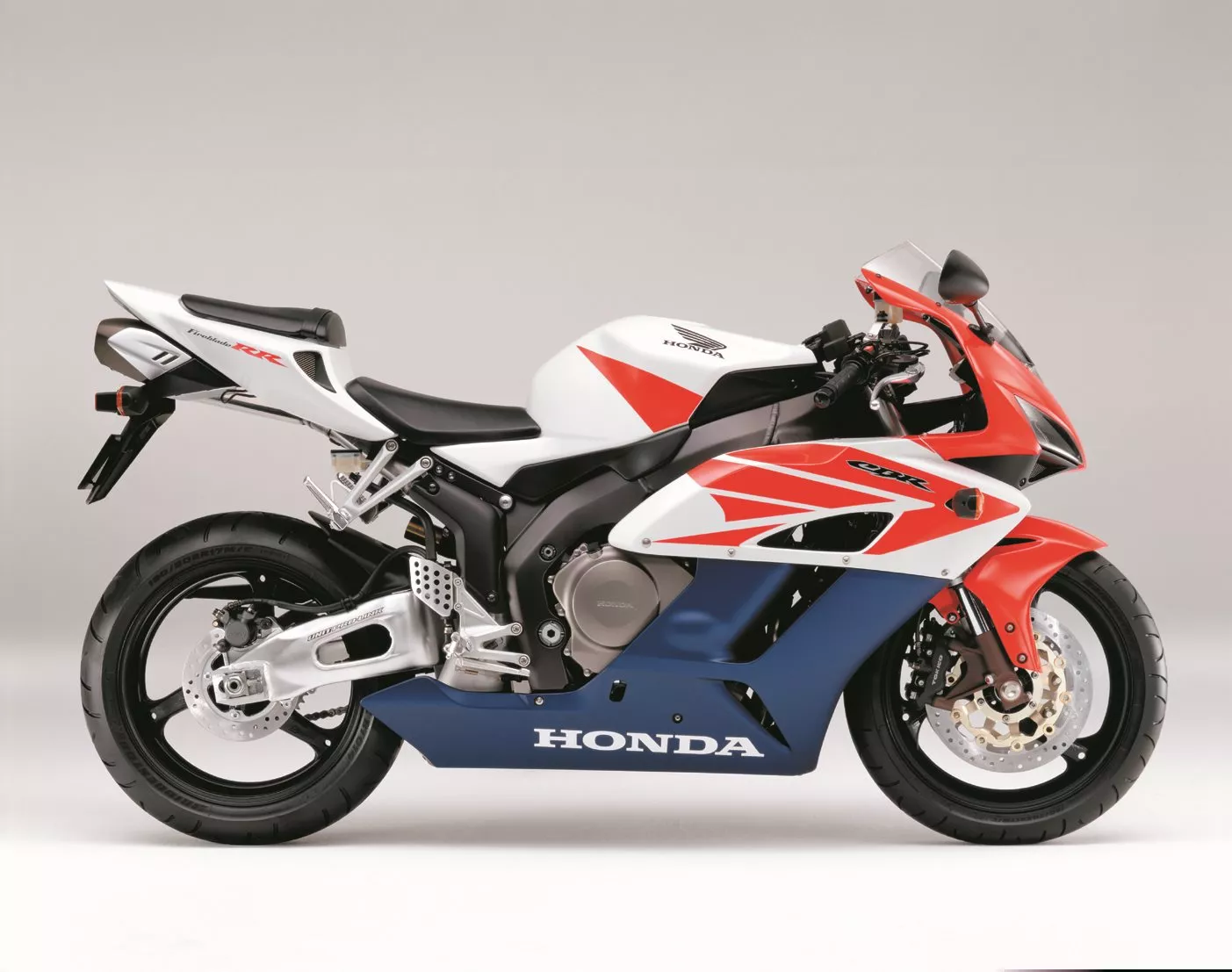
With the SC57 of model year 2004, the Fireblade finally entered the modern 1000cc superbike class. Officially, Honda pointed to technology from the RC211V for the 2004 CBR1000RR - the MotoGP machine with which Honda set the benchmark in the premier class. Technically, the SC57 was a clear step away from the comparatively slim SC50. Displacement rose to just under 1000 cc, and the bike became more grown-up, more stable and more geared towards high speeds and the stresses of the race track. Characteristic features included the underseat exhaust, radial brakes, a hydraulic clutch, a cassette gearbox, Unit Pro-Link rear suspension and Honda's HESD electronic-hydraulic steering damper. The SC57 was therefore less delicate than its predecessor, but much more of a superbike in the modern sense.
2006 brought the revised second-generation SC57. Honda sharpened the engine, chassis and details, made it more revvy and cut weight. In the used-bike context this update matters, because the later SC57 model years are often regarded as the more well-rounded version. Overall, the SC57 marks the moment the Fireblade went from the radical lightweight supersports of the 900 era to a full-blown 1000cc superbike.
Fireblade SC59: Back to more compactness
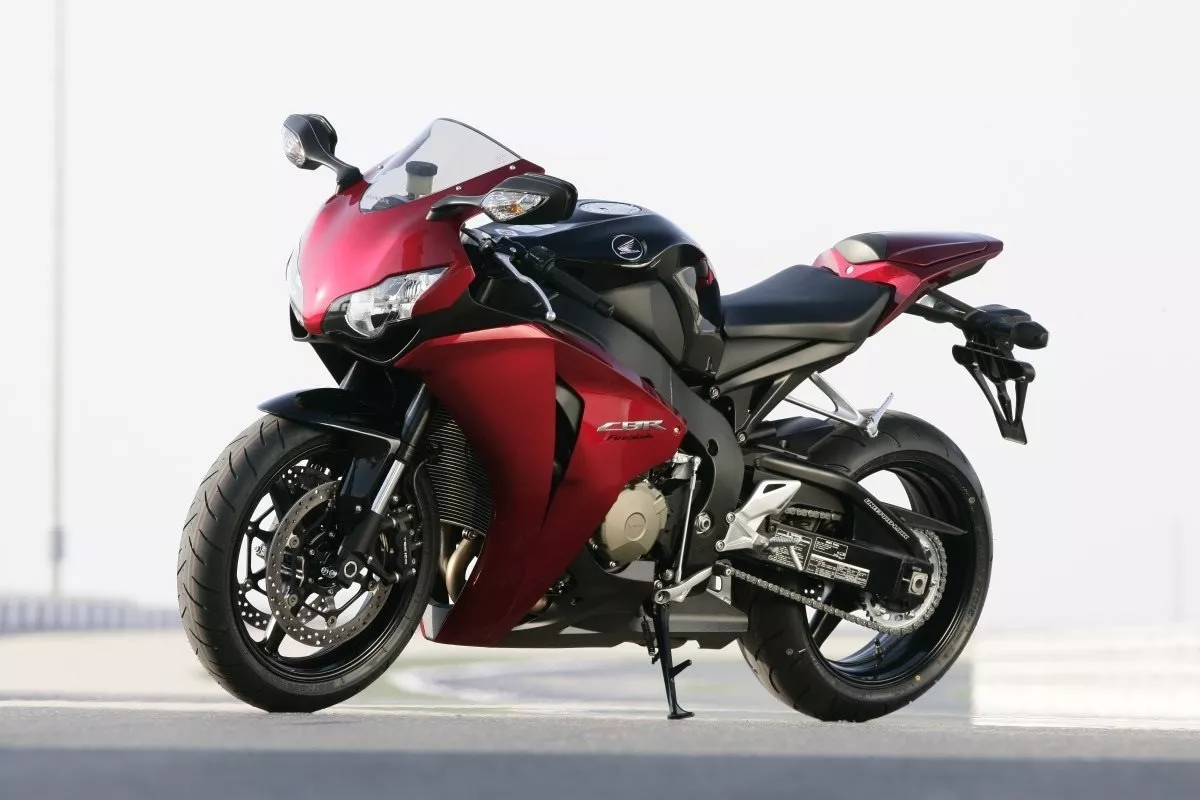
In 2008, the SC59 arrived as a completely new Fireblade. After the relatively bulky SC57, Honda wanted to get closer to the original Fireblade feel again: compact, nimble, easy to control and with a very direct connection between rider and bike. The SC59 looked noticeably shorter and stockier, said goodbye to the underseat exhaust and instead used a short, low-slung exhaust system. A slipper clutch was also part of the new generation's concept.
Early model years from 2008 to 2011 represent the first stage; from 2012 onwards the Fireblade received, among other things, visual and chassis updates. Later came variants such as the SP version, with which Honda once again moved more towards high-end race track components. Historically, the SC59 is an important generation because it had to defend the Fireblade legend at a time when the competition was becoming ever more aggressive in terms of electronics and power. The BMW S 1000 RR, Aprilia RSV4, Kawasaki ZX-10R and Yamaha R1 ramped up the pressure massively. Honda, on the other hand, stuck with a rather purist interpretation for a long time: controllable performance rather than pure spec-sheet dominance.
SC77: The electronic era arrives late, but in style
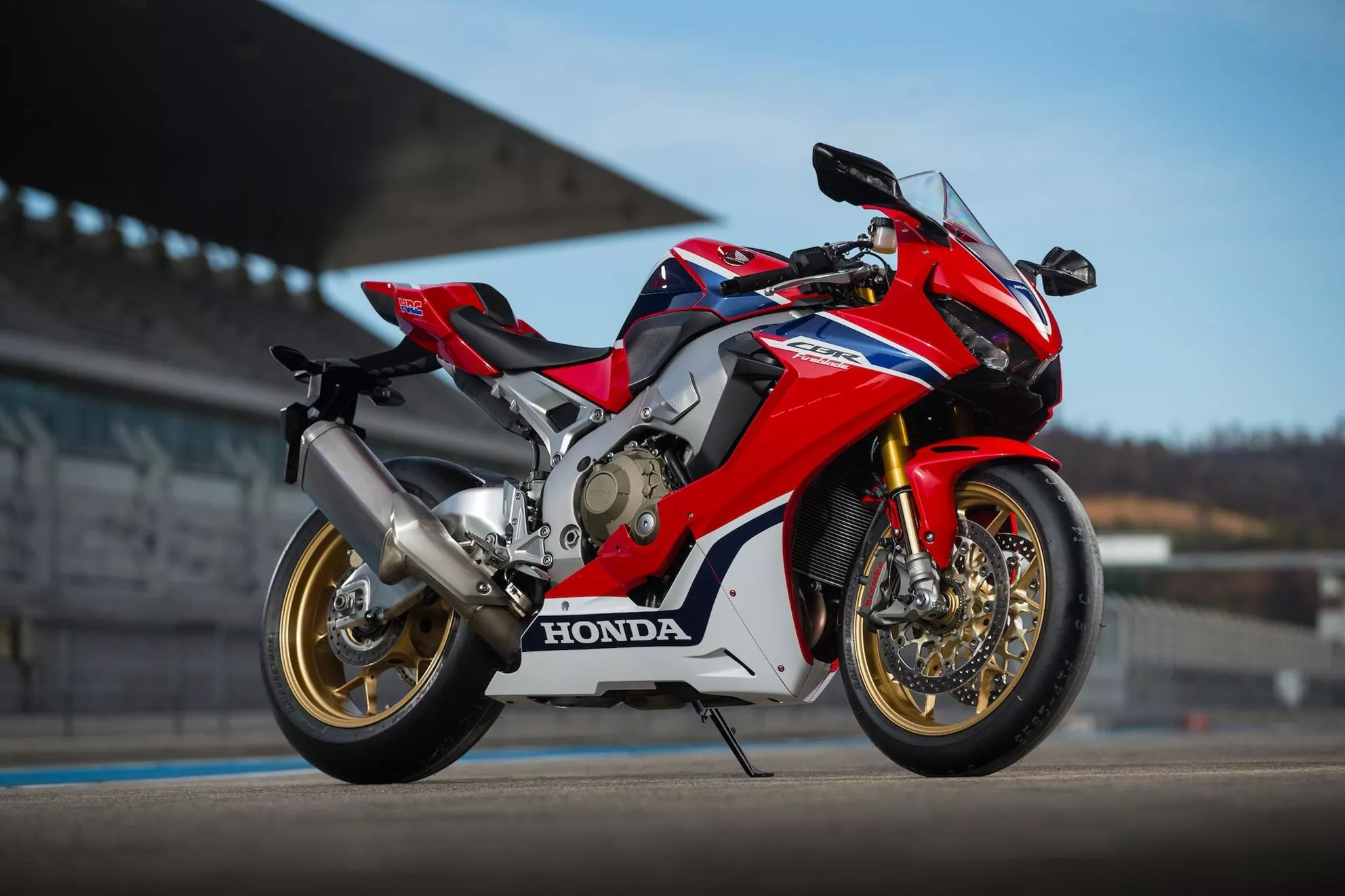
For the Fireblade's 25th anniversary, Honda presented the SC77. It arrived as a 2017 model and marked one of the biggest technological leaps in the model line's history. According to Honda, the power-to-weight ratio improved by 14 percent, achieved through a 15-kilogram weight reduction and a power increase of 8 kW. With that, the Fireblade finally entered the electronics era. Traction control, riding modes, adjustable engine braking, wheelie control, a quickshifter and a more modern ABS system made the SC77 far more up to date than the late SC59 models. The SP versions in particular, with high-end Öhlins components and Brembo brakes, brought the Fireblade closer to its European superbike rivals.
Even so, Honda stayed true to its philosophy with the SC77. The Fireblade did not become a wild power machine, but remained a bike that put control and accessibility front and centre.
Fireblade SC82: The Fireblade becomes the CBR1000RR-R
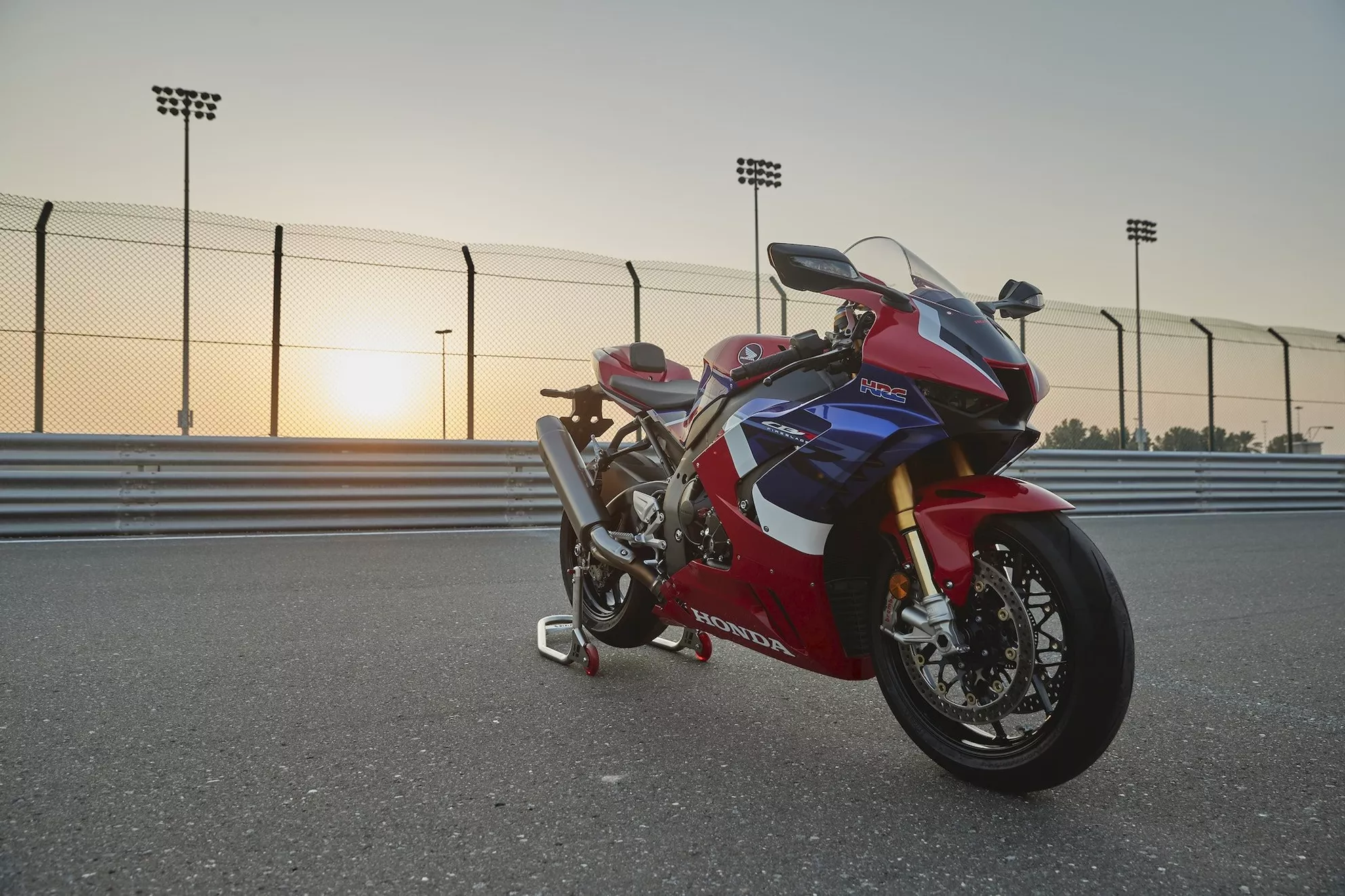
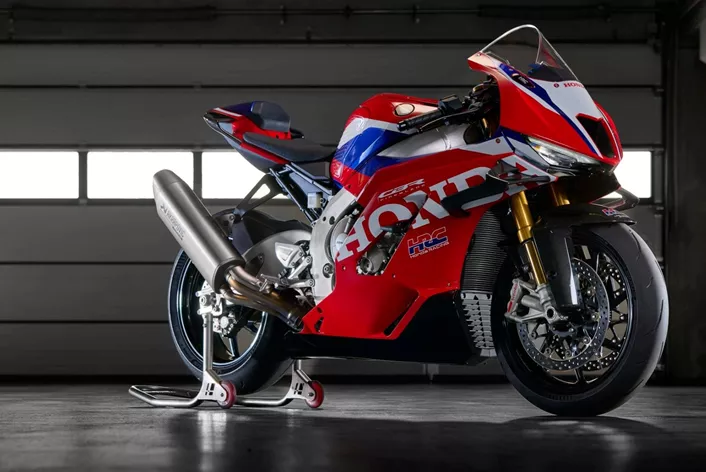
In 2020, Honda fundamentally changed the Fireblade's character once again. The CBR1000RR became the CBR1000RR-R Fireblade. The SC82 thus moved noticeably away from the everyday-friendly, well-rounded Fireblade tradition of earlier years. The engine became shorter-stroke, more revvy and more focused on peak power. Aerodynamic winglets, a modern electronics platform, a TFT display, extensive adjustability and a much more track-oriented overall package made the SC82 the most radical production Fireblade since the model line began. The SP version added electronic Öhlins suspension and high-end Brembo components.
Buying a Honda Fireblade new and used
Availability of the Honda Fireblade on the used market is generally good, but it is definitely not a mass-market product. A close look is always worthwhile: well-maintained examples with a traceable history, a complete service book and no signs of hard race track use are clearly in higher demand than bodged or heavily worn machines.
Click here to go straight to the offers and listings: Buy a Honda Fireblade new and used.
To treat your used bike well, we recommend regular oil changes. 1000PS relies on lubricants from Motorex, and here you can find the right oil for your bike.
Interview with the experts at Motothek
For expert insight into the real problems, we spoke with Manfred Postrihac, owner of Motothek Ternitz. Not only does the dealership trade in Honda and KTM vehicles, it is also the trusted workshop for quite a few 1000PS staff members.
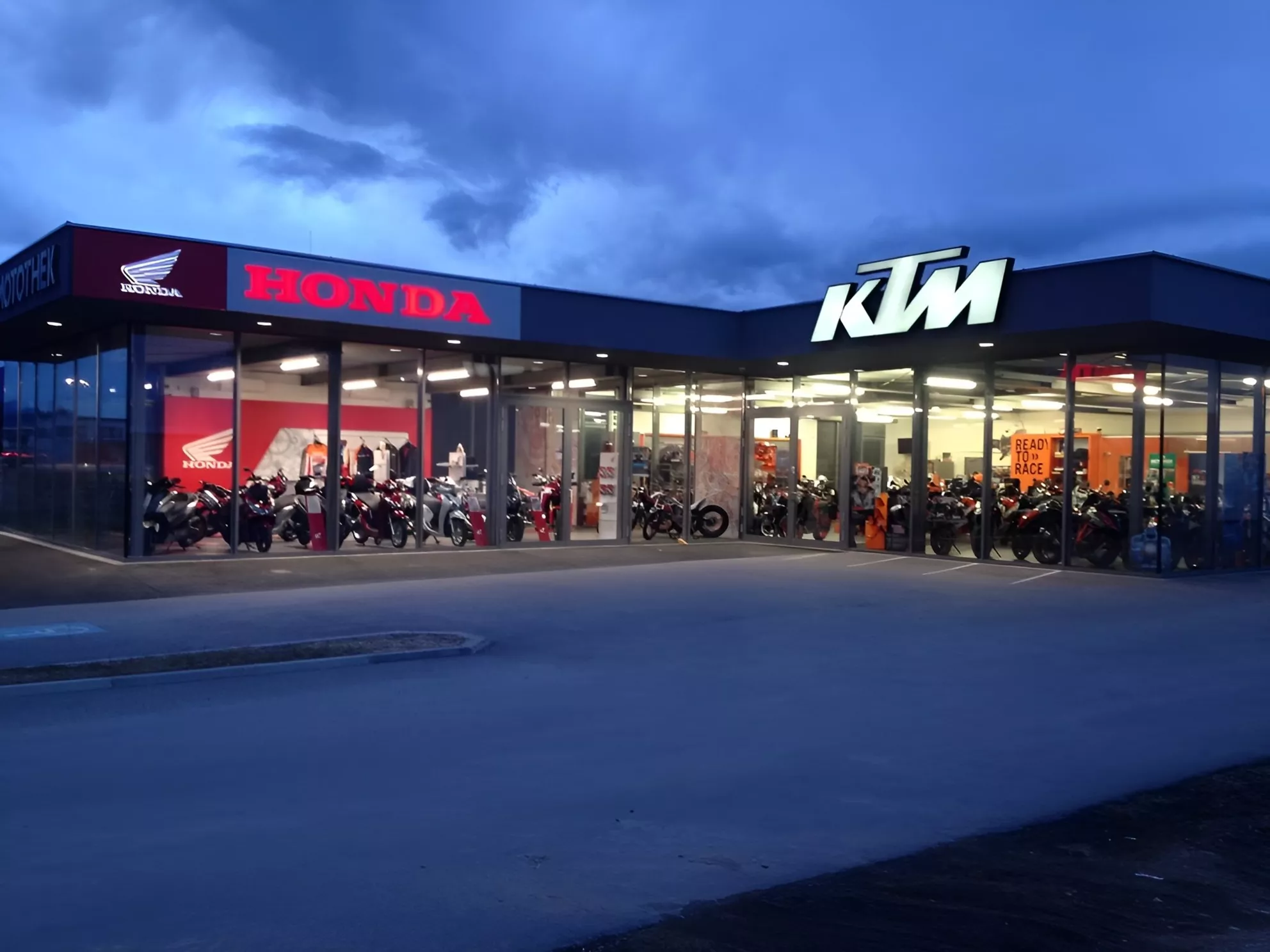
Motothek Ternitz.
- How much does a Honda CBR1000RR Fireblade cost?
- Here you will find an overview of the price level of new and used motorbikes!
Manfred's assessment is very clear on one point: across its generations, the Fireblade is regarded as an exceptionally durable bike. Especially when it comes to the engine, Postrihac sees no typical weak spots that should fundamentally put off used buyers. Even with the newer generations, from the CBR1000RR to today's CBR1000RR-R Fireblade, he sees no dramatic problems from the first model years. Honda is traditionally cautious and thorough here, he says. While other manufacturers with particularly aggressive superbike concepts did have teething troubles at first, Postrihac describes Honda's philosophy differently: at Honda, an engine has to work reliably right from the start.
An important point when buying used is the supply of spare parts. Here too, Postrihac gives the all-clear. Spare parts for the Fireblade are generally readily available, even for older models. Even with machines well over 10 years old, he sees no unusual problems. Standard service items are easy to get. Things tend to get expensive with painted parts and fairing components. According to Postrihac, however, that isn't a Fireblade-specific issue but applies to modern bikes in general. Painted side panels, fairing parts, LED headlights or TFT displays quickly drive repair costs up.
The Fireblade is technically high-end, but not known as a problematic bike. Still, you can't compare its ease of servicing with that of a naked bike. A fully faired supersports is tightly packaged, many components sit compactly on top of each other, and for bigger jobs more has to be dismantled accordingly. This mainly affects more extensive services. Fairing parts, the airbox, the electrics and the compact design mean the workload is higher than on simpler bikes. But that's not a Honda problem - it's typical of modern supersports. Anyone buying a Fireblade should be aware: the technology is durable, but it's tightly packed.
For Postrihac, the key question when buying a used Fireblade isn't first and foremost "What's its weak spot?" but rather "How was it used?" After all, the Fireblade is a bike that many owners take to the race track. That's not a problem in principle, because a Fireblade handles the occasional trackday with ease. But a bike that has been ridden hard on the race track for years should be judged differently from a well-kept road bike.
Pay particularly close attention to classic crash and race track marks: rims, footpegs, swingarm, fairing, bar ends, engine covers and any areas that can make contact with the ground in a slide. Stone chips, sandblasted spots or noticeable differences in paint colour can also indicate hard use or repairs. Every modification to the bike should be questioned.
1000PS tyre recommendation:
If you ride your Honda Fireblade mostly on the road and aren't hunting for the last tenth on the race track every time you go out, the Metzeler Sportec 01 is a very fitting tyre choice. It combines sporty turn-in with good grip, clean feedback and more everyday usability than an uncompromising hypersport or track tyre. That's especially important for used buyers: many Fireblades aren't constantly ridden at the limit, but are meant to work on country roads, the local loop and the occasional spirited ride. The Sportec 01 suits this usage profile well, because it preserves the Fireblade's precision without being so one-sidedly focused on temperature windows and maximum race track performance.
YUASA motorcycle batteries - the 1000PS recommendation for your used bike:
With used bikes in particular, it pays to opt for a high-quality battery: YUASA's AGM and gel batteries are maintenance-free, leak-proof powerpacks "Made in Japan" that impress with high cranking power, vibration resistance and a long service life. Less maintenance, more performance - ideal for anyone who wants their bike to fire up reliably. Find the right YUASA battery for your bike here.
Alternatives to the Honda Fireblade
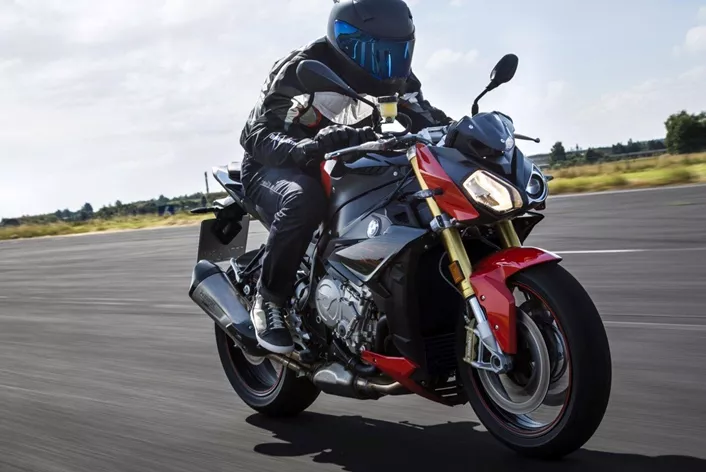
BMW S 1000 RR
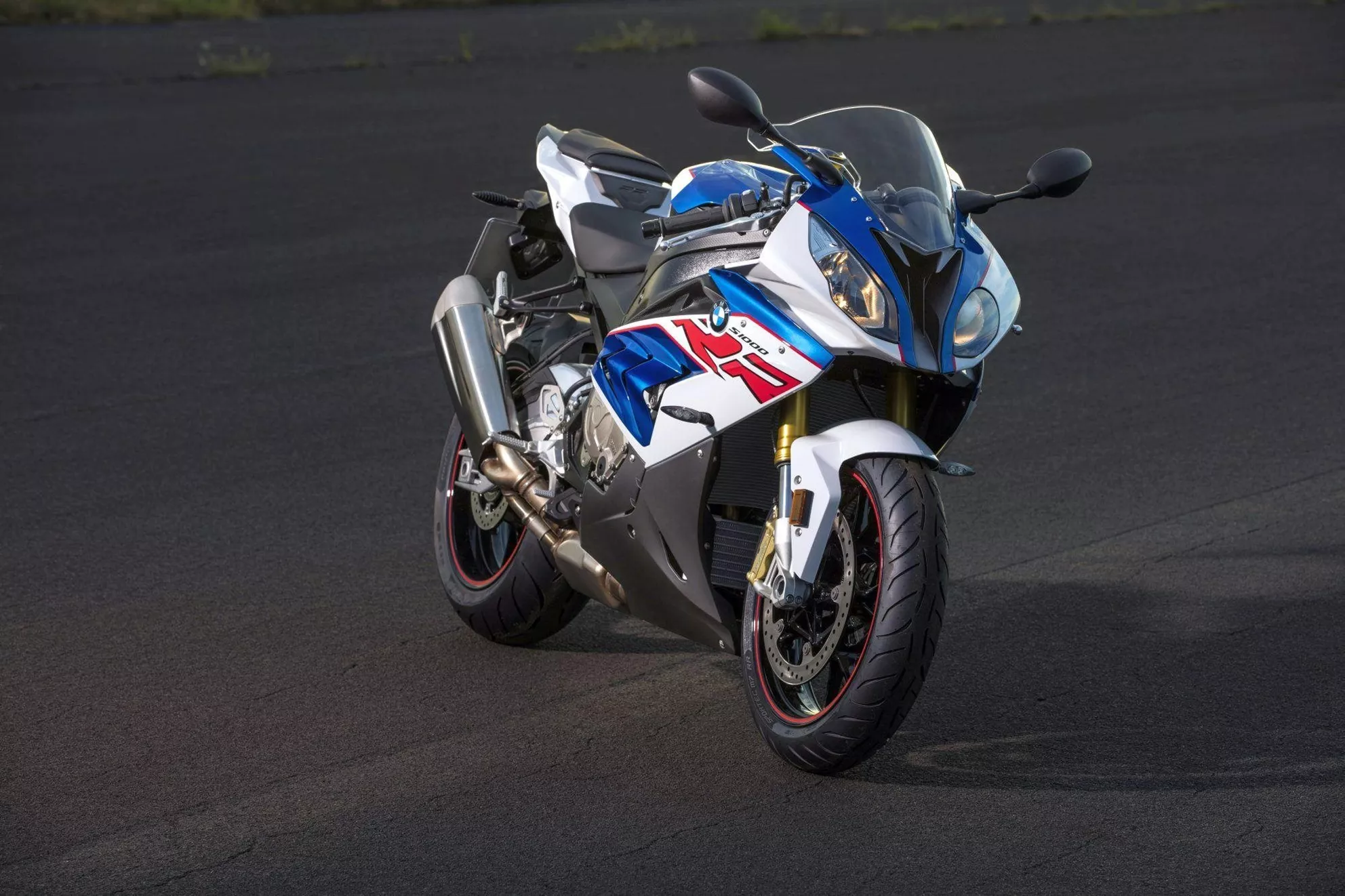
The BMW S 1000 RR is the obvious alternative to the Honda Fireblade if the buyer is looking for a modern litre superbike with very strong performance and extensive electronics. Compared to the Honda, it usually feels more aggressive and more tuned for maximum power and measurable lap times. Right from the first generation, BMW put serious pressure on the Japanese supersports. The S 1000 RR is well represented on the used market, but you should pay particular attention to the service history, race track use, software versions and clean modifications. For riders who want more peak power and a very direct, sharp superbike feel, it's one of the most important Fireblade alternatives.
Yamaha YZF-R1
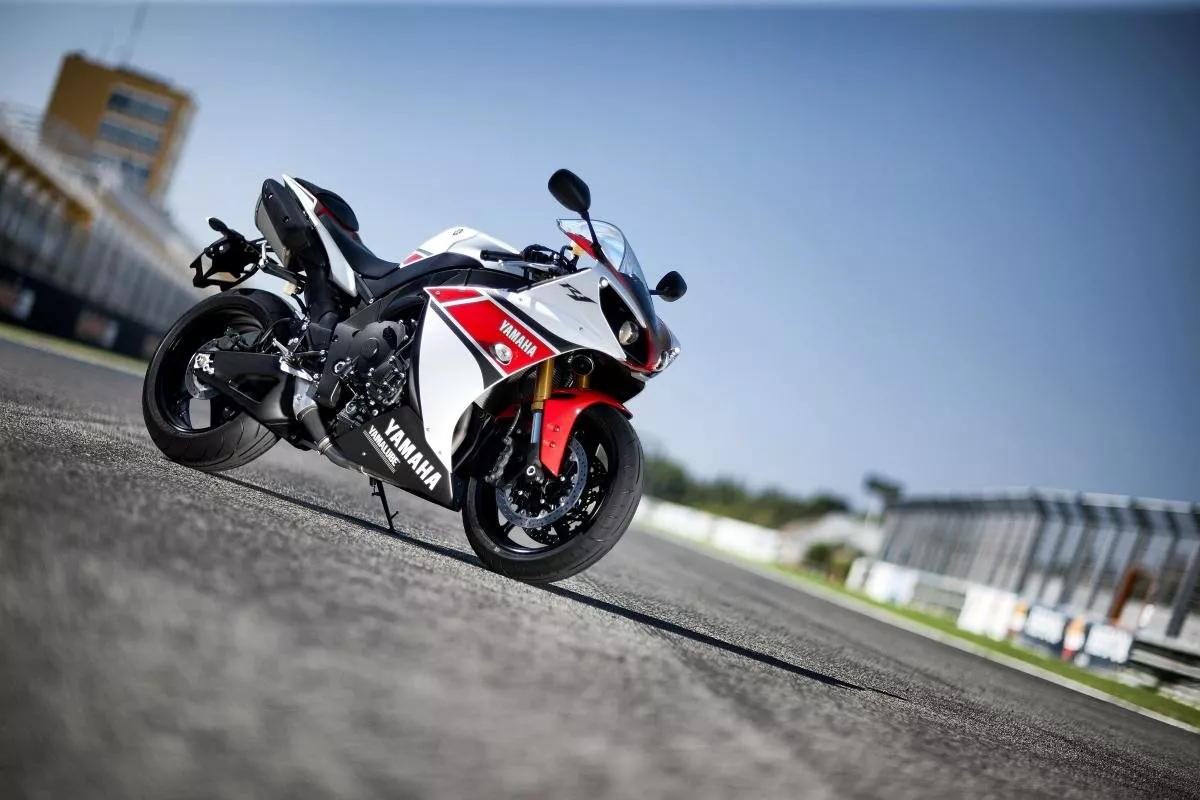
The Yamaha YZF-R1 is the more emotional alternative to the Fireblade. The crossplane-engined generations in particular offer a distinctive character, plenty of traction on corner exit and that unmistakable, raw four-cylinder pulse. While the Honda traditionally impresses with control, predictability and technical refinement, the R1 often feels wilder and closer to racing. On the used market, it's especially interesting for riders looking for a superbike with its own engine character rather than buying purely on spec-sheet figures. Here too, a traceable service book, a critical look for race track marks and the condition of the suspension, brakes and fairing are important.
Kawasaki Ninja ZX-10R
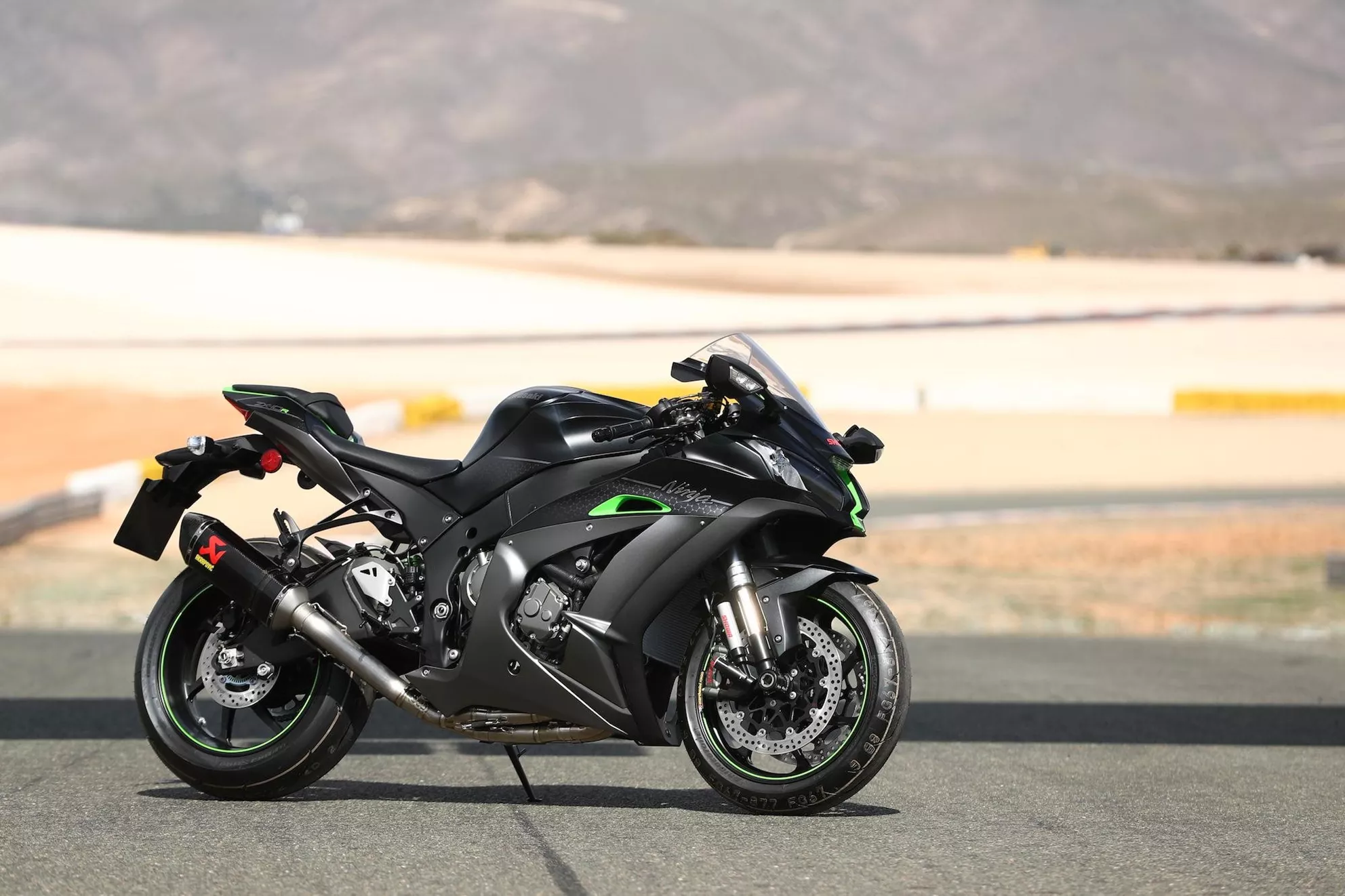
The Kawasaki Ninja ZX-10R is a very sporty alternative to the Honda Fireblade and has built up a strong reputation over many years as an uncompromising superbike. It's particularly interesting for buyers looking for a bike with clear race track DNA who don't necessarily want to step into the European price bracket. Compared to the Fireblade, the Kawasaki often feels a little harder, more direct and less polished. In return, you get a bike that is taken extremely seriously in the superbike segment and often offers good value for money when bought used. When buying, look closely at modifications, crash damage, race track use and the state of maintenance, because many ZX-10Rs have been ridden in a correspondingly sporty manner.
Verdict: The Fireblade remains a safe used buy
Even used, the Honda Fireblade is what it always wanted to be when new: an extremely fast, technically high-end and yet astonishingly predictable superbike. Its biggest plus is typical Honda durability. Neither the engine nor the basic technology shows any major weak spots across the generations. If you find a properly maintained Fireblade with a traceable history, you get a bike that still works impressively solidly many years after first registration.
What matters most when buying is less whether the Fireblade is durable in principle and more how the specific example has lived. Race track use, crash damage, poor modifications, missing service records or cheap repairs are the real warning signs. So if you're looking for a Fireblade, buy patiently and critically. A service book, original condition or properly documented modifications, unremarkable wear parts and an honest seller matter more than the last horsepower figure.
More used bike buying guides










- How much does a Honda CBR1000RR-R Fireblade cost?
- Here you will find an overview of the price level of new and used motorbikes!
More from 1000PS Magazine

Buying a used Honda Fireblade: tips and weaknesses Images
Source: 1000PS


