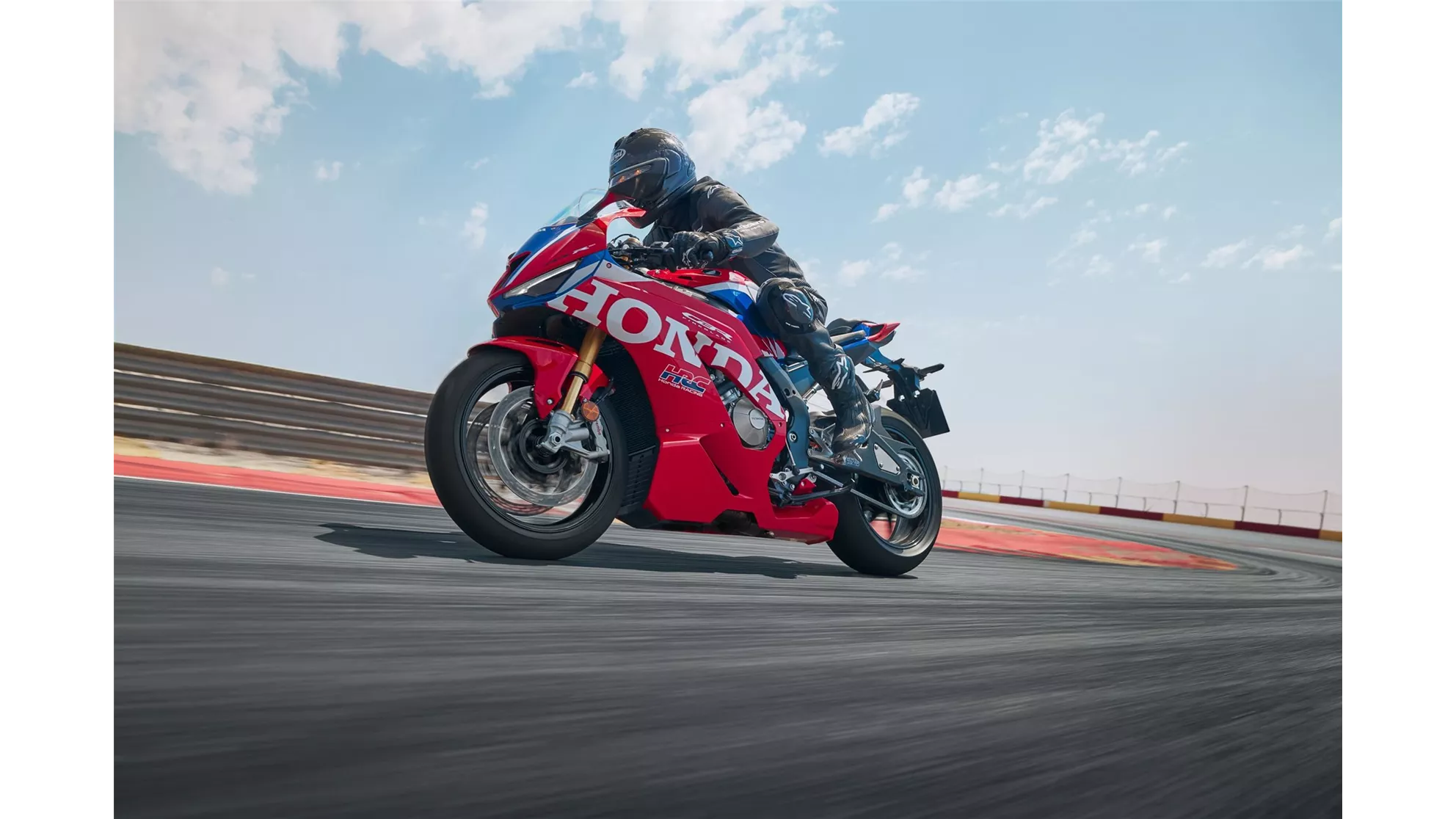
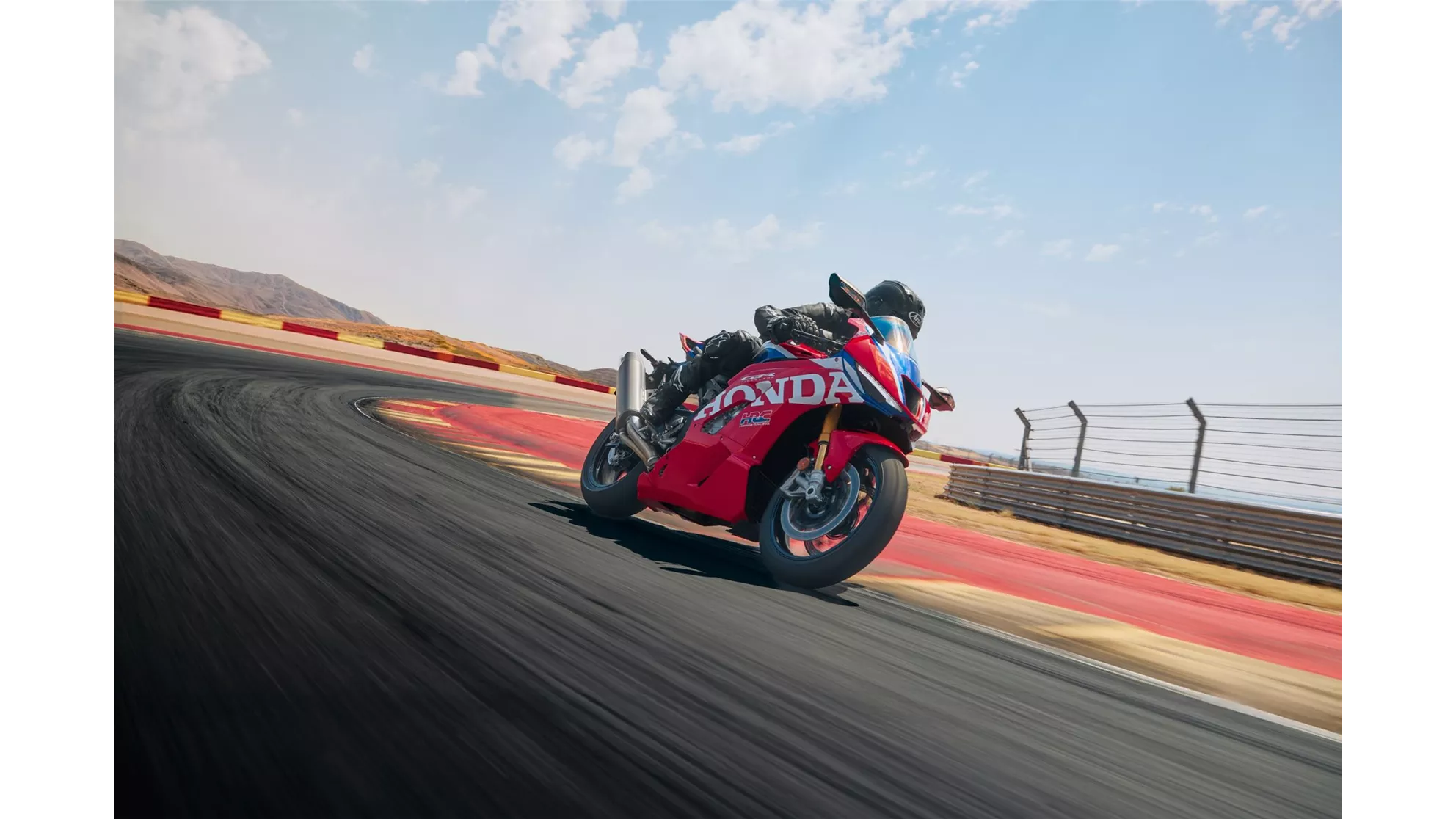
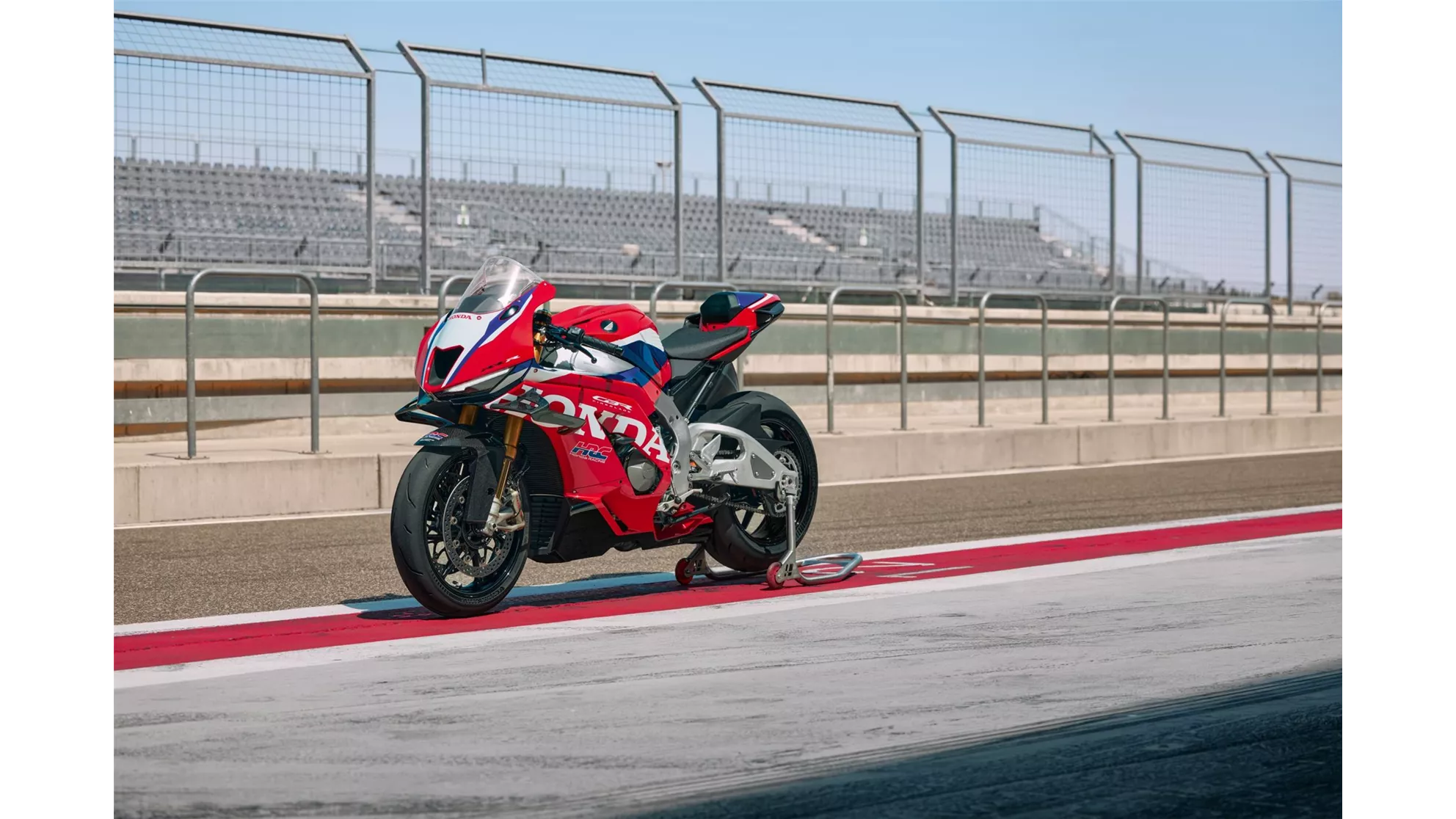
The Fireblade story began in 1992. For model year 2027, Honda is turning the development process of its supersports machine on its head: together with HRC and the WorldSBK factory team, the requirements for the race bike are defined first. Only then comes the road version. So what's the result? A new Honda CBR1000RR-R Fireblade, an SP with electronic Öhlins suspension and the HRC Works Edition, which is even more specifically geared towards track use. Peak power stays the same, but underneath there's been some serious rework.
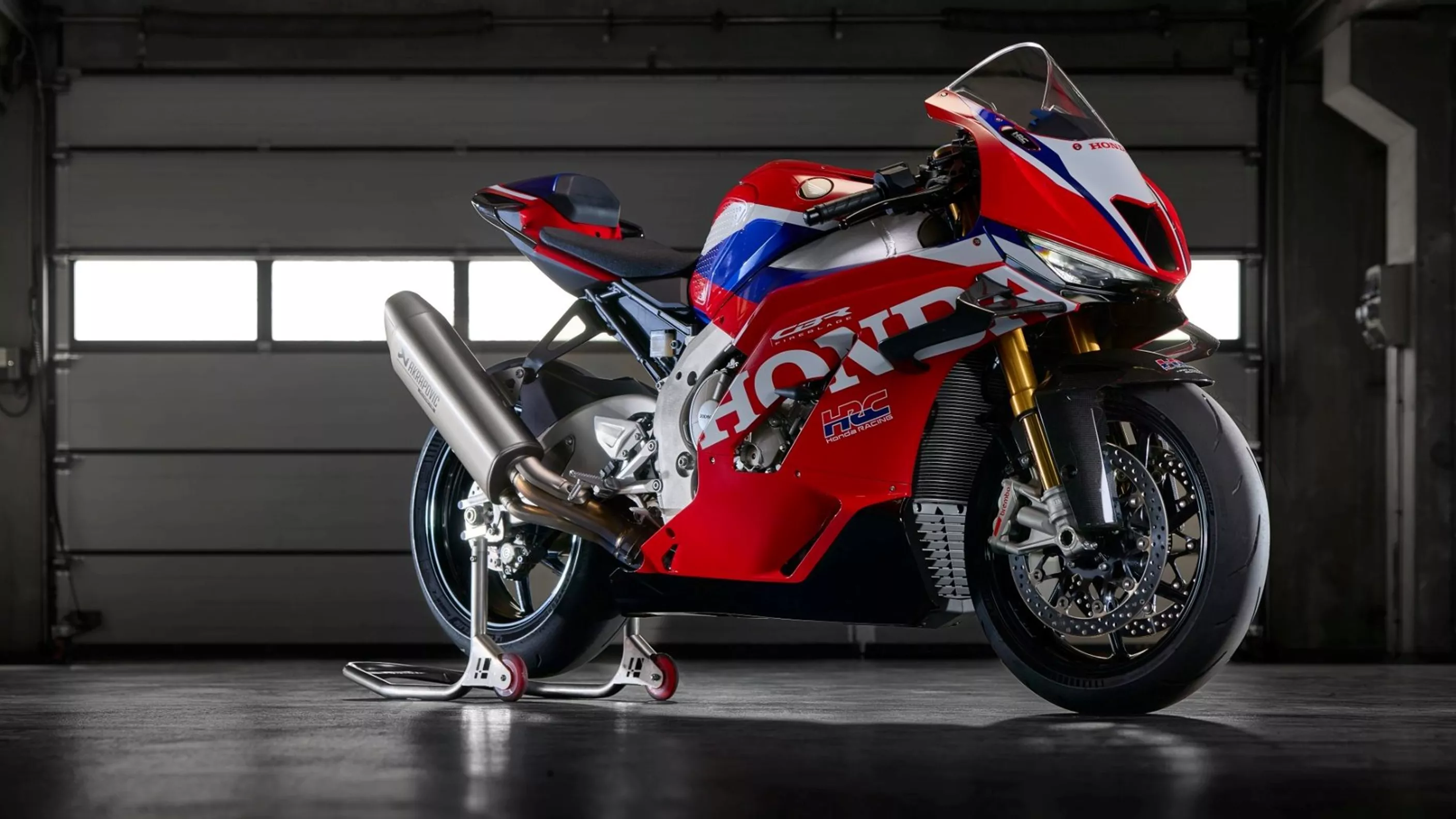
New Honda CBR1000RR-R Fireblade 2027 in three versions
New frame, variable intake and an HRC Works Edition
WorldSBK requirements first, then the road version: that's how Honda is developing its new supersports family. All three variants get a new frame and variable intake funnels. When it comes to suspension, brakes and aerodynamics, they go their separate ways.

Der Horvath
published on 11/2/2026
7,122 Views
Honda Fireblade 2027: The shared engine platform
All three versions use the liquid-cooled 1,000 cc DOHC inline four with 16 valves and semi-cam gear train. Honda still quotes 217.6 hp or 160 kW at 14,000 rpm and 114 Nm at 10,500 rpm. Bore and stroke also remain unchanged at 81 x 48.5 mm. The progress is meant to come mainly in the midrange. To that end, the compression ratio rises from 13.6:1 to 13.8:1. More precisely machined piston crowns and combustion chambers are intended to improve combustion, complemented by revised valve timing, optimised valve springs and a wider adjustment range on the cam sprockets.
The most important new feature in the intake tract is a set of two-stage variable intake funnels – according to Honda, a first for a production bike from the brand. Below 11,750 rpm they operate in their long position to improve cylinder filling and therefore midrange power. Above that engine speed they switch to the short configuration for high peak power. The 52 mm throttle bodies are still controlled by two actuators: one for cylinders one and two, one for three and four. At small openings the cylinder pairs can be controlled differently, while at high revs all four throttle valves operate synchronously. Engine braking is also tuned via this split control.
Honda Fireblade 2027: Less weight in the engine
Honda has also put the engine on a diet. The cylinder head cover, right-hand crankcase cover, clutch cover and oil pan are now made of magnesium instead of aluminium. On top of that, 35 aluminium fasteners replace the previous steel parts, saving 215 grams in total. The SP/HRC press kit puts the total saving from these measures at 1,099 grams, not yet including the additional contribution of the lighter crankcase. Forged TI-64A titanium conrods remain part of the package. According to Honda, they weigh half as much as equivalent chrome-moly steel conrods. Special bearing surfaces and DLC coatings are designed to withstand the stresses at high revs.
The forged pistons have coated skirts and are cooled from below by multi-point oil jets. At low revs, ball valves can cut off the oil flow to reduce pressure losses and friction. For 2027, the strainer ahead of the oil pump has also been revised so the oil foams less. A cooling system with a lower bypass is designed to even out temperature distribution along the cylinder bores. The intake valves measure 32.5 mm, the exhaust valves 28.5 mm. Using finger followers and the compact semi-cam gear train, Honda combines this valvetrain with the short-stroke basic layout.
Honda Fireblade 2027: Gearbox and titanium exhaust
The distance between the main shaft and countershaft grows by three to 68 mm. According to Honda, this gives more scope for designing race gear ratios. In the standard six-speed gearbox, first gear is now five percent taller. A multi-plate wet clutch with assist and slipper function handles power transmission, and the rear wheel is now driven by a narrower 520 chain instead of the previous 525. That change alone saves 270 grams, according to the manufacturer. The starter acts on the clutch main shaft, which allows the crankshaft to be kept compact.
The four oval-shaped exhaust headers lead into a standard titanium Akrapovič silencer. Its compact design is intended to centralise mass and leave as much maximum lean angle as possible on the right-hand side. For all three variants, Honda quotes Euro 5+, a top speed of 299 km/h and WMTC fuel consumption of 6.7 l/100 km with 155 g/km CO₂. These consumption figures come from standardised manufacturer tests with one rider and no additional equipment. Riding style, load, weather and other operating conditions can alter actual consumption.
Honda Fireblade 2027: New frame and new balance
The shared chassis base has been changed significantly. The new aluminium twin-spar frame is gravity die-cast with wall thicknesses down to two millimetres and weighs nine kilograms according to the spec sheet. Honda has reduced lateral rigidity by 20 percent compared with the previous design. A bolted-on brace at the front cylinder block replaces a stiffening structure previously integrated into the frame. At the same time, the lower mounting point of the rear suspension moves from the frame to the engine. This is intended to provide more feedback about available grip and better control from turn-in through to the drive out of the corner.
The aluminium swingarm has also been retuned. It measures 620.6 mm, sheds 200 grams and gets a swingarm pivot shaft reduced to 17 mm. Its lateral rigidity drops by twelve percent while torsional rigidity is retained. The crankshaft position rises by 5.2 to 432.5 mm, and front wheel weight distribution grows to 53.3 percent. Together with the higher seating position, Honda is aiming for a different balance between rider and bike. The new cast aluminium wheels have seven hollow spokes and save 190 grams at the front and 590 grams at the rear. Tyre sizes remain 120/70-ZR17 and 200/55-ZR17, with Honda listing Bridgestone Battlax Racing Street RS12 or Michelin Power GP2 rubber.
Honda Fireblade 2027: Sidepods instead of add-on wings
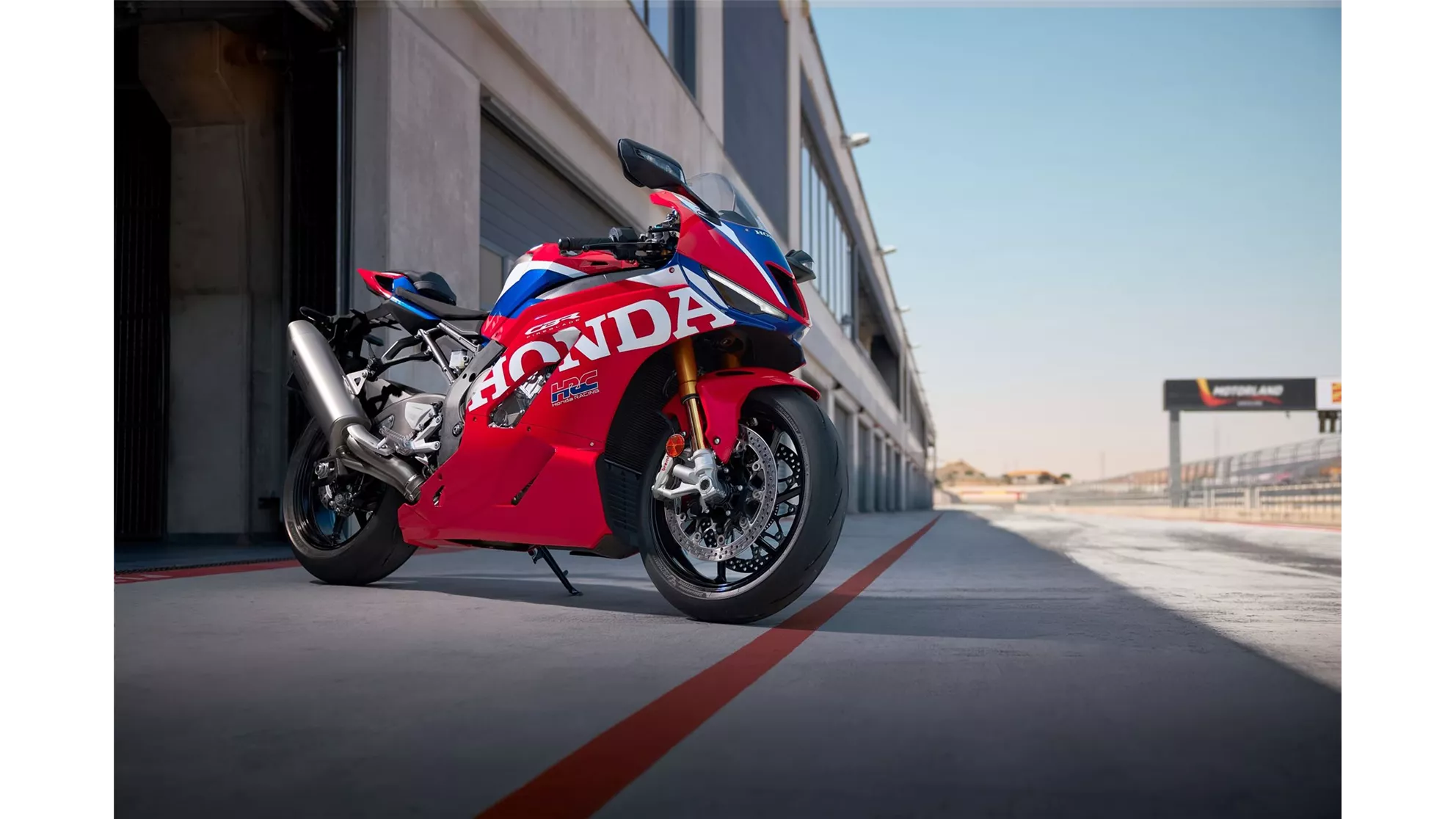
The new fairing of the base version and SP does without separate winglets. According to Honda, it nevertheless generates the same downforce as the previous design, with lower drag and improved wind protection. The key elements are the redesigned front spoiler, the multi-layer middle fairing section and the sidepods in the lower area. These elements, derived from MotoGP concepts, are intended to work primarily at high cornering speeds and lean angles. At the same time, the frontal area has been enlarged to give the rider more freedom of movement. To achieve this, Honda combined CFD simulations, clay models and test runs on race tracks.
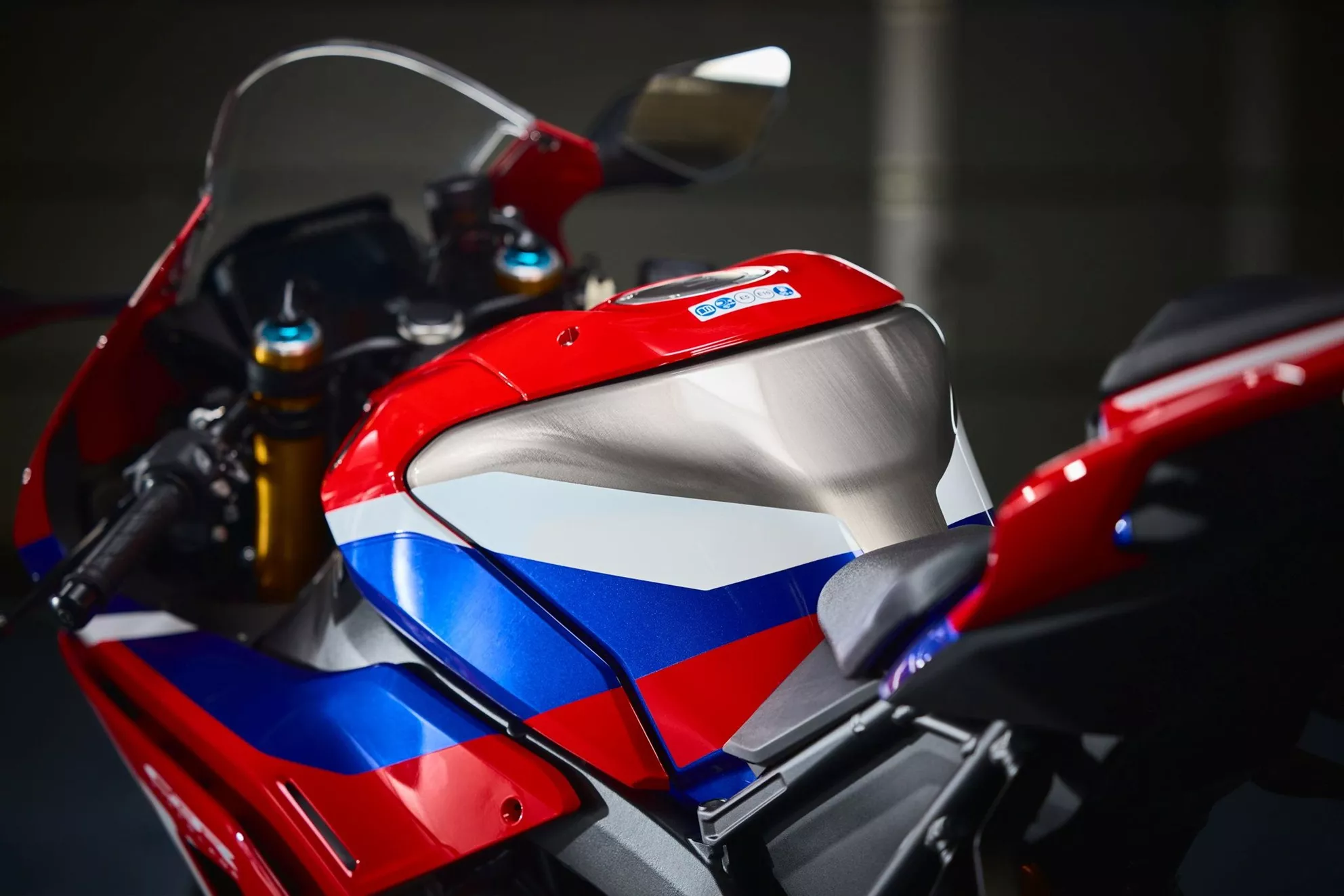
The 16.6-litre tank is made of titanium and does without an additional plastic cover.
- How much does a Honda CBR1000RR-R Fireblade cost?
- Here you will find an overview of the price level of new and used motorbikes!
The 16.6-litre tank is made of titanium and no longer needs an additional plastic cover. According to Honda, this is made possible by advances in titanium processing and painting technology. The SP/HRC documents quote a weight saving of 1.4 kilograms for this change. A new LED headlight integrates the DRL daytime running light and can be removed for track days. At the rear sits a new, lightweight LED tail light. In selected components, Honda also uses post-industrial recycled polypropylene and polyamide, polypropylene recovered from post-consumer waste and the bio-based plastic Durabio.
Honda Fireblade 2027: Electronics and controls
A six-axis IMU from Bosch supplies the motion data for the rider aids. For 2027, the engine and chassis settings have been adapted. Three riding modes are available, and power delivery can be adjusted in five levels. Engine braking offers three levels, with level one producing the strongest deceleration effect. Wheelie control also works in three levels and can be deactivated, while the HSTC traction control offers nine levels plus an off setting. Among other things, it takes the different wheel speeds into account to detect slip. For race starts, launch control limits revs to a choice of 6,000, 7,000, 8,000 or 9,000 rpm.
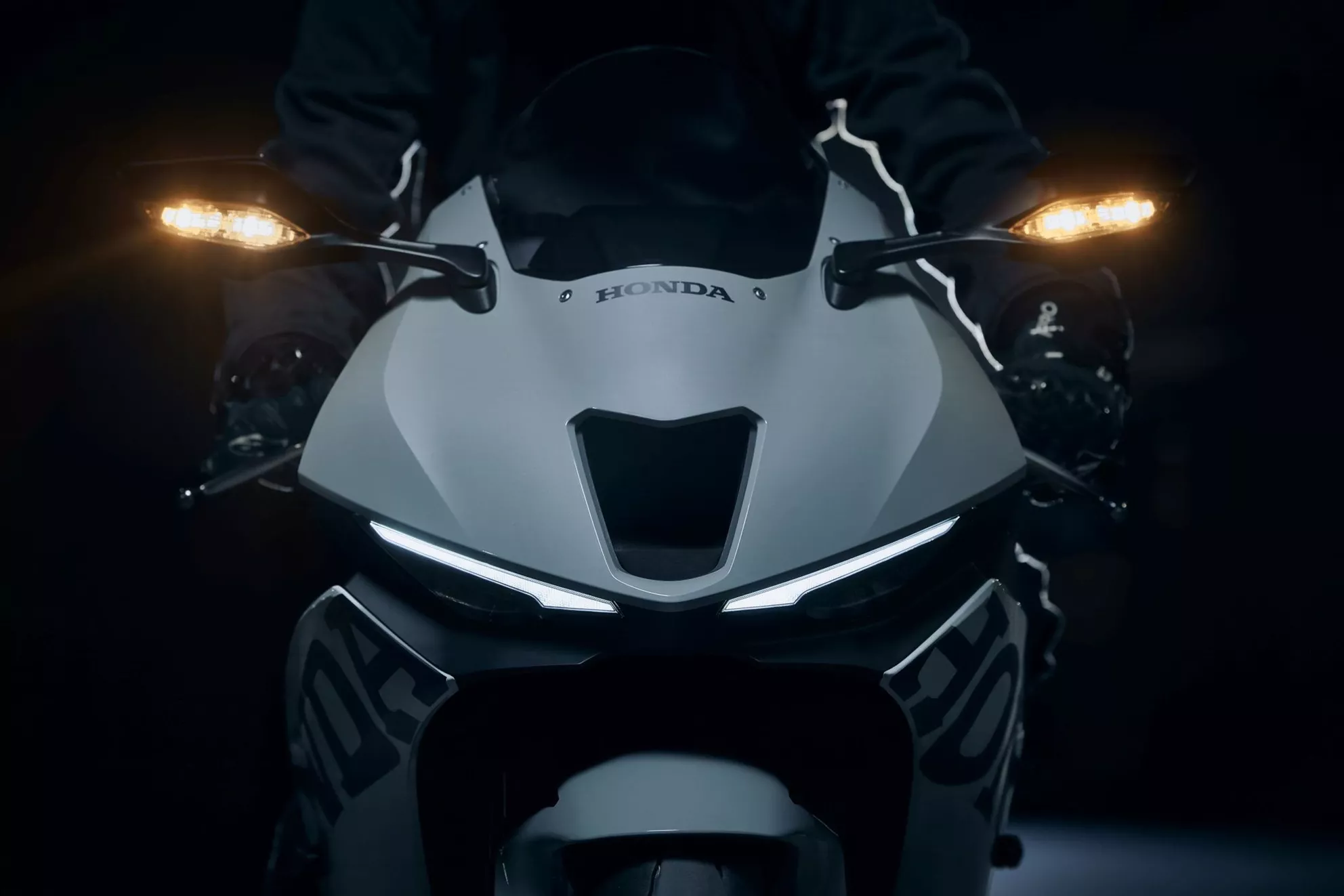
The new LED headlight integrates the DRL daytime running light.
The cornering ABS offers Standard, Track and Race settings. Standard is tuned for road use, Track for the conditions of hard braking on race tracks. In Race mode, ABS on the rear wheel is deactivated. There's also rear wheel lift detection and the three-level adjustable electronic Showa HESD steering damper. It is a rod-type unit mounted below the steering head and processes data from the wheel speed sensors and the IMU. The differences between the three model versions therefore start with the components, while the basic electronic package forms a common starting point.
Controls are via a four-way switch on the left and a customisable five-inch TFT. Up and down select riding mode parameters, left and right select information and screen layout. With a cold engine, the red zone of the rev counter display starts at 8,000 rpm. Only once the coolant has reached operating temperature does it move up to over 14,500 rpm. Smart key, immobiliser, electronic steering lock and self-cancelling indicators are also part of the features. The ESS emergency stop signal flashes the rear indicators during hard braking to warn following traffic.
Honda CBR1000RR-R Fireblade: The base model for 2027
The regular CBR1000RR-R Fireblade combines the new technology with mechanically adjustable Showa suspension. Up front sits a 43 mm Big Piston upside-down fork in revised triple clamps. It is slightly longer to leave more geometry scope for track setup. Spring preload, compression and rebound damping are adjustable. At the rear works the likewise fully adjustable Showa BFRC Lite shock. Its twin-tube design moves damping force generation from the piston to a separate unit. According to Honda, the more even pressure changes are intended to support controlled response even during the transition between rebound and compression movement. Suspension travel is 125 mm at the front and 143 mm at the rear.
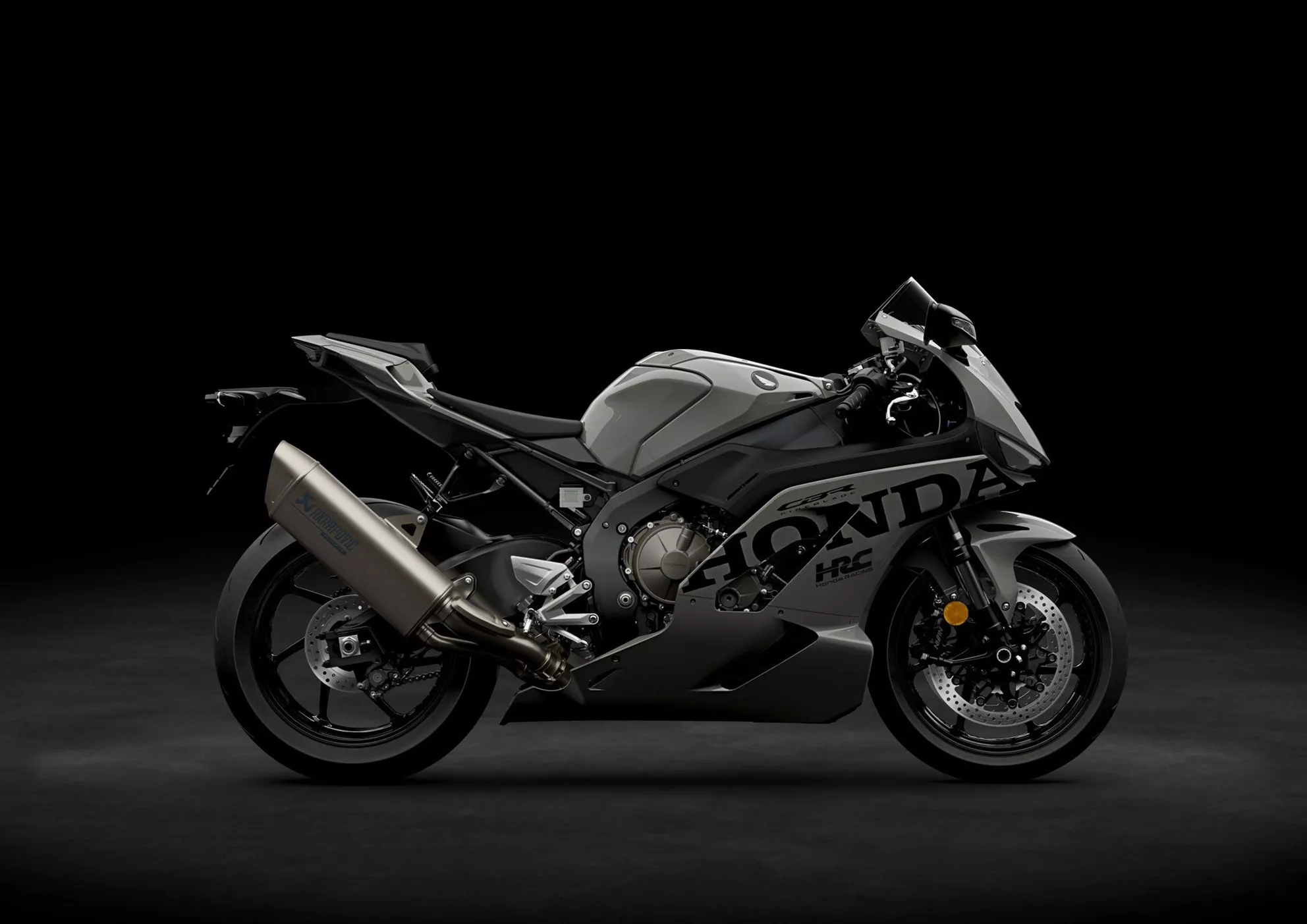
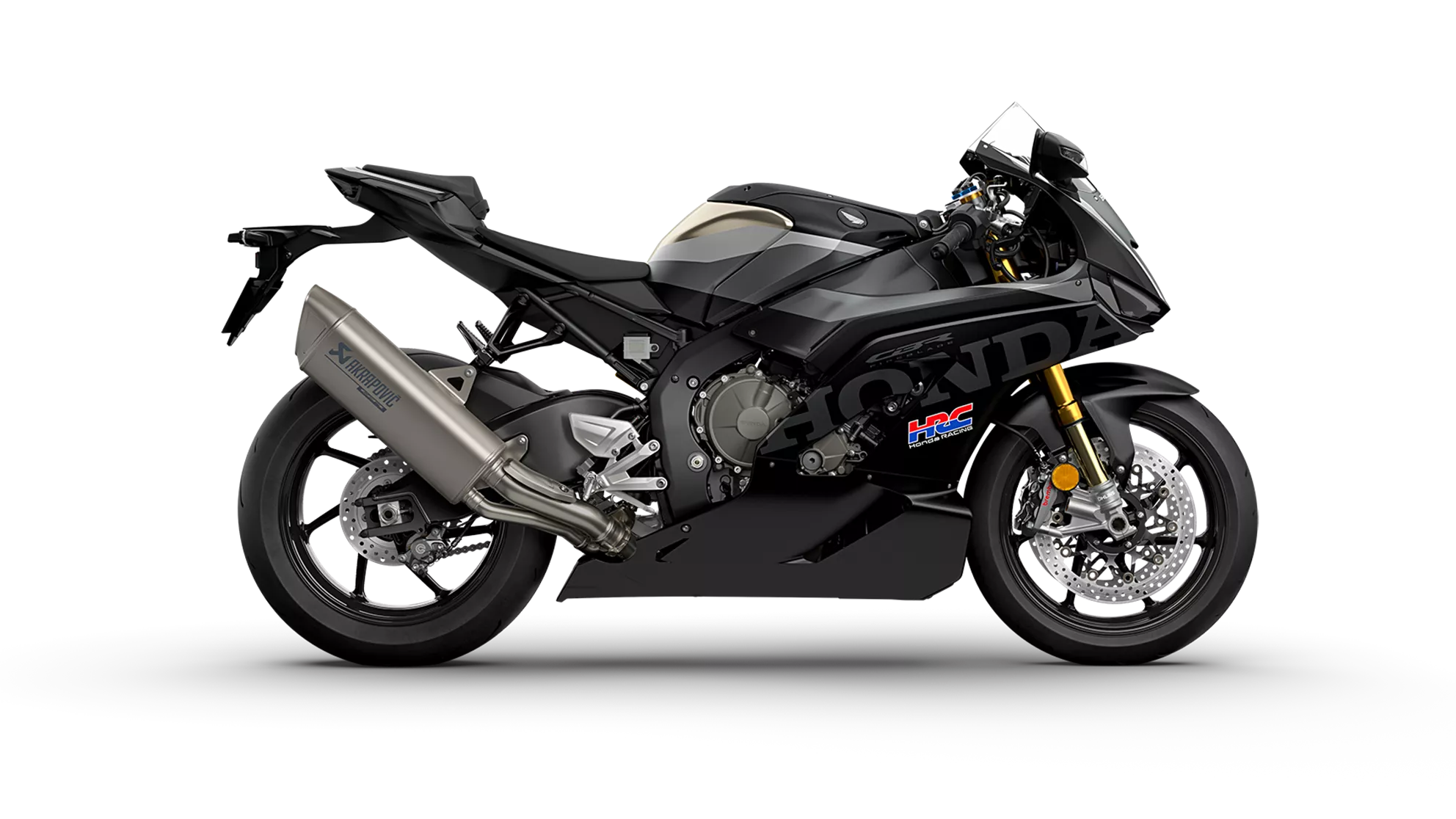
The base version comes in Pearl Deep Mud Gray and, according to Honda, weighs 199 kg fueled up.
At the front, lighter radially mounted Nissin four-piston calipers bite on twin 330 mm discs. Their thickness drops from five to 4.5 mm. The piston material and surface treatment of the calipers are designed for heat dissipation. At the rear it stays with a 220 mm disc and Brembo two-piston caliper. Honda quotes 199 kg weight fueled up for the base version. Seat height is 843 mm, wheelbase 1,455 mm, rake 24 degrees and trail 101 mm. Ground clearance is 130 mm. The base version comes in Pearl Deep Mud Gray. A quickshifter is part of the accessories range here.
Honda CBR1000RR-R Fireblade SP: Electronic Öhlins
The SP relies on electronically controlled Öhlins components at both ends. Up front works a 43 mm NPX-SV upside-down fork with Smart Electronic Control SE-C3.0, at the rear a TTX36-SV shock. Both use spool valve technology. Via the OBTi interface in the TFT, front and rear can be tuned to the desired requirements. Three custom setups can be saved, for example to respond to different weather conditions, tyre wear or fuel levels. For the manually adjustable spring preload, the display shows recommendations based on rider weight. The upper and lower triple clamps are made of forged aluminium.
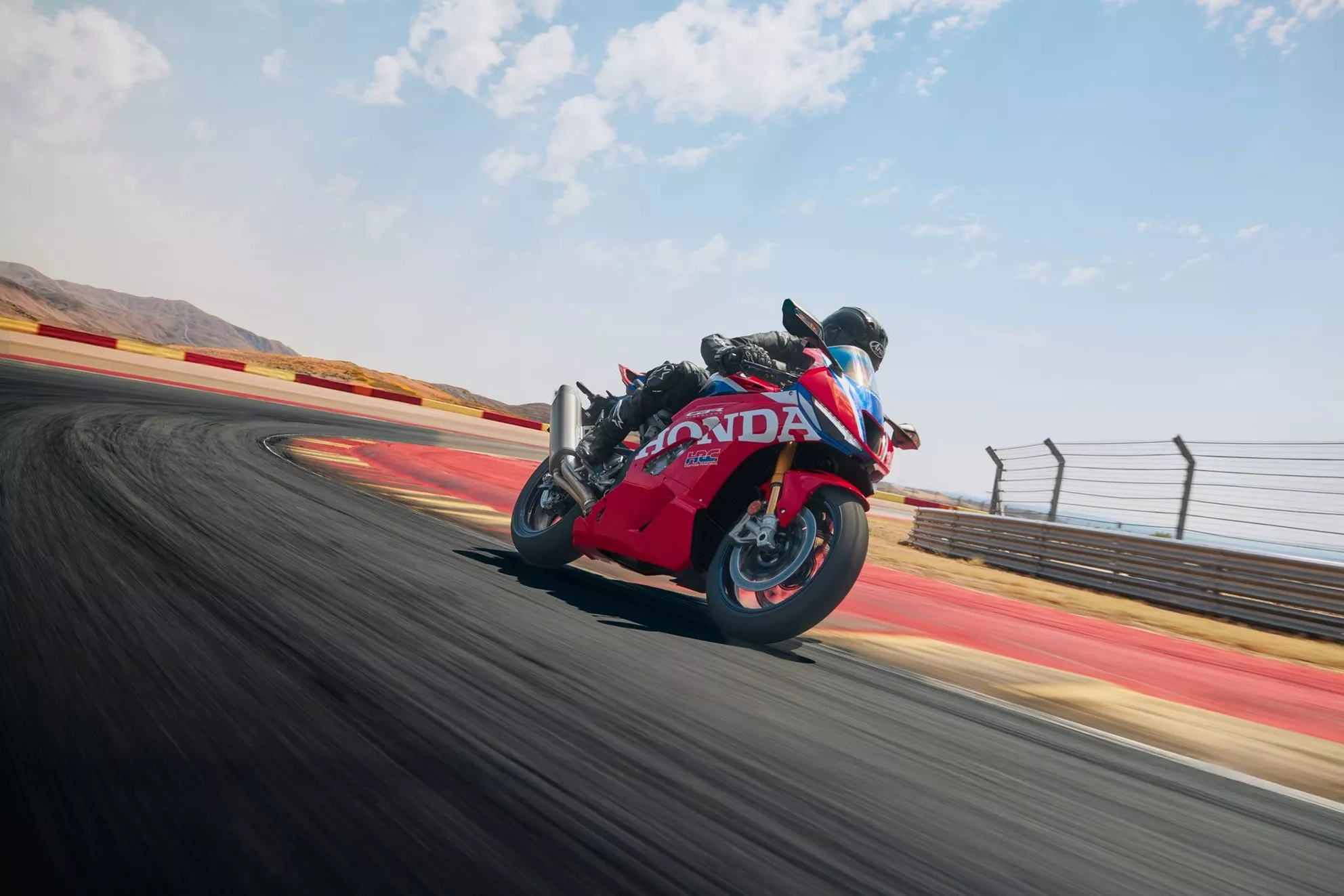
The SP combines the new chassis base with electronically controlled Öhlins suspension.
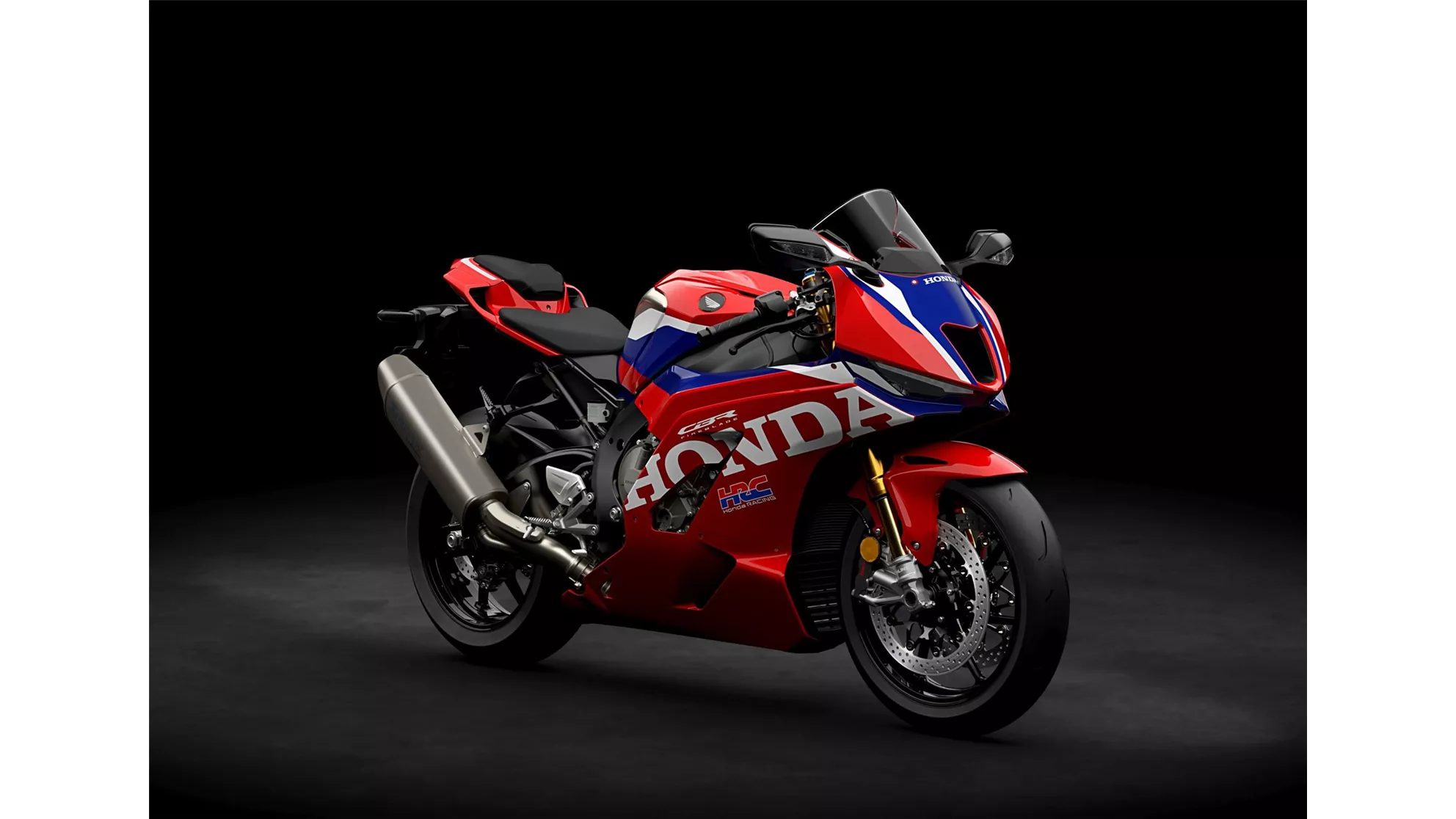
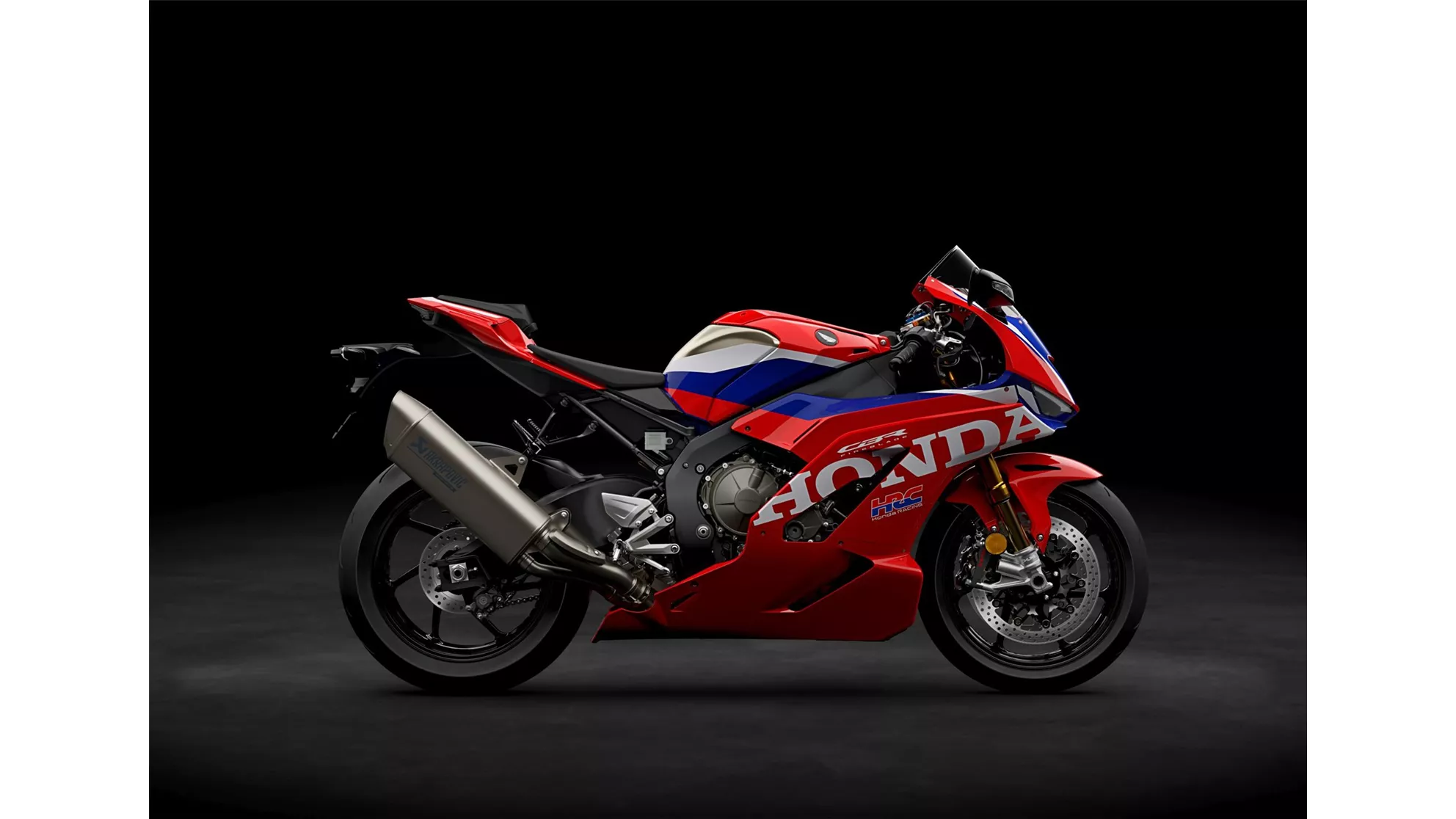
On the braking side, Brembo Hypure four-piston calipers replace the previous Stylema calipers. They're joined by a new Brembo master cylinder and brake lever. The SP also uses 330 mm discs with 4.5 mm thickness at the front and a 220 mm disc with Brembo two-piston caliper at the rear. Suspension travel remains at 125 and 143 mm. At 201 kg weight fueled up, the SP is two kilograms heavier than the base version. Seat height, rake and trail are 843 mm, 24 degrees and 101 mm. The quickshifter is standard. Honda offers the SP in Ignition Red and Mat Ballistic Black Metallic.
Honda Fireblade HRC Works Edition: Racing geometry
The HRC Works Edition adopts the new engine and frame developments but extends the options for targeted track setup. Inserts allow the rake to be altered, and the swingarm pivot position is also adjustable. This makes it possible to adjust the behaviour of the rear under acceleration and braking – known in technical terms as anti-squat and anti-lift. In the stated base configuration, Honda quotes a rake of 23.8 degrees and 99.8 mm of trail. At 847 mm, the seat is higher still than on the base and SP, and ground clearance is 135 mm.
- How much does a Honda CBR1000RR-R Fireblade SP cost?
- Here you will find an overview of the price level of new and used motorbikes!
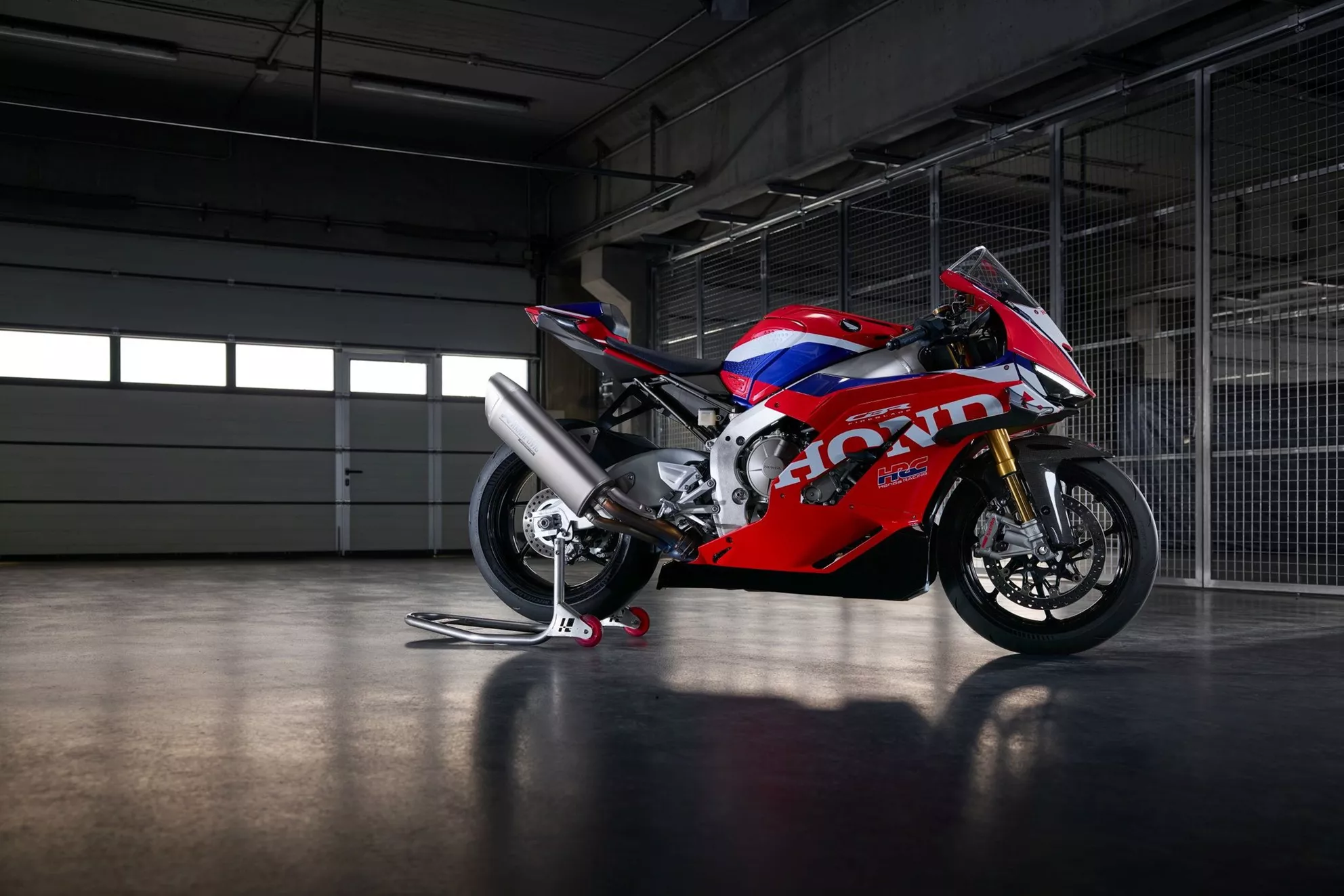
The HRC Works Edition is designed as a single-seater and, according to Honda, weighs 200 kg fueled up.
Honda takes a different route with the suspension here than on the SP. The HRC Works Edition gets a purely mechanical, fully adjustable Öhlins NPX28-30 upside-down fork and a TTX36 shock. Fork diameter is again 43 mm, and suspension travel is likewise 125 and 143 mm. At the front, Brembo Hypure Sport four-piston calipers are used. Honda quotes 32 grams less weight than the previous Stylema calipers and promises higher, more consistent braking performance in racing use. Weight fueled up is 200 kg. It is designed as a single-seater and does without pillion footpegs and their brackets. The HRC Works Edition is available in Ignition Red.
Honda Fireblade HRC WE: Carbon and HRC shift system
While the base and SP manage without additional winglets, the HRC Works Edition carries two-piece carbon winglets at the front. According to Honda, the surface area of the upper wing is 2.4 times that of the previous version. At 299 km/h, the winglets are said to generate 3.5 times as much downforce as the standard 2027 model year Fireblade. This is a manufacturer claim for this specific comparison and this speed. Together with air ducts in the tail and an aerodynamically shaped carbon fibre front mudguard, the components are intended to improve front wheel stability under acceleration and the effectiveness of the lower fairing elements.
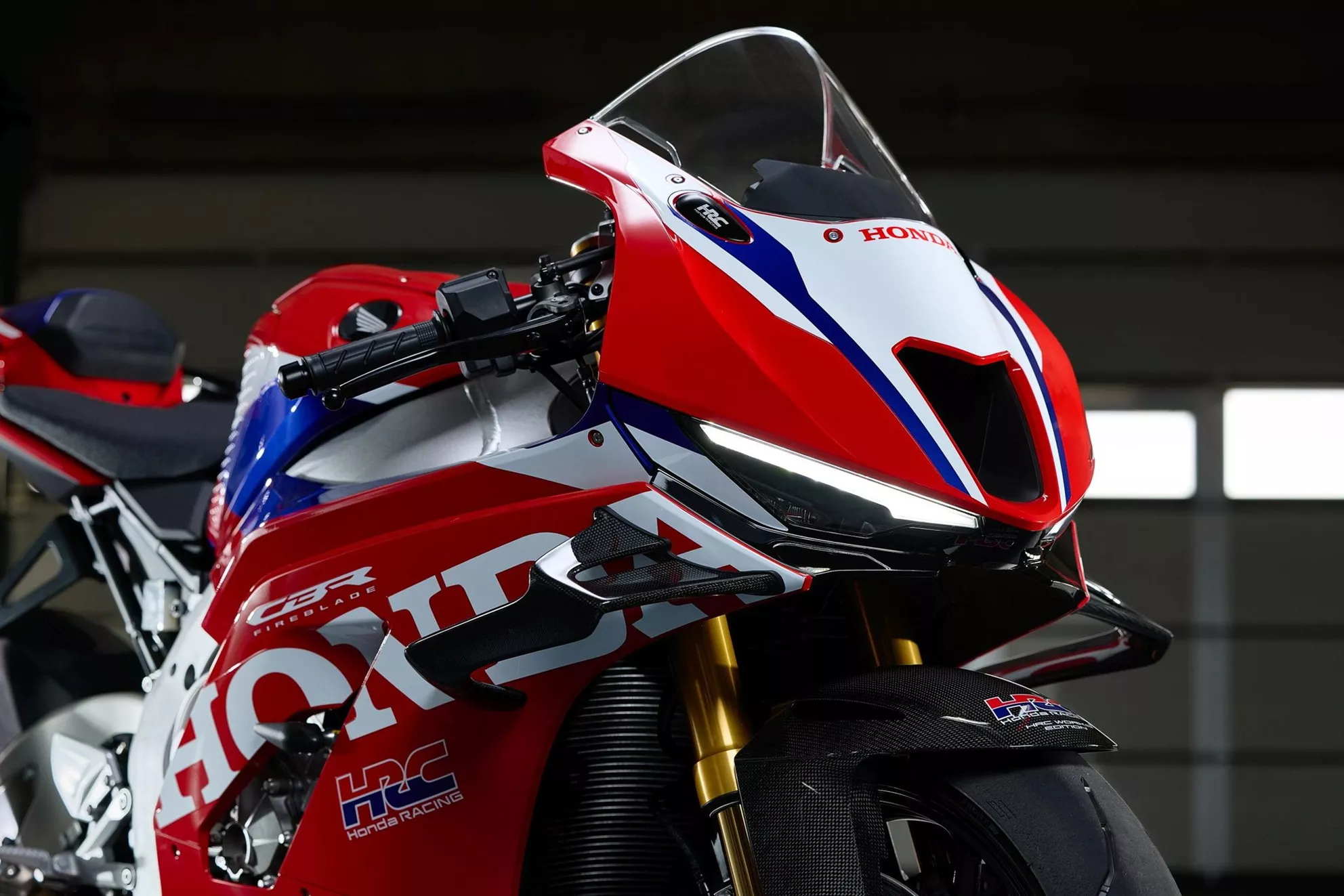
Two-piece carbon winglets complement the aerodynamics of the HRC Works Edition.
In addition to the standard quickshifter, a bottom-neutral shift system is available as an optional HRC racing solution. Here, neutral sits at the bottom end of the shift travel and can only be selected after releasing a lock. This is intended to prevent neutral from being accidentally found when shifting between first and second gear. The HRC version also greets the rider with its own HRC start-up animation on the display. Important when using the adjustment options: according to Honda, changes to the steering head and swingarm pivot are not permitted on public roads and void the vehicle warranty. Changes to gear ratios and valve timing are likewise not permitted for use on public roads and affect the warranty.
Honda Fireblade 2027: Sport and Track accessories
For the base version, the Sport pack bundles a tinted windscreen, tank pad, rim stickers, frame protectors, sprocket guard, seat cowl and quickshifter. The Track pack includes, among other things, an oil filler cap, side tank pads, covers for the mirror mounts, licence plate holder holes and pillion seat area, a sport seat, quickshifter and chain guard kit. Also available are items such as a USB-C charging socket, an indoor bike cover and an HRC sticker set. New for 2027 are the tinted windscreen and revised HRC graphics.
The SP and Works Edition get their own pack contents. The SP Track pack combines an HRC oil filler cap, side tank protectors, frame protectors, mirror and licence plate holder hole covers, drive chain cover, sport seat and pillion seat cowl. The Works Edition Track pack drops the two seat components. The Sport packs bundle a tinted windscreen, centre tank protector, rim decals, frame and drive chain protection, plus a pillion seat cowl on the SP. Honda additionally lists HRC stickers, an Easy-Kit USB and an indoor folding garage. The packs complement the respective model version and do not constitute additional Fireblade variants.
Honda Fireblade 2027: Questions about the three models
How much power do the new Fireblade versions have? According to Honda, all three models produce 217.6 hp or 160 kW at 14,000 rpm and reach 114 Nm at 10,500 rpm. The engine development is aimed primarily at more power in the midrange, partly thanks to two-stage variable intake funnels.
What distinguishes the Fireblade SP from the base version? The SP gets electronically controlled Öhlins suspension, Brembo Hypure front brakes with a new master cylinder and a standard quickshifter. The base version uses mechanically adjustable Showa suspension and Nissin front brakes. Honda quotes a weight fueled up of 199 kg for the base and 201 kg for the SP.
What sets the HRC Works Edition apart? It combines adjustable steering head and swingarm pivot geometry with mechanical Öhlins suspension, Brembo Hypure Sport calipers, carbon aerodynamics and a single-seat configuration. Weight fueled up is 200 kg, seat height 847 mm. A bottom-neutral shift system can be implemented with optional HRC racing components.
Do all 2027 Fireblade models have winglets? According to Honda, the base and SP generate their downforce via the redesigned fairing including sidepods and front spoiler, without separate winglets. The HRC Works Edition adds two-piece carbon winglets and further carbon air-guiding elements to this foundation.
What rider aids does the Fireblade family offer? The features include a six-axis IMU, three riding modes, nine-level adjustable and switchable HSTC traction control, adjustable engine braking and wheelie control, four-stage launch control, cornering ABS with Standard, Track and Race settings and the electronic HESD steering damper. In Race ABS mode, ABS intervention on the rear wheel is switched off.
- How much does a Honda CBR1000RR-R Fireblade HRC WE cost?
- Here you will find an overview of the price level of new and used motorbikes!
More from 1000PS Magazine
New Honda CBR1000RR-R Fireblade 2027 in three versions Images
Source: 1000PS

All three 2027 Fireblade versions share the updated 1,000cc inline-four engine.

According to Honda, the base Fireblade produces 217.6 hp at 14,000 rpm.

The SP also uses an engine with two-stage variable intake funnels.

Honda also quotes 114 Nm at 10,500 rpm for the HRC Works Edition.

Below 11,750 rpm, the new intake trumpets operate in their longer configuration.

Above 11,750 rpm, the intake switches to the short configuration.

The standard-fit titanium Akrapovic silencer is compactly designed to centralise mass.

The base model pairs the new fairing with Pearl Deep Mud Gray paint.

The base model does without separate winglets; sidepods and the front spoiler handle the airflow.

The titanium fuel tank holds 16.6 litres, eliminating the need for an additional plastic cover.

The DRL is integrated into the redesigned LED headlight.

Three riding modes and individually adjustable rider aids are part of the electronics package.

The HSTC traction control can be adjusted across nine levels or switched off.

The wheelie control offers three levels and can also be switched off.

The Fireblade’s lighting package also includes a redesigned LED taillight.

Honda quotes a wet weight of 199 kg and a seat height of 843 mm for the base model.

The SP gets electronically controlled Öhlins suspension with spool valve technology.

On the SP, Brembo Hypure four-piston calipers replace the previous Stylema calipers.

The SP’s electronic Öhlins suspension can be adjusted via the OBTi interface in the TFT display.

The Fireblade SP can store three custom suspension setups.

At 201 kg fully fuelled, the SP is two kilograms heavier than the base model.

The SP has a seat height of 843 mm and comes with a quickshifter as standard.

Ignition Red is one of the two announced colour options for the Fireblade SP.

The HRC Works Edition does away with the pillion footpegs and their brackets.

The Works Edition pairs mechanical Öhlins suspension with a single-seat setup.

The HRC Works Edition features a fully adjustable Öhlins mechanical fork.

Steering-head angle and swingarm pivot position can be adjusted on the HRC version for track use.

Honda lists a 23.8-degree rake angle and 99.8 mm of trail for the HRC base setup.

At 847 mm, the HRC Works Edition has a higher seat height than the standard and SP versions.

According to the manufacturer, the HRC Works Edition weighs 200 kg fully fuelled.

Brembo Hypure sport four-piston calipers handle braking at the front on the HRC Works Edition.

Two-piece carbon-fibre front winglets set the HRC Works Edition apart.

At 299 km/h, Honda says the HRC winglets generate 3.5 times as much downforce as the 2027 base model.

Carbon air ducts at the rear and a carbon front fender round out the aero package.