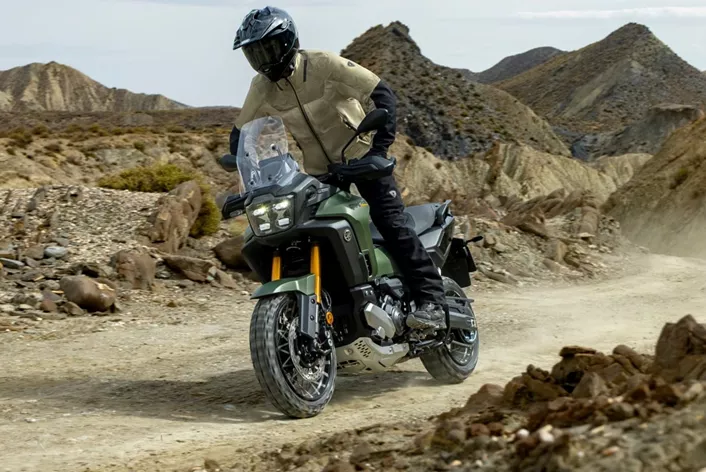
From the commute straight onto the gravel: with the new RW range, Yamaha aims to bridge the gap between its MAX scooters and the Ténéré world. To do so, the RW700 and RW700 Explore for model year 2027 combine scooter fairing and helmet compartment with a CP2 twin, chain drive and an automated six-speed gearbox. The exciting part is the freedom of movement. Instead of locking you into a single seating position, both models are designed to let you ride standing up as well. The Explore uses the same technical basis and adds extra adjustment options and comfort features.
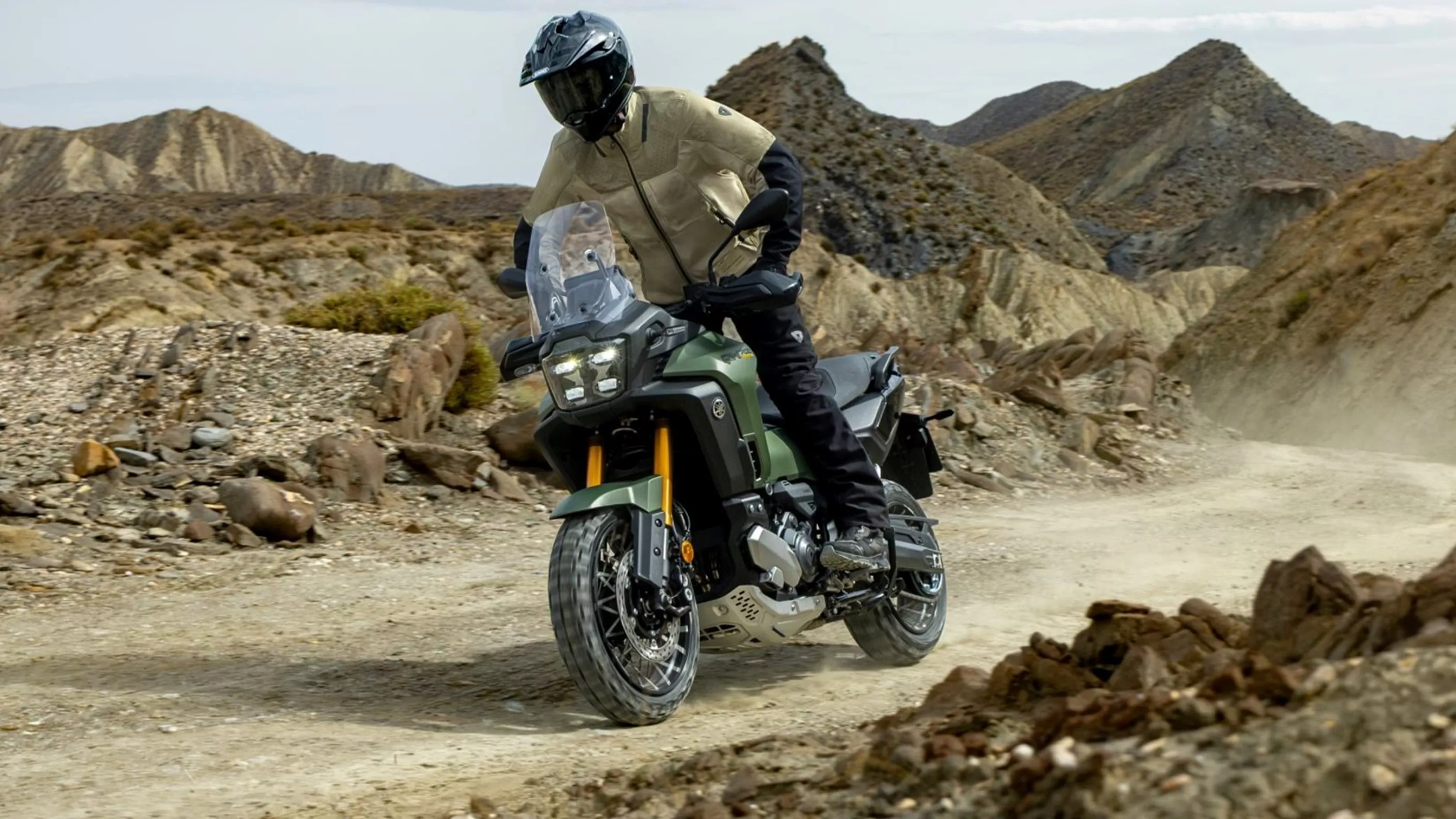
Yamaha RW700 and RW700 Explore 2027: New adventure scooters
CP2 engine, six gears and room for a full-face helmet
A scooter with motorcycle tech and gravel ambitions: Yamaha combines the CP2 twin with Y-AMT, spoked wheels and variable foot positions. The Explore ups the ante on chassis and comfort.

Der Horvath
published on 11/2/2026
1,211 Views
Yamaha RW700: CP2 with 69.3 hp and Y-AMT
According to the spec sheets, both models are powered by a liquid-cooled DOHC twin with four valves per cylinder and 689 cc. Yamaha quotes 69.3 hp at 8,250 rpm and 65 Nm at 6,500 to 6,750 rpm. A restricted version with 35 kW or 47.6 hp at 8,250 rpm is also listed. The Euro 5+ CP2 features fuel injection and the electronically controlled YCC-T throttle. Its setup is meant to deliver nicely controllable power, especially at small throttle openings, in city traffic as well as on loose surfaces.
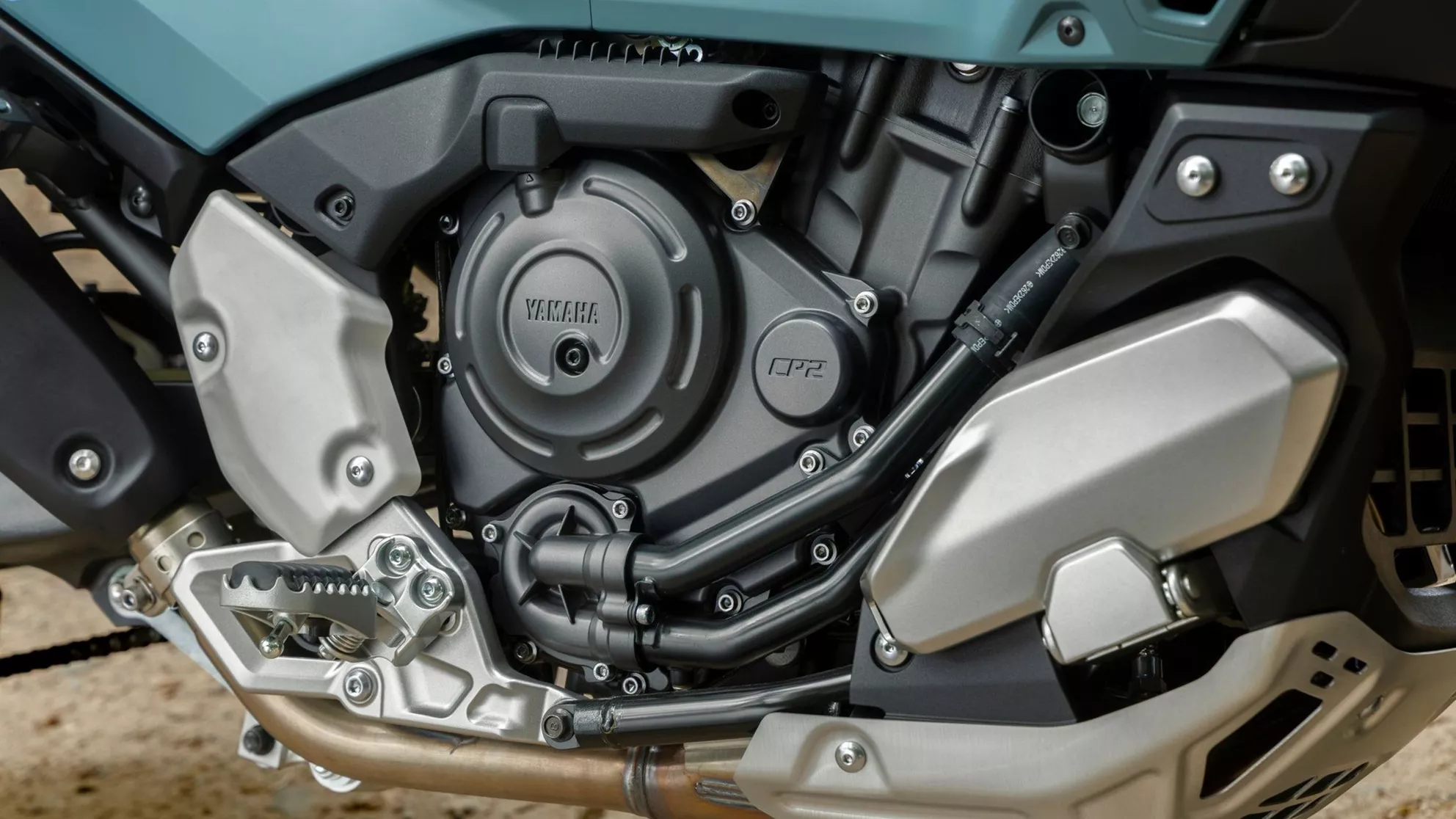
According to the spec sheet, the CP2 twin produces 69.3 hp and drives the rear wheel via chain.
Shifting is handled by the Y-AMT, revised for the RW range. There is no clutch lever and no foot shifter. You can either select the six gears yourself via a paddle on the handlebar or leave gear changes entirely to the automatic. Yamaha quotes shift times of 0.1 seconds for the Y-AMT system and is using it off-road for the first time here. A rubberised clutch damper and modified spring preload on the shift rod are designed to make changes smoother. The shape and position of the paddle have also been adapted to the RW's handlebar and brake lever. A wet multi-plate clutch and chain final drive complete the drivetrain.
RW700 riding modes: road, gravel and IMU
Yamaha Ride Control splits its five riding modes into ROAD and GRAVEL. On tarmac, STREET, SPORT and ECO are available. STREET is intended for a broad range of everyday riding, SPORT for more direct engine response in the twisties and ECO for toned-down power delivery with a focus on economical riding. On gravel, EXPLORE and EXPLORE+ come into play. Both also factor in shift behaviour; EXPLORE+ offers punchier engine response and can be individually configured. The EXPLORE mode name is not a feature exclusive to the model variant of the same name.
A six-axis IMU provides the data for the lean-sensitive rider aids. Adjustable are the PWR power characteristics, the TCS traction control and the SCS slide control, which detects the rear wheel stepping out sideways and adjusts engine output. BCS modulates brake pressure when a slide is detected while leaned over, while the Back-slip Regulator BSR is designed to use engine torque to counteract a locking rear wheel. BCS and BSR can be switched off in all riding modes. Rear ABS can only be deactivated in GRAVEL.
The gravel setup also includes Gravel Shift. In automatic mode, the system takes speed, revs, throttle position and selected gear into account. The GRAVEL shift program suppresses upshifts after opening the throttle and while the rear wheel is sliding. This is meant to make it easier to modulate drive and slip. When rear-wheel lock-up or hard braking is detected, the control system also reduces the transmittable clutch force to prevent the engine from stalling. Yamaha also cites situations with a wheel spinning on an obstacle as a use case.
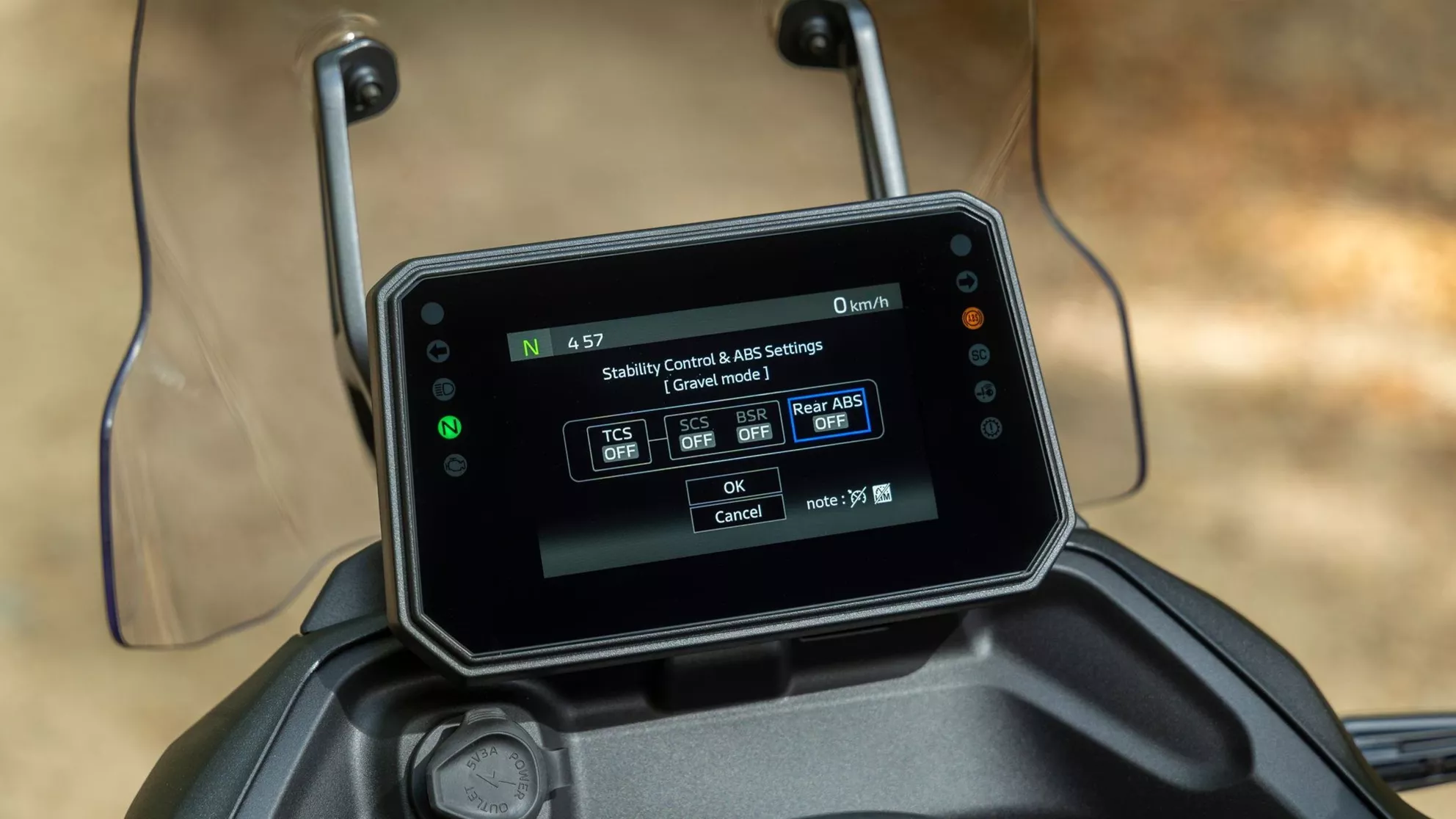
Yamaha Ride Control splits the five riding modes into ROAD and GRAVEL.
RW700 chassis with spoked wheels and long suspension travel
Both models are built around a tubular steel frame. Up front is a 41 mm upside-down fork with 160 mm of travel, at the rear a linkage-mounted monoshock with 155 mm. The shock offers adjustable spring preload and rebound damping, with preload in seven steps. The RW700 Explore adds 15 mm of preload adjustment and eleven rebound positions to the fork. According to the spec sheet, wheelbase and ground clearance are 1,585 and 170 mm respectively. Weight fueled up is 221 kg for the RW700 and 224 kg for the Explore.
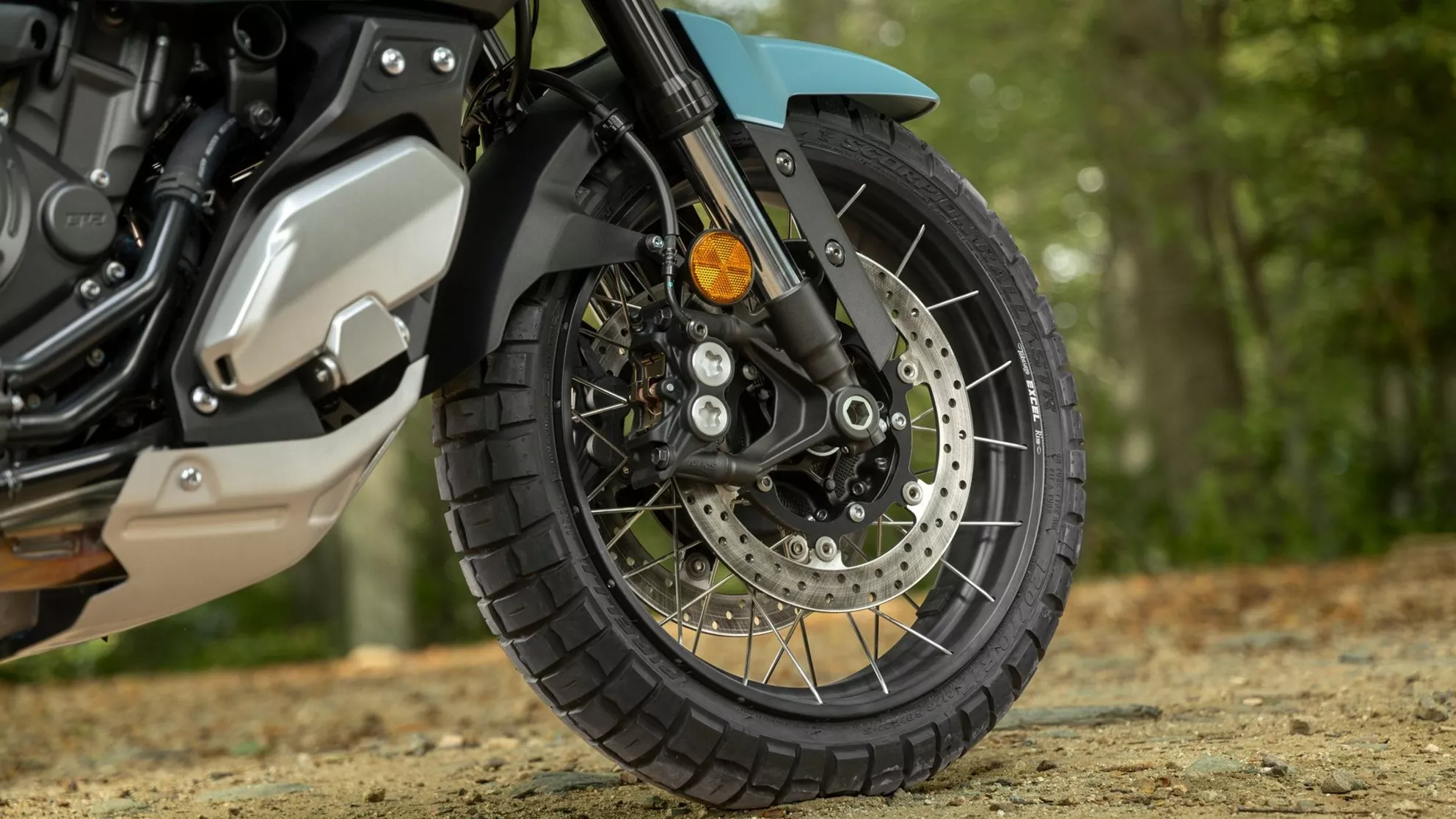
Up front, two 298 mm discs with radially mounted four-piston calipers do the braking.
Aluminium rims with cross-laced stainless steel spokes carry tubeless Pirelli Scorpion Rally STR tyres. Yamaha pairs a 17-inch front wheel with a 120/70 tyre and a 15-inch rear wheel with a 160/60 tyre. The front brake consists of two floating 298 mm discs and radially mounted four-piston calipers. At the rear, a 267 mm disc with a single-piston caliper does the stopping. ABS on both wheels is standard. An aluminium bash plate is designed to protect engine, frame and exhaust from damage. On top of that come a tapered aluminium handlebar, plastic handguards and a fixed windscreen.
RW700 ergonomics: footpegs instead of a fixed seating position
Seat height is 810 mm on both variants. Yamaha has shaped the rider's seat narrow at the front, leaving room to move forwards, backwards and sideways. This is meant to make it easier both to reach the ground when stopping and to shift weight on uneven surfaces. The fairing offers contact surfaces at the knees for riding while standing. The footpegs can be moved into four positions, varying both location and height. Their rubber inserts damp vibrations and can be removed for more grip.
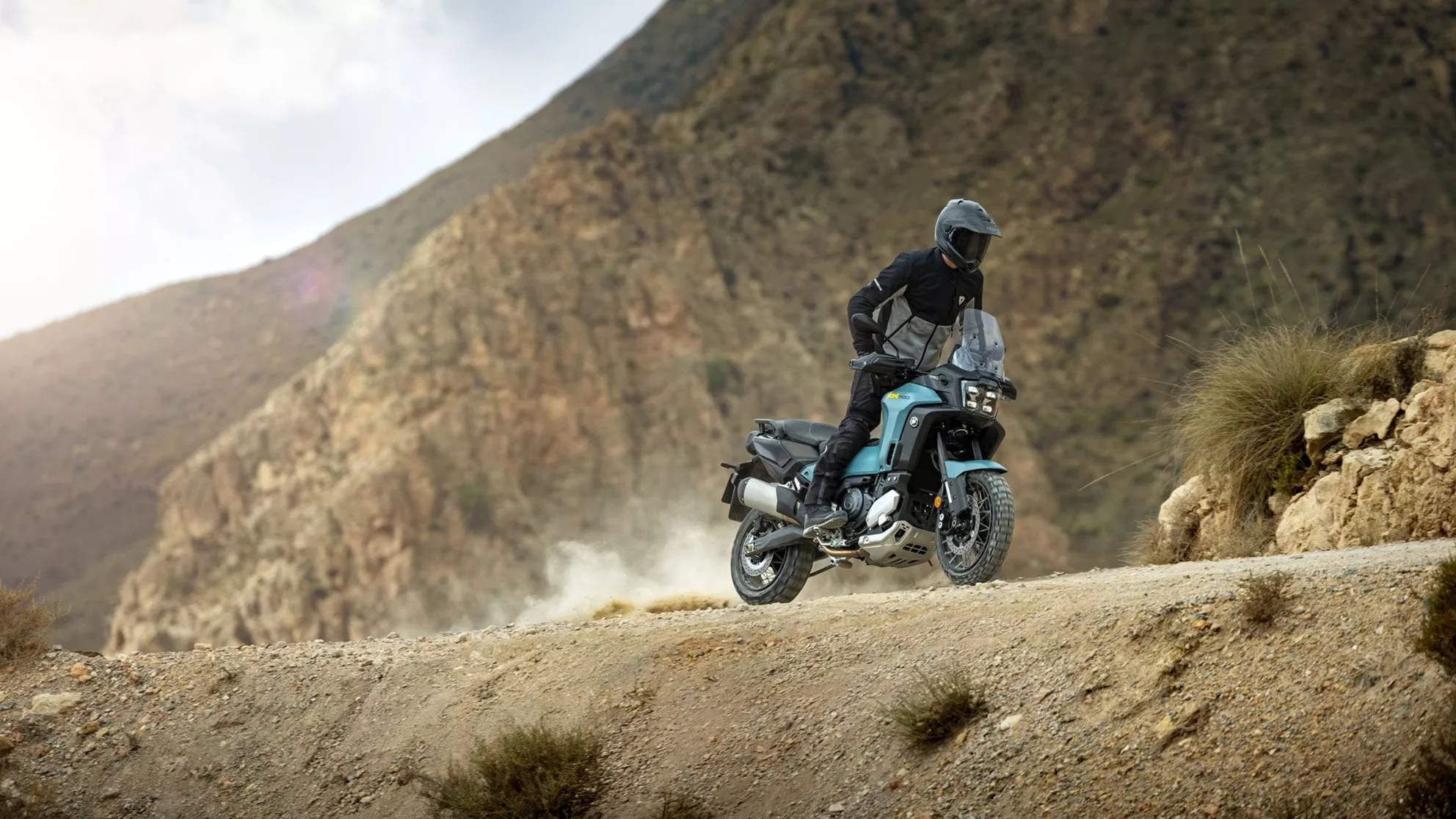
The RW700 combines scooter fairing with an active stance on the footpegs.
In addition, there are fold-out footrests positioned further forward for a more relaxed posture with legs more stretched out. The idea behind it is a quick switch between scooter comfort and a more active position on the pegs. A wide seat area is provided for the pillion. Under the seat sits an LED-lit storage compartment which, according to Yamaha, can hold a full-face helmet. One explicit caveat: whether your helmet fits depends on its size and shape. Both versions have a 14-litre tank.
RW700 features: navigation and cruise control
Cruise control compatible with the automatic gear changes and the adjustable Yamaha Variable Speed Limiter are standard features. The five-inch colour TFT offers three layouts, including an exclusive RW layout with a mountain motif and minimalist views. The free MyRide app integrates smartphone functions such as call notifications and music control. The likewise free Garmin StreetCross app provides map or turn-by-turn arrow navigation including real-time traffic information. A USB-C port is located in the cockpit.
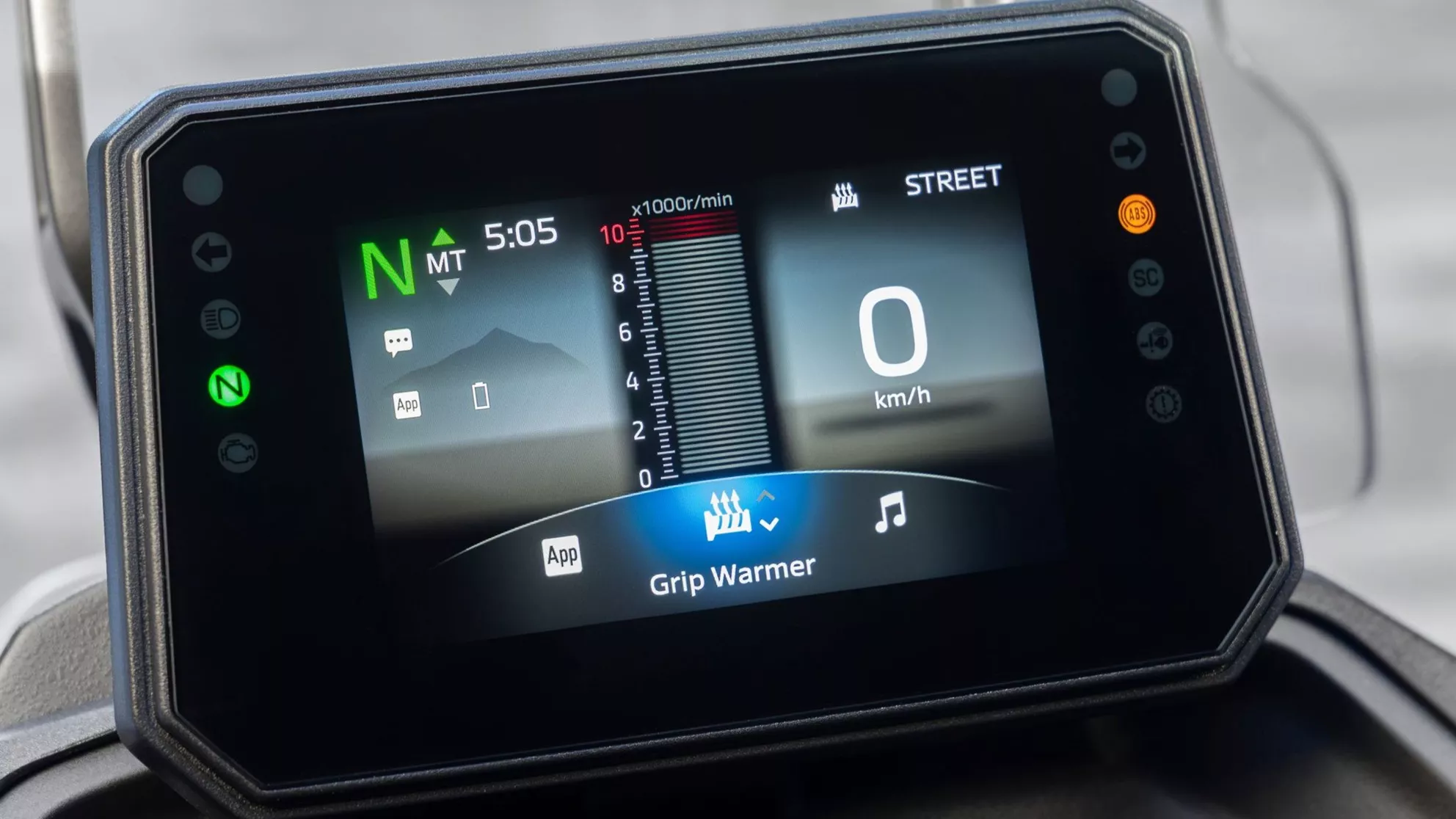
Garmin StreetCross provides navigation on the Explore's TFT.
MyRide is available for iOS and Android and can also save routes, add photos to rides and enable sharing. Ride data that can be analysed includes distance, elevation gain, top and average speed, acceleration and lean angle. The connection also displays incoming calls and messages. With the key in your pocket, the Smart Key system gives access to ignition, engine start and stop, steering lock as well as seat and fuel cap release. With the ignition on and the brake lever pulled, a short press of the starter button is all it takes to start.
Lighting is all-LED, with the headlight made up of four units. Besides continuous and hazard flashing, the indicators offer a lane-change function with three flashes after a light tap of the switch. Under hard braking, Emergency Stop Signalling activates both indicators. Automatic cancelling takes place after 15 seconds, provided more than 150 metres have been covered.
Yamaha RW700 Explore: more comfort straight from the factory
The Explore differs from the RW700 in its additionally adjustable fork, heated grips and a heated rider seat, each with ten heat levels. Seat heating explicitly applies to the rider only. Added to that are a centre stand and backlit controls. Engine output, riding modes, wheel sizes and suspension travel remain the same. Opting for the Explore mainly gets you more comfort and extra options for tuning the suspension. Both adventure scooters share the same technical basis.
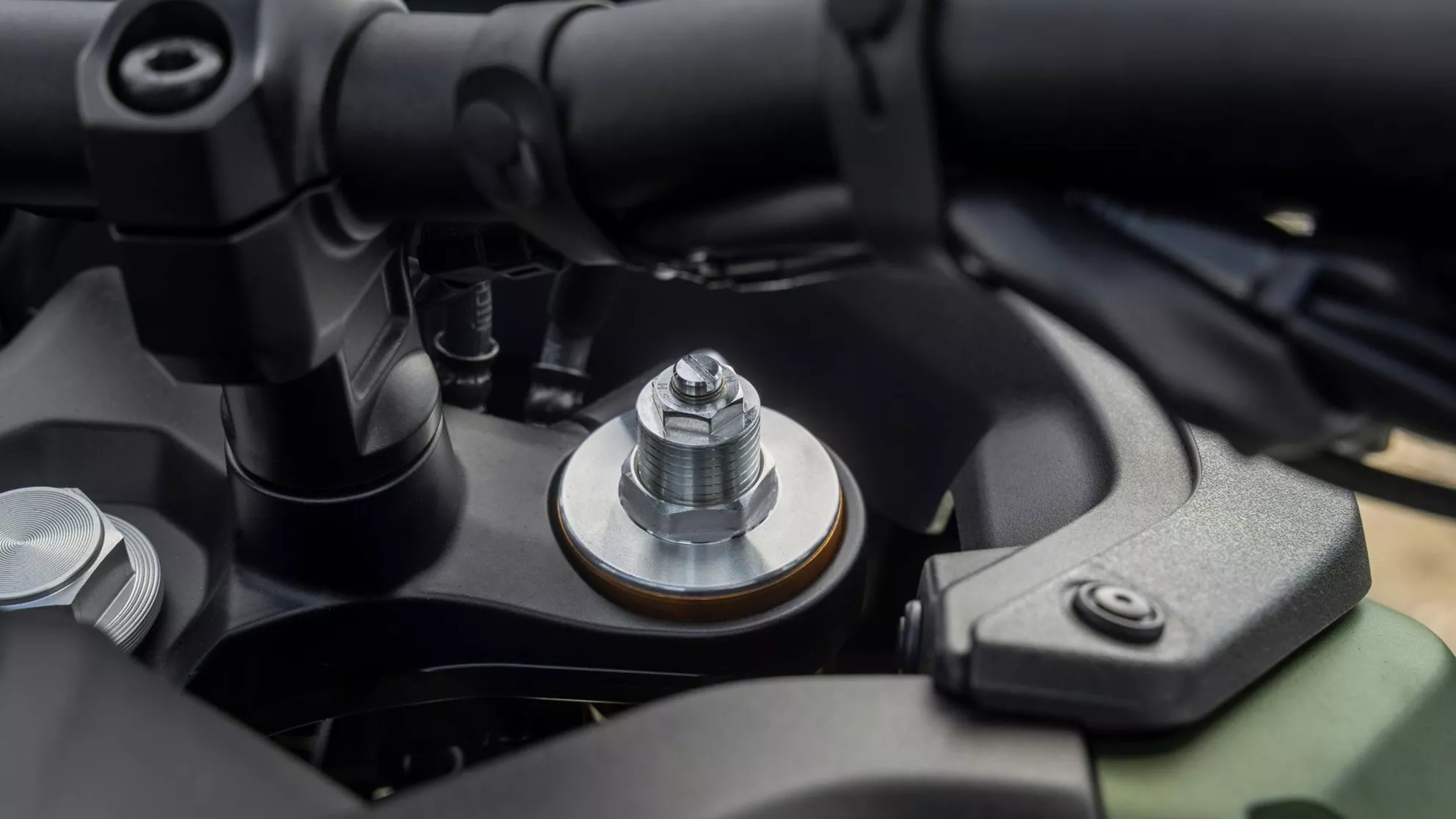
Preload and rebound damping can be adjusted on the Explore's fork.
RW700 design, colours and genuine accessories
Under the name TEXNATURE, Yamaha draws on impressions from nature for surfaces and shapes. As concrete inspirations, the manufacturer cites the Tenryu River and the Nakatajima sand dunes in its home region. Samples taken there serve as the basis for the textures. According to the manufacturer, recycled and bio-based materials are also used, including DURABIO, a plastic derived predominantly from plant-based raw materials.
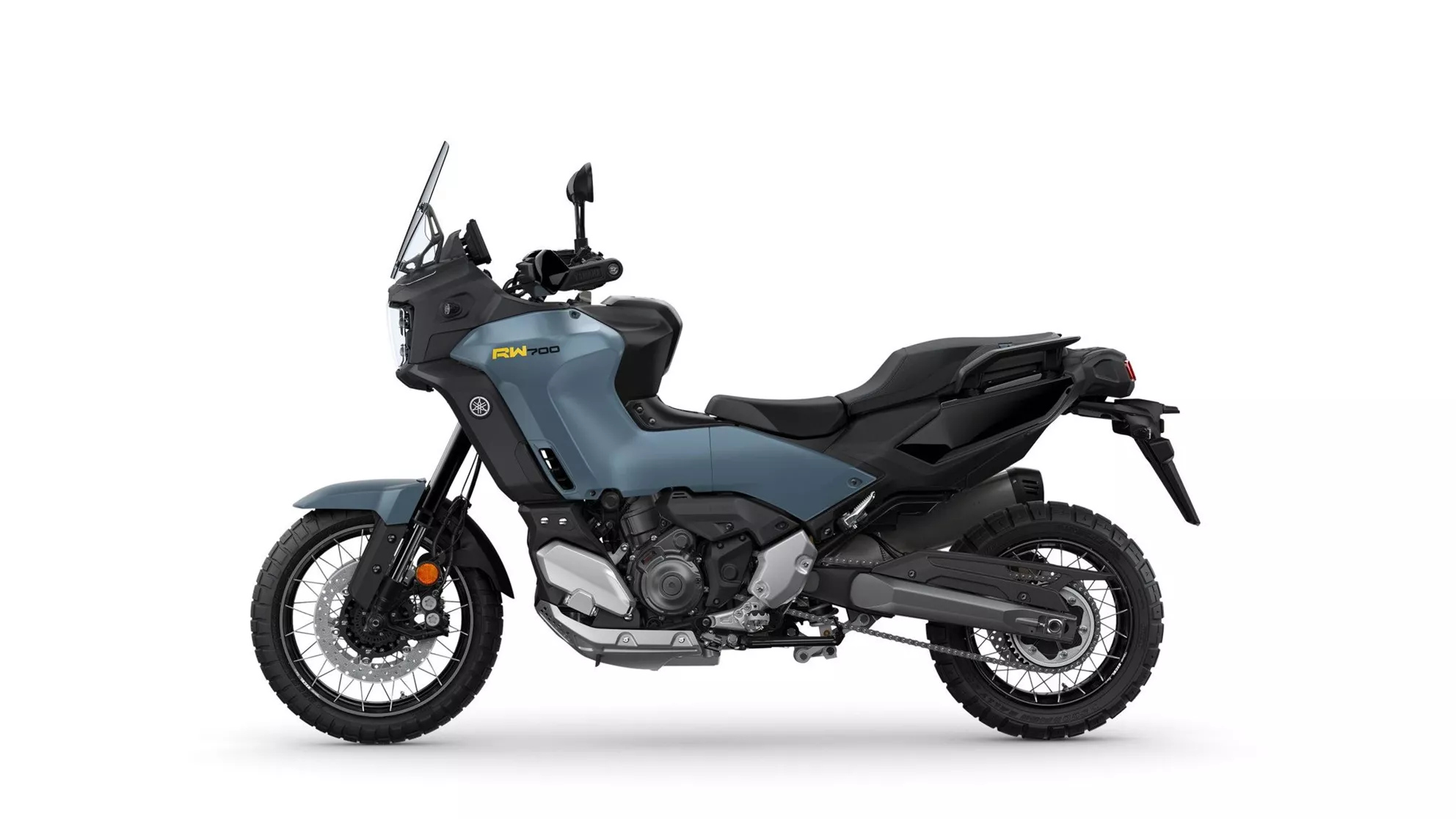
On the chain side, the motorcycle drivetrain of the RW700 in Sage Blue comes into view.
The RW700 is presented in Sage Blue and Power Grey, the RW700 Explore in Forest Green and Midnight Black. On the black Explore, Sage Blue details add accents. Genuine accessories include packs and individually available components, among them new aluminium side cases and a top case, redesigned soft bags and protection parts for radiator, front fairing and headlight. According to Yamaha, the parts can be ordered before ordering the vehicle and fitted by the dealer. There is also adventure apparel and merchandise including T-shirts and hoodies. The documents provided give neither prices nor a specific launch date.
More Yamaha news


FAQ on the Yamaha RW700 and RW700 Explore
How much power do the RW700 and RW700 Explore have? According to Yamaha, both produce 51 kW or 69.3 hp. The spec sheets also list a version with 35 kW or 47.6 hp.
Do you have to shift yourself on the Yamaha RW700? No. Y-AMT offers an automatic mode and manual gear selection via a handlebar paddle. There is no clutch lever or foot shifter.
What extras does the RW700 Explore offer? A fork adjustable for preload and rebound, ten-level heated grips and rider seat, a centre stand and backlit switches as well as its own colours.
Can the ABS be switched off for gravel? Rear ABS can be deactivated in the GRAVEL modes. Independently of this, BCS and BSR can be switched off in all riding modes.
How high is the seat, and does a helmet fit under it? Seat height is 810 mm. The illuminated storage compartment can hold a full-face helmet, depending on its size and shape.
How much do the models cost, and when will they arrive? Neither the press release nor the spec sheets state prices or a specific launch date.
Yamaha RW700 and RW700 Explore 2027: New adventure scooters Images
Source: 1000PS

On gravel, the RW700 offers two GRAVEL riding modes.

The RW700 Explore in Forest Green, shown in a static full-bike view.

On asphalt, the Explore offers the same ROAD modes as the RW700.

The 17-inch front wheel and 15-inch rear wheel are fitted with spoked rims.

According to the spec sheet, the CP2 twin produces 69.3 hp and drives the rear wheel via a chain.

The rider can select all six gears manually using the handlebar rocker switch.

The RW700 uses chain final drive.

The 689 cc twin delivers 65 Nm in the Explore.

The adapted handlebar rocker switch lets you shift the Explore manually.

The aluminium skid plate sits beneath the Explore’s CP2 engine.

The left-hand switchgear groups the handlebar controls.

Yamaha Ride Control splits the five ride modes into ROAD and GRAVEL.

The riding modes are displayed on the Explore’s colour TFT.

The front end combines a fixed windscreen with plastic handguards.

A 267 mm brake disc with a single-piston caliper handles braking at the rear.

The linkage-mounted monoshock offers 155 mm of travel.

Up front, twin 298 mm discs are gripped by radially mounted four-piston calipers.

Pirelli Scorpion Rally STR tyres with a block-pattern tread come as standard.

The Explore fork also offers adjustable preload and rebound damping.

Close-up of the Explore’s spoked rear wheel, chain and swingarm.

The Explore also features twin 298 mm front brake discs.

The RW700 combines scooter-style bodywork with an active, footpeg-mounted riding position.

Yamaha’s new crossover concept also takes to unpaved roads.

The footpegs allow the rider to stand up on loose terrain.

The RW700 is designed to let the rider adjust their position to suit the terrain.

The slim seat leaves room to shift your weight.

The tapered aluminium handlebar is part of the RW700’s standard equipment.

Yamaha pairs the CP2 engine with an automatic transmission adapted for gravel on the RW700.

For riding on loose surfaces, the rubber inserts can be removed from the footpegs.

The RW700 has 170 mm of ground clearance.

An aluminium skid plate protects components underneath the engine.

The seat separates a rider section that allows plenty of movement from a wider passenger area.

The rubber inserts in the footpegs can be removed for off-road riding.

The illuminated storage compartment can accommodate a full-face helmet, depending on its size and shape.

The fold-out front footrests allow for a more stretched-out leg position.

The 810 mm seat tapers toward the front.

On the Explore, the rear ABS can also be switched off in GRAVEL mode.

The gravel modes adjust not only throttle response but also shift behavior.

In certain gravel conditions, Gravel Shift prevents upshifts.

The traction control offers adjustable intervention levels.

The SCS traction control system detects rear-wheel slides.

EXPLORE+ can be tailored to suit individual preferences.

The Y-AMT system features separate shift modes for road and gravel.

The Explore can also be ridden standing on the pegs.

The clutch control is designed to prevent the engine from stalling if the rear wheel locks up.

The Explore’s rider’s seat has a 10-level heating system.

The Explore also has room under the seat for a full-face helmet, provided it’s the right shape.

A centre stand comes as standard on the Explore.

The Explore’s front footrest folds out.

STREET, SPORT and ECO modes are available for road riding.

The fixed windscreen adds to the protection provided by the front fairing.

The RW700 offers forward-positioned footrests in addition to the standard pegs.

SPORT mode delivers sharper throttle response on twisty roads.

In city traffic, Y-AMT can take over gear changes entirely.

The RW700 does away with the clutch lever and foot shifter.

Cruise control comes as standard on the base model.

The YVSL speed limiter lets you set a speed limit.

Yamaha rounds out its everyday usability with the ability to tackle gravel roads.

The five-inch TFT offers a dedicated RW layout, among other features.

The Smart Key system works with the key in your pocket.

A pared-back display layout puts the key riding information front and centre.

Four LED units define the RW700’s headlight.

The RW700 Explore builds on the shared platform with additional comfort features.

The Explore also features the automated six-speed Y-AMT transmission.

Both 700s feature cruise control compatible with automatic gear changes.

The Explore is also available in Forest Green.

The fixed windscreen is also standard equipment on the Explore.

The upright riding position complements the alternative footpeg position.

The six-axis IMU provides data for lean-sensitive rider aids.

The Explore runs the same wheel sizes as the base model.

The Explore also puts out 51 kW (69.3 hp).

A detuned 35 kW version is also listed for the Explore.

Backlit switches are one of the Explore’s extra features.

Close-up of the Explore’s left-hand controls.

The Smart Key lets you access the RW700 Explore without inserting a key.

The Explore combines handguards, a fixed windscreen and LED lighting.

Garmin StreetCross brings navigation to the Explore’s TFT display.

The right-hand side of the Explore’s handlebar, with the throttle grip and controls.

The Explore's headlight consists of four LED units.

The Explore fork offers adjustable preload and rebound damping.

The side model badge sits on the textured fairing.

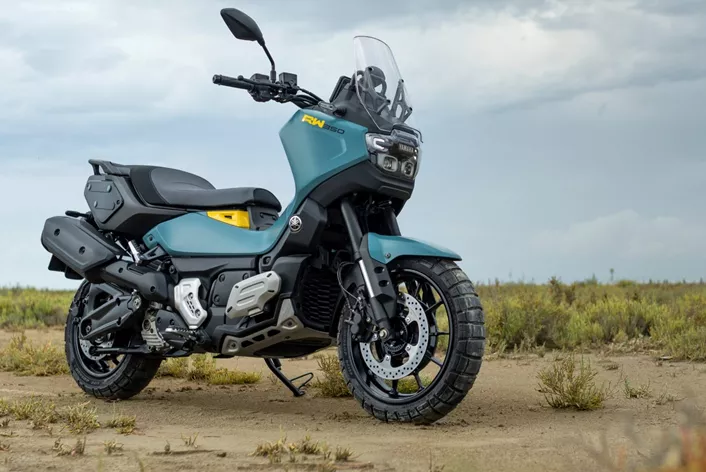
The RW700’s design combines rounded surfaces with adventure styling.

The RW700 in Sage Blue against a mountain backdrop.

The side profile shows the blend of a scooter front end and a motorcycle rear.

The RW700’s 14-litre tank is sized for everyday riding and weekend trips.

The tall front end integrates the windscreen, headlight and cockpit.

Yamaha lists the RW700 at 221 kg fully fueled.

The RW700 combines commuter practicality with an adventure-bike concept.

The base model delivers the same power as the Explore.

Both 700s feature a steel-tube frame beneath the fairing.

The RW700 in Sage Blue, shown from a front three-quarter angle in the studio.

Profile view of the exhaust side of the RW700 in Sage Blue.

Rear view of the RW700 in Sage Blue, showing the pillion seat.

The RW700’s drivetrain is visible from the chain side, finished in Sage Blue.

The RW700 in Sage Blue, viewed from the front at an angle, with the chain side in view.

The front view of the RW700 in Sage Blue highlights its compact LED headlight.

Power Grey is the second colour option for the Yamaha RW700.

The RW700 in Power Grey, seen from the side with the exhaust in view.

The rear of the RW700 in Power Grey, shown in a studio shot.

The chain side of the RW700 in Power Grey, shown in profile.

The grey RW700, viewed from the front at an angle, with the chain side visible.

The RW700 in Power Grey, viewed head-on.

Forest Green highlights Yamaha’s design inspired by the great outdoors.

The Explore lettering sits on the side of the green fairing.

The standard centre stand is clearly visible on the parked Explore.

The Explore in Forest Green against an urban backdrop.

In profile, the Explore combines a tall front end with a slim seat section.

Yamaha lists the Explore at 224 kg fully fuelled.

The exhaust side of the Explore against a rocky landscape.

The handguards and narrow windscreen are visible from the front.

The Explore runs on Pirelli Scorpion Rally STR tyres with a block-pattern tread.

The rear three-quarter view shows the seat, tail section and raised front end of the Explore.

Chain side of the green Explore in an outdoor shot.

The Explore shares 160 mm of front suspension travel with the base model.

The Explore also gets 155 mm of rear-wheel travel.

On the Explore, the heated grips and rider’s seat each have ten levels of adjustment.

The Explore’s front fairing features side contact points for the rider’s knees.

With a 14-litre tank, the Explore has the same fuel capacity as the RW700.

The Explore in Forest Green, shown from a front three-quarter angle in the studio.

The exhaust side of the Explore in Forest Green, shown in a studio profile shot.

Rear view of the Explore in Forest Green, photographed in the studio.

The chain side of the Explore in Forest Green, shown in a cutout side profile.

The green Explore, viewed from the front at an angle, with the chain side in view.

The Explore in Forest Green, seen head-on in the studio.

Midnight Black is the Explore’s second exclusive colour.

The Explore in Midnight Black, seen from the side with the exhaust in view.

Rear view of the Explore in Midnight Black.

The chain side of the black Explore, photographed in profile in the studio.

The Explore in Midnight Black, seen from the front at an angle with the chain side visible.

The front view of the Explore in Midnight Black highlights its Sage Blue accents.