For 25 years, the TMAX has been part of Yamaha's sport scooter history. For 2027, the MAX family now gets an electric addition: the NMAX E is built on a completely new A1 platform and is aimed at beginners as well as experienced scooter commuters. Yamaha places it in the 125 class and combines the familiar MAX design with its own distinct drivetrain and chassis concept. The project is part of the Environmental Plan 2050, through which Yamaha aims for carbon neutrality across all supply chains and a reduced environmental impact over the vehicle's life cycle. When riding, there are no local exhaust emissions.
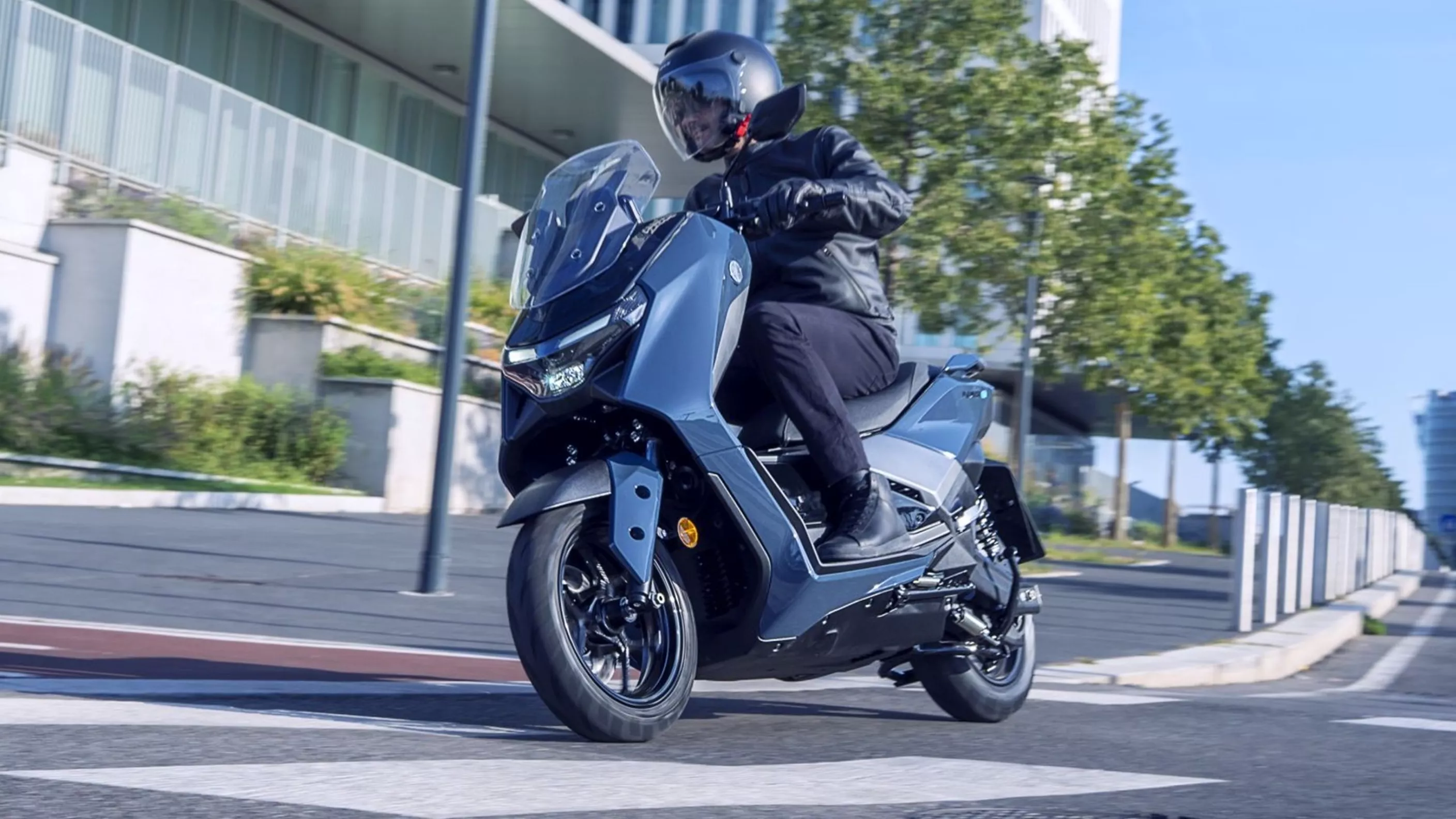
2027 Yamaha NMAX E: electric MAX with 104 km range
New A1 scooter with belt drive and reverse function
Yamaha electrifies the MAX family: the new NMAX E brings its own A1 platform, a centrally mounted drivetrain and practical commuter features. The sport scooter also goes its own way when it comes to charging and manoeuvring.

Der Horvath
published on 02/11/2026
1,024 Views
Yamaha NMAX E: Centrally mounted motor with belt drive
The new eAxle unit combines an air-cooled permanent magnet synchronous motor, the motor control unit and a primary reduction gear in one compact package. Yamaha quotes 7.5 kW at 3,500 rpm and 33.3 Nm at 500 rpm. The clutchless drive is rigidly mounted to the frame and transmits its power to the rear wheel via a belt. According to Yamaha, this layout is designed to improve weight distribution and to run with little noise and vibration. Power delivery is tuned for direct, linear acceleration. The manufacturer also promises low running and maintenance costs.
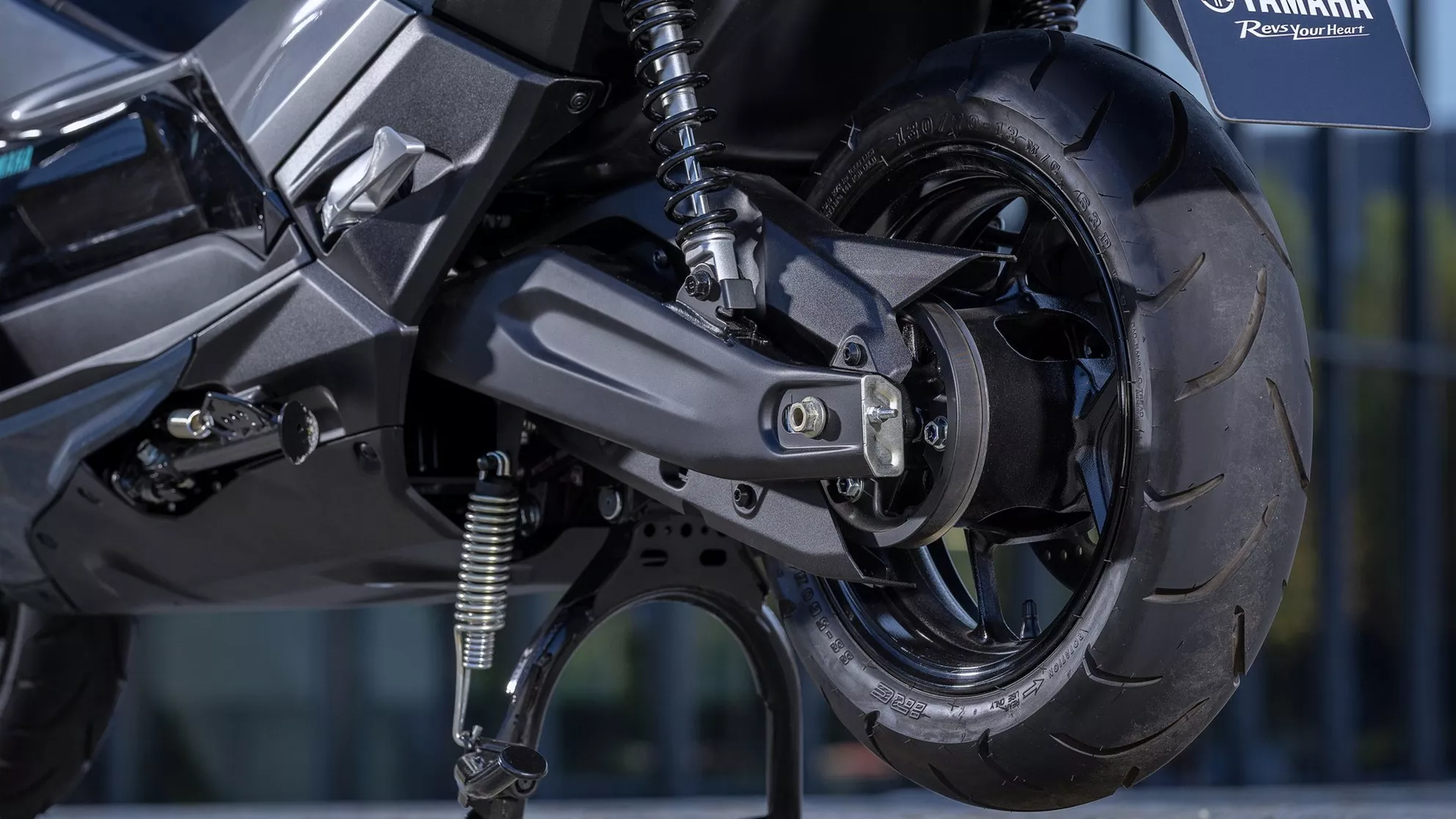
A conventional swingarm locates the rear wheel, while the belt handles the drive.
3.5 kWh battery and 104 km WMTC range
The lithium-ion battery has a capacity of 3.5 kWh. On a full charge, Yamaha quotes a range of 104 kilometres, measured in WMTC1 mode at a battery temperature of 25 degrees Celsius. The battery is L-shaped and sits low and central in the frame. Together with the position of the motor, this is intended to centralise mass and allow a low centre of gravity. A metal plate protects the battery from impacts from below. The battery management system monitors and regulates voltage, current and temperature. According to the manufacturer, the dust- and waterproof battery meets IP67 requirements.
Charging at Type 2 stations and household sockets
The on-board charger delivers 800 W and uses fanless cooling, which should make charging particularly quiet. Yamaha quotes 5.5 hours from 0 to 100 percent, at a battery temperature of 25 degrees Celsius and a supply voltage of 200 V. The charging port is located in the front storage compartment together with a USB-C port and is designed for public Type 2 charging stations. With a special cable, a household socket can also be used. For this, Yamaha explicitly refers to the precautions in the owner's manual.
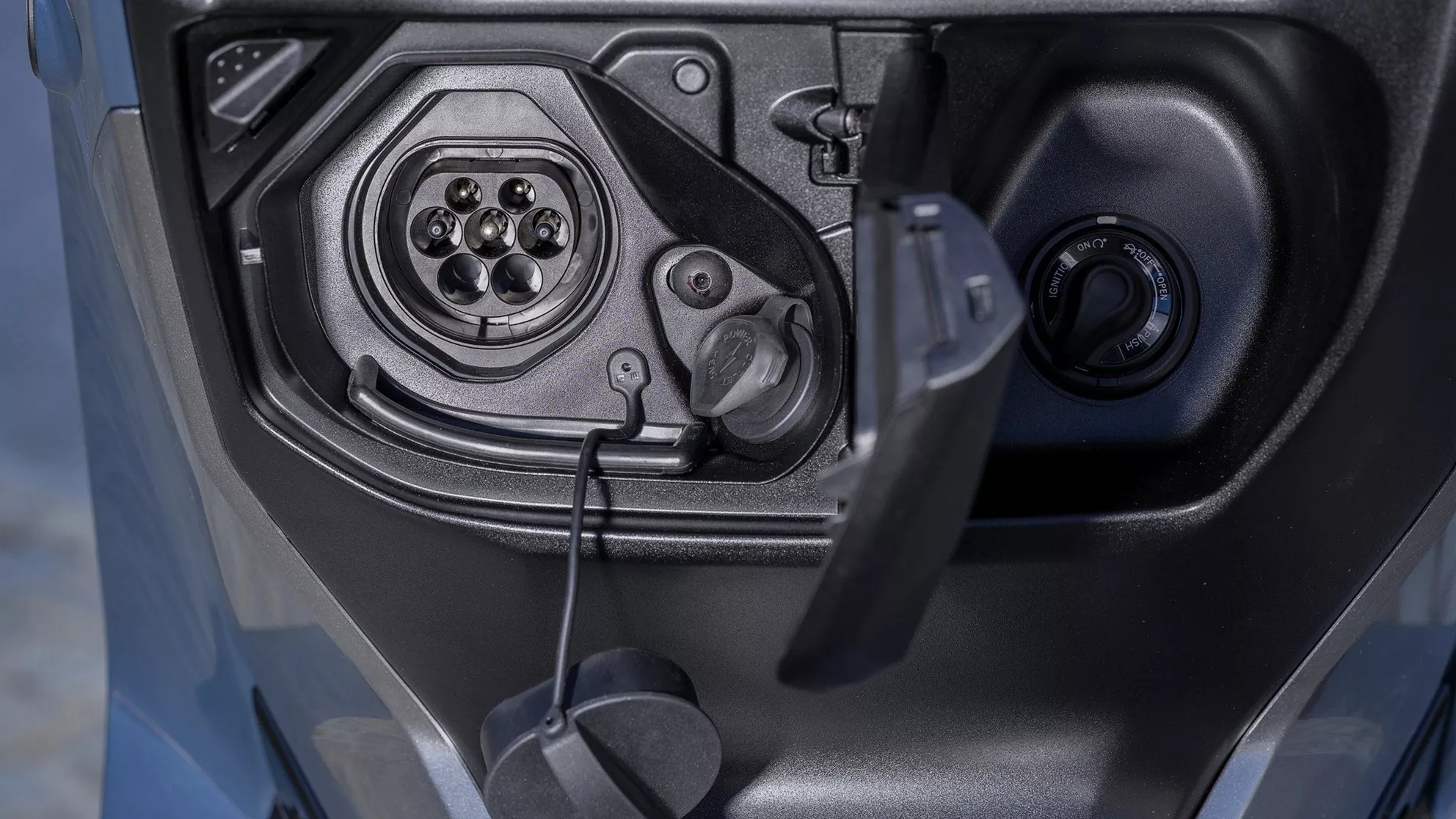
The charging port sits in the front storage compartment and is designed for Type 2 charging stations.
To go with it, Yamaha is launching YOU Charge. In cooperation with national charging network operators, the service is set to offer access to a dense public charging network, various subscriptions and, according to Yamaha, competitive rates. The subscription is purchased from official Yamaha partners, and the charging pass can then be activated immediately. The rollout begins in early 2027 in the first countries, with other key European EV markets set to follow over the course of the year.
New frame and lighter swingarm
The new backbone frame has a 1,425 mm wheelbase and 135 mm ground clearance. Battery and motor sit centrally in the frame cradle. Yamaha speaks of a weight distribution of almost 50/50 between front and rear wheel and expects this to deliver balanced, agile handling. Up front there is a 33 mm telescopic fork. At the rear, the rigidly mounted motor allows a conventional motorcycle-style swingarm which, according to the manufacturer, is around a third lighter than conventional scooter rear suspension. This is intended to reduce unsprung mass. Two shocks below the rider's hips are meant to support comfort and rear-wheel traction.
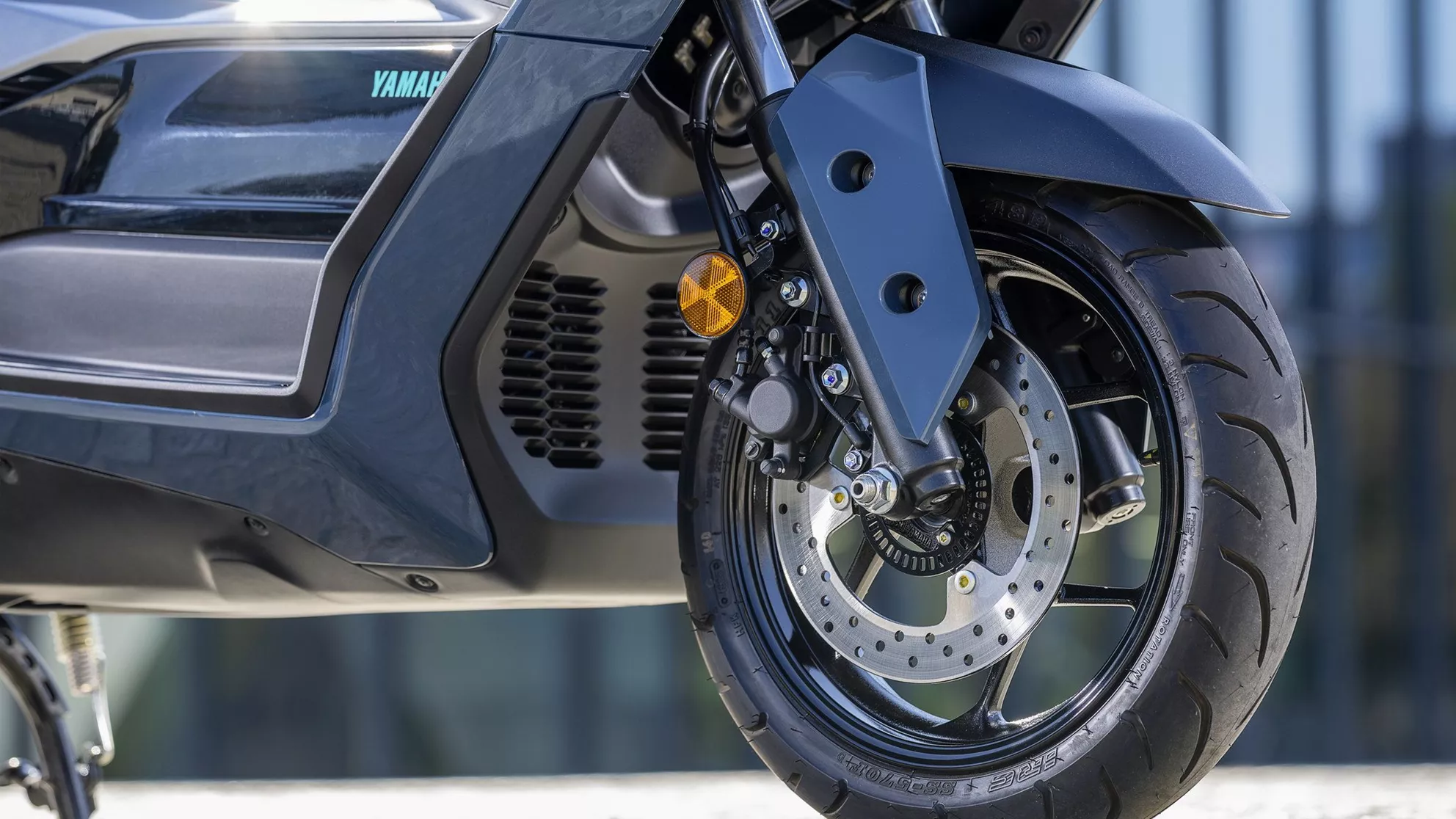
Up front, Yamaha combines a 33 mm telescopic fork with a 245 mm brake disc.
The model-specific 13-inch wheels carry 110/70-13 tyres at the front and 130/70-13 at the rear. On both wheels, Yamaha fits 245 mm brake discs with single-piston calipers and ABS. On top of that comes a regenerative braking system that adapts its effect to the selected riding mode. The deceleration feel is meant to resemble the engine braking of a combustion-engined scooter.
Three riding modes and a reverse assist
Three riding modes are available for the drivetrain. According to Yamaha, S offers the strongest acceleration, while T delivers similar performance with softer throttle response. E reduces acceleration and top speed in favour of the greatest possible range. The traction control adjusts power delivery when the rear wheel loses grip. With the APSG throttle, resistance increases progressively to provide a natural feel and more feedback.
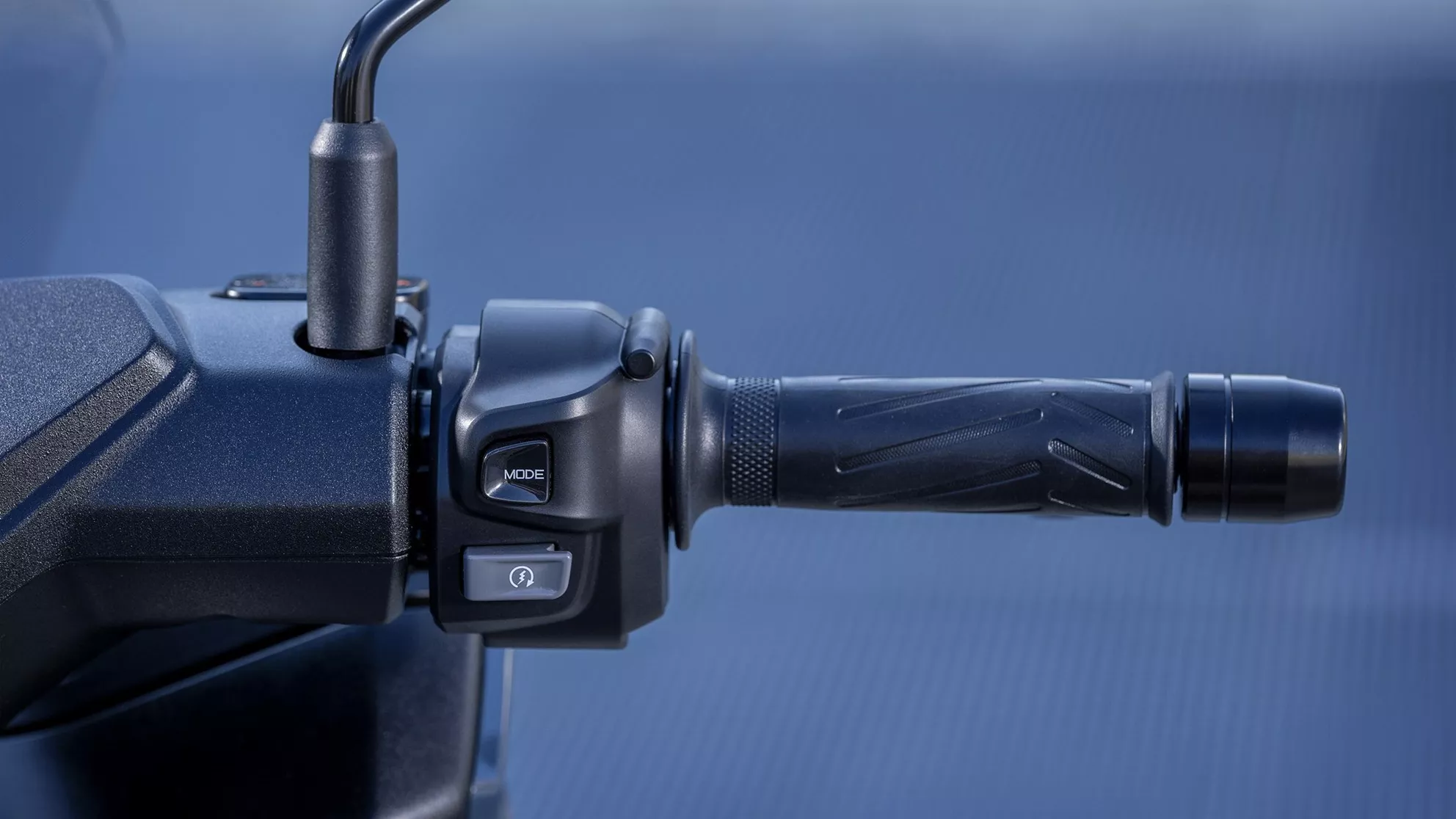
The riding modes are operated via the MODE button on the right handlebar.
The drivetrain also lends a hand when parking. You activate the reverse function by pressing the REVERSE button on the left and the MODE button on the right of the handlebar at the same time. The NMAX E then rolls backwards at slower than walking pace without you having to open the throttle. Both feet stay on the ground. Yamaha intends the function as an aid in tight parking spaces and on slight inclines.
770 mm seat height and room for a full-face helmet
The seat height is 770 mm. A long seat and generous footboards are designed to provide freedom of movement for riders of different sizes. Between the seat and the footboards, the fairing is narrow so that your feet can reach the ground more easily when stopping. For the pillion there are folding footpegs and an integrated grab rail. Stitched seat upholstery and an embossed logo underline its premium aspirations. Under the seat is an LED-lit storage compartment that, according to Yamaha, fits a full-face helmet. The size and shape of the helmet remain decisive, though. The Smart Key lets you start the scooter and access the storage space as long as you have the key on you.
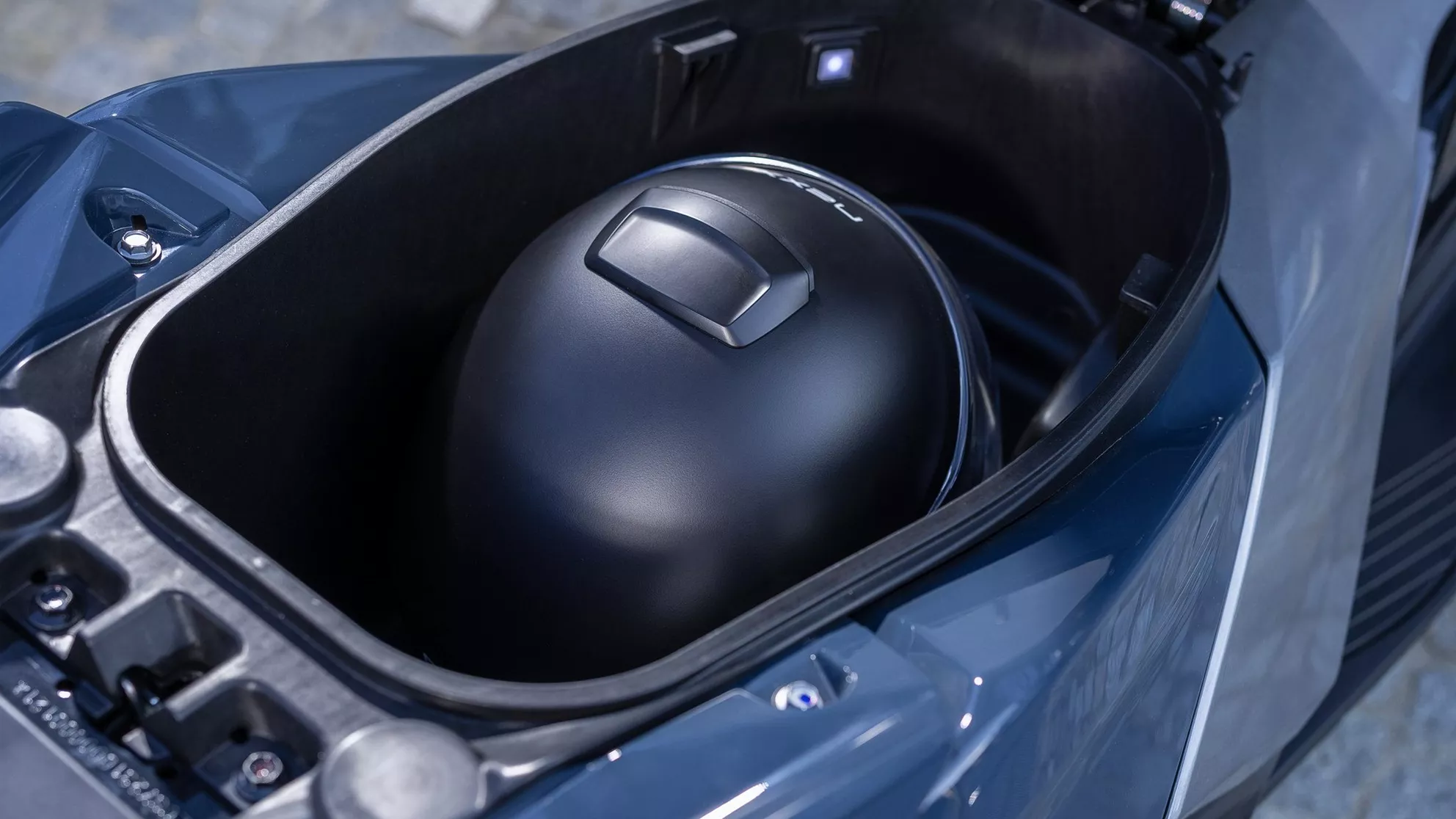
Depending on its size and shape, a full-face helmet fits in the illuminated storage compartment.
Five-inch TFT and new Yamaha Motor On app
The 5-inch TFT offers a day and night mode. The speedometer sits in the centre, with icons for the connected smartphone on the left. On the right, information on battery output, charge level and regeneration is displayed. A power visualiser shows acceleration and deceleration with a moving needle. The new Yamaha Motor On app adds turn-by-turn navigation. The app is divided into Home, Ride, Memories and Account and provides, among other things, battery status, maintenance schedules, parking location and a ride log.
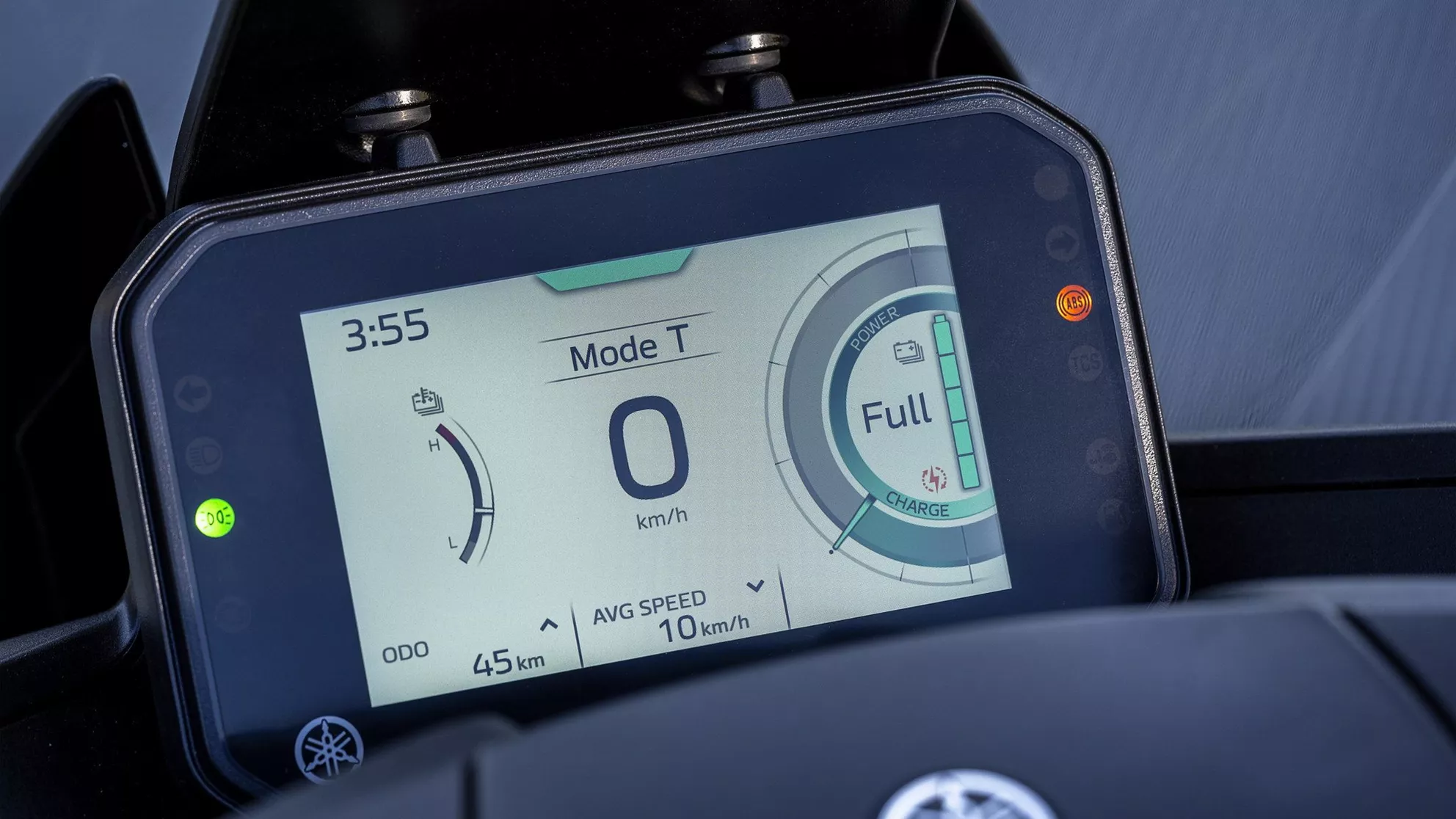
The 5-inch TFT, shown here in day mode with the centrally positioned speedometer.
MAX design, two colours and launch in spring 2027
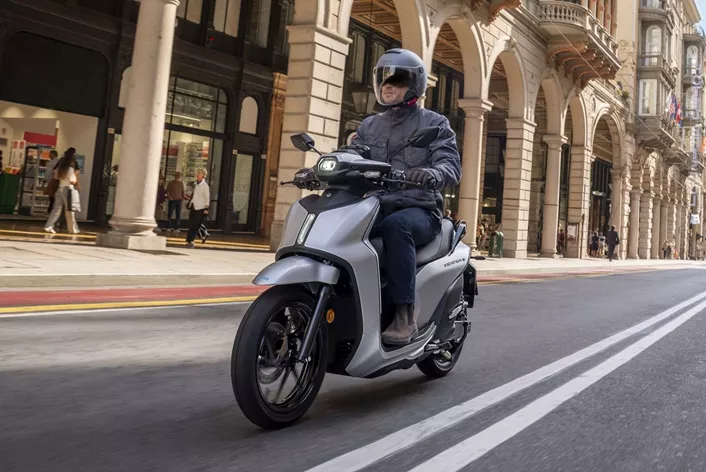
Visually, Yamaha relies on minimalist dual light units front and rear, compact indicators and flowing fairing lines. The tail merges into the typical boomerang-shaped side panels. The choice is between Avio Blue with glossy silver boomerang elements and Platinum Silver with silver fairing, leg shield and tail. On the silver version, the gloss black area around the headlights provides contrast. According to Yamaha, the NMAX E will be available from spring 2027. You can find out the respective national prices from your local dealers.
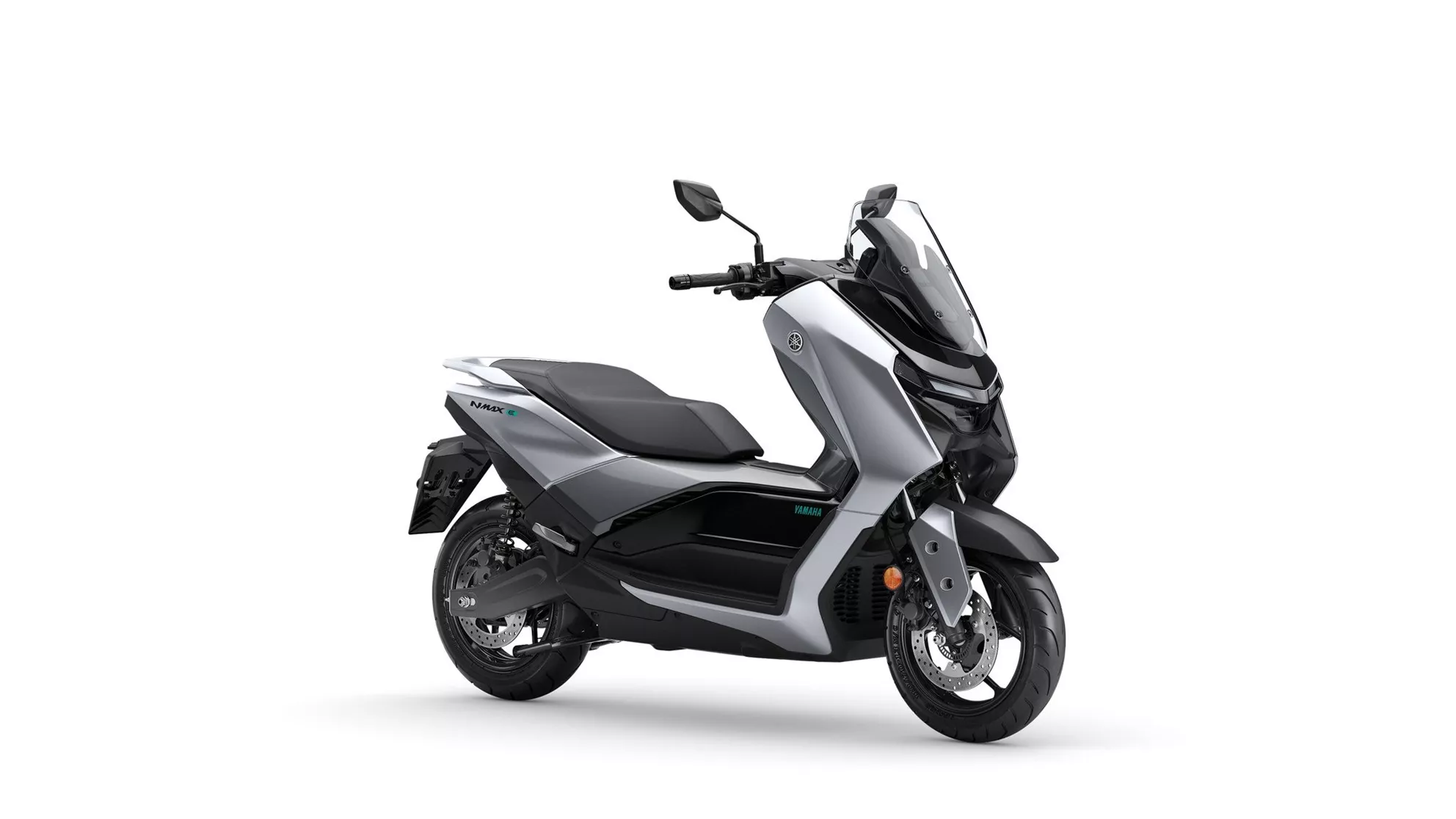
Platinum Silver is the second announced colour option for the NMAX E.
Genuine accessories include brake levers, a protective cover, heated grips and hand warmers. A console bag, a 34-litre top case and a high windscreen expand the options for more storage space and weather protection. Yamaha also lists a USB-C socket as an accessory, in addition to the port in the front storage compartment described above. The range is being continuously expanded.
More new scooters
FAQ on the new 2027 Yamaha NMAX E
Which vehicle class does the NMAX E compete in? Yamaha presents it as an electric A1 sport scooter equivalent to the 125 cc class. The stated motor output is 7.5 kW.
How far does it go on one charge? Yamaha quotes 104 km in WMTC1 mode at a battery temperature of 25 degrees Celsius. The battery stores 3.5 kWh.
How long does charging take? With the integrated 800 W charger, Yamaha quotes 5.5 hours from empty to full, at 200 V and a battery temperature of 25 degrees Celsius. Type 2 charging stations and, with a special cable, household sockets are supported.
What makes everyday commuting easier? The features include a reverse function, Smart Key, an illuminated helmet compartment and smartphone navigation. A full-face helmet fits under the seat depending on its size and shape.
2027 Yamaha NMAX E: electric MAX with 104 km range Images
Source: 1000PS

The NMAX E is aimed at new riders and experienced scooter commuters.

The NMAX E combines MAX design with a distinctive electric concept.

The charging port is located in the front storage compartment and is compatible with Type 2 charging stations.

Platinum Silver is the second colour option announced for the NMAX E.

With the NMAX E, Yamaha expands its MAX family with an electric A1-class scooter.

The new platform was developed specifically for electric power.

Even in electric form, the NMAX E remains true to the MAX family’s distinctive styling.

The new electric scooter is designed for urban riding.

With its electric powertrain, the NMAX E produces no local exhaust emissions.

The addition of electric models is part of Yamaha’s long-term environmental strategy.

Yamaha quotes a power output of 7.5 kW.

The NMAX E sits in the 125cc scooter class.

The compact power unit is rigidly mounted to the frame.

Yamaha tunes the electric powertrain for linear acceleration.

The belt drive transfers power to the rear wheel.

A conventional swingarm guides the rear wheel, while the belt provides the drive.

On the go, the NMAX E can charge at public Type 2 charging points.

The fanless onboard charger delivers 800 W of charging power.

Up front, Yamaha pairs a 33 mm telescopic fork with a 245 mm brake disc.

Twin rear shocks support the rear end, while the swingarm design is intended to reduce unsprung mass.

Yamaha quotes a 1,425 mm wheelbase for the newly developed backbone frame.

The motorcycle-style swingarm is one of its distinctive design features.

The MODE button on the right handlebar is used to select the riding modes.

Depending on its size and shape, a full-face helmet fits in the illuminated storage compartment.

The long seat offers plenty of room to shift your riding position.

Yamaha lists the NMAX E’s seat height at 770 mm.

The Smart Key lets you start the bike and access the storage compartment as long as it’s nearby.

The footboards are designed to allow plenty of room to move during the daily commute.

The 5-inch TFT is shown here in Day mode, with the speed readout in the centre.

Minimalist headlights and a windscreen define the front end.

The tail flows into the boomerang-shaped side panels of the fairing.

The slim front end integrates compact turn signals and distinctive lighting units.

The silver boomerang elements stand out in the side profile of the Avio Blue model.

Avio Blue pairs blue bodywork with silver accents.

The right-side view highlights the flowing lines of the blue NMAX E.

The studio rear view shows the NMAX E in Avio Blue.

The boomerang-shaped elements and belt drive are visible on the left.

The blue version also features the glossy black panel around the headlights.

The front view highlights the compact silhouette of the new MAX model.

In Platinum Silver, the fairing, leg shield and tail are finished in silver.

The rear view shows the silver version with its compact turn signals.

Silver side panels highlight the boomerang shape, even in Platinum Silver.

The silver paintwork contrasts with the black front end and dark footboards.

The NMAX E is expected to be available from spring 2027.