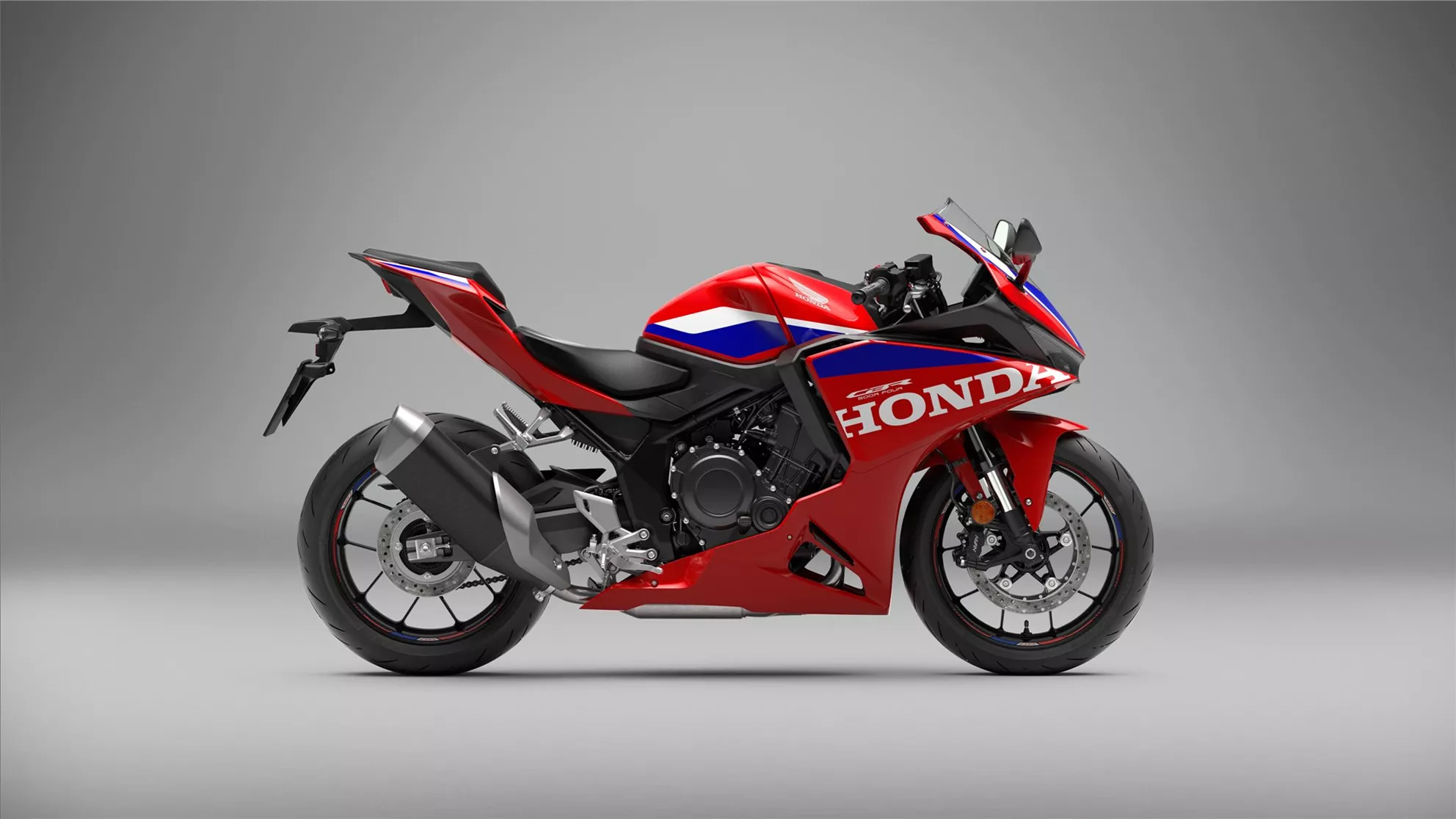
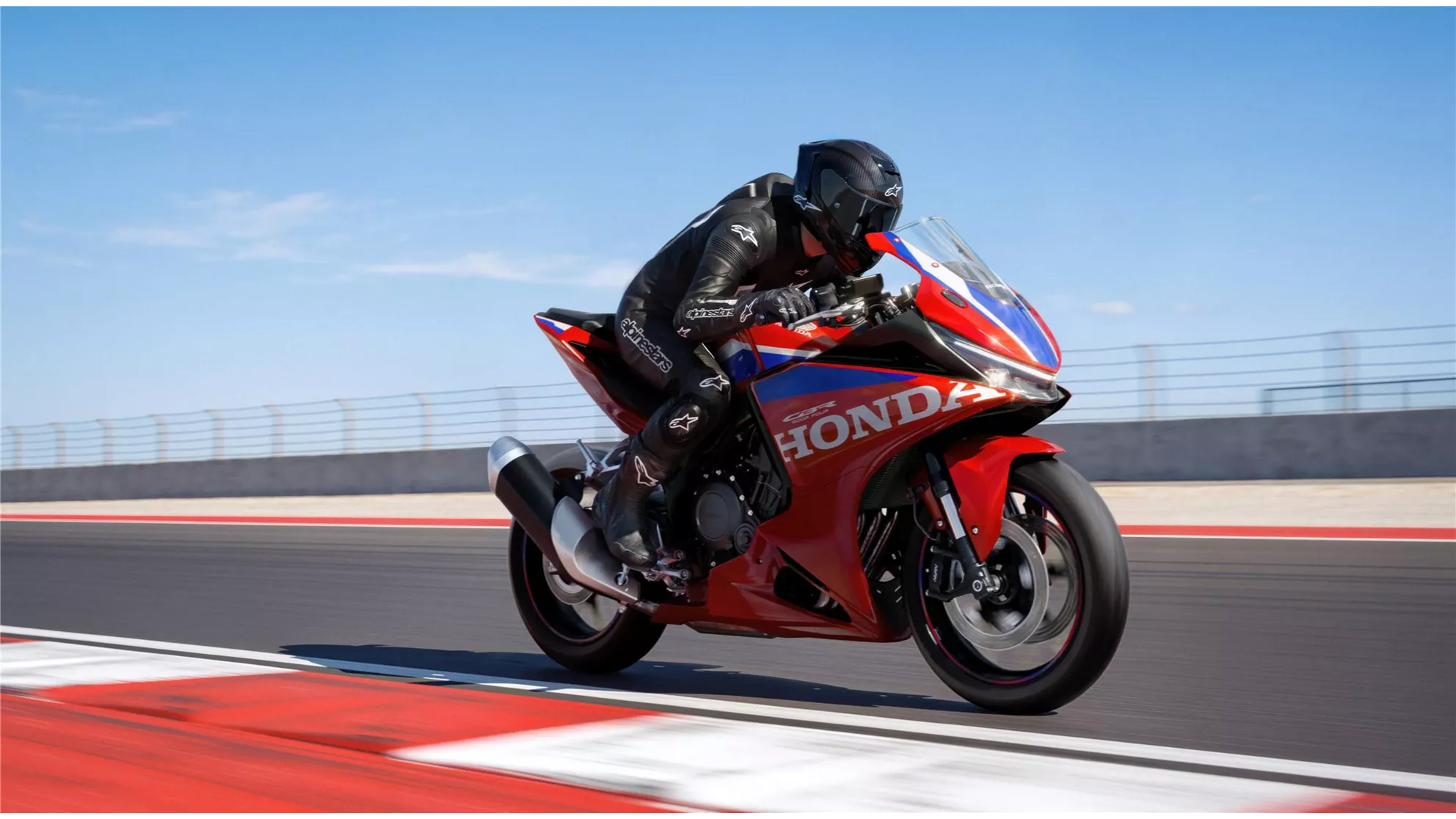
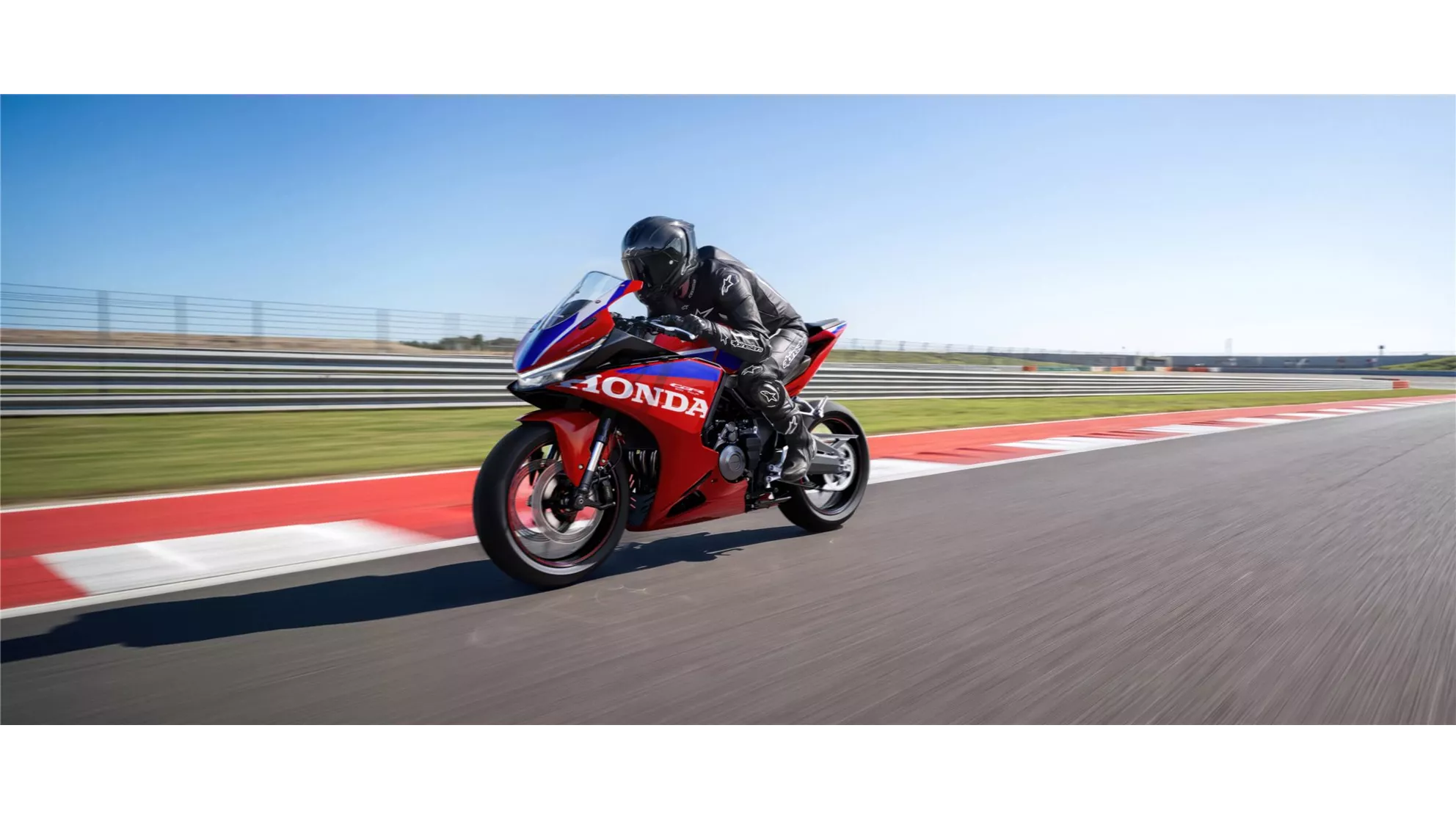
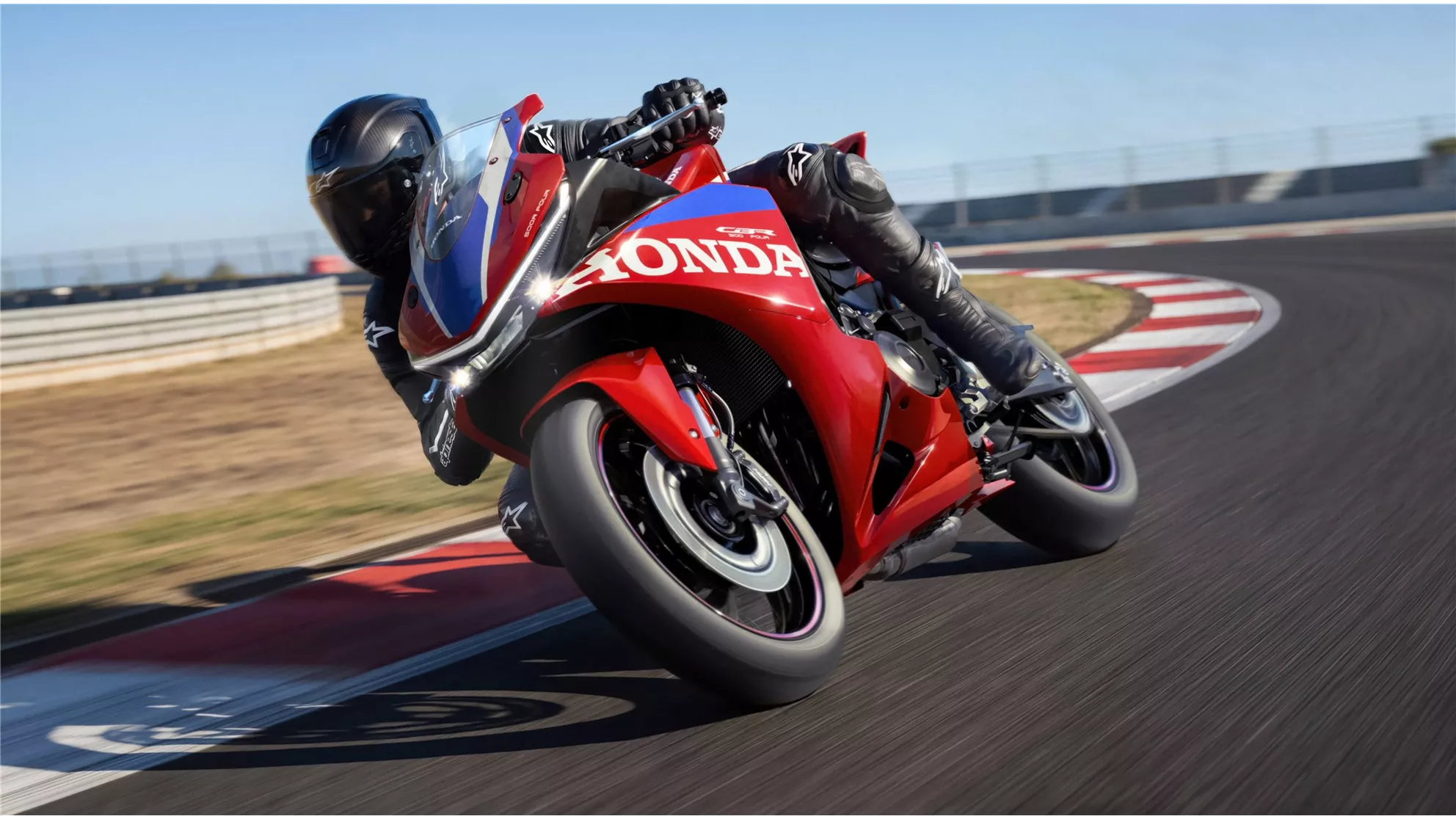
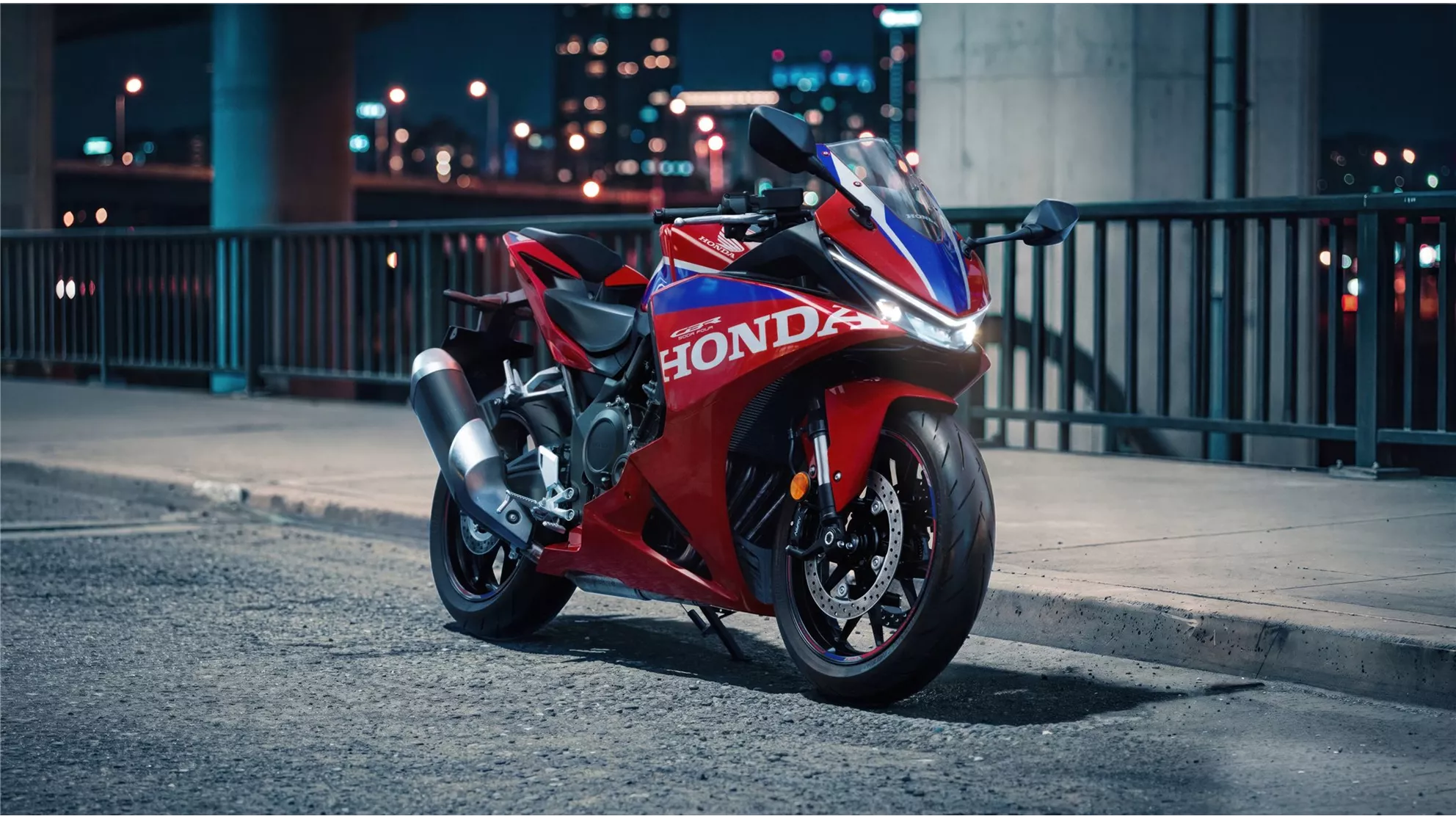
Four cylinders in the middleweight class, with the electronics taking over clutch work if you want them to. That's the recipe Honda is using for the CBR500R FOUR, unveiled for 2027. The idea behind it: a sports bike for the next generation of riders that should also stay accessible in everyday use. Honda is building on its own inline-four tradition here. In the press kit, the brand points to the CB400 SUPER FOUR, sold in Japan for over 30 years, and to the CB400 SUPER FOUR and CBR400R FOUR, which returned last year after a four-year break. The new 500 follows the New Generation Sport development concept. The key question will be how well the sporty ambitions square with daily use.
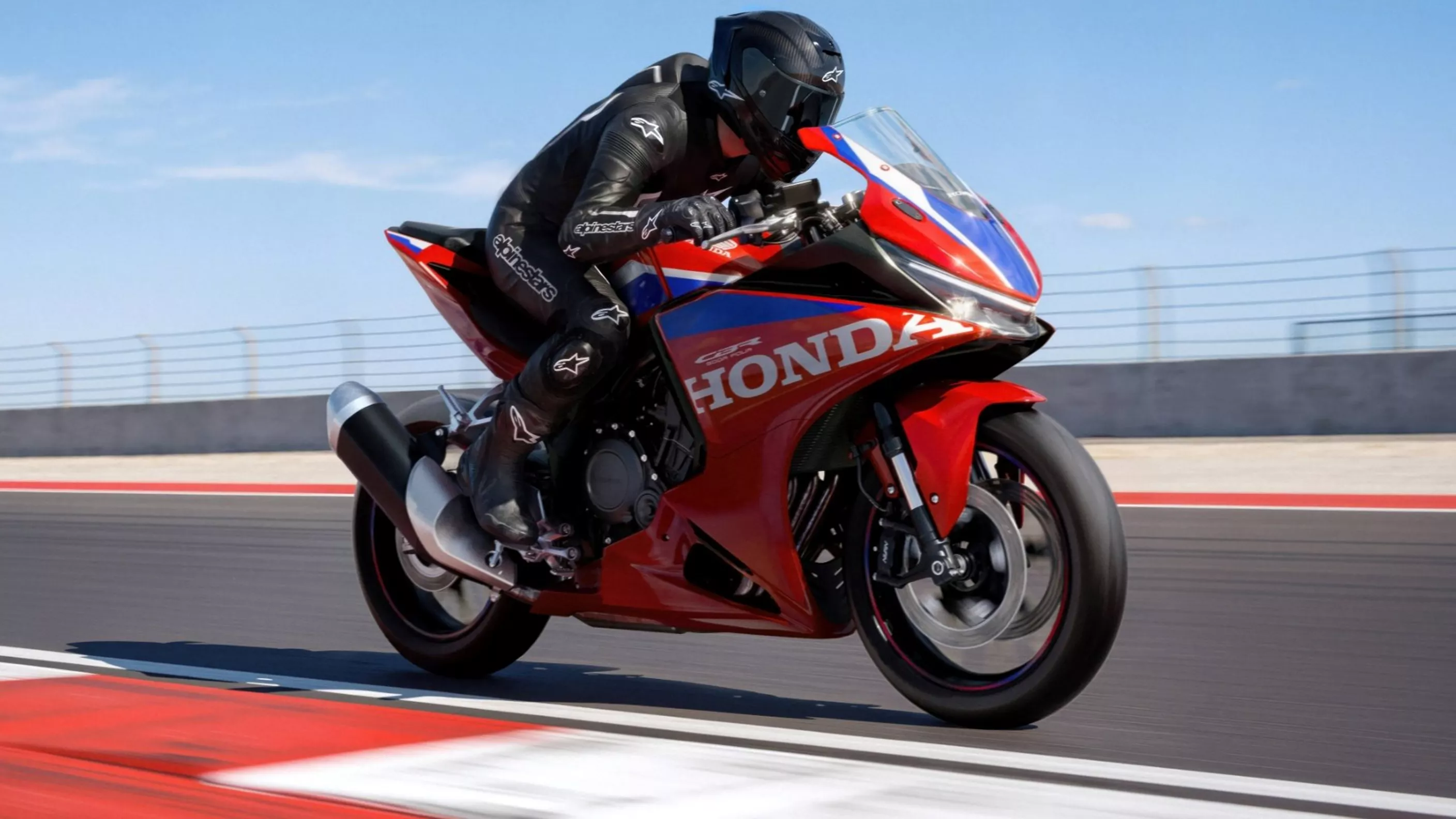
Honda CBR500R FOUR 2027: 72 hp and standard E-Clutch
Four cylinders, 12,500 revs and a clutch lever with less to do
A new inline-four, electronic riding modes and a clutch that's meant to take work off your hands: Honda's new 500 combines sporty tech with an accessible concept. What's behind the FOUR?

Der Horvath
published on 20/10/2026
3,453 Views
CBR500R FOUR: Four-cylinder with 72 hp
The engine sets the tone: a liquid-cooled DOHC inline-four with four valves per cylinder and 502 cc displacement according to the spec sheet. The engine is a bigger-displacement version of the newly developed 400 from the Japanese CB400 Super FOUR. Honda quotes 72 hp or 53 kW at 11,000 rpm and 47.4 Nm at 9,750 rpm. The red zone starts at 12,500 rpm. Those are the key data for anyone who likes to build up revs. Whether the engine already pulls smoothly from low down and builds evenly across a broad band, as Honda promises, will have to be proven on a ride. A factory A2 version with 48 hp or 35 kW is also planned.
CBR500R FOUR: Ram-air and four intake funnels
Below the headlights sit two ram-air ducts that feed air to the intake. Above the combustion chambers is a 5.8-litre airbox, with the downdraft system feeding air from above. Honda expects this to deliver crisp response to throttle inputs. What's interesting is the differing length of the four intake funnels: 70 mm for cylinders one and four, 90 mm for cylinders two and three. This layout is also meant to shape the intake sound. With its side-routed headers, the 4-2-1 exhaust system is a nod to the 1975 CB400F. Inside the silencer are two chambers whose connecting pipes are tuned for sound and smooth acceleration. A closed-loop catalytic converter and two lambda sensors are also part of the package.
CBR500R FOUR: E-Clutch as standard
When it comes to the clutch, Honda skips the options list: the E-Clutch comes as standard. You don't need to touch the left lever to pull away, stop or shift. You still select gears with the foot shift lever, so the six-speed gearbox remains a manual. Two actuator motors in a unit mounted on the side of the engine handle clutch operation. The electronics take into account road speed, engine speed, throttle position, gear position and shift lever input, and adjust ignition and fuel injection accordingly. This is also meant to make hill starts easier and prevent stalling. Power reaches the rear wheel via a wet multi-plate clutch and a chain.
Together with throttle-by-wire, the system enables an automatic throttle blip on downshifts. The E-Clutch also adapts throttle valve opening to the selected riding mode. If it detects impending wheel hop, the anti-hopping function is meant to counteract it. Honda promises quicker and smoother gear changes than with a conventional quickshifter. In the gearbox, seven dog sets between first and second gear and eight between third and sixth are meant to reduce engagement times and play. Just how smoothly that really works remains a question for the ride test.
For the required pedal force on the shift lever, you can choose between Hard, Medium and Soft, set separately for upshifts and downshifts. An indicator prompts you to shift down if you're in an inappropriately high gear. If you want to work the clutch yourself, you can use the retained lever at any time. After that, the E-Clutch reactivates in under a second above an unspecified speed, and after five seconds at lower speeds. It can also be switched off completely via the handlebar switch. An M then appears on the TFT. Electronic assistance with the option of manual intervention – that's how the concept is laid out.
CBR500R FOUR: Three riding modes and two user presets
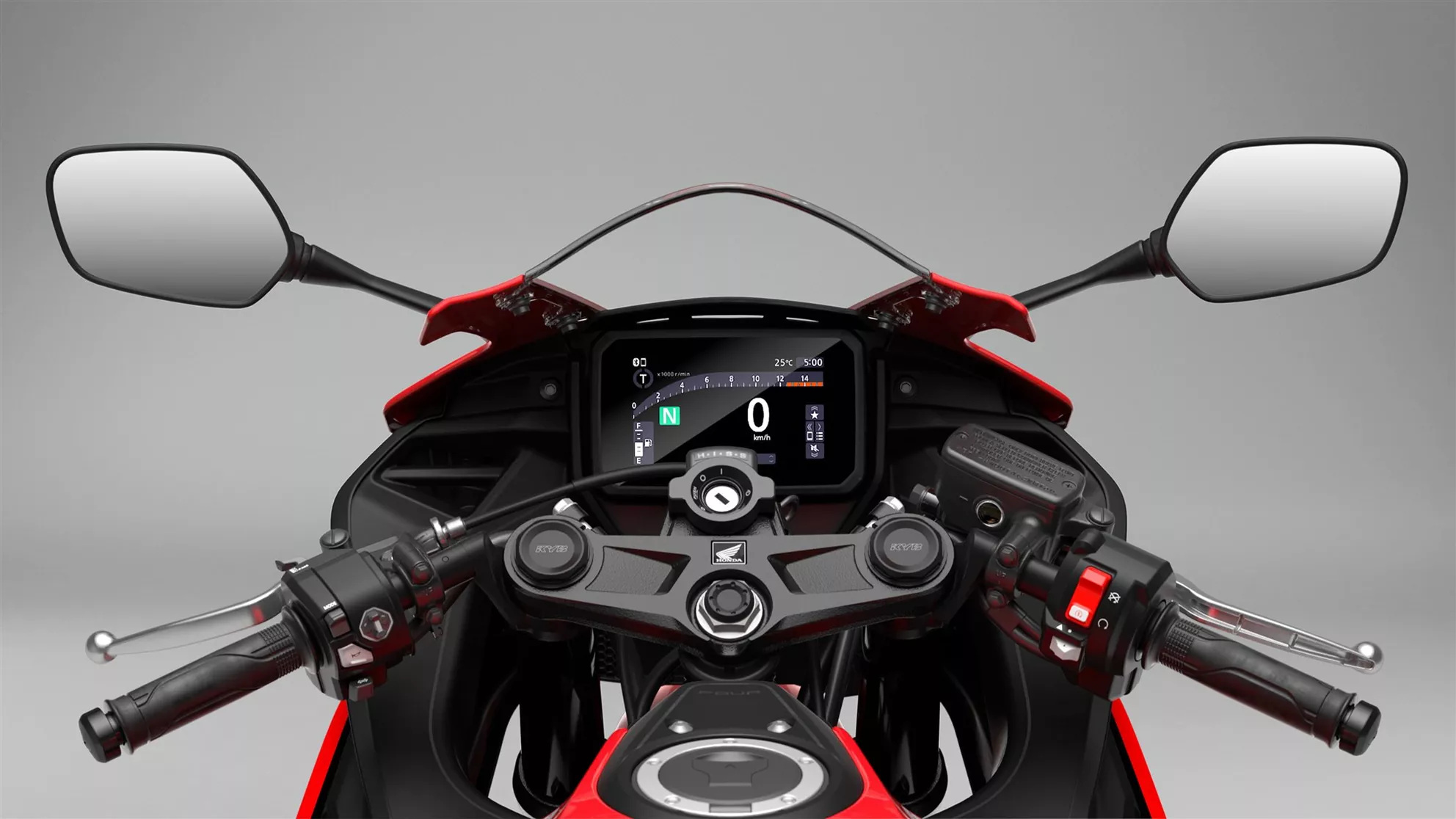
Via the electronic throttle, the Honda offers three preset riding modes: STANDARD, SPORT and URBAN. On top of that come USER1 and USER2. Engine power, engine braking and HSTC traction control can each be set in three levels. STANDARD combines medium settings. SPORT uses power level three, with engine braking and traction control on level one. URBAN relies on power level one, engine braking level two and HSTC level three. This is meant to make power delivery gentler. In the two user modes, you can combine the parameters yourself and switch off traction control if needed. The settings stay saved after the ignition is switched off. The spec sheet also lists wheelie control.
CBR500R FOUR: Steel frame and 189 kilograms
For the chassis, Honda uses a new steel-tube diamond frame that is open at the bottom. The engine serves as a stressed member, and the frame alone weighs 14 kg according to the spec sheet. For the complete bike, Honda quotes 189 kg weight fueled up, while the permissible gross weight is 367 kg. The wheelbase is 1,412 mm, rake and trail are 25 degrees and 99 mm respectively. This combination is meant to blend agility and stability. A stiff aluminium swingarm locates the rear wheel. Whether this translates into the promised confidence-inspiring feel in the twisties can't be deduced from the dimensions alone.
Up front, a 41 mm KYB USD fork with 109 mm of travel does the work. It is non-adjustable. At the rear, 119 mm of travel is available; the monoshock is linked via a Pro-Link linkage and offers five-step spring preload adjustment. Honda describes the setup as a blend of comfort, control and sporty character. The wheels are cast aluminium rims with five Y-shaped spokes. The front rim measures 3.5 x 17 inches, the rear 4.5 x 17 inches. They're shod with Pirelli Diablo Rosso IV in 120/70-ZR17 front and 160/60-ZR17 rear.
CBR500R FOUR: Nissin brakes and two-channel ABS
Two floating 296 mm discs and radially mounted Nissin two-piston calipers handle braking duties up front. At the rear, Honda pairs a 240 mm disc with a Nissin single-piston sliding caliper. Two-channel ABS is standard, as is an Emergency Stop Signal. Honda promises strong deceleration and precise feedback through the brake hoses. These are manufacturer claims, not braking impressions we've verified. Any further verdict on the quality of the ABS intervention or the pressure point will require real-world use.
CBR500R FOUR: Low seat and 14-litre tank
The seat height is 780 mm. Together with the slim frame routing, this is meant to make it easier to get your feet on the ground and provide freedom of movement. Clip-ons dictate a front-wheel-focused riding position, with handlebar height quoted at 906 mm. Honda specifies a turning circle of 2.9 metres and also highlights handling in city traffic. The bike measures 2,057 x 755 x 1,125 mm, and ground clearance is 135 mm. A low seat is a tangible data point here. How relaxed or sporty you actually sit also depends on your own build and remains an open question for now.
The tank holds 14 litres. Honda quotes WMTC consumption of 4.5 litres per 100 kilometres, plus 105 g/km CO₂. The spec sheet also lists a top speed of 210 km/h and a stationary noise level of 75.2 dB(A). These are manufacturer figures, not our own measurements. The numbers describe the announced status of the 2027 CBR500R FOUR; according to the press kit, all specifications are subject to change.
CBR500R FOUR: New fairing and LED lighting
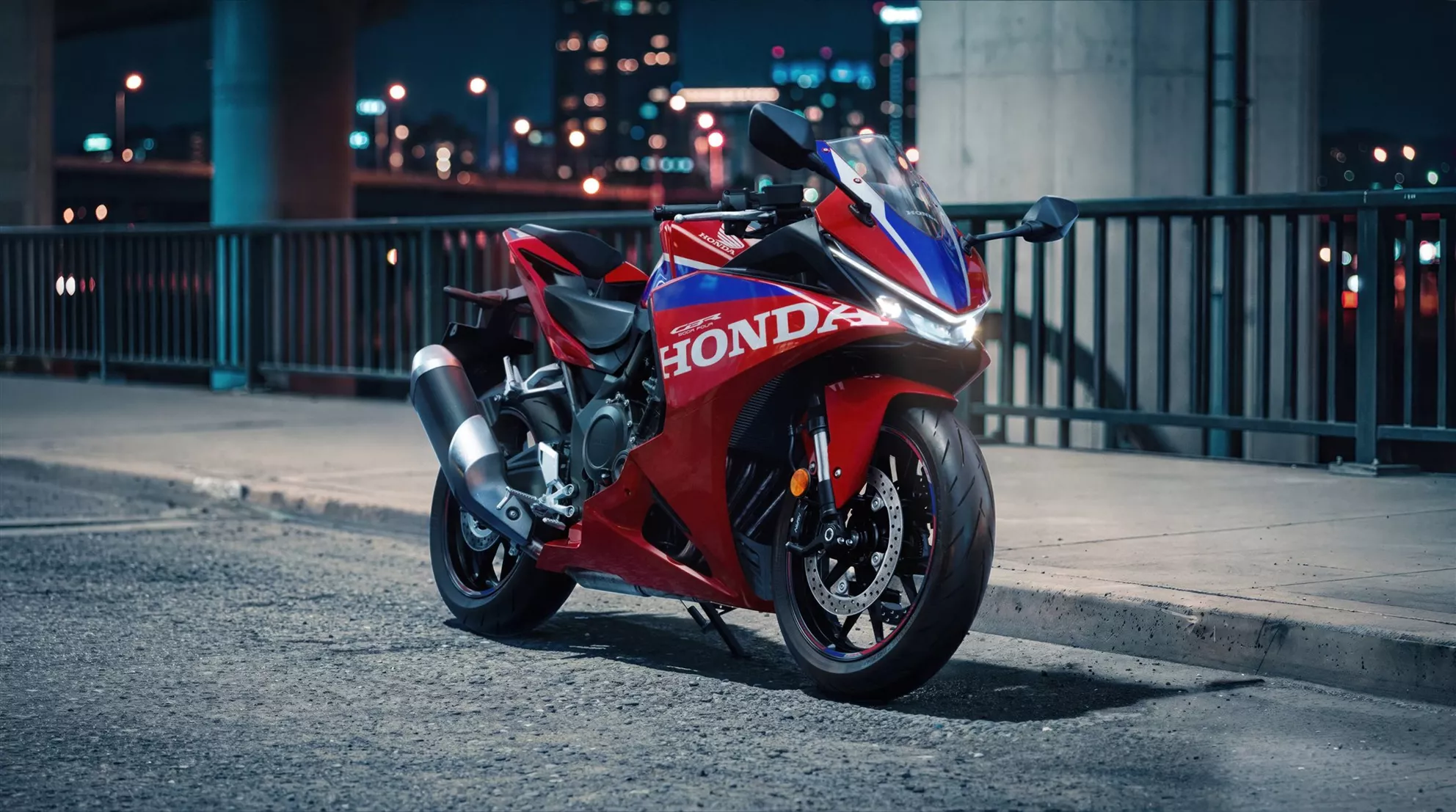
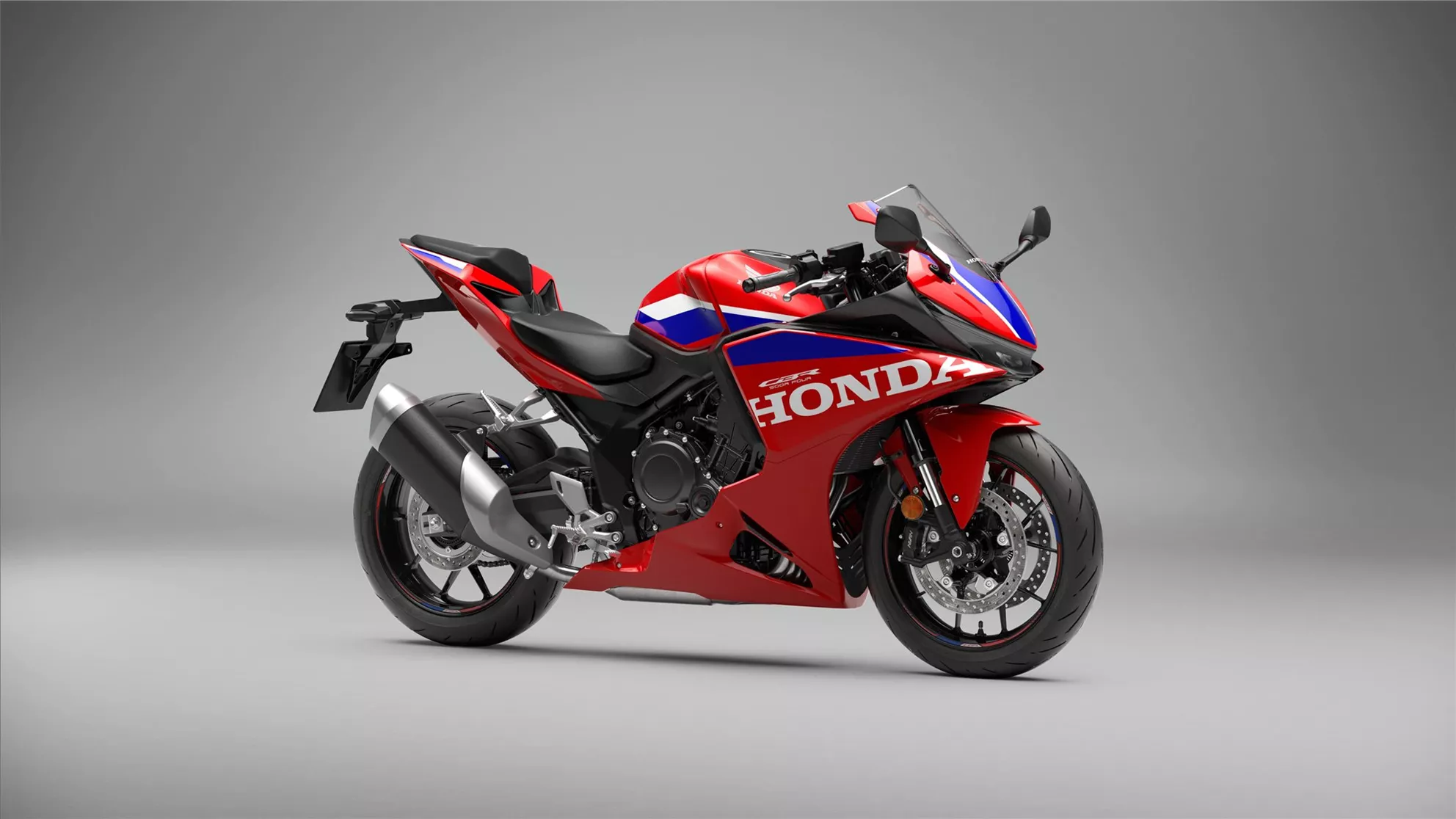
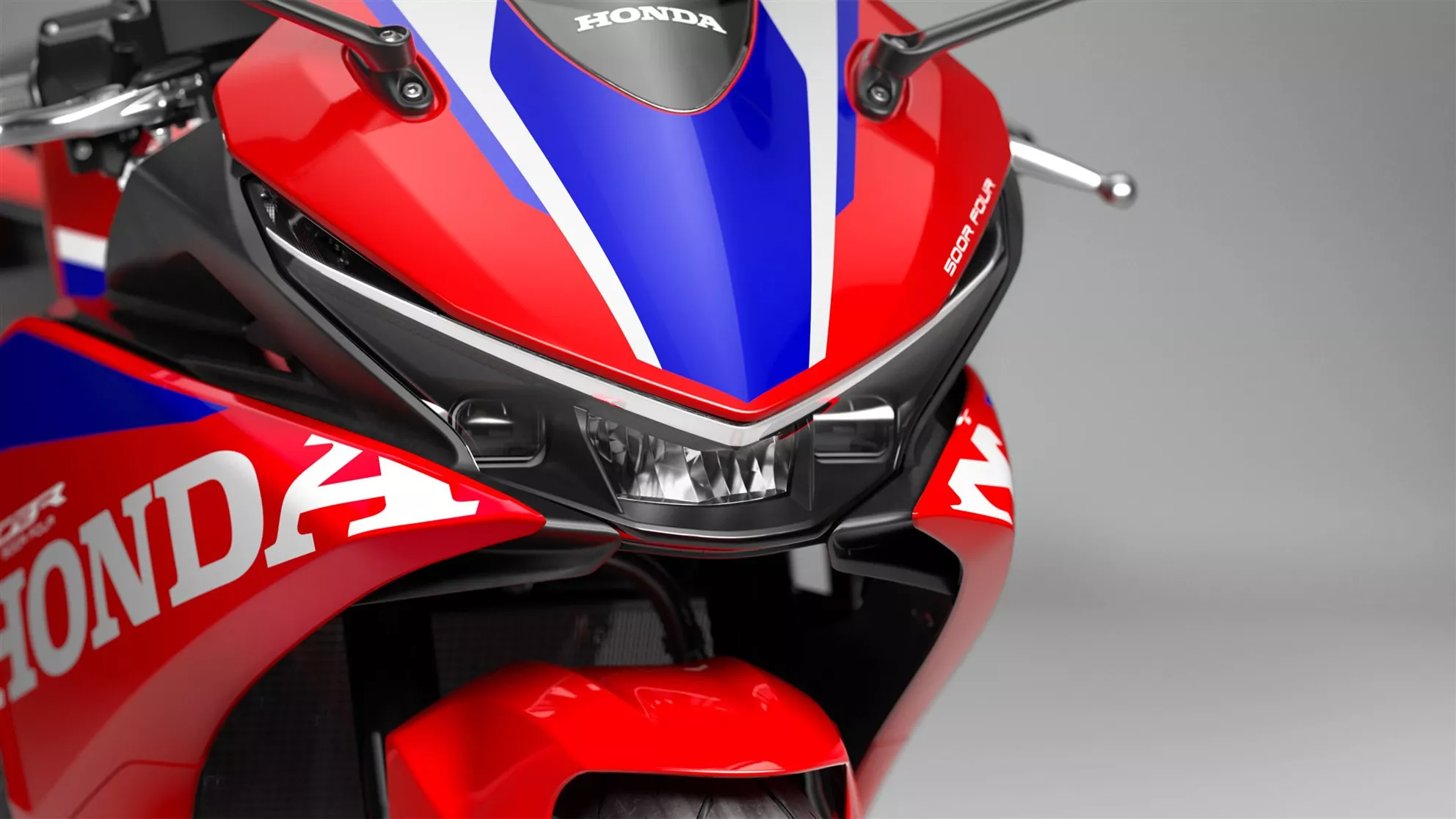
Visually, Honda is introducing a new design language: the front flows into the tank and side panels, the fairing hugs the bike tightly and the tail is drawn high and compact. Two LED projector headlights with a daytime running light signature, integrated indicators and an LED tail light define the look. Multi-layered side fairings incorporate aerodynamic elements designed to channel airflow through central areas of the bike. Add to that sculpted tank surfaces, the open-design rims and striking graphics. Honda aims to bring the presence of its big supersports models into the middleweight class. The press kit offers no statement on the actual aerodynamic effect.
CBR500R FOUR: TFT, RoadSync and USB-C
The cockpit houses a 5-inch TFT with three display layouts: bar, circle and a minimalist view. With optical bonding, the gap between the cover glass and the screen is sealed with resin. This is meant to reduce reflections and improve readability in sunlight. The system is operated via a backlit four-way switch on the left handlebar. A USB-C port sits at the lower right of the display. Honda RoadSync connects iOS and Android smartphones, enabling turn-by-turn navigation on the display as well as calls and music playback via a Bluetooth helmet headset. Requirements are the RoadSync app from the respective app store and a connection to the bike. Further features include an HISS immobiliser and a 12-volt AGM battery with 6 Ah.
CBR500R FOUR: Colours, accessories and market launch
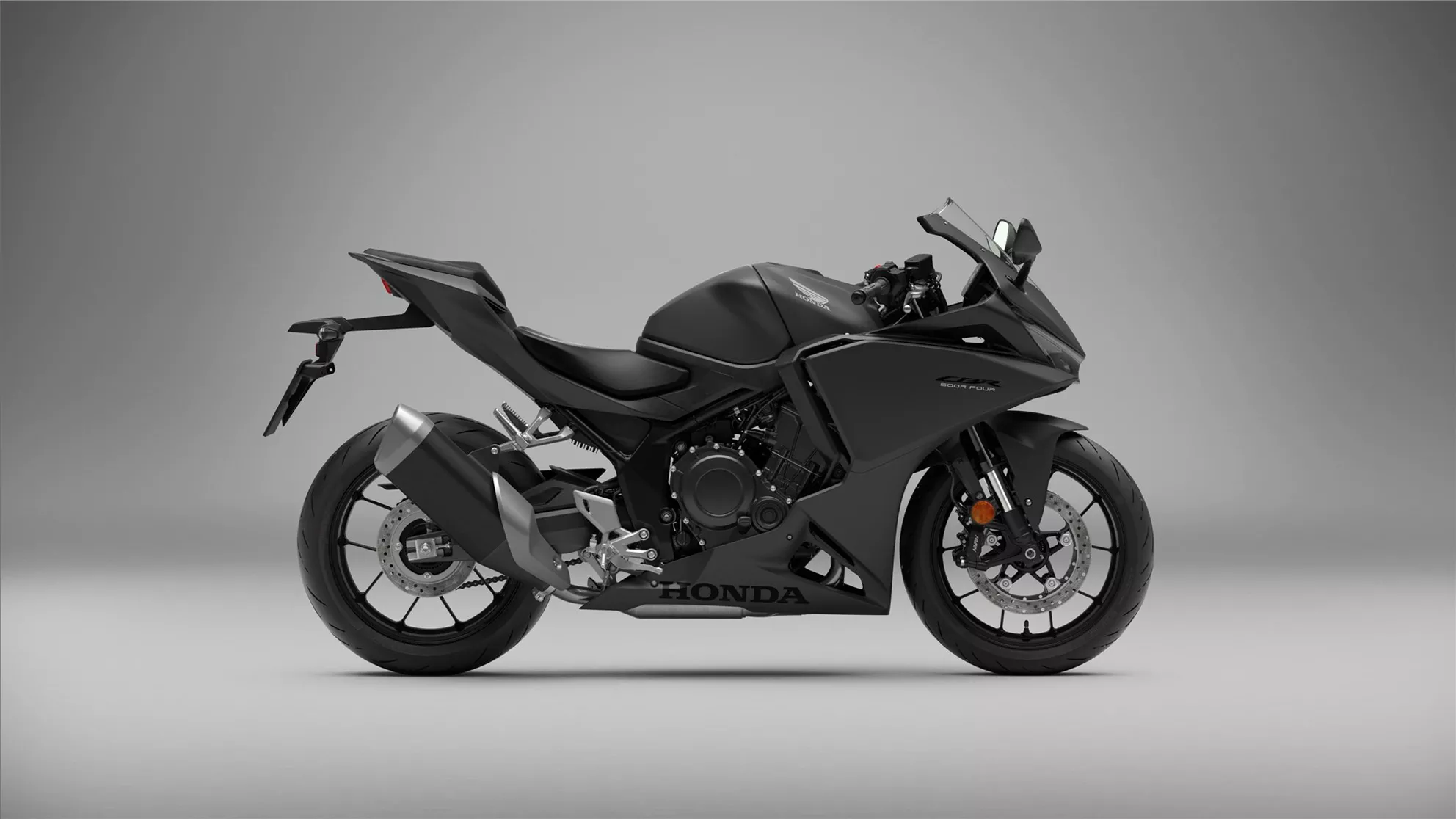
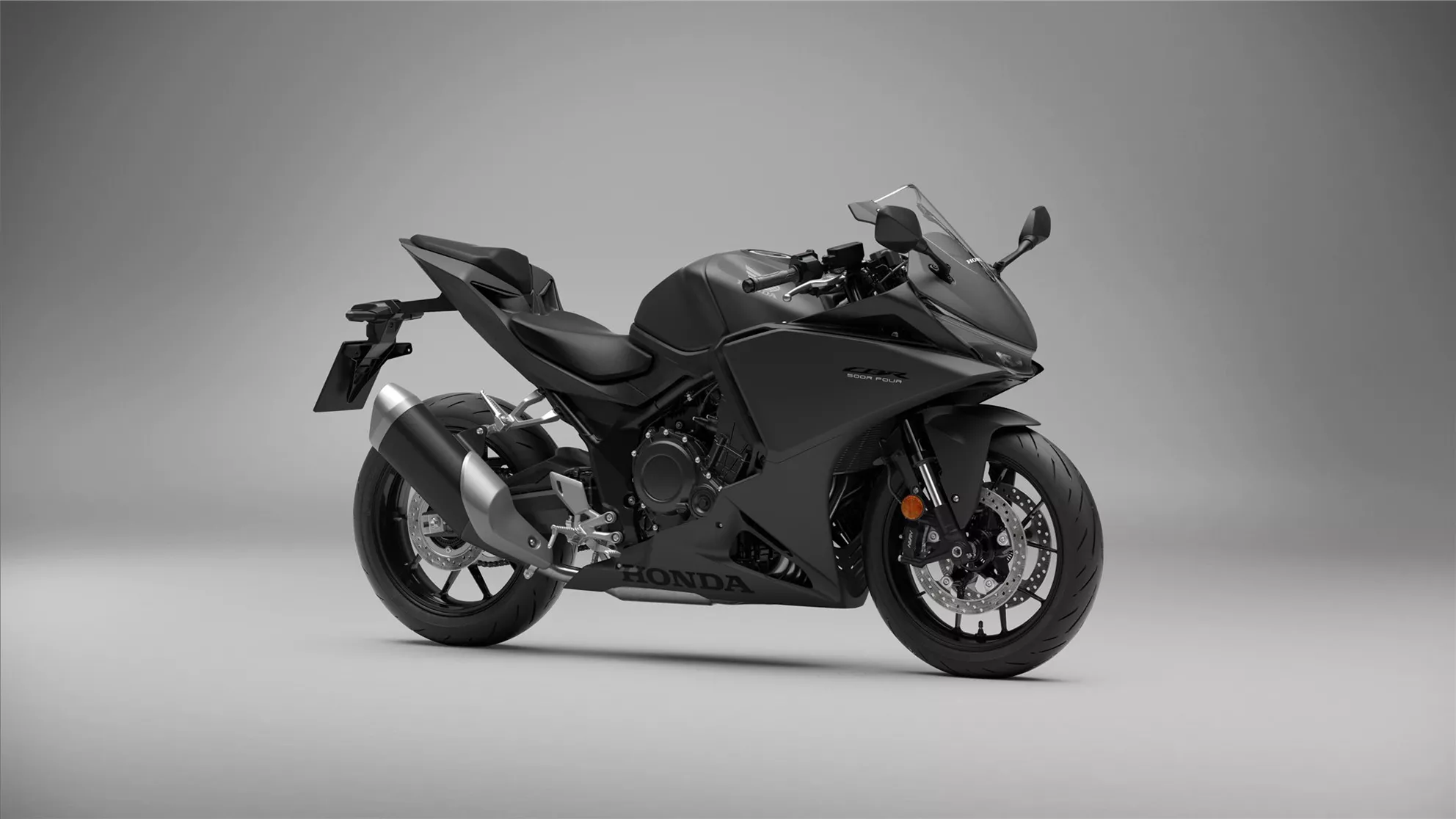
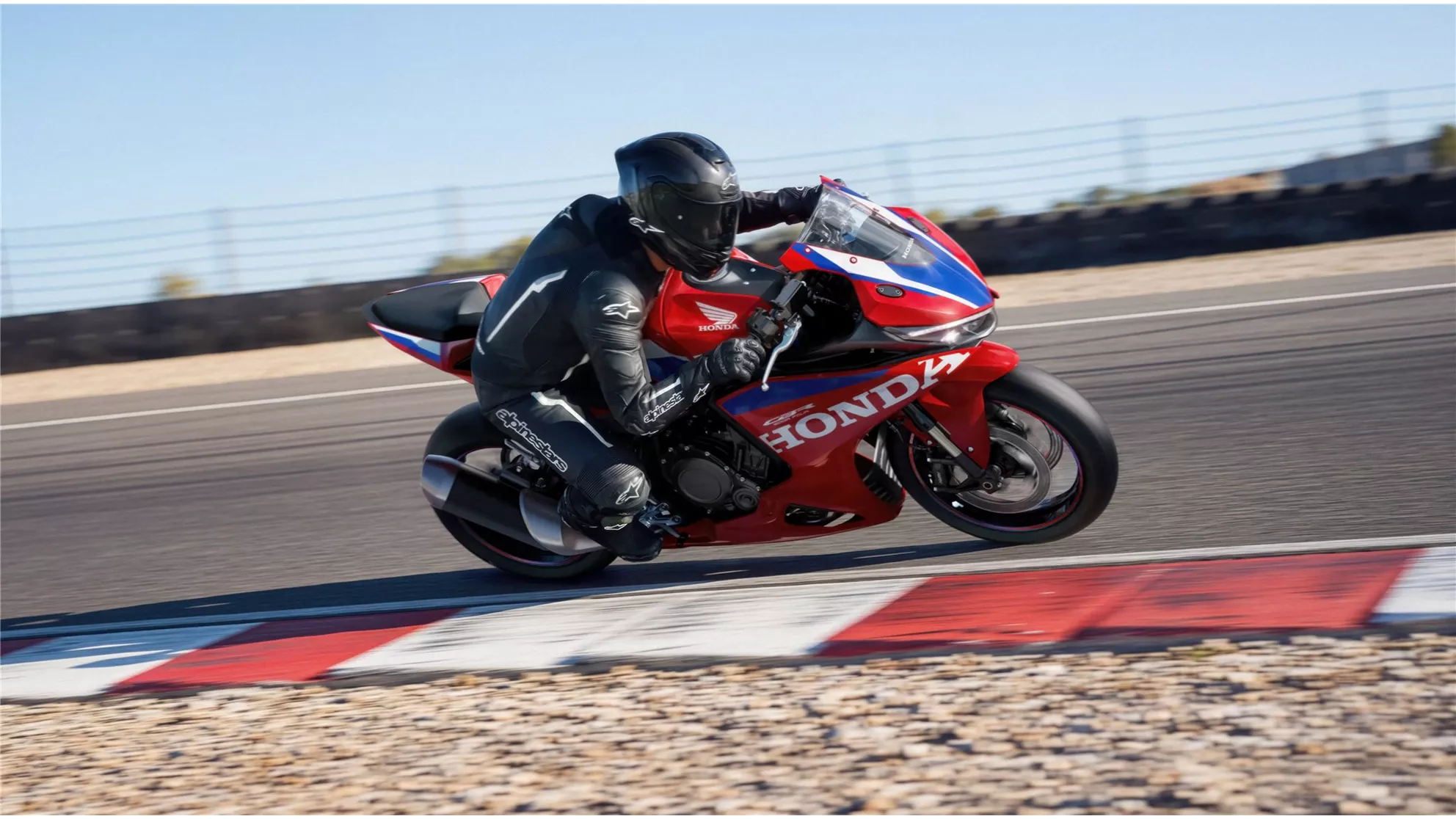
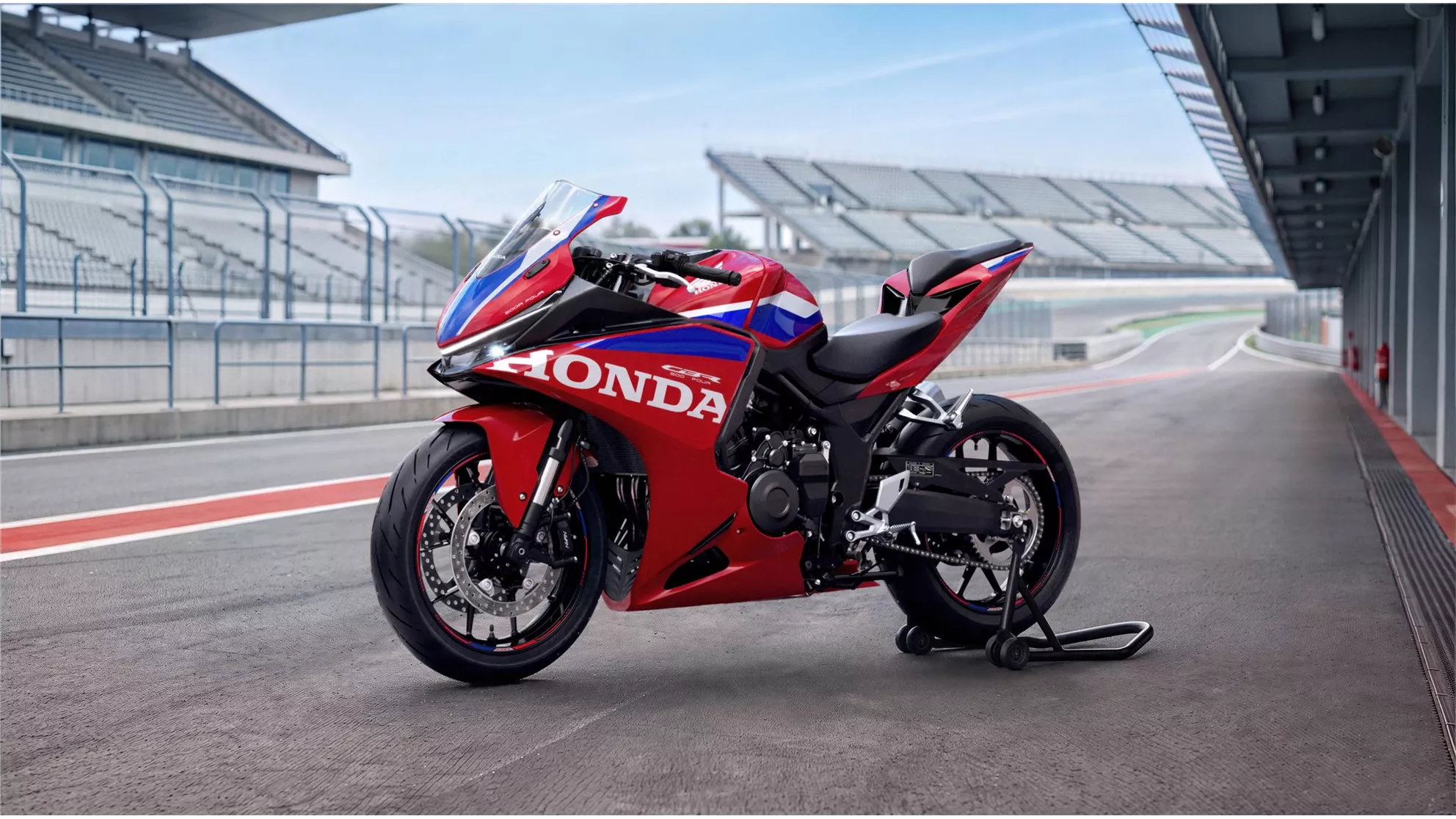
The Honda CBR500R FOUR is announced for 2027 in Ignition Red (Tricolour) and Mat Ballistic Black Metallic. Among genuine accessories, Honda lists a pillion seat bag, tank pad and side tank or knee pads, a taller tinted windscreen and heated grips. An alarm system with acoustic signal is also optionally available. The press kit provided contains no specific retail price or more precise delivery date. So anyone waiting for the new four-cylinder Honda already knows the tech and features. The price question remains open for now.
More new Honda models


- How much does a Honda CBR500R FOUR cost?
- Here you will find an overview of the price level of new and used motorbikes!
Honda CBR500R FOUR 2027: 72 hp and standard E-Clutch Images
Source: 1000PS

The CBR500R FOUR has been announced as a new sportbike with an inline-four engine for 2027.

In the middleweight class, Honda equips the new FOUR with a four-cylinder engine and standard E-Clutch.

Twin LED projector headlights define the face of the new CBR500R FOUR.

Alongside the red Tricolour version, Matte Ballistic Black Metallic has also been announced.

According to Honda, the 502 cc inline-four produces 72 hp at 11,000 rpm.

According to the manufacturer, peak torque of 47.4 Nm is delivered at 9,750 rpm.

Ni-SiC-coated cylinder bores and DLC-coated valvetrain components are designed to reduce friction.

The 4-2-1 exhaust system feeds into a two-chamber muffler.

The two Ram Air intake ducts sit below the headlights.

With the E-Clutch, the rider still selects gears using the foot shift lever.

An automatic throttle blip assists downshifts when the E-Clutch is engaged.

Honda adds two individually configurable User modes to STANDARD, SPORT and URBAN.

The new steel-tube frame uses the engine as a stressed member.

Up front, a non-adjustable 41 mm KYB inverted fork does the work.

The 17-inch cast wheels are shod with Pirelli Diablo Rosso IV tyres.

The front brake pairs twin 296 mm discs with radially mounted Nissin two-piston calipers.

A 780 mm seat height and clip-on handlebars are part of the announced ergonomic setup.

The tank holds 14 litres. Honda quotes WMTC fuel consumption of 4.5 litres per 100 kilometres.

A raised tail complements the close-fitting fairing.

According to Honda, the design combines sporty intent with everyday practicality.

The rear view highlights the slim profile and LED taillight.

The lighting signature is part of the CBR500R FOUR’s new design language.

The 5-inch TFT offers three display layouts. RoadSync and a USB-C port complete the cockpit.

For 2027, Honda offers two color options. The press materials provided do not yet include a confirmed price.