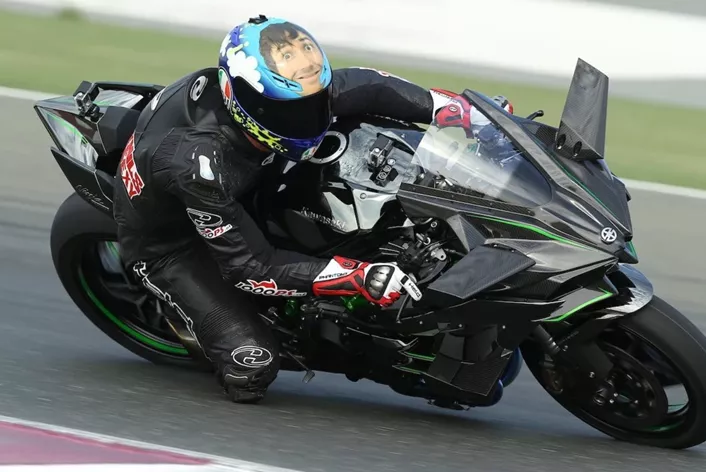
"Always getting smoked by the 140hp machines is no fun!" That is the first sentence about a Kawasaki in our archive, written on 10 September 2002 about a modified KLE 500 we had borrowed after a 2,800-kilometre tour. The verdict: "You can hardly do anything wrong." Twenty-four years later the KLE 500 is back, and it is the Kawasaki model most fiercely debated in 2026. In between lie 302 articles, 387 videos and a brand that was never the loudest with us, but which twice built something nobody had asked for: a supercharger and a hybrid. We underestimated Kawasaki, apologised, made a bet and lost. What held up of our verdicts is here. And why, in the end, the unspectacular green bikes were the important ones.
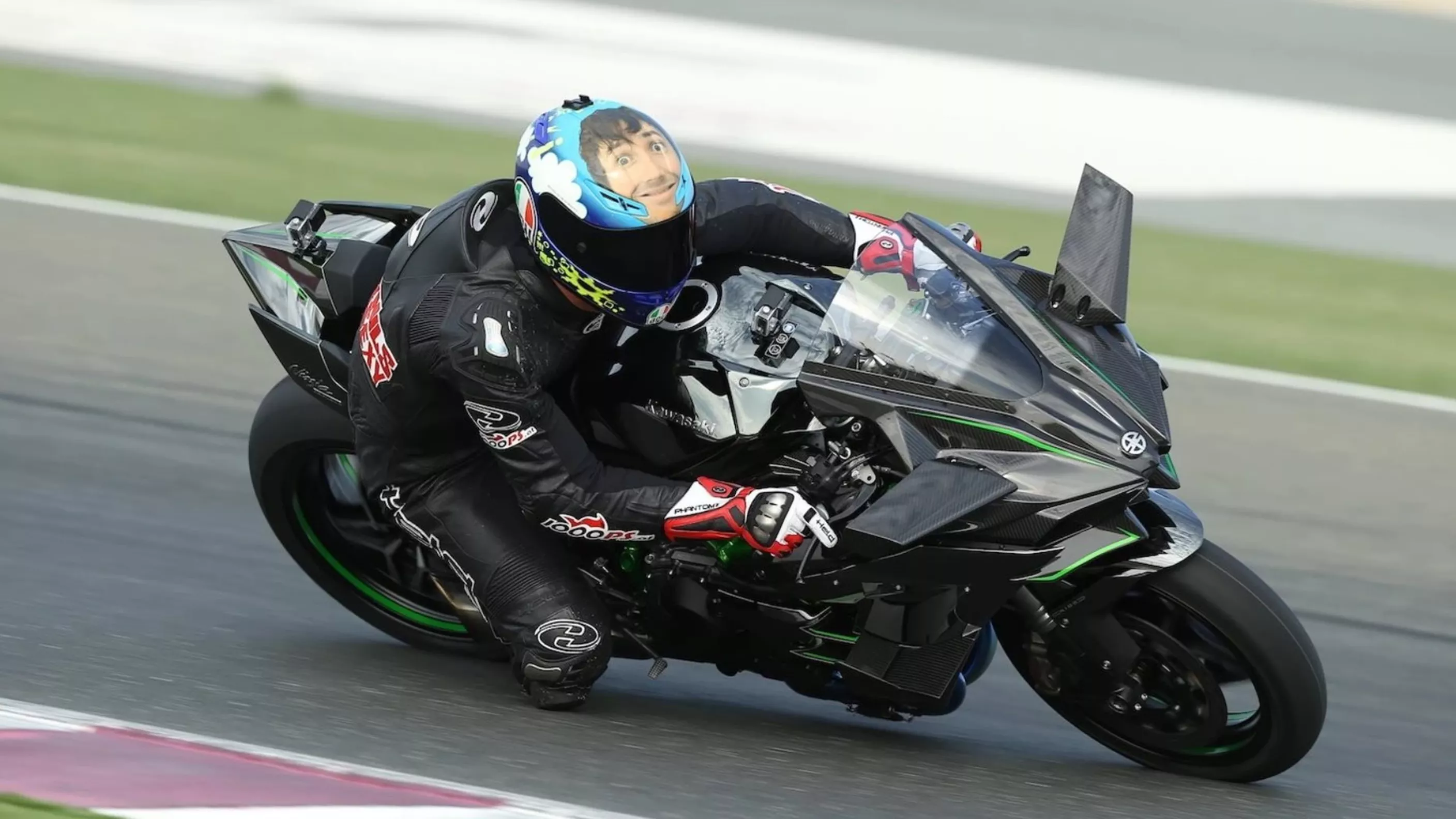
Kawasaki in 25 years of 1000PS: leading the way twice
From the KLE 500 via the supercharger back to the KLE 500
KLE 500, ZZR 1400, Ninja H2, Z900, Z900 RS, Ninja 7 Hybrid and the KLE 500 again. How Kawasaki has changed over 25 years of 1000PS, told through what we said and wrote at the time, including a lost bet and a belated apology.

nastynils
published on 19/10/2026
3,341 Views
Kawasaki delivers more than the spec sheet promises
In the years before we started filming, a pattern ran through our Kawasaki stories: the green bikes delivered more than the numbers promised. At the end of 2004, at the launch of the new ZX-6R, we wrote: "After just a few laps on the track in Almeria it was clear. This is the best 600 Kawa you could ever buy. Kawasaki cheats again in the 2005 season and treats the 600 Kawa to 636 cc." Cheating was a compliment here: 636 instead of 600 cc, so the road rider gets more grunt. In 2006 the ZZR 1400 followed, and we came up with a sentence we have rarely written about a Japanese brand since: "There are manufacturers who dare something, and there are manufacturers who dare nothing. Kawasaki belongs to the former and builds a production bike with 200hp. Full stop!" More displacement, more power, no apologies. That is how we got to know Kawasaki.
The ER-6n and a prejudice we came to regret
Kawasaki caught us out in the middleweight class too, namely on our own prejudices. When the ER-6n arrived in 2005, we expected the usual sensible bike: "The buzzwords 'new buyer groups', 'beginners' and 'middleweight' sounded suspiciously like a boring doughnut. But as soon as I saw the first photos, I regretted my hasty prejudices." Around here, a doughnut is the opposite of exciting, and that is exactly what the ER-6n was not. Readers were divided over the design, and we picked a side: "Nobody was indifferent to the design, though. It stirs emotions. I think it's absolutely great that we're finally getting really cheeky design from a Japanese manufacturer in this class." Hold on to that thought: design nobody is indifferent to. With another Kawasaki model, exactly that cost us a bet a year later.
The Versys and a bet we lost in 2008
In October 2006 we rode the first Versys and committed ourselves: "Everyone expected a successor to the KLE and got it presented in the form of the Versys. Nimble, comfortable, practical and chic, the Versys has what it takes to be a bestseller." Two years later, in a comparison against the V-Strom, Transalp and F 650 GS, we had to backpedal: "After the Versys launch last season we would have bet a lot that this bike would become the box-office hit of the season. But somehow the taste of motorcyclists threw a spanner in the works for Kawasaki and our bet. The Versys didn't sell badly, but the really big success never came." Back then, the only explanation we could find was the design, which once again nobody was indifferent to. The gap left by the old KLE thus remained open. For how long? Until 2026. But one thing at a time.
In 2010 we move into video and the Kawa stays pure
In 2010 we started filming more intensively, and the first Kawasaki clips were short, half of them under three minutes long. Two families filled them almost on their own: of the time we devoted to Kawasaki model lines up to 2014, more than four out of five minutes went to the Z1000 and the Ninja sportbikes. The four-cylinder was the hero. On the 2010 Z1000 we put it briefly: "All clear - a naked bike needs 4 cylinders." What stands out is how electronics were talked about back then. In 2010 a Kawasaki test rider told us about the new ZX-10R: "Traction control is first and foremost a tool to make the rider faster. It is not a safety feature!" Our comment: "That sounds quite different from other manufacturers". You can see where this is heading: at Kawasaki, less electronics didn't mean falling behind, it meant character. That reading stayed with us for years, until it no longer suited us ourselves.
The last Japanese brand keeping up in the superbike league
In superbikes, Kawasaki was for us the last Japanese brand that kept up with Europe. In 2011 we sent the ZX-10R up against the BMW S 1000 RR at the Slovakiaring, and the verdict sounded like affection: "The Kawasaki loves corners. ... On this bike, lean angle is served to you on a silver platter. You don't have to do anything for it and you constantly feel safe." A year later, in the big comparison of nine supersports bikes, the tone was more sober: "The Kawasaki is the one most likely to keep up the pace." Aprilia and BMW were out front, the Japanese had to let them go, only the green bike hung on. The air was thin in this league, but Kawasaki was still breathing. The other Japanese brands were already struggling by then.
A macho without a chance and our apology
In 2014 the Z1000 had no chance on paper against KTM's Super Duke R and BMW's S 1000 R. In the duel against the BMW, this line came up in the video: "And Kawasaki itself says it's meant to be a man's bike ... So somehow you feel like a hero once you've mastered it." Apart from the ABS, nothing intervened. In May 2014 we then wrote the finest self-correction of those years: "Pragmatically speaking, the 2014 Z1000 was a macho without a chance. KTM scored with the brutal SuperDuke R, BMW with the almost perfect S1000R. The Z1000 was neither lighter nor faster - but it is still the most genuine naked bike of them all!" In July, a confession in the video: "I have to admit, before the season I ... did it a bit of an injustice. ... Riding bikes is about more than analysing numbers." We had read numbers instead of riding.
A supercharger and weak knees among the hardened
And then, at the end of 2014, something came along that nobody had on their radar: the Ninja H2R with a supercharger. A Kawasaki man told us that for him it was "a real milestone in the history of Kawasaki", and when it stood in Vienna in November, we were not one bit more sober: "The H2R is spectacular, it's strong, it's insanely fast, it's the stuff dreams are made of, it pushes the limits of what's possible into a region where even the hardened get weak knees." In March 2015 we got to ride both in Qatar, the H2 and the H2R. The report says: "As one of the very few journalists from the German-speaking world and the only Austrian, I have the honour of being present at this turning point in motorcycle history." Turning point. A big word.
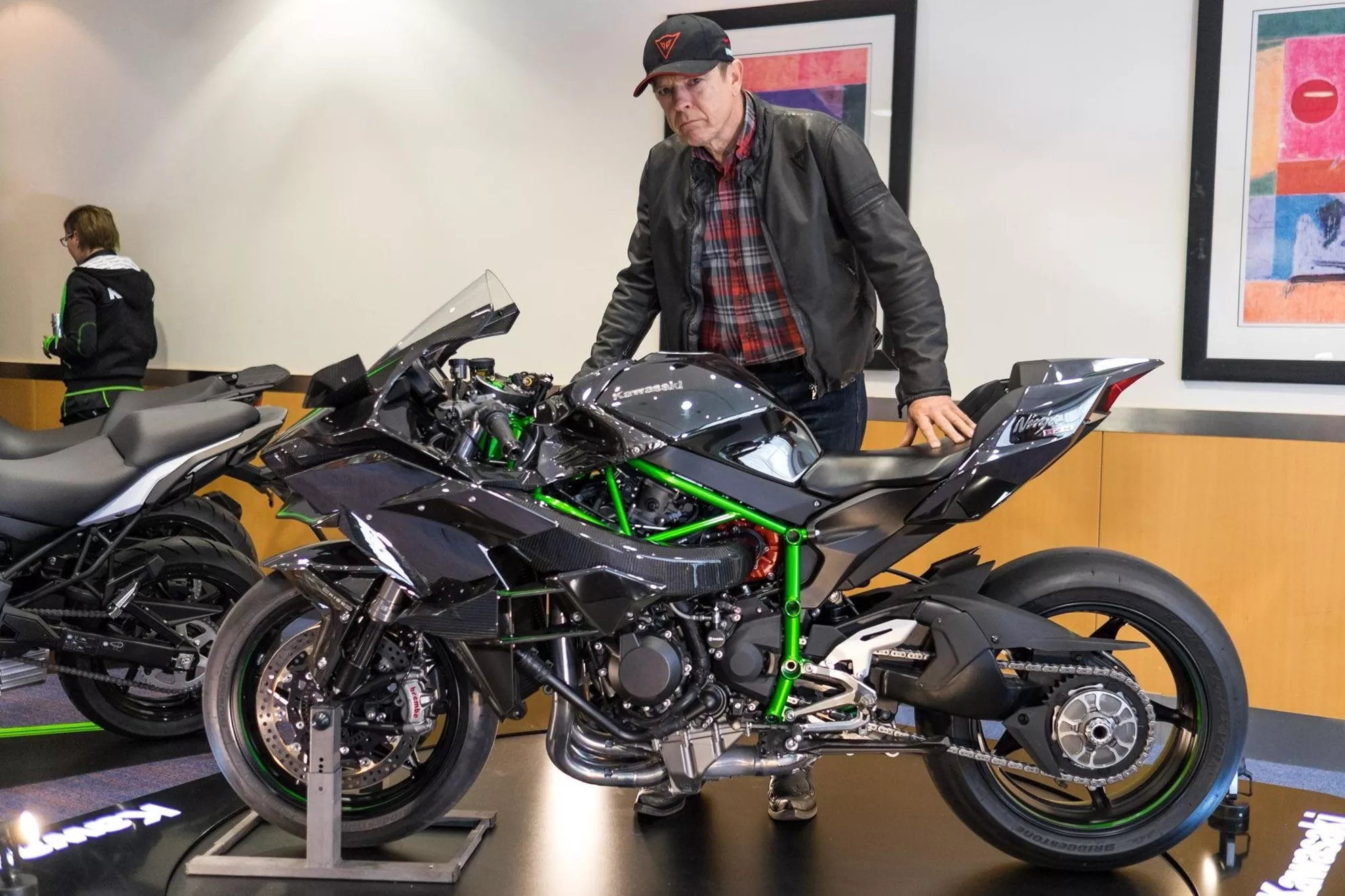
Kawasaki Ninja H2R
700,000 clicks and a bike nobody expected
The same Qatar report also contains the sentence that best explains the H2: "700,000 clicks on the photos of the Ninja H2 within 2 days almost made our servers melt. But many readers were expecting a different bike. Apparently people expected a dominant and crushing alternative to the BMW S 1000 RR, Panigale and R1." You wanted a superbike that beats them all. What you got was a supercharger that didn't fit into any pigeonhole. The truth: the H2 made Kawasaki famous, but it didn't carry the brand. In our videos of the last three years, the Z1000 and Z H2 practically no longer appear. A Kawasaki engineer had explained to us in 2015 why they built the thing anyway: "In recent years bikes have become ever more powerful but also ever less exciting. We are all motorcyclists and finally wanted to build an exciting bike again." Exciting it was. Others did the carrying, and they arrived in 2017.
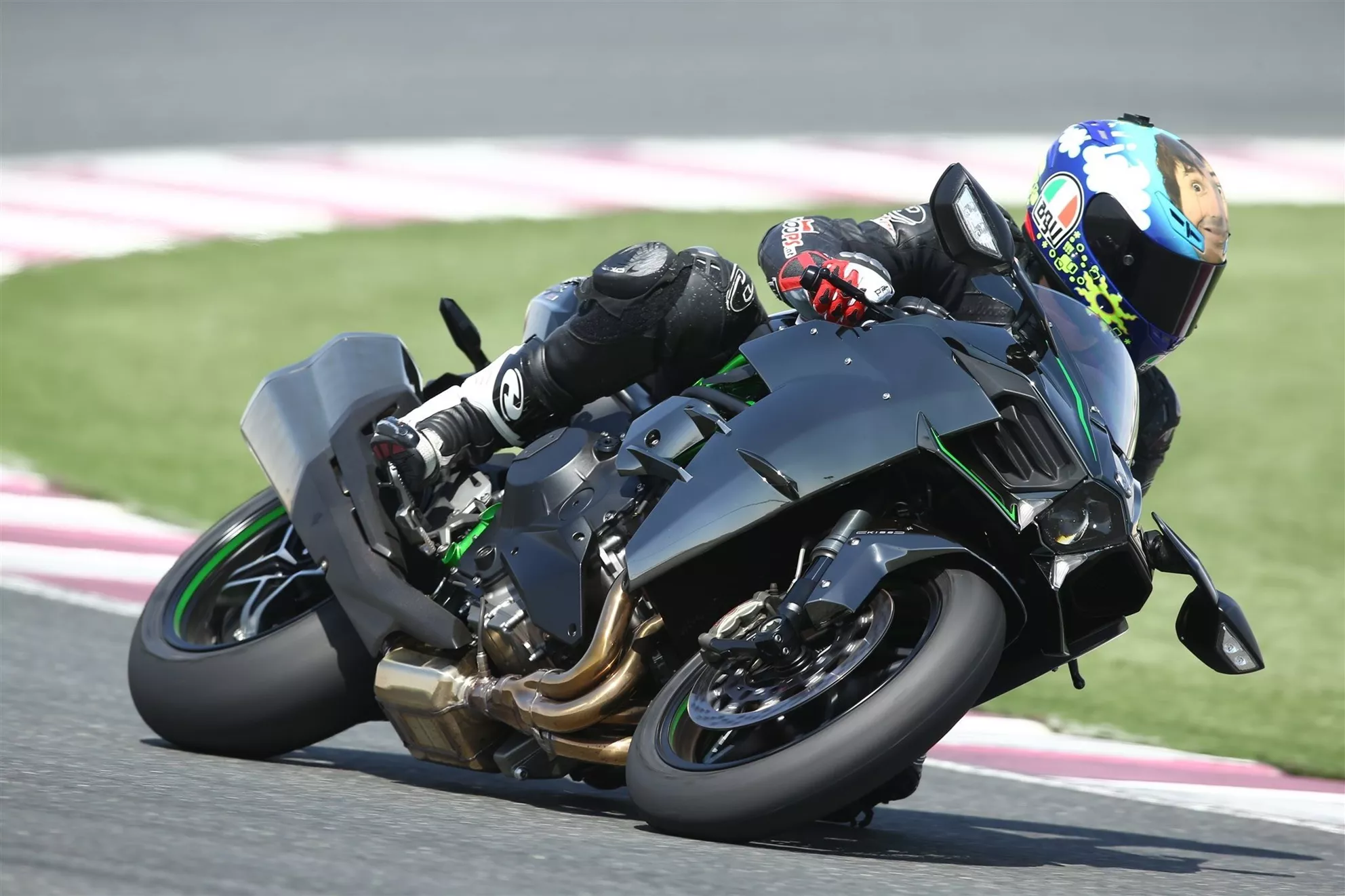
Kawasaki Ninja H2
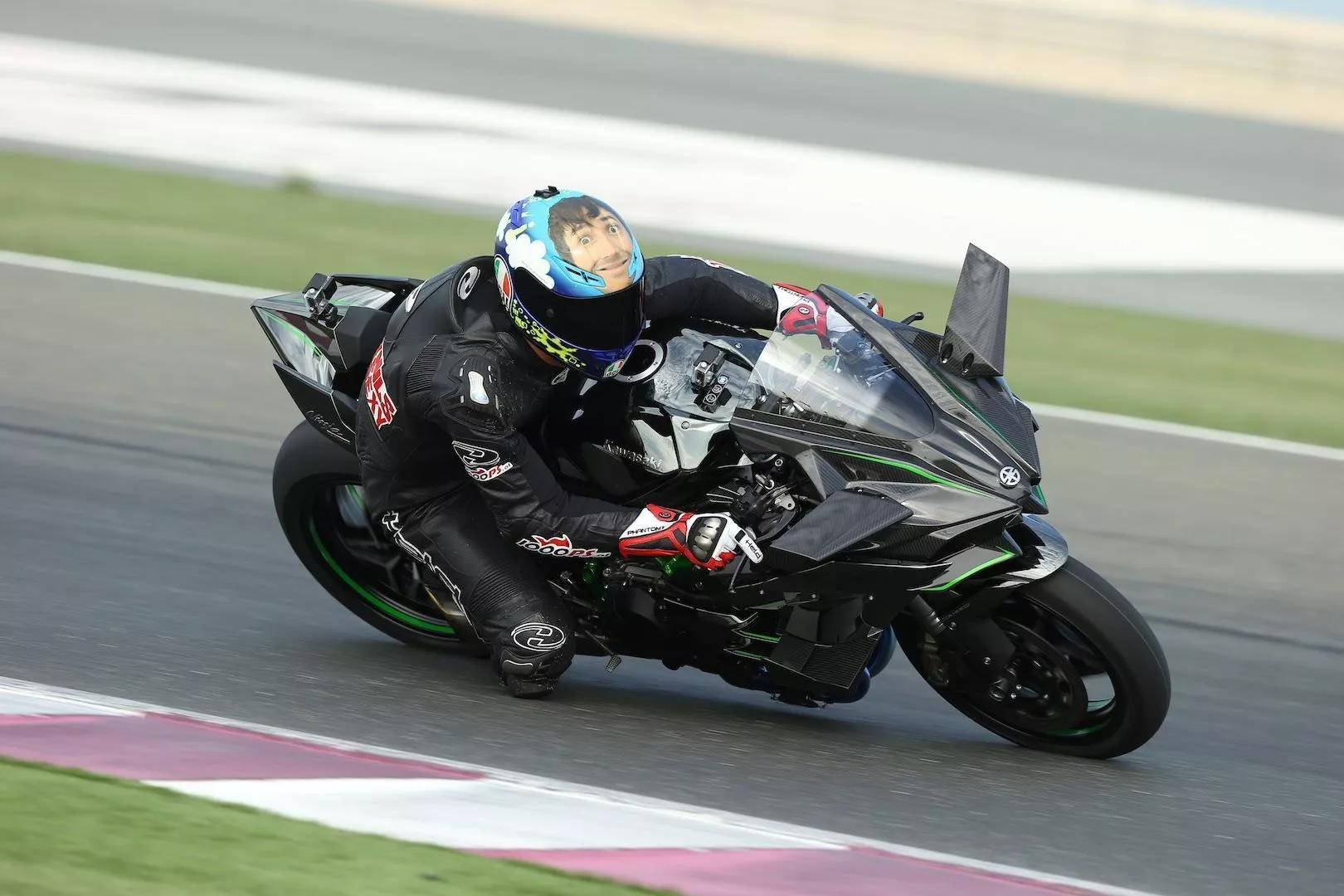
Kawasaki Ninja H2 R
In 2017 the Z900 closes in on the litre bikes
Two bikes carried Kawasaki with us, and both arrived in 2017. The first was the Z900. After the first test in February we said: "Not for a second did I miss traction control. On the contrary. When a machine has such good mechanical traction and gives so much feedback, you as a rider have no problems." In the spring comparison against the Suzuki GSX-S 750 and Yamaha MT-09 we were amazed: "In comparison the Z900 was of course a sensation, it has moved much closer to those litre bikes. That really was a genuine surprise for me." Even so, one of us put it only in third place, and the reasoning is the punchline: "Incredibly balanced. Really great bike. But it doesn't go radical in any direction." It wasn't radical in any direction. That is exactly what became its strength, and with it, it carried an entire brand. Just how much, the following years would show.
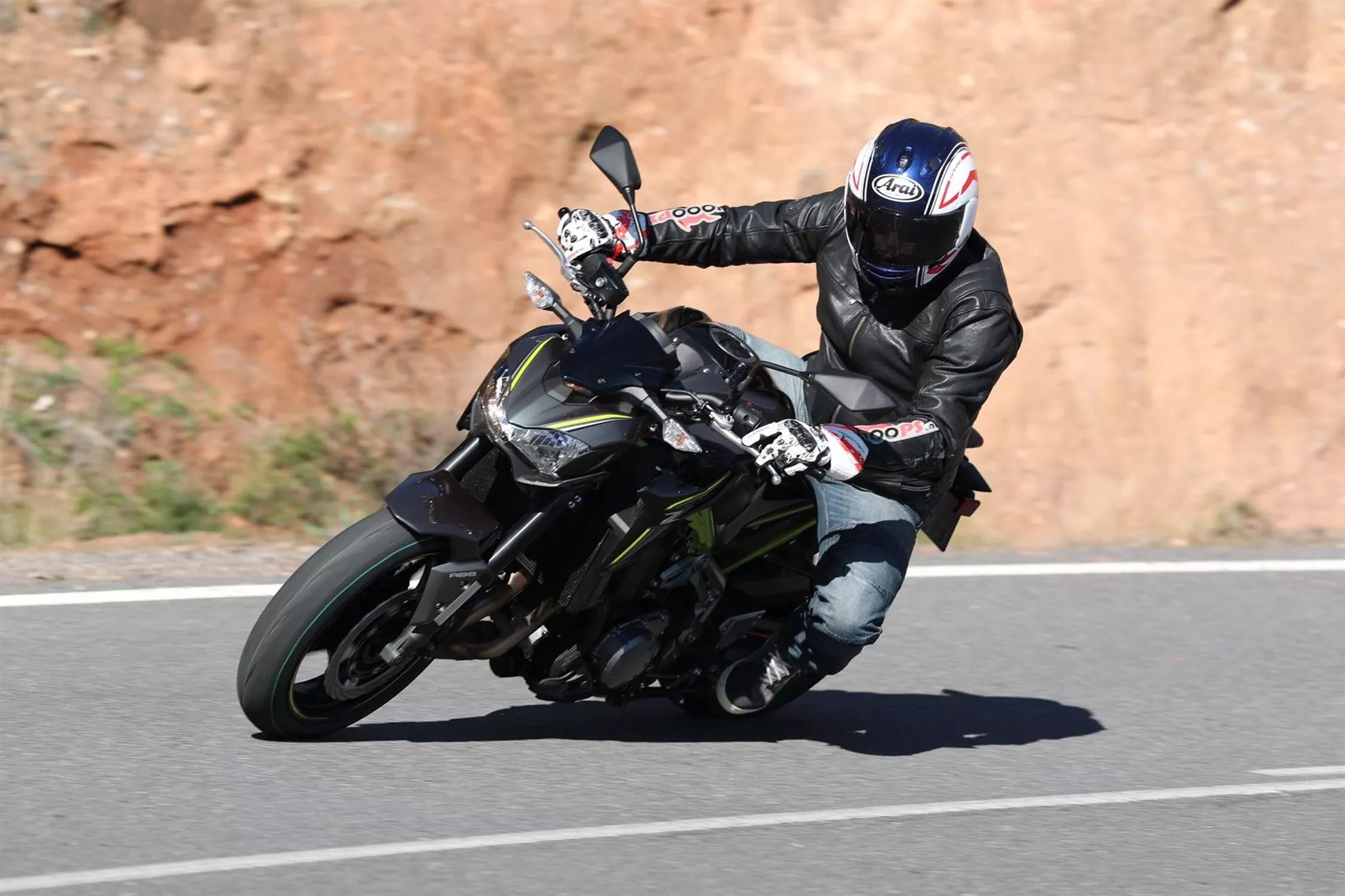
Kawasaki Z900
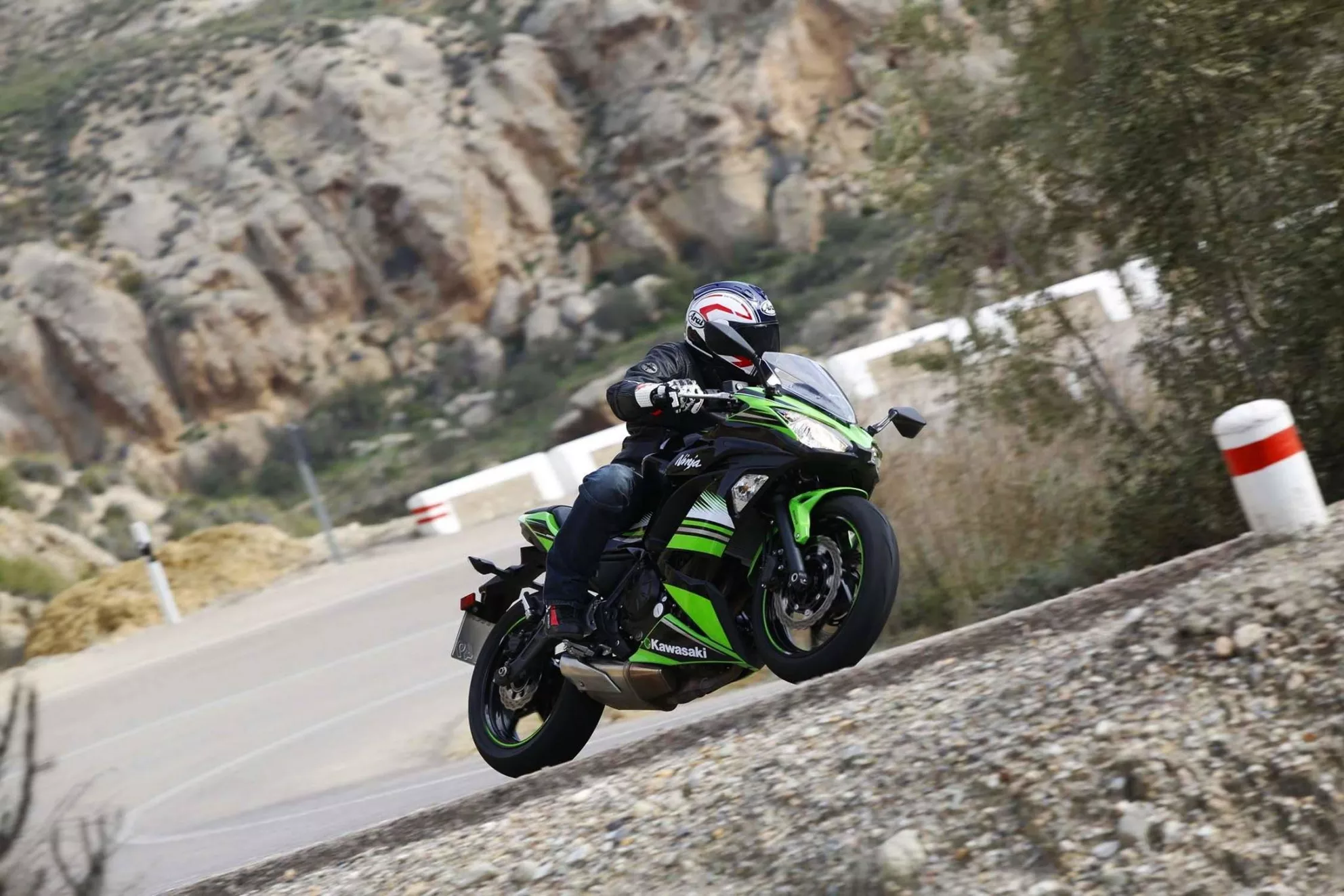
Kawasaki Ninja 650
The Z900 RS is not a copy, but a bow
The second bike was the Z900 RS, the homage to the Z1. Our verdict in November 2017: "What Kawasaki has created here is an authentic, harmonious and entirely unembarrassing homage to one of the most important chapters in its history. The Z900 RS isn't meant to be a copy, it is a bow." We supplied the caveat in the 2018 retro comparison: the engine was "so good ... that you suddenly find yourself riding very sportily. And then you notice that the chassis is, well, a retro bike chassis ... the bottleneck of the riding dynamics". Of the time we devoted to Kawasaki model lines in 2017, a good two out of five minutes went to the Z900 and Z900 RS. 2018 then became Kawasaki's loudest year with us: almost every tenth minute we spent talking about a brand on YouTube was devoted to the green bikes. It never got more than that again.
In 2023 purism suddenly turns into falling behind
On purism, we were still on Kawasaki's side in 2018. On the Z900 in May 2018: "I looked, there's no switch for riding modes, for traction control, ABS. It comes as it is. And it works. And I simply dig it." The price remained a compliment. In summer 2020, Z900 and Z650 side by side: "To my left the Z900. The Z900, in my opinion, the real star in the value-for-money sky." Then our tone shifted, and it did so before Kawasaki changed anything. In May 2023, in the middleweight comparison against four rivals: "... it's still just a bit of that claim to modernity that I'm missing, because ... no IMU, no quickshifter. And the others do come with that. Sometimes at the same or a very similar price." The same lack of switches, the same Z900. In 2018 it was called character, in 2023 falling behind. It wasn't the Kawasaki that had changed, but the others, and with them our yardstick.
The hybrid we ignored for too long
And then Kawasaki led the way once more, where nobody expected it. October 2023, Ninja 7 Hybrid, first test in Barcelona: "Kawasaki is pushing progress and stands out from the crowd once again. After unique supercharged engines, the manufacturer is now also bringing the first series-production hybrid motorcycle." In April 2025 we nevertheless had to talk about ourselves: "I'm not really open to the electric topic as such, I'm more of a real combustion-engine freak. ... but I didn't ride this hybrid thing. Looking back now, I have to say that was a mistake. There's quite a lot in there that is really great." Kawasaki was just as frank in an interview with us in April 2026: "The timing of the market launch in Germany was very bad, because the mood had just swung strongly against electromobility. On top of that came an ambitious price." Technically a hit, commercially not. Just like the supercharger.
Quieter in the conversation, but seven out of ten minutes Z900
Since 2024, Kawasaki has become quieter with us. For the first time in 17 video years, the brand slipped to eighth place, behind Suzuki; only about every twentieth minute we spent talking about a brand went to the green bikes. In return, Kawasaki is strong where most of us ride: every third Kawasaki video is now shot on country roads or in the Alps, only every tenth on the race track. And in 2025, seven out of ten minutes we devoted to Kawasaki model lines went to the Z900 family. On the new Z900 in January 2025: "My first fear was, hopefully it won't get expensive. Fortunately that fear didn't come true. The Kawasaki Z900 is an exceptionally affordable bike." It got an IMU and a quickshifter too. In your comments we heard both: "213 kg with 124 hp? It's 2025!" And: "Once you've ridden a Z 900, you don't switch so quickly". Both are right.
In the Balkans, criticism of the Z900 RS turns into affection
With the Z900 RS, something happened during these years that you rarely experience with a bike: the criticism turned into affection. In 2024 I rode the Kawasaki Z900 RS on the Balkan Rally, 2,500 kilometres from Budapest to the Adriatic in Montenegro, fully loaded, together with other retro bikes. In the video about it, at the end in the Bay of Kotor, came the line: "The Kawasaki Z900RS, for me one of the authentic retro bikes we had with us. ... I'm happy to forgive it for not having a quickshifter or for there being no riding modes." Back in 2022 we had already said about the two RS models: "The retro things are great." See the difference from the Z900? The same missing electronics, the same period, and once we said falling behind and once forgiveness. The reason: with the RS, leaving things out is part of the concept, round gauges and four-cylinder included. With the Z900, it was simply missing.
The KLE 500 returns and divides the 2026 season
The real topic of these years, however, is a different one. In 2026 the KLE 500 came back, 24 years after the first Kawasaki story in our archive, and it became the most controversial bike of the season. Our Swiss test summed it up in June, where Töff is the word for motorcycle: "Hardly any Töff has caused as much talk this season as the Kawasaki KLE 500. Some celebrate it as an affordable entry into adventure, others tear it apart on the spec sheet alone." I myself approached it in May with an expectation you rarely read in test reports: "In my head, the Kawasaki KLE 500 was an accessible fun bike: quick as a weasel, simple, but fast enough. That's how I knew it from my youth - glorious duels on country roads, a mate on the old KLE, me on my KTM LC4." Less is more, we had already said in Spain in February. With the KLE, it holds true.
Why Kawasaki needs the KLE, according to its Germany boss
Why the KLE exists at all, the head of Kawasaki Germany told us himself in April 2026. Asked whether the Z900 and Z650 had become too important, his answer was surprisingly frank: "Yes, that's both a blessing and a curse. ... At the same time, the dependence is high if such a model ever doesn't work. That's exactly why we're bringing the new KLE." In the same conversation came two sentences you should remember as a buyer: "Our 650 engine is at the end of its life cycle." And: "The sport touring bike segment is shrinking sharply." On weight, where Kawasaki is often above the competition, we heard no excuse but a stance: "For us, weight is not the top priority in development." That explains the 213 kilos of the Z900 better than any spec sheet.
Six sentences from back then and what became of them
Now the reckoning with ourselves. In 2006 the Versys had "what it takes to be a bestseller"; in 2008 we admitted the bet was lost, and the KLE gap remained open until 2026. We were never wrong faster, and nothing ever stayed open longer. In 2010 we said "a naked bike needs 4 cylinders"; it came true, just smaller: today the Z900 family carries the brand with us, not the Z1000. In 2015 we called the H2 a "turning point in motorcycle history"; the same text already stated that many readers expected a different bike, and today the family barely appears with us. In 2014 and 2018 doing without electronics was character, in 2023 falling behind; we changed our stance before Kawasaki did. In 2023 we asked of the hybrid "the future?!"; technically yes, commercially no. And 2002: "You can hardly do anything wrong." That bike is back. The sentence has held for 24 years.
The quietest big brand leads the way twice
Kawasaki was never the loudest brand with us: for 17 video years the green bikes got between just under five and just under ten percent of the minutes we spent talking about a brand, no crisis year, no spike upwards. What we did experience twice, though, is a brand that leads the way technically when nobody asked for it: in 2014 with the supercharger, in 2023 with the hybrid. Both times we were there for the first test, both times less remained than the attention: the H2 barely appears in our videos anymore, and with the hybrid Kawasaki itself admitted to the timing and price. The brand was carried by the unspectacular bikes: Z900, Z650, Z900 RS. Since March 2026 it has said so in the Z650 S test: "This shows once again: it's not the extreme high-performance bikes that dominate the market, but simple, accessible and well-functioning concepts." The next time Kawasaki leads the way, we'll be watching again. But people will still buy the Z.
About this series for the 25th birthday of 1000PS.at
In October 2001, 1000PS.at went online as Nils Müller's diploma thesis project at the University of Applied Sciences Wiener Neustadt. From that grew a platform that combines motorcycle journalism, community and digital solutions for the industry. For our 25th anniversary in October 2026, this series looks back at the development of the motorcycle brands - drawing on a quarter century of our own reporting, many kilometres ridden ourselves and the curiosity that has driven us since day one: what comes next?