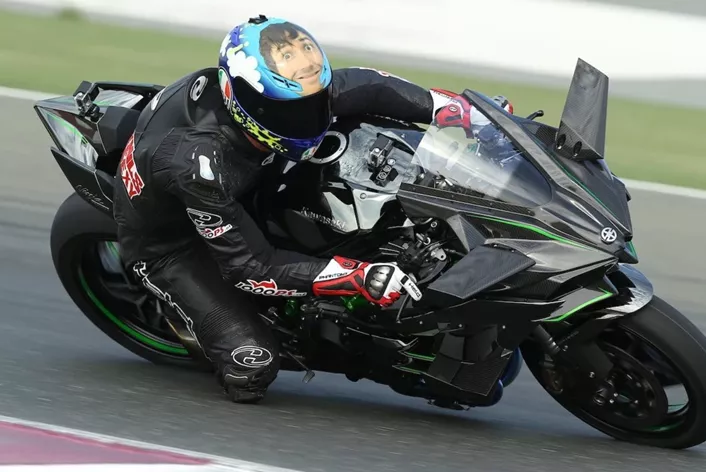
"I find it … hard to come up with real criticisms of this Honda. Because, as usual, Honda leaves very little room for criticism." That's what 1000ps.at said in January 2008 after testing the CBR 1000 RR. Fifteen years later, in September 2023, we voiced the same thought from the other side: "For me, the thing is that I don't judge any bike as harshly as a Honda, because Honda is where I have the highest expectations when it comes to quality." In between lie around 500 articles and 545 videos. More than one in every nine minutes we spent talking about a motorcycle brand on YouTube went to Honda; only BMW got more airtime. Crisis and insolvency practically never come up in our Honda videos. Instead, another word runs through all 25 years: reliability. At Honda it's not a talking point, it's the benchmark. And that's the yardstick Honda has to be measured against.

Honda in 25 years of 1000PS, our strictest benchmark
Why we judge no bike as harshly as a Honda
Fireblade, CBF 600, Africa Twin, Hornet and the first electric bike: how Honda became the brand we scrutinise most strictly over 25 years of 1000PS, told through what we said at the time, mistakes and predictions included.

nastynils
published on 14/10/2026
Broken-in shoes instead of Fireblade glamour
In our early years there were no videos yet, just the magazine, and in it 55 Honda stories between 2002 and 2009. The first one in the archive is a Fireblade, in August 2002: "Slim, fast and sexy – that's the Fireblade SC50 in 2002." But what shaped our view of the brand wasn't the supersports bike, it was a sensible bike. We ran the CBF 600 as a long term test bike in 2004, and the interim report from August still holds the shortest description of what Honda means to us: "Feels every time like slipping back into my own broken-in shoes, because they simply fit best." No adrenaline, no wind blast, just a perfect fit. Yet to us the CBF was more than the well-behaved sister of the Hornet, namely "the first bike of a new class that combines more elements than was previously the norm". Those shoes turn up again and again. They just go by a different name each time.
Almost 100 hp for 6,990 euros and a rock in the storm
In 2005, price became part of the verdict, and it stayed that way. In the Honda comparison of July 2005 we wrote about the Hornet: "For 6,990 euros you get almost 100 hp, a cool design, a nimble little bike …" In October came the CB 1300 S, and rarely have we described a bike as a character the way we did this big naked bike: "A rock in the storm and a loyal, incorruptible friend! The CB 1300 S rescues even the lousiest day." Plus the explanation of why it looked the way it looked: "in Honda's big naked bike department, the same guy has been sitting at the drawing board for 25 years". Even with the supersports bike, the CBR 1000 RR in December 2005, the punchline wasn't the punch but the manners: "The 172 horses aren't wild Arabian stallions but obedient Viennese carriage horses." Put bluntly: in 2005 Honda built bikes you trust before you love them.
The Hornet culture shock and prayers answered
Honda could still surprise us, though. In December 2006, at the CBR 600 RR, we were puzzled by an unusually quiet presentation: "Normally, journalists had to sit through a PowerPoint brainwashing before the test laps." Not this time: "No pre-empted verdict, no self-praise, just a suspiciously discreet smile on the presenter's face. Something was up!" In February 2007 Honda then defied our expectations on design: "Hornet 2007 – a culture shock. When the last Hornet model was presented in 2005, there was merely a murmur through the audience, but the first pictures of the 2007 version triggered tumultuous scenes in the Hornet fan block." In April 2008 came the CB1000R: "Honda has heard the pleas and prayers: finally there's a fully grown hornet." And along the way came a verdict on the old 900 Hornet that you might want to remember for later: "Not enough bite, too staid." That criticism resurfaces in this story, just in different words.
ABS goes mainstream and Honda brakes first
The second surprise concerned safety. In July 2007 we put into context who made ABS on motorcycles commonplace: "BMW and Honda were the motorcycle manufacturers that actively brought the topic of ABS on motorcycles to the masses. … with Honda's CBF 600, ABS then became a genuine mass-market feature." In June 2008 a Honda engineer named the goal: "By 2010 we want to equip all motorcycles over 250 cc with ABS". On 23 December 2008 the CBR with combined racing ABS hit the track: "Honda is the first manufacturer to bring out a completely new braking system, and it works straight off the bat without the slightest glitch." A racer told us: "In a few years it will be completely normal to attack on the track with electronic brake assistance." A bold statement for a brand that, according to our January 2008 test, otherwise built bikes "without ruffling any feathers anywhere". How it turned out is revealed at the end.
Short clips, a thin archive and fuel consumption checked at the pump
On 27 April 2010 we filmed Honda for the first time. The early years are sparse in the archive: 108 videos in five years, half of them shorter than three minutes, and from 2010 to 2013 there are only two to seven real Honda stories per year in the magazine. Still, you can see what Honda was building: things that didn't exist before, and we preferred to check for ourselves. About the Crossrunner we said in April 2011: "The first impression was wrong, the second surprising. Crossover is cool!" With the NC700X in November 2011 we rode to the petrol station: "Honda made a lot of fuss about the supposedly low consumption. I had to top up 6.49 litres – for a distance of 149 kilometres. That makes a real 4.36 l/100 km." At EICMA 2013 we were then amazed: "They presented twelve models. That's actually insane."
Market leader for beginners and the row over the automatic
In 2014 Honda became the brand of reason in our videos, and we said so openly, side effects included. On the CBR650F in June 2014: "As I said, they're specialising so heavily in the entry-level segment. Nothing really seriously sporty has come along for ages now." On the NC750X in July we said: "Honda is, I think, really the market leader in bikes for returning riders and beginners." But also: "It's not a bike for the heart". Since February 2014 the dual-clutch transmission had also featured in our videos, a bone of contention from the very start: "I'm not actually allowed to say automatic, Honda gets a little irritated when you call it an automatic." One of us countered with his own cars, a Porsche and a Mercedes-AMG, both with dual clutch: "Nobody has ever told me they're uncool cars. Why shouldn't that work with bikes at some point too?" Whether the row ended well, you'll find out further down. Small hint: Honda was right.
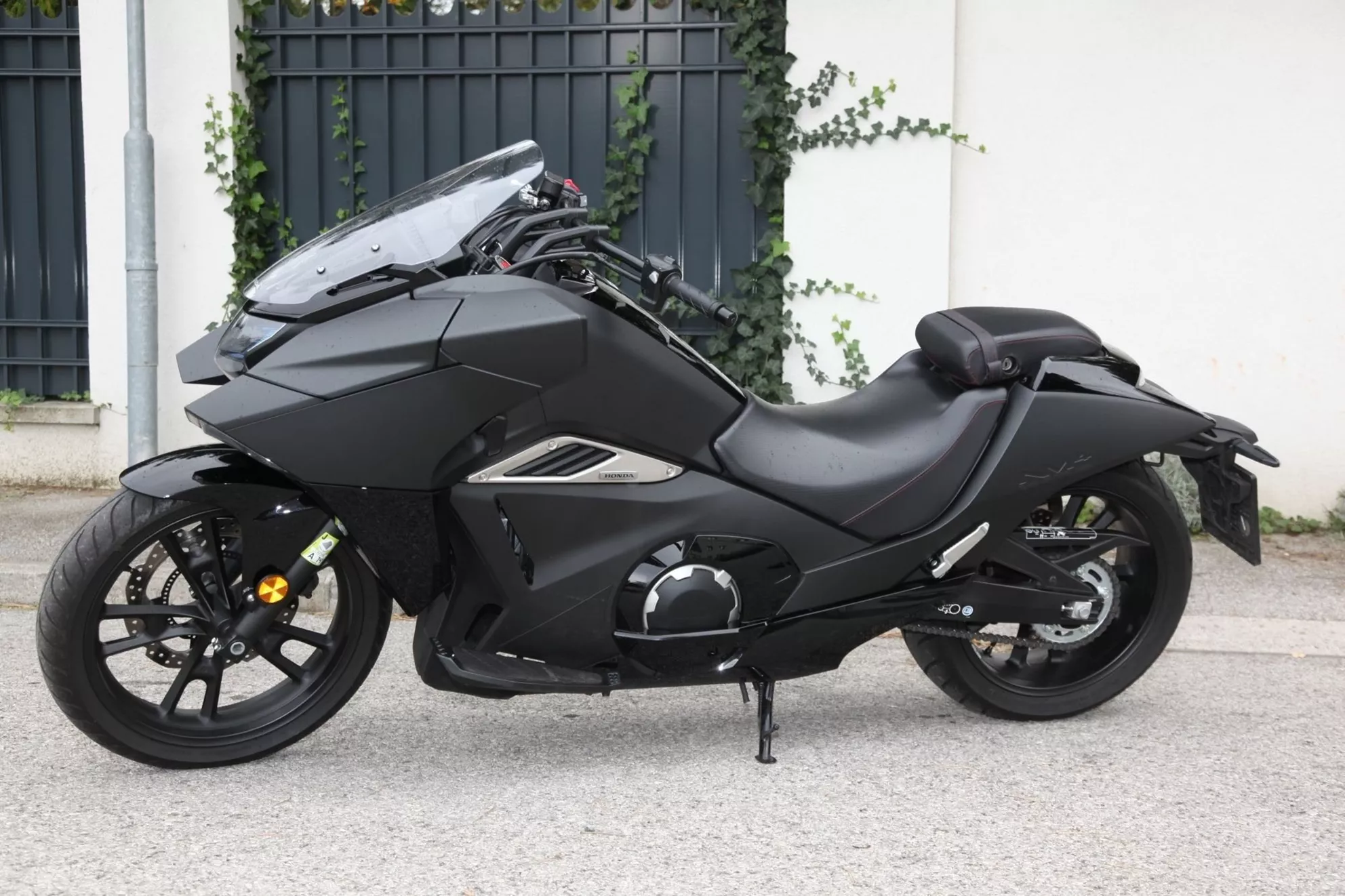
Honda NM4 Vultus
A dirty prototype ends the wait
On 12 November 2014 a pre-production model stood at EICMA, and we said into the camera: "I think since the dawn of 1000PS, not a day has gone by without somebody demanding a new Africa Twin." A year later, in December 2015, I rode the Honda CRF1000L Africa Twin in South Africa, two days off-road and on the road. The riding position suited me from day one. Only one thing annoyed me: a bike that gives you so much freedom and yet constantly patronises you. In the video it then wasn't about performance, but about what this brand stands for in our eyes: "The machine is made in Japan, by the way, and people who know Honda know that this is of course the highest possible quality a bike can have." It doesn't say how it rides, but where it's built. And with Honda, in 2015, that was argument enough for us.
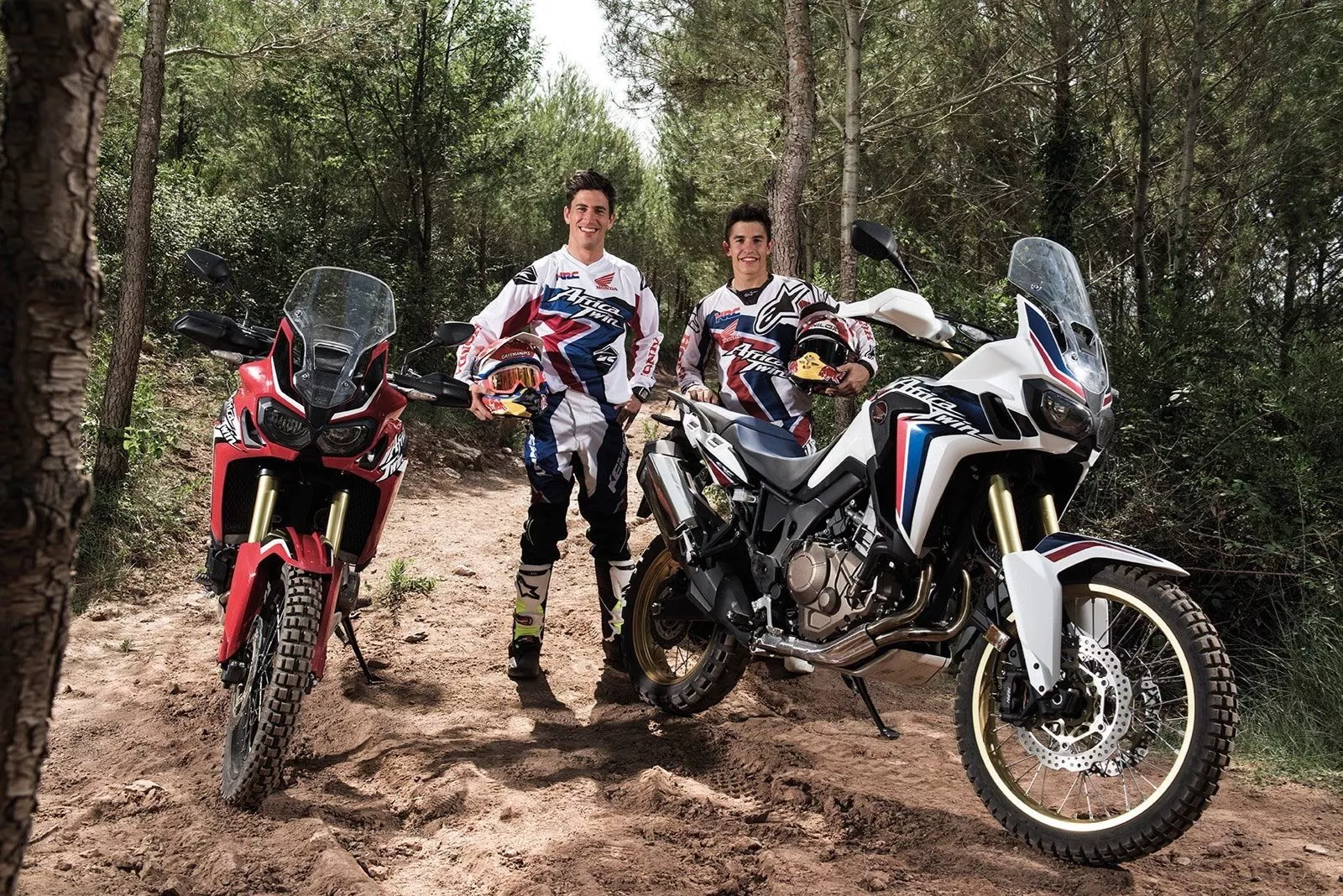
Honda CRF1000L Africa Twin
In 2016, every second Honda minute belongs to the Africa Twin
2016 was the year of the breakthrough. More than every second minute we spent talking about Honda models that year went to the Africa Twin, and almost one in every seven minutes of our brand airtime on YouTube went to Honda, more than in any year before. Between 2015 and 2019 Honda was thus our number two, behind BMW. Off-road, the verdict came in August 2016: "But it does more off-road than practically all the other Big Enduros. So that's really a big hit from Honda. They've really pulled something off there." And customers saw it the same way: "The sales figures confirm it too. The bike is selling like hot cakes. People were waiting for it." One model turned a brand we respected into one we liked. With Honda, that's a bigger step than it sounds.
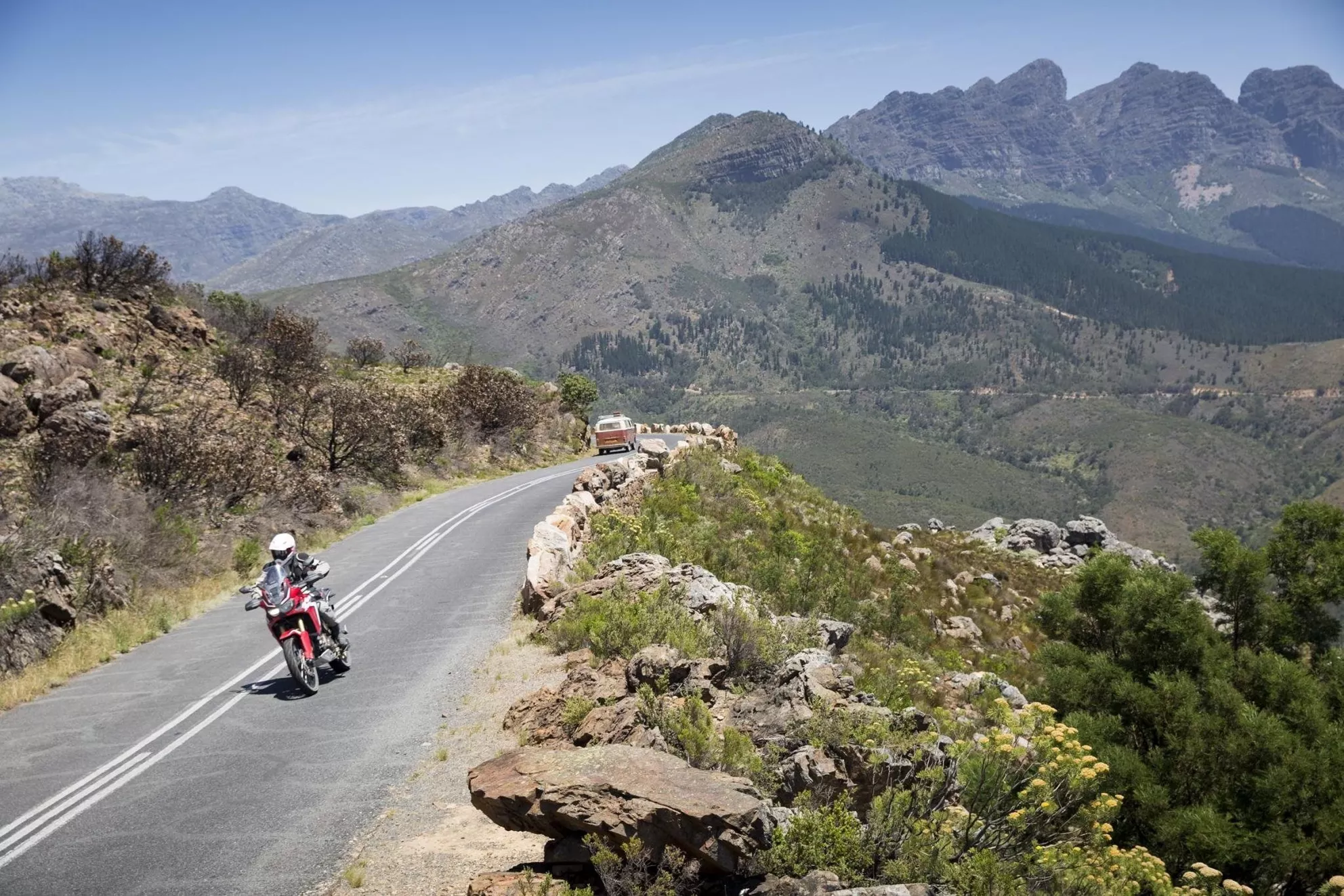
Honda CRF1000L Africa Twin
Job well done! 600,000 kilometres
What didn't happen in those years: our criticism stayed the same as in 2008. About the CB650F we wrote in August 2016: "The Honda doesn't want to stand out, overdo it or even pull a wheelie. It simply wants to work without fuss and give its owner years of enjoyment. … Still, personally I would have liked a bit more emotion overall." Praise for the craftsman, not the rock star. The reliability behind it wasn't a platitude but an anecdote with an odometer reading. In a used-bike list in March 2017 the Varadero ranked third, "because our mile-muncher Varahannes … already has almost 600,000 kilometres on the clock of his Honda – unbelievable". Six hundred thousand. Many riders wouldn't get there in ten motorcycling lives. In 2018 we talked about no Honda model as much as the new Gold Wing, a good quarter of all Honda minutes that year: "Almost everything really got better on the new Goldwing compared to the old one. There are just a few small buts."
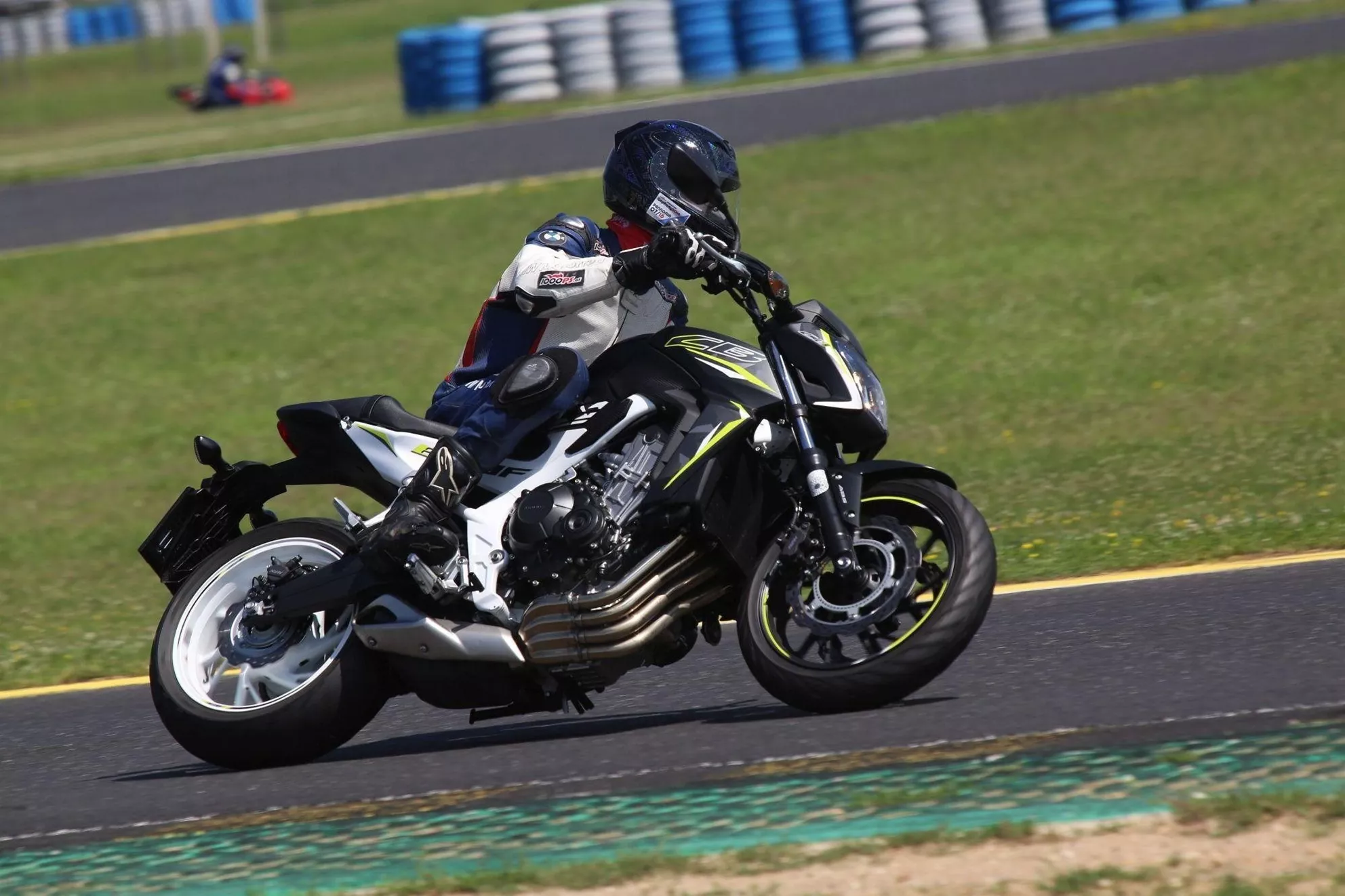
Honda CB650F
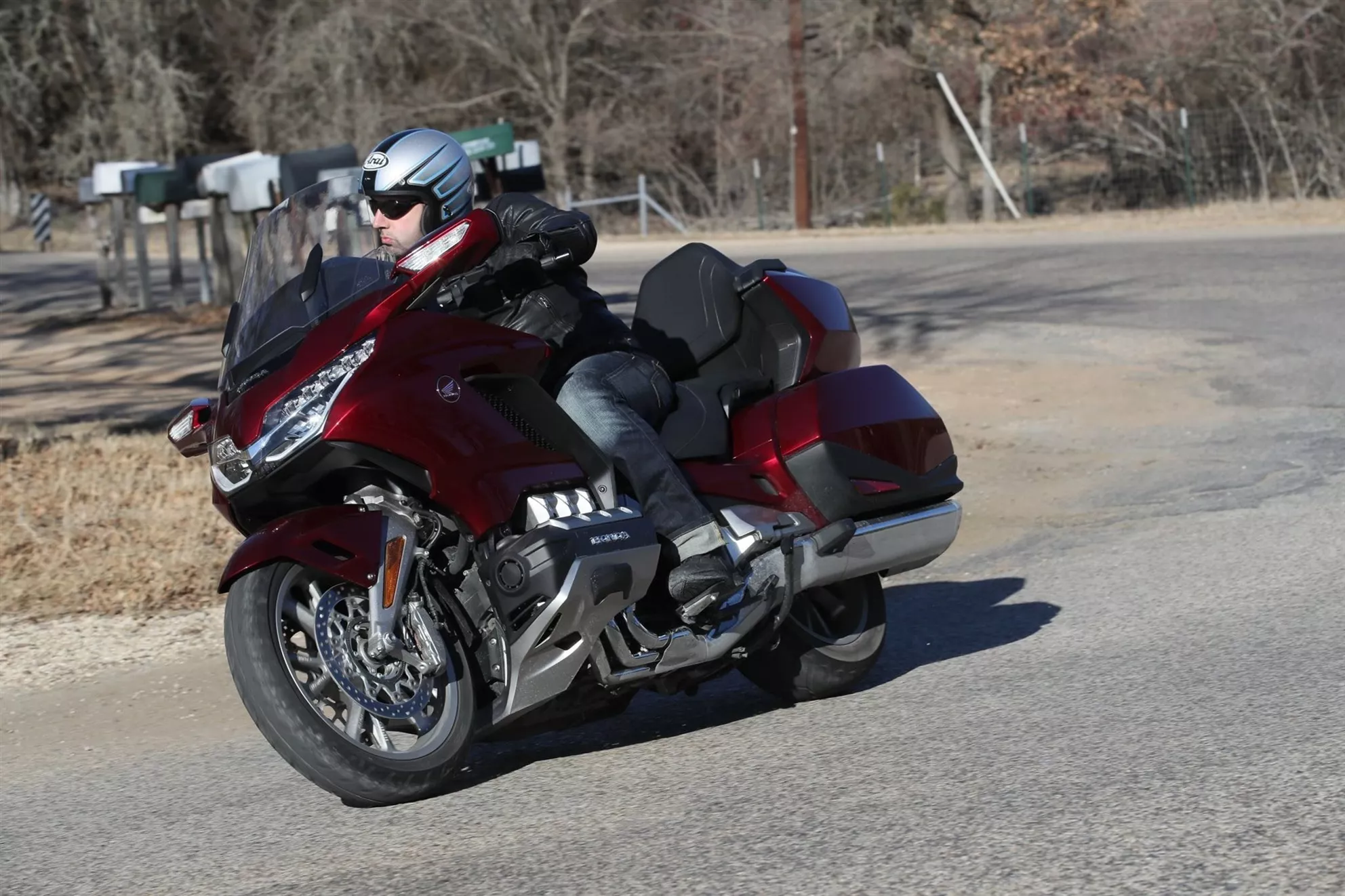
Honda Gold Wing
The only beautiful adventure bike gets ten years
In May 2019 we declared our love for the Africa Twin more openly than we usually do: "In my view, purely my personal opinion, the only beautiful adventure bike on the market, the only adventure bike I've ever used as my desktop wallpaper." And then the sentence that was a prediction: "All in all, for me an adventure bike that is fantastically equipped and that can probably stay around for another 10 years or so". Ten years, from 2019. We'll come back to that. I then put the prediction to the test myself: in 2020 I spent ten days riding across Austria with my son on the Honda CRF1100L Africa Twin Adventure Sports 2020 – Styria, Lower Austria, the Eastern Alps. By the end of the tour I was sure: it's still a dream bike. No race track, no press test, just ten days of father and son on a bike. That's exactly how trust in a brand is built, not on the dyno.
The most radical Fireblade and a lost audience
Then the Fireblade went radical. We had announced the CBR1000RR-R on 4 November 2019 as a break: "So it's a radical break with what Honda has done so far after all." With its predecessor, we recalled in the same video, the goal had been different: "The goal during development wasn't the fastest lap time, the goal was to develop the best supersports bike". Now lap time counted, and in 2020 almost a third of our Honda model airtime went to the Fireblade, more than ever for a Honda supersports bike. In January 2020 we described the dilemma: "On the one hand, you want to offer the customer an overwhelming 217 hp racing bike. It's the electronics that make it rideable for the broad masses." But we also saw the bill for the years without attacking: "All these years they've lost customers in that segment, but also dealers who are committed and know their stuff." The 2014 remark that nothing sporty had come along for ages had come at a price.
Emphasis on had, then the Transalp is back
The real overhaul ran alongside, quieter than any Fireblade. On the NT1100 we summed it up like this in October 2021: "Honda had a problem, emphasis on had. There were too many models with too few synergies, meaning not enough shared components, which naturally made production very expensive." The answer was the modular platform: the same parts for several models. On 8 November 2022 came the answer to an old demand: "It's a good day to be an enduro fan." And right after: "The Transalp is back." In March 2023 we rode it and found the old spirit again: "It's still the same in spirit as the old one, namely not a bike for those who want to go all out, but a bike for the sensible everyday rider or the relaxed globetrotter." Remember the broken-in shoes from 2004? This was the same pair, just with knobbly tread.
The budget deal is called Hornet and an indicator fogs up
With the modular platform, Honda became a price argument for us. In May 2023 we said of the new Hornet: "For me, the Honda Hornet has a bit of that VW Golf character. It works flawlessly. It's great. It's been around forever. It's mature." And in the naked bike comparison in September 2023: "The budget deal is simply the Honda Hornet, you'd never have imagined it, but that's how it is." At exactly that moment our quality question grew sharper. In the Transalp test of September 2023 we delivered the reasoning for our strict benchmark straight away: "In the test we even had the situation, for the first time ever on a Honda, I think, that an indicator fogged up. I probably wouldn't mention it on any other bike, but on a Honda I do." A fogged-up indicator. With another brand a shrug, with Honda a paragraph in the test. That's not nitpicking, that's the deal.
In 2024 we talk about Honda more than ever before
2024 was our Honda year: 52 videos, and one in every six minutes we spent talking about a motorcycle brand went to Honda – both record highs. In March 2024 our readers confirmed our benchmark: "62% of voters credit Honda motorcycles with high reliability." BMW came in at 59 percent. So our strict view isn't an editorial quirk but a promise that many associate with the wing. With the CB1000 Hornet in December 2024 we said: "With the price, as we mentioned earlier, this is a real declaration of war."
Same hardware, only now a real adventure bike
With the Transalp we then had to correct ourselves. In 2024 we had still relayed Honda's own interpretation like this: "For Honda, the Transalp isn't an off-road machine; for Honda, the Transalp is a super robust, reliable everyday machine that you can also ride on a bit of gravel here and there." Then came the model update. In June 2025: "that's why, for me, the new Transalp is only now a real adventure bike". The clincher: "we have the same hardware. That means they achieved this purely with a different setup." In the off-road test in July 2025, the conclusion: "The 2025 update has turned out to be very successful. And that's mainly due to the improved suspension." These days, the brand is carried for us by the Hornet: more than one in every three minutes of our Honda model airtime in 2025, four out of ten minutes in 2026. The Fireblade, still the big topic in 2020, hasn't even managed one in every twenty minutes since 2024.
Cost-cutting, an oil drain plug and 551 vehicles recalled
That the strict benchmark isn't an end in itself became clear in 2025 and 2026. In August 2025, CB1000 Hornet SP versus BMW S 1000 R, we still said: "Even if the red pen was clearly at work here, it's still Honda quality. I think it'll still be running in 20 years if you maintain it properly." The same month we noted of the Hornet 750: "The Hornet proves to be an extremely reliable bike." But also: "In 2025 there was a recall due to a potentially leaking oil drain plug – this was fixed by Honda." On 19 January 2026 it got bigger: "Honda Austria has now also confirmed for the Austrian market that the CB1000 Hornet, CB1000 Hornet SP and CBR600RR models are part of a safety recall campaign", 551 vehicles in Austria, increased oil consumption. A fogged-up indicator was a paragraph in 2023. This is a chapter.
DCT, the top dog, and two clutches built to last forever
The automatic we argued about in 2014 has since become a house strength. In November 2025 we opened our comparison of shifting systems like this: "Honda's dual-clutch transmission DCT is the top dog." Alongside it, Honda's E-Clutch has joined the party. Proof of durability came in February 2026 from our high-mileage rider Hannes and his Africa Twin with DCT: "After 400,000 km he hasn't even had to replace the two clutches on his machine. Now that's real proof of staying power." And in January 2026, Africa Twin versus BMW R 1300 GS on Gran Canaria, it wasn't performance that decided it: "Nevertheless, for me the pendulum swings a little more towards the Honda Africa Twin. I have a bit more trust in the brand and I love the Dual Clutch Transmission." The test report put it more soberly: "trust in long-term viability currently comes out in favour of the Honda". The ten-year prediction from 2019? Holding. So far.
Honda's first electric bike costs 15,000 euros
In December 2023 we reported: "Honda wants to bring a whopping 30 electric motorcycles to market over the next seven years!" At the show in December 2025 the first of them was on display: "Of course there are already electric vehicles from Honda, but there's no electric motorcycle from Honda yet. And this is it now, and in my opinion it's gorgeous". In the test in March 2026 we put the WN7 in context: "This is a commuter bike that gets you through your daily journey". And as always, we did the maths: "But from the dealer, the new WN7 costs 15,000 euros. That's not little money … So the WN7 does position itself more at the pricier end." In the Alps in July 2026 we liked it anyway: "It's a bit like a mountain bike with almost 70 hp. And that's seriously fun." Whether one electric bike will become thirty, our archive can't tell yet.
Settling accounts with our own Honda predictions
Now for settling accounts with ourselves. In 2008 a racer told us that electronic brake assistance on the track would soon be normal. Came true: words like electronics, riding modes and assistance systems come up almost four times as often in our Honda videos today as in the first years of video. But in practice, all racers still remove their ABS system – lines too long! In 2014 we asked why dual clutch shouldn't work on bikes too. In 2025 the DCT is "the top dog". In 2014 we complained that nothing sporty had come along for ages. It came, in 2020, the "radical break". And in 2023 we said we judge no bike as harshly as a Honda. In 2026 came the recall for 551 vehicles. Still, our opinion hasn't changed. Because Honda customers are also more critical than those of other brands: "Top up oil? – not on my Honda! The dealer should do that at the service!" Honda took the issue seriously, responded thoroughly, learned! I think this won't happen to them again!
About this series for the 25th birthday of 1000PS.at
In October 2001, 1000PS.at went online as Nils Müller's diploma thesis project at the University of Applied Sciences Wiener Neustadt. From that grew a platform that combines motorcycle journalism, community and digital solutions for the industry. For our 25th anniversary in October 2026, this series looks back at the development of the motorcycle brands – drawing on a quarter century of our own reporting, many kilometres ridden ourselves and the curiosity that has driven us since day one: What comes next?