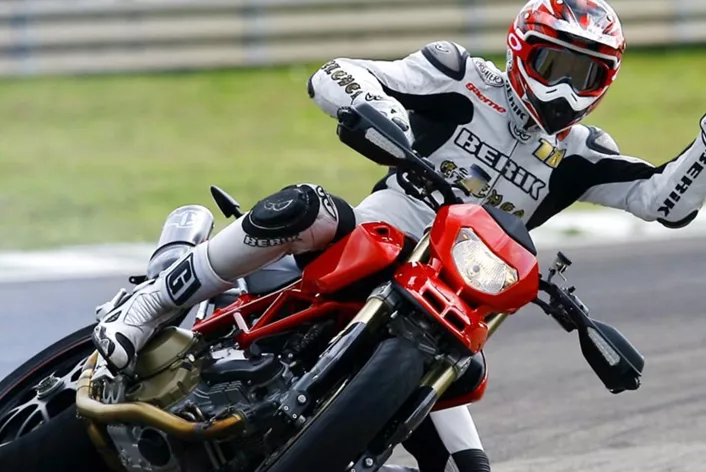
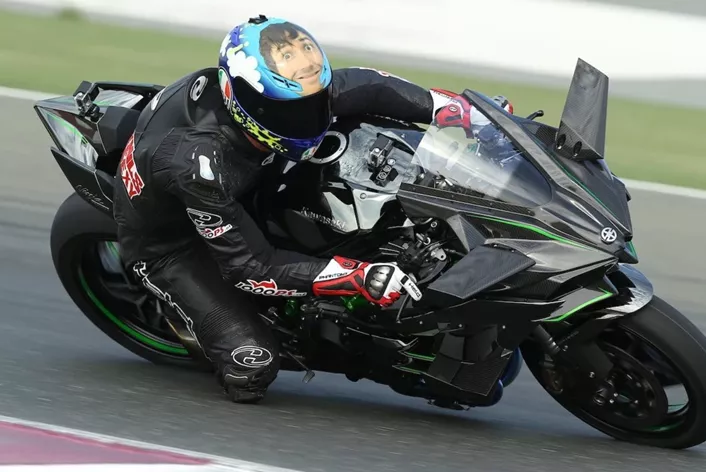
"Never before has the fear of a crash been greater than this time. The sight of this beauty made us tremble, the price did the rest." That's how our test of the Ducati 1098 S began in March 2007. Seventeen years later, the new Panigale stood in front of the camera, and in the video came a sentence we would have considered unthinkable in 2007: "Yes, it's over. Ducati has left the single-sided swingarm in the past." In between lie 416 videos and a brand that only became big with us late on: in our early years Ducati barely featured in the archive, while almost half of all our Ducati videos date from 2021 onwards. And while we looked more and more often, Ducati shed almost everything we once adored the brand for: the trellis frame, the single-sided swingarm, the big twin at the top of the range.
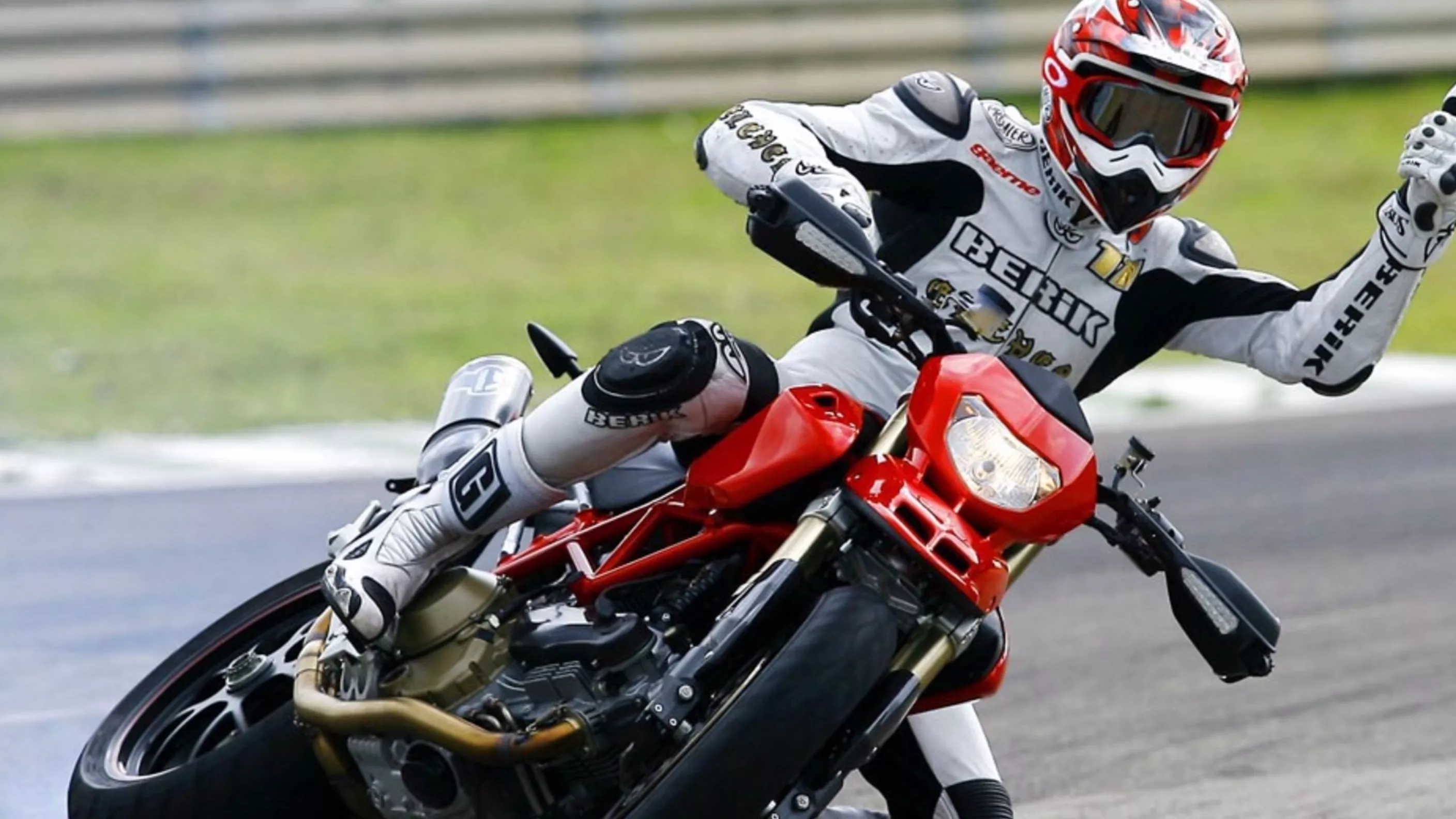
Ducati in 25 years of 1000PS
What we said about Ducati and what still holds true
Single-sided swingarm, trellis frame, big twin: in 25 years of 1000PS, Ducati has shed almost everything we adored the brand for. What remains is the price and the riding pleasure. How it came to this, told through what we said and wrote at the time.

nastynils
published on 10/16/2026
Little Ducati in the archive, but wide-eyed every time
Between 2002 and 2009 our archive holds a mere 16 genuine Ducati articles, seven of them tests, and not a single one in 2004 or 2009. But when we did write, it was wide-eyed. It started in 2003 with the Multistrada on Sardinia, with a verdict we never delivered in that form again: "For a Ducati, a reasonable price." Two years later we rode three Monsters at once, and the verdict on the S4R already spelled out the theme of the next twenty years: "The awesome Monster S4R has 2 small catches. Catch no. 1: the price of 14,995." Why we fell for it anyway was written right before that: "You can't buy a bike like this from Japan. A naked bike with proper racing components, a sharp engine and ultra-agile handling. Only Europe builds something like that." So the price was a catch from the very first line. And from the very first line we looked anyway.
Two sentences from 2007 that come back at the end
In March 2007 came the 1098 S, and with it praise that sounds different today. On the single-sided swingarm: "Neither photo nor video can capture the elegance with which this aluminium sculpture wraps around tyre, rim and chain. For me, a real masterstroke." In the same piece we admitted: "Maybe I'm just too old, too slow or simply too chicken to master these brakes, but I think this is too much of a good thing." In August came the Monster S4R, and about it we wrote the second sentence you should remember: "The trellis frame runs through the entire Ducati model range. From the Monster all the way up to the Desmosedici." Single-sided swingarm and trellis frame: in 2007 those were the two things that let you recognise a Ducati in the dark. Both appear again in this story. And both lose.
2007: the Hypermotard loses to the KTM Supermoto
In a way, we ordered the Hypermotard ourselves. In November 2005, when Ducati showed the concept in Milan, we wrote: "We demand the immediate start of production." Ducati delivered, and in June 2007 the first test was headlined: "Lightning start from prototype to first test!" Plus a verdict that describes the brand better than any spec sheet: "On this bike, design trumps everything! A bike for pretty boys, show-offs and aesthetes." But we weren't blind. In summer 2007 the Hypermotard took on the KTM 950 Supermoto R, and the Italian lost: "If a short test ride is to decide the purchase, the KTM 950 Supermoto R will almost certainly always come out on top. … We expected a supermoto and rode it like a supermoto. The settling-in period was unusually long before we started to understand the Ducati." This duel returns, seventeen years later and with the roles reversed.
2010: we film Ducatis and dream of enduros
In 2010 we started filming, and the first Ducati clips were short, a median of just over three and a half minutes. The bike that featured most often had no fairing: almost every third minute we spent talking about a Ducati model in those years went to the Monster. And the brand we knew for racetrack dreams won us over, of all things, with enduros and cruisers. In March 2010 the Multistrada test was headlined: "Superbike engine in an enduro chassis. Experiment successful! The Multi almost completely replaces a well-stocked motorcycle garage." In summer 2011 we summed up the situation with a question that could stand over the whole decade: "We used to dream of Ducati superbikes, today of cruisers and enduros – world turned upside down?" There was nothing upside down about it. It was the beginning of what made Ducati really big with us ten years later. Back then we had no idea. We just found it strange.
The 1199 Panigale forces us into a four-cylinder riding style
We found the superbike harder going. In 2012 came the 1199 Panigale. The test read: "Top marks for the Ducati. But even the dream bike still has weaknesses." And in the video we were blunt: "The power only arrives very, very late. So the actual advantage of a big twin is kind of gone. … With the Panigale I now have to adapt my riding style. I have to go somehow in the direction of a four-cylinder." The midrange grunt you buy a big twin for was missing from the Ducati superbike, of all bikes. Keep that four-cylinder sentence in mind, it comes true six years later. But a year later, in the Alps, the annoyance was forgotten: "In the Panigale, Italian design of the highest quality manifests itself. She is a goddess of grace, the Grace Kelly of motorcycle building, the Lola Ferrari of Bologna." That's how we talk about a Ducati as soon as the stopwatch is off.
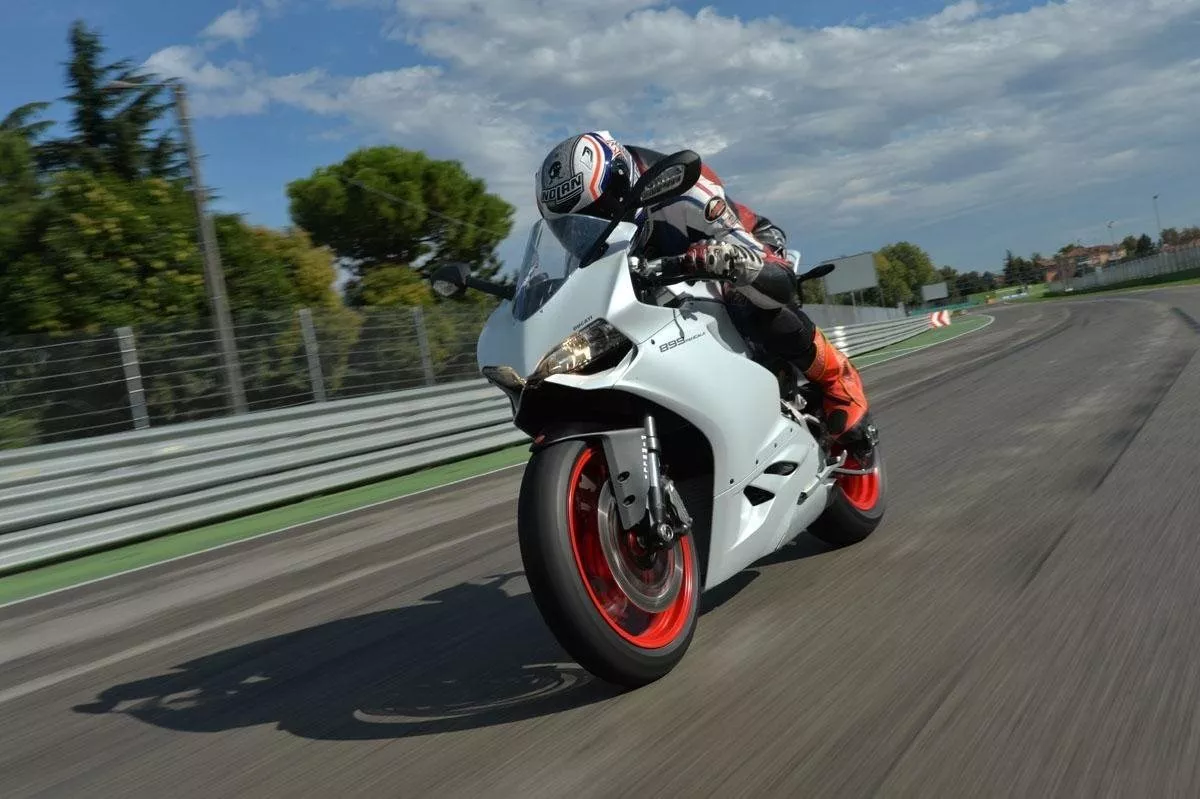
Ducati 899 Panigale in the 1000PS test
The pointless Diavel and a confession on a mountain pass
The Diavel, ridden in the Alps in 2013, made the upside-down world easy for us: "The Diavel is actually a bike the world doesn't need, and that's exactly why the motorcycling world needs it. It serves no real purpose. In an age where every bike has to do everything, this one can really only do one thing: accelerate unbelievably." A bike with no purpose that you want anyway: that's the Ducati formula in one sentence. Reason doesn't buy a Ducati. Longing buys it, and reason gets to do the maths later. How little reason helps was confessed by NastyNils in 2014 after testing the Monster 1200 in the Alps: "I'm a bit scared to admit it, but frankly I'm just not cool enough for the Monster 1200. I approach things too pragmatically, there's far too little Italian bon vivant in me." Self-knowledge on a mountain pass. The Monster didn't need it. We did.
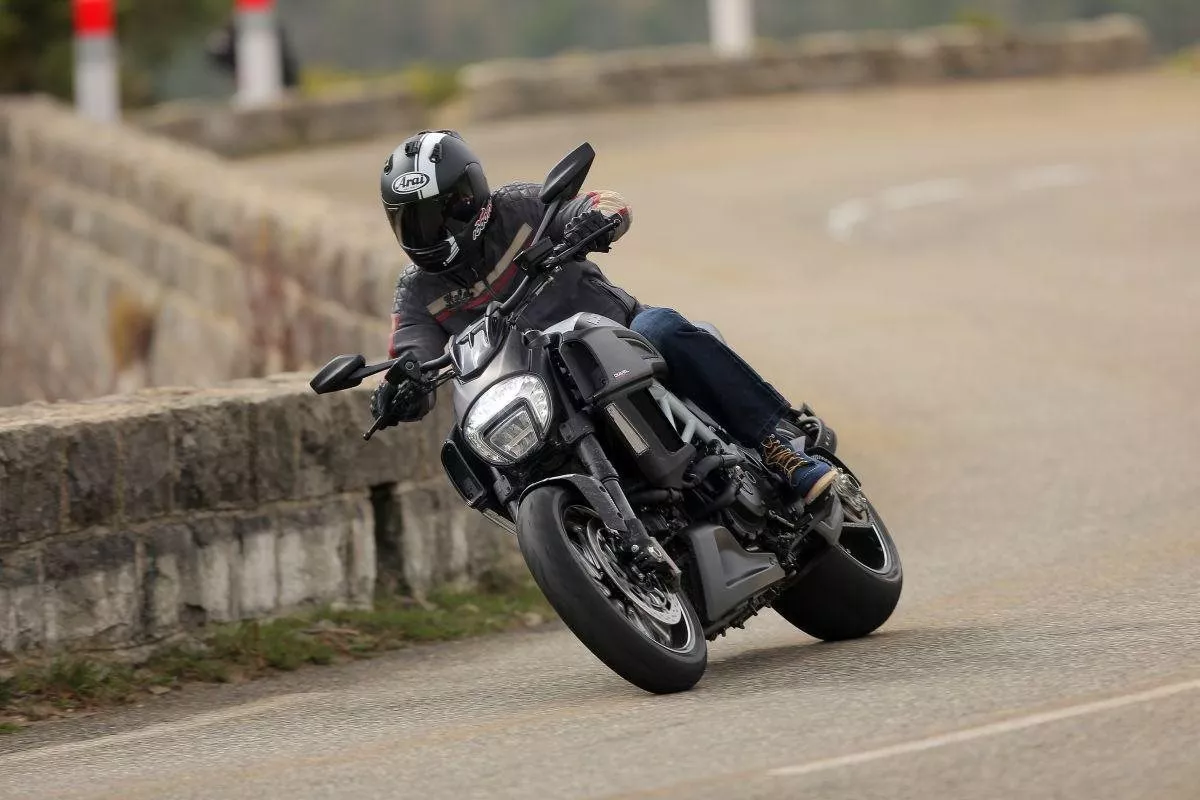
Ducati Diavel in the 1000PS test.
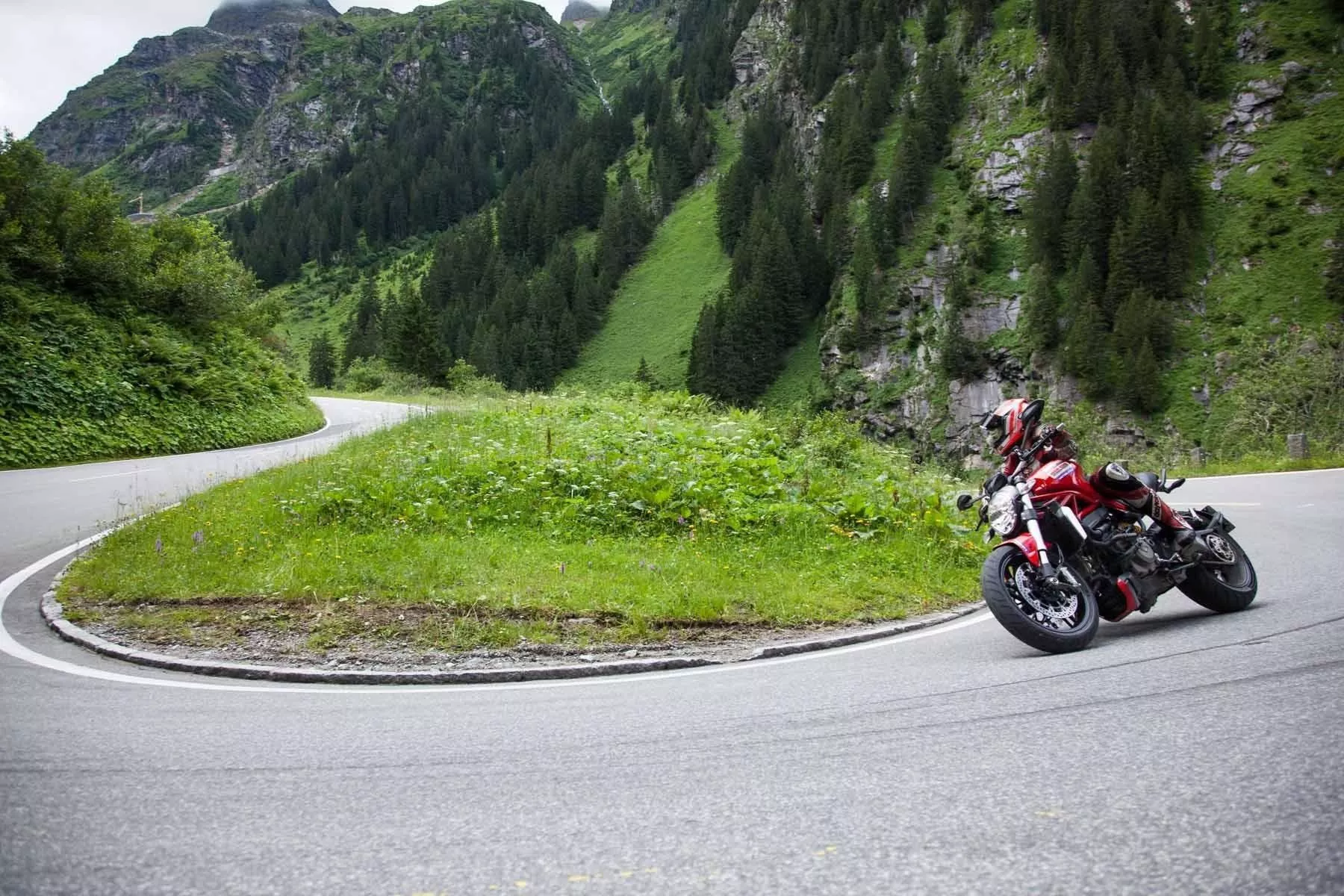
Ducati Monster 1200 tested in the Alps
October 2014 and a Ducati that's supposed to be affordable
In October 2014 Ducati unveiled the Scrambler, and the company told 1000PS in an interview: "One motto of this bike … is also accessible. That means it should be within reach for everyone. And it's certainly something special that we, as the Ducati premium brand, have a bike here that is very, very affordable." An affordable Ducati: after years of complaining about prices, that was a small sensation for us. In December we rode it in California and dared a prediction we like to quote today: "But overall, you don't have to be a clairvoyant to see there's going to be an insane scramble for this bike. It'll work well, it'll sell well." The original word, "Geriss", is Viennese for demand so high that people tread on each other's toes at the dealer. How big the scramble became, we found out a good year later.
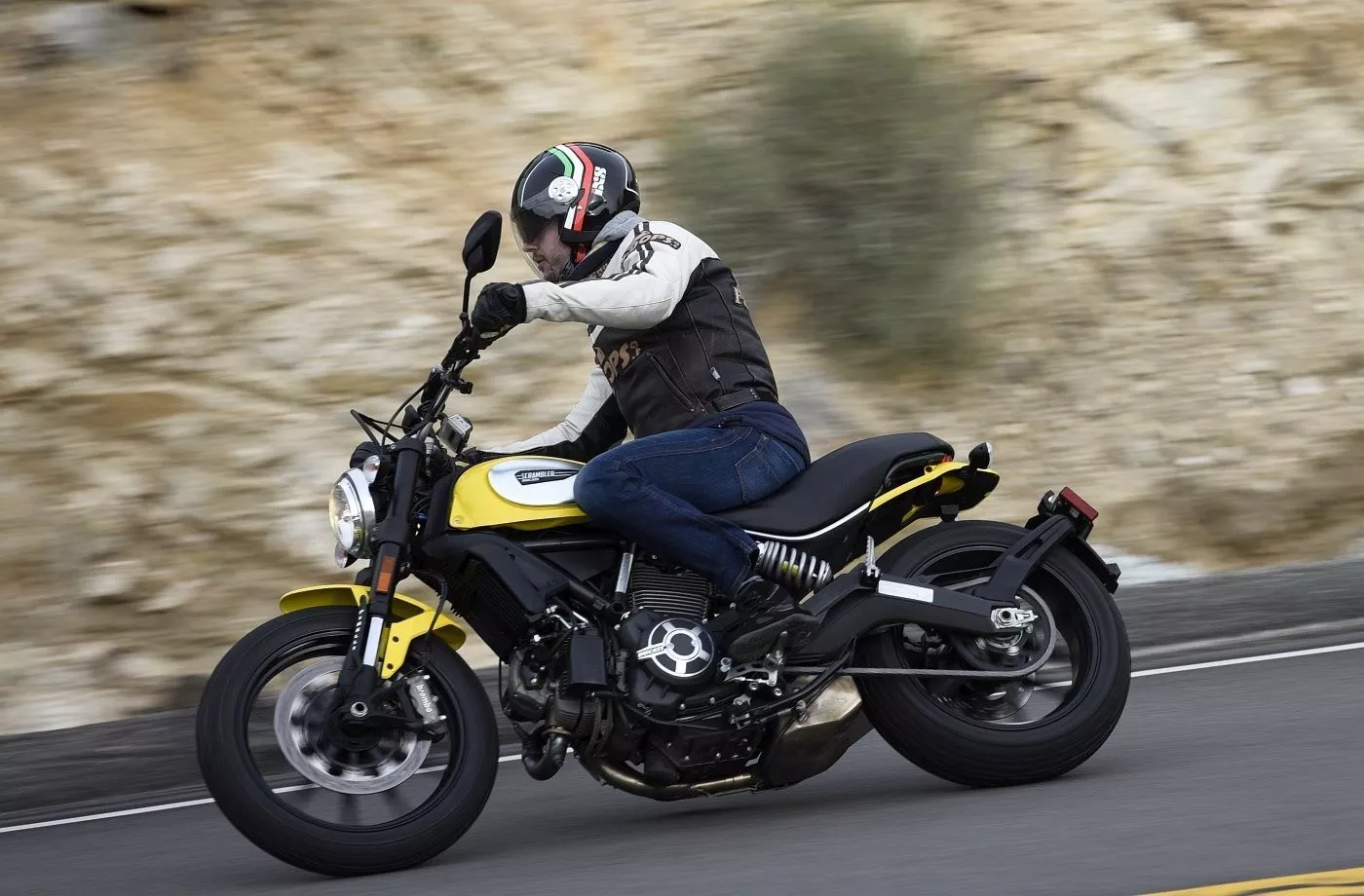
Ducati Scrambler Icon tested near Palm Springs
The Scrambler hits like a grenade
In February 2016, in front of the little Sixty2, we took stock: "As you probably remember, the Scrambler 800 was unveiled a year ago, and it hit the market like a grenade." 16,000 units worldwide, and with that, as the same video said, Ducati landed in the global top ten of the sales charts for the first time. It showed up with us immediately: the number of Ducati articles jumped from four to 23 in 2015. The most honest moment only came in June 2018 in the retro bike comparison: "I have to confess, I begrudged Ducati this success with the Scrambler. … It surely came out of a marketing meeting where ten marketing strategists pondered what kind of bike we have to make. … But they've made a ton of money with it. And then you get on and it just rides 'leiwand'." Leiwand is Viennese for: really good. The marketing strategists were right, and we had to digest that first.
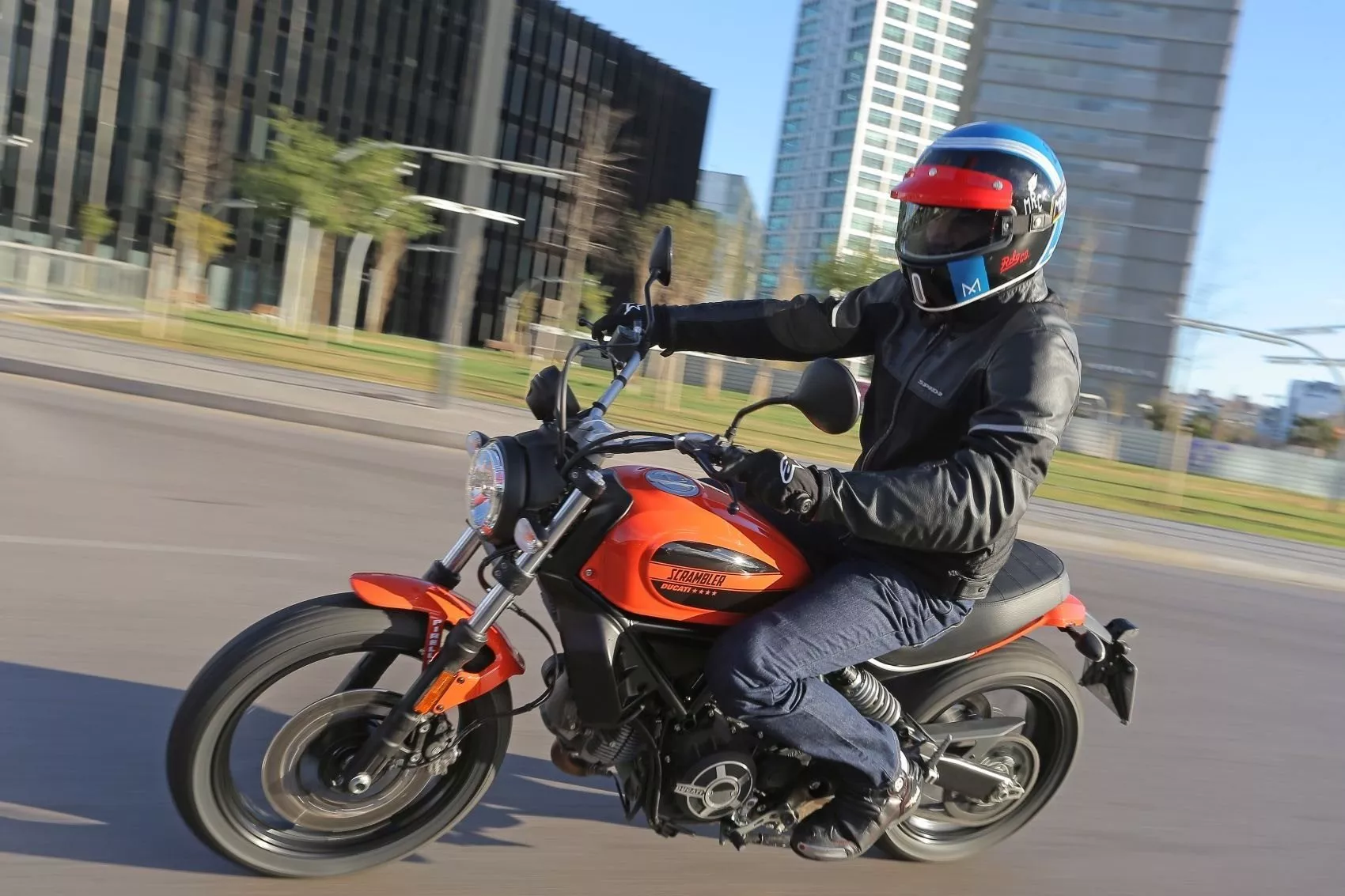
Ducati Scrambler Sixty2
In 2018 the V4 replaces the twin at the top
In January 2018 the four-cylinder replaced the twin at the top, just as our sentence from 2012 had suggested. Cheering sounded different: "Is the Panigale V4 the new number 1? Yes and no!" About its predecessor we wrote: "With the 1299, Ducati didn't make life easy for racers. The complex chassis overwhelmed many teams and riders and remained a mystery to many until the end. … Besides, there's now something like a frame again." The frame was back, and good thing too. That didn't make the V4 easy. In 2019 we asked the organiser of a comparison test whether the setup on the Ducati was always the hardest to find: "Yes, that's actually the case. It needs the most love, a bit more time and a bit more attention than the other bikes. … But yes, in that respect too it's a bit of a diva." A diva you have to earn.
The 170 hp Multistrada V4 becomes the benchmark in 2020
Now come the years in which Ducati really became big with us. The trigger was called Multistrada V4. In November 2020 I rode it near Bologna, in a small group of journalists from three countries, and the verdict in the video afterwards was: "Otherwise, sensational. This engine is the benchmark. 170 horses, accessible, pleasant, powerful, practically perfectly domesticated." We answered the obvious question in 2021 in the adventure bike comparison: "Do you need 170 hp in an adventure bike? The answer: of course not. But it's damn good fun to have them." The archive shows it: of all the minutes we've spent talking about a Ducati model since 2010, every fourth went to the Multistrada, twice as many as to the Monster. 2023 was the Ducati year: almost every sixth minute we spent on YouTube talking about a motorcycle brand was about Ducati, more than ever before or since. Only two brands were ahead of Bologna in those years.
December 2020 and the end of the trellis frame
Then in December 2020 the trellis frame fell. Our first reaction, before the first ride: "And that brings me straight to the break in style and tradition. Ducati saves 18 kilos on the new Monster compared to the 821. … Why? Because it's now an aluminium frame. Those steel trellis tubes up front are missing." And sharper: "Well, it obviously had to come to Italians copying Italians. MV Agusta says hello. … The real die-hard fans won't think that's so great." In an interview with us, Ducati turned the argument around. They had "taken the superbike frame from the Panigale … and combined it with a road-friendly engine", "so seen that way, we're actually much closer to the original concept of the Monster than in recent years". The frame that ran through the entire range in 2007 was history on the Monster. Ducati had a plan, and it shows in 2026.
DesertX for the rough stuff and the price in the scoring table
In 2022 came the DesertX, and we drew a line: "The Multistrada and Scrambler models may be suitable for off-road action on paper, but the DesertX is the first Ducati for the really rough stuff."
July 2024 and the end of the single-sided swingarm
In July 2024 Ducati showed the new Panigale, and the video said: "But let's get to the point that will probably cause the most controversy, namely the double-sided swingarm. Yes, it's over. Ducati has left the single-sided swingarm in the past. For 2025 it will only come with a double-sided swingarm. For a very simple reason: performance." The "aluminium sculpture" of 2007 that no photo could capture was costing lap time. And at Ducati, lap time always wins. In 2025 the Streetfighter followed suit: "Ducati made a statement in 2025: out with the single-sided swingarm, down with the weight, bring on even more tech and performance." You can hear it in our videos: never have we talked about weight in Ducati videos as often as since 2024. The two things that let you recognise a Ducati in the dark in 2007 are both gone.
For the first time, a Ducati wins with us on price
Then something happened that had never happened in 25 years: a Ducati won a value-for-money duel with us. In April 2024, Hypermotard 698 Mono versus KTM 690 SMC R, the video included the line: "In 2024, if you want the best supermoto for your money, you have to go for the Ducati. Above all, I find the KTM, as much as I appreciate and like it, just seems outdated." In the test report we did the maths: the Hypermotard "in Germany, in the standard version at an RRP of €12,390, even costs €100 less than the KTM SMC R at an RRP of €12,499." A hundred euros cheaper than the KTM: nobody would have written that down in 2007. It's the same duel as back then, Hypermotard versus KTM supermoto, just with the roles reversed. In 2007 the KTM always won on a short test ride. In 2024 it seemed "just outdated". Seventeen years, and the diva has learned to count.
Over 20,000 euros and a bit of cheeky cost-cutting
Otherwise it was the same old song, just with bigger numbers. About the Multistrada V2 S we said in February 2025: "That's what I expect from a bike that costs 10,000 euros, but not from a bike that costs over 20,000 euros in Austria. I do find it a bit of a shame that here … money is being saved a bit cheekily." In May 2026, on the Multistrada V4 Rally: "The panniers, it all works spot on. The menu navigation and so on and so forth. All totally awesome. But 36 grand is quite a statement." 36 grand means 36,000 euros. And the Superleggera V4 Centenario from March 2026 costs a cool 150,000 euros. Fact is: never have we talked about price in Ducati videos as often as since 2024. Not because we've become stingier. Because the numbers got bigger.
The 2026 Monster looks like the 1992 one again
In February 2026 the new Monster stood in front of us, and about the tank we said: "It's now much more reminiscent of the original old Monster from '92." So there it was, the plan behind the 2020 break with tradition. The trellis frame is gone and isn't coming back. The idea of the Monster is back, just in aluminium. Old and new Monsters stay true to the family, as we wrote in 2014, and that still holds. That the family is smaller today is shown by the archive: in our first video years almost every third Ducati minute went to the Monster; since 2024 it's not even every eleventh. The Multistrada has overtaken it, and the Streetfighter too. The Monster is no longer the Ducati we talk about most. But it's the Monster again. For a thirty-four-year-old idea, that's a decent comeback.
What we got right and what we got wrong about Ducati
In 2005 we demanded the immediate start of production of the Hypermotard. In 2007 it came as a "Lightning start from prototype to first test!", and in 2024, as the 698 Mono, it was the supermoto you have to go for. Hit. In 2012 we wrote that the advantage of the big twin was gone and that we had to "go in the direction of a four-cylinder". Six years later Ducati built exactly that. Hit, albeit unintentionally. With the Scrambler in 2014 you didn't need to be "a clairvoyant": 16,000 units in the first year, 55,000 by 2018. Hit. In 2017 it was "only a matter of time" for us until Ducati got a new owner. To this day the archive records no sale; in 2021 Audi was still the owner. We've rarely been that clearly wrong. And electric? In 2019 a Ducati manager told us: "Electric mobility will arrive at Ducati, but it will take a while." As of 03.09.2026 we haven't tested an electric Ducati motorcycle. Only an e-mountain bike. The while is still going on.
No budget segment, says Ducati, and we believe it
In December 2025 we asked the Ducati boss whether there was room for a cheaper Ducati below the entry-level class. The answer: "No. We don't want that. We want to keep Ducati unmistakable. Precisely because other brands are going down that road, we're deliberately deciding against it. When you put a Ducati key on the table, it means something. … That's why we avoid the 'budget segment'." We couldn't have written a more honest summary of 25 years. It also explains why in May 2026, at the end of a big adventure bike comparison, this sentence was uttered: "If I win the lottery, I'll buy myself a Ducati Multistrada V4 Rally. … Ducati really is top in many areas. Unfortunately also in price, especially here in Austria." That's exactly where we stood back in 2005, with a different number on the price tag. Frame, swingarm, cylinder count, intended use: all different. What remains is the reflex to look anyway. And a lottery ticket is quickly bought.
About this series for the 25th birthday of 1000PS.at
In October 2001, 1000PS.at went online as Nils Müller's diploma thesis project at the University of Applied Sciences Wiener Neustadt. It has grown into a platform that combines motorcycle journalism, community and digital solutions for the industry. For our 25th anniversary in October 2026, this series looks back at how the motorcycle brands have evolved – drawing on a quarter century of our own reporting, many kilometres ridden ourselves and the curiosity that has driven us since day one: what comes next?