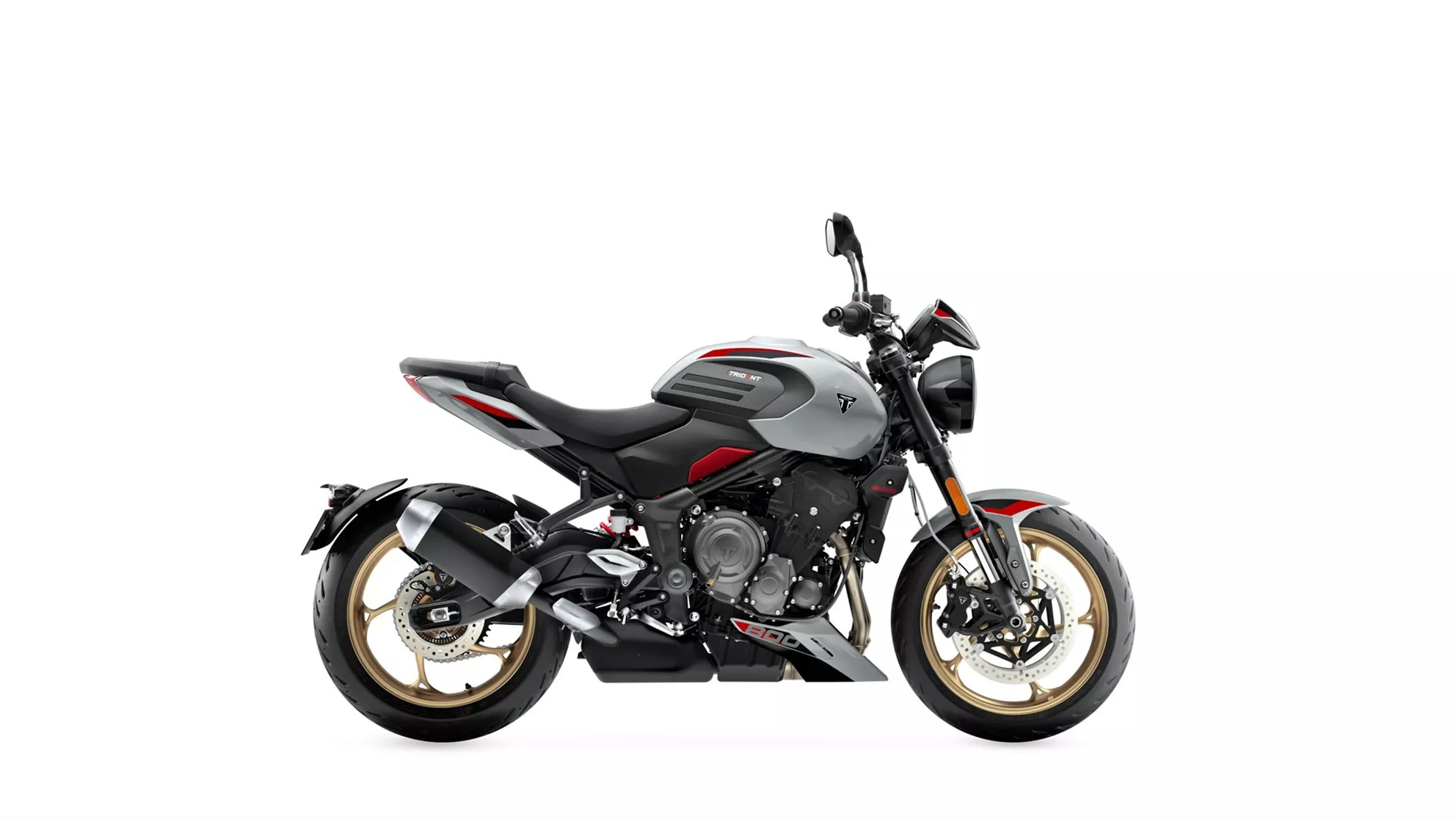
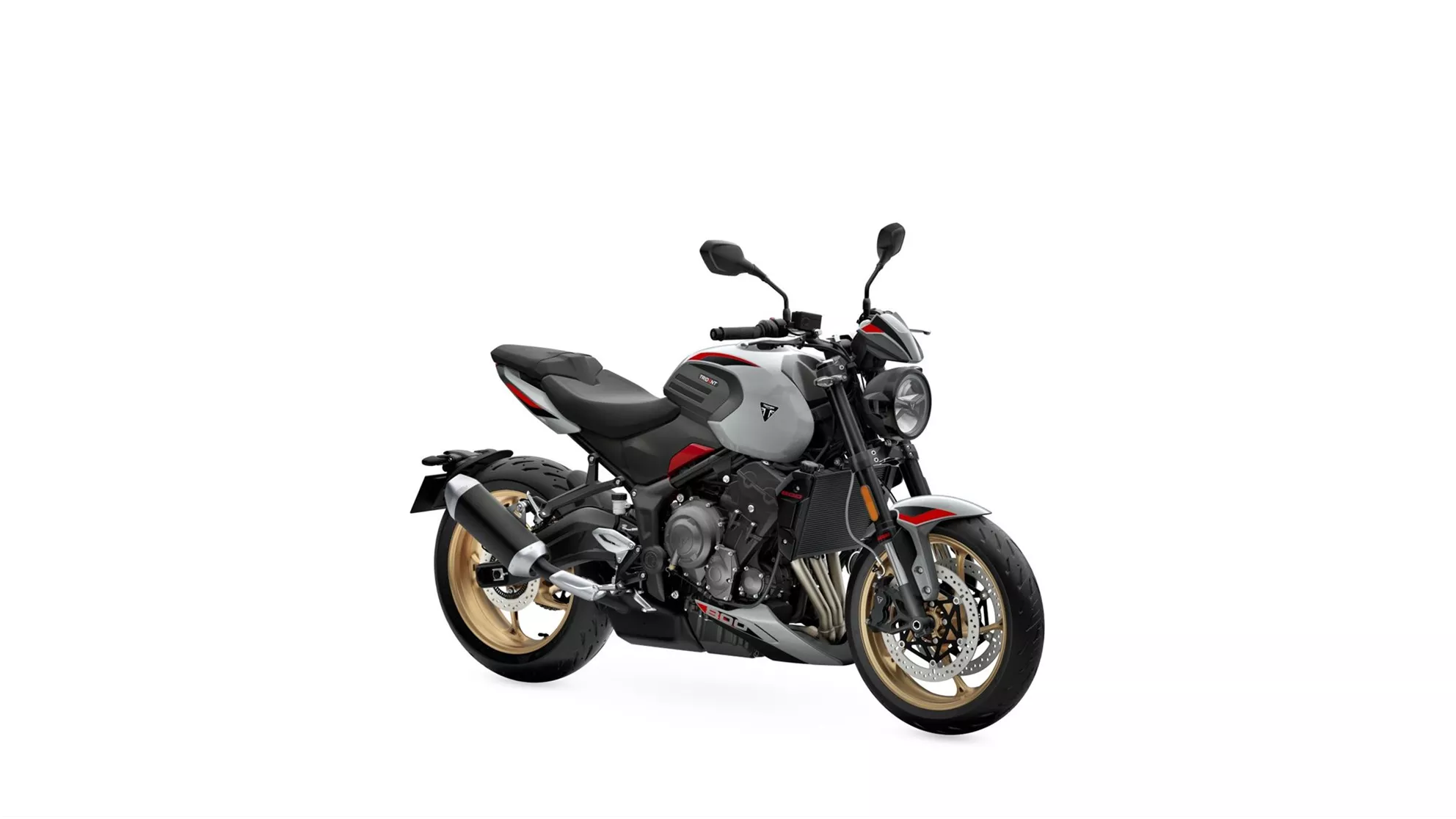
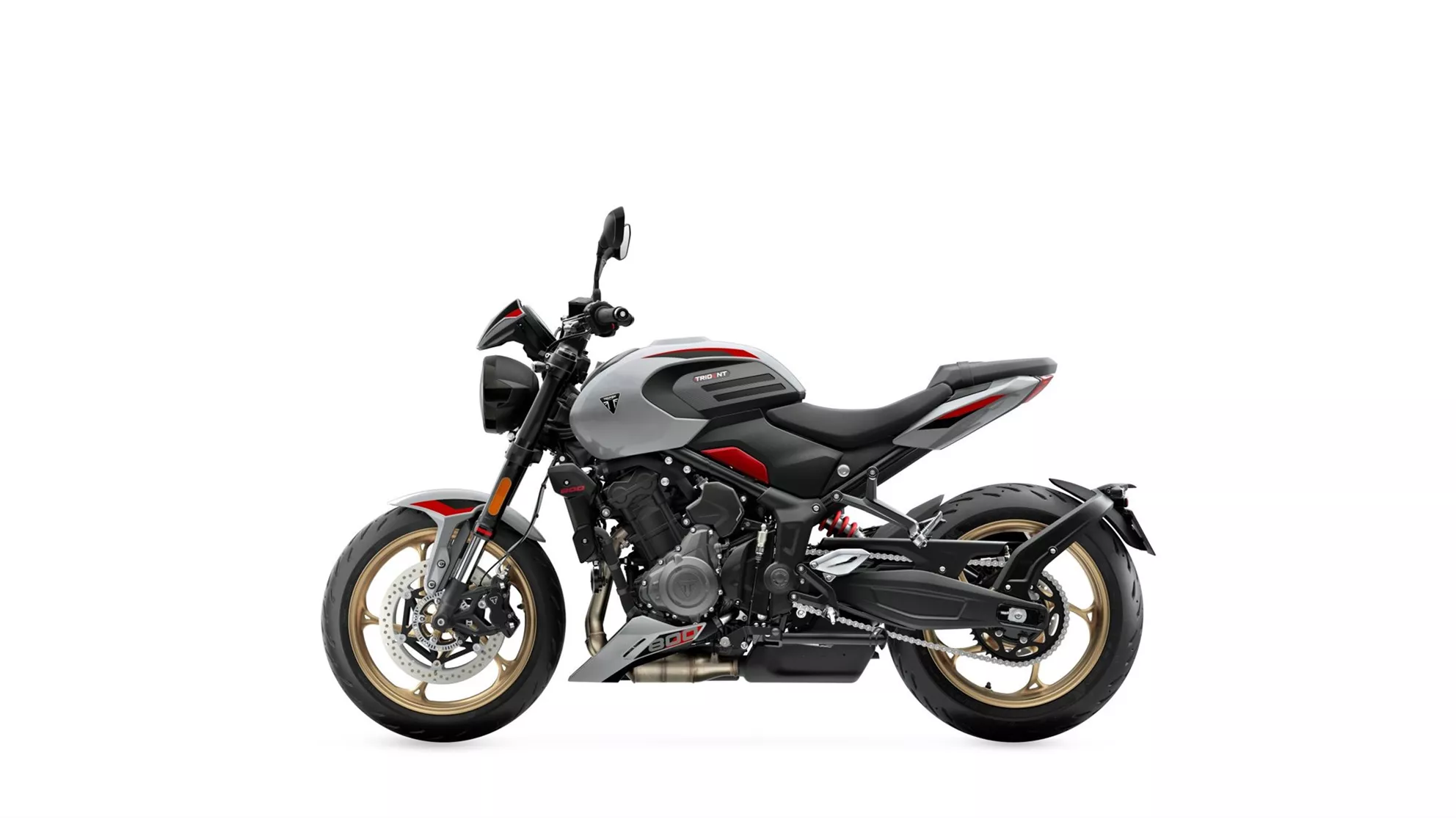
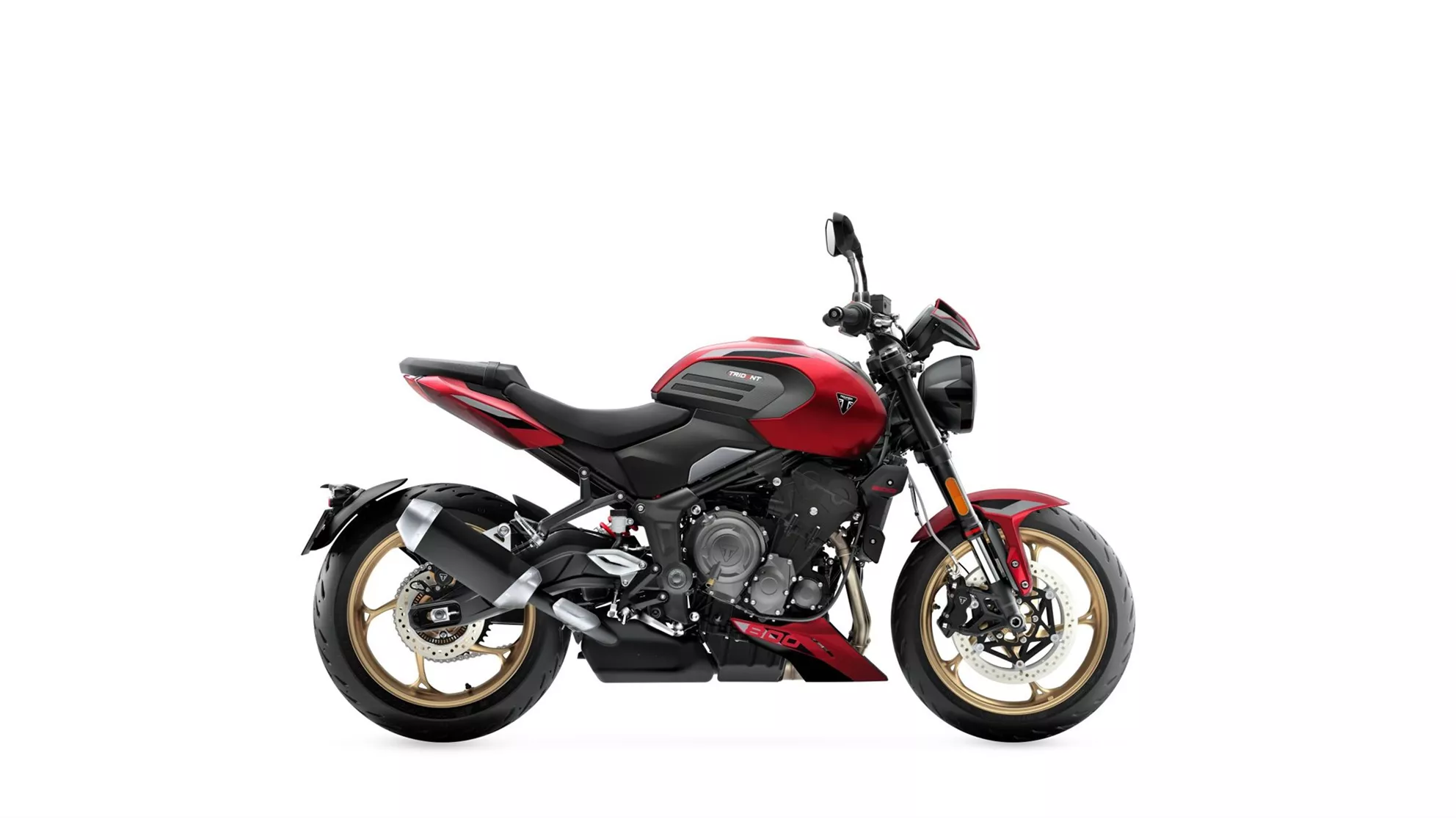
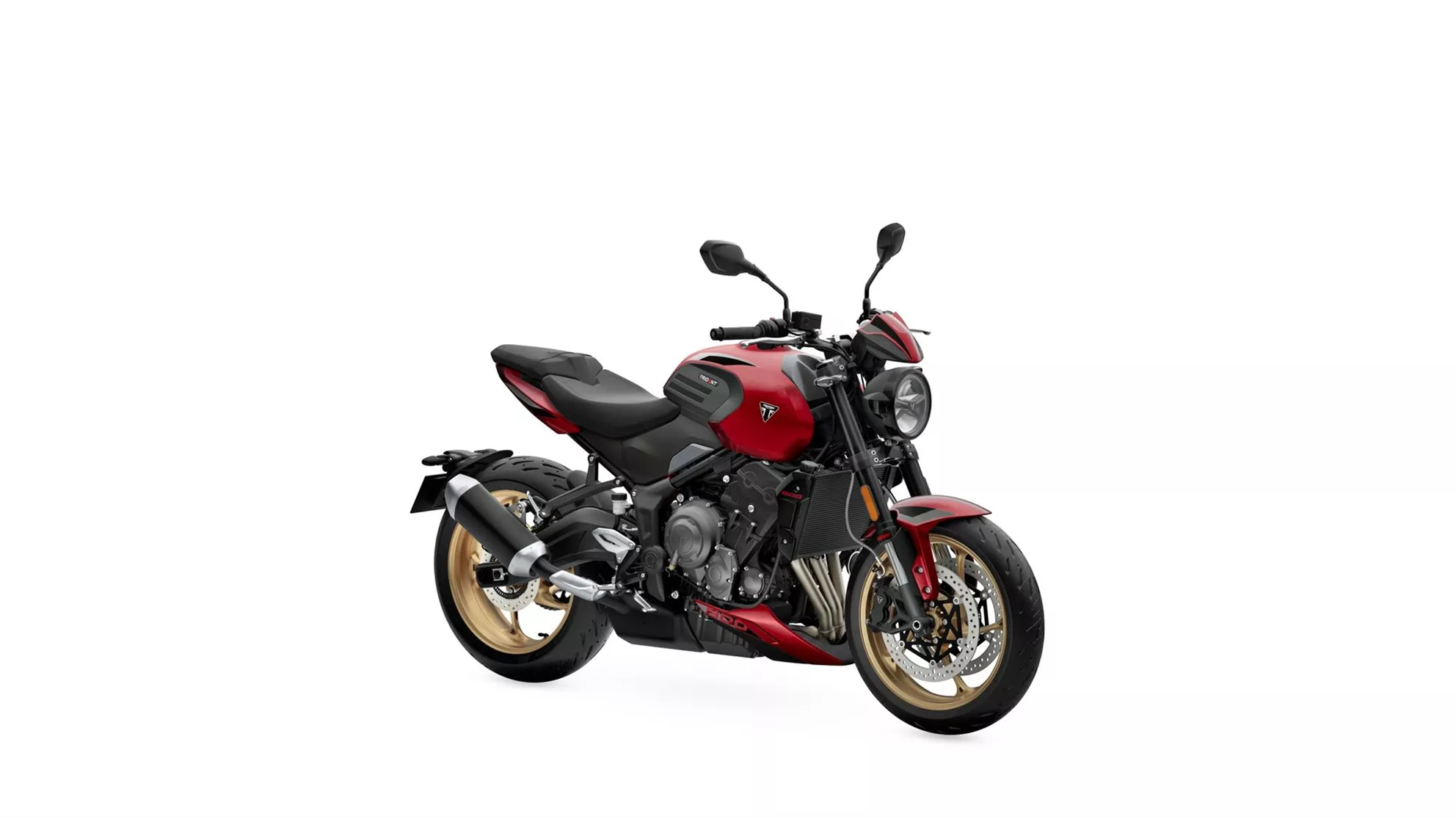
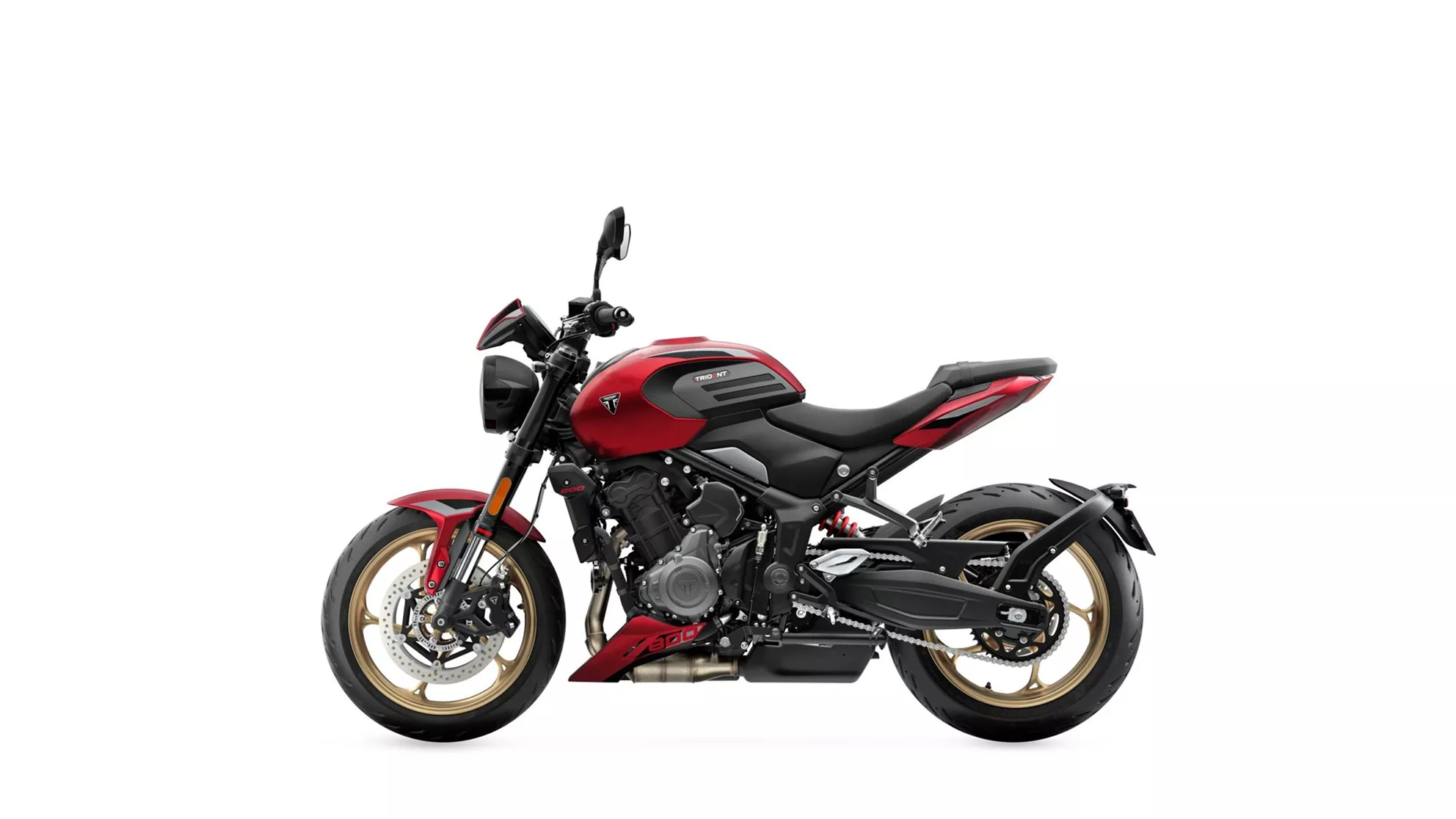
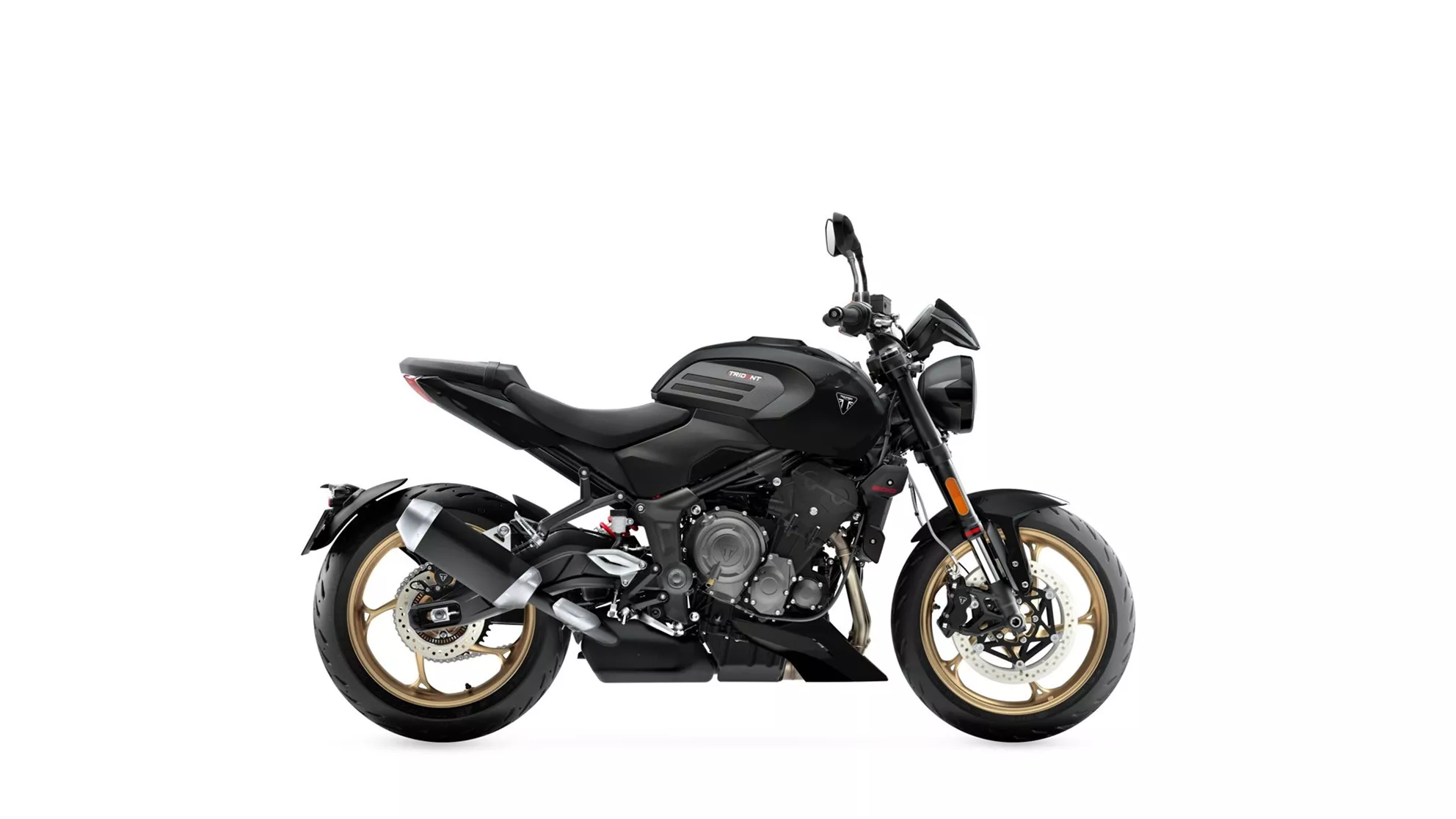
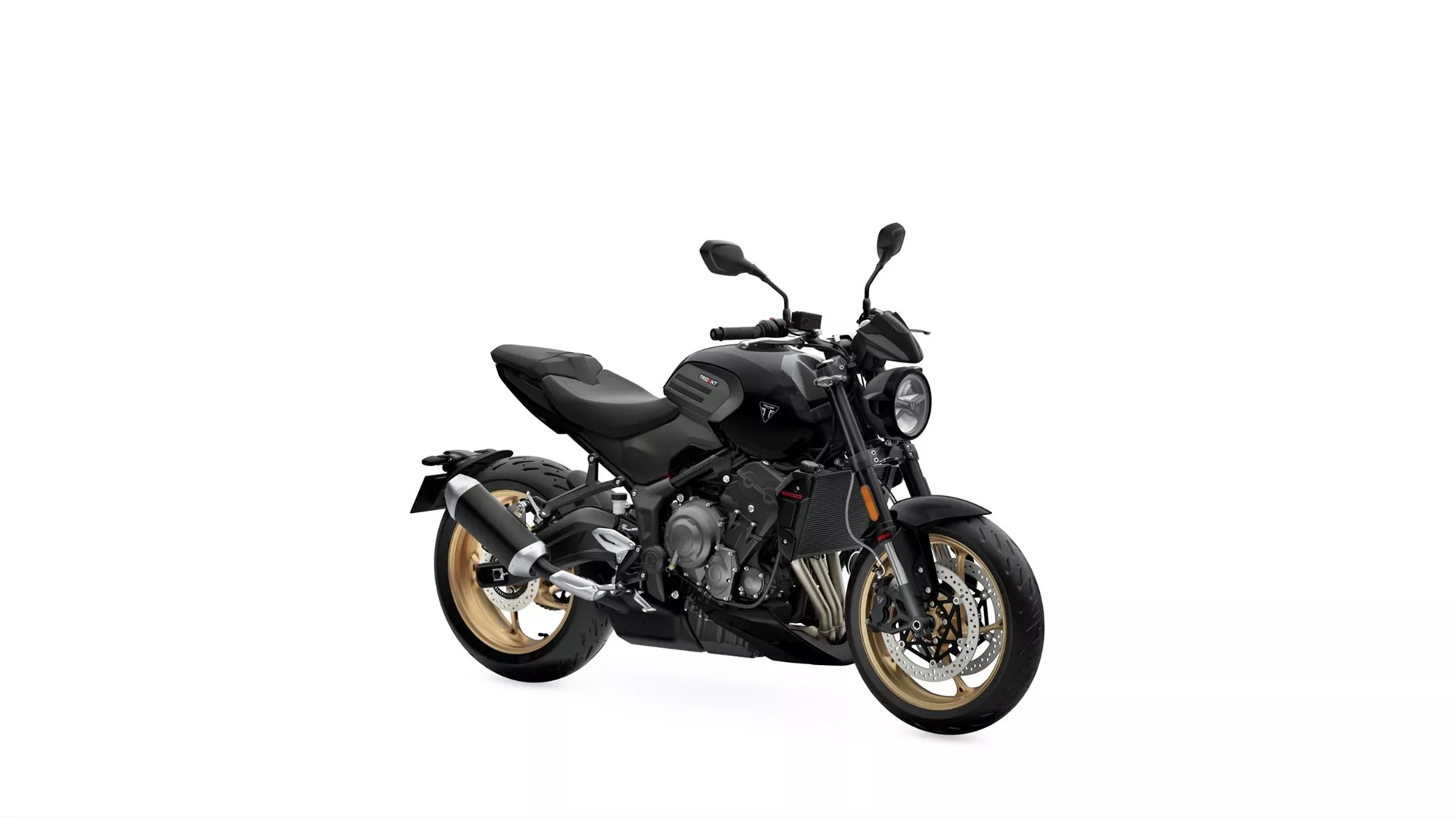
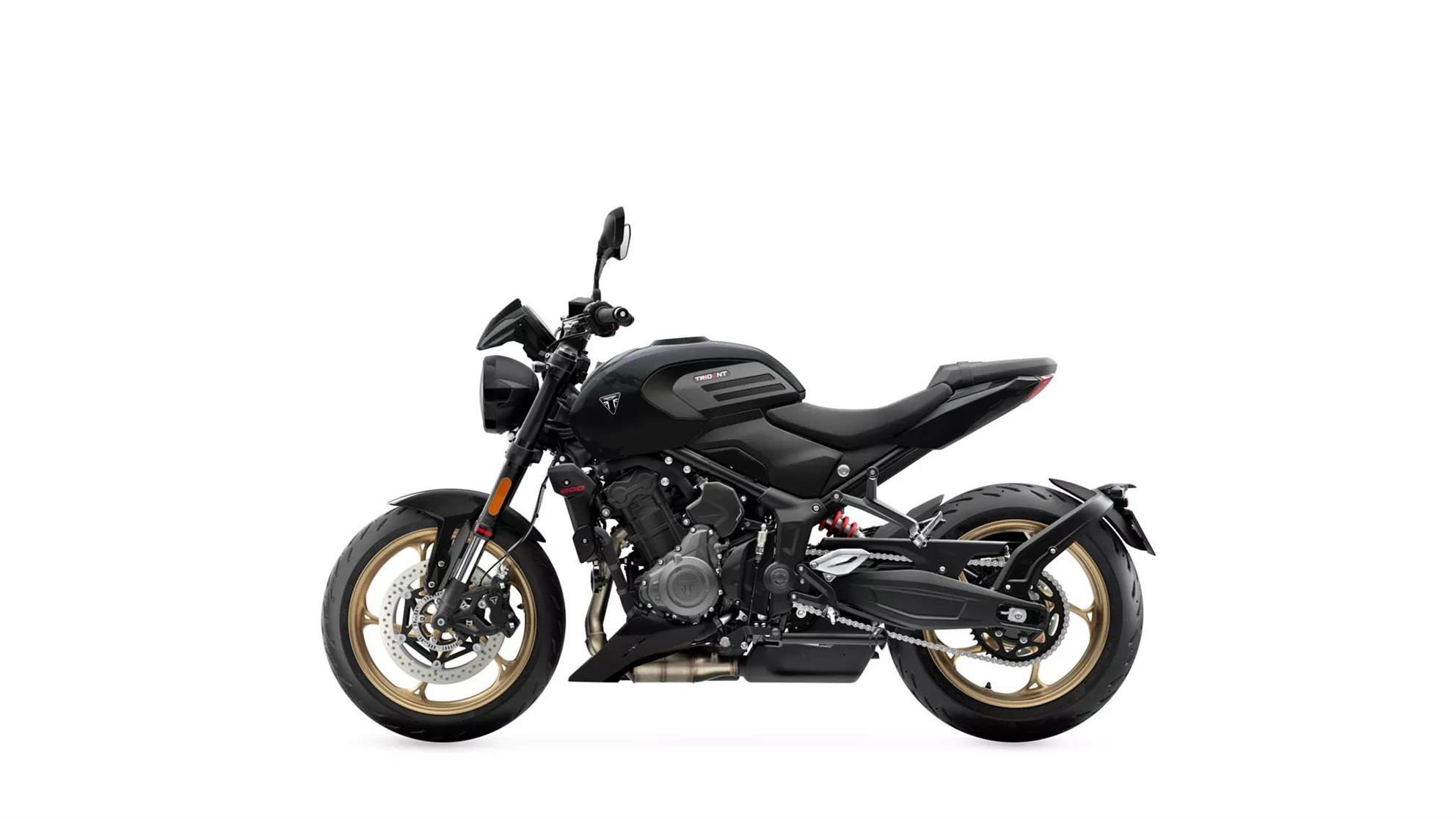
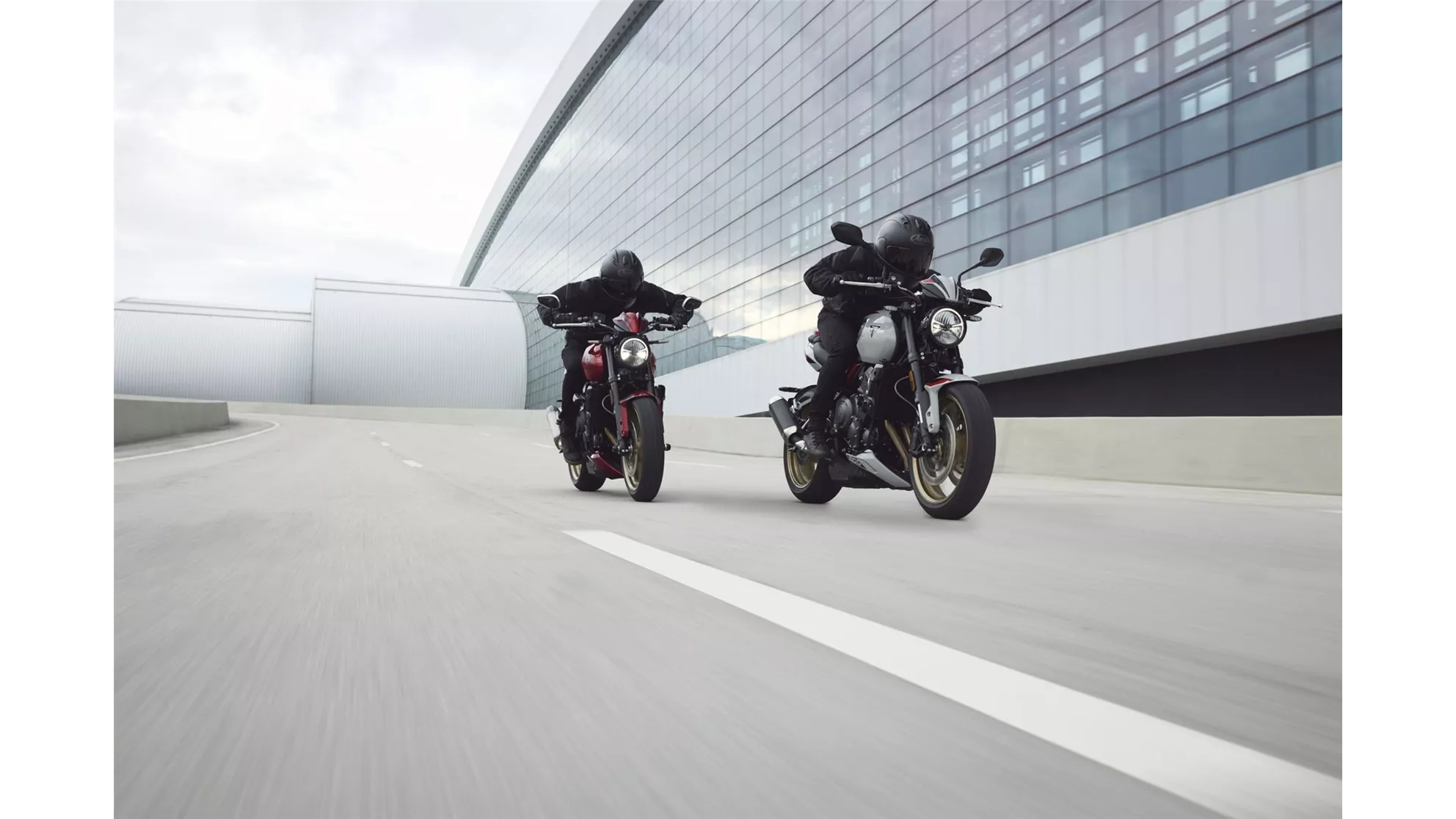
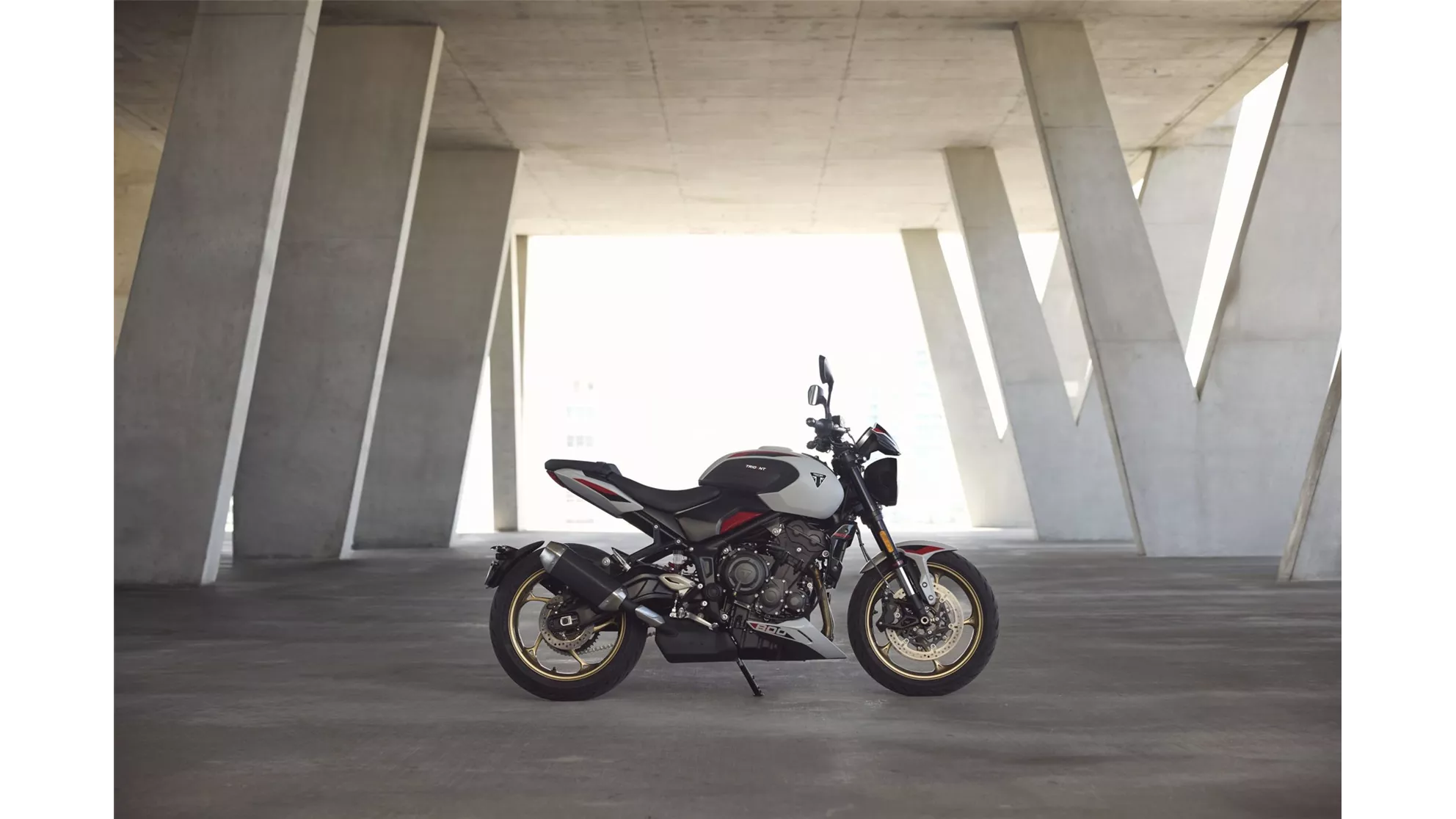
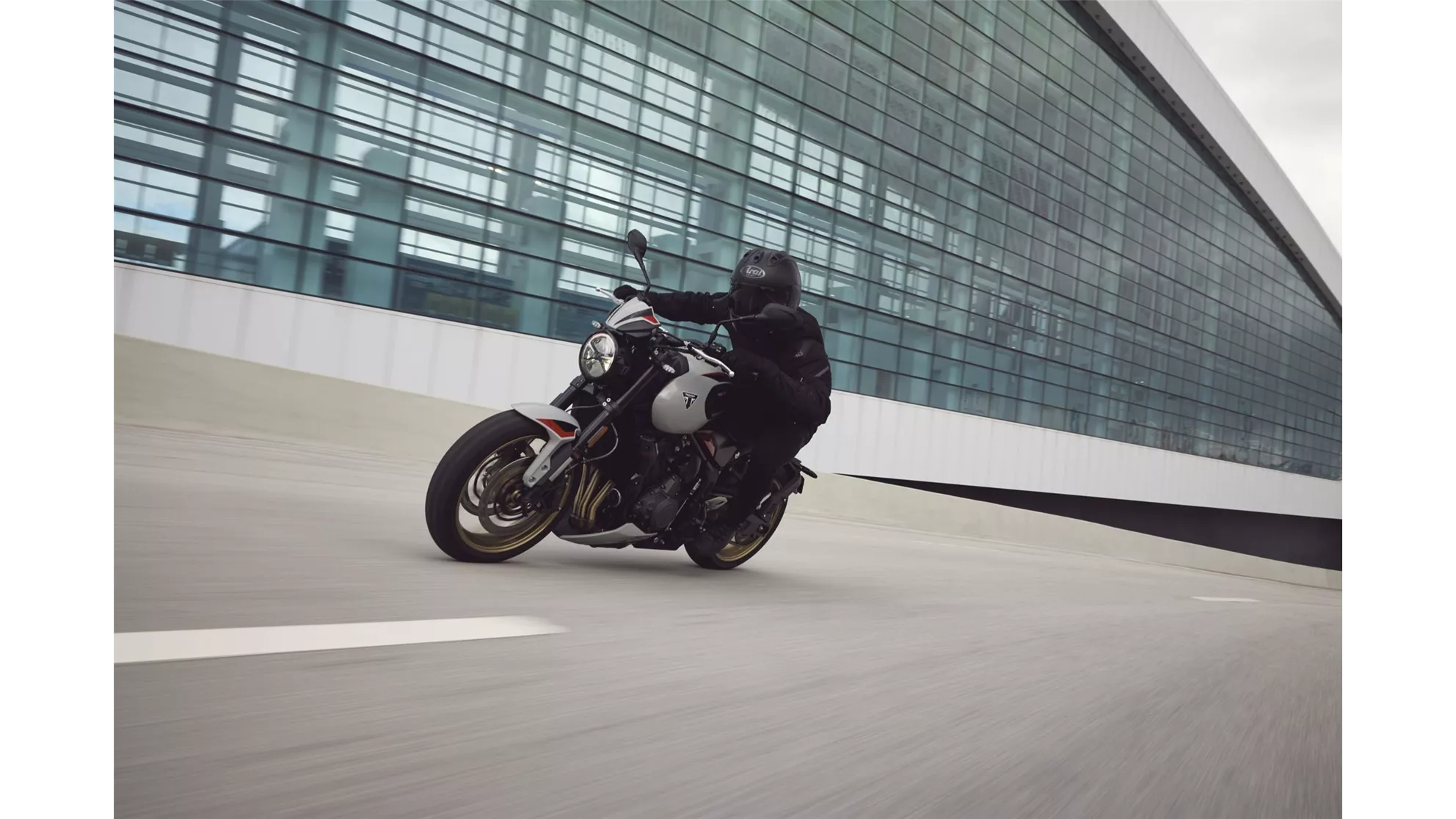
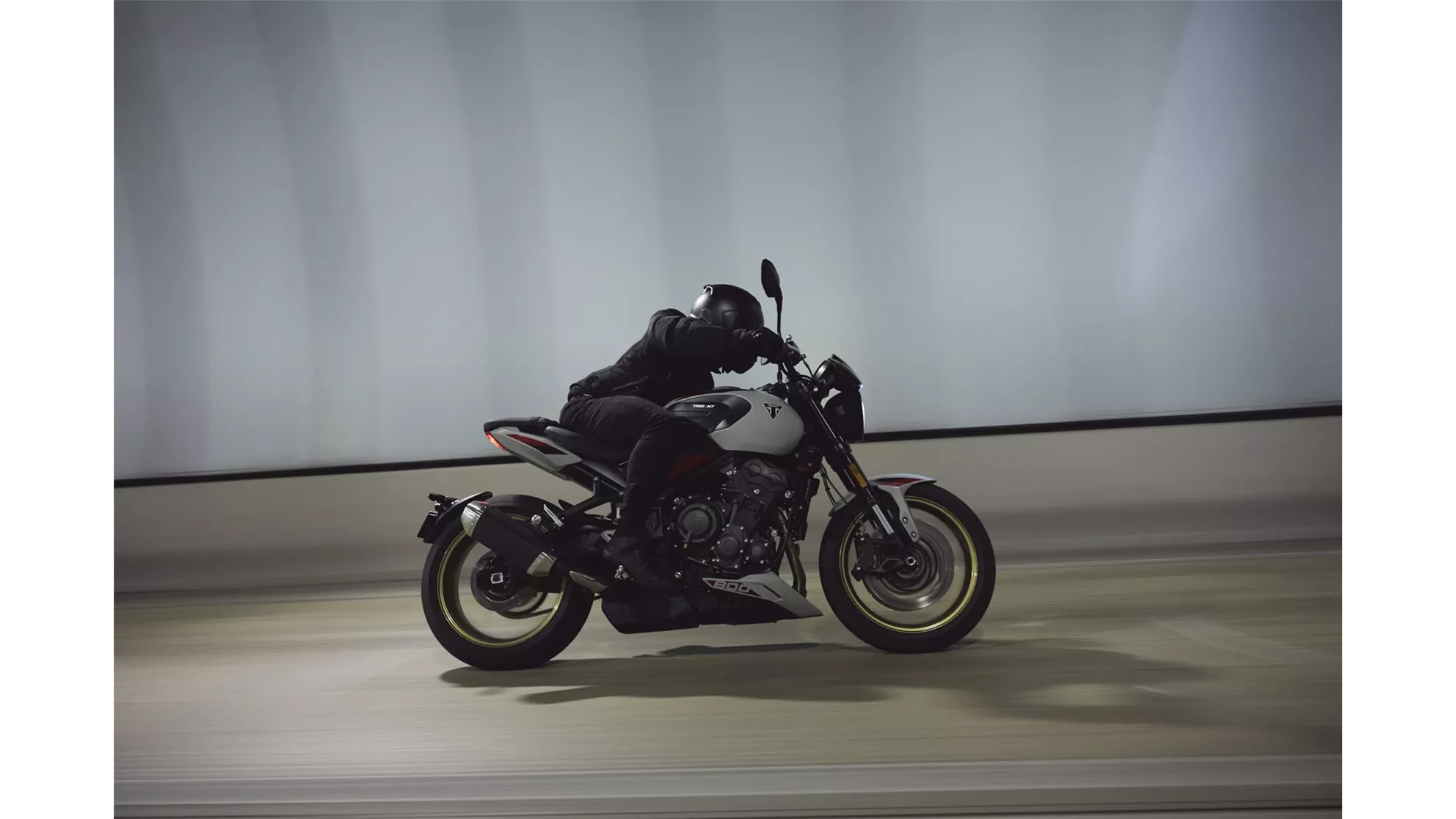
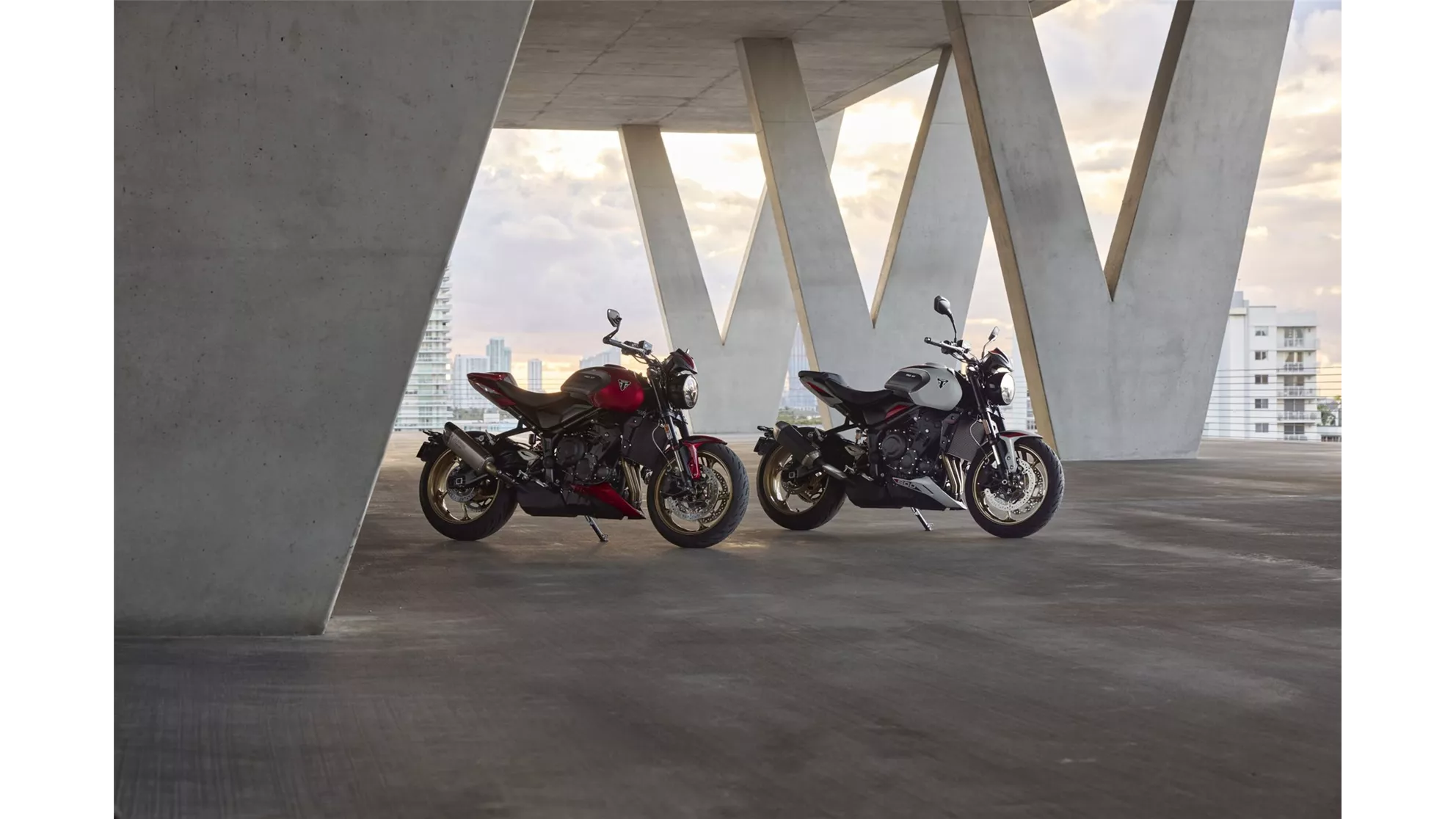
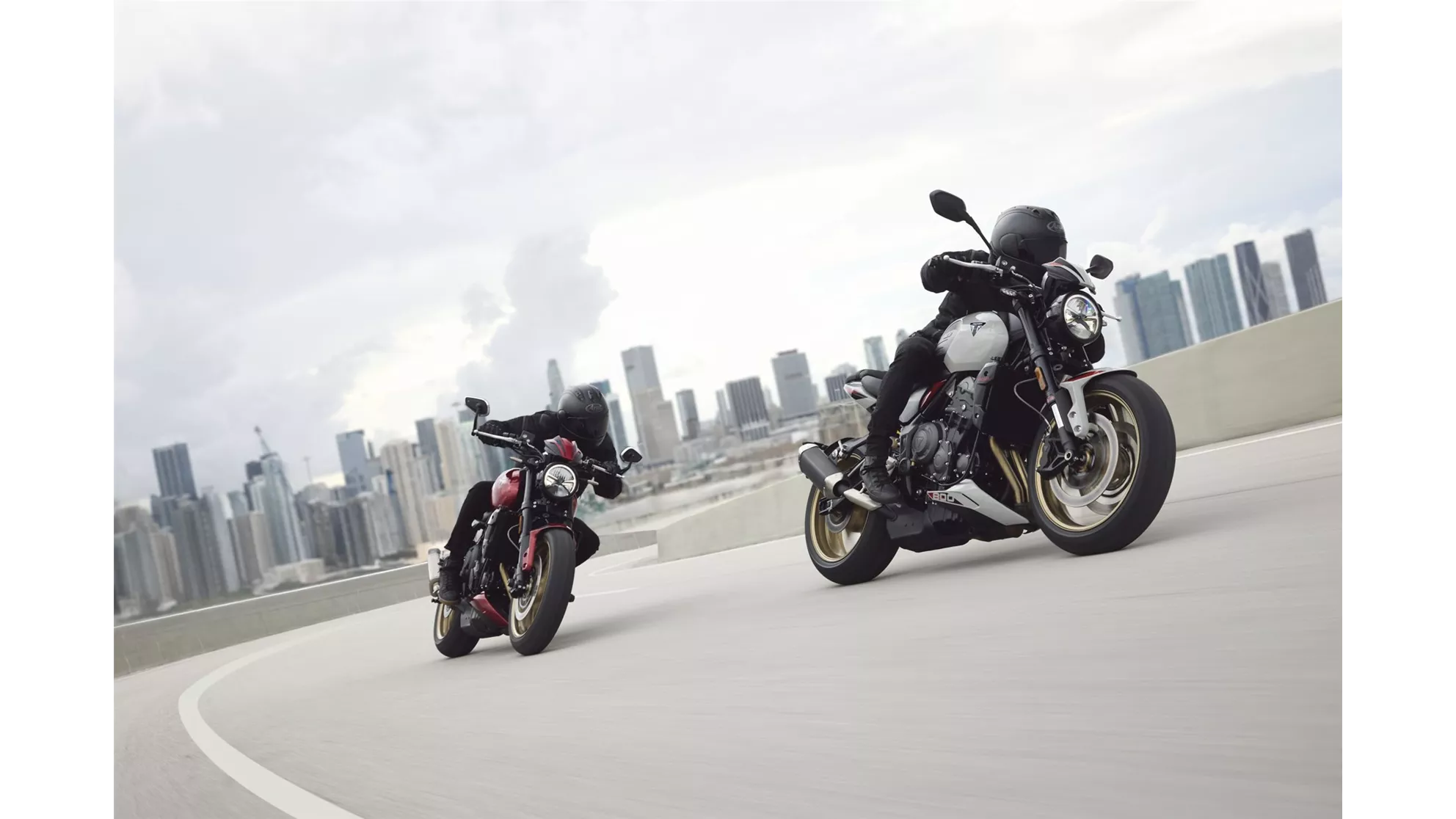
With the new Triumph Trident 800, Triumph expands the Trident lineup with a model firmly positioned in the mid-range segment. The Trident 800 blends roadster styling with a newly designed 798cc triple-cylinder engine, a dynamically fine-tuned chassis, and a full suite of technology including cornering ABS, cornering traction control, quickshifter, cruise control, Bluetooth connectivity, and three riding modes. It also boasts a fully fueled weight of 198 kg (under 200 kg), delivering a promise: enjoyable riding without hesitation, whether in the city, on country roads, or longer trips.
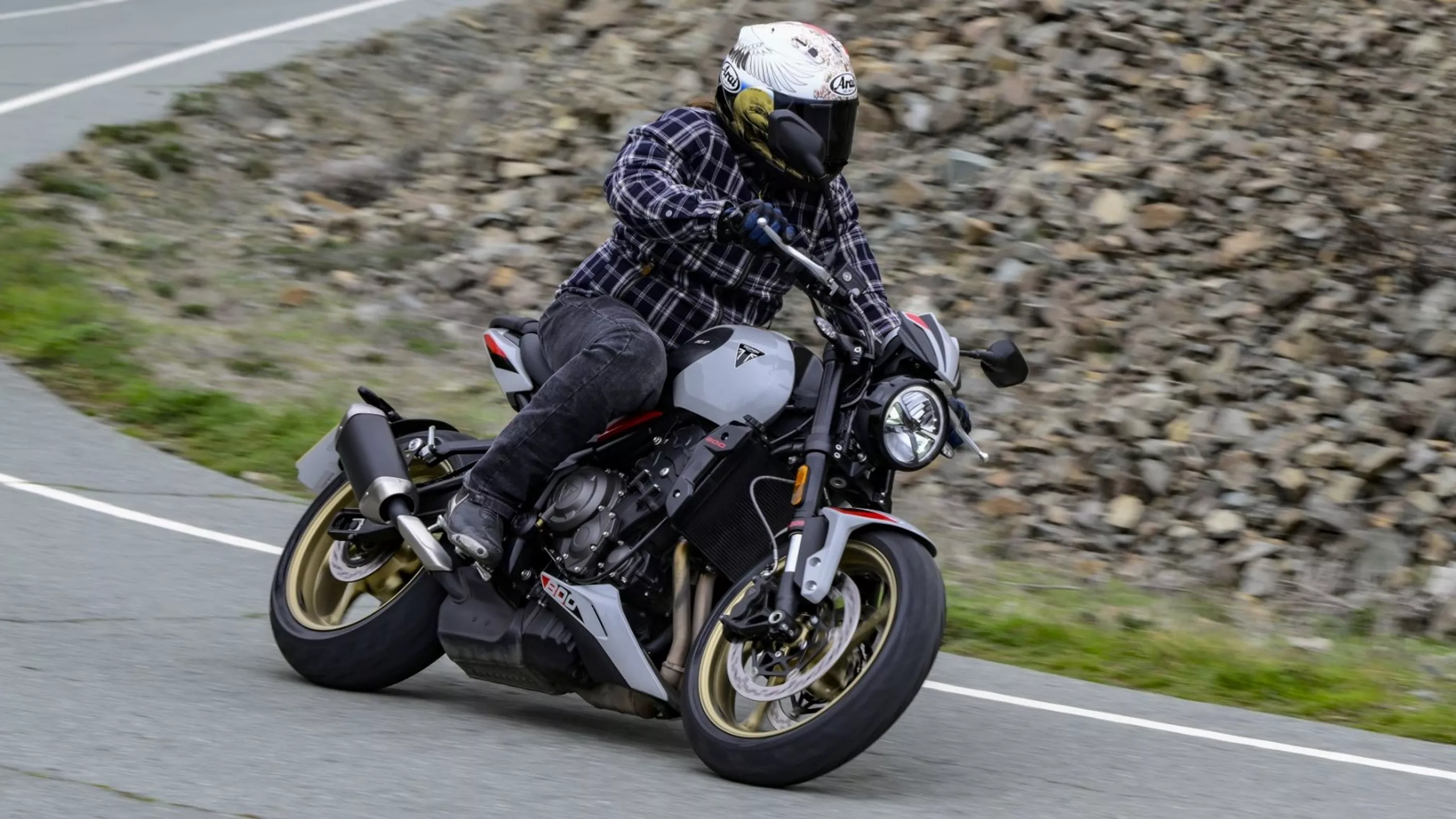
Triumph Trident 800 Review: First Ride on the New 800 Triple
115 HP, Quickshifter, Cornering ABS: Can the Trident 800 Do It All?
The new Triumph Trident 800 packs 115 HP, a brand-new triple engine, and a heap of tech into the mid-range category. We had the chance to ride this naked roadster in Cyprus and share insights on how the engine, suspension, quickshifter, and everyday usability truly perform.
&width=72&height=72&bgcolor=rgba_39_42_44_0&mode=crop "Author: Der Horvath")
Der Horvath
published on 2/3/2026
24,288 Views
Engine: New 798cc Triple – Flexible, Powerful, and Low-Shift Riding
At the heart is the liquid-cooled inline triple (12 valves, DOHC) with 798cc. This engine, familiar from the Tiger Sport 800, has been retuned for its role in the naked bike. Factory specs state it produces 115 HP at 10,750 rpm and delivers 84 Nm at 8,500 rpm. In practice, the riding feel aligns with the factory claims: robust yet realistically suited for this class.
What makes the engine particularly pleasant in everyday use is its flexibility: there's noticeable torque even at low revs, and it revs cleanly and eagerly up to the limiter at 11,500 rpm. This blend ensures that you can ride the Trident 800 with effortless shifting: just slot it into gear, accelerate to the next corner, stay in the same gear, and glide through the turn – making the bike feel very easy and intuitive to ride.
In the city, the triple also scores with excellent throttle control: no unpleasant jerking, no jittery response, just a manageable, user-friendly engine. On country roads, the power can also be smoothly built up out of corners – once again, the overall package remains easy to understand and well-controlled.
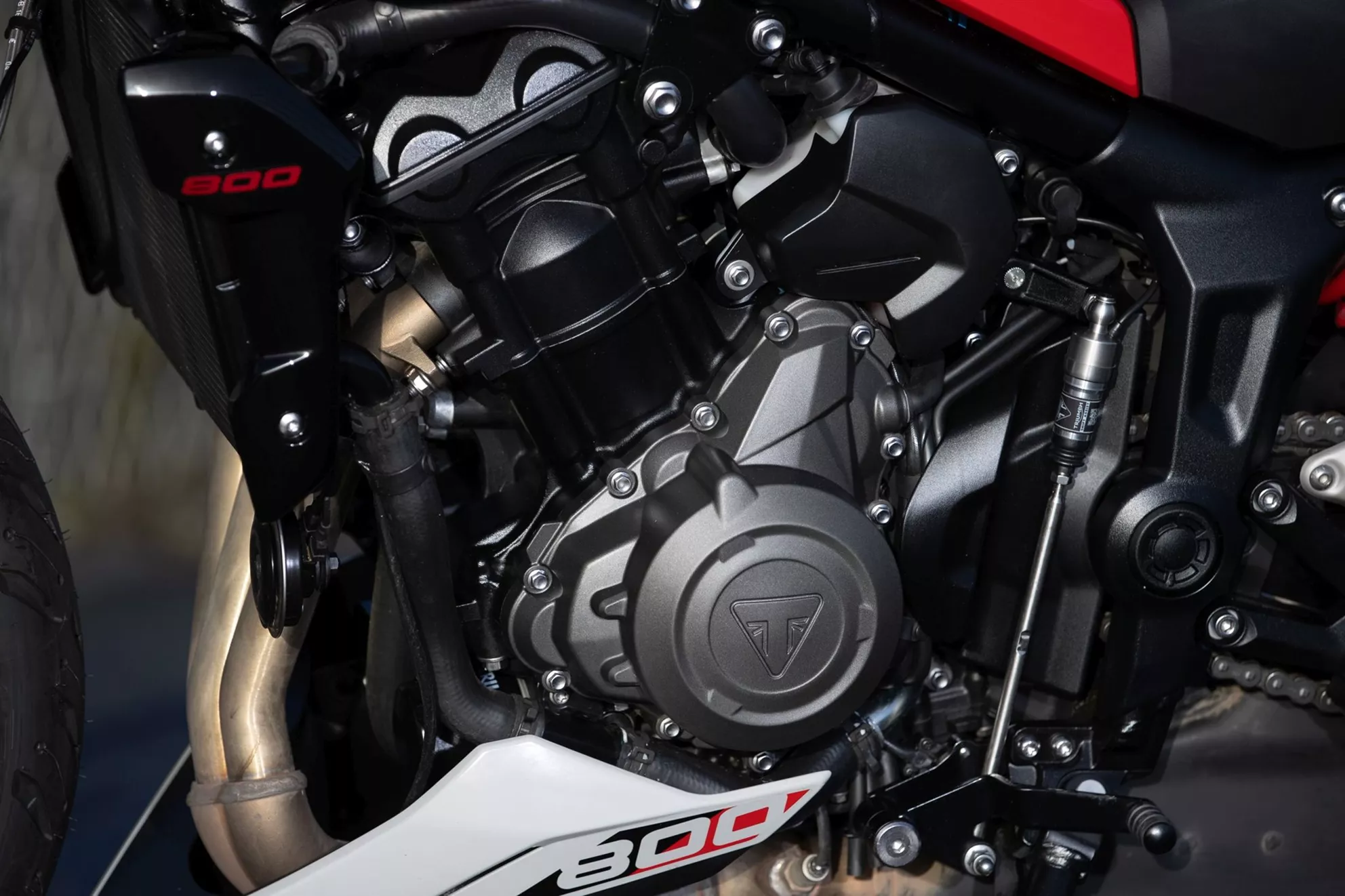
The renowned triple impresses with crisp throttle response and a standard quickshifter.
Quickshifter and Riding Modes: Standard and Spot-On
Particularly noteworthy: The standard quickshifter isn't just there; it works impressively in both directions – whether accelerating or decelerating. The shifting feel is pleasantly precise, as the linkage isn't overly soft: you get clear, clean feedback and can shift smoothly and accurately.
The Trident 800 offers three riding modes (Rain, Road, Sport). The main differences lie in throttle response and the calibration or intervention logic of traction control and ABS. This allows the bike's characteristics to be noticeably adjusted according to weather and mood, without complicating the ride.
Triumph Trident 800 Ergonomics: Low Seat Height, Fits Many Sizes
With a seat height of 810 mm, the Trident 800 is comfortably accessible. For me (1.75 m), the ergonomics are very comfortable, particularly because the Trident 660 frame results in a low step-over height. The outcome: a narrow bike with a secure stand, even for shorter legs – making stop-and-go city riding noticeably less stressful.
I also spoke with Miles, a colleague who is 1.95 m tall, and he found the seating position comfortable without noticeable issues. For those who want to fine-tune, Triumph offers accessory options for a higher or lower seat. The handlebars are positioned exactly where you'd want them on a naked bike: there's a slight pressure on the front wheel, but without an extreme sporty posture. Triumph has resolved this very neutrally – classic naked bike, not tiring even on longer rides.
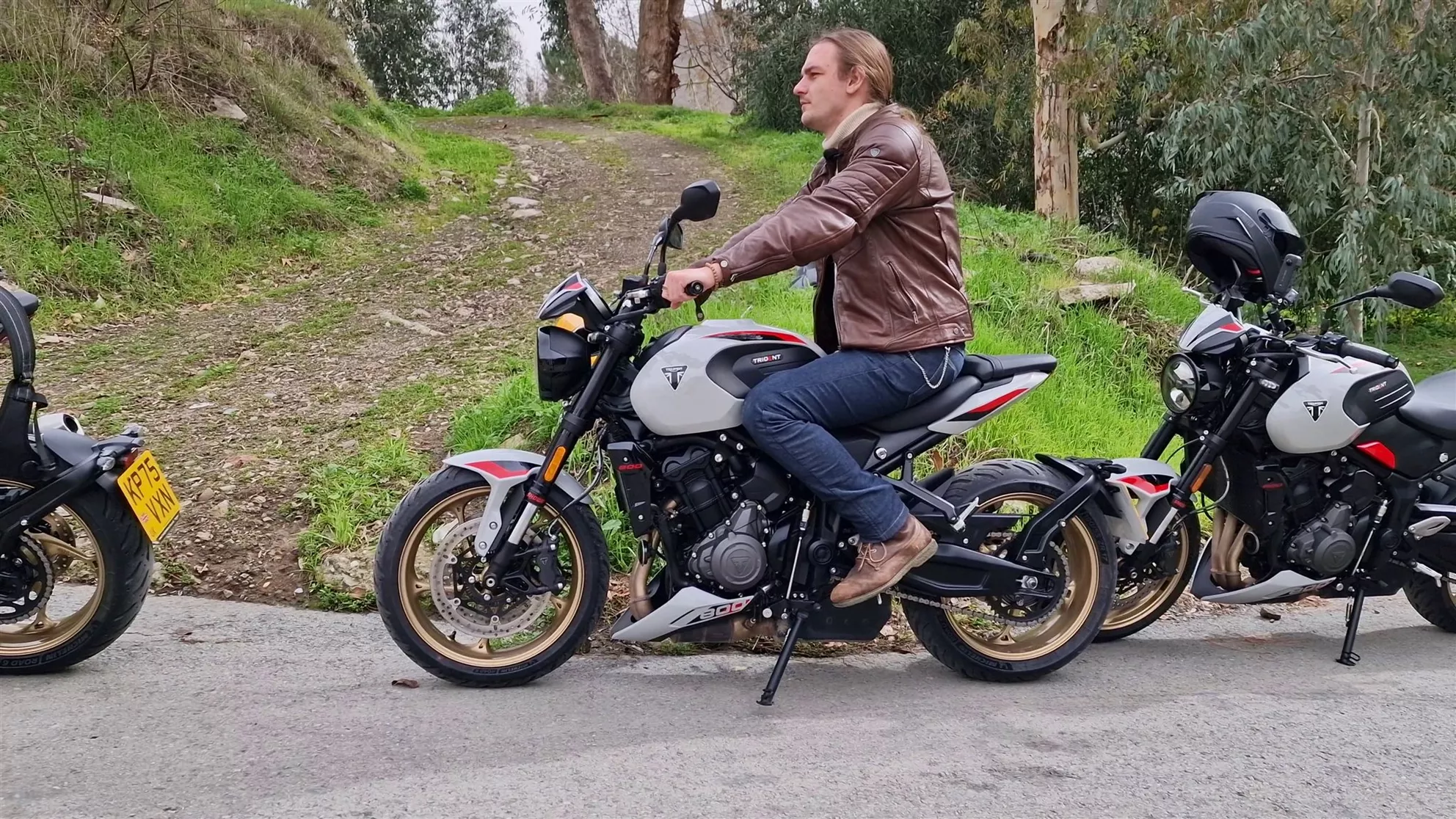
Colleague Miles: 195 cm tall and still plenty of room on the Trident 800.
Suspension: Everyday & Sport – A Sensible Compromise
The suspension feels deliberately tailored to the target audience: comfortable enough for potholes and urban irregularities, yet sportily stable for country roads. It offers a degree of adjustability, and even in the standard setting, the balance is spot-on – you can ride briskly without the suspension feeling overwhelmed.
Technically, Triumph relies on Showa components:
- Front: 41 mm Big Piston upside-down fork (SFF-BP) with adjustable compression and rebound damping, 120 mm travel
- Rear: Showa monoshock with adjustable preload and rebound, 130 mm travel
The result on the road: an effortless, engaging riding experience with confident control that works both relaxed and sporty.
Great Choice: Michelin Road 6 as Standard Tires
A highlight is the fitted Michelin Road 6 tires. They provide neutral steering, offer a good front-end feel, and are ideal all-rounders for varying weather conditions. We also encountered rain, and even then, the feedback remained clear – instilling confidence and perfectly suiting the Trident 800's role as an everyday roadster.
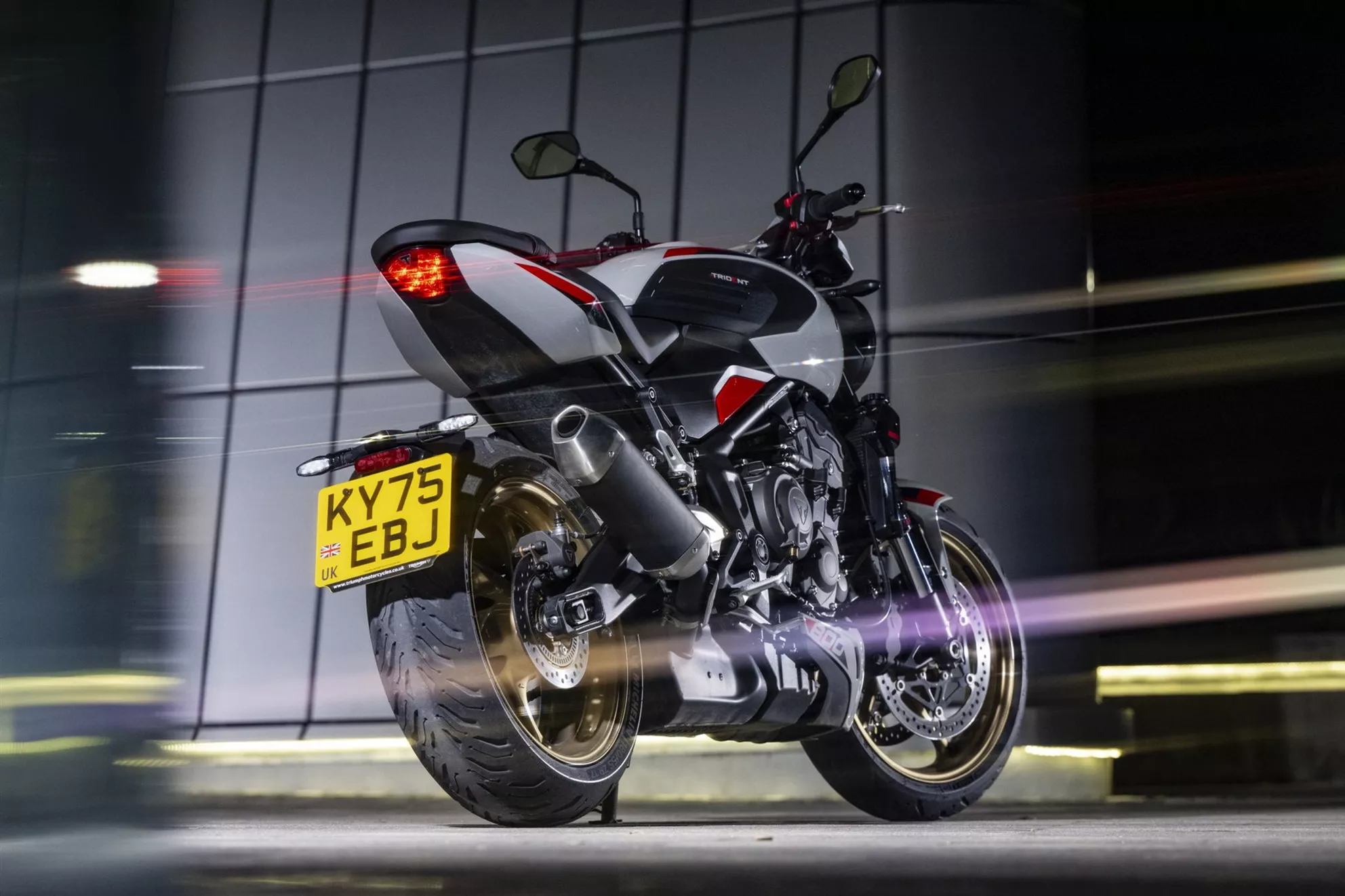
With the Michelin Road 6, the Triumph Trident 800 is equipped for all conditions.
Brakes: Strong Performance, Deliberately Not Too Sharp
The braking system is perfectly matched to the bike's character. It provides good stopping power without being overly aggressive. Achieving really strong deceleration requires a bit more lever pressure – which I don't see as a negative, as the Trident 800 is clearly also aimed at riders moving up from the Trident 660. Overly sharp brakes could overwhelm this class. They are well-dosed, perform reliably, and remain unobtrusive. Complementing this are electronic aids: cornering ABS and cornering traction control further enhance safety.
Technically, the Trident 800 features:
- Front: 2x 310 mm discs, 4-piston radial calipers, steel braided lines, cornering ABS
- Rear: 220 mm disc, single-piston floating caliper, cornering ABS
Triumph Trident 800 Features and Electronics
Triumph equips the Trident 800 with many standard features that are not always typical in this class:
- Cornering ABS
- Cornering traction control
- Cruise control (single-button operation)
- Quickshifter / Triumph Shift Assist (up and down)
- My Triumph Bluetooth connectivity (music, calls, turn-by-turn navigation)
- 3 riding modes (Rain/Road/Sport)
- LED lighting (including a round headlight with distinctive daytime running light signature, integrated tail light, self-cancelling indicators)
The display is familiar from the Trident 660: it functions well, shows all relevant data, is user-friendly, and allows quick and easy switching of riding modes even while riding. However, my impression is that it doesn't look quite as premium as the bike itself suggests. In short: functionally top-notch, visually more utilitarian.
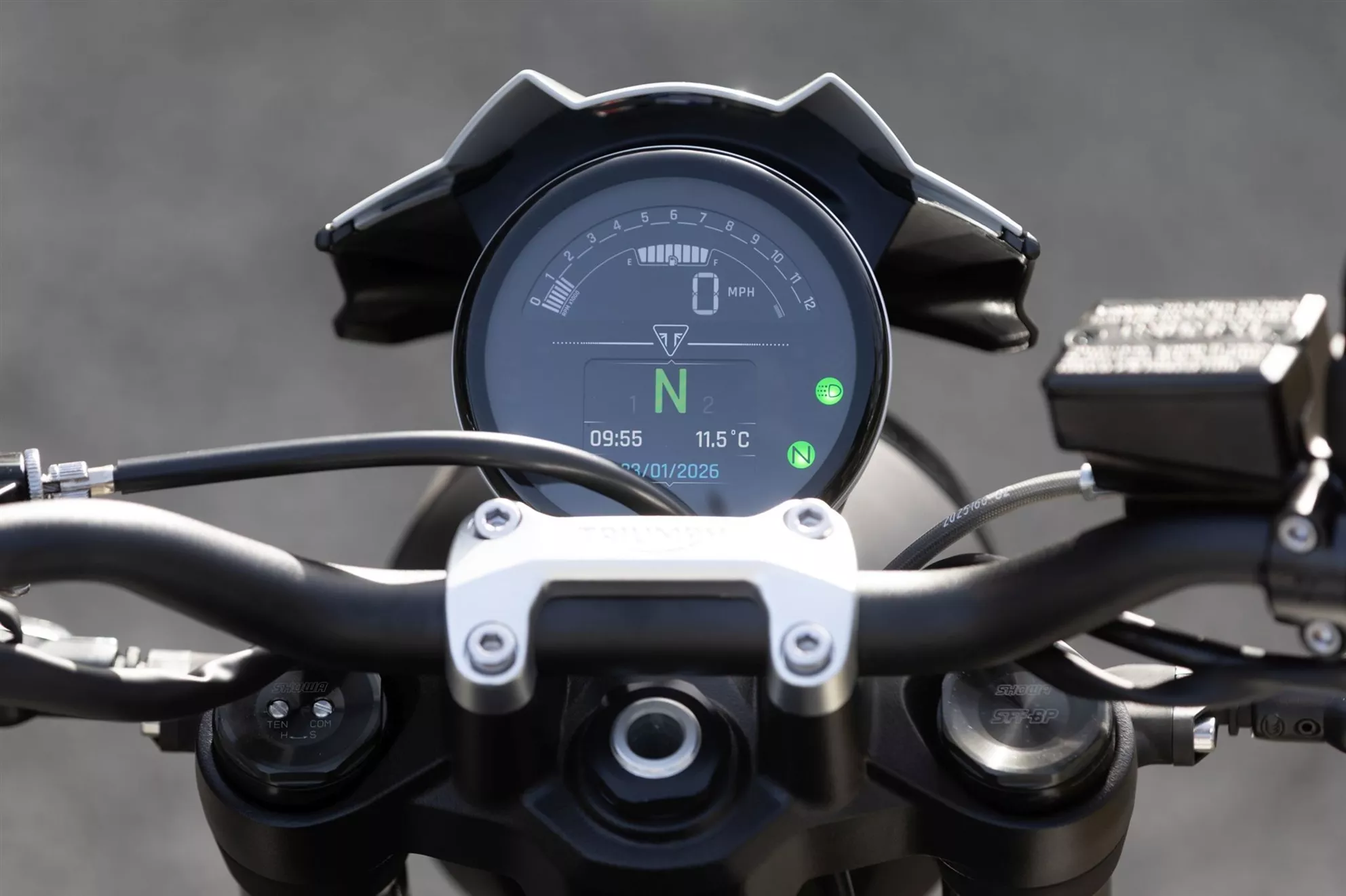
The display of the Trident 800. Also known from the Trident 660 and Scrambler 900.
Experiences in the City, on Country Roads, and Highways
In the city, the low weight, narrow waist, and low seat height (810 mm) immediately stand out. The bike is very easy to ride, offers a secure footing, and the clutch is not heavy – yet it has a nice bite and provides a clear connection to the engine. Unfortunately, only the brake lever is adjustable, not the clutch lever. Overall, the Trident 800 rides pleasantly and effortlessly in urban settings.
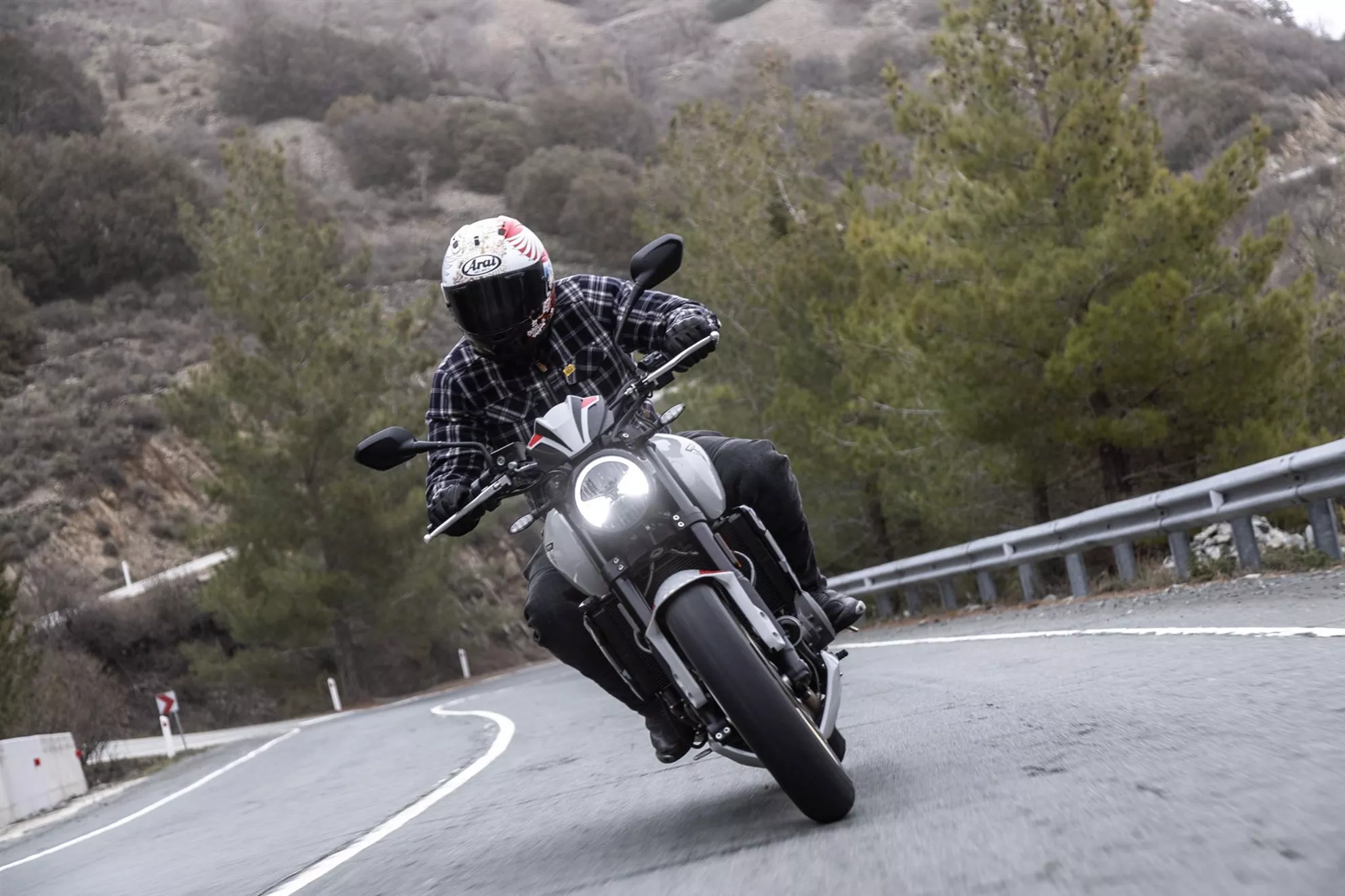
The Trident 660 and 800 share the same frame – making the waist of the Trident 800 pleasantly narrow.
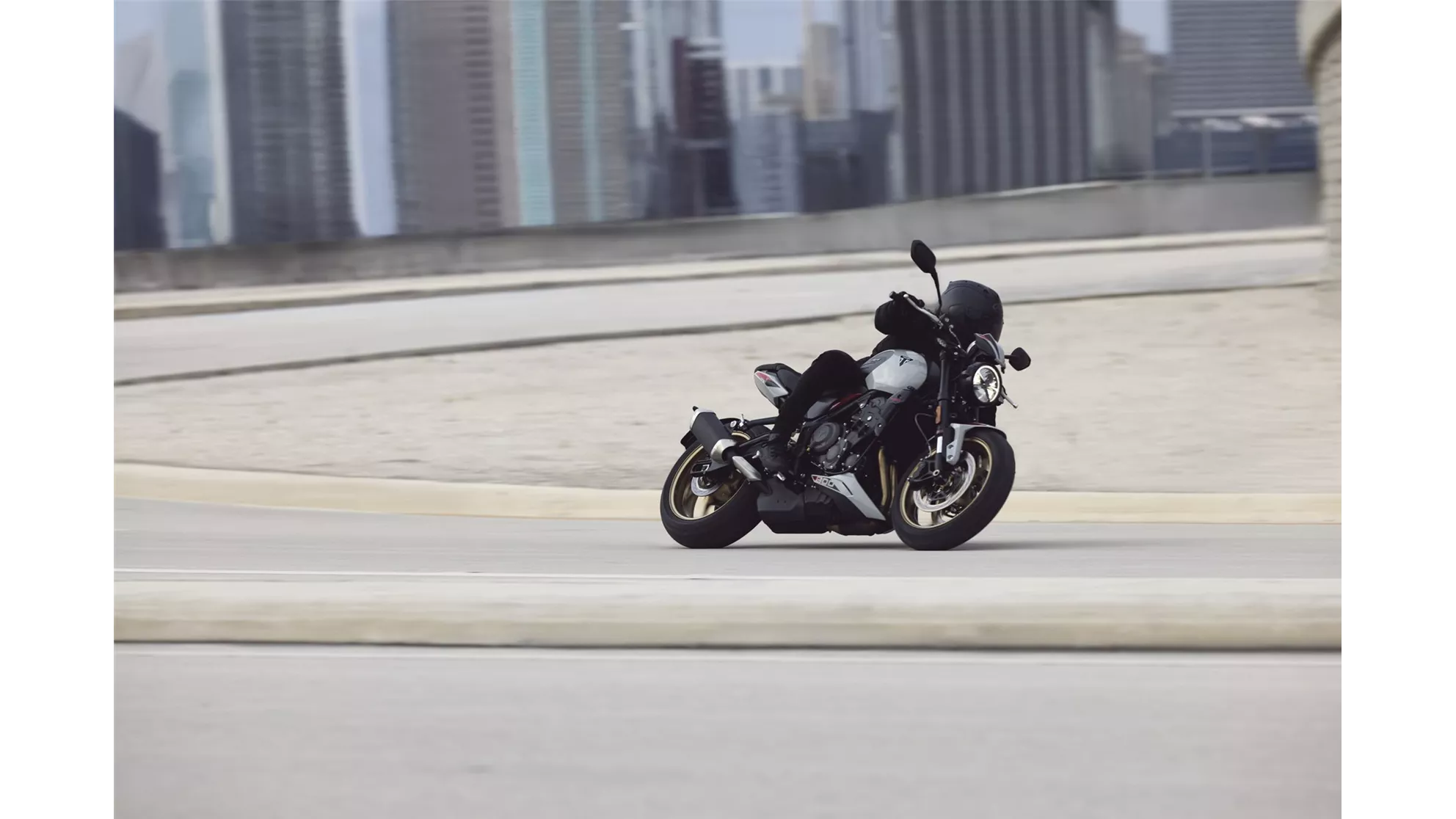
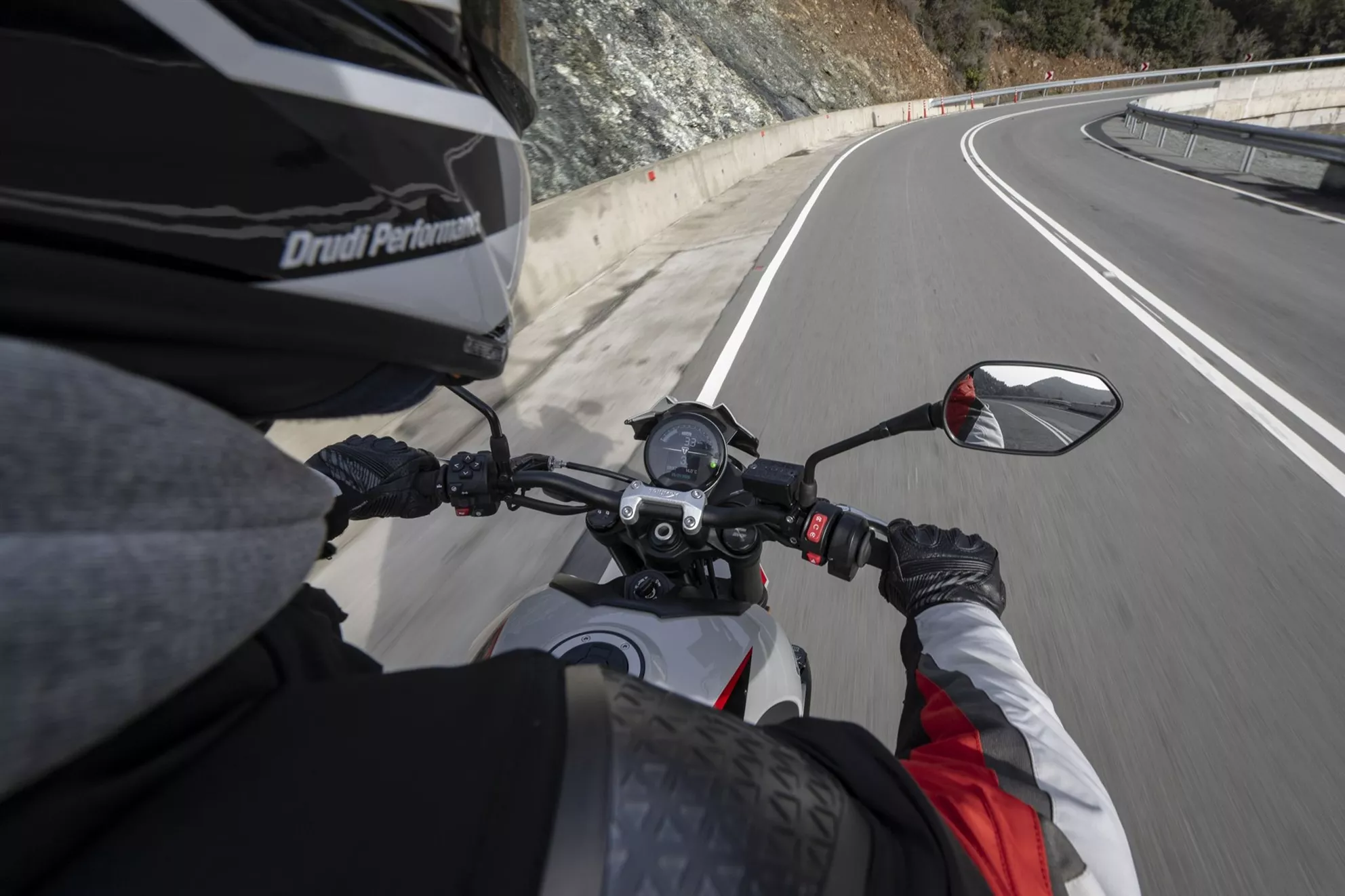
On country roads, it feels very balanced. You can sense it: at its core, it's still a Trident - that familiar lightness of the 660 is still there. But everything feels more mature: more punch from the engine, a quickshifter that works flawlessly and smoothly, and suspension and brakes that appear more refined and well-suited to the bike. The result: a motorcycle you can enjoy without much acclimatization. Particularly impressive is the sound from the intake noise. The exhaust takes a back seat, but the throaty intake roar of the triple throttle bodies is a highlight and adds significantly to its character.
On the highway, you definitely benefit from the cruise control, which can be activated with a single button press. Wind protection is practically nonexistent – typical for a naked bike – and it's hard to say if the small fairing above the headlight makes much difference. However, what stands out is that the Trident 800 remains very stable even at highway speeds, allowing for stress-free longer journeys.
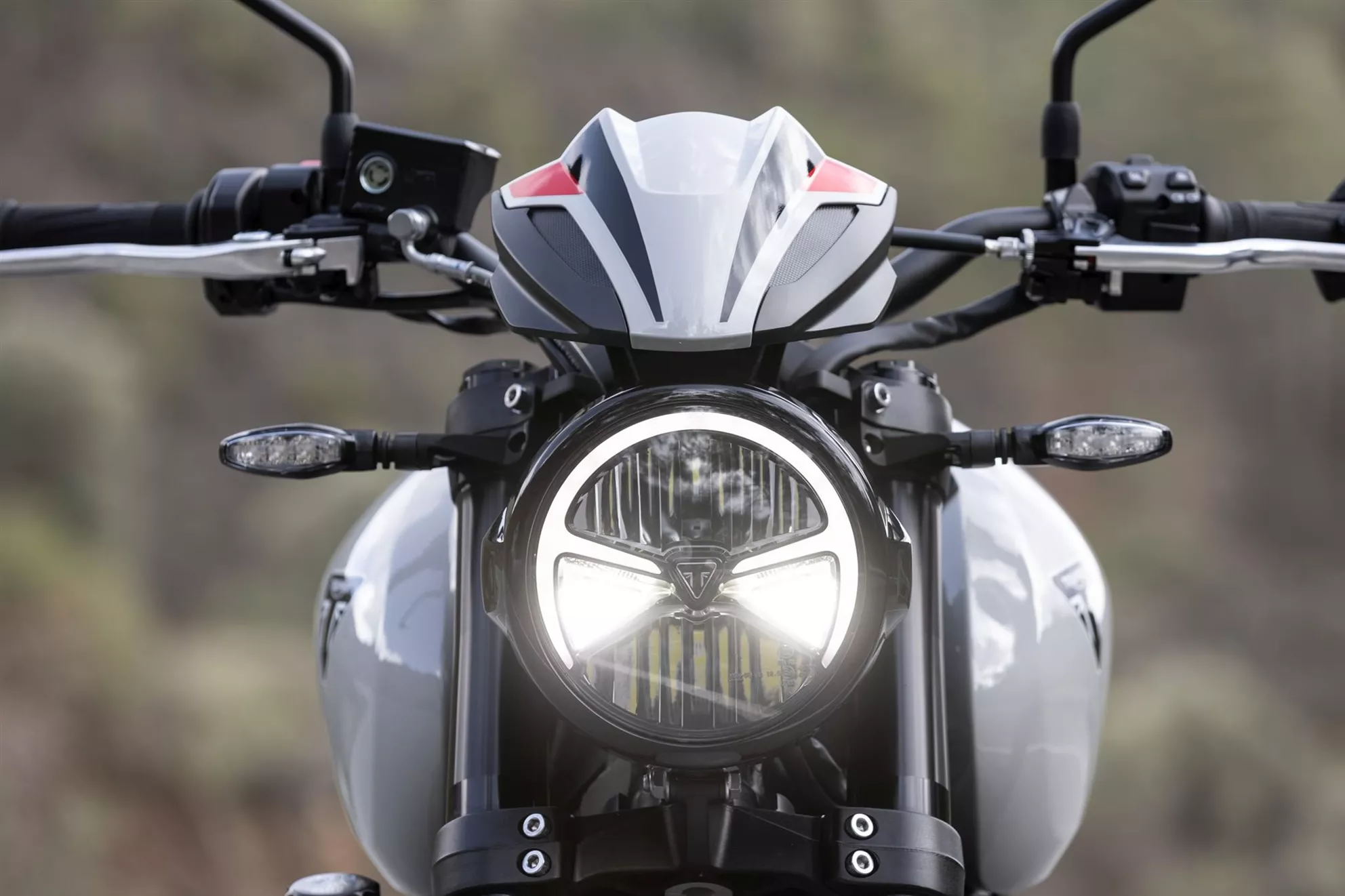
The compact fairing greatly enhances the aesthetics. Whether it actually improves wind protection remains questionable.
The Price is Attractive - Does the Trident's Build Quality Reflect This?
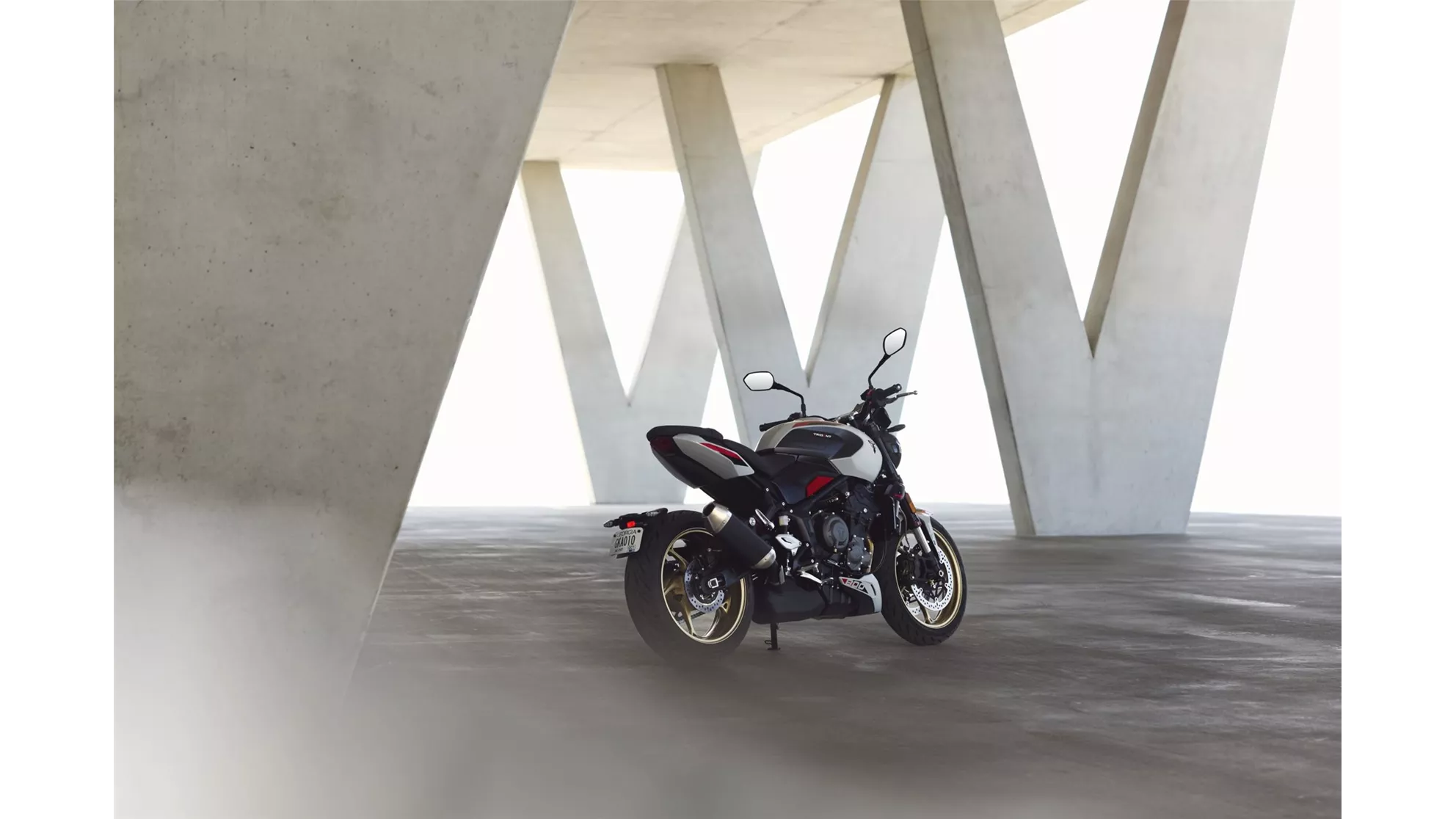
Visually, the Trident family resemblance is immediately apparent. Compared to the 660, the 800 looks more muscular. At first glance, one might confuse them, but with the belly pan and headlight fairing, it has noticeably more presence. A topic of discussion in YouTube and Instagram comments is the low-mounted license plate holder: Triumph says market research showed many customers prefer this solution as it makes the silhouette look more compact and sporty. There won't be a Triumph kit for a high-mounted license plate holder – however, experiences from the Trident 660 show that third-party solutions are available if desired.
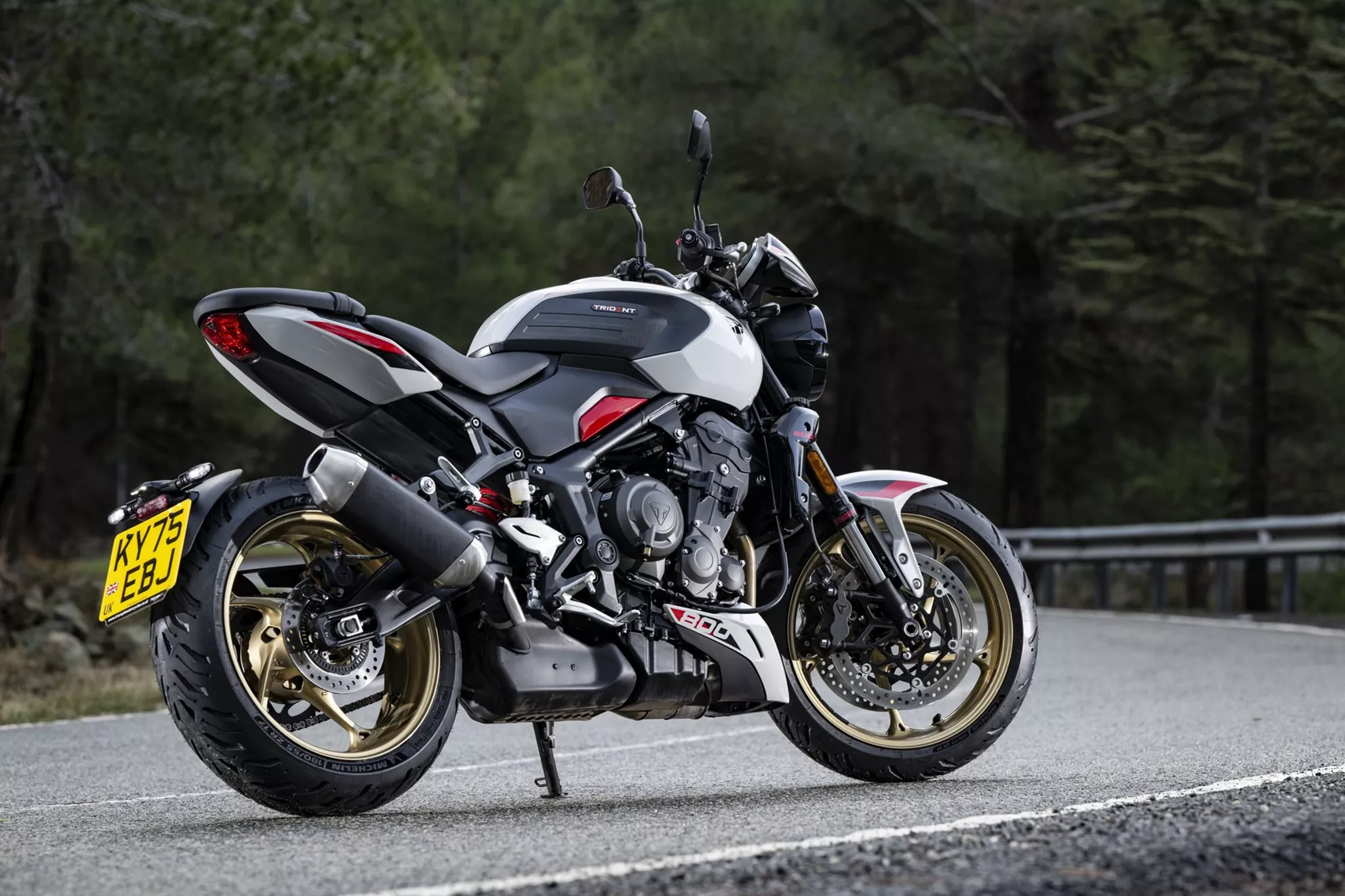
The low-mounted license plate holder divides opinions.
The build quality leaves a very good impression: the paintwork is nice, and the consistent panel gaps are evident. There is a distinction with the stickers: they are over-lacquered only on the tank cover, not on the fenders, headlight fairing, and rear – but considering the price point, this doesn't weigh negatively.
A clear practical recommendation: a tank pad. On our Ash Grey models, it quickly became apparent that the tank cover scratches easily without one – an investment buyers should definitely consider.
Triumph Trident 800: Price, Availability, Warranty & Maintenance
The Trident 800 will be available at Triumph dealers from April 2026.
Prices:
Germany: €9,695 (Jet Black), plus dealer-specific delivery charges, including a 4-year manufacturer warranty
Austria: €11,295 (Jet Black), including all costs and NOVA, including a 4-year manufacturer warranty (Color variations available at an additional cost)
- Warranty: 4 years, with no mileage limit
- Maintenance intervals: 16,000 km / 12 months (whichever comes first)
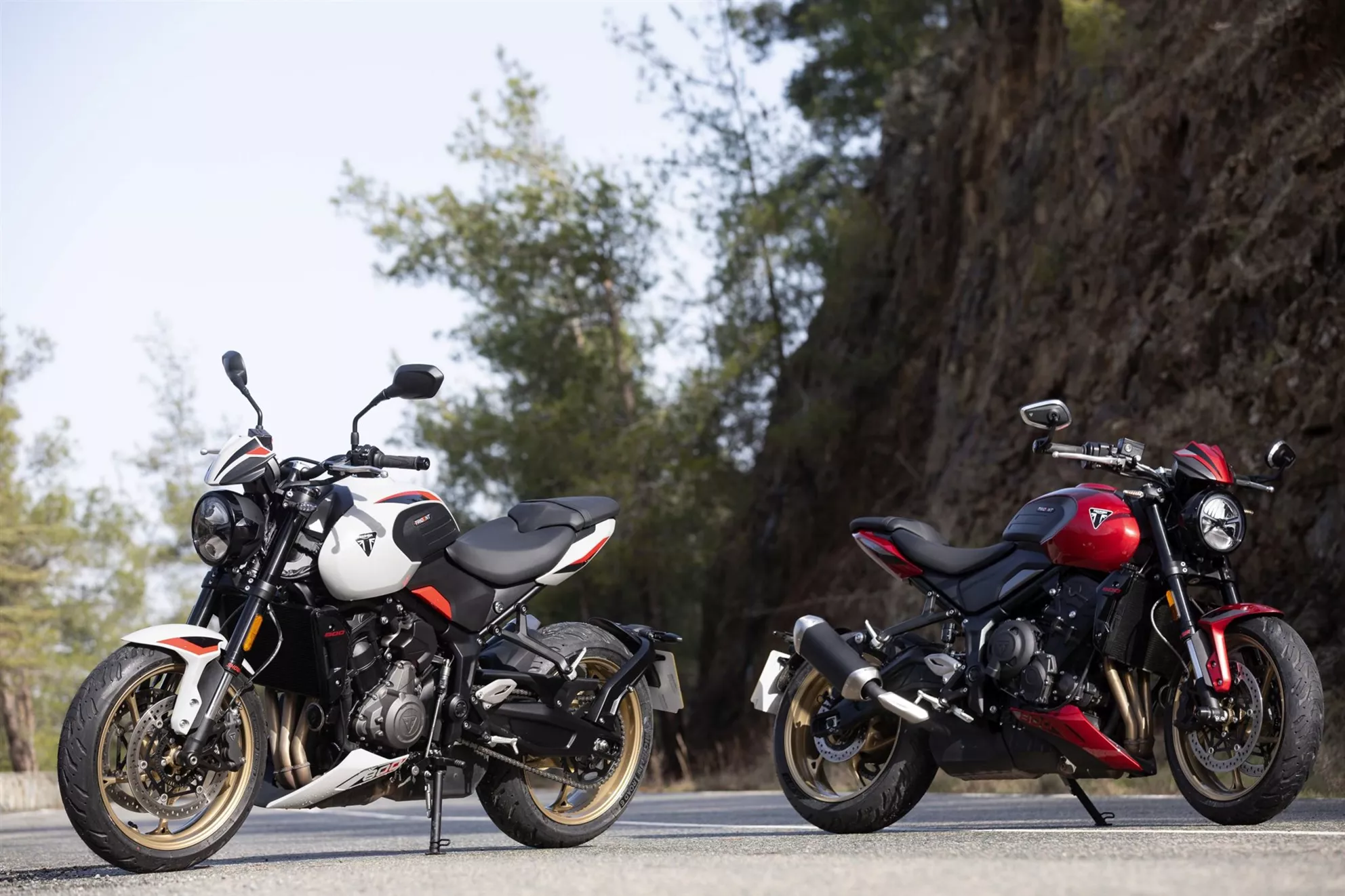
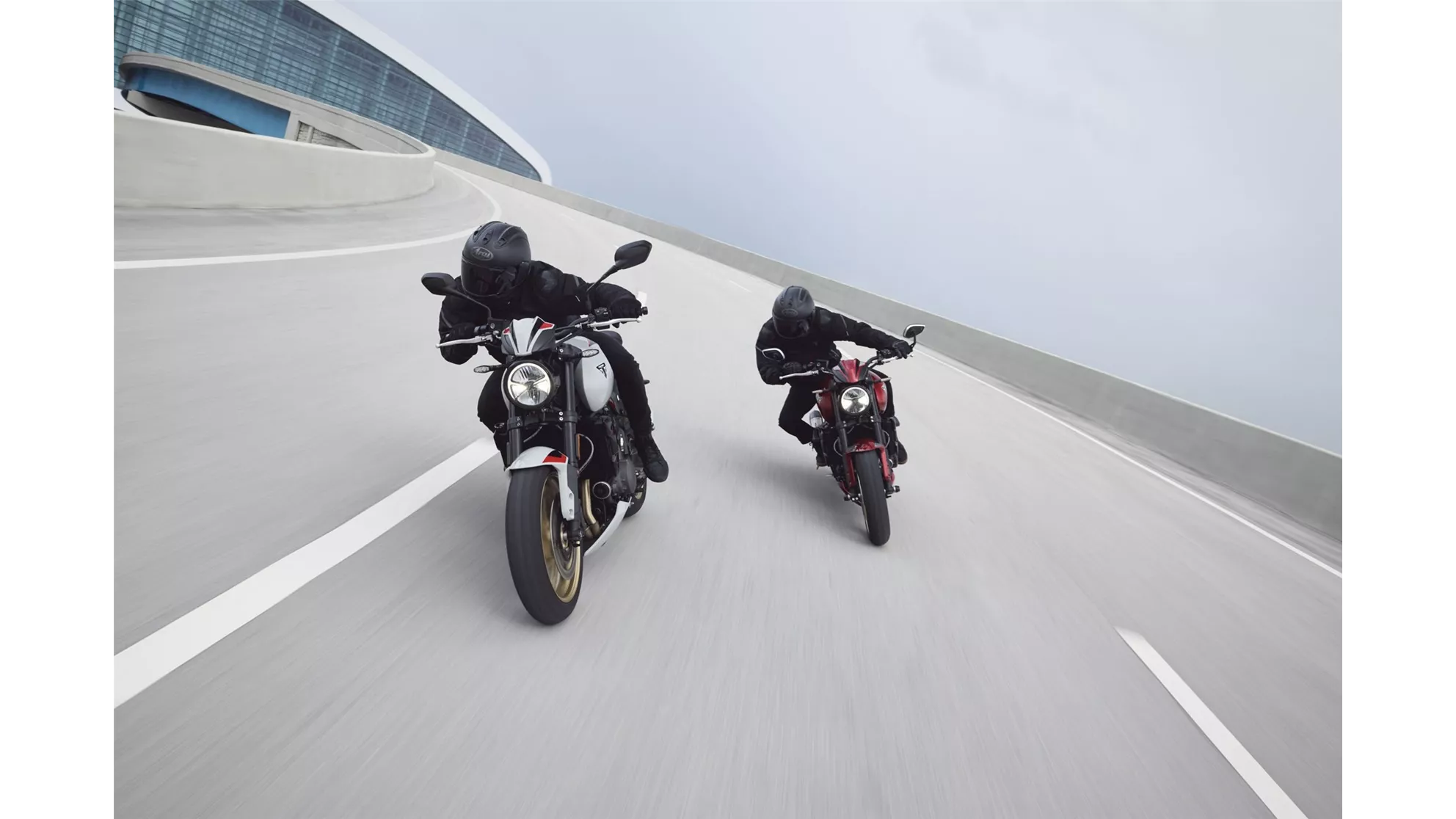
The two additional cost colors Ash Grey (left) and Carnival Red (right).
- How much does a Triumph Trident 800 cost?
- Here you will find an overview of the price level of new and used motorbikes!
&width=60&height=60&bgcolor=rgba_39_42_44_0&mode=crop "Author: Der Horvath")
Triumph Trident 800 2026 - Experiences and Expert Review
Der Horvath
The Triumph Trident 800 stays true to the Trident philosophy: accessible, straightforward, and dynamic – just noticeably more mature. The new 798cc triple delivers flexibility, the standard quickshifter works excellently, and the overall package of suspension, tires, electronics, and ergonomics makes the Trident 800 a bike that feels nimble in the city and well-rounded on country roads. Add to this a high-quality build and a design that is unmistakably Trident – with a bit more muscle and the debated license plate holder.
More from 1000PS Magazine

Triumph Trident 800 Review: First Ride on the New 800 Triple Images
Source: 1000PS