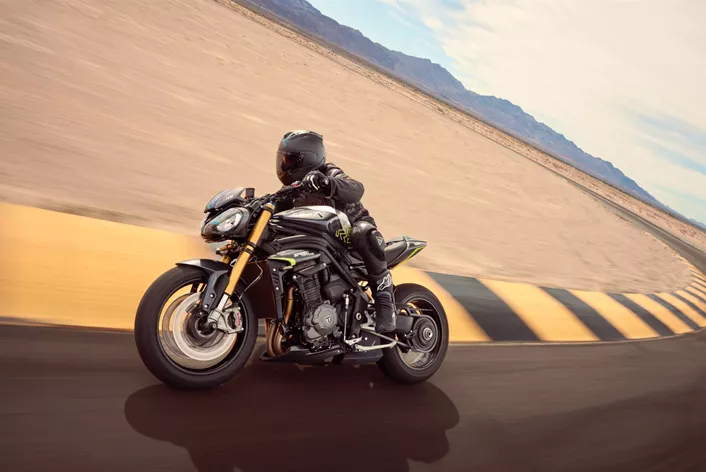
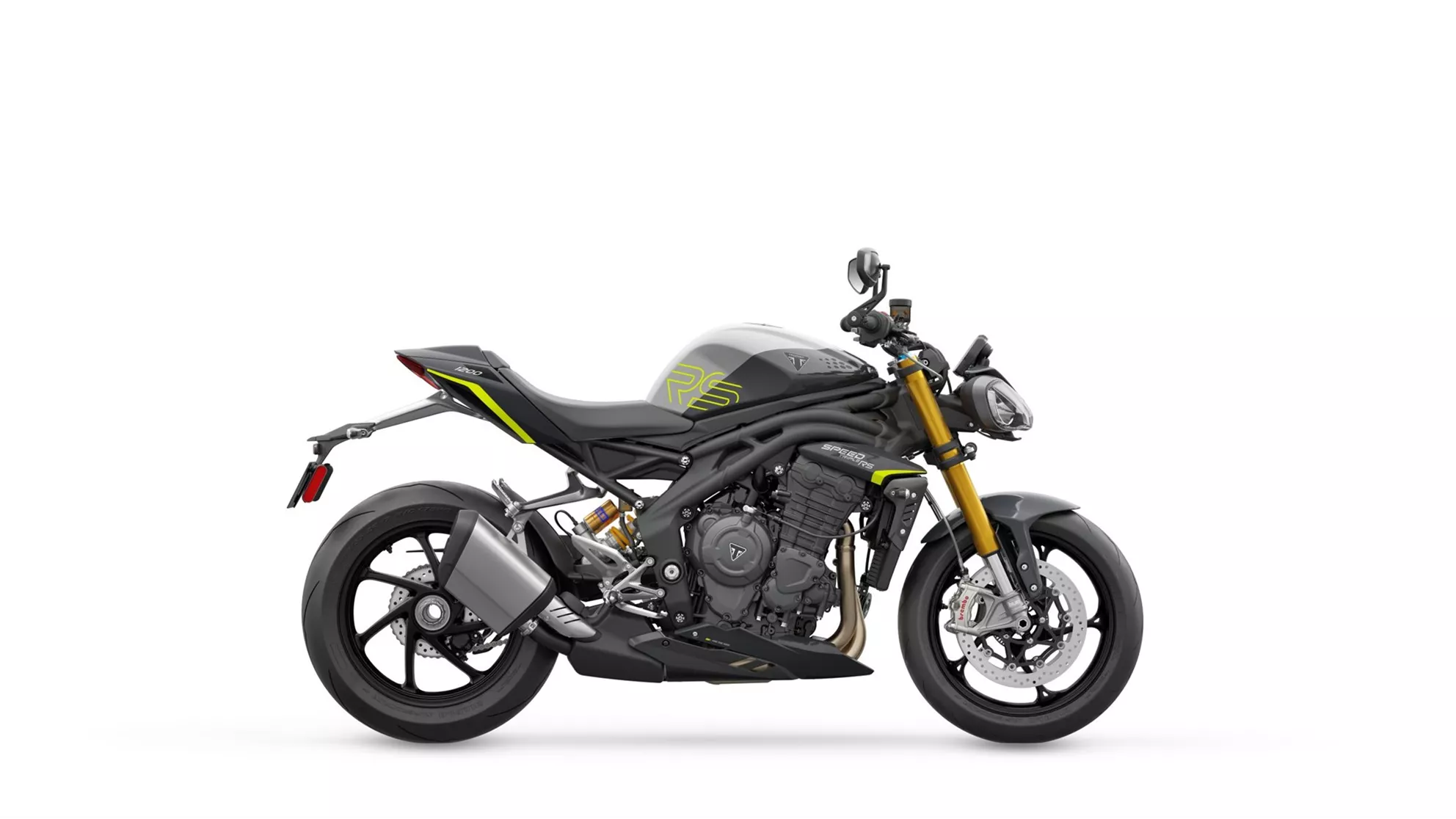
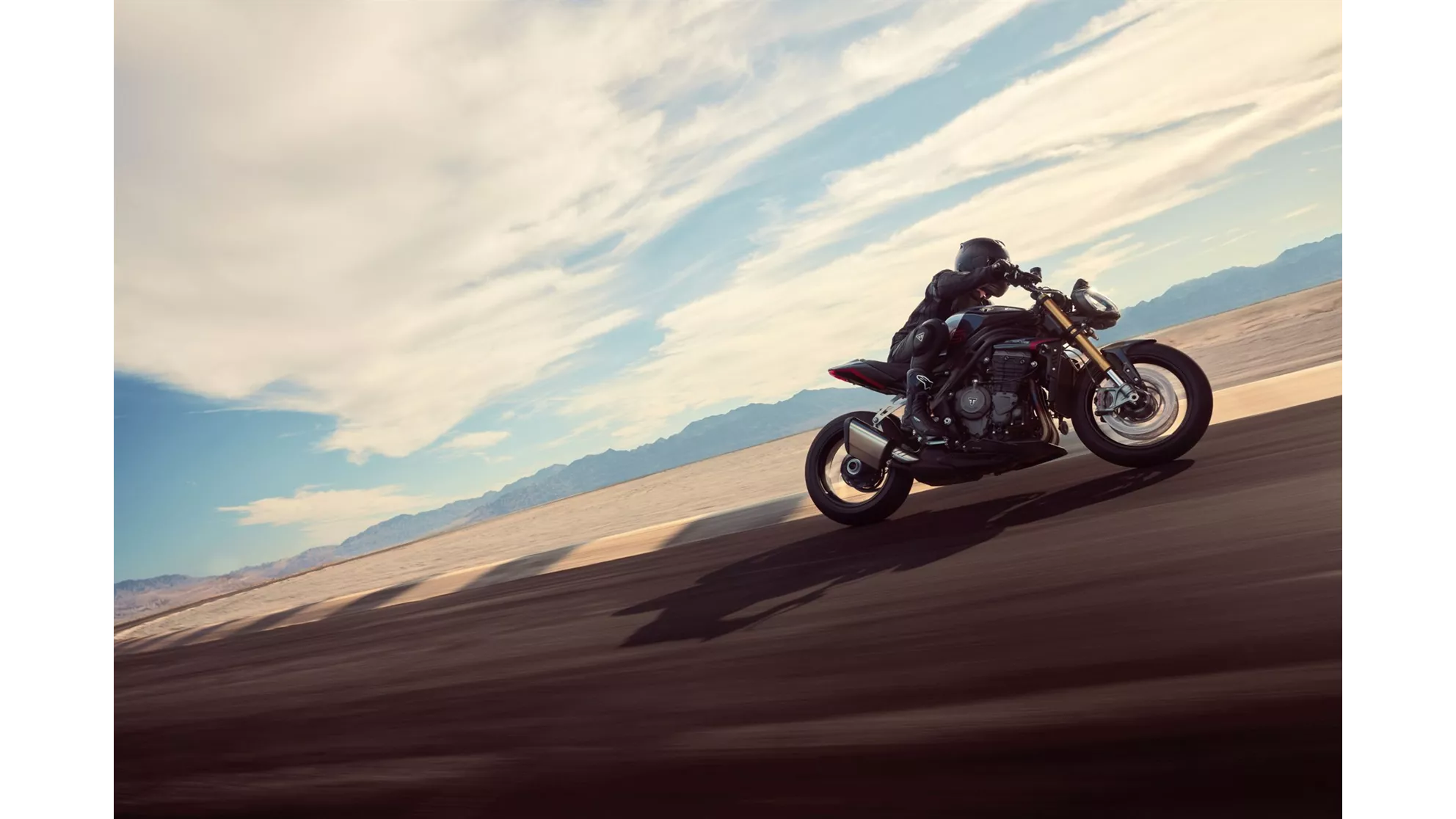
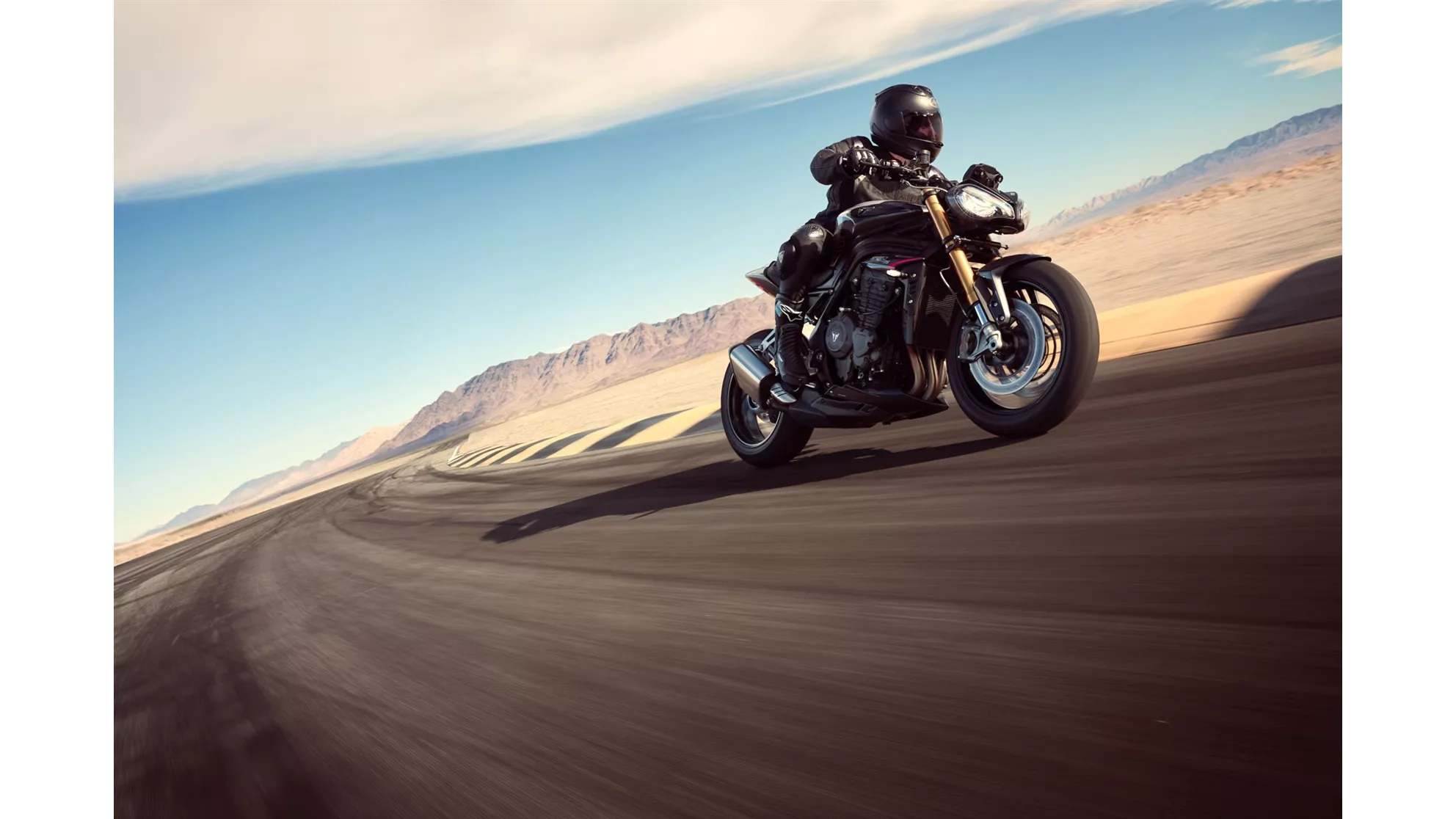
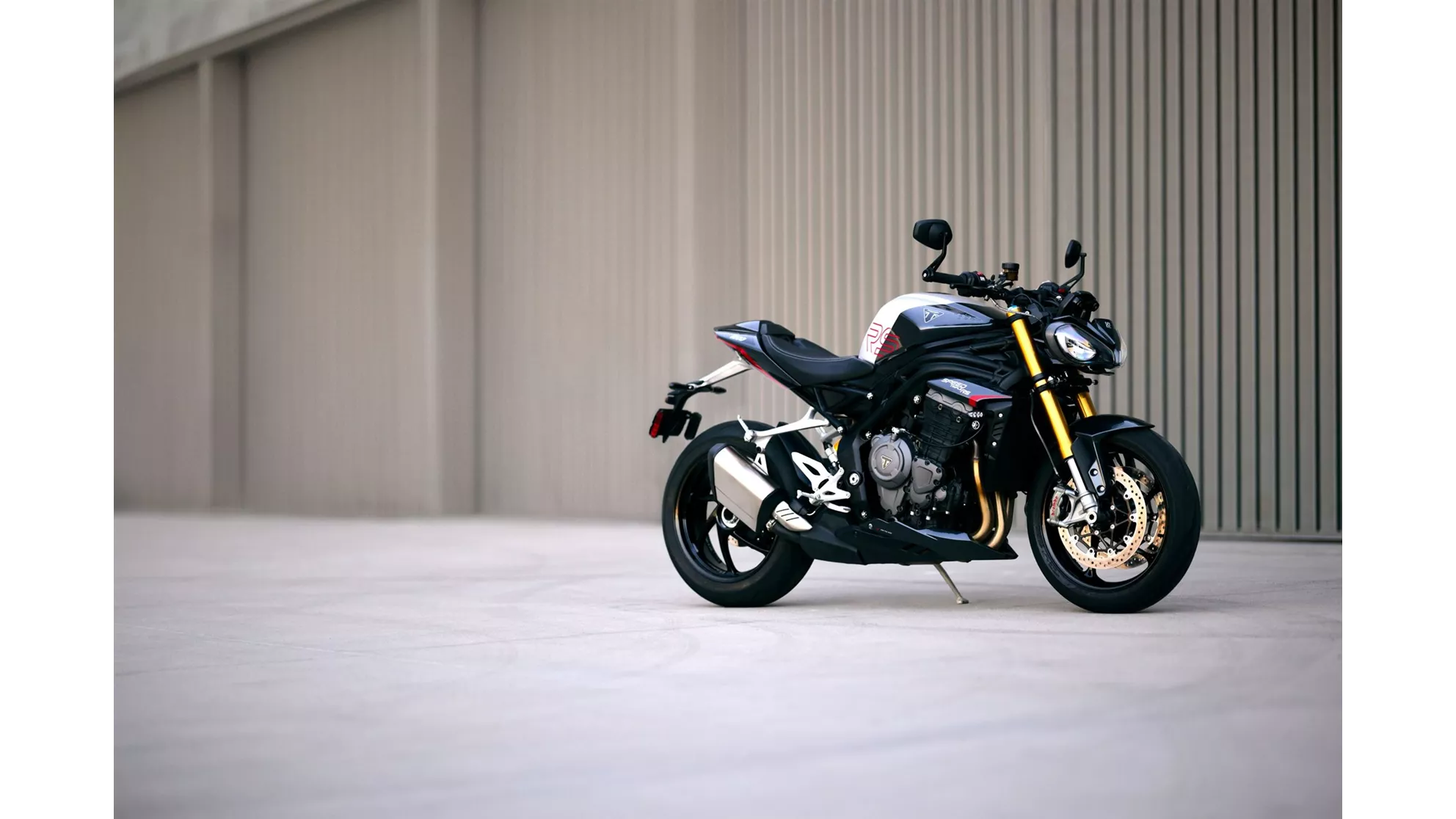
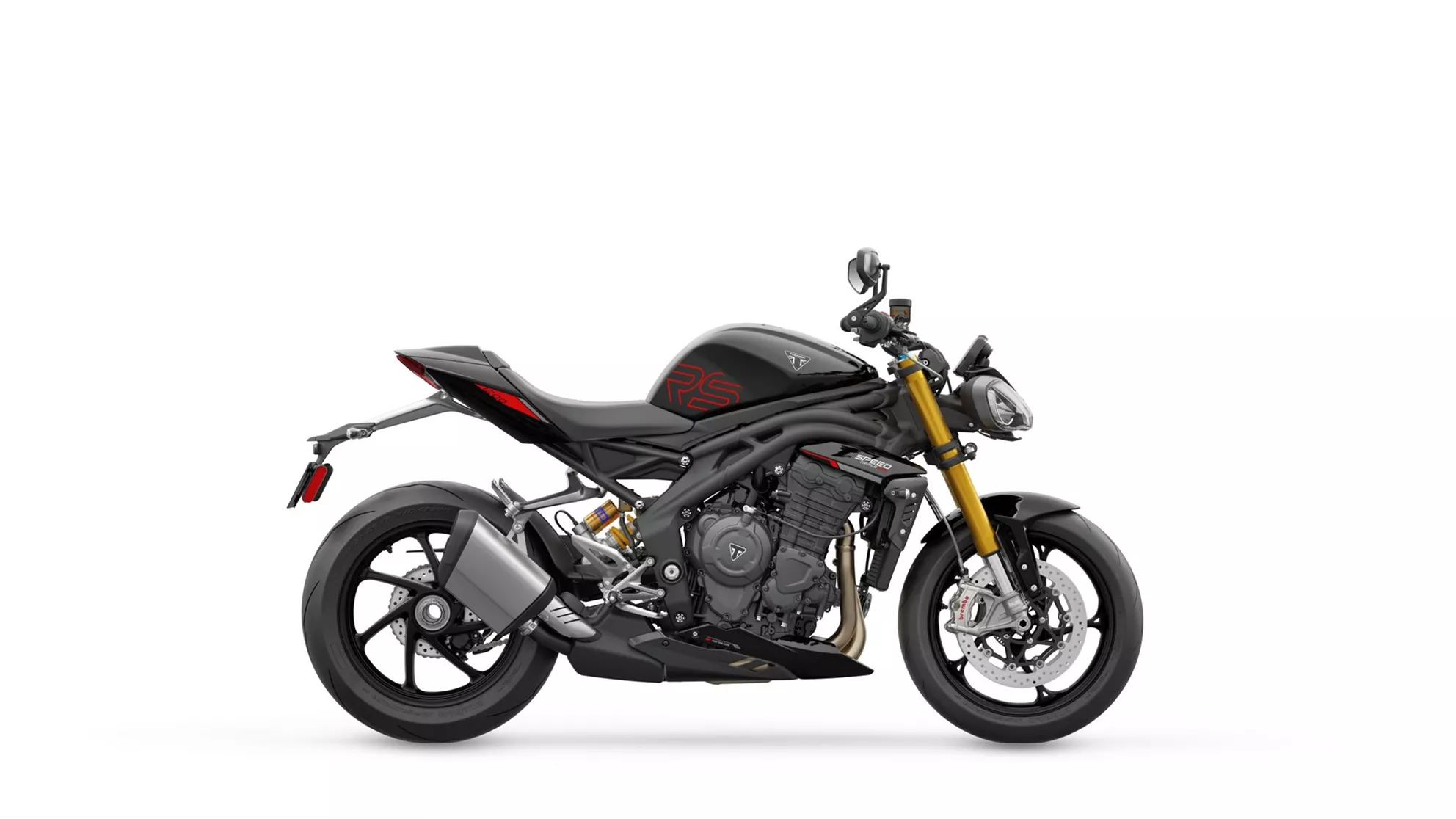
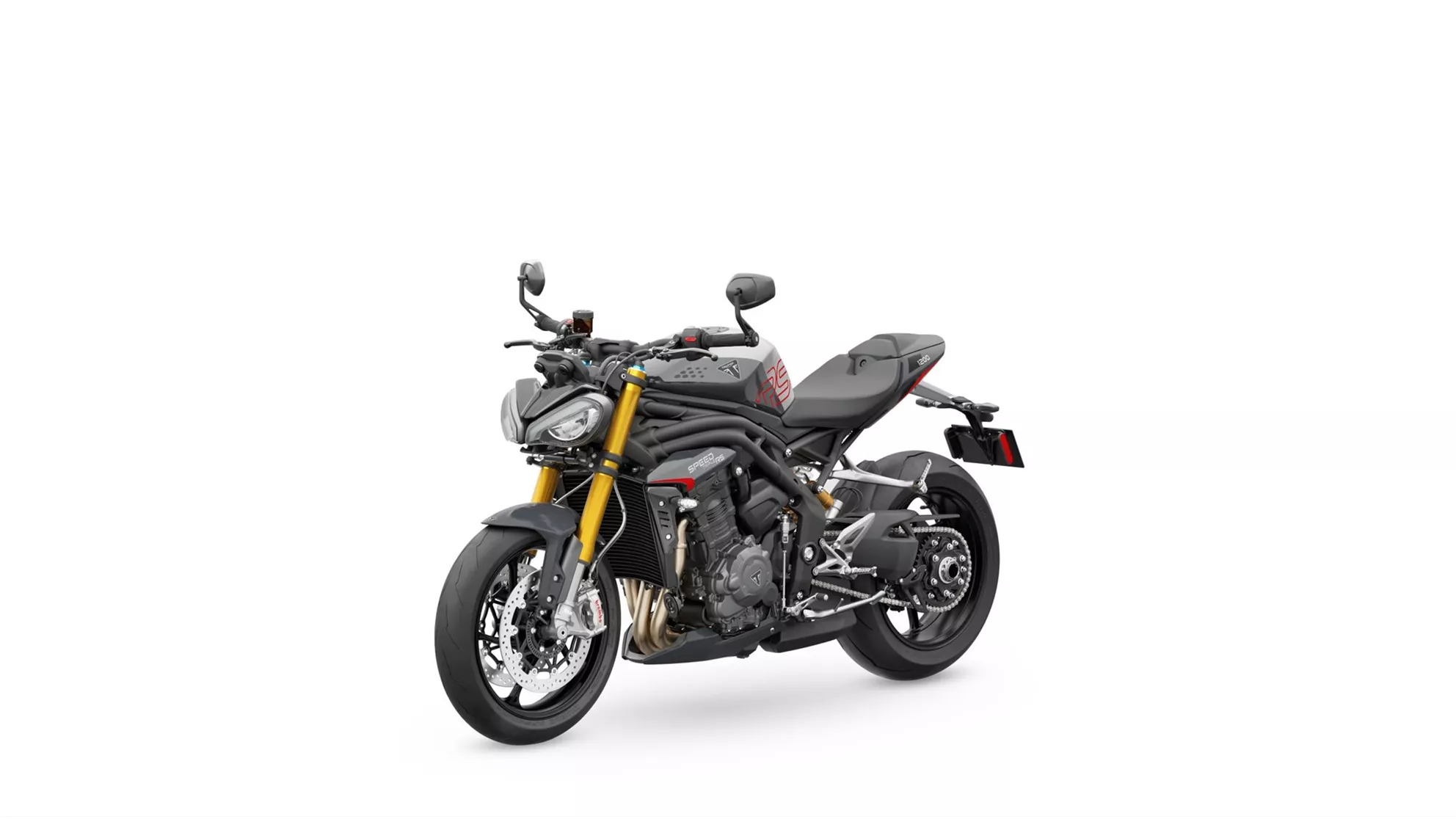
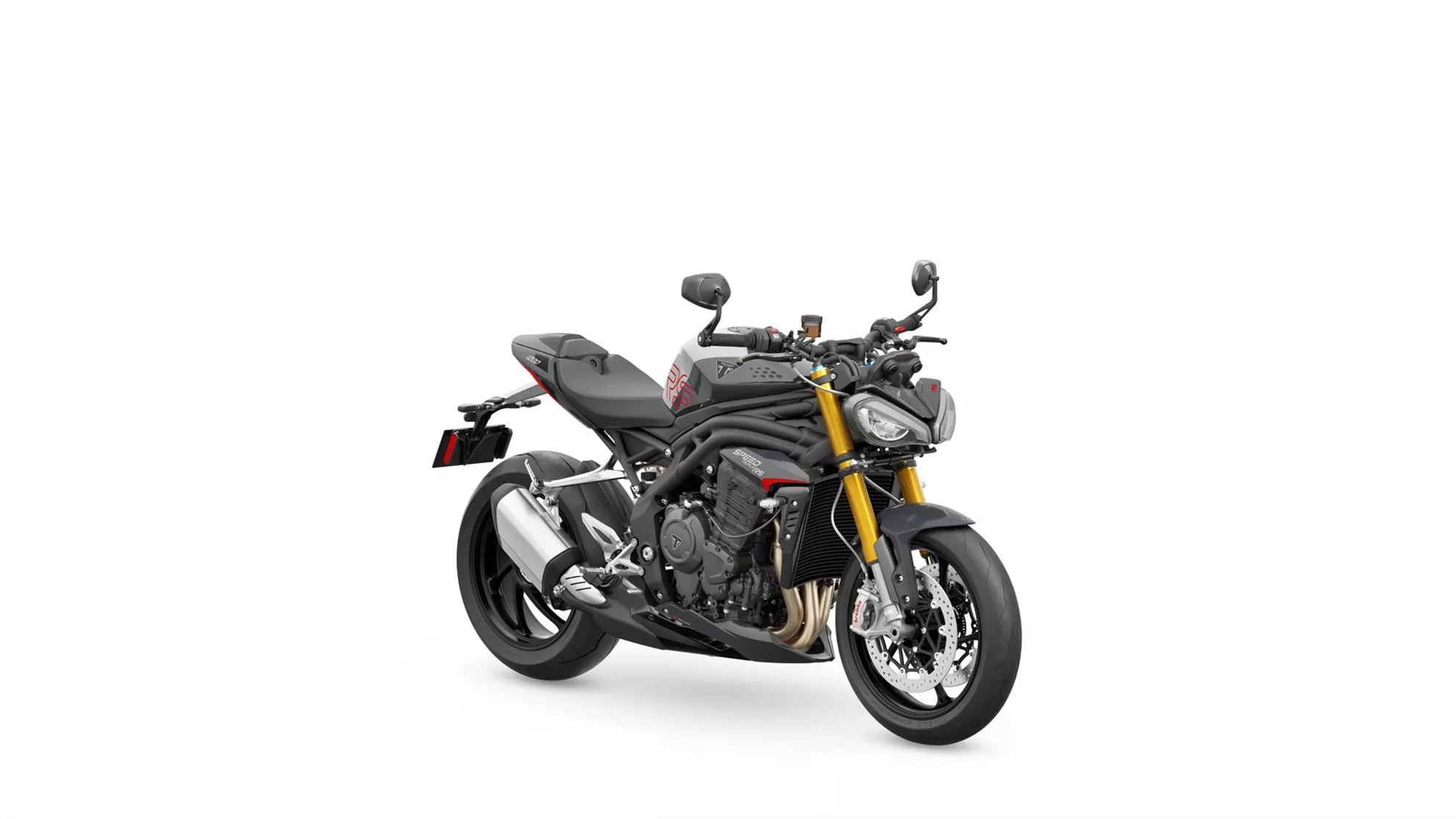
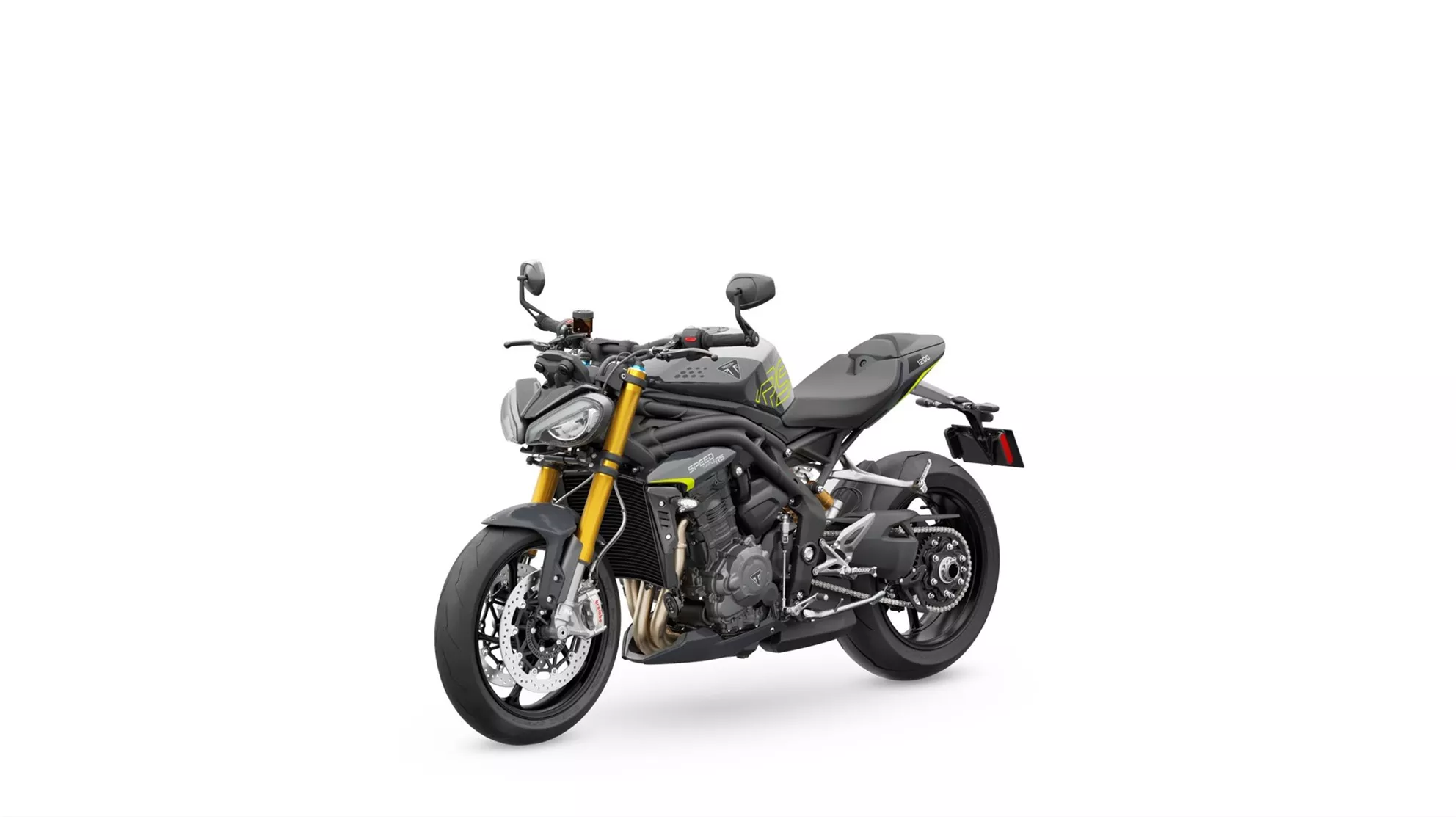
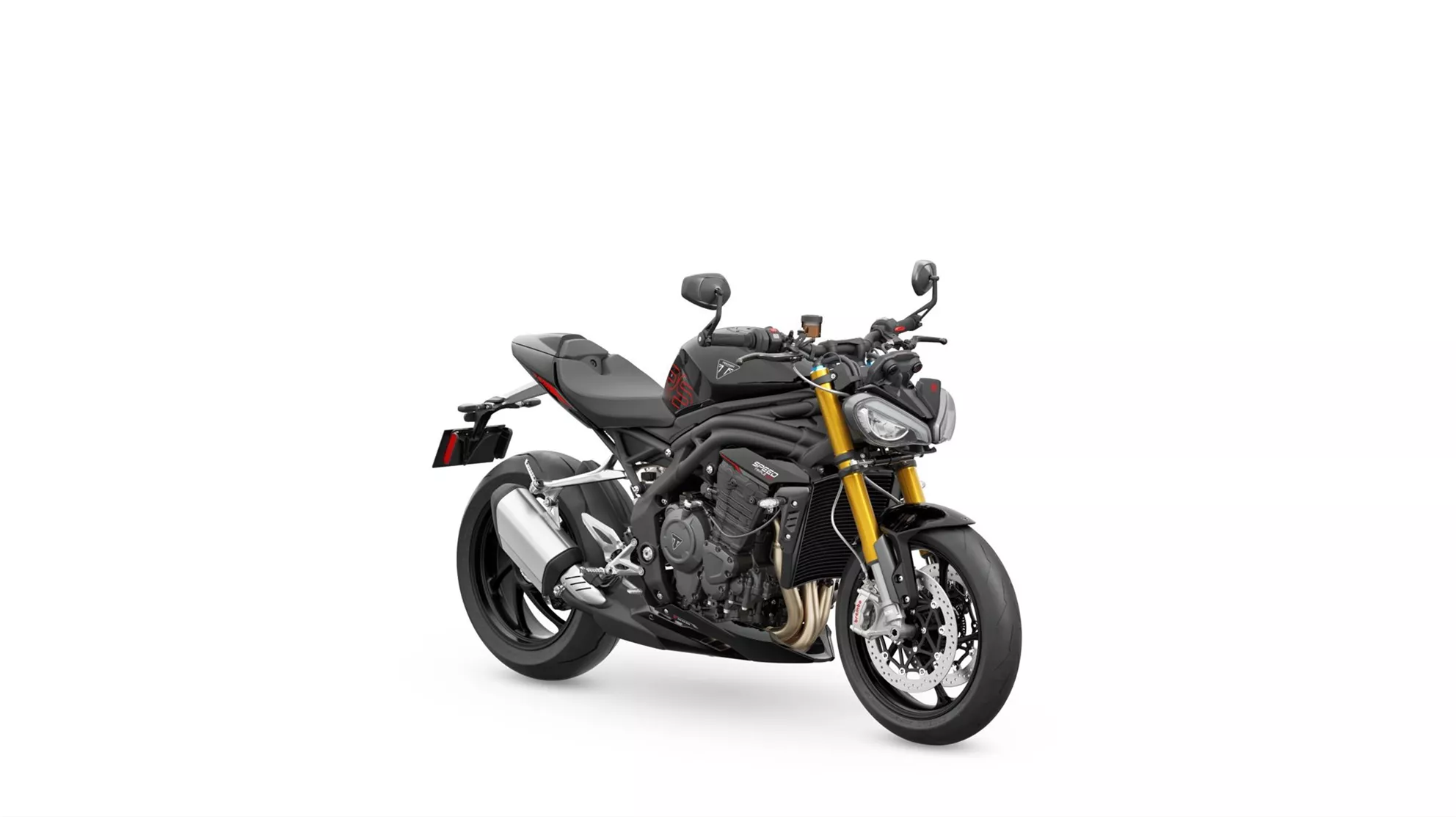
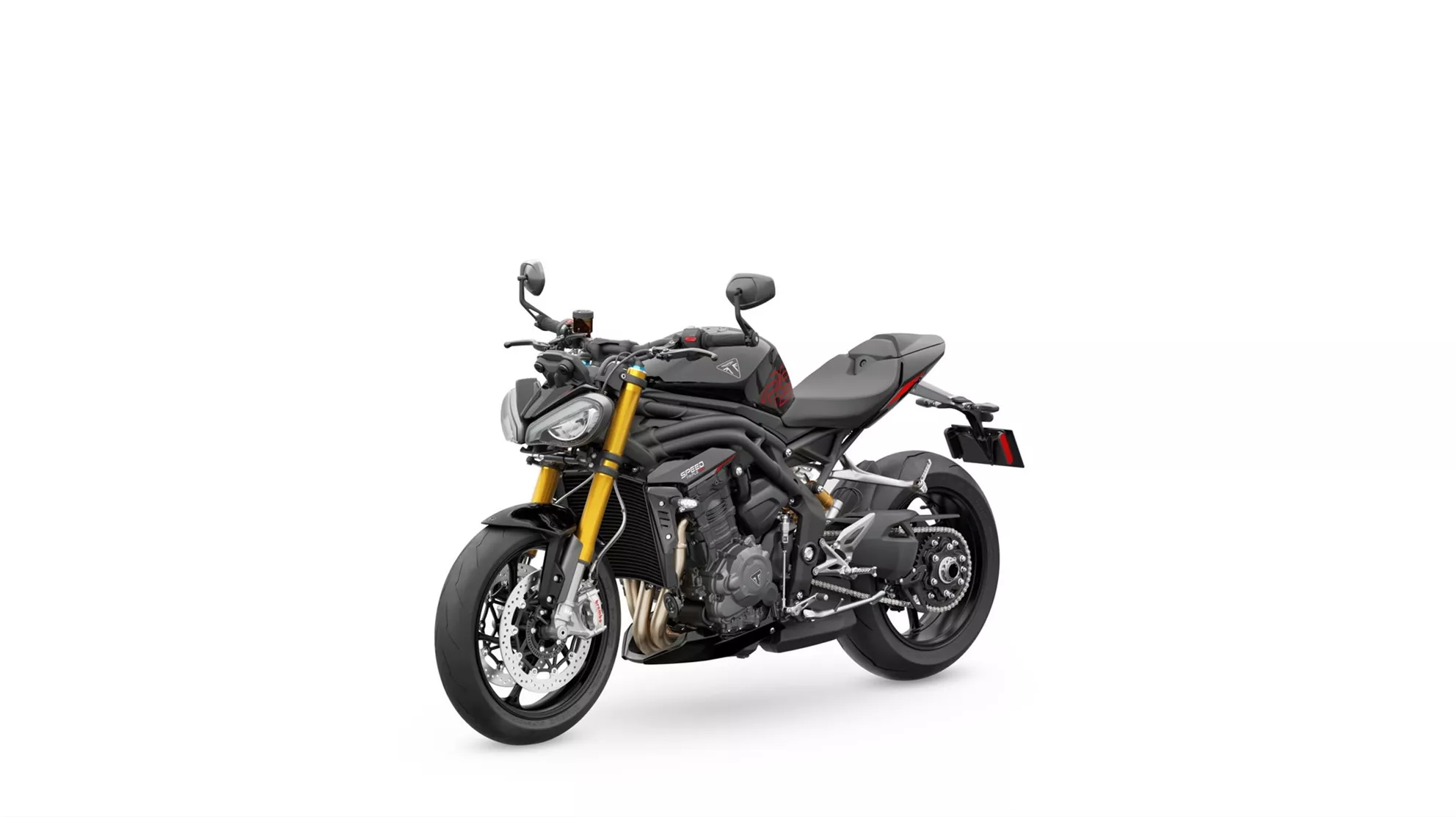
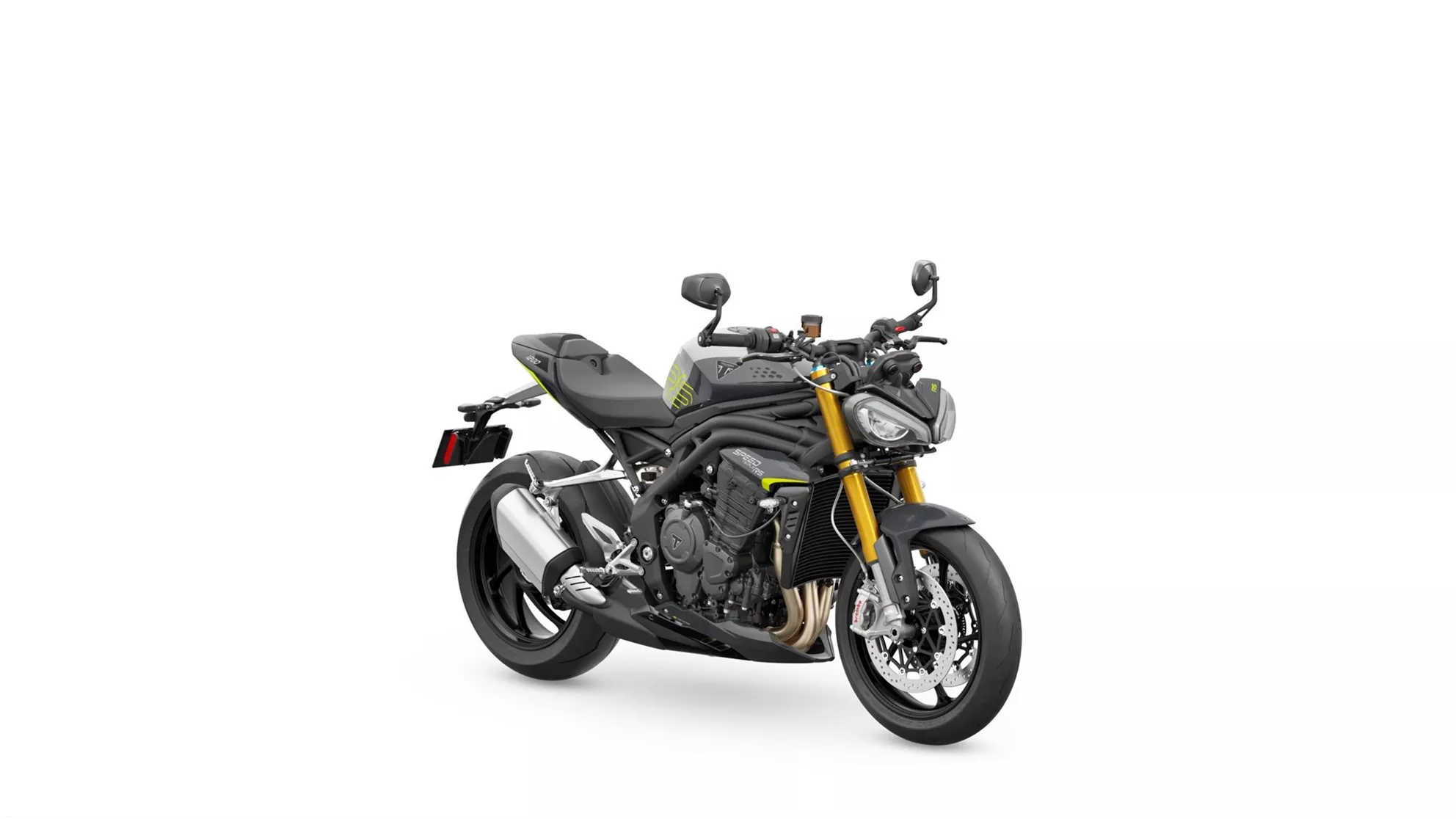
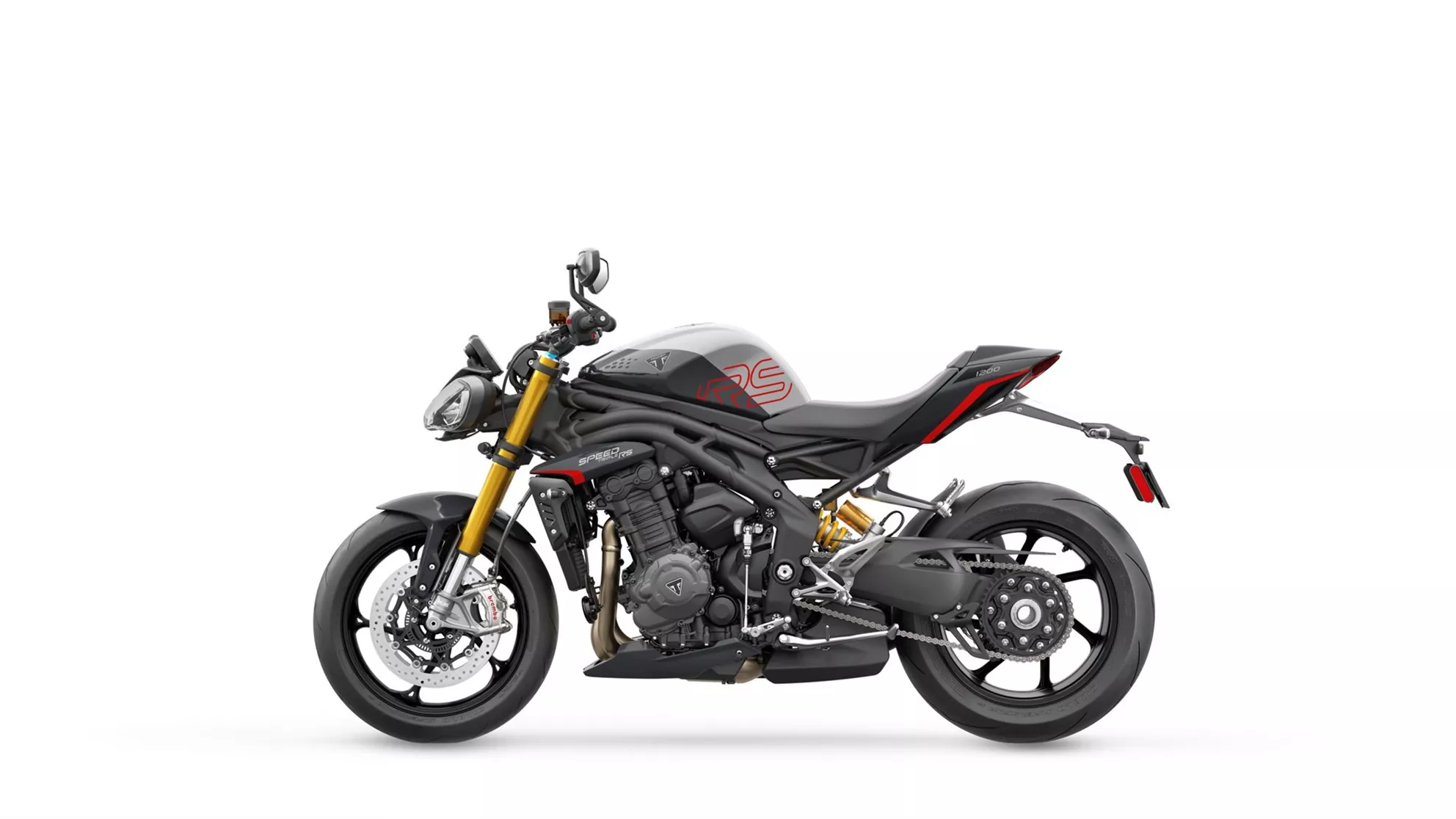
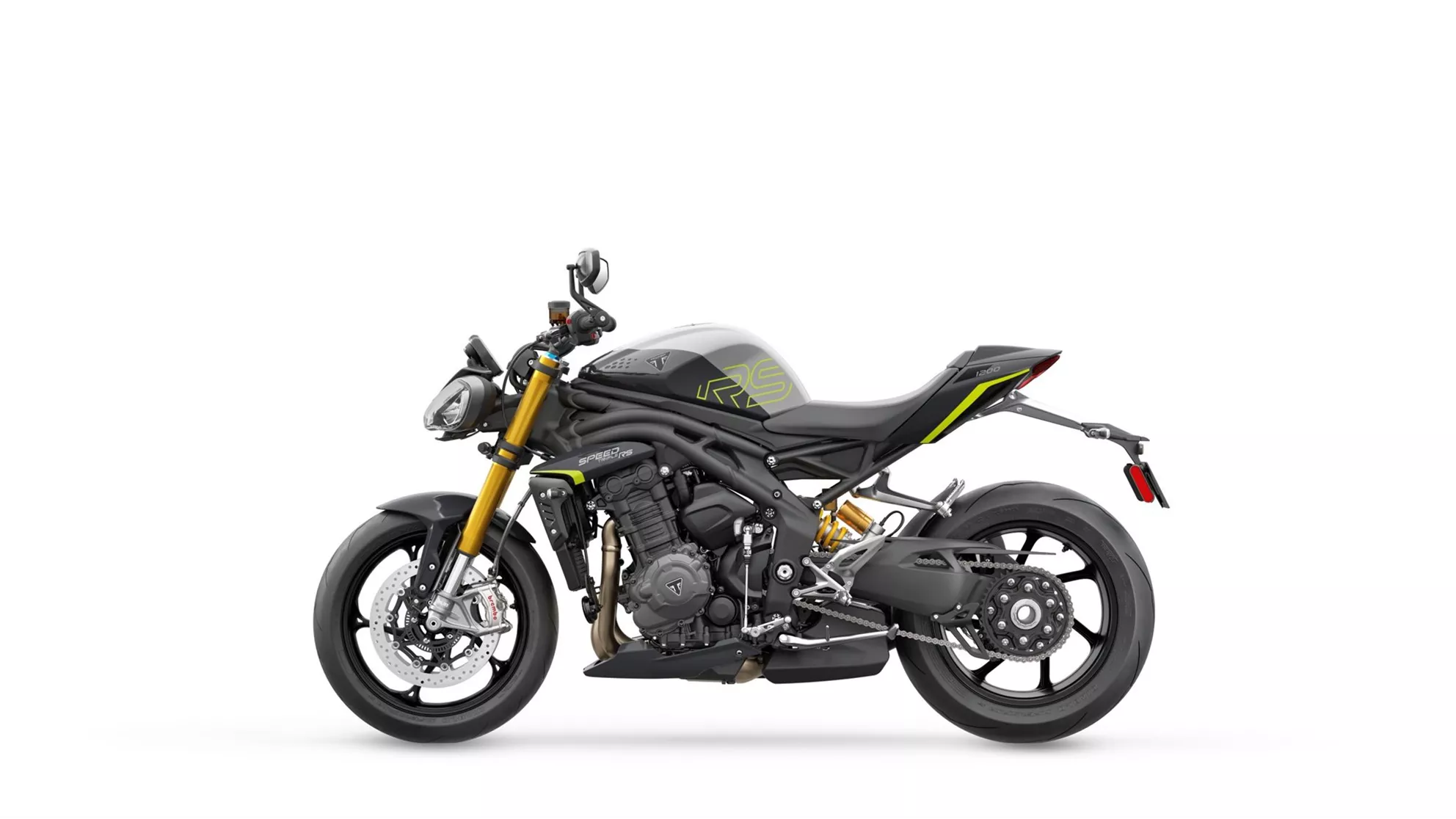
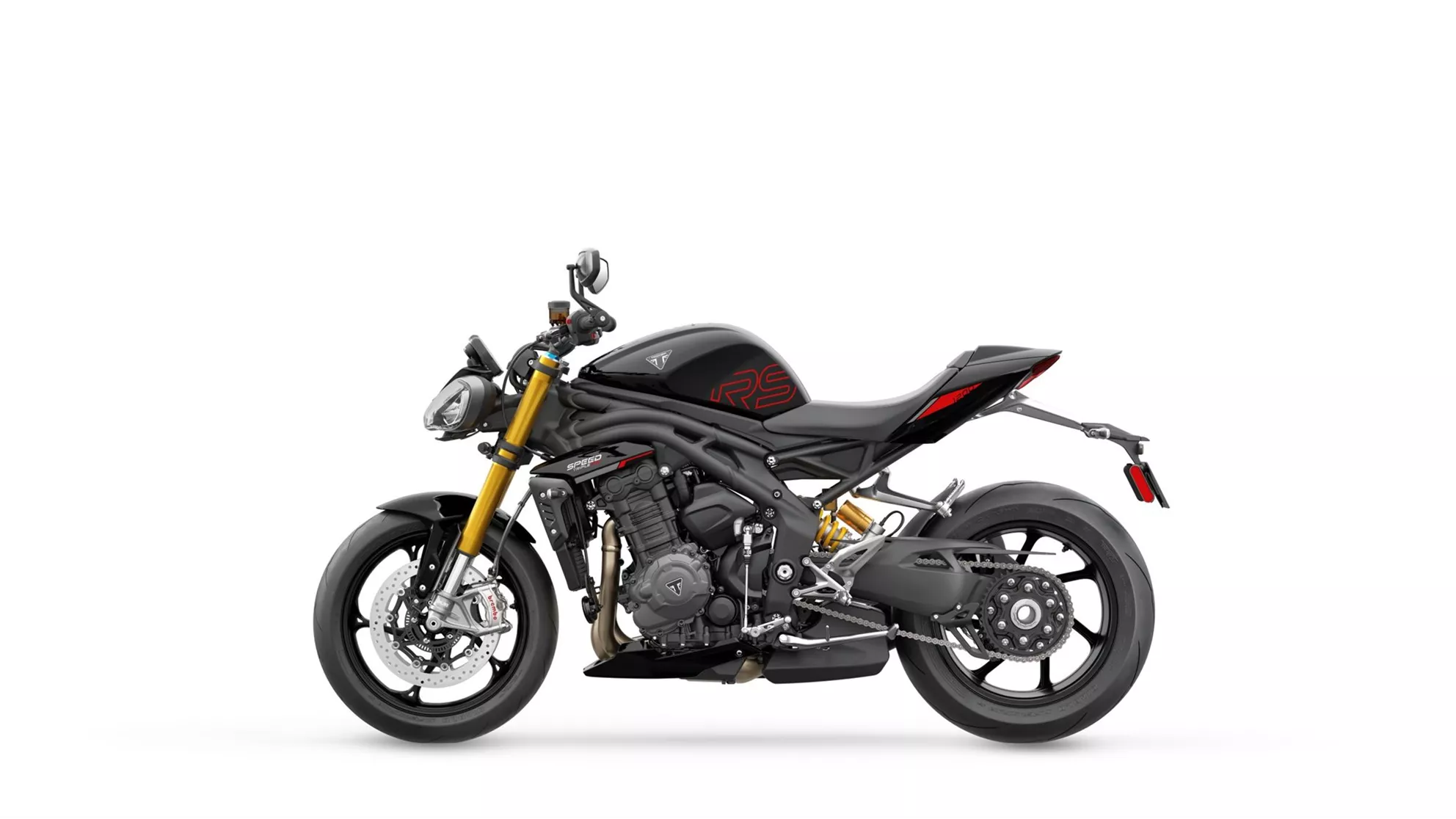
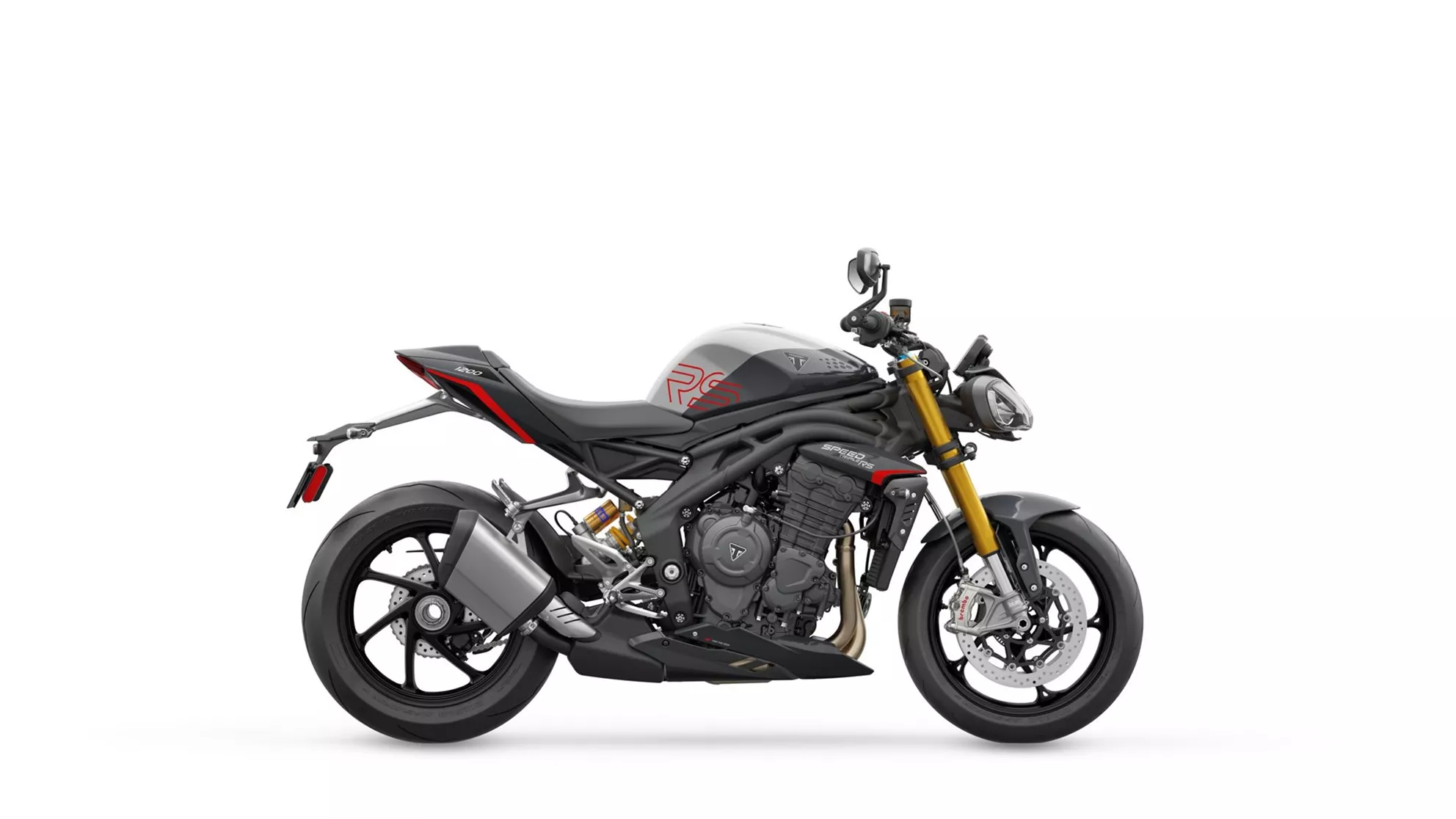
The New 2025 Triumph Speed Triple 1200 RS

The New 2025 Triumph Speed Triple 1200 RS

Gamechanger: Electronic Suspension

It's simple. Take 30 years of experience, mix it with passion and cutting-edge features, and the result is one hell of a naked bike!

nastynils

nastynils

published on 3/12/2025

32,198 Views

There's that moment in the Algarve, when the sun begins to break through and the asphalt starts to dry. It's precisely then that I twist the throttle, and the 183 horses beneath me explode with a raw, forward-thrusting power. The signature howl of the triple-cylinder slices through the silence like a knife—distinctive, full of character, and utterly addictive.

The new Triumph Speed Triple 1200 RS and I are charging towards the first corner, and my adrenaline levels are soaring to new heights. We've only known each other for 48 hours, but this Brit and I have already forged an intense relationship. A connection that began yesterday on Portugal's winding country roads and reaches its provisional climax today on this racetrack.

"Razor-sharp handling," Triumph promises in the press materials. A bold claim that, after over 20 years in the motorcycle industry and more than 1,000 bikes tested, I don't take lightly. The Speed Triple has a 30-year evolution behind it—from the wild hooligan machine of the '90s to the technologically refined naked bike of today. But what does "razor-sharp" truly mean when you're storming towards the first corner in Portimao at full speed, squeezing the Brembo lever hard?

What Sets the New Speed Triple Apart from Its Predecessor

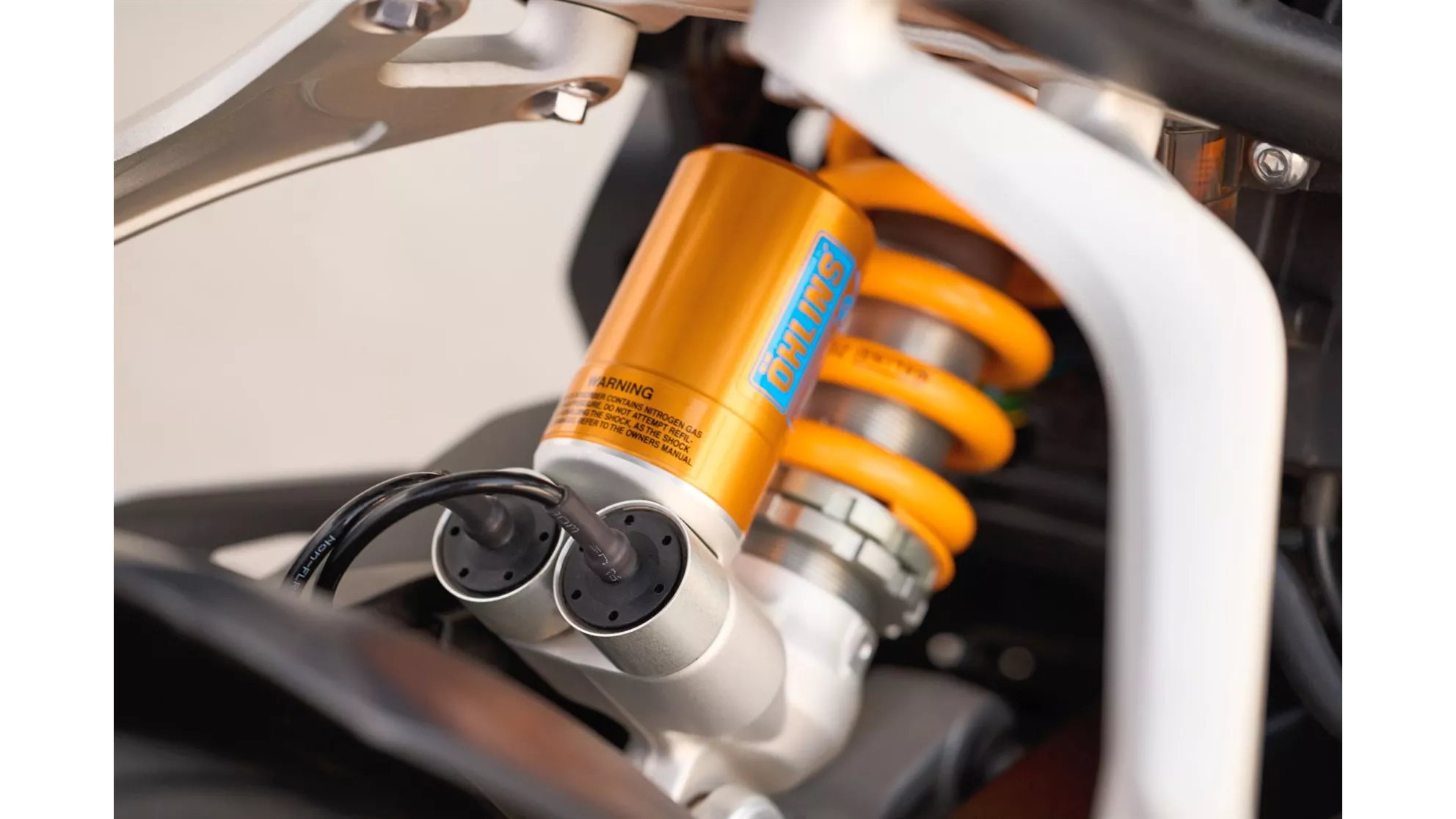
Anyone familiar with the previous Speed Triple 1200 RS might not expect a revolution — yet, the magic lies in the details. The 2025 version doesn't make the mistake of discarding what's proven; instead, it refines it with surgical precision. The triple engine now delivers 183 HP instead of 180 and revs even more eagerly, with torque increasing by 3 Nm to 128 Nm, available at a lower 8,750 RPM. Noticeably different is the revised crankshaft balancing — it allows the engine to purr more smoothly without dulling its fierce character. Triumph has listened: the slightly wider, higher-positioned handlebars subtly but decisively alter the riding position. Instead of the rigid suspension of its predecessor, we're now treated to the electronically controlled Öhlins SmartEC3 system with OBTi (Objective Based Tuning Interface), allowing fine-tuning of the damping in seven different parameters. I particularly appreciate the new Front Wheel Lift Control with four settings — it permits controlled wheelies without completely freeing the front tire.

The Naked Truth: Specifications of the 2025 Speed Triple 1200 RS

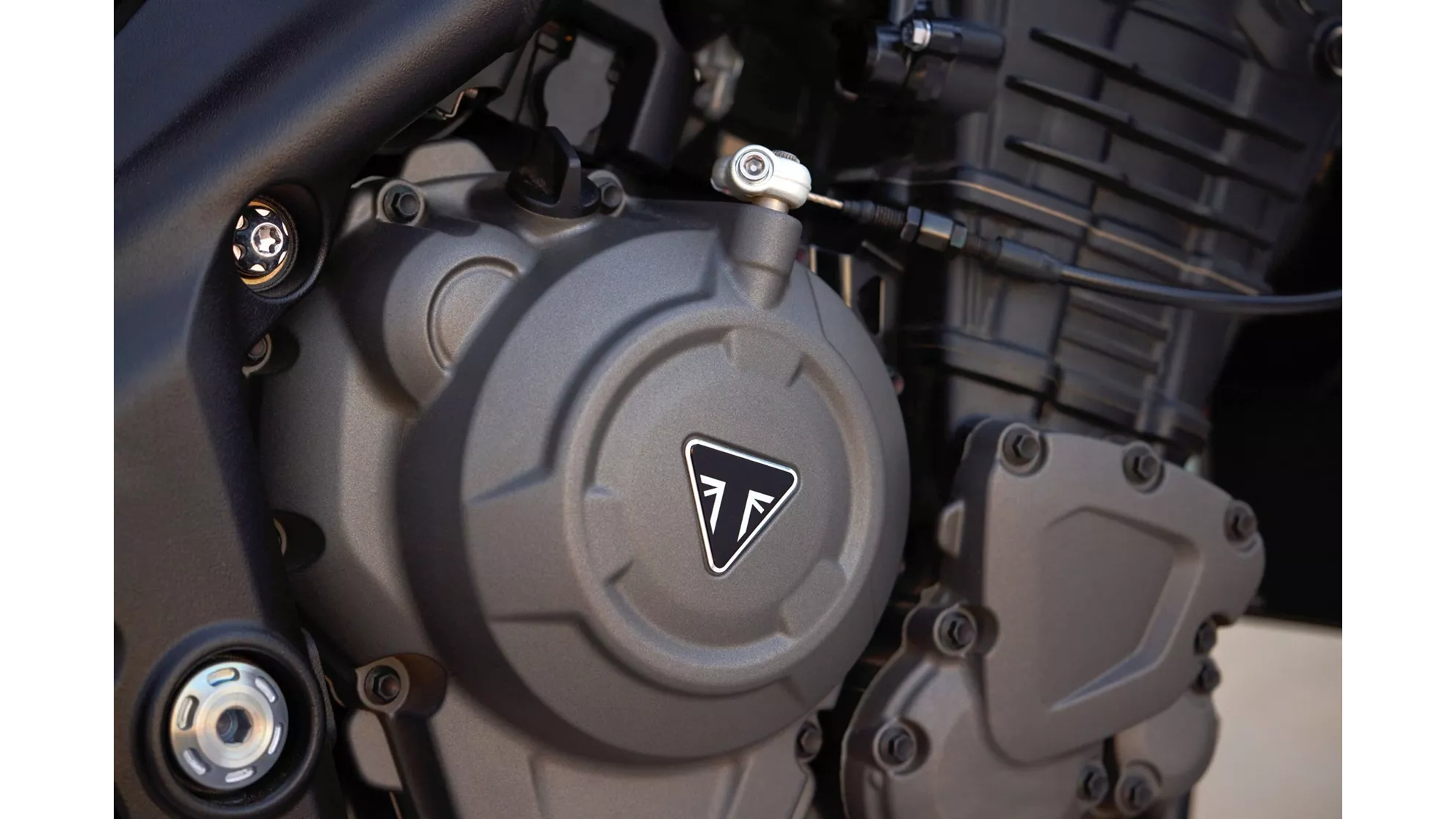
The Speed Triple 1200 RS retains its liquid-cooled DOHC inline three-cylinder engine with 12 valves. The displacement remains unchanged at 1,160 cc, as do the bore/stroke dimensions of 90 x 60.8 mm and a compression ratio of 13.2:1. The electronic fuel injection operates via a ride-by-wire throttle, while the exhaust gases flow through a 3-in-1 stainless steel system with a pre-silencer. The new exhaust design aims to improve mass centralization. Overall, Triumph offers a compelling mechanical and electronic package. It features an anti-hop clutch, high-end braking components, a quickshifter, and a 6-axis IMU with electronics on par with current sport motorcycles. Fully fueled with 15.5 liters, the Brit weighs in at just 199 kg. For the chassis, Triumph relies on an aluminum bridge frame with a single-sided swingarm, the new Öhlins SmartEC3 suspension with electronic adjustment, and Brembo Stylema calipers with dual 320 mm front discs. The 17-inch wheels are shod with Pirelli Diablo Supercorsa SP V3 tires (120/70 ZR17 front, 190/55 ZR17 rear). The wheelbase is 1,445 mm, the steering head angle is 23.9 degrees, and the trail is 104.7 mm. The seat height is 830 mm. With an average consumption of 5.5 l/100 km and CO2 emissions of 127 g/km, the engine meets the Euro 5+ standard. The Brits have also managed to reduce fuel consumption.

Insider Info on the Triumph Speed Triple 1200 RS

At the press conference for the new Speed Triple 1200 RS, the Triumph engineers were refreshingly forthcoming and shared intriguing technical details. When it comes to the electronic suspension, Triumph doesn't do things by halves. They've immediately opted for the cutting-edge version. The new Öhlins SmartEC3 suspension is a significant advancement over previous semi-active Öhlins systems—the spool-valve technology reacts up to 7 times faster than conventional needle valves and offers a wider adjustment range at both the front and rear compared to traditional mechanical or previous electronic systems. This results in more precise real-time damping adjustments and a highly practical tool for ongoing optimization. The Triumph technicians also explained that the handlebars have been widened by 10mm on each side and raised by 7mm, enhancing leverage and contributing to more direct handling. Not only have electronic optimizations been made to the engine, but the crankshaft balancing has also been revised to reduce vibration levels. The lithium-ion battery saves an impressive 2.3 kilograms compared to a conventional battery. Noteworthy is also the new Front Wheel Lift Control, which operates with four settings and considers over 20 parameters for optimal wheelie control—with the option to fully deactivate it if needed. For purists, the optional Akrapovič exhaust reduces weight by an additional 700 grams.

The Advantage of the Öhlins SmartEC3 System in Practice

The Öhlins SmartEC3 system on the new Speed Triple 1200 RS offers several crucial advantages over conventional suspensions in practice. While mechanical systems require a compromise between different riding situations, the semi-active system continuously adapts to the specific riding conditions.

In practice, this means: When braking hard before a corner, the system automatically increases compression damping at the front to minimize dive and simultaneously boosts rebound damping at the rear. Upon accelerating out of a corner, the reverse happens—more compression damping at the rear to prevent squat and more rebound damping at the front to maintain geometry, making it easier to hold the inside line.

These automatic adjustments occur very smoothly, enhancing stability, grip, handling, and comfort. The electronic suspension can make much more extreme damping adjustments in critical situations than a mechanical system would ever allow.

The operation is remarkably precise: The system works event-based, and thanks to the 6-axis IMU and other sensors, it continuously recognizes the motorcycle's current riding situation—whether it's straight-line riding, braking before corners, weight transfer in the corner, or accelerating out of the corner. The system can apply different damping settings for each of these scenarios.

The core of the innovation is the spool-valve technology, which uses a slider valve mechanism instead of a needle valve, offering a larger flow cross-section. At first glance, the OBTI (Objective Based Tuning Interface) might seem daunting, allowing the rider to adjust seven different parameters: fork and shock base settings, brake support, acceleration support, cornering support, and the new parameters for initial acceleration and cruising. The advantage: the rider doesn't need to understand how rebound and compression exactly interact but can simply set the desired behavior of the motorcycle—the system takes care of the correct implementation of the damping parameters. Hand on heart! Don't let this stuff drive you crazy. Personally, I just use the pre-configured modes. Because, of course, the appropriate suspension parameters are adjusted there as well. Tech enthusiasts among you who like to delve into digital systems can dive deep into the details. Everyone else can simply choose the appropriate riding mode and let the system do the work!

First Impressions of the 2025 Speed Triple 1200 RS - Unfortunately in the Rain

During our test ride in Portugal, the new Speed Triple 1200 RS revealed both impressive strengths and minor everyday weaknesses. Like most appealing naked bikes, rain protection is lacking—you get sprayed with water fairly quickly on wet roads. The steering lock is somewhat limited in daily use, noticeable when maneuvering. A minor flaw: the otherwise high-quality Brembo braking system tends to squeak a bit embarrassingly at low speeds, like when rolling to a coffee stop.

Absolutely thrilling, however, is the electronic Öhlins suspension, which offers an impressively wide adjustment range. It masterfully balances between first-class riding comfort for relaxed cruising and firm tuning for sporty track attacks. The high level of equipment quality is evident in the saddle through many details—from the precise brakes to the finely tuned electronic aids, the clutch, and the sensitive engine response. Clearly, motorcycle enthusiasts with a love for detail have been at work here.

Overall, the bike appears classy and elegant, less in-your-face than other power naked bikes, yet remains an extreme adrenaline provider. Its versatility is particularly noteworthy: you can cruise comfortably and pleasantly, feeling like you're on a practical everyday motorcycle, or you can pilot an extremely agile, sporty machine for ambitious riders.

The seating position is comfortable, and the handlebar positioning is well thought out. However, for riders over 1.80 meters, the knee angle may become a bit tight on longer tours—a higher seat might be recommended here. The clutch was found to be rather heavy, which could be tiring for petite individuals in urban traffic.

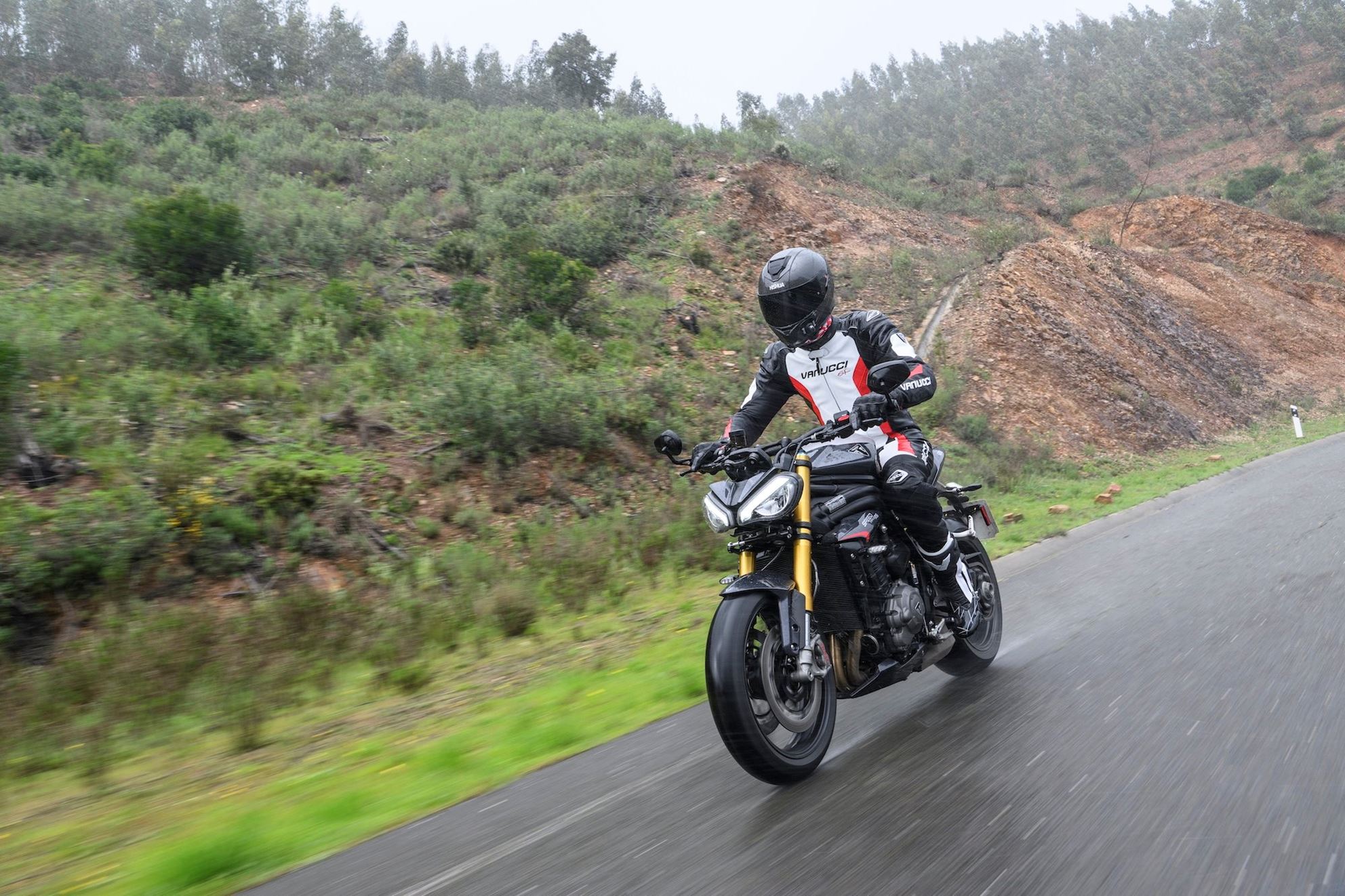
Bad Weather! Challenging Conditions on the Country Roads During Our Test in Portugal!

Bad weather! We faced challenging conditions on the country roads during our test in Portugal!

Technical Specifications Triumph Speed Triple 1200 RS 2025

Engine Type Liquid-cooled DOHC inline three-cylinder engine with 12 valves
Displacement 1,160 cc
Bore/Stroke 90 x 60.8 mm
Compression Ratio 13.2:1
Rated Power 183 HP (134.6 kW) at 10,750 rpm
Max Torque 128 Nm at 8,750 rpm
Fuel System Electronic sequential multipoint fuel injection with ride-by-wire throttle
Exhaust 3-in-1 stainless steel system with under-engine pre-silencer and side-mounted end can
Final Drive X-ring chain
Clutch Multi-plate slip/assist wet clutch
Transmission 6-speed
--------------------------
Frame Aluminum twin-spar frame with bolt-on aluminum subframe
Swingarm Aluminum single-sided swingarm
Front Suspension 43 mm Öhlins upside-down forks, 120 mm travel, SmartEC3 OBTi system with electronic compression/rebound damping
Rear Suspension Öhlins monoshock, 120 mm travel, SmartEC3 OBTi system with electronic compression/rebound damping
Steering Damper Adjustable
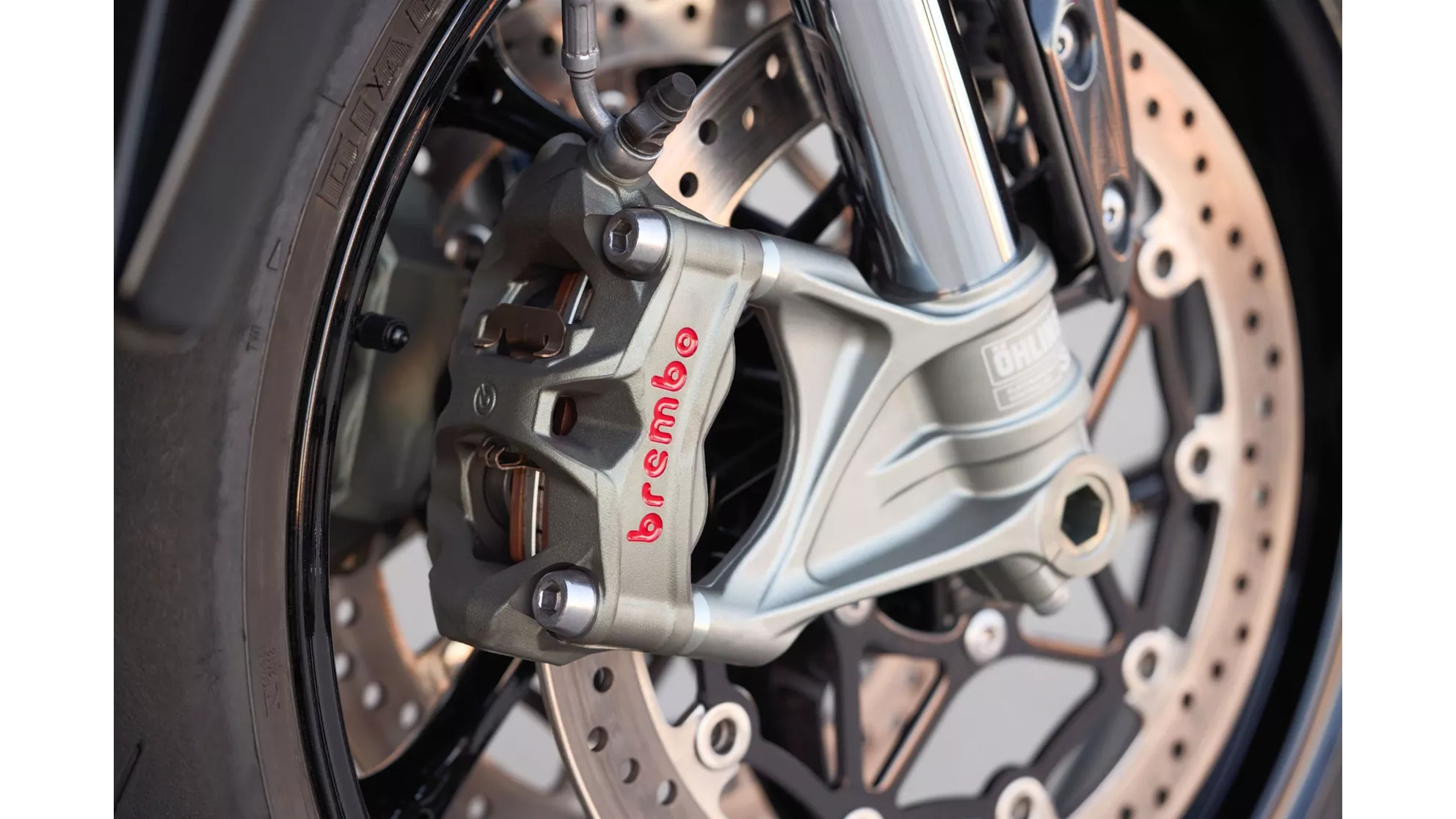
Front Brake Twin floating 320 mm discs, Brembo Stylema monoblock radial calipers, cornering ABS, radial master cylinder, adjustable span and ratio
Rear Brake Single 220 mm disc, Brembo twin-piston caliper, cornering ABS
--------------------------
Front Wheel Cast aluminum, 17 x 3.5 inches
Rear Wheel Cast aluminum, 17 x 6.0 inches
Front Tire 120/70 ZR17 58W, Pirelli Diablo Supercorsa SP V3
Rear Tire 190/55 ZR17 75W, Pirelli Diablo Supercorsa SP V3
--------------------------
Length 2,090 mm
Width (handlebars) 810 mm
Height without mirrors 1,085 mm
Seat Height 830 mm
Wheelbase 1,445 mm
Rake 23.9°
Trail 104.7 mm
Wet Weight 199 kg
Fuel Capacity 15.5 liters
--------------------------
Fuel Consumption 5.5 l/100 km
CO2 Emissions 127.0 g/km
Emissions Standard EURO 5+
--------------------------
Instruments Full-color 5-inch TFT display
Riding Modes 5 (Rain, Road, Sport, Track, Rider)
Wheelie Control Front Wheel Lift Control with 4 settings
Traction Control Cornering traction control (switchable)
ABS Cornering ABS
Shift Assist Triumph Shift Assist (up & down)
Connectivity My Triumph Connectivity System
Battery Lithium-ion
Ignition Keyless
Fuel Cap Keyless
Steering Lock Keyless
Emergency Brake Warning Yes
Cruise Control Adjustable
--------------------------
Service Interval 16,000 km / 12 months (whichever comes first)
Availability From April 2025
Price Germany from 19,995 Euro (plus dealer-specific delivery charges)
Price Austria from 23,895 Euro (including fees and NOVA)
Price Switzerland from 20,495 CHF
Price UK from 17,495 GBP
Price France from 19,995 Euro
Warranty 4 years unlimited mileage
Color Options Jet Black, Granite/Diablo Red, Granite/Performance Yellow

Technical Data, Equipment, Features of the Triumph Speed Triple 1200 RS 2025

Is Upgrading to the 2025 Model Worth It?

In the saddle of the new Triumph Speed Triple 1200 RS 2025, I found myself reflecting on the previous model. Is upgrading worth it? Many owners will ask me this again. Two things can be stated clearly:

Firstly, annoying weaknesses have been precisely addressed. The engine runs smoother, and there are now hardly any vibrations in the handlebar ends. The electronic suspension also makes the bike more harmonious, eliminating the somewhat stubborn and harsh feel. There are no longer any load change reactions at low speeds.

Secondly, the new electronics package is simply excellent. The suspension plus rider aids are cutting-edge and very practical.

For those who value these two points, upgrading is a must. Those seeking a more radical or brutish machine will be disappointed. While the bike rides better than its predecessor, it doesn't come across as intrusive or radical.

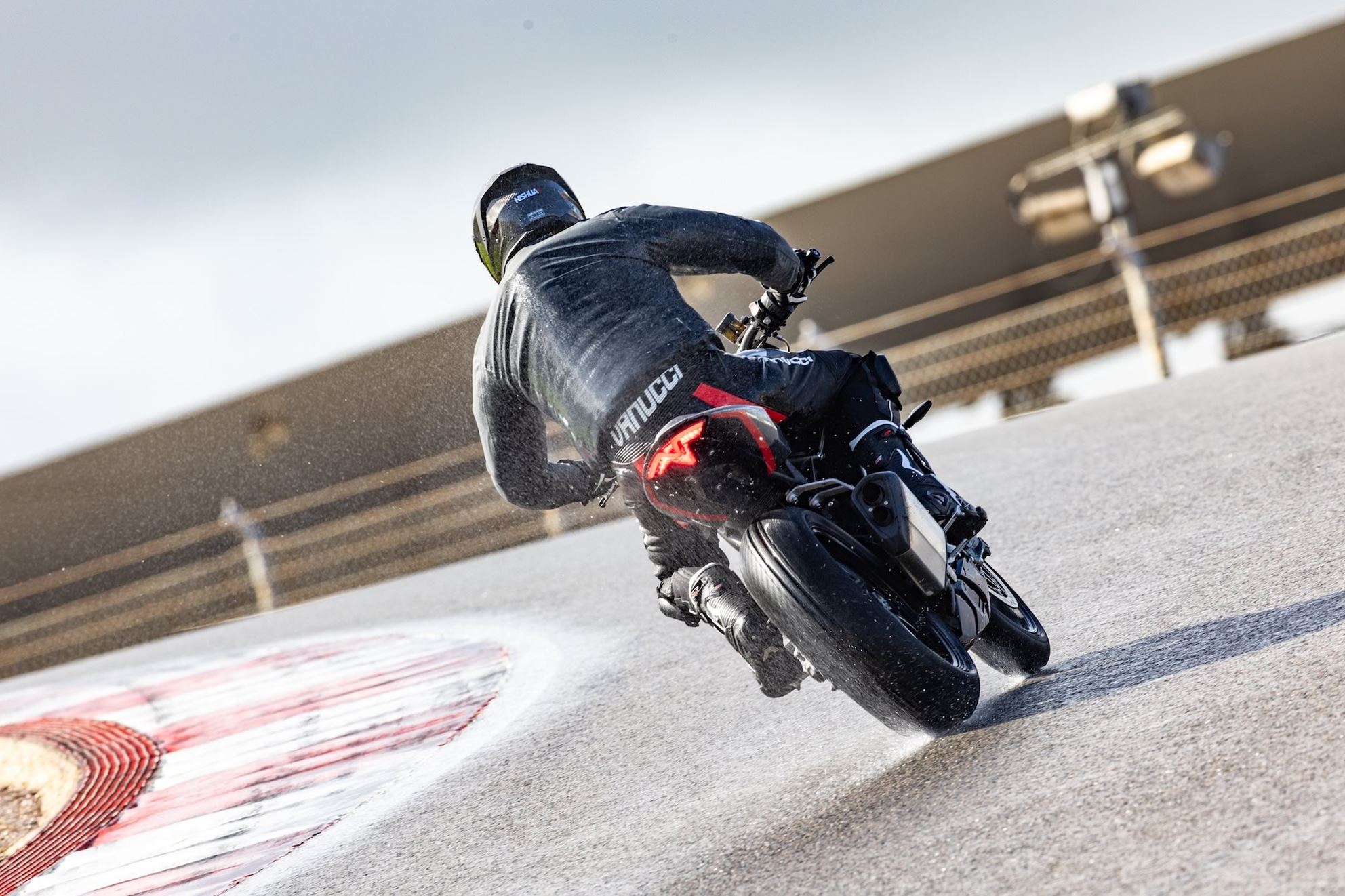
Wet Track, Blue Skies! We Experienced Ever-Changing Weather Conditions at the Portimao Circuit!

Wet track, blue skies! We repeatedly faced varied weather conditions at the Portimao racetrack!

Battling the Elements: The True Character of the Speed Triple

What truly reveals a motorcycle's character aren't the flawless sunny days with endless curve-orgies on perfectly grippy tarmac, but those adverse conditions that get the pulse racing and sharpen the senses—conditions that Portugal provided abundantly on the first day of our test. Our country road test ride turned into a melancholic duet with relentless rain, punctuated by gusty winds and treacherous gravel on the road, lurking like hostile harbingers on the curvy sections. A combination that usually reduces the fun factor to a minimum and warns even experienced riders to proceed with caution.

Yet, in this adversity, in this involuntary endurance test, the Speed Triple revealed its true soul. While I vividly remember battling against riding physics and rudimentary electronics on comparable power naked bikes a decade ago in such weather, the new Triumph transformed the potential drama into a predictable, almost relaxed play. The Rain Mode—often just a reluctant, power-hindering concession to safety on many motorcycles—emerges here as a masterfully orchestrated harmony between the raw power of the triple-cylinder and nuanced control.

The electronic Öhlins suspension deserves special mention: it glides with silky precision over the wet surface, absorbs bumps with sovereign composure, and provides the kind of immediate trust usually reserved for long-standing friendships. The intuitive connection to the front and rear wheels remains remarkably unbroken even on wet asphalt—you can feel every nuance of changing grip without feeling threatened.

The engine's flawless response—both in overrun when rolling into corners and under full acceleration—caresses the rider with an almost supernatural perfection. The slip-assist clutch complements this ensemble with precise work, preventing any unwanted rear-wheel reactions when downshifting on wet roads.

After a fortunate three-quarters of an hour on miraculously dry and grippy asphalt and subsequent hours battling the rain, I caught myself with an irritating realization: in a world where technological brilliance has become everyday ordinariness, this motorcycle had genuinely impressed me. I dismounted with a lasting positive feeling and questioned myself as to why—perhaps the influence of the sophisticated electronic suspension and intelligently calibrated rider aids is indeed greater than I, as a supposed veteran, might admit.

The few criticisms that emerged during our test ride—a steering lock too limited for tight maneuvers, the typically inadequate rear spray protection of naked bikes, and the occasionally squeaky brakes at low speeds—fade into trivialities in the face of this remarkable symbiosis of uncompromising performance and reliable everyday usability. The Speed Triple 1200 RS impressively demonstrates that even in 2025, a motorcycle can still surprise—even under the most adverse conditions.

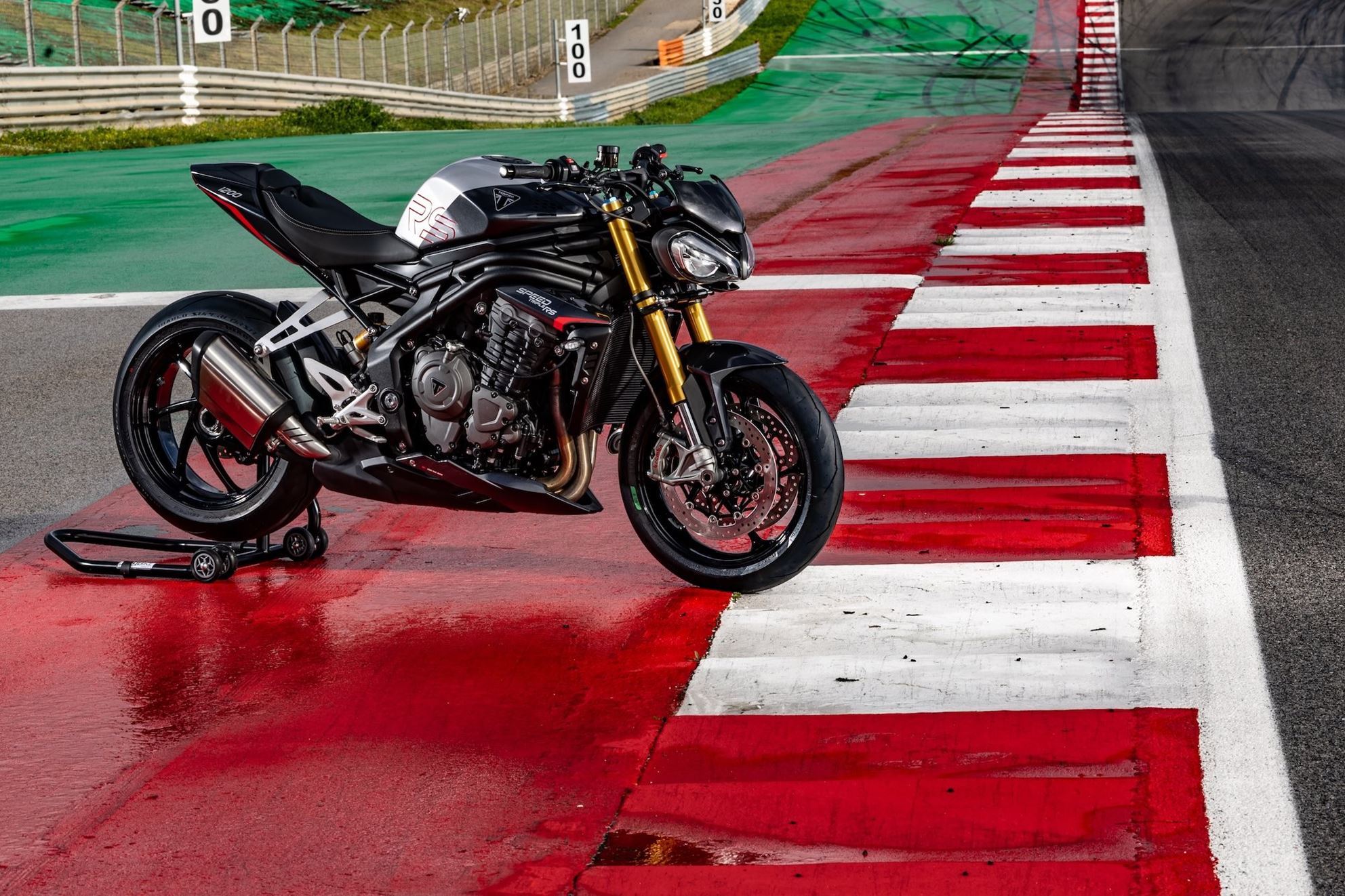
Triumph Speed Triple 1200 RS on the Portimao Racetrack

Triumph Speed Triple 1200 RS on the Portimao Racetrack

Alternatives to the Triumph Speed Triple 1200 RS

The naked bike market offers a wide array of alternatives. In practice, the BMW S1000R is probably the closest alternative. However, the BMW's suspension can't quite match Triumph's solution. On country roads, the BMW feels a bit more composed—which doesn't necessarily have to be a disadvantage. Here's a comparison of the two bikes.

More power, a higher price, but also a greater focus on track lap times: the Ducati Streetfighter V4 S 2025. Essentially a race machine in the guise of a naked bike. Not really an alternative to the harmonious Triumph—but in terms of image and looks, certainly a formidable contender. Here's the comparison.

Dancing with the Elements: A Symphony of Extremes

In the rugged arena of Portimao, a spectacle of meteorological caprice unfolded, demanding reverent silence from even the most seasoned riders. The sky above the track staged a multi-act drama—a surreal interplay of pouring rain, glaring sunshine, and howling wind that tested the machines at their aerodynamic limits. In this setting, the Triumph mechanics choreographed their own frenetic dance, constantly switching between rain tires and slicks, their hands in perpetual motion to adjust the setup to the capricious weather. Particularly bizarre was the schizophrenic scene when the start-finish straight basked in golden sunlight, while the rear sectors of the track were engulfed by torrential downpours—as if a cosmic director had decided to stage multiple seasons simultaneously on a single asphalt strip.

Amidst these challenging conditions, the true nature of the Speed Triple emerged: while its 183 HP triple-cylinder heart promised unbridled propulsion in dry moments, it transformed into a precisely controllable power source in the wet, never threatening, always predictable. The unspoken realization among the test riders manifested in relaxed faces and the remarkable absence of crashes—a tacit compliment to the symbiosis of suspension, electronics, and chassis geometry. Paradoxically, the adverse day became the ultimate accolade for a motorcycle that elegantly blurs the lines between domesticated technology and wild beast—a confidence-inspiring machine that unleashes its wildness only when the rider explicitly demands it.

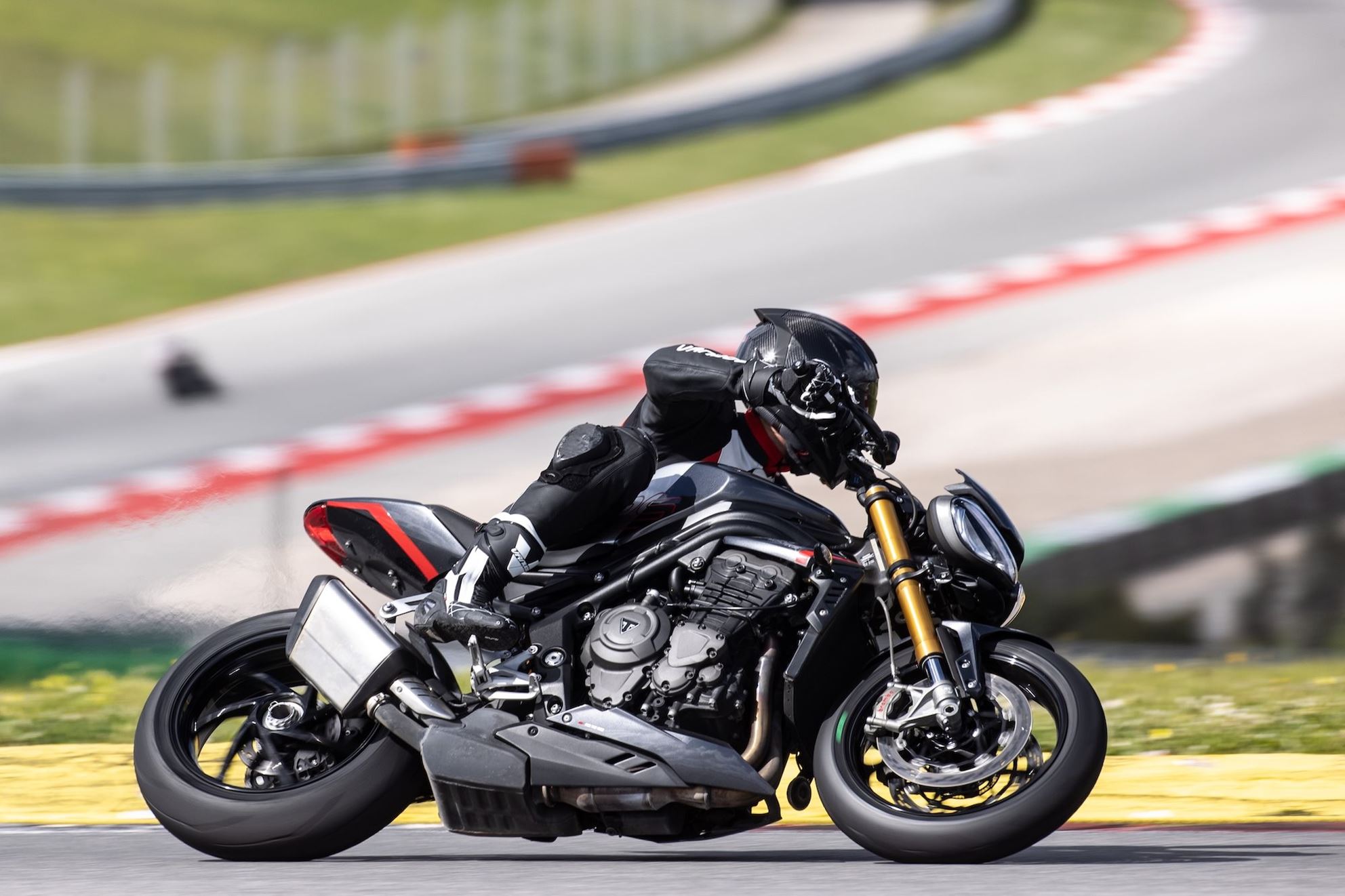
Finally! Dry Track for the Triumph Speed Triple 1200 RS 2025

Finally, the cloud-covered sky over Portimão gives way to a stark blue, and with it, the soul of the Speed Triple transforms. Like a beast too long restrained, finally freed from its chains, 183 untamed horsepower catapults man and machine over the now dry track. The Pirelli Supercorsa SC2 tires—previously unused protagonists of this drama—dig their rubber profiles into the warmed asphalt, turning raw engine power into kinetic poetry. At the end of the main straight, the relentless headwind blows like an angry titan, tugging at the helmet, pulling at the shoulders, pressing against the chest, and attempting to unseat the rider from his mechanical steed. It's an elemental battle where the force of nature and human craftsmanship meet in primal confrontation.

The thirty minutes of the session stretch into a subjective eternity—a feat of strength where the drive chain groans under the weight of the triple-cylinder heart and the human body rebels against the physical forces. Yet, the Speed Triple now reveals its true personality: Despite its raw power, it remains a surprisingly well-mannered creature. While the neck protests against the wind, the rest of the body remains in harmonious unity with the machine. In the braking zones—those critical moments where man and machine are most vulnerable—the ergonomics allow for perfect positioning. The anchors of the Brembo Stylema brakes engage gently, then decisively, always precisely controllable.

The freedom of movement in the saddle—an often underestimated privilege on the racetrack—feels like a gift from the engineers. Even in the treacherous turns of Portimão, where incorrect posture is swiftly punished, the Speed Triple allows for smooth repositioning. The turning of the torso and head at the corner exit, that ritualistic targeting of the next point, is performed with sacred ease.

Meanwhile, the traction control works like an invisible co-pilot, constantly holding the 128 Newton meters in check. The relentless pulsing of its warning light is not a sign of failure but the visible manifestation of its vigilance. The wheelie control, dialed back by youthful riders for heartwarming front-wheel lifts, remains a welcome guardian angel for even experienced pilots like myself. It is an acknowledgment of respect for the elements—the fierce wind, the brutal inclines, the latent unpredictability of the moment when a 199-kilogram colossus touches the earth with only one wheel.

On wet patches—those treacherous islands in the drying asphalt sea—the electronic Öhlins suspension proves its true mastery. It seems to read the surface like a blind person reads Braille, feeling every nuance of grip and transforming it into reassuring feedback. Here, the duality of the Speed Triple manifests: It remains a classic naked bike with road DNA, yet on the track, it unfolds a competence that commands respect. It is neither a purebred track hunger like its Italian and German rivals nor a domesticated everyday machine—it is a poet of the middle ground, able to recite its verses in both gentle country road curves and on the brutal asphalt of Portimão. A versatile interpretation of the power-naked concept that does not strive for absolute dominance but for harmonious balance—and finds its true mastery therein.

Triumph Speed Triple 1200 RS 2025

Triumph Speed Triple 1200 RS 2025

NastyNils' Gear for Testing the New Triumph Speed Triple 1200 RS in Portimao:

Insider Info from Triumph Test Rider Felipe Lopez on Electronics and Tires

"You know, on days like today, we have to make lightning-fast decisions. When we were running on rain tires on the drying track, I deliberately set the ABS to 'Track'—this gave you more braking power without the electronics intervening too early. What many don't know: With standard ABS, intervention occurs at just 5% slip, but in Track mode, we allow up to 50% on the rear wheel! This means you can let the rear slide nicely before the electronics gently step in. I kept the traction control on 'Sport', not 'Track'—a conscious compromise because in the two or three damp corners, it was simply safer. By the way, a tip for your track days with the Speed Triple: With the Supercorsa SPs, fast riders will feel a performance drop after 10-15 laps, while the SC2 race tires easily last for two days. The difference lies in the compound, which remains more stable at higher temperatures. If you're riding with the Pirelli SP tires on your track, I still recommend the 'Track' setting—this way, you get the most out of the bike."

How much does a Triumph Speed Triple 1200 RS cost?
Here you will find an overview of the price level of new and used motorbikes!
nastynils

Triumph Speed Triple 1200 RS 2025 - Experiences and Expert Review

nastynils

5.0 / 51000PS Test Verdict based on 3 articles, 2025

The Triumph Speed Triple 1200 RS 2025 is an impressive package, particularly convincing in its versatility. It expertly balances between being a practical everyday cruiser and a sporty machine. The electronic Öhlins suspension and refined electronics make it a reliable companion even in challenging conditions. The power boost to 183 HP and 128 Nm, combined with the revised crankshaft balancing, delivers a sophisticated yet thrilling riding experience. While it's not a pure track motorcycle, it offers plenty of potential for exciting track sessions.


Excellent electronic Öhlins suspension with a wide adjustment range

confidence-inspiring handling even in adverse conditions

flawless engine response

precise slip-assist clutch

versatile from comfortable to sporty

new Front Wheel Lift Control with practical 4 settings

great upper body ergonomics

high build quality

good feedback from front and rear wheels

lightweight at 199 kg ready to ride

Limited steering lock for maneuvering

inadequate rain protection

high-quality brakes squeak at low speeds

somewhat heavy clutch

knee angle too tight for taller riders on longer tours

More from 1000PS Magazine

The New 2025 Triumph Speed Triple 1200 RS Images

Source: 1000PS

Triumph Speed Triple 1200 RS 2025 - Test in Portugal - Image 1

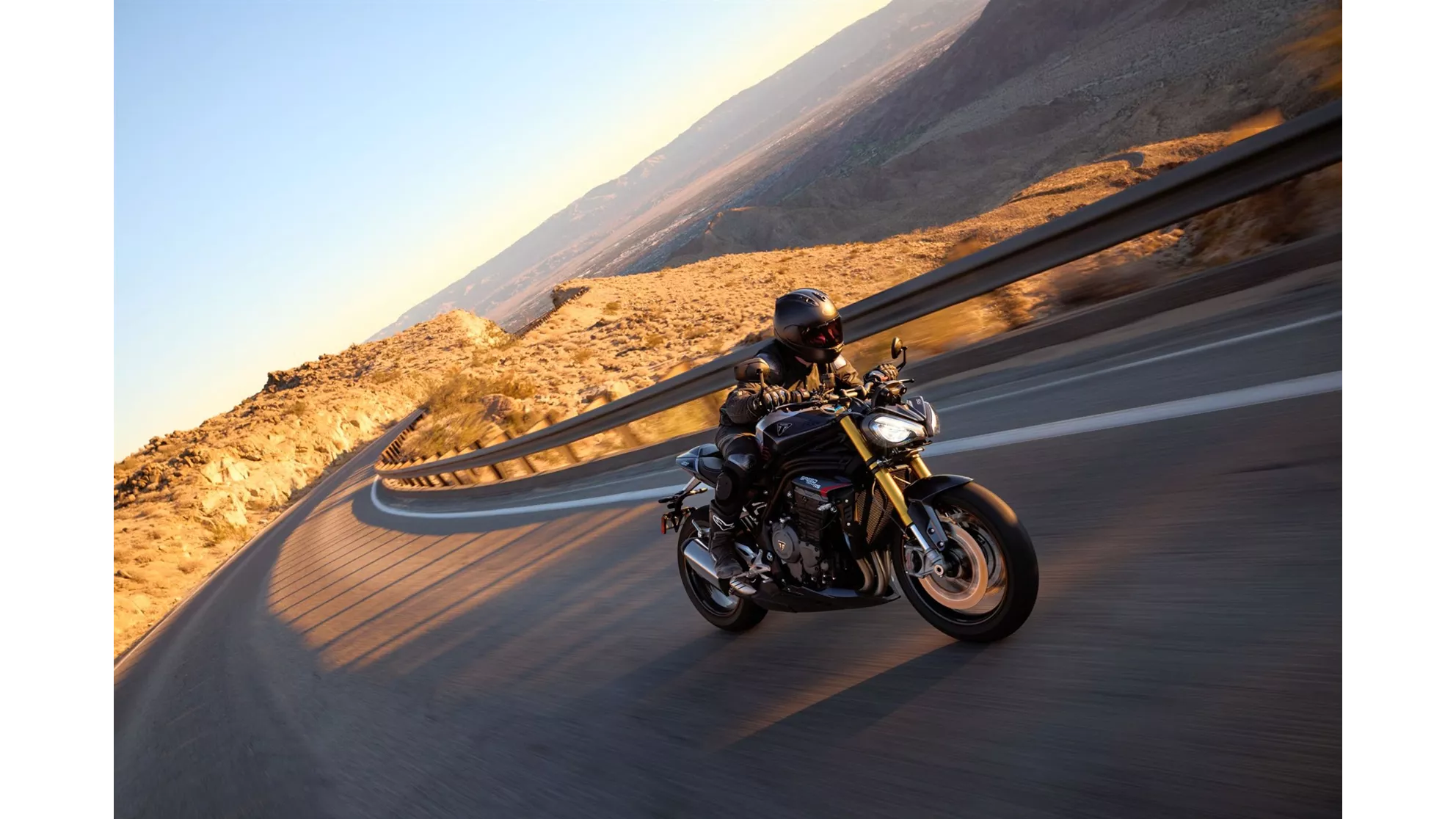
The 2025 Triumph Speed Triple RS 1200 put to the test on the twisty roads of Portimao.

Triumph Speed Triple 1200 RS 2025 - Test in Portugal - Image 2

Track-ready: License plate holder, mirrors, and passenger footpegs removed. Plus, the small flyscreen is more for looks than function.

Triumph Speed Triple 1200 RS 2025 - Test in Portugal - Image 3

The clouds were our constant companions over the two days.

Triumph Speed Triple 1200 RS 2025 - Test in Portugal - Image 4
Triumph Speed Triple 1200 RS 2025 - Test in Portugal - Image 5
Triumph Speed Triple 1200 RS 2025 - Test in Portugal - Image 6
Triumph Speed Triple 1200 RS 2025 - Test in Portugal - Image 7

On the track in Portimao, we put the electronics to the test. From rain tires on wet asphalt, rain tires on dry asphalt, to slicks on dry asphalt and mixed conditions.

Triumph Speed Triple 1200 RS 2025 - Test in Portugal - Image 8

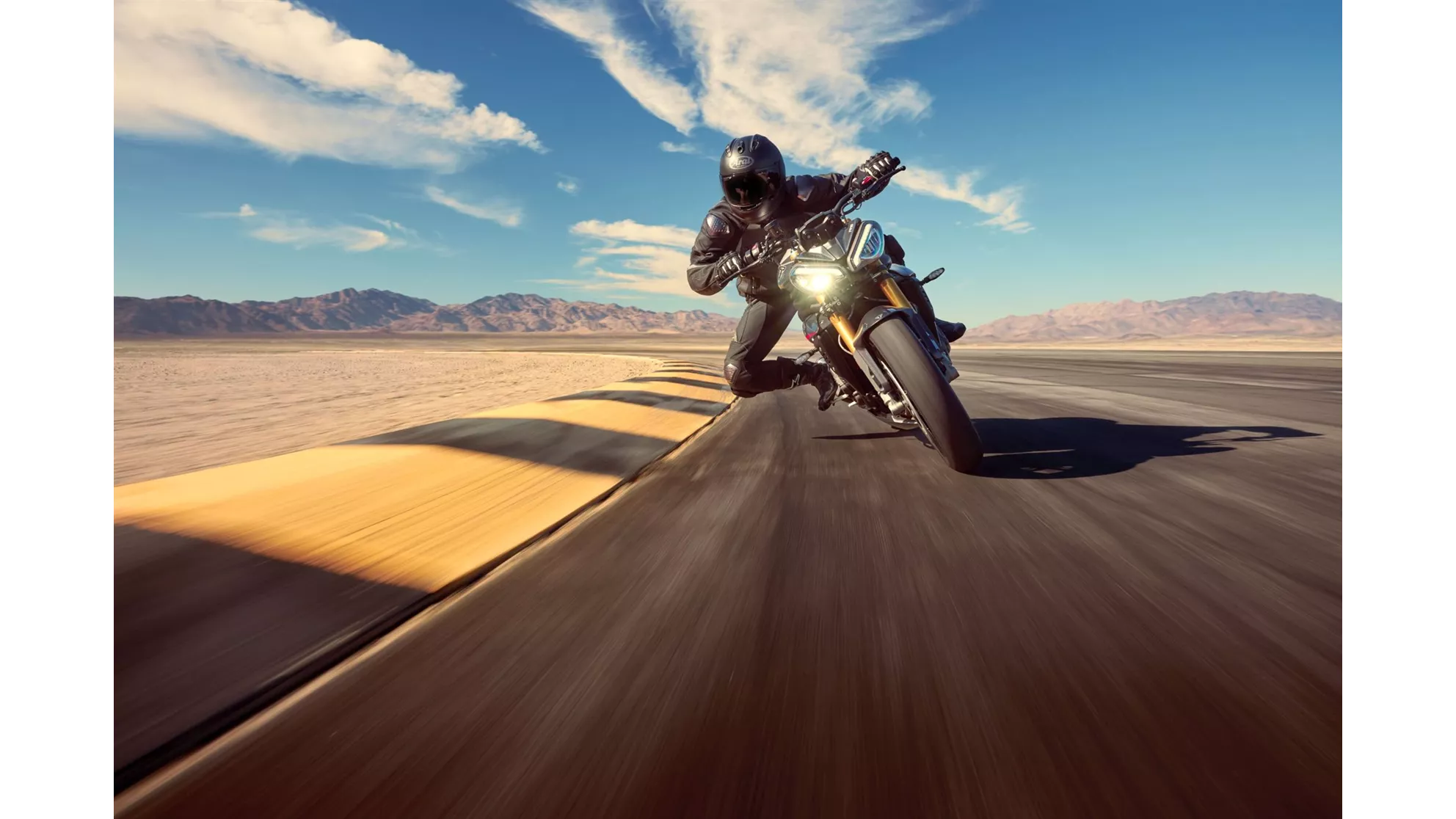
The Speed Triple remains a top-notch country road bike in 2025. But it also tears it up on the racetrack.

Triumph Speed Triple 1200 RS 2025 - Test in Portugal - Image 9

The biggest weight savings come from the wheels. Despite the added electronics, the Speed Triple 1200 weighs in at a ready-to-ride and fully fueled 199 kg, according to Triumph.

Triumph Speed Triple 1200 RS 2025 - Test in Portugal - Image 10

The vibes were dampened! Awesome bike - killer road - but heavy rain. It's impressive how the photographer still nailed it from the trunk of the car.

Triumph Speed Triple 1200 RS 2025 - Test in Portugal - Image 11

I have to admit - I only showcased the slick leather suit for the photos on the backroads. Most of the time, I was rocking an ugly rain suit over it. Looks terrible - but it kept both the leather and me protected.

Triumph Speed Triple 1200 RS 2025 - Test in Portugal - Image 12

The Pirelli Supercorsa SP aren't the best choice in the rain. BUT the handling and feedback were improved over the previous versions '1' and '2'. However, grip and traction were still noticeably worse than touring tires or sporty street rubber. These super cool luxury tires are a blast on dry asphalt - but a bit of a handful in the wet.

Triumph Speed Triple 1200 RS 2025 - Test in Portugal - Image 13

The control unit on the left handlebar. The switches and buttons are backlit. Overall, it’s fine. However, I’m not a fan of the small joystick. It’s tricky to operate with thick gloves.

Triumph Speed Triple 1200 RS 2025 - Test in Portugal - Image 14

The biggest change on the Speed Triple compared to its predecessor: the cutting-edge Öhlins 3.0 semi-active suspension.

Triumph Speed Triple 1200 RS 2025 - Test in Portugal - Image 15

Triumph goes all in on premium suspension components for the rear shock.

Triumph Speed Triple 1200 RS 2025 - Test in Portugal - Image 16

The Brembo Stylema brakes with 320 mm dual discs up front deliver impressive stopping power.

Triumph Speed Triple 1200 RS 2025 - Test in Portugal - Image 17

The 1,160 cc triple-cylinder engine is the heart of the Speed Triple. The revised crankshaft balancing provides noticeably smoother operation.

Triumph Speed Triple 1200 RS 2025 - Test in Portugal - Image 18

Equipped with Pirelli Supercorsa SP as standard. We took these tires for a spin on the street. On the track, we used both rain tires and Pirelli Supercorsa SC2.

Triumph Speed Triple 1200 RS 2025 - Test in Portugal - Image 19
Triumph Speed Triple 1200 RS 2025 - Test in Portugal - Image 20
Triumph Speed Triple 1200 RS 2025 - Test in Portugal - Image 21
Triumph Speed Triple 1200 RS 2025 - Test in Portugal - Image 22

Suspension setup, but make it different! Just like with previous Öhlins electronic suspension systems, you can fine-tune the suspension based on its behavior in various riding conditions.

Triumph Speed Triple 1200 RS 2025 - Test in Portugal - Image 23

Clear view: When selecting your preferred riding mode, you can see the settings of key motorcycle elements. This includes ABS, throttle response, traction control, and suspension.

Triumph Speed Triple 1200 RS 2025 - Test in Portugal - Image 24

Switching between riding modes can be done on the fly.

Triumph Speed Triple 1200 RS 2025 - Test in Portugal - Image 25

In 'Rider' mode, you can customize your individual setup of each system.

Triumph Speed Triple 1200 RS 2025 - Test in Portugal - Image 26

The Front Wheel Lift Control can be adjusted in four levels. From maximum safety to controlled wheelies, it’s all up to the rider's preference. At level 1, your undergarments stay intact - the front wheel stays planted. If you prefer, you can also disable the system.

Triumph Speed Triple 1200 RS 2025 - Test in Portugal - Image 27

The OBTi (Objective Based Tuning Interface) allows for individual tuning of seven suspension parameters. Riders can precisely adjust the damping characteristics to their preferences.

Triumph Speed Triple 1200 RS 2025 - Test in Portugal - Image 28

If you prefer, you can also use the suspension in a 'fixed' mode.

Triumph Speed Triple 1200 RS 2025 - Test in Portugal - Image 29

In this "fixed" mode, the suspension behaves like a conventional setup. Instead of using a screwdriver for clicks, you adjust the suspension via the display. This is familiar from previous Öhlins systems.

Triumph Speed Triple 1200 RS 2025 - Test in Portugal - Image 30
Triumph Speed Triple 1200 RS 2025 - Test in Portugal - Image 31

The Brembo MCS clutch lever allows for individual adjustment of grip distance and leverage ratio.

Triumph Speed Triple 1200 RS 2025 - Test in Portugal - Image 32

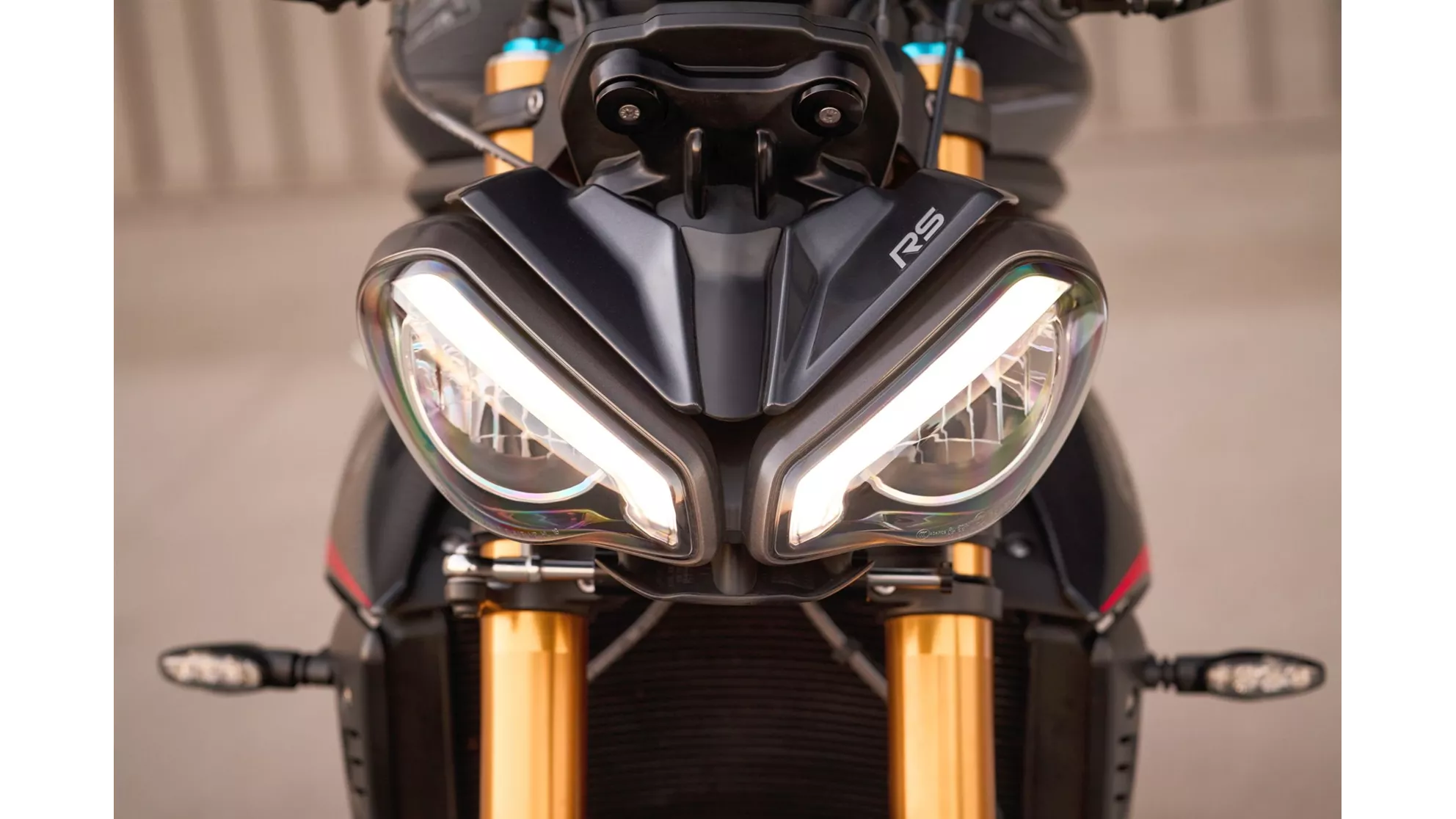
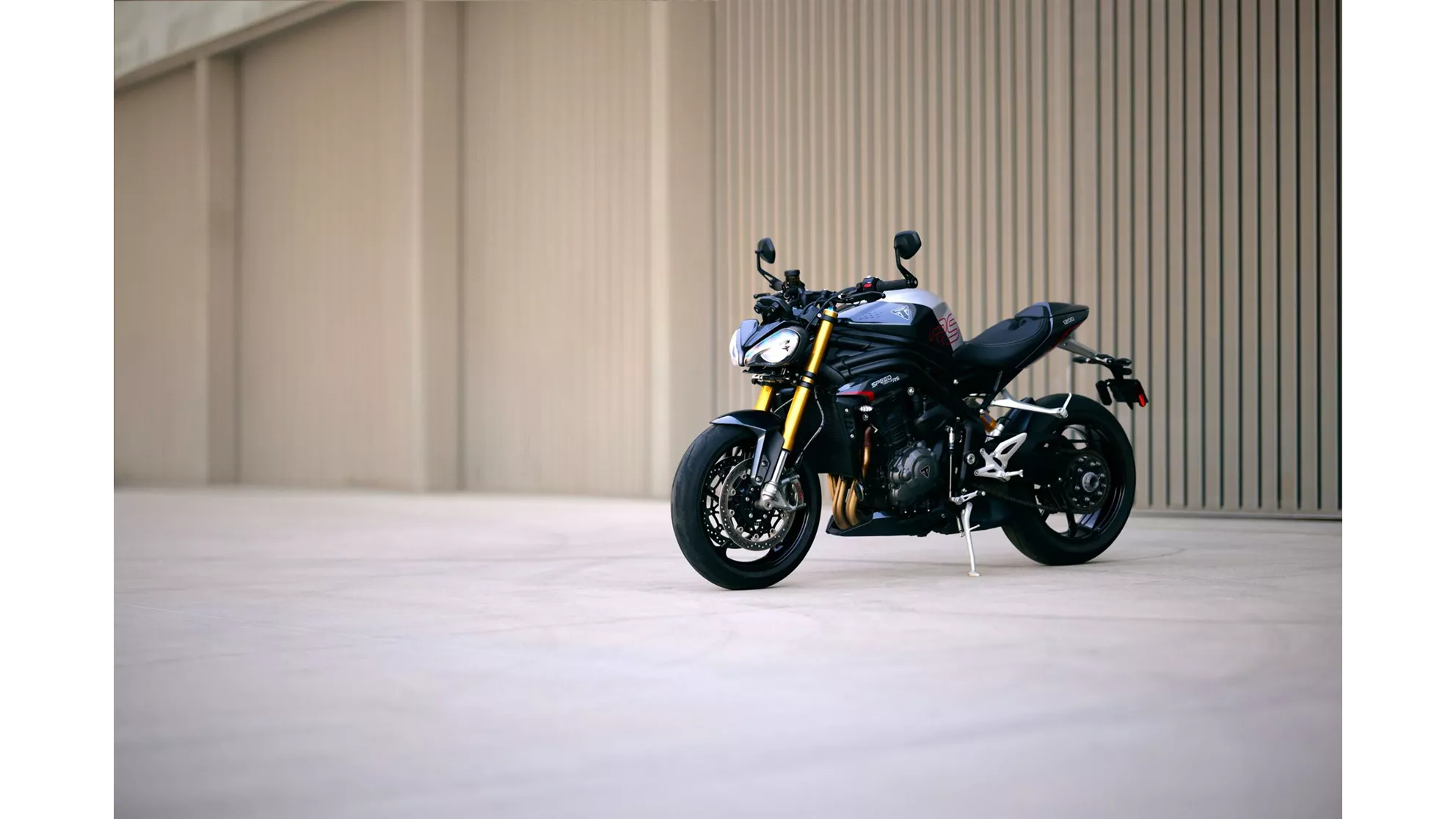
In the Portuguese hills, the Speed Triple showcases its dynamic profile. The sleek silhouette and distinctive front emphasize the sporty character of this naked bike.

Triumph Speed Triple 1200 RS 2025 - Test in Portugal - Image 33

16. The golden Öhlins NIX 30 EC forks with a 43 mm diameter deliver precise and responsive performance. The electronic control system adjusts the damping in real-time to suit the riding conditions.

Triumph Speed Triple 1200 RS 2025 - Test in Portugal - Image 34

The 4 riding modes – Rain, Road, Sport, Track – fundamentally change the character of the Speed Triple. In Rain mode, power delivery is smoother and the suspension electronics operate more sensitively.

Triumph Speed Triple 1200 RS 2025 - Test in Portugal - Image 35

17. The adjustable steering damper – new for the 2025 generation – prevents bar chatter during aggressive riding. Even on the track, the front stays stable and precise.

Triumph Speed Triple 1200 RS 2025 - Test in Portugal - Image 36

The Speed Triple in full throttle on the backroads. The electronic suspension handles sudden bumps with effortless ease.

Triumph Speed Triple 1200 RS 2025 - Test in Portugal - Image 37

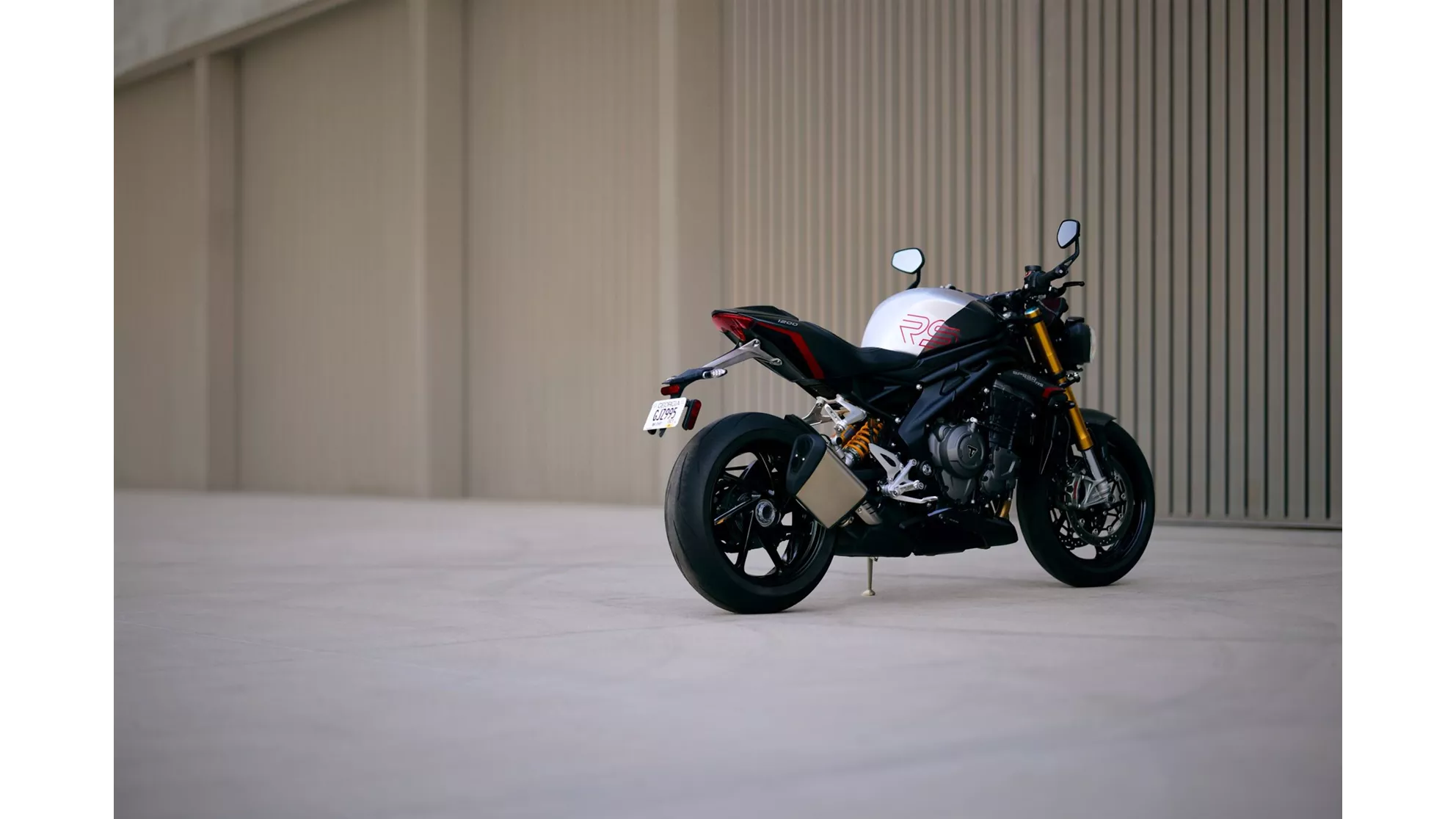
The new side-mounted exhaust system enhances exhaust flow and optimizes weight distribution. The optional Akrapovic slip-on saves an additional 700 grams.

Triumph Speed Triple 1200 RS 2025 - Test in Portugal - Image 38

The Triumph Shift Assist allows for clutchless up and down shifts.

Triumph Speed Triple 1200 RS 2025 - Test in Portugal - Image 39

34. The lightweight aluminum wheels in the new design minimize unsprung mass. The front features a 5-spoke design, while the rear sports a 7-spoke layout, enhancing agility.

Triumph Speed Triple 1200 RS 2025 - Test in Portugal - Image 40

In quick switchback turns, the Speed Triple showcases its impressive handling. Weighing in at just 199 kg ready to ride, it’s one of the lightest bikes in its class.

Triumph Speed Triple 1200 RS 2025 - Test in Portugal - Image 41

The cruising support setting of the Öhlins suspension reduces damping during relaxed rides. This noticeably increases comfort on long stretches.

Triumph Speed Triple 1200 RS 2025 - Test in Portugal - Image 42
Triumph Speed Triple 1200 RS 2025 - Test in Portugal - Image 43
Triumph Speed Triple 1200 RS 2025 - Test in Portugal - Image 44
Triumph Speed Triple 1200 RS 2025 - Test in Portugal - Image 45
Triumph Speed Triple 1200 RS 2025 - Test in Portugal - Image 46
Triumph Speed Triple 1200 RS 2025 - Test in Portugal - Image 47
Triumph Speed Triple 1200 RS 2025 - Test in Portugal - Image 48
Triumph Speed Triple 1200 RS 2025 - Test in Portugal - Image 49
Triumph Speed Triple 1200 RS 2025 - Test in Portugal - Image 50
Triumph Speed Triple 1200 RS 2025 - Test in Portugal - Image 51
Triumph Speed Triple 1200 RS 2025 - Test in Portugal - Image 52
Triumph Speed Triple 1200 RS 2025 - Test in Portugal - Image 53
Triumph Speed Triple 1200 RS 2025 - Test in Portugal - Image 54
Triumph Speed Triple 1200 RS 2025 - Test in Portugal - Image 55
Triumph Speed Triple 1200 RS 2025 - Test in Portugal - Image 56
Triumph Speed Triple 1200 RS 2025 - Test in Portugal - Image 57
Triumph Speed Triple 1200 RS 2025 - Test in Portugal - Image 58
Triumph Speed Triple 1200 RS 2025 - Test in Portugal - Image 59
Triumph Speed Triple 1200 RS 2025 - Test in Portugal - Image 60
Triumph Speed Triple 1200 RS 2025 - Test in Portugal - Image 61
Triumph Speed Triple 1200 RS 2025 - Test in Portugal - Image 62
Triumph Speed Triple 1200 RS 2025 - Test in Portugal - Image 63
Triumph Speed Triple 1200 RS 2025 - Test in Portugal - Image 64
Triumph Speed Triple 1200 RS 2025 - Test in Portugal - Image 65
Triumph Speed Triple 1200 RS 2025 - Test in Portugal - Image 66
Triumph Speed Triple 1200 RS 2025 - Test in Portugal - Image 67
Triumph Speed Triple 1200 RS 2025 - Test in Portugal - Image 68
Triumph Speed Triple 1200 RS 2025 - Test in Portugal - Image 69
Triumph Speed Triple 1200 RS 2025 - Test in Portugal - Image 70
Triumph Speed Triple 1200 RS 2025 - Test in Portugal - Image 71
Triumph Speed Triple 1200 RS 2025 - Test in Portugal - Image 72
Triumph Speed Triple 1200 RS 2025 - Test in Portugal - Image 73
Triumph Speed Triple 1200 RS 2025 - Test in Portugal - Image 74
Triumph Speed Triple 1200 RS 2025 - Test in Portugal - Image 75
Triumph Speed Triple 1200 RS 2025 - Test in Portugal - Image 76
Triumph Speed Triple 1200 RS 2025 - Test in Portugal - Image 77
Triumph Speed Triple 1200 RS 2025 - Test in Portugal - Image 78
Triumph Speed Triple 1200 RS 2025 - Test in Portugal - Image 79
Triumph Speed Triple 1200 RS 2025 - Test in Portugal - Image 80
Triumph Speed Triple 1200 RS 2025 - Test in Portugal - Image 81
Triumph Speed Triple 1200 RS 2025 - Test in Portugal - Image 82
Triumph Speed Triple 1200 RS 2025 - Test in Portugal - Image 83
Triumph Speed Triple 1200 RS 2025 - Test in Portugal - Image 84
Triumph Speed Triple 1200 RS 2025 - Image 85
Triumph Speed Triple 1200 RS 2025 - Image 86
Triumph Speed Triple 1200 RS 2025 - Image 87
Triumph Speed Triple 1200 RS 2025 - Image 88
Triumph Speed Triple 1200 RS 2025 - Image 89
Triumph Speed Triple 1200 RS 2025 - Image 90
Triumph Speed Triple 1200 RS 2025 - Image 91
Triumph Speed Triple 1200 RS 2025 - Image 92
Triumph Speed Triple 1200 RS 2025 - Image 93
Triumph Speed Triple 1200 RS 2025 - Image 94
Triumph Speed Triple 1200 RS 2025 - Image 95
Triumph Speed Triple 1200 RS 2025 - Image 96
Triumph Speed Triple 1200 RS 2025 - Image 97
Triumph Speed Triple 1200 RS 2025 - Image 98
Triumph Speed Triple 1200 RS 2025 - Image 99
Triumph Speed Triple 1200 RS 2025 - Image 100
Triumph Speed Triple 1200 RS 2025 - Image 101
Triumph Speed Triple 1200 RS 2025 - Image 102
Triumph Speed Triple 1200 RS 2025 - Image 103
Triumph Speed Triple 1200 RS 2025 - Image 104
Triumph Speed Triple 1200 RS 2025 - Image 105
Triumph Speed Triple 1200 RS 2025 - Image 106
Triumph Speed Triple 1200 RS 2025 - Image 107