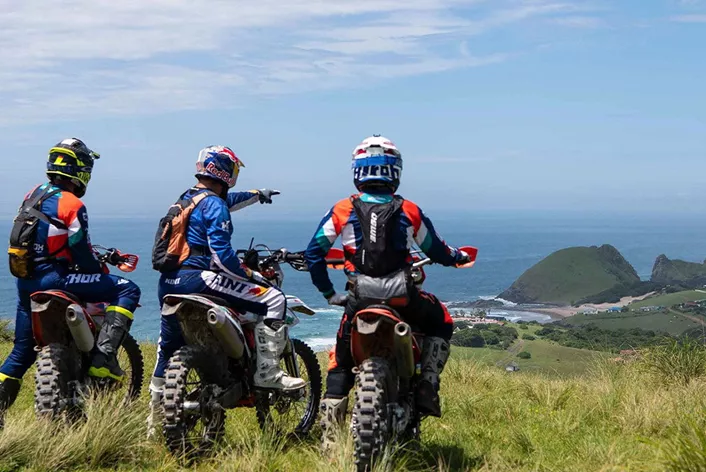
Gentle green hills roll right up to the cliff edge, dotted with thatched rondavels, while down below the Indian Ocean pounds against the rocks. This is the Wild Coast in eastern South Africa. Somewhere in between, a slope climbs up so green and so steep that all that's left in front of the front wheel is sea and sky. For me, a climb like that in the saddle of an enduro feels like the stairway to heaven, tears of joy guaranteed. Whether those tears come from happiness or from the lactic acid in your forearms depends on your fitness. How steep, how wet and how slippery this coast gets depends on when you travel and the level of skill you bring with you.
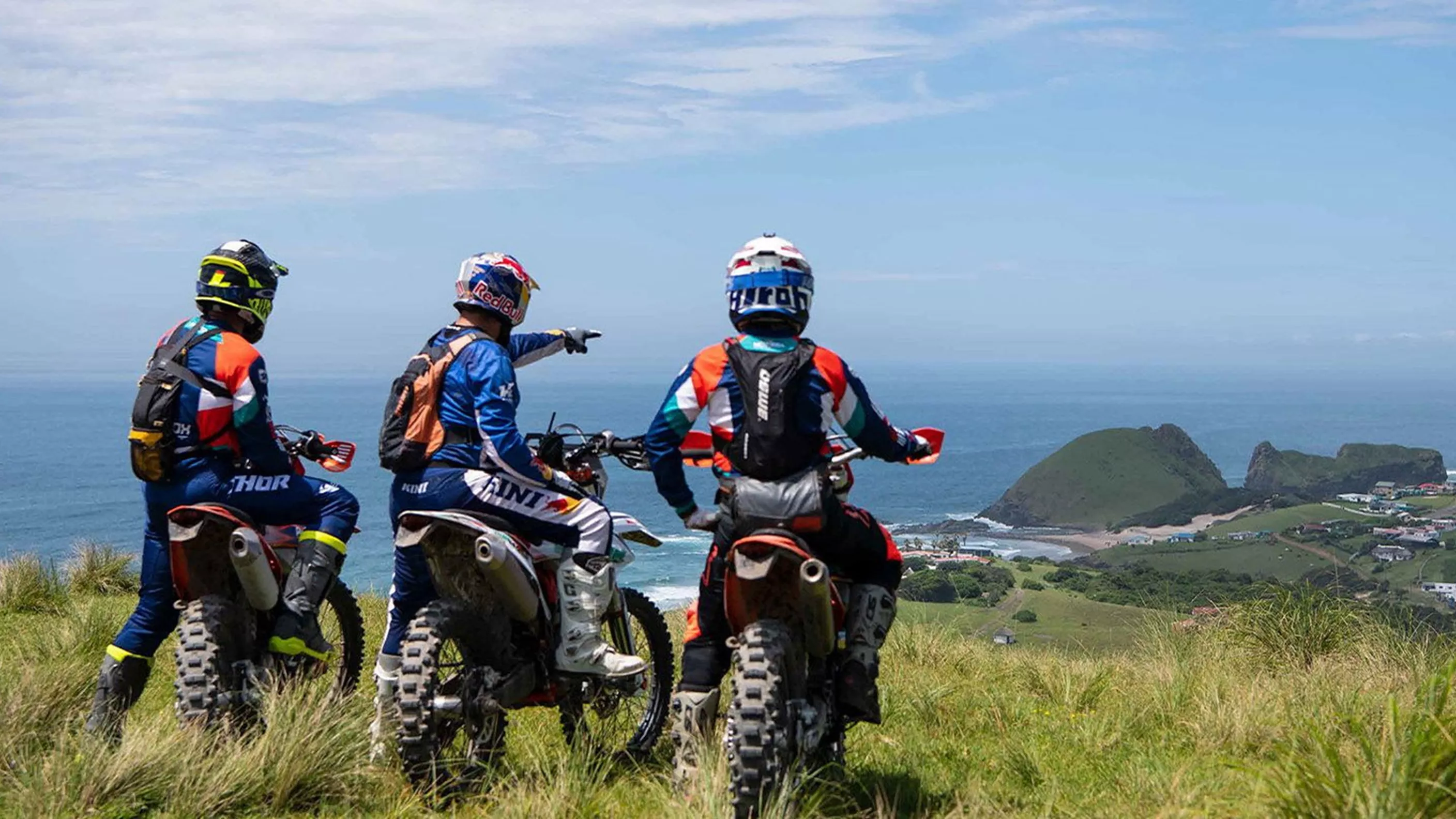
South Africa by enduro: steep green slopes above the ocean
Best time to travel, Xhosa cuisine and how much skill you need
Green hills right up to the cliffs, rondavels, cattle on the beach: the Wild Coast in eastern South Africa is enduro country with steep slopes, river crossings and mud after rain. Here you'll find out when the weather is right and which tour gets you there. Is your skill up to this coast?

nastynils
published on 21/10/2026
1,976 Views
Green hill country above the Indian Ocean
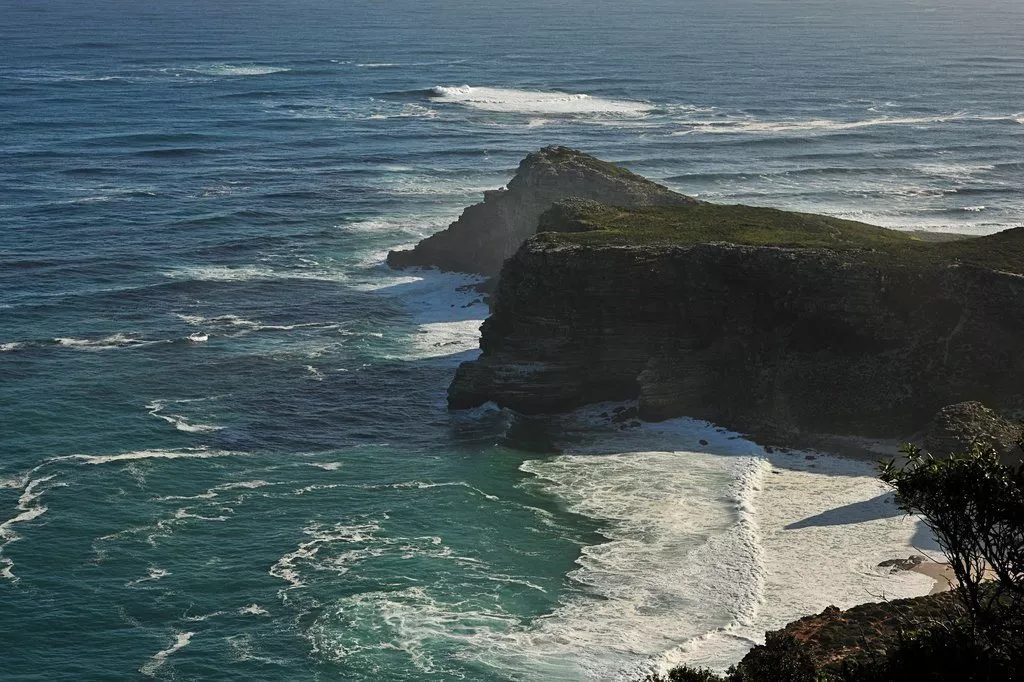
Green cliffs and thundering surf: South Africa's east coast shows its wild side here.
The Wild Coast lies in the Eastern Cape and stretches from the Great Kei in the south to the Mtamvuna in the north. Behind the coastline, the landscape starts with green, gently rolling hill country, while evergreen forest fills the gorges and humid coastal valleys. The coast itself can't make up its mind. Bays, beaches and lagoons alternate with rocky headlands and sheer cliffs that drop straight into the sea.
Further north, in Pondoland, flat sandstone plateaus alternate with very steep river gorges such as that of the Msikaba, and between Port St Johns and the Oribi Gorge lies the Pondoland Centre of Endemism, a botanical hotspot full of plants found nowhere else. At Waterfall Bluff near Lusikisiki, waterfalls plunge from the cliffs straight into the ocean, while the pyramid-shaped Cathedral Rock rises from the water next to them. The Magwa Falls drop 142 metres into a gorge. In the Mkambati Nature Reserve, the province's first Ramsar wetland, meaning a wetland of international importance, another waterfall tumbles into the sea.
From high vantage points you can spot dolphins and whales; humpbacks and southern right whales, a large species of right whale, come here to calve. In the southern winter, roughly from May to July, the Sardine Run heads north.
The DNA of the old Transkei
The DNA of the Wild Coast: people, cattle and history share the same hills. During apartheid this was the Transkei homeland, a nominally independent state from 1976 to 1994 that nobody recognised internationally. It is traditional Xhosa land, and every route to the coast leads through this heartland. The northern part is called Pondoland, home of the Mpondo.
Cattle are part of everyday life. Whole herds lie on the beach or stand in the road as if they had reserved the coast for themselves. Apart from Port St Johns and Coffee Bay, the coastal settlements north of the Kei often consist of just a handful of houses. There are no tourist crowds. On the N2, around 32 kilometres south-west of Mthatha, lies Qunu, where Nelson Mandela grew up and is buried; he was born on 18 July 1918 in Mvezo on the Mbashe.
According to tradition, Coffee Bay owes its name to a shipwreck whose coffee beans washed up on the beach. South of it, Hole in the Wall stands off the mouth of the Mpako, a free-standing rock of sandstone and shale with a large opening carved out by the water, through which the surf crashes. The Xhosa call it esiKhaleni, place of sound, after the thundering in the rock, and many locals see it as a gateway to the world of the ancestors. I love that this landmark is named after the noise it makes.
Goat trail, river crossing and steep slope
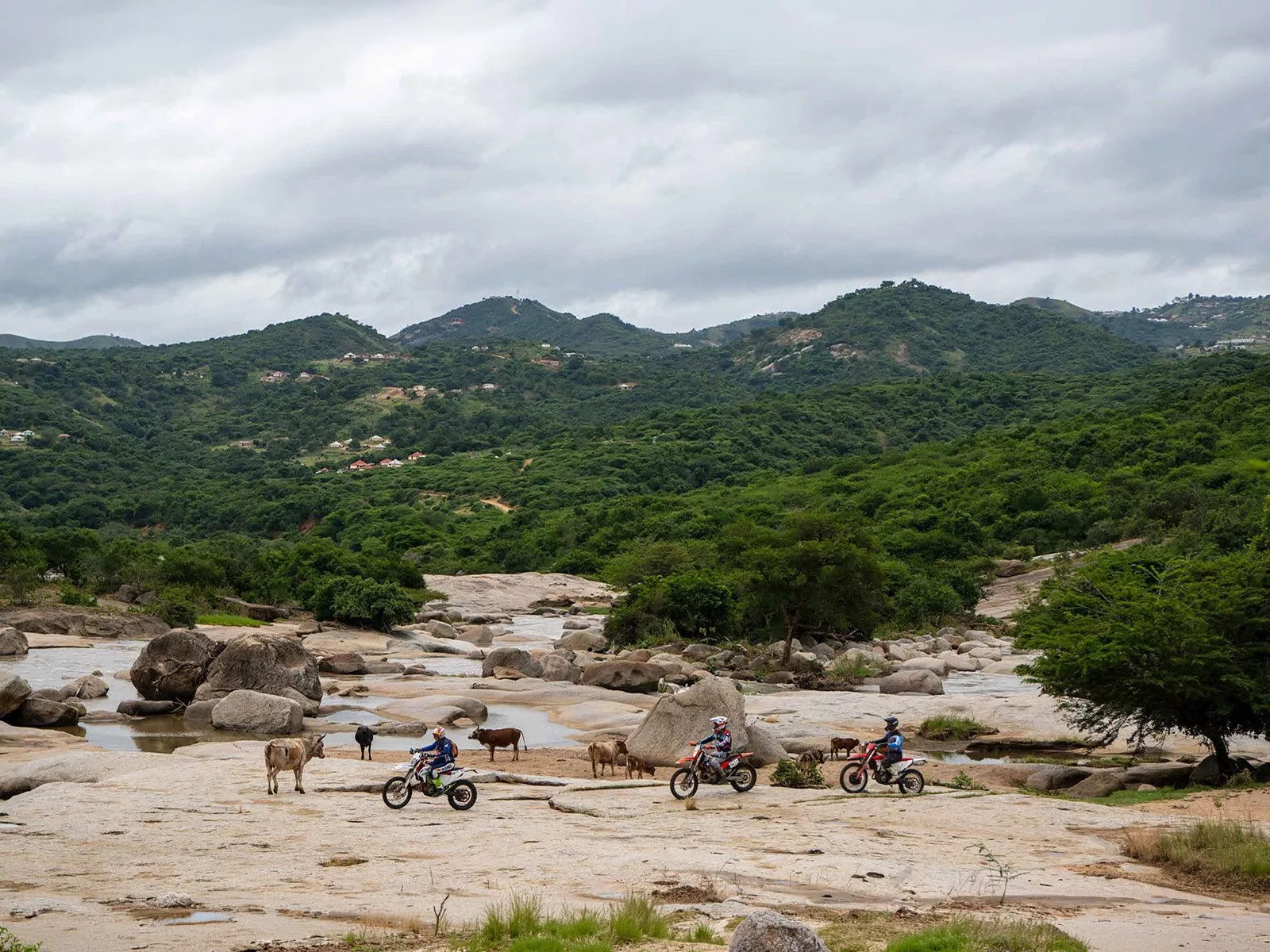
Between cattle herds and villages: on the Wild Coast you ride right through the heart of Xhosa life.
On the Wild Coast enduro routes the terrain changes constantly, from grassy hills to rocky goat trails and forest sections, all the way to rock and river crossings. Steep climbs lead from the beaches straight up onto the cliffs, and at the top the ocean lies before you like a blue wall. For me, that's the essence of this coast. The difficulty often lies more in balance than in traction.
River crossings are part of the daily programme, and they're often slippery, with loose or slick rocks and a water depth that's hard to judge. When I can't see the bottom of a crossing, my front wheel unfortunately always forms an opinion faster than my head does. After rain, forest climbs and side tracks turn muddy and slippery, and the Transkei's back roads hold steep, churned-up sections with deep ruts and mud holes. Away from the cattle tracks, the gravel roads near the coast are more relaxed, winding through green hills and small villages.
Tarmac is the exception, because the N2 runs far inland; north of the Kei only Coffee Bay and Port St Johns have a sealed road leading to it, and all other access roads to the coast are gravel. Heading to Coffee Bay you roll along potholed tarmac, beyond which it turns to gravel towards Hole in the Wall. For navigation the N2 remains your backbone, with the tracks towards the sea branching off it. The number that best describes the terrain: the daily stages on the guided hard enduro loops measure 70 to 100 kilometres, with five to six hours in the saddle.
How much skill the coast demands
How much skill you need depends first and foremost on whether you ride guided or alone. The RIDE KTM programme, for example, includes the South Africa enduro tour with Alfie Cox, organised by Alfie Cox Racing from Cato Ridge in KwaZulu-Natal. Your host finished second in the Dakar motorcycle class on a KTM in 2002, won the first Erzbergrodeo in 1995 and took the Roof of Africa in Lesotho nine times. The tour is rated for levels 1 to 5 (out of 5), and every technical section has a bypass route. Alfie is with you for the entire tour, helps at difficult obstacles and, if needed, rides your bike up himself. My pride would rather crash than hand the bars over to a Dakar runner-up. My common sense would have handed them over long ago.
The tour lasts eight days, with five riding days and two rest days. The first three start from the White Clay Resort near Coffee Bay, on loops of around 80, 70 and 80 kilometres. Then it's around 500 kilometres by vehicle to KwaZulu-Natal for two riding days through forests, sugar cane, villages and bushveld. 98 per cent is off-road, and technique comes before speed. Rental bike (KTM or GasGas), fuel, accommodation and meals are included, flights are not. Everything else is on the Ride KTM website with dates, info and prices.
For me, hardly any hard enduro tour comes with as many superlatives as this one: steep slopes with sea views, intense and stunning nature, a cool Alfie Cox and genuinely demanding terrain.
KTM describes the levels as follows: levels 1 and 2 are considered suitable for beginners, with gravel roads, farm tracks, washed-out trails and easy river crossings. Level 3 brings extreme climbs and challenging river and stream crossings, and off-road experience is recommended. Level 4 calls for regular practice on rock steps, ruts and slippery surfaces, level 5 for the hardest sections in any weather.
As a European, I wouldn't recommend tackling this region on your own. The research effort is simply too great. Local customs are complex, and the lush vegetation changes the trails far too quickly. A track that was still rideable a year ago may now be completely overgrown. Realistically, you can only do this tour with a very experienced local.
Summer rains versus southern winter
Anyone who associates South Africa with endless sunshine will get wet on this coast. Most rain falls from October to March, with an average of 10 to 15 rainy days per month, while June and July see only about three. In summer, daytime highs are 25 to 27 °C and the air is sticky: in Port St Johns, afternoon humidity from November to March sits at around 80 per cent. Severe thunderstorms are a threat around Mthatha.
In the southern winter, June to August are the driest months; Port St Johns reaches highs of around 21 °C in July and August, and inland, Mthatha averages 4 °C at night in June and July. Autumn and winter are considered pleasant for active holidays. The price is short days: in Durban the sun sets around 17:00 to 17:30 in June. Europeans usually come during their own winter months, right in the middle of the summer rains, and light rain gear is on the tour's packing list. Of all seasons, it's spring that brings the heat peaks: Mthatha has hit up to 44 °C in September. We got lucky on our tour - it rained only once, and otherwise we enjoyed the laid-back "winter weather".
After heavy rain, rivers and lagoons swell dangerously, and the weather service advises against crossing them. In 2023 a tourist drowned near Coffee Bay while crossing a lagoon during a flood. If the river crossing is high and brown after a storm, you wait or turn back. Cows, goats, donkeys and horses roam freely on the roads, collisions do happen, and at night livestock appears out of nowhere in front of you. Plan to arrive before sunset.
From Europe you usually fly via Johannesburg to Mthatha, the nearest airport to the central Wild Coast, with Airlink in just over an hour. For the north, Durban with King Shaka International Airport is the easiest option; for the south, East London may be closer. For me, the most convenient option is the guided version through the RIDE KTM programme: rental bike and fuel are included, and Alfie picks the group up in Mthatha. The Eastern Cape is considered malaria-free.
Samp, beans and an evening by the fire
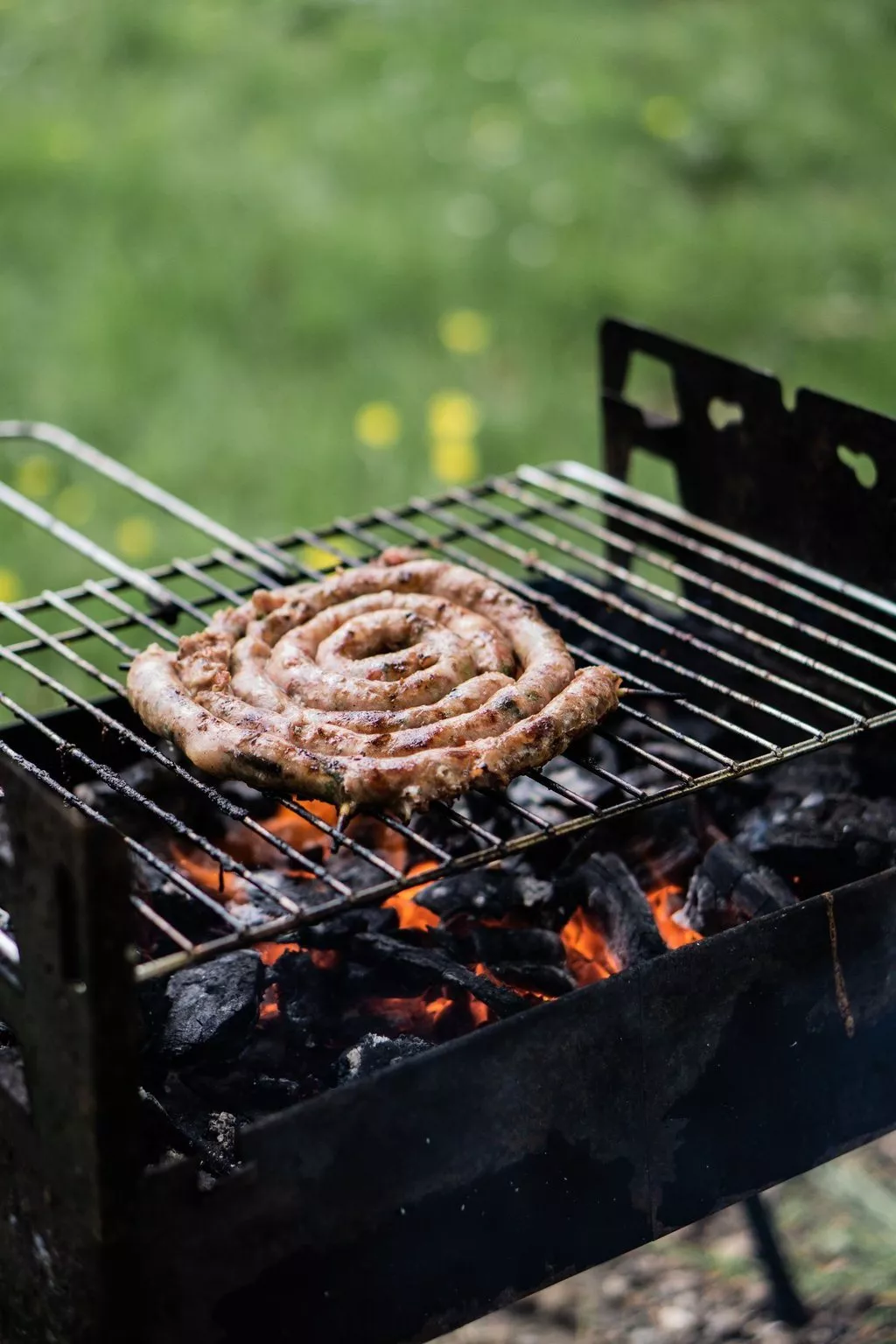
Boerewors over the embers: after a day of enduro riding, South Africa gathers at the braai.
The braai, grilling over an open fire, is a national sport in South Africa, and boerewors, the coiled sausage, belongs on the grid. The tour includes an evening braai at Alfie's home. On the Wild Coast, fresh fish and seafood land on the table.
The cuisine of this region is Xhosa. Umngqusho, samp (crushed maize kernels) with sugar beans, was one of Mandela's favourite dishes according to his long-time cook Xoliswa Ndoyiya. Umphokoqo, crumbly maize porridge with sour milk, is also known as African salad, the only salad I'd voluntarily order after a day on goat trails. Tripe usually comes as a stew, with pap, the stiff maize porridge. Wash it down with umqombothi, a cloudy, sour Xhosa beer made from maize and sorghum malt with little alcohol, which I'd only try once the side stand is down.
One image stays with me above all from this coast: green slope, ocean, rondavels on the horizon, smoke from the braai in the evening. Whether tears of joy flow depends on your skill and on how honestly you rate yourself on the KTM scale.
About the author
Nils Müller is the man behind 1000PS, known as NastyNils. More than 25 years in the motorcycle industry, over 1,000 bikes tested and travels to more than 50 countries shape his perspective. He rides hard enduro, rally and on the race track himself.
Inspiration - Enduro Travel
South Africa by enduro: steep green slopes above the ocean Images
Source: 1000PS


Coffee Bay Area - where dream beaches know no crowds

Perfect balance: The KTM 300 EXC excels in tricky lean angles.

Morning vibes at the Indian Ocean - our base for the first four days

Technical trails in the coastal forest challenge both rider and machine

Valley of 1000 Hills - or rather today, "Valley of 1000 Water Crossings"

Through lush grasslands - the vibrant vegetation of South Africa


The famous "Hole in the Wall" - one of the many natural wonders along the Wild Coast

The power of the Indian Ocean - an impressive backdrop for our ride


Pit stop with a sea view - time to catch a breather for both rider and machine

Between ocean and jungle: The KTM 300 EXC in its element


Riding the beach - where enduro dreams come true


River crossings are part of the daily grind


Steep ascent with a sea view - the 300 EXC showcases its climbing skills


No worries! We didn't encounter these hefty beasts from the saddle of a motorcycle - but rather during a safari in a safe 4x4!

Whenever Alfie is waiting with his camera, action is guaranteed.
