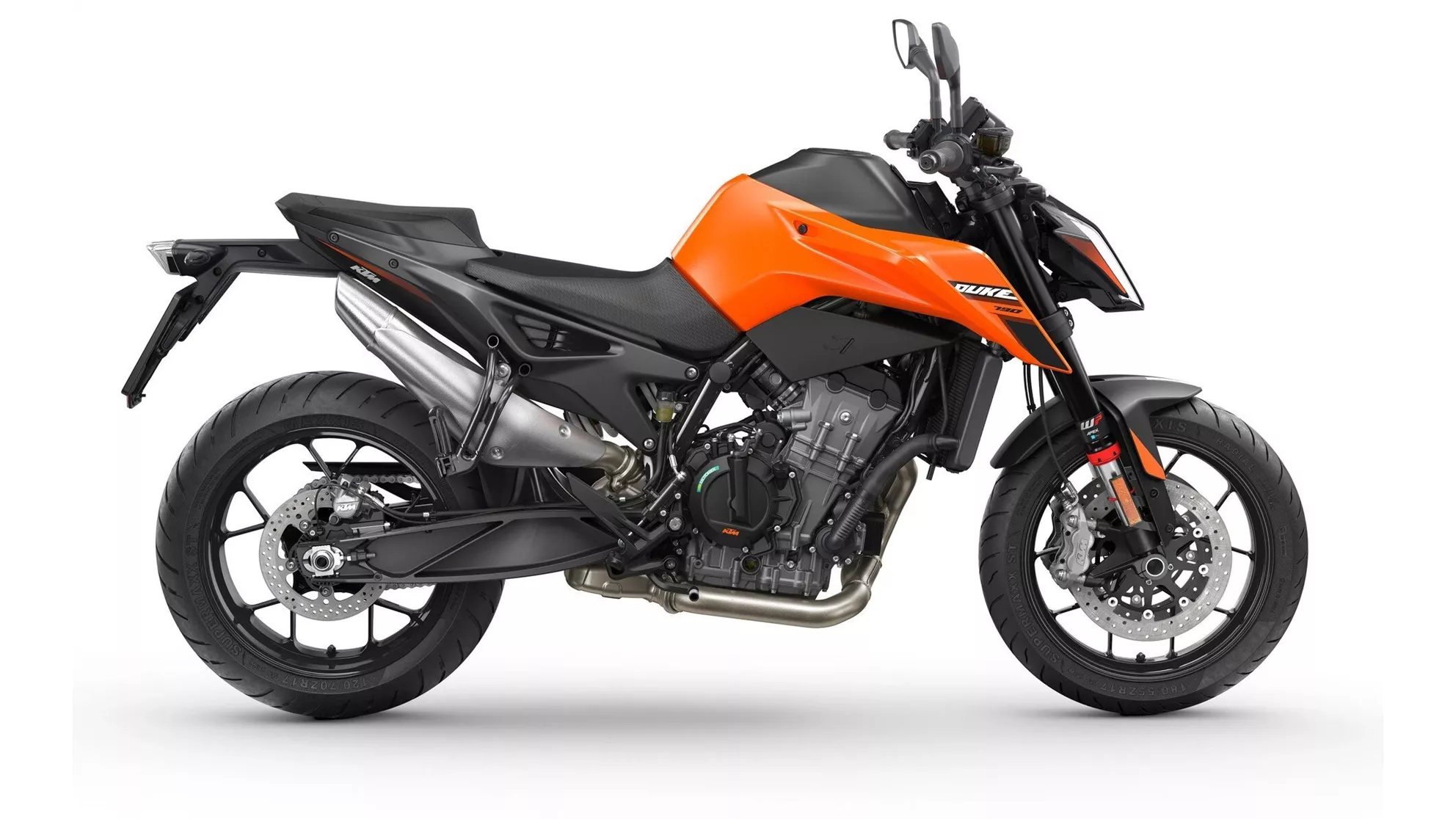
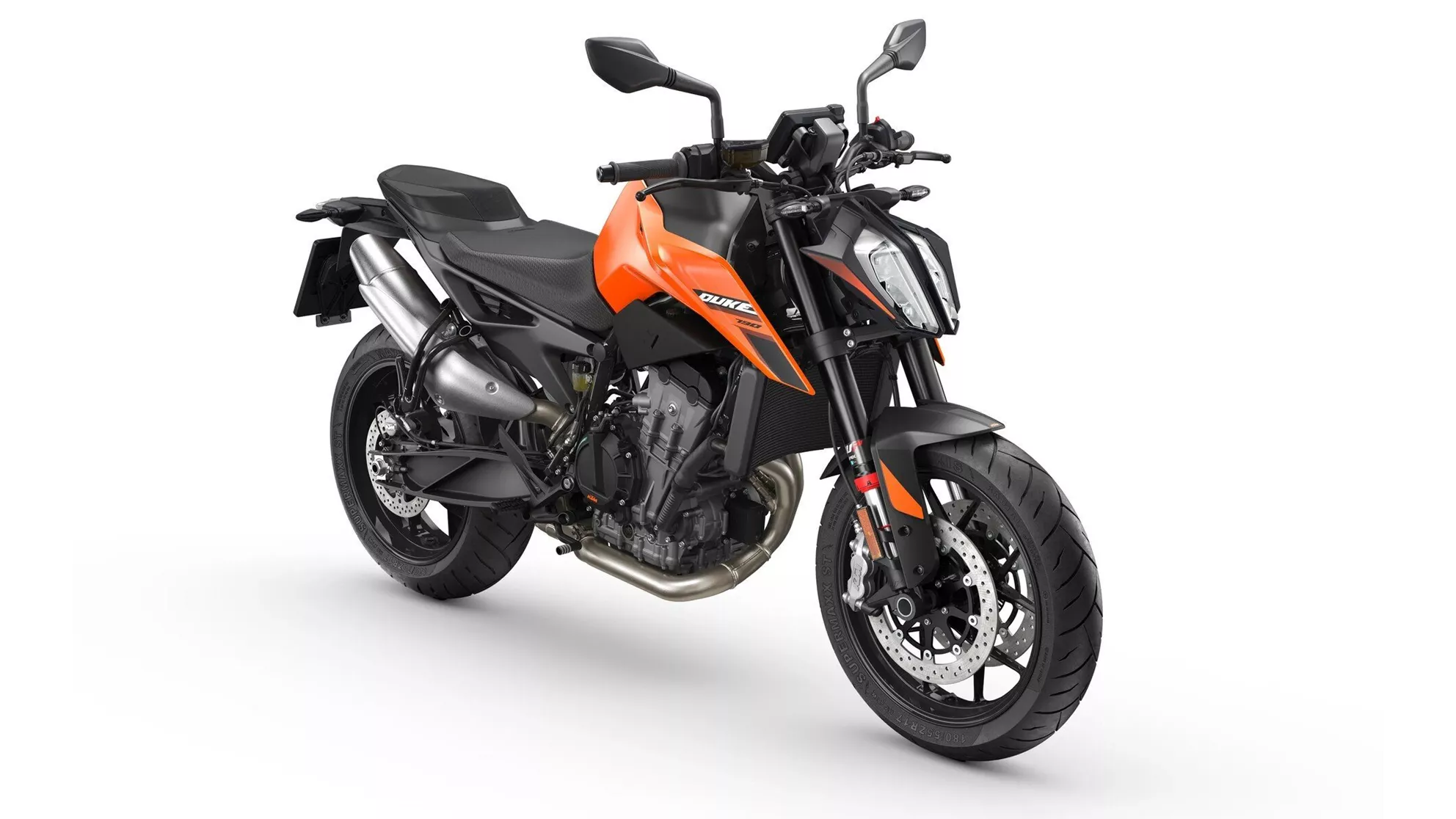
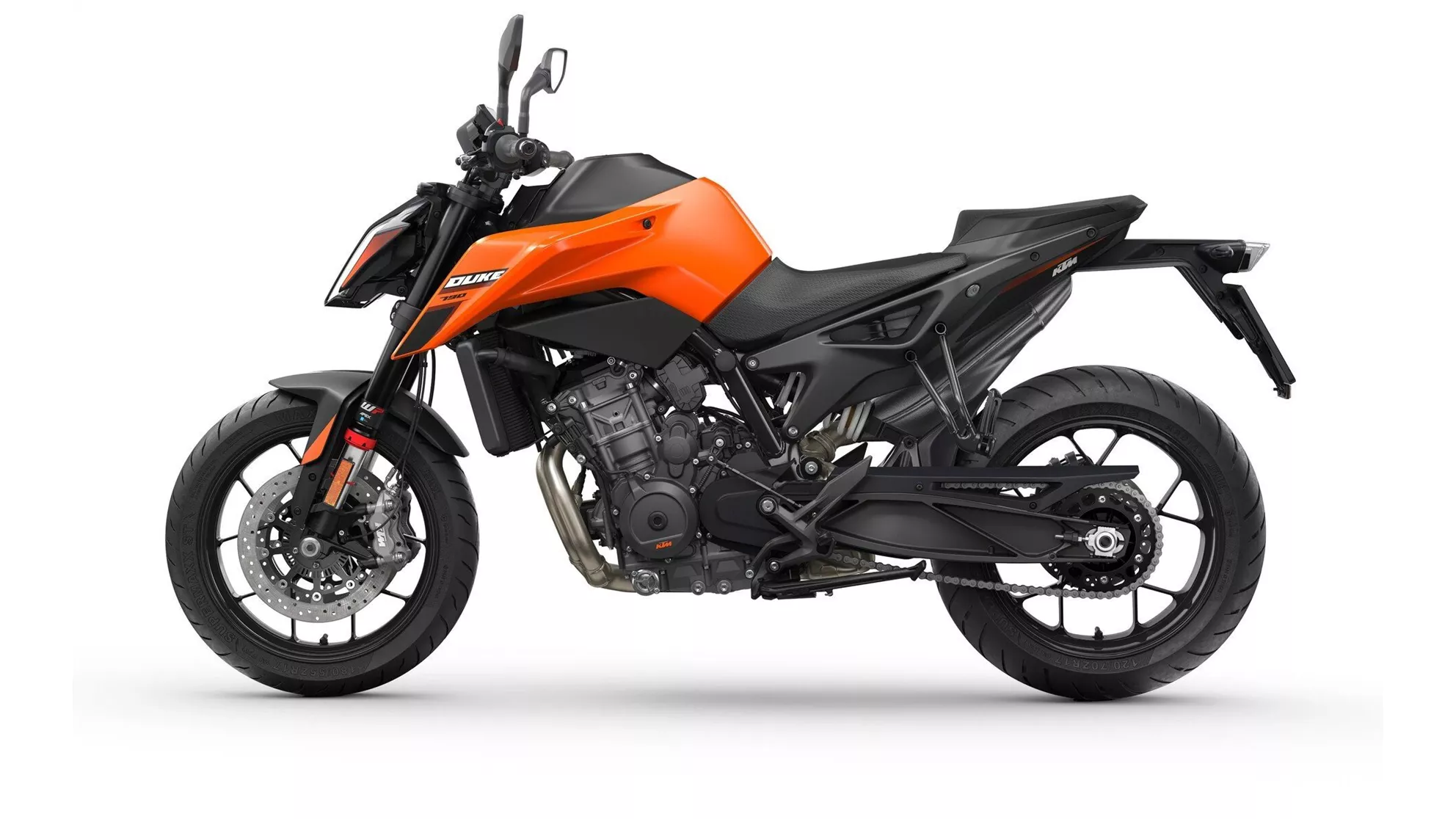
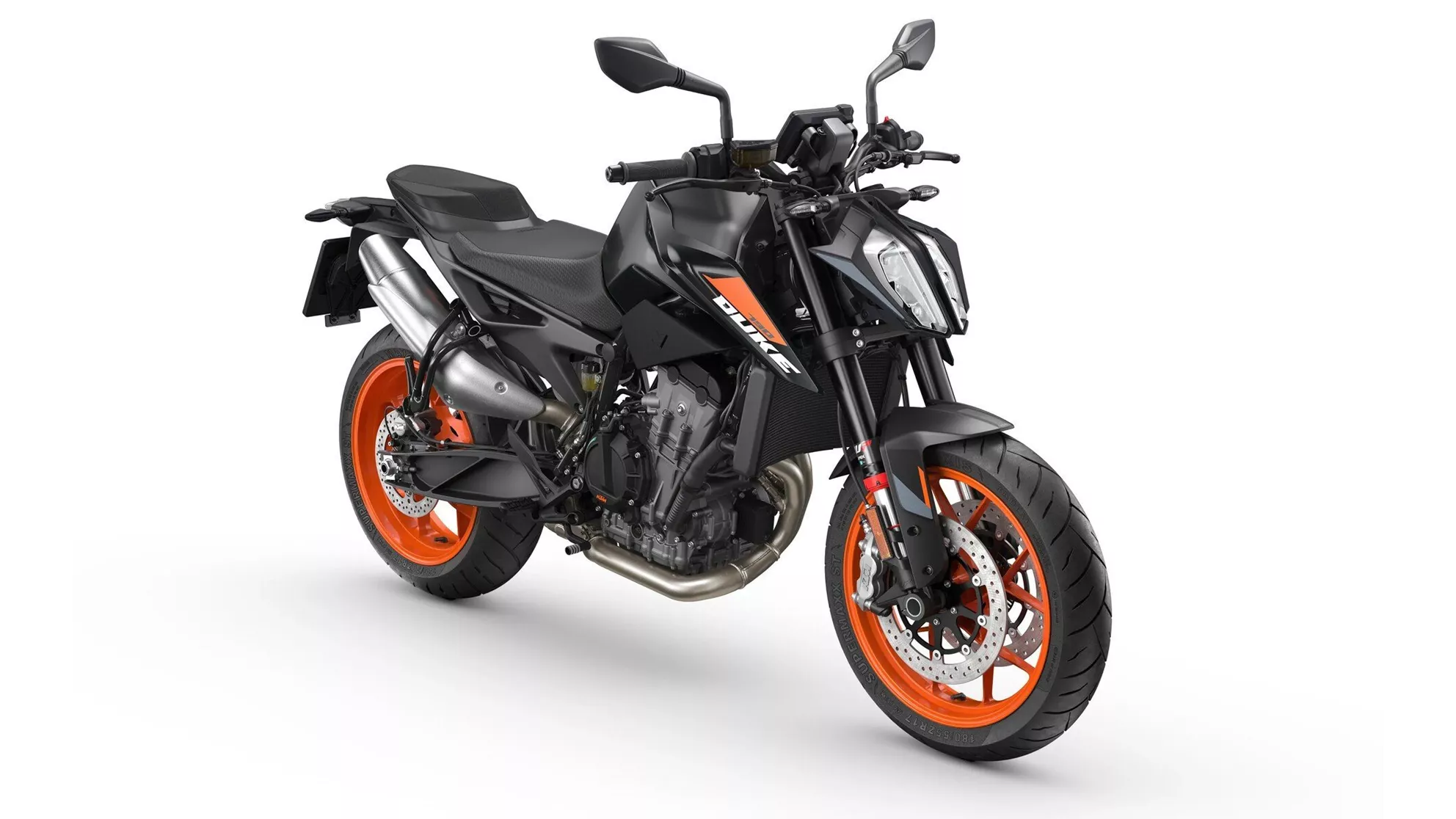
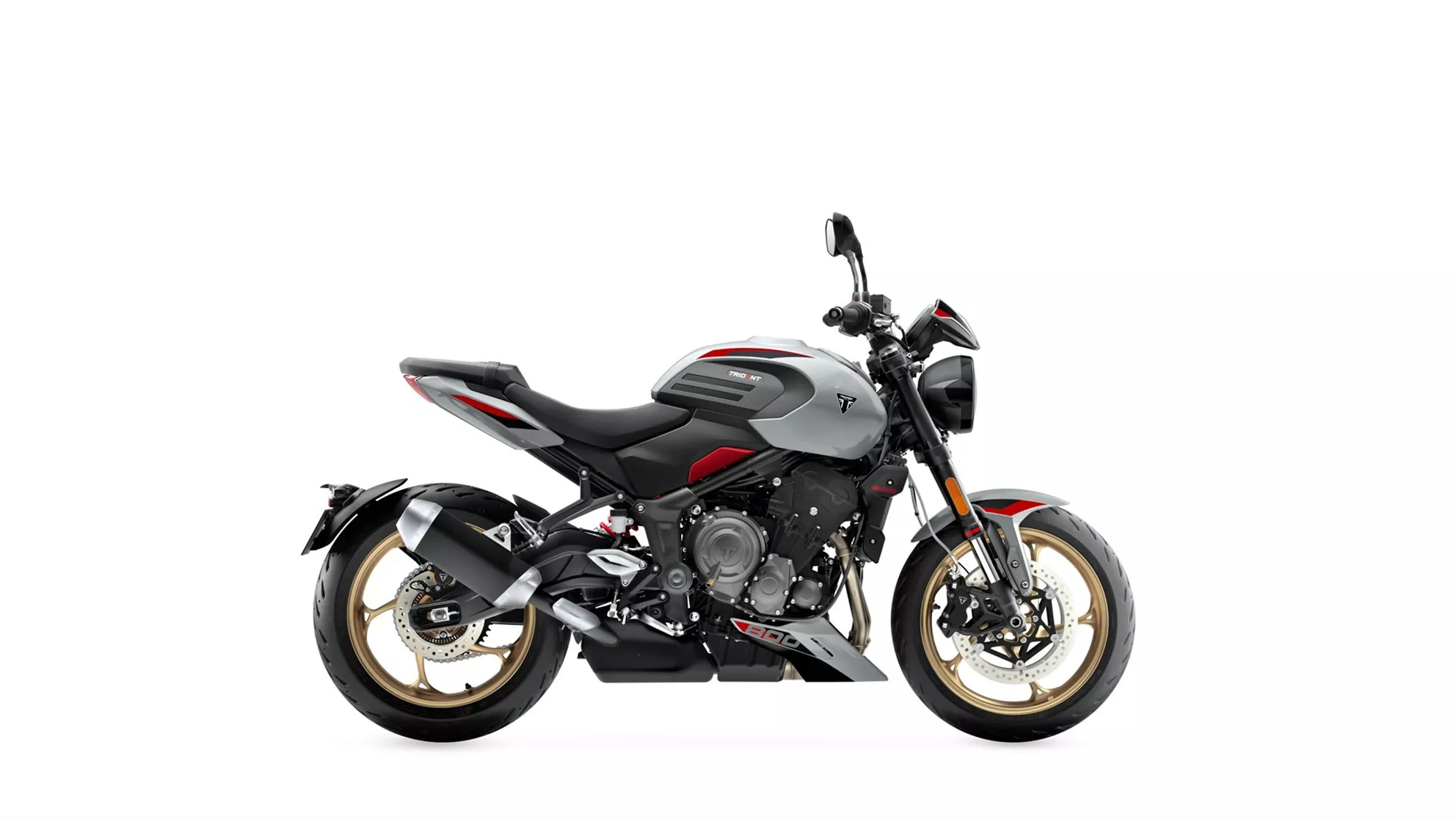
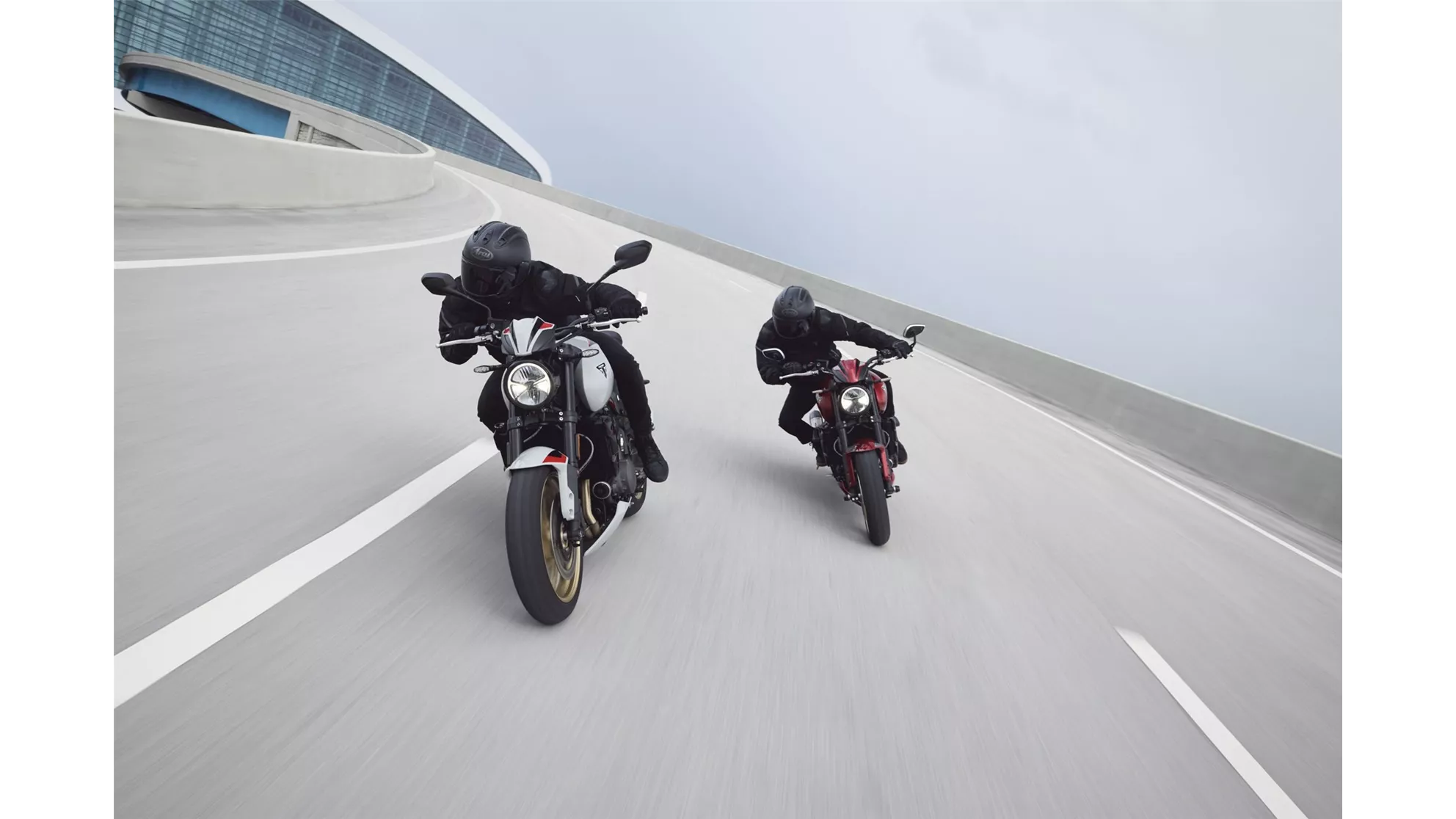
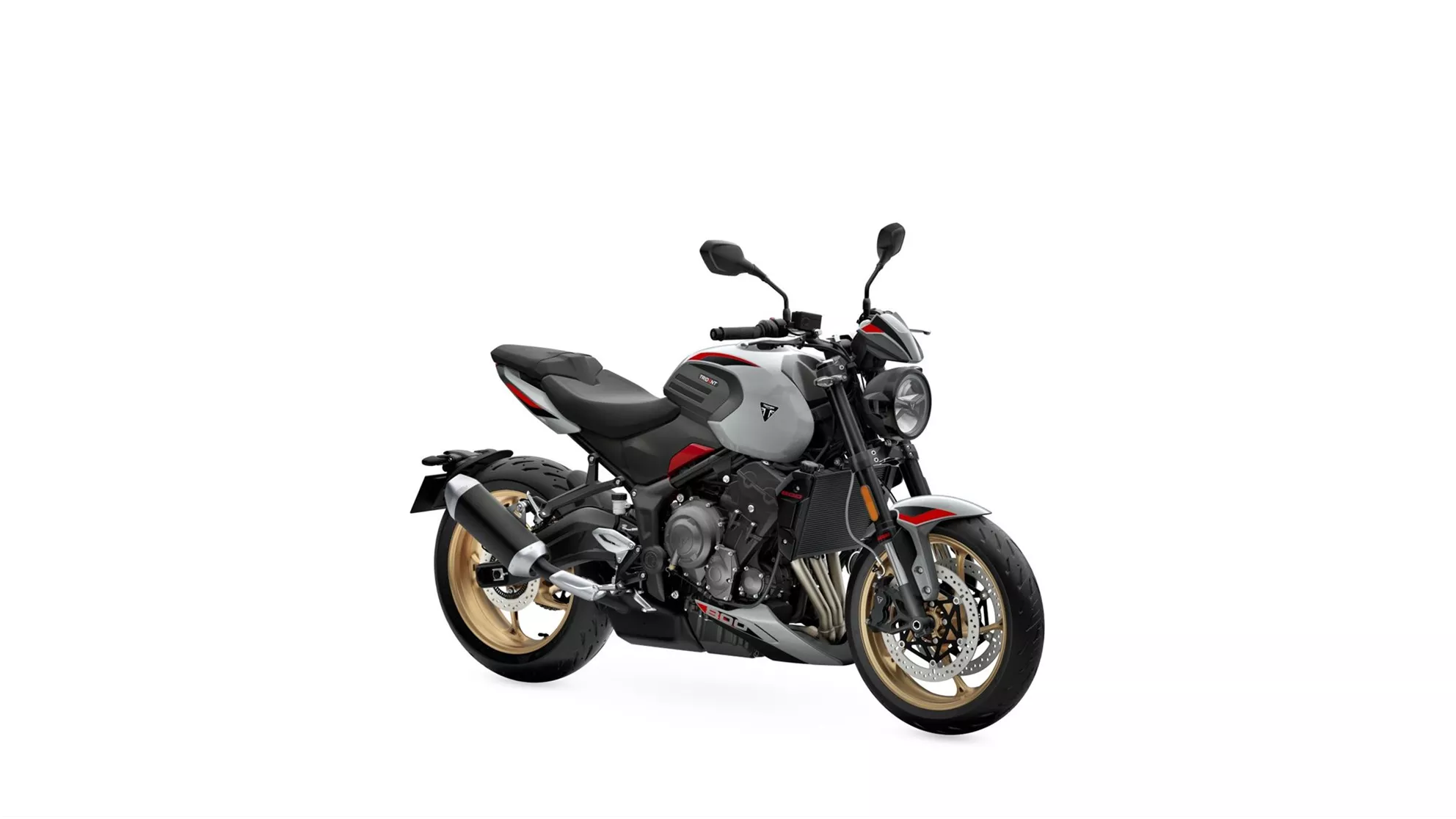
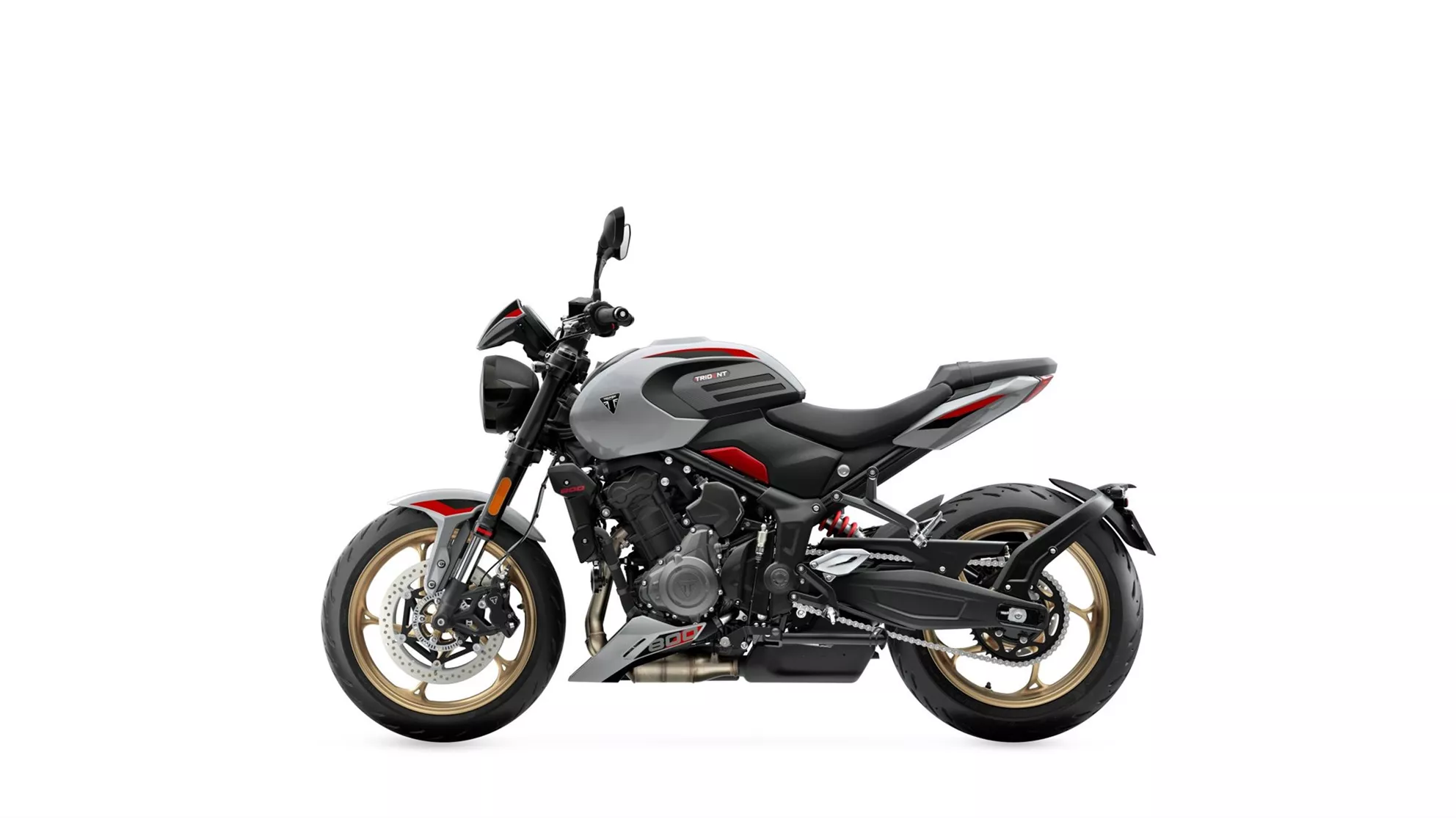
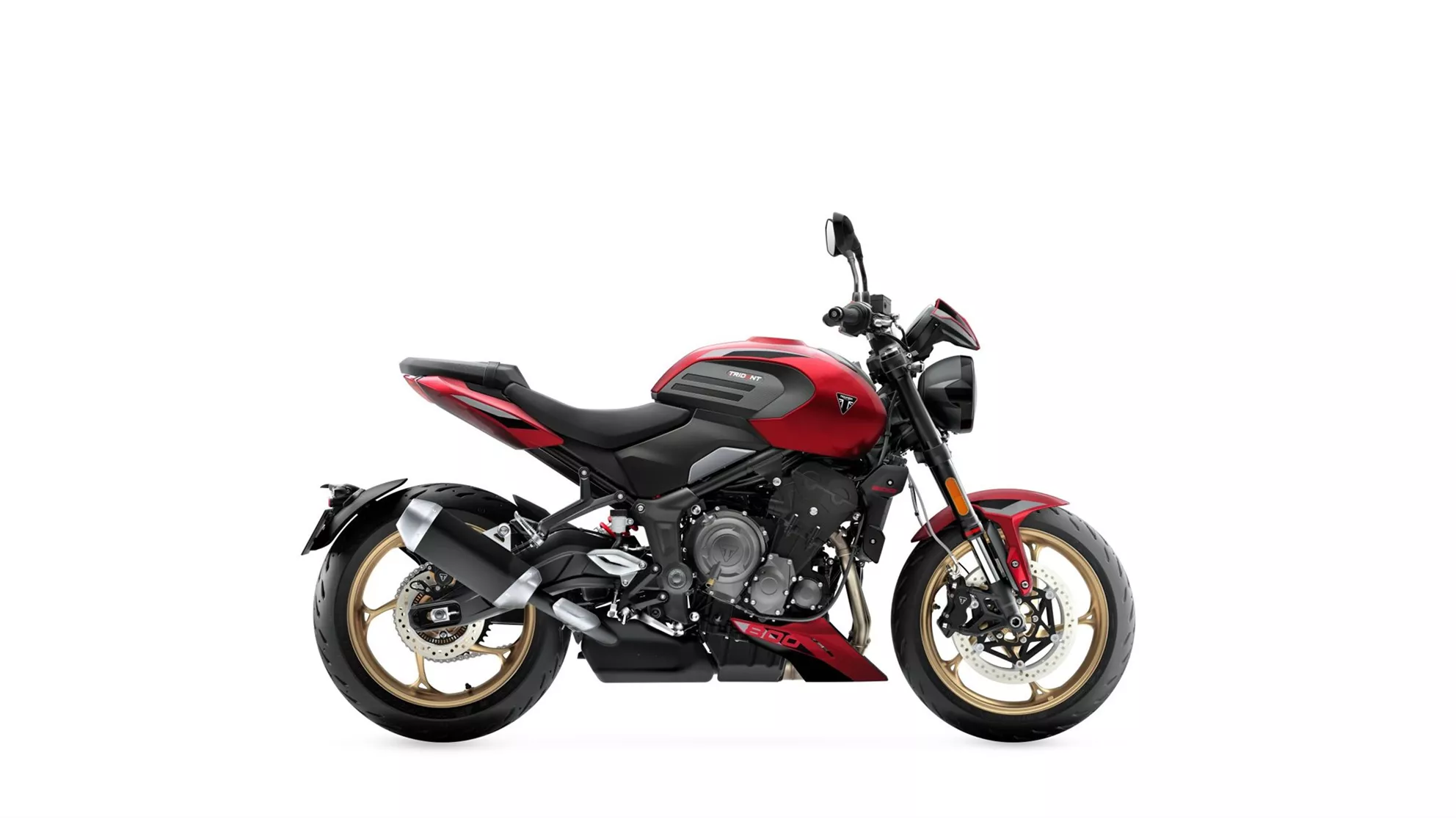
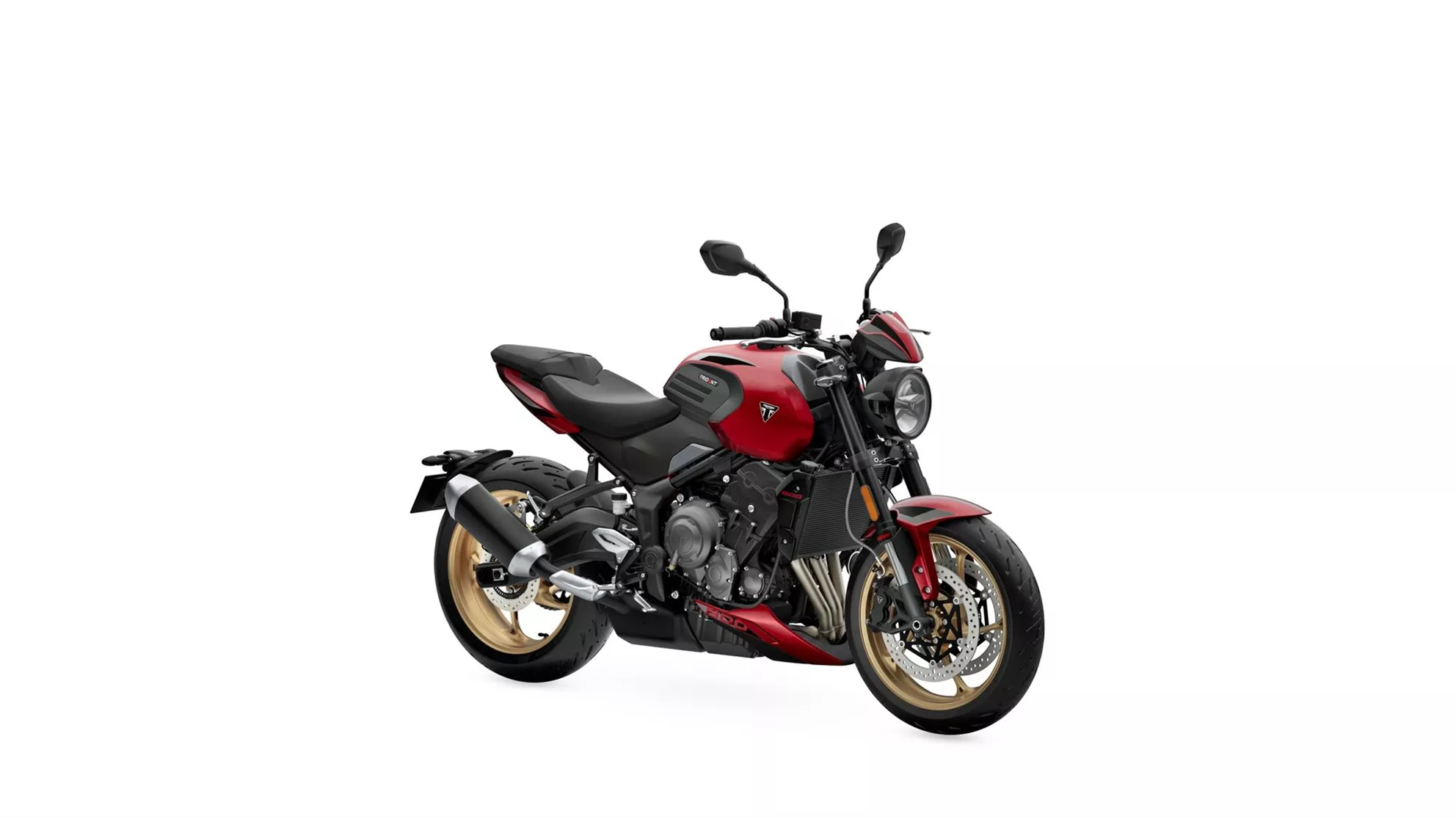
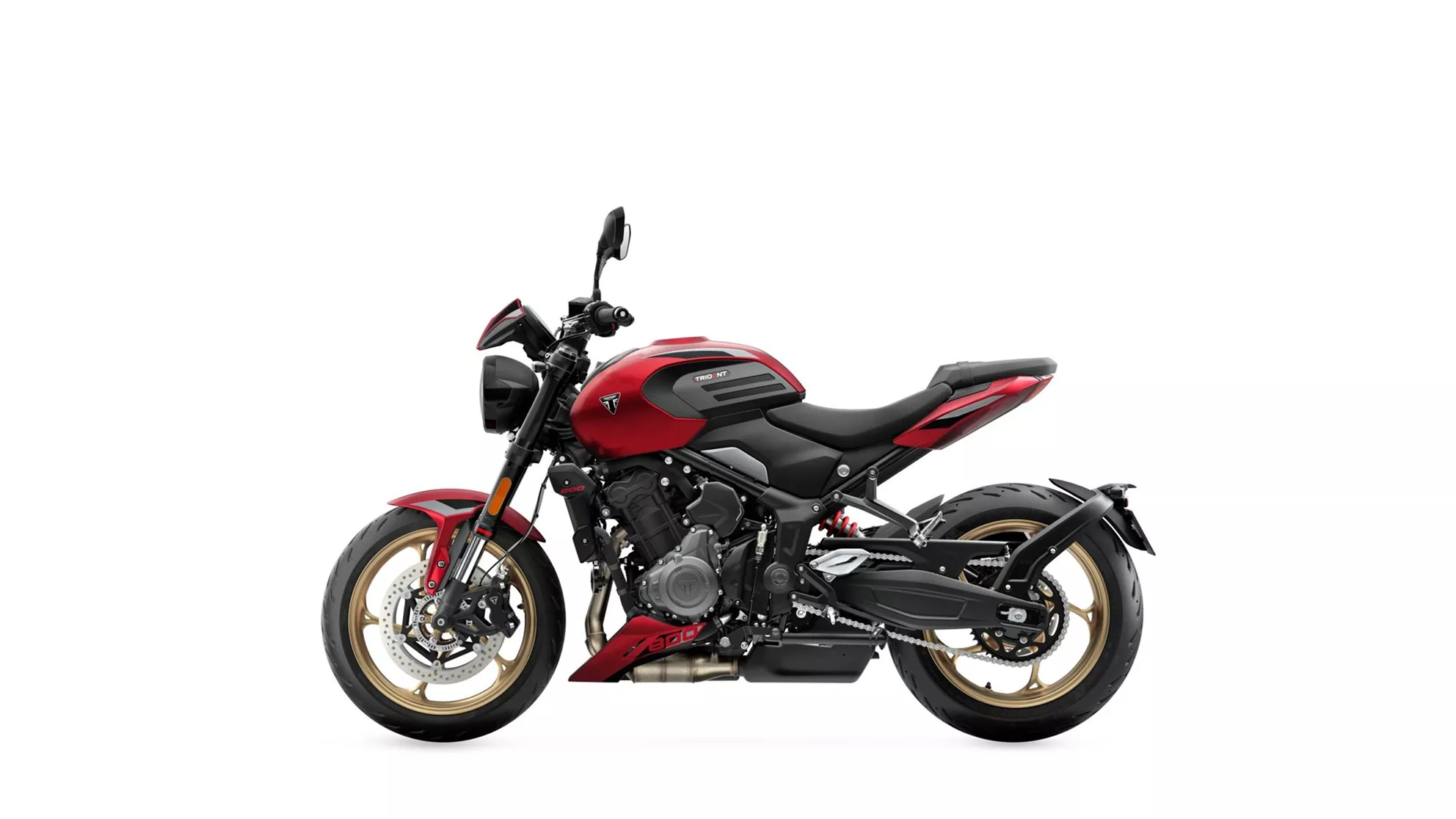
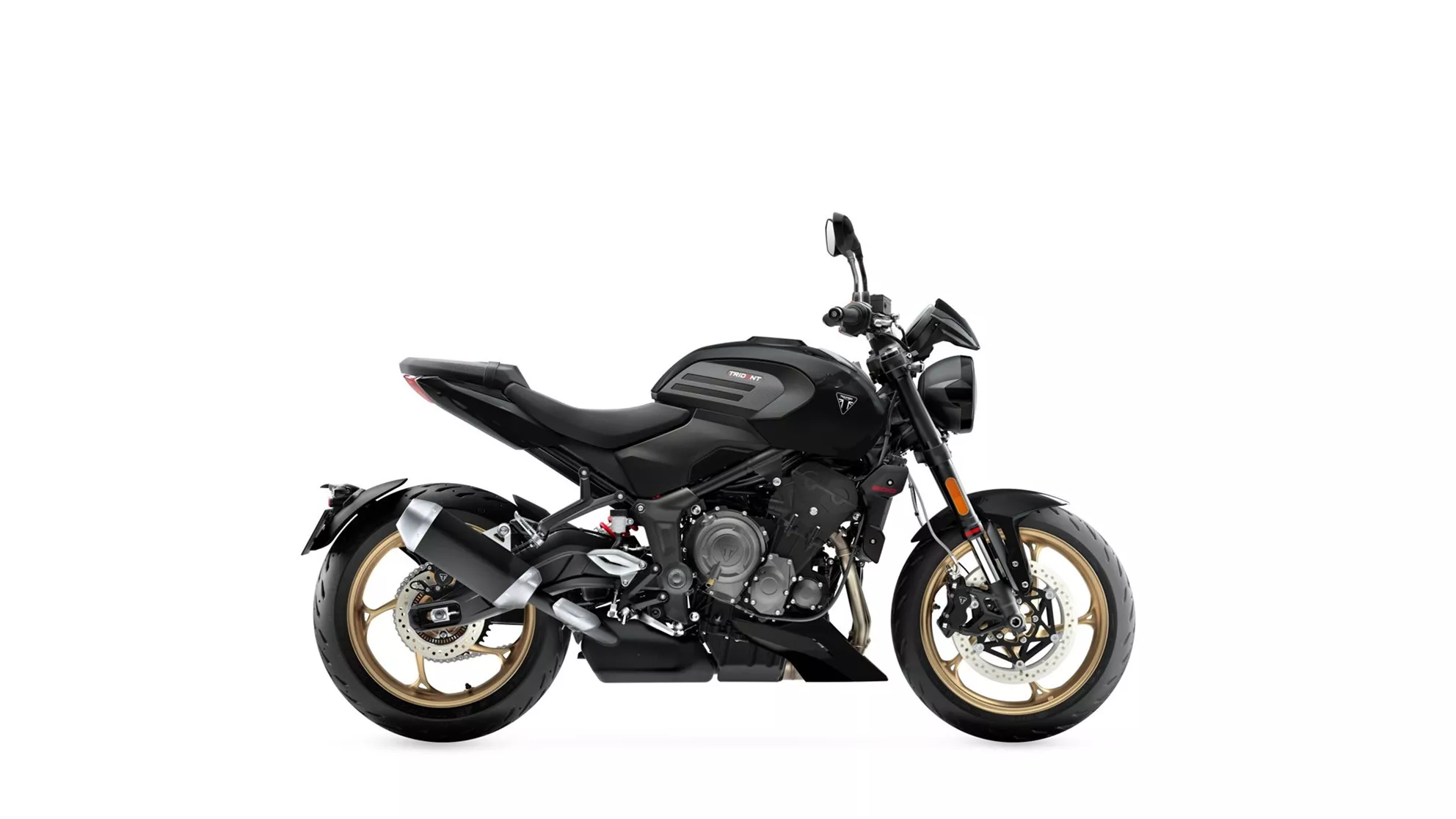
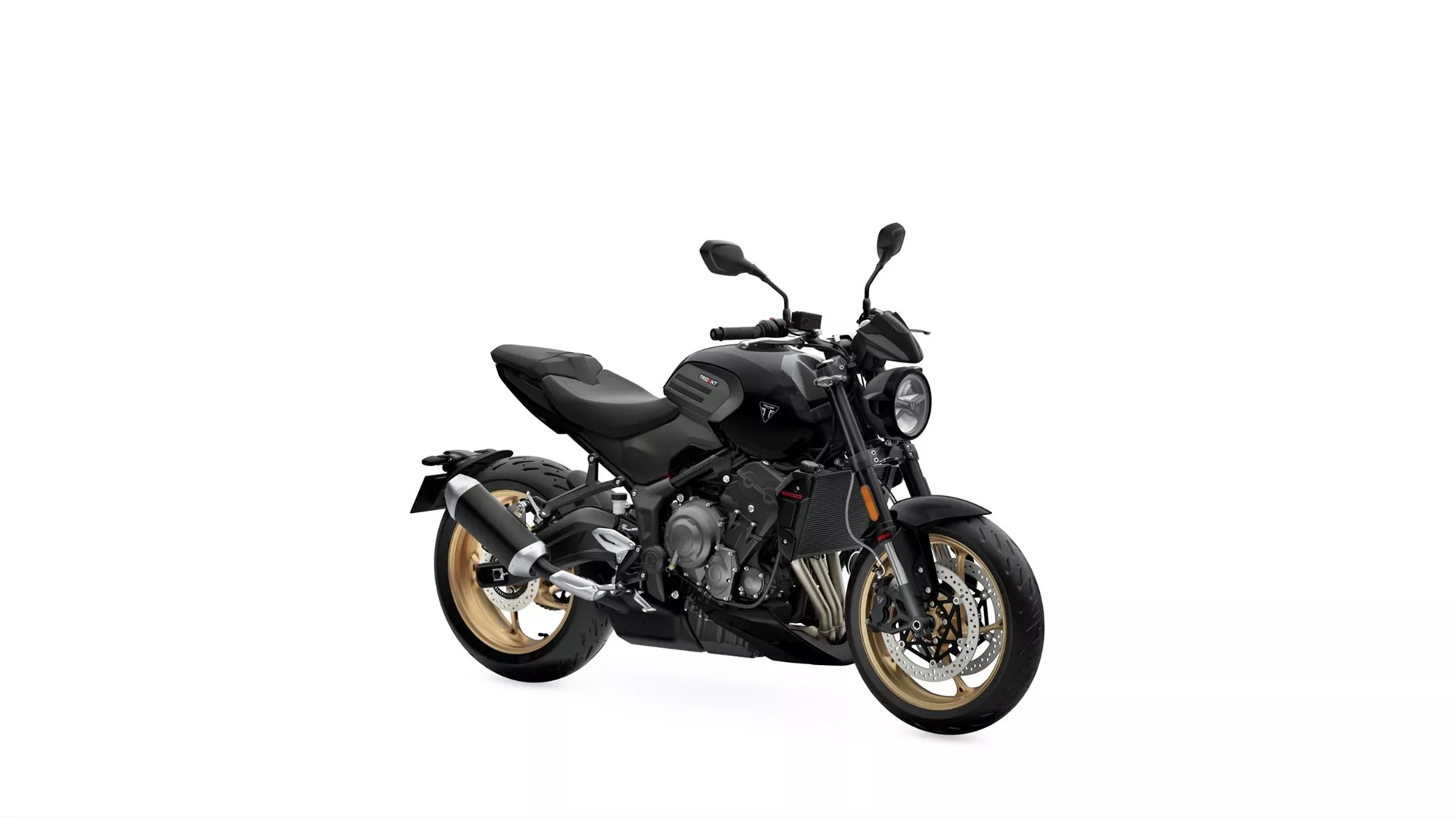
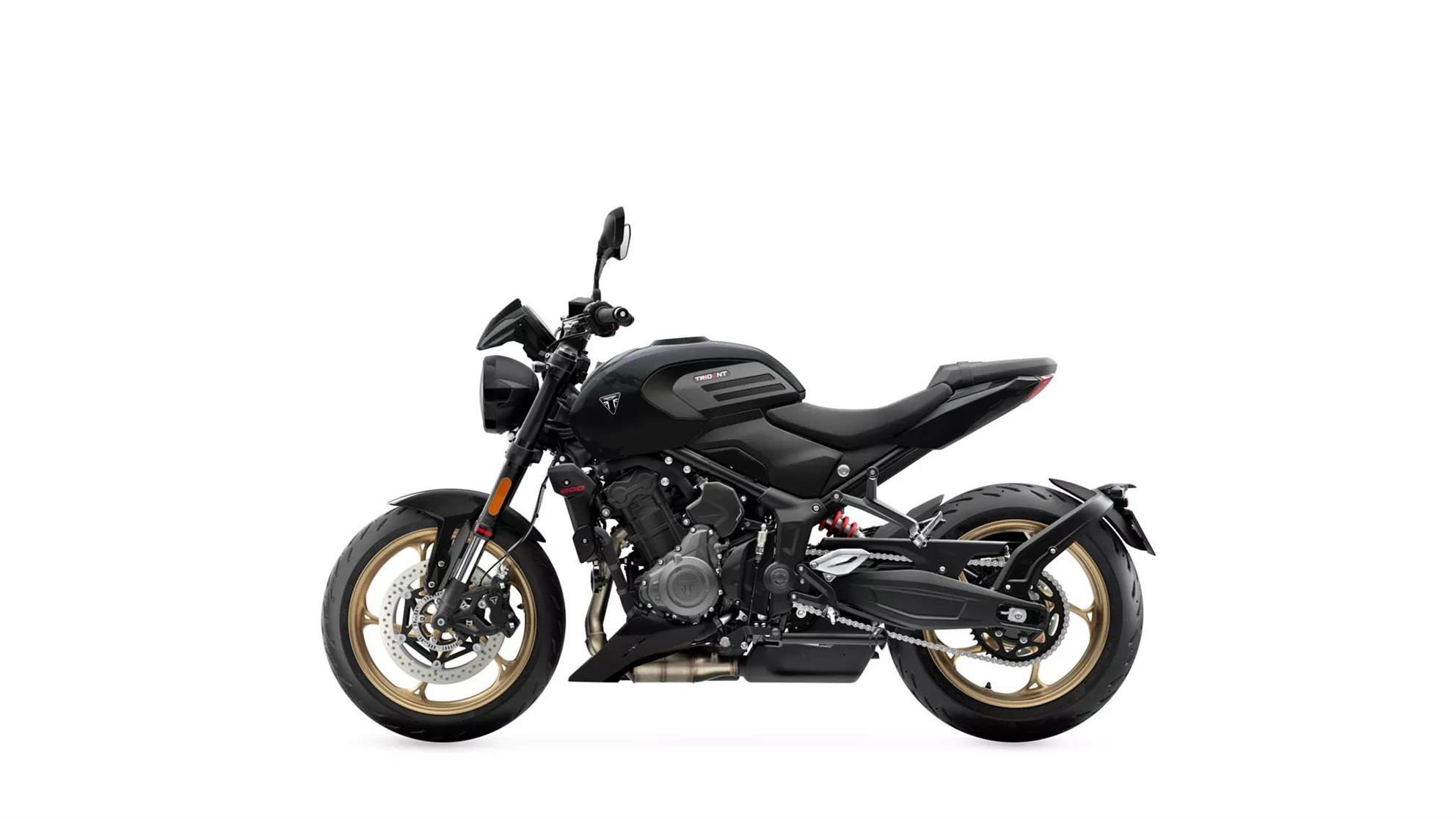
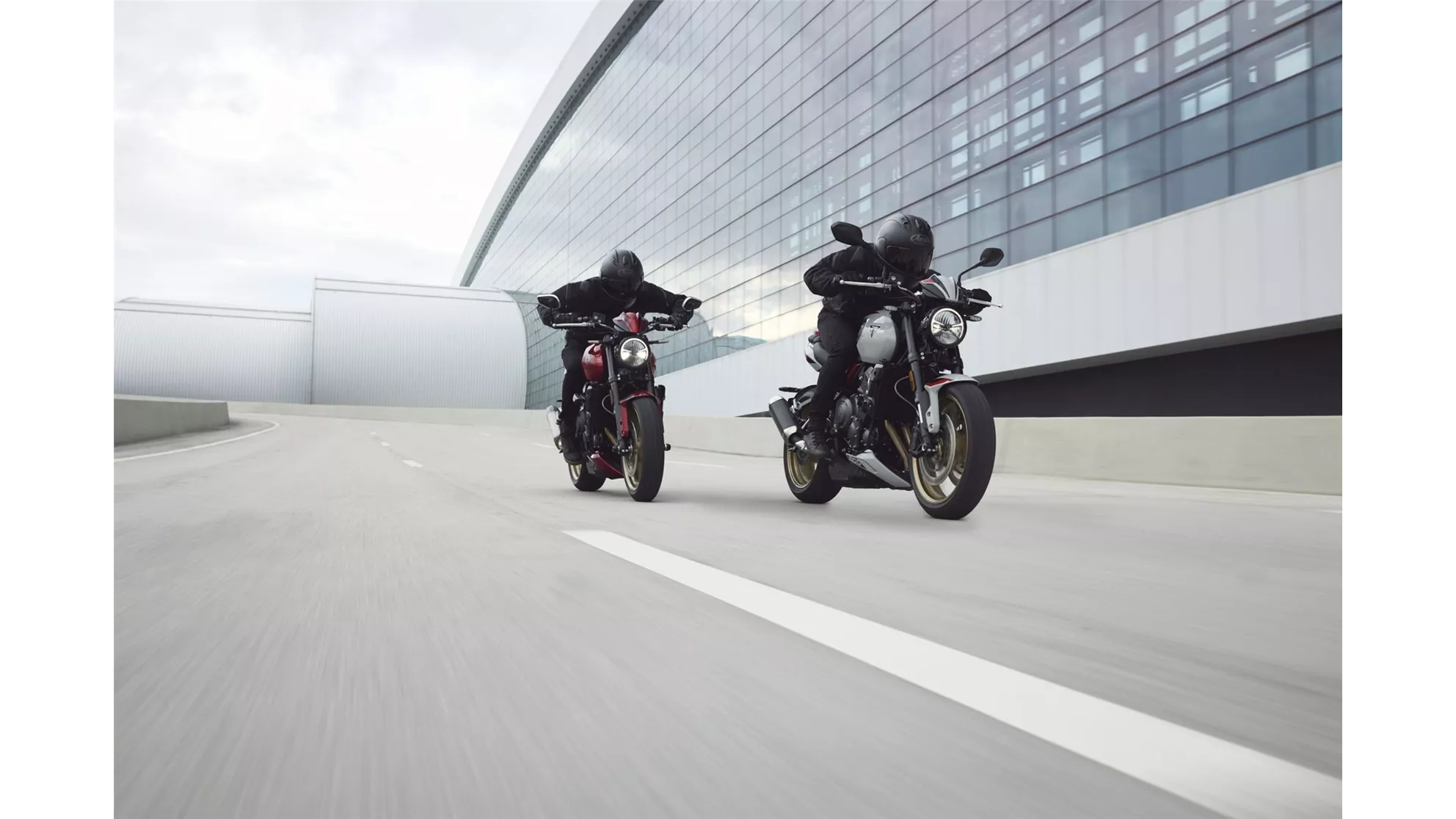
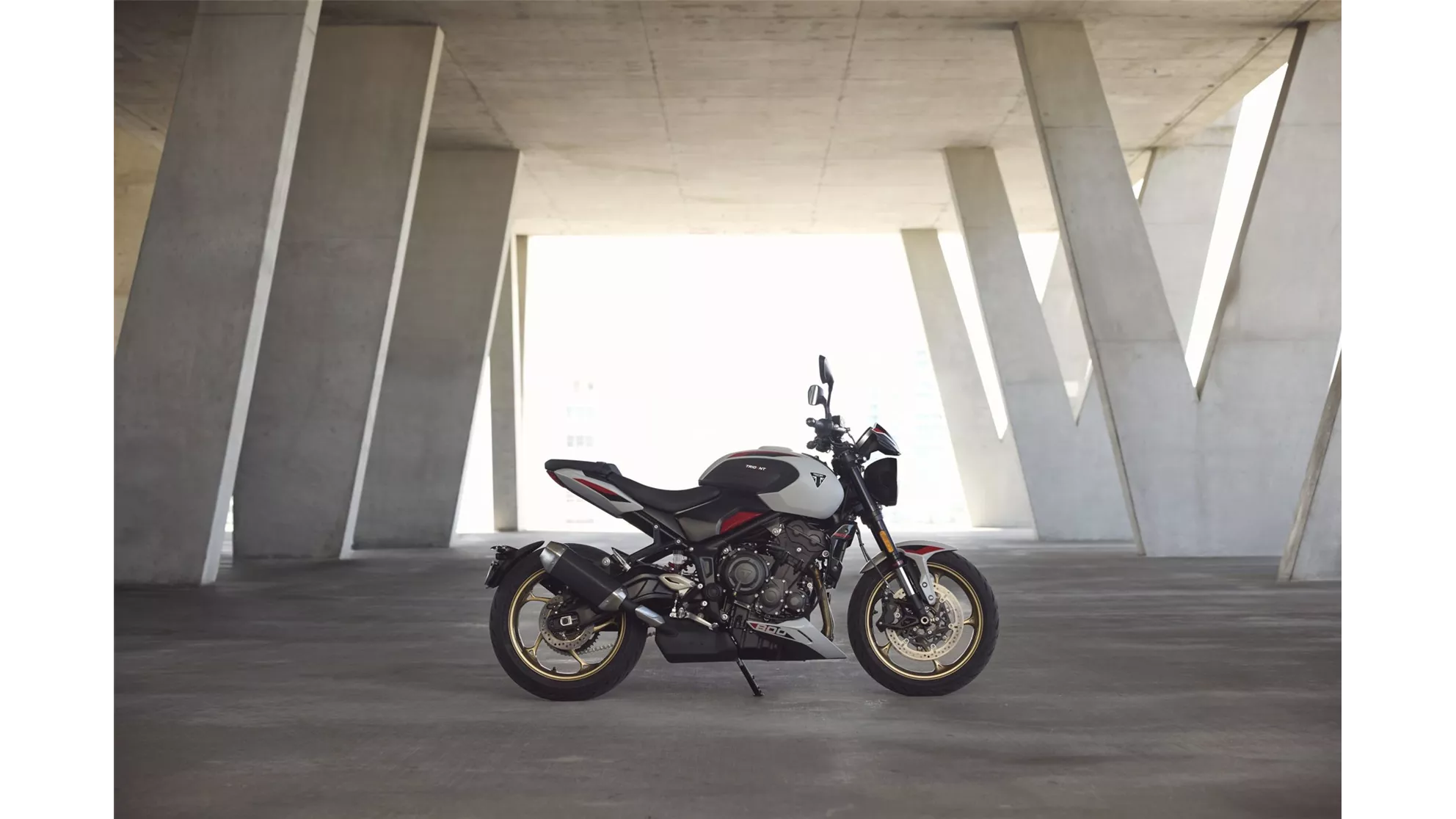
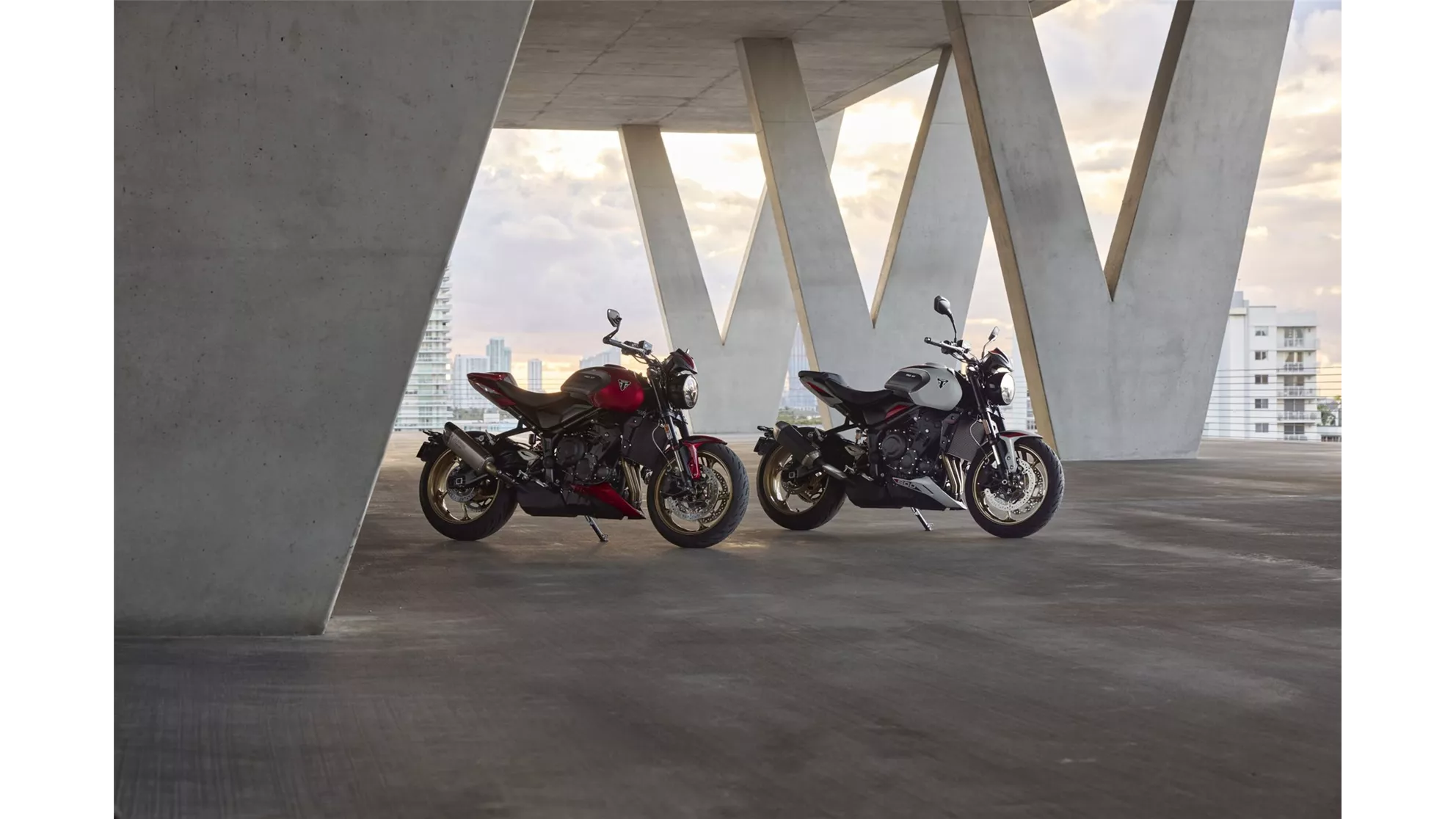
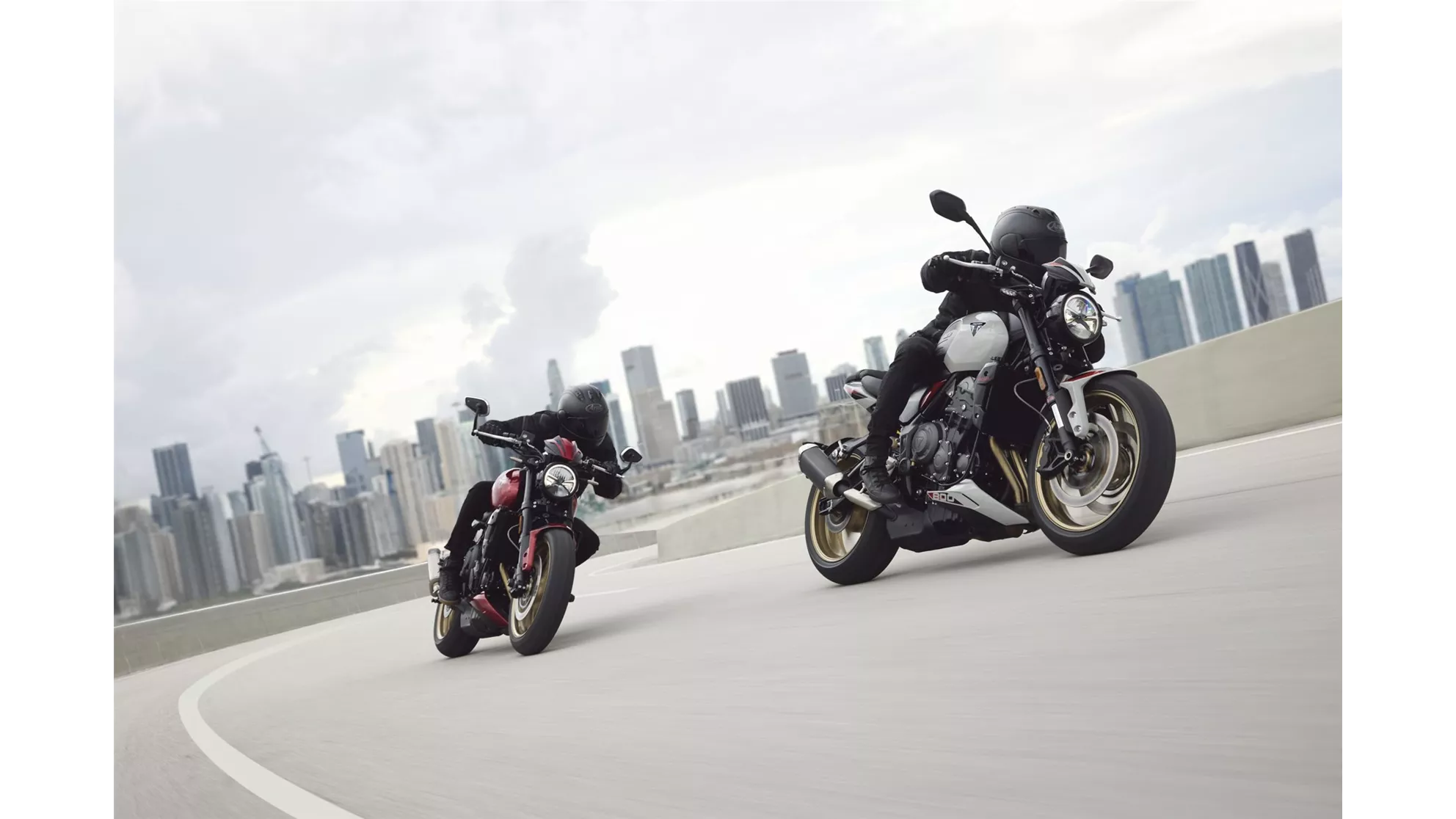
On paper you could answer the question quickly: the Triumph Trident 800 shows up with more power and effectively plays a class above the KTM. Strictly speaking, the smaller Trident 660 would be the more logical rival for the 790 Duke. But paper is patient. Both bikes sit at just under 800cc, and when it comes to torque they're almost dead even. And that's exactly where it gets interesting.
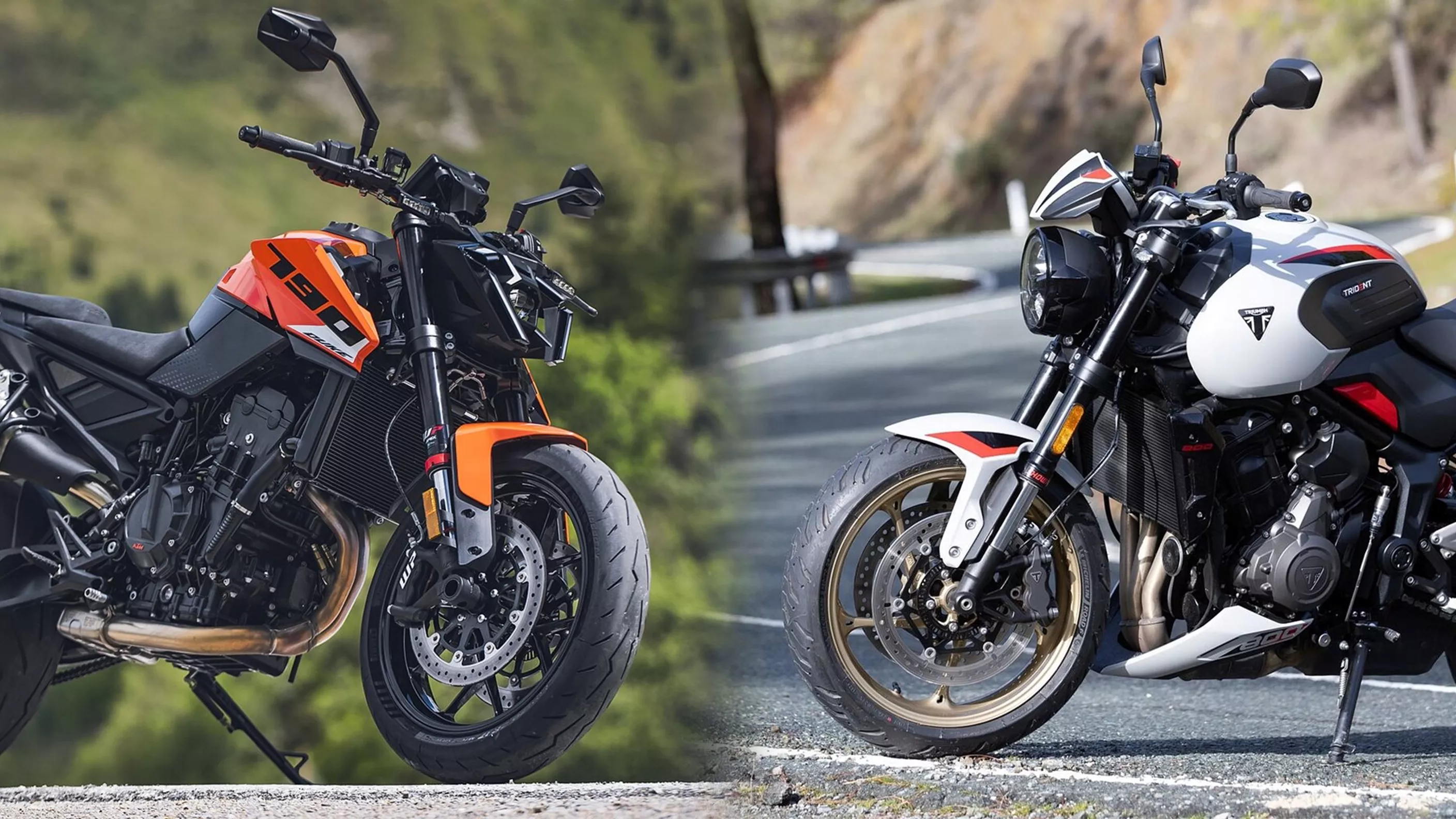
KTM 790 Duke vs. Triumph Trident 800 2026 Test
Which naked bike suits you?
Similar displacement, almost identical torque, and yet two completely different bikes: the KTM 790 Duke still wants to be the scalpel, while the Triumph Trident 800 plays the elegant gentleman roadster. Which concept wins you over?
&width=72&height=72&bgcolor=rgba_39_42_44_0&mode=crop "Author: Der Horvath")
Der Horvath
published on 08/09/2026
4,836 Views
Actually an unfair comparison, right?
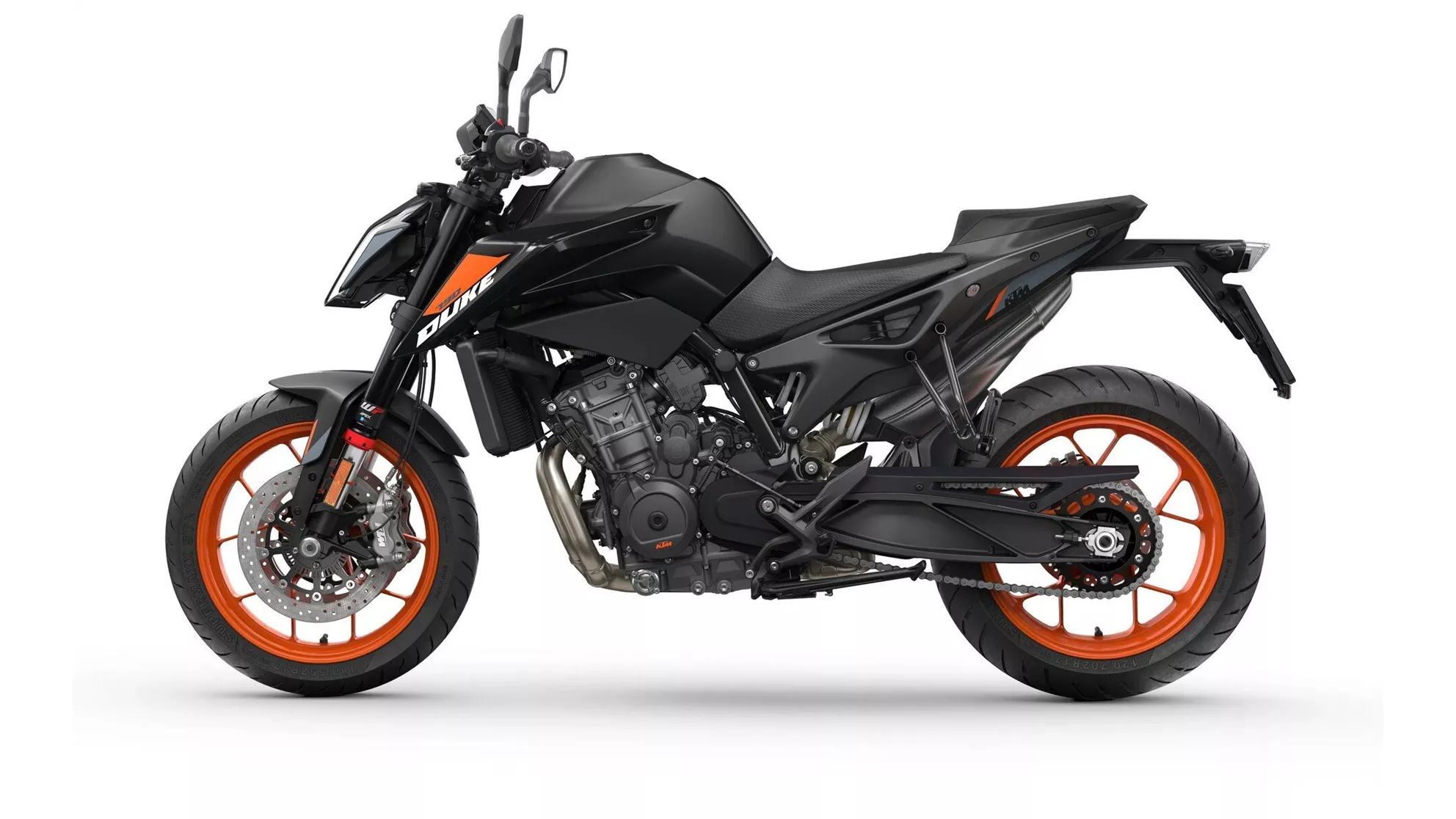
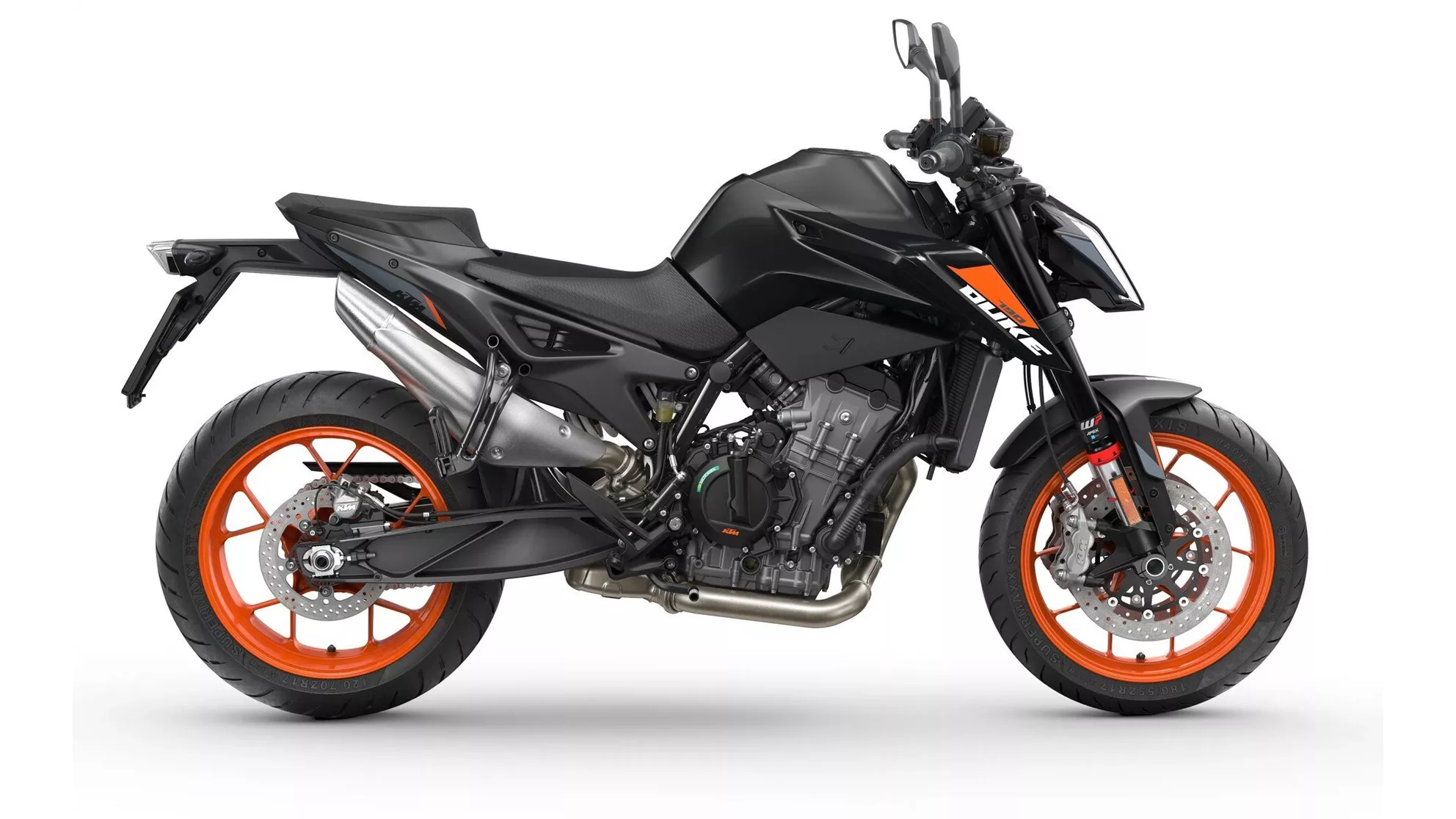
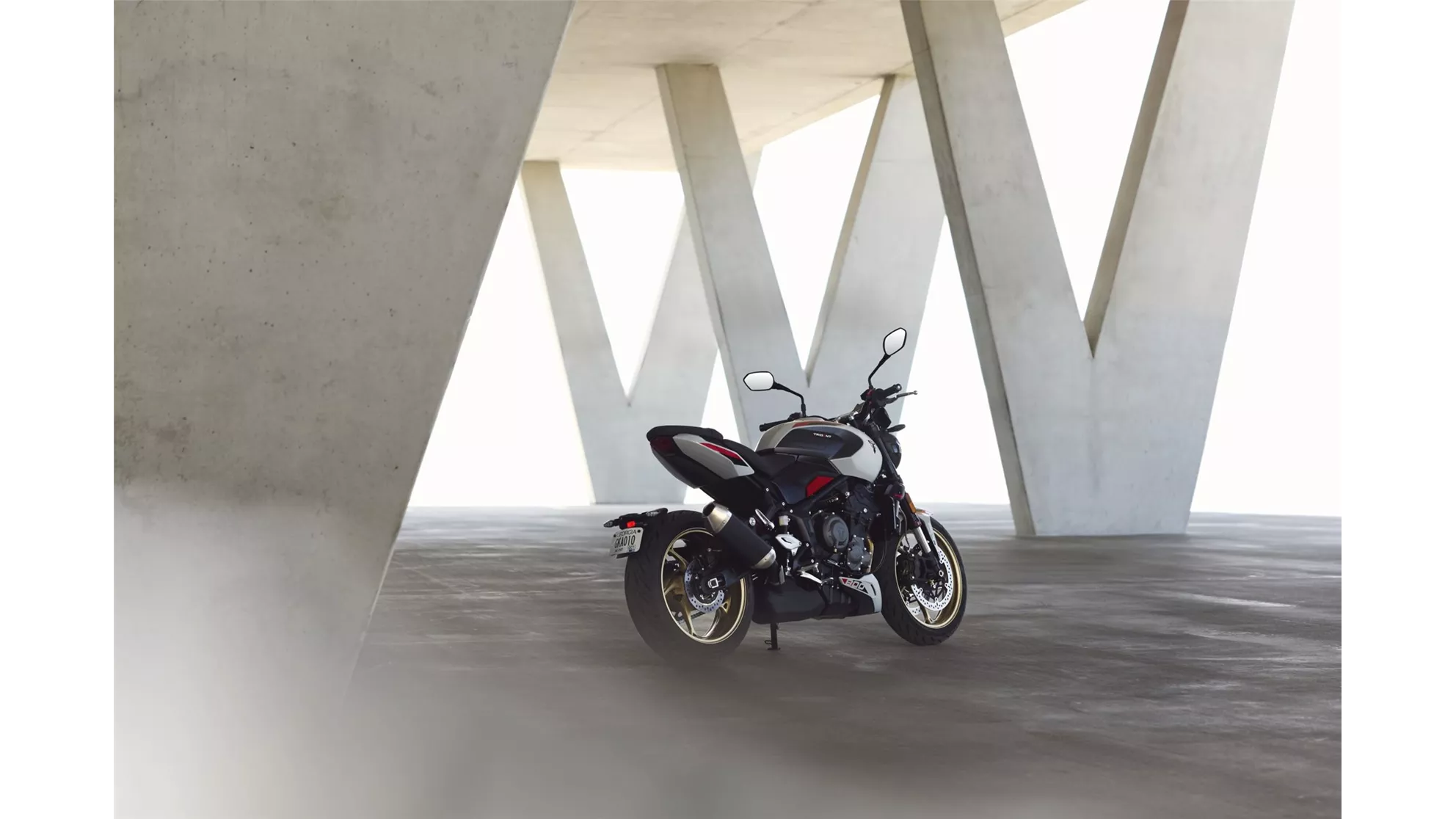
While Triumph is putting a new roadster on the road for 2026 with the Trident 800 - more classic styling, round headlight and soft lines - the 790 Duke has also been extensively reworked. Ergonomics, chassis and brakes are new or revised, and the familiar parallel-twin has been adapted for Euro 5+.
Triumph vs. KTM: Triple against twin
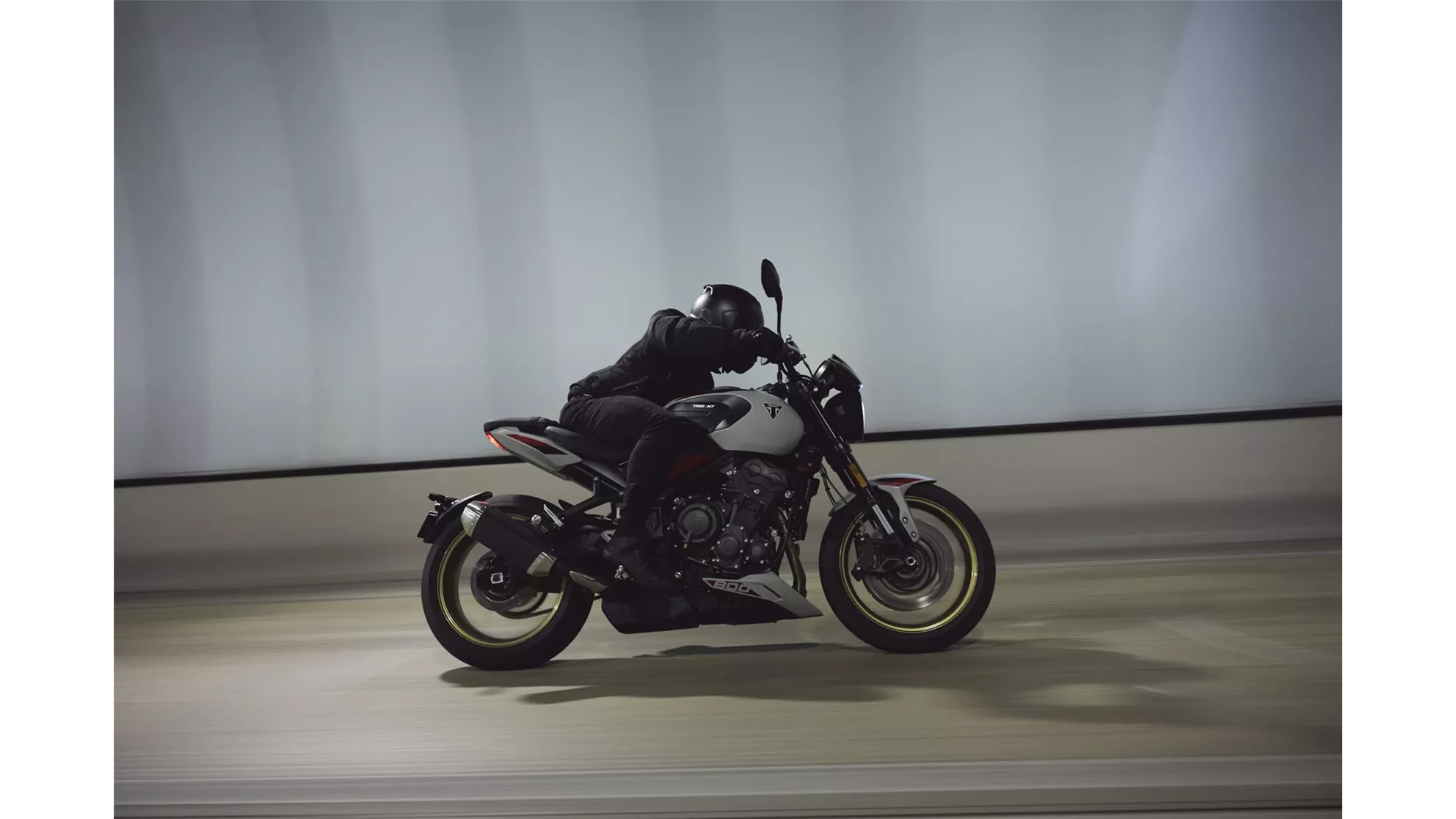
How different can just under 800cc be? Pretty different. The Triumph's inline triple produces 115 hp and 84 Nm and behaves exactly the way you'd want a good triple to behave. Uncomplicated down low, punchy in the mid-range, and revvy enough up top to sing that familiar three-cylinder tune. You can roll gently through town, accelerate relaxed out of a village, and still give it the beans properly on a mountain pass. Its strength isn't just the peak output. It's that clean, accessible power delivery. The engine simply makes it easy.
And the KTM? It comes with 95 hp and even 87 Nm. On paper that's 20 hp less, but on the road it hurts a lot less than you'd think. From roughly 2,500 to 3,000 rpm the twin starts working cleanly, and from there it really pushes nicely through the lower and middle rpm range. Coming out of a tight hairpin, the Duke doesn't need earth-moving peak power. Throttle on, torque's there, next corner.
Only when you wind the engine out further does the triple show its extra reserves. The Triumph simply adds more up top, while the KTM runs out of steam earlier. In normal twisties, though, you often find yourself right where the twin plays its best cards.
The quickshifter reveals the character
The differences continue when shifting. Triumph fits the quickshifter as standard and has tuned it very softly. The gears slot through cleanly without rearranging your neck vertebrae on every upshift. It fits perfectly with the rest of the bike: uncomplicated, accessible and smooth.
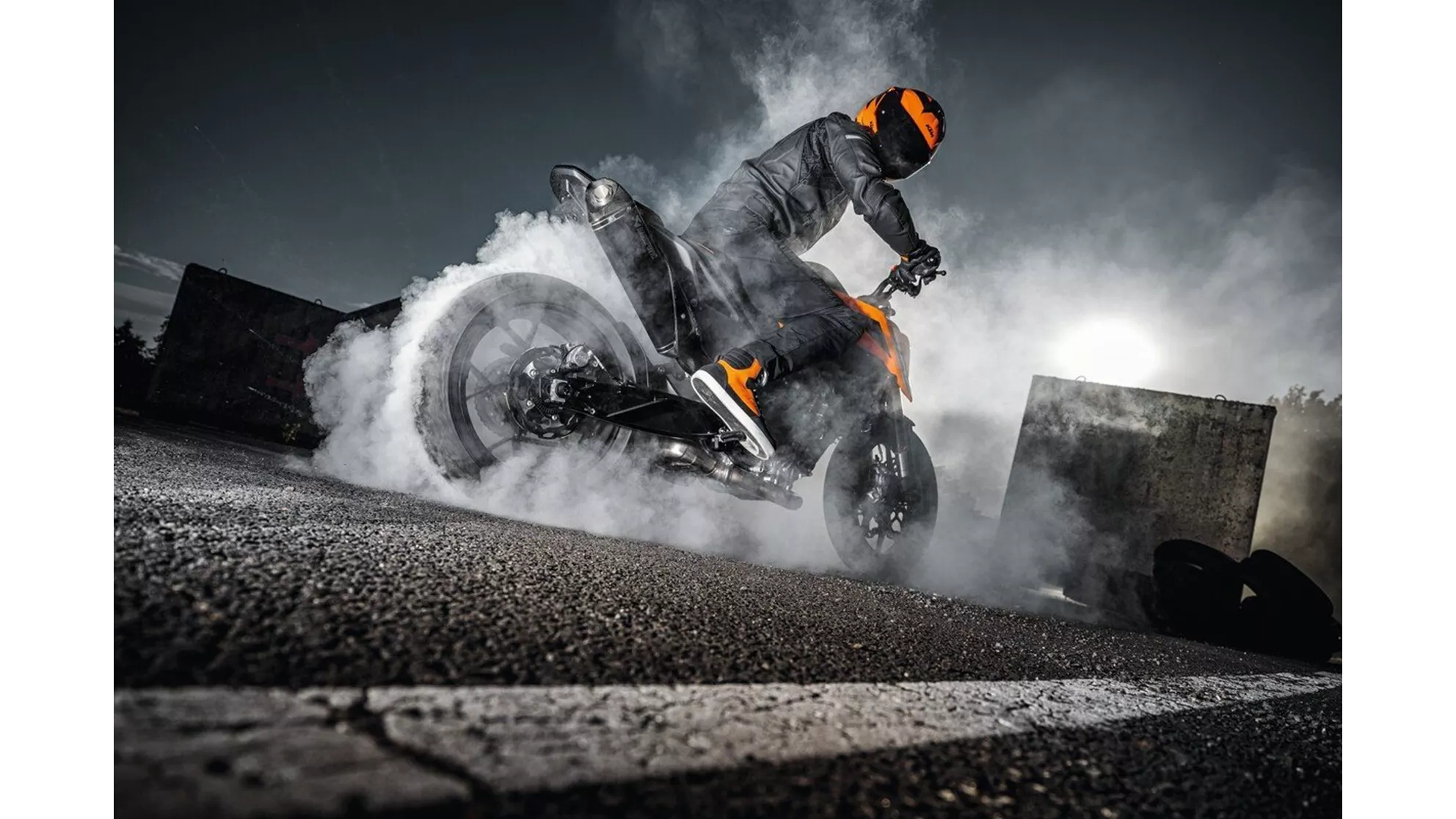
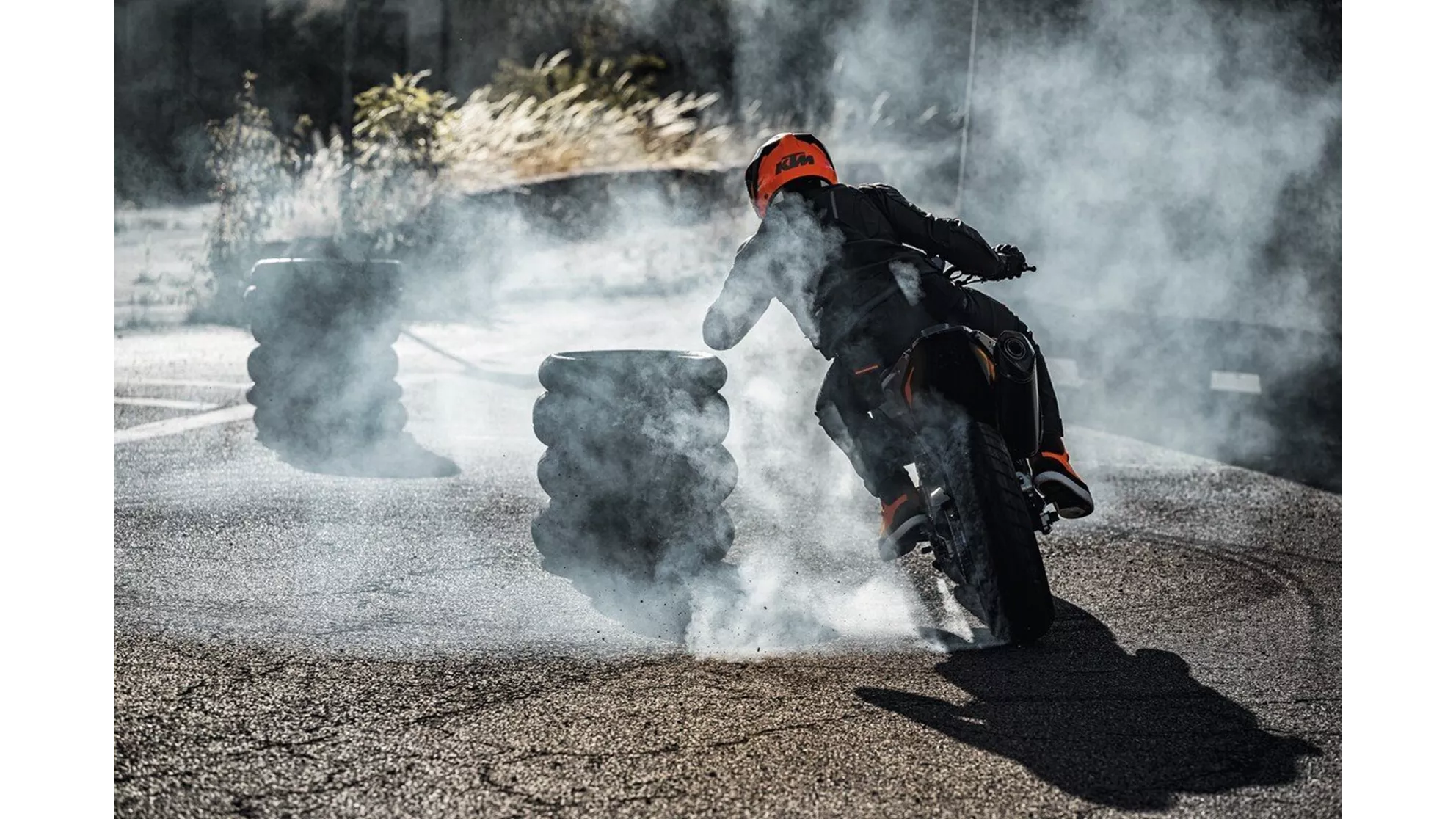
At KTM, the quickshifter costs extra. It's still recommended. Even on the first 790 Duke back in 2018, engine and quickshifter formed a rather successful combination. And today, too, this harder, more mechanical shifting feel suits the Duke perfectly. Gear in, next gear, maybe a cheeky sign of life from the exhaust on downshifts - the KTM turns it into a little event.
Electronics: surprisingly little gap
You'd actually expect the pricier Triumph to run away with it on electronics. But it only does so partially. Both bikes use a 6-axis IMU and thus have lean-angle-dependent safety systems. Cornering ABS and lean-angle-dependent traction control are present on both sides, plus various riding modes. On the truly important safety functions, the cheaper KTM holds up surprisingly well.
Triumph also adds cruise control and quickshifter as standard on top. At KTM such features can be added for extra cost. At least the old demo mode is history, though the principle remains: if you want the Duke with all the technical goodies, you'll have to dig into the accessories shelf.
With the display, though, the tables turn. The KTM's 5-inch TFT is clear, easy to read and fairly intuitive to operate. You look at it and find what you're looking for. Triumph again fits its familiar combination of LCD and TFT display in the cockpit. It works. All the important information is there. But it's far from pretty or particularly intuitive to use. Precisely because the Trident has turned into a genuinely good-looking bike overall, this unit feels a bit like the obvious cost-cutting measure on an otherwise accomplished bike.
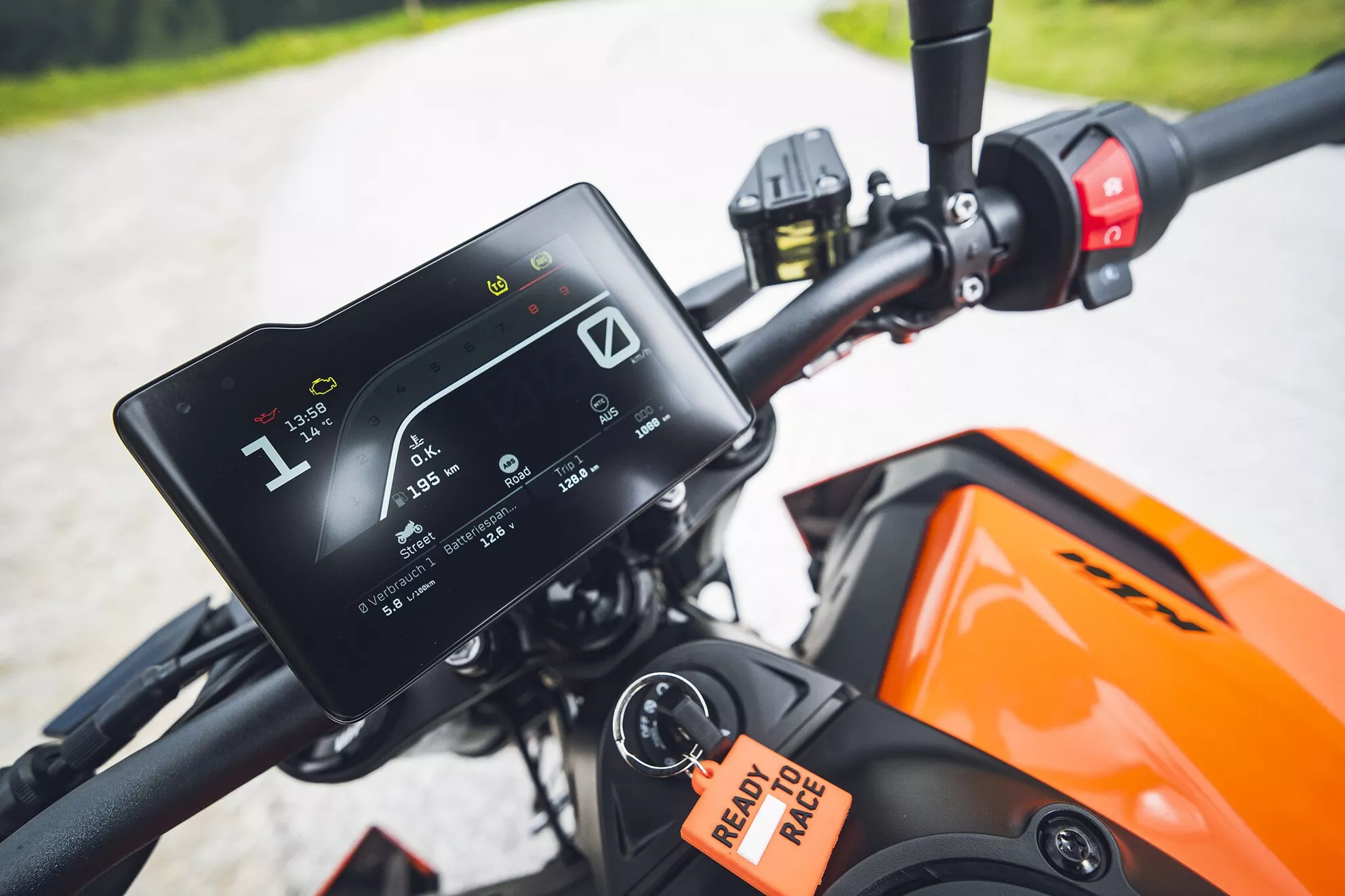
Good and easy to read: the KTM display
Gentleman roadster meets scalpel
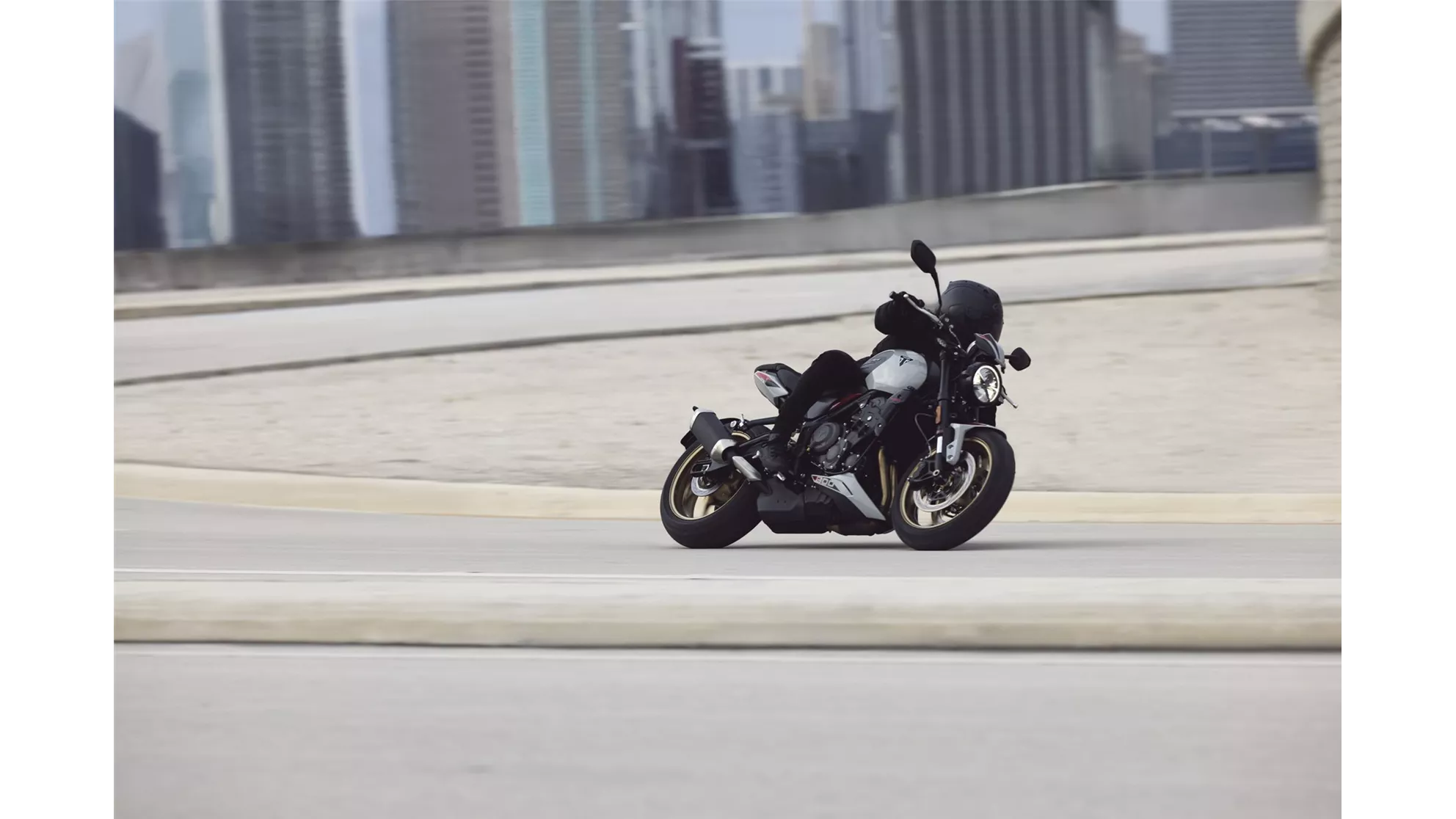
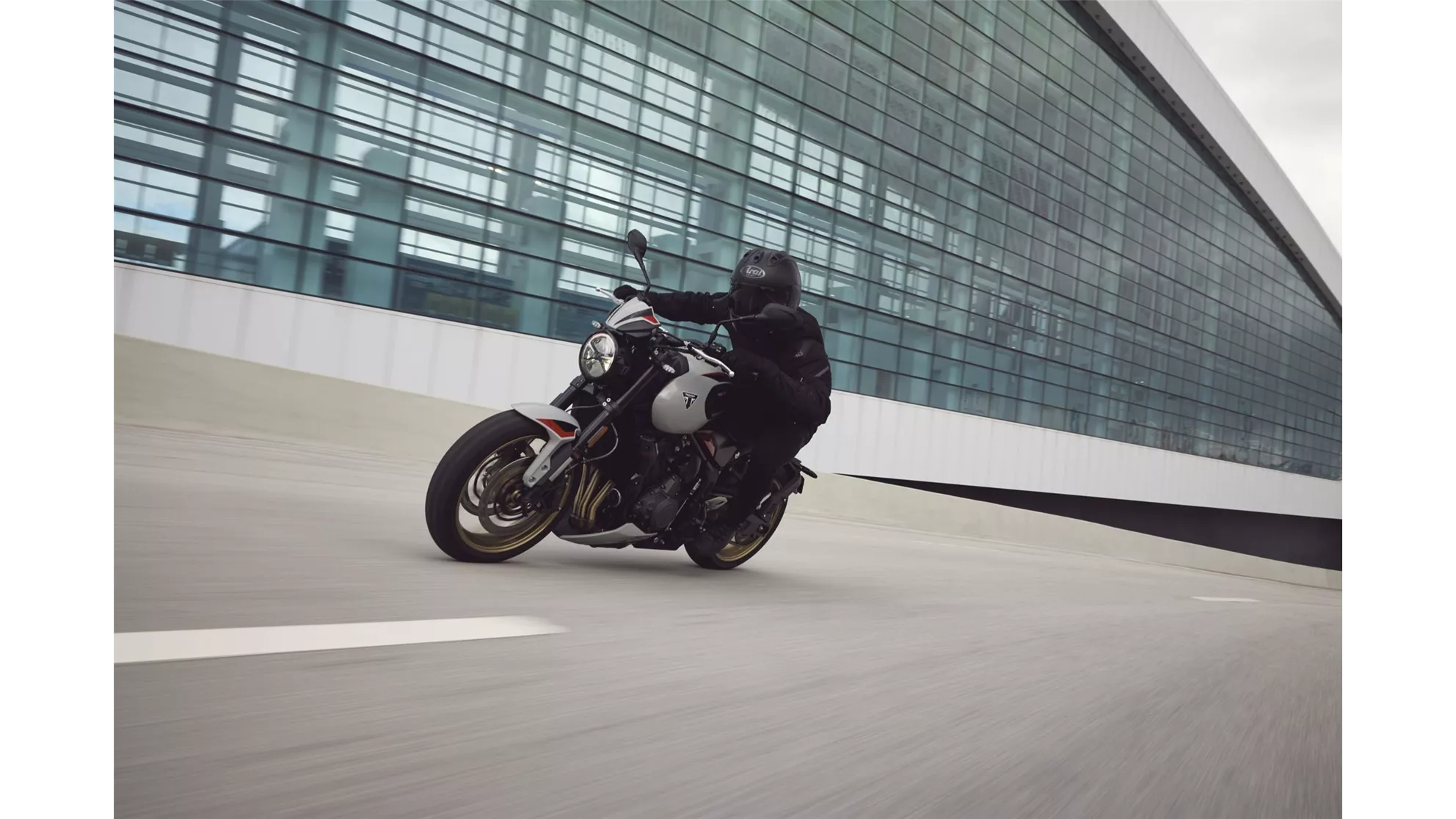
On the chassis, the comparison finally turns into a character study. The Triumph relies on Showa. Up front works an upside-down fork with adjustable compression and rebound, and there's adjustment available at the rear too. In its base setting, the Trident still stays on the more comfortable side. It sits stable in corners, holds its line cleanly and can be carved nicely through a radius. At the same time it soaks up enough that a long day's ride doesn't turn into a physiotherapy session.
The KTM goes a different direction. WP also supplies an adjustable chassis, with compression and rebound at the fork conveniently changed via small hand-wheels. No tools needed. Above all, the base setup is firmer and more direct.
- How much does a KTM 790 Duke cost?
- Here you will find an overview of the price level of new and used motorbikes!
In 2018 KTM called the 790 Duke the scalpel. The name still fits. Can it completely leave the Trident behind in the twisties? No. The difference isn't that huge. But at the latest on rough asphalt you notice that the Triumph allows more movement, while the Duke leans more on precision and immediate feedback. Anyone who wants to brake more aggressively into a corner and feel more pressure on the front wheel will feel at home faster on the KTM. Anyone looking for a fair compromise between pace and comfort gets it on the Triumph.
The riding position plays the same game
At around 1.75m tall, I sit very upright on the Triumph. The handlebar is set relatively high, the seating triangle is relaxed and the knee angle gives no cause for complaint. There's also enough room around the tank and knees when you sit up. Add a well-padded seat. In short: sit down and ride.
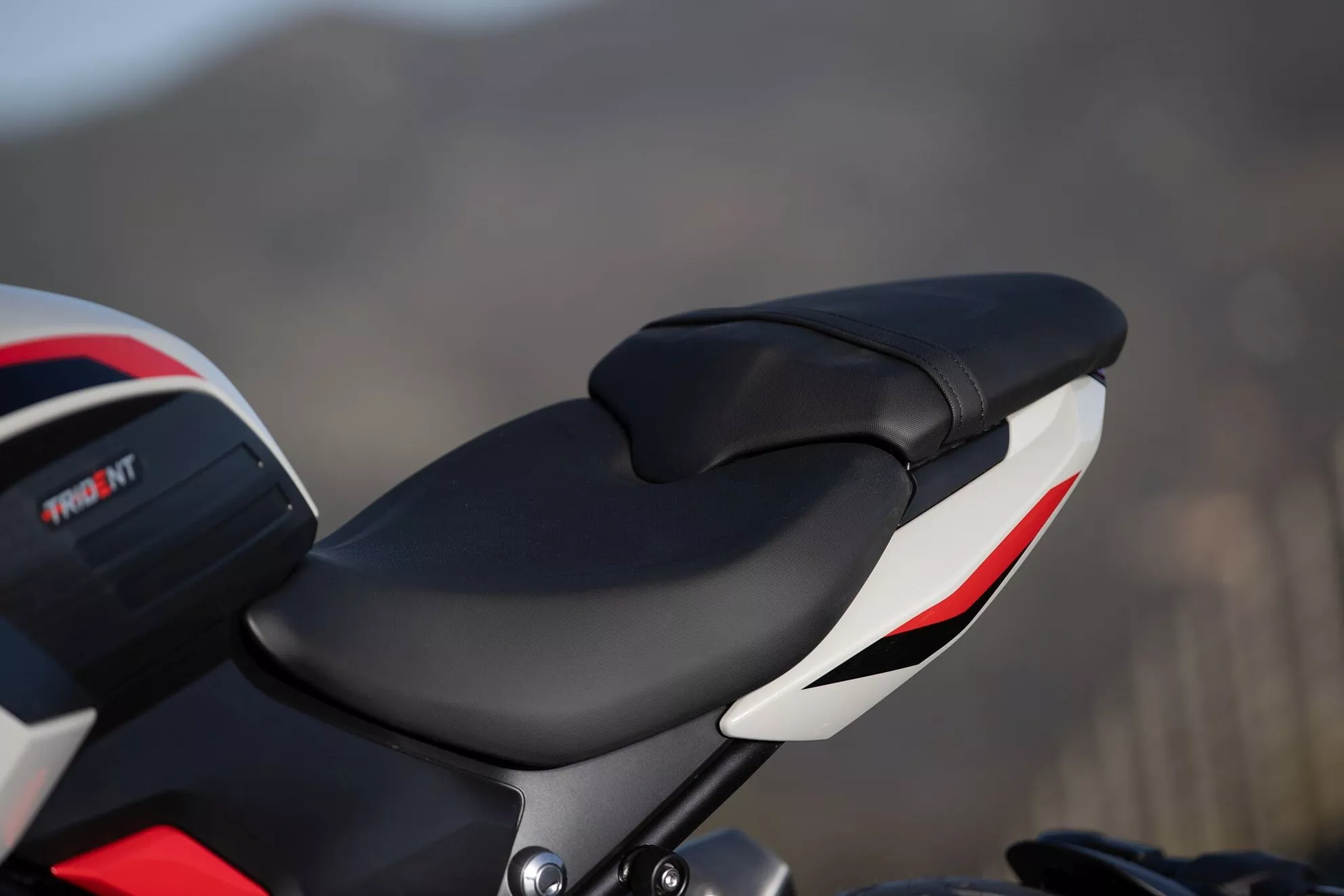
The KTM used to be cut much more radically toward the front wheel. You felt like you were sitting almost on the steering head, which gave you plenty of front-end feel, but not everyone wanted to spend their Sunday ride in a permanent attack stance. For 2026 KTM has addressed exactly that. New handlebar, a narrower and slightly more padded seat up front, and more distance between bar and tank make the seating feel more classic and accessible.
That doesn't turn the Duke into a full gentleman, though. You still lean a bit more toward the front wheel, get more pressure on the front, and thus more feel for what the front tyre is doing. It's sportier without being uncomfortably radical again. That's just how you want it!
No clear winner on the brakes
I would have liked to do a definitive brake test switching directly between the two bikes. In this case that exact test wasn't possible, though, because the KTM was still out at the press launch at the time of shooting. Still, a clear picture emerges from the respective rides: both brake systems work well and neither was tuned to be unnecessarily grabby. That fits the intended use, since neither Triumph nor KTM want to appeal only to experienced corner-carvers here.
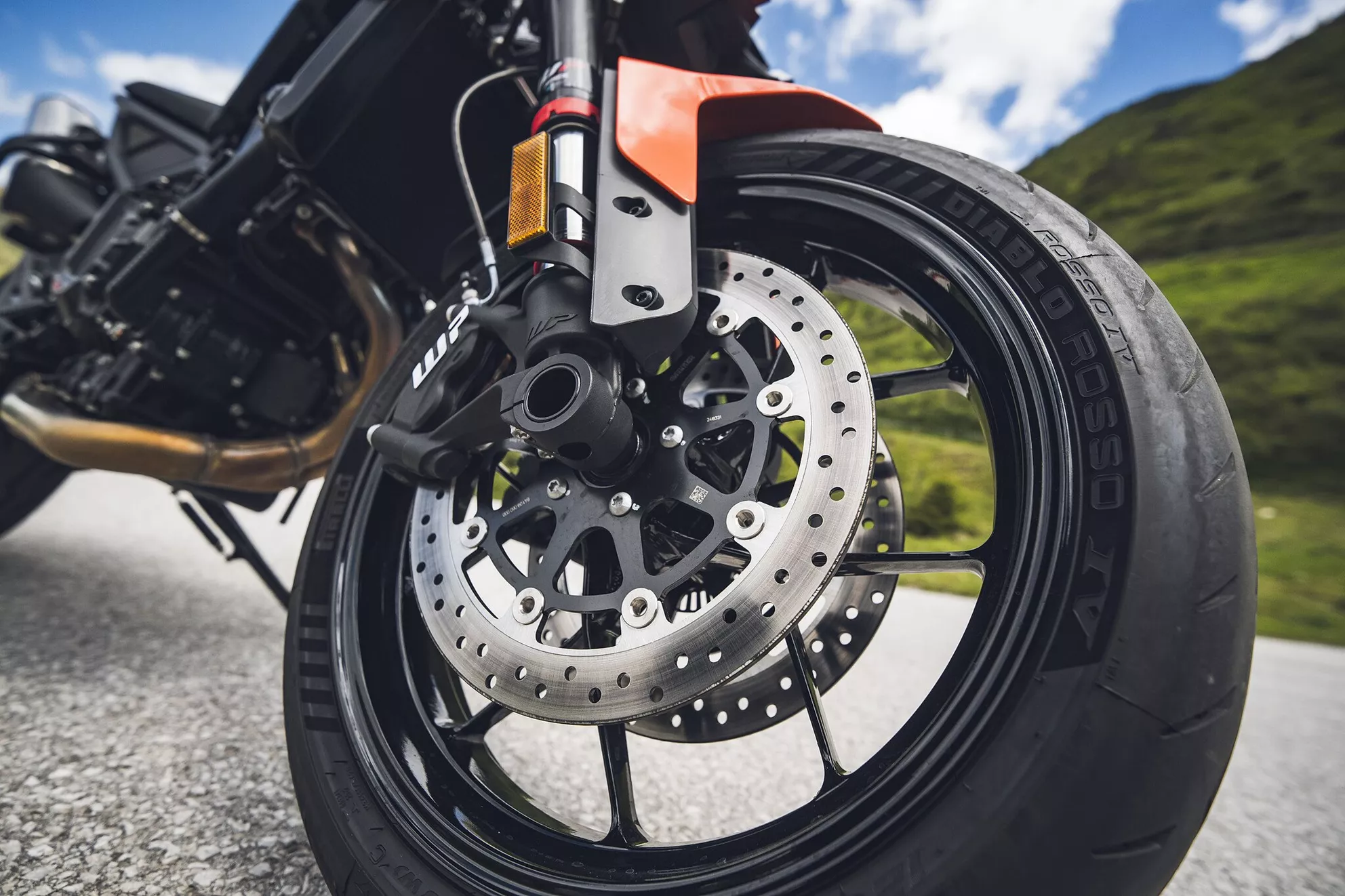
Newcomers and switchers in particular should feel comfortable too. A brake that tries to stop the Earth's rotation on first contact with the lever would be out of place here.
Price: KTM 790 Duke vs. Triumph Trident 800
Now you might think: the Triumph has more power, quickshifter and cruise control as standard - so it must get financially ugly. It's not quite that bad. In Germany the Triumph Trident 800 costs just under 9,700 euros, the KTM 790 Duke just under 8,700 euros. That leaves around 1,000 euros between the two bikes. However, with the Duke you have to factor in that quickshifter and cruise control need to be paid for extra.
And that's exactly why you shouldn't just compare the bare base price. If you equip the KTM accordingly, part of its price advantage melts away again. Current prices can be found here: Buy KTM 790 Duke and Triumph Trident 800.
Trident 800 or 790 Duke: which is better?
So what remains after this somewhat odd comparison?
The Triumph Trident 800 is, for me, the elegant roadster. Its triple runs smoothly, sings beautifully, has more reserves up top and can still be ridden completely relaxed. The chassis allows for sporty laps but doesn't put comfort on the back burner. Riding position, standard equipment and the smooth quickshifter all fit this picture.
The KTM 790 Duke is the cheekier bike. Its twin punches hard with 87 Nm right down low and through the mid-range, the firmer chassis rather demands attack, and the riding position brings you closer to the front wheel. It's become more accessible in 2026 without throwing its old scalpel character overboard.
Which one is better? That depends unusually heavily on what you understand a good naked bike to be. Anyone who wants to dissect the twisties after work should definitely ride the KTM. Anyone who instead combines sportiness with more composure, comfort and that glorious triple will probably end up on the Triumph.
- How much does a Triumph Trident 800 cost?
- Here you will find an overview of the price level of new and used motorbikes!
&width=60&height=60&bgcolor=rgba_39_42_44_0&mode=crop "Author: Der Horvath")
KTM 790 Duke 2026 - Experiences and Expert Review
Der Horvath
The KTM 790 Duke 2027 isn't a completely new bike, but it feels like a necessary reset. The familiar twin delivers more than enough power for the road with 95 hp, the new WP chassis suits the sporty character, the brakes are finely dosable and the ergonomics have been noticeably improved. The unpainted-over stickers show that this bike was developed with price discipline. And taller riders should check the knee angle. But these aren't points that ruin the overall package.
Triumph Trident 800 2026 - Experiences and Expert Review
Der Horvath
The Triumph Trident 800 stays true to the Trident idea: accessible, uncomplicated, fun to ride - just noticeably more grown-up than its 660 sibling. The new 798cc triple delivers elasticity, the standard quickshifter works excellently, and the overall package of chassis, tyres, electronics and ergonomics makes the Trident 800 a bike that feels light-footed in the city and smooth on the open road. Add to that very good build quality and a design that's clearly recognisable as a Trident - with a bit more bulk and a talking-point number plate holder.
More from 1000PS Magazine
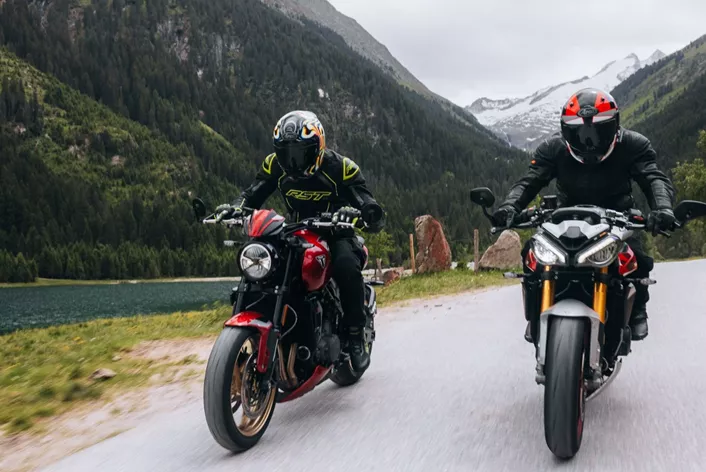
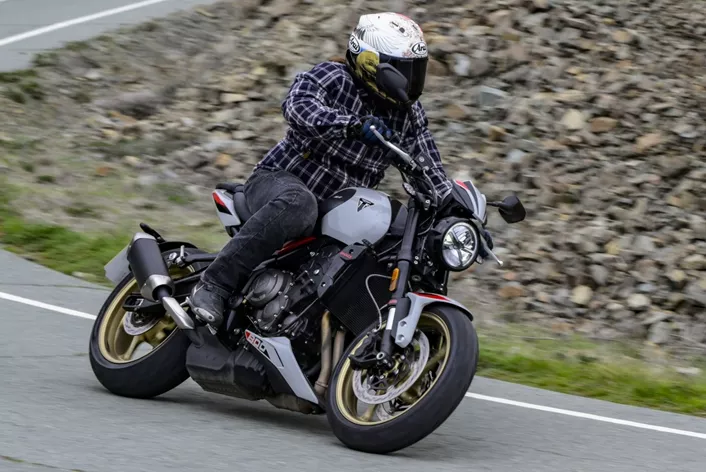

KTM 790 Duke vs. Triumph Trident 800 2026 Test Images
Source: 1000PS