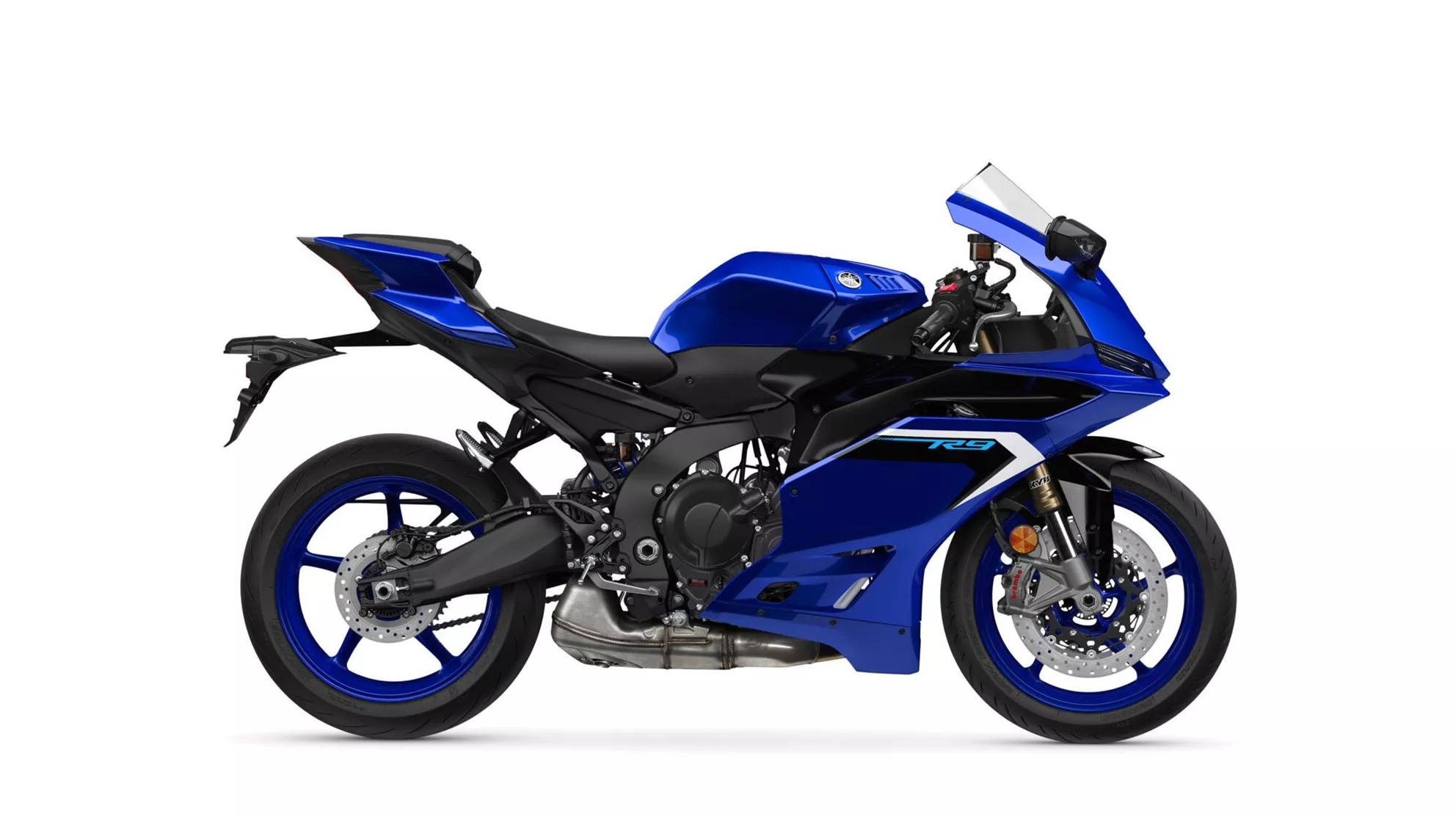
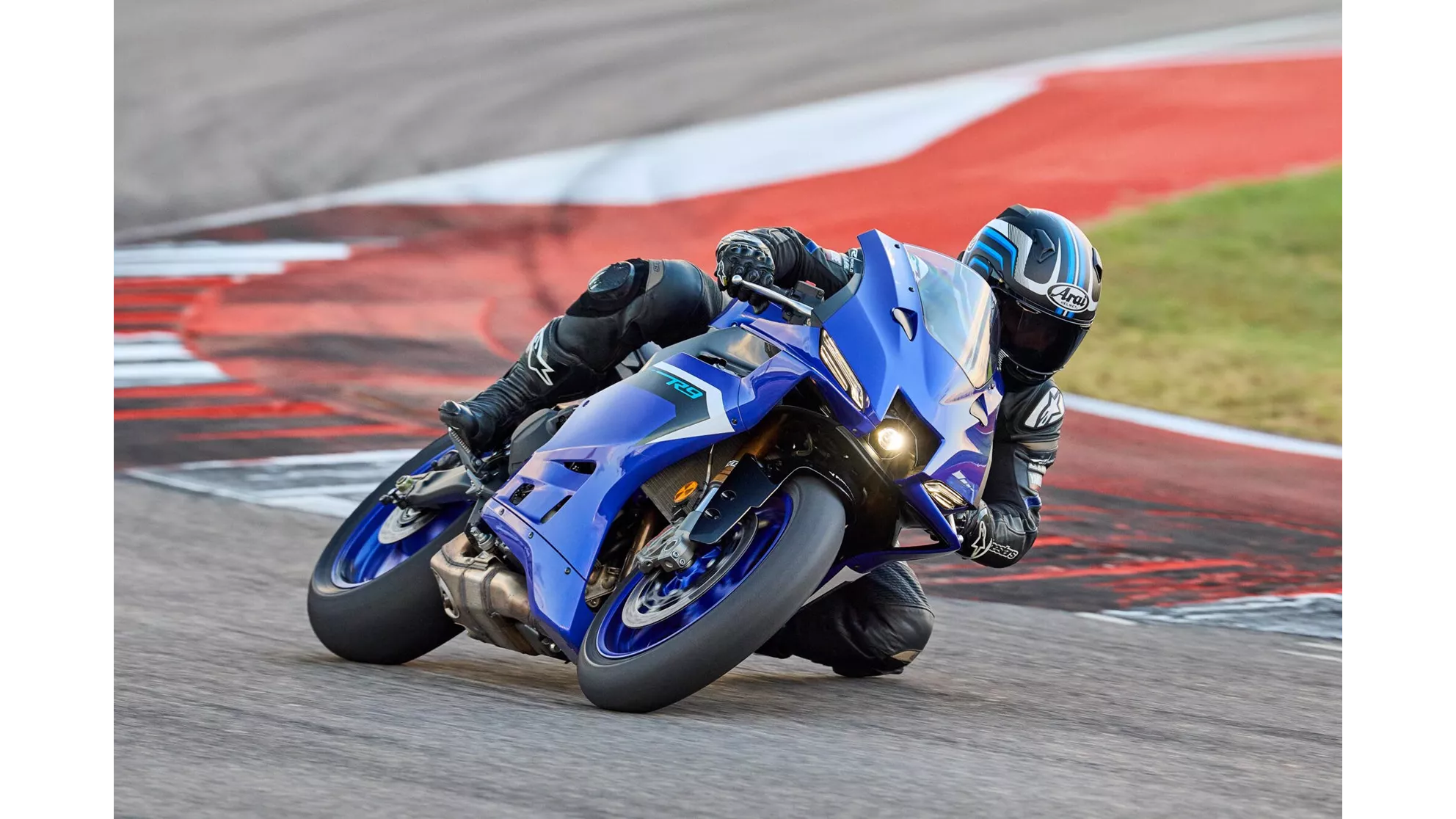
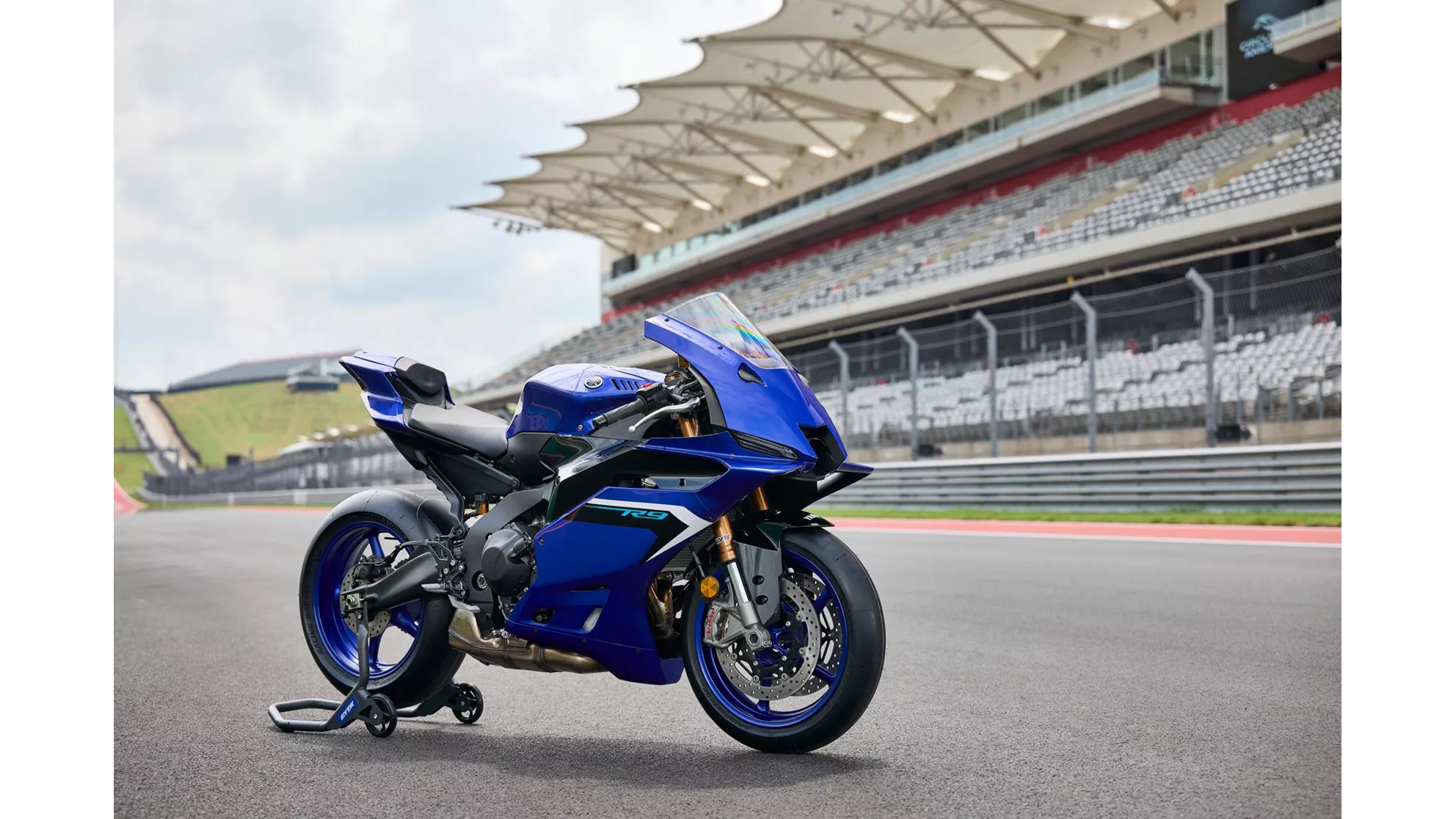
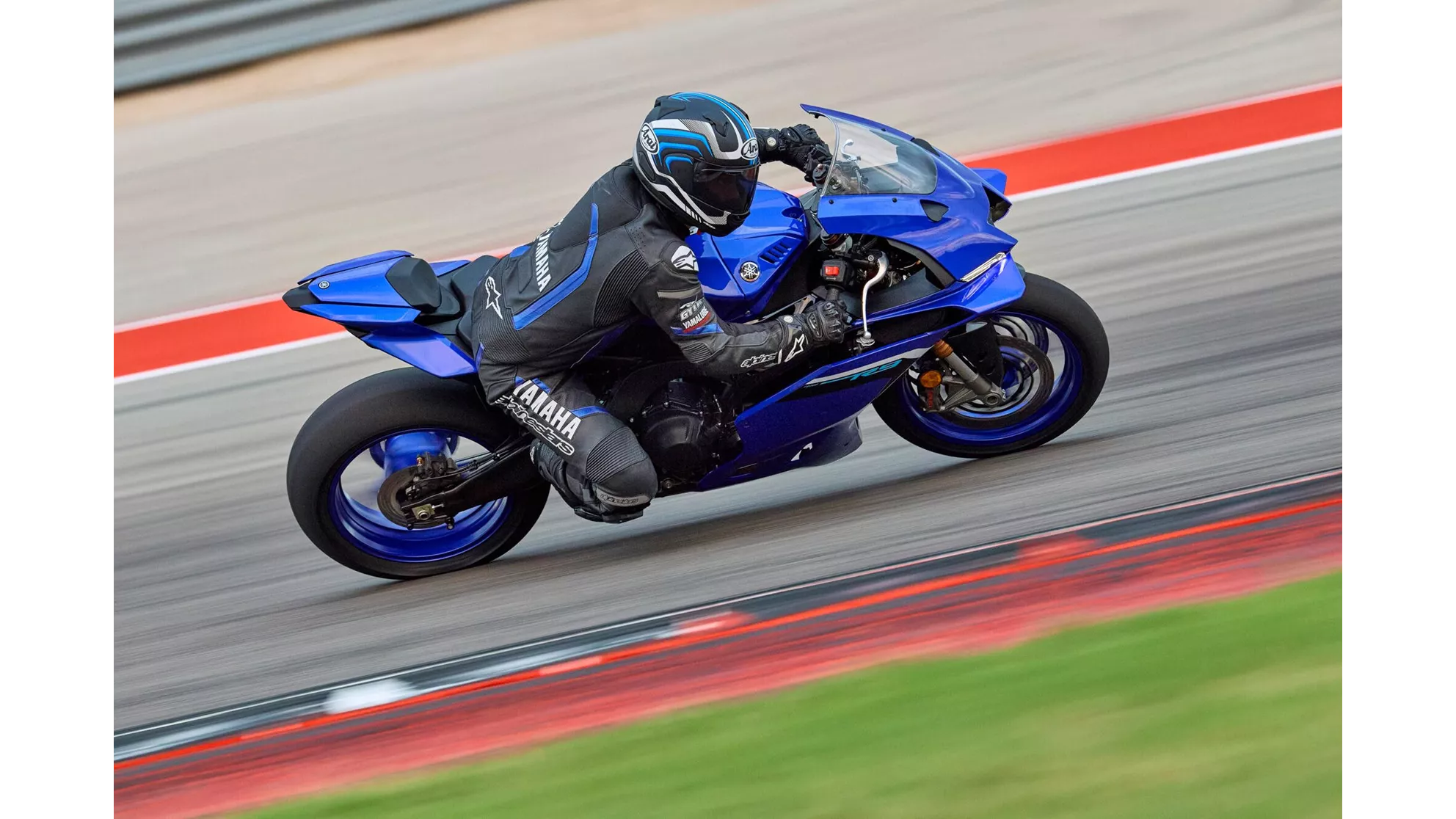
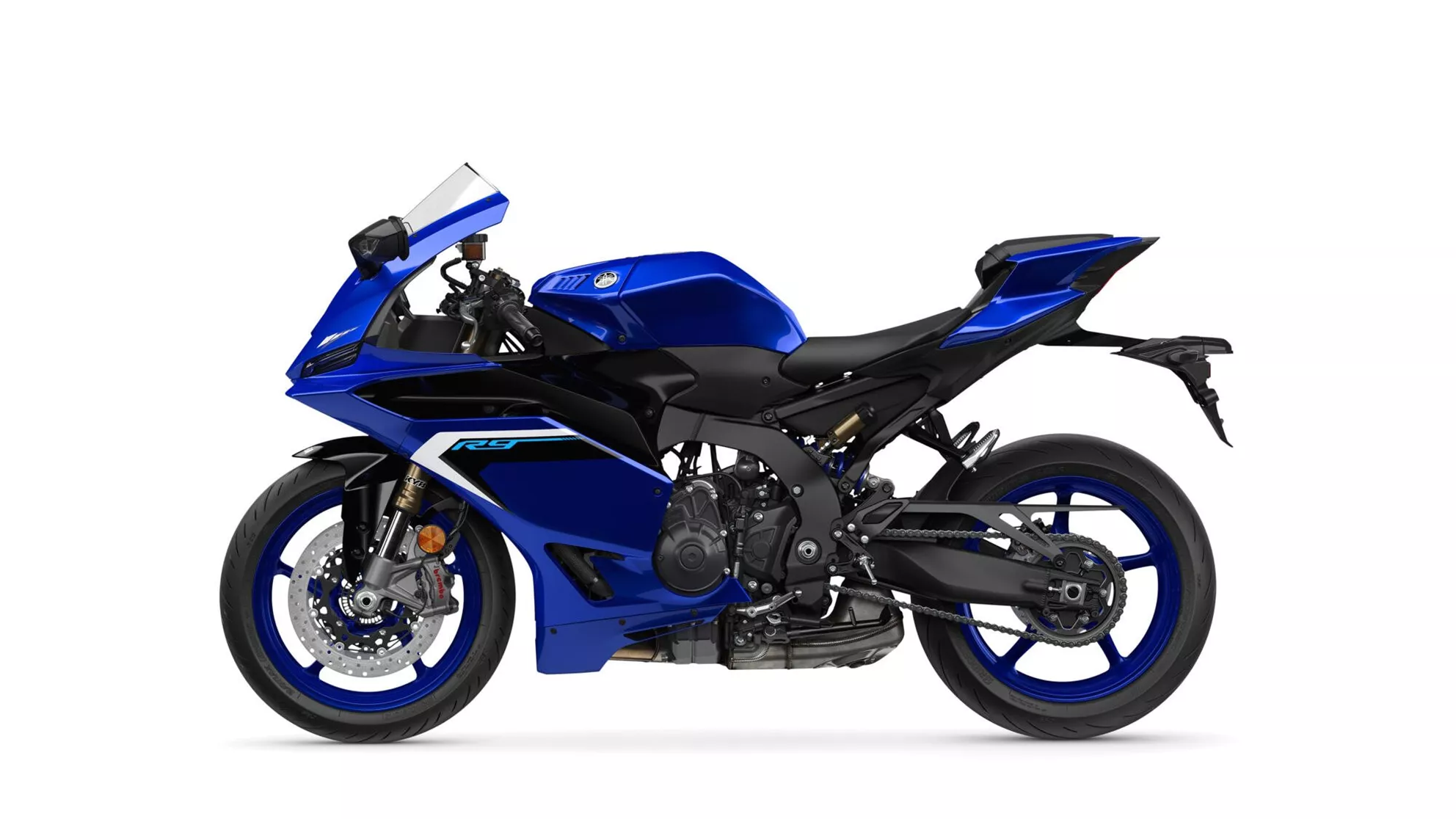
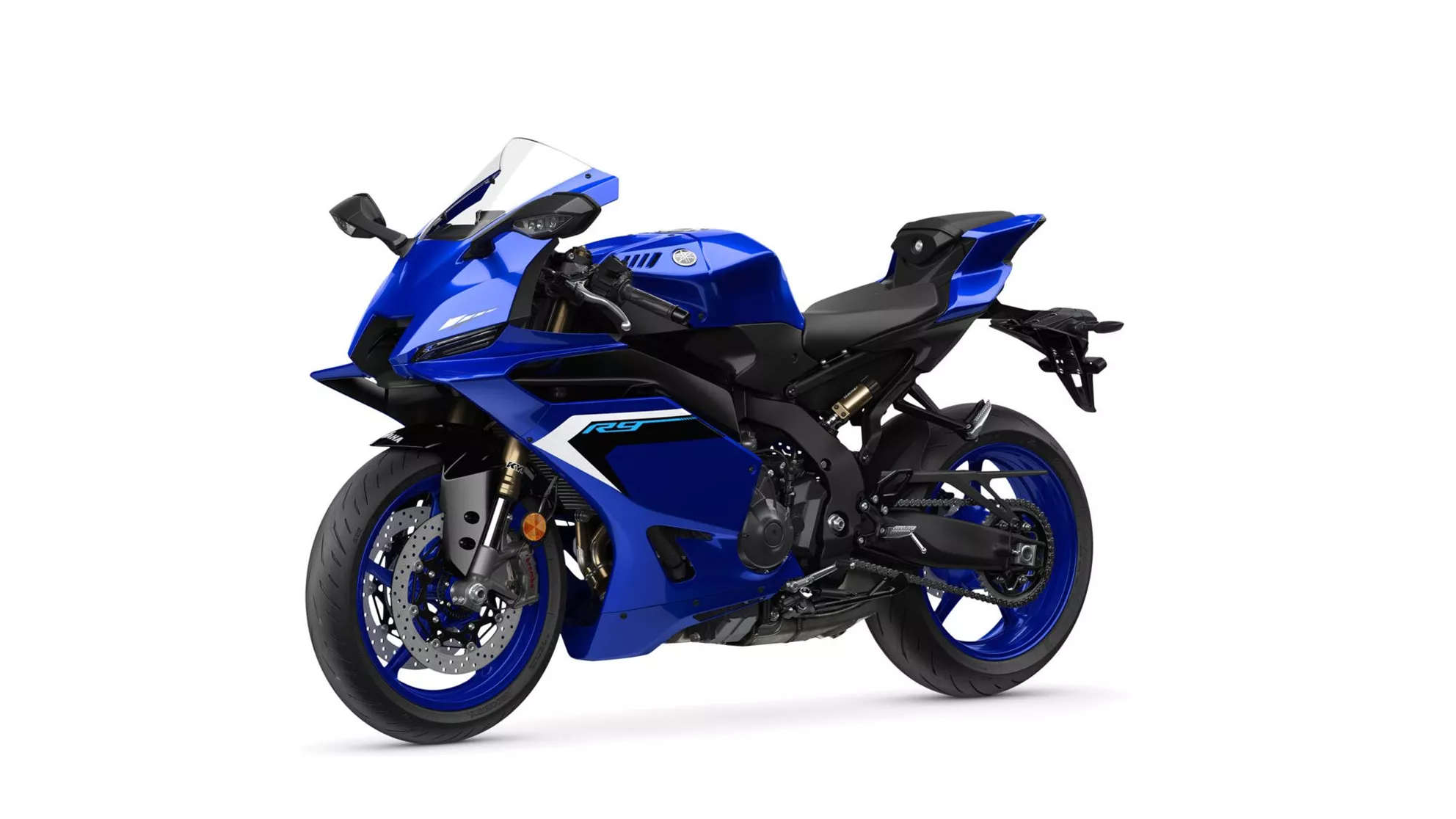
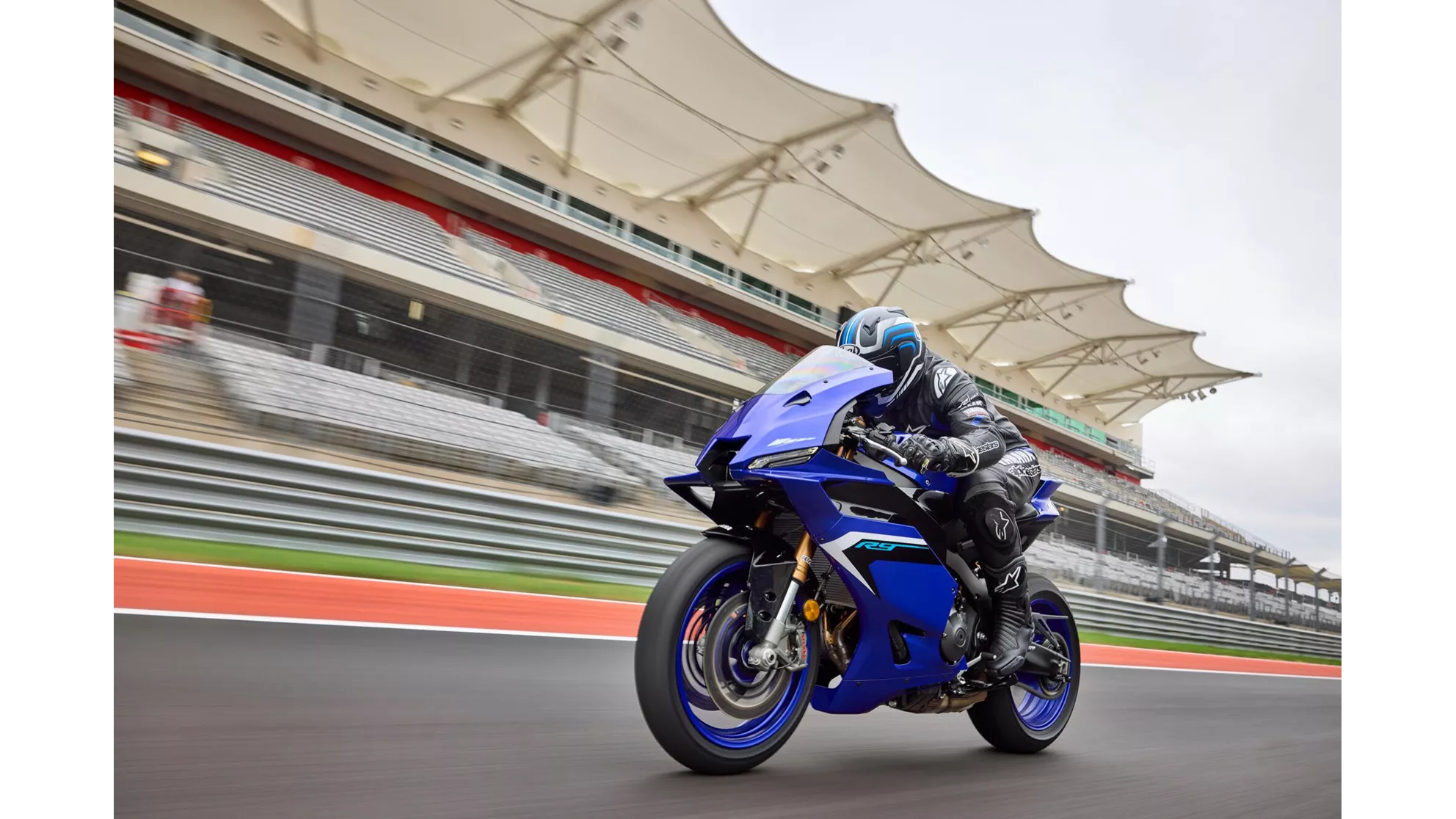
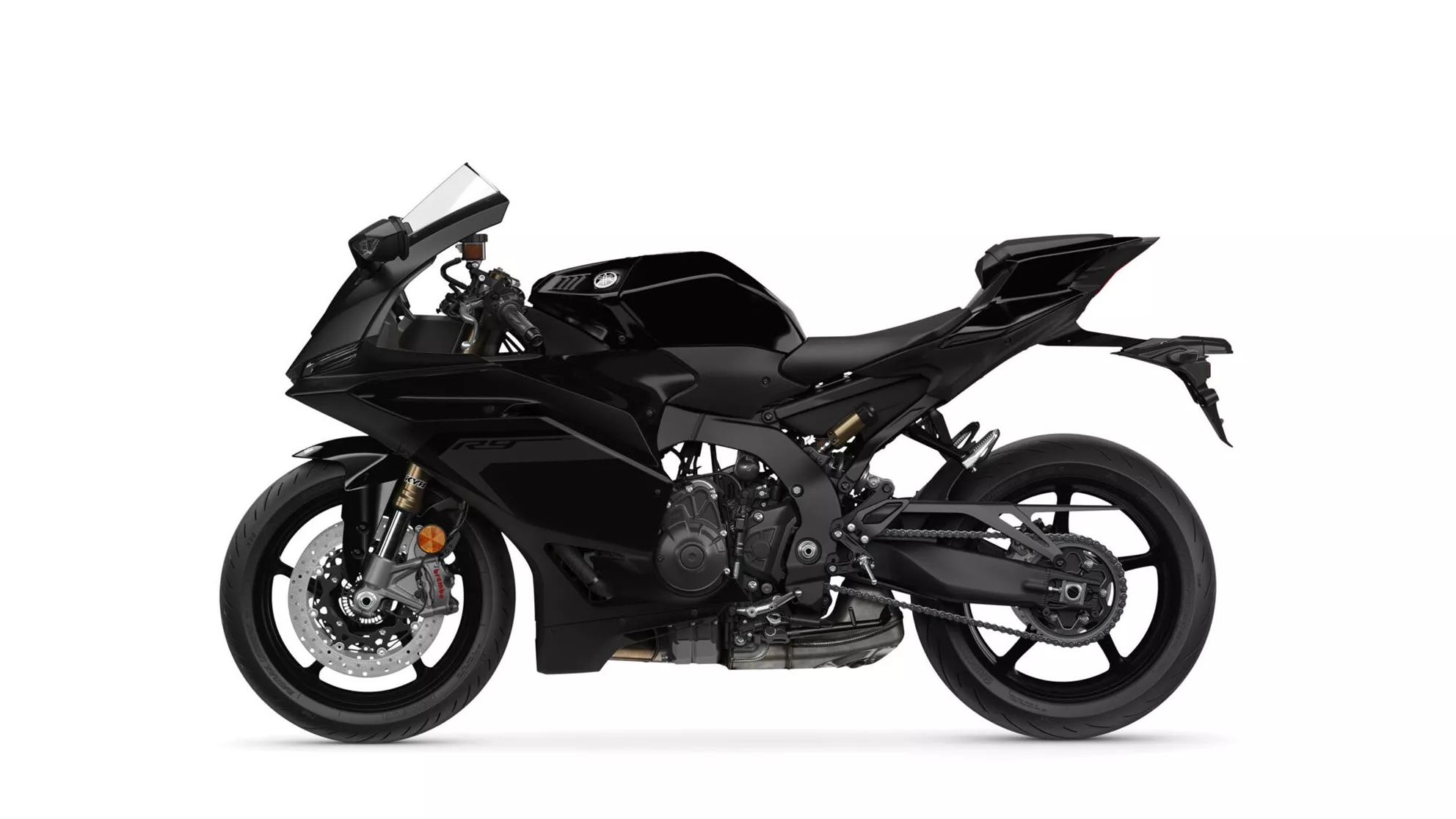
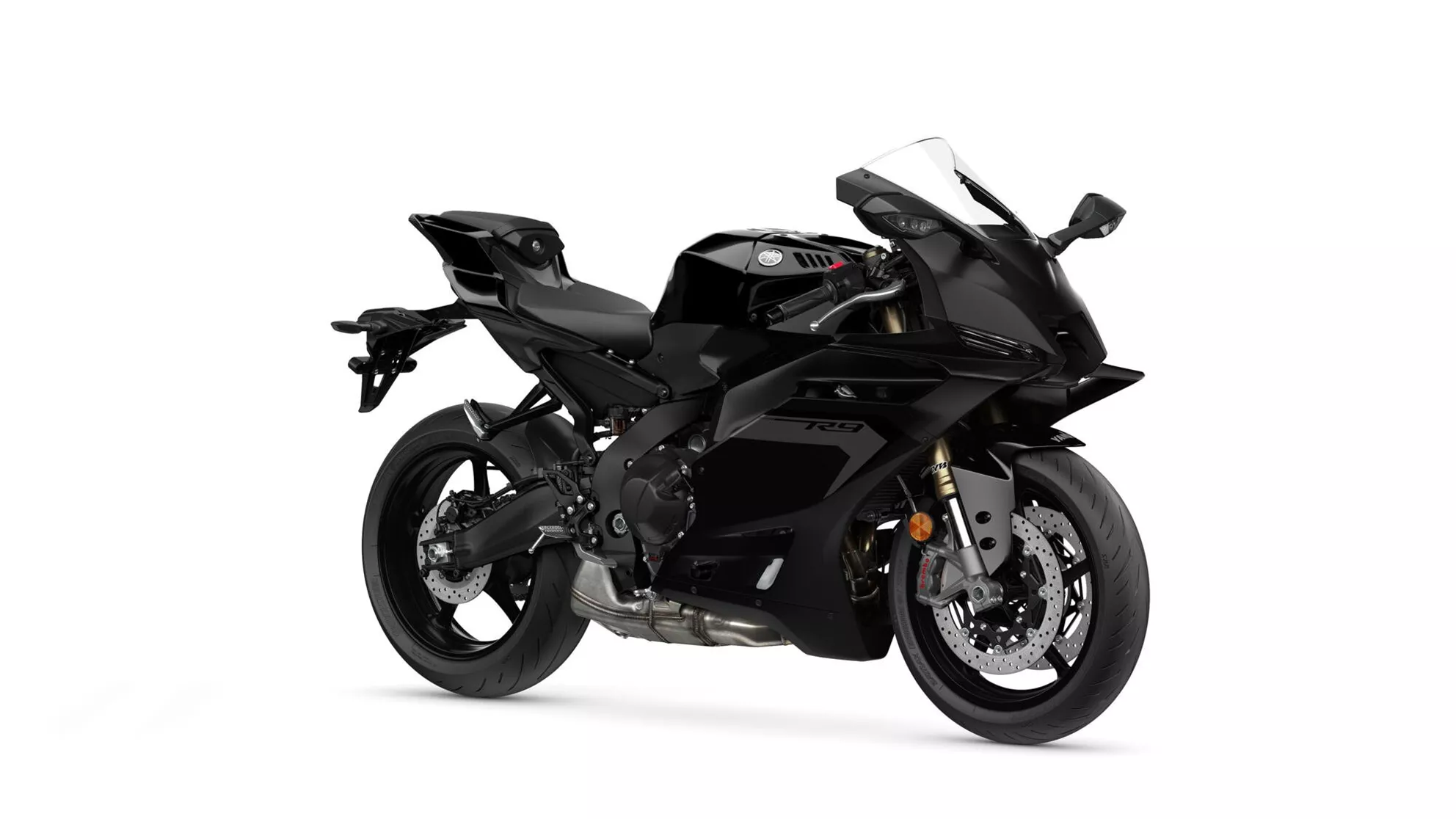
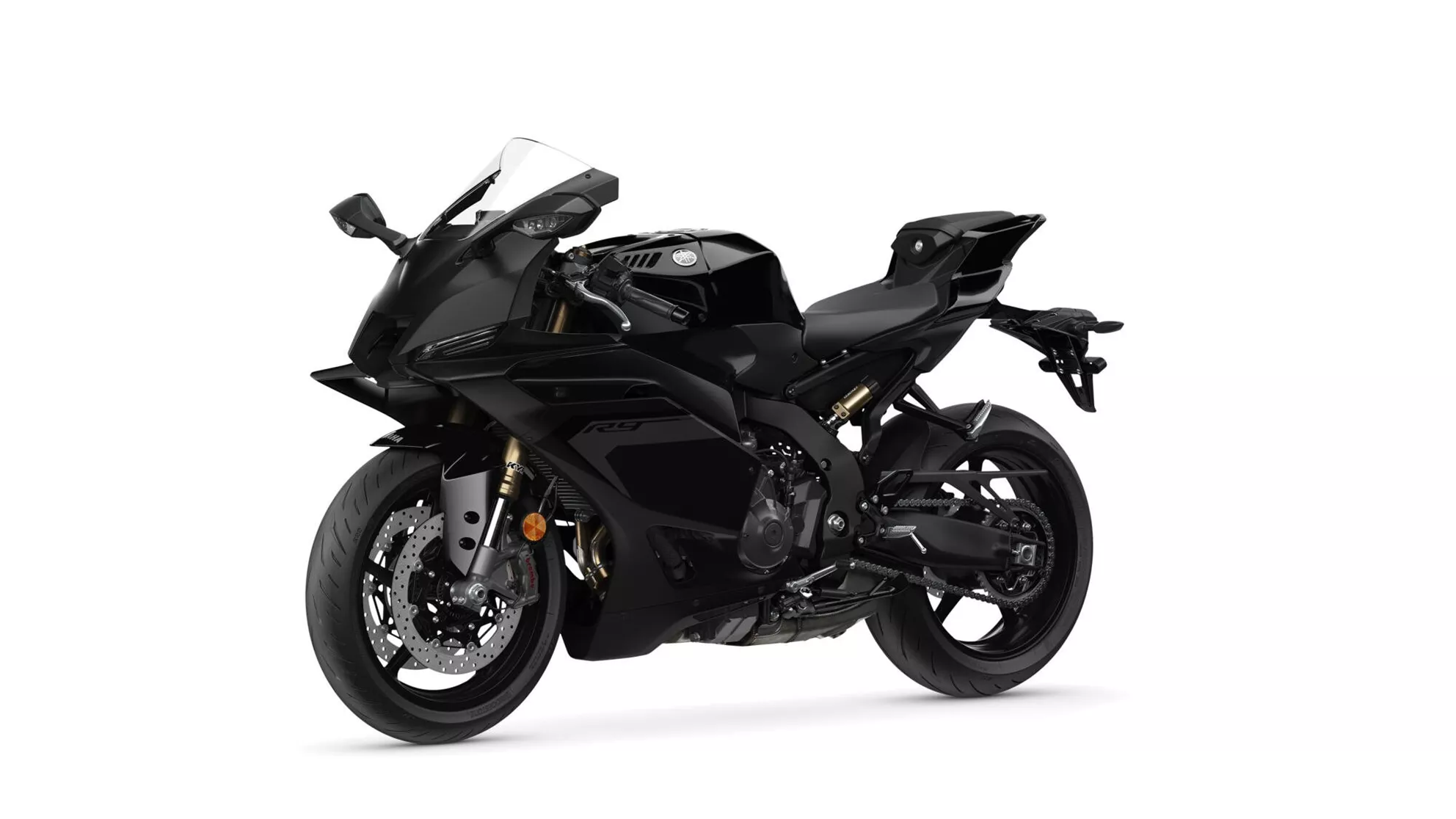
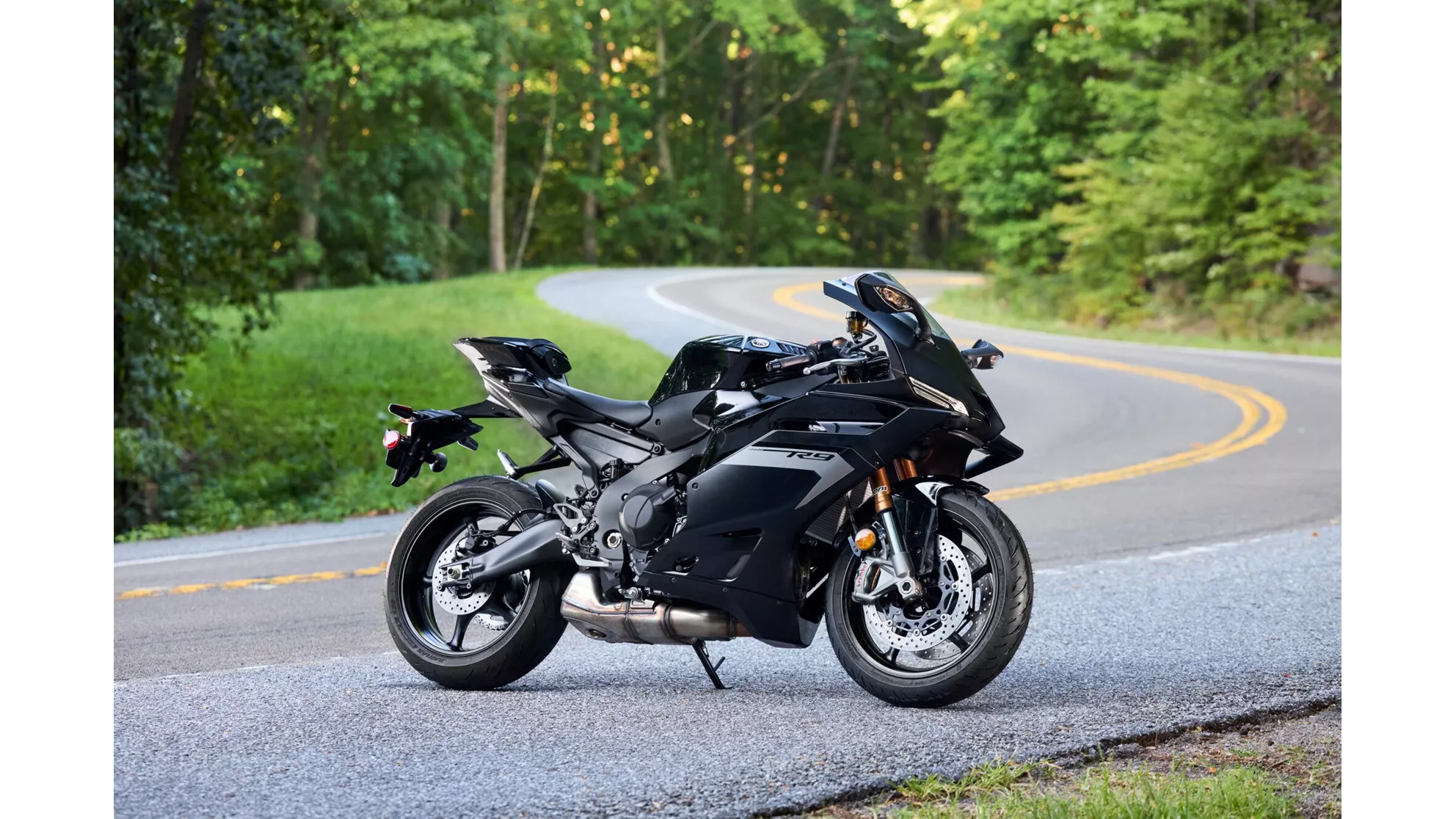
At the heart of the R9 beats the mature 890 cc three-cylinder CP3 DOHC engine, known for its torque-rich character. With 119 hp at 10,000 rpm and a maximum torque of 93 Nm at 7,000 rpm, it delivers an impressive power delivery, just as we already know from the MT-09. The combination of electronically controlled throttle (YCC-T) and engine mapping specifically optimized for supersports use ensures precise throttle response. Yamaha also placed particular emphasis on preserving the distinctive sound of the CP3 engine – an acoustic trademark that stirs emotions.

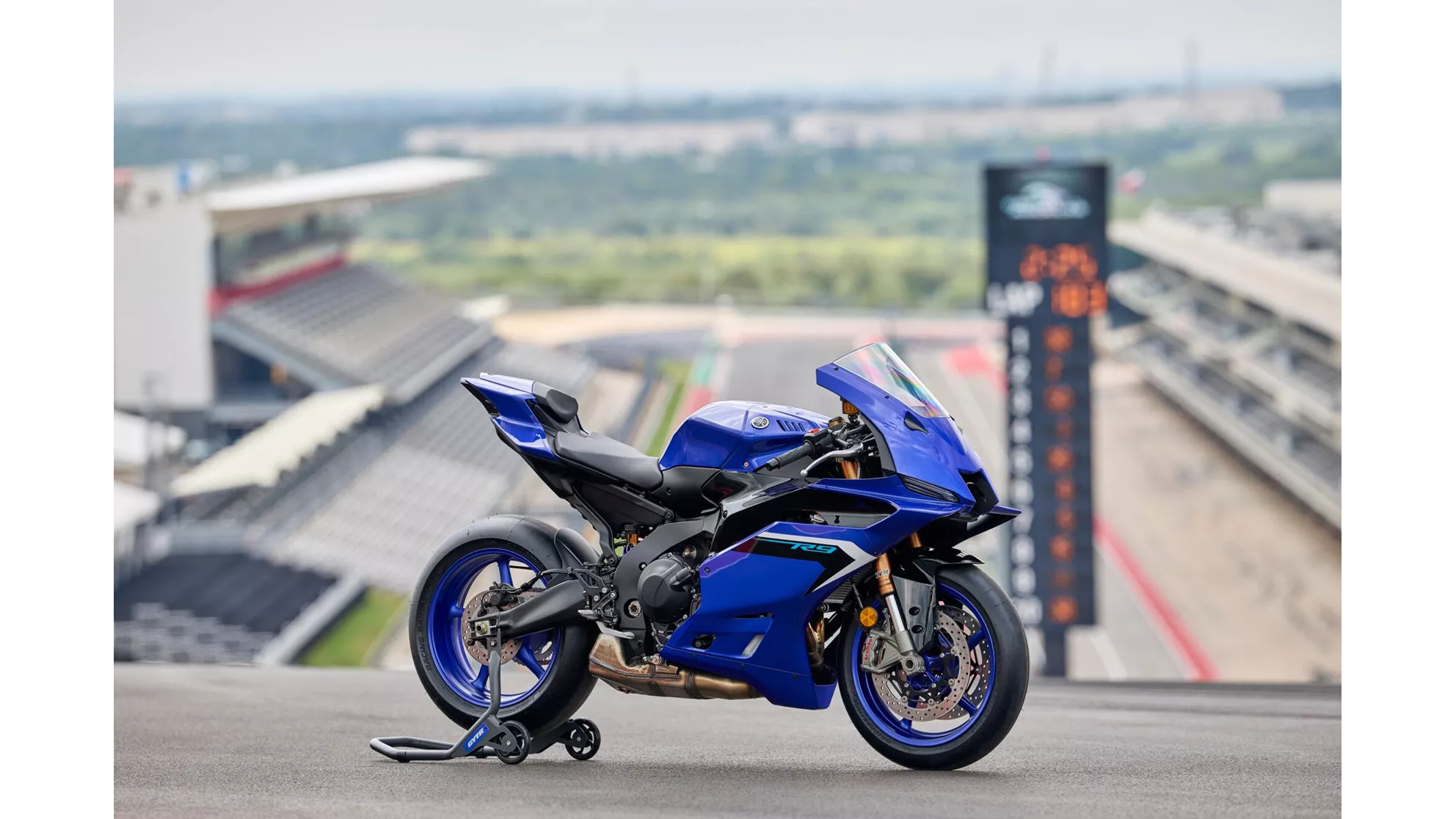
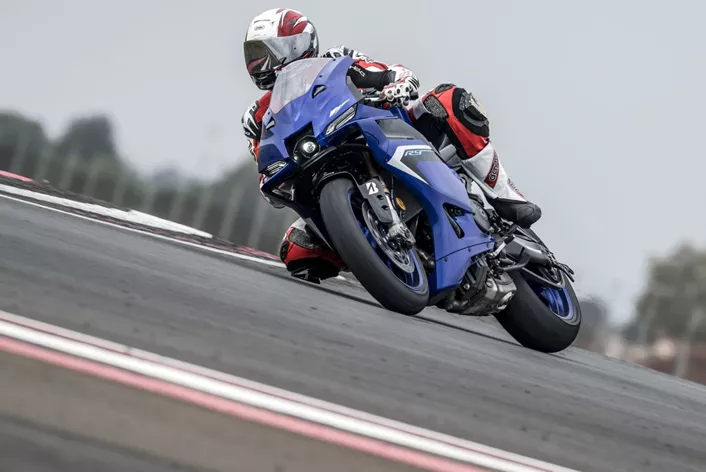
Yamaha R9 Test 2025 on the Race Track
A Faired MT-09 or a Bored-Out R6?
With the R9, Yamaha presents an entirely new chapter in the legendary R-series. This machine combines decades of racing experience with cutting-edge technology and sets new standards in the supersports segment. In doing so, the R9 appeals both to riders seeking thrills on the race track and to enthusiasts who prefer a powerful yet everyday-capable sports bike.
&width=72&height=72&bgcolor=rgba_39_42_44_0&mode=crop "Author: Martin_Bauer")
Martin_Bauer
published on 07/03/2025
25,413 Views
Yamaha R9 Riding Performance and Engine Power
Chassis, Suspension and Brakes
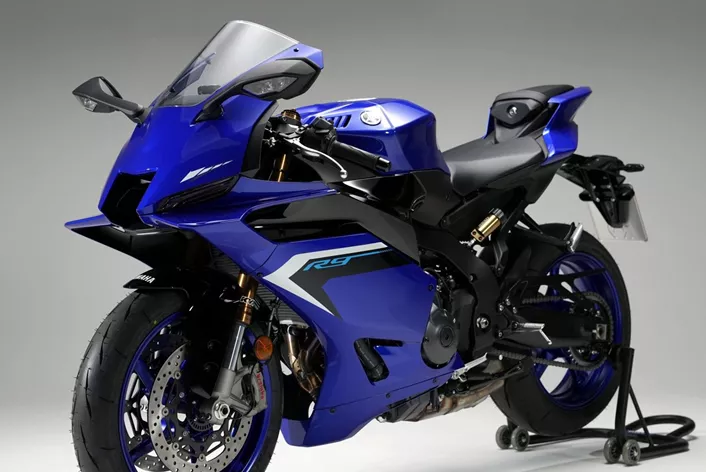
The Yamaha R9 is designed for agile and precise handling. The newly developed Deltabox frame made from gravity die-cast aluminum combines a low weight of just 9.7 kg with high rigidity and brings the bike to a wet weight of only 195 kg. This is meant to not only ensure an excellent power-to-weight ratio but also enable playful ease when turning in.
The fully adjustable KYB suspension ensures optimal riding comfort and top performance. The 43 mm fork was specifically developed for the demands of the R9 and offers separate high- and low-speed compression and rebound adjustment. At the rear, an equally fully adjustable shock provides a perfect balance between comfort and sporty firmness.
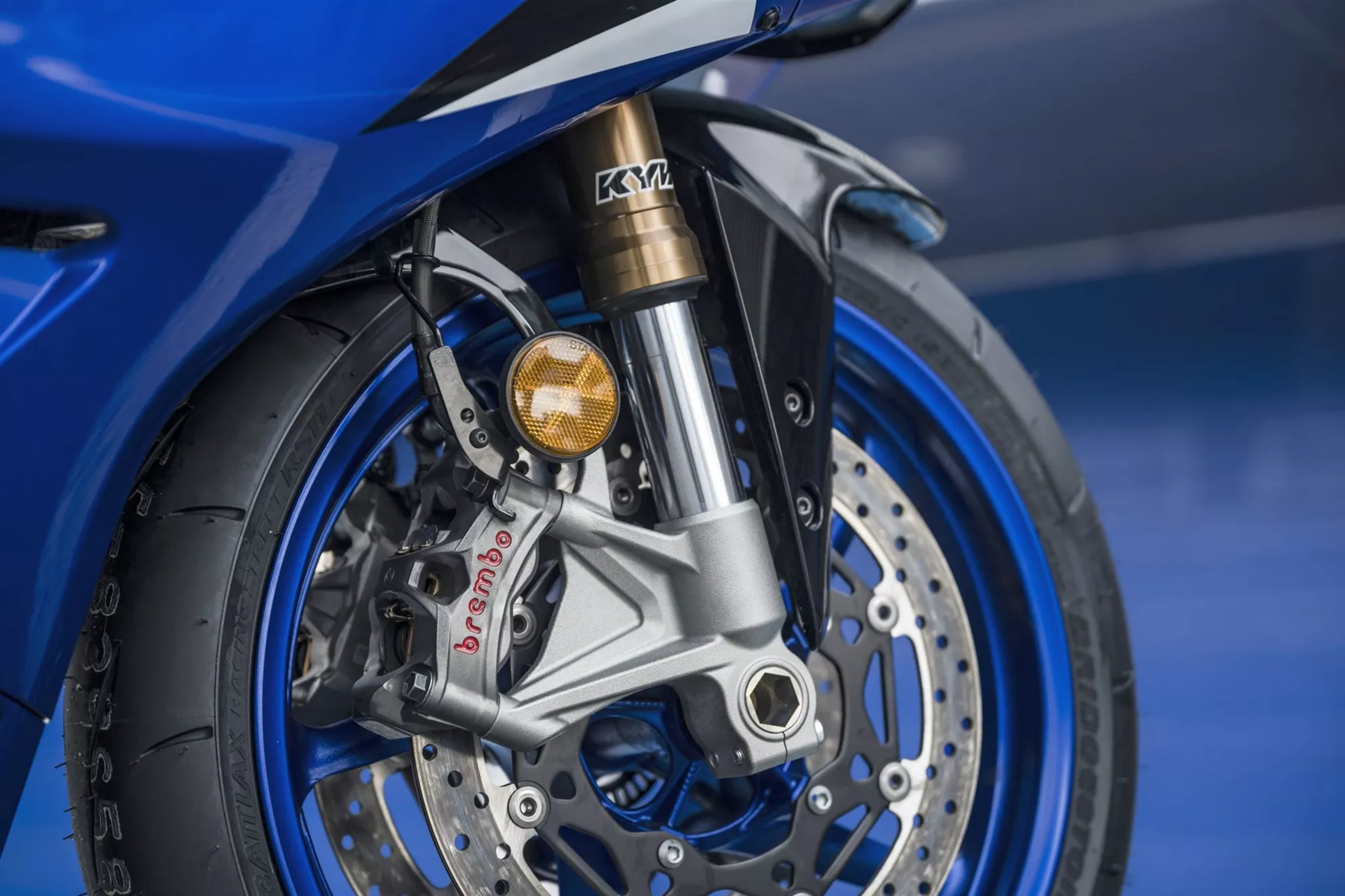
High-quality components on the R9.
The braking system also underlines the R9's high standards. The Brembo Stylema monoblock calipers, derived from racing, combined with 320 mm brake discs and steel-braided lines, guarantee excellent deceleration and maximum control. The radially mounted Brembo master cylinder ensures a linear and sensitive brake feel – a decisive advantage both on the road and on the race track.
Electronics and Riding Modes of the New R9
Yamaha has equipped the R9 with a variety of electronic assistance systems derived from the supersport icon R1. The six-axis Inertial Measurement Unit (IMU) monitors the bike's acceleration and movements in real time and adjusts the interventions of traction control (TCS), slide control (SCS), brake control (BC), Back Slip Regulator (BSR), Engine Brake Management (EBM), and front lift control (LIF) accordingly.
Various riding modes can be selected via Yamaha Ride Control (YRC), adapting the R9's behavior to different conditions. Alongside the predefined SPORT, STREET, and RAIN modes, riders can make individual settings for all riding aids. In addition, two pre-configurable custom modes and four TRACK modes specifically optimized for the race track are available.
The third generation of the Quick Shift System (QSS) allows clutchless shifting both up and down, contributing to seamless power transmission. Yamaha now goes one step further, offering an additional mode compared to previous systems that also allows downshifting during acceleration and upshifting during deceleration.
Riders who want full control over the bike can also deactivate the rear ABS. Especially on the race track, this is a decisive advantage!
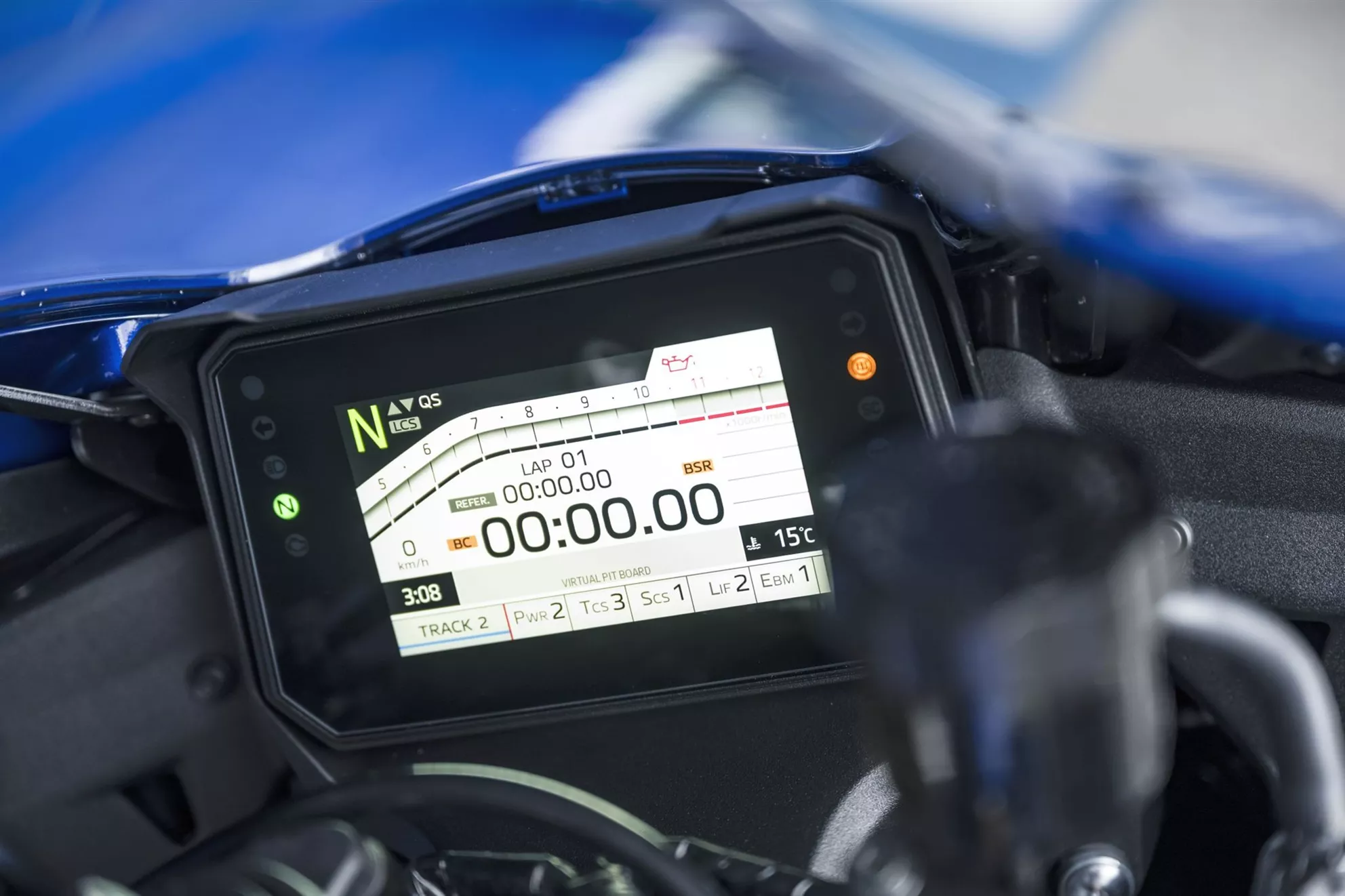
The electronics are controlled via the 5-inch TFT display. Here in Track Mode.
For road use, an integrated cruise control lets the rider's right wrist rest a bit on longer stretches. This system can also be used as a speed limiter in Limiter Mode and helps ensure the set maximum speed is not exceeded, regardless of throttle position.
For optimal race starts, the R9 also features a Launch Control System that assists the rider when starting and accelerating from a standstill.
As is now common almost everywhere, a 5-inch TFT color display serves as the instrument cluster and can be configured in different display variants. In Track Mode, the display also shows lap times.
Yamaha R9 Ergonomics and Features
The R9's seating position was designed to offer a perfect balance between sporty aggressiveness and long-distance comfort. The clip-on handlebar mounted below the fork bridge allows a forward-oriented posture without being overly strenuous. The seat height of 830 mm and the optimally positioned footpegs give the rider the necessary freedom of movement and enable precise control in corners.
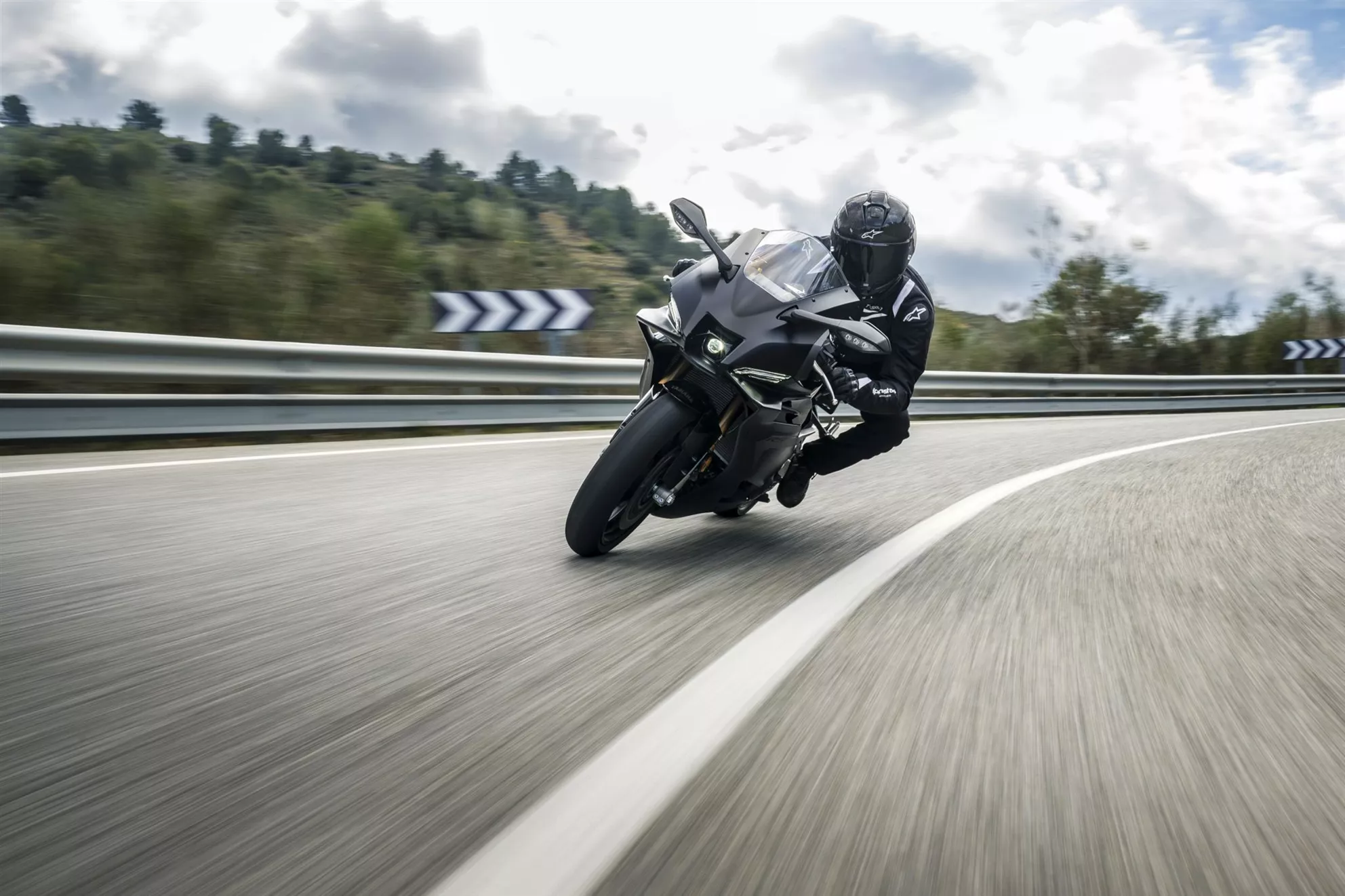
Due to weather conditions, our test could only take place on the race track. The R9 will have to prove itself on the road over the course of the season.
The 5-inch TFT color display not only offers various display modes but is also compatible with Yamaha's MyRide app. This allows riding modes to be adjusted, and lap times as well as vehicle data such as lean angle, engine speed, gear position, speed, throttle position, and system interventions to be evaluated, plus smartphone notifications to be displayed. An integrated navigation system via the Garmin StreetCross app rounds off the digital features.
The Y-TRAC app also offers a "Virtual Pitboard" so the rider's pit crew can send messages to the cockpit while the rider is on track.
Design and Aerodynamics
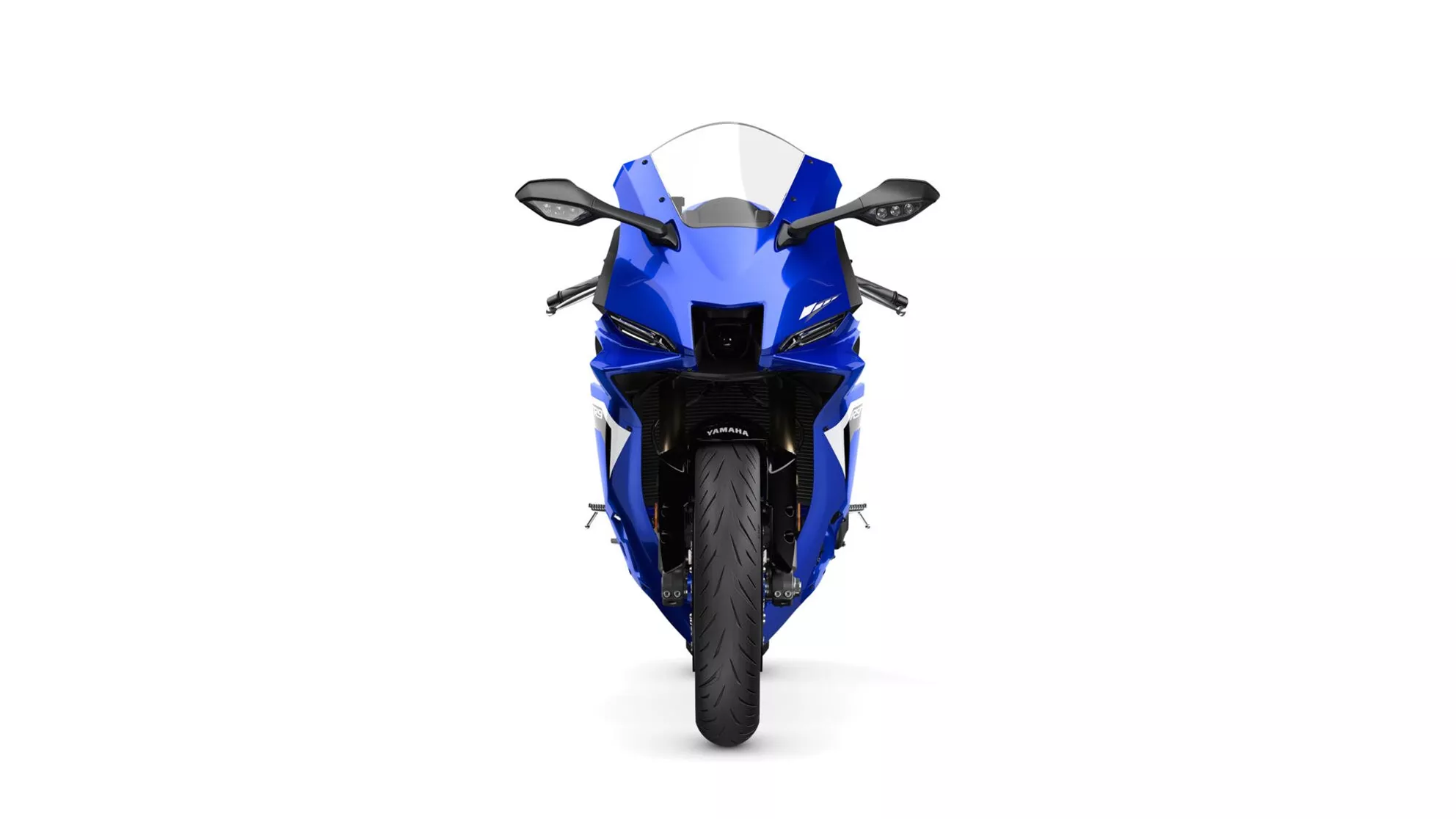
Visually, the R9 remains true to the R-series design language, but brings a new, modern line into play. The aerodynamic front fairing with integrated "M"-shaped air intake reduces drag and improves top speed. Additionally, specially developed winglets help minimize front wheel lift and ensure stable riding performance – especially at high speeds and quick changes of direction.
Yamaha R9 2025: Availability and Price
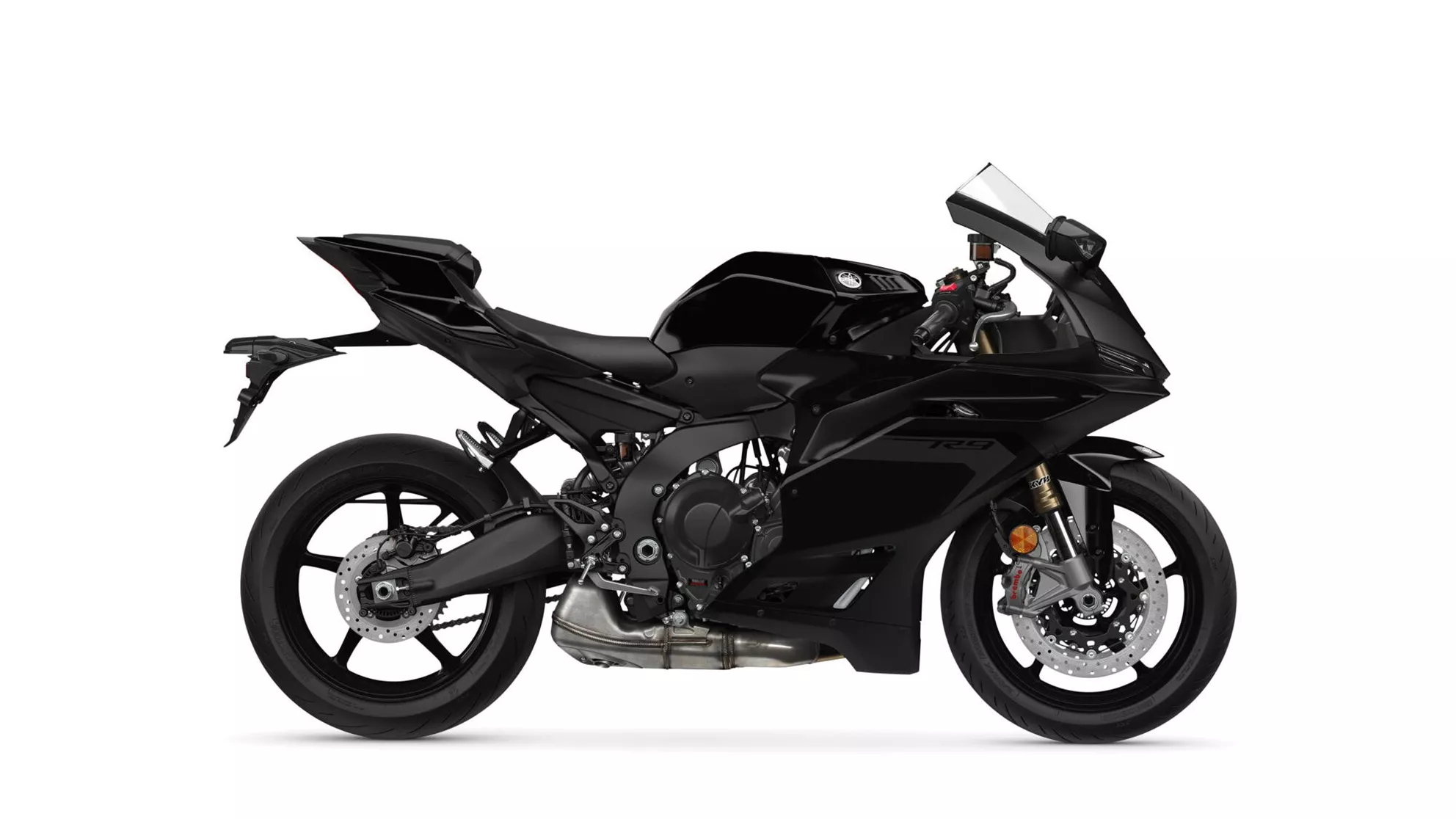
The Yamaha R9 will be available from May 2025 in the colors Icon Blue and Tech Black. The restricted 35 kW version follows in July of the same year. As things currently stand, the R9 is already sold out in many countries; more details are available from your trusted dealer. The price in Austria for the regular R9 is €15,299, while the 35 kW variant is offered for €14,899. In Germany, prices are €13,749 and €13,449 respectively. For individualists, Yamaha also offers a wide range of genuine accessories, including a complete Akrapovič exhaust system, racing footpeg systems, and tinted windscreens.
Riding Impressions on the New R9
Is the R9 now a faired MT-09, or more of a bored-out R6?
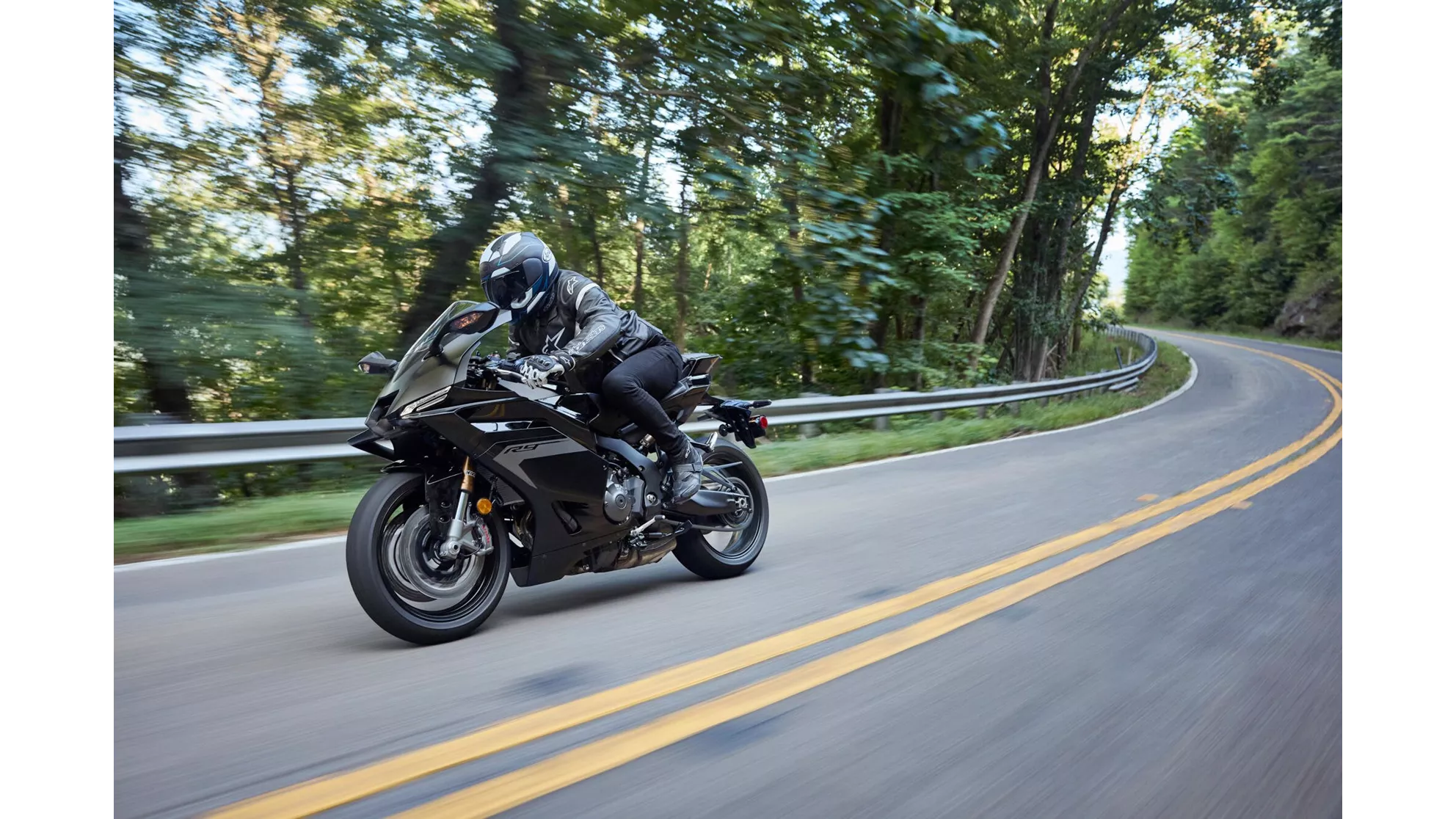
The truth lies somewhere in between. Yamaha has tried to combine the positives of two worlds. From the MT-09 they took the torque-rich engine, which mechanically unchanged also does its job in the R9. With slightly adjusted mapping, it responds to the throttle very smoothly, just like on the MT-09, and can be dosed well. The running culture is also great, and the sound of the three-cylinder is superb anyway. Unfortunately, Euro5+ holds it back a bit and prevents the typical roar when revving up. There is a remedy for this, however, via a road-legal exhaust system available as an accessory, which should improve the sound. For those who want the real "roar," there's also an open system that not only pushes the sound to the limit but, combined with adjusted mapping, also coaxes about 10 hp more out of the engine. However, this is then no longer road-legal. For the race track, though, it's a very welcome enhancement, since the engine feels a bit tame in the upper range thanks to Euro5+. Still, it delivers good grunt even at low rpm, which makes life easier especially for track newcomers, and on the road, grunt from down low is always welcome anyway. Combined with the very well-functioning quickshifter, riding becomes a highlight. The new mode is a real asset here, allowing shifting up and down at any time, regardless of throttle position. As soon as you notice you're in too high a gear at the corner exit or when overtaking, you can simply shift down without coming off the throttle. The riding aids also make a good impression, skillfully managing excessive load without being intrusive, which would be annoying especially on the race track. Onboard you'll find every riding aid you could wish for. Even wheelie control, though it rarely comes into play given the engine power and the chassis's strong forward-drive orientation. The already mentioned data recording displays the most important data in a very simple way, enabling quick analysis. For all racers, the Virtual Dashboard feature is also a nice way to get info from the pit crew fed into the display. The lap timer works simply with an additional GPS module. For road use, the phone could also be paired with the vehicle to transmit GPS data to the electronics.
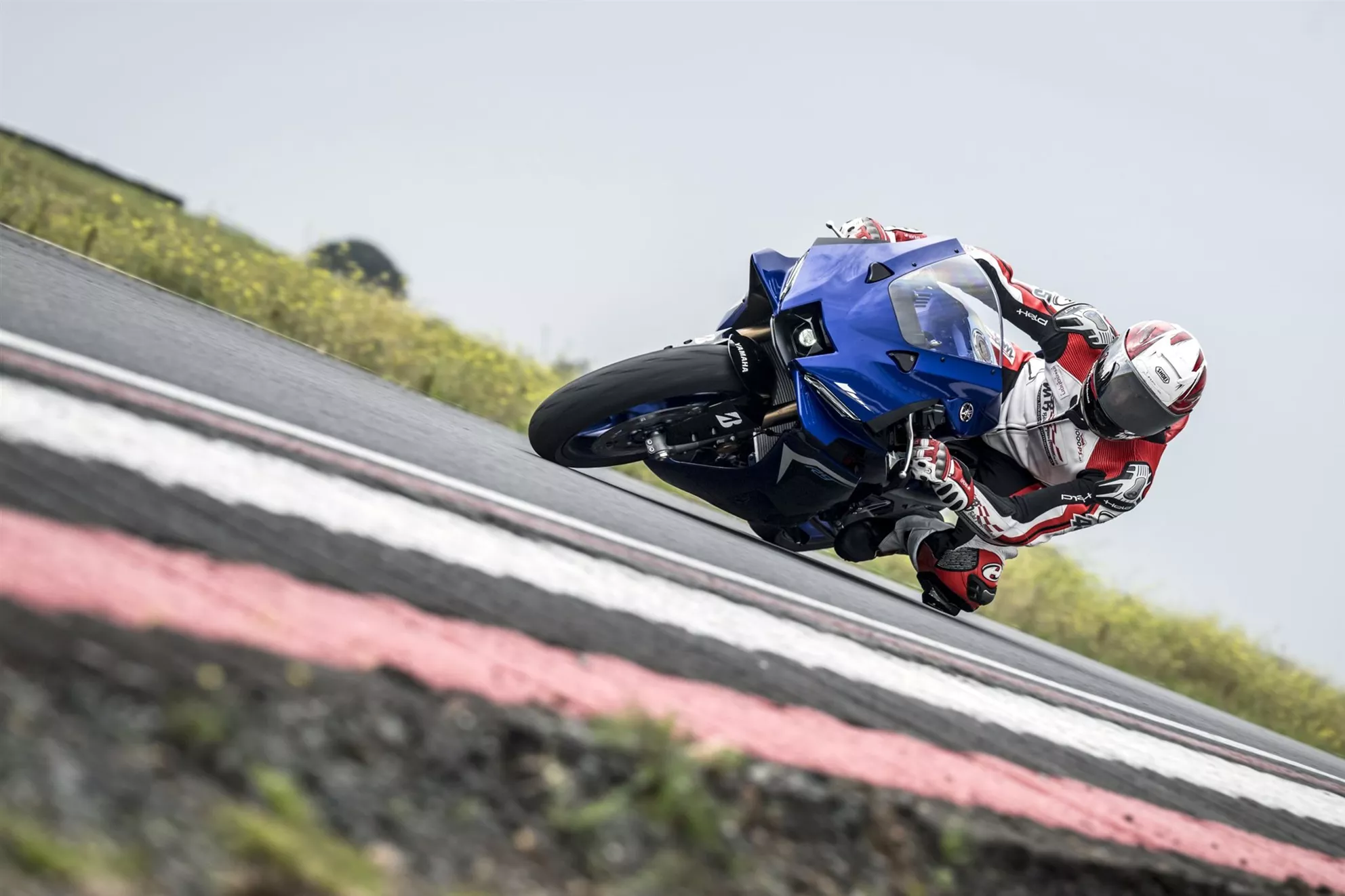
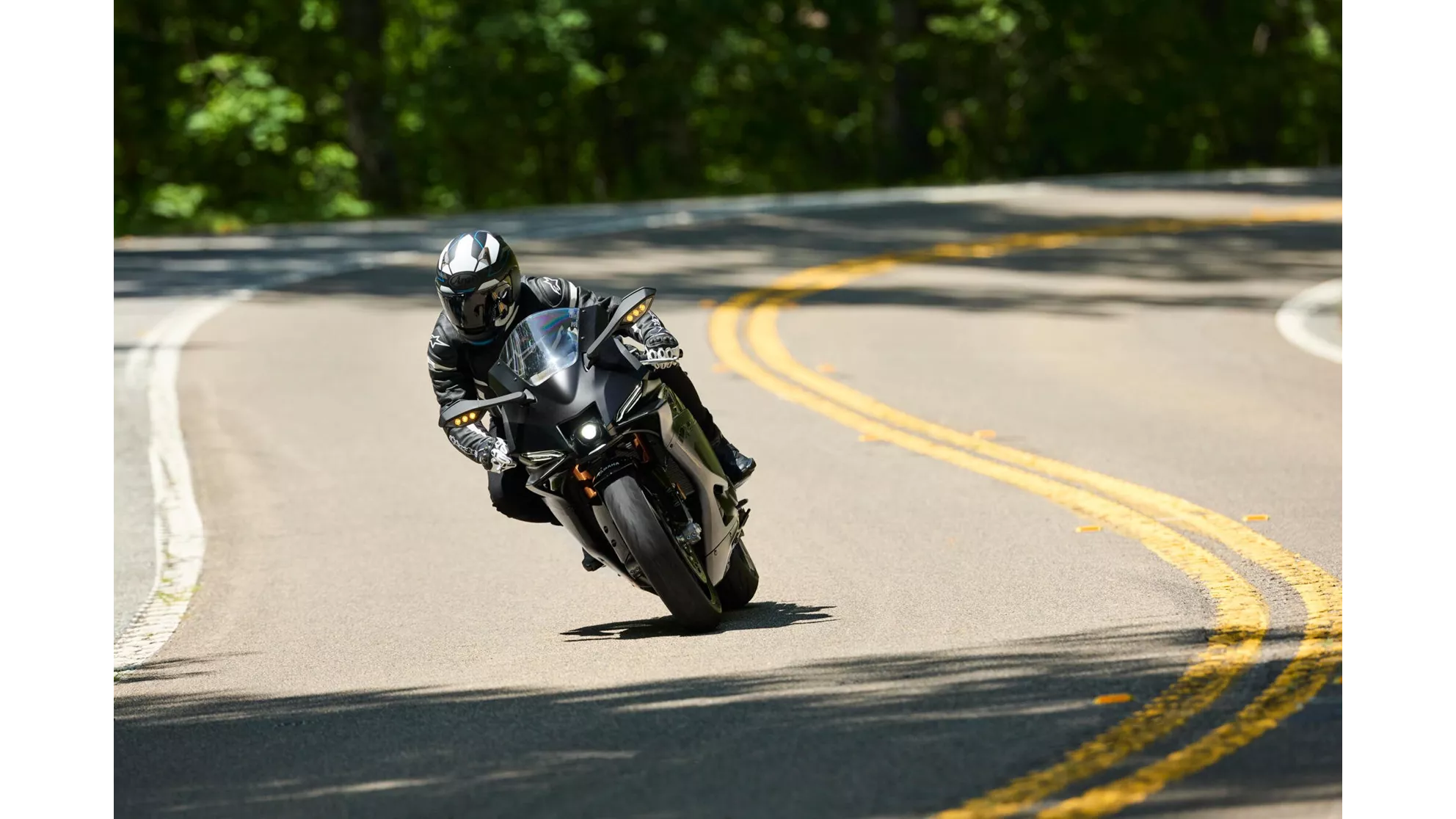
The chassis was newly built around the engine and, compared to the MT-09, made 30% stiffer with different geometry data. You can feel that while riding. The stability and especially the feedback are really good and give a lot of confidence. Even under hard braking, there's hardly any movement in the chassis. Only under strong acceleration and when the front wheel lifts does the front end sometimes get a bit unsettled on touchdown. A steering damper helps here, but it has to be retrofitted. With a short trail of just 95 mm, the R9 is clearly tuned toward handling.
The Kayaba suspension is also very much on the sporty side and enables good performance even on the race track. The new damping systems show their effect and generate a lot of reserves even under heavy loads. Whether that still allows enough riding comfort on the road remains to be seen, since we were only out on the race track.
Although the seating position has been significantly softened compared to the R6, it's still on the sporty side, but by far not as aggressive. You can also comfortably manage longer stretches on the road with it. Only the knee angle is a bit tight for my 1.80 m, which especially in racing position leads to my knee and elbow colliding. A slightly greater distance between seat and footpegs would help here and would also provide relief on longer stretches.
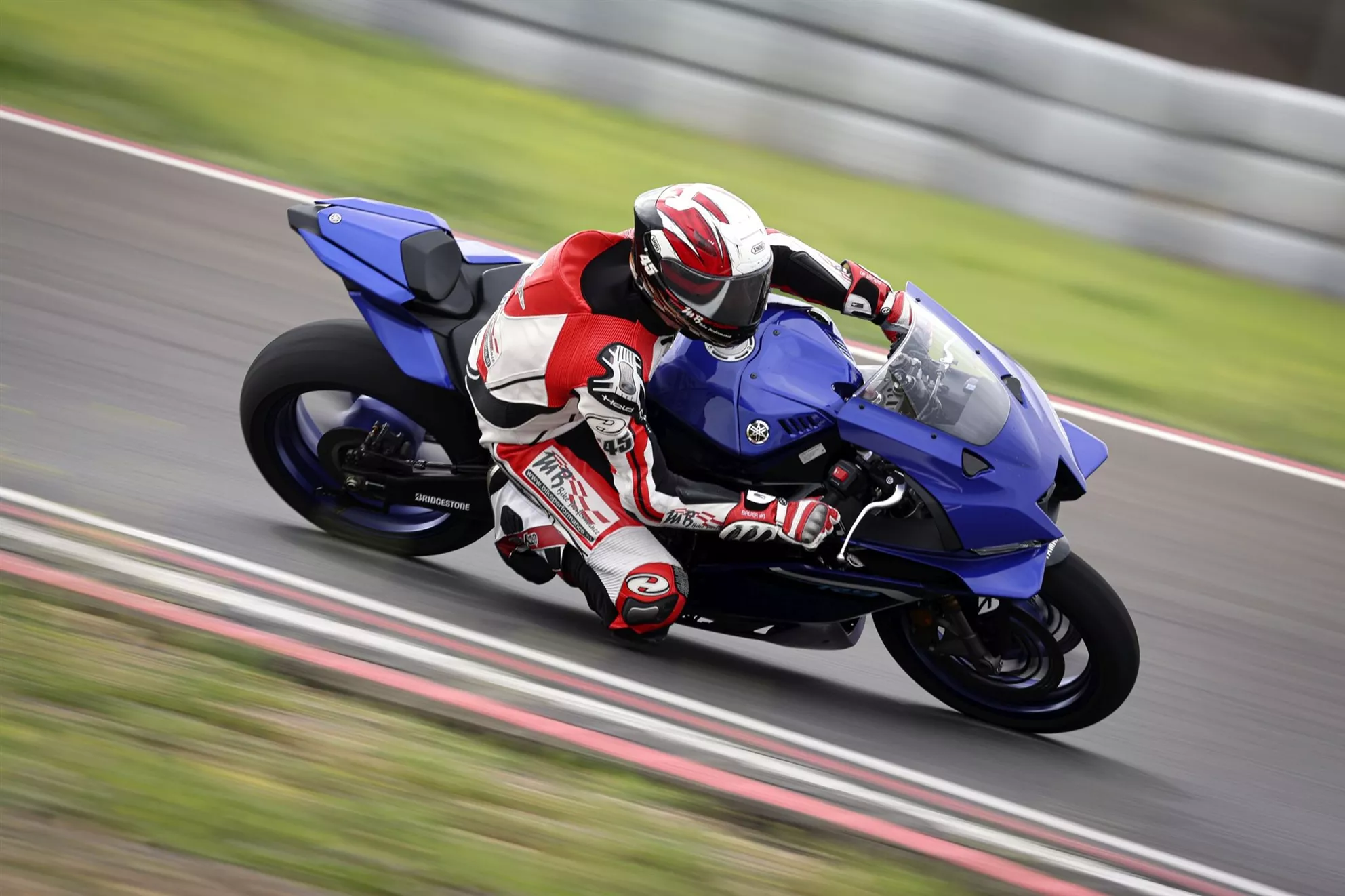
The wind protection, however, is good and leaves nothing to be desired even at high speeds. Good aerodynamics are the result, and drag has even been reduced compared to the R6. Even though the large M-shaped opening at the front suggests an air intake for the induction system, it only has an aerodynamic effect. Yamaha did without a RAM AIR system on the R9 and implemented the air intake inside the vehicle.
Thanks to the high-quality components, the brakes are good and solid, only the pressure point could be a bit crisper. A small concession regarding the ABS, which however, thanks to the selectable Sport Mode, also allows for strong braking deceleration. By deactivating the rear ABS control, the brake pressure isn't immediately reduced when the rear wheel lifts, which even allows the bike to be angled sideways before the corner. The modulation was consistently good throughout the entire session, though.
Supersports News for 2025
- How much does a Yamaha R9 cost?
- Here you will find an overview of the price level of new and used motorbikes!
&width=60&height=60&bgcolor=rgba_39_42_44_0&mode=crop "Author: Martin_Bauer")
Yamaha R9 2025 - Experiences and Expert Review
Martin_Bauer
Even though the R9 hasn't become an uncompromising R6, it shows plenty of sporty character and performs solidly even on the race track, all while providing a lot of fun. A newcomer will probably even find their way around better with it on the track than with an R6. On the other hand, thanks to its torque-rich engine and more relaxed seating position, the R9 is much more suited to everyday use, even if it naturally doesn't reach the riding comfort of an MT-09. And that the new bike can really perform on the race track was already shown by Yamaha with the season-opening win in the Supersport World Championship. With A2 compatibility and an attractive entry price, Yamaha thus creates a new gateway to an everyday-capable supersports machine that's certainly interesting for beginners too.
More from 1000PS Magazine
Yamaha R9 Test 2025 on the Race Track Images
Source: 1000PS

The Yamaha R9 breathes new life into the legendary R series, merging cutting-edge tech with decades of racing heritage.

The aerodynamic front with the signature 'M'-shaped air intake reduces drag and enhances top speed.

With 119 hp from the CP3 three-cylinder engine, the R9 delivers impressive power delivery and a solid punch.

The sporty lines of the R9 create a sleek and aggressive look that seamlessly fits into the design language of the R series.

The lightweight aluminum Deltabox frame combines low weight with high rigidity, allowing for precise handling.

The fully adjustable KYB fork offers precise control and a stable ride feel in any situation.

The 5-inch TFT color display not only shows speed and RPM in Track Mode, but also lap times and lean angle.

With Brembo Stylema monoblock calipers and 320 mm brake discs, the R9 delivers outstanding braking performance.

With a full tank weight of just 195 kilograms, it offers playful handling and an agile riding experience.

The R9 comes standard with a switchable ABS at the rear wheel, ensuring maximum control on the track.

Cutting-edge electronics with a six-axis IMU adjust traction control, slide control, and other riding aids in real-time.

The third-generation Quick Shift System enables lightning-fast gear changes without using the clutch – both up and down shifts.

The sporty yet practical ergonomics of the R9 provide a forward-oriented riding position with ample freedom of movement.

With Yamaha Ride Control, you can select and customize various riding modes to optimize the behavior of the R9.

Thanks to the aerodynamically optimized winglets, the front wheel stays planted on the road even at high speeds.

Yamaha brings race-bred technology from the R1 into a street-legal yet track-oriented machine.

With an extensive range of accessories, including a complete Akrapovic exhaust system and racing footpegs, the R9 can be customized to your liking.

The torque-rich three-cylinder engine delivers powerful acceleration from low revs and impresses with its smooth throttle response.

The sleek tank allows for optimal knee grip and supports precise control of the bike in fast corners.

The R9 is available in Icon Blue and Tech Black, both highlighting its aggressive stance.

With just 95 mm of trail, the chassis is clearly designed for agile handling, which pays off in quick corners.

Yamaha blends everyday comfort with genuine track-ready performance in the R9, creating the perfect balance.

The Launch Control System ensures flawless race starts by preventing rear wheel spin and optimizing power delivery.

The sport-tuned ABS allows for powerful braking performance and can be adjusted for track use in Sport mode.

The Yamaha R9 delivers an exhilarating blend of performance, technology, and racetrack vibes as a practical supersport bike.

The sporty-tuned KYB suspension impresses on the track with excellent stability and ample reserves.

The integrated data recording allows for quick and easy analysis of ride data to optimize performance.

The Yamaha R9 is neither a fairing-clad MT-09 nor a souped-up R6, but a standalone concept influenced by both worlds.

The windscreen is surprisingly effective, cutting down drag even more compared to the R6.

The braking system delivers solid stopping power, although the bite point could be a bit sharper.

While the front of the R9 resembles a RAM-Air system, the large air intake serves purely aerodynamic purposes.

Whether the stiff chassis offers enough comfort for everyday use remains to be seen, as the test was conducted exclusively on the racetrack.

Riders who are 1.80 m tall might appreciate a bit more space between the seat and footpegs for added comfort.

The combination of a stiff chassis, powerful engine, and advanced electronics makes the R9 a capable sport machine for both the road and the track.

The bike remains well manageable throughout the entire turn, delivering consistent braking performance.