Kawasaki Z900 RS 2018 vs. Yamaha MT-09 2021
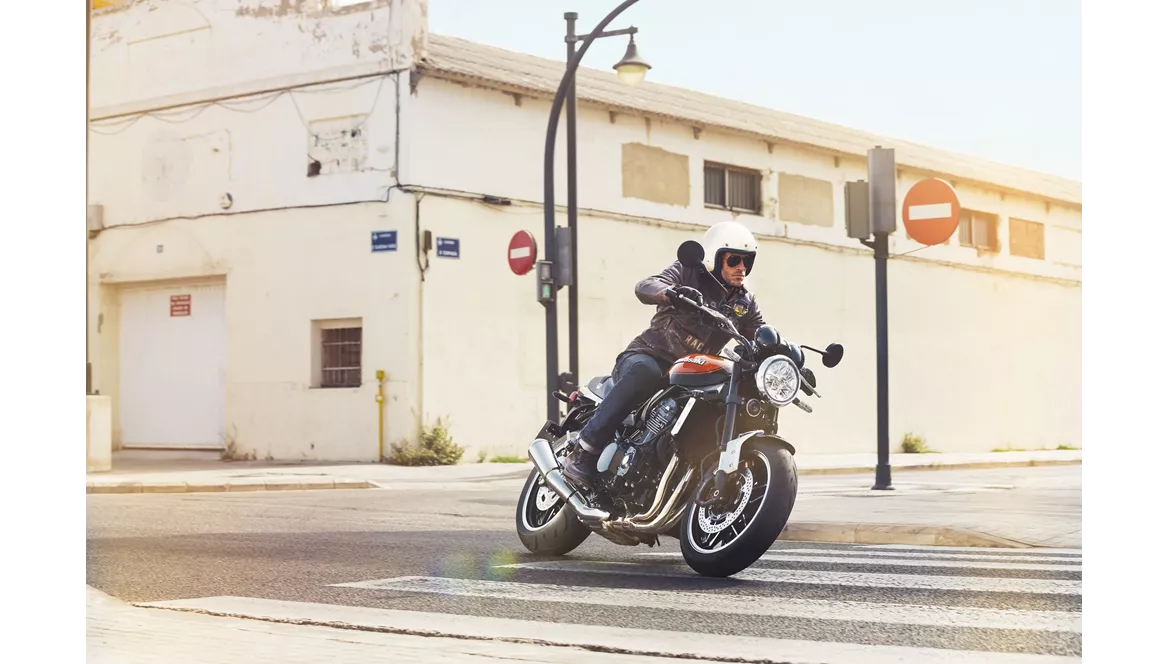
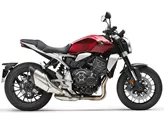
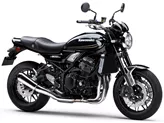
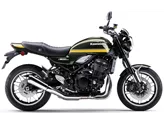
Kawasaki Z900 RS 2018
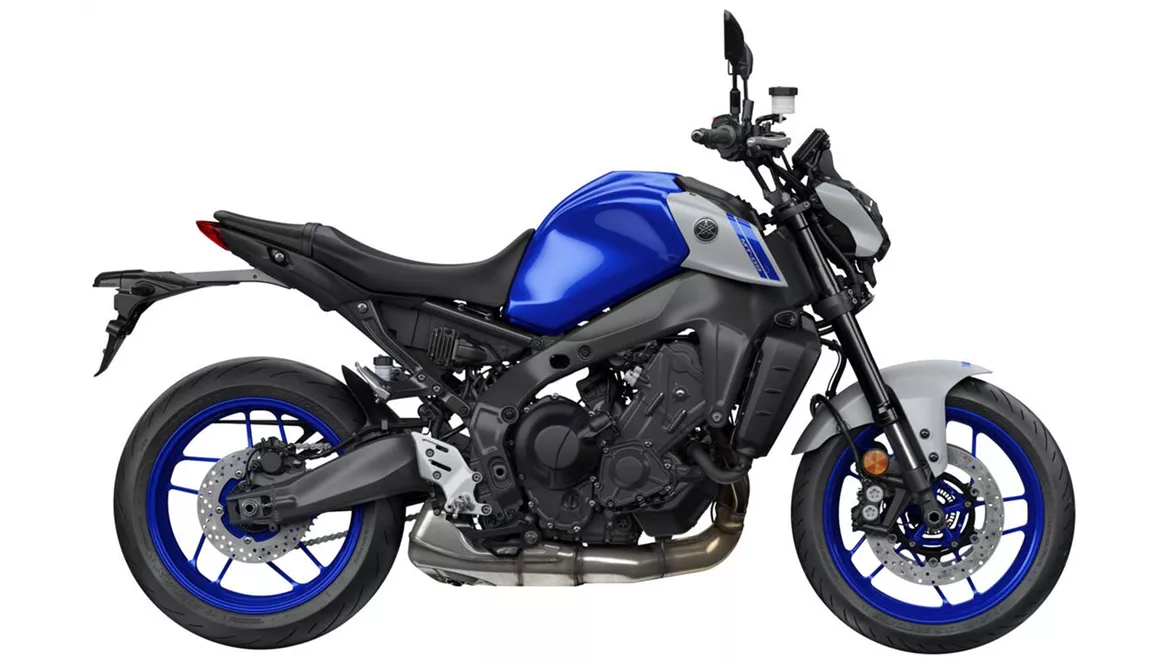
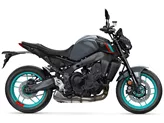
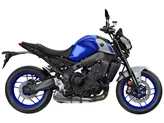
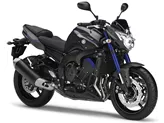
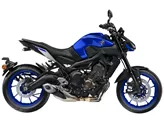
Yamaha MT-09 2021
Overview - Kawasaki Z900 RS 2018 vs Yamaha MT-09 2021
The Kawasaki Z900 RS 2018 and the Yamaha MT-09 2021 are both naked bikes with similar engine types and fuel systems. However, there are several key differences between the two models.
In terms of engine power, the Yamaha MT-09 2021 has a slight advantage with 119 HP compared to the Kawasaki Z900 RS 2018's 111 HP. However, the Kawasaki model has a higher torque of 98.6 Nm compared to the Yamaha's 93 Nm. This means that the Kawasaki may offer better acceleration and pulling power, while the Yamaha may have a smoother power delivery.
Both bikes have a liquid-cooled engine and a similar displacement, with the Kawasaki having a slightly larger engine at 948 ccm compared to the Yamaha's 889 ccm. This could result in a slightly higher top speed and overall performance for the Kawasaki.
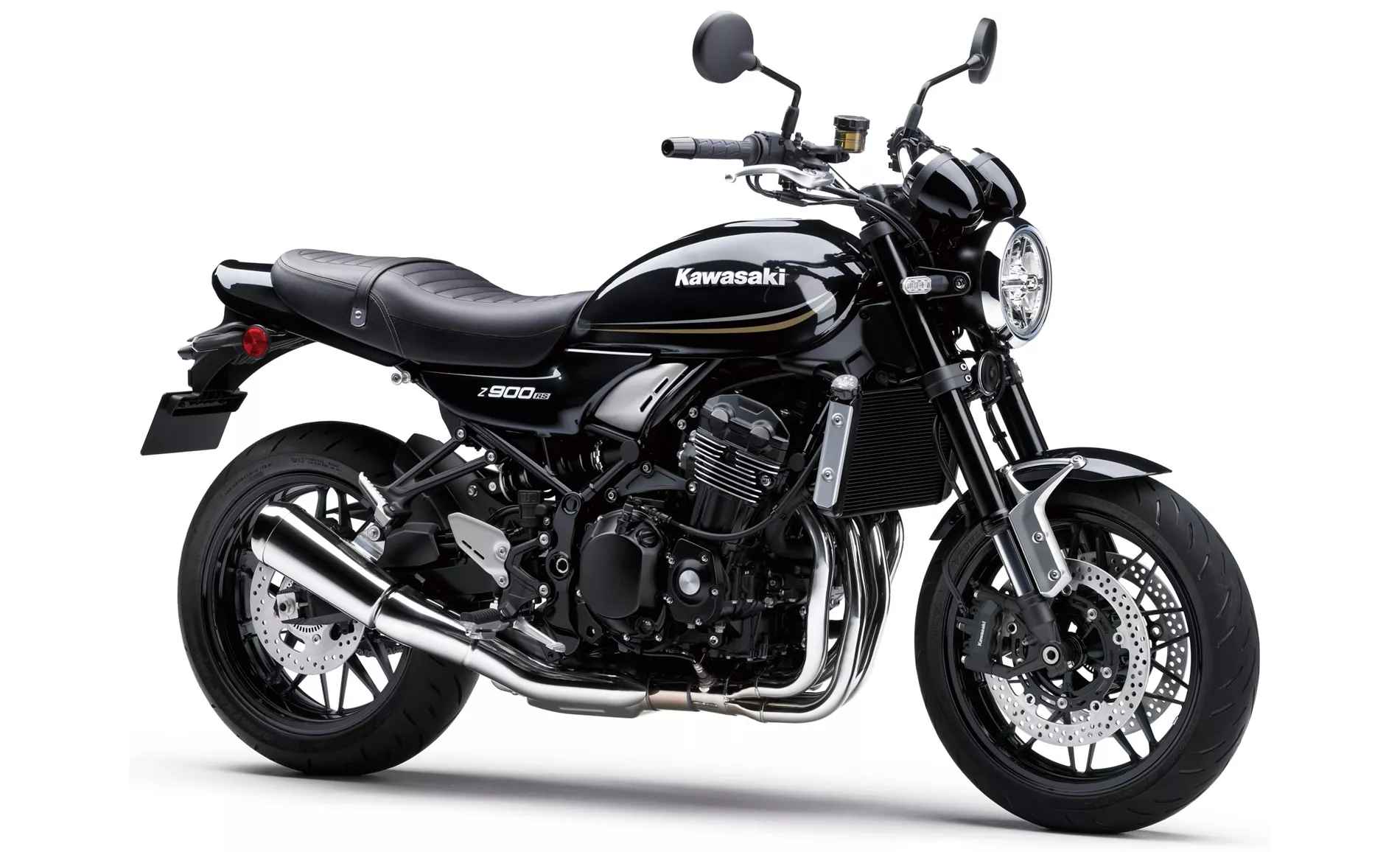
Kawasaki Z900 RS 2018
In terms of suspension, both bikes feature upside-down telescopic forks at the front and a swing arm with a monoshock at the rear. This provides good stability and control for both models. However, the Yamaha MT-09 2021 has an aluminum frame compared to the steel frame of the Kawasaki Z900 RS 2018. This could result in a lighter overall weight for the Yamaha, which is reflected in its lower kerb weight of 189 kg compared to the Kawasaki's 215 kg.
Both bikes have double disk brakes at the front with similar diameters, providing good stopping power. The Kawasaki has a slightly larger fuel tank capacity at 17 liters compared to the Yamaha's 14 liters, which could result in a longer range.
In terms of rider assistance systems, both bikes feature ABS and traction control. However, the Yamaha MT-09 2021 also has a quickshifter, allowing for seamless gear changes without using the clutch. The Kawasaki Z900 RS 2018 does not have a shift assistant, which could be a disadvantage for riders looking for a more advanced riding experience.
In terms of dimensions, the Yamaha has a slightly shorter wheelbase at 1430 mm compared to the Kawasaki's 1470 mm. This could result in slightly different handling characteristics, with the Yamaha potentially offering more agility and maneuverability.
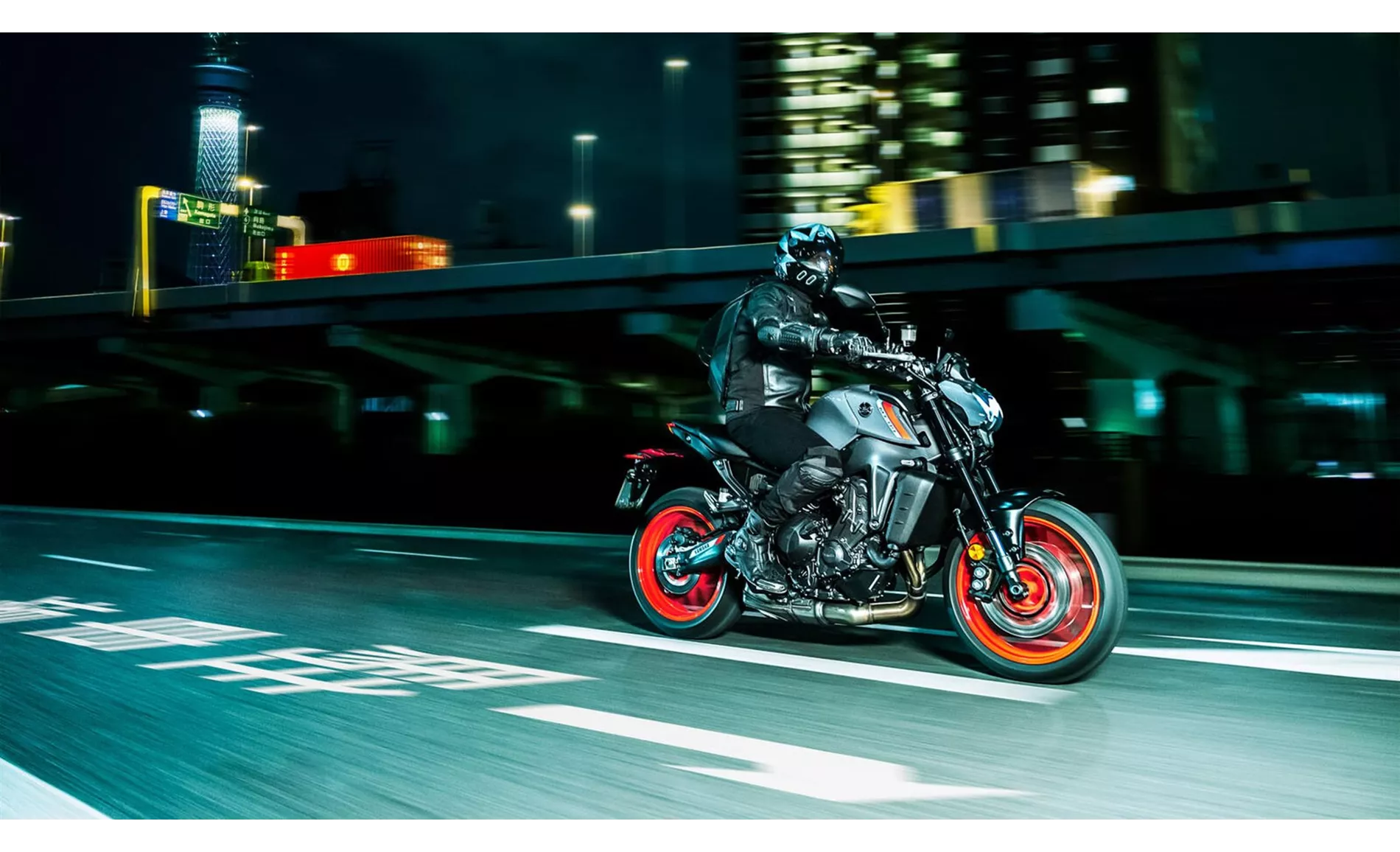
Yamaha MT-09 2021
Both bikes have a comfortable seating position, but the Kawasaki Z900 RS 2018 has been praised for its ergonomics and comfortable ride on long tours. However, the seat on the Kawasaki may be considered too soft by some riders. The Yamaha MT-09 2021 also offers a comfortably integrated seating position and has been praised for its lively handling and riding pleasure.
In terms of aesthetics, the Kawasaki Z900 RS 2018 is known for its good looks and retro styling, while the Yamaha MT-09 2021 has a more polarizing look that may not appeal to everyone.
Overall, the Kawasaki Z900 RS 2018 and the Yamaha MT-09 2021 are both capable naked bikes with their own strengths and weaknesses. The Kawasaki offers a powerful and smooth engine, comfortable seating position, and balanced handling. However, it may be heavier than other retro bikes in its class and lacks a shift assistant. On the other hand, the Yamaha offers even more pressure from the center, an over-complete electronics package, and a great working quickshifter. It also has a lighter weight and a more agile handling, but its polarizing look and limited front wheel feel may not appeal to everyone.
Technical Specifications Kawasaki Z900 RS 2018 compared to Yamaha MT-09 2021
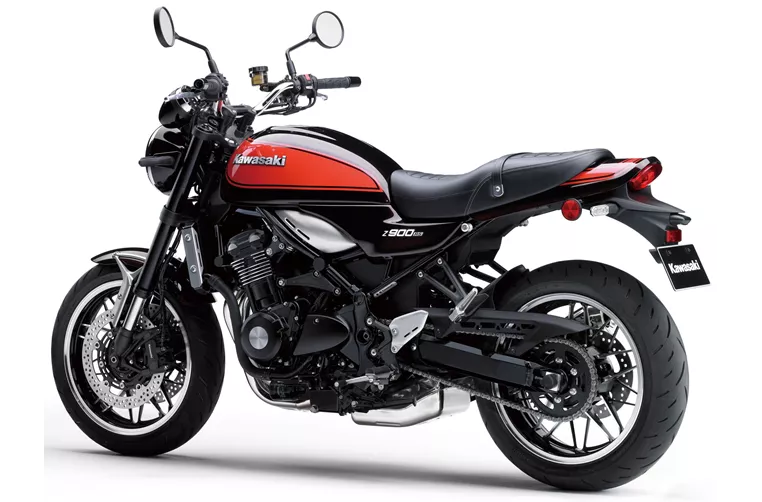
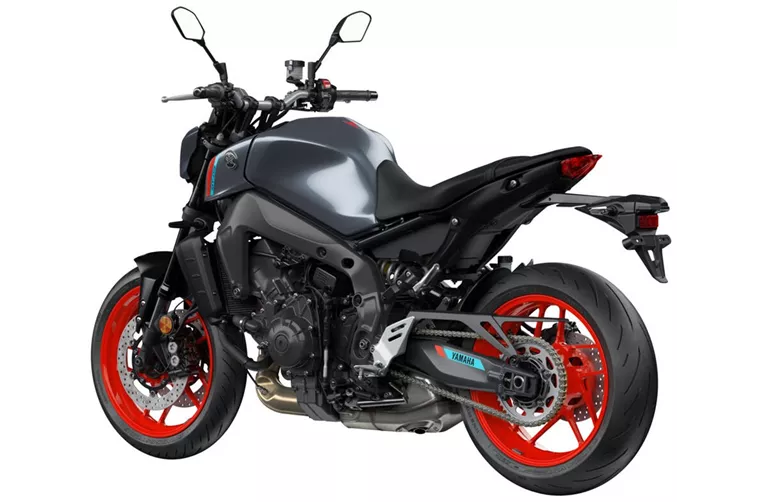
Pros and Cons in comparison
Pros and Cons in comparison
Kawasaki Z900 RS 2018
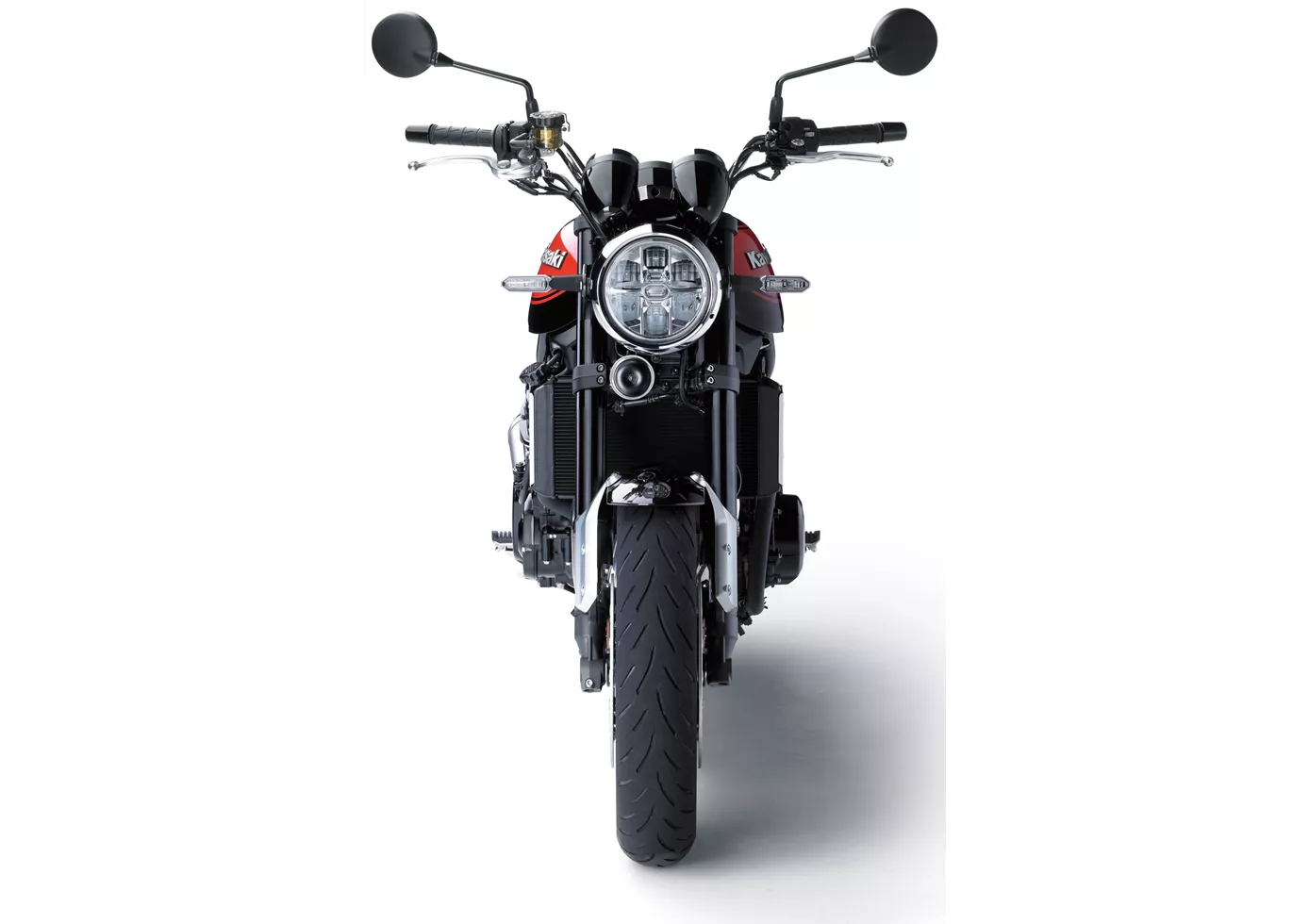
The Kawasaki Z900 RS is the perfect combination of classic design and modern technology. Its four-cylinder Inline engine, which runs silky smooth, delivers linear power and impressive elasticity across the entire rev range. The suspension strikes an ideal balance between comfort and stability, making it perfect for both long-distance riding and sporty riding. Despite the lack of a windscreen, the Z900 RS impresses with a comfortable riding position and agile riding performance. Aesthetically, it pays homage to the legendary Z1, whilst modern features such as traction control and high-quality build quality round off a very successful overall package. For anyone looking to combine a retro look with modern power, the Z900 RS is a reliable and versatile companion, both for everyday use and for longer tours.
Yamaha MT-09 2021
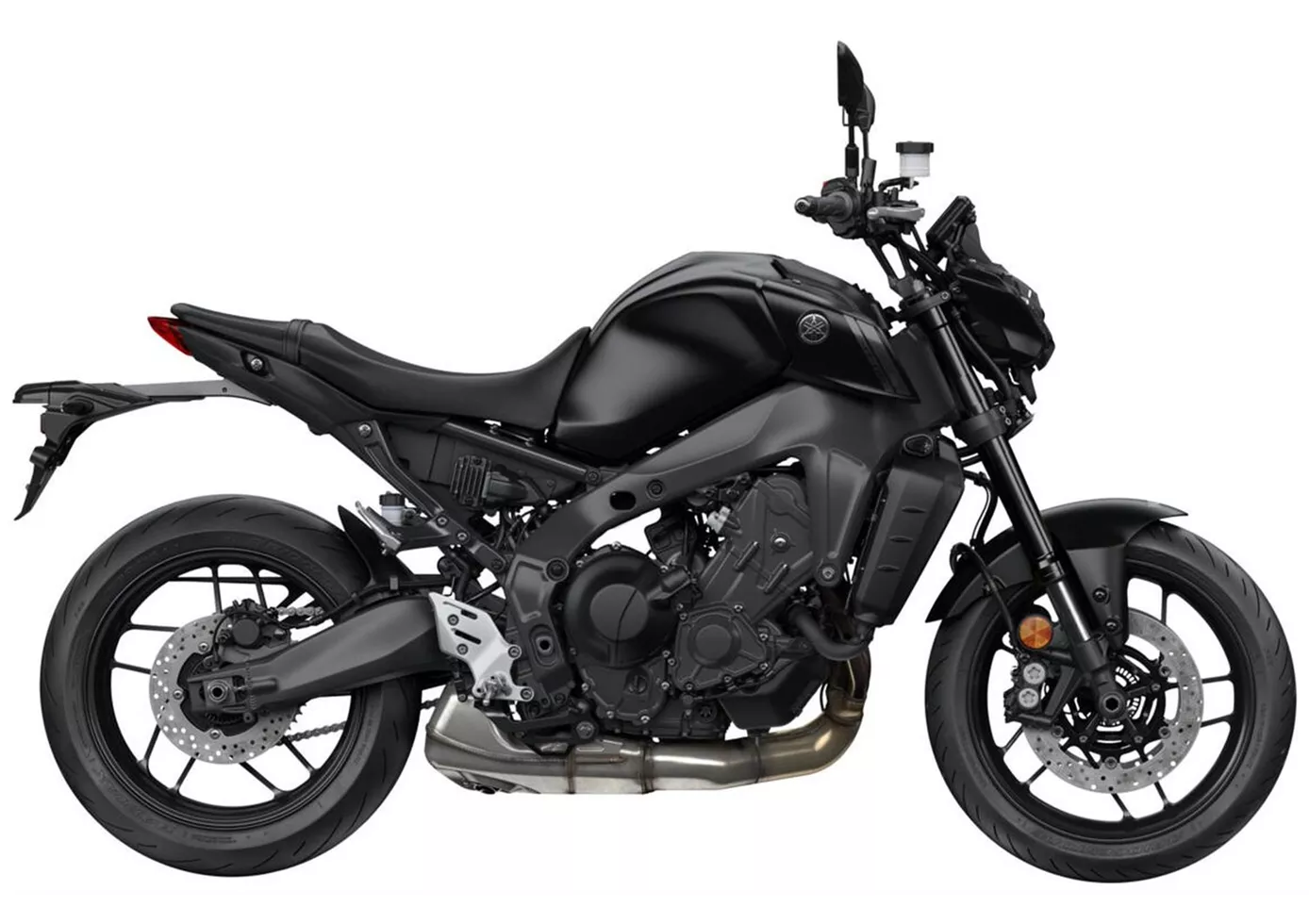
Yes, Yamaha has produced a really leiwandes bike. All the criticisms of its predecessor have been successfully revised without neutering the wild and playful nature of the MT-09. The fourth generation is more mature, more precise and more polished, rides more neutrally and is more stable without losing its light-footedness. A marvellous bike that currently offers an almost unbeatable price-performance ratio thanks to many detail improvements and has now even become really pretty. The Yamaha dealers won't be able to save themselves from orders after test rides. Let's hope that availability is guaranteed, because the new MT-09 is the definition of the word "direct hit"!
Price Comparison Average Market Price Kawasaki Z900 RS vs Yamaha MT-09
There are a few key differences between a Kawasaki Z900 RS 2018 and a Yamaha MT-09 2021. In terms of price, the actual average price of a Kawasaki Z900 RS 2018 is about 33% higher. Compared to Yamaha MT-09 2021 there are more Kawasaki Z900 RS 2018 bikes available on the 1000PS.de Marketplace, specifically 28 compared to 19. It takes less time to sell a Yamaha MT-09 with 112 days compared to 154 days for the Kawasaki Z900 RS. Since model year 2018 1000PS.de editors have written 26 reviews for the Kawasaki Z900 RS and 57 reviews for the Yamaha MT-09 since model year 2013. The first review for the Kawasaki Z900 RS was published on 9/6/2017 and now has more than 63,700 views. This compares to more than 39,900 views for the first review on Yamaha MT-09 published on 6/10/2013.