Just how well the active noise cancellation in the Cardo Beyond GTS works only really dawned on me when the battery died. The helmet had warned me several times about the low battery on the expressway, but I still flinched hard when the familiar wind and road noise came back all at once. The battery had lasted a little over six hours on that ride with ANC, Bluetooth, a few phone calls and no power-saving mode. By then my ears had got so used to the quiet that the difference when it involuntarily switched off was far more noticeable than when switching it on.
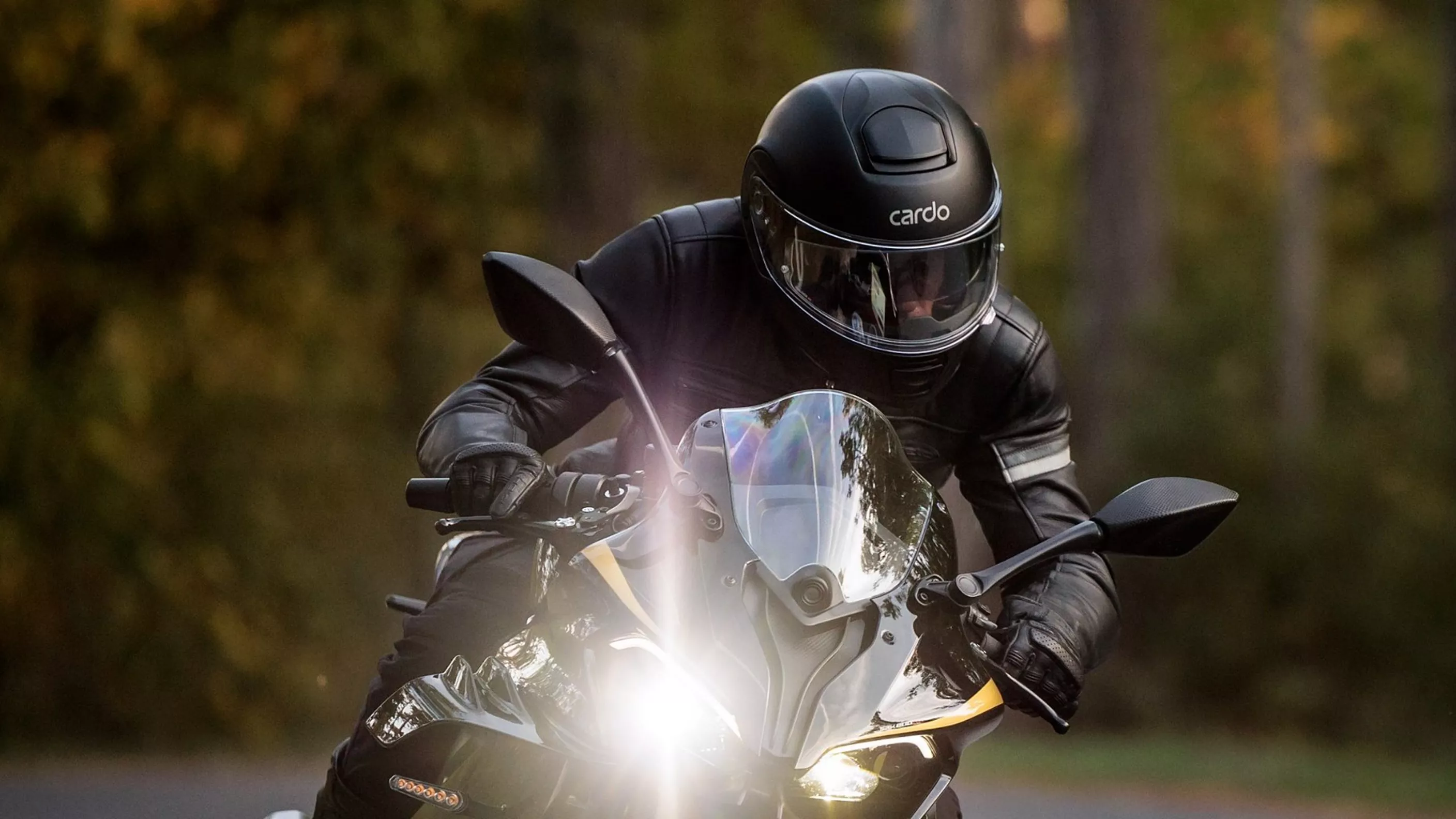
Cardo Beyond GTS helmet review: motorcycle helmet with ANC and Bluetooth
Riding quieter: what Active Noise Cancelling really delivers
Battery dead, road noise back. Only when the helmet ran out of power did I realise how much of the noise the Cardo Beyond GTS had been filtering out until then. Where the damping hits its limits and whether the earplugs can stay at home became clear over ten weeks of real-world testing.

NoPain
published on 11/26/2026
1,414 Views
With the Beyond GTS, communication specialist Cardo is launching its first helmet. In this full-face helmet with a carbon shell, the speakers, microphones, battery, Bluetooth and mesh intercom were part of the plan from the very start. The electronics sit inside the helmet, the wiring is routed at the factory and the outside of the shell stays clean. On top of that come a sun visor, a Pinlock 200, an active brake light, crash detection and ANC (Active Noise Cancellation) as you know it from headphones.
From September to November 2026 I spent ten weeks riding with a size M test helmet that 1000PS received from Cardo, mostly in mild to cool temperatures. I rode solo on sportbikes, enduros and the Ducati Hypermotard 698 Mono, and two-up on the Ducati as well. The question that accompanied me through the 1000PS Performance Check was simple: thanks to ANC, can the earplugs stay at home?
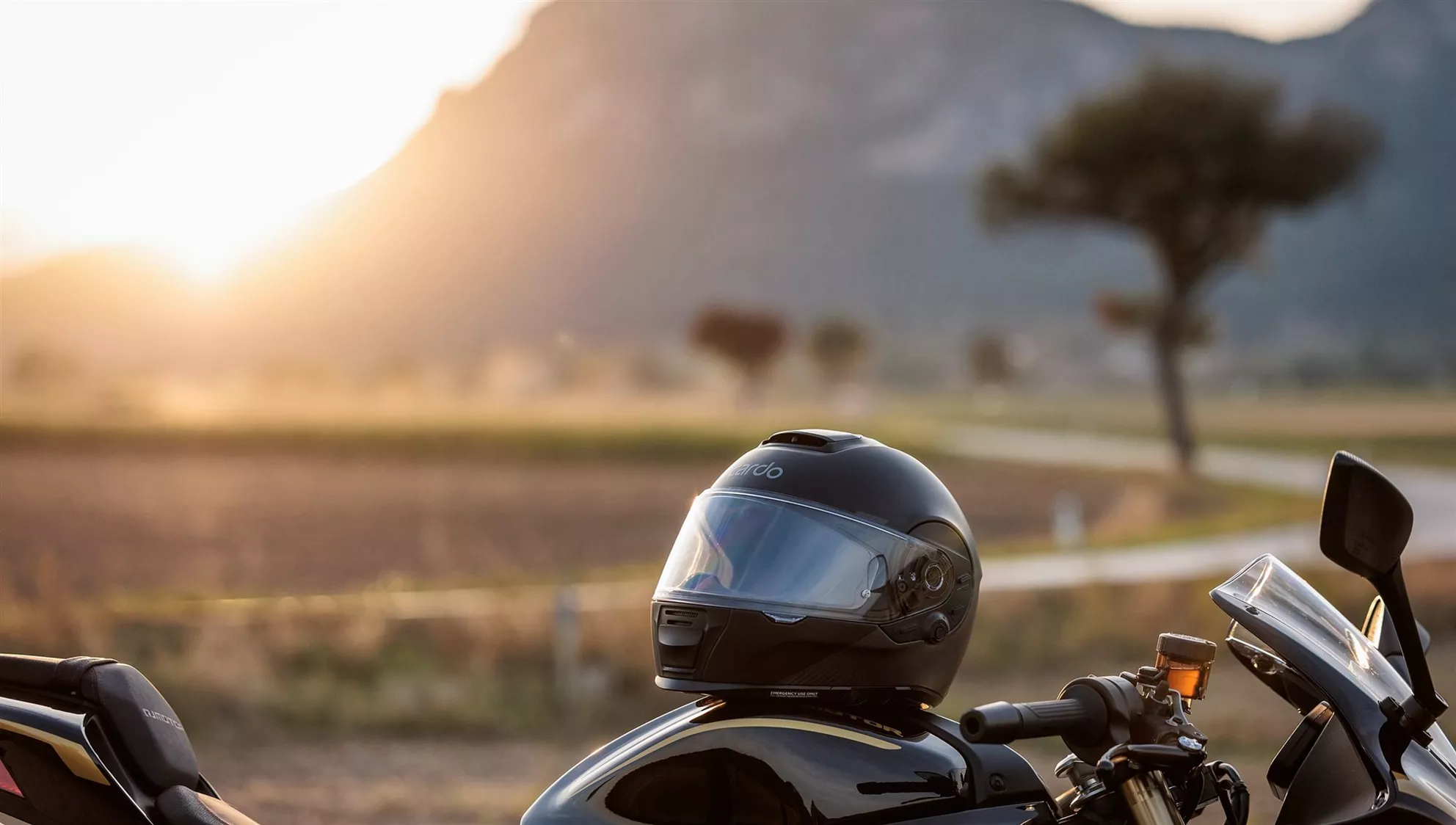
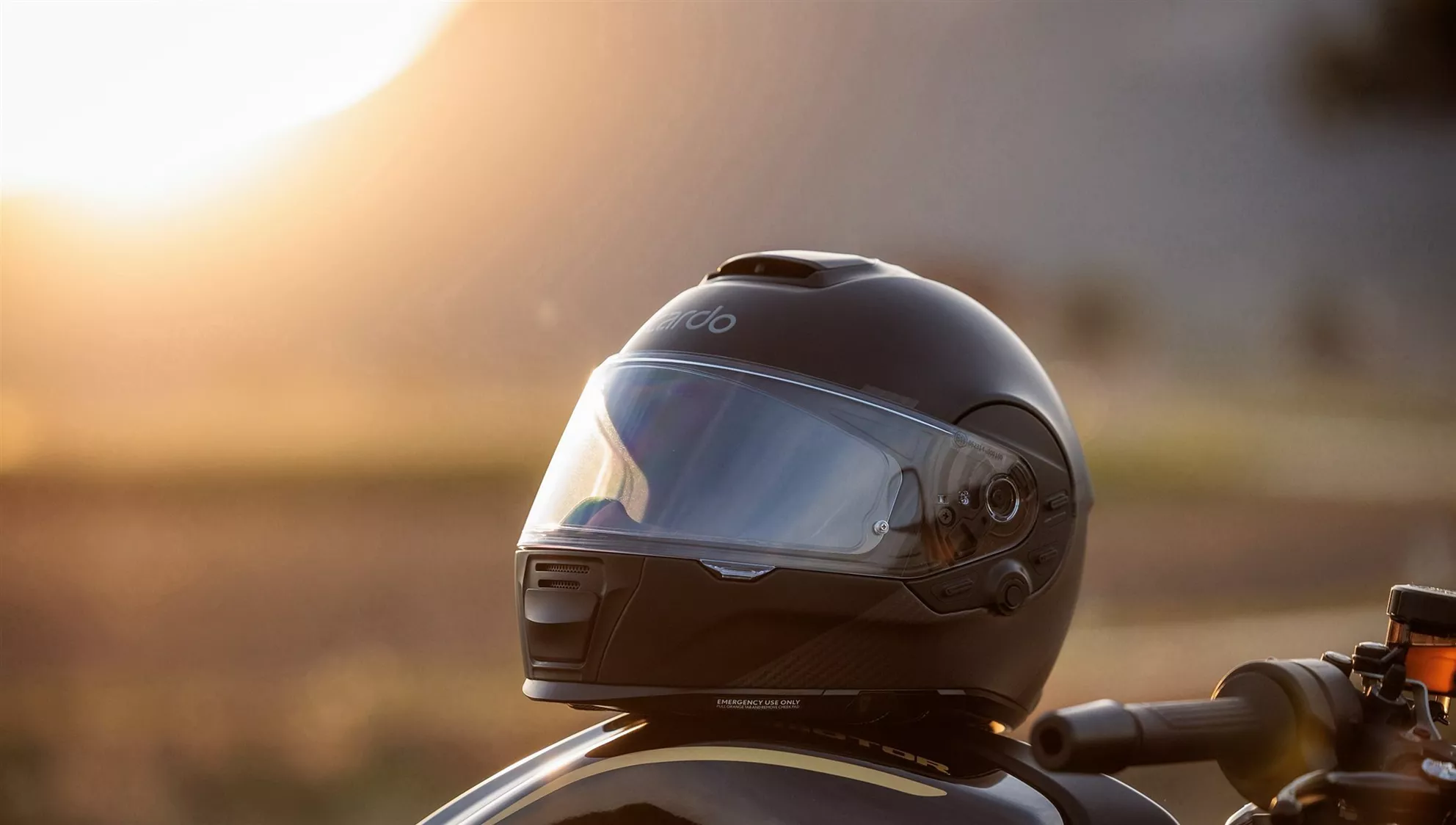
Cardo's first helmet: speakers, microphones, battery and mesh intercom sit in the carbon shell from the factory.
Note on the tested model: the Cardo Beyond GTS is not yet available in Europe. According to Cardo, the test helmet that 1000PS received already corresponded to the final product, but the manufacturer still wants to use the feedback from real-world testing to revise the fit before launch so that the helmet suits more head shapes. That is why market launch is only planned for spring 2027; for Austria and Germany, Cardo quotes a price of 1,299 euros (as of November 2026). My impressions regarding fit and pressure points therefore only apply to the tested sample.
According to Cardo, the hardware is also final, while the manufacturer intends to keep refining the software until launch. The Beyond GTS was tested with version 1.1 including Mesh Boost, the software version that was current on 20 November 2026.
First impression: Cardo Beyond GTS in matt black
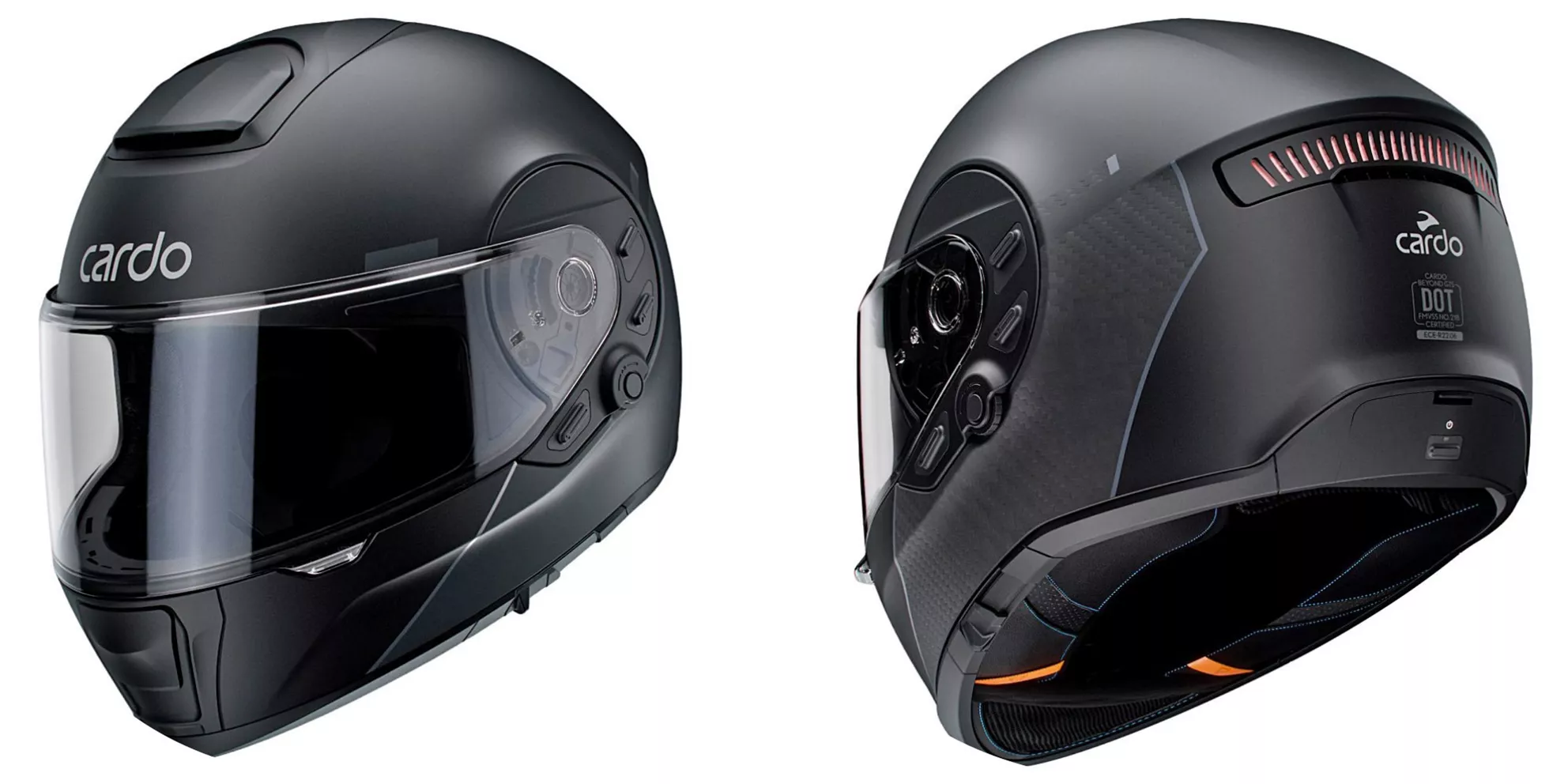
Besides the helmet, the Cardo Beyond GTS box contains a helmet bag, a charging cable and the Pinlock 200 – and that's all you need to hit the road. The helmet is currently offered exclusively in matt black, with the carbon weave showing through the paint on the sides and giving the full-face helmet a technical touch. Here's how I judge the build quality: the brake light sits flush in the rear, the vent sliders are neatly fitted, and even the press studs of the liner snap into place first time when removing and refitting it - a small detail you'll appreciate every wash.
Despite the carbon, the Cardo is no lightweight, which nobody should expect given the battery, speakers, sun visor and lighting. The size M test sample weighs 1,853 grams ready to ride with battery, size L comes in at 1,913 grams (both weighed by us). For context: we weighed the Sena Phantom ANC in size M at 1,716 grams, so the Cardo is 137 grams heavier. Given the features, that's fine by me, although sport riders hunting for low weight will naturally look elsewhere at just under 1.9 kilograms.
Cardo Beyond GTS specifications
| Feature | Cardo Beyond GTS |
|---|---|
| Type | Full-face helmet with integrated communication system and active noise cancellation (ANC) | Outer shell | Carbon fibre composite, aramid-reinforced, 4 shell sizes | Inner shell | 5-piece multi-density EPS | Helmet standard | ECE R22.06 and DOT | Head shape according to Cardo | Intermediate oval | Sizes | XS to XXL (6 sizes) | Weight size M | 1,853 grams (weighed incl. battery) | Weight size L | 1,913 grams (weighed incl. battery) | Fastening | Titanium double-D ring | Visor | Clear visor with lock, 210-degree field of view according to Cardo | Anti-fog | Pinlock 200 included | Sun visor | Integrated, operated on the left | Ventilation | Top and chin, each three-stage, passive exhaust in the brake light | Speakers | 53 mm, developed by Cardo Sound Labs | ANC | 10 dB(A) reduction according to Cardo spec sheet | Intercom | 2nd-generation DMC mesh with Mesh Boost, up to 31 riders, up to 2 km range according to Cardo | Bluetooth intercom | Yes, also to other brands | Voice control | Natural Voice ("Hey Cardo") | Other functions | Active brake light, crash detection, helmet condition monitoring, FM radio, Auto On/Off, freely configurable button, front LED status indicator | Battery | 2,000 mAh, removable, wireless charging | Battery life in test | 6 to 8 hours with mesh, music and ANC | Software in test | Version 1.1, over-the-air updates | Emergency system | Cheek pads with quick-release system | Liner | Antimicrobial, moisture-wicking, washable | Included | Helmet, helmet bag, charging cable, Pinlock 200 | Colour | Matt black | Warranty | Up to 5 years according to Cardo | Price (RRP) | € 1,299.00 in Austria and Germany |
Manufacturer data according to the Cardo product page and the Beyond GTS spec sheet, price as of November 2026. Weights and battery life determined by 1000PS on the test helmet. Market launch in Europe planned for spring 2027 according to Cardo.
Anti-noise against wind roar: how the ANC in the Beyond GTS works
The ANC in the Cardo Beyond GTS works on the same principle as in headphones: microphones pick up the sound in the ear pocket, the electronics calculate an anti-phase wave from it and send it back through the speakers so that peak and trough cancel each other out. ANC works best on low, steady noises such as the dull drone of the wind. Only, in a motorcycle helmet that drone rarely stays constant. Even a small head movement, a different seating position or the turbulence behind a truck changes what reaches your ears. The noise cancellation has to react to this continuously. Horns, sirens and the engine are supposed to remain audible. I couldn't find an ambient mode that amplifies outside sounds and thus makes conversations easier without a Bluetooth connection in the test helmet's settings.
Microphones in the ear pocket pick up the sound, the speakers send back the anti-phase wave. It works best on low, steady noises.
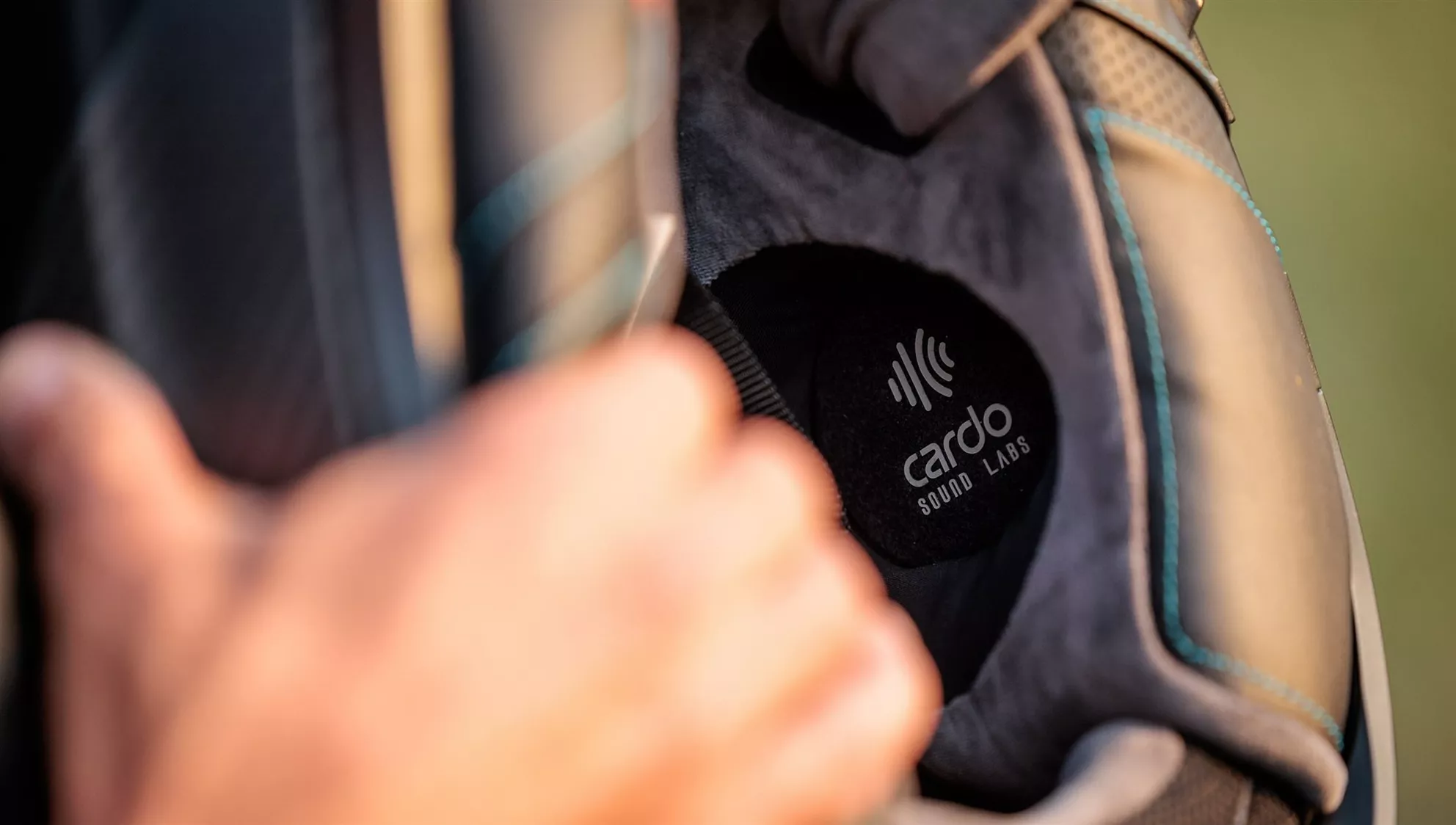
In its spec sheet, Cardo puts the effect at 10 dB(A), which the manufacturer equates with 85 percent less harmful noise. As a rule of thumb, ten decibels less is perceived as roughly halving the volume; so even Cardo doesn't promise silence. I won't let the slogan about the "world's first functioning ANC system for motorcyclists" stand without comment, though, because with the Sena Phantom ANC and the Schuberth C5 ANC, whose communication system is also based on Cardo technology, two helmets with noise cancellation are already on sale. What is new with the Beyond GTS, however, is that the shell, EPS and padding were developed from the outset as an acoustic chamber around the 53-millimetre speakers. For comparison: the Packtalk Edge uses 40 millimetres, the Packtalk Pro 45 millimetres.
Ten decibels less is perceived as roughly half the volume. Even Cardo doesn't promise silence.
The rest of the features read like a touring rider's wish list. According to Cardo, second-generation DMC mesh connects up to 31 riders over up to two kilometres, Bluetooth intercom also works with devices from other brands, and the 2,000 mAh battery is removable and can be charged wirelessly. A sensor in the helmet detects deceleration and activates the brake light at the rear, crash detection works together with the Cardo Connect app and the Cardo Cloud, and a condition monitor is supposed to report when the helmet has reached the end of its service life. On top of that, the manufacturer promises that individual components can be sent in for repair and upgraded in the future. Whether that pans out is naturally something a ten-week test can't answer.

Fit: test helmet in size M with a head index of 76.0
With the Sena Phantom ANC we had learned that head shape determines how well the noise cancellation works, and of all people I was the tester back then for whom the ANC achieved next to nothing, because the ear pads left too much air at the sides. So I was correspondingly sceptical when I first put on the Cardo Beyond GTS - and experienced the exact opposite. With a head index of 76.0 (head width divided by head length times 100), I sit at the lower end of the intermediate oval range, close to long oval, and on my head the size M test helmet fits almost like a custom-made one. Putting it on, I could feel my ears slide into the side pads and get neatly enclosed, which later turned out to be half the battle for sound and ANC.
It didn't come entirely without a break-in period, though. On the first ride, my temples made themselves felt with slight pressure after about a quarter of an hour, which eased off during the ride and didn't return on subsequent outings. When tried on back-to-back, size L felt slightly looser and more comfortable straight away, although the difference between the two sizes was surprisingly small. I'm not alone in this experience: other testers also report a tight fit and pressure on the temples, some have gone up a shell size because of it, and Cardo itself has announced it will improve the fit of production helmets once more based on this feedback. The test sample is tight and cut more towards long oval, even though the manufacturer specifies the interior shape as intermediate oval.
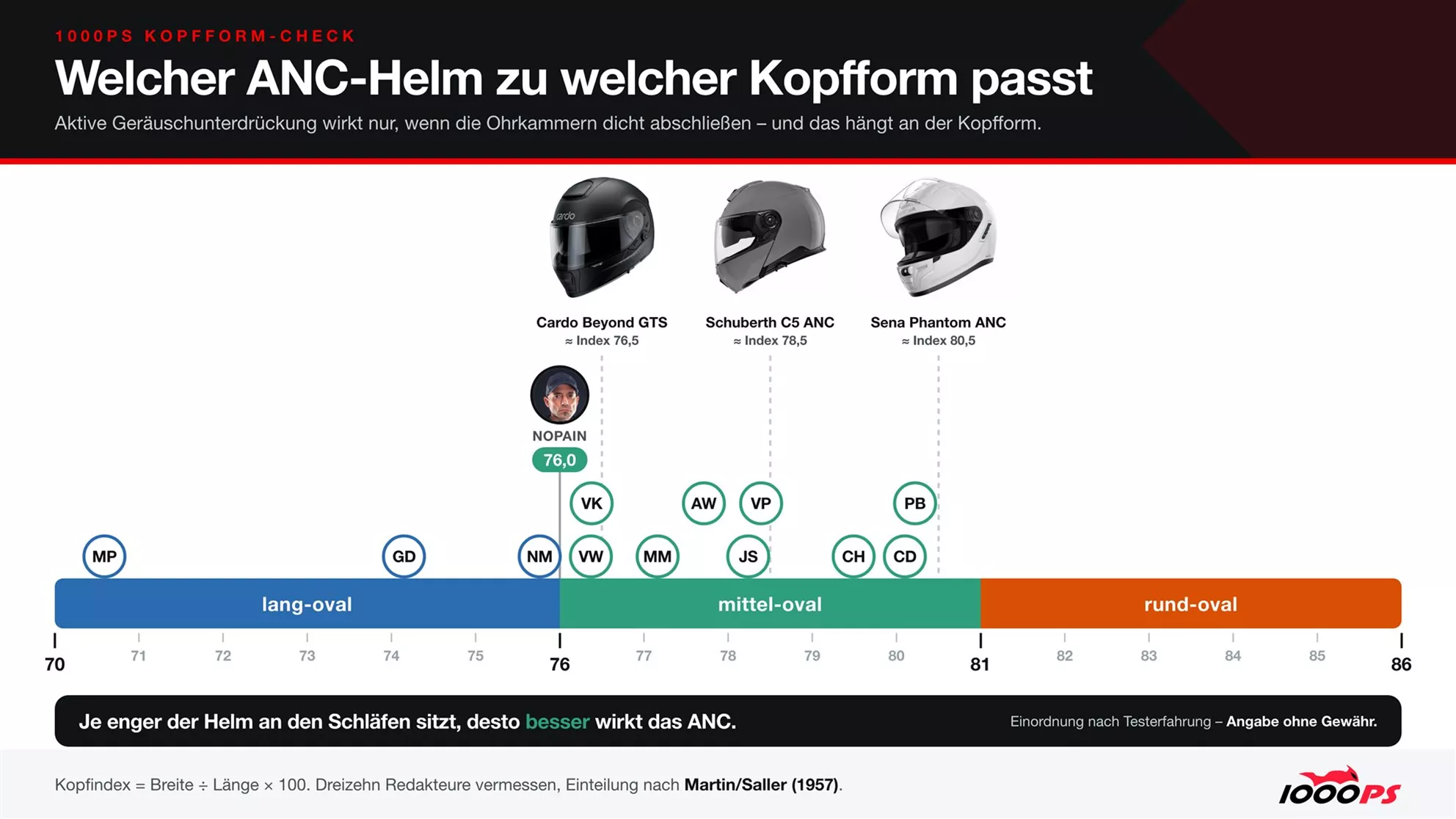
The head index is head width divided by head length times 100. At 76.0, NoPain sits at the transition from long oval to intermediate oval, where the Beyond GTS in size M fits almost like a custom-made helmet.
If you have a rounder head, pay particular attention to lateral pressure and to the fit at the forehead and back of the head when trying it on. A bigger size can relieve the temples while leaving too much room elsewhere, and that would be doubly annoying with the Beyond GTS, because the tight seal around the ears accounts for a significant part of the ANC's effect. I didn't wear glasses during the test, but they don't fit particularly well under the test helmet either, as it hugs the sides very tightly. Glasses wearers should therefore bring both their prescription glasses and sunglasses when trying it on.
Visor, sun visor and ventilation on the road
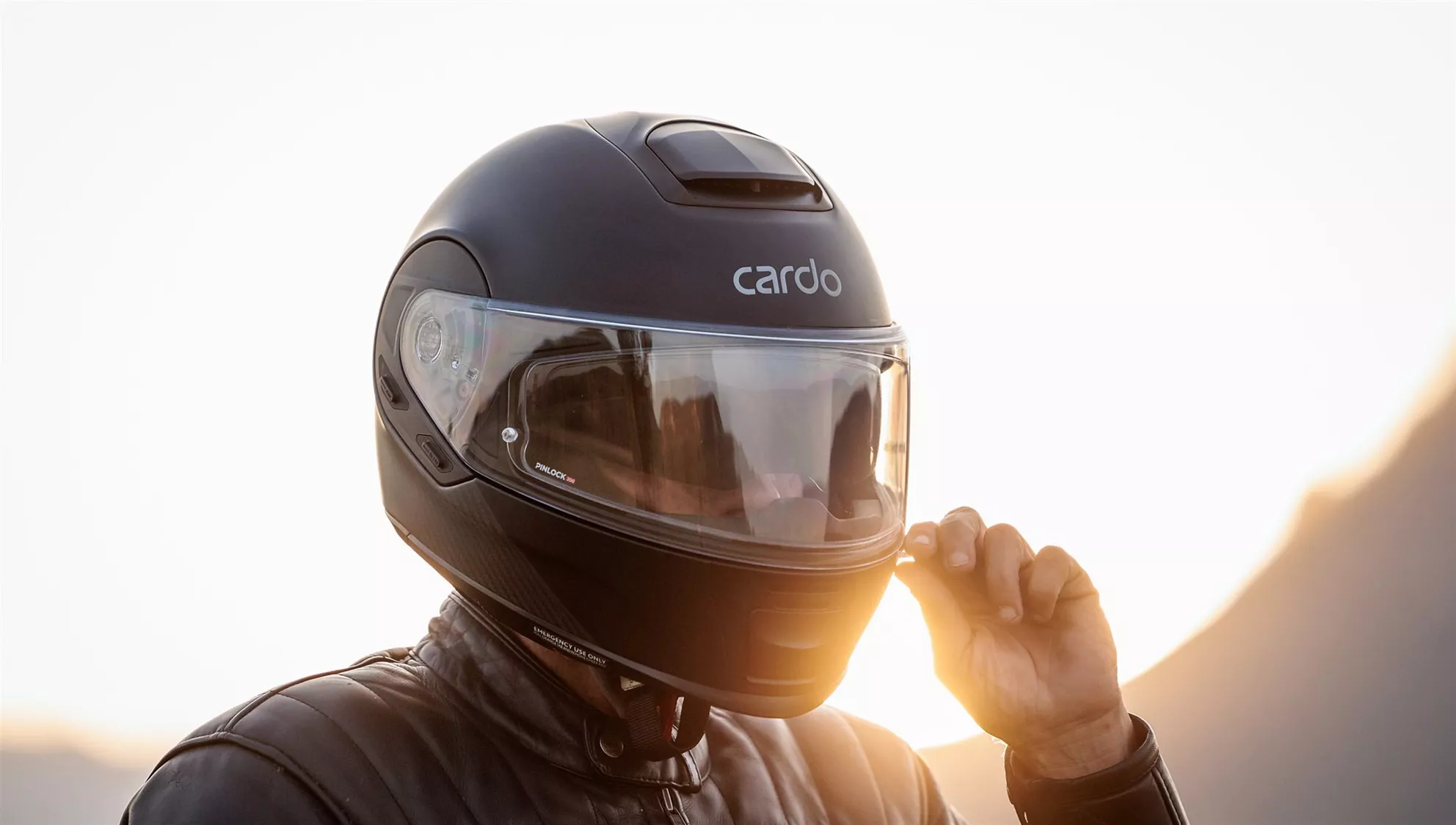
The visor mechanism is one of those details on the Cardo Beyond GTS that put a smile on your face every day. The visor clicks in solidly, can be ridden cracked open and locked via a lever, and swapping it takes just seconds: open the visor fully, pull the release slider, unclip it from the mount. On my mostly cool autumn rides the Pinlock 200 stayed fog-free and was practically unnoticeable when looking through it, while the field of view up, down and to the sides is generous. The sun visor is easy to operate on the left, drops down far and leaves enough clearance to my nose - on the Sena Phantom ANC I had criticised a sun visor that was too short at exactly this point.
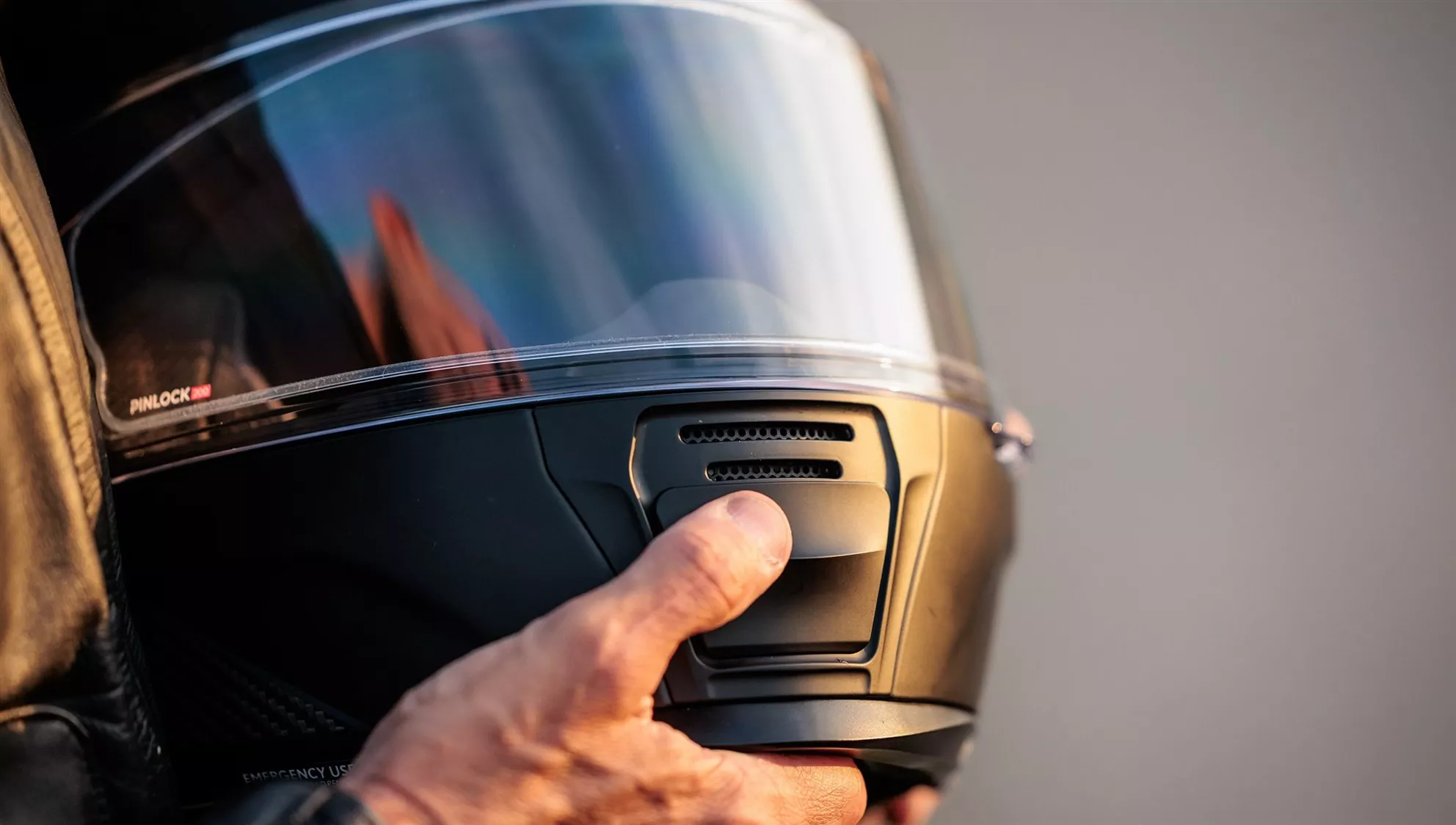
The chin slider has three positions and can be operated while riding. A mesh keeps insects out.
As far as I can judge, the ventilation works well: both sliders can be reached while riding, and a mesh at the chin intake keeps insects out. Only the top slider got a bit notchy as bug grime built up and needs cleaning more often, which I'd put down as a minor point worth knowing. My test days stayed mild to cool. So how much air the ventilation actually gets to your head at 30 degrees in city traffic remains an open question.
ANC in practice: what the helmet filters out
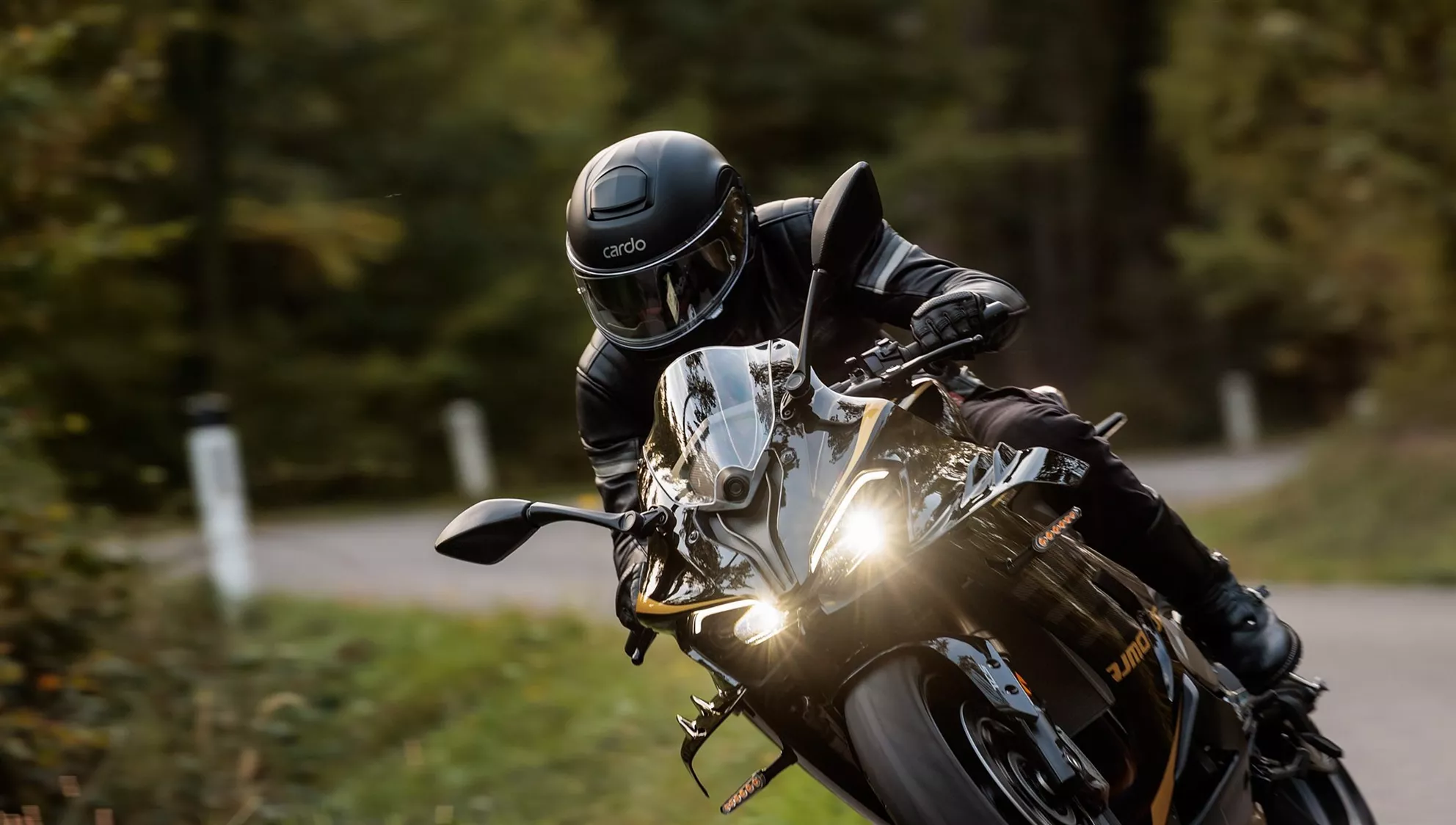
Even when stationary you can hear a difference when switching on the ANC, for example when someone is chatting next to the bike. On the move the effect is more pronounced. The constant wind whistle and the dull roar at higher speeds become audibly quieter, even with the visor open. The Cardo also takes a fair bit off the engine noise. But what the engine is up to remains clearly audible whenever you twist the throttle. Rustling, crackling or other unwanted noises I had noticed with the Sena never showed up in ten weeks with the Cardo.
Even with the electronics switched off, the Beyond GTS is pleasantly quiet. It sits snugly on the head, stays stable in the wind and produces hardly any annoying vibrations. At two-digit speeds with ANC active, you could think the wind noise had almost vanished. Once the speedo hits three digits, it gradually pushes back into the foreground even with ANC on. The damping is still noticeable, but on longer stints the roar can become a bit bothersome. If you want to perceive the difference even more clearly, ride a few minutes without ANC, switch it on, and after a few minutes switch it off again. It's precisely when switching off that you notice how much road noise the system had been swallowing.
As with the Schuberth C5 ANC, the helmet starts up with noise cancellation deactivated. This also applies when it switches itself back on via Auto On/Off. That saves battery, but for anyone who basically wants to ride with ANC it means one extra press every time you start. There's no option for automatic ANC start in the tested software version.
When you switch it off, you won't believe your ears!
NoPain on the ANC feature
How riding posture and collar affect ANC performance
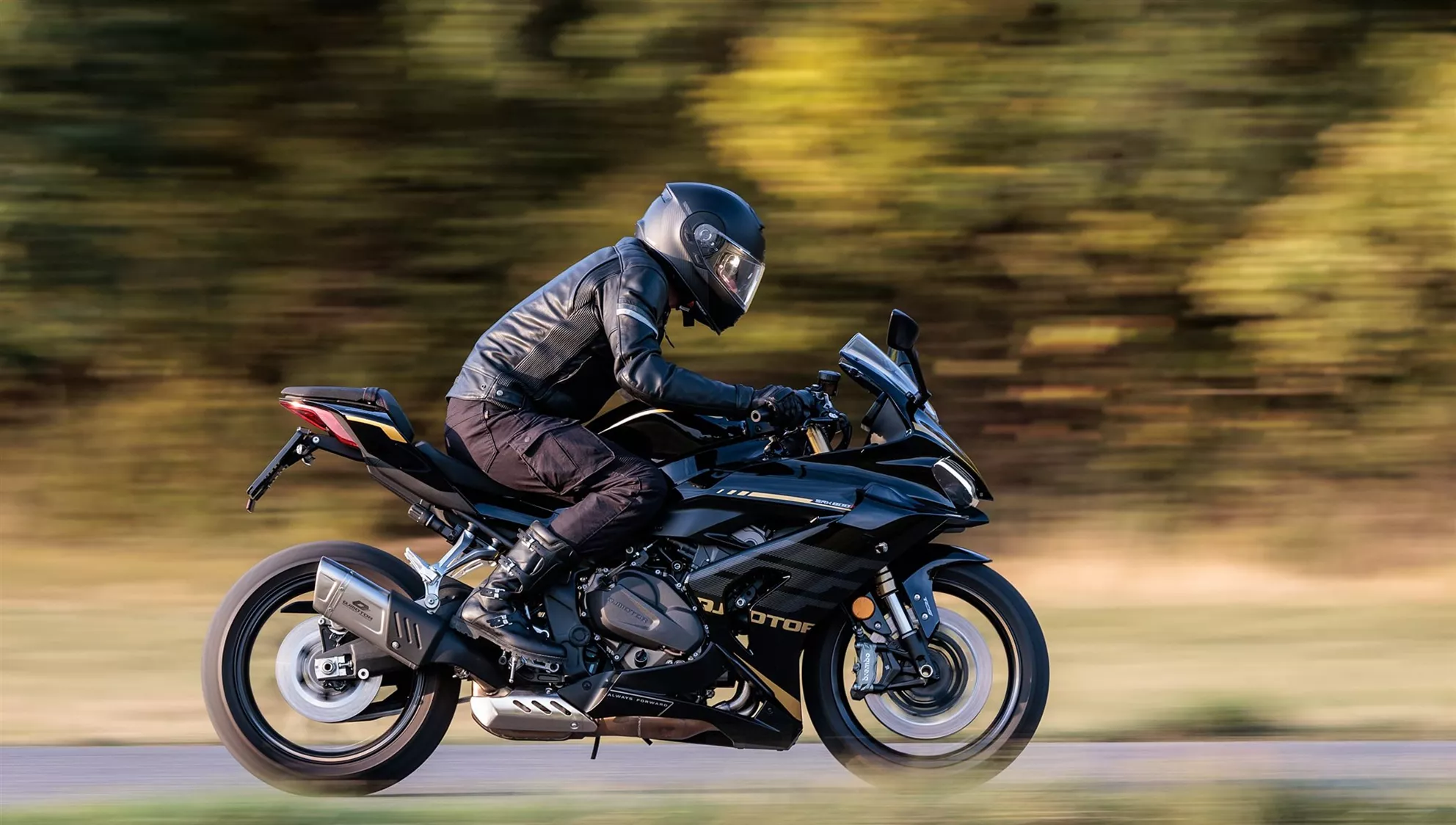
How much the ANC delivers on the road also depends on how you sit and what you wear around your neck. The helmet seals quite well at the bottom, but if you sit very upright and wear a low, narrow jacket collar, more wind gets into the shell from below. A slightly forward-leaning posture was enough to make it instantly quieter inside the helmet. A thick collar or a bulky neck scarf between jacket and helmet had the same effect. The less air swirls around the neck opening, the less roar at the ear. That's why the same helmet can sound different on an enduro with a summer jacket than on a sportbike with a touring collar. Acoustically, the collar is along for the ride.
So back to the question from the start: can ANC replace earplugs? On shorter rides and at speeds below 100 km/h, my answer is yes, because that's where I rode without hearing protection and didn't miss it. Above that, i.e. on the motorway and on long stints, there's nothing wrong with adding earplugs, provided they're approved for road use. Bear in mind that this verdict comes from a single head, namely mine, on which the test helmet seals excellently. I didn't measure the sound level; all statements about the effect are listening impressions.
On shorter rides under 100 km/h I didn't miss my earplugs with ANC active, but for long stints and the motorway I'd still pack them.
NoPain is impressed by the ANC effect
Sound, phone calls and intercom on the road
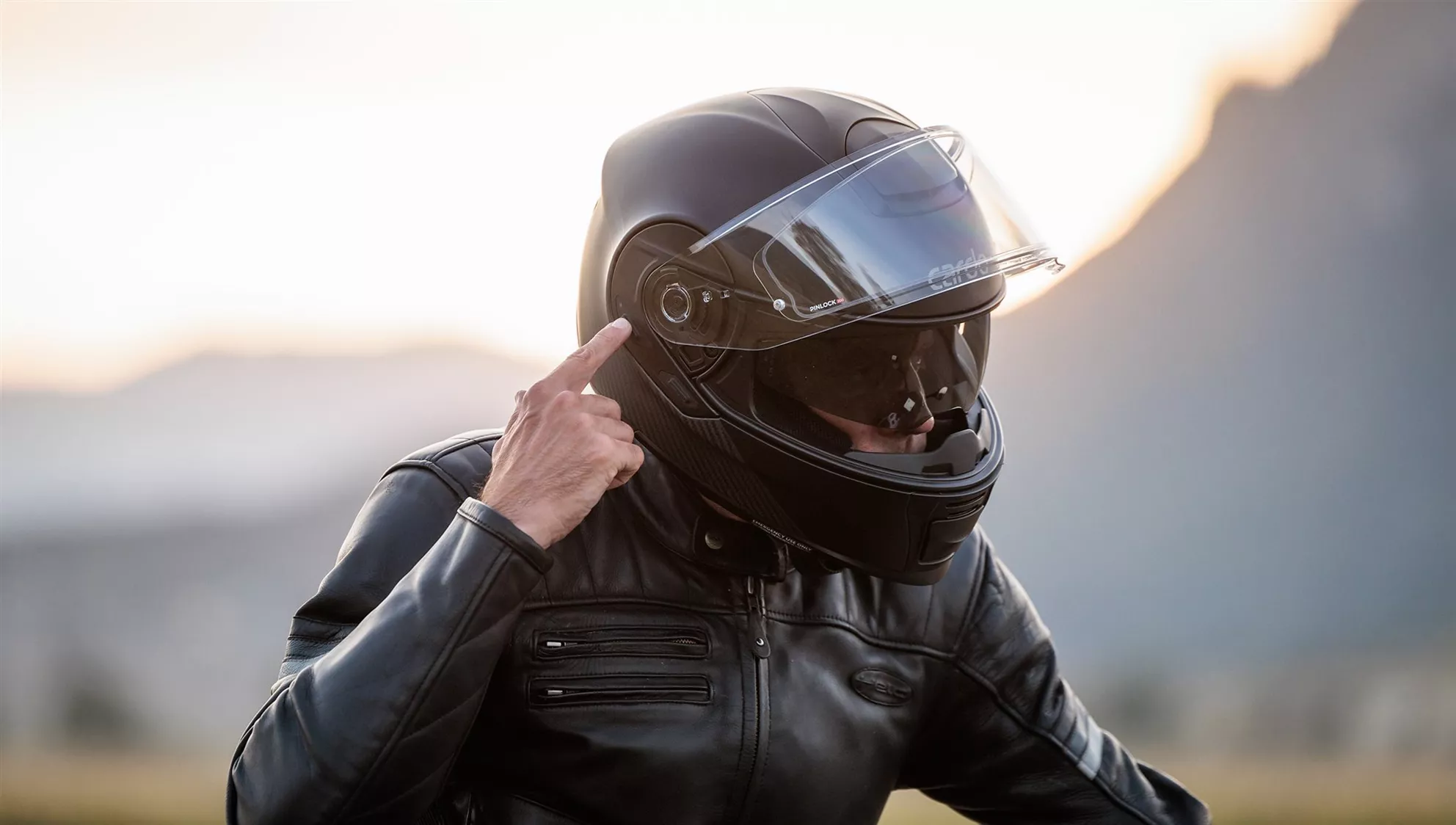
Straight out of the box the speakers of the Cardo Beyond GTS sound excellent, which I base on the fact that music has substance even in the bass range and navigation prompts remain intelligible without readjusting. With the snug fit around the ear and ANC switched on, everything comes through clearly without having to crank up the volume, and that's precisely the second benefit of noise cancellation: if you have less noise to drown out, you listen at lower volume. In the equalizer, a bit more bass is fine for music, while a clear voice setting is the better choice for navigation. During phone calls, the people on the other end were surprised that I was on the bike.
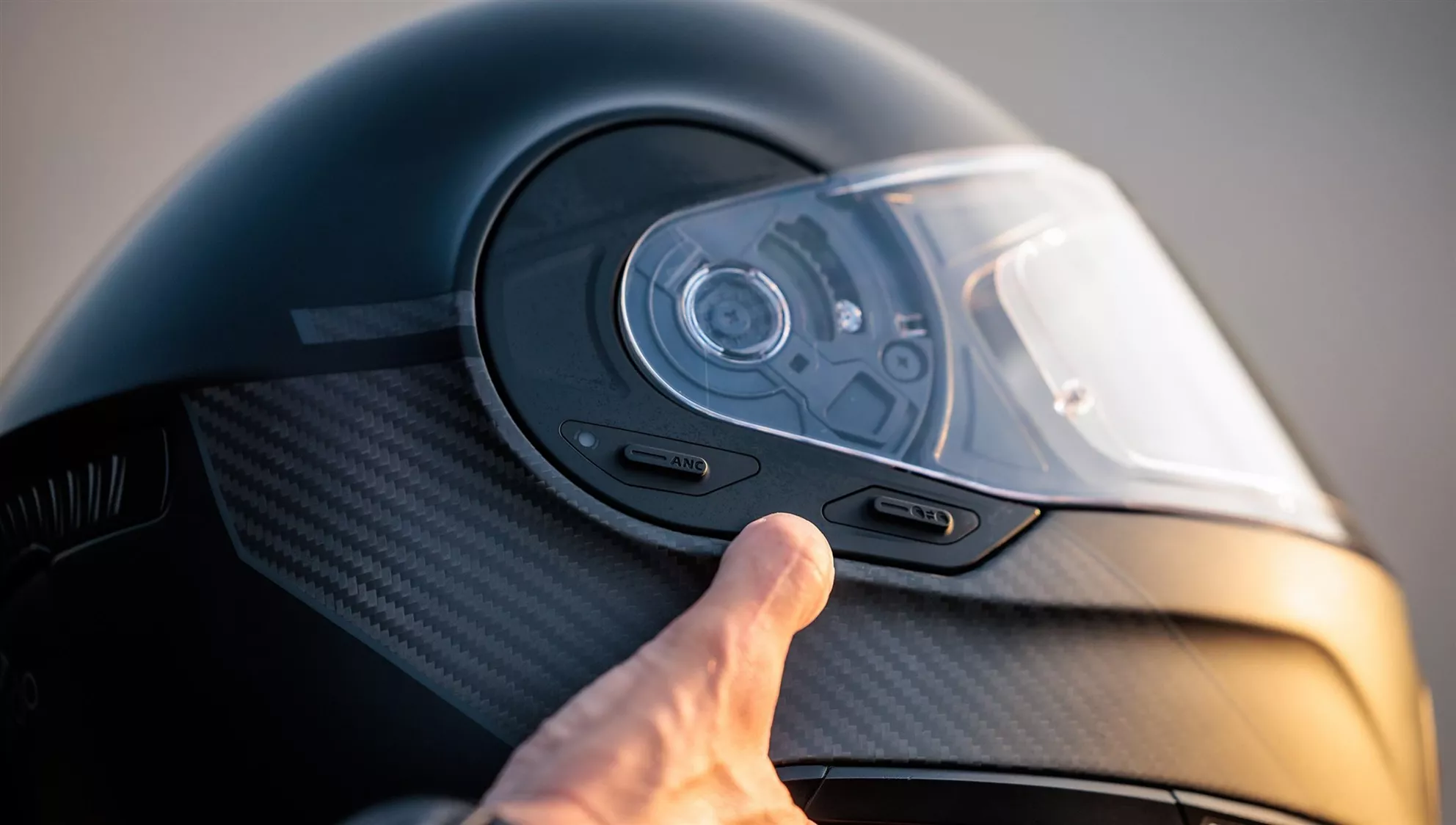
The buttons sit flush in the shell, with no device hanging out in the wind. On the right they're easy to find even with gloves.
I assigned Bluetooth intercom to the freely configurable custom button because I regularly ride with my daughter, whose older Cardo doesn't support DMC; that way the connection to the third-party unit is just a button press away. A second function can be stored for a long press. Mesh was running on my rides, but I didn't actively use it, which is why the 31 riders and two kilometres remain a manufacturer claim. The voice recorder is handy: from the home screen of the smartphone app you can capture an idea before it gets lost in the twisties.
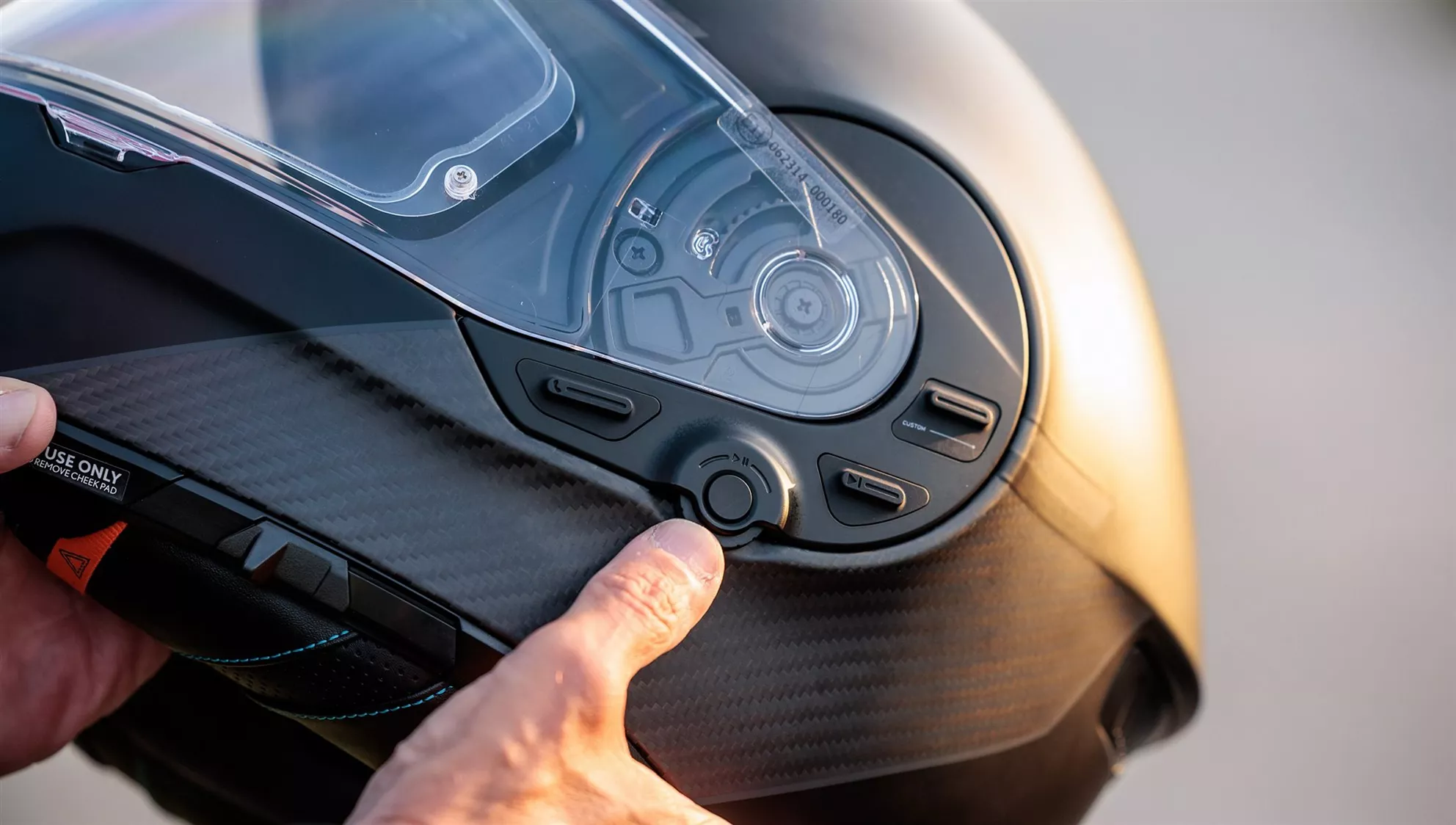
Buttons, app and settings in everyday use
Cardo promises "one function, one button" for the Beyond GTS, and on the right-hand side the concept works: the buttons there are easy to find and tell apart even with gloves on. On the left they're smaller, and the volume wheel in particular I had to search for more often than I'd like, which may also be because I switch between several helmets with different communication systems. Once you've found the wheel, adjusting the volume is very pleasant. I never warmed to the voice control, though: the helmet responds reliably to "Hey Cardo", but doesn't always understand the commands that follow – behaviour I know in similar form from the Sena, although I can't rule out that it was down to my mumbling.

Cardo Connect smartphone app
In the Cardo Connect app, Auto On/Off proved to be one of the most practical settings. Put the helmet down and it goes into standby after a few seconds; pick it up again and it wakes up by itself, which saves power and button presses on days with lots of stops. I had crash detection switched off and therefore didn't test it; the helmet safety function was active.
Power-saving settings of the Cardo Beyond GTS
| Function | |
|---|---|
| Auto On/Off | Puts the helmet into standby when set down and wakes it automatically when picked up | DMC Eco mode | According to the app, gives up to 20 percent more battery life. After more than two minutes without a group, DMC may switch off; pressing the intercom button wakes the mesh up again | Battery saving mode On | Deactivates ANC, active brake light and visual indicator | Battery saving mode Auto | Automatically switches off these three functions as soon as the battery level drops below 25 percent |
Power-saving settings of the Cardo Beyond GTS in the Cardo Connect app, software version 1.1 (as of 20 November 2026).

Safety first with active brake light & co.
A colleague and the 1000PS photographer assessed the brake light from a following position and found it clearly visible, and my pillion even got a brief fright the first time it lit up, because she hadn't known there were LEDs in the back of the helmet.
I wasn't yet able to fully work out in the test exactly when the LEDs integrated at the front of the helmet light up. What is certain is that they serve as an additional visual signal when switching on and for various system notifications.
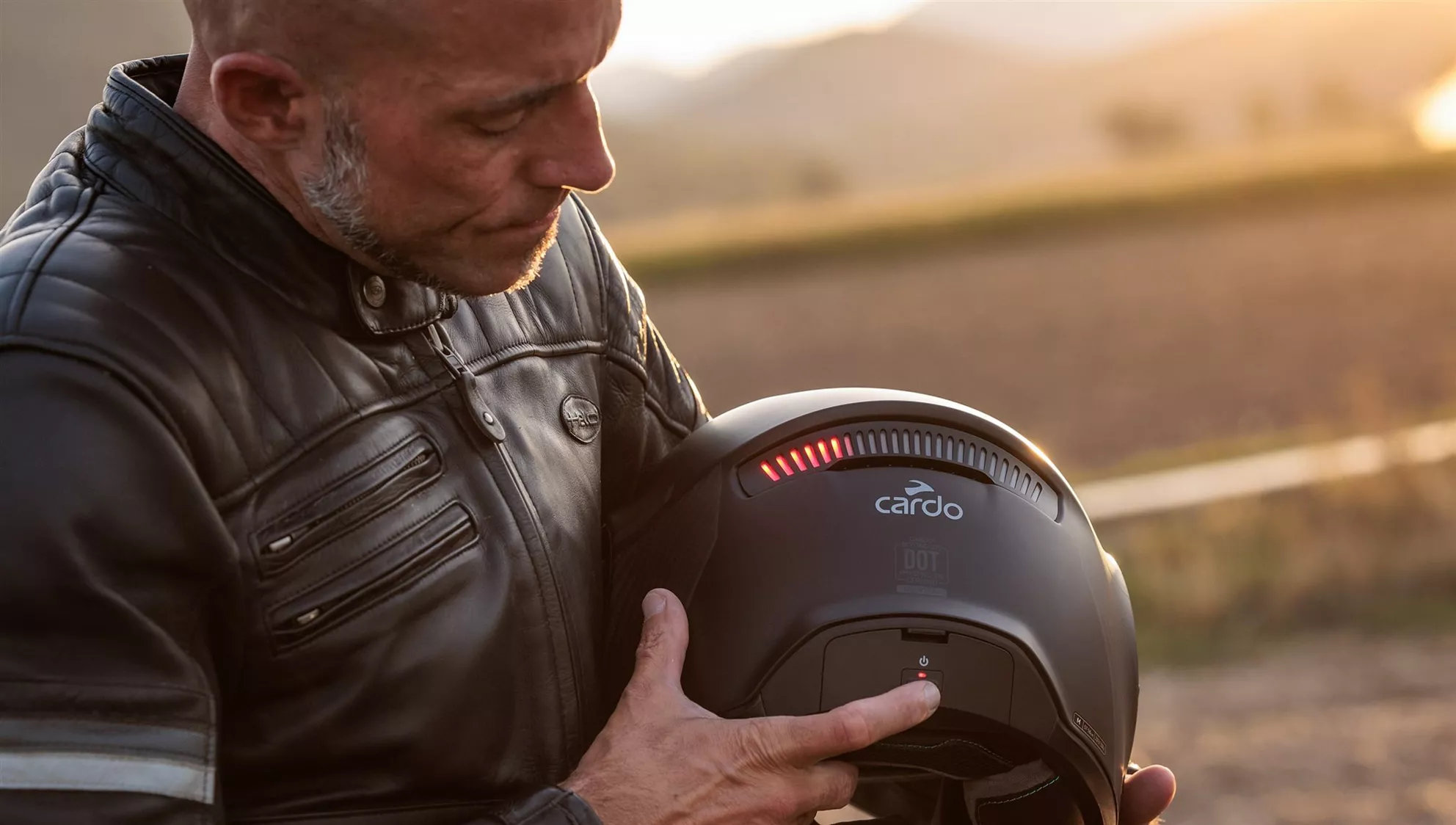
Battery: six to eight hours with all features on
With mesh, music and ANC permanently active, the battery of the Cardo Beyond GTS is said to last six to eight hours. On the ride where I ran out of power on the expressway, it was just over six hours. Back then an older software version was still running, with which Auto On/Off didn't work optimally. In addition, all functions and visual indicators were enabled. How long the battery lasts in practice therefore depends heavily on which functions are used and how intensively.
With my usage, one charge was enough for an extended day trip with breaks. On a long travel day without a chance to charge, it gets tight. If you'd rather stay connected via mesh until evening, set the battery saving mode to Auto. Below 25 percent remaining charge, the helmet switches off ANC, brake light and indicator. Since the battery is removable, a spare battery in the tank bag would be the obvious solution for high-mileage riders.
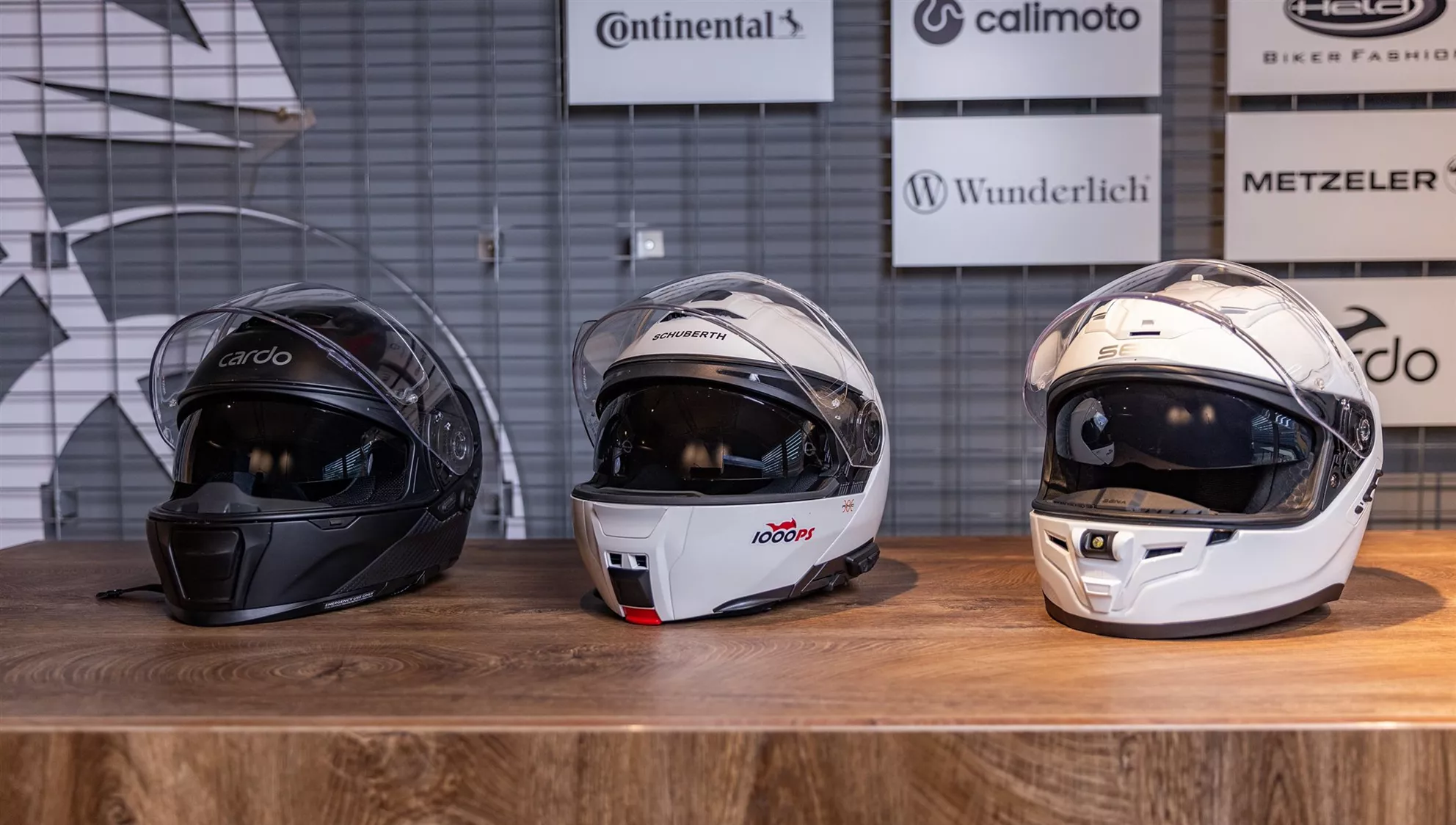
The Schuberth C5 ANC is a flip-up helmet and costs 1,328 euros including the communication system, the Sena Phantom ANC 619 euros.
Comparison: Schuberth C5 ANC and Sena Phantom ANC
Of the ANC helmets I've ridden so far, the Schuberth C5 ANC comes closest to the Cardo Beyond GTS. This comparison is from memory, however, and not from a ride on the same day on the same bike, so I'd like it understood as a tendency. The Schuberth also fits me very well. But it never gets as whisper-quiet as the Beyond GTS. It lets more wind and engine noise through while riding, which feels more lively and is exactly why some riders may like it. Also bear in mind that the C5 ANC is a flip-up helmet and costs 1,328 euros including the communication system (as of the 1000PS test in July 2026), so the comparison concerns two different concepts at a similar price level.
The Sena Phantom ANC scores mainly with its price of 619 euros (as of August 2026), lower weight and an ambient mode I couldn't find on the Cardo. On its own it's a well-made touring helmet; next to the Beyond GTS, however, it clearly falls behind in build quality and above all in the effectiveness of its noise cancellation. That said, it must be noted that the Sena didn't seal sufficiently at the sides on my elongated head, while two colleagues with rounder heads experienced significantly better ANC performance. With the Cardo's production padding, it could well be exactly the other way round.
Conclusion: Cardo Beyond GTS (pre-production fit with production tech)
I was the only tester, with a head index of 76.0, i.e. an intermediate oval head shape tending towards long oval. For ten weeks I rode with the Cardo Beyond GTS on sportbikes, enduros and the Ducati Hypermotard 698 Mono, mostly in mild to cool temperatures. Cardo intends to revise the fit of the tested helmet for production. On my head, the Beyond GTS convinces as a premium touring helmet. The ANC clearly dampens wind and engine noise up to around 100 km/h, the sound is outstanding and the visor mechanism is a real joy in everyday use. The biggest drawbacks are the hard-to-find volume wheel and the power consumption when using the electronics to the full. Both points only slightly cloud the excellent overall impression. If you have an intermediate to long oval head, spend a lot of time on country roads and day trips, use music, navigation and intercom anyway and don't want a device stuck on the outside of your helmet, then the Beyond GTS is the most convincing ANC motorcycle helmet I've ridden so far. If, on the other hand, you have a round head, mainly ride the motorway or plan multi-day trips without charging options, then wait for the revised production fit and try the helmet extensively before 1,299 euros change hands. How well the Cardo seals on wider heads remains for the final version to show. Either way, bring your own touring jacket to the test ride - and a fully charged battery, because you only realise how quiet it was once it gets loud again.
FAQ on the Cardo Beyond GTS
What does the Cardo Beyond GTS helmet cost and when can you buy it? The Cardo Beyond GTS costs 1,299 euros in Austria and Germany (RRP, as of November 2026). The helmet can't be bought in Europe yet because Cardo is still optimising the fit. According to the manufacturer, market launch is planned for spring 2027.
How quiet is the Cardo Beyond GTS with ANC? The Cardo Beyond GTS is a quiet motorcycle helmet even without electronics; in the 1000PS test the ANC audibly dampened wind roar and engine noise, even with the visor open. From around 100 km/h, the wind remains noticeable despite noise cancellation. Cardo quotes a reduction of 10 dB(A); 1000PS did not measure the sound level.
Does the Cardo Beyond GTS with noise cancelling replace earplugs? On shorter rides below 100 km/h, the tester managed without earplugs in the Cardo Beyond GTS. At higher speeds and on long stints, additional hearing protection still makes sense, provided it's approved for road use. The motorcycle helmet with ANC doesn't create absolute silence.
How heavy is the Cardo Beyond GTS? The Cardo Beyond GTS weighs 1,853 grams in size M and 1,913 grams in size L. 1000PS weighed both values on test helmets, each with battery.
How long does the battery of the Cardo Beyond GTS last? In the 1000PS test, the battery of the Cardo Beyond GTS lasted six to eight hours with Bluetooth, music, active brake light and ANC switched on throughout. The battery holds 2,000 mAh, is removable and can be charged wirelessly. The automatic battery saving mode switches off ANC, brake light and indicator below 25 percent.
Which head shape does the Cardo Beyond GTS fit? Cardo specifies the interior shape of the Beyond GTS as intermediate oval. The test helmet in the 1000PS test was tight and cut more towards long oval, and fitted very well in size M with a head index of 76. Cardo is improving the fit of production helmets ahead of market launch in spring 2027.
Cardo Beyond GTS helmet review: motorcycle helmet with ANC and Bluetooth Images
Source: 1000PS

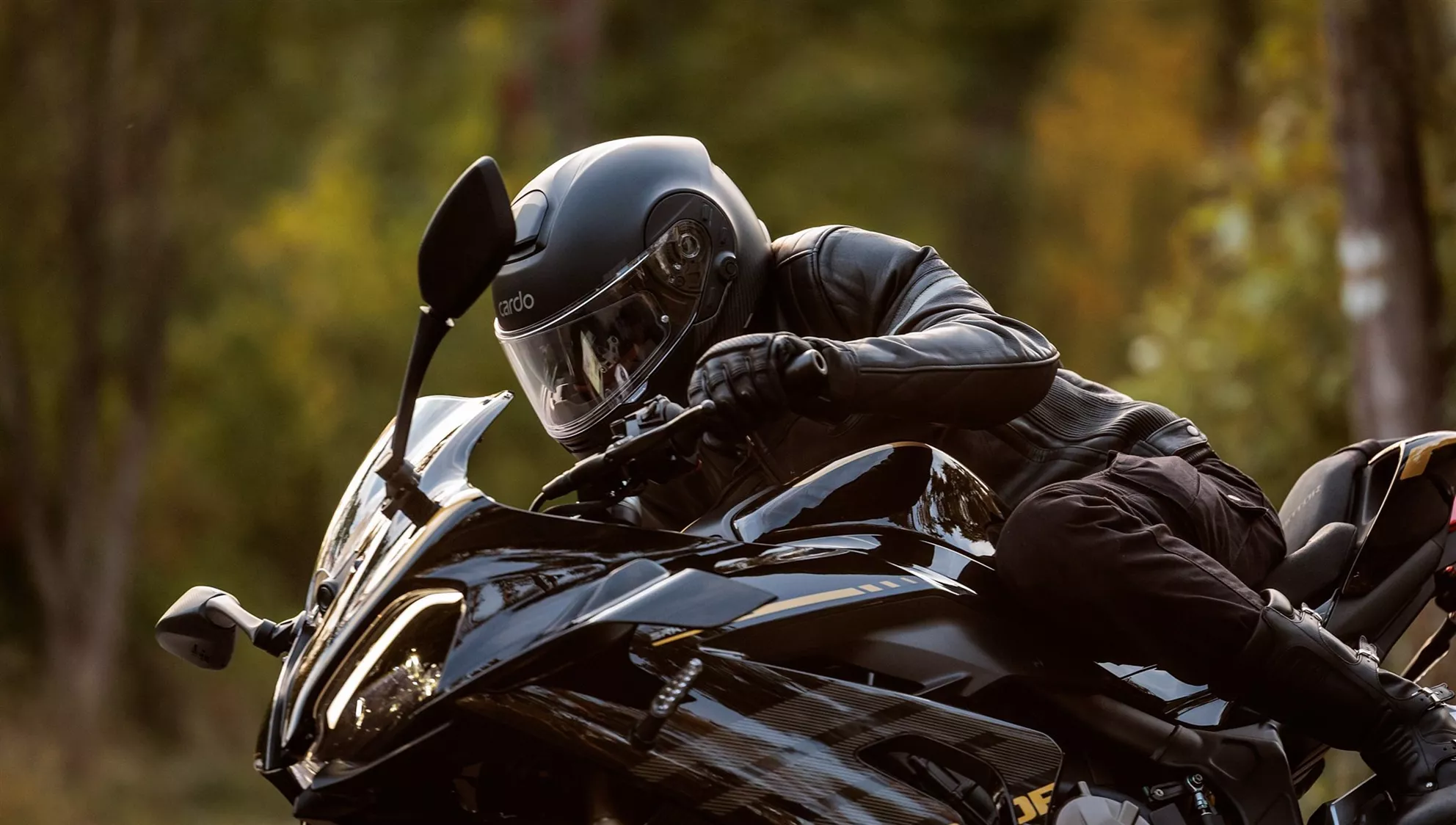
The Beyond GTS is the first helmet from communications specialist Cardo.

We tested the helmet for ten weeks, from September to November 2026.

We rode solo on sportbikes, enduros and the Ducati Hypermotard 698 Mono—and two-up on the latter as well.

The helmet fits snugly, barely buffets and produces almost no vibration, even before ANC is switched on.

Alongside the helmet, the box contains a helmet bag, a charging cable, a Pinlock 200 and the manual.

The price is €1,299 in Austria and Germany (RRP, as of November 2026).

A printed film protects the visor straight from the factory.

The battery is removable and can be charged wirelessly. Cardo also sells it separately.


The visor clicks securely into place and can be ridden with slightly ajar.

The sun visor also comes with a protective film applied at the factory.

Cardo quotes a 210-degree field of view.

In size M, the test helmet weighs 1,853 grams with the battery installed; in size L, it weighs 1,913 grams.

According to Cardo, four shell sizes cover six helmet sizes from XS to XXL.

The passive vent is integrated into the brake light.

A sensor in the helmet detects deceleration and activates the brake light.

The helmet is currently only available in matte black.

The carbon weave is visible through the matte paint on the sides.

Speakers, microphones and battery are built into the shell from the factory, with no device exposed to the wind on the outside.

A three-position vent slider with an insect mesh sits in the chin bar.

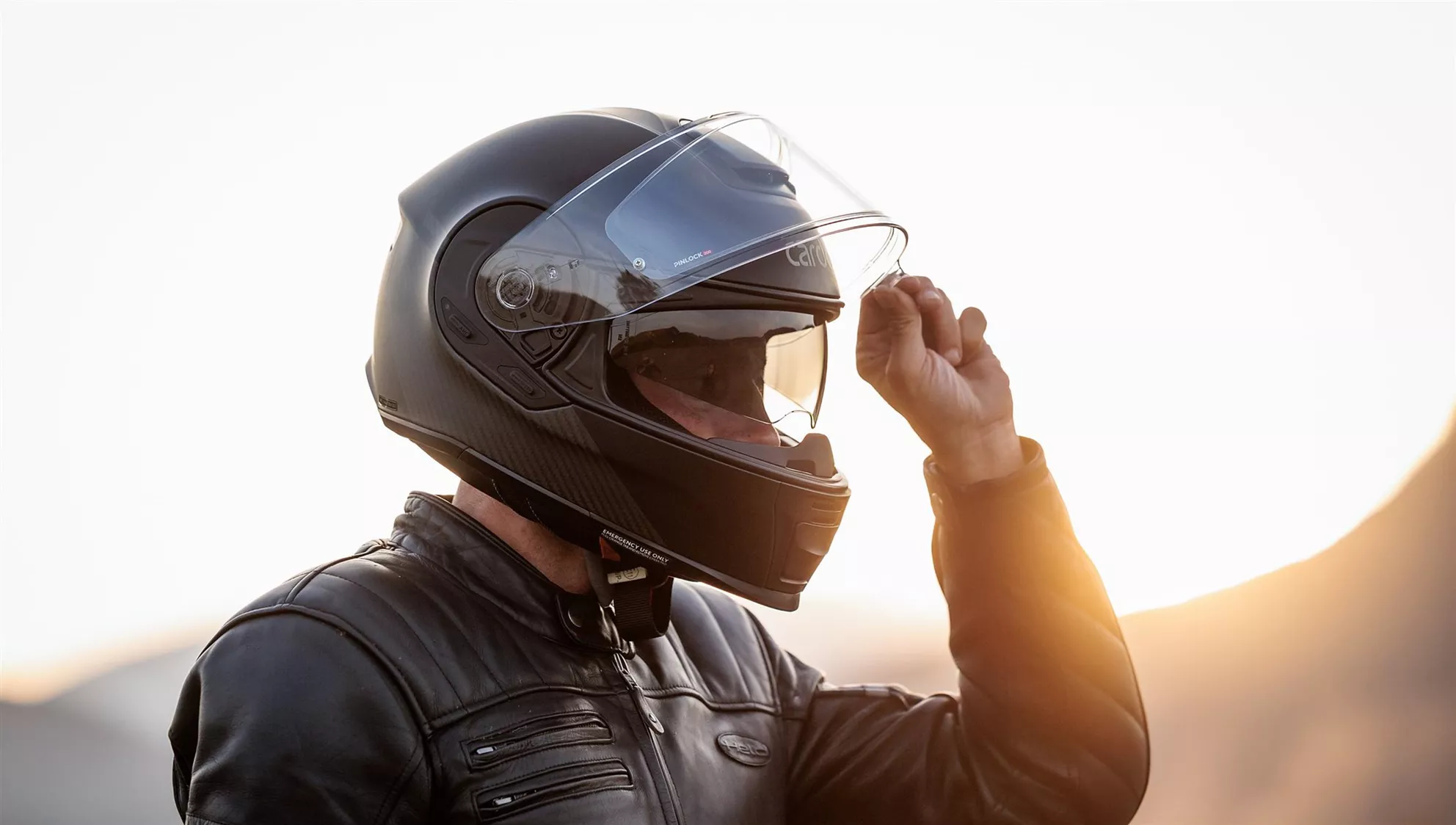
Behind the visor are the Pinlock 200 and the integrated sun visor.

The visor can be removed without tools: open it fully, pull the release, and lift it out of its mount.

According to Cardo, the helmet is certified to ECE R22.06 and DOT standards.

The buttons sit flush in the recess.

Beneath the shell is a five-piece EPS liner with varying densities.

The battery sits under a cover at the rear and can be swapped without tools.

The battery has a 2,000 mAh capacity and is rated to last six to eight hours with mesh, music and ANC.

The battery can also be charged wirelessly.


In battery-saving mode, the helmet switches off the brake light. It can also do this automatically when the battery drops below 25%.

A colleague and our photographer found the brake light easy to see from behind.


Insect grime made the upper slider a little sticky, so it needs cleaning more often.


A grille at the chin vent keeps insects out.

The liner is antimicrobial, moisture-wicking and washable, and the snap fasteners click into place straight away when refitting it.


Charging is via USB-C. The battery can stay in the helmet or be removed.

The sun visor is operated via a slider on the lower left edge.


The buttons on the left are smaller than those on the right.


The customizable button has two functions: one for a short press and one for a long press.

We found ourselves reaching for the volume wheel a few times on the road, but once located, it’s easy to adjust.

The buttons on the right are easy to locate by feel, even with gloves on.

According to Cardo, the buttons for pairing, power and ANC are on the right.

The speakers measure 53 mm, compared with 40 mm in the Packtalk Edge.

The shell, EPS liner and padding form an acoustic chamber around the speakers.

First responders can pull out the cheek pads using the orange tabs without putting strain on the neck.


You can already hear the difference when ANC is switched on while stationary; it’s much more pronounced on the move.

Lean slightly forward and the helmet suddenly gets quieter, as less air rushes in from below.

Up to around 100 km/h, ANC significantly reduces wind and engine noise.

Above 100 km/h, wind noise is still audible, though quieter than without ANC.

Auto On/Off puts the helmet down in standby after just a few seconds.

Pick the helmet back up and it wakes up automatically.

NoPain’s passenger was startled when the lights first came on, as she didn’t know about the LEDs in the helmet.

A sensor detects deceleration and activates the LED strip.

Cardo promises one function per button—no button combinations.

According to Cardo, volume, music and the custom button are all controlled from the left.

According to Cardo, the outer shell is made from a carbon-fibre composite reinforced with aramid.


The fog-free visor was barely noticeable when looking through it.

The chin vent slider has three positions and can be operated while riding.


The upper slider also has three positions.

We couldn’t test how much airflow it delivers in hot weather during our autumn ride.


We didn’t fully establish during the test exactly when the LEDs at the front of the helmet light up.

On the first ride, I felt slight pressure at my temples after about 15 minutes, but it didn’t return.

On NoPain’s rather elongated head, the size M test helmet fits almost like a custom-made lid.

Cardo plans to further refine the fit of the production helmets before they hit the market in spring 2027.


The helmet reliably responds to “Hey Cardo,” but doesn’t always understand the commands that follow.

The sun visor drops down low while leaving plenty of clearance for your nose.

ANC, brake light, indicators and power-saving features can be toggled individually in the app.

We tested it with software version 1.1; updates are delivered over the air.

According to Cardo, Mesh Boost connects up to 31 riders.


The brake light can be switched on and off in the app.

Battery Saver mode switches off ANC, the brake light and display, and activates automatically below 25% battery.

The LEDs at the front of the helmet automatically adjust their brightness.

Voice recording is enabled here, then started from the home screen.

Launch phone, intercom, music, radio and voice recording right from the home screen.

Alongside private DMC groups, Public Mesh lets you join open groups.

Bluetooth intercom also connects older units without DMC—in this test, NoPain’s daughter’s Cardo.


The music has plenty of depth in the bass, while navigation prompts remain clear without needing to adjust the volume.


With the electronics switched off, the helmet is already pleasantly quiet.

Bring your own touring jacket for the test ride—the collar affects how well the ANC works.

A thick neck warmer or a neck tube noticeably reduces wind noise inside the helmet.

We rode mostly in cool temperatures.

For motorway riding and long days in the saddle, we’d also pack a pair of approved earplugs.

The people on the other end were surprised that NoPain was actually on his bike.

ANC filters out some of the engine noise, but you can still hear what the motor is doing.


After ten weeks: powerful ANC, excellent sound, snug fit.