How does one actually become a motorcycle racer? Not a hobby racer, but one of the few who eventually stand on the grid in the Moto3 World Championship and get to dream about MotoGP. Do you have to start at age four? Do you need a father who raced himself? Does everything else have to take a back seat to the sport as a teenager? Or is something else entirely decisive in the end?
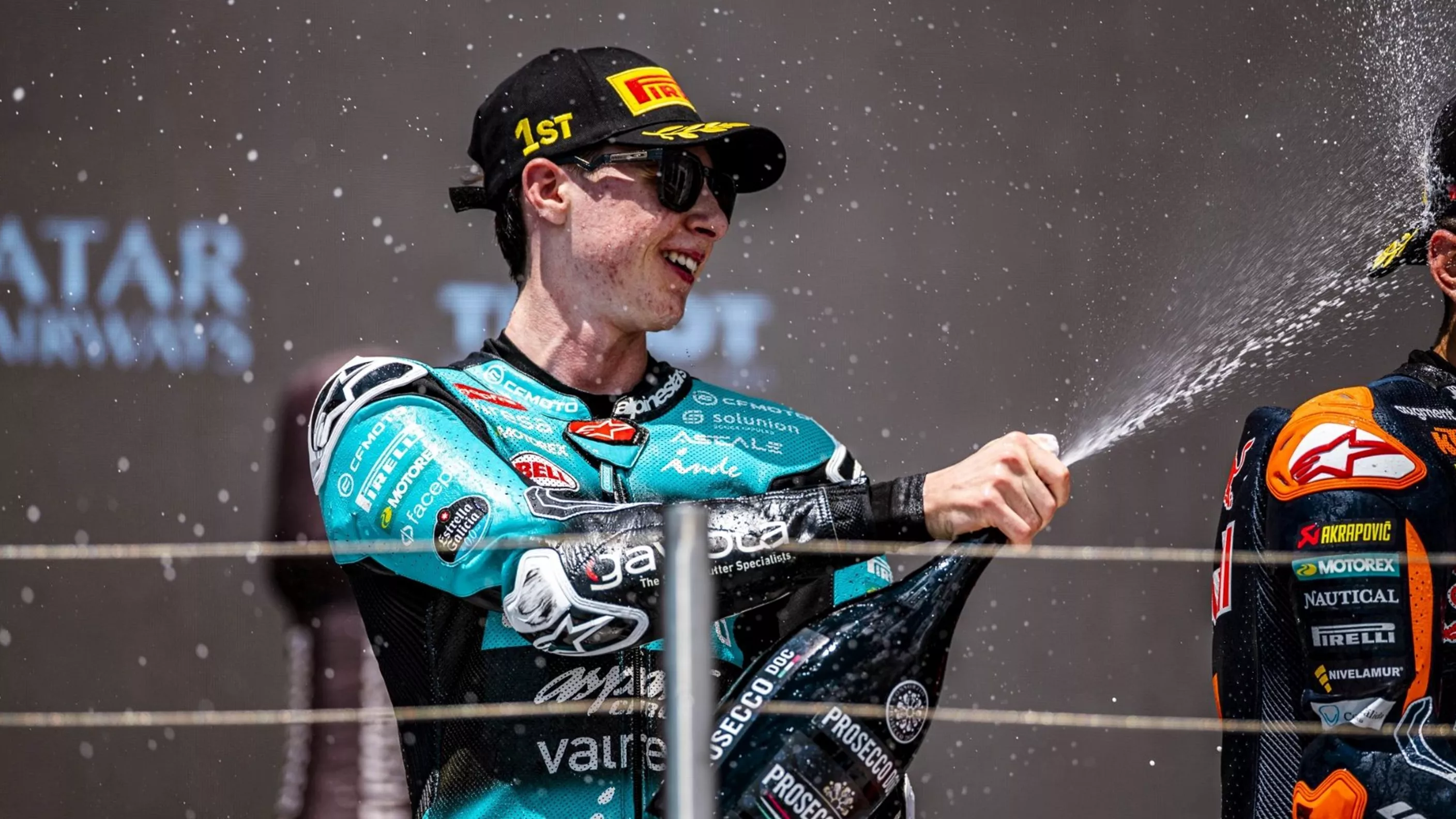
How do I become a motorcycle racer?
Máximo Quiles explains the path from mini-bike to the motorcycle World Championship
How does one become a motorcycle racer? Máximo Quiles, the 18-year-old leading the 2026 Moto3 World Championship, explains in an interview his path from a mini-bike to the top of the championship - and what awaits him in Moto2 in 2027.
&width=72&height=72&bgcolor=rgba_39_42_44_0&mode=crop "Author: Poky")
Poky
published on 9/23/2026
648 Views
Young star Máximo Quiles of the CFMOTO Aspar Team is an interesting conversation partner for these questions. The Spaniard is just 18 years old and yet has already reached a point that most young riders can only dream of. In 2026 he's leading the Moto3 World Championship, and in 2027 he'll move up to Moto2. And indeed, his path started very early.
"I started when I was four. Even as a small kid I really loved bikes. I always watched races on TV, and whenever I saw a bike on the street I was thrilled," Quiles says.
That enthusiasm didn't come entirely by chance. His father also raced motorcycles, though not professionally. At some point he bought his son a mini-moto. That's how a career began that has by now led all the way to the motorcycle World Championship. What's interesting, though, is that the story doesn't begin with a wonder kid who, from the very first meter, wanted nothing but to ride as fast as possible.
"At the beginning it wasn't that much fun for me. I was a bit scared when riding. A bigger rider crashed into me and I broke my collarbone. After that I was a bit frightened."
Only slowly did the confidence come back. "Step by step I regained my self-confidence, and then I really started to enjoy it. Since then I've never stopped riding." That might already be the first interesting insight for parents who suspect the next MotoGP star in their own kid: even for a rider like Quiles, the start wasn't a straight line. Talent apparently doesn't automatically mean fearlessness.
Starting at age four still sounds incredibly early. But at what age does the hobby actually turn serious? For Quiles there's a pretty clear point: JuniorGP and the Red Bull MotoGP Rookies Cup.
"I think it gets serious from JuniorGP and the Rookies Cup onward. From that point it really matters. The Rookies Cup and JuniorGP are like a test. If you're good there, you can also be good in the future."
But of course that's no guarantee either. Success in the junior series is far from an automatic ticket to the premier MotoGP class.
"It doesn't mean you'll become a MotoGP rider or a rider in the Moto3 World Championship just because you win the Rookies Cup. But if you're good there, you can fight to achieve your dream of reaching MotoGP."
The junior system filters out riders early. Anyone reaching this level is already up against the best young riders in the world. Speed alone is no longer enough. Results, consistency, physical training, mental strength, and not least the ability to handle pressure decide who reaches the next stage.
Still, Quiles disagrees with the idea that you absolutely have to start at kindergarten age. I ask: "What about, say, a twelve- or fourteen-year-old who only discovers their talent then? Is that too late?"
"Of course it's very difficult nowadays, the competition is huge. But if you have the talent, you can make it. There's no limit. You can start at 12 or 14. If you're good, have the talent and the strength for it, train every day and work hard, you can achieve your dream. Anything is possible."
So talent, yes. An early start helps. But it doesn't work without work. For Quiles himself, what has changed most between his Moto3 rookie season in 2025 and the 2026 season is above all his approach.
"Last year everything was okay for me. I was a rookie and I was learning. Now it's completely different. I have more experience and that's why my mindset is different too. I have to be smarter and think about every action." As a rookie, the occasional mistake was still allowed to happen. Today he expects more of himself.
"Before, a silly move could happen once in a while because I was a rookie and learning. I think the mentality is one of the biggest changes."
Just how steep that learning curve should be is shown this year, of all things, by another collarbone injury. After fracturing it in his crash at Silverstone, Quiles returned just a few weeks later in Aragón. Physically, by his own assessment, he was still far from normal.
"In Aragón I was at about 70 percent. It was two really tough weeks. I was at physiotherapy very often and tried to get the collarbone back in shape. It hadn't healed yet and I didn't have much strength."
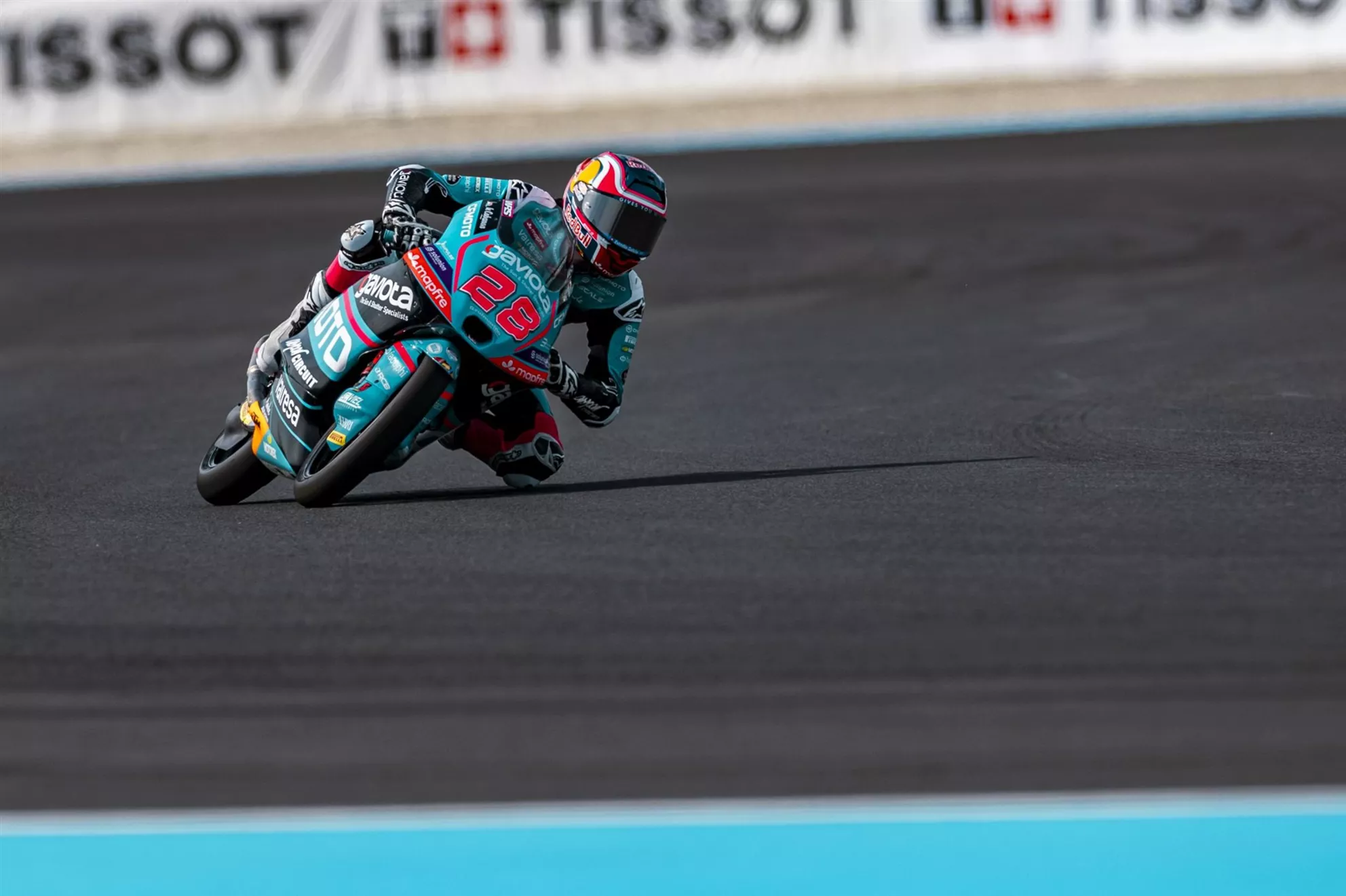
Maximo Quiles at race pace
Nevertheless he won the race. Still, the injury changed something. Above all in qualifying, Quiles has since wanted to take fewer unnecessary risks.
"I have a different mindset now. Step by step, not rushing too much. It's working." At first that sounds like the classic development of a young rider: less youthful recklessness, more calculation. After all, you don't necessarily win a world championship by putting everything on the line in every single practice session.
Quiles put it very concretely in our conversation on the Friday of the Misano weekend. With his big championship lead, he no longer has to risk everything in every session.
"Before, I wanted to take risks in every session. Now I'm more relaxed."
And what happens on the last lap of a race? Second place, a comfortable championship lead, the rival right in front of him - does he really still need to attack?, I ask.
Here too Quiles sounded surprisingly rational: "It depends on who's in front of me and what the situation looks like. Of course I'll try. But if I see that it's really risky and contact or a crash could happen in an overtaking move, then I won't do it."
Two days later came the practical exam in Misano. David Almansa led the Grand Prix practically from start to the final corner. Quiles stayed behind him. For the championship leader, second place would have been an excellent result. Exactly the situation we'd talked about on Friday.
Be sensible. Take the points. Don't take unnecessary risks.
Quiles did something else. He stayed with Almansa right to the end, carried enough momentum out of the final corner, and passed him on the home straight. 0.021 seconds separated the two at the finish. The excitement in the Aspar hospitality was boundless - what a finish!
Still, Quiles hadn't entirely contradicted himself. Because in that same conversation, another sentence came up: "Normally I try everything to win."
A week later at the Red Bull Ring, that picture became even clearer. This time Quiles didn't need a photo finish. Almansa led in Austria but crashed in lap eight. Quiles seized the opportunity and took his ninth win of the season. After Aragón and Misano, it was his third win in a row since his return from the collarbone fracture.
That means the question now is less whether Quiles can become Moto3 world champion, and more when the decision will be made. It isn't quite settled yet, though. After the Red Bull Ring his lead over David Almansa is 131 points. Seven Grands Prix remain - Japan, Indonesia, Australia, Malaysia, Qatar, Portugal and Valencia. With a maximum of 25 points per race, there are still 175 points up for grabs. Mathematically, Quiles can still be beaten.
But he could already settle the math at the next race in Motegi. If Quiles leaves Japan with at least a 150-point lead, he'll be crowned world champion. If he wins there again, for example, Almansa would need to finish no higher than tenth for the title to already be decided.
The title would be a fitting finale to his time in Moto3, since his future is already set. In 2027 Quiles moves up to Moto2 together with the CFMOTO Aspar Team. That means he stays with exactly the structure that has already guided him through Moto3. Aspar has previously taken riders such as Albert Arenas, Izan Guevara and David Alonso along this same path from Moto3 into the intermediate class.
For Quiles, the switch comes at an interesting moment. In 2027 Moto2 gets a new Triumph race engine with around six percent more peak power and more torque. The engine will also be two kilograms lighter. Because things like engine mounts and intake will change, chassis manufacturers also have to develop new bikes. So even the established Moto2 riders won't simply start the new season with familiar machinery.
Quiles actually sees that as an advantage: "If they change the bikes, it might even be better for us rookies. The riders who already know the current bike also have to get used to a new one."
Above all, though, he's looking forward to something Moto3 naturally lacks: more power.
"The power. I think the power will be the best part. The brakes, the performance, and how the bike moves on used tires. I like it when the bike works and moves." He's already preparing for this on the riding side too. Moto3 is heavily shaped by big groups and slipstreaming. Quiles, on the other hand, has consciously tried to ride alone ever since his years in the Talent Cup.
"I like riding alone and working on my own pace. That makes you a better rider."
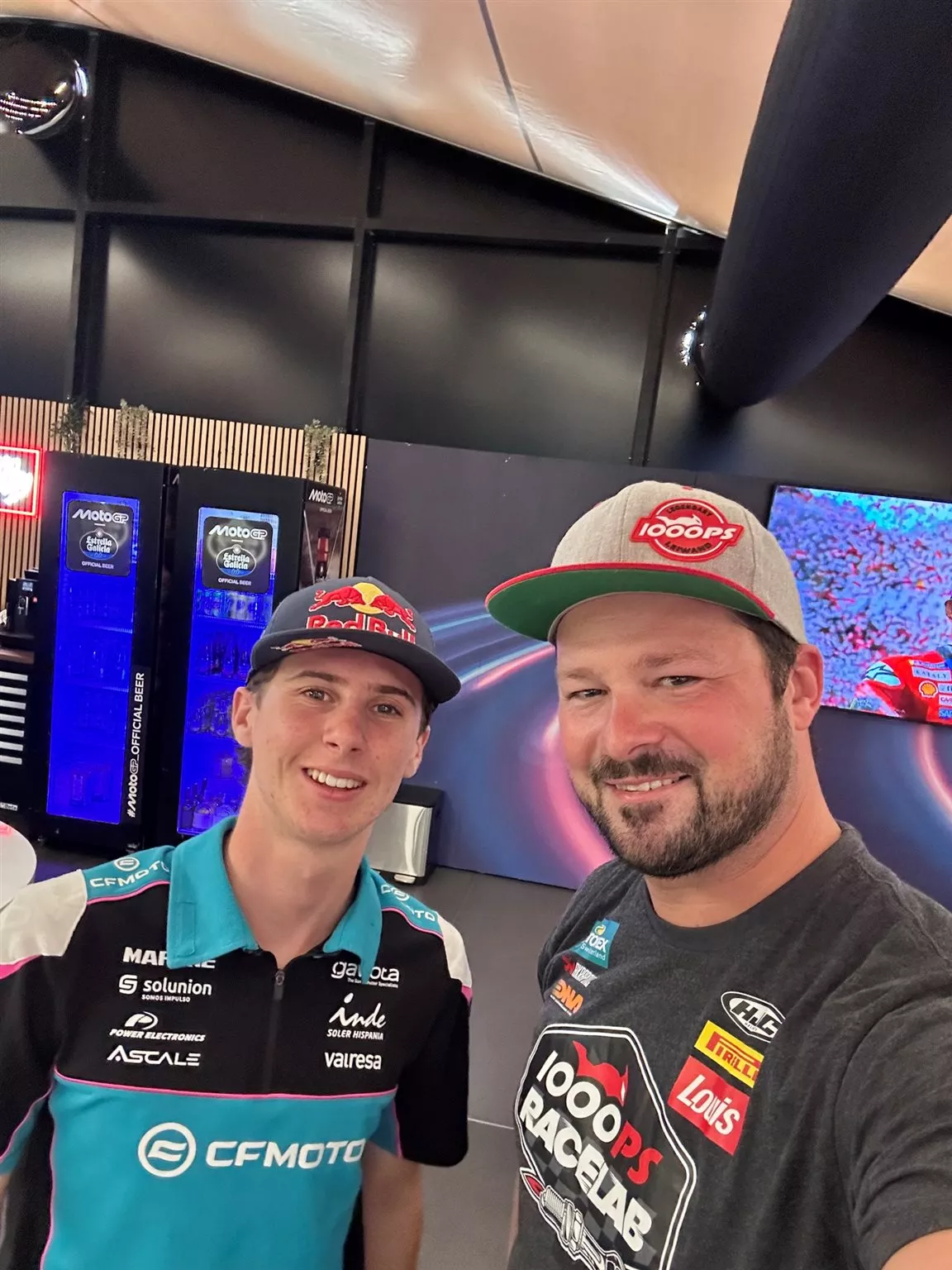
The conversation with Maximo took place on the Friday of the Misano GP
In Moto2, exactly that becomes more important: paying less attention to who's giving you a slipstream, and focusing more on your own pace and your own line. Quiles himself also believes the bigger Moto2 bike could suit him physically. He's relatively tall for a Moto3 rider and explained when his promotion was announced that his long arms could help him on the bigger machine. Above all, though, he can hardly wait to ride the Moto2 bike for the first time.
Maybe that's exactly where the answer to the original question lies: how do I become a racer?
You can start at age four. You can ride mini-motos, compete in Talent Cups, and work your way up through JuniorGP and the Rookies Cup. You have to train, learn to understand data, handle pressure, and eventually grasp that a world championship isn't won in every single practice session.
You can teach a young rider to be sensible.
But staying hungry, and that one reflex to still hold the throttle open in the last corner - that's probably something you can't learn.