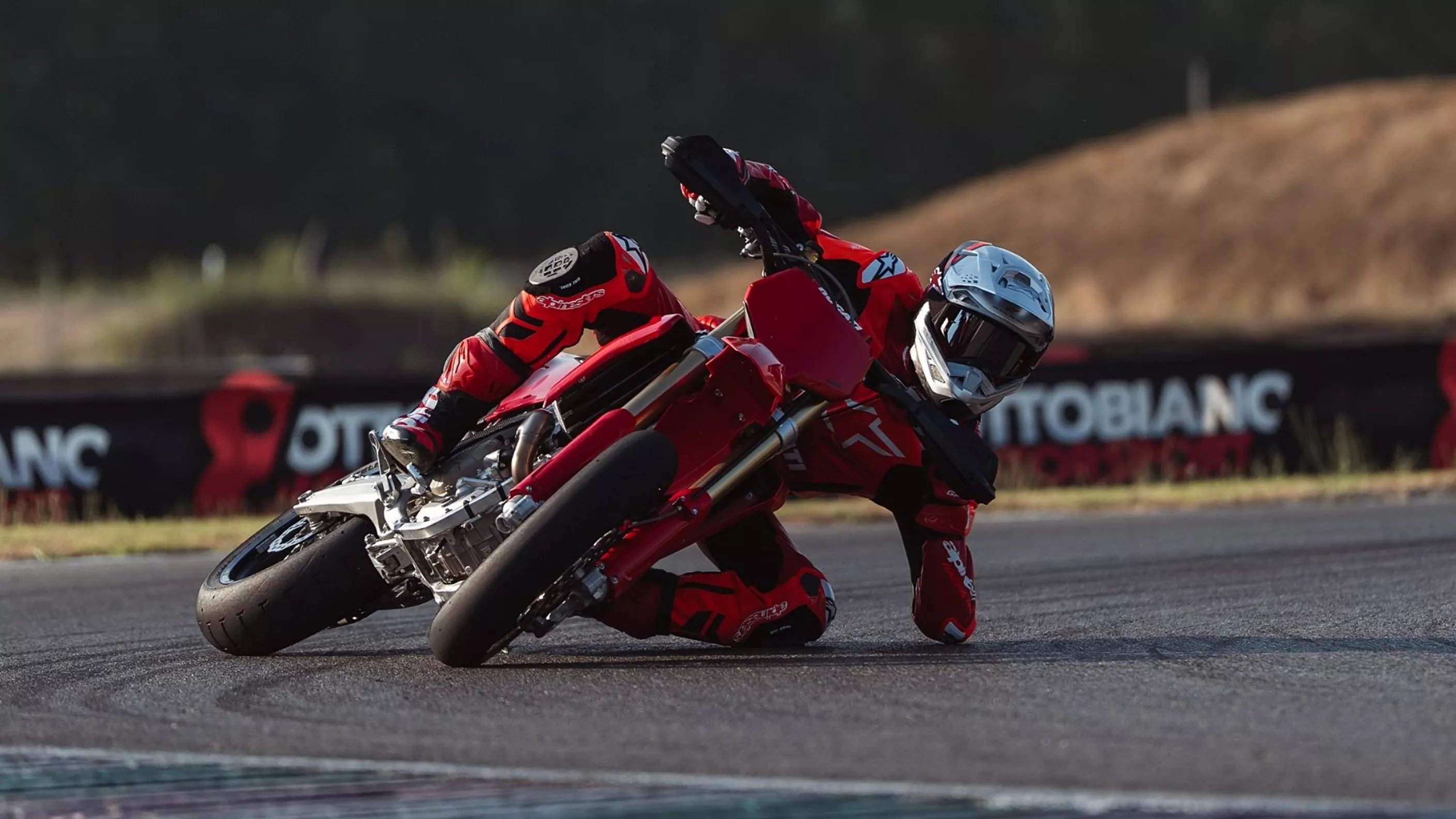
Borgo Panigale knows all about sporting extremes, yet a pure-bred competition supermoto has been missing from the lineup until now. With the Desmo450 SM, Ducati closes that gap and brings a technical peculiarity to the starting line: it is the only competition supermoto with desmodromic valve control. It was unveiled at the World Ducati Week 2026, and technically it is based on the Desmo450 MX. That this platform also works in supermoto racing was proven by Marc Reiner Schmidt and Team Undici, who rode it to victory straight away on its worldwide race debut.
Ducati Desmo450 SM: the first supermoto racebike from Bologna
Ducati dares it: supermoto with desmodromic valve control
Race track instead of road: with the Desmo450 SM, Ducati brings the first supermoto with desmodromic valve control. 63.5 hp, 11,900 rpm, Showa chassis, Brembo Stylema and traction control for slicks. Available from December 2026 at selected European dealers, starting at 13,290 euros in Germany.
&width=72&height=72&bgcolor=rgba_39_42_44_0&mode=crop "Author: nopain")
nopain
published on 9/17/2026
817 Views
The Desmo450 SM was designed from the ground up as a competition machine, and that dictates everything else. Before we talk about prices or features, one thing must be clear: it has no road registration. Its territory is closed race tracks, the factory warranty ends after three months or twenty operating hours, and the exhaust system meets the FIM and FMI 2025 racing regulations at 109 dB plus two decibels tolerance. Anyone looking for an everyday-usable supermoto with a number plate will find what they need in the Hypermotard family. But anyone who fits slicks on a Sunday and counts lap times is in the right place here. This clarity of positioning does the bike good, because it allows technical solutions that would not be possible on a road-registered bike.
Desmo450 engine: 11,900 rpm as an argument
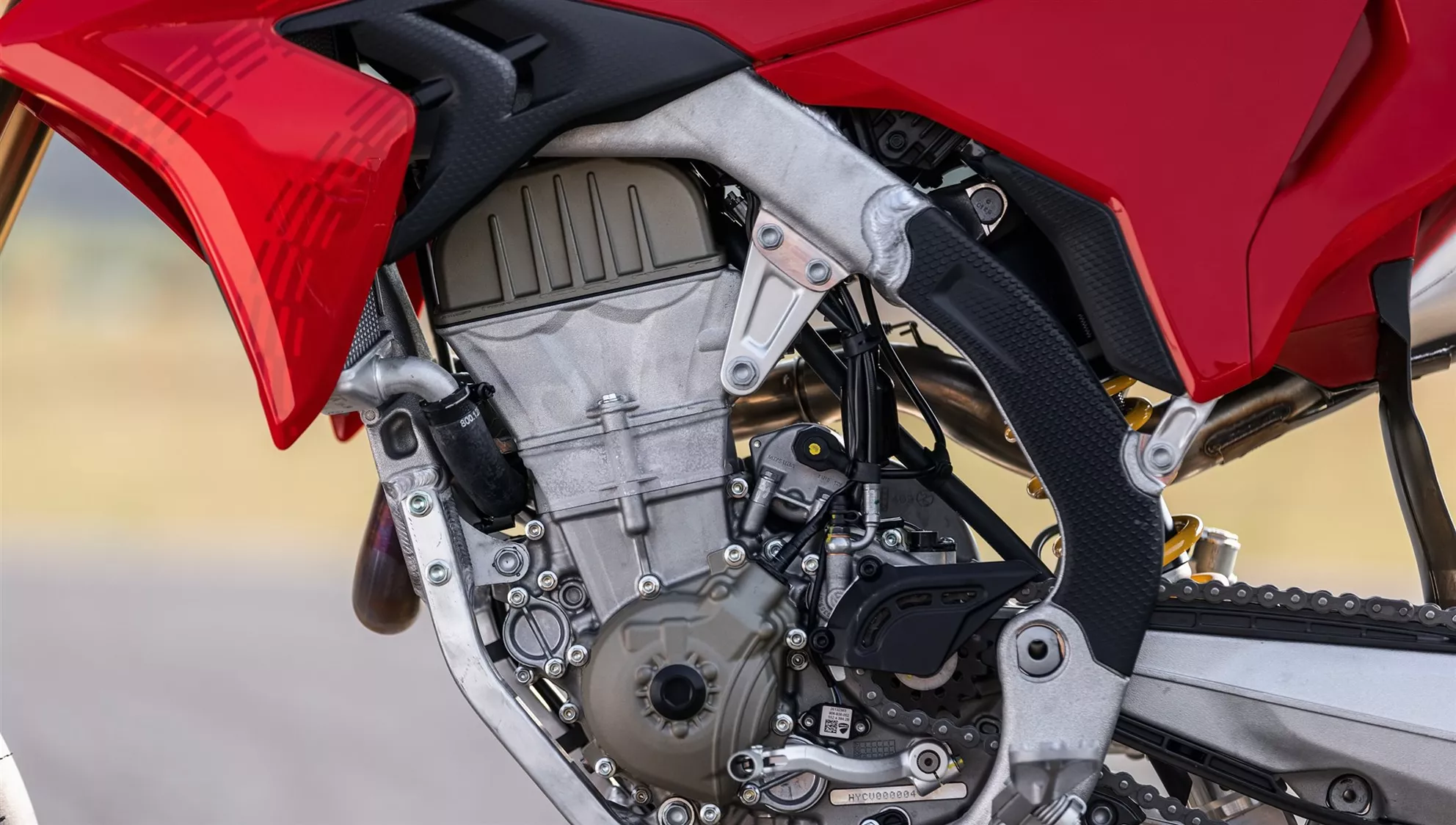
The single-cylinder draws 63.5 hp at 9,400 rpm and 53.5 Nm at 7,500 rpm from 449.6 cubic centimetres. More interesting than these two figures, however, is the number behind them: 11,900 rpm maximum engine speed. That is exactly the reason why Ducati puts desmodromic valve control into a 450 racebike at all. Without valve springs, friction losses drop, and the limitation caused by spring float disappears. Valve acceleration increases, which widens the usable rev range considerably. For the rider, this does not primarily mean more peak power, but less work: every gear can be wound out longer, gear changes between corners are eliminated, and the riding flow stays more consistent.
Constructively, the Desmo450 is a short-stroke engine: 96 mm bore versus 62.1 mm stroke, with a compression ratio of 13.5:1. The intake valves are made of titanium and measure 40 mm, while the 33 mm exhaust valves are made of steel, hollow-bored and sodium-filled to dissipate heat better. The timing chain works with a hydraulic tensioner instead of a mechanical solution, which keeps chain tension more consistent over time. The alternator, cylinder head and clutch covers are made of magnesium, while a Keihin injection system with a 44 mm Mikuni throttle body handles the fuel mixture. The semi-dry sump keeps the build height low.
Every gear can be wound out longer, that saves shifting work!
NoPain on the Desmo450 engine
Desmo450 gearbox and clutch: Suter fights back
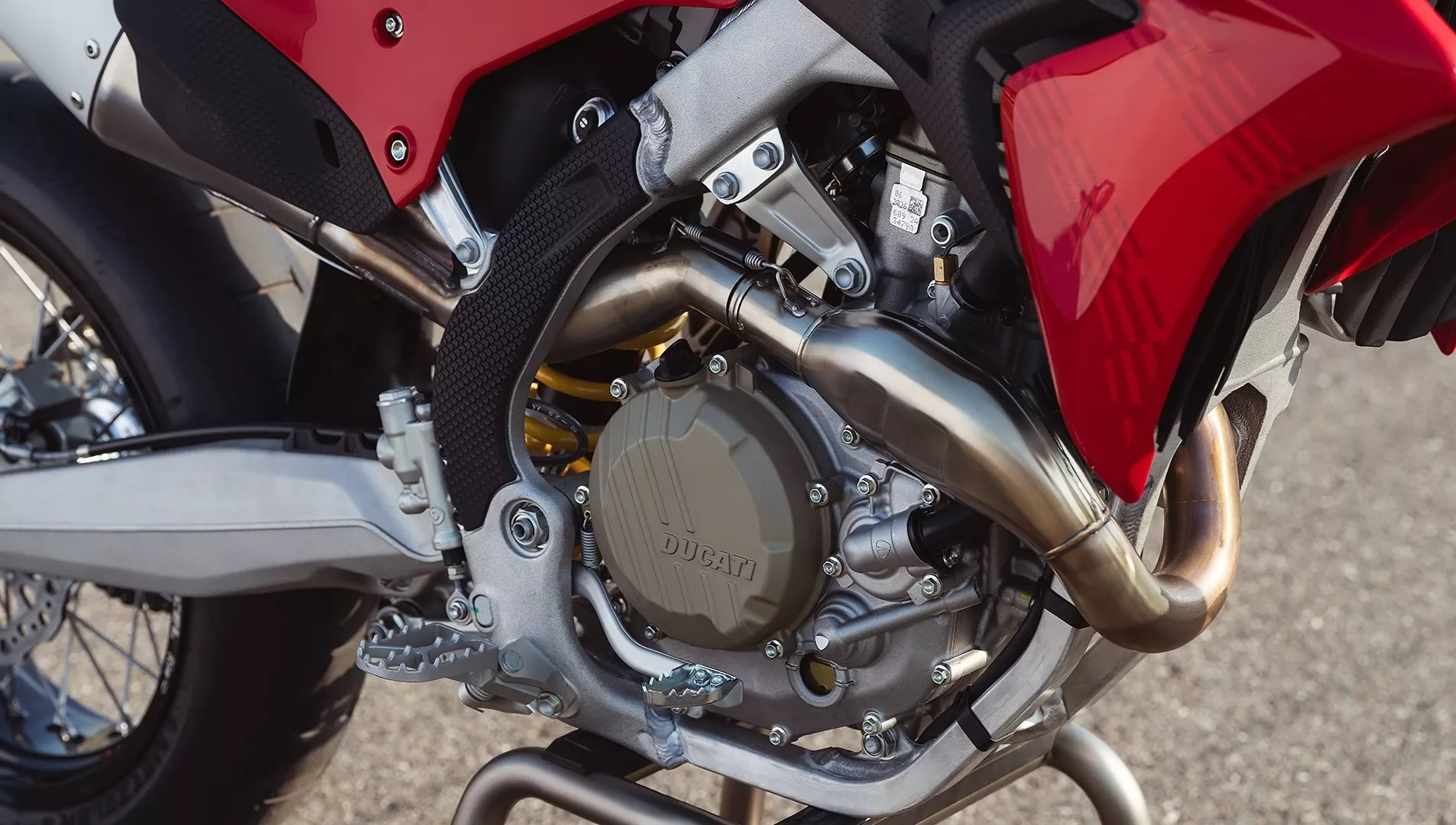
The five-speed gearbox is deliberately tuned to the wide rev range. Ducati openly states the ratios, from 31/15 in first to 24/24 in fifth gear, with a primary ratio of 2.45:1. At the rear, a DID DMS 520 chain runs over a 15-tooth sprocket and a 47-tooth aluminium sprocket. The standard quickshifter only works on upshifts, which is the more frequent and important direction in supermoto. On downshifts, an anti-hopping clutch from Suter, specially tuned for the Desmo450 SM, takes over, actuated via a hydraulic Brembo pump with its own master cylinder.
In supermoto, this clutch is not a comfort feature but a chassis component. Anyone who slides a supermoto sideways into a corner entry is working with controlled rear-wheel slip, and that slip results precisely from the interplay of engine braking, clutch and brake pressure. An anti-hopping clutch that opens too much robs the rider of feel for the rear end; one that engages too late lets the rear wheel hop. The fact that Ducati does not rely on a standard off-the-shelf solution here, but on a specially tuned Suter unit, is one of those details that look small on a spec sheet but make the difference on the brakes.
Desmo450 SM with Showa chassis: on supermoto ex-works for the first time
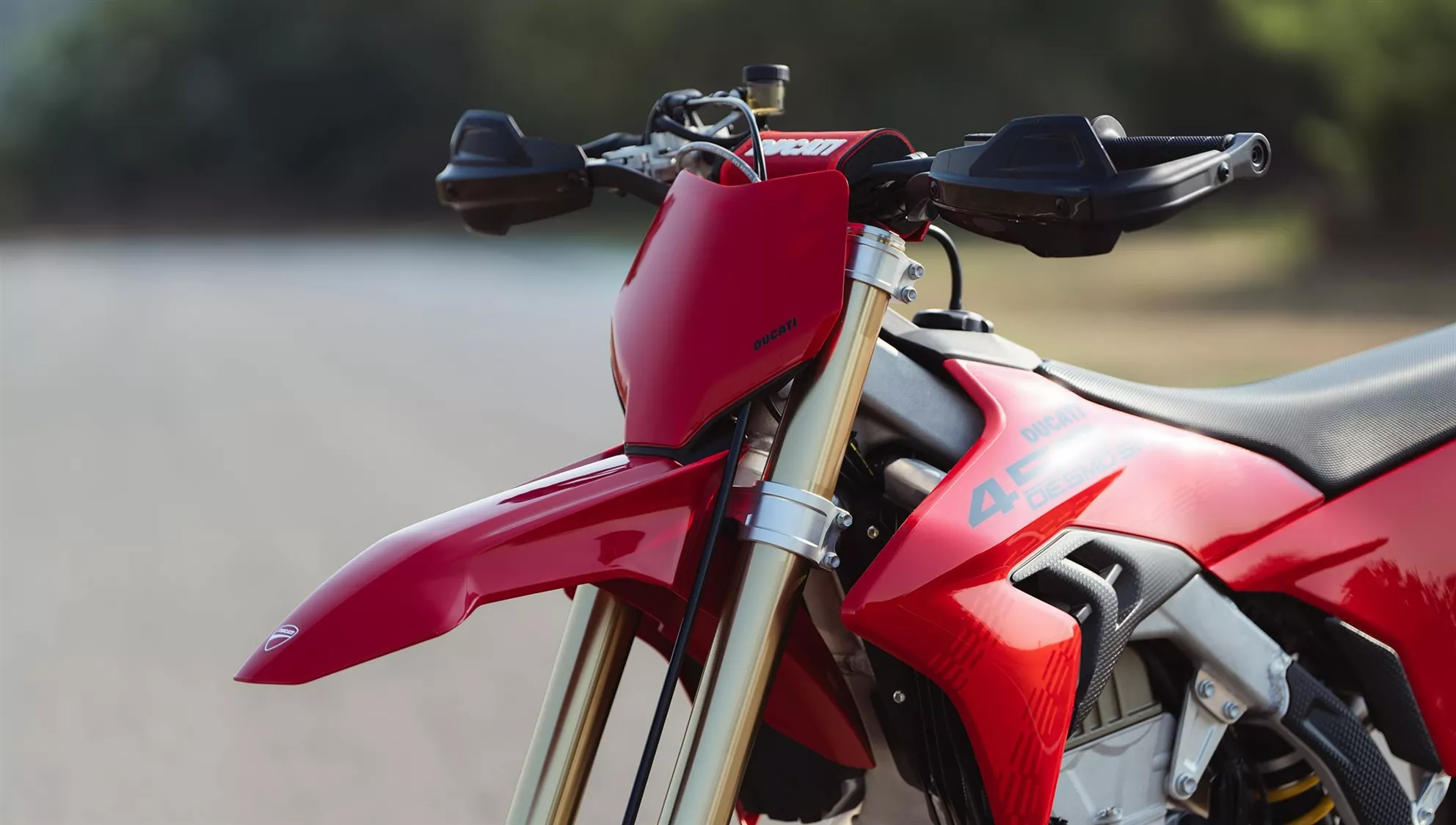
The chassis is where the real effort of this project lies. For the first time on a series-produced supermoto bike, Showa has developed the setup directly, working together with both the road and off-road teams. At the front, a 49 mm upside-down fork with a closed cartridge system works, fully adjustable in compression and rebound, with specific springs, a dedicated setup, 280 mm of travel and Kashima coating on the outer tubes. The brake caliper mount sits radially on the left side. The billet-machined triple clamps were made with a larger offset so that the narrow but wide-built supermoto front wheel gets sufficient clearance.
At the rear sits a fully adjustable Showa shock on a progressive linkage, delivering 295 mm of rear-wheel travel. The conflicting goals this setup has to resolve are typical for the discipline: the front end must provide support and feedback during brutal braking maneuvers on asphalt, while at the same time it must not bottom out or hop on the off-road section of a supermoto track. Ducati promises precision at corner entry while still working on off-road sections.
Wheels and tyres: 1.2 kilograms less mass on the Desmo450 SM
The wheels measure 16.5 inches at the front and 17 inches at the rear, the rims come from Takasago and carry the Excel profile in sizes 3.5 x 16.5 and 5 x 17 inches. What's decisive, though, is the Bartubeless system: by eliminating the tubes, rotating and unsprung mass is reduced by 1.2 kilograms. On a bike that weighs 109 kilograms wet without fuel, that's a significant figure, and it acts exactly where weight is most disruptive: during direction changes and turn-in. Incidentally, tubeless tyres also allow lower air pressures without the puncture risk of pinched tubes.
Ex-works, the Desmo450 SM rolls on Metzeler Racetec SM, the same tyres used in the Supermoto S1 World Championship. At the front, the K2 compound works in size 125/75 R16.5 with a stiffer carcass for stability under braking load, while the grippier K1 in 165/55 R17 is used at the rear. Matching this, the peripheral parts have been reworked: hand guards and a shortened front fender reduce sail effect at high speed, while the also-shortened fork guards create the clearance that the wide front slick needs in the first place.
Desmo450 SM brake system: Stylema meets Galfer disc
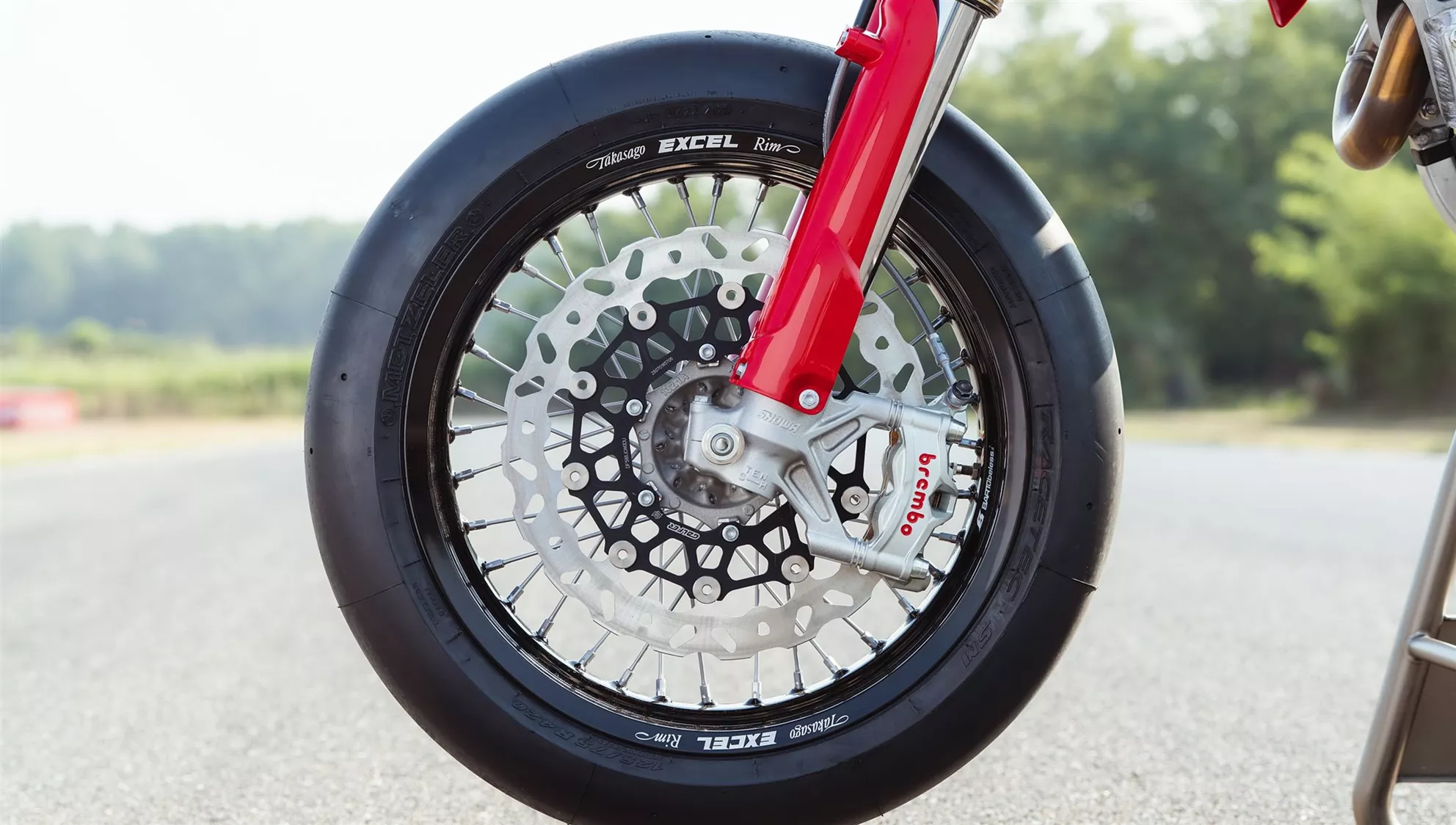
Supermoto lives off the brakes. At the front, Ducati mounts a radial Brembo brake pump of the PR15x19 size on a radially mounted Stylema caliper, which grips a floating-mounted Galfer disc with a 310 mm diameter and aluminium flange. This is superbike hardware on a 109-kilogram bike, and the Stylema is regarded as the benchmark among supermoto riders. At the rear, Ducati combines a 240 mm Galfer wave disc with a floating-mounted Brembo single-piston caliper, and this brake, too, is no side issue in supermoto — it's the tool the rider uses to set up the rear end.
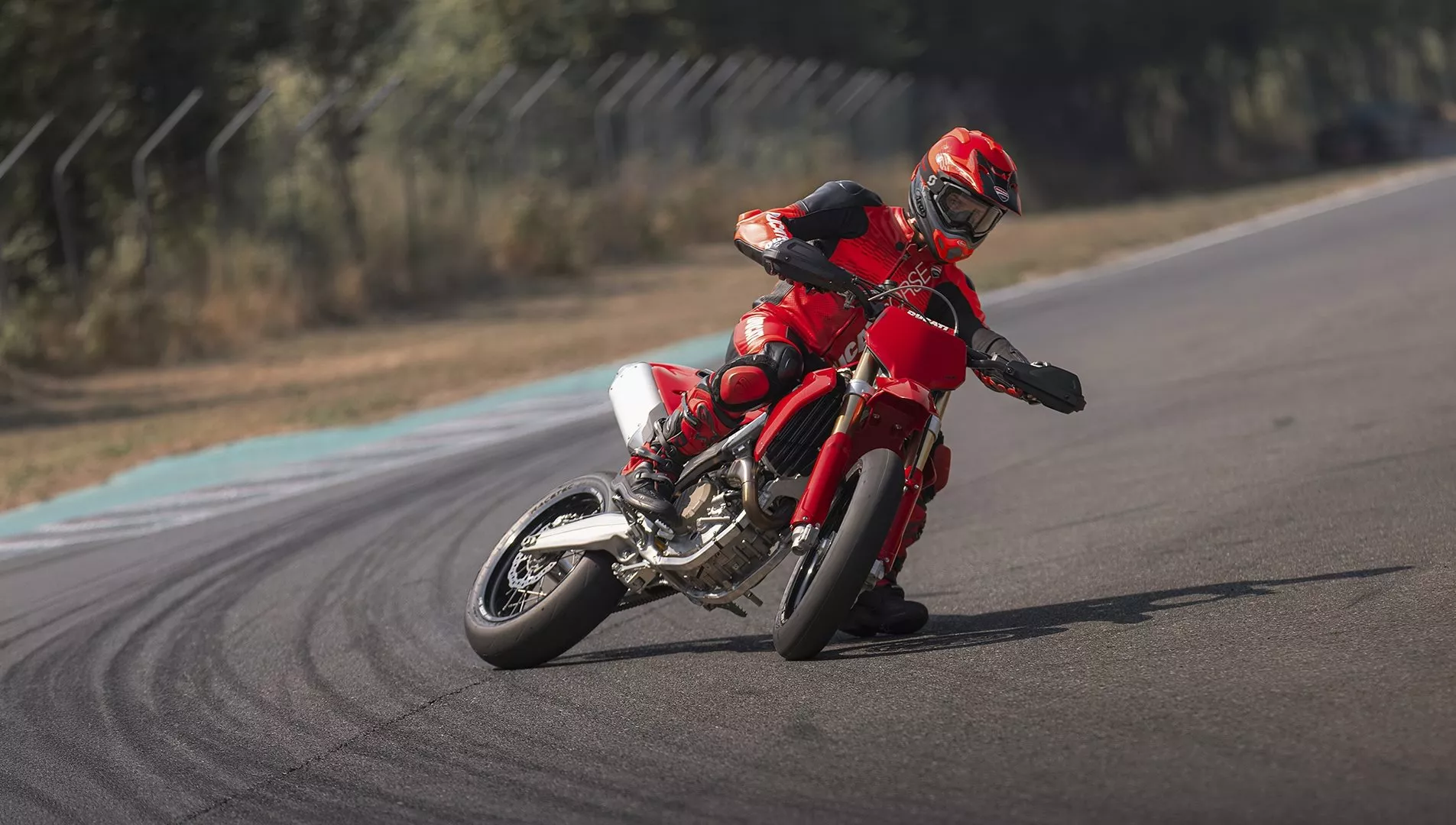
On a supermoto, strong brakes and precise handling count just as much as engine power.
NoPain on the Desmo450 SM
Chassis and ergonomics: eleven parts, four positions
The aluminium chassis matches that of the motocross version and consists of just eleven elements made from cast, forged and pressed parts. The low number of welded joints serves the balance between stiffness, weight and strength, while at the same time the construction allows for as straight an intake tract as possible.
When it comes to ergonomics, Ducati has worked on the points that matter in supermoto. The handlebar can be mounted in four different positions, which has a noticeable effect on the riding position given a seat height of 930 mm and a wheelbase of 1,483 mm. The surfaces of the side fairings and number plate boards have been shaped so that thighs and boots find effective contact. Anyone who has ever tried to fix a supermoto with their knees while trail braking knows how valuable a grippy flank is. Steering head angle and trail are 25.4 degrees and 85 mm, and the tank holds 7.2 litres.
Electronics: traction control in supermoto
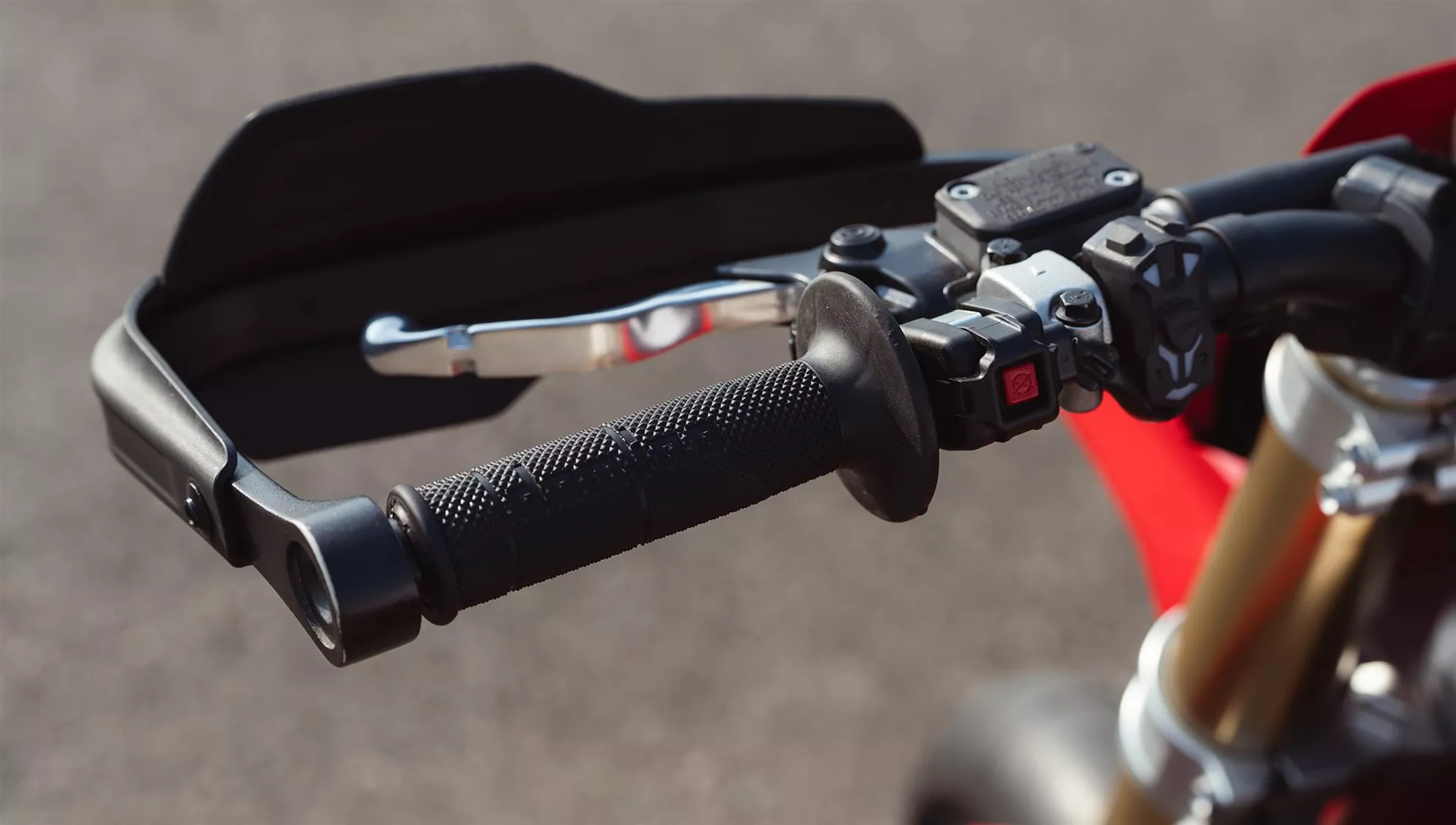
With the Desmo450 SM, the patented Ducati Traction Control makes its debut in the supermoto segment. The system was specifically tuned for this discipline and determines actual rear-wheel slip instead of merely deriving it from engine speed and gear position. It works in four levels, can be switched off completely, and intervenes in the engine parameters when grip conditions change. This is a sensible application, especially on supermoto tracks where asphalt, gravel and jumps meet within a single lap, and it contradicts deliberate sliding less than some purists might fear.
Added to this are Engine Brake Control in two levels, Ducati Launch Control in three levels, which deactivates itself upon reaching fourth gear or when the throttle is closed, and two throttle response maps called Smooth and Dynamic. All of this is managed via two riding modes, which can be individually configured, saved and recalled with the Com-Link WLAN module and the X-Link app. Control is via a switch unit on the left half of the handlebar with five LEDs. One noteworthy detail that the press release doesn't even mention: the spec sheet lists Ducati Fall Detection under safety features.
Maintenance: 45 hours to a new piston
Service intervals are at the level usual in this category. Piston replacement and valve clearance checks are due after 45 operating hours, a full engine overhaul after 90 hours, and oil changes every 15 hours. That sounds like a lot of work, but it's normal for a 450 racebike, and Ducati has at least worked on accessibility: the alternator, clutch and cylinder head covers are not sealed with three-component sealant but with gaskets — metal at the cylinder head, rubber at the other two covers. Anyone who has ever scraped a glued-together cover surface clean knows to appreciate this decision.
New is the concept of predictive maintenance. The system monitors the wear of engine components and evaluates their actual load based on real usage. With the Com-Link module, available as an accessory, the regular intervals can thus be determined more precisely instead of stubbornly working off the operating-hour counter. For a hobby rider who mostly rides their machine at partial throttle around a training track, that can mean real money saved. For the racer pushing every session to the limit, it's more likely to become a warning than an extension — and that's exactly the point.
Accessories: from the sprocket to the titanium stand
The Ducati Performance program for the Desmo450 SM is pleasingly track-focused and already listed with prices in the configurator. Ducati itself suggests a racing configuration consisting of a racing silencer, racing rear brake caliper and racing seat, supplemented with an oil filler cap and covers for the brake and clutch fluid reservoirs. The rear racing caliper is by far the most expensive single item on the list at 1,225.70 euros, the racing seat costs 183.86 euros, the oil filler cap 29.42 euros, and the cover set for the fluid reservoirs 89.48 euros. A price for the racing silencer had not yet been listed in the German configurator at the time of writing.
Things get noticeably more everyday-usable with the parts every supermoto rider needs over the course of a season anyway. The final drive ratio can be adjusted for specific tracks using sprockets with 50, 51 and 52 teeth for 61.28 euros each, and a 14-tooth front sprocket for 22.06 euros. Then there's a handlebar for 158.12 euros, rubber grips for 15.93 euros or aramid fibre grips for 24.51 euros, a throttle tube for 14.71 euros, a rear brake disc for 116.62 euros, and an alternative monoshock spring for 159.34 euros. The latter is the item that heavy or very light riders should put at the top of their list first, since the stock spring can only ever be a compromise.
When it comes to protective accessories, Ducati stays affordable: the frame guard costs 73.54 euros, the engine guard 104.18 euros, the radiator guard 36.77 euros, and the air filter pre-filter 19.61 euros. For the pit, there's a paddock stand for 122.57 euros, a garage mat in Ducati Corse colours for 226.76 euros, which complies with FIM environmental regulations under Article 4.1 and measures 120 x 250 centimetres, plus a cleaning kit for 42.90 euros. Topping the price list is the titanium stand at 796.70 euros, and that's exactly the item where every buyer has to decide for themselves whether paddock looks are worth the money.
Technical data Ducati Desmo450 SM
| Description | Value |
|---|---|
| Engine | Desmo450, liquid-cooled single-cylinder, 4 valves, desmodromic, DOHC, semi-dry sump | Displacement | 449.6 cm³ | Bore x stroke | 96 x 62.1 mm | Compression | 13.5:1 | Power | 63.5 hp (46.7 kW) at 9,400 rpm | Torque | 53.5 Nm at 7,500 rpm | Max. engine speed | 11,900 rpm | Fuel system | Keihin injection, Mikuni throttle body Ø 44 mm | Exhaust | Steel silencer with aluminium sleeve, steel header with resonator | Gearbox | 5-speed with quickshifter | Primary ratio | 2.45:1 | Final drive | DID DMS 520, sprocket Z15, aluminium sprocket Z47 | Clutch | Suter anti-hopping clutch, hydraulic Brembo actuation | Chassis | Aluminium made from cast, forged and pressed parts, 11 elements | Fork | Showa upside-down Ø 49 mm, fully adjustable, Kashima coating | Shock | Showa, fully adjustable, progressive linkage | Travel front/rear | 280 mm / 295 mm | Brake front | Galfer disc Ø 310 mm floating, Brembo Stylema radial, pump PR15x19 | Brake rear | Galfer wave disc Ø 240 mm, Brembo single-piston floating caliper | Rims | Takasago Excel 3.5 x 16.5" and 5 x 17", Bartubeless | Tyres | Metzeler Racetec SM K2 125/75 R16.5 / K1 165/55 R17 | Wheelbase | 1,483 mm | Steering head angle / trail | 25.4° / 85 mm | Seat height | 930 mm | Wet weight without fuel | 109 kg | Tank capacity | 7.2 l | Electronics | Riding Modes, DTC, EBC, Power Launch, quickshifter, Ducati Fall Detection | Prepared for | WLAN module and X-Link app | Warranty | 3 months or 20 operating hours |
Desmo450 SM prices: Germany, Austria, Switzerland
In Germany, the Desmo450 SM starts at 13,290 euros. Compared to the Desmo450 MX, which is offered from 12,490 euros, that's a premium of 800 euros. For that, you get the supermoto-tuned Showa suspension components, matching wheels with the Bartubeless system, a Brembo Stylema brake system with a 310 mm disc, the Suter clutch, and the slicks used in World Championship racing. For an 800 euro premium, that's a comprehensive package.
In Switzerland, the Desmo450 SM is listed from 12,690 francs. For Austria, no official price was available at the time of publication; the model was also not yet listed on the Austrian importer's website. From the price difference of the Desmo450 MX between Germany and Austria, a benchmark of around 14,000 euros can be derived for the SM. However, this is an extrapolation and not an official price from Ducati. Deliveries to selected European dealers begin in December 2026, with other markets following afterwards.
Positioning: who is the Desmo450 SM made for?
With the Desmo450 SM, Ducati is not building a bike for the showroom, but one for the timing transponder. The target group is clearly defined: supermoto racers, ambitious track-day riders, and those Ducatisti who already have a Panigale in the garage and are looking for the same brand promise on the small track. The appeal lies in the combination of an engine that offers an unusually wide usable rev range, a chassis that Showa has tuned ex-works for this discipline for the first time, and electronics that give the amateur confidence without getting in the professional's way.
Open questions remain, and they're typical for a bike that has only just been unveiled. How the desmodromic valve control holds up over 45 operating hours in hard racing use, how finely the traction control meters out during deliberate sliding, and how resilient the dealer and spare parts network is beyond Ducati's core markets, can only be seriously judged after the first season.
What can be said today, though, is this: the supermoto segment hasn't received this much attention in years as it has with this unveiling.
- How much does a Ducati Desmo450 SM cost?
- Here you will find an overview of the price level of new and used motorbikes!
Ducati Desmo450 SM: the first supermoto racebike from Bologna Images
Source: 1000PS

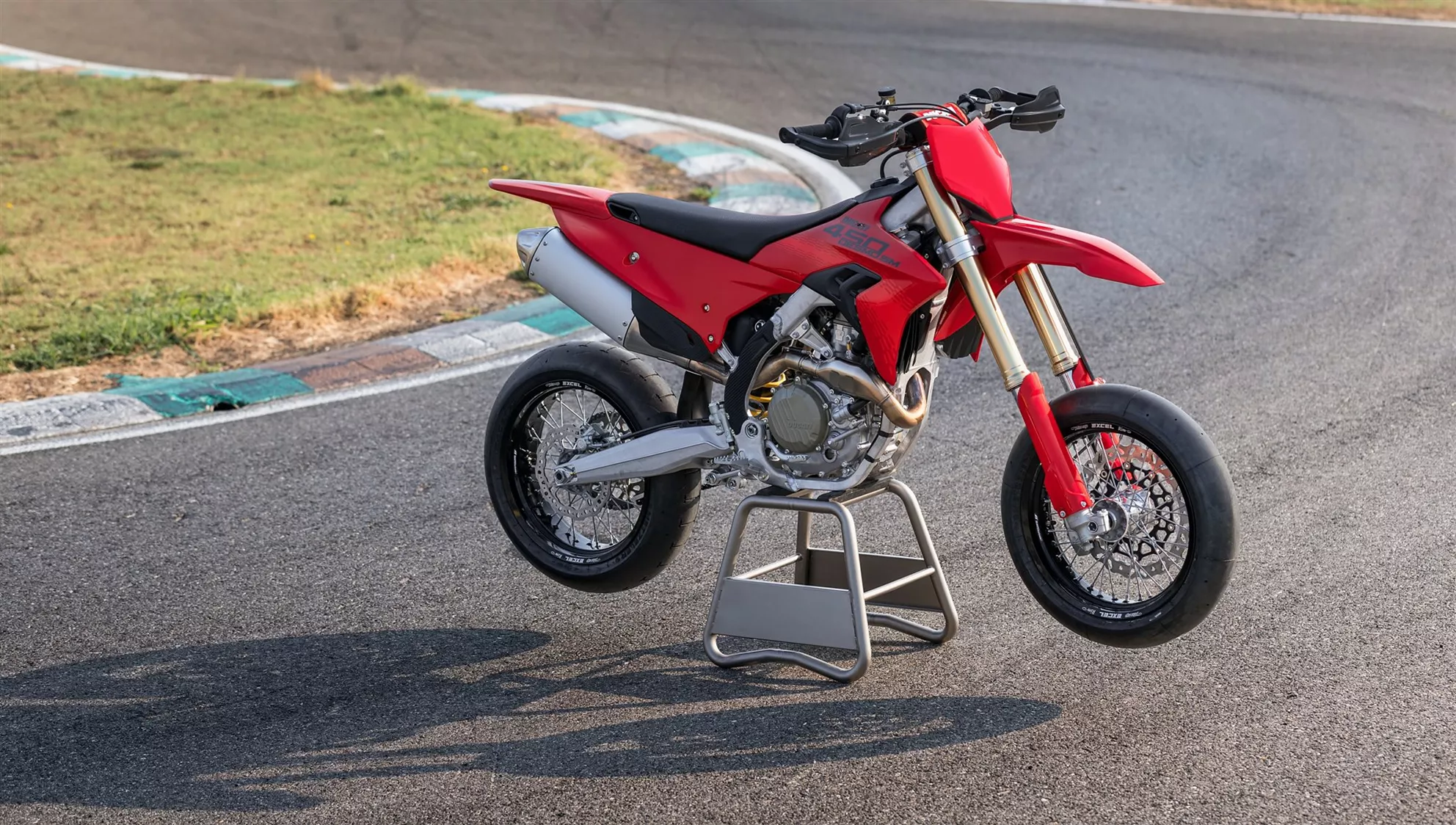
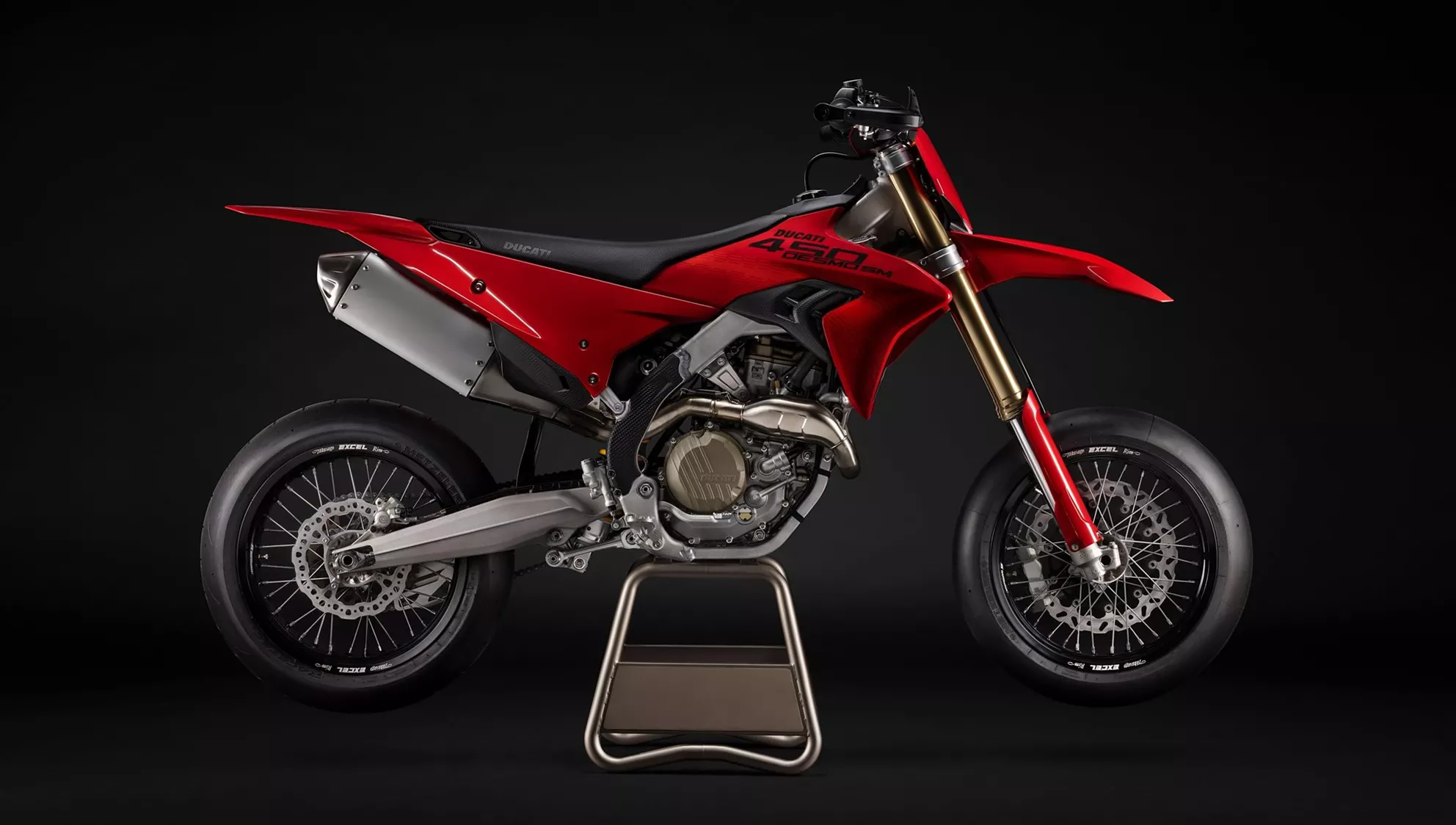
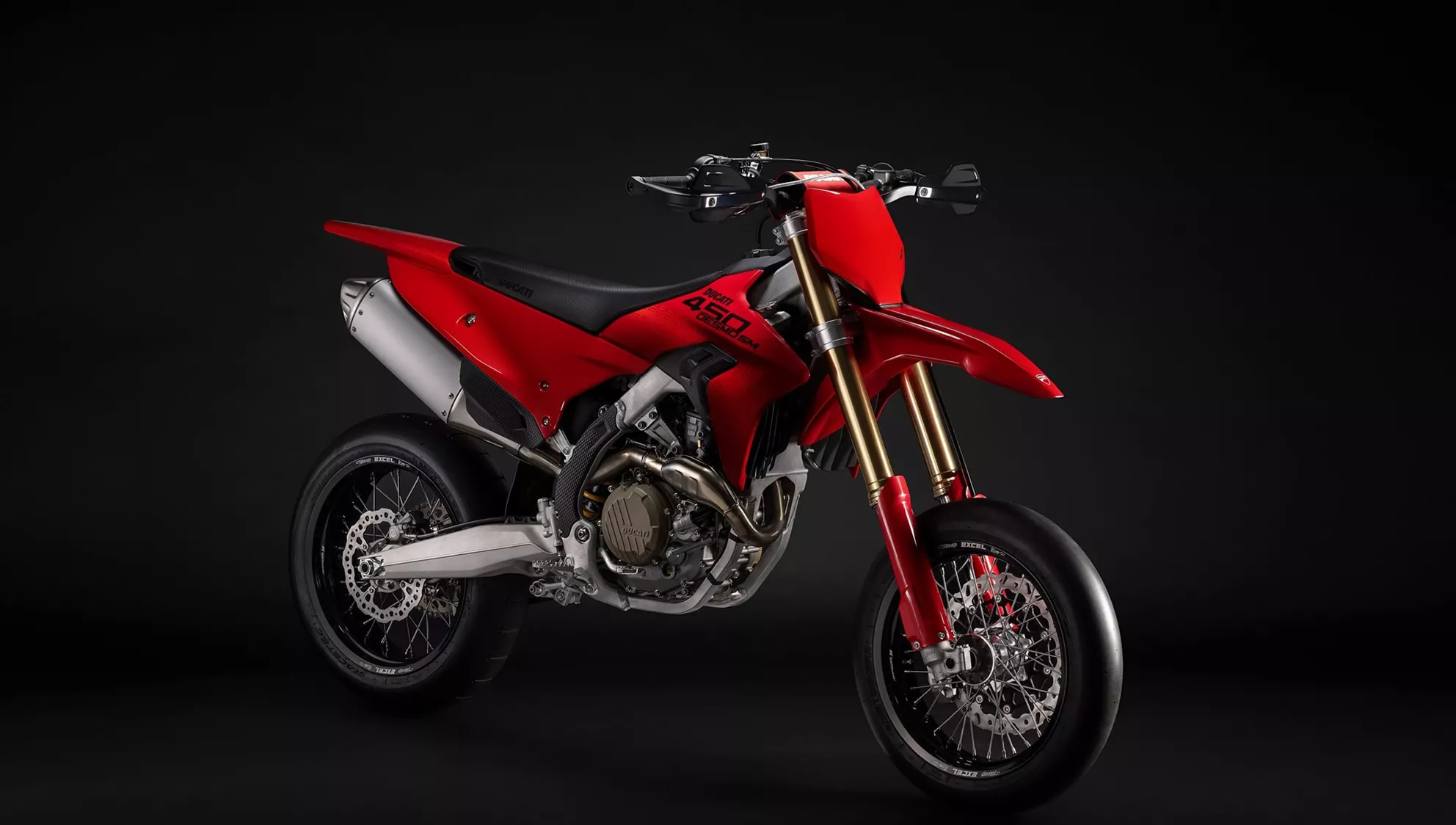
The complete Desmo450 SM in the studio, shot from the left: 109 kilograms ready to ride without fuel, the golden 49mm Showa fork with Kashima coating, the steel silencer with aluminum casing, and Takasago Excel rims in 16.5 and 17 inches on Metzeler Racetec SM slicks.

A top-down view of the Desmo450 SM in the studio. The handlebars can be mounted in four positions, while the slim seat and grippy sides of the number plates ensure maximum freedom of movement for the rider at a seat height of 930 mm.

Slim, tall, and uncompromising: the Desmo450 SM from the front with its 49mm Showa fork, closed hand guards made of structural plastic, and the 125/75 slick on the 16.5-inch rim.

The complete Desmo450 SM in the studio, shot from the left: 109 kg ready to ride without fuel, featuring the gold 49mm Showa fork with Kashima coating and Takasago Excel wheels in 16.5 and 17 inches on Metzeler Racetec SM slicks.

Overhead view of the workspace side of the Desmo450 SM featuring closed hand guards made of structural plastic, Domino controls, padded handlebar protection in Ducati Red, and the machined-from-solid fork bridges. The handlebar can be mounted in four positions.

The steel silencer with aluminum outer casing sits snugly against the side fairing, while the Galfer brake disc and Takasago Excel rim with Bartubeless system work underneath. This setup meets FIM racing regulations with 109 dB plus two dB tolerance.

The front of the Desmo450 SM showcases what Supermoto is all about: a 49mm Showa upside-down fork with 280mm of travel, a radial-mounted Brembo Stylema caliper on a 310mm Galfer disc, and a wide 125/75 slick on a 16.5-inch rim.

The Desmo450 SM tackling the gravel section of a supermoto track. Showa engineered the suspension setup specifically for this transition between asphalt and dirt, with the rear shock offering 295 mm of travel.

Inside leg out and elbow low over the curb. The Metzeler K2 compound at the front wheel, with its stiffer carcass, ensures stability under braking load in moments like these.

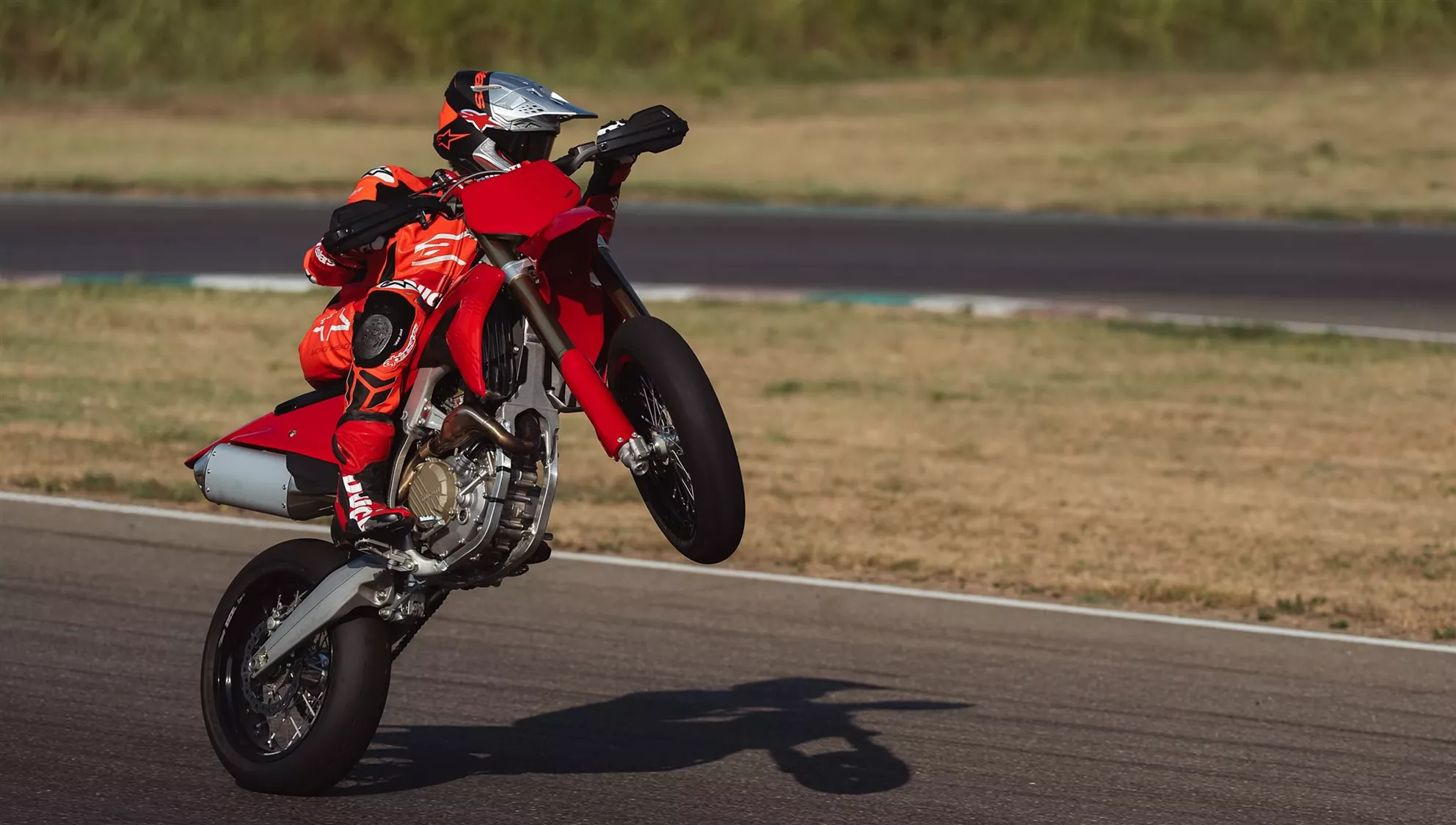
Shot from a frog's perspective over the curb. Weighing in at 109 kg ready to ride without fuel and packing 63.5 hp, it doesn't take much persuasion to lift the front wheel.

The Desmo450 SM lifts the front wheel on the loose section of a supermoto track. Available from selected European dealers starting December 2026, priced at €13,290 in Germany and CHF 12,690 in Switzerland.

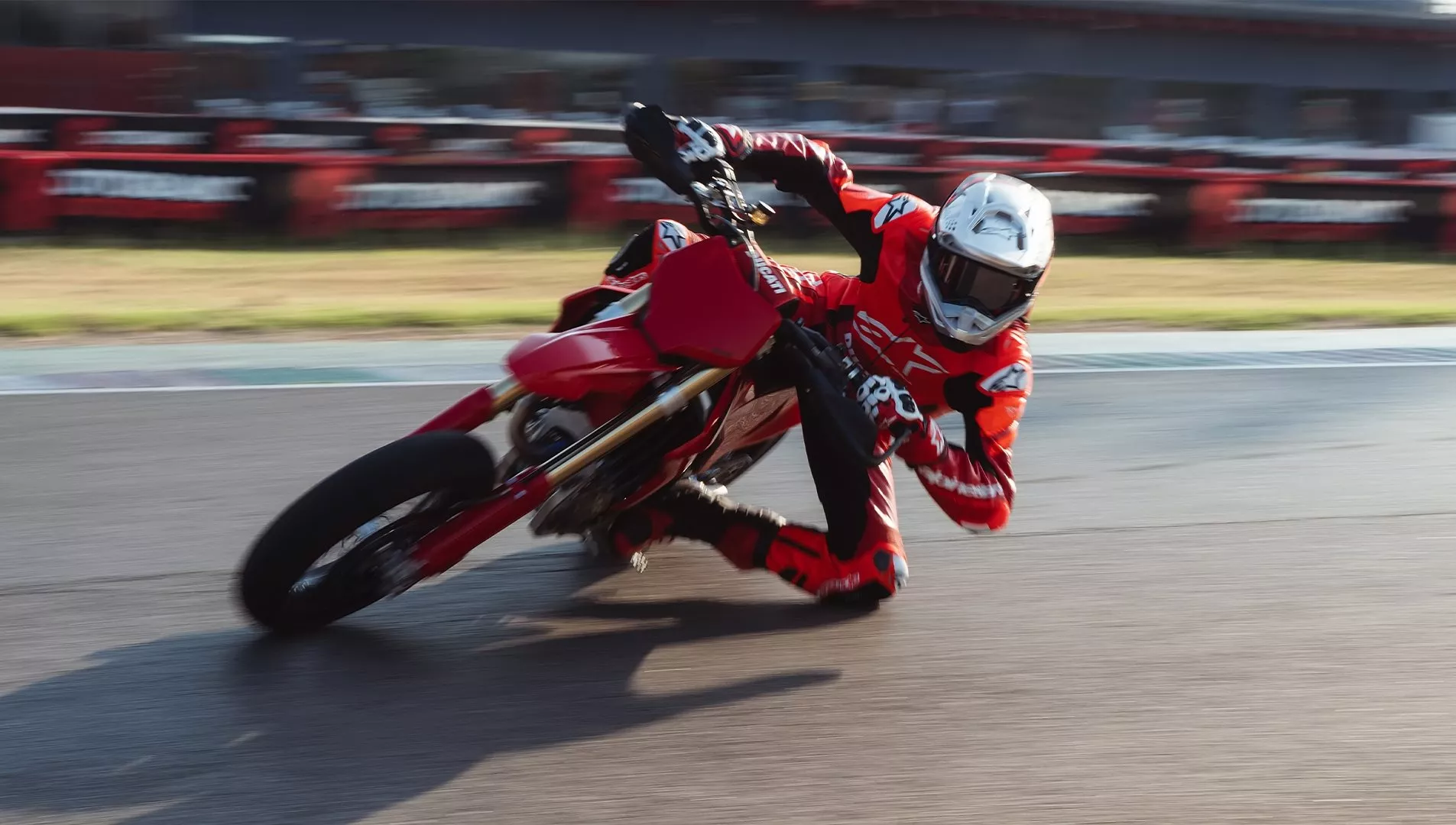
Deep lean angle on asphalt, inside leg forward, rear wheel on the limit of the Metzeler Racetec SM K1. The Ducati Traction Control, tuned specifically for supermoto, operates in four stages and detects the actual slip at the rear wheel.

63.5 hp and 109 kg make this riding situation practically effortless. The Desmo450 single-cylinder revs up to 11,900 RPM, allowing each gear to be used longer and eliminating shifts between corners.

The Desmo450 SM on its stand at the track, side view from the right. The aluminum frame and cast aluminum swingarm are clearly visible.

The Desmo450 SM on the paddock stand. The shortened front fender minimizes aerodynamic drag at high speeds, while the trimmed fork guards provide clearance for the wide supermoto slick.

Corner apex with elbow down: The Desmo450 SM is built on the platform of the Desmo450 MX, with which Marc Reiner Schmidt and the Undici team scored an immediate victory in their global Supermoto racing debut.

The Desmo450 SM soaring over a tabletop in the off-road section. With 280 mm of front travel and 295 mm in the rear, derived from its motocross lineage, it handles landings like a pro.

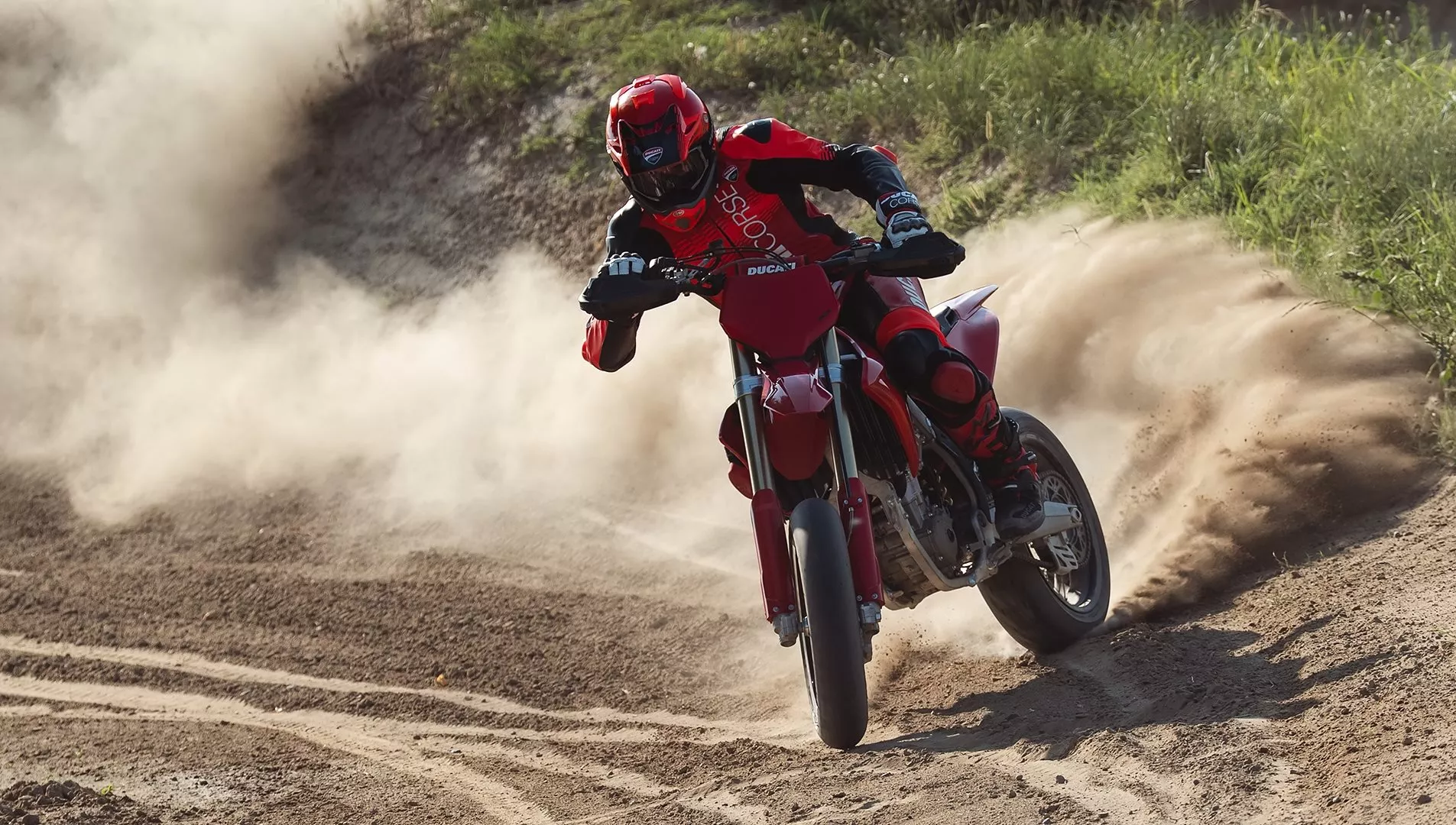
The Desmo450 SM blasts out of the dust. The broad torque curve of the Desmo450 delivers power even at low RPMs, reducing physical strain on the rider.

Getting leaned in Supermoto style with the inside leg out. The Suter anti-hopping clutch helps the rider control the desired slip of the rear wheel at the corner entry.

The Desmo450 SM on its rear wheel, shot from the side. The quickshifter operates seamlessly during upshifts without clutch engagement, maintaining uninterrupted forward momentum.

Sliding through the dirt, the rear wheel kicks up a cloud of dust. The Ducati Traction Control can be set to four levels or completely switched off, giving the rider full control over slip.

This is how it rolls off the line: Showa suspension components, Brembo brake system with Galfer rotors, Takasago-Excel rims featuring a Bartubeless system, and Metzeler Racetec SM slicks.

Close-up of the Desmo450 single-cylinder engine featuring a magnesium clutch cover and steel exhaust routing. The cover and cylinder head are sealed with metal and rubber gaskets instead of adhesives, significantly speeding up maintenance.

The steel header with resonator wraps tightly around the engine. The exhaust system meets the FIM and FMI racing regulations for 2025, clocking in at 109 dB plus a two-decibel tolerance.

The fuel cap of the Desmo450 SM with breather hose, embedded in the grippy surface of the 7.2-liter tank.

Front brake up close: radial-mounted Brembo caliper on a floating Galfer disc with a 310 mm diameter and aluminum flange, behind it the Takasago-Excel rim featuring a Bartubeless system and Metzeler Racetec SM.

The frame protector shields the aluminum frame right where the boot makes contact, with the magnesium clutch cover sitting behind it.

Propped up in the morning light, the Desmo450 SM showcases its compact lines with a 930 mm seat height and a 1,483 mm wheelbase. The tank holds 7.2 liters—just what a race bike needs for a session.

The left side of the engine featuring the magnesium alternator cover. It's sealed with a rubber gasket instead of three-component sealant, making maintenance noticeably quicker.

Number plate, shortened fender, and the 49mm Showa fork with Kashima coating. The CNC-machined triple clamps are spaced wider apart to give the fat supermoto slick some breathing room.

The fully adjustable Showa shock is mounted on a progressive linkage, delivering 295 mm of rear wheel travel. An alternative spring is available in the accessories for €159.34, which should catch the eye of both heavier and lighter riders.

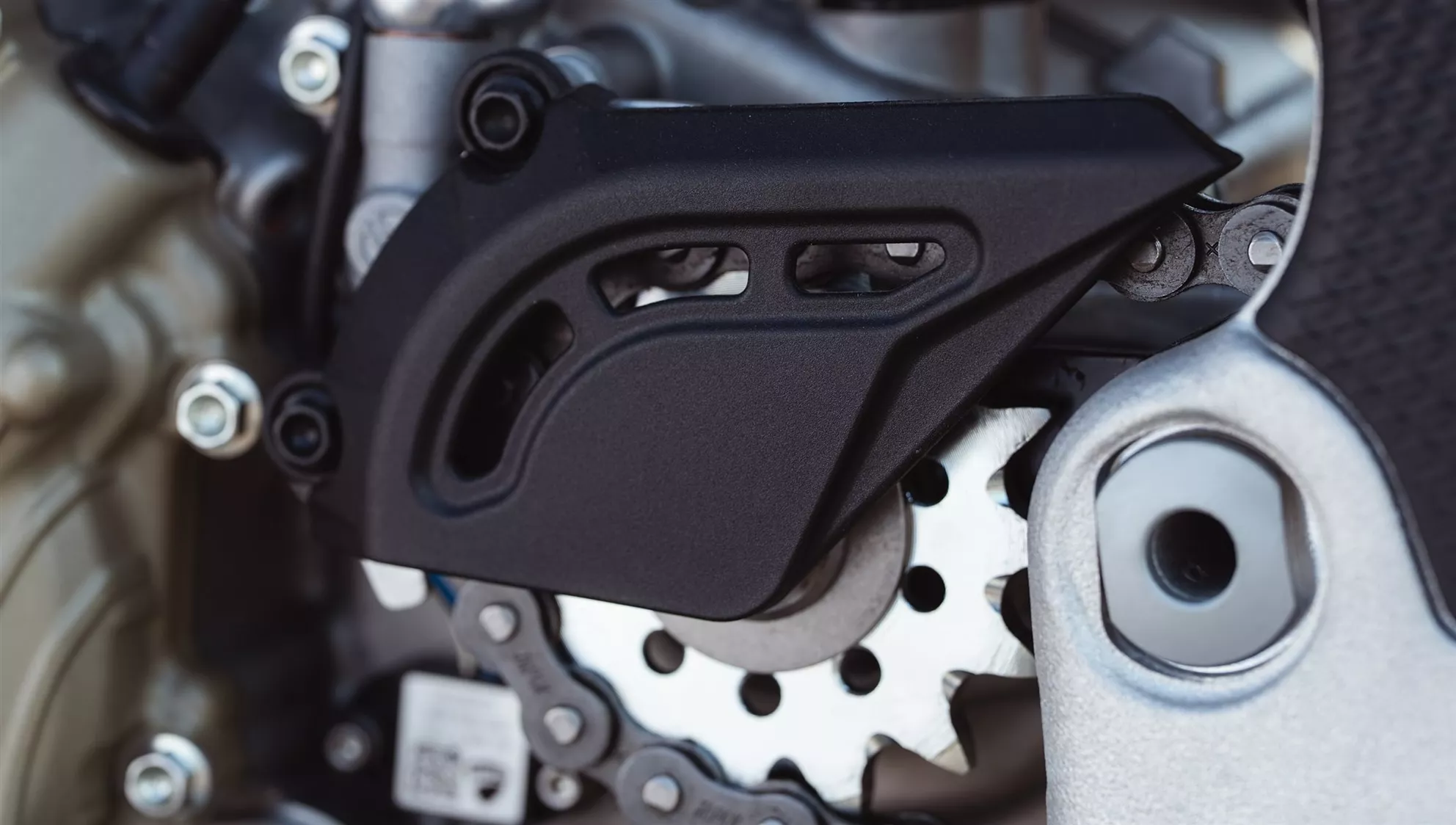
Takasago-Excel rim in 5 x 17 inches, Metzeler Racetec SM K1 in 165/55 R17, and the aluminum rear sprocket with 47 teeth on the DID DMS 520 chain.

The chain guard on the aluminum swingarm, with the tubeless tires featuring a Bartubeless system. Ditching the tubes saves 1.2 kilograms of rotating and unsprung mass.

Complete front wheel featuring Takasago-Excel rim in 3.5 x 16.5 inches, Metzeler Racetec SM K2 tire, and a floating Galfer disc with aluminum flange. The fork leg houses the radial mount for the Brembo caliper.

The accessory frame protector shields the frame area around the countershaft and costs €73.54. The final drive ratio can be track-specifically adjusted with sprockets of 50, 51, and 52 teeth.

The closed hand guard made of structural plastic has been specifically designed for the demands of Supermoto. Behind it are the upper triple clamp and the Kashima-coated outer tubes of the Showa fork.

The padded handlebar pad featuring the Ducati logo sits atop the solidly machined upper triple clamp. The handlebars can be clamped in four different positions.

Lever, hydraulic master cylinder, and control unit are shielded behind the hand guard. The rider selects Riding Mode, traction control, quickshifter, and Power Launch through the control unit.

Side view of the radiator on the Desmo450 SM nestled between the fairing and fork. For those looking to play it safe, a protective mesh for the radiator is available in the accessories for €36.77.

The top triple clamp is machined from solid billet and offers increased spacing to accommodate the wide supermoto front wheel. The handlebar risers allow for four different positions.

The front end featuring a fully adjustable Showa fork is designed to provide support during hard braking and deliver precision at corner entry.

Up front, the radial Brembo PR15x19 master cylinder works with the Stylema caliper on a 310mm disc, while at the rear, there's a 240mm Galfer disc with a single-piston floating caliper.

All the weight is on the fully adjustable 49mm Showa fork, specifically tuned by Ducati with custom springs for maneuvers like this.

Elbows and knees on the asphalt, the long shadow shows the lean angle. The Engine Brake Control adjusts in two stages how much engine braking kicks in when braking hard.

In this lean angle, the muffler, aluminum swingarm, and frame are fully exposed. The aluminum frame is made up of just eleven elements to maintain a balance of rigidity, weight, and strength.

Shot from behind shows how much contact patch the Metzeler Racetec SM K1 in 165/55 R17 lays down at the corner exit. The dark marks on the asphalt are part of the Supermoto routine.

Approaching the corner, curb in the foreground. 63.5 hp at 9,400 rpm and 53.5 Nm at 7,500 rpm are ready to unleash as soon as the bike is upright.