For almost a quarter century, Harley riders have been debating whether a water-cooled V2 can even power a real Harley. In 2002 this discussion ignited over the V-Rod, and in 2026, around the Nightster and Revolution Max, it still hasn't fully died down. Together with former IDM champion and technical expert Martin Bauer, I wanted to find out: where does this aversion actually come from - and was Harley perhaps technically right the whole time?

25 Years of Water Cooling Wrong Turn? Harley-Davidson V-Rod & Nightster
Was the V-Rod Ahead of Its Time? Is the Nightster Its Heir?
25 years ago, Harley-Davidson shocked its own customer base with the water-cooled V-Rod. Today, the entry-level Nightster faces surprisingly similar problems. Why is that? An analysis of the water-cooled engines.
&width=72&height=72&bgcolor=rgba_39_42_44_0&mode=crop "Author: Poky")
Poky
published on 9/25/2026
2,105 Views
Wrong Turn with Water Cooling? V-Rod vs. Nightster 2026
Summer 2001: Harley-Davidson Suddenly Goes a Different Way
July 2001, Los Angeles: the birth of the V-Rod - a long, low, drag-strip-inspired silhouette, futuristic looks, plenty of aluminum, solid disc wheels and a completely new engine developed in collaboration with Porsche. At the time it was a shock to the motorcycle world; for me as a twelve-year-old, four wheels were still more interesting than two, but I can still clearly remember the first V-Rods gleaming in front of Viennese cafes. Since that year I've also had a personal connection to the V-Rod, and I now call an early 2002 VRSCA my own.
To understand how radical the V-Rod really was in 2002, you have to look at what else Harley was selling at the time. The Twin Cam 88 was a 1,450cc air-cooled 45-degree V2, classically long-stroke, with two valves per cylinder and pushrod-actuated cams sitting low in the engine. Lots of displacement, lots of flywheel mass, lots of low-rpm torque, and roughly 60 to 65 hp in the Harley world of that era.
And then came the Revolution.
Harley Revolution: 1,131cc, Four Valves and Suddenly Over 115 HP
The Revolution V2, developed together with Porsche Engineering, displaced only 1,131cc but was technically almost the opposite of the classic Harley engine. A 60-degree cylinder angle, liquid cooling, four overhead camshafts, four valves per cylinder, and above all an extremely short-stroke layout of 100 x 72 mm. The production machine made around 115 to 117 hp at 8,250 rpm. The architecture had its roots in the VR1000 racing project but was extensively further developed for production.
Martin Bauer puts the crucial difference quite simply: if you want to generate power, revs help. That's exactly where a classic long-stroke Harley engine hits its limits fairly quickly. The longer the stroke, the greater the distance a piston has to travel per crankshaft revolution. At high revs, piston speed and load rise accordingly.
With the Revolution, Harley therefore went in the opposite direction: big bore, short stroke. The large pistons create room for large valve areas, and the short stroke allows for higher revs. Add four valves per combustion chamber and a modern DOHC valvetrain. Suddenly Harley had an engine that didn't just thump away down low, but actually produced real power up top.
For the brand, that was almost more revolutionary than the radiator itself, even though the radiator probably got more ink.
Fact Check 1: What Does Water Cooling Actually Deliver?
Because liquid cooling alone doesn't produce any horsepower to begin with. Rather, it creates the conditions under which an engine can reliably produce more power.
With an air-cooled engine, the temperature level fluctuates much more strongly. Ambient temperature, speed, traffic and load all change the thermal conditions. At high specific output, it becomes correspondingly difficult to keep the engine within an optimal temperature window at all times. High temperatures encourage knocking and force the developer to build in larger safety margins for compression and ignition timing.
With a liquid circuit, the temperature level can be controlled much more precisely. That in turn allows higher compression, more precise combustion and greater sustained output. That's exactly why the Revolution runs 11.3:1 compression, while the Twin Cam of the time was laid out far more conservatively.
Martin's analysis is clear: because Harley seriously wanted to build a performance engine in the early 2000s, the move to water cooling was practically unavoidable.
The Problem Wasn't Just the Radiator
Technically, all of this sounds logical. For a traditional Harley rider, though, the Revolution was still a serious challenge.
Because along with water cooling, several traits that had been part of the brand's core for decades disappeared at the same time. The classic 45-degree V2 became 60 degrees. The engine character became more refined, the rev range wider, and even the sound changed. At idle, the V-Rod engine no longer thumped away in the same manner as the traditional engines.
For an engineer, vibration, uneven running and enormous thermal load are things you try to design out as much as possible. For some Harley fans, however, these very supposed weaknesses can be part of what they're paying for.
Put differently: with hardly any other motorcycle brand are technical improvement and perceived authenticity so regularly at odds with one another.
Fact Check 2: Was the V-Rod Really a Flop?
Even today, the V-Rod still carries the reputation of a commercial failure. Only the German registration figures fit surprisingly poorly with that narrative.
In 2005, according to Harley-Davidson Germany, 15.6 percent of all new Harley registrations in Germany went to the VRSC family. Even more interesting: the VRSCA and VRSCB combined would actually have landed in first place on the Harley model ranking at the time. Harley itself stated that with the V-Rod, and the Street Rod in particular, it had reached new customer groups.
So the V-Rod was by no means a bike nobody wanted. Rather, it failed to do something else: it didn't replace the traditional Harley.
Instead, its own scene developed around the V-Rod, Night Rod, Night Rod Special and V-Rod Muscle. Unmodified early examples now even carry a certain collector's status, while the Night Rod Special and V-Rod Muscle are especially sought after on the used market.
15 years of model history until the line was discontinued in 2017 fits poorly with the image of a total flop, in any case. Currently, more than 9,400 V-Rods are still registered in Germany!
The High-Tech Harley Cost Real Money in 2002, Though
One point shouldn't be forgotten here: Harley made you pay dearly for the technical revolution.
A contemporary German price list shows the VRSCA V-Rod in 2002 at a minimum of 20,185 euros. A Sportster 883 started at just 7,600 euros at the same time, and a 1200 Sport or Custom at 10,555 euros. So the V-Rod cost more than two and a half times as much as the small 883.
That's hugely important for today's discussion around the Nightster. Because back then, the water-cooled performance Harley was a top-of-the-line product both technologically and price-wise. Today the situation looks completely different.
Is the Nightster Actually the New V-Rod?
Officially, the Nightster is supposed to take on the role the Sportster held for decades. Technically speaking, though, its lineage clearly lies elsewhere.
If you put an old 883 next to it, the similarities are limited. The Sportster relied on 45 degrees, air cooling, long pushrods, two valves per cylinder and a strongly long-stroke layout. The result, in its final iteration (MY2020), was about 52 hp.
If you compare the V-Rod and the Nightster instead, clear parallels become visible.
Both use a liquid-cooled 60-degree V2. Both have four valves per cylinder, DOHC valve actuation and a strongly short-stroke basic layout. On the Nightster, 97 mm bore faces just 66 mm of stroke. On top of that, the Revolution Max 975T runs 12:1 compression, modern engine management and a much more comprehensive electronics package.
- How much does a Harley-Davidson V-Rod VRSCA cost?
- Here you will find an overview of the price level of new and used motorbikes!
Martin Bauer sees it similarly: in terms of basic architecture, the Revolution Max is clearly closer to the old Revolution than to the Sportster's Evolution engine. So the Nightster might be less the modern 883 than Harley's positioning would have us believe.
In my view, it's more the second generation of the idea that began with the V-Rod in 2001.
Revolution Max: The V-Rod Idea Consistently Developed Further
With the Revolution Max, however, there's an interesting technical trick involved. Harley still uses a 60-degree cylinder angle, but works with an offset of the crank pins. This creates a firing order that, in terms of smoothness and mass forces, approaches a more favorable V2 configuration.
Together with balancer shafts, the 975 runs remarkably refined as a result. The typical Harley thump has faded even further in favor of fine throttle response and smooth engine running. Anyone who simply wants a bike that just works nicely will judge that far more positively. For customers looking for the raw feel of air-cooled V2 engines, it might be a downside.
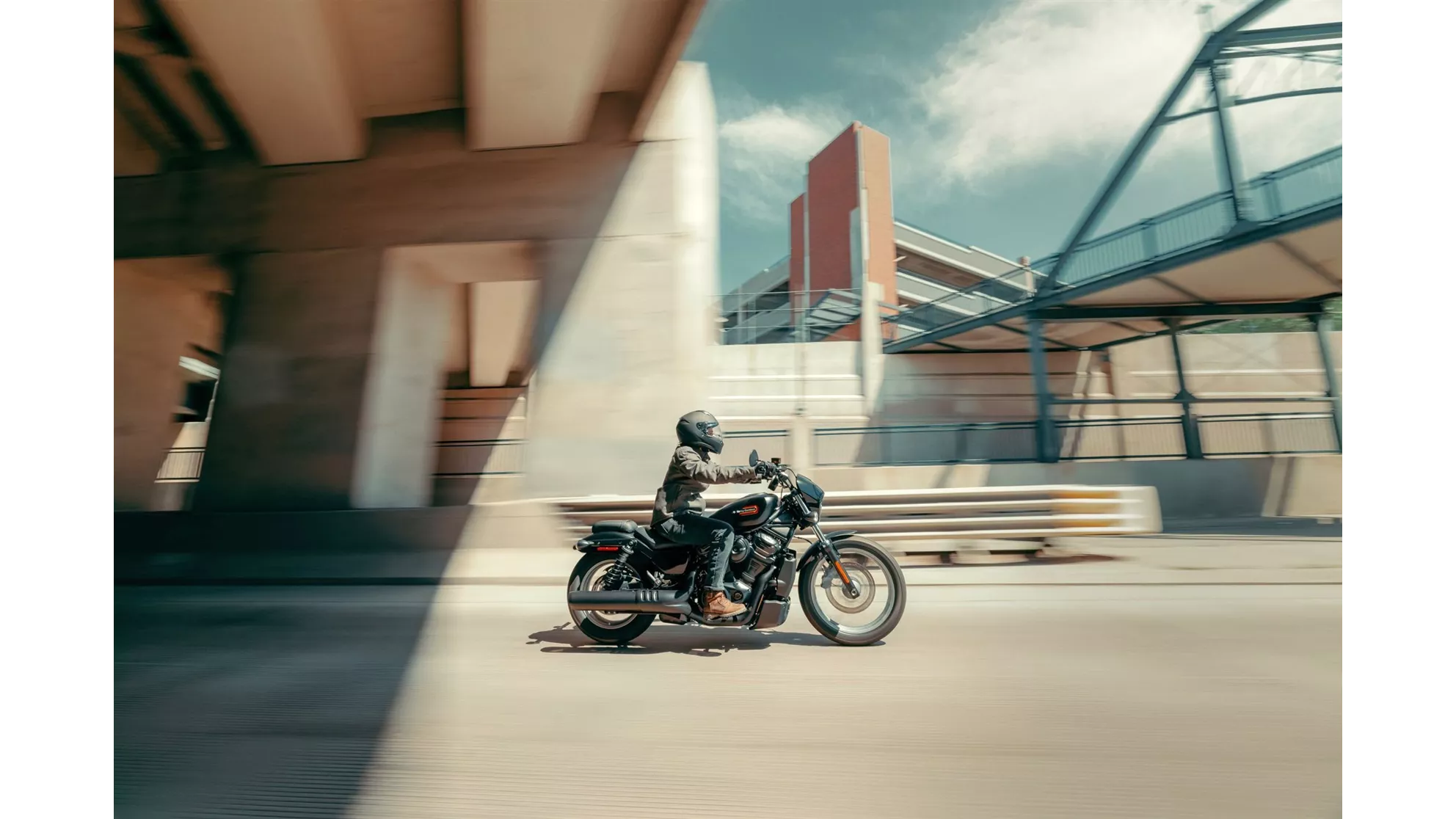
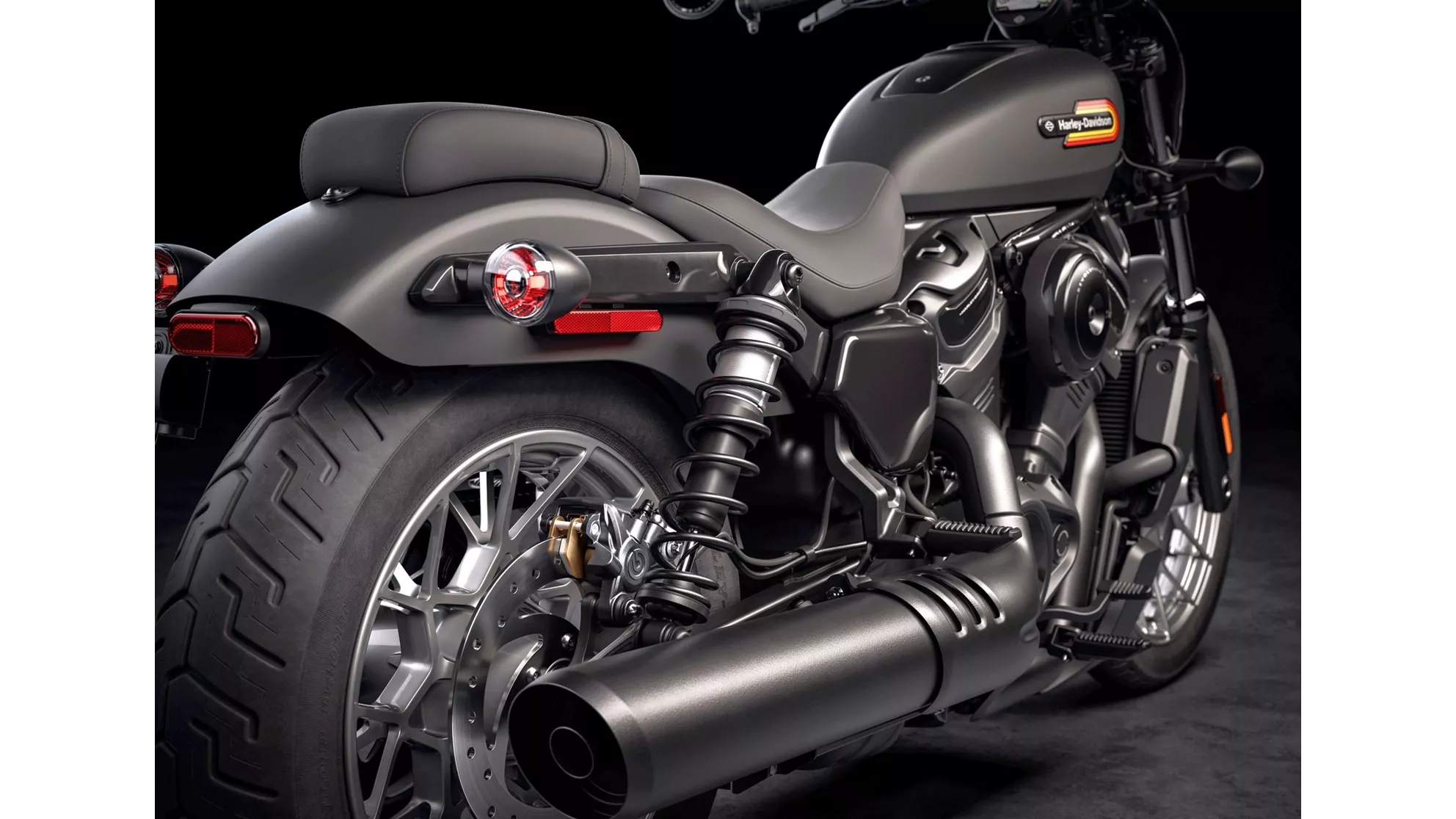
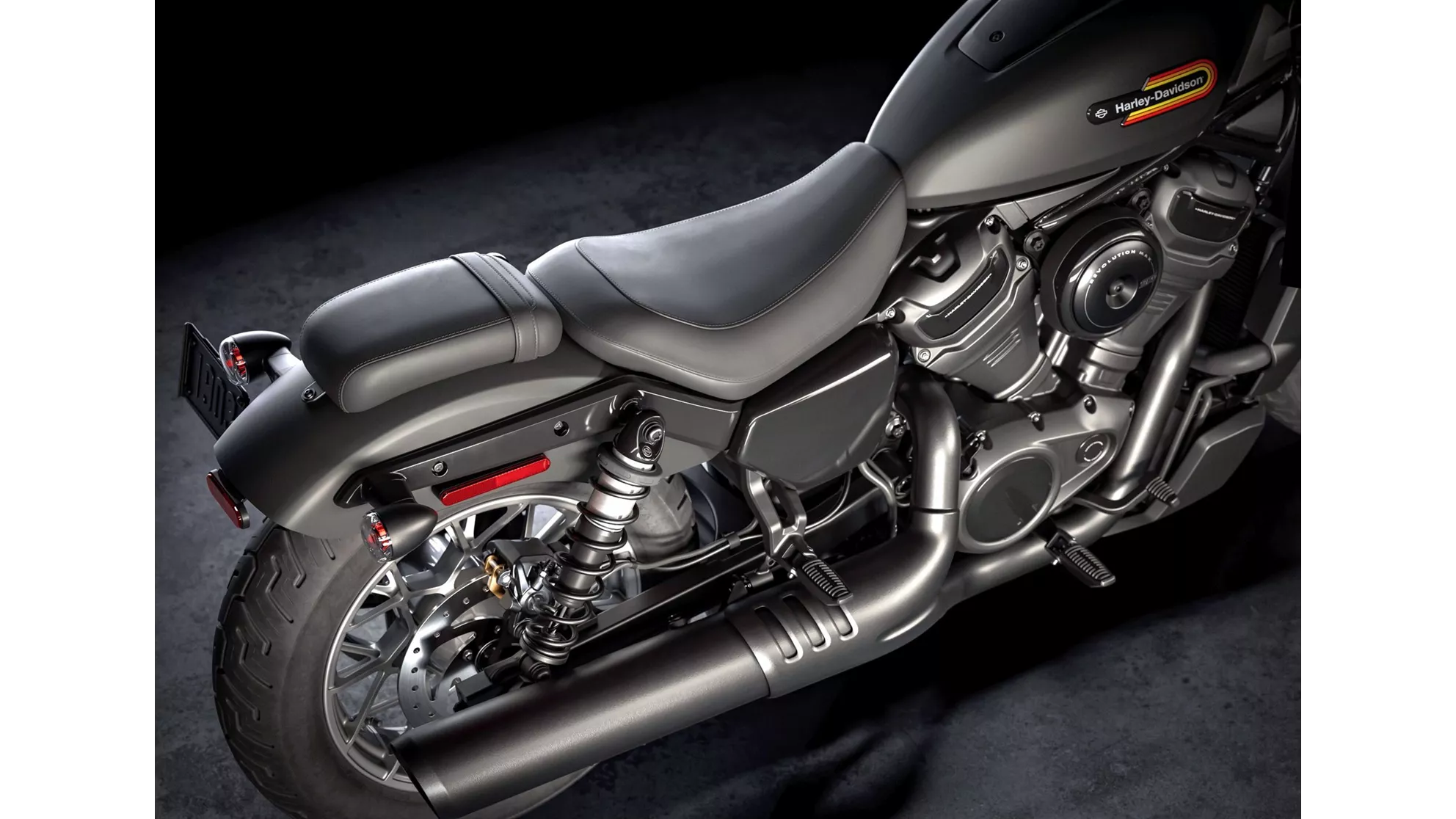
On top of that, the Revolution Max engine is a stressed member of the chassis. This lets Harley save frame material and therefore weight. You feel the result immediately when switching directly from the V-Rod. The Nightster feels not just more modern, but generations more accessible - 229 kilograms fueled up versus 285 for the V-Rod.
25 Years of Development Show in the First Few Meters
Martin really only needs to reach for the clutch once to notice. On the Nightster, almost one finger is enough; on the V-Rod, it takes considerably more effort.
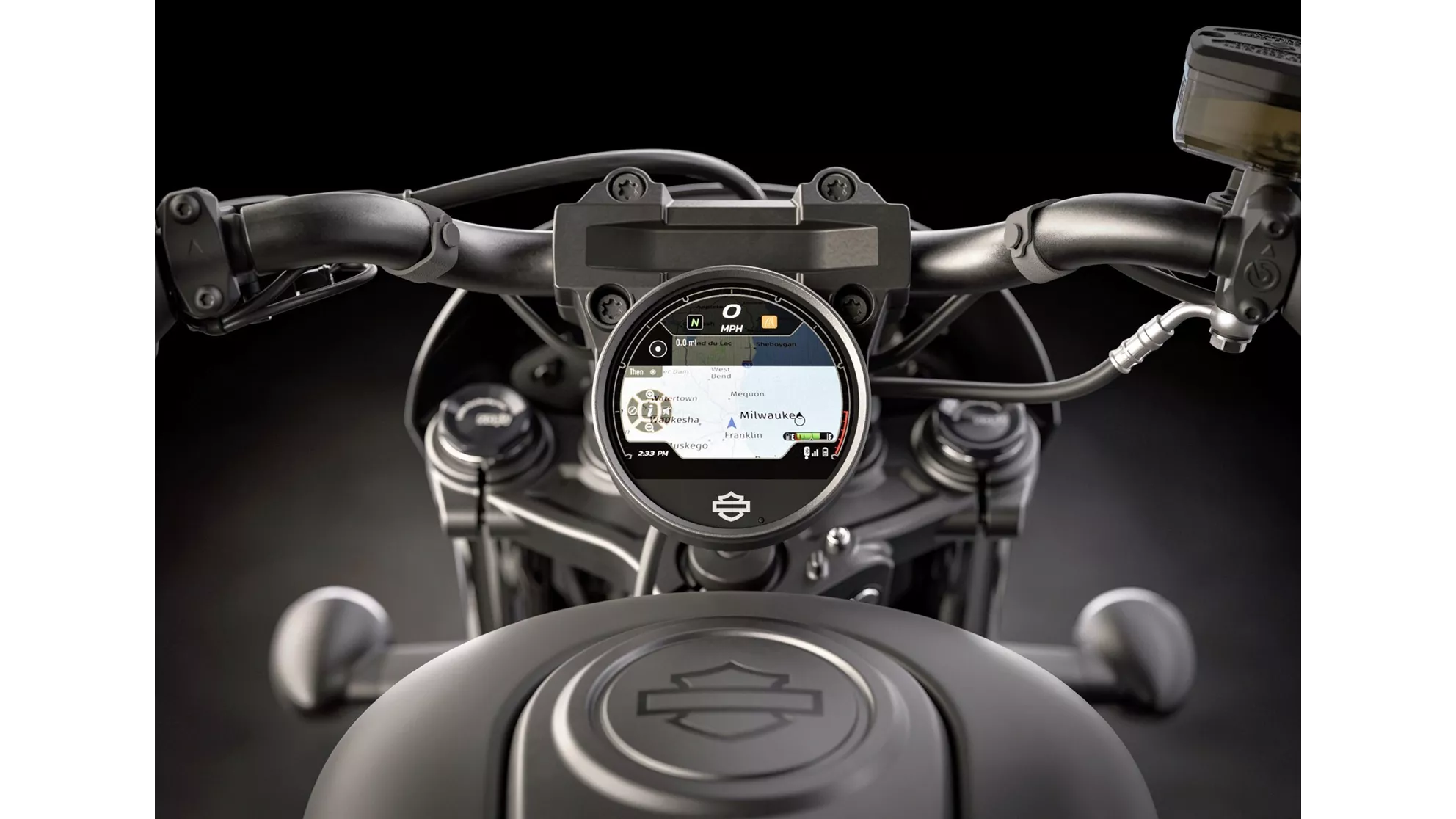
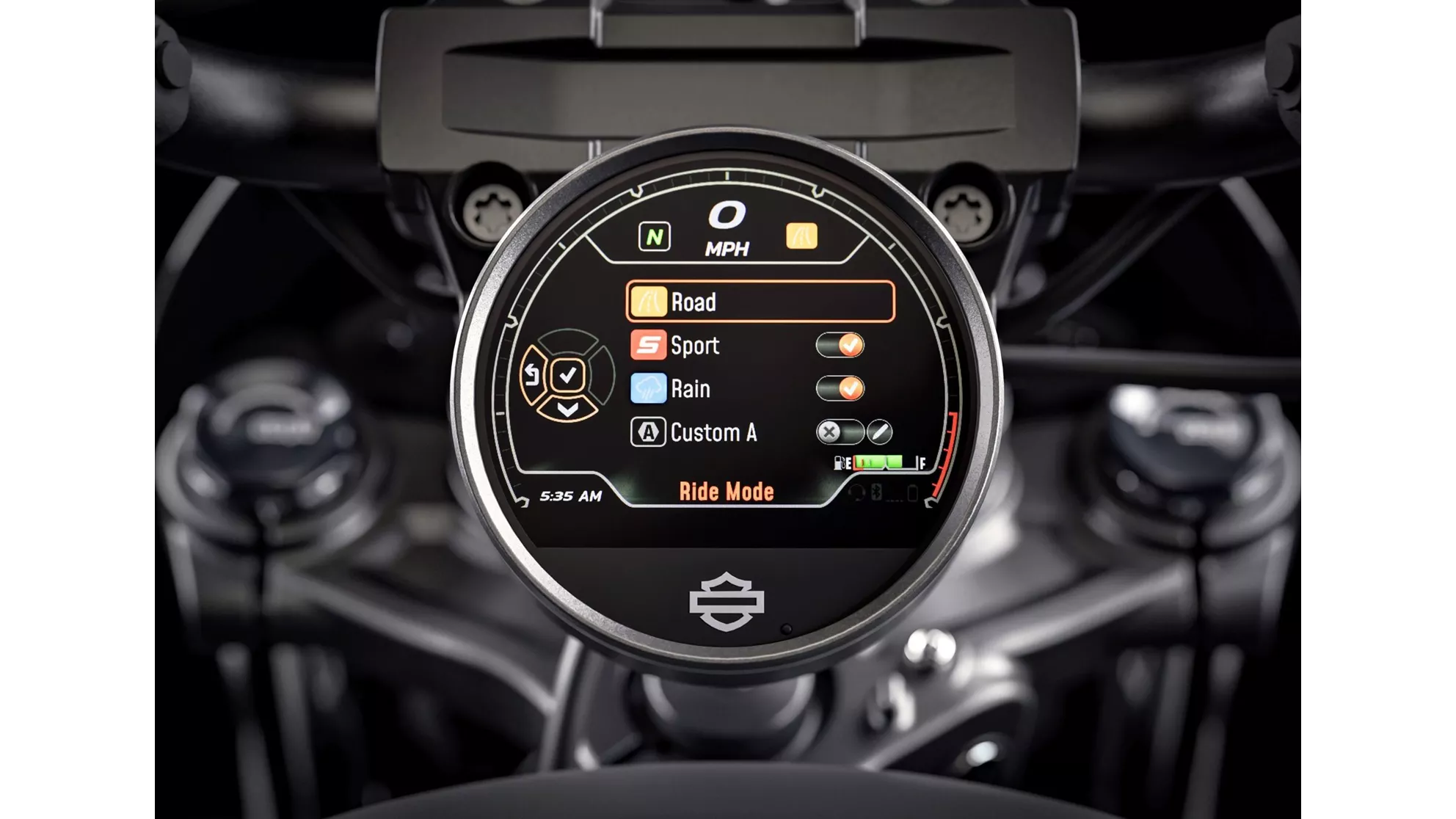
The same pattern continues on the move. The Nightster turns in more easily, its steering head angle is laid out far more agile, the chassis and brakes are more modern, and the significantly lower weight helps with every change of direction. Add ABS, traction control and different riding modes.
And yet, after switching directly, I was by no means disappointed with my V-Rod. Quite the opposite. For 2002, this bike was a real statement in terms of riding dynamics within the Harley world. You just shouldn't forget that almost a quarter century has passed since then.
When push comes to shove today, the current entry-level Harley leaves the technological spearhead of the time behind. You have to be that honest.
The Really Exciting Difference Is Called 11,200 Euros
Which brings us to the point that makes the Nightster 2026 genuinely exciting for me right now.
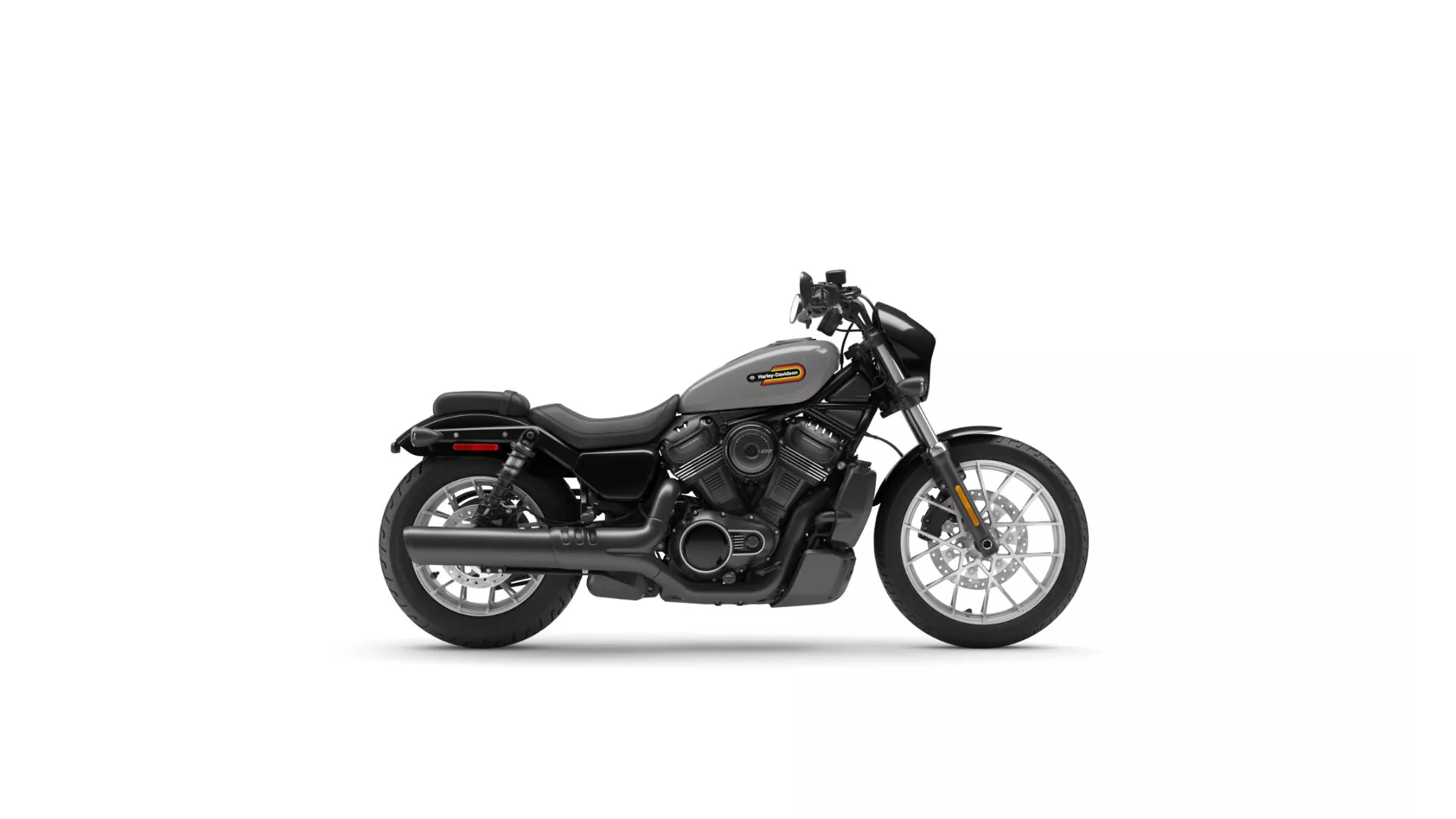
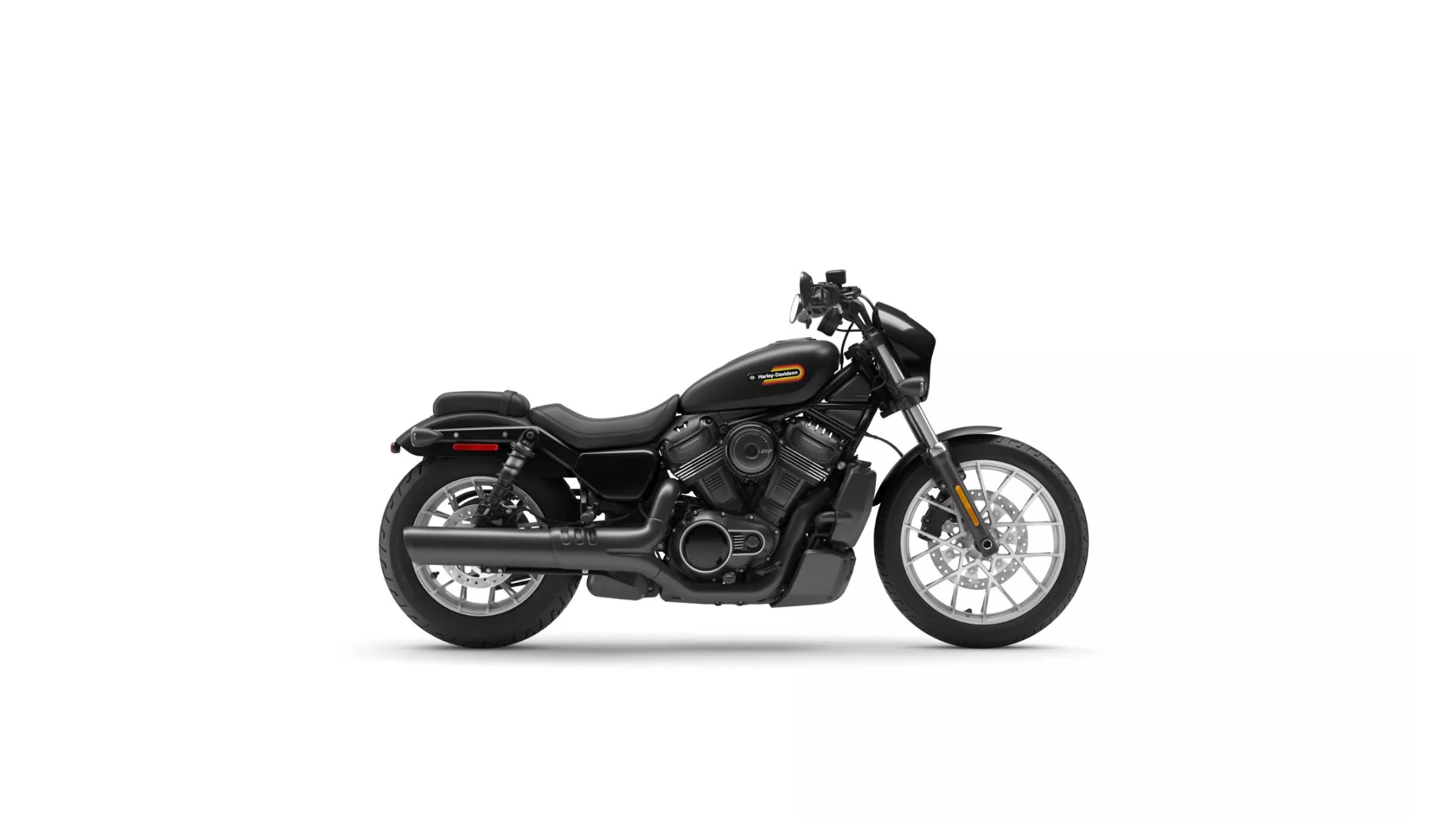
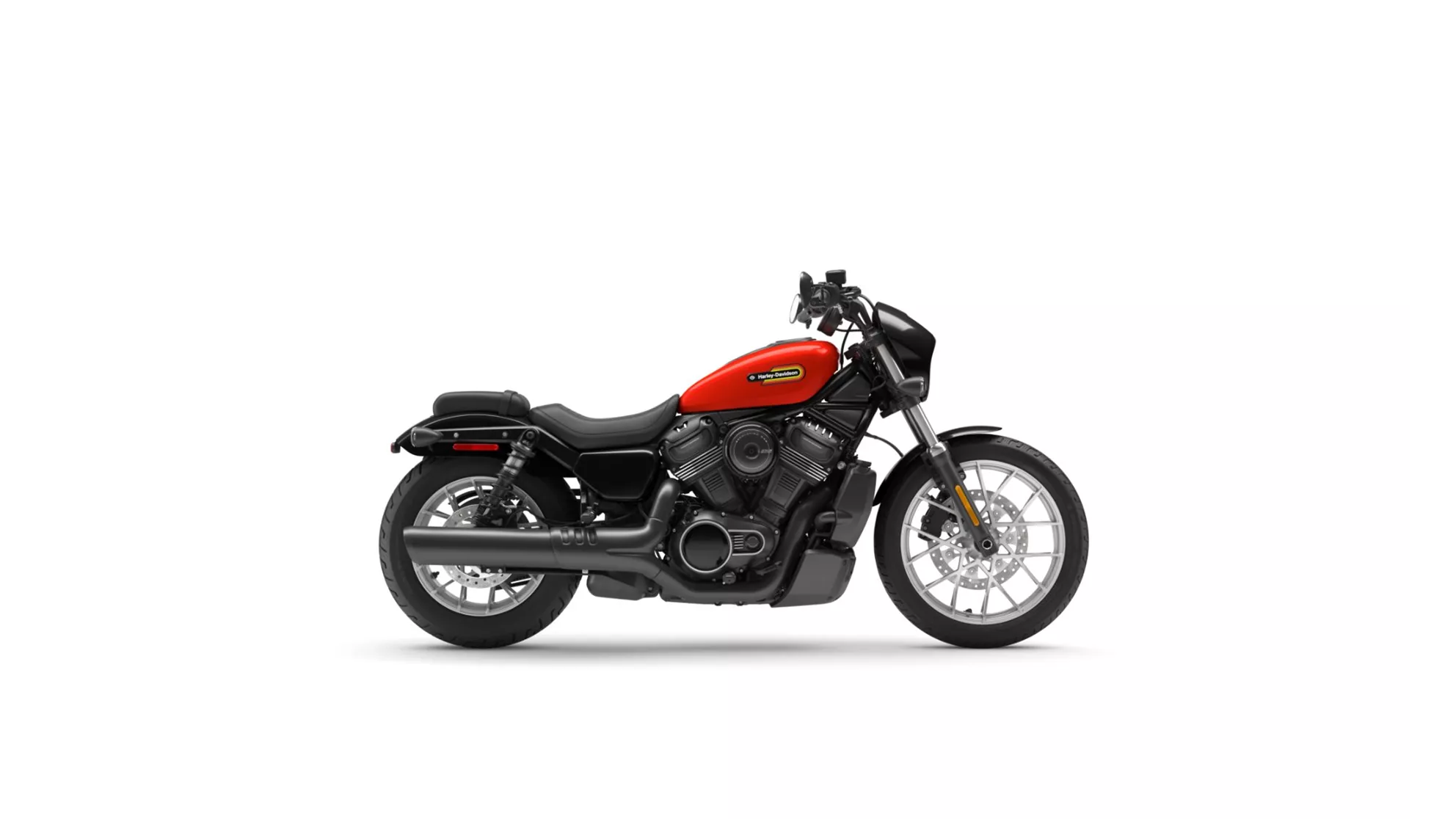
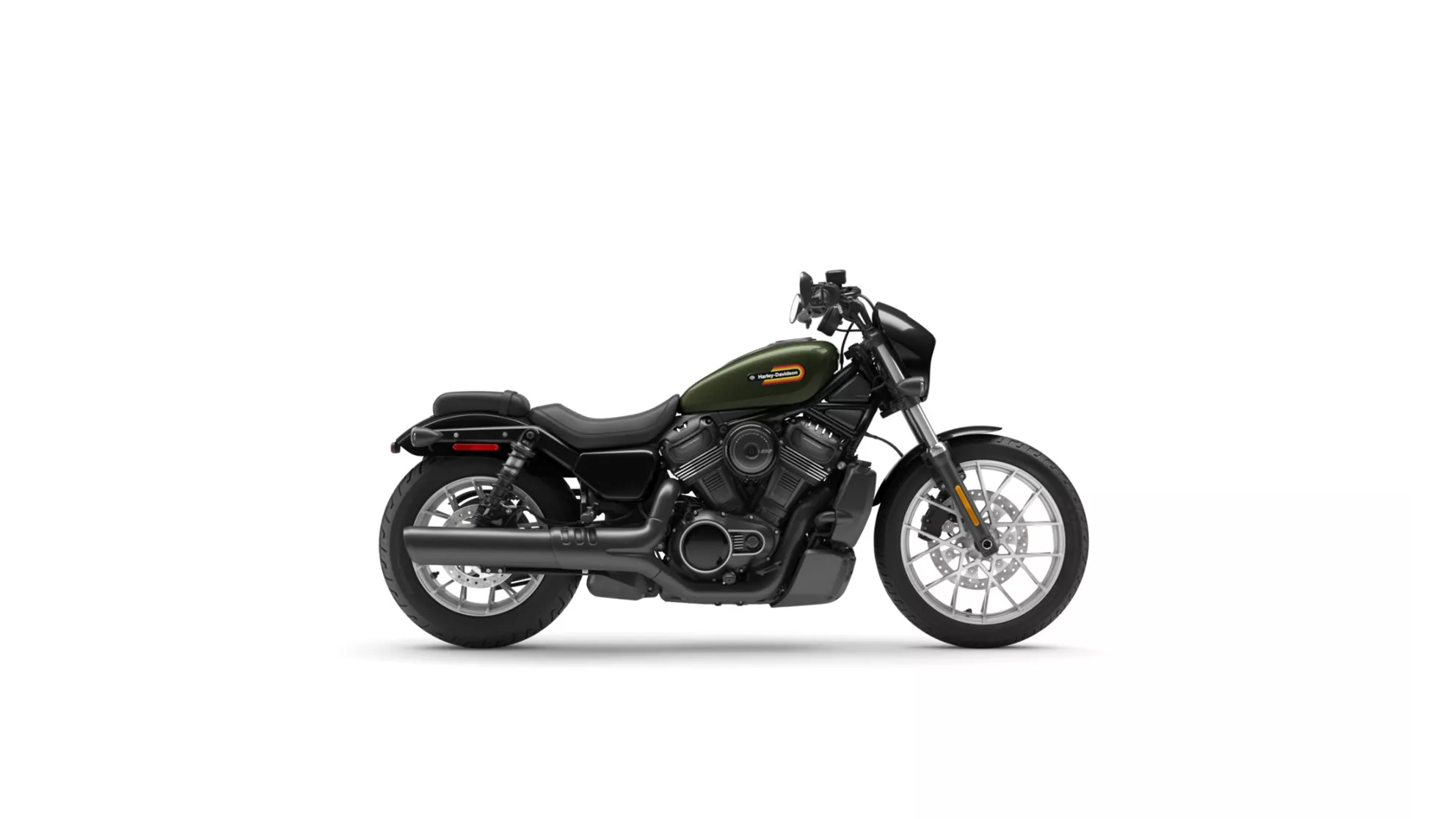
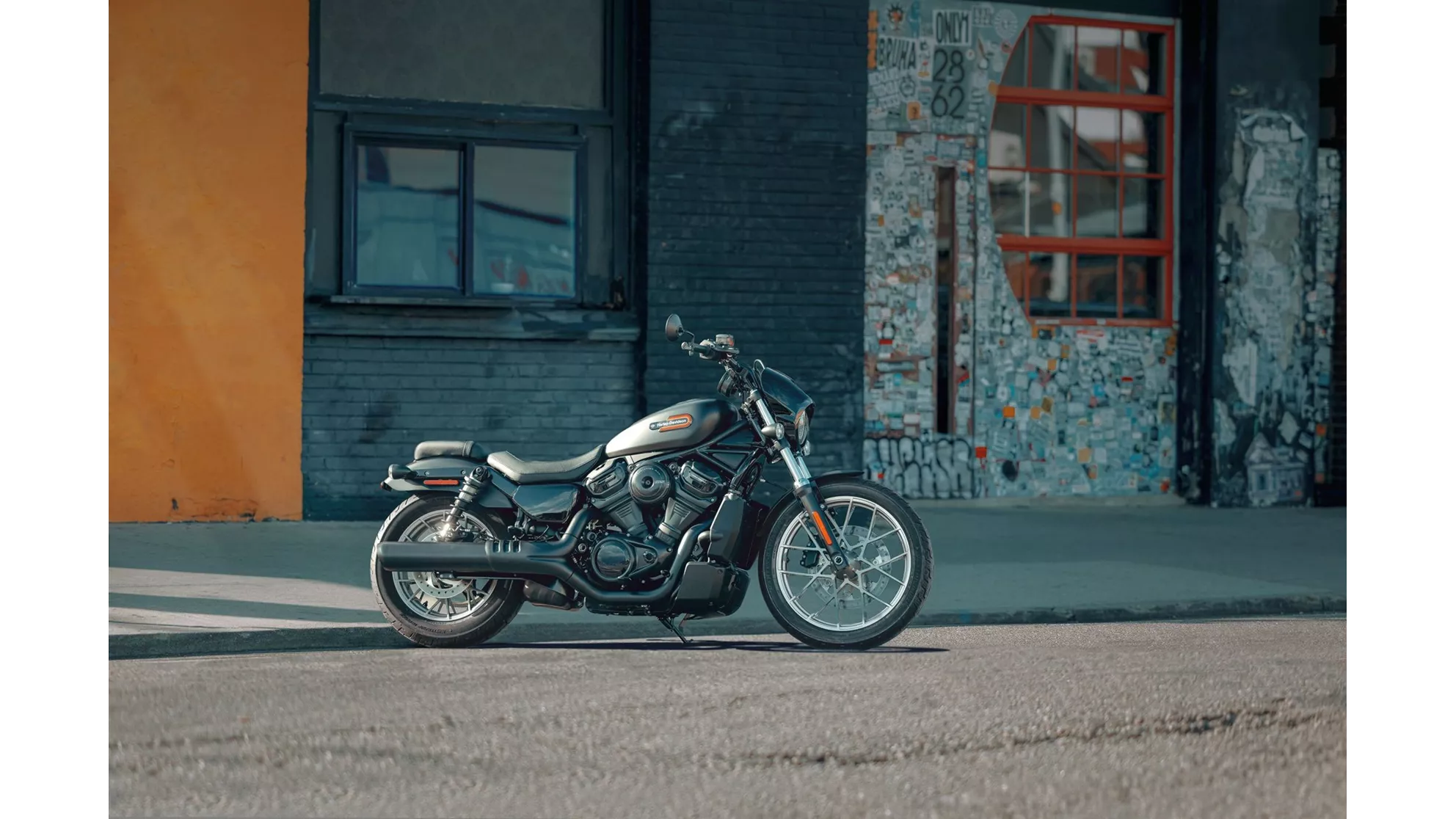
The Nightster has had a significant price cut and currently starts in Germany at 11,200 euros, making it the cheapest new Harley-Davidson in the lineup. The Nightster Special we rode costs more, but isn't fundamentally different in its overall orientation. Even the base variant offers all the ingredients that make riding a Harley so accessible.
Just as a reminder: for the V-Rod in 2002, you had to put down more than 20,000 euros. Adjusted for inflation, the V-Rod's German launch price of 20,678 euros would correspond to roughly 33,300 euros today.
Today you suddenly get the V-Rod's modern engine philosophy for a third of that sum!
More Sportster Price Than Sportster Technology
The comparison with the later Iron 883 also shows just how big the technical leap actually is. The 883 was heavier, less powerful and deliberately traditional in its construction. The Nightster, with only moderately more displacement, delivers around 90 hp, modern riding modes and a chassis that doesn't require even beginners to first be initiated into the secrets of traditional Harley control efforts.
Anyone who bought an Iron 883 often specifically didn't want an objectively perfect midrange bike. They wanted a Harley. Raw, mechanical and a bit stubborn. The Nightster, by contrast, functions in an entirely normal way.
The Nightster Also Has to Find Its Customers First
In its first sales years, the Revolution Max Sportster didn't become the new mass phenomenon. At its market launch in 2022, for example, only 178 Nightsters were registered in Germany; in 2023 there were 305 Nightsters plus 131 Nightster Specials. These are figures far removed from the Sportster's former role as the central entry point into the Harley world.
Perhaps the original positioning was also wrong. A modern, less classically styled Harley V2 naturally has a hard time when it's priced too close to larger and more emotionally prestigious models at the same time.
At 11,200 euros, that math suddenly looks different in 2026.
Is History Repeating Itself with the V-Rod?
For me, that's exactly the exciting question. The V-Rod was a stepchild in its time. Too modern for part of the traditional customer base, visually distinctive and mechanically completely different. Meanwhile, it has a large fan community, early examples are sought after, and hardly anyone today would seriously dispute that the V-Rod is an important part of Harley history.
With the Nightster, exactly the same thing could happen.
Visually too, I see more kinship between the two bikes than you might initially expect. The supposed tank on both isn't simply what it appears to be (to find out what it actually is, I'll point you to the video); the proportions are flat and modern. Only the footpeg position gives the Nightster a noticeably more active riding position.
Maybe the Nightster simply needs time too.
Verdict: Was the Water-Cooled Harley a Wrong Turn?
Technically, the answer for me is fairly clear: no.
Without liquid cooling, Harley could hardly have realized the Revolution engine's performance in 2002 in this form. With the Revolution Max, stricter emissions requirements, even smoother running, lower weight and modern electronic control come on top. From a technical standpoint, the development is logical.
The real problem always lay elsewhere. Harley-Davidson doesn't just sell bikes, but a lifestyle (if you want to believe the old marketing line), one that also lives, at least in part, on how a Harley feels: raw, wild, unconformist. And it's exactly that feeling the V-Rod called into question in 2002, and the Nightster is doing so again in 2026.
Only this time, you get the "experiment" at a completely different price.
Perhaps that's why we're making a mistake if we keep measuring the Nightster against whether it's a worthy successor to the old Sportster. Looking at its technology, it is, for me, much more a modern successor to the V-Rod - lighter, more accessible and now considerably cheaper. It took the V-Rod years to go from unloved outsider to sought-after Harley. Maybe that same career still lies ahead of the Nightster.
Apparently, sometimes a modern Harley first has to grow old before some Harley riders take it to heart. With the V-Rod, the US traditional manufacturer succeeded in reaching a new, younger target group. On these terms, the Nightster could pull that off once again.
- How much does a Harley-Davidson Nightster Special cost?
- Here you will find an overview of the price level of new and used motorbikes!
&width=60&height=60&bgcolor=rgba_39_42_44_0&mode=crop "Author: Poky")
Harley-Davidson V-Rod VRSCA 2002 - Experiences and Expert Review
Poky
An unconventional engine and bike concept that brings Harley-Davidson into the modern era, wrapped in a timeless chassis. The V-Rod rightfully has a large fan community and is especially popular among customizers. Despite all its breaks with tradition, this revolutionary machine still fittingly embodies the core idea of many Harley riders: they want an unconventional, independent and characterful presence. Here they find it all united in one bike.
Harley-Davidson Nightster Special 2026 - Experiences and Expert Review
Poky
The Nightster makes the entry into the Harley world easier than ever. With smooth engine running, riding modes and electronic aids, great turn-in, a capable chassis and brakes, plus low weight, you really don't have to do without anything here.
25 Years of Water Cooling Wrong Turn? Harley-Davidson V-Rod & Nightster Images
Source: 1000PS