Can a knobbly 50:50 tyre of all things be the best adventure rubber for the big BMW GS? The old TKC 80 has long been a legend among off-road tyres, but its successor doesn't simply rely on the famous name. Visually, the second generation looks surprisingly familiar, but according to Continental and our own impressions, it has been rebuilt from the ground up technically. Block design, compound and carcass are all new. The tyre is said to be more robust, bite harder in loose terrain and, above all, eliminate the weakness that spoiled the fun of its predecessor in the wet. Sounds like a big promise for a tyre that wants to work equally well on tarmac and gravel.
The best adventure tyre for the big BMW GS?
Second-generation Conti TKC80 tested on big boxer GS models
Knobbly tyres on adventure bikes weighing almost 300 kilograms: that sounds like a compromise. The new second-generation Continental TKC 80 aims to turn exactly that into a strength – from damp tarmac to loose gravel. We tested the tyre on the 1250 and 1300 GS.

Gregor
published on 8/31/2026
7,477 Views
Here you can find the accompanying reports on the comparison of the 1250 and 1300 BMW GS Adventure and the Westwind Moto bags we used.
Tough test conditions: Conti TKC80² on two heavyweights
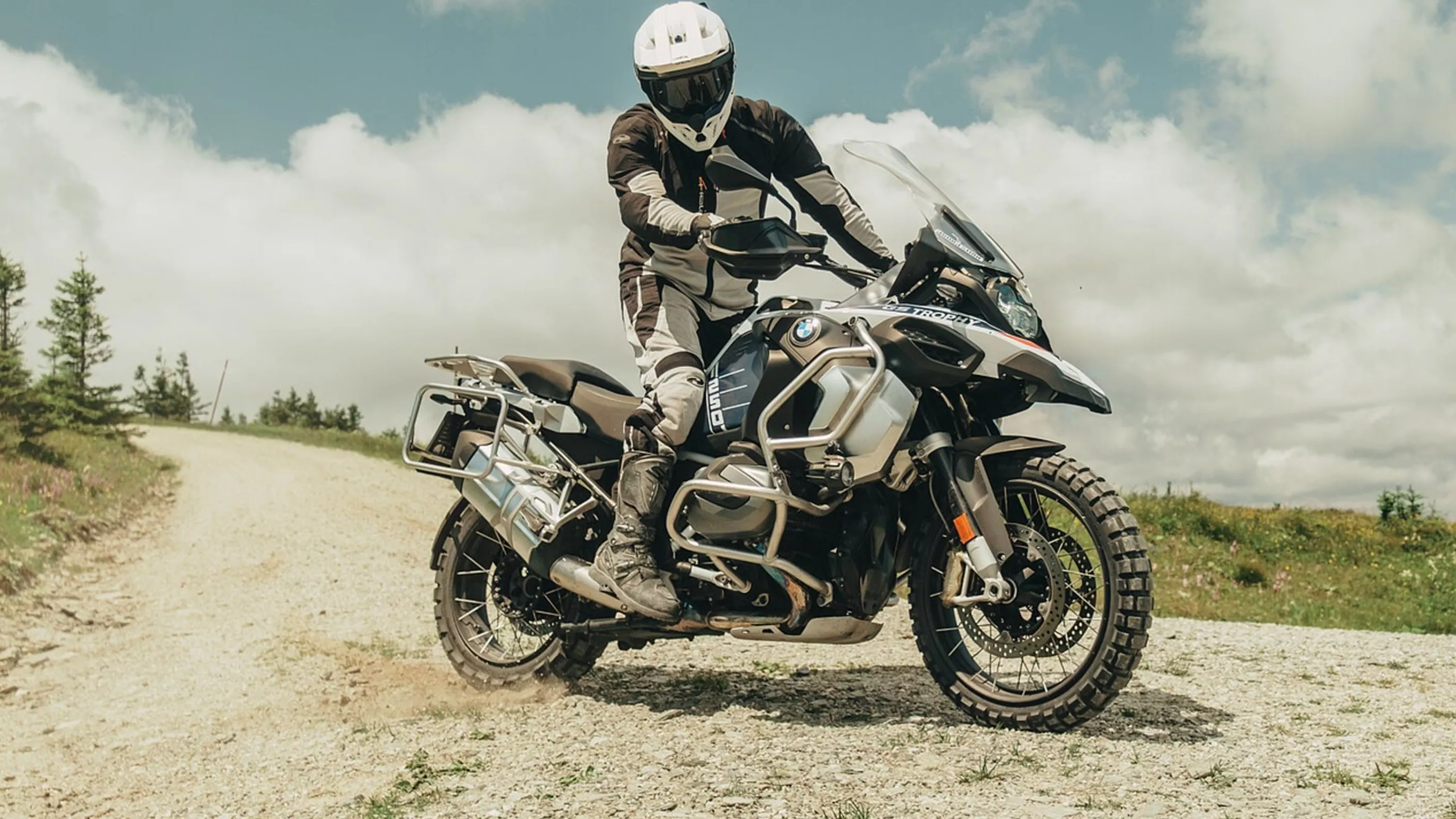
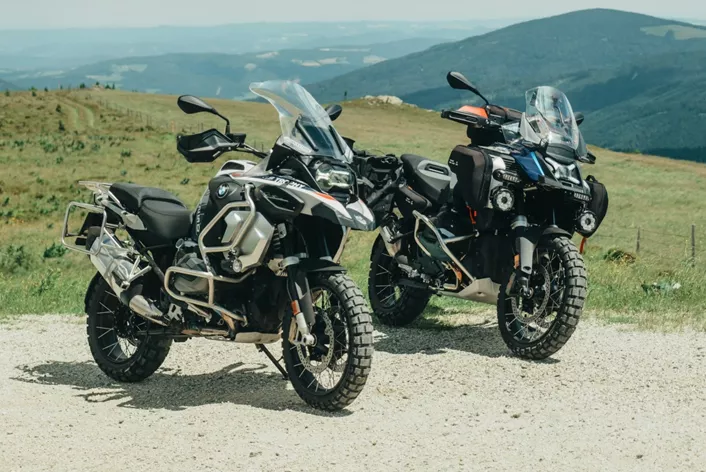
The TKC 80² was fitted to a 2023 model year BMW R 1250 GS Adventure and a 2026 model year BMW R 1300 GS Adventure. It didn't have an easy job. On our 1000PS cattle scale, with an almost full 30-litre tank, the R 1250 weighed in at 284 kg and the R 1300 at 285 kg. Removable bags were taken off, while the bolted-on centre bags and the fitted Lone Rider lights stayed on. It's exactly this kind of mass that keeps an adventure tyre honest: under braking, turn-in and acceleration, it can't hide behind a featherweight bike. Our tour took us over the Kalte Kuchl and the Ochsattel to the Pfaffensattel and Stuhleck, with twisty tarmac, damp sections and light gravel.
Technical data of the Continental TKC 80²
Continental lists the TKC 80² as an adventure tyre with M+S marking. For the big BMW GS wheel sizes, the manufacturer quotes 120/70-19 60R TL at the front and 170/60-17 72R TL at the rear, both with announced availability from the third quarter of 2026. Compared to its predecessor, the net contact patch in the critical wear zone grows by 17 % according to Continental; longer, uniform block edges, gaps in every block row and offset shoulder blocks are designed to improve traction, high-speed stability, grip and wear pattern. Here you can find all sizes and info on the Conti TKC80².

The Conti TKC80² is available for a gigantic range of enduros – from 17 to 21 inches, from 110 to 180 width.
Surprisingly quick and transparent on tarmac
The first surprise came not in the dirt but in the twisties. Despite the knobbly tread pattern, we were surprisingly quick on tarmac. Even more important than outright pace, though, is the way the tyre announces its limit. The TKC 80² doesn't suddenly fling the door open and throw the rider out; instead, it signals very early and good-naturedly when the reserves are shrinking. This was particularly noticeable on the more dynamic R 1300 GS Adventure: its firmer, more modern semi-active suspension passes information about the grip level clearly on to the rider. Tyre, suspension and the more forward-oriented ergonomics combine to give plenty of confidence at lean. You dare to dive into corners faster without the knobbly getting nervous.
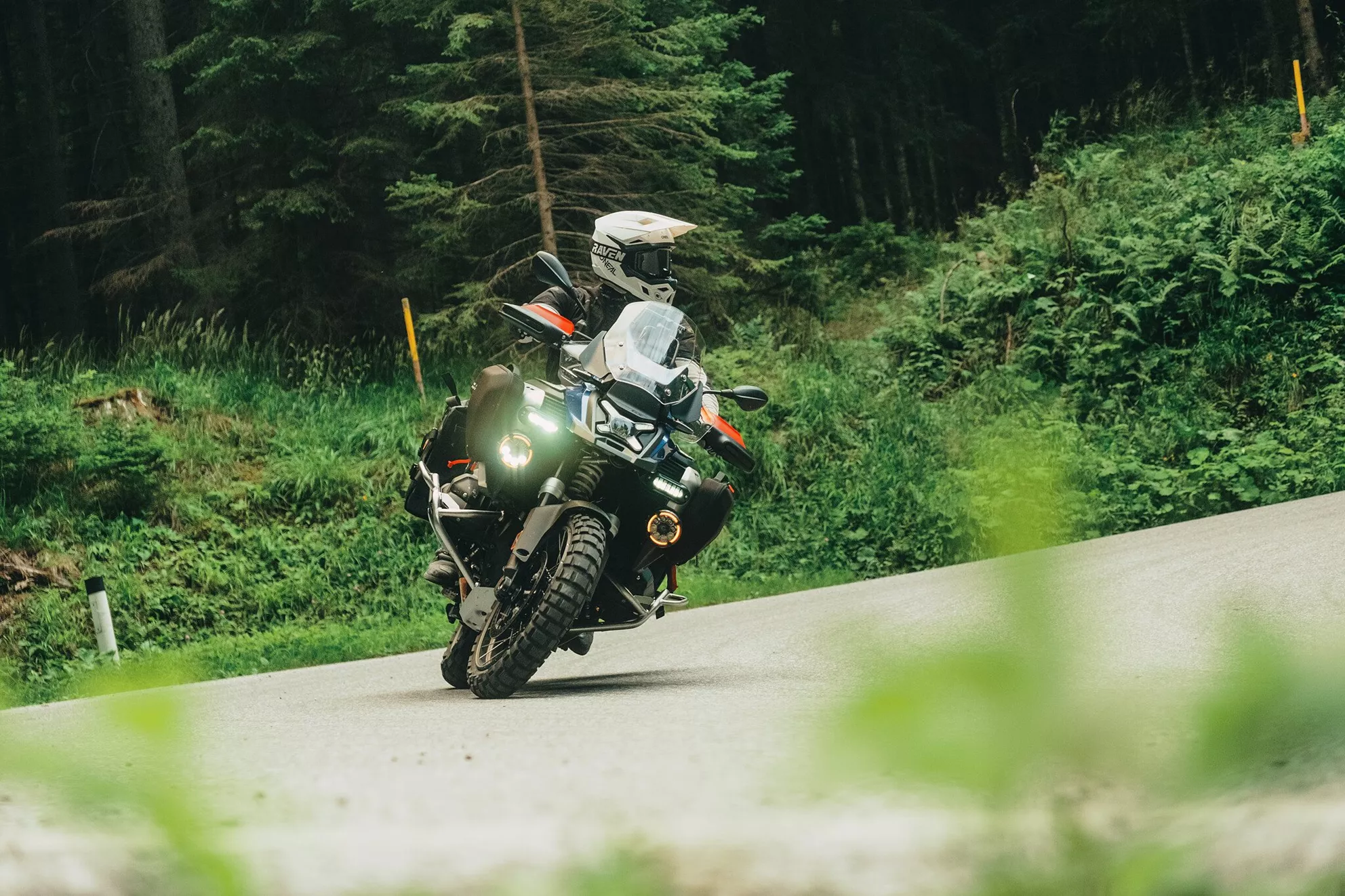
The Conti TKC80 has always been a predictable companion on tarmac. With the 2nd generation, that's truer than ever – and now in the wet too.
Finally more confidence on damp tarmac
- How much does a BMW R 1250 GS Adventure cost?
- Here you will find an overview of the price level of new and used motorbikes!
The big unsettled score of the old TKC 80 was its wet grip. As soon as the road got damp, confidence was no longer on par with its off-road reputation. On our two-day loop we hit a few damper patches, and there the second generation delivered good, clearly readable feedback. This is not yet a full-blown wet-tyre test, and certainly not a free pass for every wet situation. But exactly where its predecessor had its biggest weakness, the new tyre felt noticeably more assured. For a heavy touring bike, this predictable feel matters more than one spectacular figure: you know sooner what's happening beneath you and don't have to freeze your throttle wrist at every dark patch on the road.
Suitable for motorways and big bikes: Conti TKC80²
Whether a tyre suits a bike isn't decided only by sizes and areas of use. The approval and certain tyre ratings also need to be considered. On the Adventure GS models, the front tyre carries the load/speed index 60R and the rear 72R. On the one hand, this means the permitted maximum speed of 170 km/h is perfectly motorway-capable, though fast mile-munchers in Germany may have to hold back a bit. On the other hand, the maximum load of 250 kg at the front and 355 kg at the rear is more than sufficient, as the resulting 605 kg is well above the GS Adventure models' permitted gross weight of 485 kg.
Serious on gravel, but the test stays down to earth
Off-road, our loop was deliberately mild. Franky and I have respect for big, heavy and expensive machines, and understandably the dealer doesn't want to see a loaned GS lying in the dirt between rocks. Nevertheless, on loose ground the TKC 80² showed exactly the broad range of use you'd expect from a 50:50 tyre. From tarmac to gravel, the riding experience remained well-rounded and pleasant, and the feedback easy to read. Continental promises more mechanical interlocking and more traction on soft ground thanks to longer, uniform edges and offset shoulder blocks. Our light off-road impression fits that, but it doesn't replace a torture test in deep mud, sand or sharp scree.

The off-road riding in this test didn't really challenge the TKC80. On a typical gravel road, however, the tyre offers plenty of confidence, good grip and predictable breakaway.
Old GS or new GS – the tyre suits both
It was interesting to see how differently the two BMWs showcase the same tyre. The R 1250 GS Adventure, with its grunty low-down torque, more analogue throttle response and comfortable suspension, exudes plenty of calm. In second gear it chugs along nicely under control in technical sections. The R 1300 GS Adventure, thanks to its further developed suspension, conveys more feel for the contact patches and makes the TKC 80² feel more dynamic on the road. The Conti thus serves both GS characters: the gently gliding pirate ship as well as the sportier technology flagship. The tyre doesn't force the big GS in one direction, but covers its entire range successfully – and that's exactly what a strong adventure tyre has to do.
Is it the best adventure tyre for the big GS?
After this tour, the answer is: for riders who genuinely switch between road and gravel, the Continental TKC 80² is a very hot contender. It keeps the knobbly, familiar look of the legend, is surprisingly quick on tarmac, announces its limits early and good-naturedly, and also gave good feedback on damp sections. At the same time, it's no mere looks-only tyre on light loose terrain. In all honesty, there's a caveat: gigantic distances, deep mud, sand and hard off-road use were not part of this test. This loop therefore can't prove an outright victory over all adventure tyres. But to be fair, most adventure bike riders rarely if ever exploit the full versatility of their vehicles. For the big BMW GS Adventures and their real-world mix of transit, Alpine roads and gravel tracks, though, the new TKC 80² hits the nail bang on the head.
- How much does a BMW R 1300 GS Adventure cost?
- Here you will find an overview of the price level of new and used motorbikes!

BMW R 1250 GS Adventure 2023 - Experiences and Expert Review
Gregor
The big GS Adventure is and remains a great bike for any terrain – including tight twisties. The low centre of gravity of the boxer engine, the longitudinally mounted crankshaft, the upright riding position and the mighty yet easily controllable torque from right down low are simply a force to be reckoned with. The Adventure version does have a higher seat on top of the extra weight, which is a decisive handicap especially when turning or manoeuvring, but in terms of performance the engine has so much punch even in the big GS Adventure that you can really let it rip. The BMW's brakes are fade-resistant and superbly modulated, and the features and electronics can be seriously upgraded – provided you tick the boxes on the order list. That naturally drives up the price, but evidently that doesn't bother the many fans of the big GS Adventure.
BMW R 1300 GS Adventure 2026 - Experiences and Expert Review
Gregor
The BMW R 1300 GS Adventure remains an impressive adventure bike with a powerful drivetrain, high comfort and assured dynamics. It shines with agile handling, high-quality assistance systems and first-class ergonomics. Despite its polarising design, it's a clear choice for experienced riders who value comfort and performance on long tours.
More from 1000PS Magazine
The best adventure tyre for the big BMW GS? Images
Source: 1000PS