Lone Rider MTL9 motorcycle lights in the test

Lone Rider MTL9 motorcycle lights in the test

Let there be light: 23,200 lumens, intelligently controlled

Auxiliary lights are available cheaply, compactly, and often directly from the bike manufacturer. The Lone Rider MTL9, however, aim to be far more than two powerful lamps. On the BMW R 1300 GSA we find out whether 180-watt LEDs, MotoCAN integration, and particularly intelligent control justify the steep price.

nopain

nopain

published on 8/14/2026

11,835 Views

Modern motorcycle headlights are already remarkably capable, yet even the standard LED lighting of a BMW R 1300 GS Adventure eventually hits its physical limits. Precisely where the rider needs to see more than just tarmac at night: well beyond the next roadside marker post, deep into the corner radius, and above all to the left and right of the road, where a deer, a fat hare, or an unlit tractor rarely has the courtesy to stand politely in the beam. But even during the day, in dense city traffic, in overcast conditions, or with the sun sitting low on the horizon, additional presence can be decisive. The rider who is seen earlier simply has more margin.

Auxiliary lights close exactly this gap. Accordingly, there are numerous model-specific solutions available both from BMW itself and from well-known aftermarket manufacturers. The central question is therefore not whether the Lone Rider MTL9 Motorcycle Lights shine brighter than conventional auxiliary lights. They do. What is more interesting is the extent to which their added value – drawn from a clever combination of light output, light distribution, robustness, and integration – goes beyond the usual principle of "two lamps, one relay, one switch," and whether the high price can be justified in real-world use.

Because the MTL9 bundles position light, wide near-field illumination, high beam, and an extremely focused spot into two substantial housings, communicates with the BMW via MotoCAN, and can be controlled using the standard controls.

This makes them aimed at connoisseurs, high-mileage riders, commuters, adventure bike riders, and night owls who regularly ride in areas with wildlife crossings, bad weather, or far from lit roads.
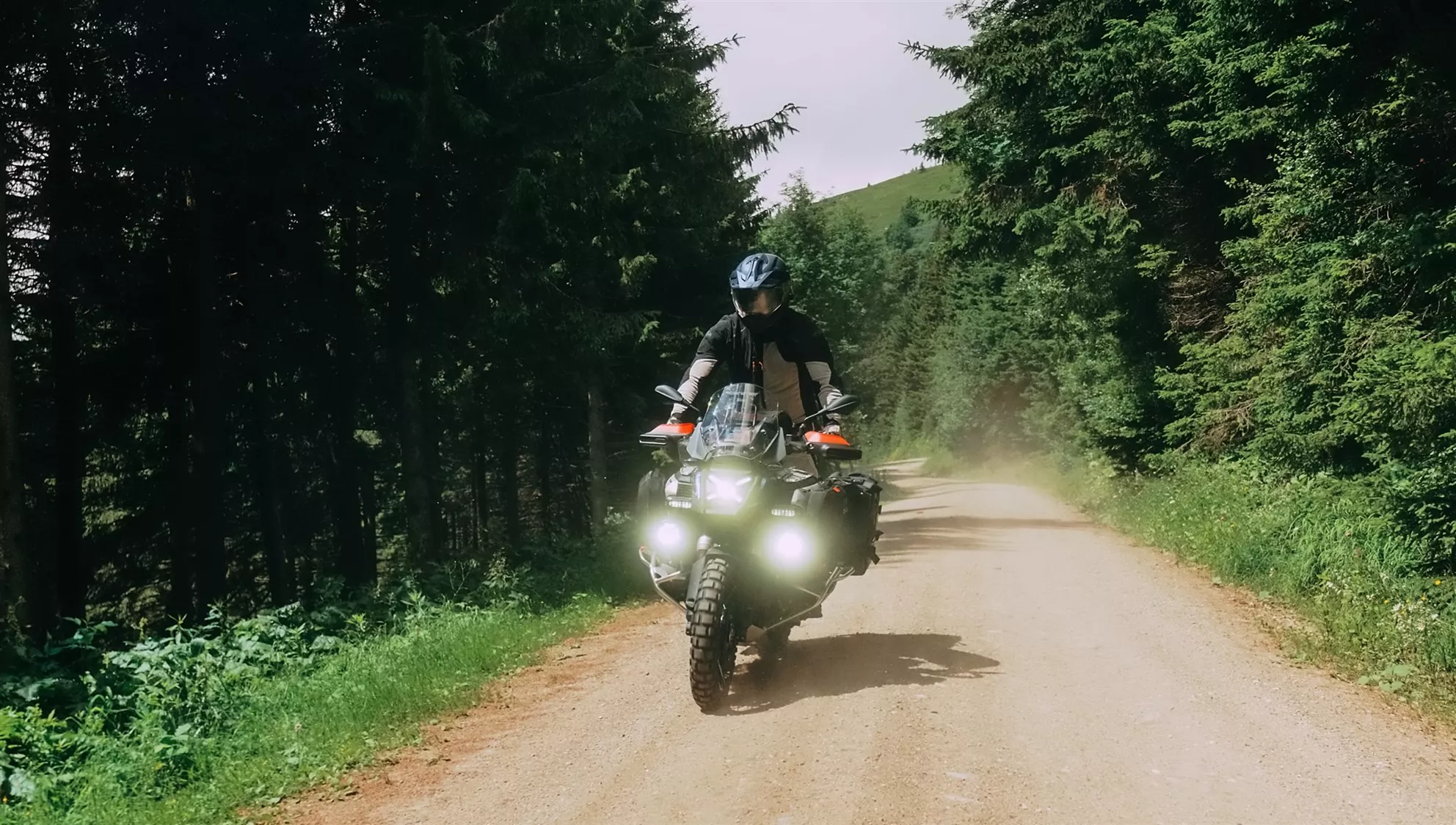
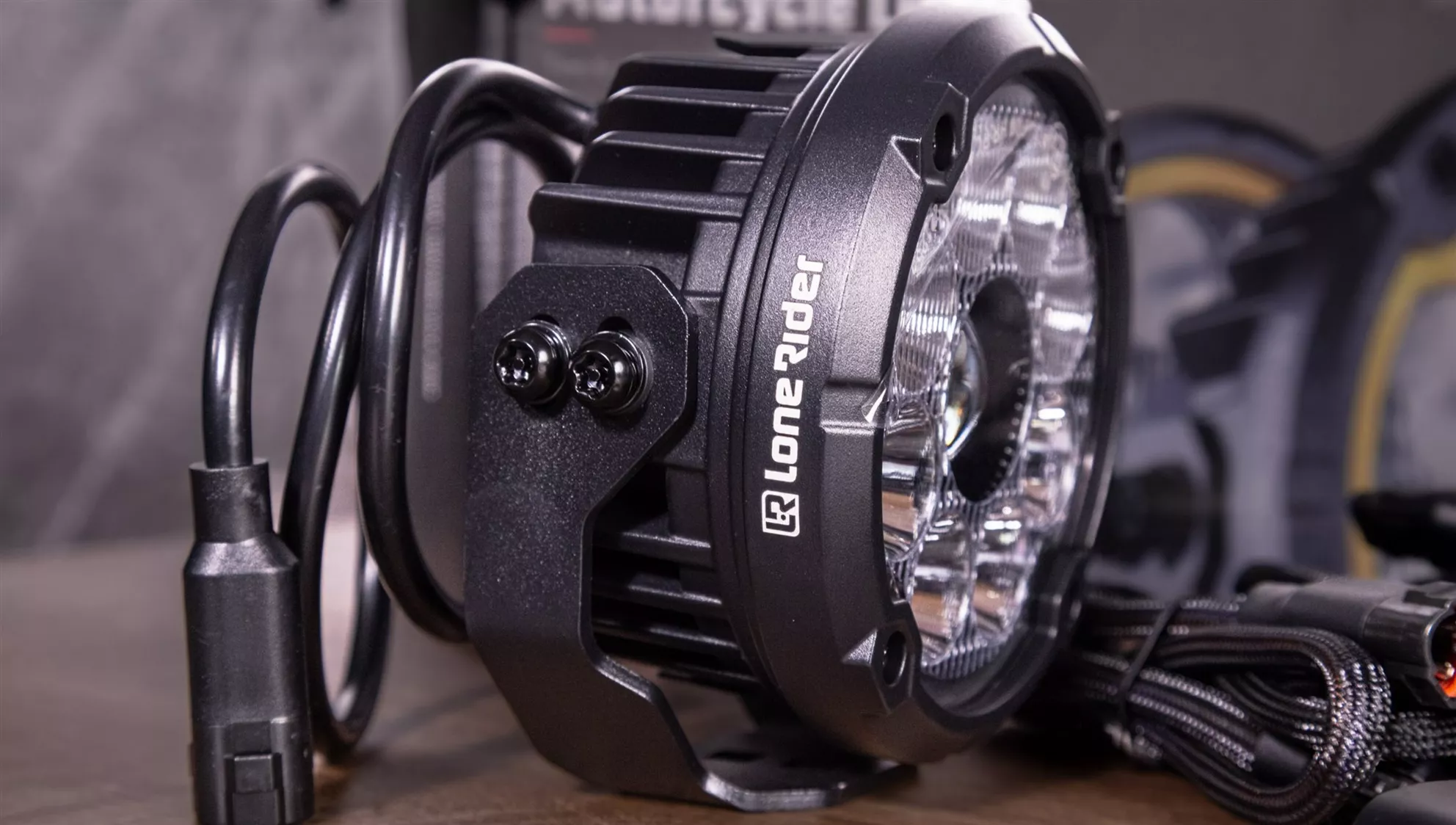
Brachiale Lichtleistung mit intelligenter Integration.

The Lone Rider MTL9 are far more than two bright lamps.

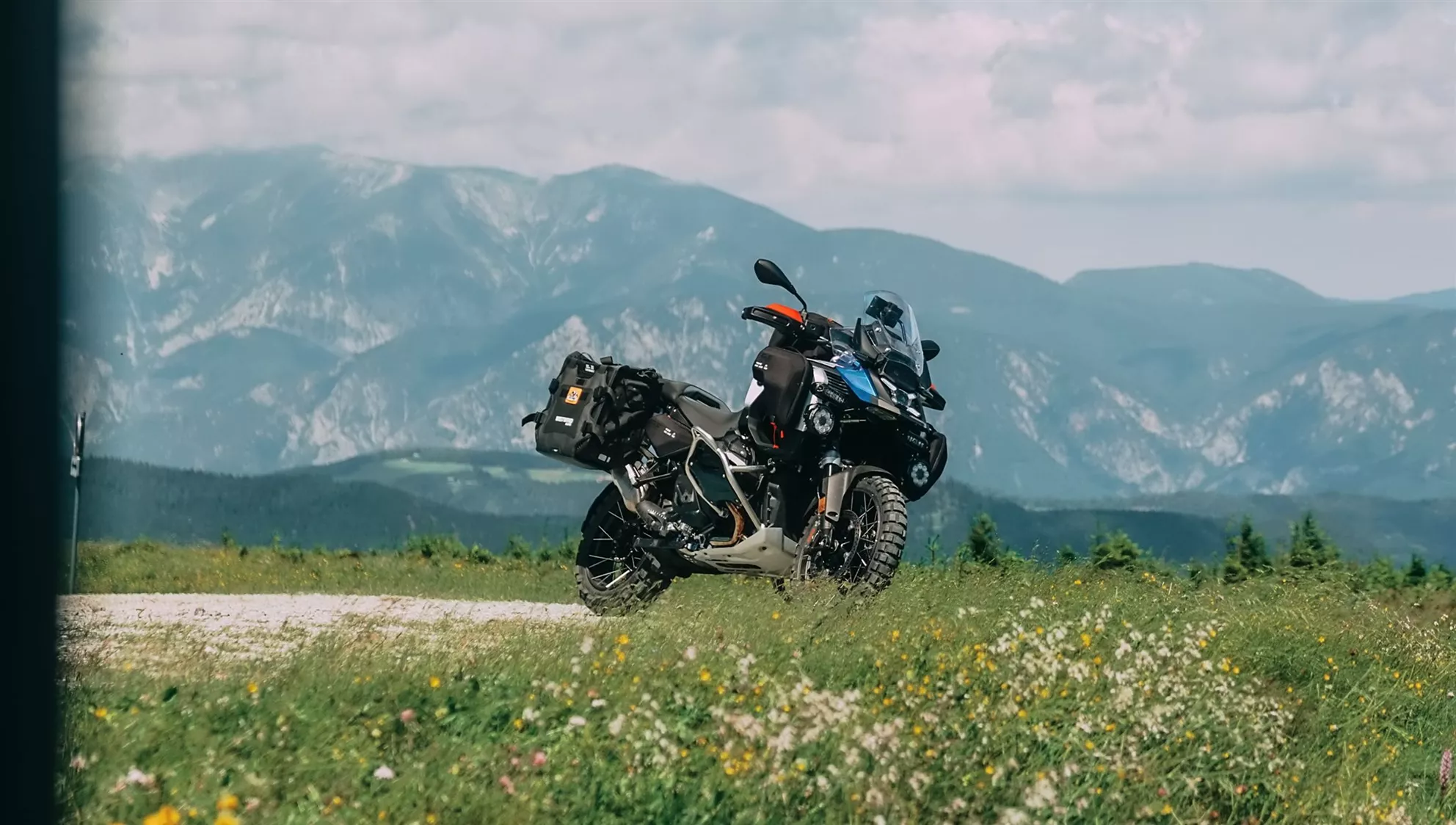
Lone Rider MTL9 off-road

What sets the Lone Rider MTL9 apart from the competition

Lone Rider confidently describes the MTL9 as "the most intelligent auxiliary lighting system for bikes worldwide." Superlatives like that normally smell of voodoo and smoke machines the moment you open the manufacturer's website, but here there is genuinely more behind it than an app and a colourful glowing ring. Each light features separate zones for near-field, distance, and position lighting. Via MotoCAN, the system accesses signals such as high beam, indicators, hazard lights, horn, speed, and detected day or night operation. The lights are therefore not electrical foreign bodies bolted to the bike, but become part of the existing control logic.

The practical advantage is considerable: in city traffic the MTL9 behave discreetly, on dark country roads they spread a wide beam, and at higher speeds they automatically unlock additional range. A separate controller or hunting through nested menus is unnecessary. Nevertheless, a residual risk of human enthusiasm remains – anyone who cranks everything to 100 percent produces impressive light cones but makes no friends in oncoming traffic. The system is capable of a great deal, but it also needs to be configured sensibly.

Lone Rider MTL9

First impression – Lone Rider MTL9

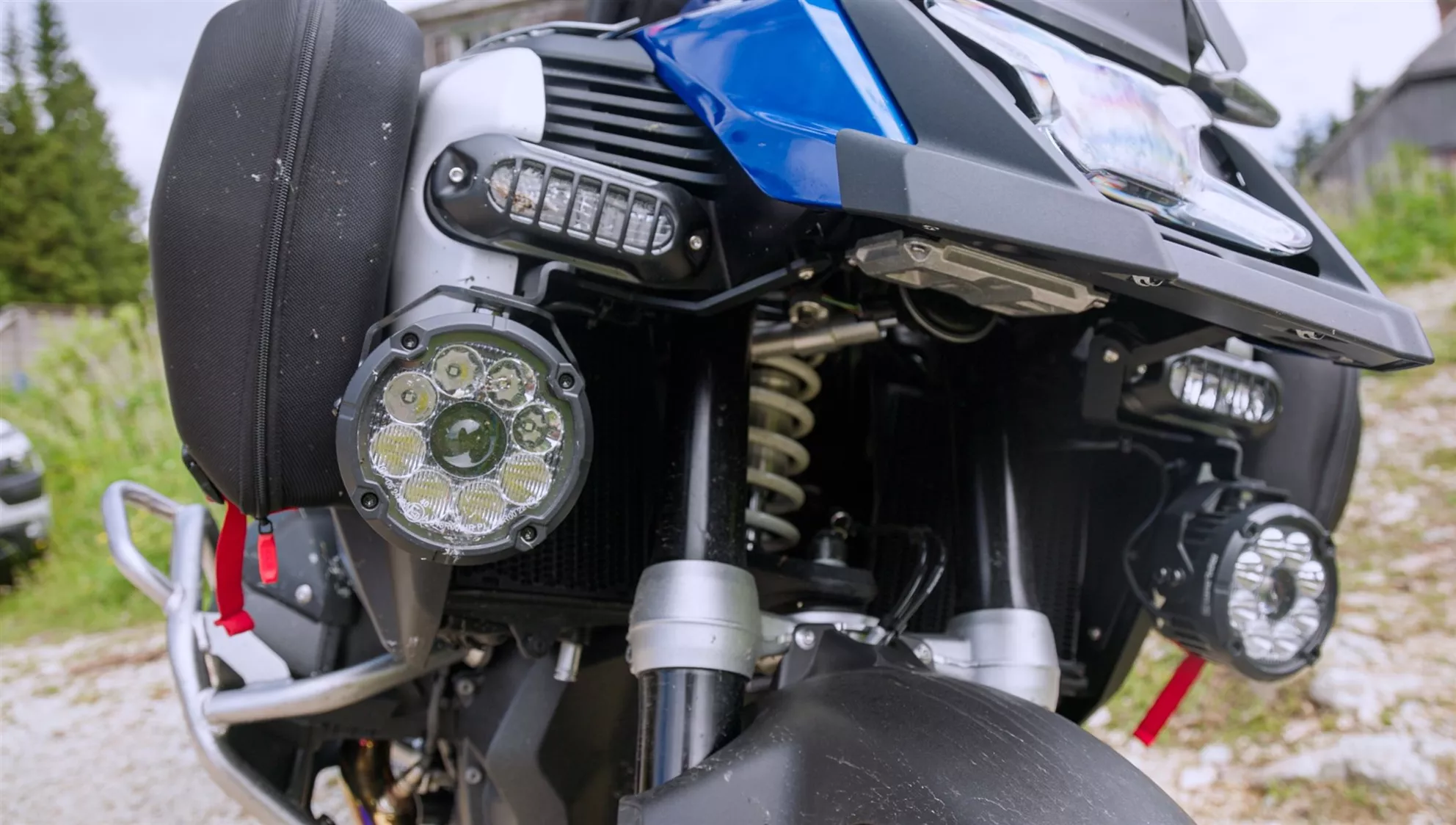
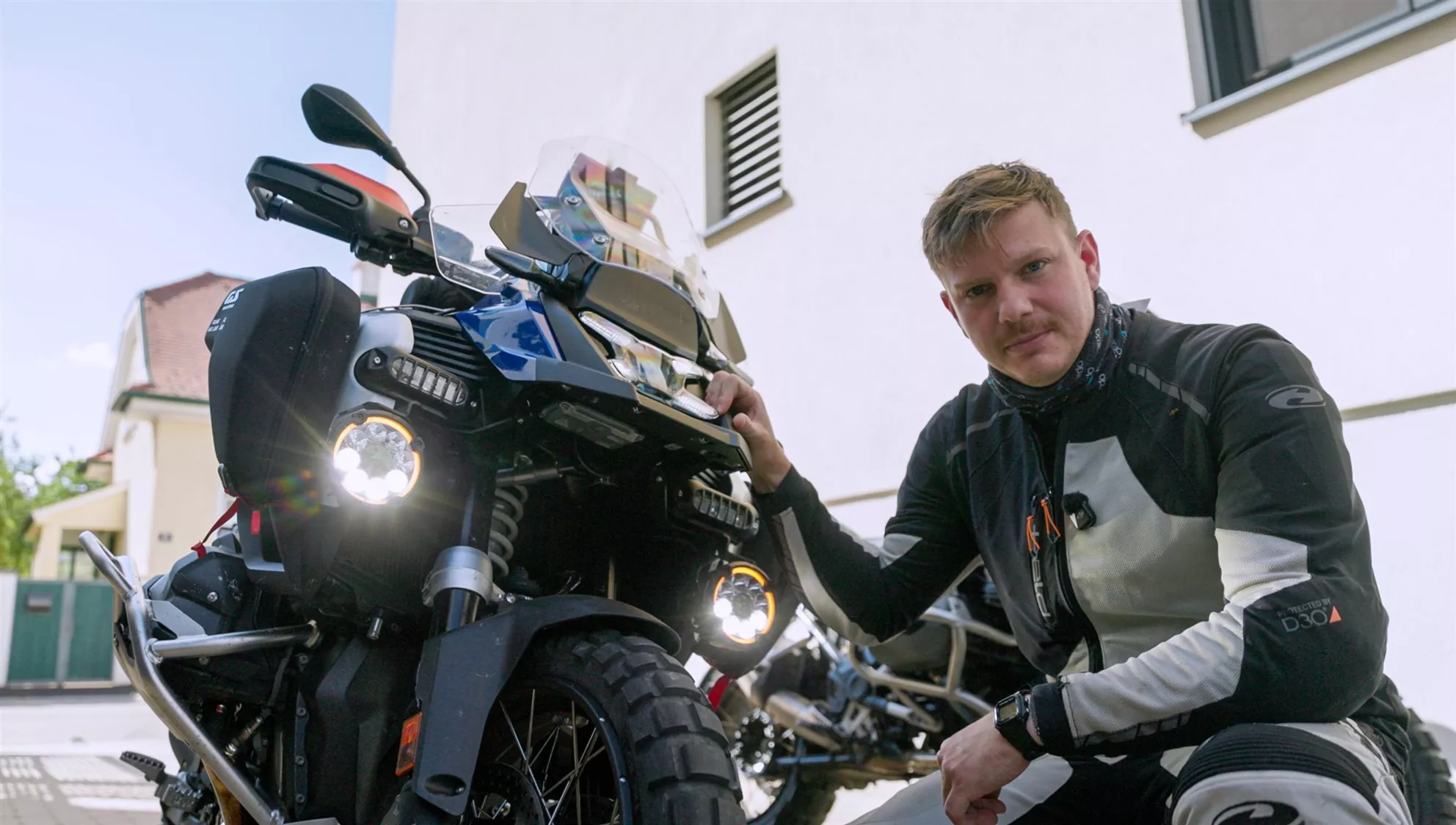
The two round MTL9 lights look substantial, are cleanly manufactured, and with their deep cooling fins resemble industrial lighting equipment. Each lamp measures 114 millimetres in diameter, is 75 millimetres deep, reaches 125 millimetres in height with the bracket, and weighs 840 grams. The pair therefore tips the scales at 1,680 grams before brackets, cables, and MotoCAN are added. Featherweight it is not, but a BMW R 1300 GSA won't develop a list because of it.

The black aluminium housing, polycarbonate lens, and stainless steel bracket convey exactly the solidity you want on an adventure bike. The technical documentation specifies a clear Lexan lens with UV coating, a black aluminium housing, and insulated copper cables. Connectors, blanking plugs, and brackets also feel high quality, the cables are properly dimensioned, and protective strips along with rubber inserts prevent vibrations from polishing the crash bar to a mirror finish in no time.

Lone Rider MTL9 technology

Technical data: Lone Rider MTL9 Motorcycle Lights

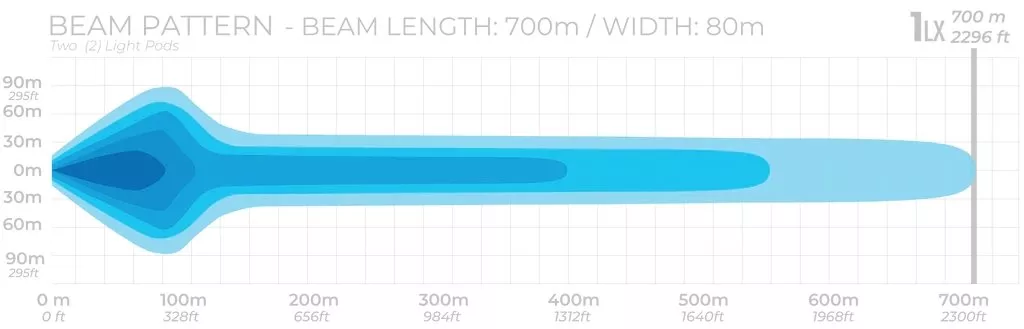
Lone Rider quotes a maximum system output of 180 watts for the pair, a luminous flux of 23,200 lumens, a power consumption of 145 watts, and an operating voltage of 9 to 30 volts DC. The central spot is claimed to still produce 1 lux at 700 metres. Add to that IP68 and IP69K ratings, a permissible temperature range of -20 to +50 degrees Celsius, and Osram LEDs.

Description;Value
Product;Lone Rider MTL9 Motorcycle Lights
Test bike;BMW R 1300 GS Adventure
Further compatible models (with corresponding MotoCAN module)*;BMW R1300GS / R1300GS Adventure BMW R1250GS / R1250GS Adventure BMW R1200GS / R1200GS Adventure BMW F900GS F850GS Adventure F800GS (2024+) Honda Africa Twin 1100 / Adventure Sports KTM 1290 Super Adventure S/R 890 Adventure (R) 790 Adventure (R)
Tested package;2 MTL9 lights + MotoCAN + Under Nose Mount
RRP (as of 23.07.2026);999 Euro
Maximum system output;180 W per set
Luminous flux;23200 lm per set
Power consumption;145 W per set
Operating voltage;9-30 V DC
Range;1 lux at 700 m
Light pattern;Combo 6-in-1 with DRL
Spot optic;2 degrees
High beam per light;9 non-replaceable LEDs
Position light per light;28 non-replaceable LEDs
DRL colours;White and Amber
LED manufacturer;Osram
Protection rating;IP68 and IP69K
Operating temperature;-20 to +50 degrees Celsius
Connector;MT 3-pin
Diameter per light;114 mm
Depth per light;75 mm
Height with bracket per light;125 mm
Weight per light;840 g
Weight per pair;1680 g without cables connectors and brackets
Housing;Aluminium
Lens;Polycarbonate
Bracket;Stainless steel
Certifications;ECE R10 R148 R149
Warranty;5 years

The figures are taken from the current EU product page, the homologation documents, and the manufacturer documentation.

Package contents: MTL9 complete kit for BMW R 1300 GSA (Art. No. 55800842649974)

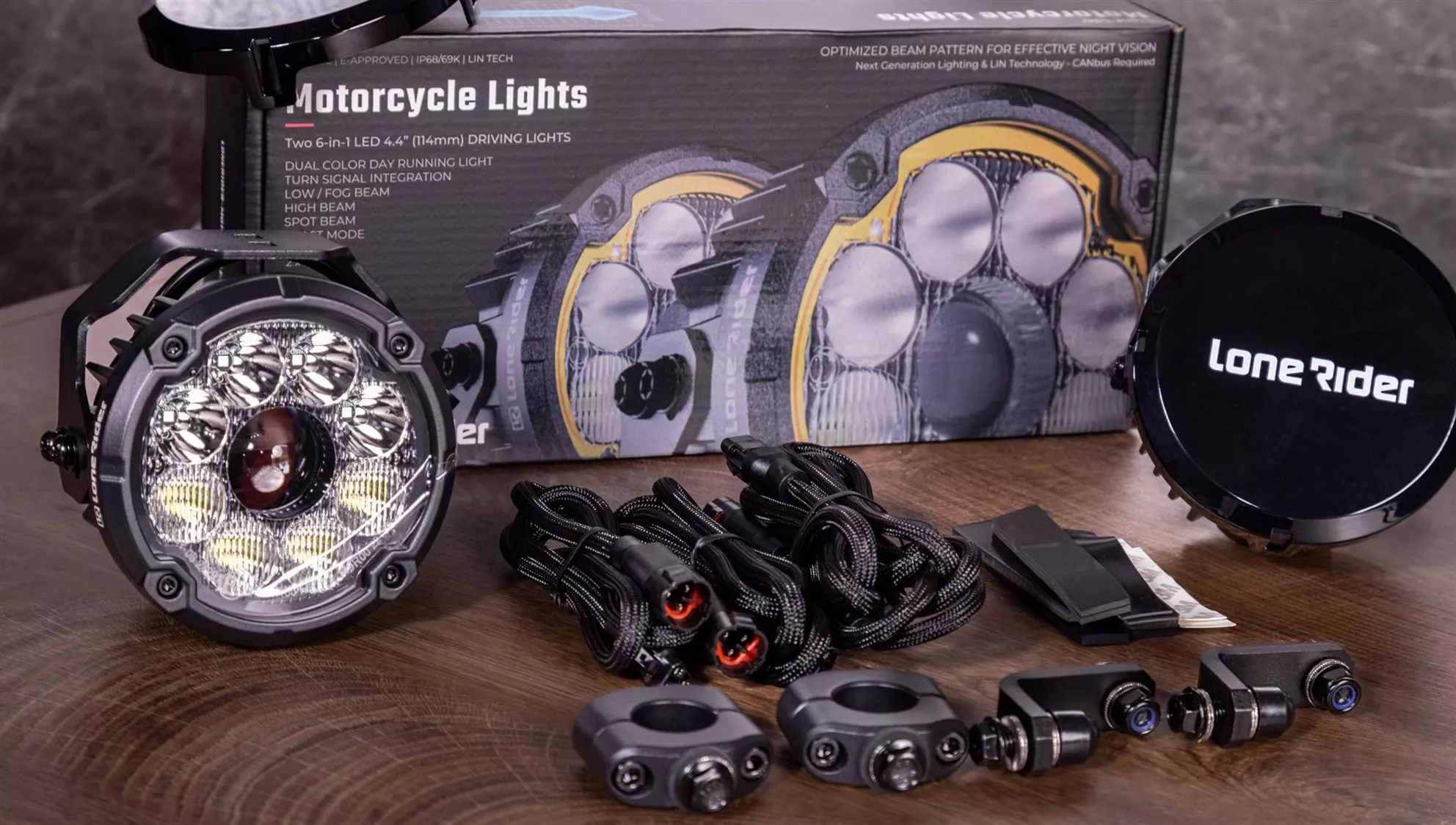
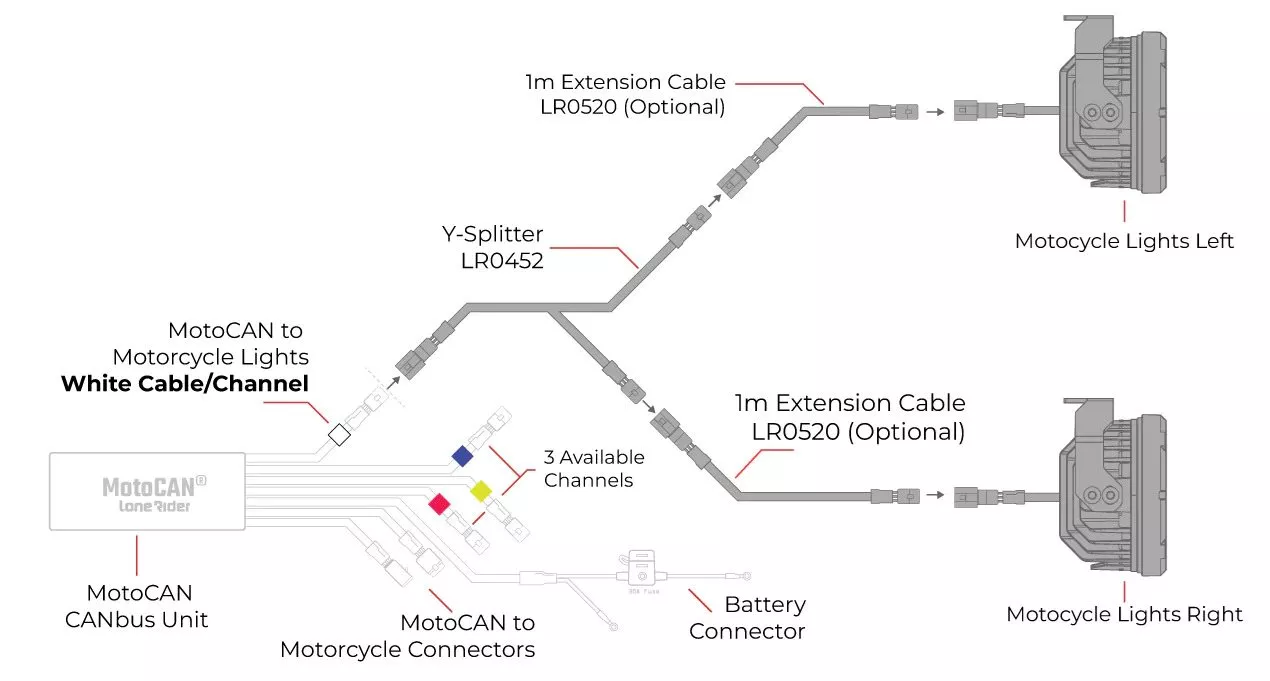
The bike-specific package includes two MTL9 pods with three-pin MT connectors, two black covers, two one-metre extension cables, a Y-splitter, the so-called under-nose bracket for the BMW R 1300 GS Adventure, universal tube clamps, and additional mounting hardware. Also included are the vehicle-specific MotoCAN, blanking plugs, three connection fittings, rubber seals, a replacement cover for the USB port, twenty cable ties, and the connection cable for desktop configuration.

The black covers are not merely garage decoration. They protect the lenses during transport or extended storage and allow the auxiliary lights to be completely blanked off when required. Lone Rider offers a transparent stone chip guard separately for currently 20 euros. On an adventure bike that regularly gets pelted with gravel behind other bikes, that is a perfectly sensible addition. What remains annoying is that this protection is not included as standard at a package price approaching four figures.

MTL9 lighting technology

MTL9 lighting technology in detail

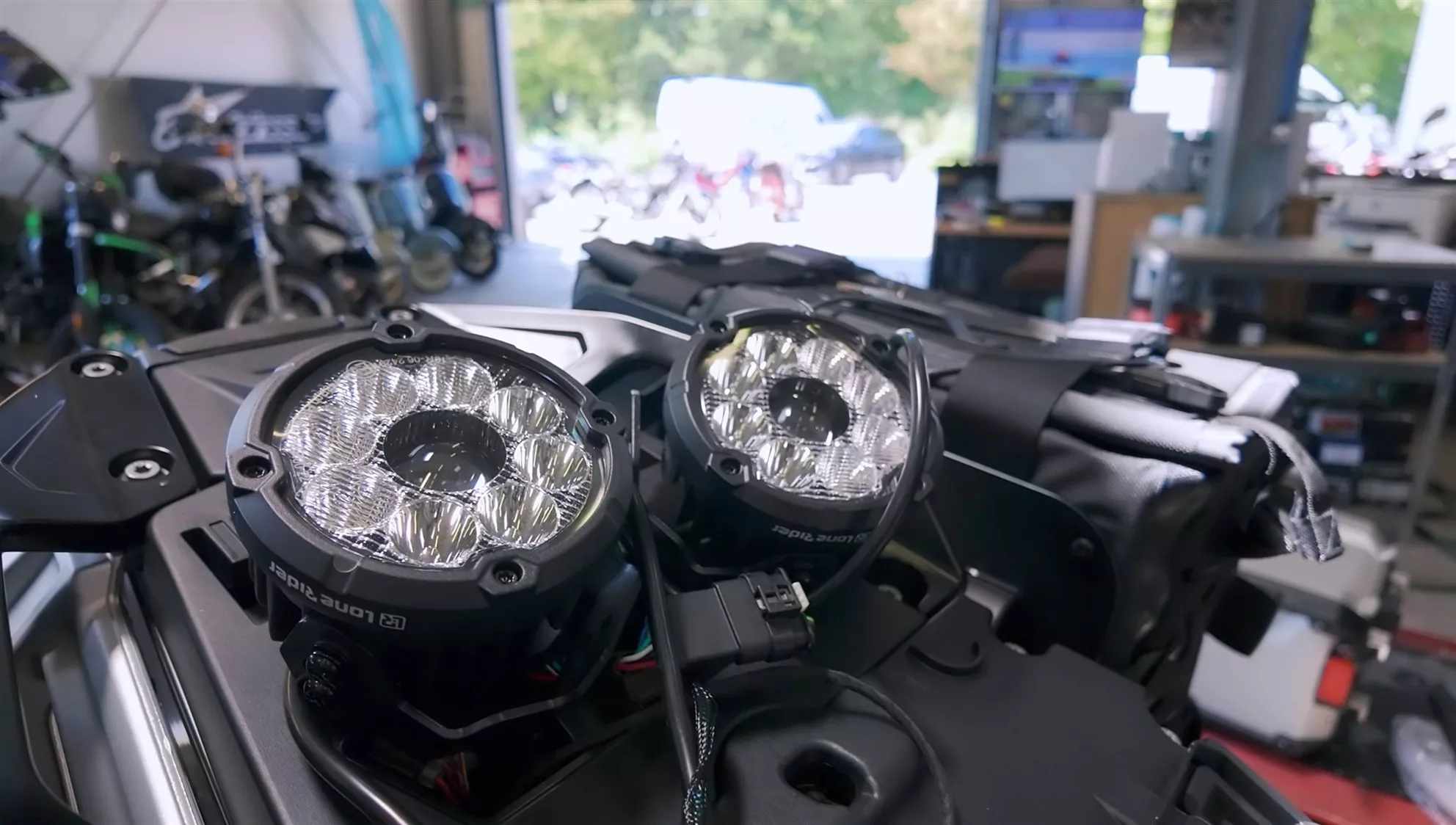
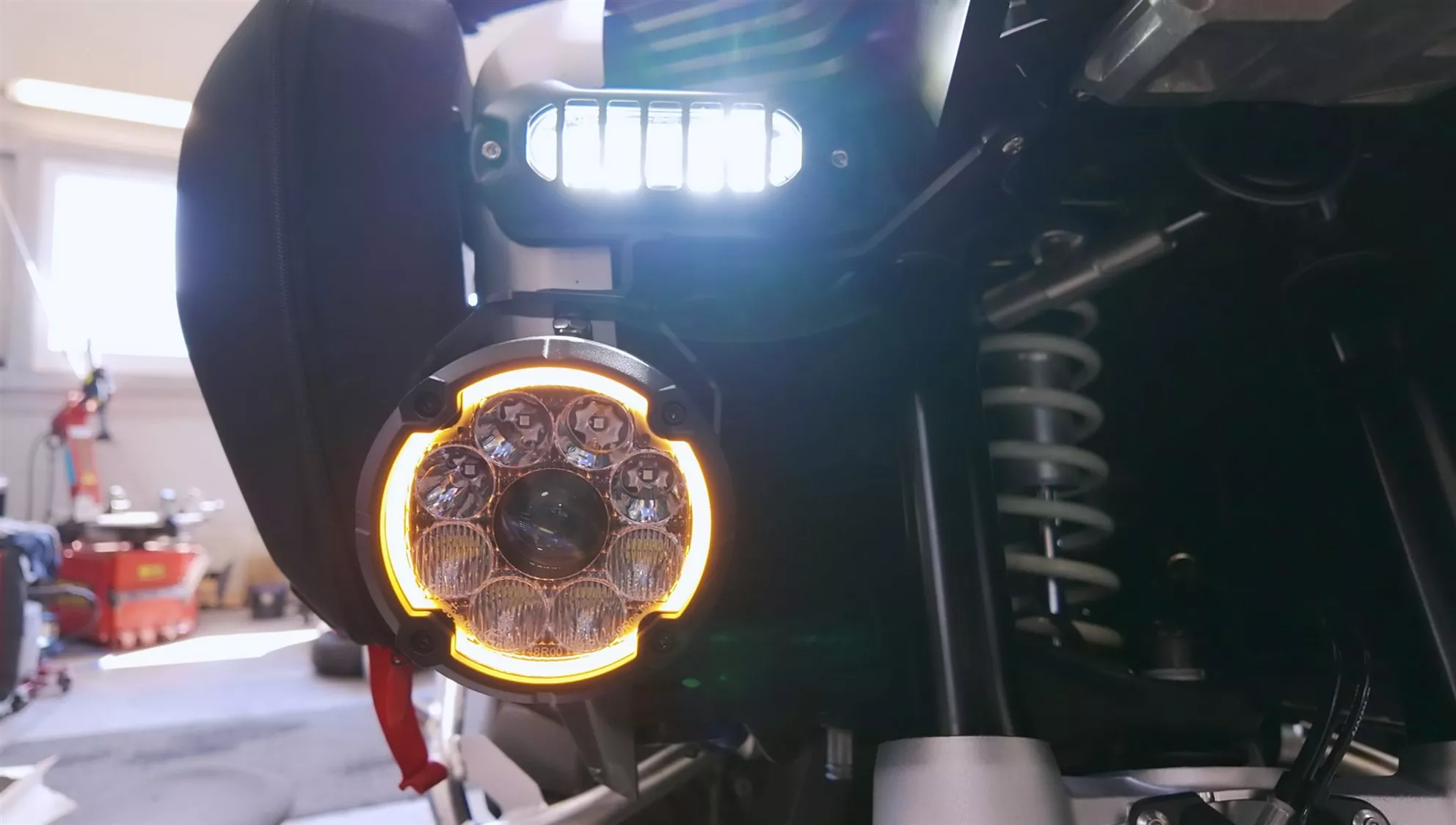
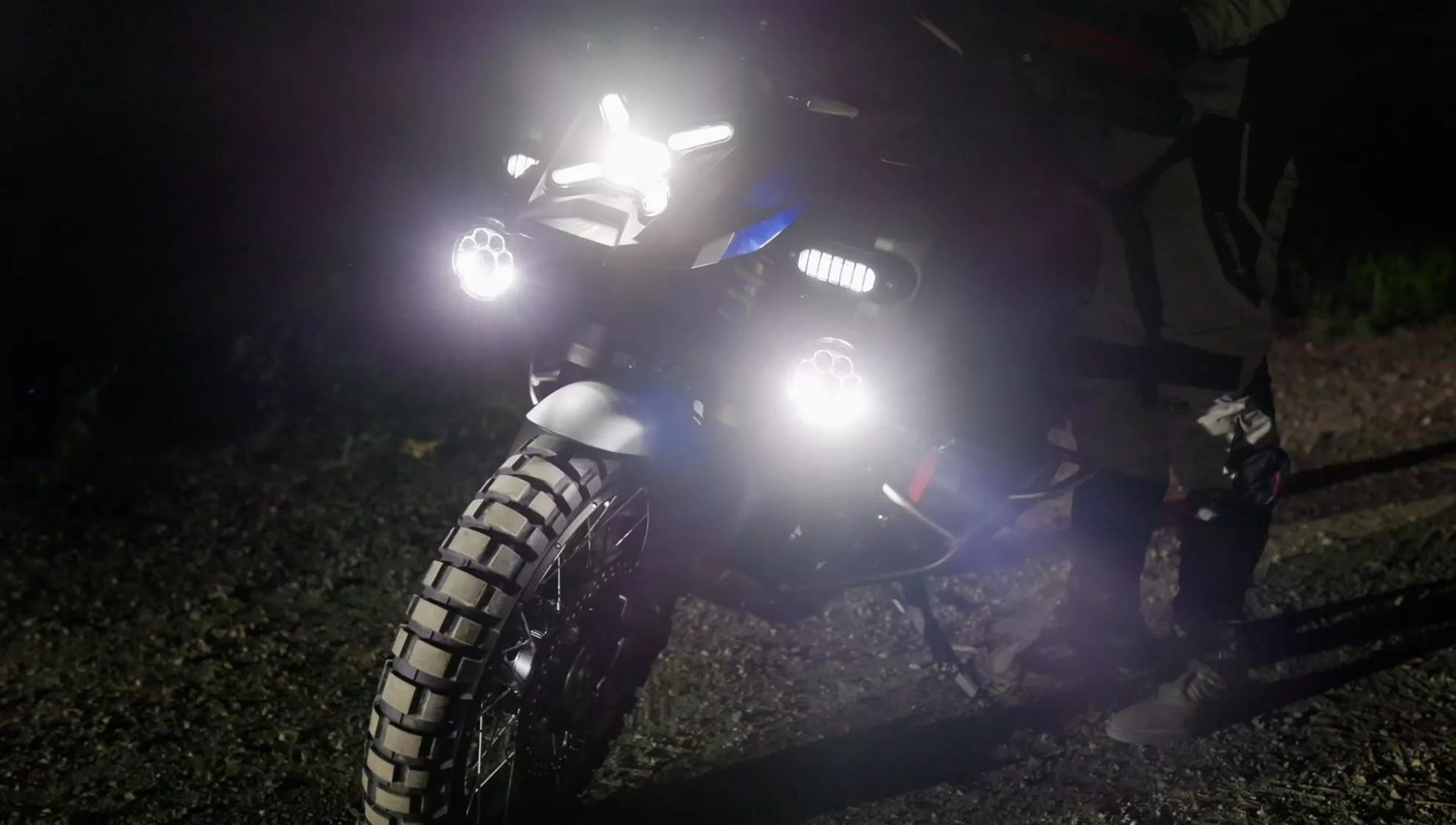
The term "Combo 6 in 1" initially sounds like the description of a Chinese pocket knife, but makes sense once you look at the optics. At the centre of each light sits a tightly focused spot LED whose output is sent into the distance through a 2-degree optic. The lower four LEDs handle the wide illumination of the near and mid-field, while the upper four LEDs reinforce the actual high beam. Around the outside sits the position light ring, which can shine either white or amber. Lone Rider specifies ten brightness levels for the ring as well as the option to deactivate it completely.

The homologation documents provide additional details that are easy to miss on the product page. For the white front position light, 28 permanently installed LEDs at 12 volts and 6 watts are documented per housing. The high beam uses nine permanently installed LEDs at 12 volts and 71 watts and is approved as a Class B headlamp. The LEDs are not individually replaceable, which is standard practice in modern sealed LED systems, but in the event of a fault after the warranty period expires it means replacing or repairing the entire module.

MTL9 MotoCAN integration

The lights are, however, only the muscle – the real nervous system is the MotoCAN module. This is connected to the battery and the XDWA or alarm system connector of the BMW, and then reads the bike's CAN bus signals. The system thus recognises high beam, indicators, hazard lights, horn, speed, and operating state without cutting any wires or requiring additional switches. Both MTL9 units share one configured output channel; further MotoCAN channels remain free for accessories such as a horn, additional brake light, or heated consumers. The declaration of conformity also cites ECE-R10 testing for emissions and electromagnetic interference immunity.

The benefit becomes apparent while riding, when the lights automatically adapt their output to ambient light, high beam status, and speed. According to external analysis, each light even runs two circuit boards: one controls the LEDs, the second translates the communication data. That explains why significantly more technology is built in here than in a conventional auxiliary light with positive, negative, and relay.

MTL9 installation on the BMW R 1300 GSA

MTL9 installation on the BMW R 1300 GSA

The installation follows the same basic procedure on all bikes, but the actual complexity depends heavily on the specific model. On the BMW R 1300 GS Adventure the fitting goes pleasingly quickly and cleanly, and can be managed by any competent home mechanic with a bit of patience and reasonably decent tools. Lone Rider intends to publish an updated installation video on their own channels shortly.

The MotoCAN is mounted under the cover on which the rider's seat rests. The Y-splitter is then routed down the right-hand side of the vehicle, the two tank mounting bolts are loosened, and the side plastic covers below the tank are removed. The fuel tank can optionally be raised slightly to route the cables underneath it. This is not necessary, however: the Y-splitter cables can be routed just as cleanly behind the removed covers and connected to the light cables there. Extensive disassembly of the tank or larger side fairing panels is therefore not required. In total, only around ten largely identical screws need to be loosened, which keeps the risk of a later bolt lottery manageable.

MTL9 installation on the BMW R 1300 GSA

Mounting and alignment on the GSA

In the tested package the lights are mounted below the vehicle's nose, which integrates them visually well into the massive front of the GSA while simultaneously creating a striking light triangle with the main headlight. Alternatively, Lone Rider offers tube clamps for diameters of approximately 22 to 25 millimetres. The manufacturer considers the standard plastic mounts of some BMW auxiliary lights insufficiently stable for the heavy MTL9 pods. Equally, when using under-nose solutions, the combination with existing upper crash bars must be checked carefully.

During installation, protective film, rubber inserts, and damping washers are used to protect the finish and brackets from damage. The pods are initially left slightly moveable, then the bike is levelled on a flat surface and the beam is set. This final step is not a cosmetic nicety. Even a few degrees too high turns the wide carpet of light into a mobile interrogation lamp for oncoming traffic. With a fully loaded GSA carrying a pillion and touring luggage the vehicle attitude changes further, so the alignment should be checked again after the first night ride and under realistic load conditions.

MTL9 desktop configuration

Final configuration on the desktop

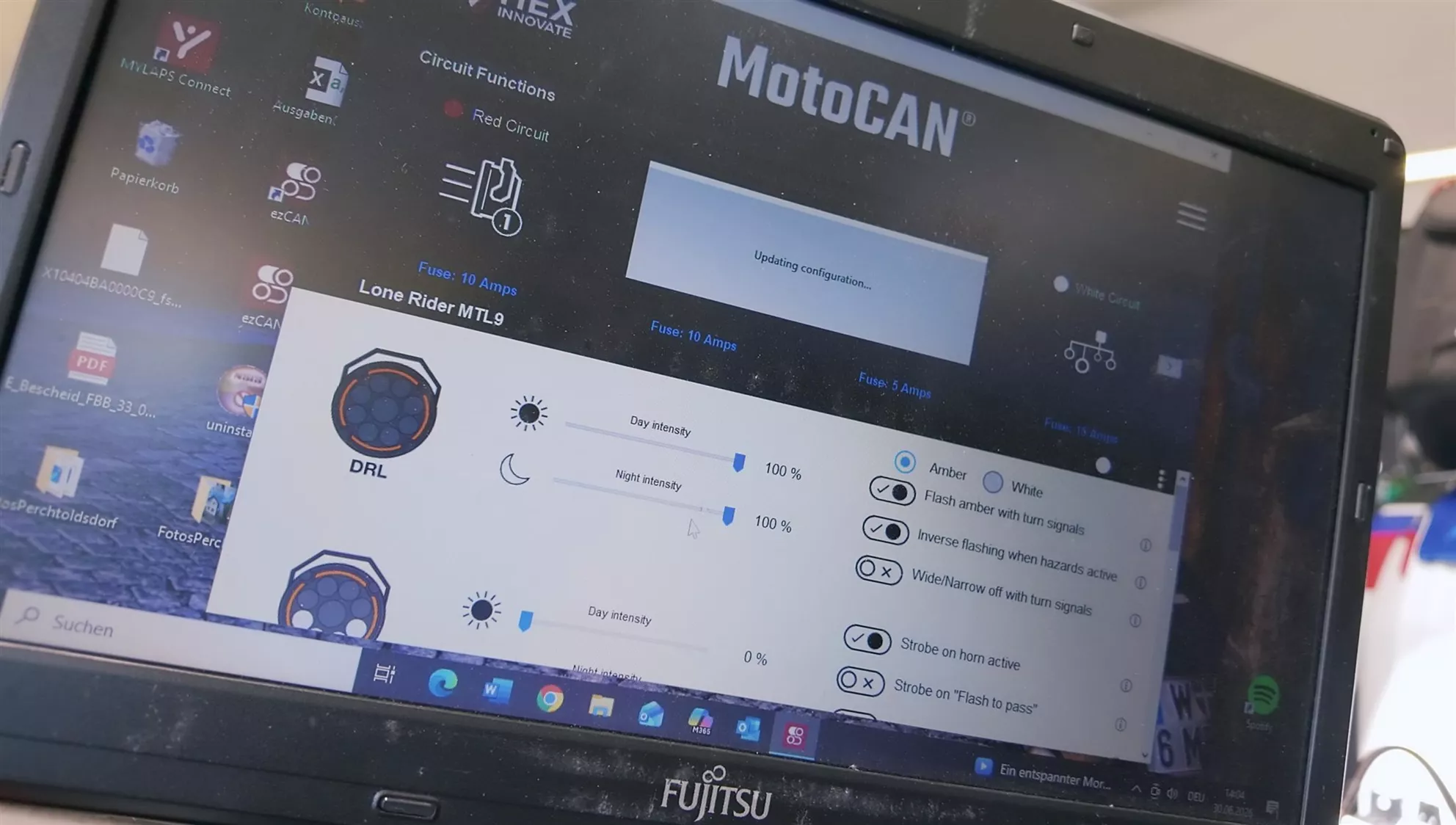
Initial configuration is not done via smartphone but via desktop software and a USB connection. After registration and a firmware check, the program scans the connected devices and displays the MTL9 functions. The white MotoCAN channel is used for the lights and, according to the installation instructions, is fused or configured at 15 amperes.

Technically clean, but in 2026 still somewhat old-fashioned: laptop out of the bag, cable plugged in, ignition on, wait for the update. An app would be more convenient, though in all honesty you don't fiddle with the fundamental light parameters every week.

Adjustable parameters include, among others, the intensity of the position light ring for day and night, its colour, the output of the wide and long-range light zones, and several responses to vehicle signals. The software shown allows a minimum ring brightness of 10 percent, full power, or complete shutdown. In addition, the rings can work in conjunction with the indicators, react alternately during hazard light operation, or be dimmed during certain lighting functions. Strobe functions triggered by the horn or repeated flashing of the high beam are also provided for. Technically interesting, but depending on the country and configuration, legally sensitive on public roads. Not everything the software lets you click should end up on a public highway.

Lone Rider MTL9 Speed Blending

Light beam at standstill or walking pace

Lone Rider Speed Blending

One of the most interesting functions is called Speed Blending. Here the tightly focused central spot is not simply switched on brutally every time the high beam is activated, but is blended in depending on speed. In the software version shown, the default value is 100 km/h; the adjustment range is described as approximately 80 to 140 km/h. Below the defined threshold the system works with wider light; above it, additional range is added progressively. The rider therefore gets more visibility precisely where the distance covered per second increases.

MTL9 light signature

Light beam at medium speed

MTL9 light signature

MTL9 light signature

Light beam at high speed

In practice this is more useful than a permanently active 700-metre beam. On a tight, wet mountain pass the bright point on the horizon contributes little when the relevant information lies thirty metres ahead of the front wheel. On a fast, straight main road, however, its usefulness grows massively. The threshold should nevertheless not be blindly adopted from the default. Riders who predominantly ride twisty country roads can choose a lower value; those who spend a lot of time in densely populated areas set it higher or operate the spot deliberately in manual mode.

MTL9 control via BMW Multi-Controller

BMW Multi-Controller instead of additional switches

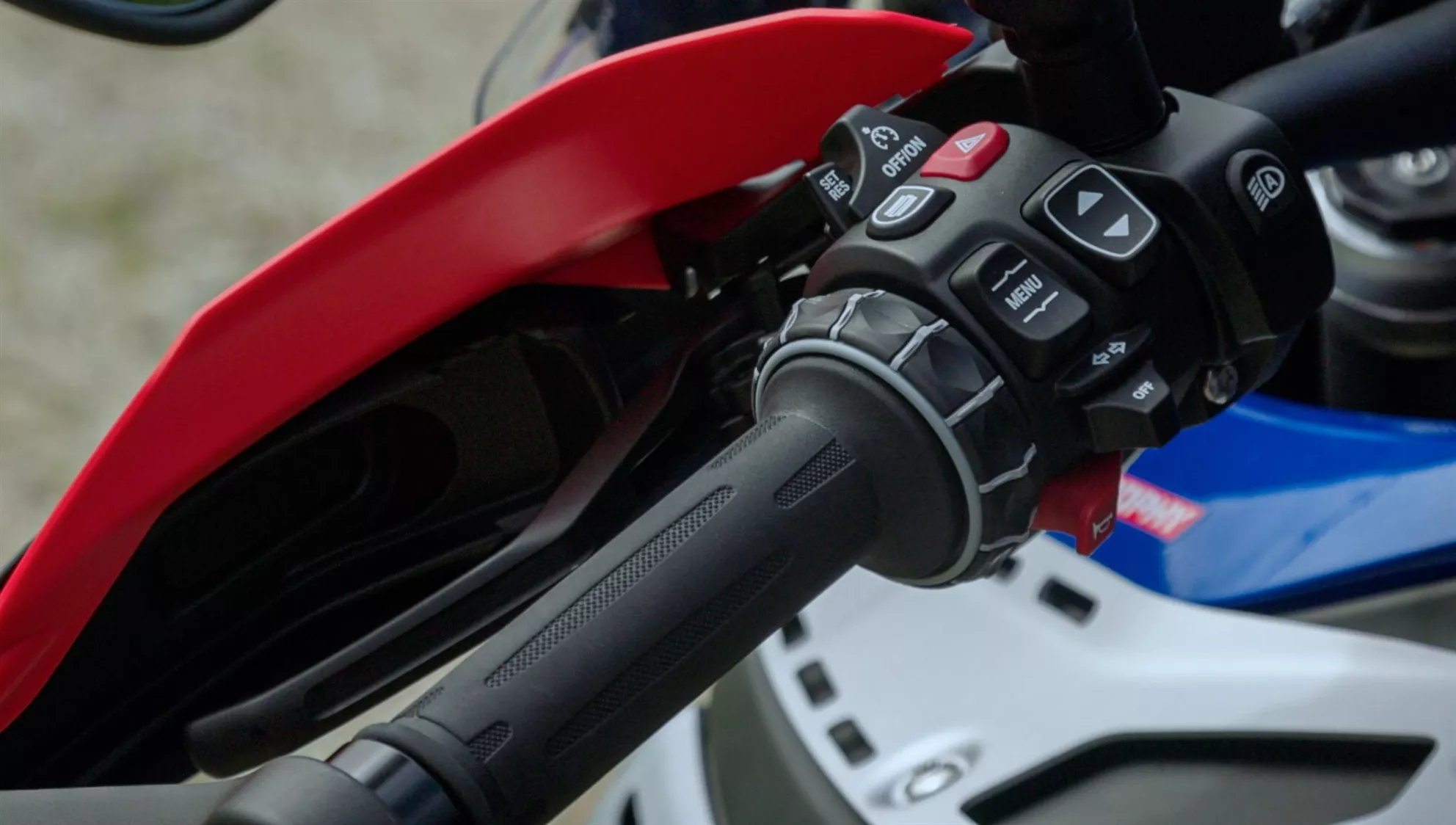
The greatest comfort gain on the BMW showed itself not in the configuration software but directly at the handlebar. Pressing the multi-function ring outward for around four seconds confirms the switch into adjustment mode. The brightness can then be changed using the standard BMW controls. This allows the rider to adapt the light output to traffic, weather, and surroundings while riding, without an additional app and without a proprietary rotary dial on the handlebar.

This particular function is what sets the MTL9 apart from many cheaper solutions in everyday use. Conventional auxiliary lights are either on or off, at best supplemented by a separate dimmer whose control logic you also have to memorise alongside cruise control, riding mode, heated grips, and navigation. The Lone Rider units, by contrast, integrate cleanly into the existing ergonomics of the GSA. After a short period of familiarisation, adjustment can be made almost blind, allowing output to be reduced in the face of oncoming traffic in an instant.

MTL9 approval markings

MTL9 legality and approval

With auxiliary lights, the small E approval mark counts for more than the large lumen figure. The MTL9 are approved under UN R148 as a Category A front position lamp, under UN R149 as a Class B high beam headlamp, and additionally under ECE R10 for electromagnetic compatibility. The corresponding markings are located directly on the lens.

A component approval does not, however, mean that every installation and software function is automatically permissible everywhere. What remains decisive is correct positioning, symmetrical mounting, appropriate wiring, clean alignment, and above all: nobody must be dazzled. An approved light and an approval-compliant installation are legally two different pairs of shoes.

Flashing and strobe functions are particularly critical. The fact that they are technically available does not constitute clearance for use on public roads. In case of doubt, a testing station, workshop, or authority should clarify which settings are permitted in the respective country.

MTL9 daytime visibility

Daytime visibility of the Lone Rider MTL9

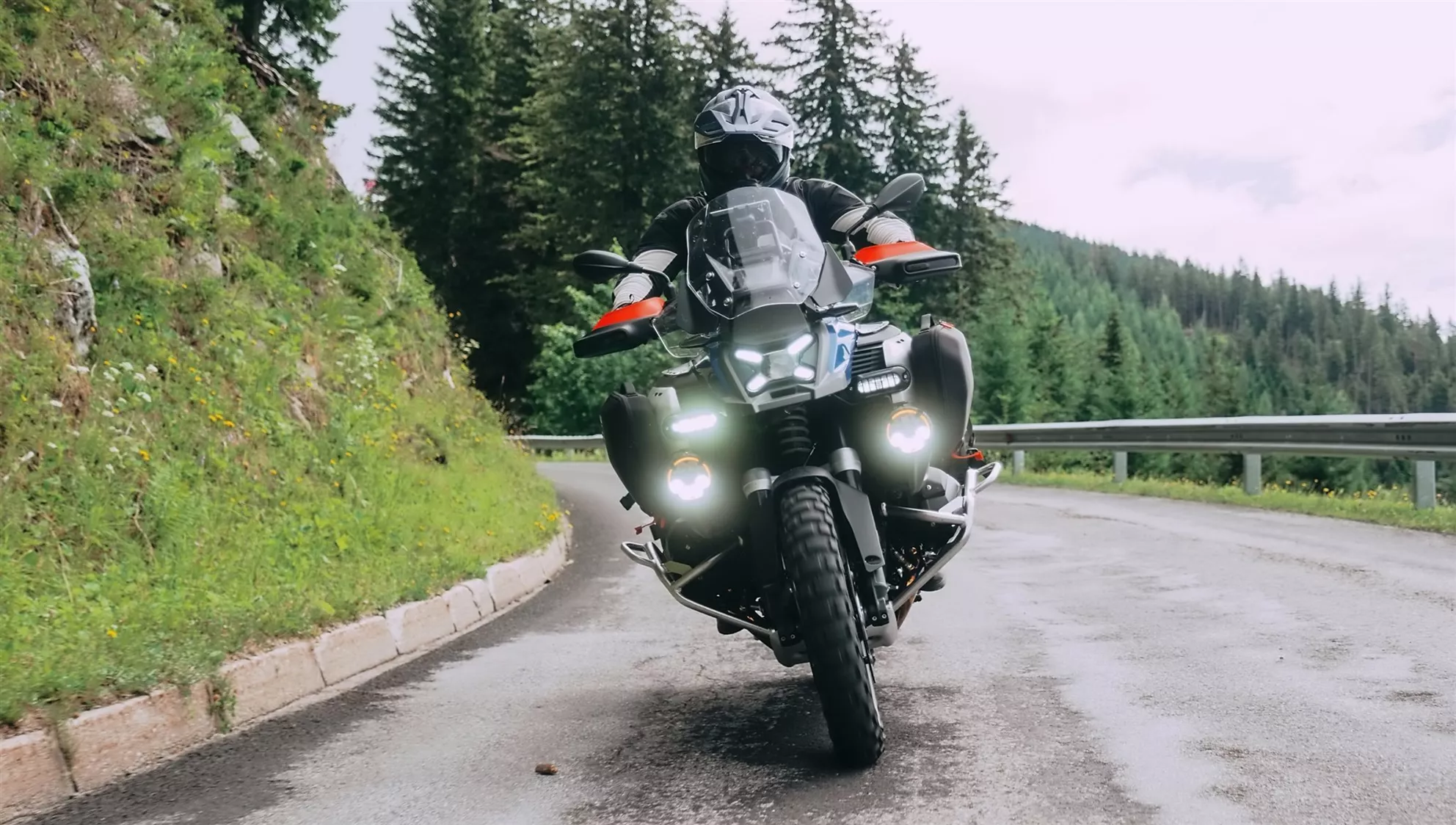
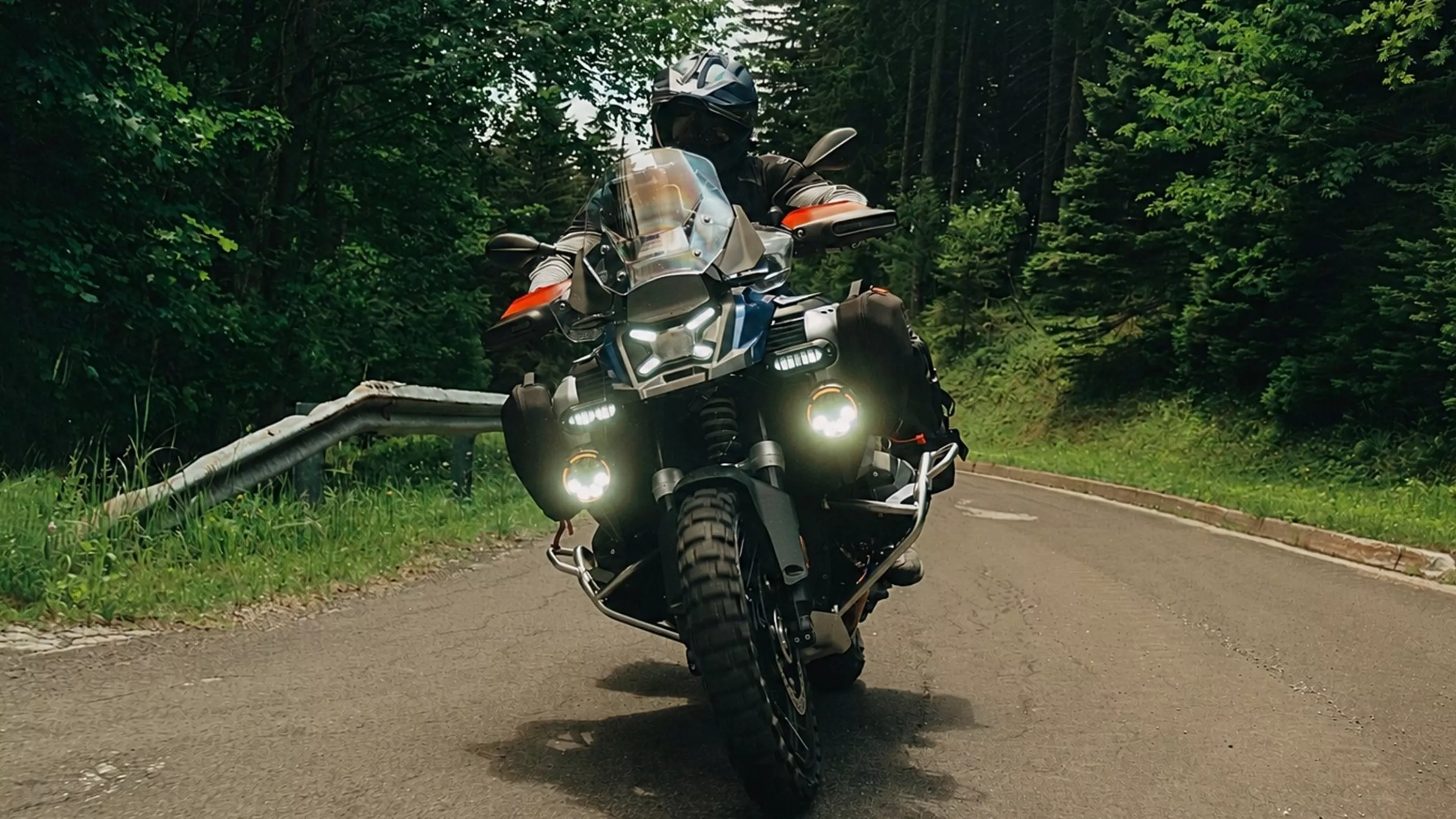
During the day the greatest benefit lies not in road illumination but in the enlarged visual silhouette. The main headlight and two lower-mounted MTL9 units form a striking triangle that makes an oncoming bike easier to distinguish from the visual clutter of car headlights, reflections, and road signs. The amber ring looks distinctive without necessarily appearing aggressive, while white moves optically closer to the standard BMW light signature. How prominently the system stands out can be configured separately for day and night.

The art lies in finding the right level. A high daytime output can be pleasantly visible on wide, bright roads, but on shaded avenues or with the sun sitting low it can already sit uncomfortably in rear-view mirrors. The quick adjustment on the bike is therefore a genuine safety feature. Visibility is good. Showing consideration is better.

MTL9 at night

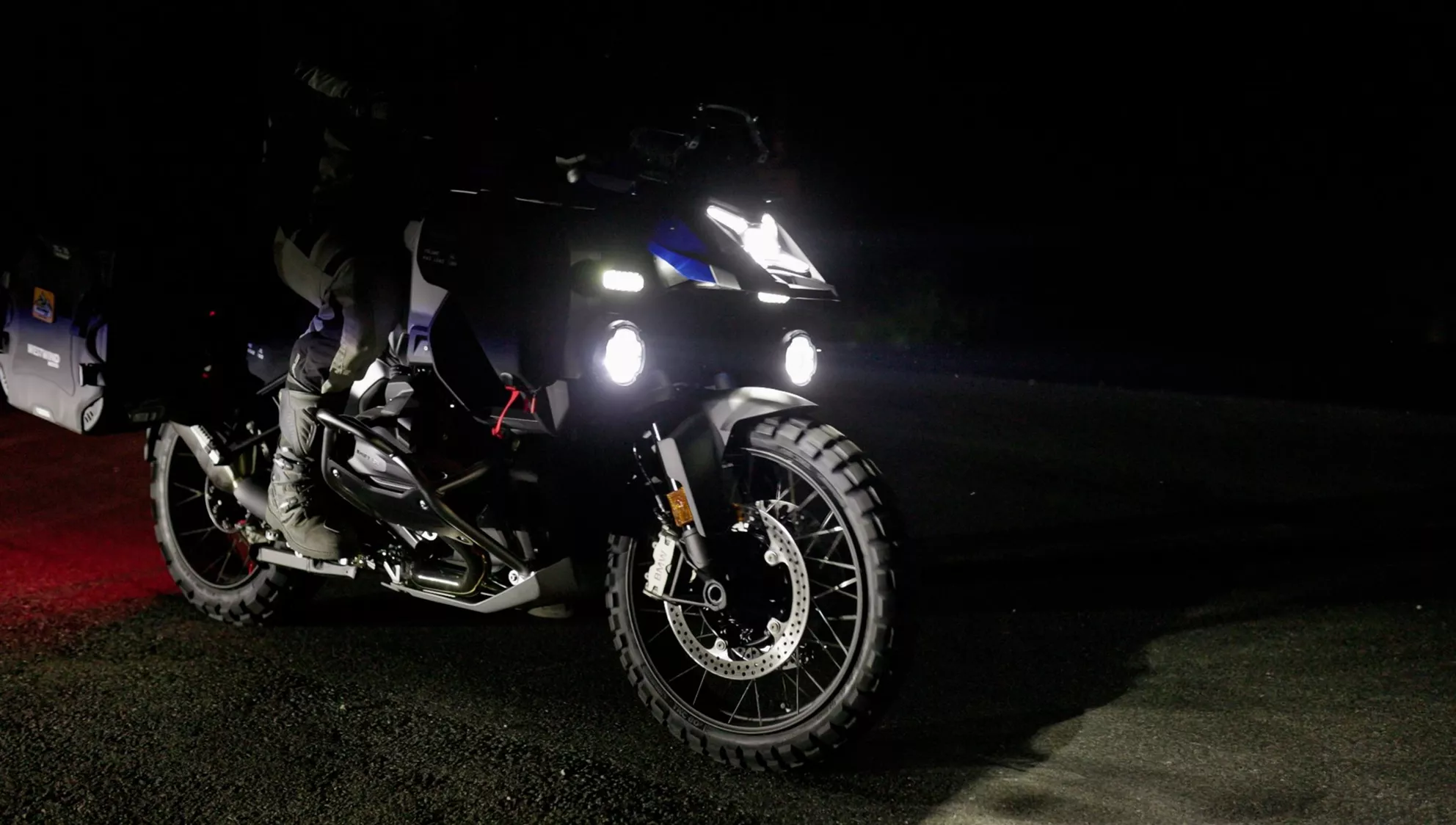
Night riding on the road with the Lone Rider MTL9

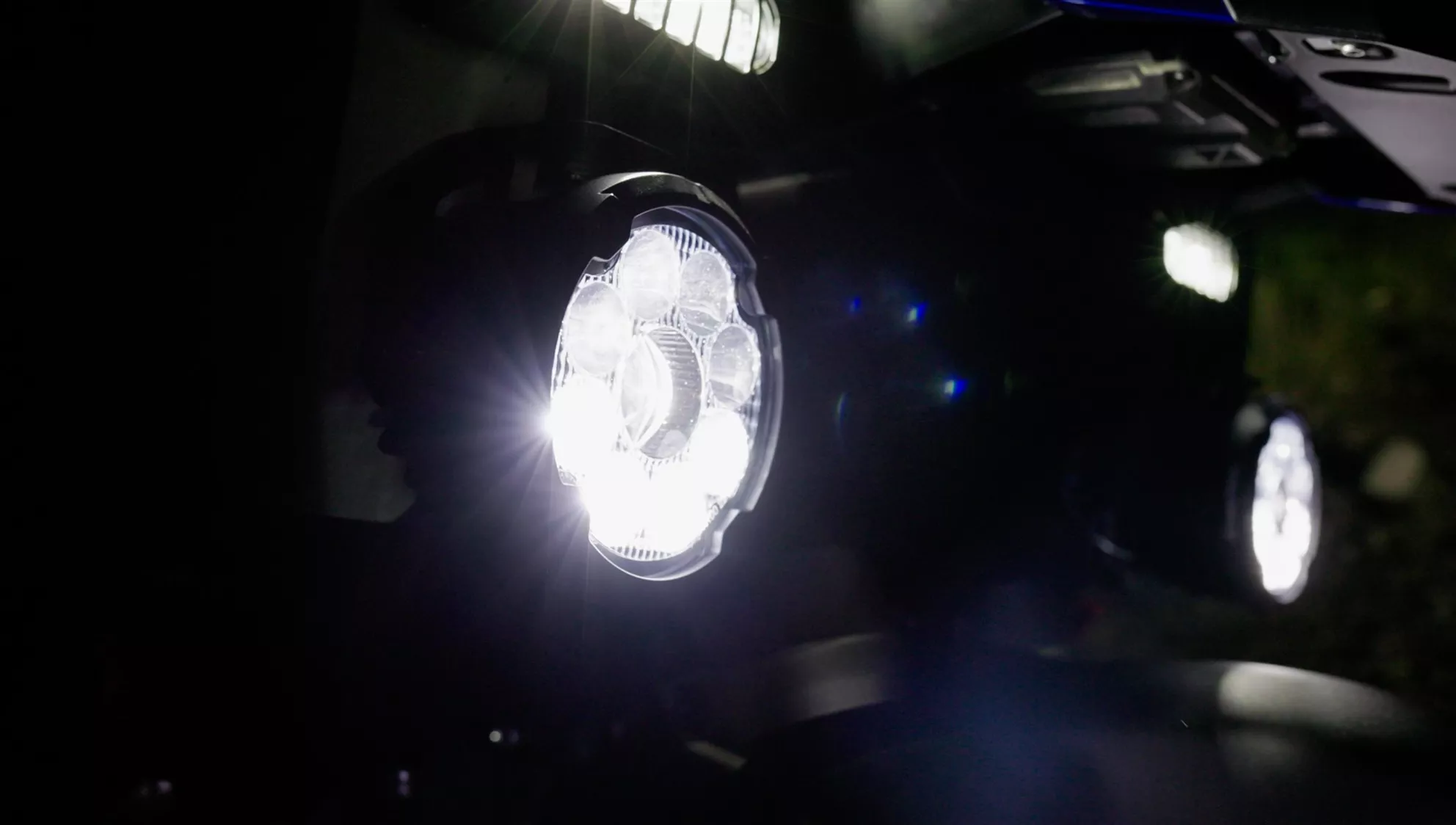
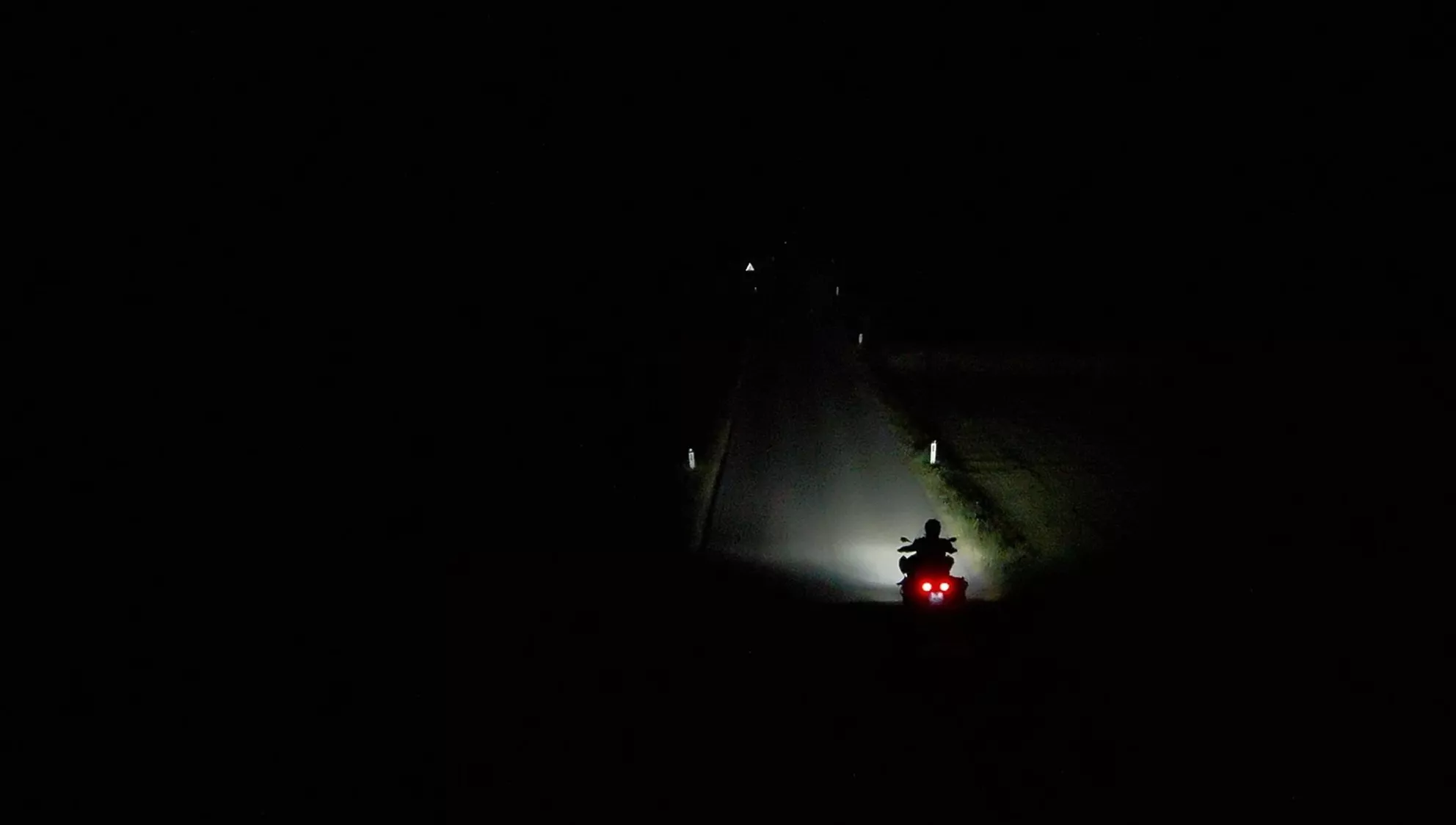
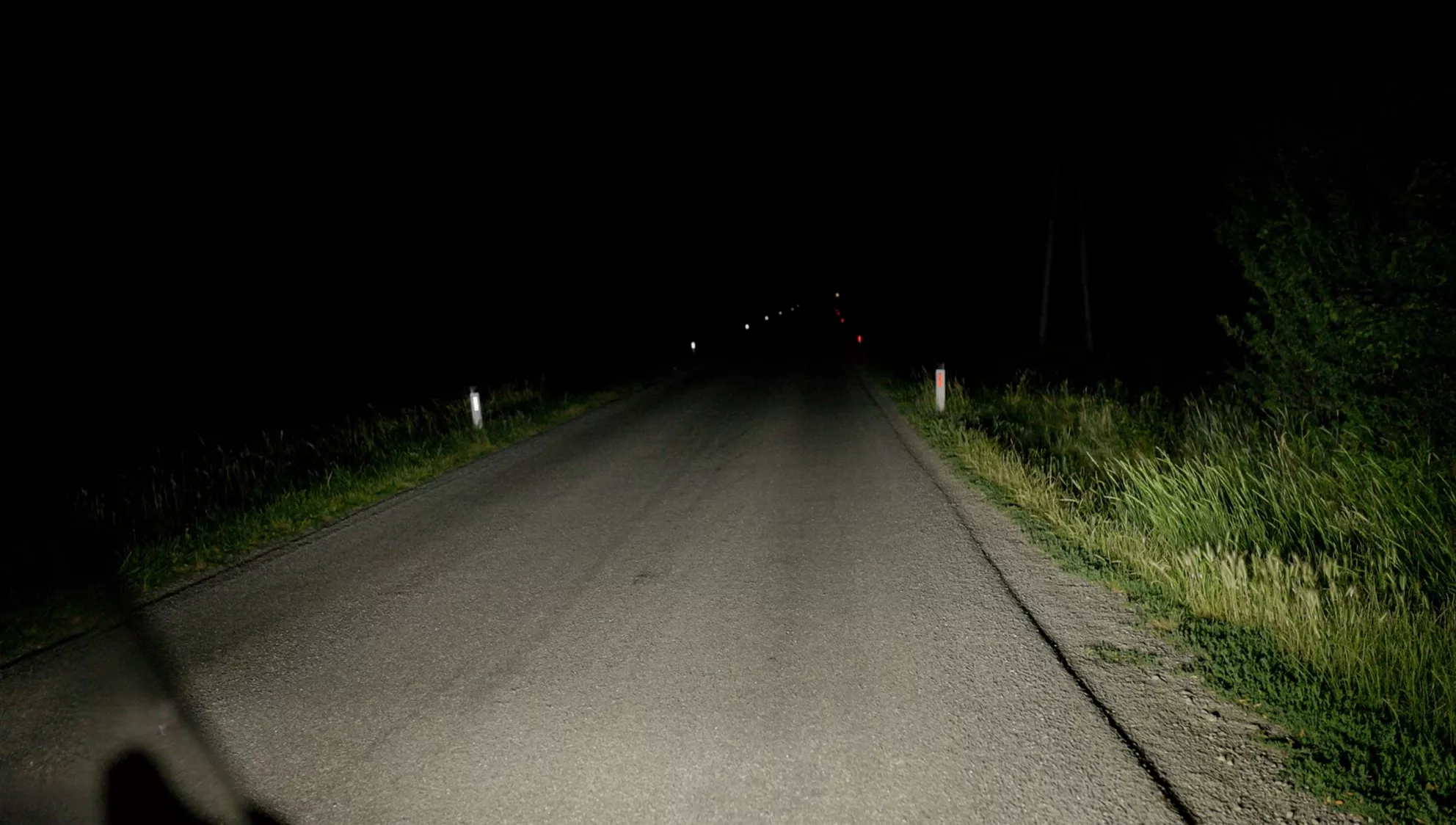
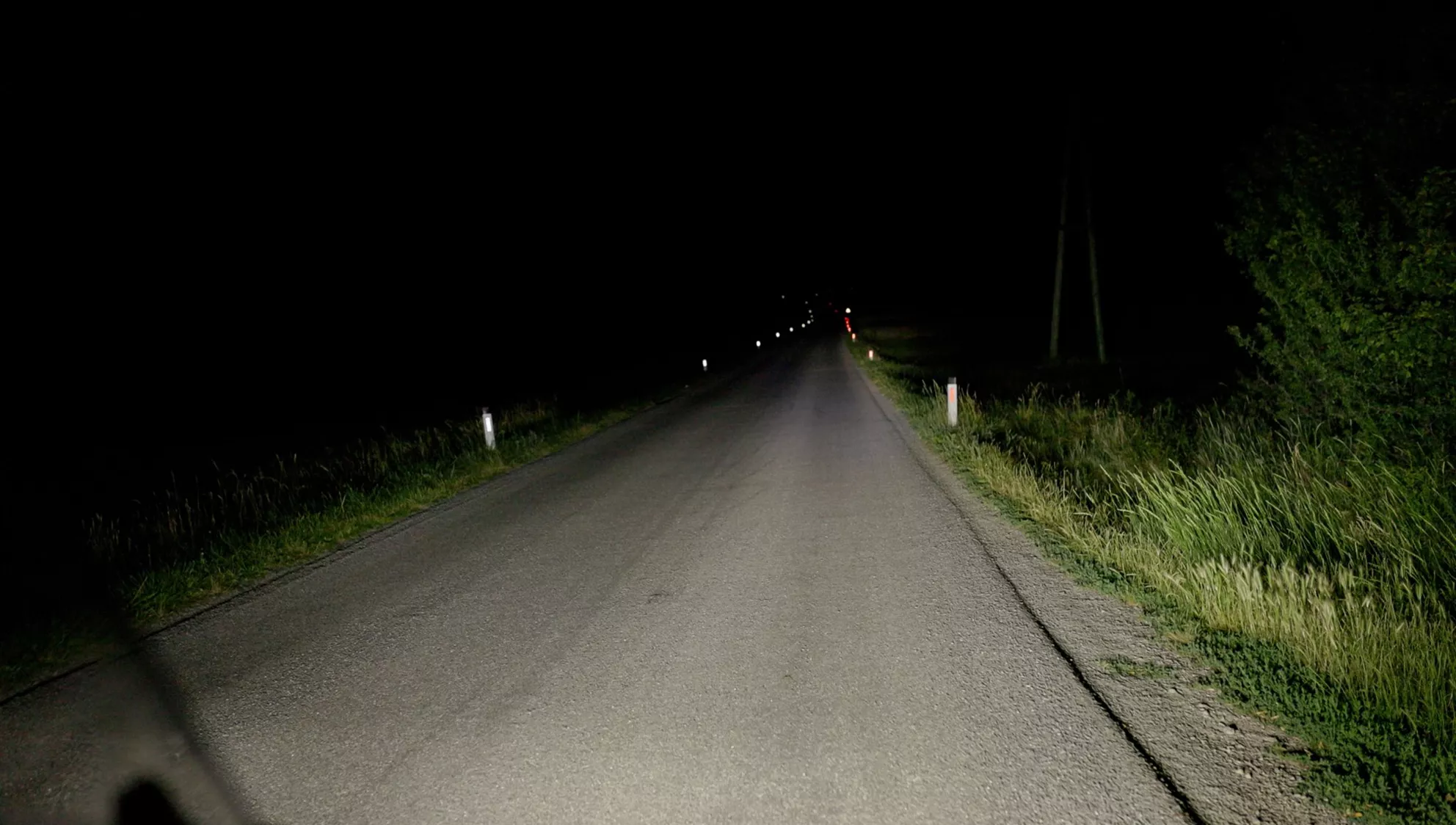
Although the BMW R 1300 GSA already has a capable standard headlight, the light picture changes fundamentally with the Lone Rider MTL9. The wide carpet of light fills the dark zones directly beside the road, makes corner entries readable earlier, and brings forest edges, junctions, and potential wildlife crossing zones much more clearly into view. Instead of a single bright spot, a larger information surface is created, which also lets the gut feeling work in a noticeably more relaxed way. When the high beam comes in, the hefty punch arrives from the basement: the upper LED segments push the existing BMW beam cone forcefully further, while the central spot creates an additional, compact ball of light at the far end of the visible stretch. The credible manufacturer figure is 1 lux at 700 metres. Our test rider Frankee spoke subjectively after two night rides of a visibility range of up to approximately one kilometre. That is not a measured laboratory figure, but it credibly describes how far away contours and reflections can still be perceived.

The brute output does, however, have a flip side: the brighter the high beam, the harder the transition back to dipped beam, because eyes and perception have adapted to the significantly brighter surroundings. The MTL9 should therefore not be run at maximum output as a matter of course, but as powerfully as necessary and as restrained as possible. This is precisely where the separate settings and Speed Blending pay off. The rider can keep the wide illumination high while only letting the extreme spot engage when speed and road actually justify it.

MTL9 night shot

Night riding off-road with the Lone Rider MTL9

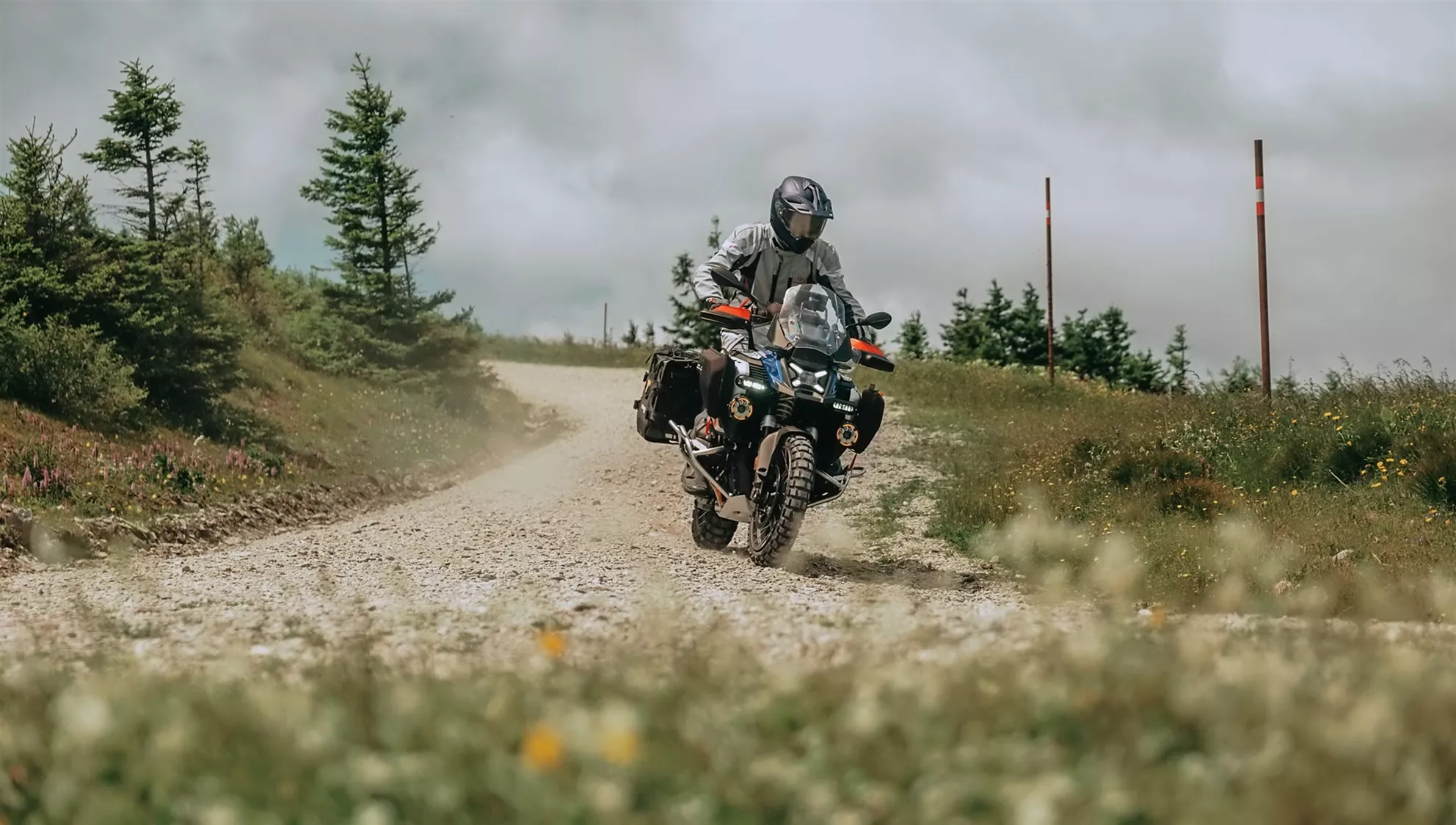
Off-road, the star is not the theoretical maximum range but the wide near-field. Ruts, loose stones, branches, and laterally dropping terrain need to be identified early, while the central long-range spot on a winding forest track often shines into the undergrowth or straight into the next hillside. The lower four LEDs per pod produce the more valuable carpet of light here, because it makes the area in front of the front wheel and the lateral escape options visible. The rider can decide faster whether the dark patch is a shadow, a hole, or merely a wet stone.

The massive amount of light tempts you into riding at night almost as if it were day. That works surprisingly well, but changes nothing about the fact that contrasts, depth perception, and unexpected obstacles behave differently in artificial light. On dusty tracks the spot should be dialled back because self-dazzle increases significantly. Here the advantage of the system shows itself again: not one lamp has to somehow do everything, but several light zones can be combined to suit the situation.

MTL9 off-road use

MTL9 durability in real-world testing

During our rides on road and off-road the MTL9 worked unobtrusively and reliably. There were no dropouts, no annoying flickering, and no discernible change in alignment. The high dead weight and the substantial brackets do, however, demand a clean installation with correctly torqued bolts, protective layers, and neatly routed cables.

Thermally the lights also remained stable. Of the 145 watts of power consumption, naturally not everything becomes light – a portion ends up as heat in the housing. Even during extended use with little cooling airflow off-road, however, no overheating was detected. Large cooling fins and the substantial aluminium body dissipate the heat to the surrounding air; according to the manufacturer the system is designed for -20 to +50 degrees Celsius. We did not carry out an instrumented temperature test, so concrete thermal reserves cannot be quoted with any reliability.

With IP68 and IP69K the MTL9 are also protected against dust, water, and intensive cleaning. Rain, mud, river crossings, and subsequent washing therefore clearly fit the intended use profile. The pressure washer from ten centimetres away remains a rather bad idea, however.

Disclaimer: Our test extended over two weeks and included two intensive night rides as well as varied operating conditions, but not multi-year long-term use. Statements about corrosion after five winters or the service life of the permanently installed LEDs would therefore be reading tea leaves. Reassuring is the five-year manufacturer warranty, which on a product this expensive and not modularly repairable counts for significantly more than any "Adventure tested" sticker.

MTL9 real-world impressions from Frankee

1000PS editor Frankee (off-road specialist)

Frankee's real-world impressions

After installation and configuration, the technical complexity retreats pleasingly far into the background. High beam and brightness can be controlled via the familiar BMW controls, which makes the Lone Rider MTL9 lighting system feel more like an elaborate factory option than retrospectively fitted aftermarket accessories. For deeper settings such as light colour, day and night profiles, or Speed Blending, a computer and cable are still required. A smartphone app would be the obvious next step here, especially since spontaneous changes on the road would be handled far more elegantly that way.

After two intensive night rides, Frankee described the MTL9 as the most innovative auxiliary lights he has tested to date. He was particularly impressed by the brute light output, the enormous range, and the tangible safety gain on dark country roads with heavy wildlife activity. His favourite detail was nevertheless not the maximum spot but the direct adjustment via the BMW multi-function ring. This allows output to be adapted to traffic and surroundings in an instant while riding, before oncoming traffic is involuntarily subjected to a retina examination. His verdict on full high beam was correspondingly concise: immense.

Macht die Nacht zum Tag.

Frankee on the Lone Rider MTL9

MTL9 verdict

About Lone Rider Lone Rider is a premium brand for adventure bike accessories, developing equipment for riders who are equally at home on tarmac, gravel, and off the beaten track. The modular product system ranges from luggage solutions such as MotoBags, MotoPanniers, MotoCase, and ADVBags through the intelligent MTL9 auxiliary lights and MotoArmor protection components to the bike-specific tents MotoTent and ADVTent. All products are designed to work together technically, visually, and functionally. Lone Rider sells direct to customers in more than 110 countries and deliberately positions itself in the upper market segment. On Trustpilot, Lone Rider currently achieves 4.8 out of 5 points with more than 250 verified reviews.

Lone Rider MTL9 motorcycle lights in the test Images

Source: 1000PS

Image 1
Image 2
Image 3
Image 4
Image 5
Image 6
Image 7
Image 8
Image 9
Image 10
Image 11
Image 12
Image 13
Image 14
Image 15
Image 16
Image 17
Image 18
Image 19
Image 20
Image 21
Image 22
Image 23
Image 24
Image 25
Image 26
Image 27
Image 28
Image 29
Image 30
Image 31
Image 32
Image 33
Image 34
Image 35
Image 36
Image 37
Image 38
Image 39
Image 40
Image 41
Image 42
Image 43
Image 44
Image 45
Image 46
Image 47
Image 48
Image 49
Image 50
Image 51
Image 52
Image 53
Image 54
Image 55
Image 56
Image 57
Image 58
Image 59
Image 60
Image 61
Image 62
Image 63
Image 64
Image 65
Image 66
Image 67
Image 68
Image 69
Image 70
Image 71
Image 72
Image 73
Image 74
Image 75
Image 76
Image 77
Image 78
Image 79