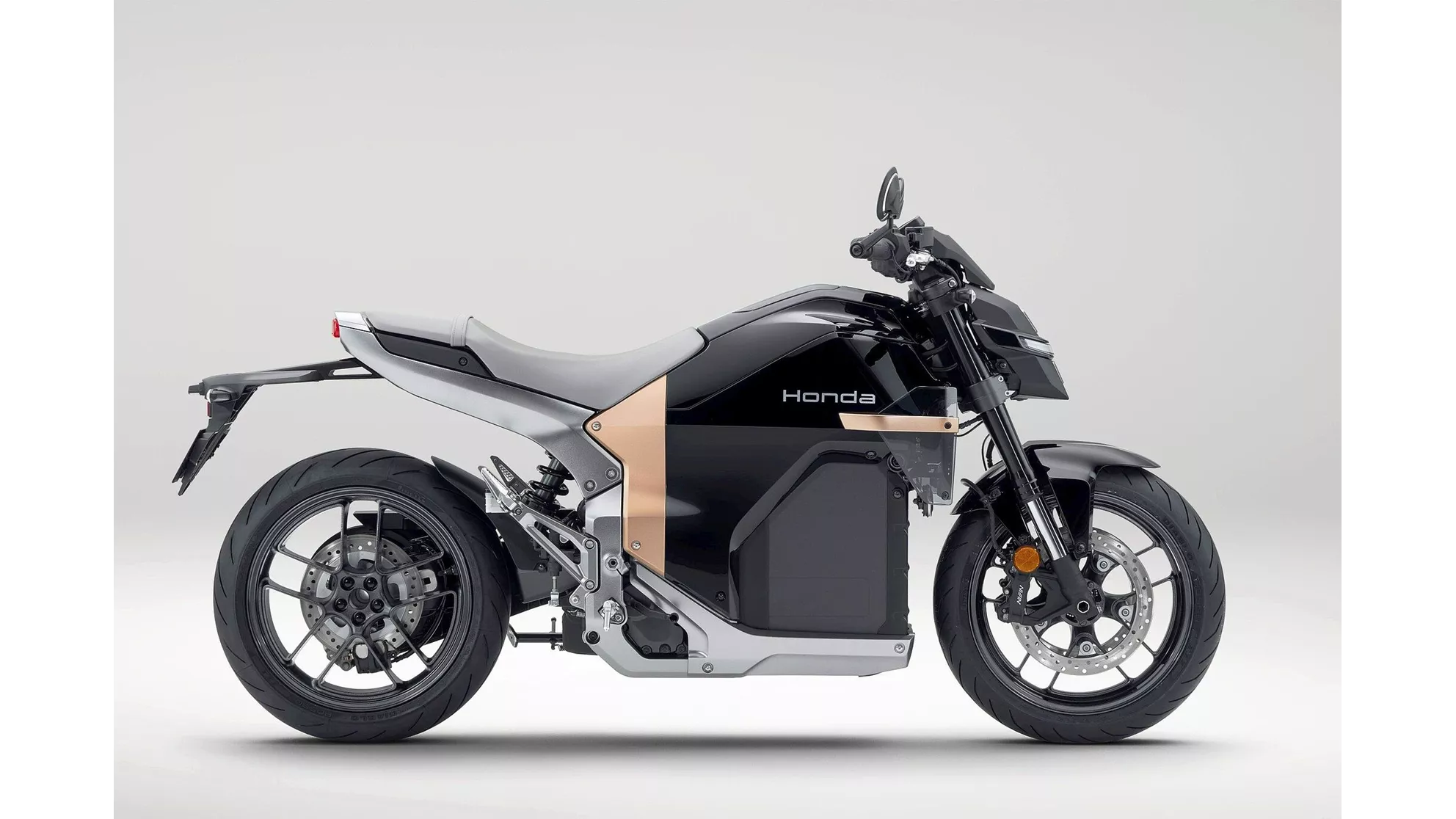
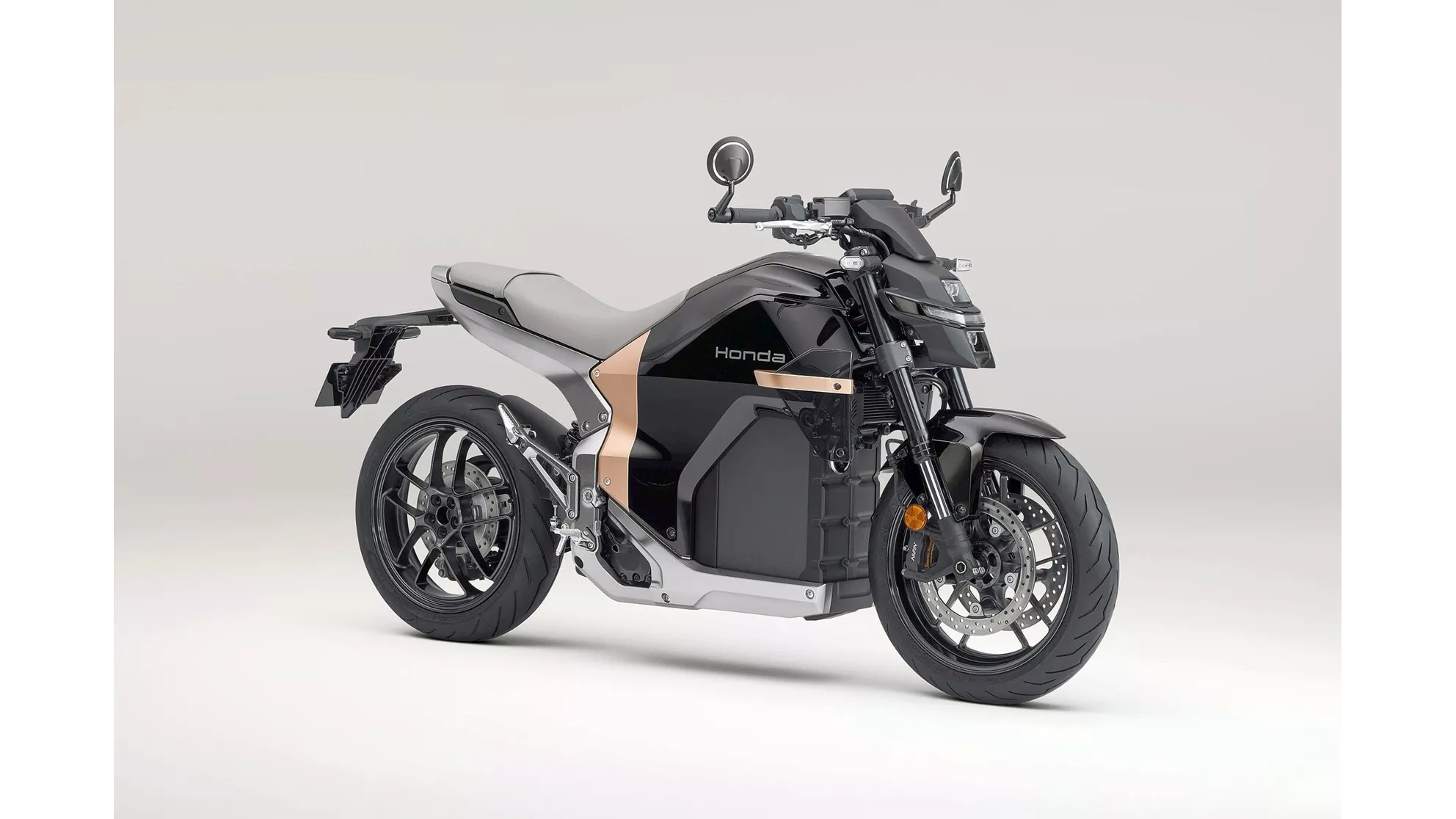
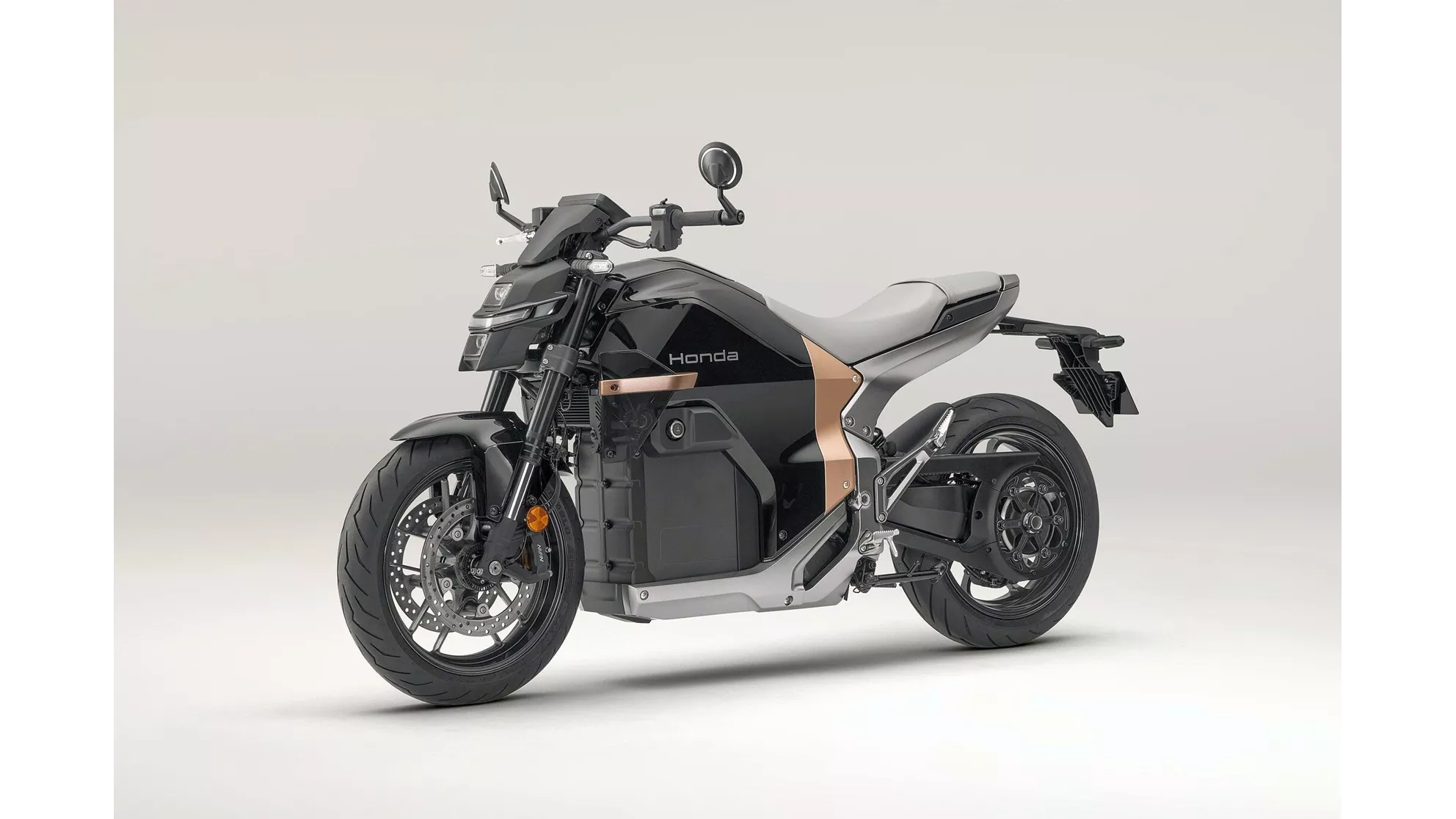
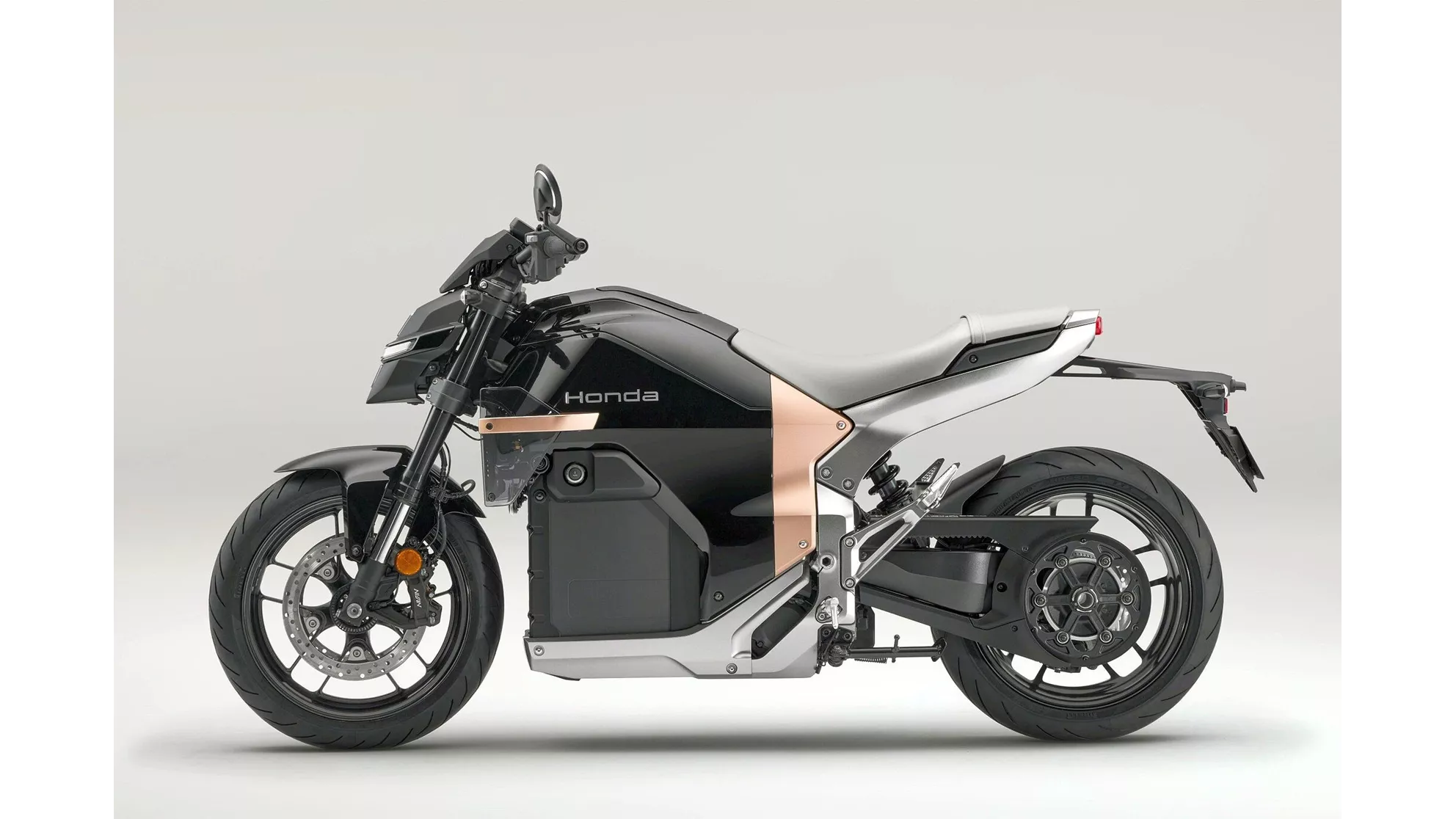
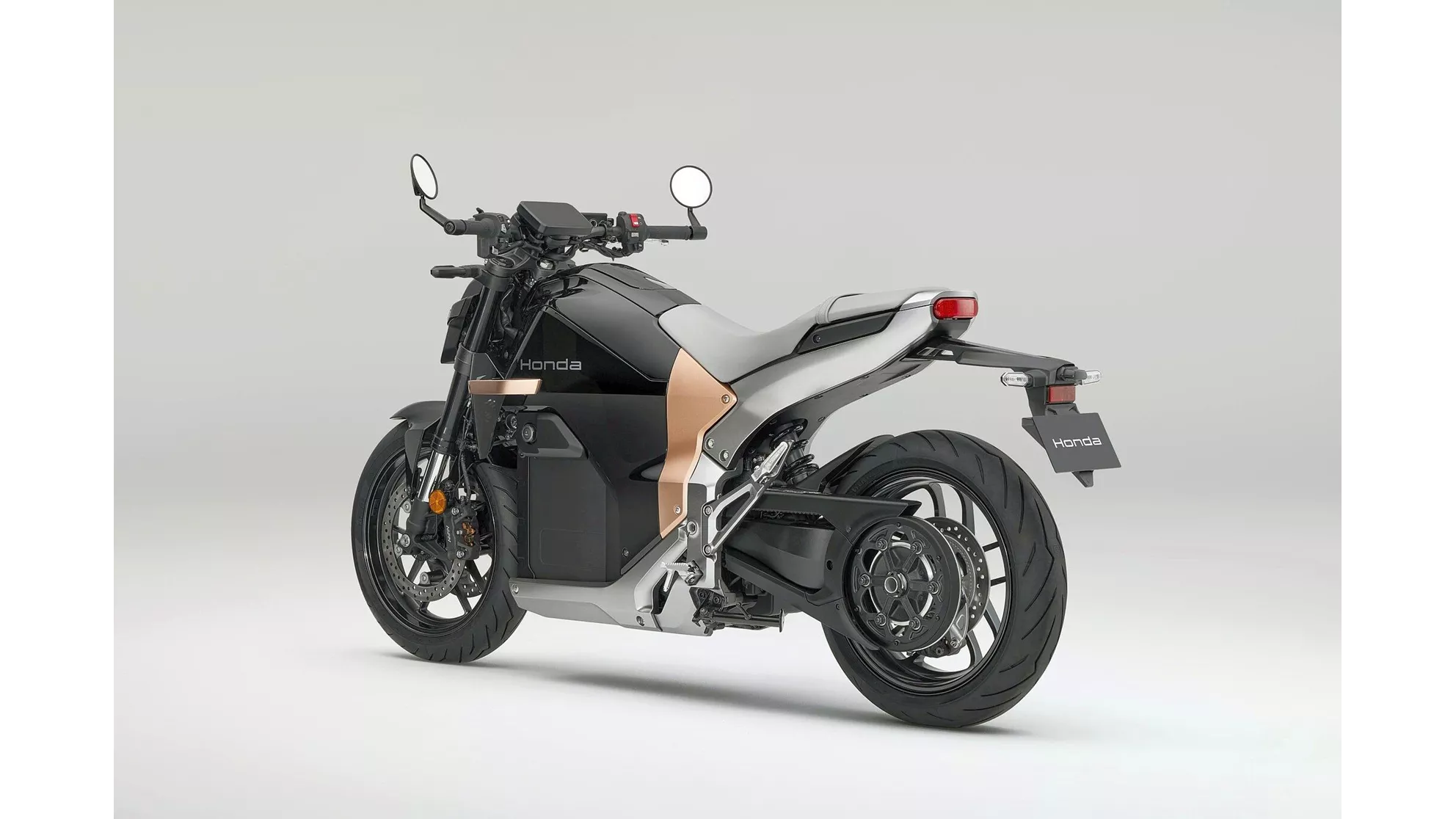
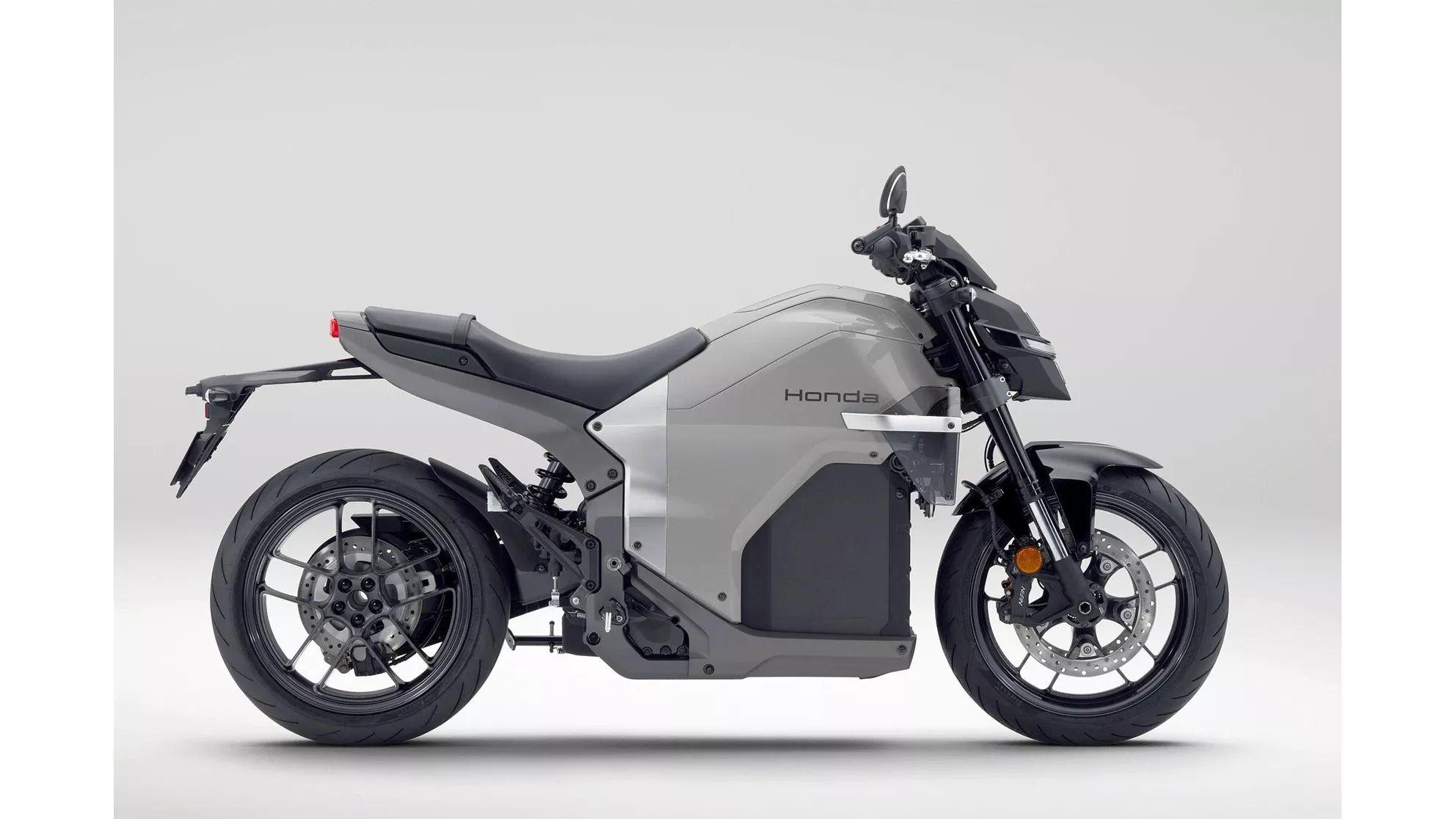
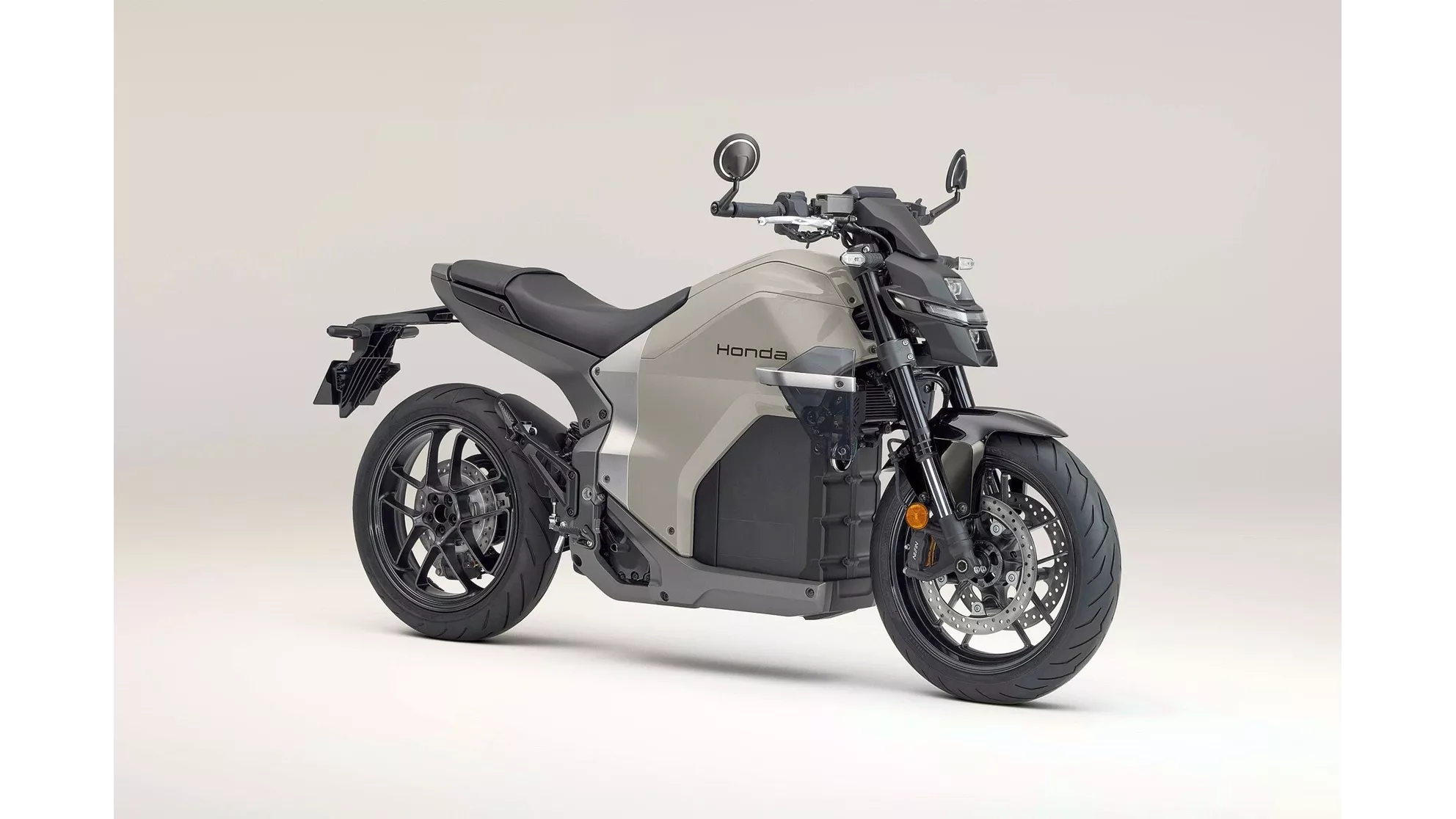
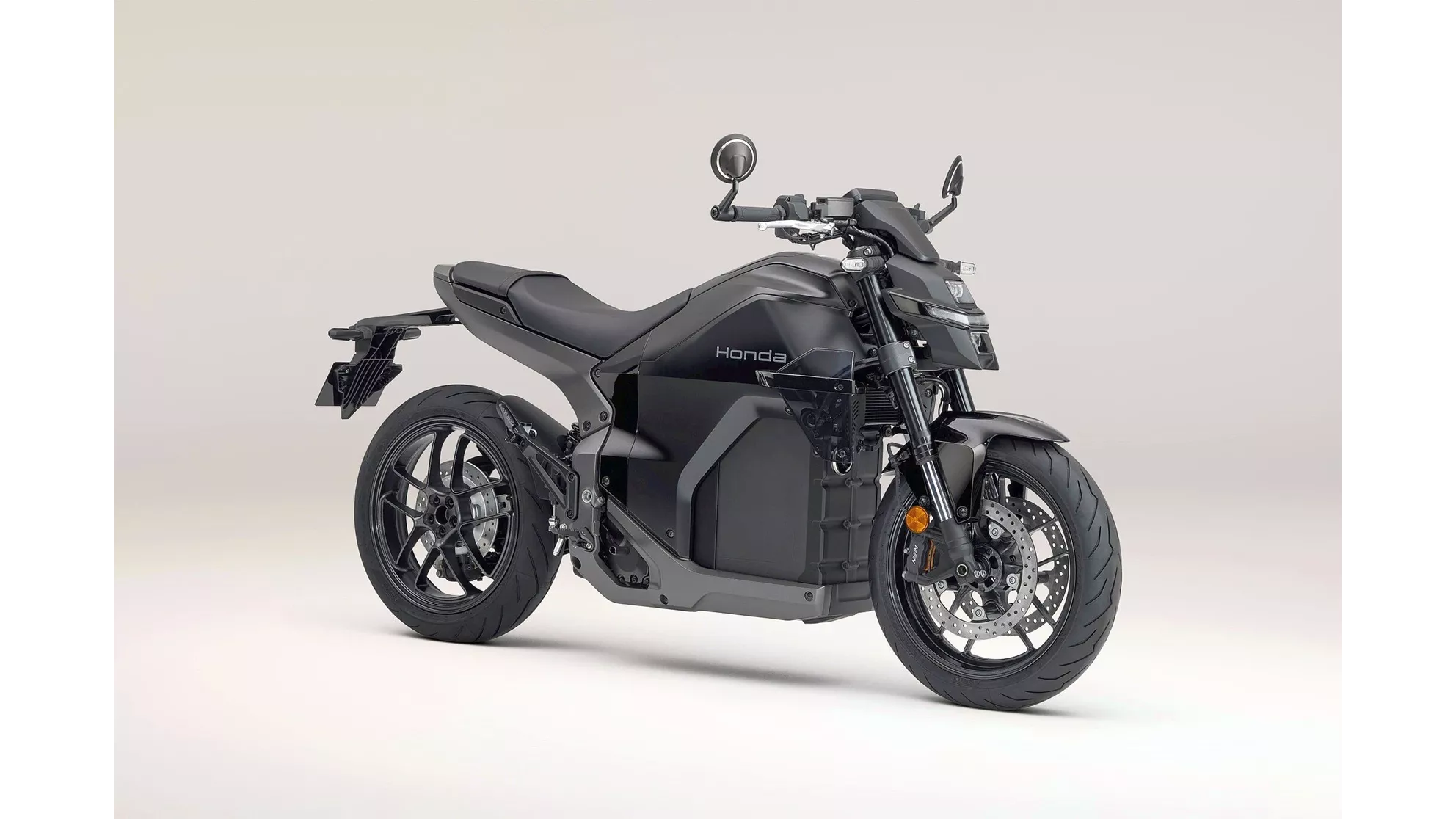
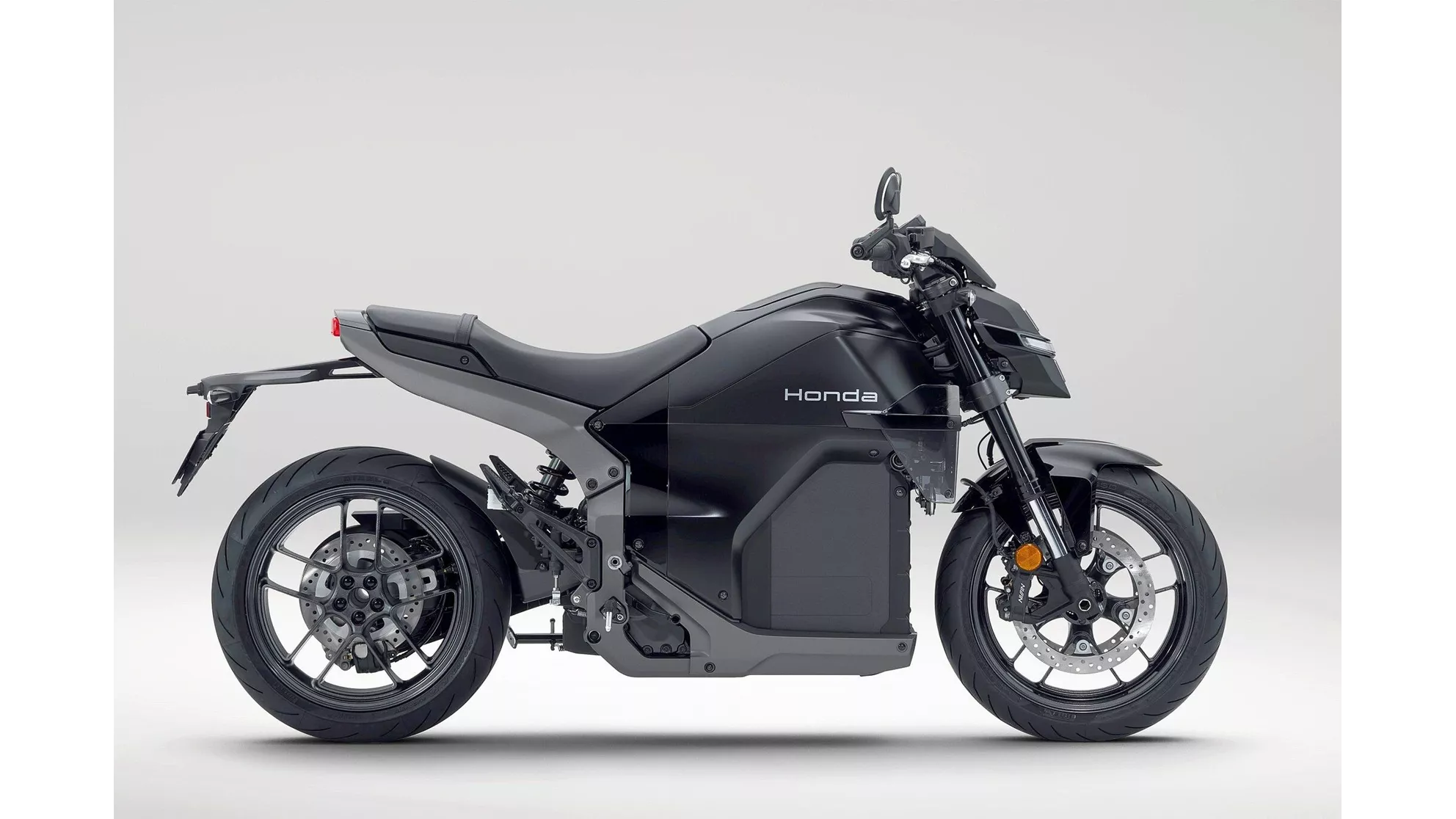
Honda didn't just bolt an electric motor into a normal bike concept for the WN7. The 9.3 kWh battery sits prominently in the center and simultaneously takes on load-bearing tasks. The front end and the swingarm are connected via the battery case, saving the need for a classic frame construction. The motor sits centrally and drives the rear wheel via a toothed belt.
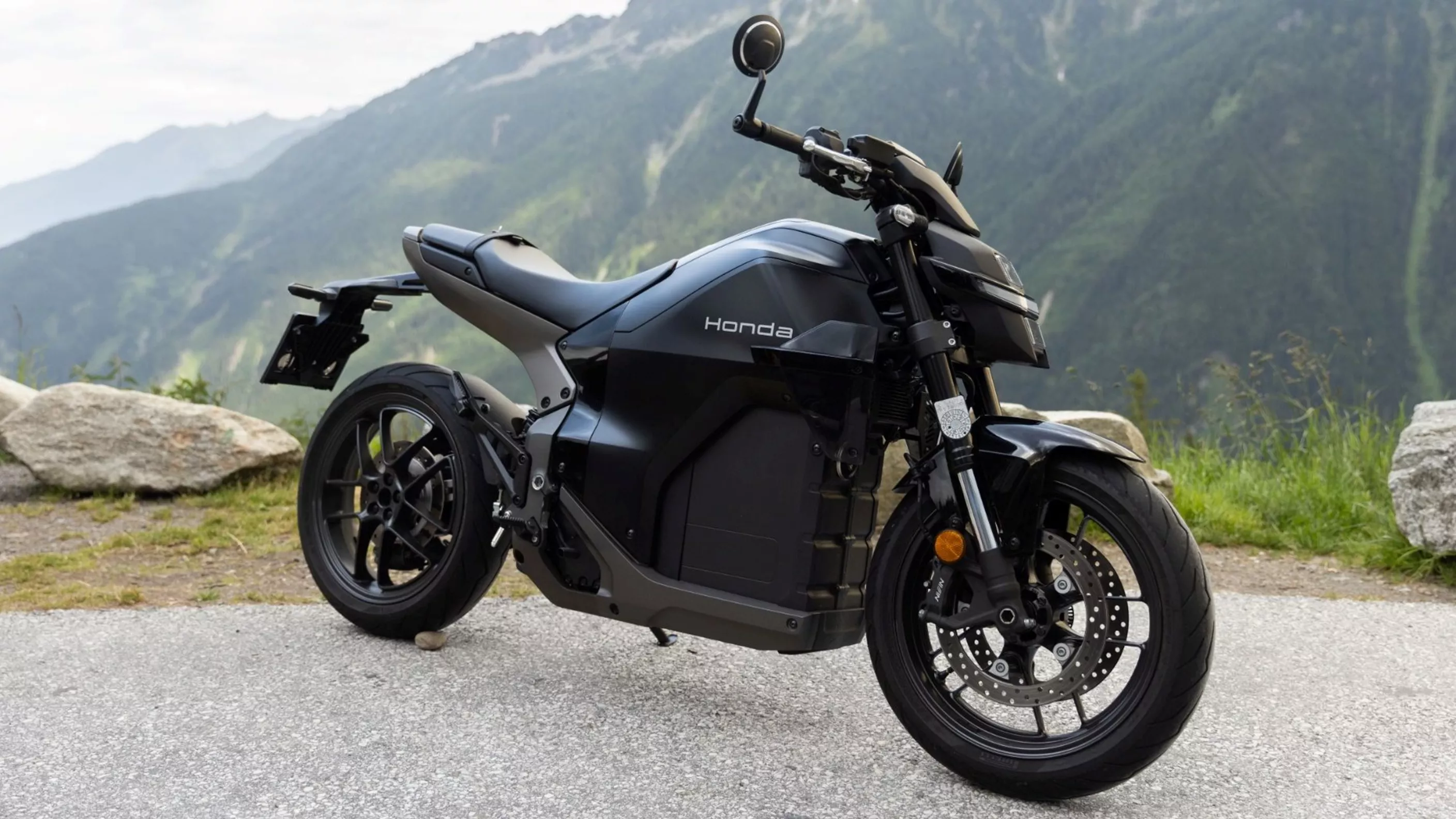
Honda WN7 Test: Quiet Alpine Rocket with Electric Punch
It Rides Surprisingly Well
The Honda WN7 wants to take electric mobility out of the purely urban corner. In the Alps, it shows how much riding pleasure is possible with 68 hp, 100 Nm, and near-total silence.
&width=72&height=72&bgcolor=rgba_39_42_44_0&mode=crop "Author: Martin_Bauer")
Martin_Bauer
published on 7/18/2026
12,677 Views
The Battery Is Not Just an Energy Store
What I like about this solution: it immediately explains why the WN7 is built so narrow. Viewed from behind, the bike is hardly wider than the battery and electric motor. The single-sided swingarm also brings a visual bonus that's always a treat to see on a Honda. But where there's light, there's also shadow: this slim construction leads to a very narrow seat, and it's not just narrow, but hard as well.
Low Center of Gravity, But No Bicycle
At 217 kg wet weight, the WN7 is no featherweight. At a standstill, though, this figure is noticeably less apparent than you'd expect, because the center of gravity sits very low. The large battery sits where it makes sense for handling dynamics, and this noticeably helps when maneuvering and during slow-speed moves.
On the move, the Honda operates at roughly the same level as other bikes in this weight class. An electric motor doesn't have a large crankshaft resisting turn-in, but instead you're carrying the heavy battery along with you. In quick chicanes you can therefore feel that some effort is needed if you want to flick the WN7 rapidly from one lean angle to the other. So it's no magic box, but it's cleanly balanced.
Ergonomics with a Sporty Touch
When you sit on it, the WN7 first feels surprisingly normal. No major adjustment needed, no science-fiction cockpit, no completely unfamiliar seating feel. The handlebar is positioned a bit further away, though, which gives the riding position a sportier edge. The knee angle is a bit tighter, but it stays within a range that's acceptable for longer stints.
The 800 mm seat height makes the bike accessible. Shorter riders will be happy about this, because you quickly build confidence at a standstill. This is particularly important on a bike weighing 217 kg. The limiting factor is less the seat height than the seat itself. It's hard, very narrow, and noticeably takes away comfort from the bike on longer stints.
Chassis: Sharp Instead of a Sedan Chair
Honda fits a Showa upside-down fork up front, while a monoshock with adjustable spring preload works at the rear. Up front there are few adjustment options, sticking with a standard fork. In terms of riding impression, the chassis feels sporty and direct, but it isn't tuned for maximum comfort.
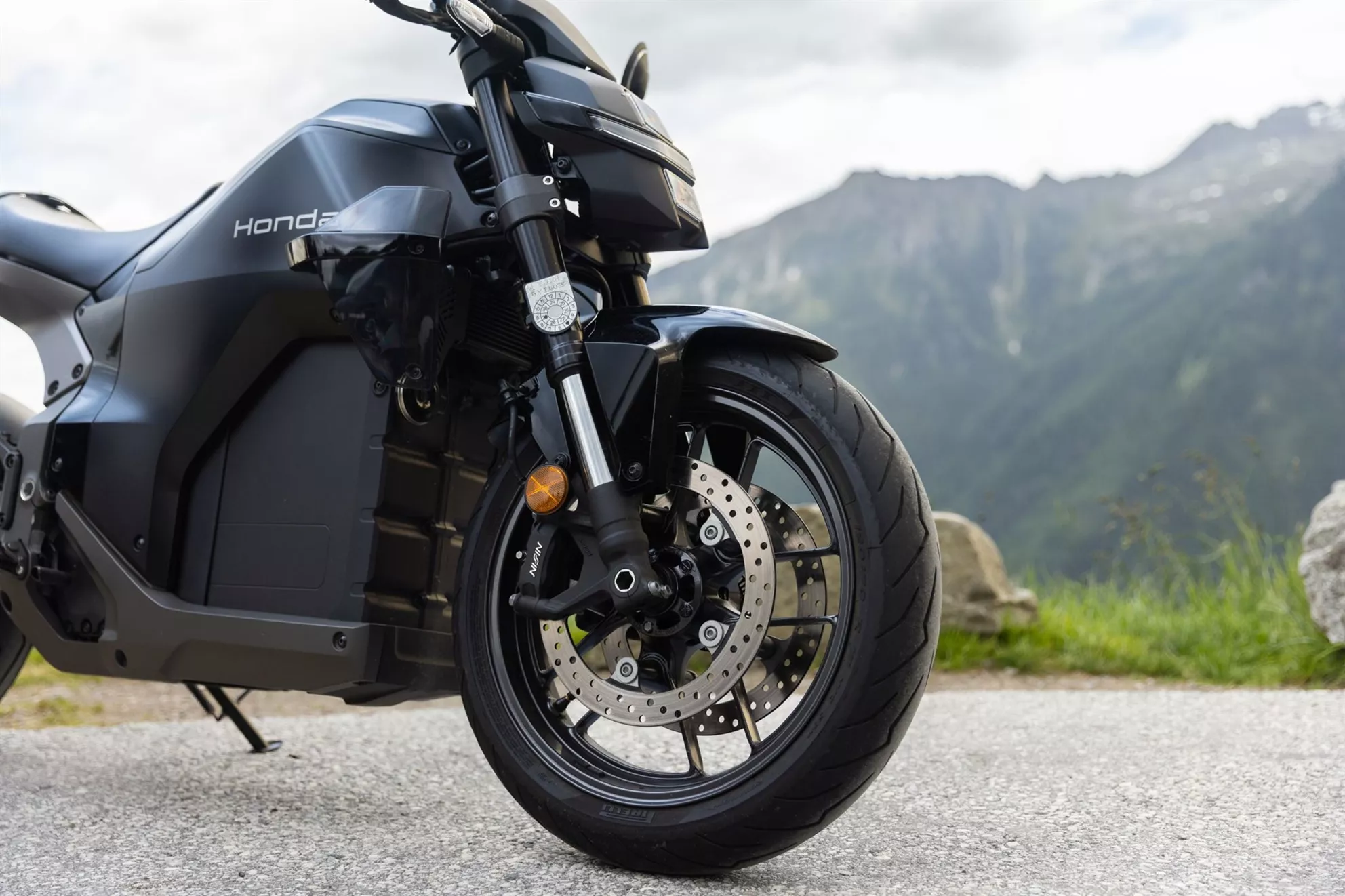
Anyone who rides the WN7 briskly over mountain passes gets a bike that instills a lot of confidence in the tires and chassis. The feedback is clean, traction can be felt clearly, and the setup allows for a spirited pace. The price for this is clear: combined with the hard seat, the Honda doesn't turn into a sedan chair on bad roads. This is an area where Honda could sharpen things up in the future with a slightly more comfortable seat or a finer base setup.
Visually, the 150 Rear Tire Looks Narrow
For the rear tire, Honda opts for a slim dimension. The 150 mm wide rear tire helps with range and basically fits the slim concept. Visually, though, it looks almost too dainty for my taste. Viewed from behind, the width is more reminiscent of a beefy front tire than the rear end of a bike that shoves off with 100 Nm from a standstill.
In terms of riding dynamics, the tires deliver confidence, and there's little to criticize there. But the rear view in particular would gain significantly with a bit more width. The 1,480 mm wheelbase, the 99 mm trail, and the conventional-looking geometry show that Honda didn't build the WN7 as a handling dynamics experiment, despite the electric drivetrain. The bike is meant to feel familiar, and it does exactly that.
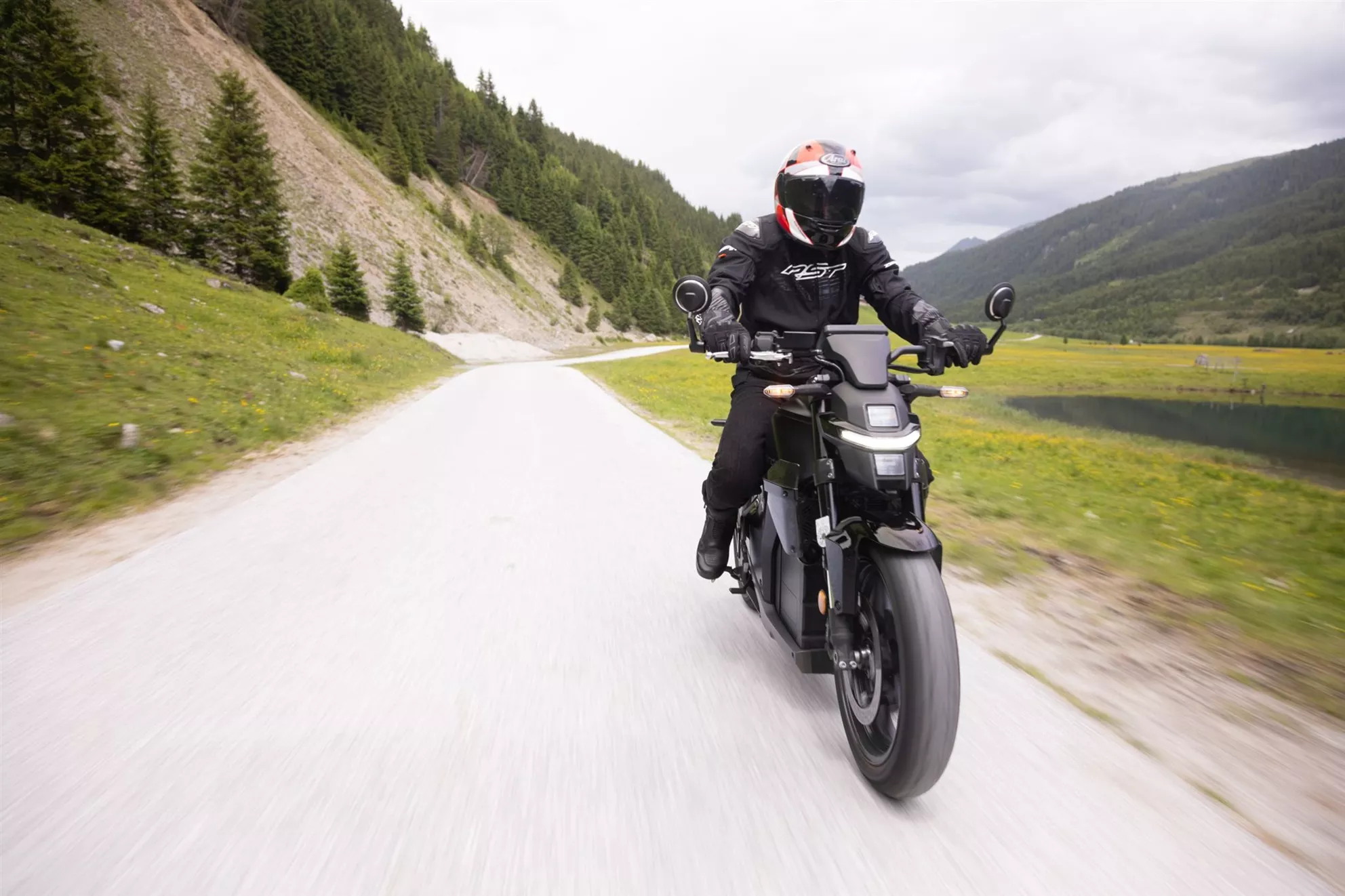
100 Nm from a Standstill
The most important point is naturally the drivetrain. With 68 hp peak output, the WN7 sits at a level Honda itself classifies as heading toward the 600cc class. But what really matters isn't the horsepower figure, it's the torque. 100 Nm is available right from a standstill, and you feel it every time you accelerate hard.
Up to 100 km/h, the Honda sprints forward with real force. There's hardly a combustion engine that shoves forward from a standstill so effortlessly and without any mechanical theatrics. Above 100 km/h the WN7 becomes more sluggish and loses some bite compared to a classic combustion engine. On country roads, though, 90 percent of everyday riding happens exactly where this electric drivetrain shows its strengths: down low and in the midrange.
Controllability as a Major Plus
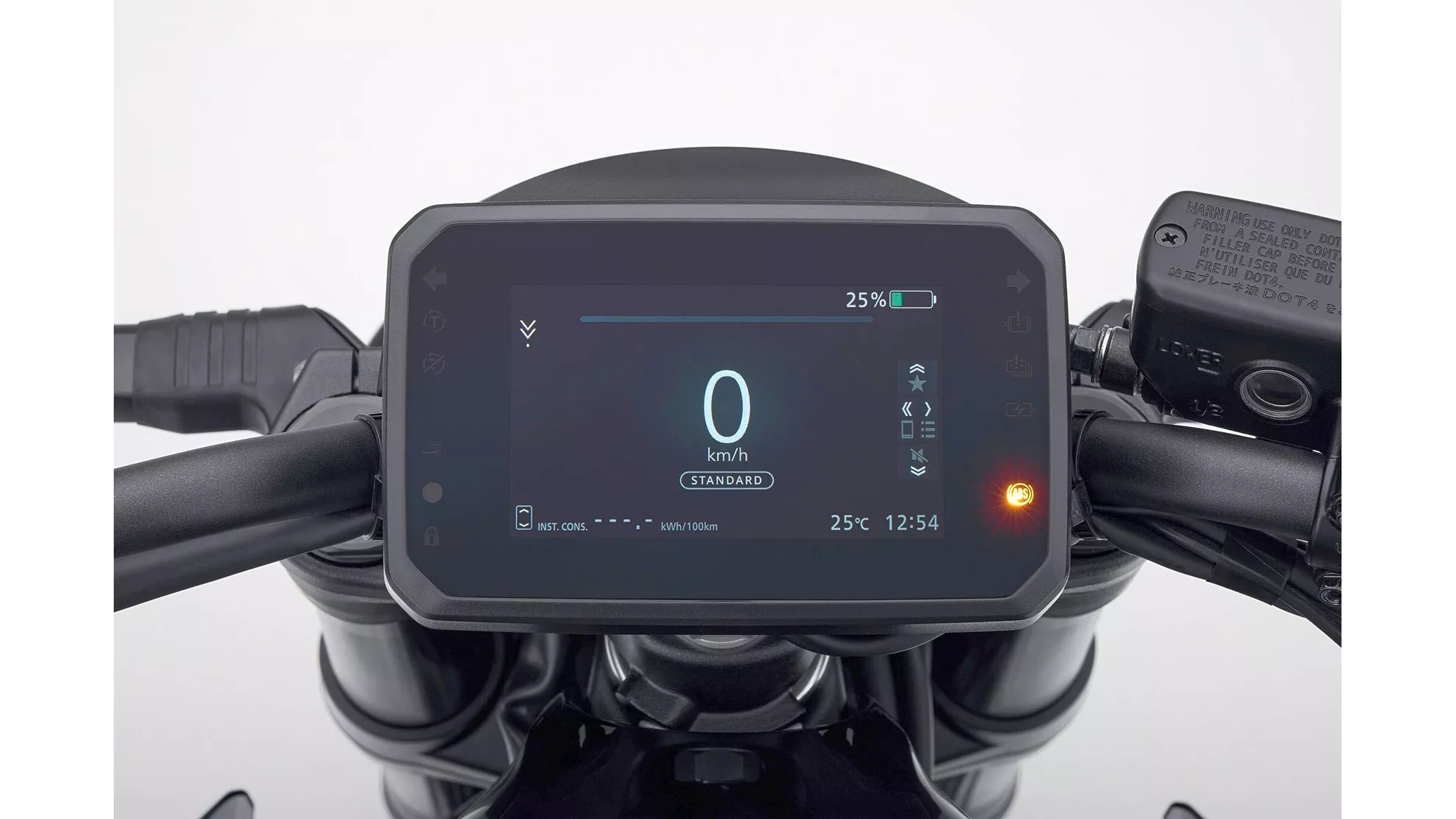
What I particularly liked was the controllability of the drivetrain. The electric motor doesn't just provide acceleration, but also braking effect via regeneration. This engine braking can be adjusted on the fly via plus and minus buttons. When the descent isn't too steep, you can select the deceleration such that the conventional brake is barely needed anymore.
The transition between decelerating and accelerating works crystal clear and precise. No jolt on load change, no mechanical jerking from the drivetrain, no reaching for the clutch, because there isn't one. Especially while leaned over, this gives you a great deal of confidence. The rider can keep their hands on the grips and steer the line cleanly via the throttle and regeneration. This is one of the points where the electric drivetrain doesn't just feel different, but actually feels better.
Moto Gymkhana: Precision Suits the WN7
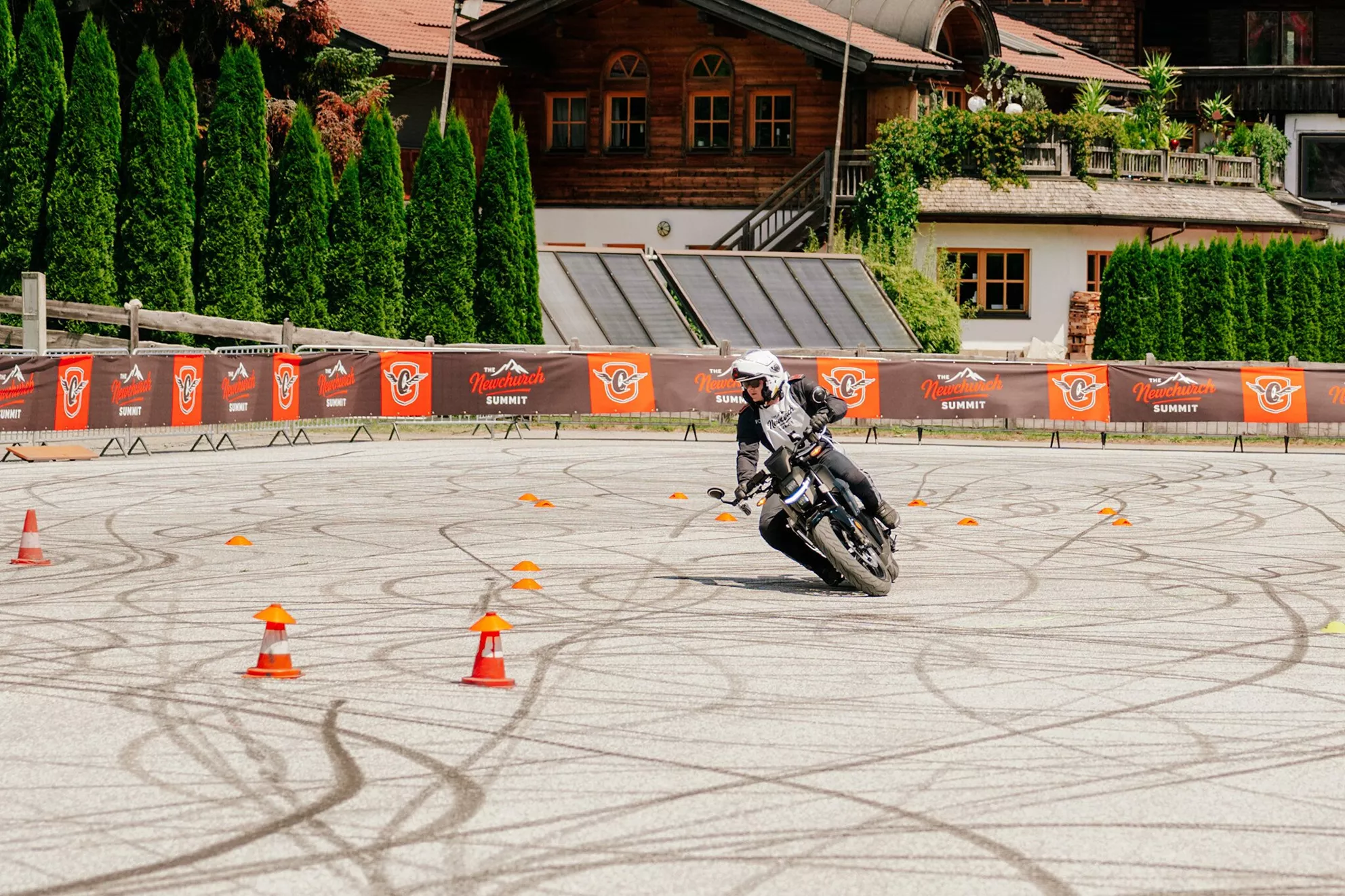
How well the low center of gravity and the clean controllability of the WN7 work was demonstrated especially clearly at the Moto Gymkhana competition at the Newchurch Summit. On a tight course featuring a wobble board, slalom, figure-eight, and target braking, hobby riders had to move the electric Honda through the tightest of spaces as quickly and cleanly as possible. It was precisely with slow direction changes, at full steering lock, and with precise application of power that the WN7 played to its strengths. Participants got used to the bike within a few minutes, got faster from run to run, and pushed their times down from an initial roughly 50 seconds to just over 30 seconds. With this, the Honda proved not only on the mountain pass but also between the cones that its directly controllable electric drivetrain, playful agility, and low center of gravity add up to a genuinely strong combination.
Test at the Newchurch Summit 2026
For this test, we were out and about in the region around Neukirchen am Großvenediger. The Salzburg market town has developed into a hotspot of the bike scene. For over 20 years, great bike festivals have been celebrated there, enjoying mountains, curves, and hospitality. Since 2026, 1000PS has been on board as co-organizer of the Newchurch Summit. We're looking forward to joint bike tours on-site with our community and our 1000PS colleagues. Everything about the Newchurch Summit 2026 here:
- Event report video: https://www.youtube.com/watch?v=rd3a3SQ5tQc
- Newchurch Summit Photos 2026
- Newchurch Summit 2027 (Save the Date: June 17 to 20!)
Almost Silent Through the Alps
A bike without a soundtrack is initially hard to swallow for many combustion-engine kids. For me too, a certain engine sound is normally part of the experience. But the WN7 shows that it can also work differently. On small roads away from the main routes, you suddenly notice much more of your surroundings.
It strongly reminds me of a mountain bike with almost 70 hp. You ride through villages, hear people talking, perceive the landscape more intensely, and barely stand out acoustically. Especially on routes where noise is becoming an ever bigger issue, a concept like this can be a real door-opener. Not because it emotionally replaces the combustion engine, but because it creates a new kind of bike experience.
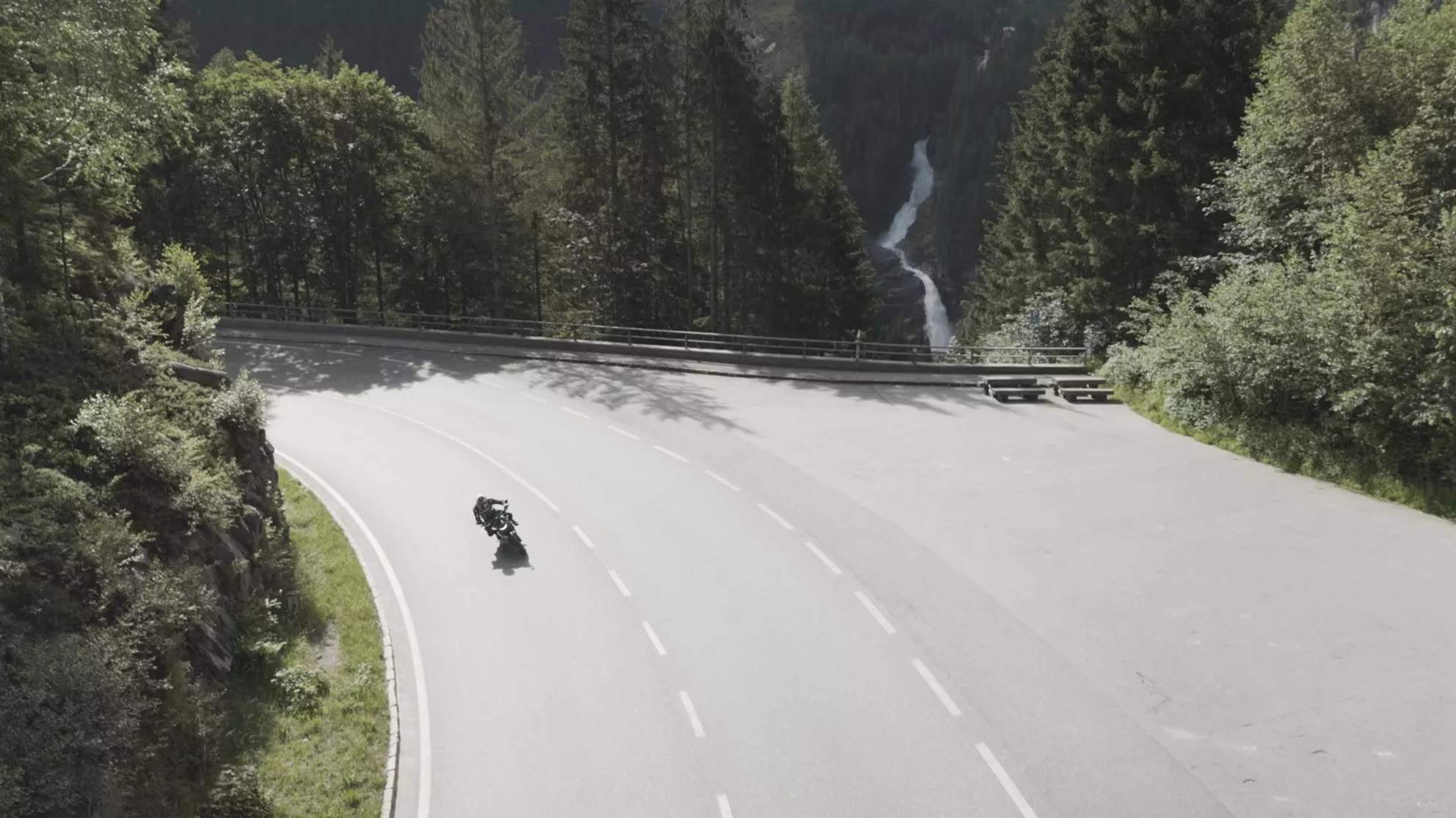
Toothed Belt Instead of Chain Noise
Honda didn't leave the quiet demeanor to chance. The toothed belt here is interesting not just for maintenance or design reasons, but above all acoustically. A chain makes noticeably more noise than you'd normally perceive on a combustion bike. During our test, you really only notice this once the engine is off and only the wheel is coasting down.
During riding, the WN7 essentially only produces a slight hum from the internal gearing. There are no gears, just a single reduction ratio. This suddenly makes the helmet more important, because wind noise becomes the loudest component. Again what learned: when the bike is nearly silent, the rest of your gear becomes mercilessly honest acoustically.
Brakes with Room for Improvement
Alongside regeneration and engine braking, there is of course a conventional brake system with ABS. The front brake discs measure 296 mm and should basically be adequate in terms of dimensions. In terms of riding impression, though, the brake could bite a bit harder. Other bikes feel more aggressive and effective at the lever.
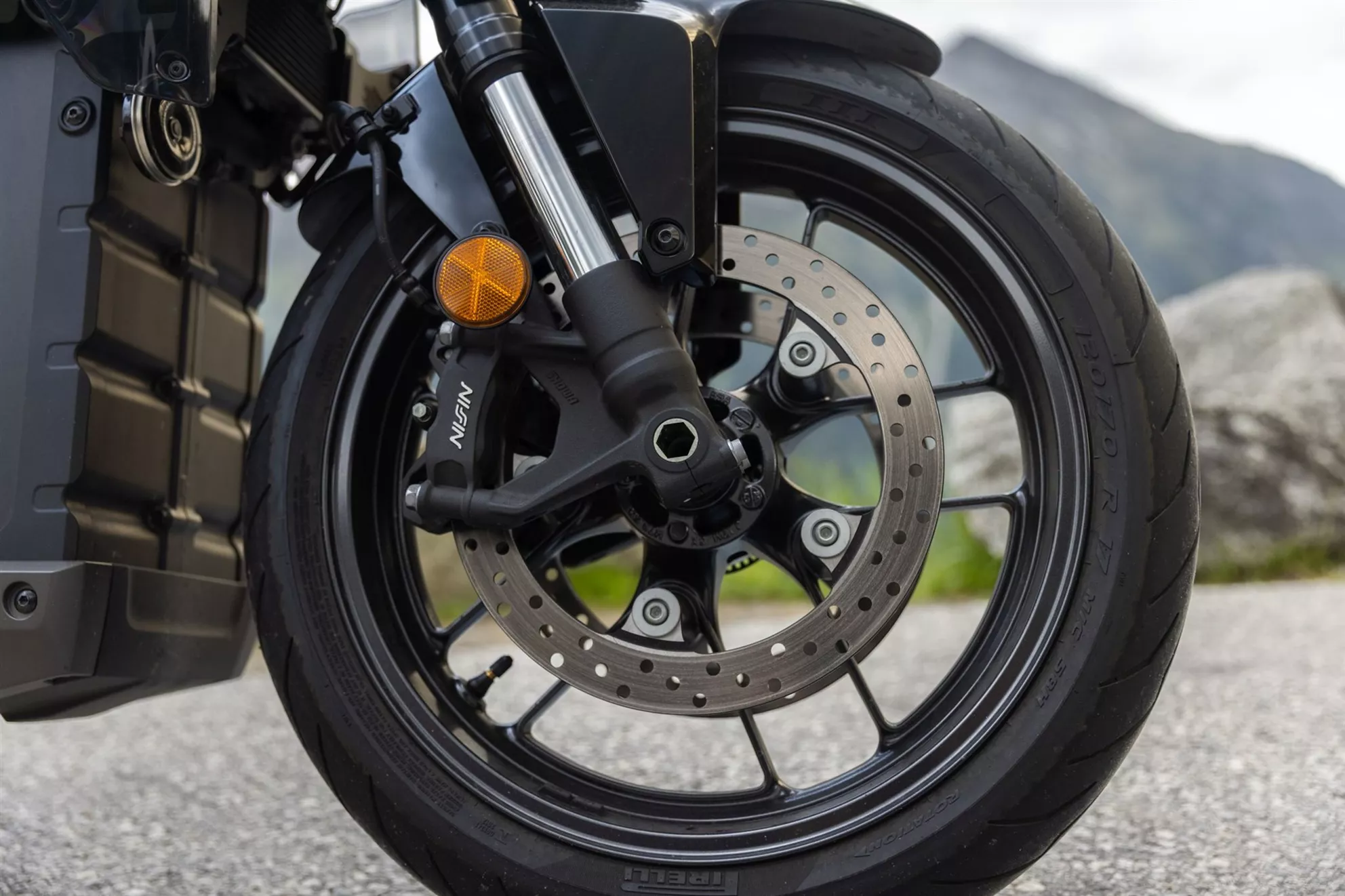
Honda evidently didn't design the WN7 as a machine for the absolute limit. On the road, the brake is sufficient, but anyone riding more sportily will wish for more bite. A concrete remedy would be obvious: grippier brake pads could give the front system more initial bite without calling the whole setup into question.
Reverse Gear as a Practical Electric Bonus
A detail that brings more to everyday use than it might sound like in the brochure is the reverse gear. Because the electric motor can in principle work in both directions, the WN7 can be moved slowly in reverse. If you come to an unfavorable stop on a downhill slope, you don't have to push the 217 kg back with pure muscle power.
Such maneuvering aids are familiar from big tourers like a Gold Wing. With an electric drivetrain, this is noticeably easier to implement. Precisely because the Honda, despite its low center of gravity, isn't a light bike, this feature fits well with the overall concept.
Charging Remains the Limiting Factor
Charging happens via a Type 2 connector located behind a flap in the position of the classic filler cap. With fast charging, the WN7 covers the range from 20 to 80 percent in about 30 minutes. After that, roughly 100 km are available again. On a household socket, a full charge takes about 4.5 hours, based on our test impression.
This makes it clear where the limit lies. Depending on riding style, 100 to 140 km is realistic, after which a charging option is needed again. Anyone who can charge at home and lives in a city's commuter belt gets a very coherent mobility concept. On tour, you have to plan. The WN7 makes great progress compared to early electric bikes, but it doesn't make the charging infrastructure disappear.
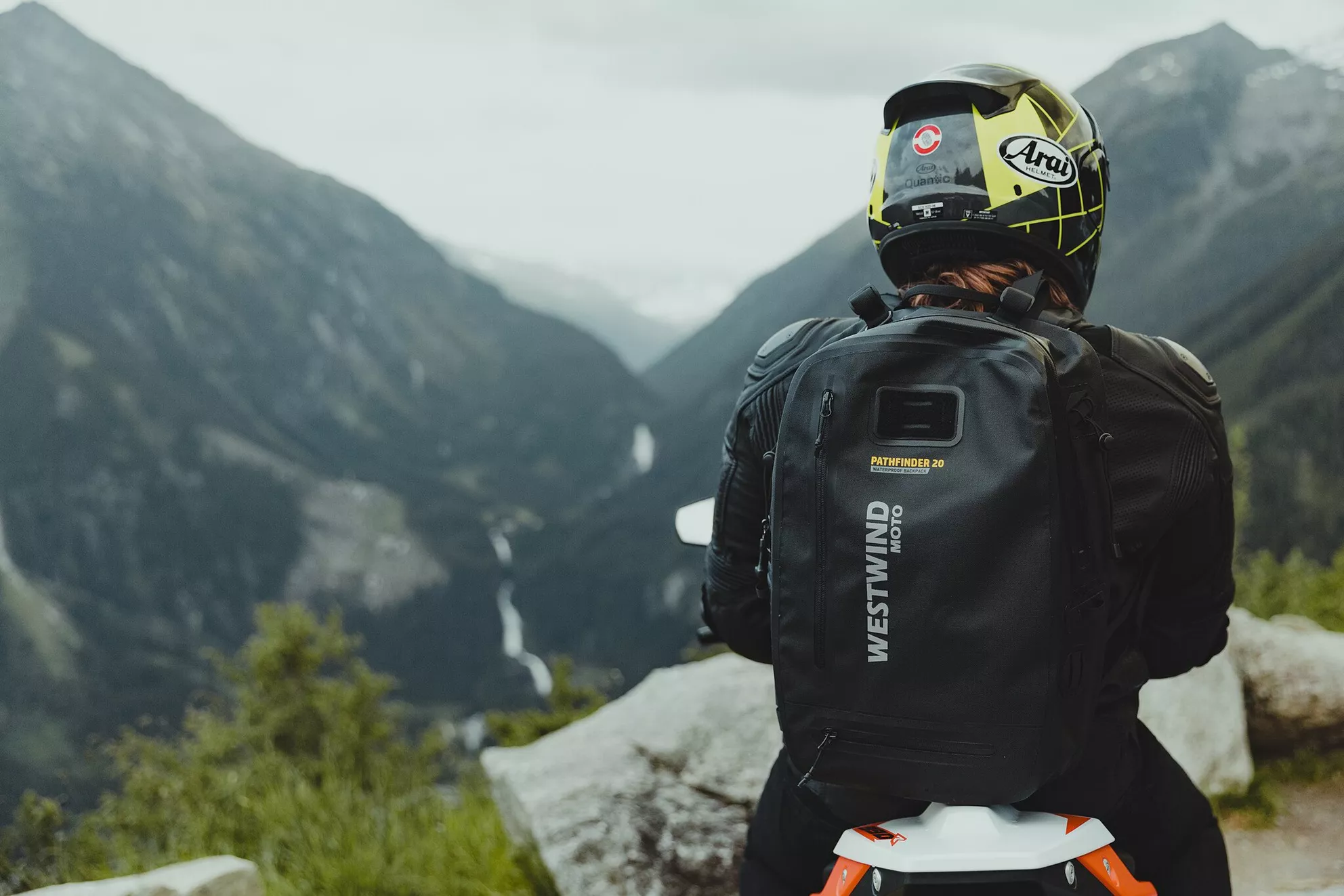
Gear Used in the Test: Arai, RST and Westwind Moto
Arai Quantic Helmet
The Arai Quantic was used for the test. Especially on the nearly silent Honda WN7, wind noise and wearing comfort moved more into the foreground than on a classic combustion bike. This made the helmet play a particularly important role during the longer stretches.
RST Riding Gear
The riding gear for the test came from RST. It accompanied us both on the alpine mountain passes and during the slow, precise riding maneuvers around the Moto Gymkhana course, covering the varying demands of the test assignment.
Westwind Moto Backpacks
For transporting camera equipment and other gear, we used backpacks from Westwind Moto. Especially during a multi-day test assignment, they were a practical solution for carrying the necessary equipment compactly and directly on the bike.
Market Opportunity: Not for Everyone, But Very Logical
The WN7 doesn't just appeal to classic bike riders. People who already ride an e-mountain bike or think about urban mobility differently react with particular curiosity to the concept. In some markets there's also a 15 hp version, which can be interesting for riders with a car license and the corresponding 125cc entitlement.
For city centers with stricter rules against local emissions, a bike like this is also well equipped. No local pollutant emissions, almost no noise pollution, and yet genuine bike feel. The entry price remains steep at €14,990. This makes the WN7 certainly not the cheapest solution, but it also doesn't show up with cheap technology.
- How much does a Honda WN7 cost?
- Here you will find an overview of the price level of new and used motorbikes!
&width=60&height=60&bgcolor=rgba_39_42_44_0&mode=crop "Author: Martin_Bauer")
Honda WN7 2026 - Experiences and Expert Review
Martin_Bauer
The Honda WN7 doesn't convince because it perfectly imitates a combustion engine. It convinces because it can do something of its own. The acceleration up to 100 km/h, the clean controllability, the adjustable regeneration, and the quiet demeanor together add up to a riding experience that's genuinely fun on small roads. But where there's light, there's also shadow. The range remains limited, the seat is hard, the brake could bite harder, and on fast stretches above 100 km/h the final punch is missing. Still, the WN7 shows very clearly that electric bikes can be not only sensible but also fun. Anyone who has the chance should try one of these before rejecting it on principle. It might just happen that afterwards you think about bike fun a little more quietly.
Honda WN7 Test: Quiet Alpine Rocket with Electric Punch Images
Source: 1000PS