Norton is one of the most tradition-rich motorcycle brands in the world. The British manufacturer's history dates back to 1898, but the more recent past has been marked by severe setbacks. After the spectacular insolvency in early 2020, a new chapter began: the Indian two-wheeler group TVS Motor Company acquired the brand out of the insolvency estate and invested massively in its reconstruction. Around 16 million pounds flowed into the takeover at the time. Since then, Norton has been completely restructured. A modern development and production site was established in Solihull near Birmingham in the UK, an international team of experienced engineers and managers was built up, and with the Manx R, Norton presented a technologically ambitious superbike. But a brand doesn't live on prestige projects alone. Anyone who wants to sell in volume needs bikes for the broader market. This is exactly where the new Norton Atlas comes into play. The adventure segment has been one of the most important growth drivers in the motorcycle industry for years. While classic categories are stagnating or growing only slowly, adventure bikes and crossover models continue to record above-average growth. For Norton, the Atlas is therefore not just a new model, but a decisive step back into a relevant mass market.
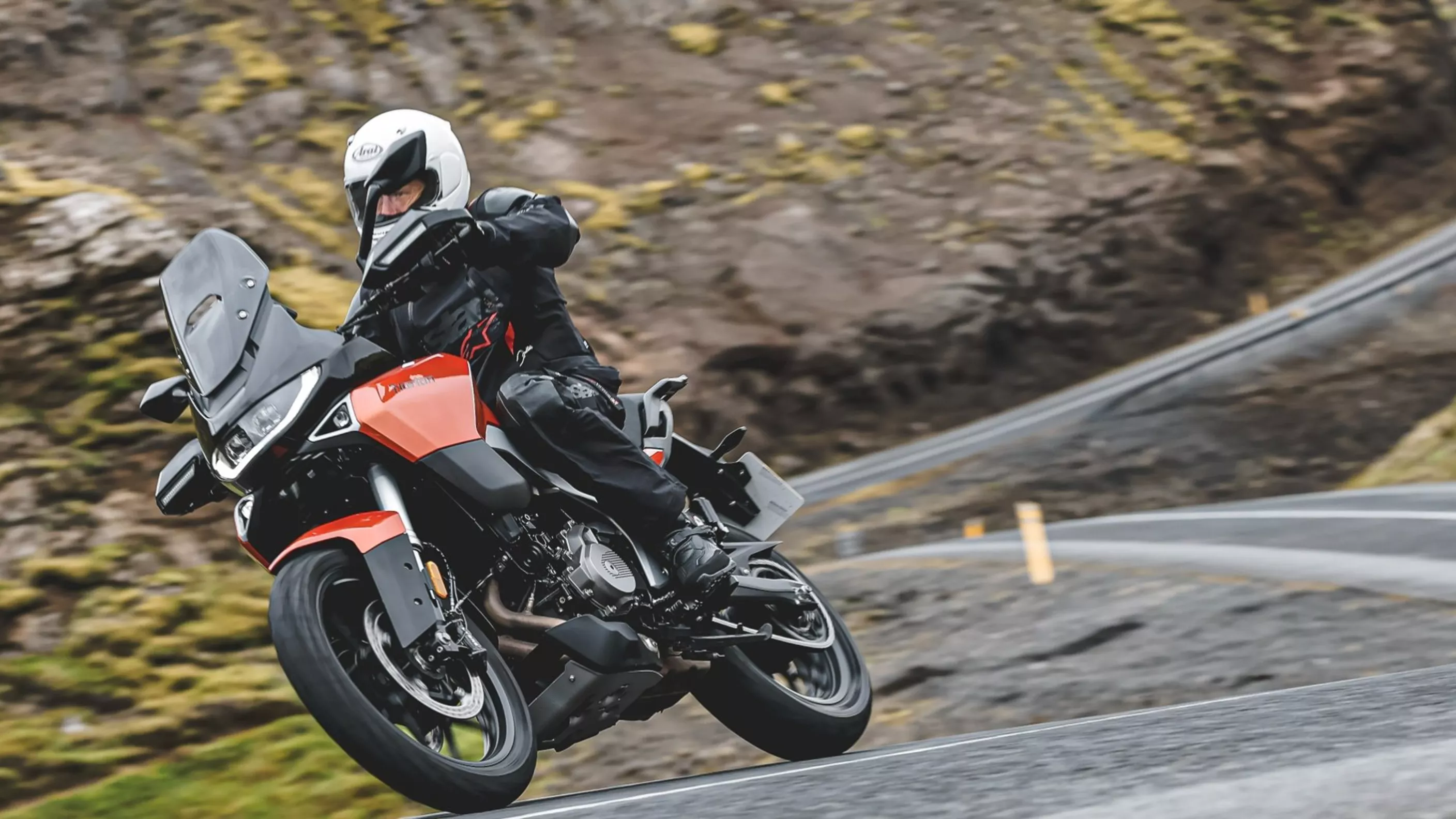
Norton Atlas Test 2026
Strong Engine, Elegant Design, But Also Open Questions
Norton is back and wants to gain a foothold in the fiercely contested adventure segment with the Atlas. The new touring all-rounder combines British design, a powerful 585cc twin and comprehensive equipment. We test the Atlas Apex in Iceland and show where the new Norton model convinces - and where there's still potential.
&width=72&height=72&bgcolor=rgba_39_42_44_0&mode=crop "Author: Clemo")
Clemo
published on 7/21/2026
That said, the theme of adventure isn't entirely new for Norton. As far back as roughly 100 years ago, company founder James Norton proved the versatility of his motorcycles with a journey of almost 5,000 kilometres through South Africa. An impressive feat at a time when motorcycles were still far removed from today's adventure bikes with electronic suspension, heated grips and navigation systems. The idea of travelling through South Africa on a motorcycle back then sounds almost romantic today. At the time, it was simply a mixture of a thirst for adventure, technical courage, and presumably a certain willingness to solve problems along the way personally, with tools and optimism. The name Atlas also has tradition at Norton. There was already a model with this name back in 1962. The Atlas of that era positioned itself as a link between the brand's successful racing history and a bike for everyday use. The new Atlas picks up on this idea again: it's meant to carry sporty genes, but above all, to be versatile.
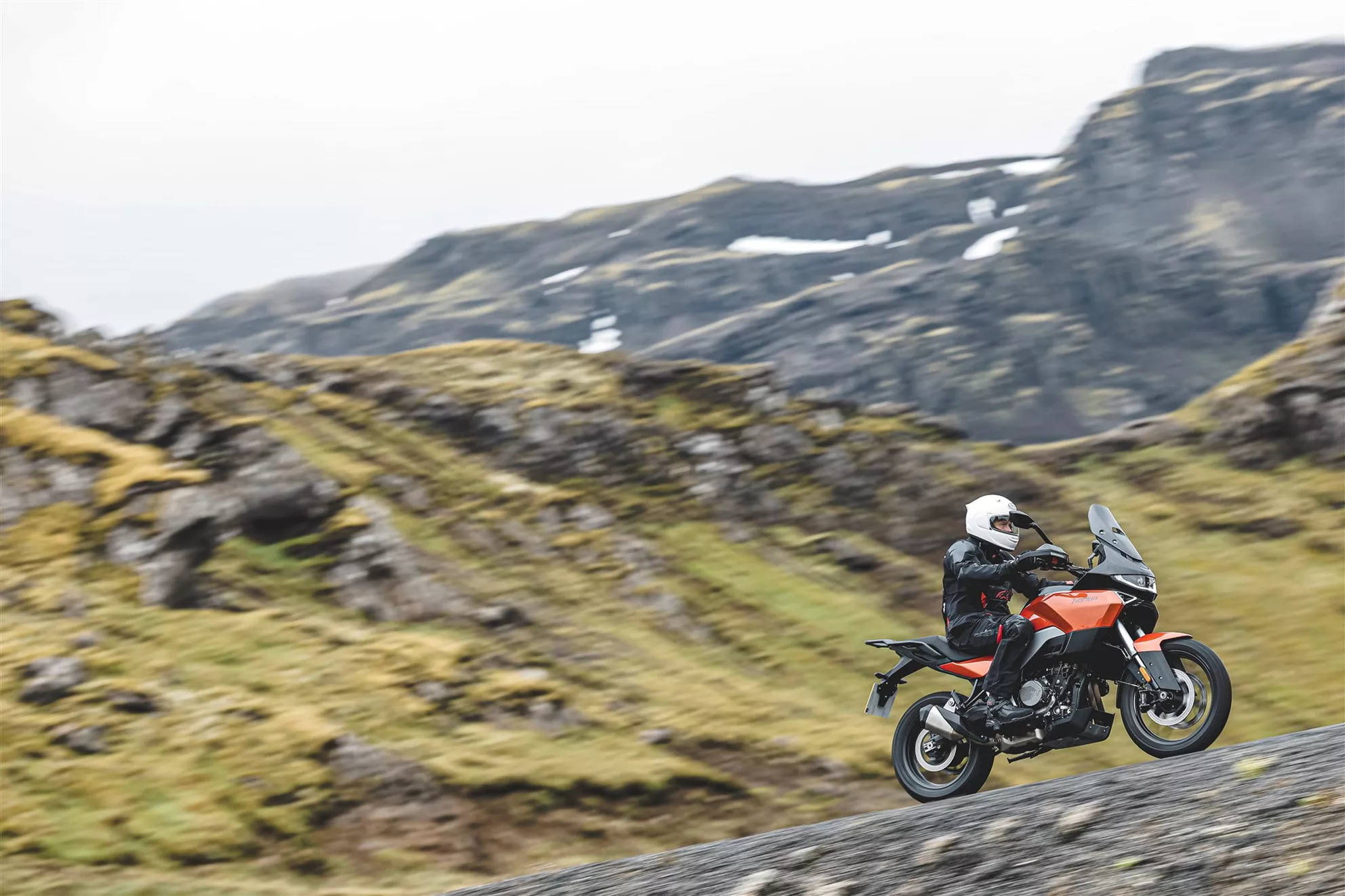
Touring Iceland on the Norton Atlas
Design: Less Show, More Elegance
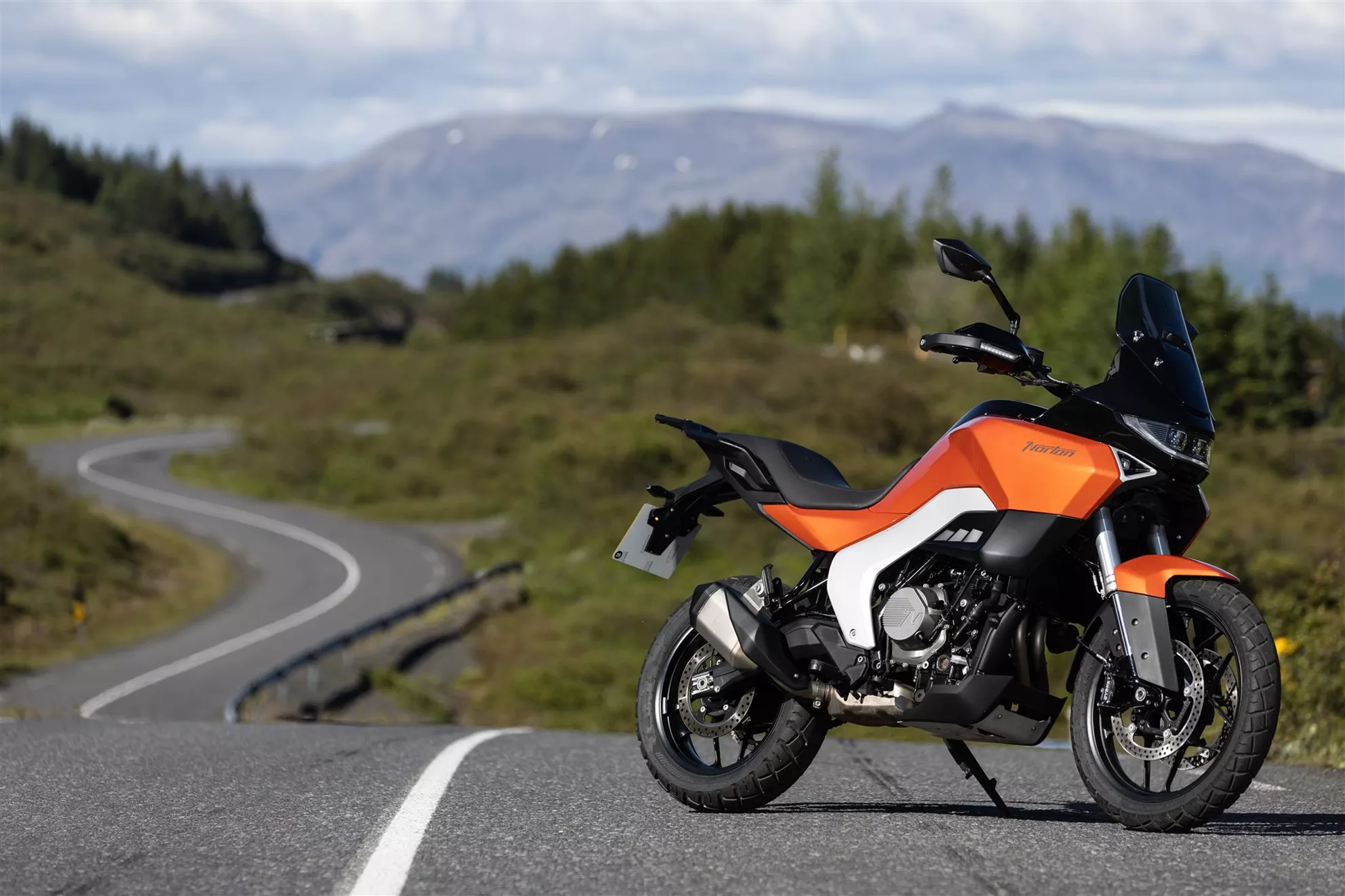
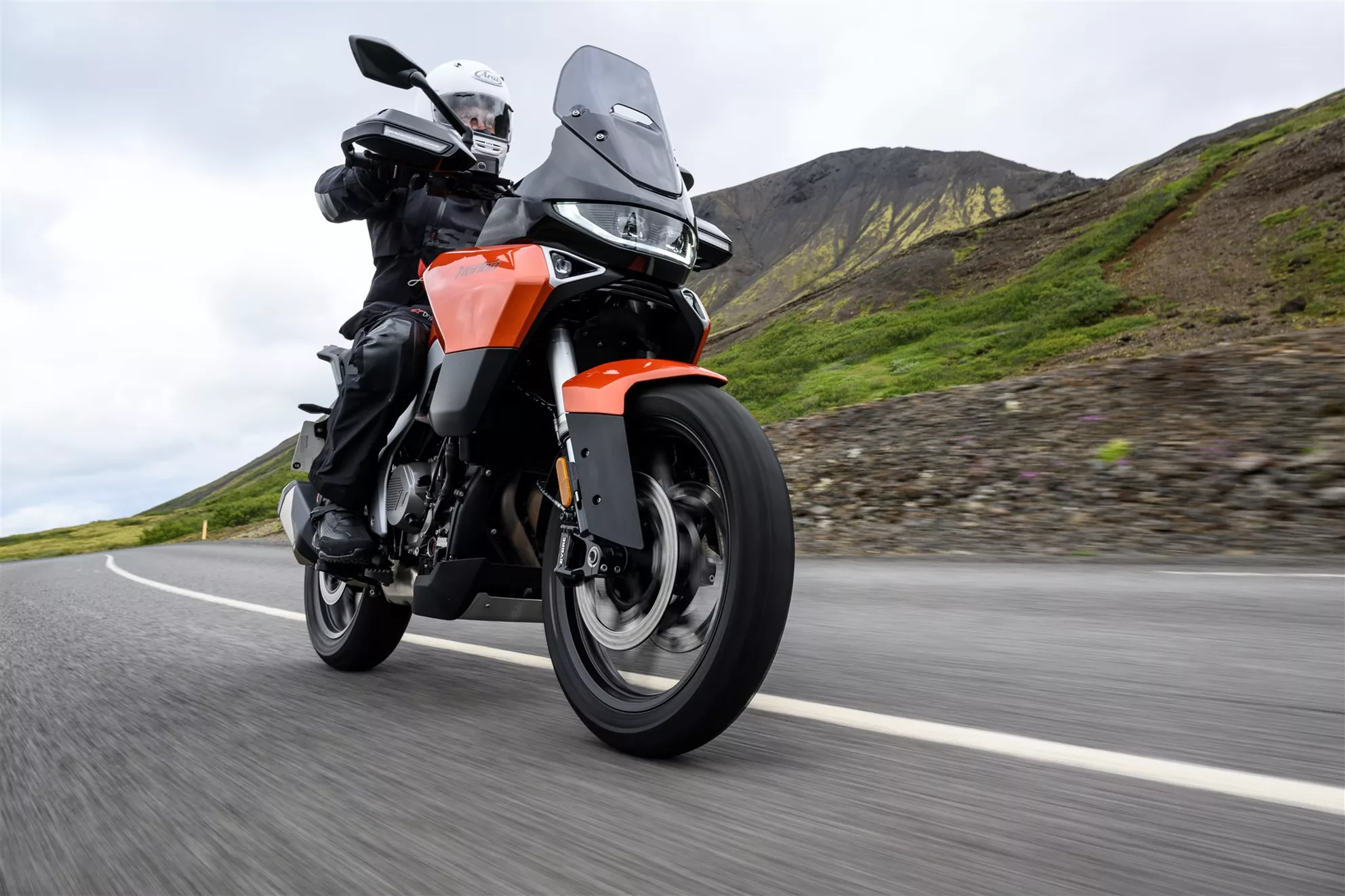
When it comes to design, Norton follows a clear approach: less is more. While many adventure bikes present themselves with aggressive lines, big stickers and visually dominant fairing elements, Norton wants to take a more elegant route. According to the designers themselves, they take their cues more from the automotive world, specifically from brands like McLaren. What matters is clean proportions, high-quality surfaces and a harmonious overall impression. The Atlas doesn't want to shout, but to win you over with details. And it actually works well. The lines look mature, high-quality and less playful than on many competitors. The fairing is cleanly integrated, the surfaces look classy, and the colour palette of blue, green, orange and black underlines the premium aspiration. The Norton Atlas was tested in the so-called Apex version. This is the fully equipped variant. Compared to the base model, the Apex offers, among other things, a height-adjustable windscreen, heated grips, hill hold assist, a combined braking system, tyre pressure monitoring and luggage racks. The base model, however, is already comprehensively equipped. Standard features include a USB-C port, keyless go, an 8-inch TFT touch display, integrated pannier racks, an SOS button, cornering lights and adjustable hand levers. So Norton doesn't want to score points with a long list of optional extras, but rather to include as much equipment as possible right from the start.
The Engine: Small Twin with Big Character
The heart of the Atlas is a completely newly developed 585cc parallel twin. Norton, or rather TVS, relies on a 270-degree crank pin offset, which is meant to give the engine a characteristic, V-twin-like feel. The performance figures read unspectacularly, but are absolutely fitting for this class: 70 hp and 57.5 Newton metres of torque are on tap. What matters here, though, is less the peak output than the character. And this is exactly where the engine wins you over. The torque curve runs very flat, so there's already decent grunt at low revs. The Atlas responds spontaneously to throttle inputs and always conveys the feeling of having sufficient reserves. This tuning is very well executed, especially in everyday riding and on twisty roads. The front wheel can be lifted playfully, the engine revs willingly, and conveys noticeably more emotion than the raw figures suggest. For a bike in this performance class, the twin is a genuine highlight. Technically, Norton is also ambitious here. The cylinders feature a plasma coating, which means classic cylinder liners can be dispensed with. This reduces weight and friction. In addition, a semi-dry sump lubrication system is used, which likewise allows for a compact design. The engine also integrates a slipper clutch as well as a quickshifter with blipper function. At least on paper, then, Norton brings modern technology on par with established manufacturers here. When it comes to weight, the Atlas plays one of its biggest trump cards. The standard model weighs 188 kilograms without fuel, the Apex version comes in at 192 kilograms. Fully fuelled, the tested bike weighs 203 kilograms. This makes the Norton significantly lighter than many large adventure competitors. Even more important: the mass is well centralised. The bike doesn't just feel light on paper, but also while riding. The tank holds 15.7 litres. An interesting detail is the plastic ducting for the engine's heat. A small channel directs the hot air not directly towards the rider's legs, but downwards instead. This is meant to improve comfort, especially in warm temperatures.
Chassis: Sporty All-Rounder Instead of Gravel Expert
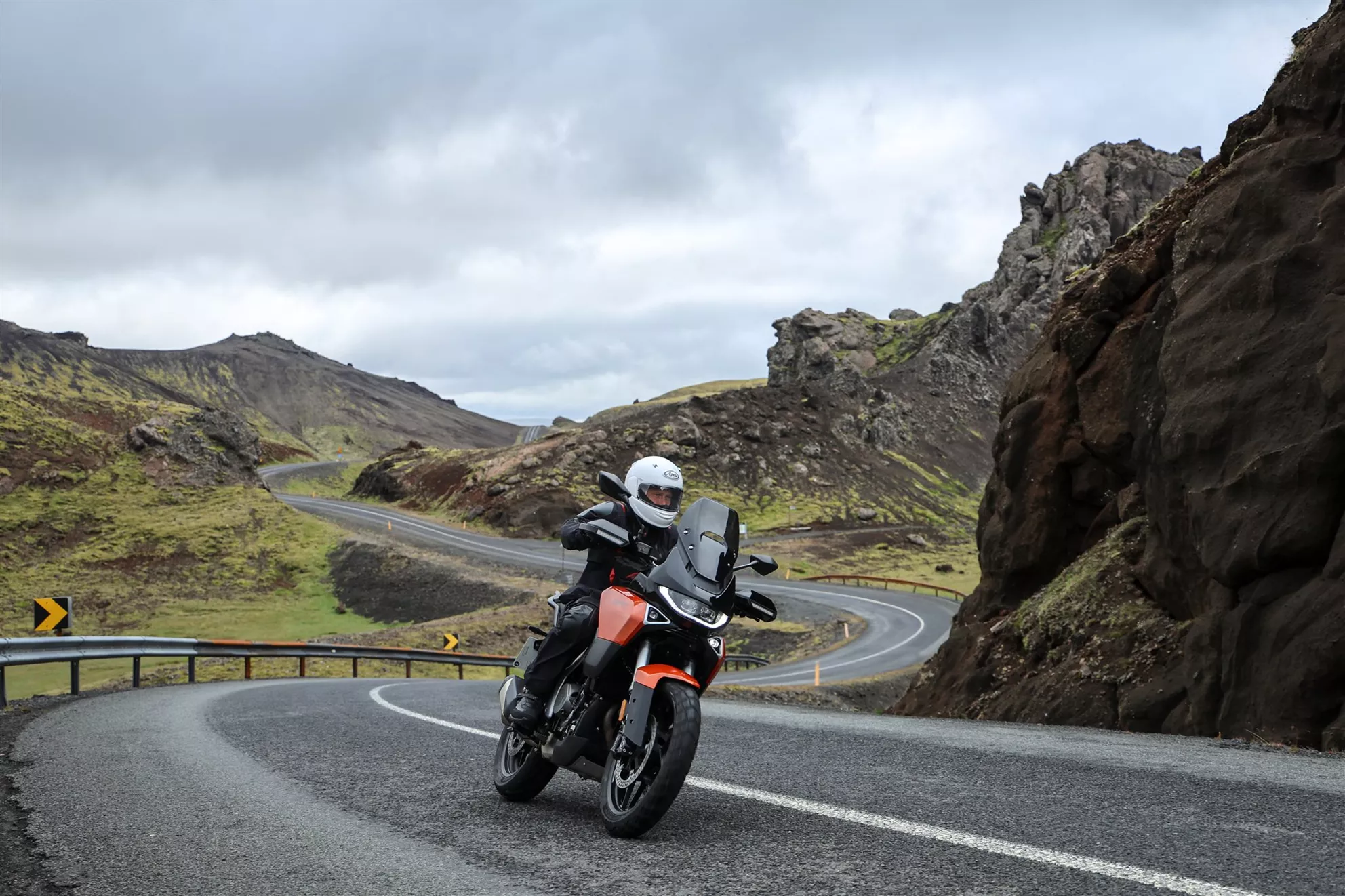
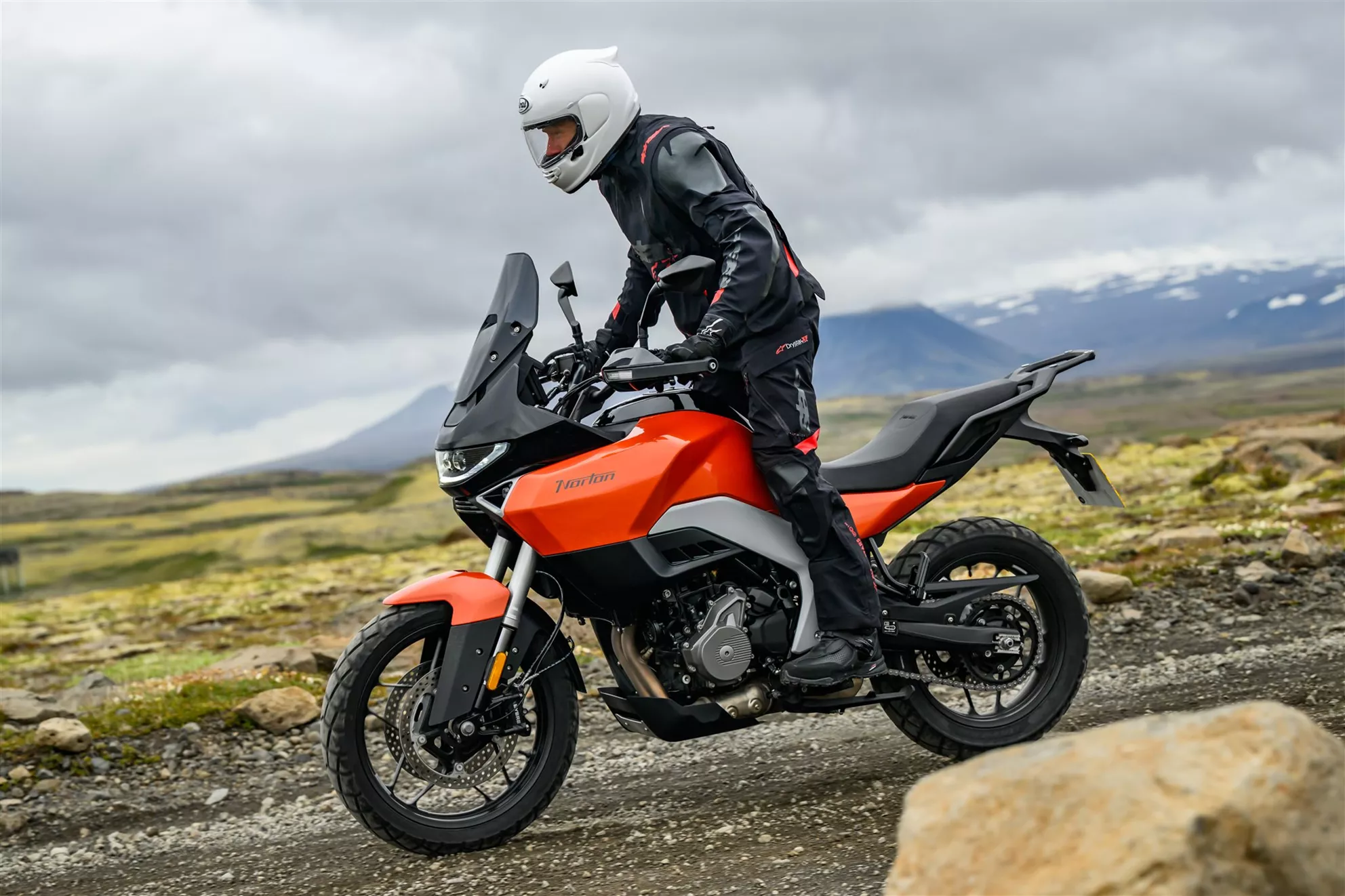
For the chassis, Norton relies on a steel frame, which is however largely hidden by fairing panels. The suspension components come from Kayaba. Up front works a 43mm upside-down fork with full adjustability and 180mm of travel. At the rear, a shock with a convenient hand wheel adjuster (unfortunately rather hard to reach) is used for spring preload. The setup is on the firmer side. The Atlas isn't a softly sprung sofa for long motorway stints, but instead conveys a direct riding feel. Nevertheless, the suspension responds sensitively and filters out bumps cleanly. The braking system comes from ByBre, in other words from the Brembo group. Up front, the Atlas works with two brake discs, one disc at the rear. Particularly positive: steel braided lines are part of the standard equipment. That's by no means a given in this price class. The wheels already reveal which target group Norton is actually addressing here. Fitted are dimensions of 110/80-19 up front and 150/70-17 at the rear. So this isn't a classic adventure bike with 21- and 18-inch wheels for heavy off-road use. The advantage of this combination clearly lies on the road. The Atlas turns in more agilely, feels more compact, and conveys more of a motorcycle feel on twisty tarmac roads. Anyone who regularly rides gravel roads will be happy with it. Anyone looking for demanding off-road sections with deep sand, coarse rocks or long off-road tracks, however, will find more suitable tools in other concepts. The tyres come from Eurogrip, TVS's in-house brand. The tyre was therefore developed specifically for the Atlas. During the test in Iceland, it had to prove itself under difficult conditions. Changeable weather, cold temperatures, wet tarmac and gravel roads were a good test bed. The result is positive: the tyre performs convincingly both in wet and on dry surfaces, but with its 80/20 positioning, it quickly reaches its limits off-road.
Nimble, Compact and Surprisingly Gravel-Capable
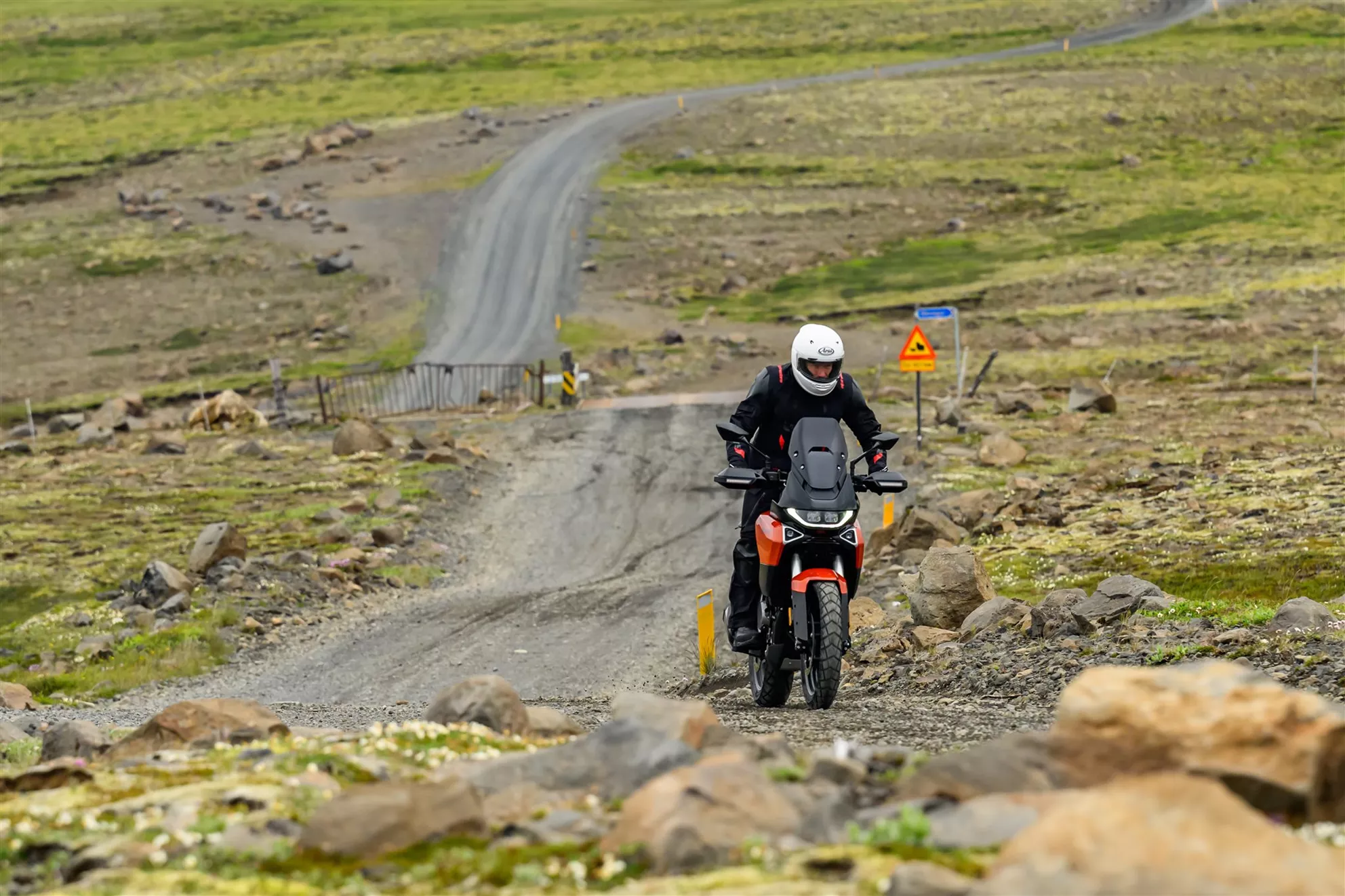
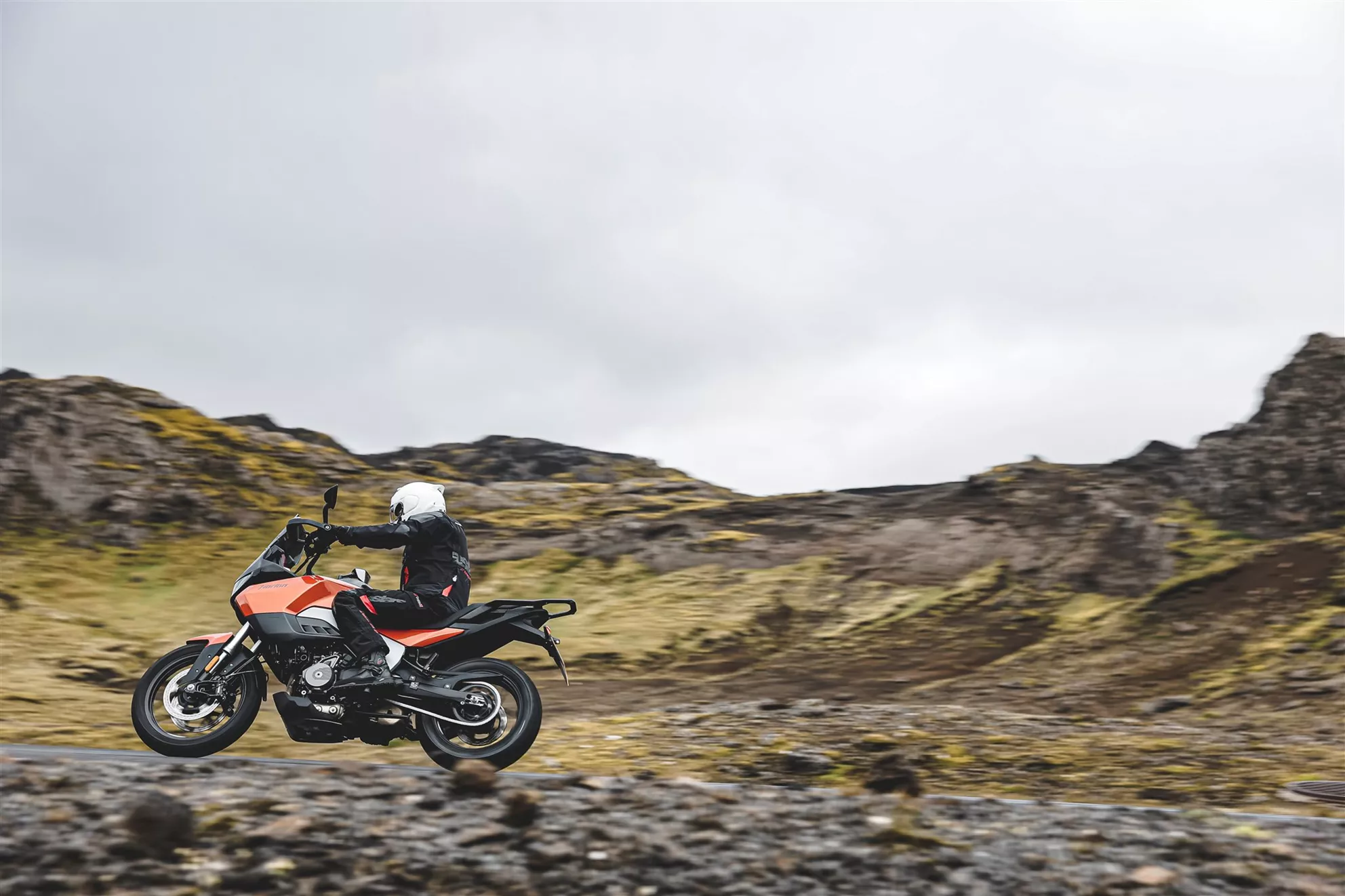
The riding performance of the Norton Atlas fits very well with its basic concept. It's not a bike that wants to shine with maximum stability at high speed on the motorway - here, the engine also runs out of breath fairly quickly. Its strength lies in versatility. It feels most at home on twisty country roads, small side roads and gravel sections. The suspension setup feels very neutral. The Atlas doesn't automatically dive aggressively into corners, but doesn't demand big steering inputs either. It responds precisely and quickly instills confidence. Especially in tight corners, the low weight plays to its advantage. The Norton feels compact and neutral not just because of its 203-kilogram ready-to-ride weight. The entire geometry also conveys a very manageable, nimble feeling. Riders coming from big adventure bikes will be surprised at how little bike there is beneath them. This is an advantage especially off-road. At slow speeds, on loose surfaces, or during small rear-wheel drifts, the Atlas conveys a good feeling for the front end. You can work cleanly and steer the bike precisely while standing. However, this is also where the limits of the concept show. The large plastic panels that hide the frame may look high-quality, but are quickly exposed to scratches with regular off-road use. The integration of the indicators into the handguards is also visually elegant, but not necessarily the most robust solution in the event of a tip-over off-road. The Atlas is therefore no substitute for a genuine adventure enduro with a focus on technically demanding off-road adventures. Rather, it's a versatile road all-rounder with gravel competence.
Ergonomics: Strong Standing Up, Compromises Sitting Down
When it comes to ergonomics, Norton shows an interesting setup. Particularly positive is the standing riding position. The tank is kept relatively narrow and doesn't spread the knees unnecessarily wide apart. The handlebar sits exactly where you'd expect it on an adventure bike, and the feel for the front wheel is excellent. Especially on loose surfaces or when the rear end steps out slightly, the Atlas can be controlled well. The seated position, on the other hand, depends more strongly on rider height. With a seat height of 840 millimetres, it's not extremely tall, but taller riders will hit their limits due to the combination of a low seat and relatively high-mounted footpegs. The knee angle then becomes noticeably tighter. Another point of criticism is the shape of the seat. Norton relies on a pronounced seat dish. While this provides secure grip and a low effective seat height, it reduces freedom of movement. Especially on longer tours or with frequent switching between sitting and standing positions, a flatter, more open seat would be more comfortable.
Modern Electronics with Light and Shadow
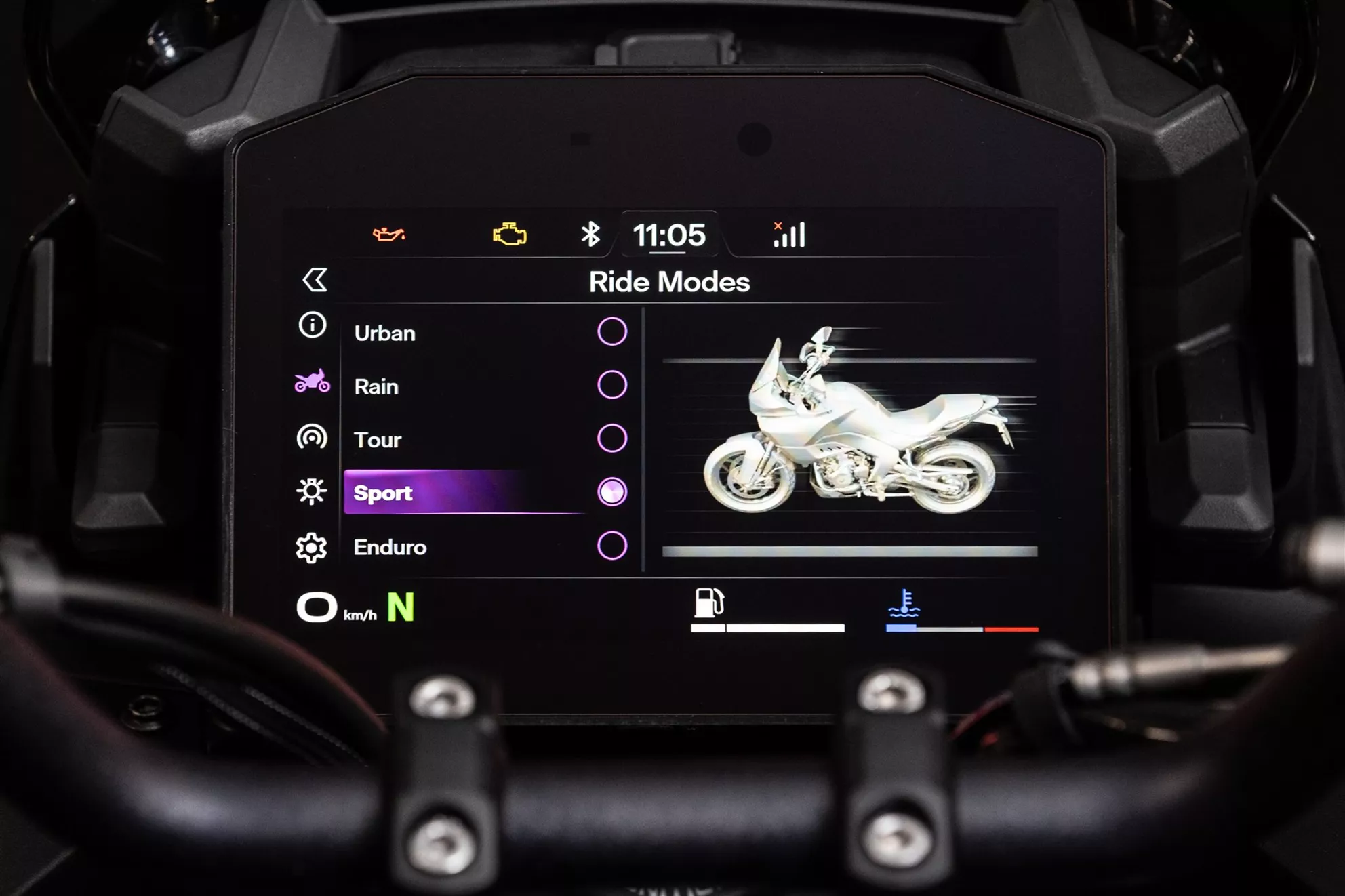
Electronically, the Norton Atlas brings a lot to the table. The foundation is a six-axis IMU, which is also used on the Manx R superbike. This gives the Atlas modern sensor technology for its rider assistance systems. Five riding modes are available: Sport, Touring, Urban, Rain and Enduro. The modes change engine characteristics, traction control and assistance systems, but cannot be individually configured. Anyone who likes to program their own custom setup will miss that here. Cornering ABS features three levels, and in Enduro mode, rear-wheel ABS is automatically deactivated. Traction control operates lean-angle dependent and also adapts to the five riding programs, but can be switched off at any time at a standstill by pressing a button. Also on board as standard are cruise control, cornering lights and an 8-inch TFT display with touch function. Alternatively, operation can also be handled via the classic thumb joystick on the left handlebar switchgear. The colour display looks modern and clear, and legibility is also perfectly fine. However, the software still shows a few teething troubles. Particularly annoying is the quickshifter. It can be deactivated in the menu, which was also necessary during the test. When activated, it sometimes happened that during acceleration, the ignition was interrupted completely unexpectedly. It made no difference whether the shift lever was even touched. After deactivating the quickshifter, the problem disappeared immediately. Norton urgently needs to address this with a software update. An assistance system that's actually supposed to increase comfort and riding pleasure must not create uncertainty. Other electronic details also don't seem fully mature yet. The indicator switch has a pressure point that takes some getting used to. If you hold it down too long, the hazard warning lights activate automatically. This can be irritating in everyday use. The keyless go system is also not optimally resolved. If the bike is deactivated via the master switch on the steering head, the remote control must then be actively used again for the restart. To do this, the key must be taken out of the pocket and a button on the remote pressed. This completely defeats the purpose of a keyless system. Last but not least, the riding modes also can't always be changed without issues while riding. The Norton Atlas also lacks an outside temperature display.
8-inch TFT with touch function
Everyday Riding Instead of Adventure: The Atlas' Real Talent
Fuel consumption during the test was over six litres per hundred kilometres. Given the displacement and output, that's not a particularly economical figure. Here, the compact twin could have worked a bit more efficiently. In return, Norton scores points with a three-year warranty. Especially for a young brand and a newly developed bike, that's an important signal. In terms of price, the Atlas positions itself interestingly. The base model starts in Germany at 9,250 euros, while the tested Apex version with full equipment costs 10,525 euros. Prices for Austria were not yet officially known at the time of testing. Norton is also still holding back when it comes to its dealer network at the moment. This puts the Atlas in a fiercely contested environment. Many established manufacturers already offer mature models in this class with a dense dealer network and long experience.
A Strong Bike with Software That's Not Yet Perfect
The Norton Atlas leaves an exciting impression. Mechanically, this bike is significantly better than one might expect from the relaunch of a tradition-rich brand. Because the engine is a genuine highlight. The small twin impresses with strong pull, spontaneous throttle response, clean tuning and a pleasant character. The chassis also convinces. The low weight, the well-executed mass centralisation and the agile handling make the Atlas a bike that's simply fun to ride. Furthermore, the standing ergonomics and the comprehensive equipment speak in favour of the concept. But Norton must be measured against its own standards. The brand wants to position itself in the premium segment and names manufacturers like BMW or Ducati as points of reference. While an exclusive superbike like the Manx R, with British manufacturing and corresponding effort, conveys this claim credibly, a different question arises with the Atlas. The Atlas is a mid-range bike produced in India with very good equipment and an attractive price-performance ratio. This is fundamentally not a disadvantage. Many successful manufacturers have proven for years that high-quality motorcycles can emerge from global production structures. But premium isn't defined solely by equipment and design, but also by attention to detail, software maturity, and a flawless customer experience. This is exactly where the Atlas still has some catching up to do. The electronics currently seem to be the biggest weak point. The software problems described need to be fixed, because mechanically, Norton delivers a convincing package. As a hardcore adventure bike, the Atlas doesn't convince. It lacks the corresponding wheels, the robustness and the consistent off-road orientation for that. As a versatile everyday and touring bike, however, it's very well executed. An after-work spin, a weekend tour, daily use, or a trip along twisty country roads and the occasional gravel track: that's exactly where the Norton Atlas plays to its strengths. It's not an adventure tool for the extremists of this world. It's a modern all-rounder with character, showing that Norton is back on the stage. Now the brand just needs to prove that it can also meet its own premium standards when it comes to the details.
&width=60&height=60&bgcolor=rgba_39_42_44_0&mode=crop "Author: Clemo")
Norton Atlas Apex 2026 - Experiences and Expert Review
Clemo
With the Atlas, Norton has achieved a convincing relaunch in the mid-range class. The bike scores points with a characterful parallel twin, a well-sorted chassis, low weight and comprehensive standard equipment. The Atlas feels particularly at home on twisty country roads and the occasional gravel track, and impresses with its uncomplicated, nimble handling. Less convincing at present is the electronics: the quickshifter showed software problems during testing, and the keyless go system as well as individual controls also don't yet seem fully mature. Mechanically, Norton already delivers a very strong overall package. If the manufacturer manages to iron out the teething troubles via a software update and build up a good dealer network, the Atlas has the potential to establish itself as an attractive all-rounder in the adventure segment.
Norton Atlas Test 2026 Images
Source: 1000PS


