Mit der Tracker 400 erweitert Triumph seine erfolgreiche 400er-Plattform um eine vierte Variante und stellt ihr ein Motorrad zur Seite, das konsequent auf Fahrdynamik ausgelegt wurde. Royal Enfield verfolgt mit der Guerrilla 450 dagegen einen gänzlich anderen Ansatz. Zwar stammt ihr Sherpa-Einzylinder direkt aus der überzeugenden Himalayan 450, doch statt Adventure-Gene stehen hier Alltagstauglichkeit und unkomplizierter Fahrspaß im Mittelpunkt. Beide Motorräder bewegen sich mitten im heiß umkämpften A2-Segment, leisten rund 40 PS, wiegen unter 190 Kilogramm und kosten deutlich unter 7.000 Euro. Auf den ersten Blick scheint es also ein Duell auf Augenhöhe zu sein. Auf den Straßen rund um Neukirchen am Großvenediger, Veranstaltungsort des "Newchurch Summit" Motorrad-Festivals, offenbaren sich jedoch zwei völlig unterschiedliche Charaktere.
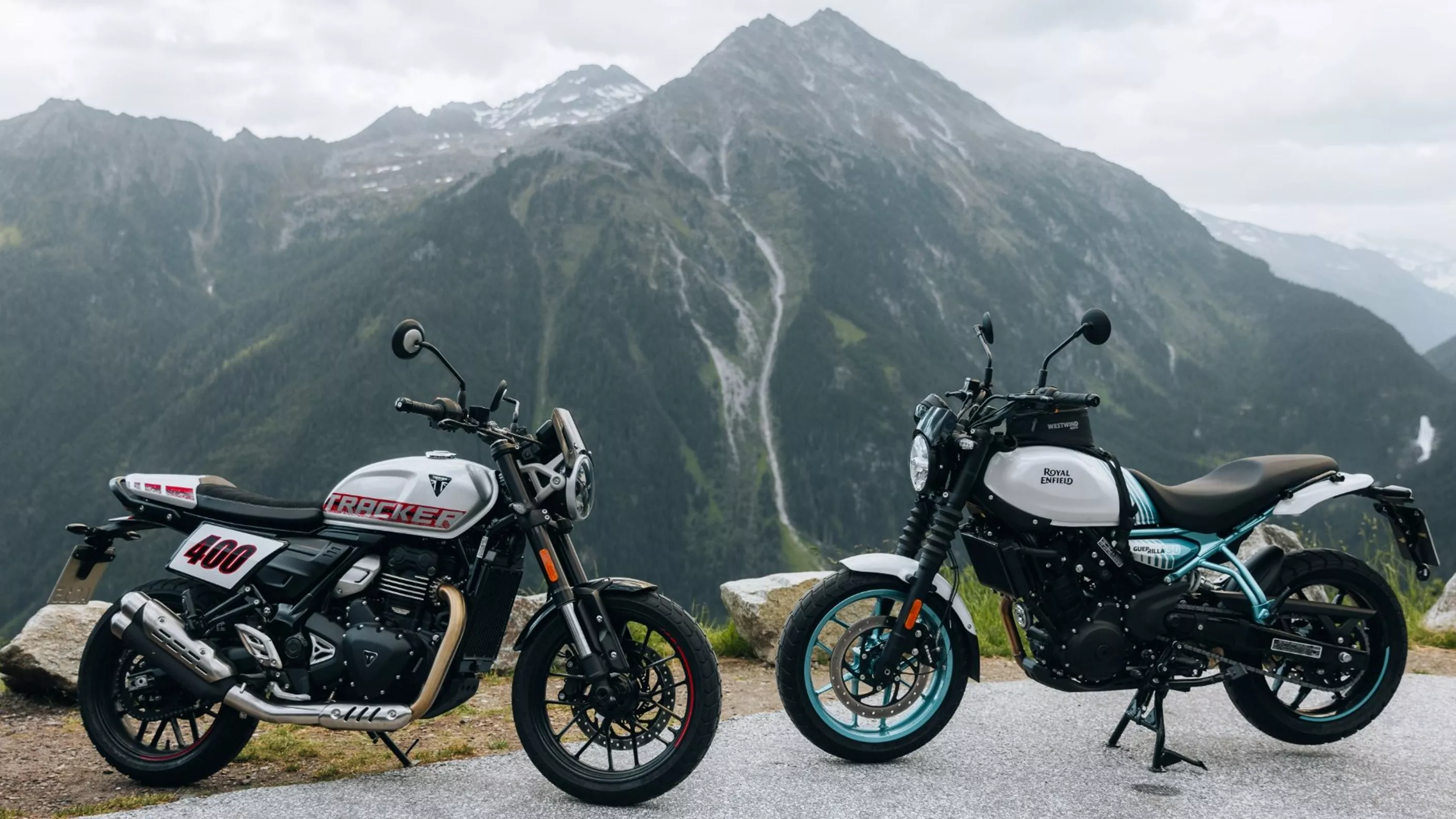
Triumph Tracker 400 vs. Royal Enfield Guerrilla 450: Naked Bike Showdown
Two A2 Singles, Two Philosophies
Both bikes sit squarely in the fiercely competitive A2 segment, delivering around 40 horsepower, weighing under 190 kilograms, and priced under 7,000 euros. At first glance, it seems like a head-to-head battle. However, on the road, they reveal two completely distinct characters.
&width=72&height=72&bgcolor=rgba_39_42_44_0&mode=crop "Author: Clemo")
Clemo
published on 7/16/2026
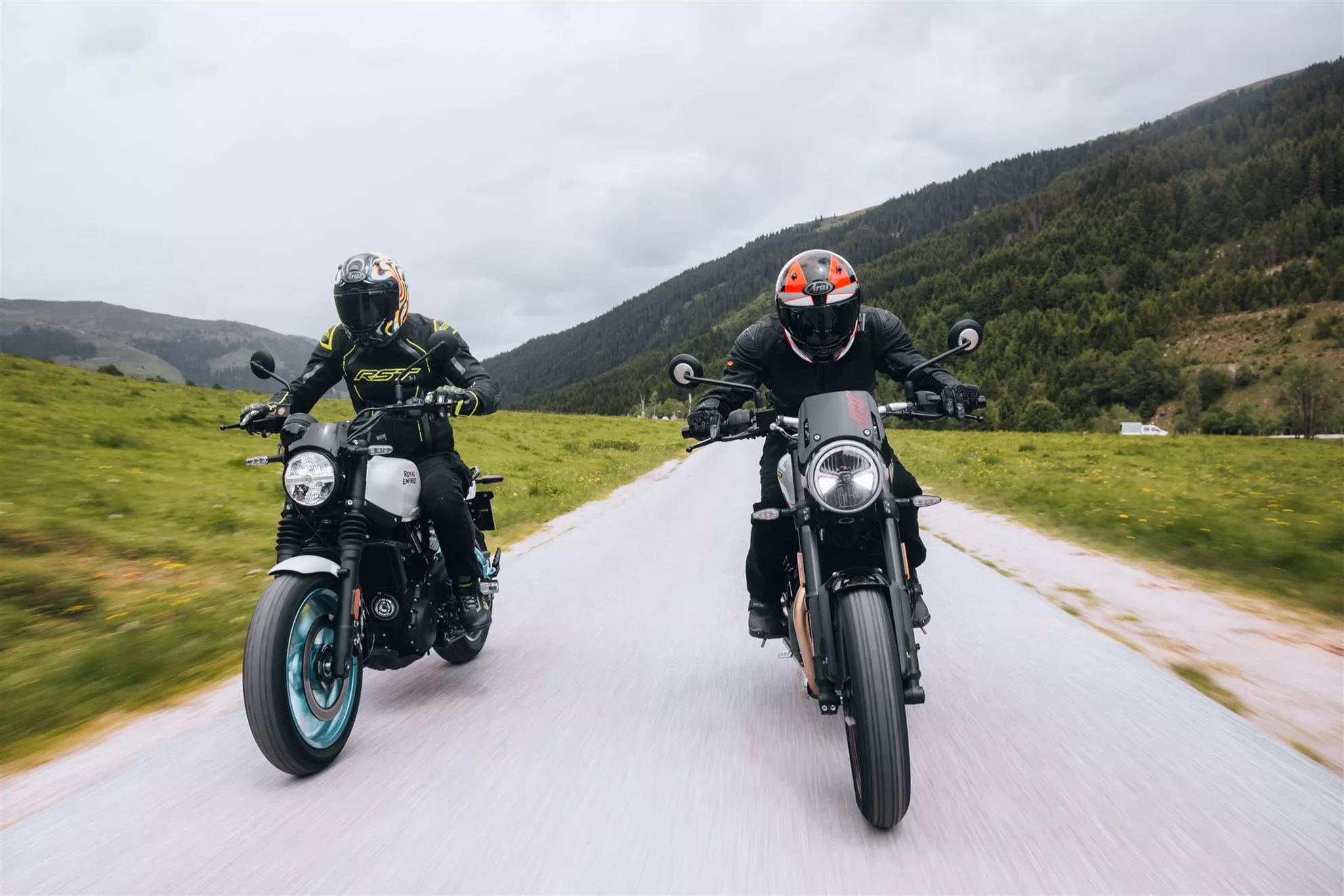
Test Ride in the Alpine Scenery Around the "Newchurch Summit"
Verarbeitung und Design
Schon im Stand wird klar, dass beide Hersteller unterschiedliche Prioritäten setzen. Die Triumph wirkt wie aus einem Guss und erfüllt sogar Premium-Ansprüche. Saubere Schweißnähte, hochwertig lackierte Anbauteile und eine Materialqualität, die in dieser Klasse Maßstäbe setzt, vermitteln beinahe den Eindruck eines deutlich teureren Motorrads. Besonders die komplett schwarz gehaltenen Komponenten, der kompakte 13-Liter-Tank, die Startnummerntafeln und der hochgezogene Doppelauspuff verleihen der Tracker einen eigenständigen Auftritt. Obwohl sie auf der bekannten 400er-Plattform basiert, wirkt sie keineswegs wie eine leicht modifizierte Speed 400, sondern besitzt eine eigenständig-klare Identität. Die Guerrilla 450 verfolgt dagegen einen sympathisch unkomplizierten Retro-Ansatz. Rundscheinwerfer, klassischer Tank und schlichte Linien erinnern zwar an traditionelle Naked Bikes, gleichzeitig sorgen das moderne TFT-Display und die LED-Beleuchtung für einen zeitgemäßen Eindruck. Die Verarbeitung ist für den Preis absolut überzeugend und hat bei Royal Enfield einen gewaltigen Schritt nach vorne gemacht, reicht aber nicht ganz an das Finish der Triumph heran. Vor allem bei den einfachen Brems- und Kupplungshebeln oder einigen Kunststoffteilen merkt man, dass Royal Enfield den attraktiven Verkaufspreis konsequent im Blick behalten hat.
Ergonomie – Sport vs. Komfort
Kaum sitzt man auf beiden Motorrädern, werden die unterschiedlichen Philosophien sofort spürbar. Die Guerrilla empfängt ihren Fahrer ausgesprochen entspannt. Mit lediglich 780 Millimetern Sitzhöhe gehört sie zu den niedrigsten Motorrädern ihrer Klasse. Der breite Lenker liegt angenehm in den Händen, der Kniewinkel bleibt locker und der schmale Fahrzeugmittelteil sorgt selbst bei kleineren Fahrern für einen sicheren Stand. Gerade im Stadtverkehr vermittelt sie sofort Vertrauen. Die Tracker geht einen völlig anderen Weg. Triumph hat den Lenker gegenüber der Speed 400 rund 13 Zentimeter tiefer positioniert und gleichzeitig verbreitert. Die Fußrasten wandern deutlich nach hinten und oben. Dadurch sitzt der Fahrer wesentlich aktiver auf dem Motorrad. Mehr Gewicht lastet auf dem Vorderrad, was zunächst etwas sportlicher wirkt, sich spätestens auf kurvigen Landstraßen aber bezahlt macht. Das Vorderrad vermittelt mehr Rückmeldung und der Fahrer fühlt sich stärker ins Fahrgeschehen eingebunden. Trotzdem bleibt die Tracker erstaunlich alltagstauglich. Die Sitzhöhe von 805 Millimetern klingt zunächst höher, durch den schmalen Sattel gelingt der Bodenkontakt aber problemlos. Selbst längere Etappen lassen sich ohne Beschwerden absolvieren, auch wenn die Guerrilla insgesamt die entspanntere, fast schon Cruiser-ähnliche Sitzposition bietet.
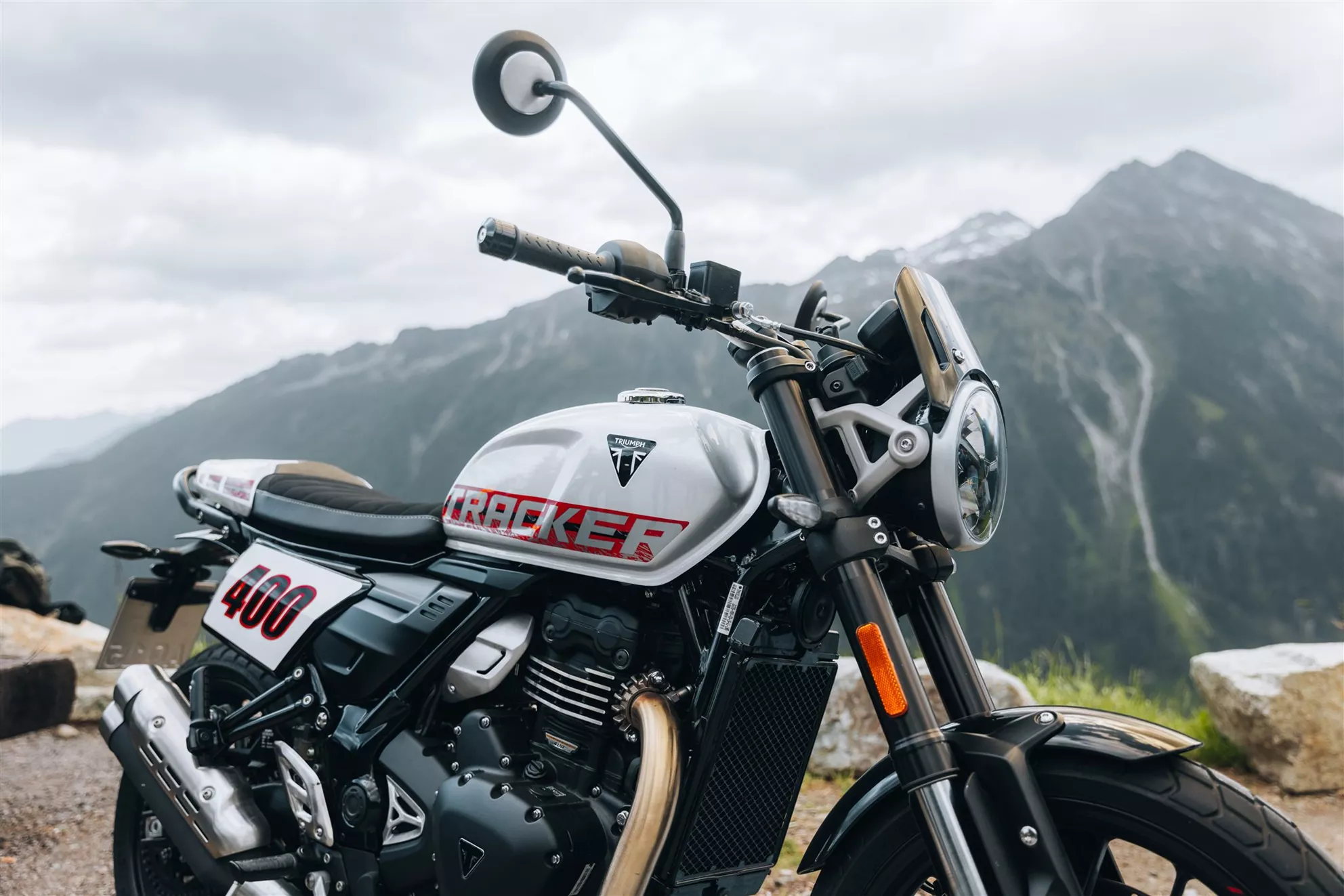
Exemplary Build Quality on the Triumph Tracker 400
Einzylinder mit konträren Charakteren
Obwohl beide Motorräder nominell nahezu identische Leistungswerte bieten, könnten ihre Motoren kaum unterschiedlicher wirken. Der Sherpa-450 der Royal Enfield schöpft aus 452 Kubikzentimetern 40 PS und 40 Newtonmeter. Seine Stärke liegt klar im unteren und mittleren Drehzahlbereich. Bereits knapp über Standgas läuft der Einzylinder sauber und ruckfrei. Im Alltag bedeutet das entspanntes Dahingleiten ohne ständiges Schalten. Gerade im Stadtverkehr oder auf kurvigen Landstraßen lässt sich die Guerrilla angenehm schaltfaul bewegen. Erst im oberen Drehzahlbereich verliert der Motor etwas an Nachdruck. Er fordert den Fahrer nie zum Ausdrehen auf, sondern vermittelt vielmehr Gelassenheit. Ganz anders präsentiert sich der 398-Kubik-Einzylinder der Triumph. Durch die neue Nockenwelle und geänderte Steuerzeiten wurde seine Charakteristik gezielt geschärft. Die Spitzenleistung steigt zwar ebenfalls „nur“ auf 42 PS, entscheidender ist jedoch die Art der Leistungsentfaltung. Der Motor hängt spontaner am Gas, dreht spürbar freudiger hoch und animiert den Fahrer dazu, die Gänge länger auszudrehen. Wo die Royal Enfield früh zum Hochschalten motiviert, möchte die Triumph bis in hohe Drehzahlen bewegt werden. Im direkten Vergleich wirkt die Guerrilla kräftiger aus engen Kehren heraus, während die Tracker lebendiger und sportlicher beschleunigt. Keiner der beiden Motoren besitzt Leistung im Überfluss, doch genau darin liegt ihr Reiz: Beide lassen sich nahezu permanent am Limit bewegen, ohne ihren Fahrer zu überfordern. Auch bei den Getrieben zeigen beide Hersteller eine überzeugende Vorstellung. Die Royal Enfield schaltet ausgesprochen weich, die Triumph etwas knackiger und mechanischer. Einen Schaltassistenten sucht man an beiden Vergleichstest-Kontrahenten jedoch vergeblich. Beide Kupplungen arbeiten dagegen angenehm leicht und machen den Stadtverkehr auch ohne Holzfäller-Ärmel zum Kinderspiel.
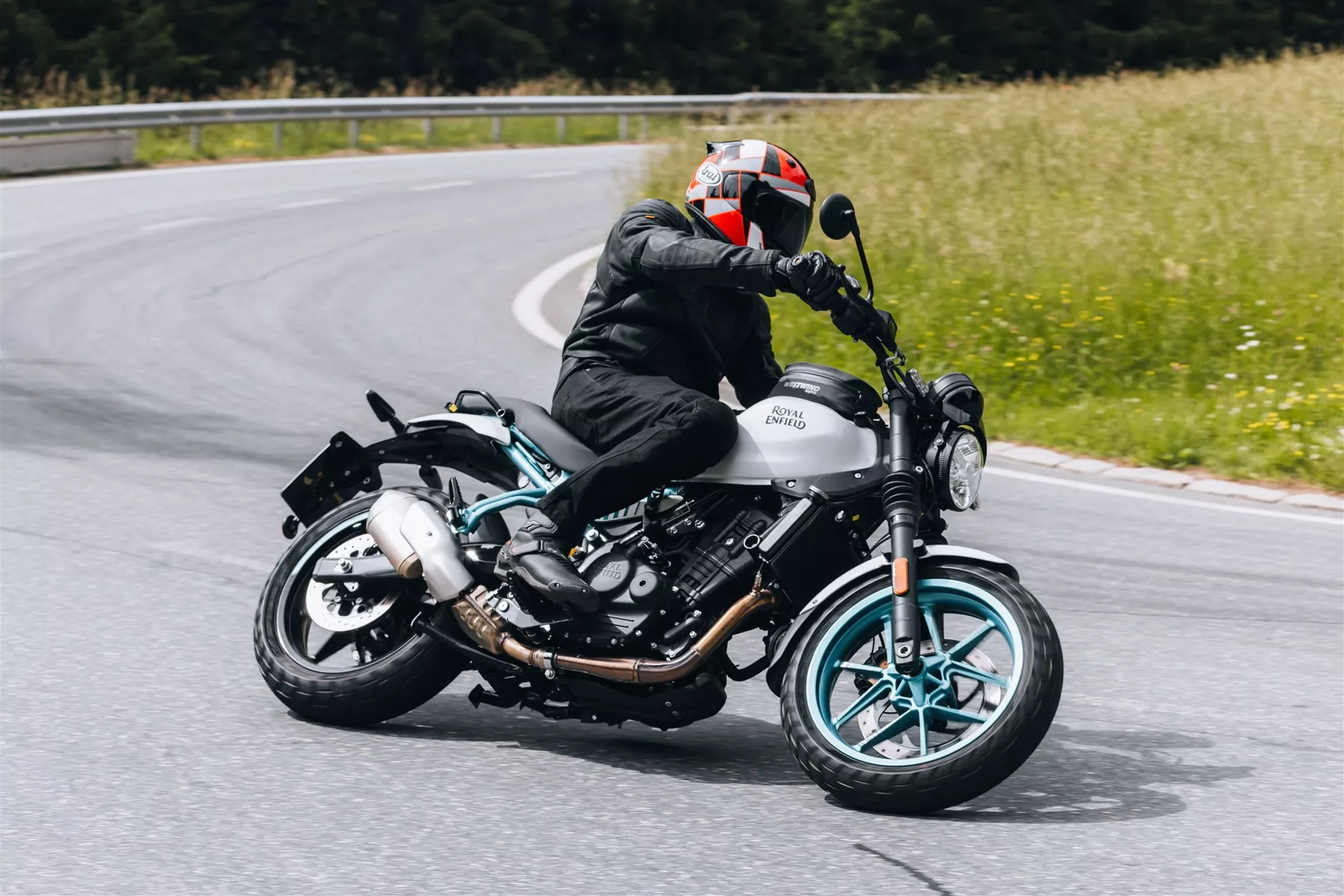
The easygoing Guerrilla 450 requires little to no acclimatization time.
Fahrwerk – Komfort und Präzision
Die Unterschiede setzen sich beim Fahrwerk nahtlos fort. Die Guerrilla überrascht zunächst mit einem erstaunlich komfortablen Grundsetup. Kanaldeckel und schlechte Asphaltstücke filtert sie meist solide weg, ohne dabei schwammig zu wirken. Gerade auf schlechten Landstraßen oder im urbanen Alltag fühlt sich das Motorrad ausgesprochen gelassen an, wäre da nicht die ein Alzerl unterdämpfte Gabel, die gelegentlich für Unruhe in Schräglage verantwortlich zeichnet. Die Triumph verfolgt dagegen eine deutlich straffere Abstimmung. Das bedeutet jedoch keineswegs mangelnden Komfort. Kleine Unebenheiten spricht das Fahrwerk sensibel an, insgesamt vermittelt es jedoch wesentlich mehr Rückmeldung. Besonders in schnellen Richtungswechseln oder beim harten Anbremsen bleibt die Tracker ruhiger und vermittelt deutlich mehr Vertrauen ins Vorderrad. Hinzu kommt der Gewichtsvorteil. Mit lediglich 173 Kilogramm fahrfertig bringt die Triumph rund elf Kilogramm weniger auf die Waage als die Guerrilla. Auf dem Papier klingt dieser Unterschied überschaubar, in der Praxis wirkt die Tracker jedoch deutlich leichter. Sie fällt spielerisch in Schräglage, verlangt kaum Kraft am Lenker und wechselt ihre Linie beinahe intuitiv. Die Guerrilla bleibt zwar ebenfalls angenehm handlich, wirkt im direkten Vergleich jedoch etwas gesetzter und ruhiger.
Riding Dynamics – Two Paths to Fun
On a twisty country road, it quickly becomes clear that Triumph and Royal Enfield interpret riding fun in completely different ways. The Guerrilla 450 impresses with its balance. It requires little acclimatization from the rider and feels familiar after just a few kilometers. The Sherpa single-cylinder pulls strongly from mid-range RPMs, the comfortably tuned suspension smooths out bumps effectively, and the neutral geometry ensures predictable steering behavior. Especially on varying road surfaces, the Royal Enfield remains pleasantly composed.
In contrast, the Triumph takes a much more active approach. From the first steering input, it’s noticeable how directly it responds. The lower handlebars, rear-set footpegs, and more front-wheel-oriented seating position mean the rider works more intensively with the motorcycle. The Tracker doesn't demand more skill but offers significantly more feedback. Particularly when braking into a corner, the front wheel remains crystal clear, and it holds its line precisely when leaned over.
The weight advantage further enhances this impression. Eleven kilograms might not sound dramatic on a spec sheet, but in direct comparison, the Tracker feels almost a class lighter. Direction changes are effortless, tight corners lose their intimidation, and even spontaneous line corrections require minimal effort.
This creates an interesting difference: the Guerrilla rides with remarkable ease, while the Tracker becomes addictive. You naturally seek out the next sequence of corners, brake a bit later, steer in more decisively, and accelerate out earlier—not because it's significantly faster, but because it instills a touch more confidence in the rider.
The braking system of the Royal Enfield decelerates reliably and offers sufficient reserves for its performance class. However, the lever requires a bit more hand force before solid deceleration kicks in. This isn't necessarily bad, but it gives the impression of a comfortably tuned, beginner-friendly everyday brake rather than a sporty anchor.
In contrast, the ByBre braking system on the Triumph feels more direct. The bite point and modulating ability are immediately convincing and harmonize excellently with the precise front end. This results in a cohesive overall package, especially on twisty roads, with the Tracker providing more confidence during late braking without being nervous or overly aggressive.
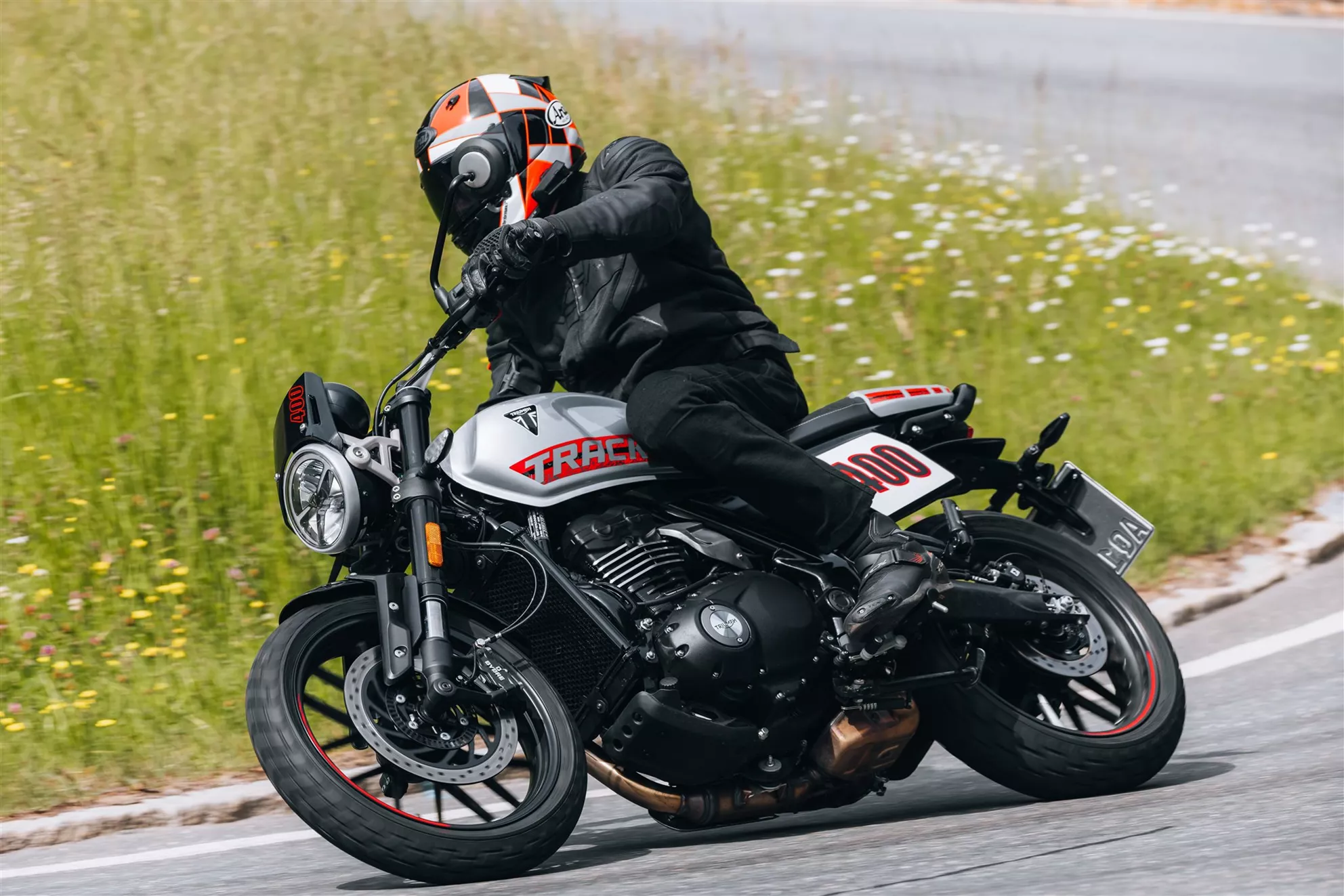
When it comes to agility and liveliness, Triumph sets the bar high.
Everyday Riding – The Guerrilla Scores with Composure
In daily use, the picture shifts somewhat. The low seat height of just 780 millimeters, relaxed ergonomics, and smooth engine characteristics make the Guerrilla an exceptionally hassle-free companion. It really shines in city traffic. The clutch and gearbox operate smoothly, the engine responds cleanly from low revs, and even in summer heat, the heat management remains pleasantly low. The comfortable suspension absorbs potholes effectively, further enhancing ride comfort.
In contrast, the sportier knee angle and more forward-leaning seating position of the Triumph require a bit more effort but remain surprisingly manageable for everyday use. Its light weight makes maneuvering and tight turns easier, while its slim silhouette slips through heavy traffic with ease. Commuters or those who frequently navigate city centers may find themselves more at home on the Royal Enfield. The Triumph demands a slightly longer acclimatization period.
Despite their differences, both motorcycles share a common trait: long highway stretches are not their forte. The Guerrilla maintains travel speeds around 130 km/h confidently and remains commendably stable. However, the vibrations typical of single-cylinders increase noticeably with speed. While adequate for occasional highway trips, prolonged journeys can quickly become tiring.
The Triumph also feels less at home on the highway. Its rev-happy engine has to work harder at higher speeds, resulting in noticeable vibrations through the handlebars and footpegs. Additionally, the virtually nonexistent wind protection adds to the rider's burden. Both bikes are primarily designed as road and city machines, and that's exactly where they excel.
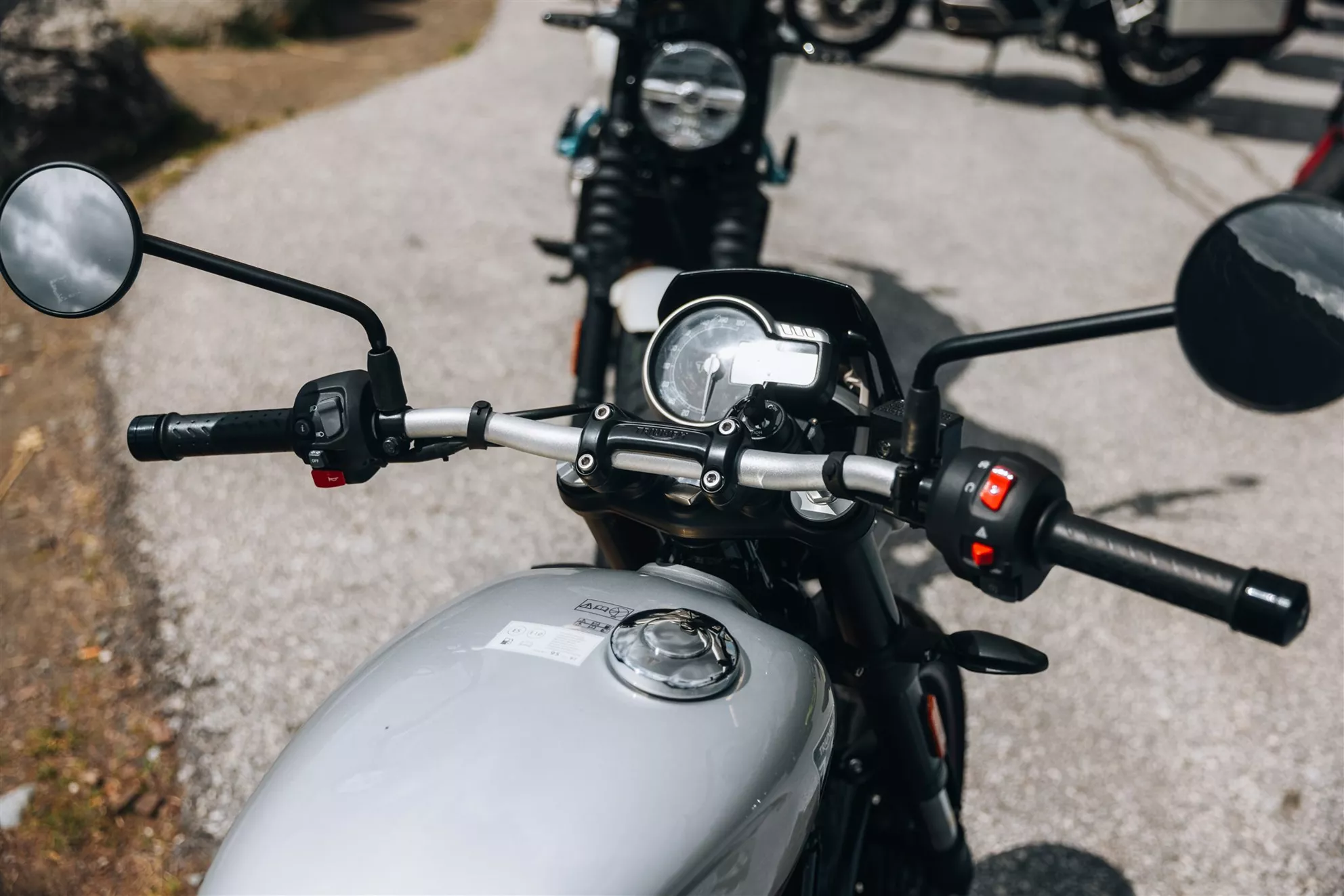
A TFT display like the one on the Guerrilla is nowhere to be found in the Triumph cockpit.
Features and Pricing
When it comes to features, the point clearly goes to Royal Enfield. The Guerrilla's modern TFT display looks premium, offers smartphone connectivity, and even enables Google Maps navigation directly in the cockpit. Added to this are a USB-C port, ride-by-wire, and riding modes—features that are by no means standard in this price range.
Triumph deliberately remains purist. The classic round tachometer fits the Tracker's style perfectly and impresses with excellent readability, but appears much simpler in direct comparison. ABS, switchable traction control, LED lighting, and a USB port cover the essential functions, but Triumph consciously foregoes riding modes or connectivity. Interestingly, these extras are hardly missed during the ride. The Tracker focuses consistently on the essentials and doesn't even try to impress with technology.
Value for Money
Price-wise, both motorcycles are closer than one might initially think. The Royal Enfield Guerrilla 450 starts at around 5,700 euros in Germany (6,300 euros in Austria), making it one of the most affordable bikes in its class. For that price, the buyer gets not only a powerful single-cylinder engine but also surprisingly extensive features.
The Triumph Tracker 400 is priced at around 6,245 euros in Germany and 6,895 euros in Austria. The additional cost compared to the Royal Enfield is noticeable but justifiable due to its higher-quality build, lighter weight, and more dynamic tuning.
Conclusion – Heart or Head?
Although both motorcycles appear remarkably similar on paper, they cater to different types of riders. The Royal Enfield Guerrilla 450 is the laid-back all-rounder. It combines a flexible engine with comfortable ergonomics, a well-balanced suspension, and modern features into a motorcycle that instantly inspires confidence in almost anyone. Especially newcomers, commuters, or riders seeking uncomplicated riding fun will find an extremely attractive package with excellent value for money here.
On the other hand, the Triumph Tracker 400 is aimed at riders who deliberately seek out curves. It feels lighter than the specs suggest, delivers excellent feedback, and impresses with a level of precision that is by no means standard in this engine class. Its more rev-happy engine, more active ergonomics, and high-quality craftsmanship give it a distinctly sportier character.
In the end, it's not so much about engine power as it is about personal riding philosophy. Those who want to ride as relaxed as possible and value comfort and modern features will be happy with the Guerrilla 450. Those who want to enjoy every curve and seek a nimble motorcycle with an excellent riding feel will find the Tracker 400 to be one of the most dynamically engaging A2 naked bikes on the market.
Both roadsters impressively demonstrate that riding fun is no longer about having 100 HP or complex electronics. The Royal Enfield makes everyday life more pleasant, while the Triumph makes the open road more thrilling. And that's precisely why both have their rightful place.
- How much does a Triumph Tracker 400 cost?
- Here you will find an overview of the price level of new and used motorbikes!
&width=60&height=60&bgcolor=rgba_39_42_44_0&mode=crop "Author: Clemo")
Triumph Tracker 400 2026 - Experiences and Expert Review
Clemo
The Triumph Tracker 400 is undoubtedly the sportiest option within the British 400 series. It combines simple, proven technology with a deliberately more dynamic setup than its sibling models. The focus is clearly on agility, direct feedback, and an enjoyable riding experience. Features and long-distance suitability take a back seat here. This makes it the top choice for those seeking a lightweight, accessible A2 motorcycle with a clear emphasis on riding fun—without the need for explosive power or high-tech electronics.
Royal Enfield Guerilla 450 APEX 2026 - Experiences and Expert Review
Clemo
The Royal Enfield Guerrilla 450 impresses as a versatile naked bike with an accessible engine and easy handling. Its comfortable suspension and light clutch make it well-suited for city riding, while it scores on the open road with stable, dynamic performance. The retro design with modern elements like LED lighting and a TFT display with connectivity is well-executed, though compromises are found in the non-adjustable brake and clutch levers. Overall, the Guerrilla 450 offers excellent value for money and is ideal for beginners and all-round riders seeking a solid motorcycle.
More from 1000PS Magazine

Triumph Tracker 400 vs. Royal Enfield Guerrilla 450: Naked Bike Showdown Images
Source: 1000PS


