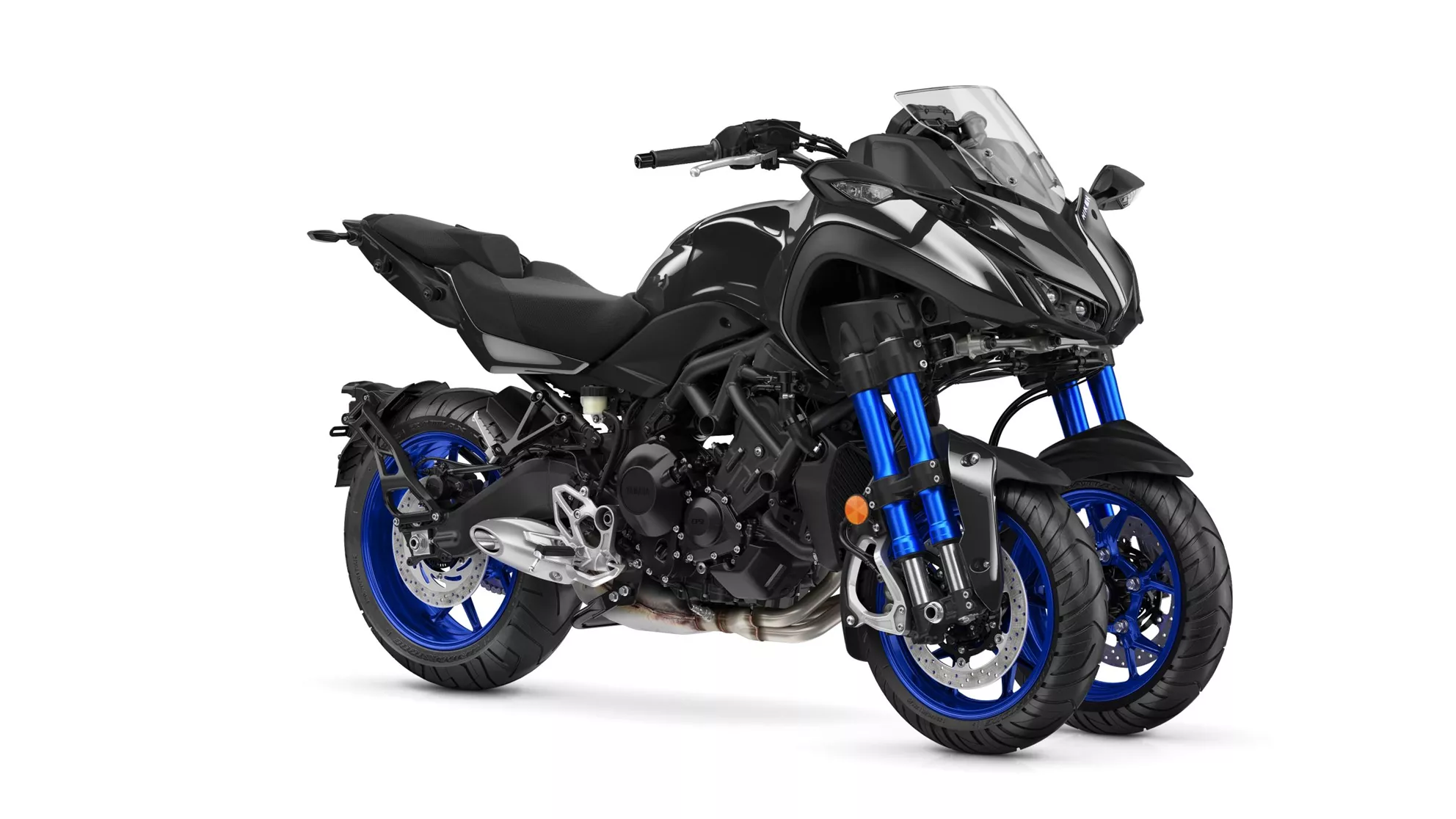
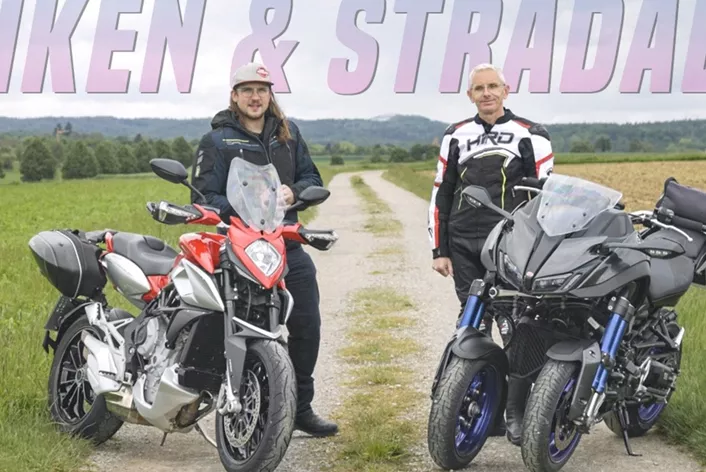
A touring bike should be comfortable, function reliably, and ideally swallow the luggage too. So far, so reasonable. But what if the classic adventure bike with boxer engine, spoked wheels, and aluminum panniers simply seems too predictable? Then it's worth looking into a corner of the used bike market where things get a bit wilder. That's exactly where the Yamaha Niken and the MV Agusta Stradale 800 are waiting.
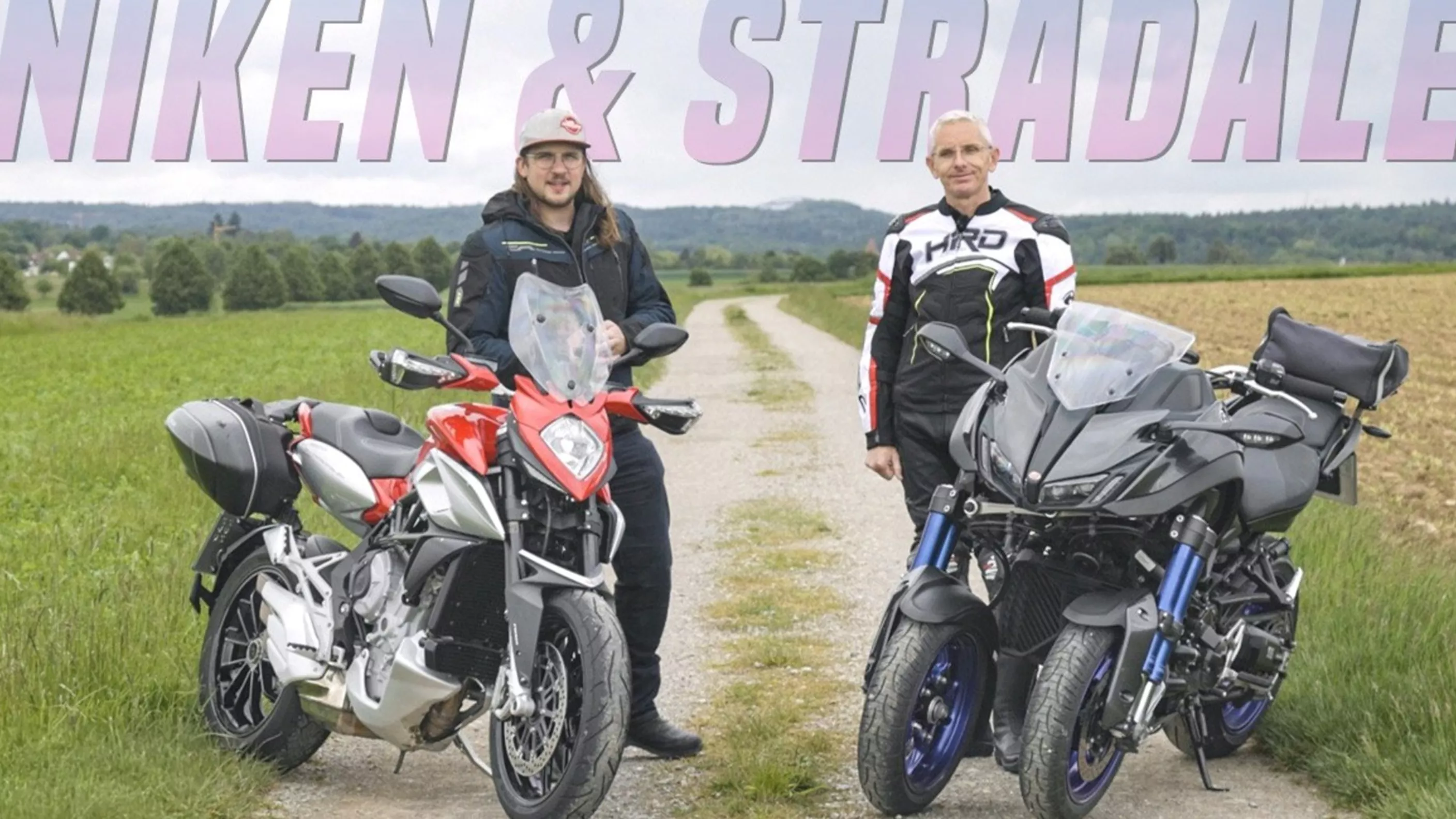
Used Touring Exotics: Yamaha Niken and MV Stradale Put to the Test
Rarely Seen at Biker Meetups – Still Good?
Adventure bike too tame? Boxer engine too normal? Then things get interesting! The used Yamaha Niken and MV Agusta Stradale 800 show two completely different paths to a touring bike with character.
&width=72&height=72&bgcolor=rgba_39_42_44_0&mode=crop "Author: Der Horvath")
Der Horvath
published on 7/28/2026
8,457 Views
Hunting Exotics at Limbächer
For this used bike test, we headed to Filderstadt near Stuttgart, to Limbächer. And anyone walking through the halls there quickly understands why bikes like these become exciting for a video. Around 2,000 bikes stand at this one location, new and used, spanning brands, concepts, and price ranges. A playground for adults, so to speak. Only instead of slides and swings, there's a Niken, a Stradale, and everything else that doesn't park on every corner.
The point is simple: anyone looking for a used bike wants choice. And anyone looking for something exotic needs it even more. You won't find a Yamaha Niken at every dealer. An MV Agusta Stradale 800 even less so. At Limbächer, such concepts can be placed directly side by side, touched, viewed, and compared. On top of that, there's a 40-point check, financing, trade-in, delivery, a voluntary right of exchange, and, depending on the package, extended warranty coverage. Especially with used bikes of such idiosyncratic character, that's no small argument.
Two Touring Exotics, But No Direct Comparison
Can you compare a Yamaha Niken with an MV Agusta Stradale 800? Not really. One is a Japanese technical experiment with two front wheels, the other an Italian supermoto with panniers. Apart from the triple engine and trellis frame, they have less in common than you'd initially think. And that's exactly why it gets interesting.
The Niken wants to build trust. Two wheels up front, Yamaha LMW technology, a massive front end, and the idea that you can travel more relaxed even on bad asphalt or in changeable conditions. The Stradale 800 takes a completely different approach to the topic. It comes from the Rivale family, carries standard side bags, a windshield, and hand guards, but at its core remains a fun bike with a touring alibi. Another manufacturer might call it SMT. At MV, it's more like espresso with topcase ambitions.
Yamaha Niken: The Test of Courage from Japan
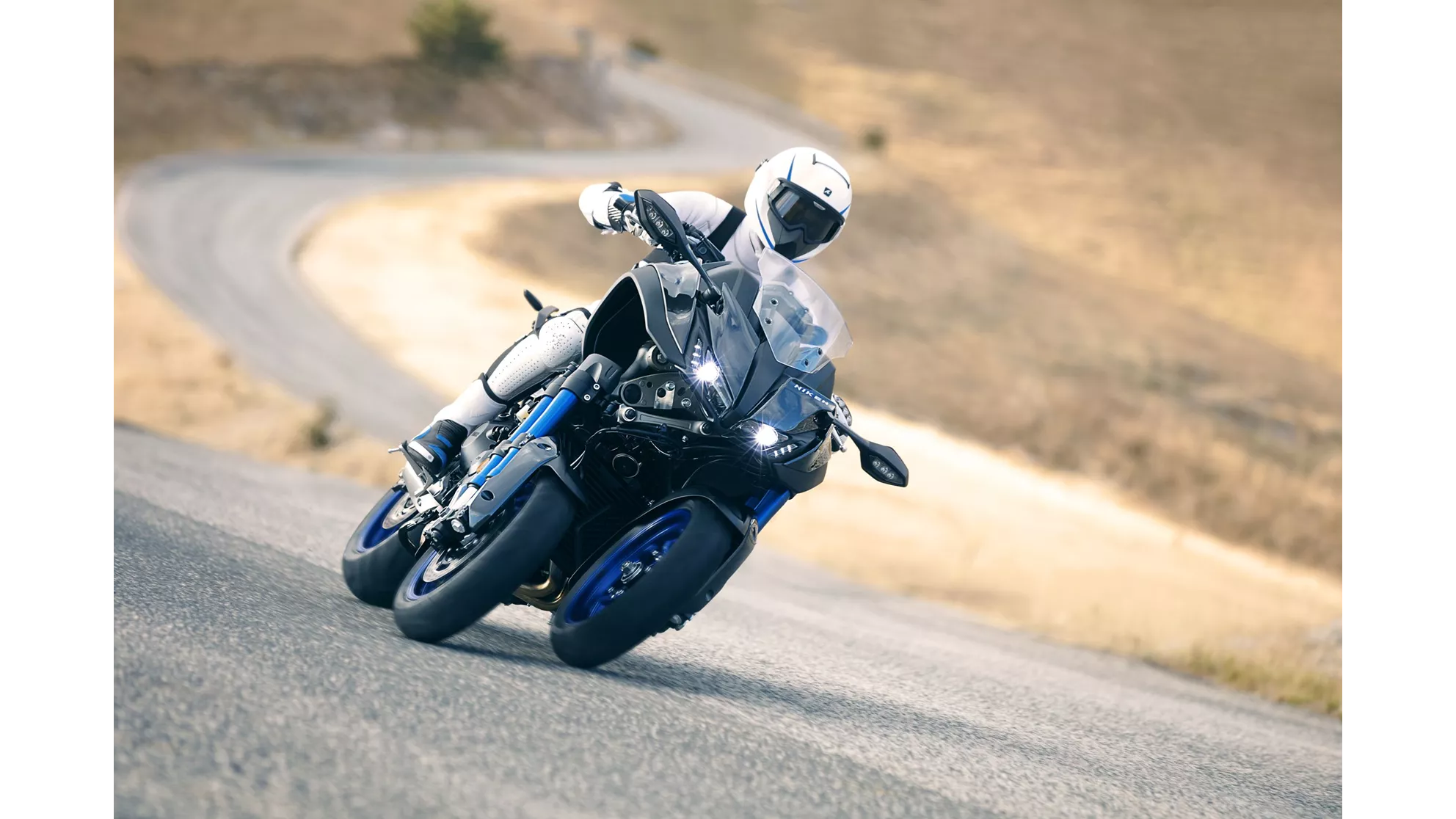
Picture the year 2018. Yamaha launches a bike that carries not one, but two wheels up front. With scooters, Yamaha had already shown with the Tricity 125 and 300 that Leaning Multi-Wheel technology can work. But a full-grown bike on an MT-09 base? For many riders, that was one gear too many on the menu.
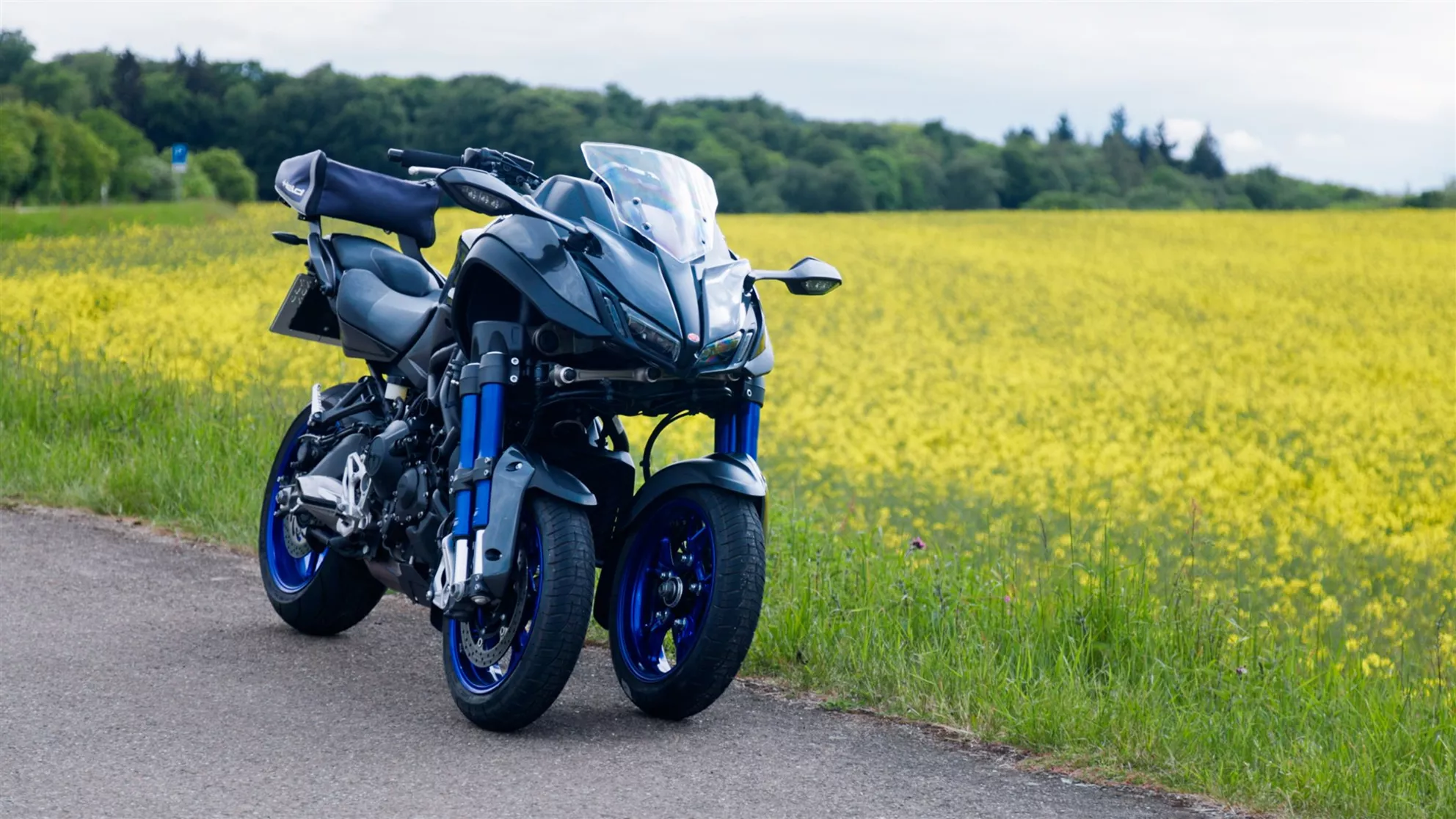
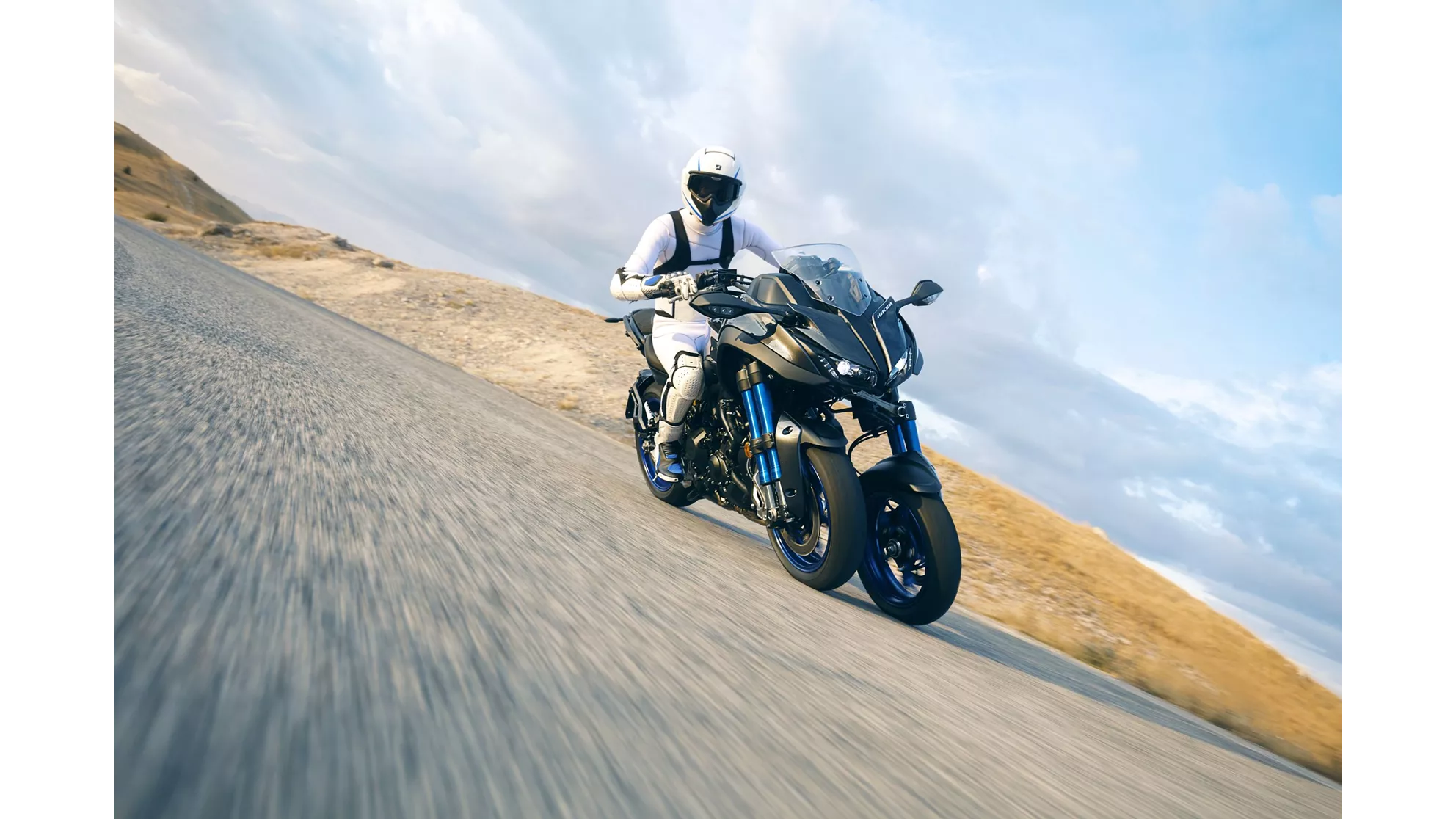
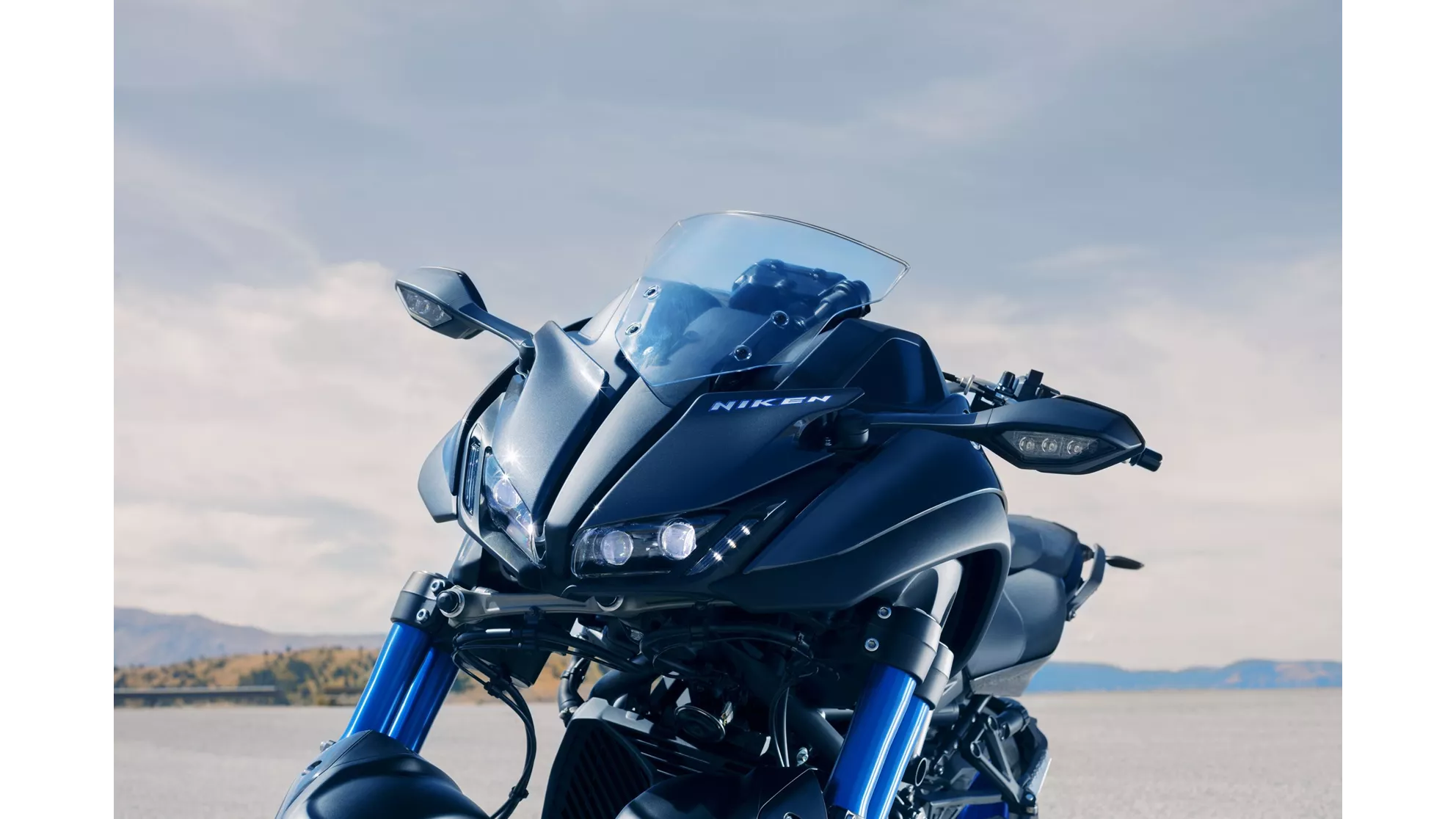
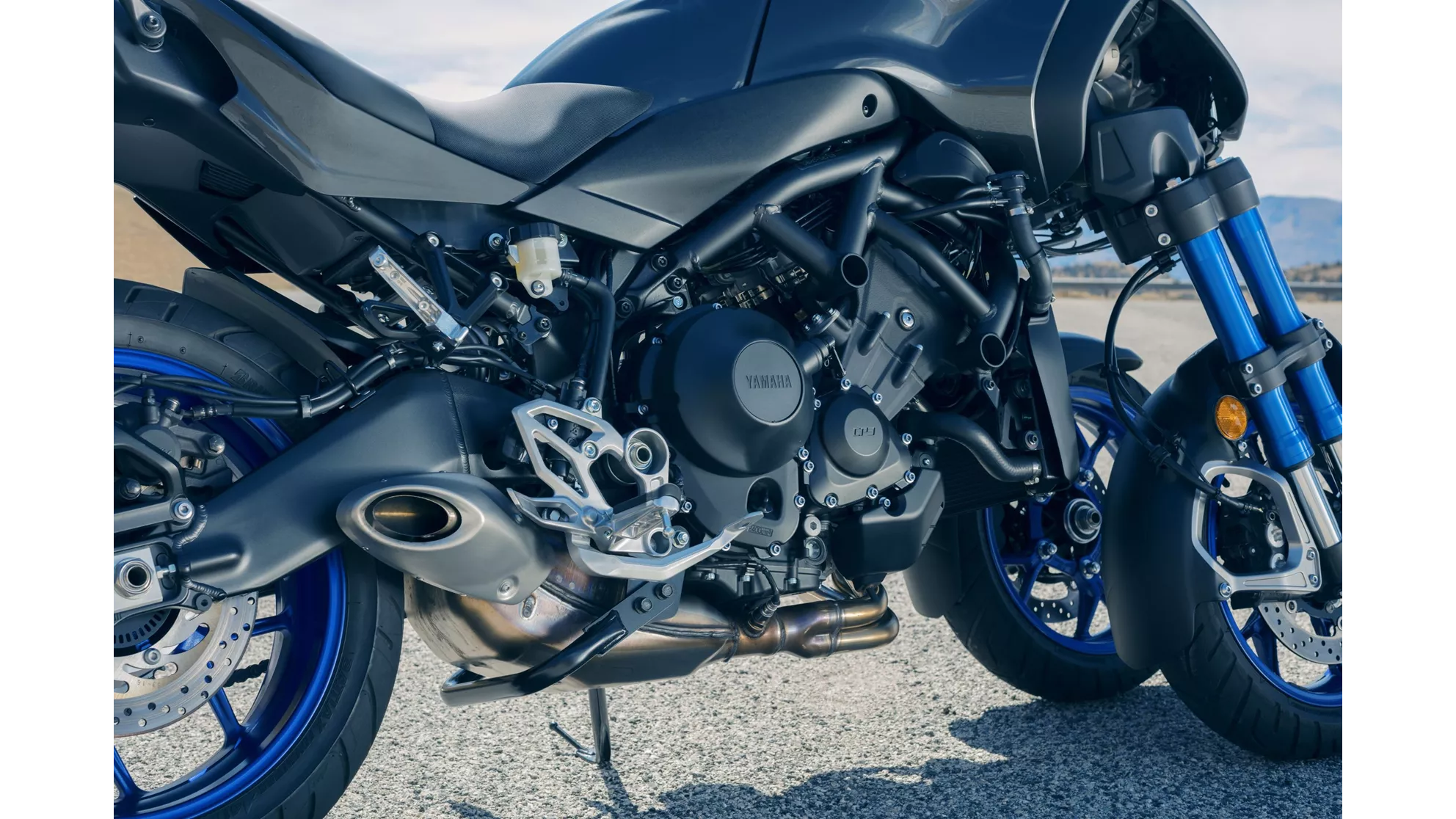
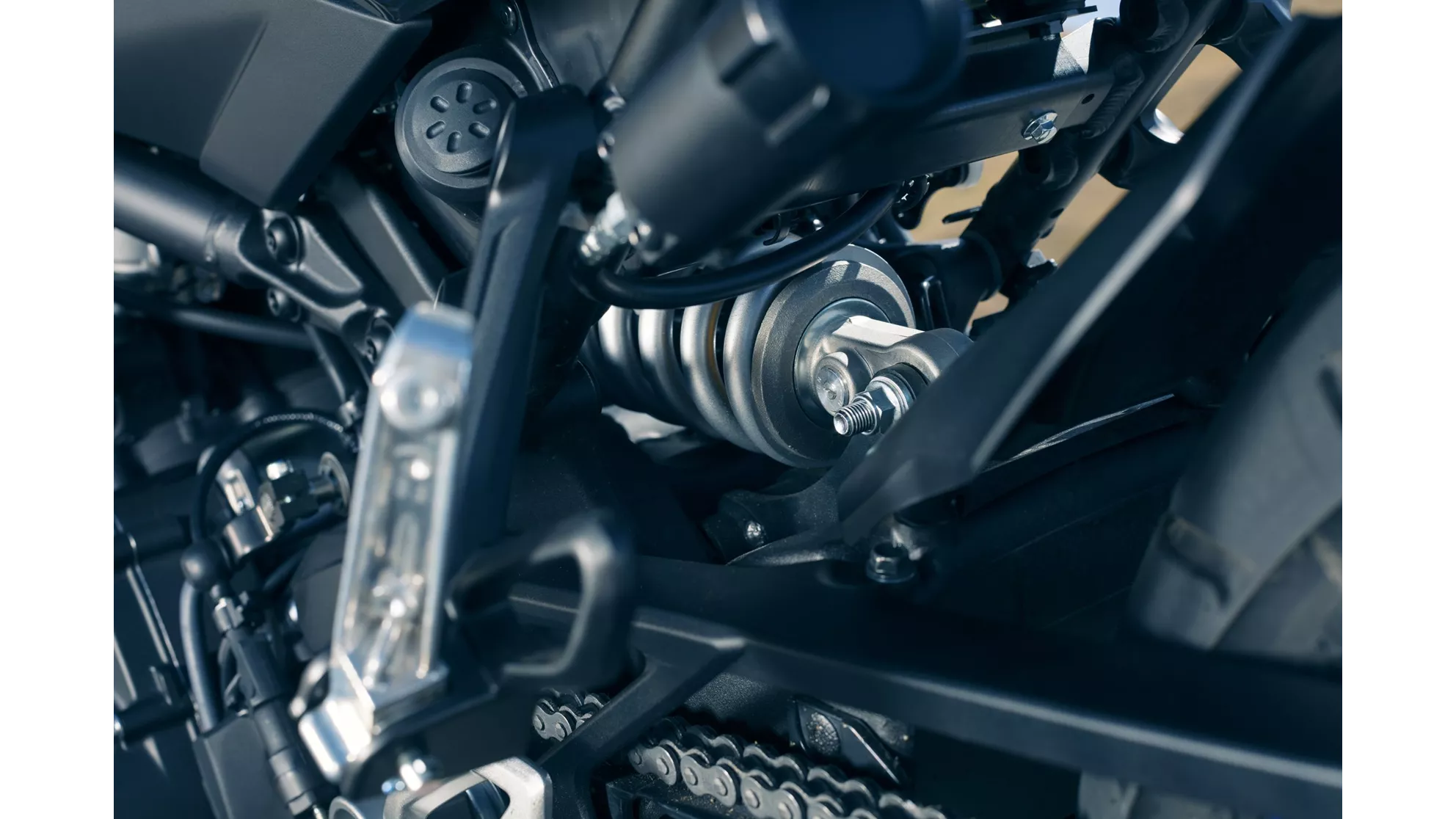
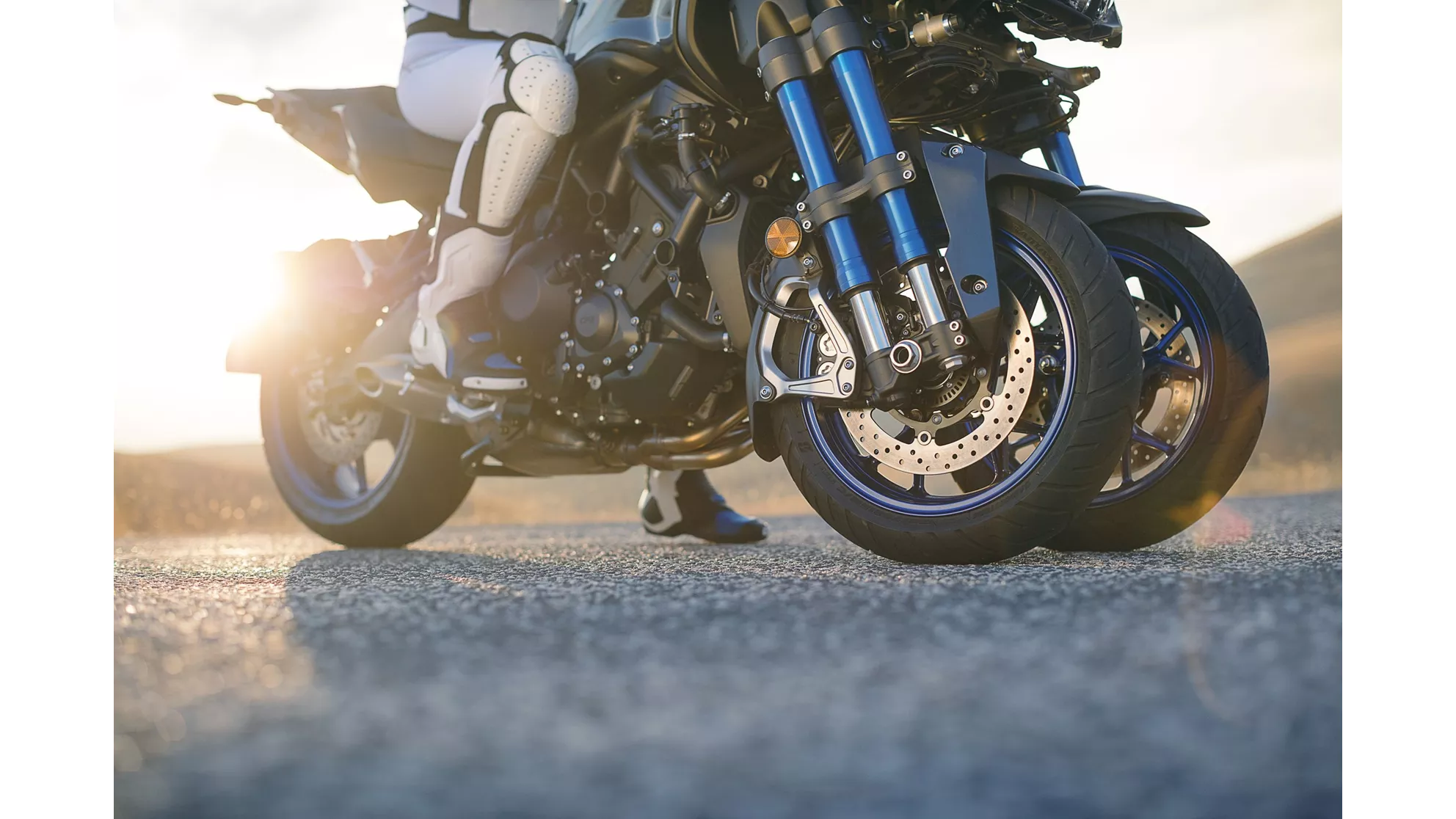
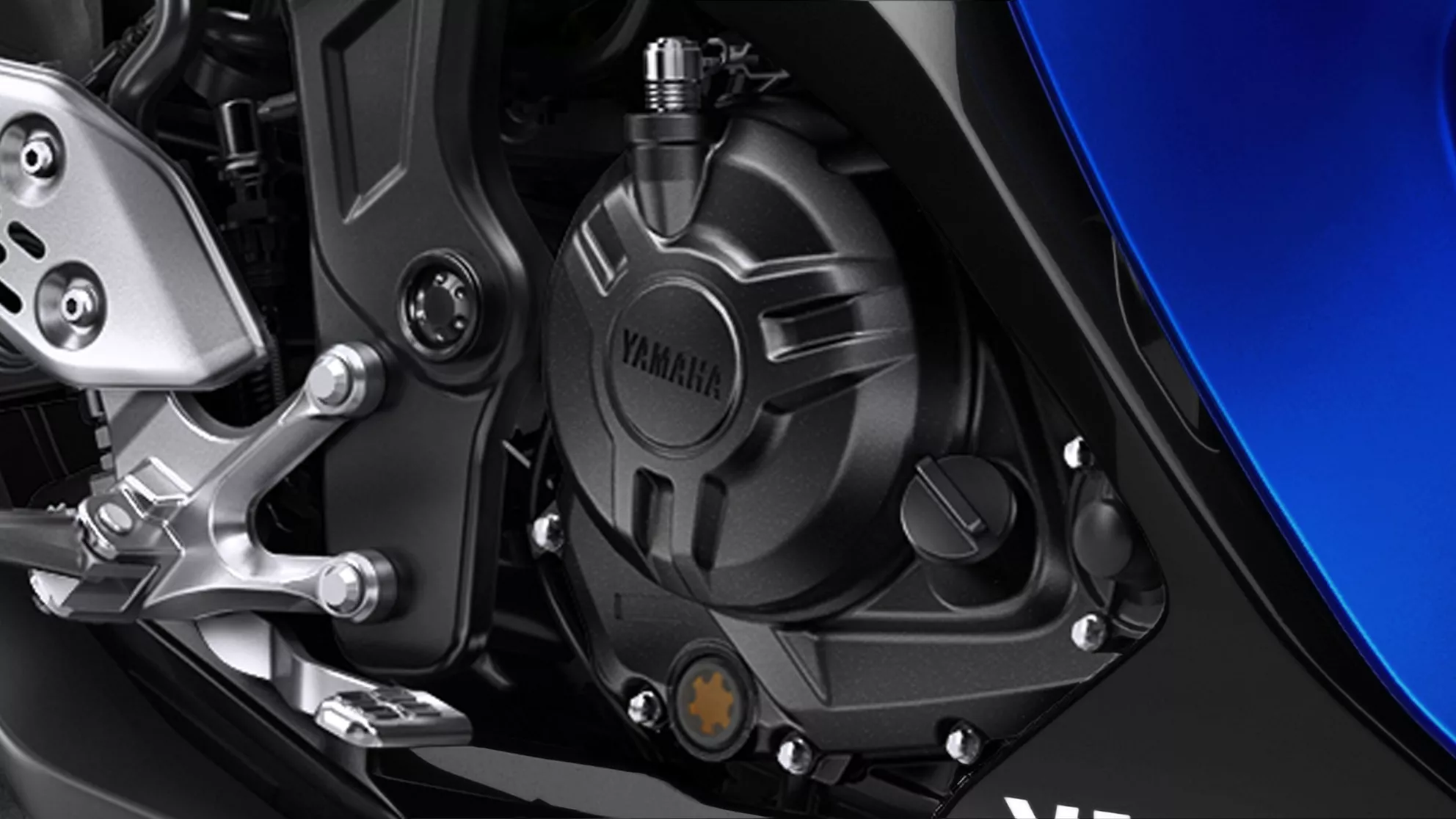
Power comes from the well-known CP3 triple with 847 cc, the same engine that also puts smiles on faces in the MT-09 family. Yamaha builds a trellis frame around it and bolts on a front-end construction that visually oscillates somewhere between bike, quad, and jet ski. Four fork tubes, two front wheels, two brake systems, a rocker mechanism, and a whole lot of metal. It doesn't just look massive, it is massive.
The big advantage is obvious: instead of one central contact point, there are two contact points up front. If one front wheel rolls over a bad patch, the other runs offset and can still build grip. At least that's the technical idea behind it. And this very thought works not just on the road, but also in your head. In wet conditions, over road markings, on bad asphalt, or in cold conditions, you ride into corners with a different kind of calm. Not necessarily because physics suddenly solves every problem, but because trust grows.
Does the Niken Really Ride Like a Bike?
The good news: Yes, surprisingly so. Martin Bauer sat on the Niken for the first time during the test and was visibly surprised how normally this bike can be ridden. You don't constantly feel like you're dealing with a foreign body up front. The Niken turns in, leans over, and basically rides like a bike. Just with a very special front end. The bad news? You don't get the directness of a classic front wheel one-to-one. Especially when riding more briskly and diving deeper into lean angle, the front feels different. Not numb, not unpleasant, but simply not as immediate as with a conventional construction. Anyone who likes to feel their front wheel precisely will have to get used to this feeling.
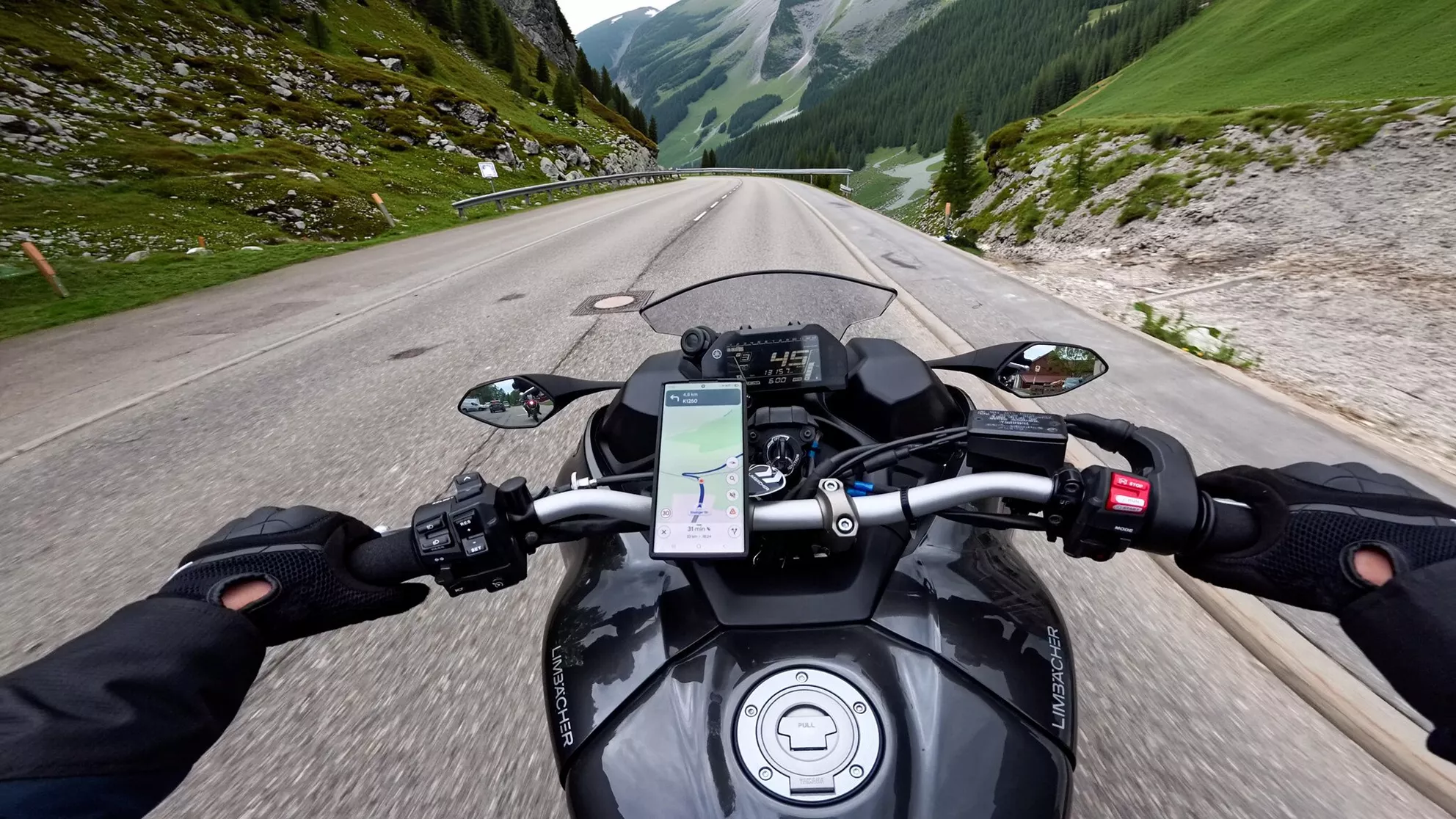
The view from the Niken's saddle. The expansive front end is always in sight.
Then there's the weight of around 260 kilograms. You can see it on the Niken, and you feel it too when braking or accelerating. The triple with its roughly 115 hp has a broad usable rev range and basically enough juice, but it has to move a lot of bike. It doesn't need to move mountains, but it pulls solidly. You just can't expect MT-09 nimbleness.
Ergonomics and Touring with the Niken
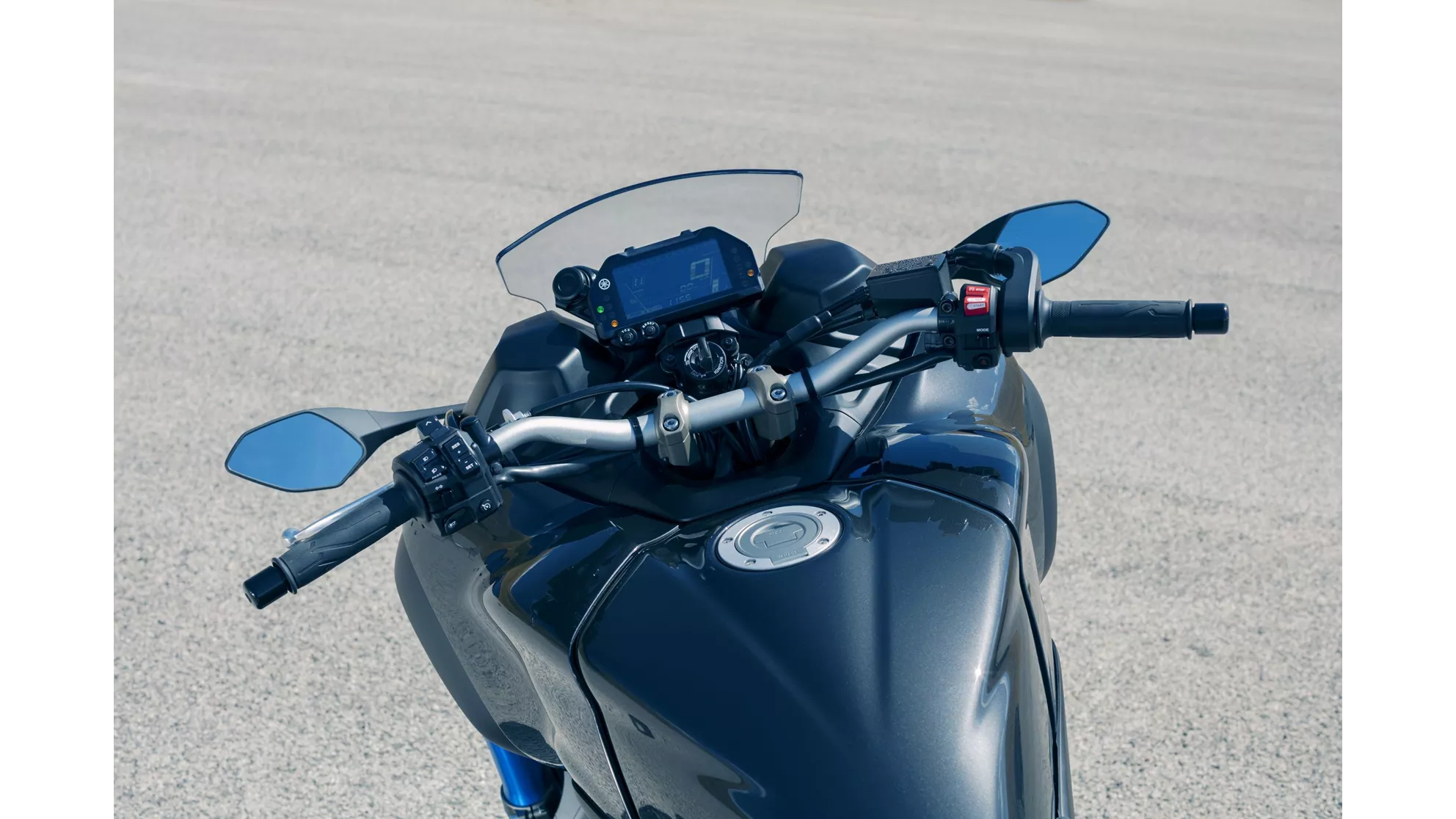
The Niken's seating position clearly deserves praise. Seat height is just over 800 mm, the handlebar position matches the seat well, and the ergonomics feel coherent. This is important, because Yamaha never conceived the Niken as a mere technical gimmick, but clearly positioned it toward touring. There was also a GT variant with standard side cases, a taller windshield, and long-distance equipment.
The test bike wore a short windshield, but the accessory market and Yamaha's equipment range could turn the Niken into a full-grown touring bike if needed. Tall screen, full pannier systems, holiday setup – all possible. You don't sit sportily folded up on a test mule, but on an idiosyncratic, yet thoroughly serious tourer.
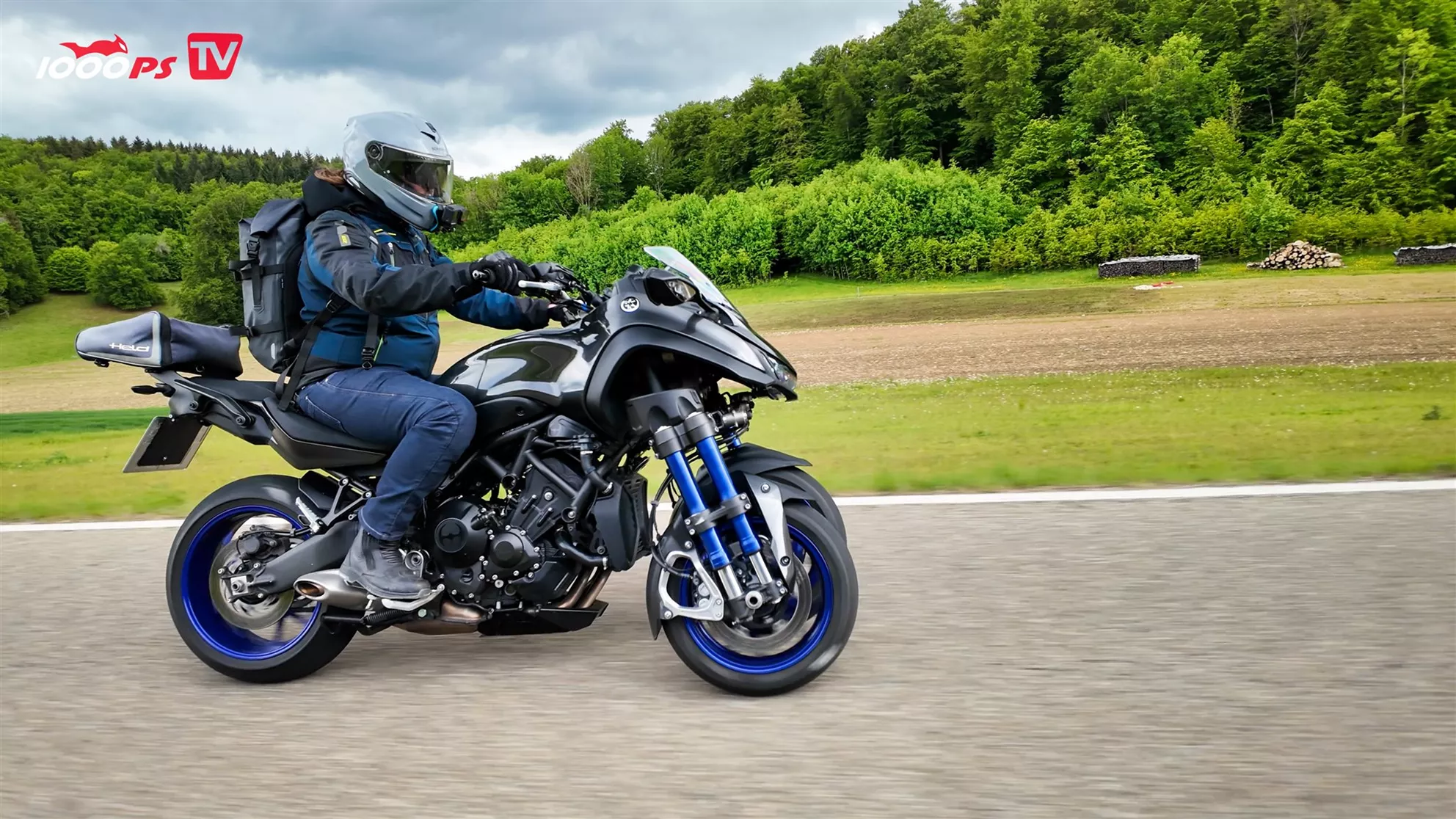
The seating position on the Niken. Rider height: 175cm.
What's missing? A front-end lock, as known from the scooter world. The Niken remains a bike. You can't just stand it upright; you need a side stand or center stand. For shorter riders or when maneuvering with full luggage, this can be an issue. 263 kg plus a wide front need to be moved. No amount of marketing sushi helps there.
Buying a Used Yamaha Niken: Bargain or Special Case?
The Niken was expensive when new. The original price range was around 16,000 to 18,000 euros. Today, used examples often go for around 10,000 euros, depending on condition, mileage, equipment, and market. And this is exactly where it gets interesting. The concept was apparently too bold for the classic rider. Demand stayed small, the market is manageable, and sellers don't always find buyers immediately. For open-minded buyers, this can be an advantage.
But buying a used Niken isn't like a normal MT-09 purchase. You have to inspect the front end closely. Two tires up front mean higher costs. Four fork tubes mean more components. The braking system sits on both left and right. Anyone thinking long-term calculates not just the purchase price but also the maintenance effort. In return, though, you get a bike that functions technically cleanly and feels less bulky on the road than it looks standing still.
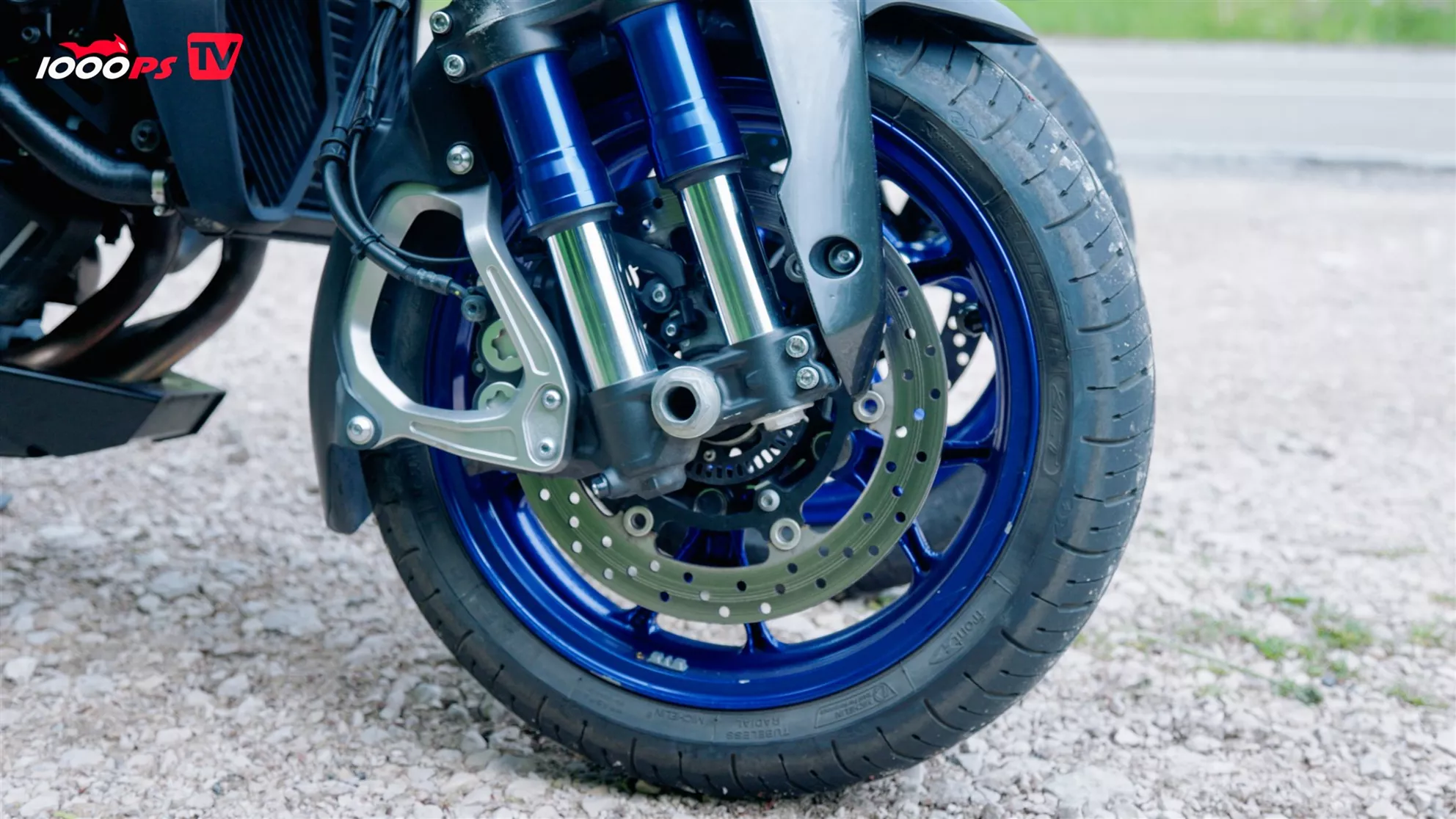
The front end doesn't just look imposing, it also means higher costs due to more components.
The ideal Niken buyer? Someone who rides a lot on country roads and mountain passes, is often out in changeable conditions, and doesn't have to explain at every bikers' meetup why there's one wheel too many up front. Or put it another way: anyone wanting to win at the ice cream parlor might take a Panigale. Anyone wanting to start discussions there takes the Niken.
MV Agusta Stradale 800: The Tourer with Supermoto Blood
- How much does a MV Agusta Stradale 800 cost?
- Here you will find an overview of the price level of new and used motorbikes!
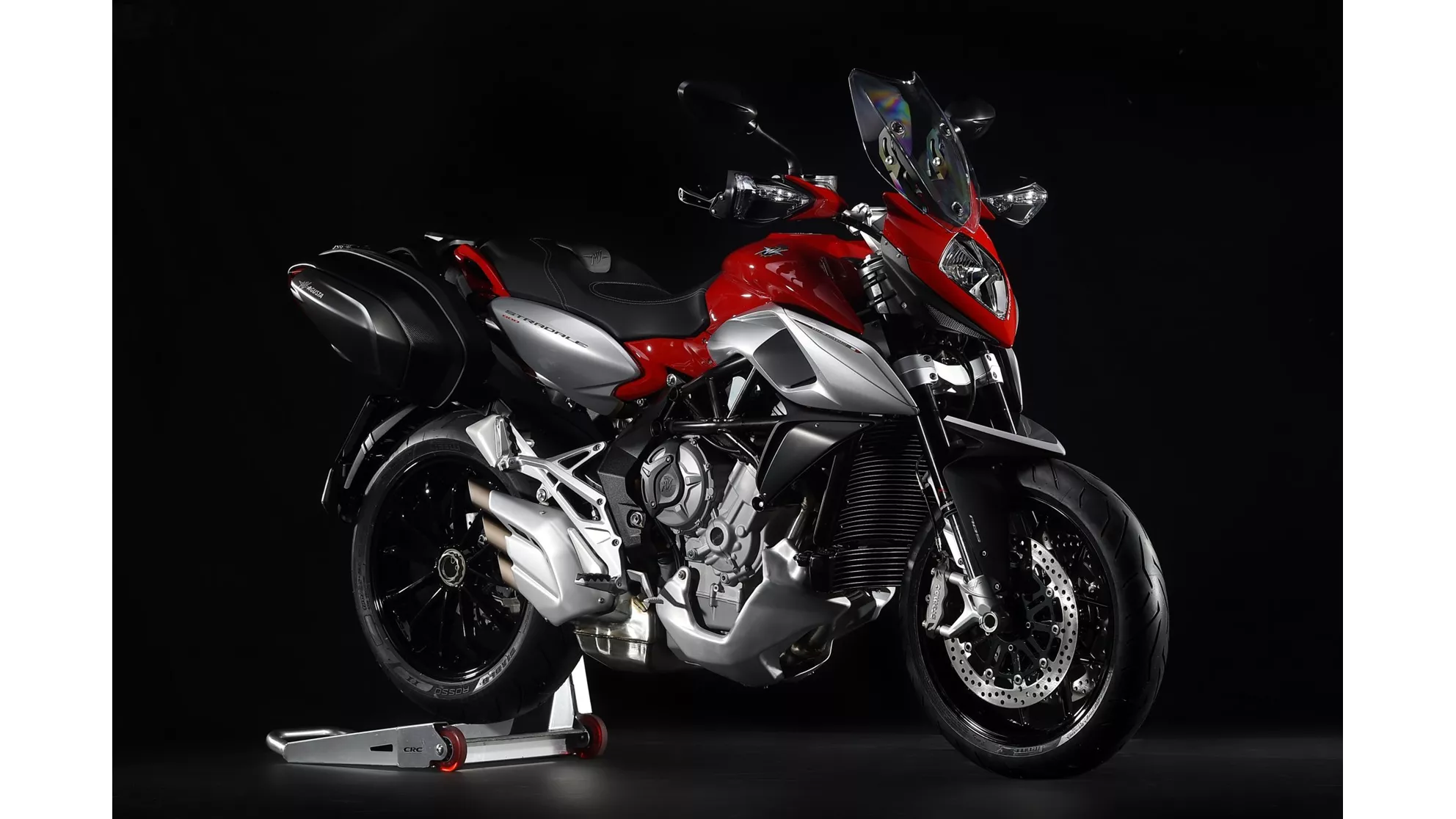
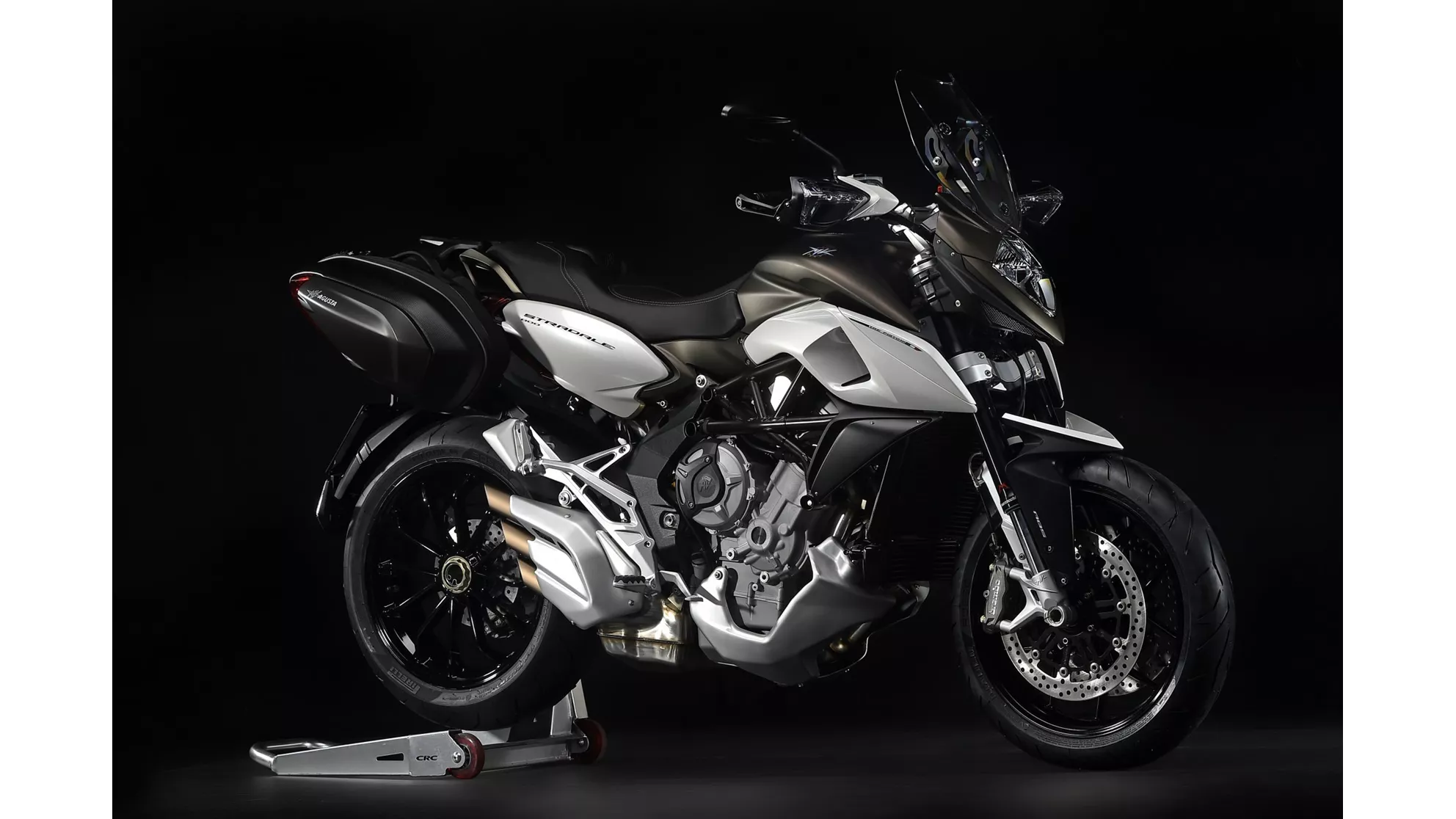
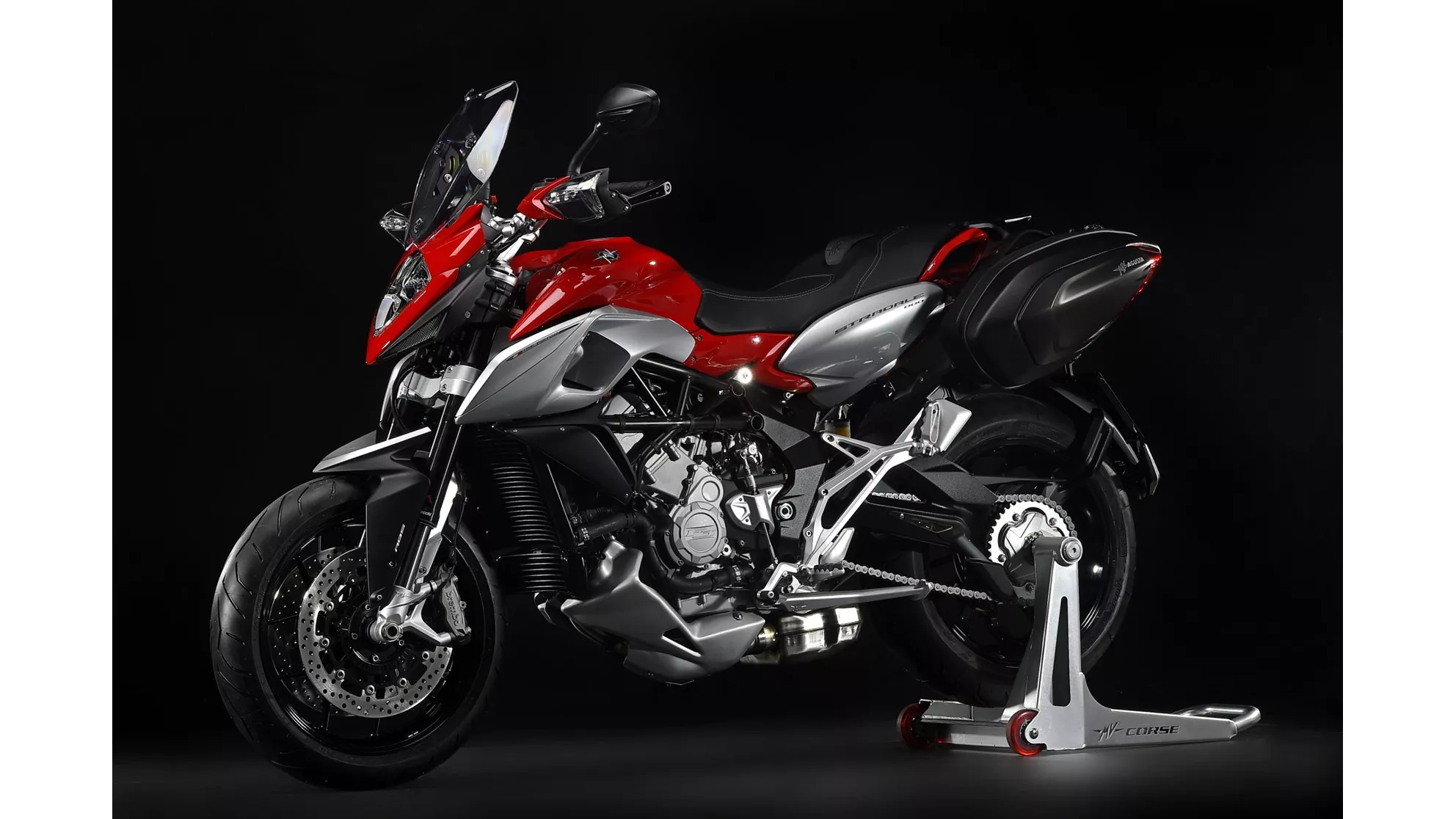
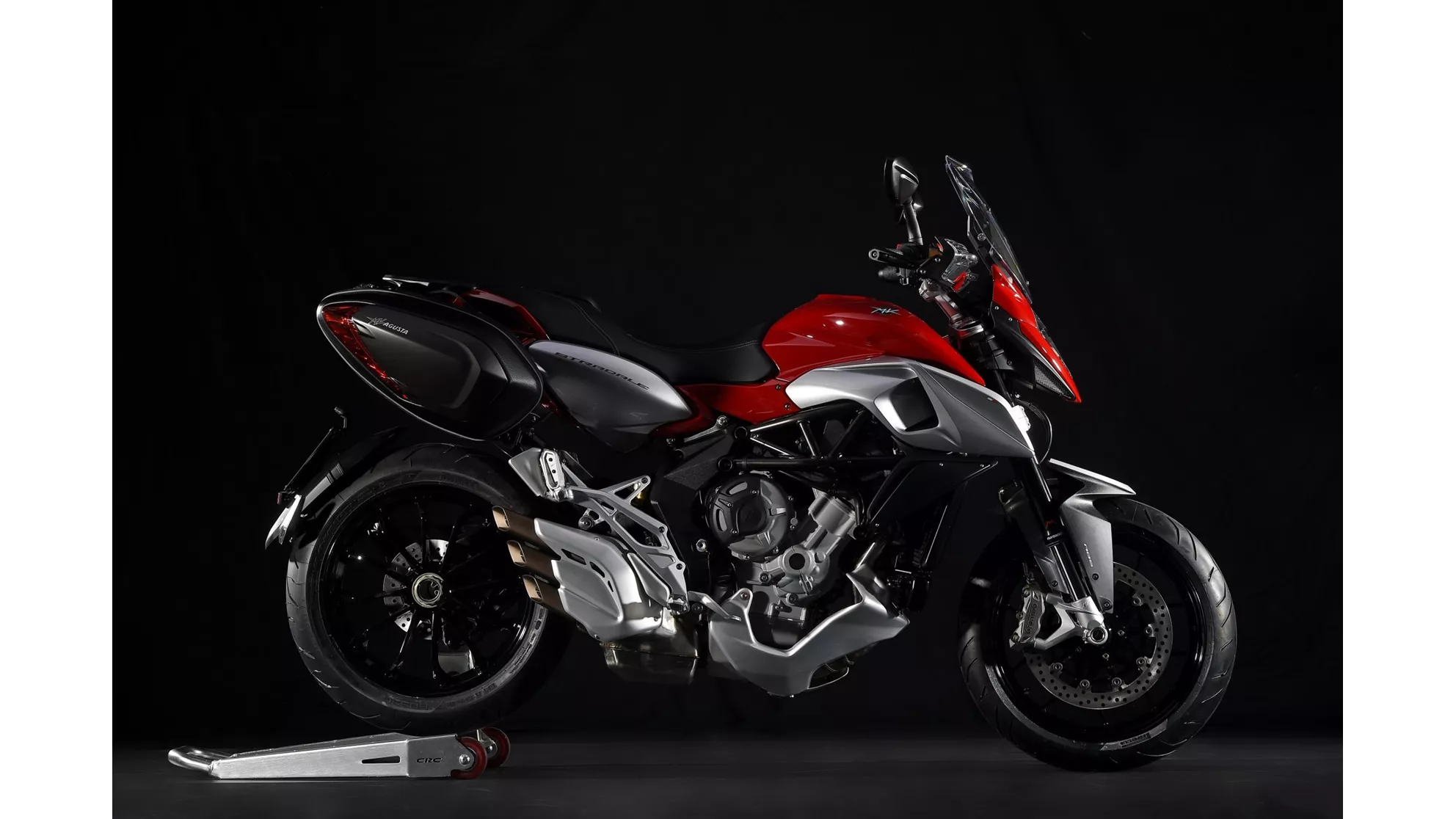
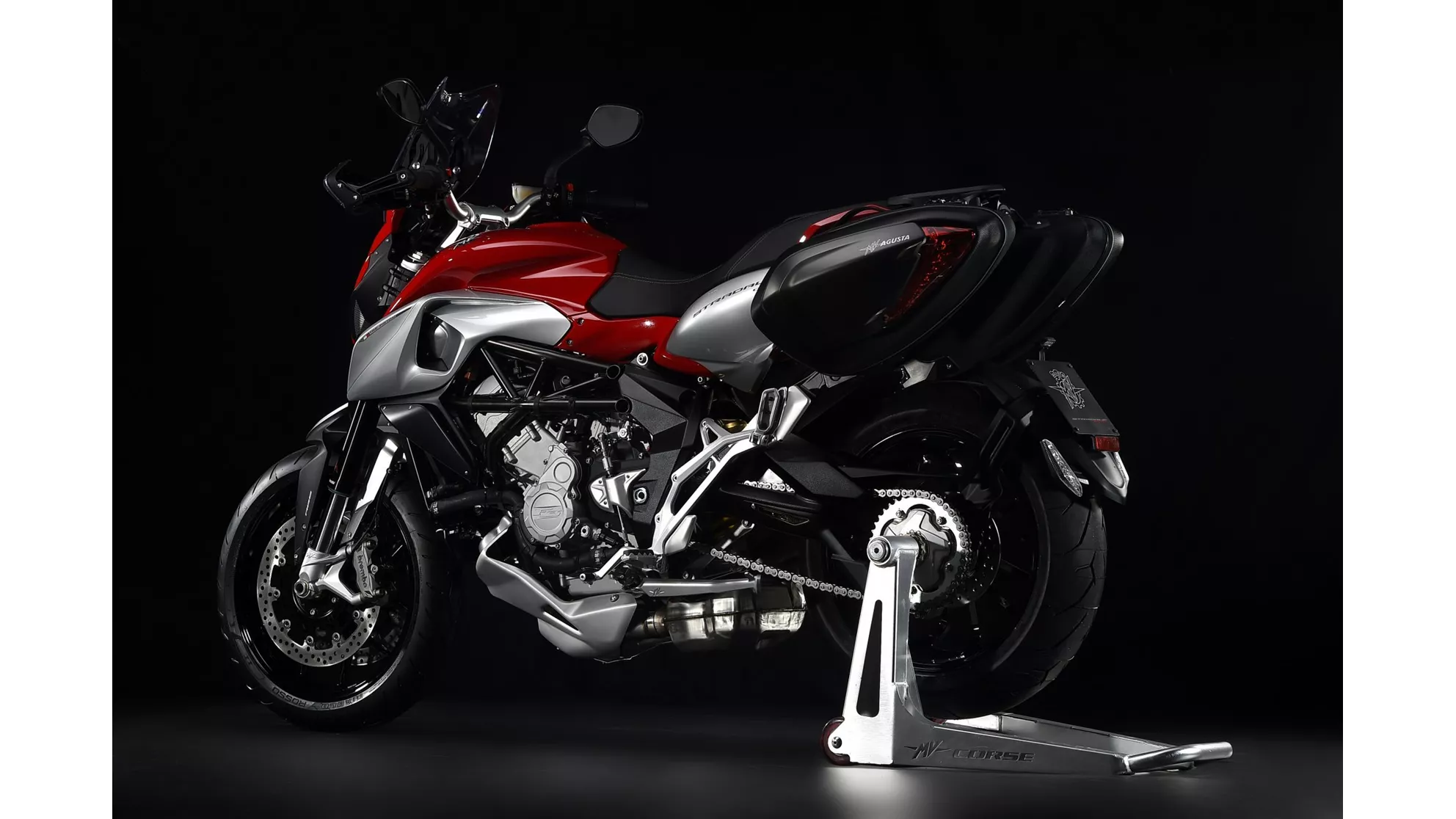
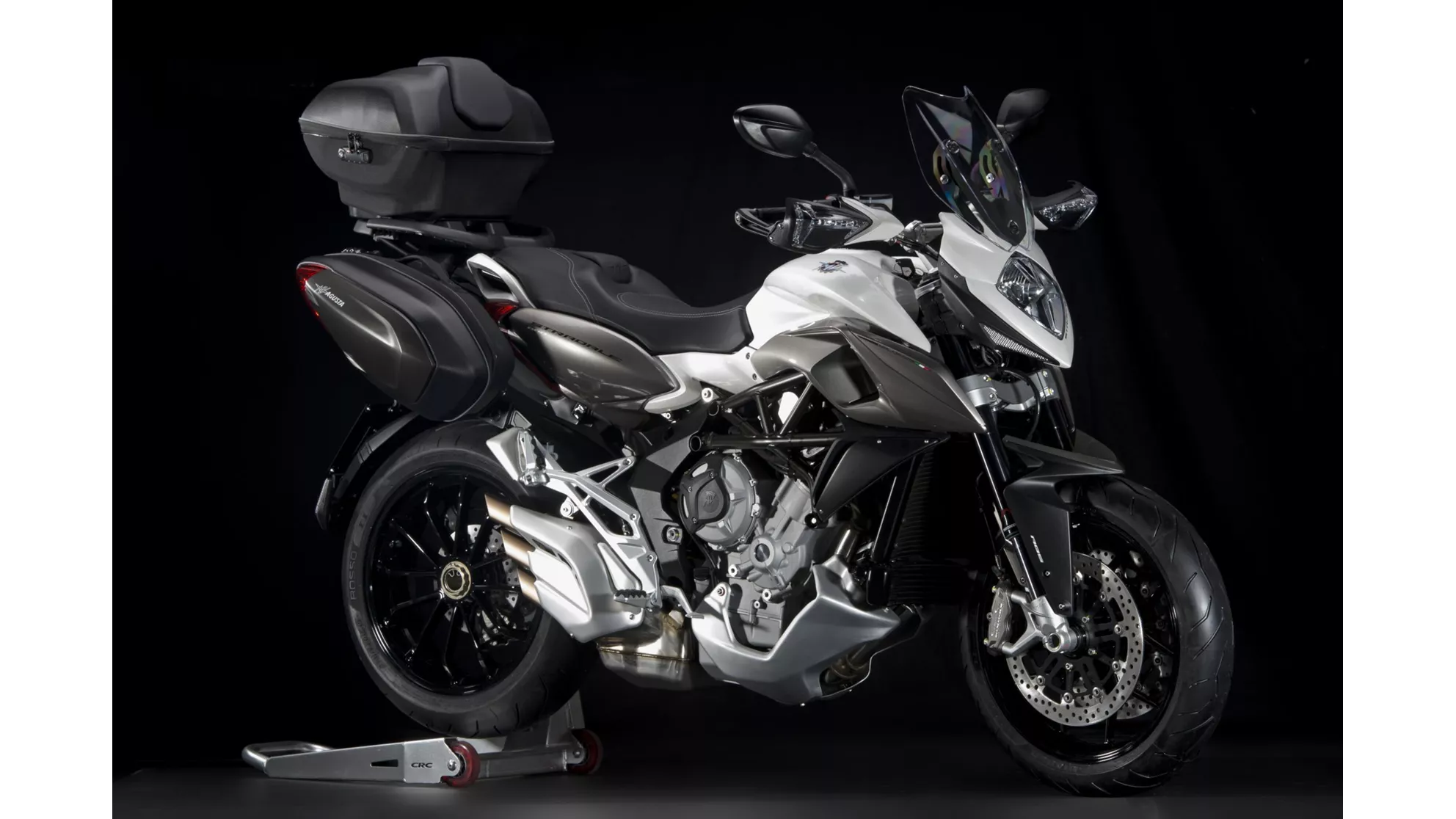
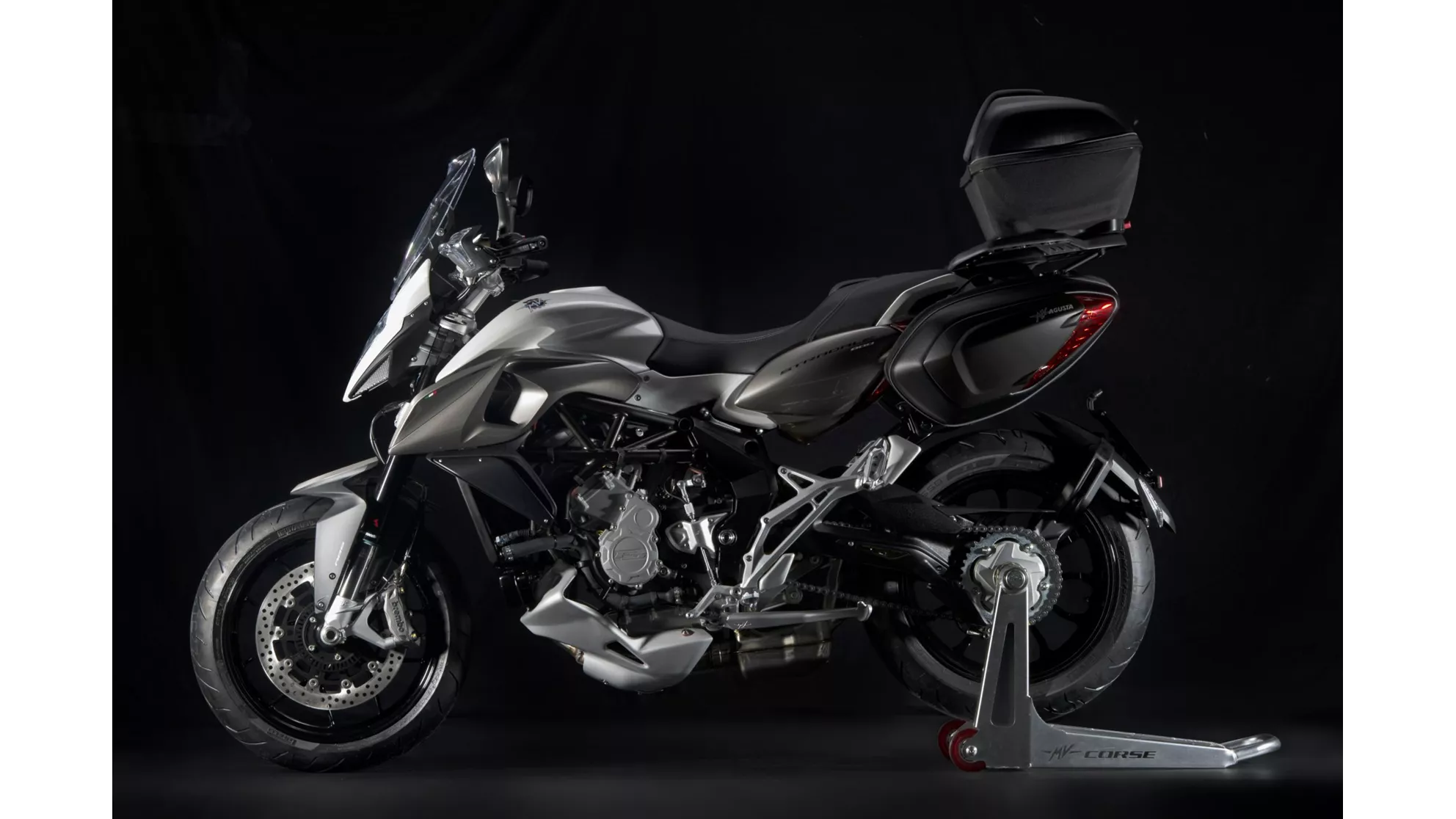
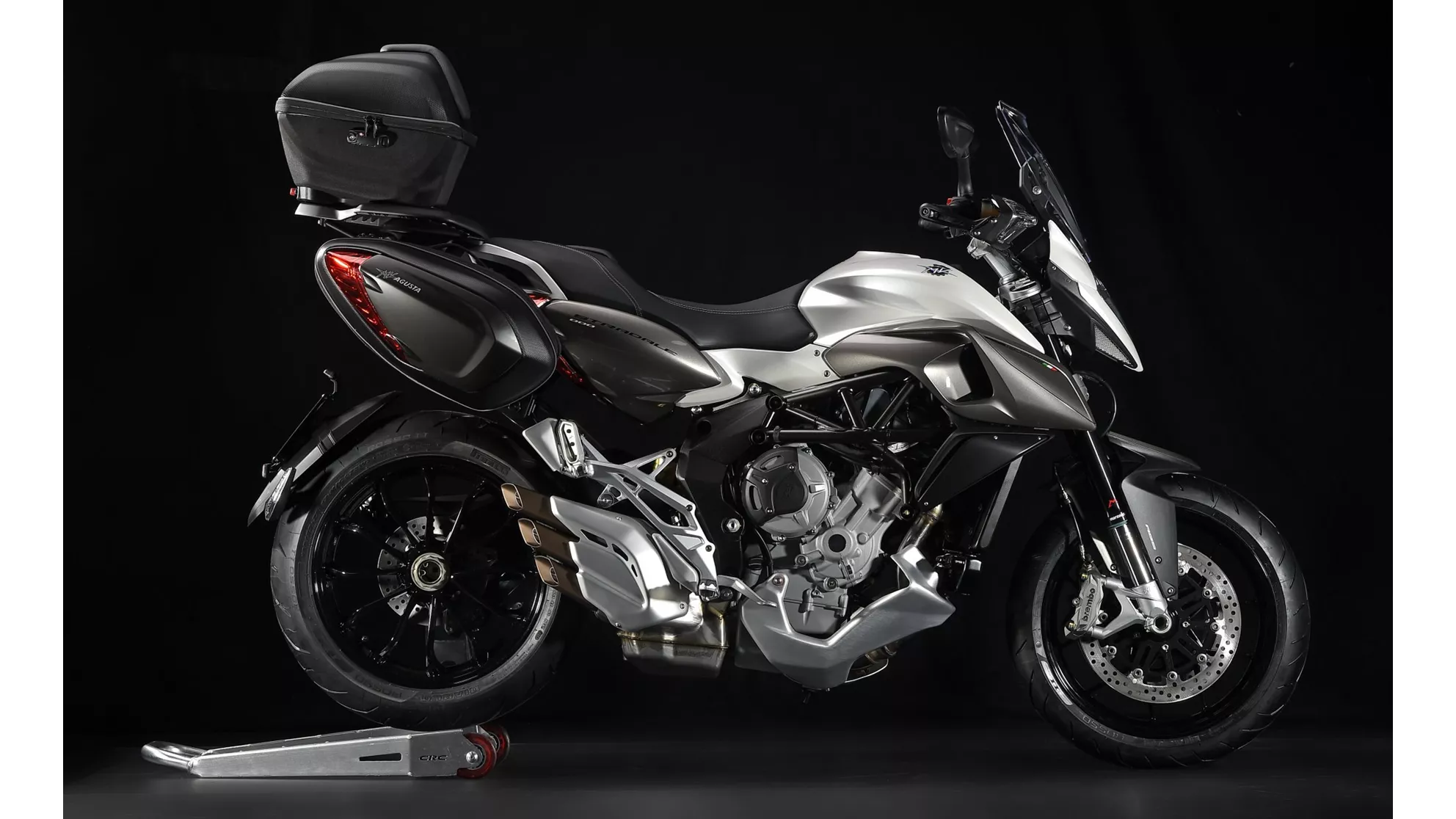
The MV Agusta Stradale 800 came onto the market in 2015 and is basically MV's attempt to make the wild Rivale platform more touring-capable. The Rivale was a supermoto-naked crossover, a bike from the same drawer that houses the Aprilia Dorsoduro or Ducati Hypermotard. MV took this base and turned it into something that was supposed to look like a tourer but can never hide its origins.
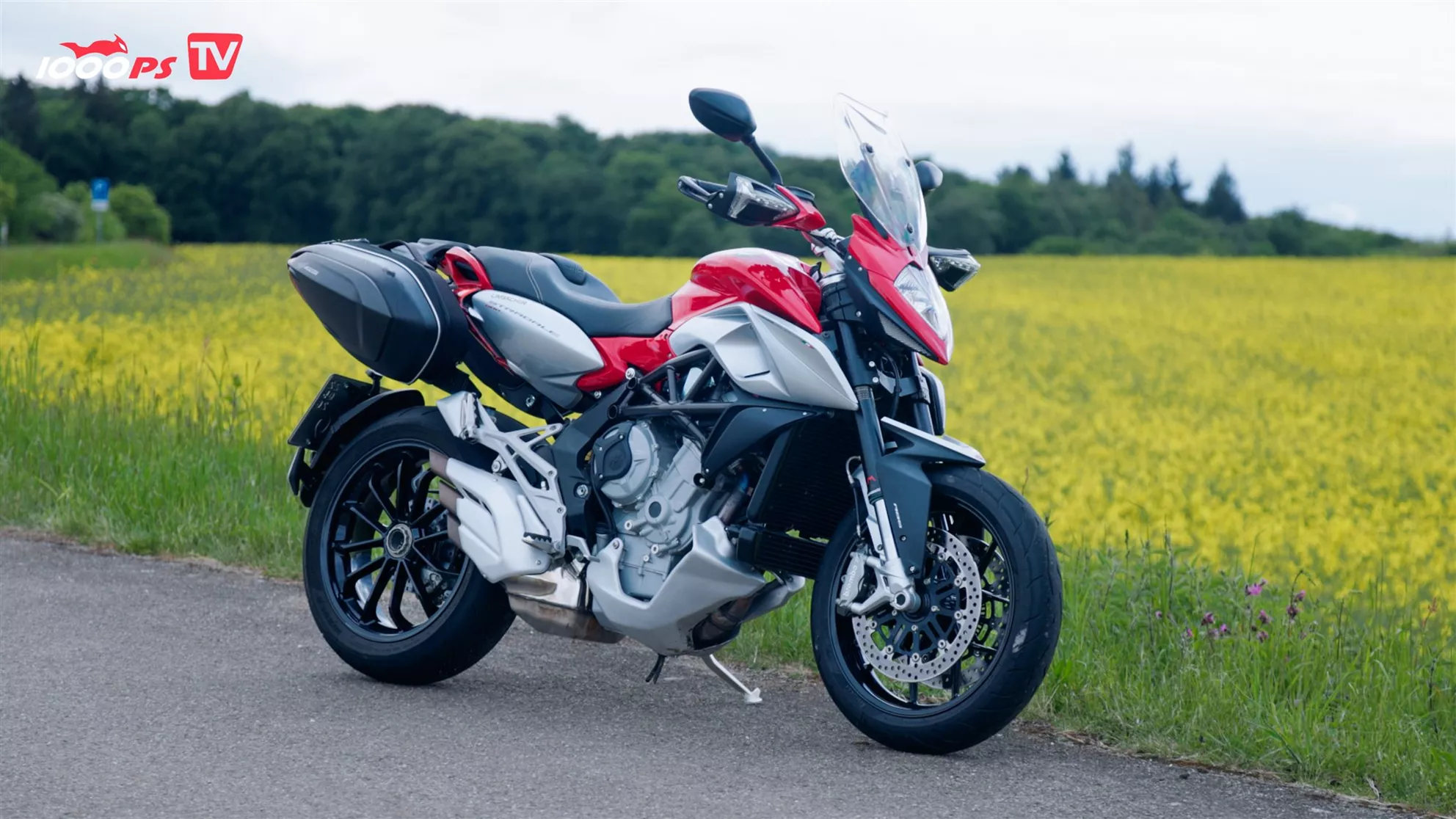
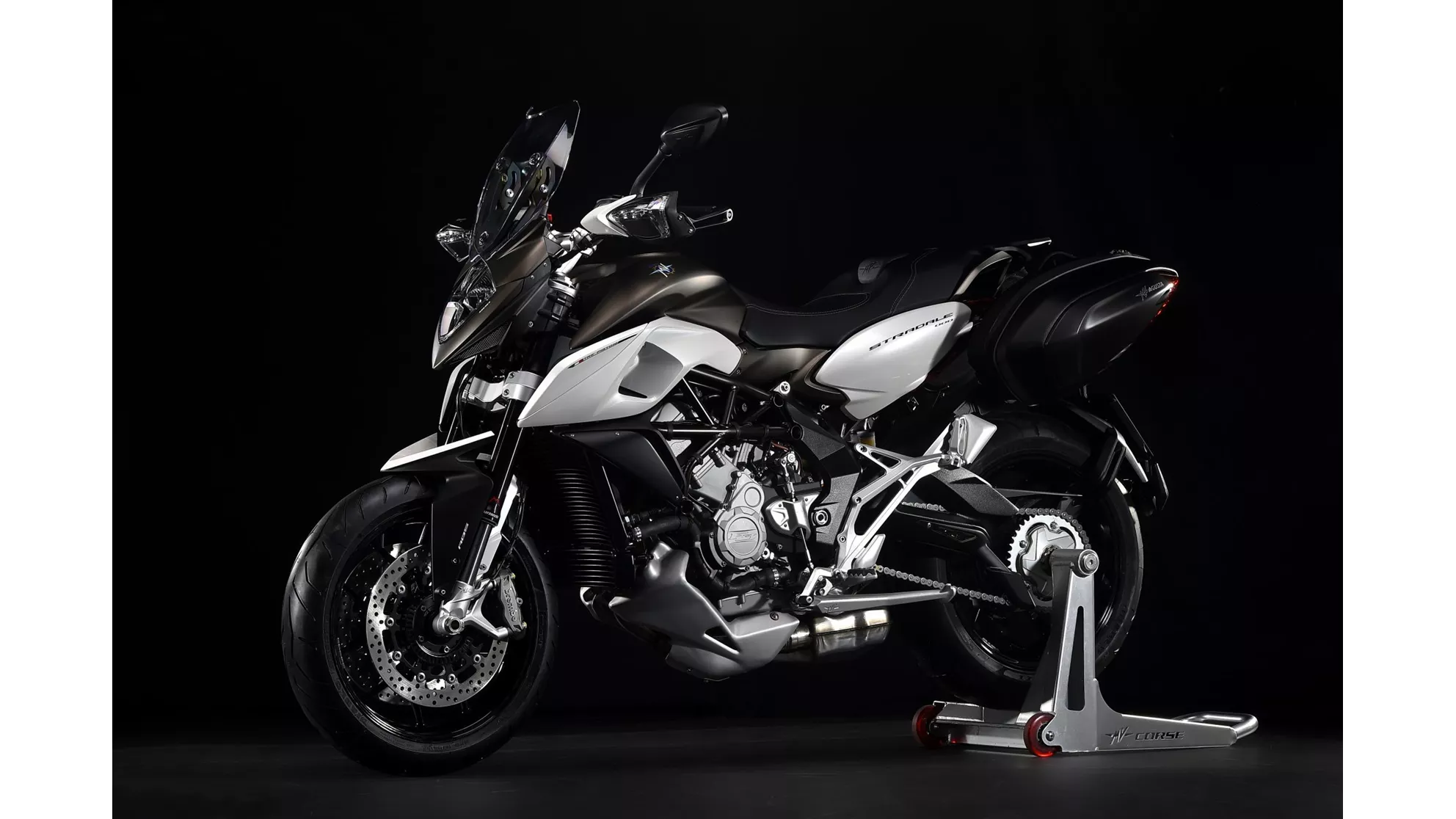
And you notice it immediately. The seating position is extremely far forward, the distance between seat and handlebars very short. Martin describes it as strongly supermoto-heavy. Anyone coming from a classic road bike or tourer sits unaccustomed here at first. You hang forward on the bike, close to the bars, close to the action. This makes the Stradale lively, spirited, and nimble when maneuvering. But it also makes it harder to build trust in the front wheel. The Stradale needs a tire that has a calming effect and makes the bike more stable. Then the idiosyncratic ergonomics would stand out less negatively. A classic used-bike buying tip that never appears in any listing: on a bike like this, the tire can decide whether it feels nervous or brilliant.
Touring Equipment, Italian Style
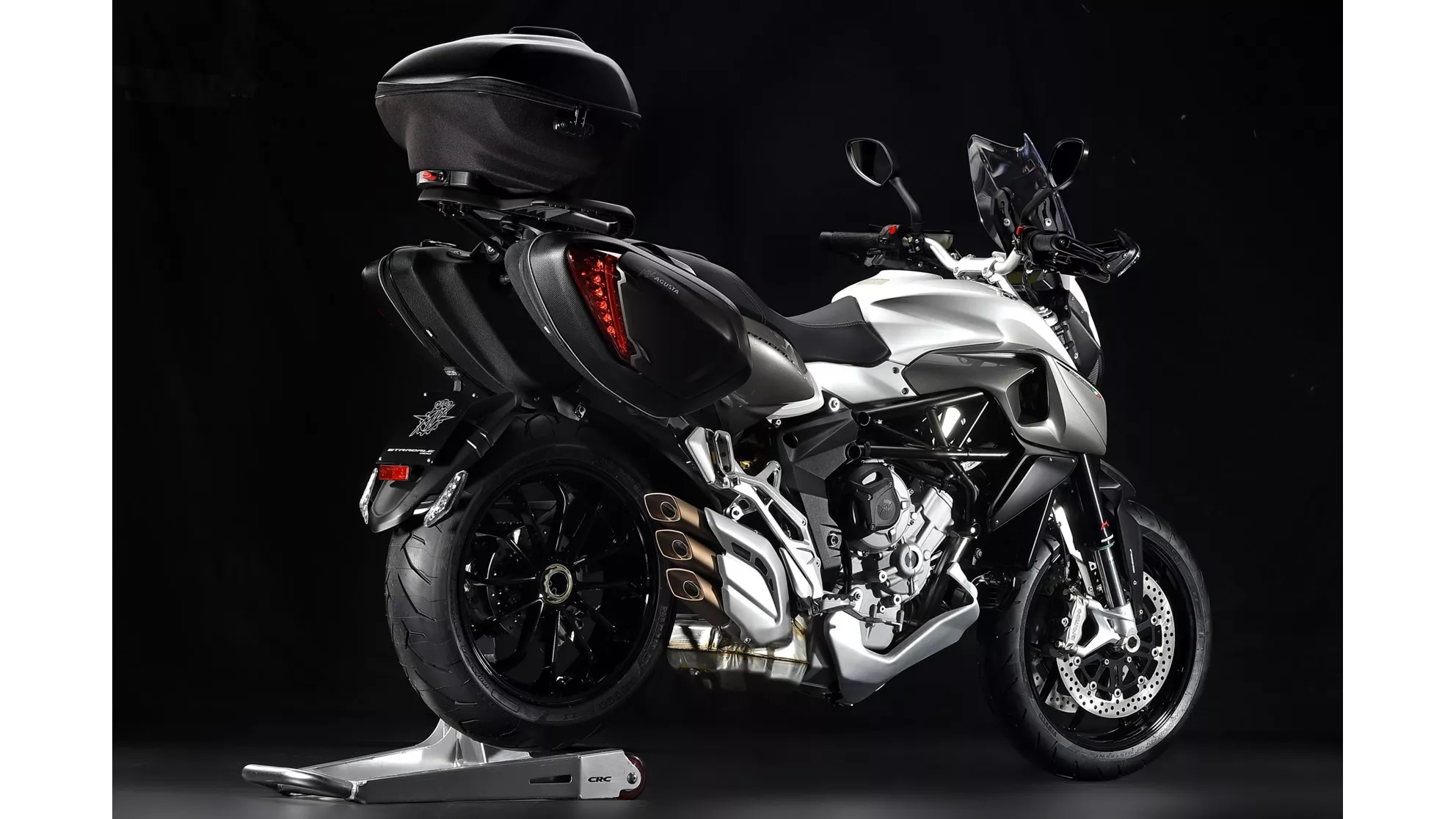
Even in completely stock form, the Stradale 800 already stands out as something special. Hand guards with integrated turn signals offer light hand protection but also represent the first expensive contact point in the event of a crash. The adjustable windshield provides decent, but not luxurious, wind protection. You don't get fully sheltered from the wind, but on the highway the Stradale is noticeably more pleasant than a comparable naked bike. 200 km/h is surprisingly relaxed to achieve on the German Autobahn. No harsh turbulence, no major restlessness. For a bike that visually looks more like a fun bike with a touring urge, that's a strong statement. So covering distance is possible. Just in MV's own way: not from an armchair, but with a tensed riding posture and a triple that likes to see revs.
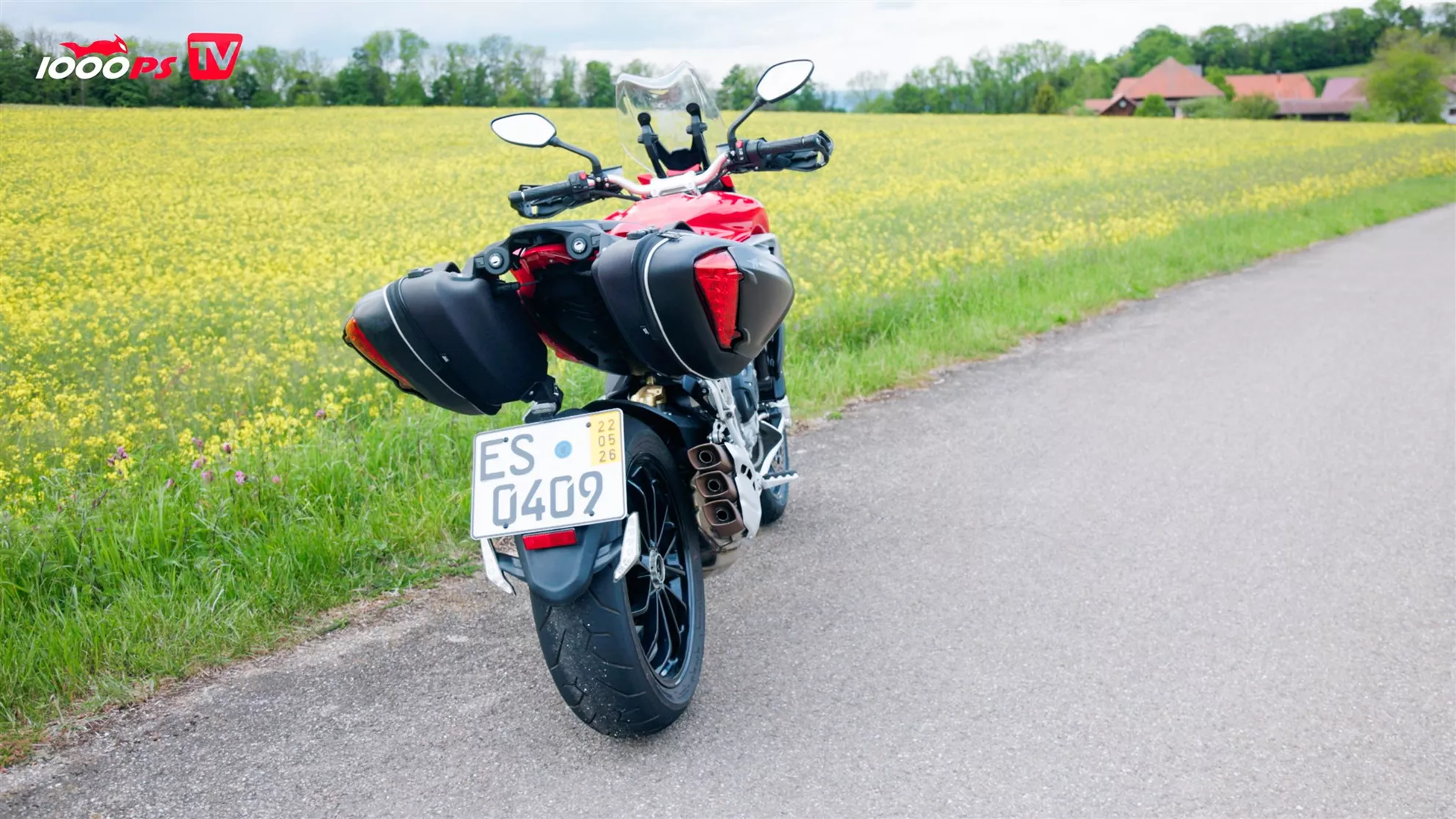
A rear-end solution you rarely see like this.
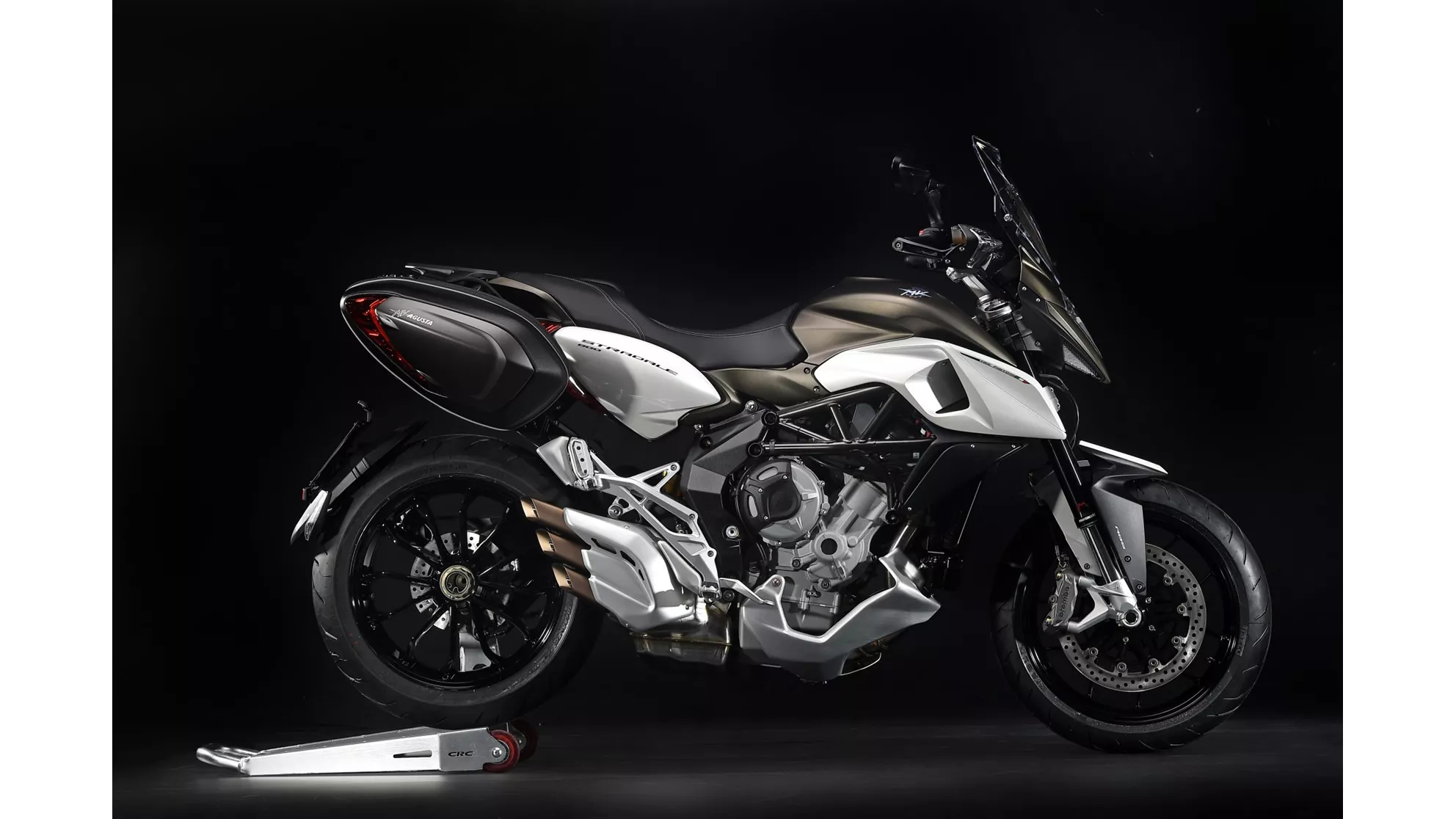
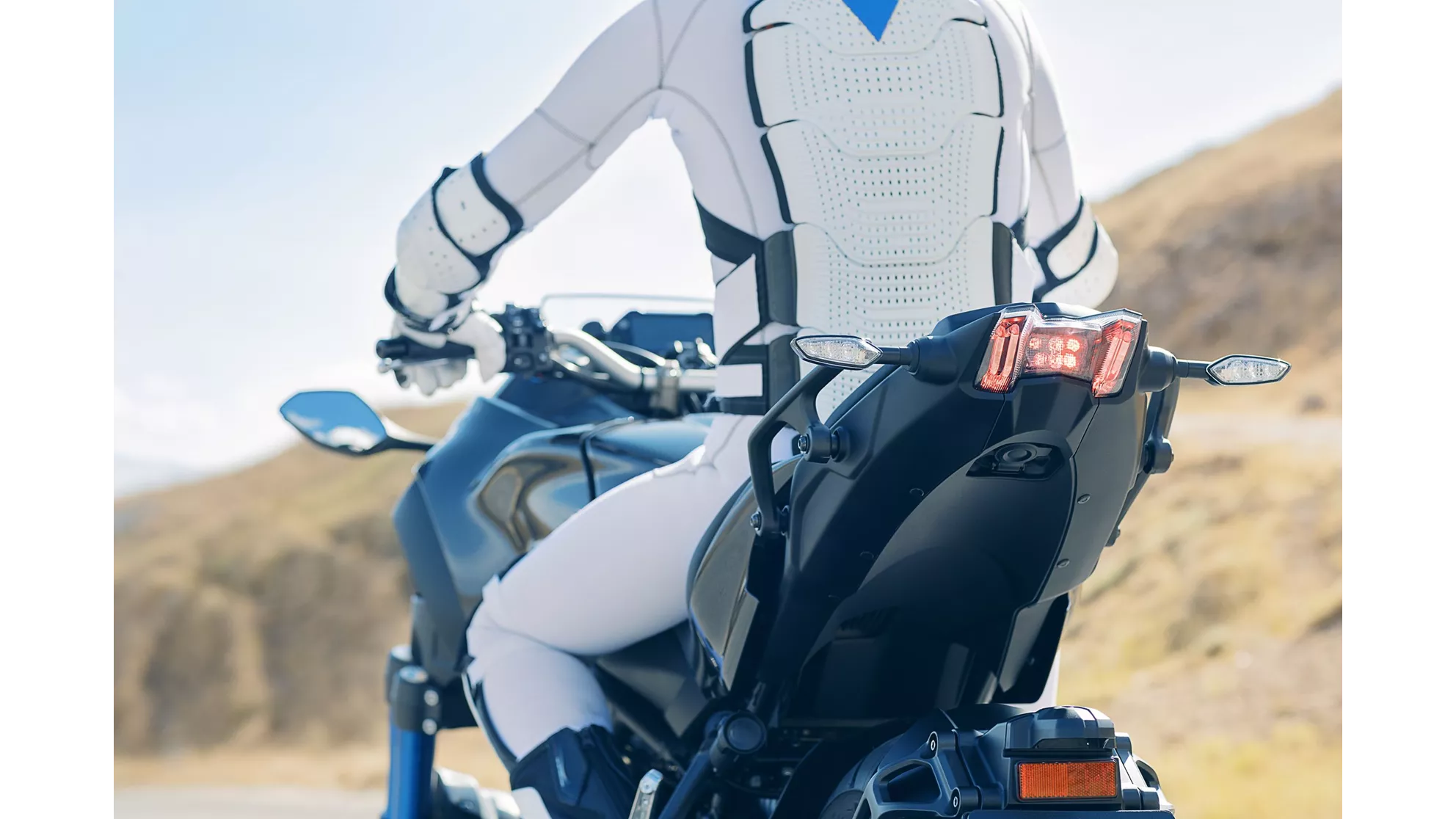
A real curiosity is the standard side bags. They cover the taillights, so MV integrated the rear lights directly into the pannier system. With cables, connectors, and lights positioned far out to the sides. From behind, this looks odd, almost a bit ungainly for such an elegant Italian bike. Viewed from the right, though, the Stradale makes up for it with its single-sided swingarm and classic triple exhaust. So it still scores points at the ice cream parlor. Just maybe not directly from behind.
Controls, Electronics, and Italian Unreason
On the Yamaha, the controls are comparatively simple and close to what you know from Yamaha. On the MV, it gets more Italian. Riding modes, ABS, and traction control can all be configured, but navigating the small LC display takes practice. The buttons under rubber covers don't look particularly elegant and could, over the years, be exactly the point where age shows first.
What's fascinating, though, is how unreasonable the Stradale seems from today's perspective. On modern bikes, restarting usually brings back the well-behaved default mode. Everything safe, everything by the book, everything controlled. The 2015 Stradale, on the other hand, actually remembers that traction control was switched off. Fun mode yesterday, still fun mode this morning. Pedagogically questionable, perhaps, but definitely charming to ride.
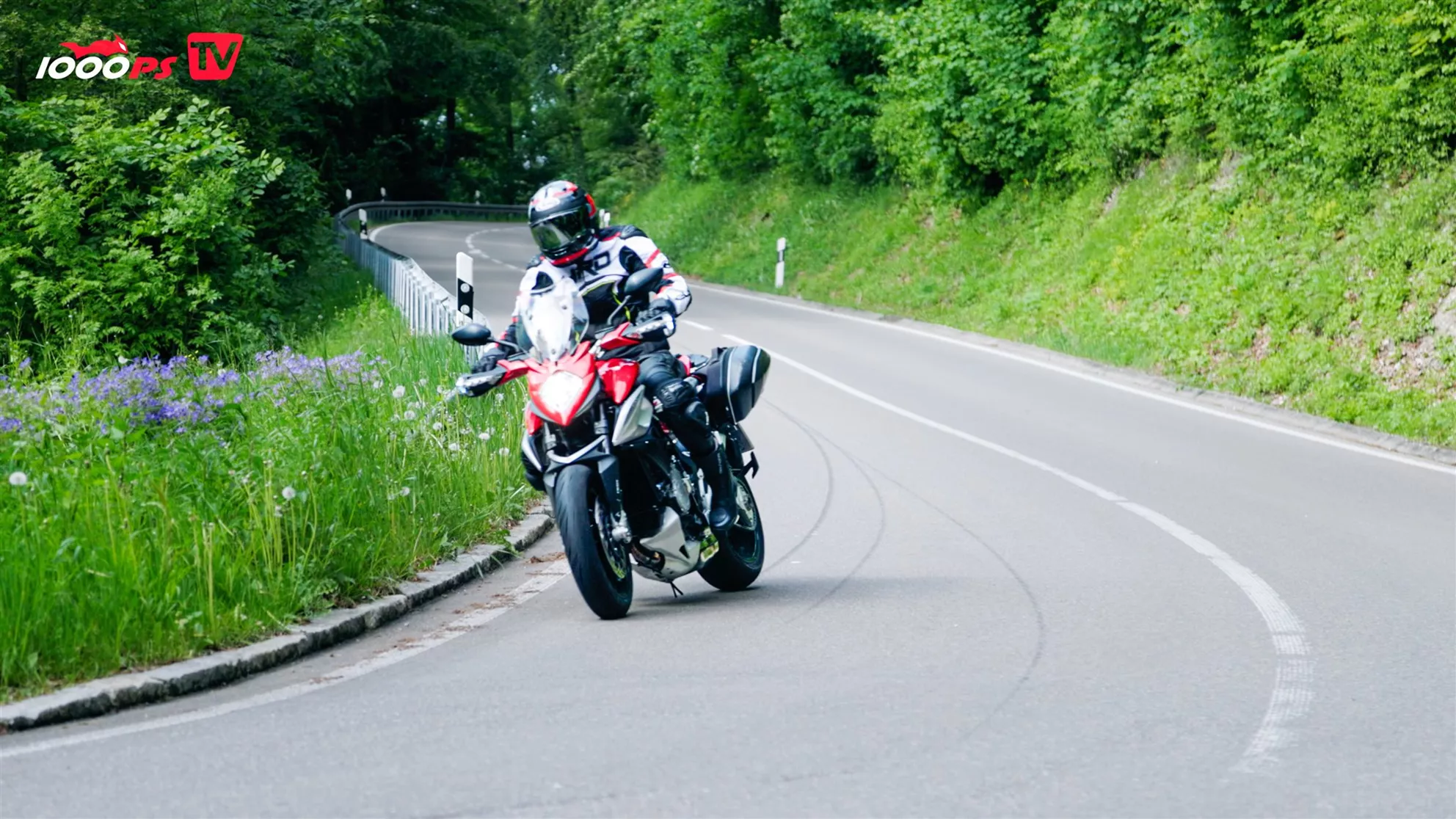
Once the electronic aids are switched off, they stay off.
And yes, the Stradale can be fun. The rear ABS can be deactivated, which isn't a given in this class. This opens the door back towards supermoto territory. Playing while trail braking, loosening up the rear, moving the bike freely – that's exactly where it shows its positive side. It's not a well-behaved tourer that happens to look good. It's a fun bike that MV fitted with panniers and a windshield.
Engine and Gearbox of the Stradale
The MV also carries a triple, here with 798 cc and likewise around 115 hp. On paper, that sounds on par with the Yamaha. In practice, it rides completely differently. The Stradale needs revs. Peak power sits high up. Twist the throttle and let the engine work, and you get forward drive. Anyone expecting a hefty punch from down low will miss something. That's exactly what doesn't quite fit the concept perfectly. Supermoto-heavy ergonomics really call for grunt from the basement. Brake into the corner, tip it in, get on the gas early, drive out. But the MV triple wants to see more revs before it really sprints. That's fun, but it demands commitment. As a cozy touring companion, it's only conditionally suited.
The gearbox also deserves criticism. Gear changes turn out clunky, and neutral isn't always easy to find.
Buying a Used MV Agusta Stradale 800: Emotion with Homework
The Stradale 800 is rare, distinctive, and visually an event. But that's exactly why it demands more attention than a Japanese bestseller when buying used. The hand guards with integrated turn signals should be checked closely for crash damage traces. The side bags, including the integrated taillights, must be complete, functional, and cleanly wired. If something's missing here or someone's tinkered with it, a charming detail quickly turns into an expensive annoyance.
The control concept and the rubber buttons also deserve a close look. On the test bike, everything was in fine shape, but it's exactly these spots that often reveal how a bike was treated. Add to that tire choice, shifting feel, finding neutral, and overall condition. Price-wise, the Stradale sits around 10,000 euros, similar to the Niken, depending on condition and offer. The difference: with the Yamaha, you're buying a bold mass-production idea from a Japanese manufacturer. With the MV, you're buying a short-lived, Italian specialty.
New and Used Touring Bikes on the 1000PS Used Bike Market
Anyone who's now developed a taste for an extraordinary tourer should take a look at the 1000PS used bike market. There you'll find not only exotic models like the Yamaha Niken or the MV Agusta Stradale 800, but also numerous other touring bikes off the mainstream path – from the comfortable mile-muncher to the sporty corner-carver with luggage option. With a bit of patience, you can discover exactly that bike which doesn't stand on every corner and still fits perfectly for your next big tour. Find new and used bikes on the 1000PS used bike market.
Touring Quality: Trust vs. Fireworks
Which travels better? The honest answer: it depends on what you understand by touring. The Niken is the bike that brings calm to your mind. Bad asphalt, road markings, changeable weather – that's exactly where its concept works. You sit properly, can equip it with luggage, and get a well-known Yamaha triple. Its problem isn't function, it's acceptance. Many riders simply didn't want this concept.
The Stradale travels differently. It protects better than a naked bike, rides pleasantly on the highway too, and comes with standard panniers. At the same time, it remains supermoto-heavy, lively, and a bit uneven in its concept. It's not the tourer that carries you as relaxed as possible to the sea. It's more the bike that wants to tell a story already at the gas station and carries mischief on its shoulder on mountain passes.
In the twisties, the Stradale will feel lighter and more playful, provided tires and rider match well. The Niken counters with calm, a feeling of stability, and technical composure. On long, bad, wet, or changeable stretches, I'd rather reach for the Yamaha. For the short after-work loop with touring-luggage fantasies, the MV would have better chances of putting a smile under your helmet.
More Reports on Used Bikes

- How much does a Yamaha Niken cost?
- Here you will find an overview of the price level of new and used motorbikes!
&width=60&height=60&bgcolor=rgba_39_42_44_0&mode=crop "Author: Der Horvath")
MV Agusta Stradale 800 2015 - Experiences and Expert Review
Der Horvath
The MV Agusta Stradale 800 is not a classic tourer. It's a fun bike with touring elements, a supermoto-tourer with Italian delusions of grandeur, and exactly for that reason appealing. The ergonomics are special, the engine needs revs, the gearbox can feel clunky, and the control concept requires getting used to. But if you embrace it, you get a rare bike with character, a single-sided swingarm, triple exhaust, standard side bags, and a dose of unreasonableness that modern bikes often no longer have.
Yamaha Niken 2018 - Experiences and Expert Review
Der Horvath
The Yamaha Niken is a bike that many judged too quickly. Yes, it looks unusual. Yes, it's heavy. Yes, the front end demands more attention in the long run than a normal bike. But it works. It rides surprisingly motorcycle-like, offers good ergonomics, and builds trust where other bikes make the rider work harder. Especially as a used buy, it becomes interesting because the small market and manageable demand can push prices down.
Used Touring Exotics: Yamaha Niken and MV Stradale Put to the Test Images
Source: 1000PS