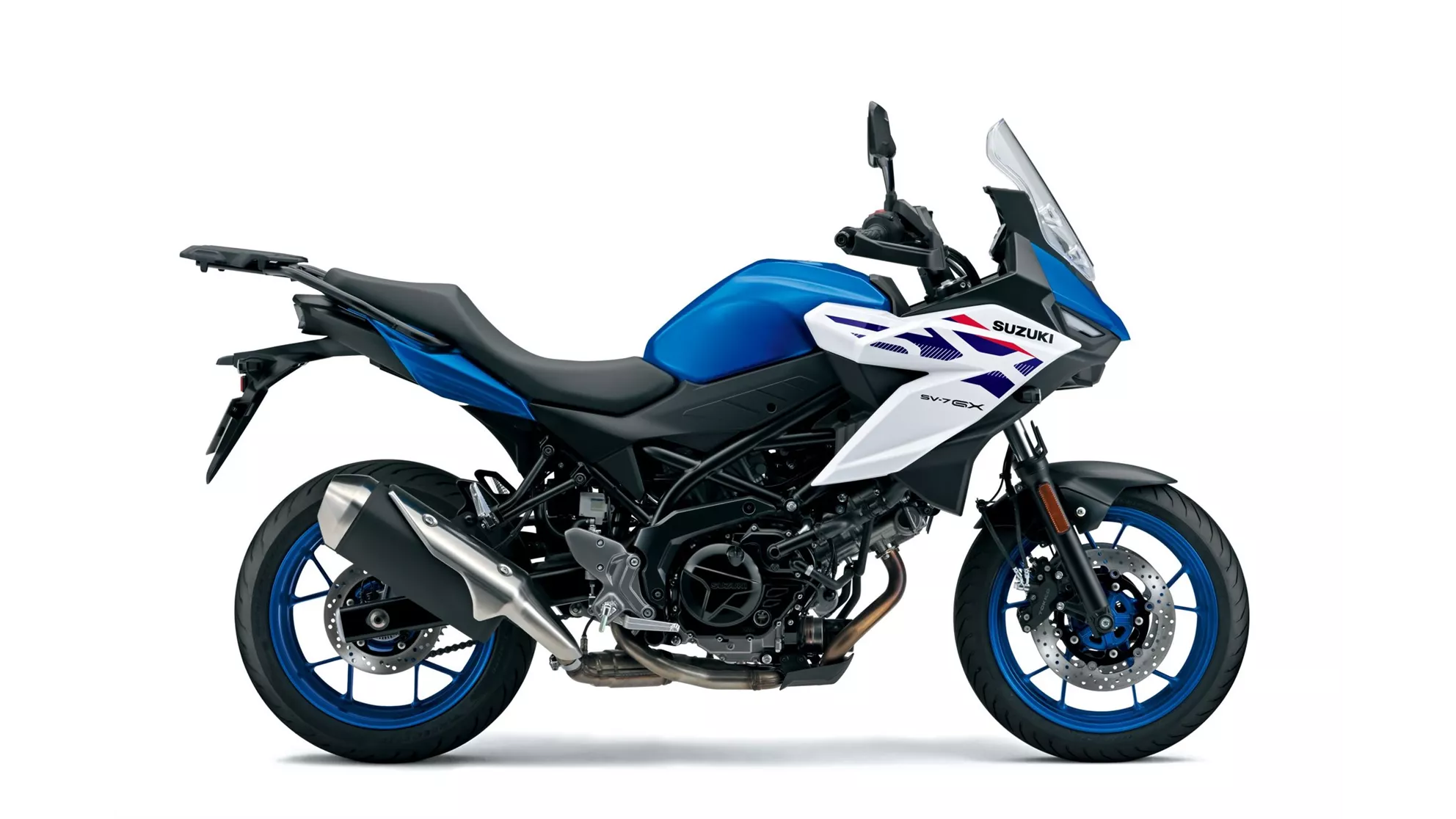
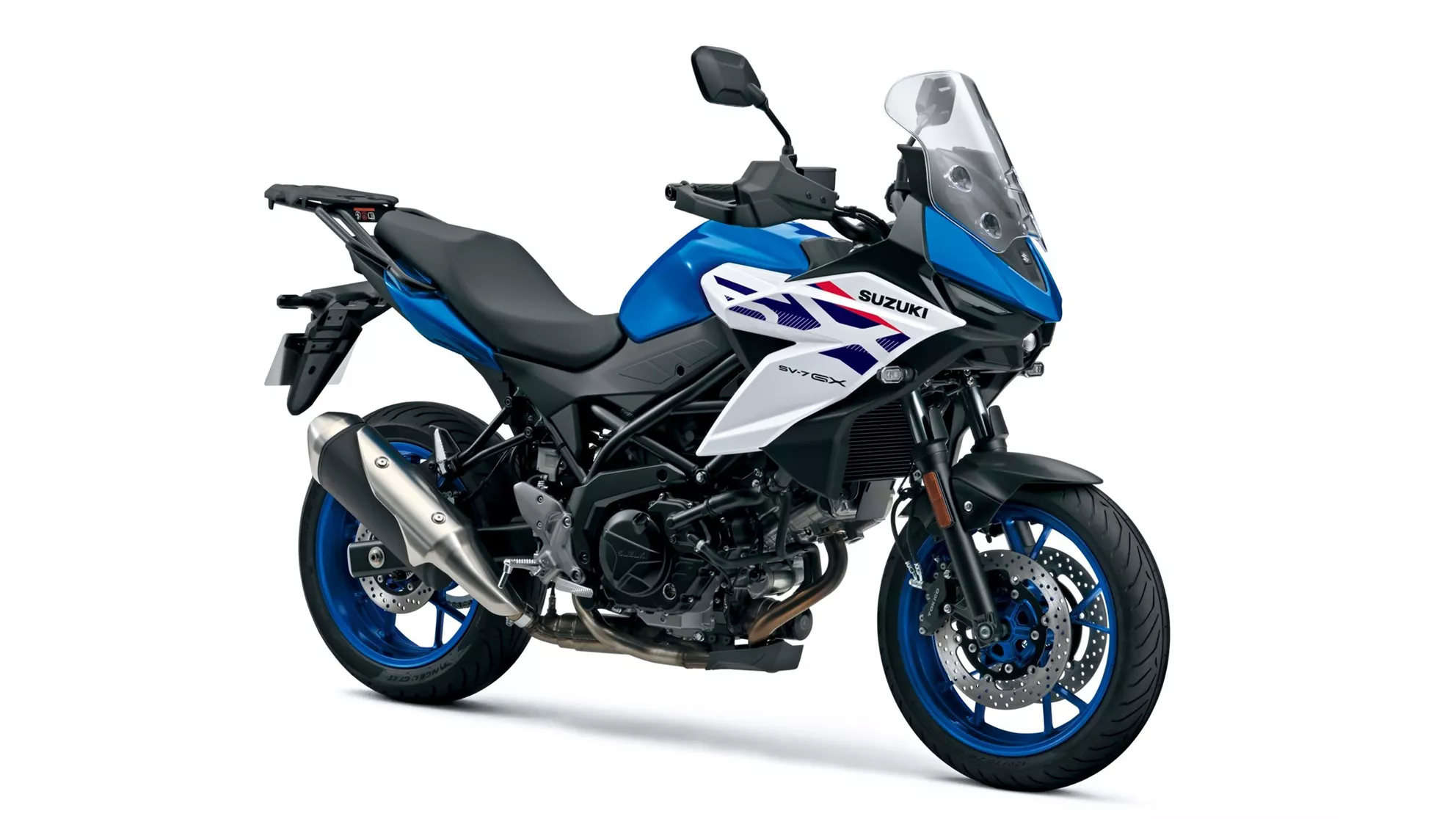
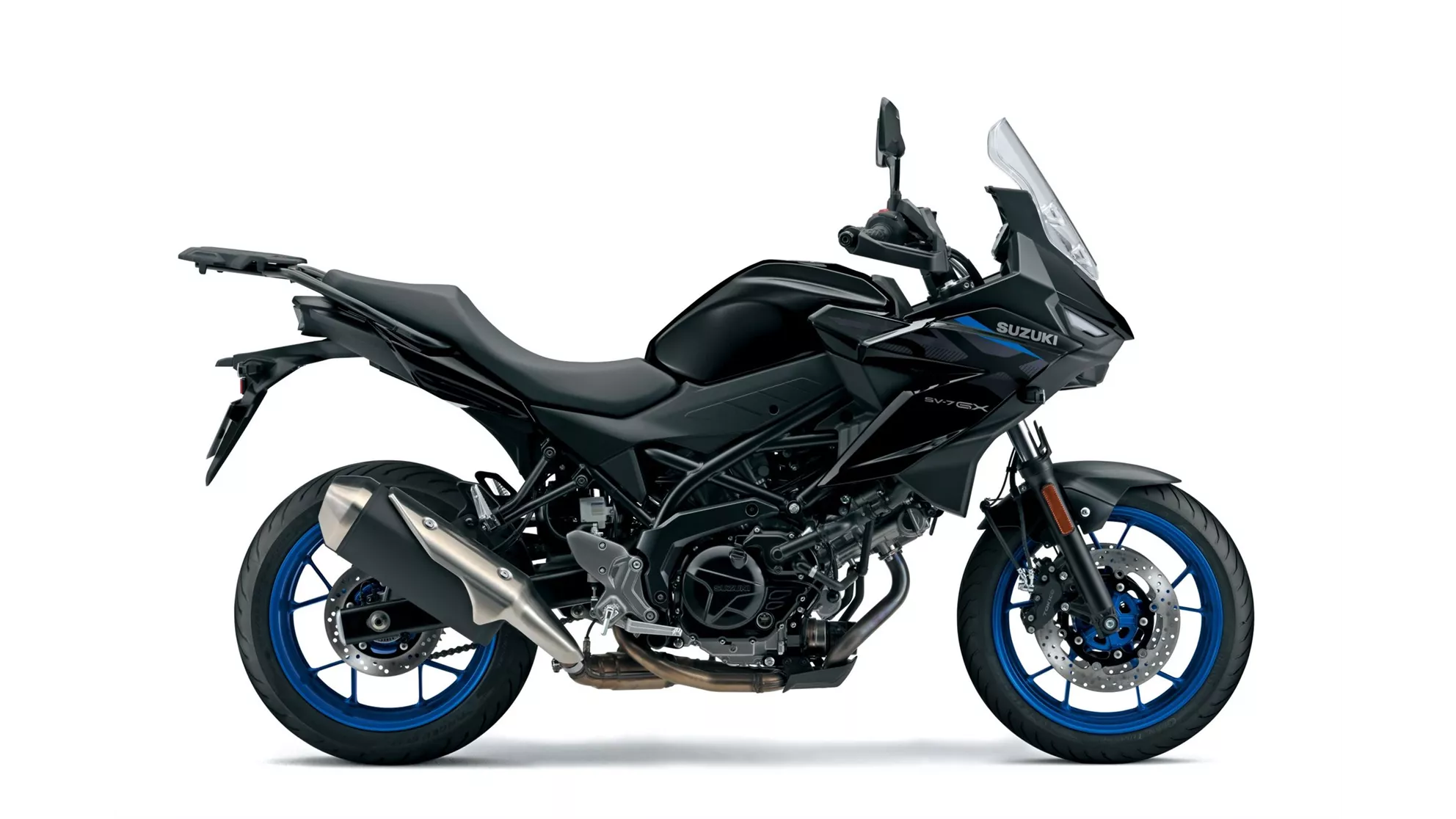
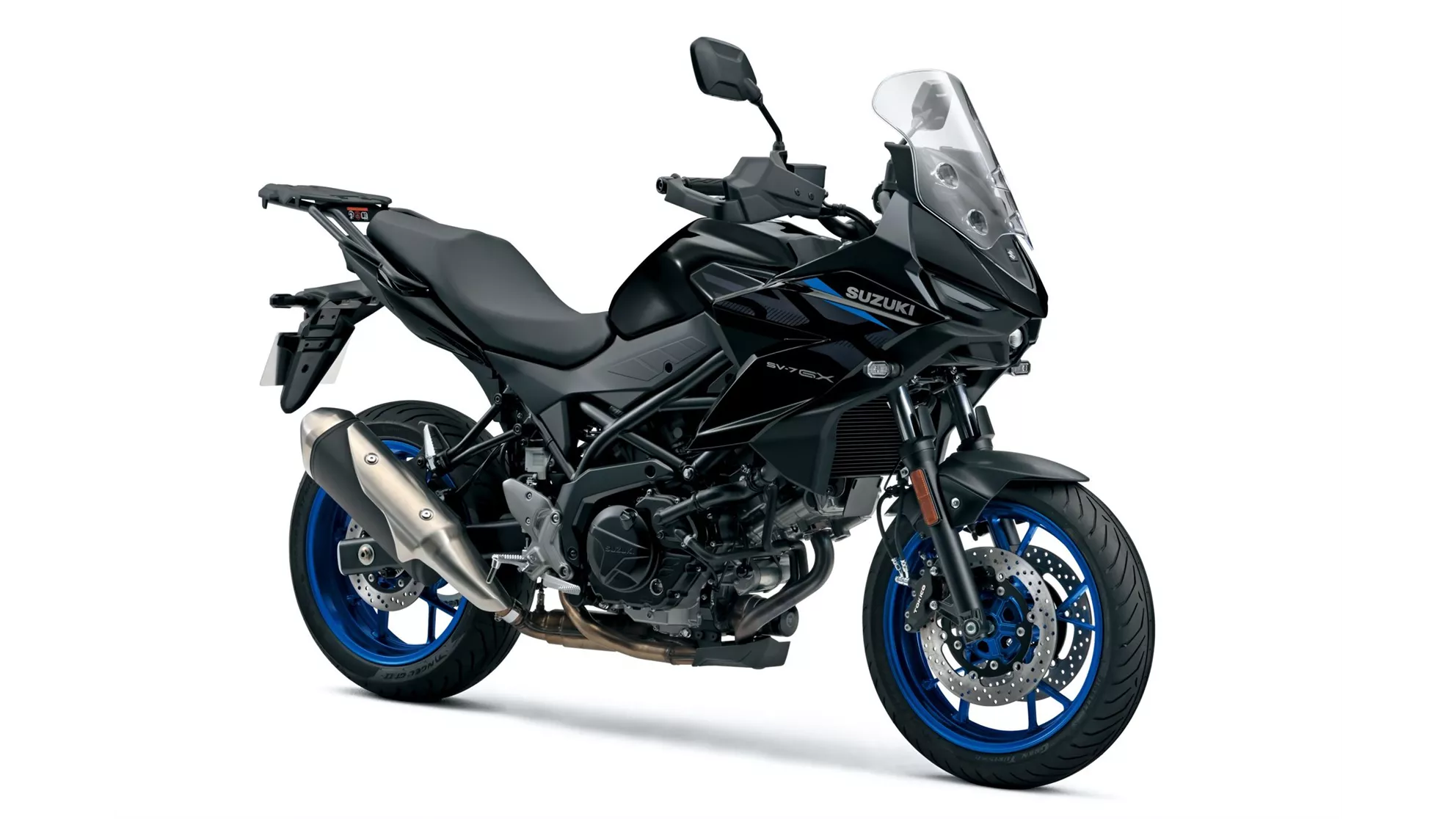
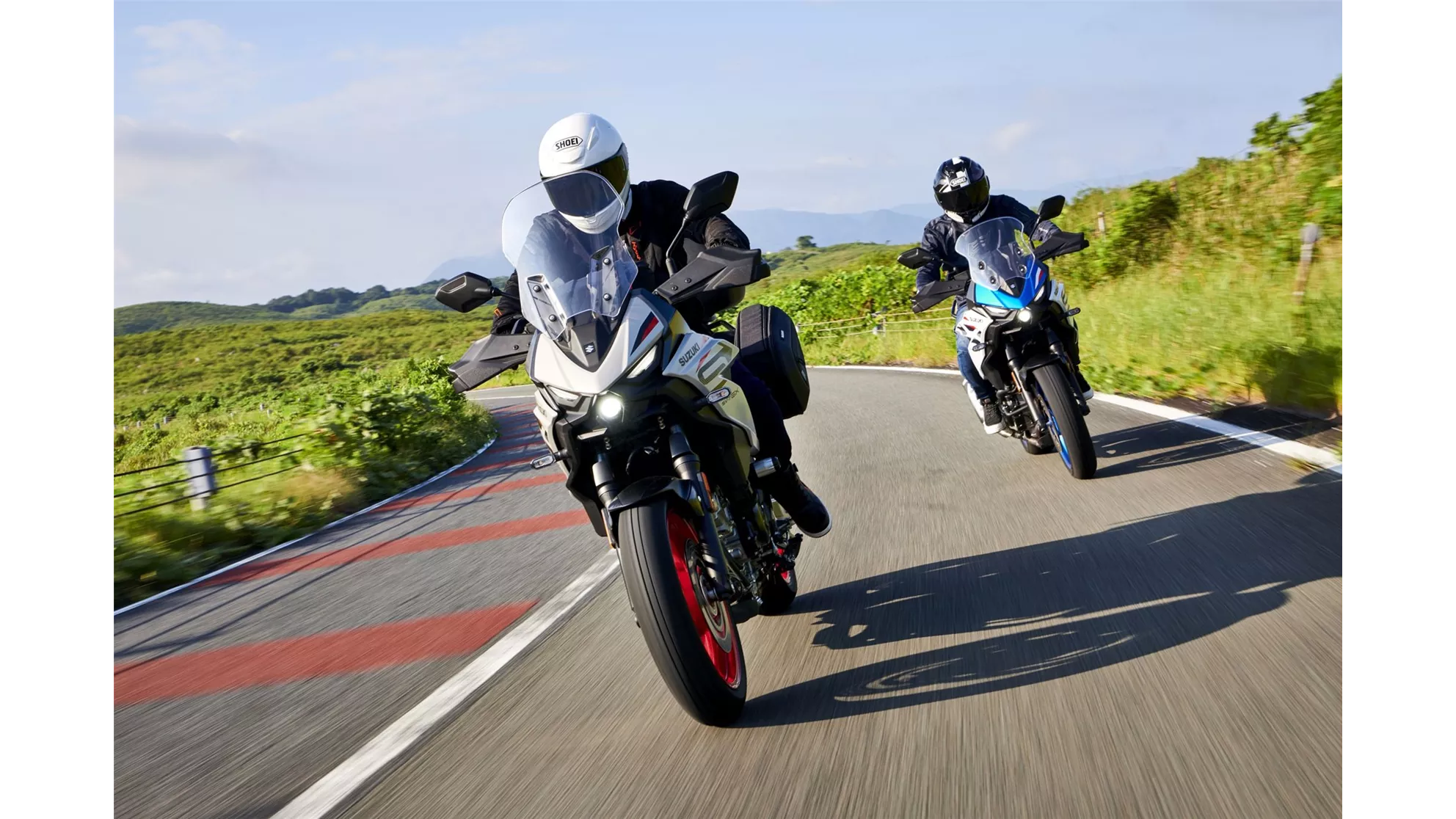
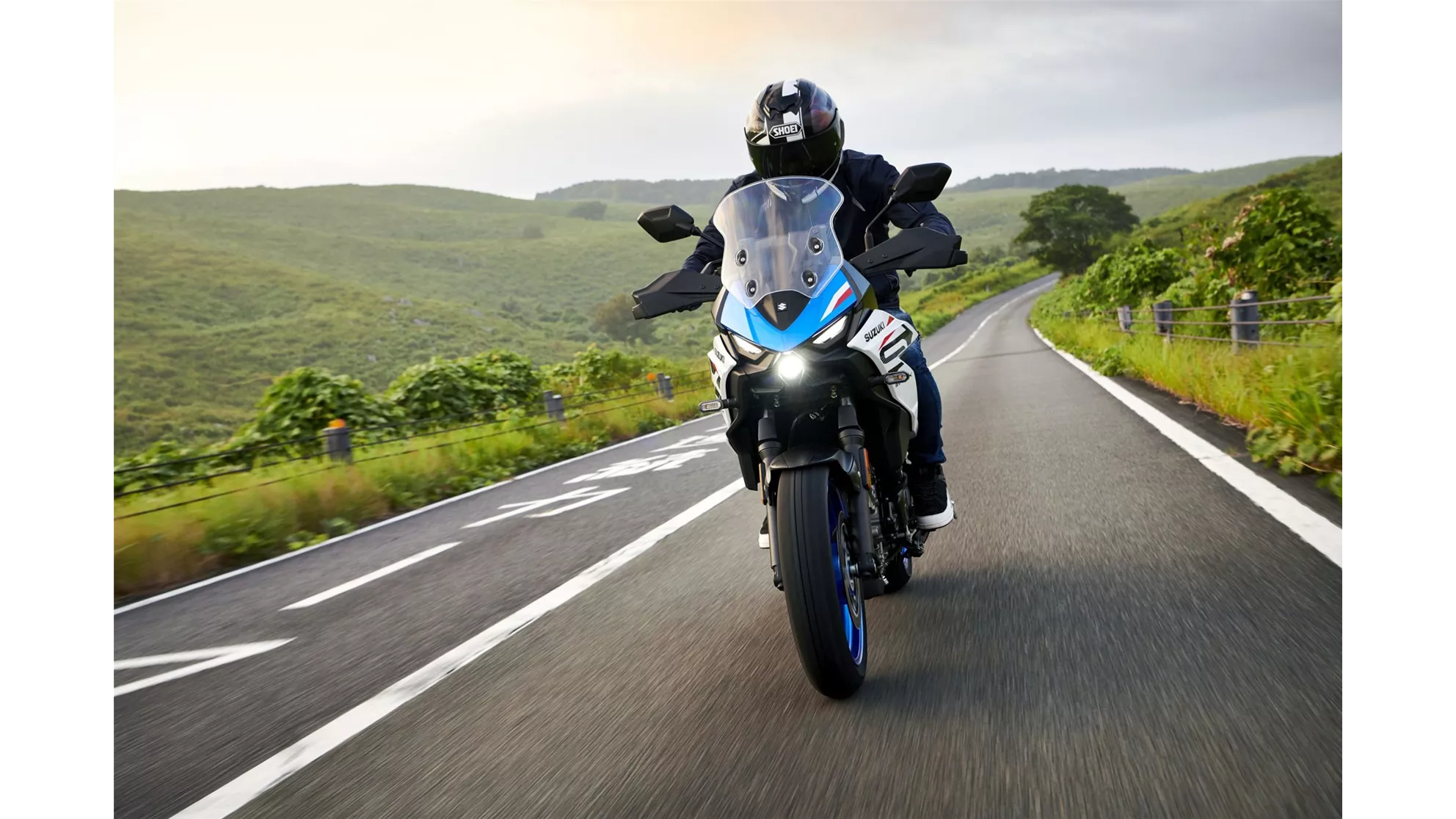
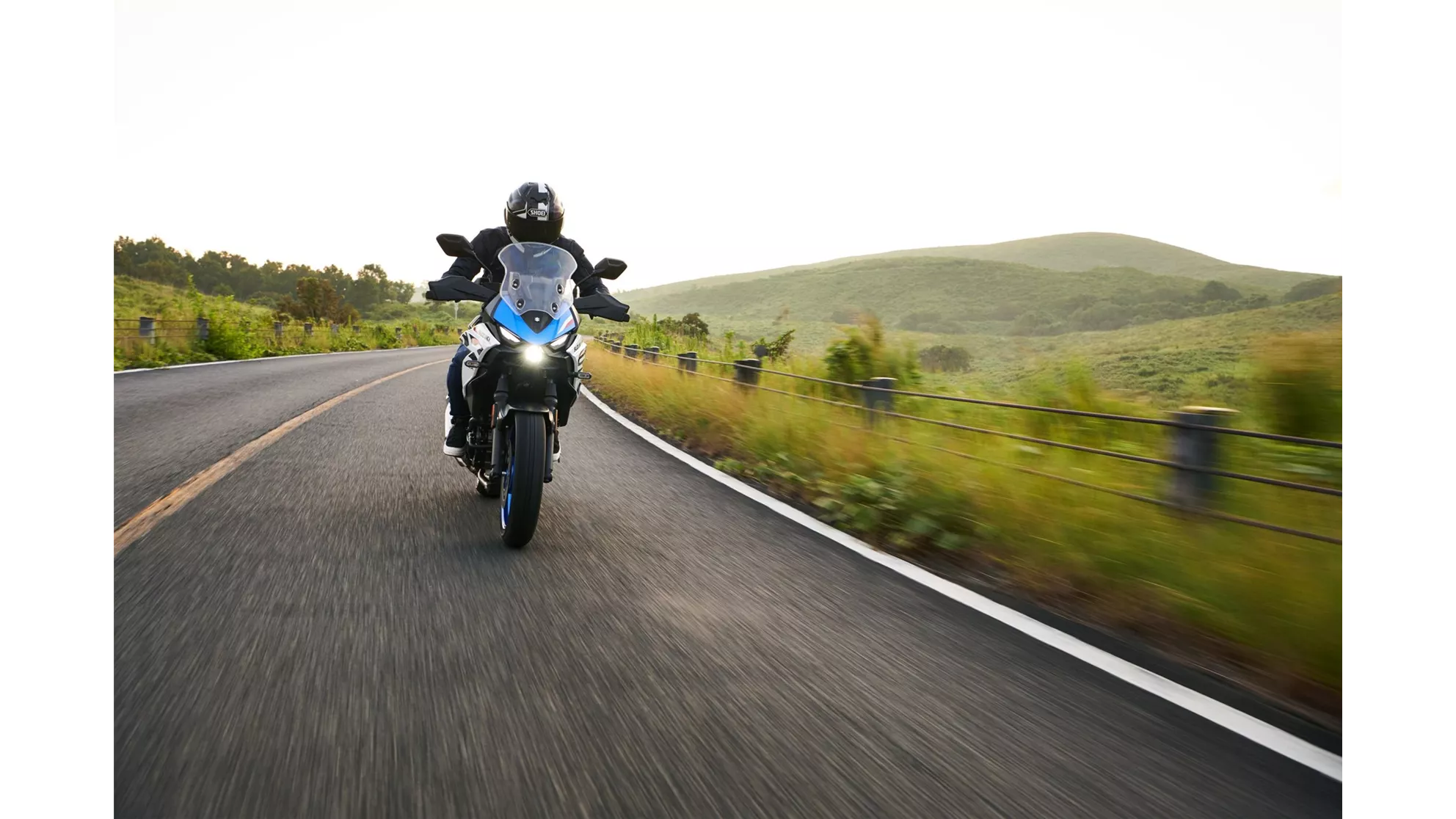
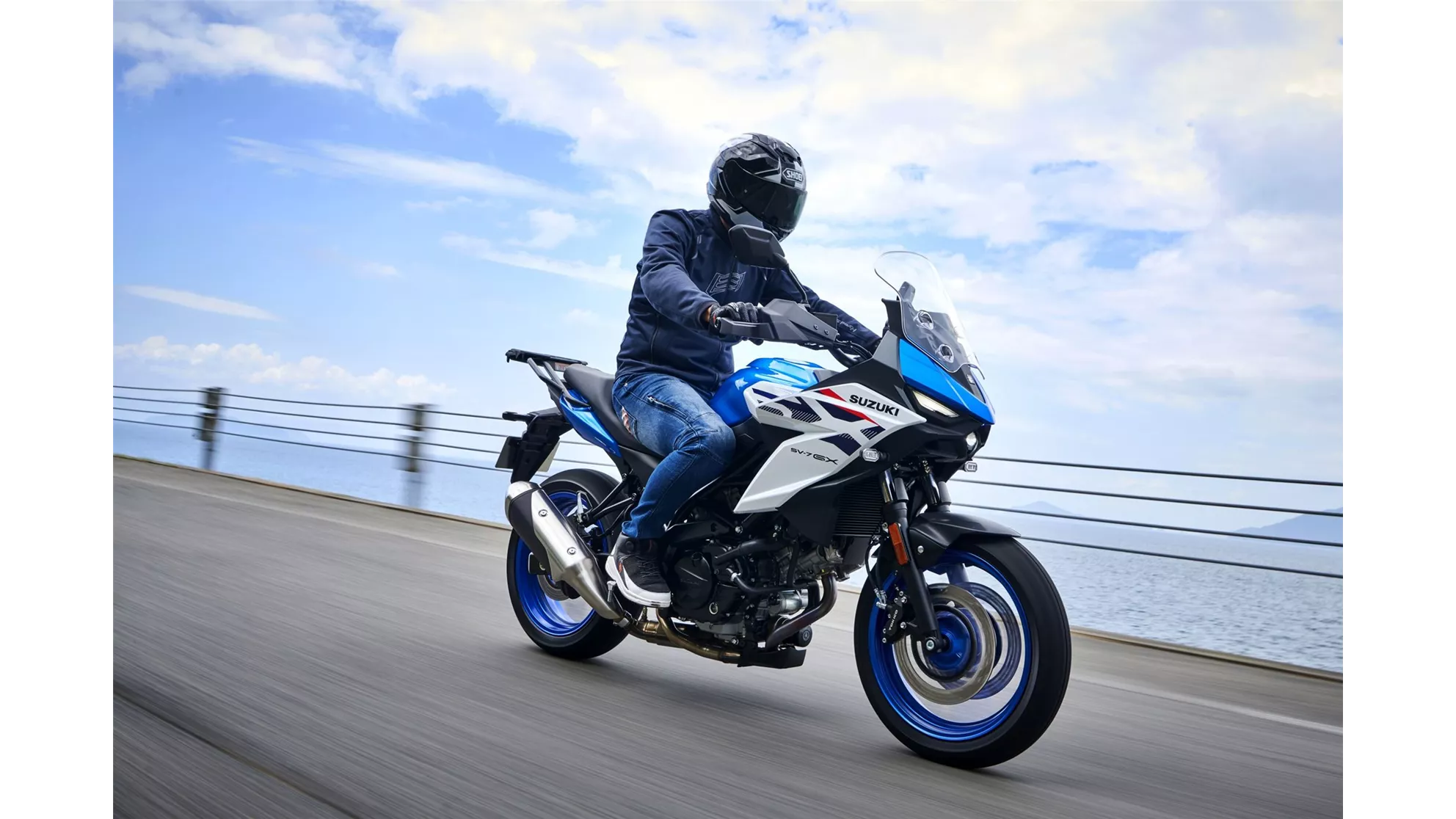
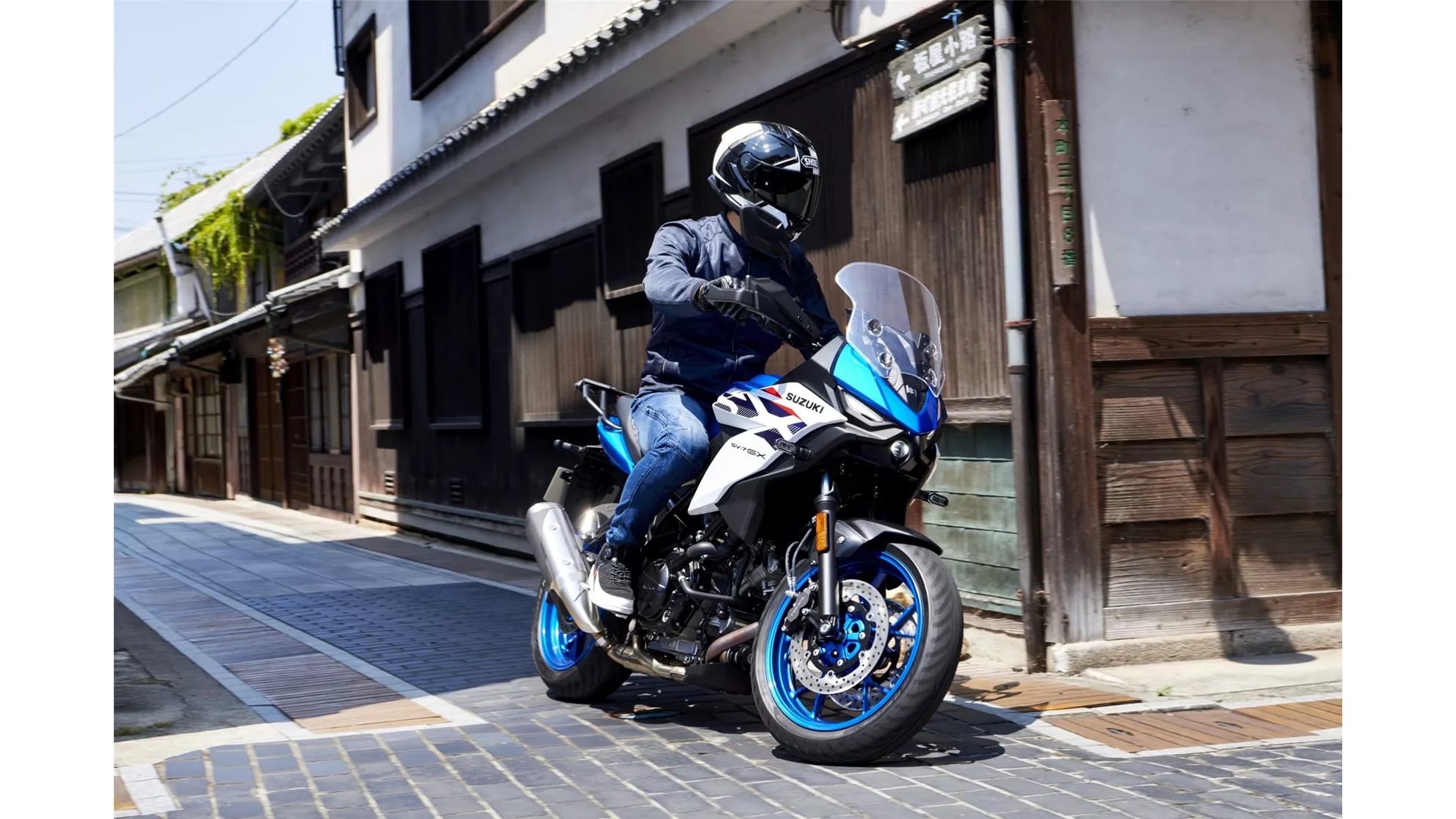
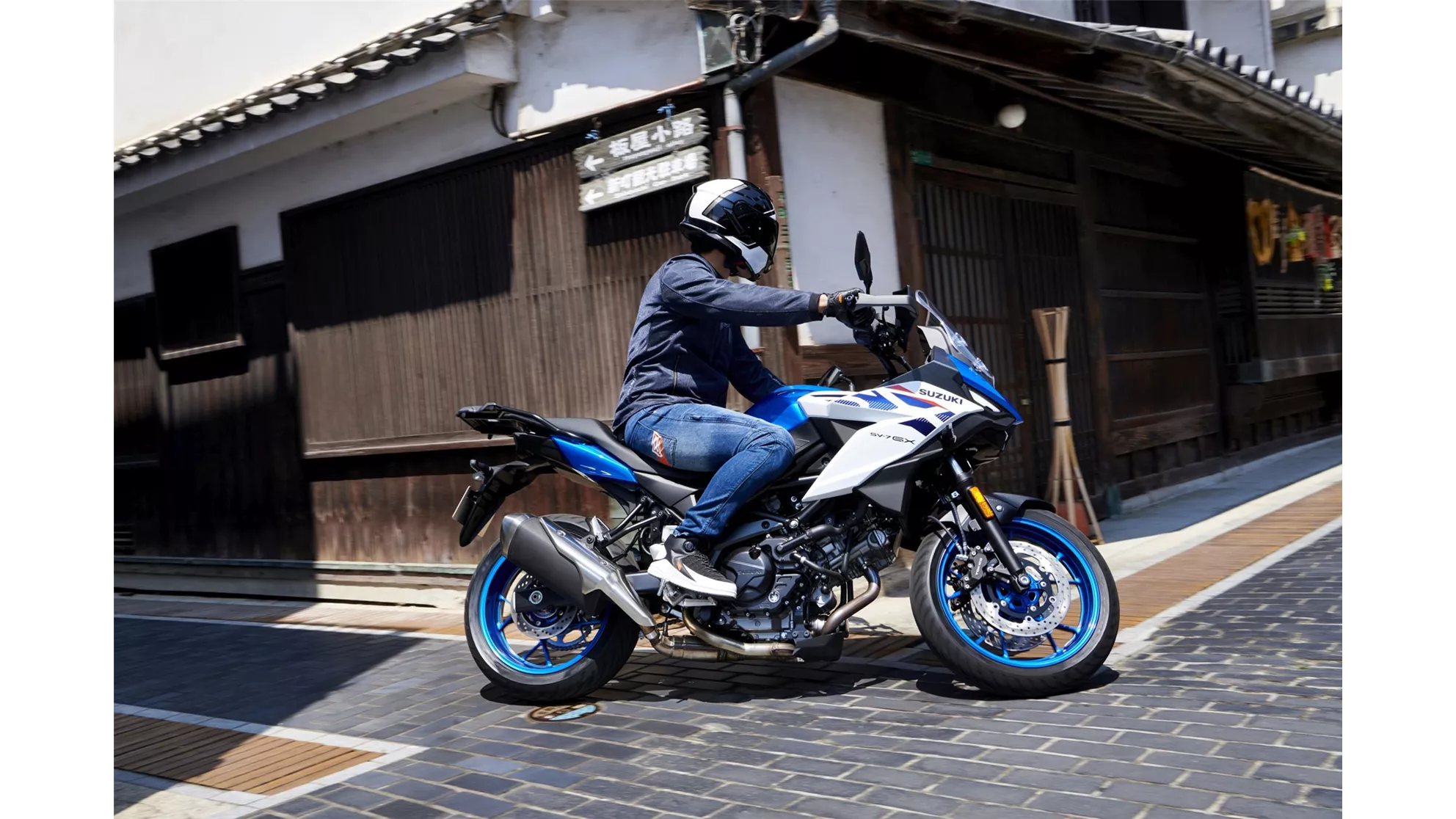
Unbelievable what you can still get for around 8,000 Euros in a great bike these days. For me, the Suzuki SV-7GX is one of those bikes where, after the first few kilometers, you don't think about individual components anymore - you just get off with a grin inside your helmet. Suzuki has modernized the classic 645cc V2, equipped it with electronics, and packed it into a sporty crossover package. The truth: this thing isn't spectacular. But that's exactly why it's so good.
Suzuki SV-7GX 2026 Test
V2 Crossover for 8,000 Euros
The Suzuki SV-7GX 2026 combines V2 character, crossover comfort, and fair pricing. NastyNils tests where it shines and where it saves.
&width=72&height=72&bgcolor=rgba_39_42_44_0&mode=crop "Author: nastynils")
nastynils
published on 6/18/2026
15,864 Views
Suzuki SV-7GX 2026 Test: The V2 Lives On
Around 8,000 Euros and Still No Cheap Bike
I like Suzuki for a virtue that's often underrated in the industry: their bikes are rarely cheap, but they're often good value. This distinction matters with the SV-7GX. According to Suzuki, it costs 8,890 Euros in Austria, with the Touring Edition at 9,890 Euros. In Germany, Suzuki quotes 8,578 Euros including delivery, or 7,999 Euros excluding delivery. That's a statement in this class.
The trick behind this isn't that Suzuki simply cut costs everywhere. Put plainly: they invested where you actually feel it in everyday riding, and left out what makes many brochure readers scream loudly but doesn't make many riders in the saddle cry. No pointless bling. Instead, you get a practical display, ride-by-wire, traction control, riding modes, smartphone connectivity, and a bidirectional quickshifter. The result isn't a luxury toy, but a surprisingly good bike.
The V2 Makes the SV Slim and Familiar
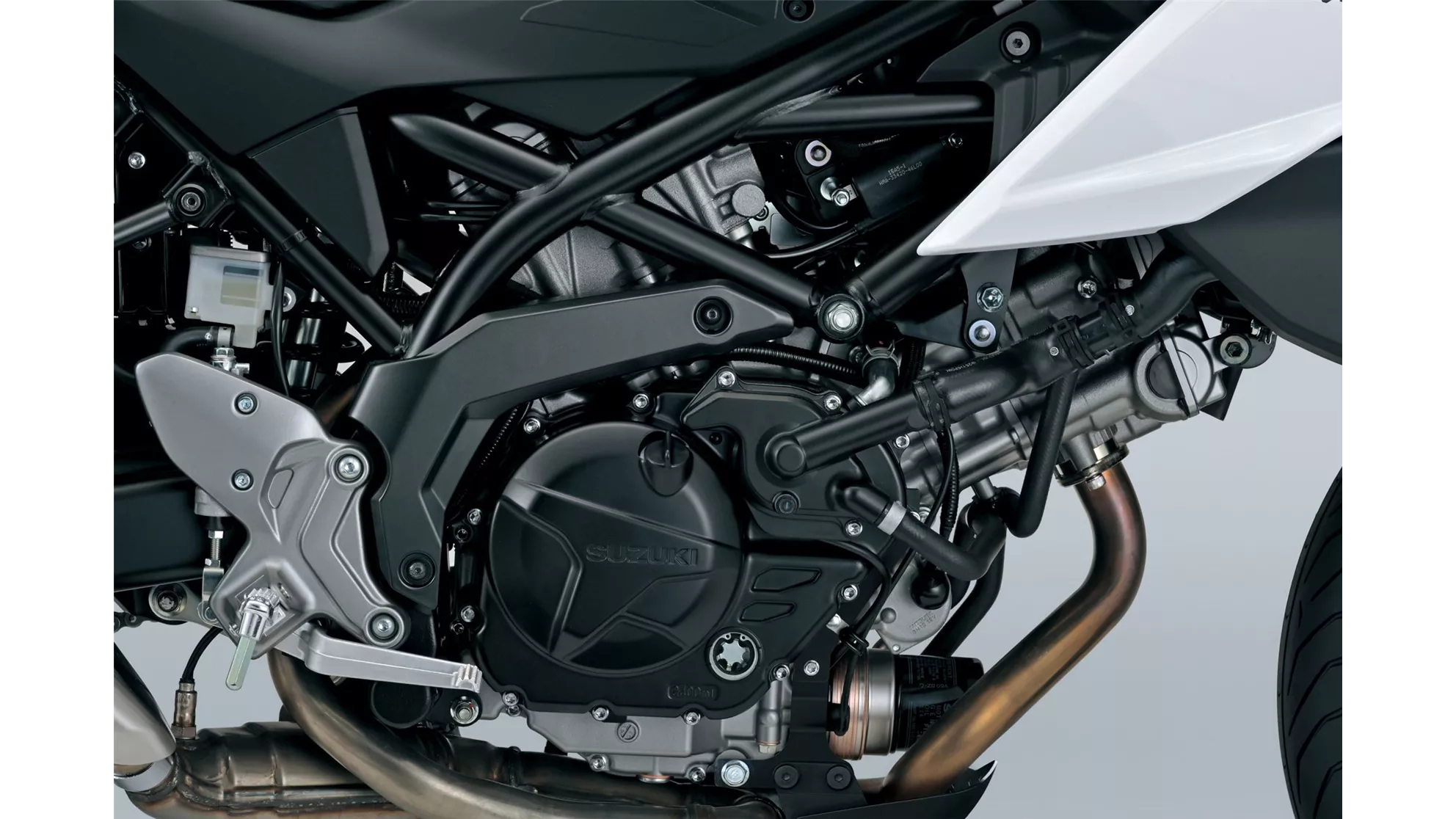
Suzuki could have made it easy for themselves. The 800cc platform with the parallel-twin exists, works well, and is popular in the market. Yet Suzuki sticks with the V2. That's almost a luxury, because a V2 like this is more complex to produce than a modern parallel-twin. More metal, more effort, more parts in the engine block.
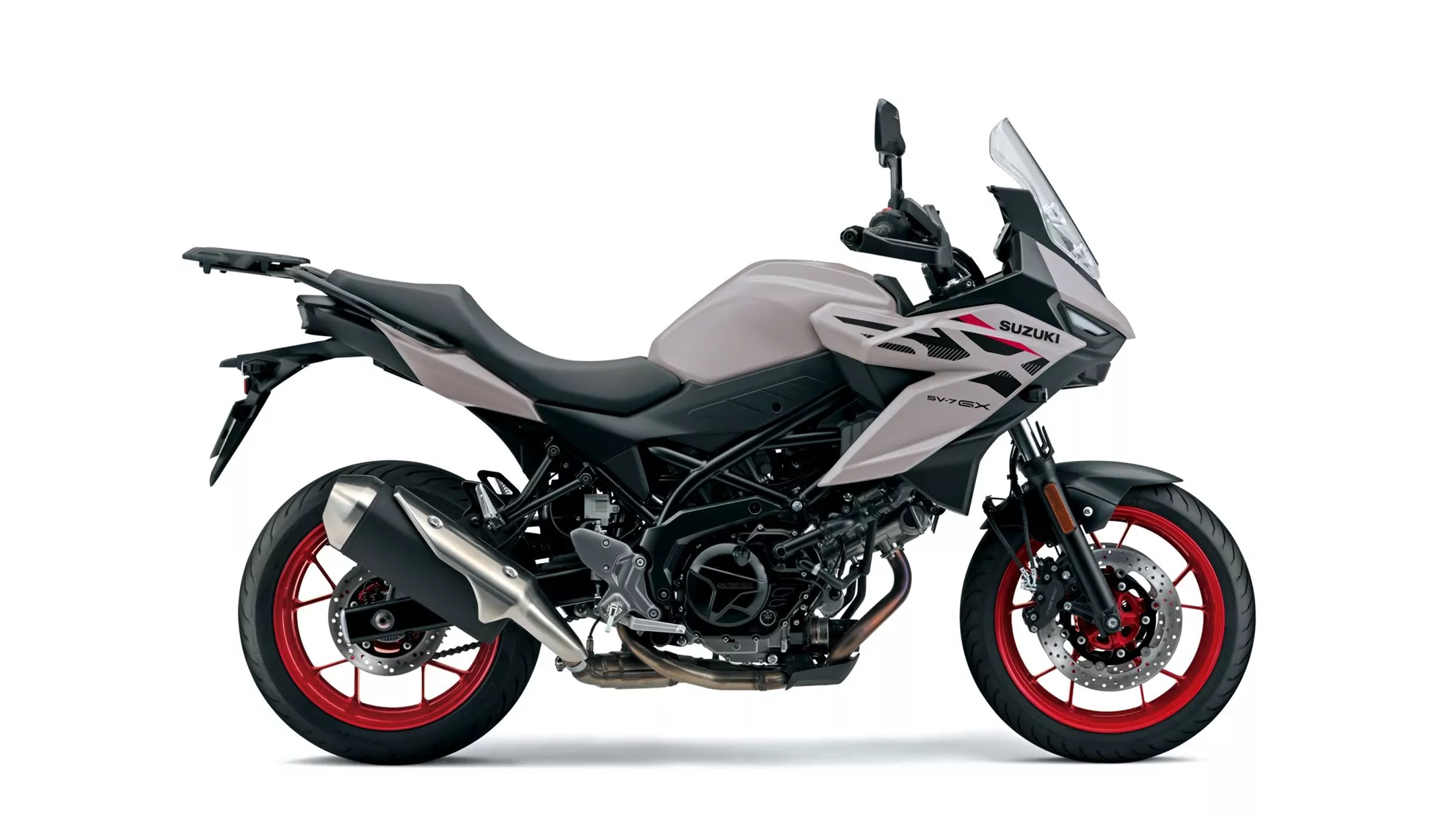
But in the saddle, you immediately understand why this makes sense. You're sitting on a full-fledged bike with a proper front end, wind protection, and a luggage rack, but underneath you the machine feels incredibly slim. Almost like a single-cylinder, but with the smoothness of a twin. That's exactly what takes away your respect for the large touring front end. The SV-7GX becomes a very harmonious, accessible companion after just a few meters.
The engine itself doesn't score with brutal punch. It scores with revvy character, zippiness, and that casual way you accelerate out of corners. If you're looking for fear and adrenaline in the saddle, you'll find better bikes elsewhere. But if you want a bike that doesn't bore experienced riders while also not intimidating beginners, you're in exactly the right place here.
The Quickshifter Feels Really Good
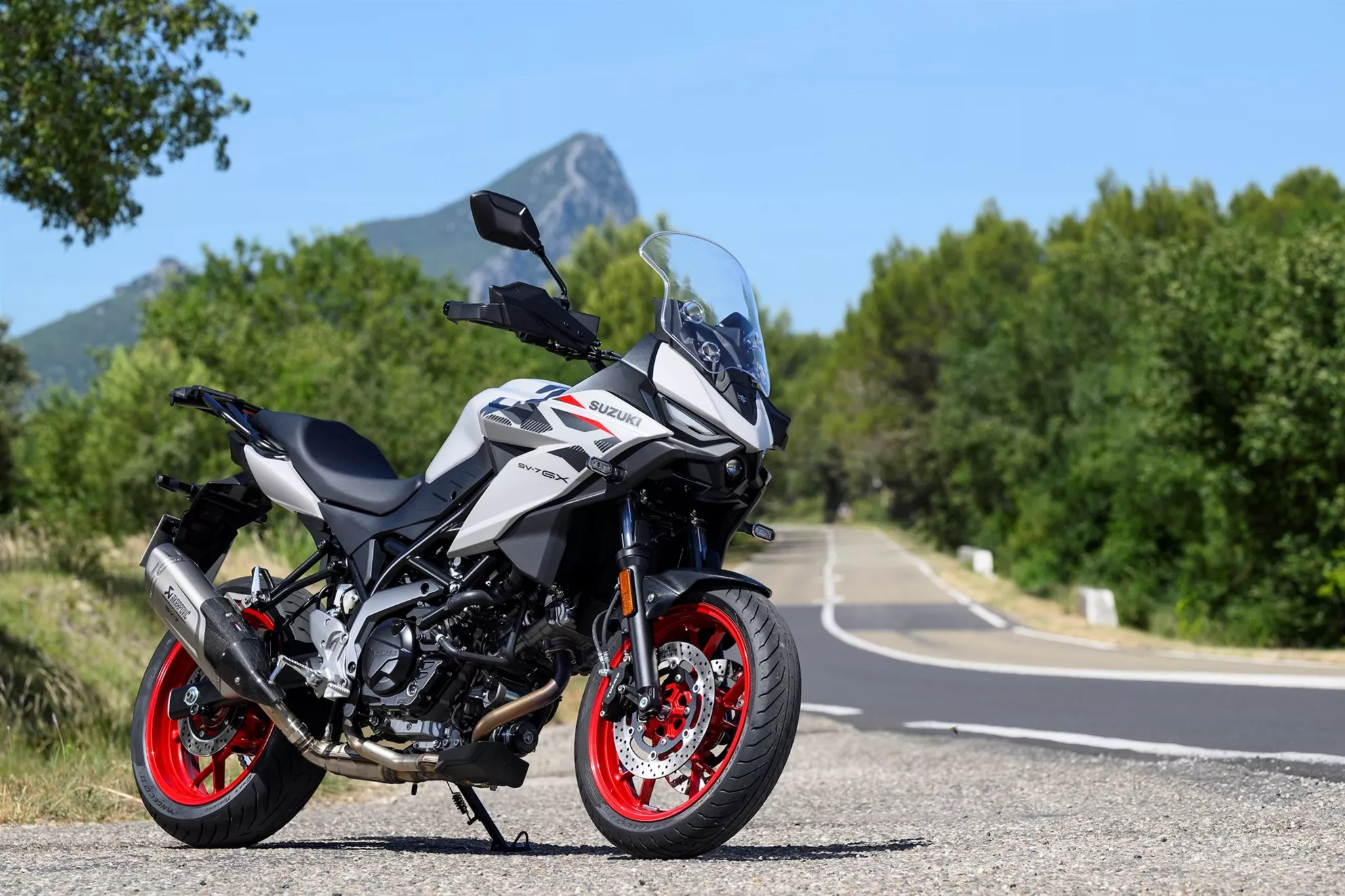
Suzuki SV-7 GX
For me, the quickshifter is one of the major highlights of this bike. Not because having a quickshifter in 2026 is particularly exotic. But because on the SV-7GX it doesn't feel like a bolted-on electronic gadget. According to Suzuki, the shift lever travel, shift linkage, and the shape of the shift dogs were among the things adapted for the bidirectional quickshifter to ensure the system works cleanly and holds up long-term.
In real-world use, you notice it. Gear changes glide butter-smooth up and down, almost like on a top-modern engine. At the same time, this is an engine whose basic concept has been built in over 500,000 units since 1999. That reassures me. With new bikes, I always have a bit of that old man in the back of my mind saying over coffee: "Let's wait for the first model year first." With this foundation, I'd have significantly less of a knot in my stomach.
The rest of the electronics don't feel intrusive either. According to Suzuki, the S.I.R.S. bundles the rider aids, meaning riding modes, traction control, quickshifter, ride-by-wire, easy start, and low RPM assist. In the saddle, all of this feels harmonious. Throttle response, ABS, and traction control are tuned for practical use. Important to note, though: according to the spec sheet, there's no IMU on board, so there are no lean-angle-dependent controls.
Touring Comfort Without Adventure Bike Bulk
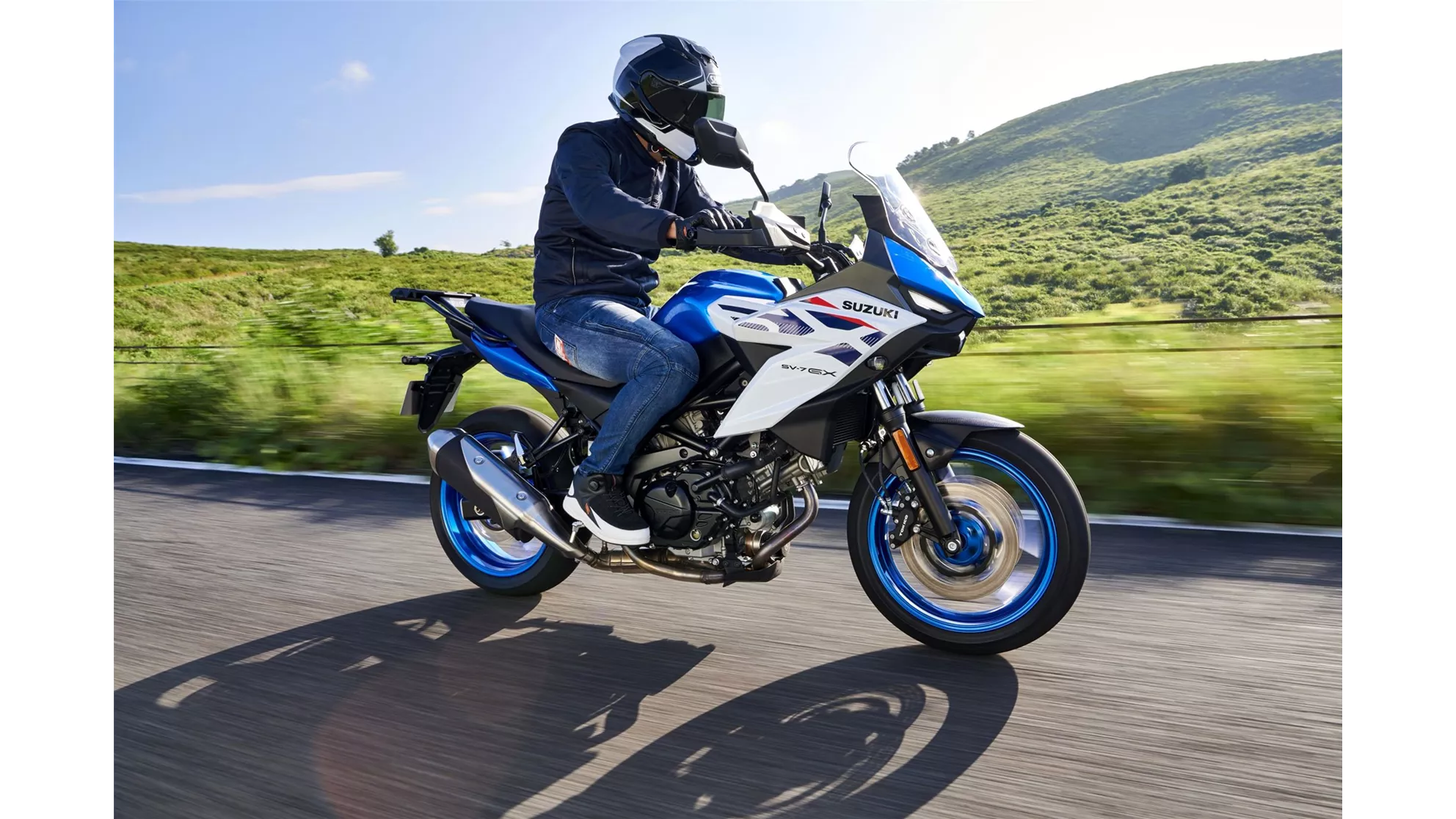
The SV-7GX is a crossover bike. So not a naked bike, not an adventure bike, not a classic sport tourer. That's exactly where its strength lies. You get more comfort front and rear than with a naked bike, but not that tall, bulky adventure bike presence where shorter riders mentally call the fire department before even swinging a leg over.
I'm 184 cm tall and had a good position for full-day stages with the higher seat. With the standard seat, I'd see this bike as better suited for people up to about 178 cm in height. With the higher seat, it will probably suit riders up to around 188 cm well. Above that, I'd rather look toward the V-Strom 800DE. Not because the SV is bad, but because the knee angle gets tight for tall riders or people with long legs and big feet.
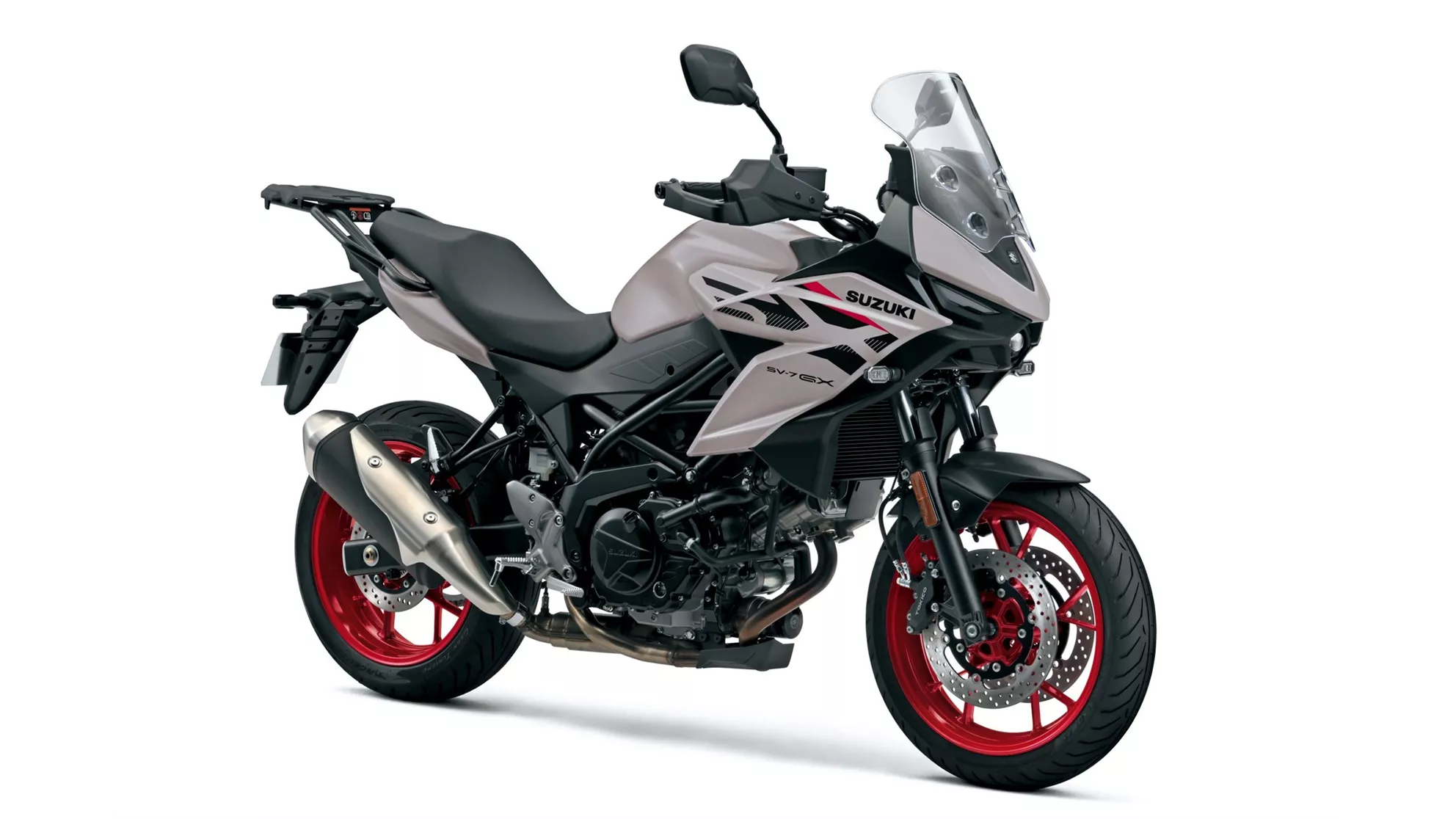
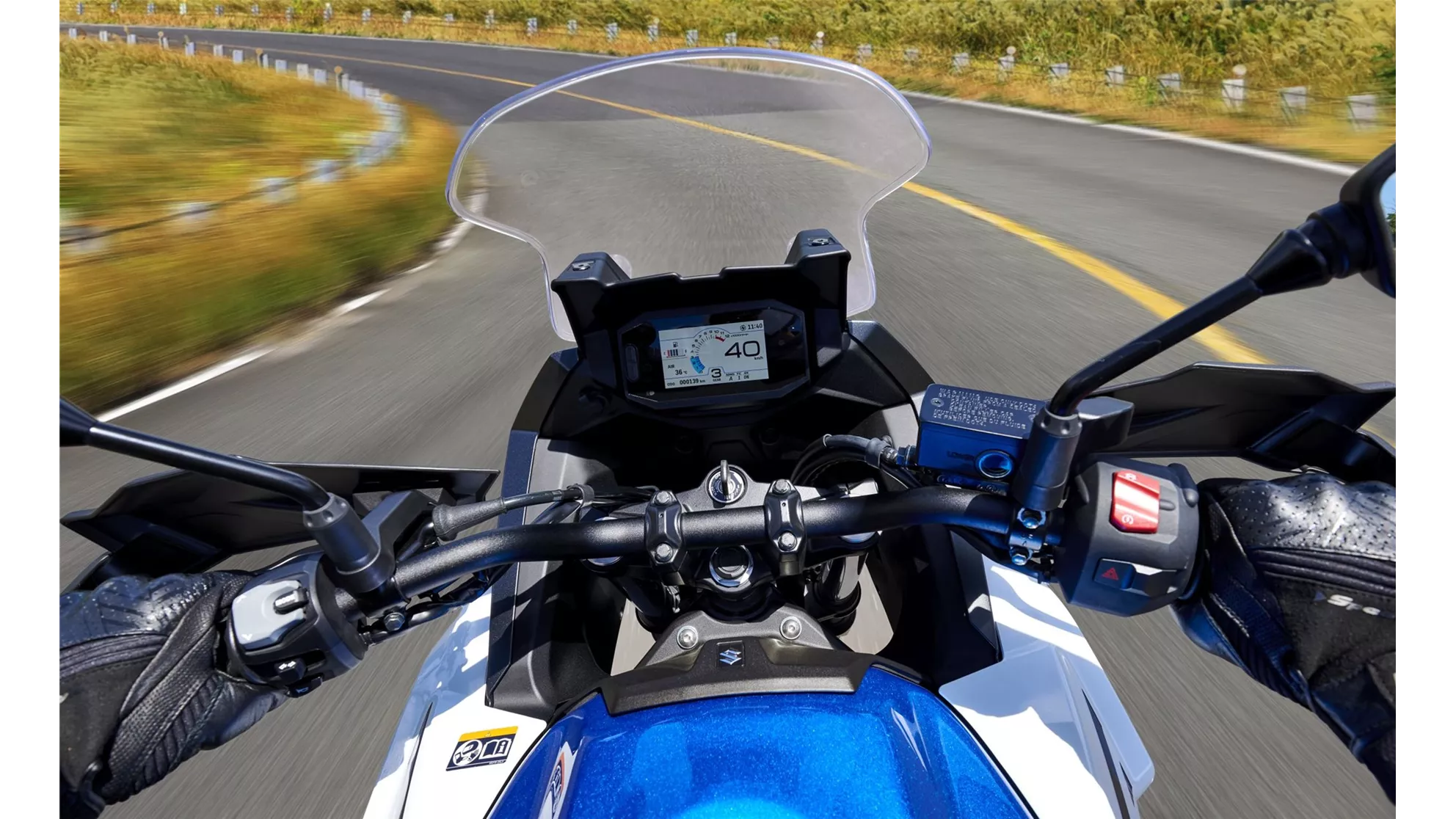
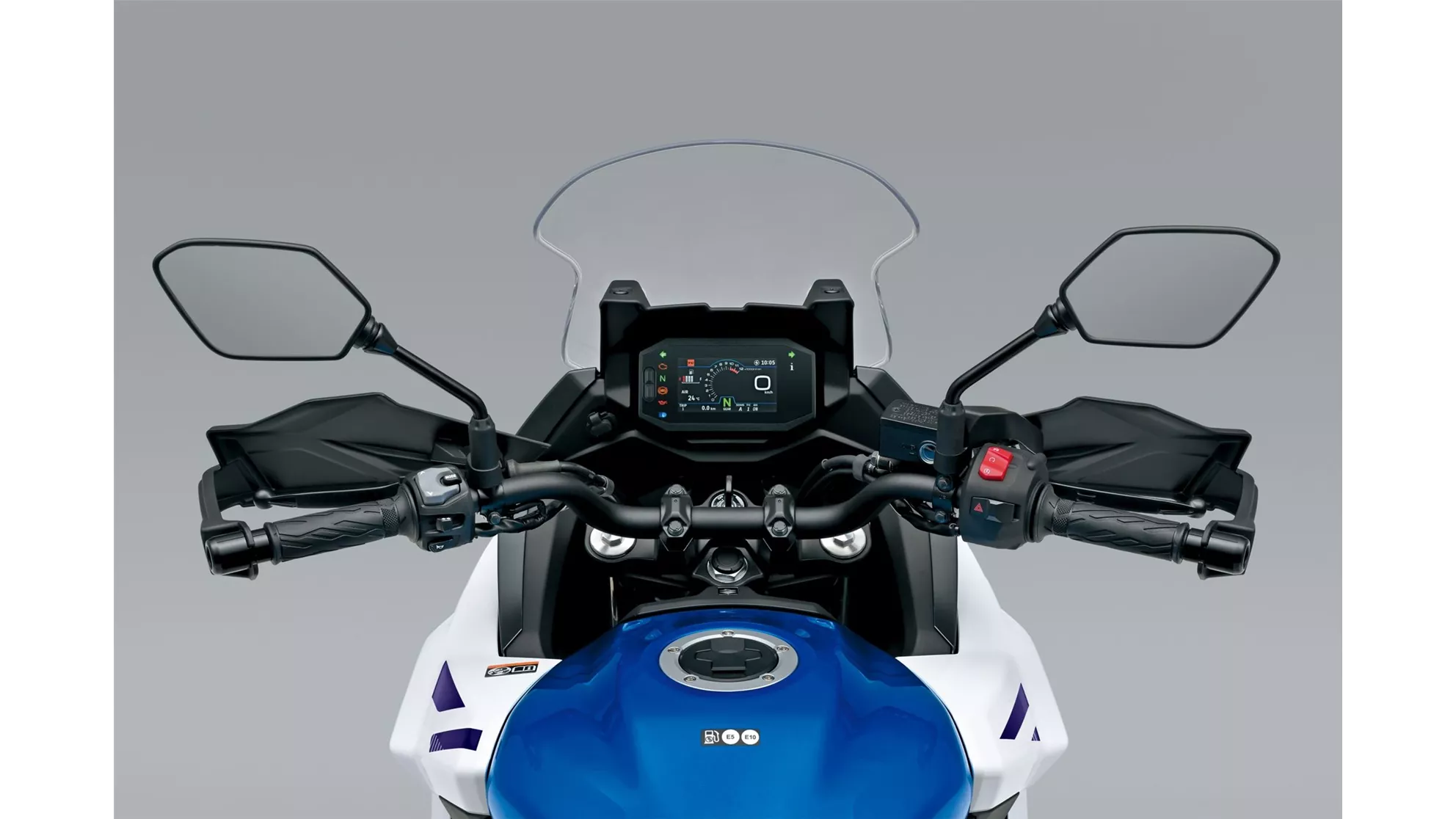
The upper body position, on the other hand, suits an impressively wide range of riders. The handlebar sits comfortably, not too wide, not too narrow, the controls are compact, and the display is clear. The windscreen is technically simple but sensible: it can be adjusted into three positions via four screws. According to Suzuki, there's also a touring screen available that should offer good protection even for taller riders. In the saddle, this comes across as a good mix of cool design and real practical value.
When It Comes to Weight, the Magic Ends in the Parking Lot
According to Suzuki, the SV-7GX weighs 211 kg wet. Of course, there's always that standard line: once you're riding, you don't feel the weight anymore. That's true here too. Once the SV is rolling, the slim V2 helps it feel lively, compact, and confidence-inspiring.
But in the parking lot, the magic is over. 211 kg is 211 kg. If you're a very compact rider or generally wary of weight, you're not maneuvering around a small Gladius or an old SV650 with sneaker-like ease here. You're moving a full-grown bike with large wind protection, sturdy construction, and a proper rear rack. That doesn't come for free.
The good news: once riding, the picture changes completely. The engine hangs cleanly on the throttle, the machine tips willingly into corners, the 160-section rear tire doesn't make it sluggish, and you build trust very quickly. Especially less experienced riders will like exactly this combination: it looks grown-up but doesn't ride like a heavy lump.
Features Match the Price, Not Vanity
Attentive observers will immediately notice: no radially mounted brakes, no upside-down fork, no fancy show for the spec sheet. Yes, you can criticize that. But then we're back at the point where the bike suddenly heads toward 12,000 Euros. In the saddle, I never had the moment where I thought: now something dramatic is missing here.
Brakes and chassis might seem rudimentary for sporty riders, but not cheap. Compared to a V-Strom 800DE, you do feel that it has higher-quality components and more finesse on board. But you don't get off the SV-7GX thinking you've been sitting on an inferior bike. Even spoiled journalists and people with a lot of saddle time get off grinning. That's a good sign.
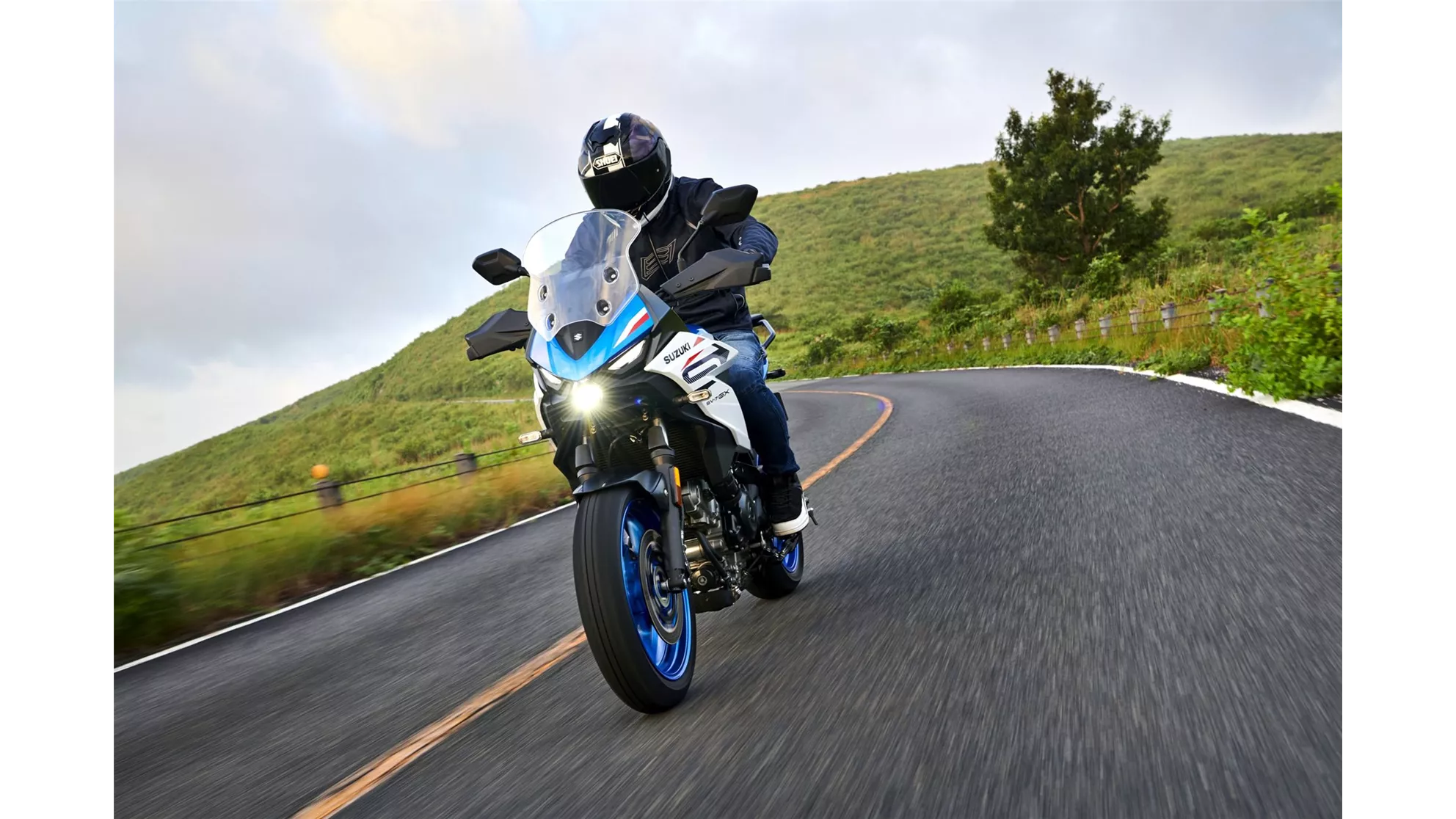
The headlight looks visually a bit small. We couldn't test night riding, since we rode in gorgeous sunshine. According to Suzuki and the developers on site, though, the new reflectors and LED elements are supposed to do a very good job. According to Suzuki, the high beam illumination remains usable at lean angles up to around 30 degrees. That sounds good, though I haven't verified it myself.
Ride Connect Plus Is Small But Useful
The 4.2-inch TFT isn't huge, but it's used sensibly. Through the Suzuki Ride Connect Plus app, you can establish a smartphone connection, including arrow navigation, call and calendar notifications, as well as ride and route data. In real-world use, pairing was easy, and the basic functionality is solid.
Does this replace a full-fledged sat-nav? Probably not. For long tours in everyday use, you'll likely still mount your smartphone on the handlebar. What's practical, though, is that there's a USB-C port for charging, and the arrow navigation delivers exactly what you need for short distances, finding the nearest gas station, or the way home in bad weather. Not more, but not less either.
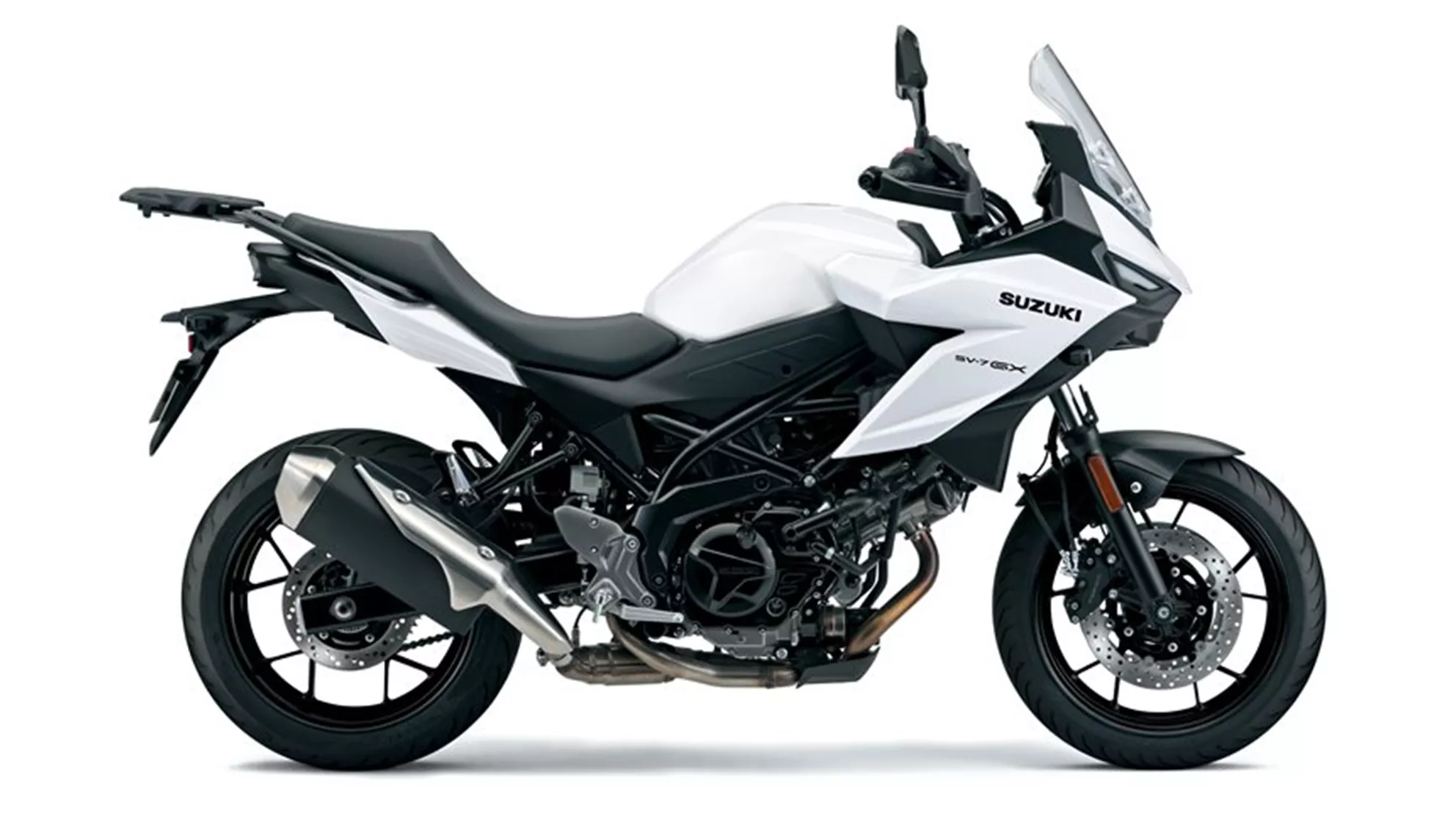
The luggage rack also deserves a mention. It's standard, which not everyone will appreciate, and it also serves as a grab handle for the pillion. In practice, it feels sturdy and genuinely useful. Pretty? Well, not really. It looks a little like someone bolted it on afterward while the designer had already clocked out for the day. But if you strap luggage onto it, you'll probably be glad for this functional design.
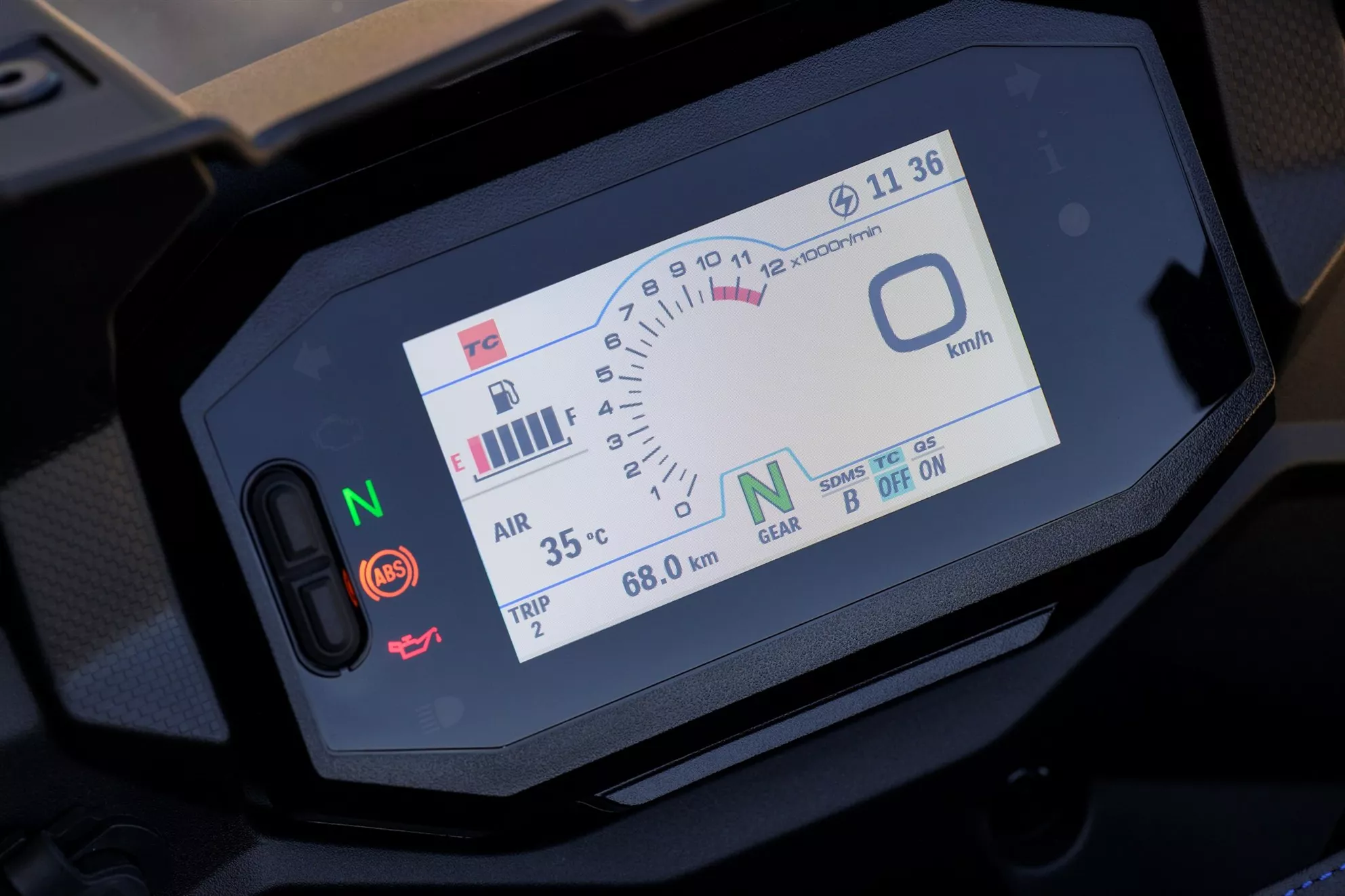
Compact display shows everything you need!
Who This Suzuki Makes the Most Sense For
I immediately thought of my neighbors and friends who keep asking me: "Nils, which bike should I buy?" With the SV-7GX, my hit rate would be surprisingly high. I could recommend it to almost everyone. Almost. Not so much to my 1.92 m colleague. Nor to the guy who's always chasing that adrenaline kick. If you want massive shove and a bit of fear in the saddle at 150 or 160 km/h, you won't be happy here.
But for very many others, it fits surprisingly well. If you're coming from a naked bike, you get more comfort and more wind protection, but you'll have to live with a somewhat softer, less direct front end. If you're coming from an adventure bike, you get a more accessible, more compact, and lower bike, but you lose a bit of suspension travel reserve on bad asphalt. On one hand, it's a compromise. On the other hand, that's exactly why it's so strong.
Hand on heart: the SV-7GX isn't the winner in any pub-talk category. Not the most power, not the lightest weight, not the finest brakes, not the wildest chassis. But it's a bike that will bring a great deal of joy to a great many people in everyday riding. And these are often the bikes that matter more than the loud heroes in the brochure.
Suzuki SV-7 GX Technical Data
The SV-7GX is powered by a liquid-cooled 645cc 90-degree V2 with DOHC and four valves per cylinder. Maximum output is 54.0 kW, or around 72 hp, at 8,500 rpm, with maximum torque of 64.0 Nm at 6,800 rpm. The SV-7GX meets Euro5+ standards and uses ride-by-wire, a 6-speed gearbox with a bidirectional quickshifter, three riding modes, three-level traction control plus Off, easy start, and low RPM assist. Suspension travel is 125 mm at the front and 129 mm at the rear, with the shock adjustable for preload. Standard fitment is Pirelli Angel GT II tires in 120/70 ZR17 front and 160/60 ZR17 rear. Seat height is 795 mm, and wet weight is 211 kg. According to Suzuki, the SV-7GX will be available from September 2026. For Austria, Suzuki quotes 8,890 Euros, for Germany 8,578 Euros including delivery, and in Switzerland CHF 8,695, or CHF 9,495 for the touring variant. The Touring Edition includes, among other things, a touring screen, a large tank bag, a soft luggage set, and a tank pad.
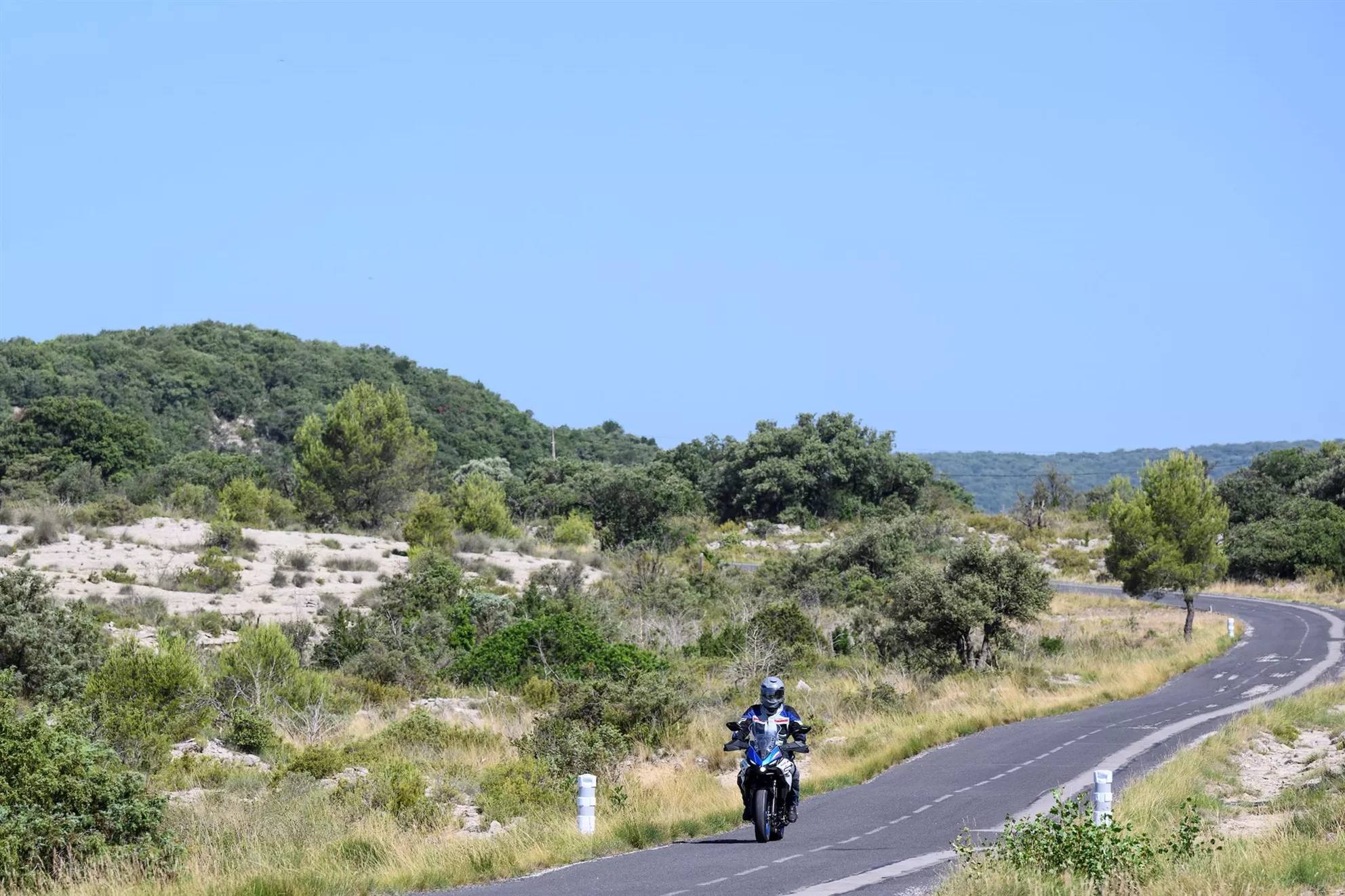
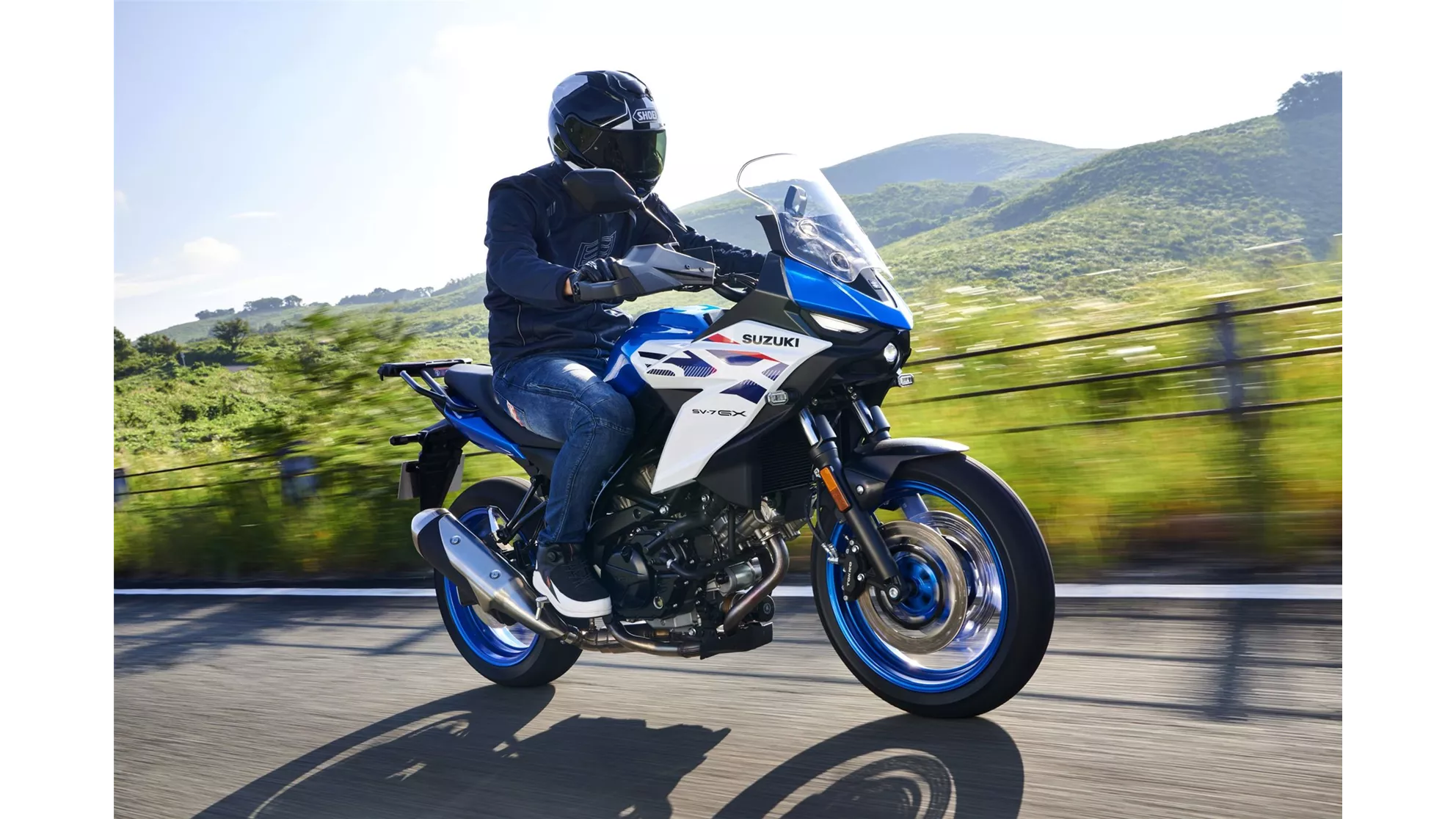
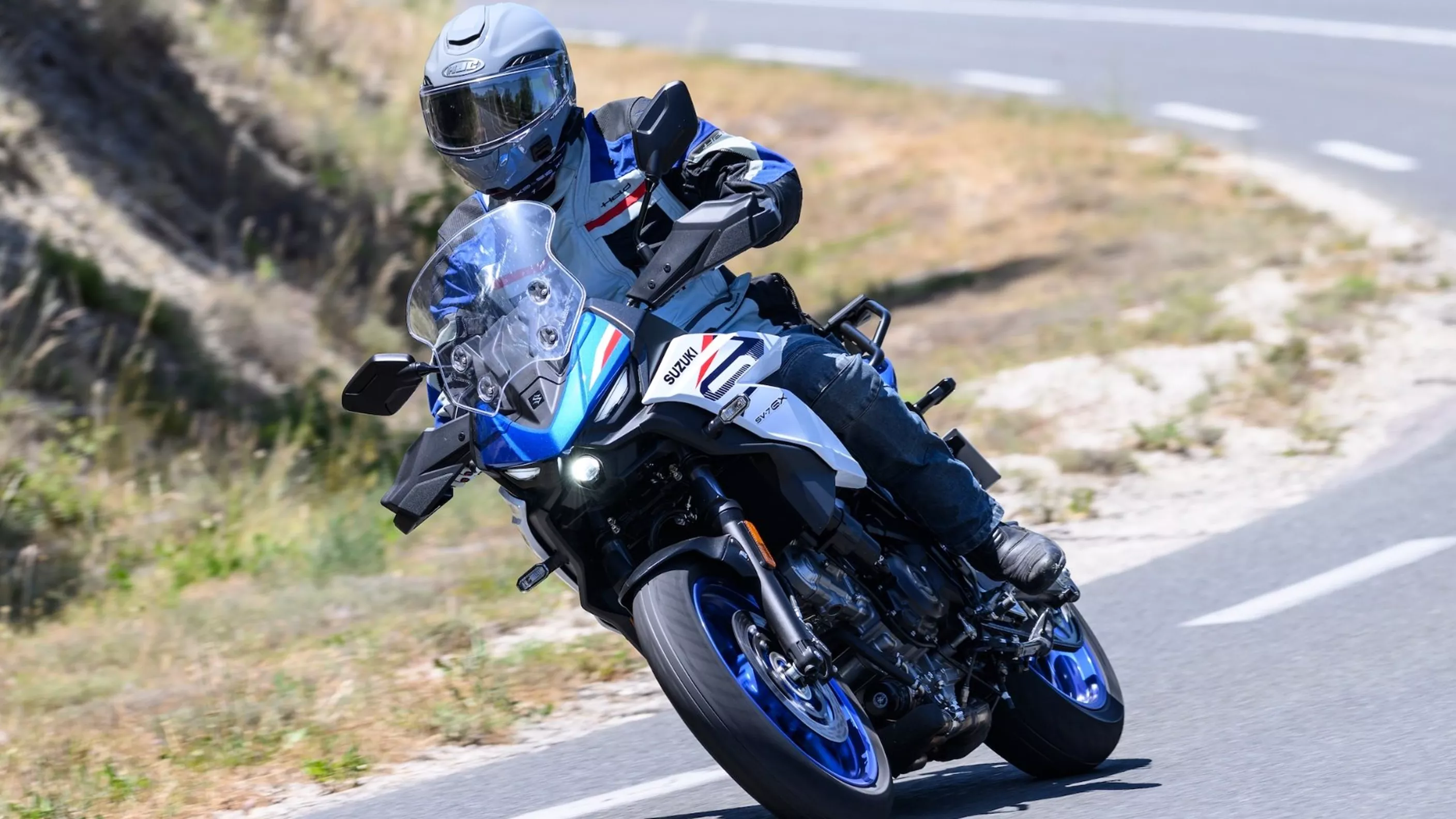
Testing the Suzuki SV-7 GSX in June 2026 in southern France!
- How much does a Suzuki SV-7GX cost?
- Here you will find an overview of the price level of new and used motorbikes!
&width=60&height=60&bgcolor=rgba_39_42_44_0&mode=crop "Author: nastynils")
Suzuki SV-7GX 2026 - Experiences and Expert Review
nastynils
The Suzuki SV-7GX isn't a bike for pub-talk heroes, but for real everyday miles. It combines an appealing V2 character with modern electronics, good wind protection, and a price that's genuinely strong in this class. You feel the 211 kg when maneuvering, and very tall riders or adrenaline junkies will be happier elsewhere. For everyone else, it's a remarkably well-rounded, accessible, and thoroughly recommendable Suzuki.
More from 1000PS Magazine
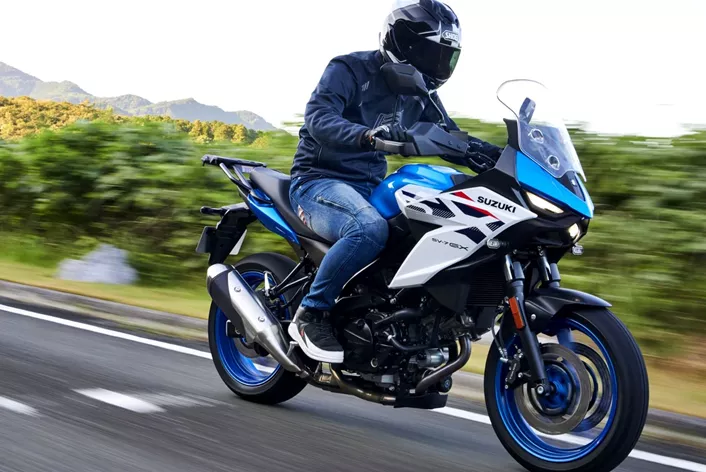
Suzuki SV-7GX 2026 Test Images
Source: 1000PS