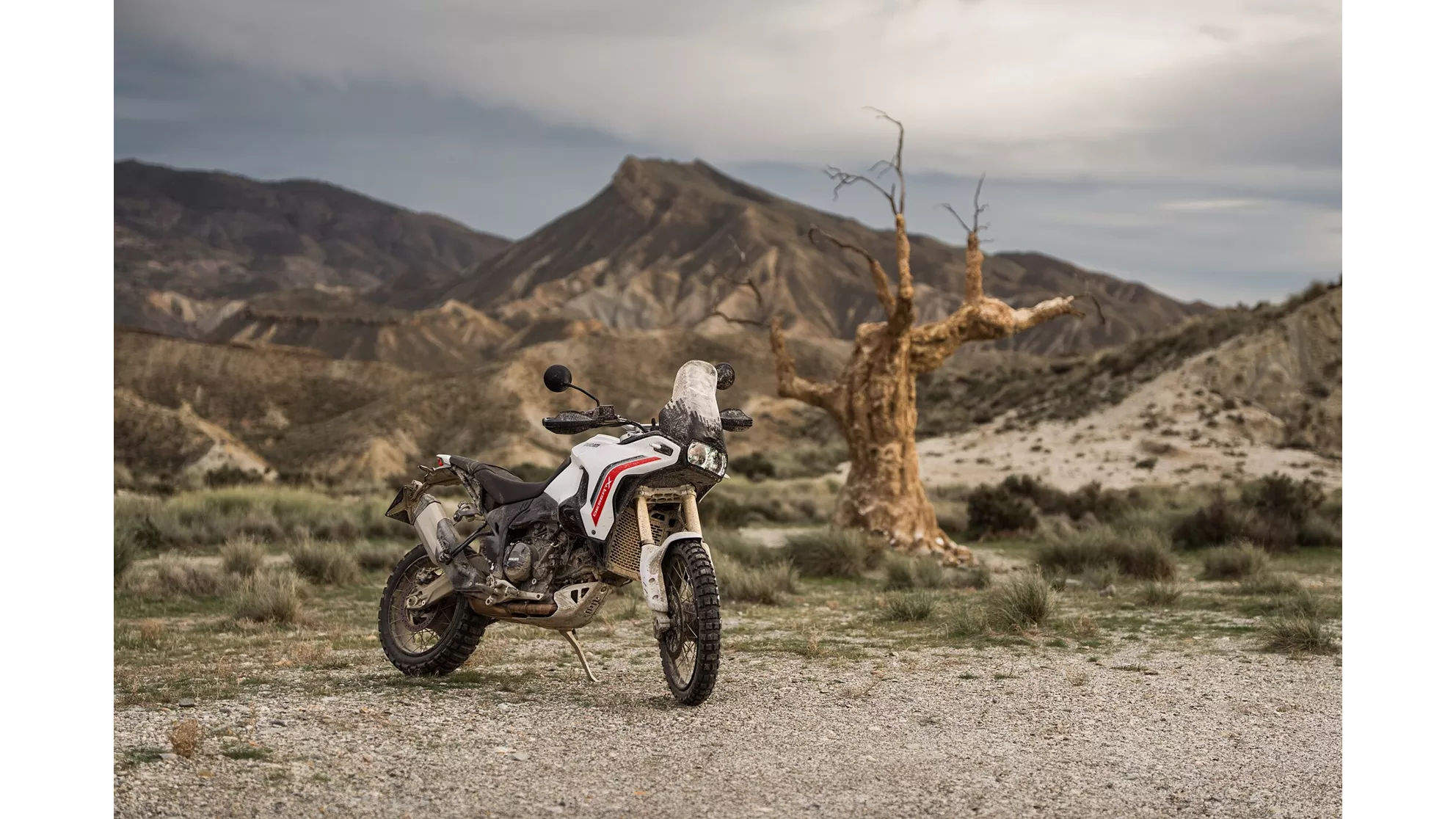
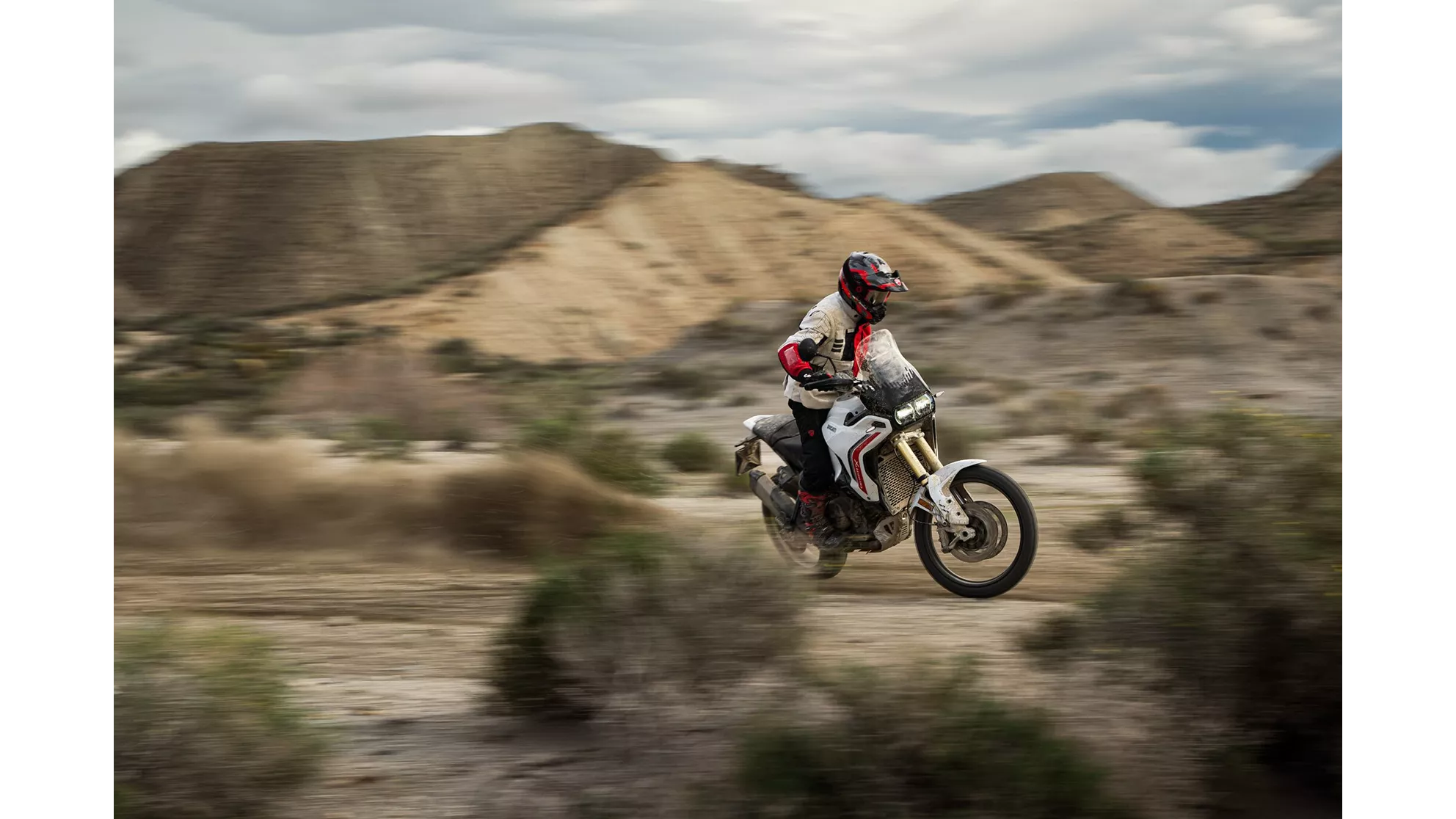
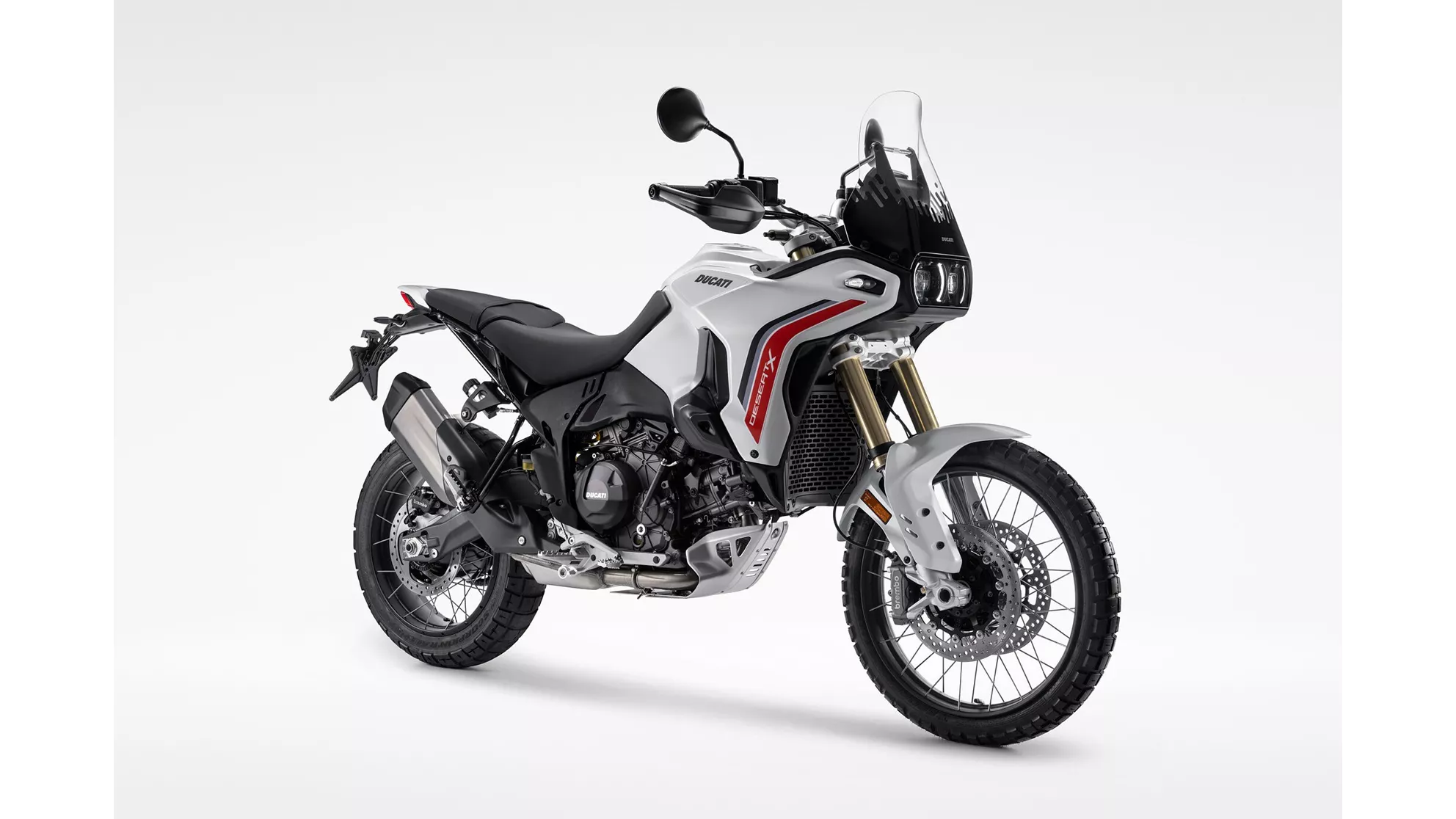
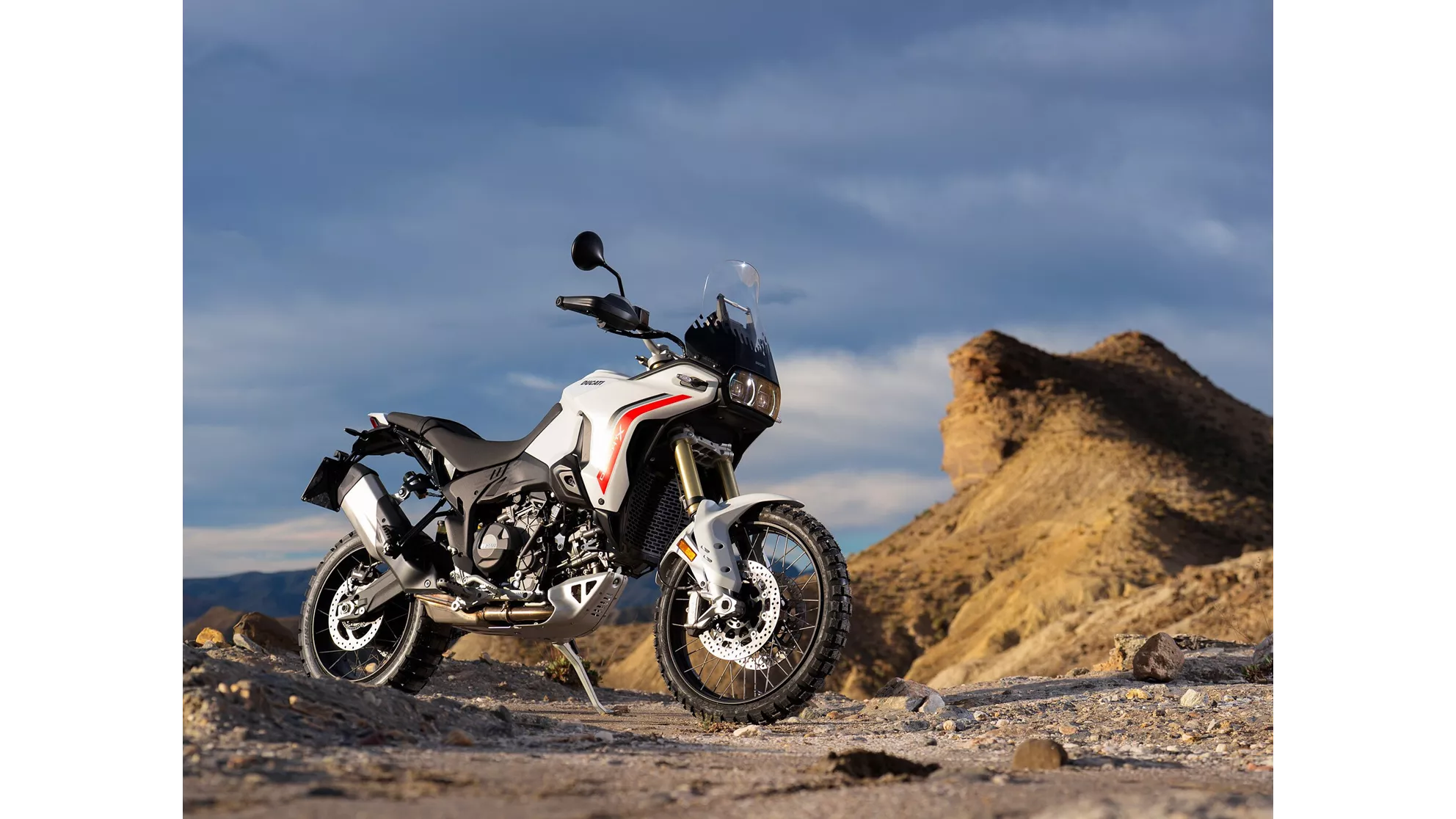
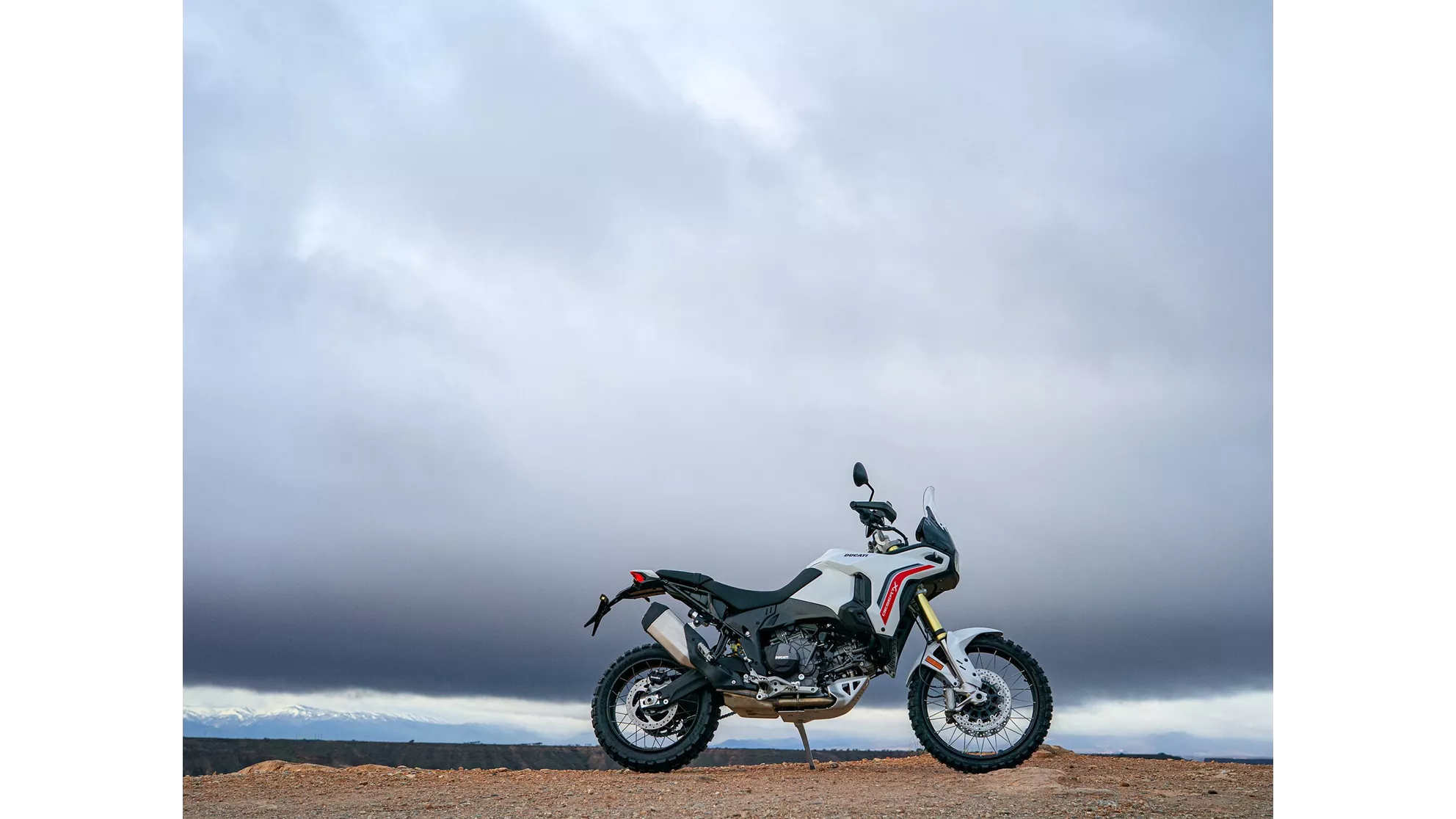
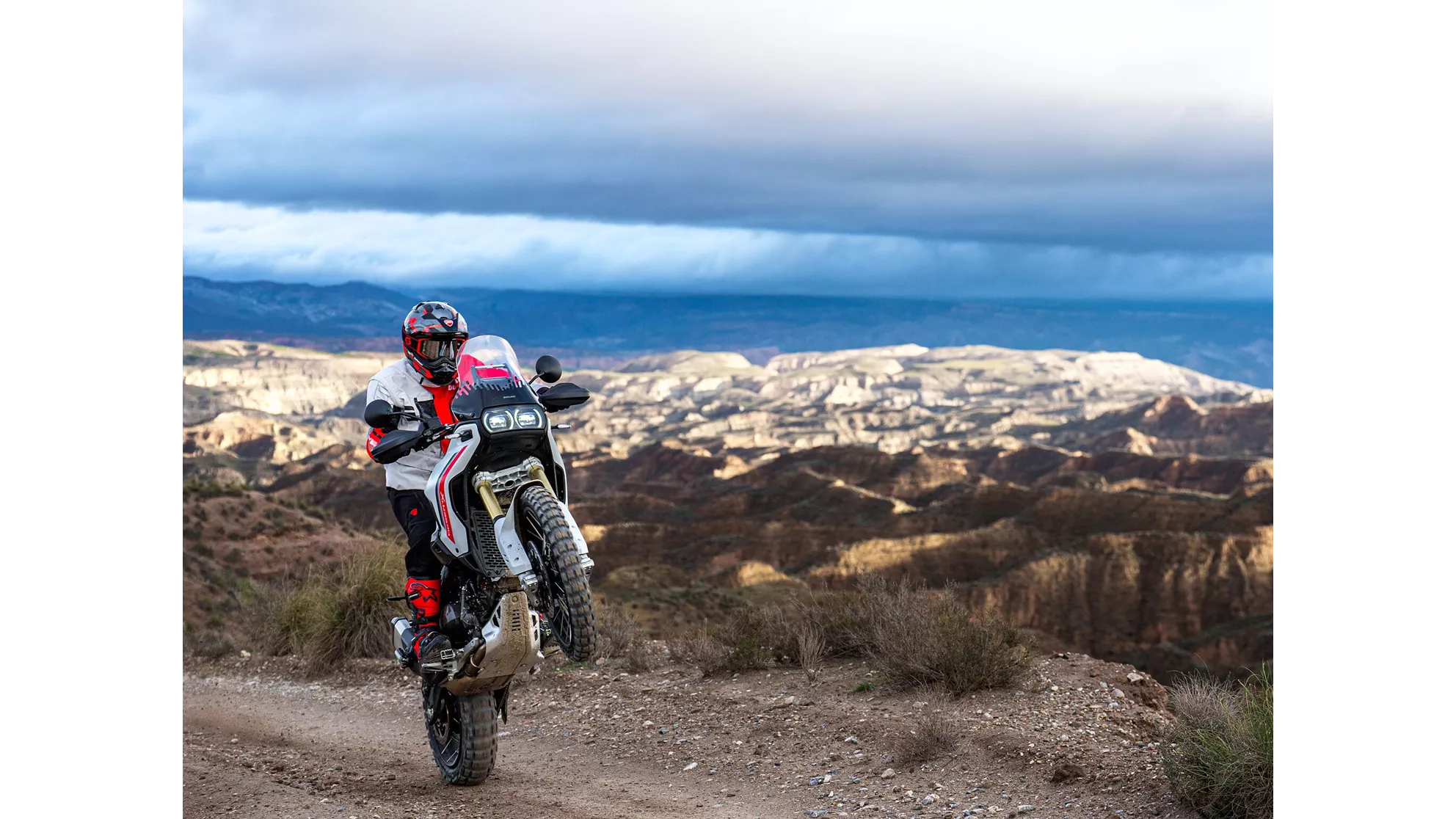
First test of the newly developed Ducati DesertX 2026 in southern Spain near Almeria. After the Streetfighter V2, Panigale V2, Hypermotard V2, Monster and Multistrada V2, the DesertX is now the sixth and final model to receive Ducati's new 890 V2 engine. Our test routes covered over 190 kilometers on and off road through the mountains of southern Spain. The tour was varied, demanding and therefore a perfect environment for a first impression of the new machine. Especially since I didn't arrive without preconceptions. I had expectations of the new DesertX, very specific ones in fact, and those expectations were initially not met by the spec sheet.
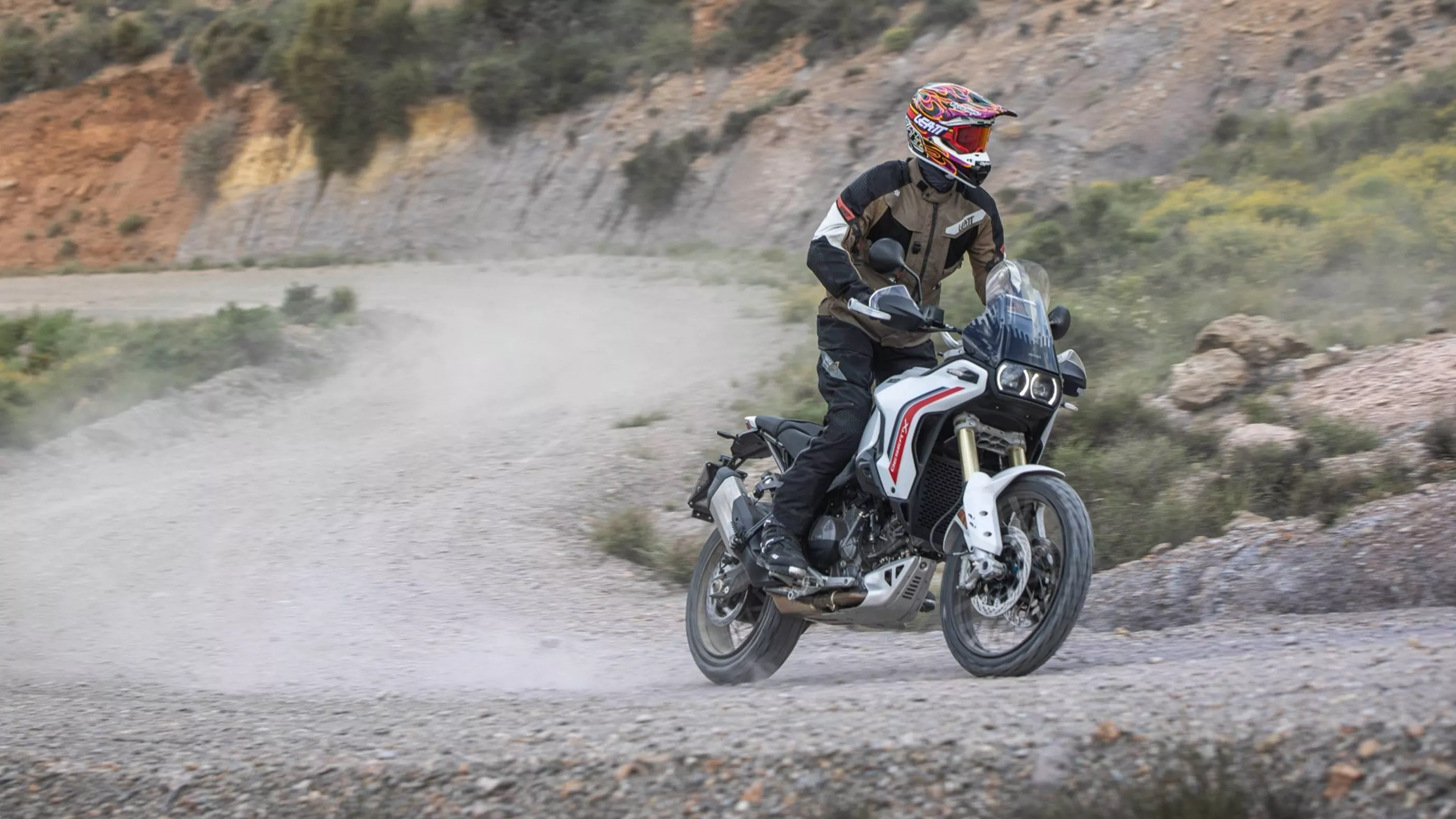
First disappointed, then thrilled! - Ducati DesertX 2026 test
Why the new DesertX rides much better than expected
I traveled to the new Ducati DesertX 2026 with disappointment. New engine, new chassis, but hardly any less weight? After 190 kilometers on asphalt and gravel in southern Spain, it was clear: the scale only tells part of the truth.
&width=72&height=72&bgcolor=rgba_39_42_44_0&mode=crop "Author: Gregor")
Gregor
published on 5/18/2026
10,991 Views
Technical presentation of the new Ducati DesertX 2026
Technically, the Ducati DesertX 2026 is completely new. At its center is the new 890 cm³ V2 engine producing 110 hp at 9,000 rpm and 92 Nm at 7,000 rpm. Instead of desmodromic valve actuation, the engine works with IVT, i.e. variable intake timing. Ducati promises a very interesting power and torque curve as a result: 70 percent of maximum torque is said to already be available at 3,000 rpm, more than 90 percent between 4,000 and 9,000 rpm. Service intervals of 15,000 km, valve clearance checks every 45,000 kilometers, Euro5+ homologation and improved heat management are further advantages of the new engine.
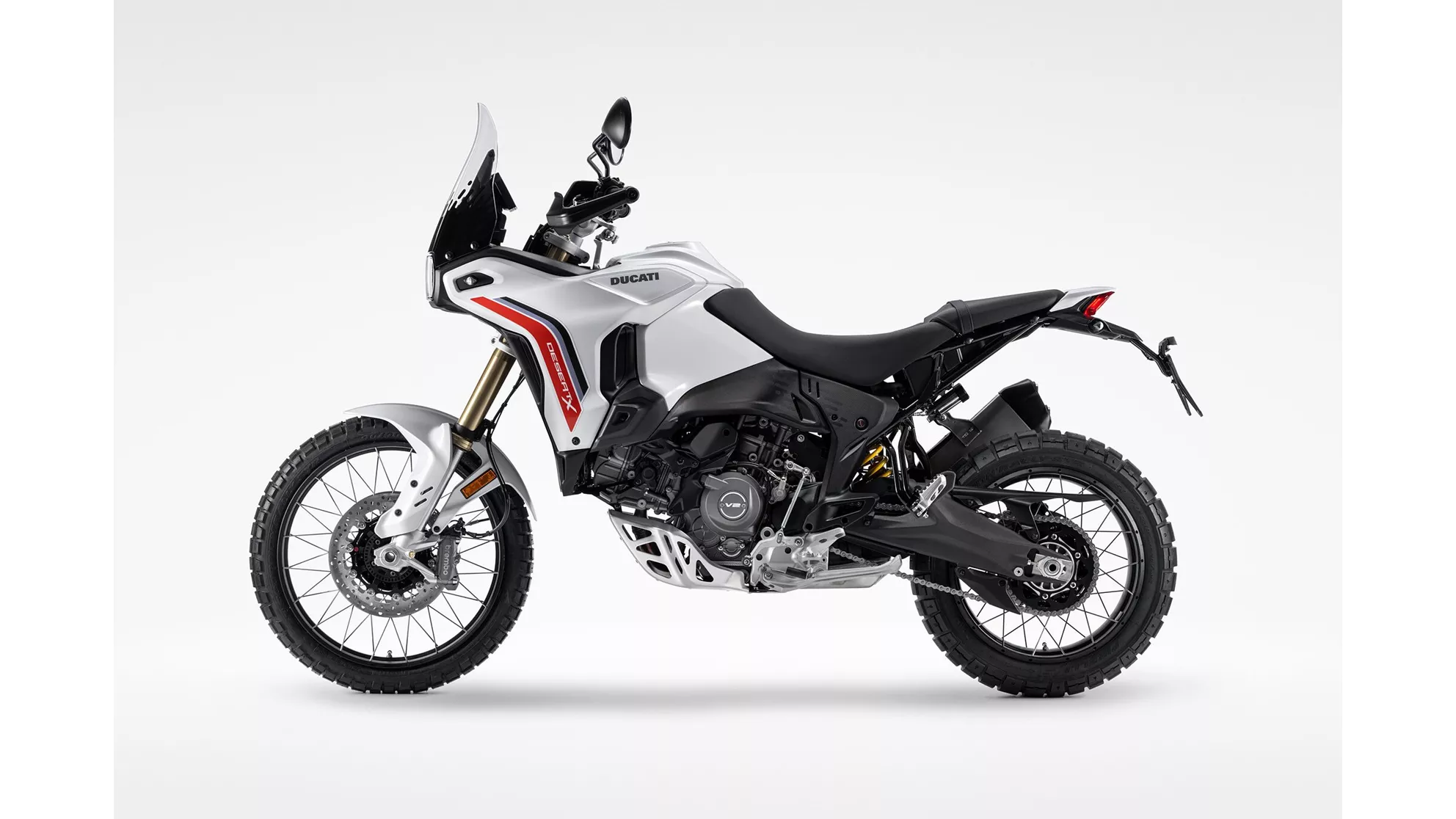
There's also a new monocoque frame, said to be stiffer than before. The steel rear subframe is bolted on, and weight distribution shifts slightly further towards the rear, from 51.7 to 52.5 percent of the weight on the rear axle. The classic enduro wheel dimensions, 21 inches at the front and 18 inches at the rear, and travel of 230 and 220 mm respectively remain, but the chassis has been newly developed. The fork legs no longer work with split functions; instead each leg is individually fully adjustable. The shock is now linkage-mounted, resulting in a more progressive spring characteristic. The technical implementation is also interesting: the linkage sits under the seat rather than on the underside of the bike. This is meant to protect it better from damage off-road.
Electronics and practical improvements of the Ducati DesertX 2026
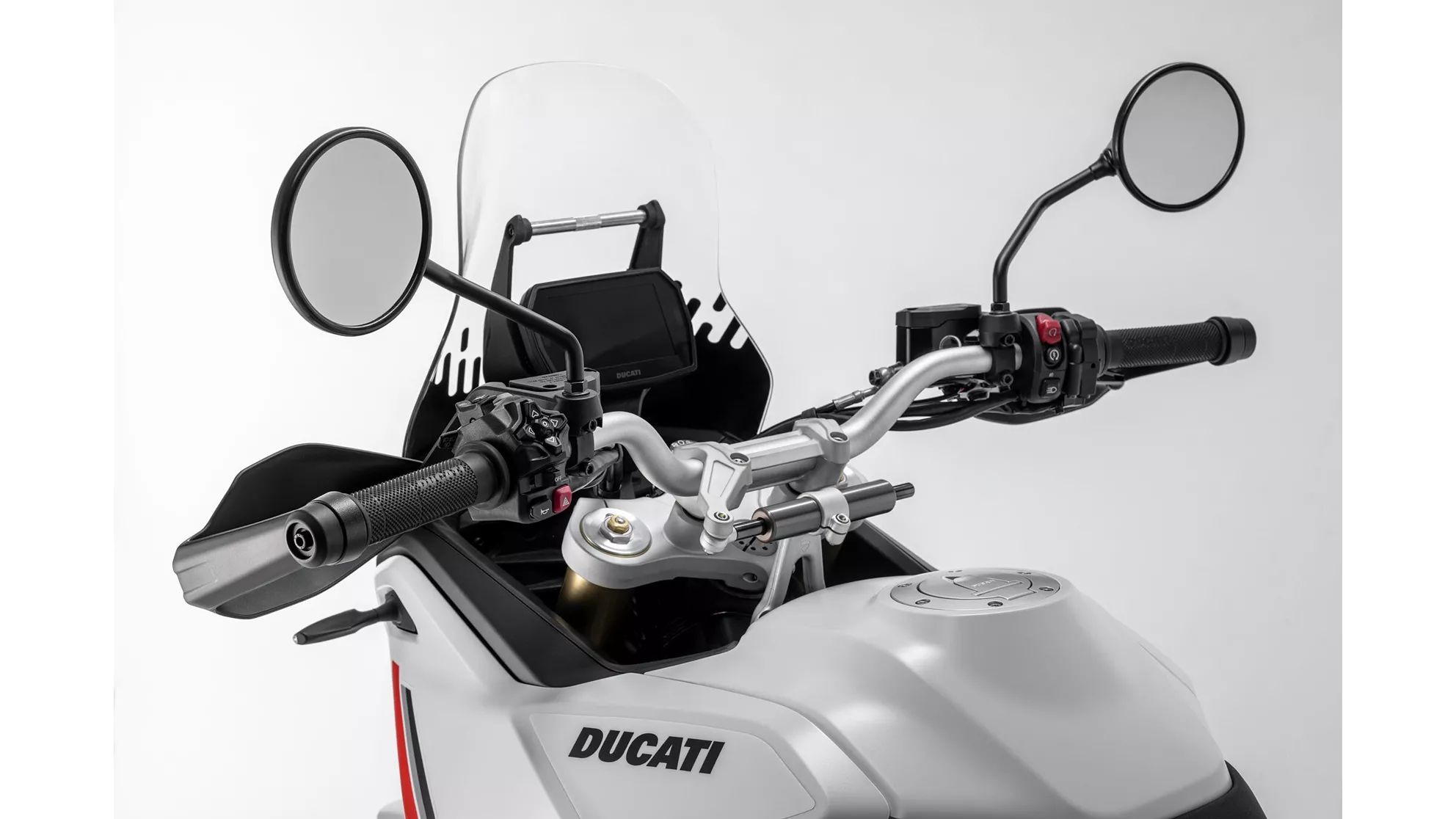
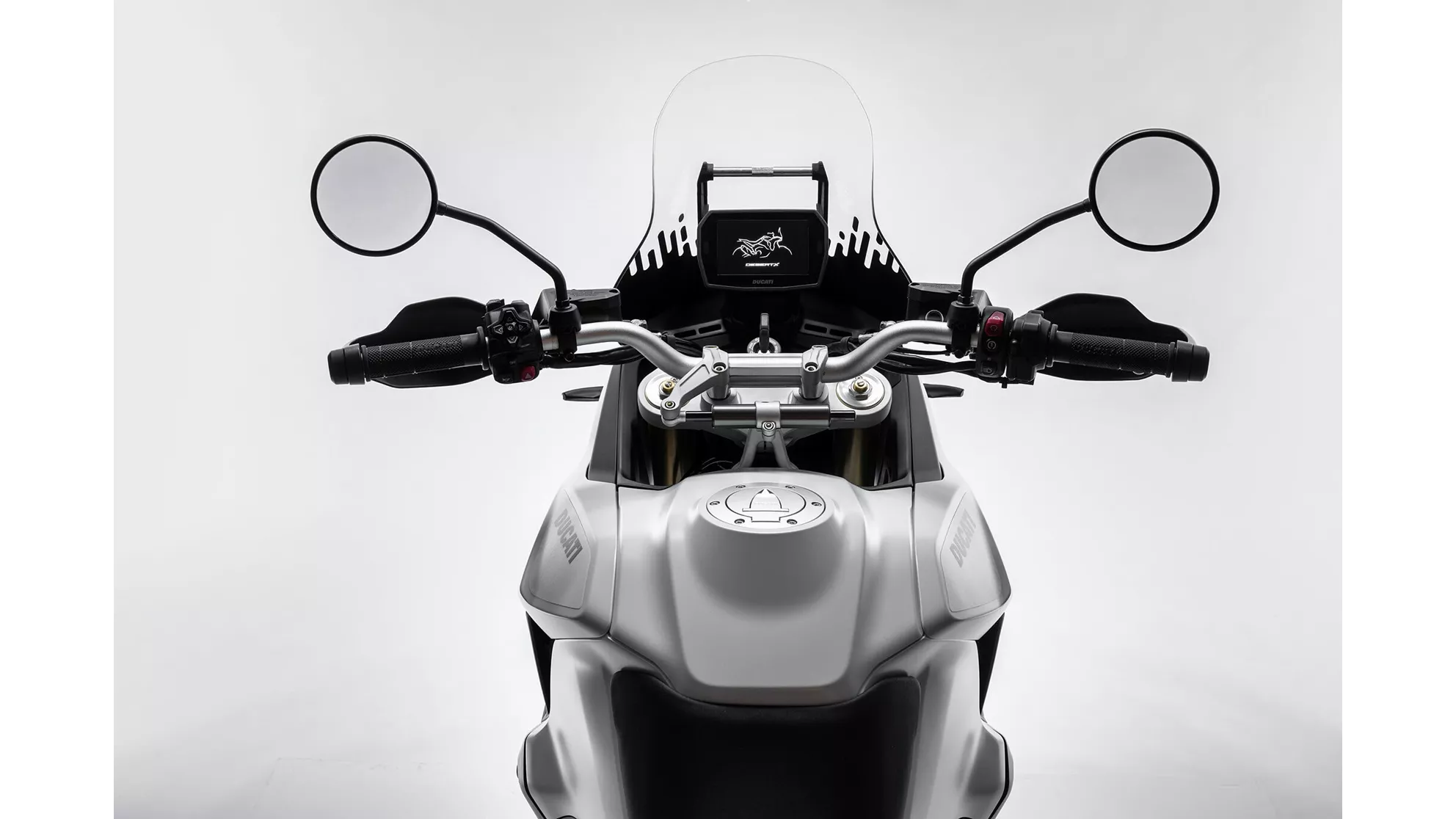
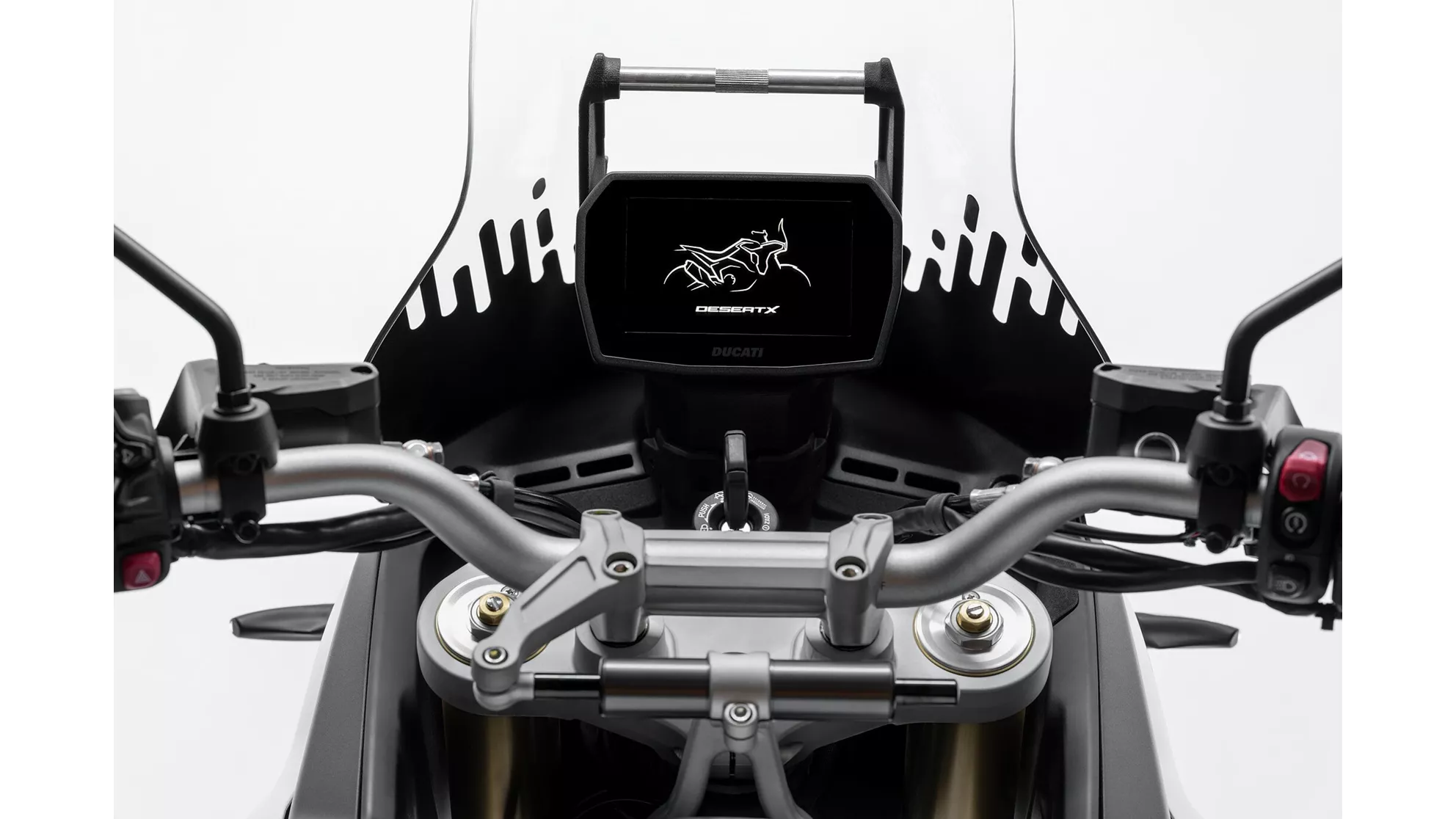
Electronics are present in abundance. Six riding modes are available: Sport, Touring, Urban, Wet, Enduro and Rally. In addition, there are many multi-stage configurable rider aids that operate lean-angle-dependent, including Ducati Traction Control, Ducati Wheelie Control, Engine Brake Control and Cornering ABS with off-road-specific modes. Interestingly, the TFT display is once again landscape rather than portrait orientation. Ducati justifies this with more space in the cockpit. Three different layouts are possible: a typical, understated "Road" layout, a "Road Pro" layout with additional information on the currently set levels of the rider aids as well as current power and torque usage, and a "Rally" layout with a tripmaster. This Rally layout is also the only one in which the levels of the rider aids can be adjusted directly on the home screen while riding. The display of actual power and torque used is a very cool idea, one I haven't seen before. At the same time, it nicely illustrates the absurdity of modern power levels.
Ducati DesertX 2026 - Key Facts
Engine and Drive Train
| Engine type | V |
|---|---|
| Bore | 96 mm |
| Stroke | 61.5 mm |
| Engine power | 110.3 HP |
| Rpm at Max. Power | 9,000 rpm |
| Torque | 92 Nm |
| Rpm at Torque | 7,000 rpm |
| Compression Ratio | 13.1 |
| Fuel system | Injection |
| Throttle Bore | 52 mm |
| Degrees | 90 |
| Starter | Electric |
| Clutch Type | Multiplate in oil-bath, Antihopping, Clutch systems |
| Transmission | Chain |
| Transmission Type | Gearshift |
| Number of gears | 6 |
| Cylinders | 2 |
| Strokes | 4-Stroke |
| Valves per cylinder | 4 |
| Cooling | liquid |
| Can be restricted for A2 licence | Yes |
| Displacement | 890 ccm |
Brakes Rear
| Type | Disc |
|---|---|
| Diameter | 265 mm |
| Piston | Double piston |
| Shock mount | Floating caliper |
| Brand | Brembo |
Suspension Front
| Front suspension | Upside-Down telescopic fork |
|---|---|
| Brand | Kayaba |
| Diameter | 46 mm |
| Travel | 230 mm |
| Adjustment | Compression, Preload, Rebound |
Suspension Rear
| Suspension | Swing arm |
|---|---|
| Shock absorber | Monoshock |
| Shock mount | Deflection |
| Brand | Kayaba |
| Travel | 220 mm |
| Adjustment | Compression, Preload, Rebound |
| Material | Steel |
Chassis
| Frame | Aluminium |
|---|---|
| Frame type | Monocoque |
| Rake | 27 degree |
| Trail | 114 mm |
Brakes Front
| Type | Double disk |
|---|---|
| Diameter | 305 mm |
| Piston | Four pistons |
| Shock mount | Fixed caliper |
| Actuation | Hydraulic |
| Technology | radial, Monoblock |
| Brand | Brembo |
Assistance Systems
| Advanced Rider Assistance Systems | ABS, Riding modes, Cornering ABS, Engine drag torque control, Ride by Wire, Quickshifter, Shift assistant with blipper, Cruise control, Traction control, Anti-wheelie, Modern electronics, Comfort, EBC, Engine management, Variable valve timing, Ducati Quick Shift DQS, DTC |
|---|
Dimensions and Weights
| Front tyre width | 90 mm |
|---|---|
| Front tyre height | 90 % |
| Front tyre diameter | 21 inch |
| Rear tyre width | 150 mm |
| Rear tyre height | 70 % |
| Rear tyre diameter | 18 inch |
| Wheelbase | 1,615 mm |
| Seat Height | 880 mm |
| Dry Weight (with ABS) | 209 kg |
| Fuel Tank Capacity | 18 l |
| Range | 333 km |
| Combined CO2 emissions | 125 g/km |
| Combined fuel consumption | 5.4 l/100km |
| Euro Norm | Euro 5+ |
| Maintenance interval | 15,000 km |
Equipment
| Equipment | LED daytime running lights, LED-Headlights, TFT display, USB socket, Modern electronics, Automatic turn signal reset, Charging & power, Lighting |
|---|
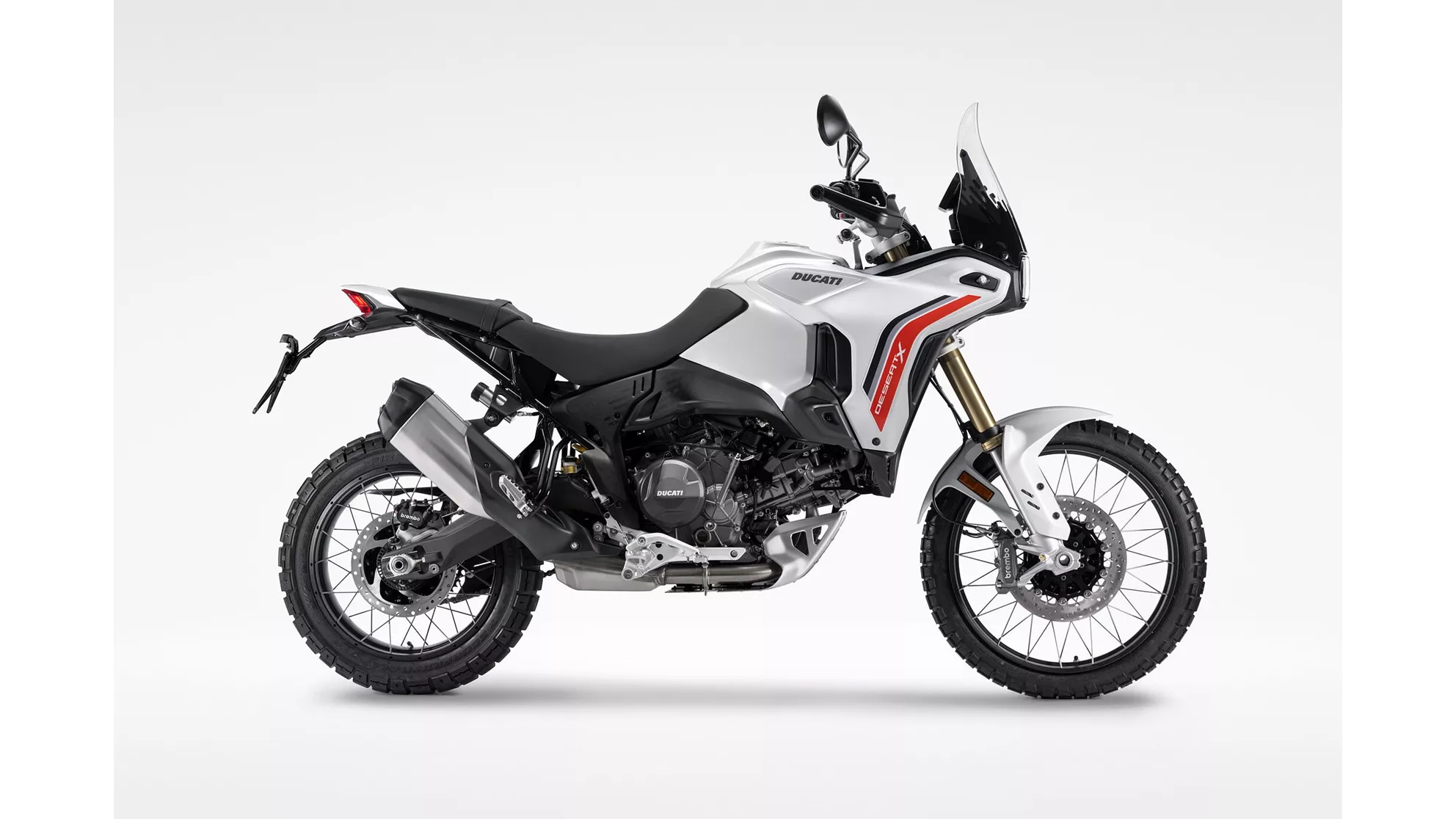
The brakes have also been reworked. Up front, the discs have gotten smaller; instead of maximum bite, Ducati apparently favors more of a compromise between road deceleration and off-road controllability. Now fitted are two 305 mm discs with radially mounted Brembo M4.32 monoblock calipers. At the rear, a 265 mm disc with a Brembo two-piston floating caliper works as before. Then there are final updates that clearly stem from customer feedback and are very pragmatic in nature. The air filter is now easier to reach at the front of the tank under the fork bridge. Turn the handlebar, loosen three screws, and it can be removed. For rear wheel removal, no special tool is needed anymore either - a simple hex nut is fitted instead. Suitable tools for that are much easier to find on the road.
Why I was disappointed by the new DesertX
Why did I arrive disappointed? The new generation of the DesertX had been known for a while, as had the details of the new engine. It's more than five kilograms lighter than the previous engine, the Testastretta V2. At the same time, rumors said the DesertX would become significantly more off-road capable. My expectations were clear as a result: it would be significantly lighter. At EICMA 2025, looking at the exhibited DesertX prototype, I said I expected it to be ten, maybe even 15 kilograms lighter. Then the technical details of the new DesertX were published, and lo and behold: according to the data, it's only about one kilogram lighter than its predecessor, and that with a tank three liters smaller. Why is the thing so heavy? I traveled to Spain carrying skepticism and disappointment. But over the course of the presentation, I learned that the spec sheet only tells half the truth.
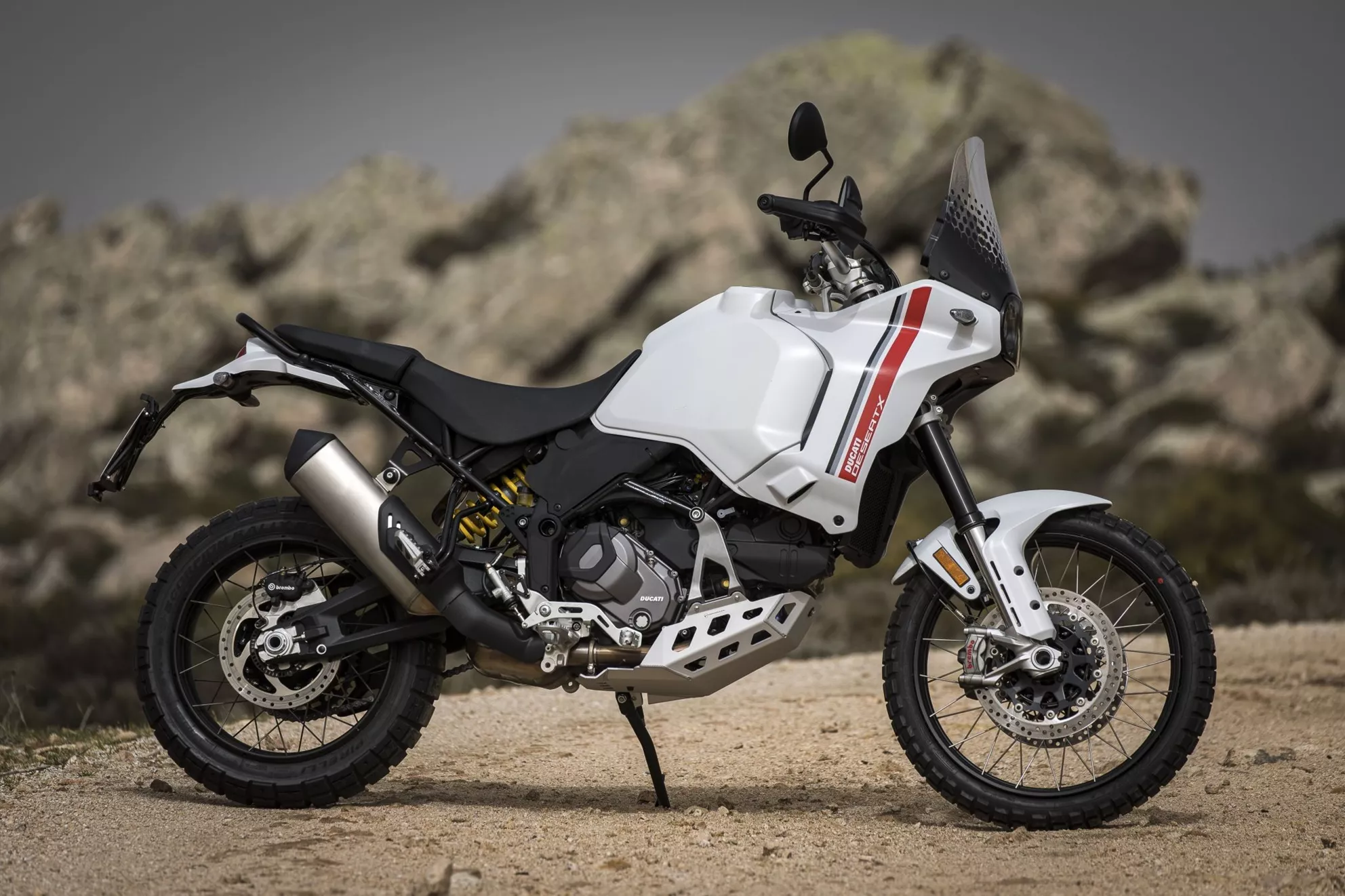
The previous DesertX with Testastretta V2 engine.
Ducati DesertX 2026 riding impression in the city
We gathered our first riding impressions in town. An 880 mm seat height is not low, but the narrow waist makes reaching the ground easier. Shorter riders can opt for the 20 mm lower accessory seat and further help themselves with a lowering kit that drops the chassis another 20 mm. At the same time, the knee angle on the DesertX isn't super relaxed but leans towards the sportier side. Taller riders can instead reach for the 20 mm higher accessory seat. Right from the first roll-off, the first positive change becomes apparent. I was and am a big fan of the Testastretta V2 in the old DesertX. That was a wonderfully sporty, characterful engine. Down low, though, it was a bit fussy, prone to chain-slap, and only felt at home from around 4,000 rpm. Combined with a fairly stiff clutch, that made everyday situations like slow city traffic somewhat tiresome.
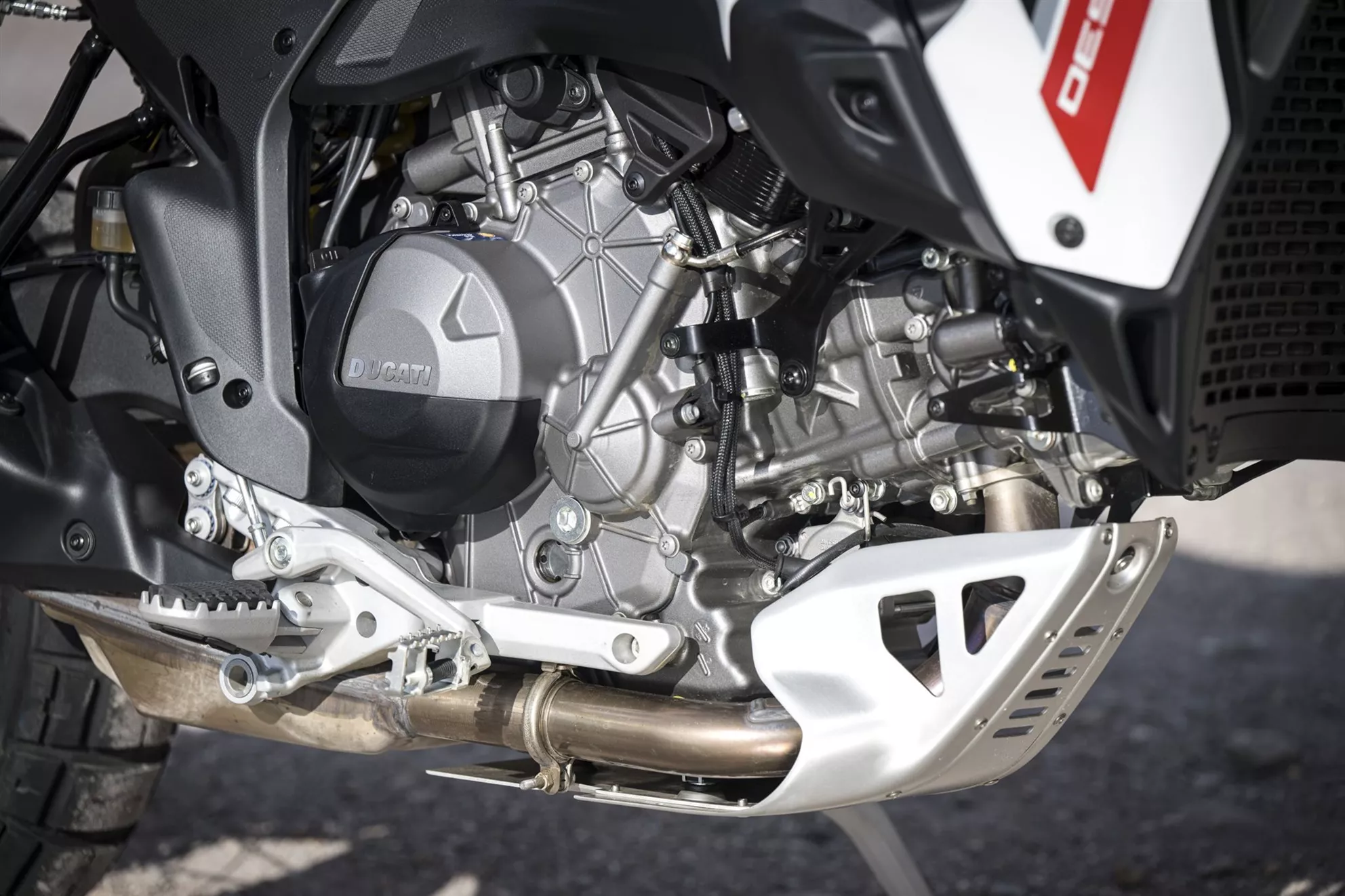
The new 890 V2 engine makes everyday situations noticeably less strenuous and behaves in a tractable manner.
The new engine, by contrast, is extremely well-behaved and refined. It revs cleanly from as low as 2,000 rpm. Add to that the light, finely modulated hydraulic clutch and the smoothly operating Ducati Quickshifter 2.0, whose sensor is no longer located on the linkage of the foot lever but in the gearbox itself. This makes it work more precisely and quickly. This creates a noticeably smoother and more effortless riding experience in town than before. The chassis also doesn't feel too sporty, absorbing manhole covers and speed bumps nicely without turning into a sofa. The steering lock is pleasantly generous, and handling the DesertX in dense Spanish traffic feels intuitive and confident from the very first meter. But enough pragmatism. What matters, of course, is how the new DesertX performs in action.
Ducati DesertX 2026 off-road test
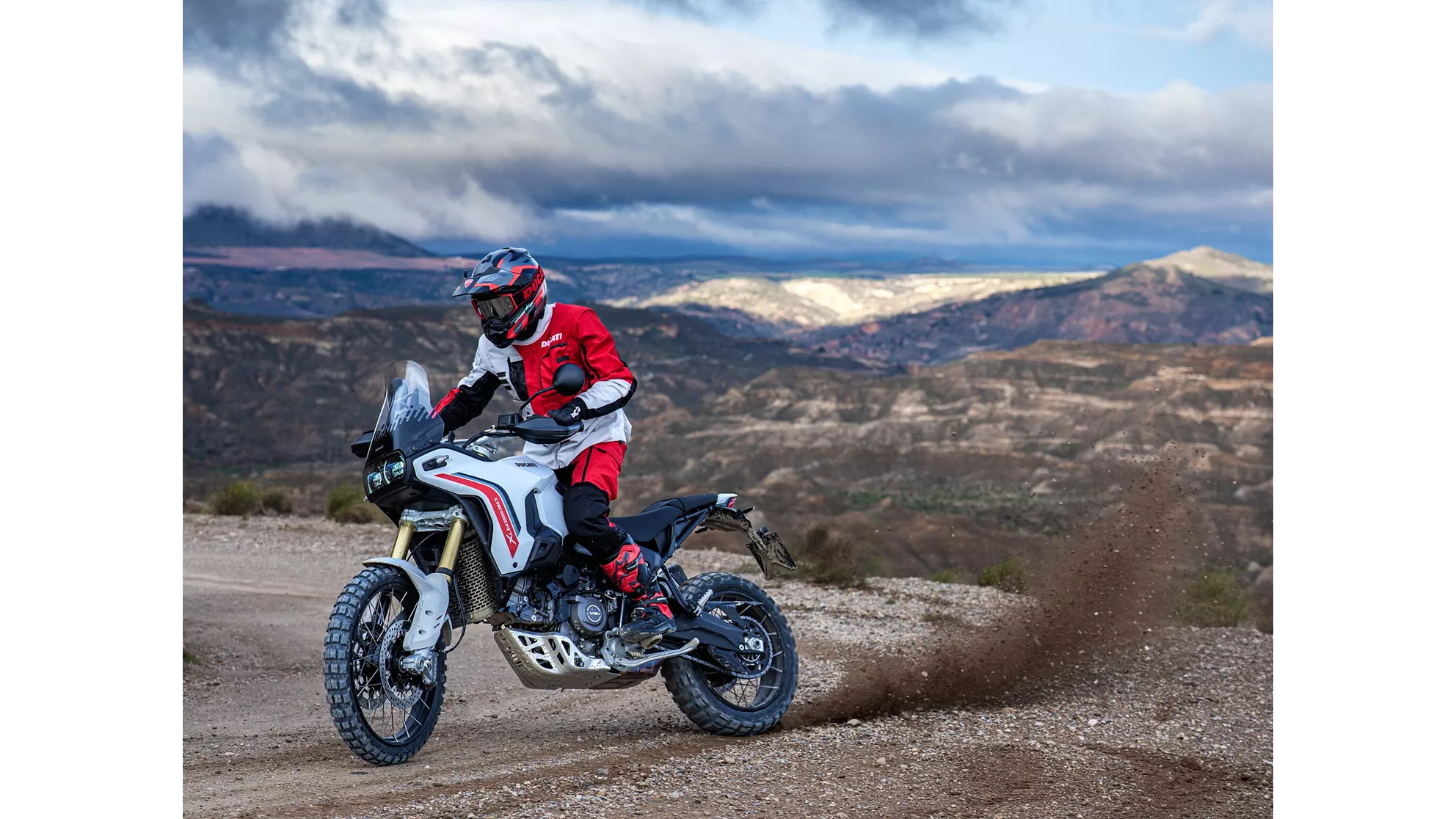
The biggest source of joy off-road is the new engine and its combination of powerful low-rpm torque with lively revviness at the same time. This is partly due to the variable valve timing, which delivers powerful torque to the rear wheel just above idle. On the other hand, the gearbox ratios have been reworked. First gear is almost unchanged, only 0.8 percent shorter, but second gear is 5.4 percent shorter. As a result, the V2, despite its grunty torque, still revs willingly and eagerly. This creates a wonderful engine character that allows both low-rev puttering and high-rev hammering. This is exactly how Ducati addresses a major weakness of the predecessor engine, especially for less experienced off-roaders. If you stumble and get too slow in too high a gear, the Testastretta would resist low-rev acceleration. The new engine, in contrast, pulls you out of trouble unwaveringly and controllably, standing by your side without feeling like a sluggish tractor engine when winding out. It's the perfect combination of controllability and sportiness.
The Ducati Quickshifter changes gears very quickly, precisely and crisply. However, it requires somewhat more force at the lever than some competitors and is somewhat sensitive to unintentional boot contact with the shift lever. If the sensor detects pressure on the foot lever, ignition is sometimes briefly interrupted. With thick enduro boots, this can be a problem because you simply don't always feel the contact. The chassis, on the other hand, performs magnificently. Even the old DesertX was an adventure bike heavily trimmed for stability. The new one does this even better, responds even more nicely and finds a very successful balance between stability and comfort. It allows you to ride over rough terrain with a great deal of confidence.
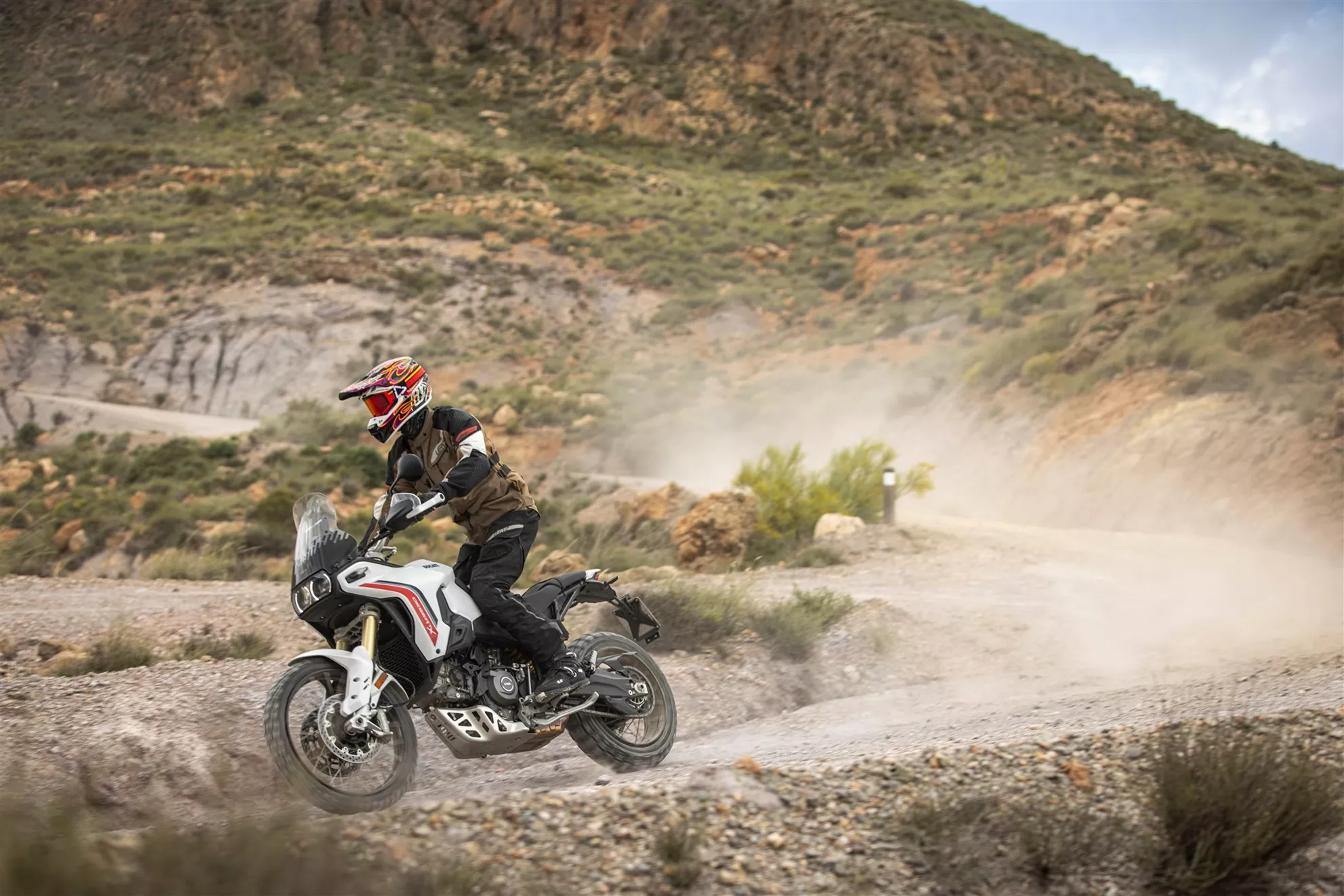
Good ergonomics, an excellent chassis, advanced electronics and a sporty yet easily controllable engine - there's nothing to complain about with the new DesertX in loose terrain.
The electronics are excellently tuned off-road. The traction control allows some slip on level 2, and on level 1 already permits nice drifts and lots of rear-wheel movement, yet still provides an electronic safety net in case you overdo it. The ABS is also multi-stage and finely resolved. The off-road ABS provides safety without feeling oversensitive on loose ground. Rear-only ABS or fully deactivated? Both are possible. The front brake offers a good compromise between bite and controllability. The rear brake, however, has quite a bit of free play at the lever before it bites, which makes modulation somewhat more difficult. Overall, though, the DesertX feels noticeably developed for off-road use.
Standing ergonomics on the Ducati DesertX 2026
The standing ergonomics are very well done. The old DesertX had a continuous tank shape that grew fairly wide towards the front. The new 18-liter plastic tank now has recesses on the sides, providing more room towards the front. At the same time, the seat extends further forward and rises at the sides. This means you can clamp your knees onto the grippy, soft seat if needed, rather than on slippery, smooth surfaces. The handlebar is neither too high nor too low. It offers room for active riding without being tiring during longer standing sections. Towards the rear, the flat seat gives plenty of freedom of movement; only the pillion footpeg gets slightly in the way with large boot sizes and bulky boots. The footpegs have a nice width. Together with the excellent chassis and well-designed ergonomics, the DesertX follows input through the footpegs very willingly and precisely.
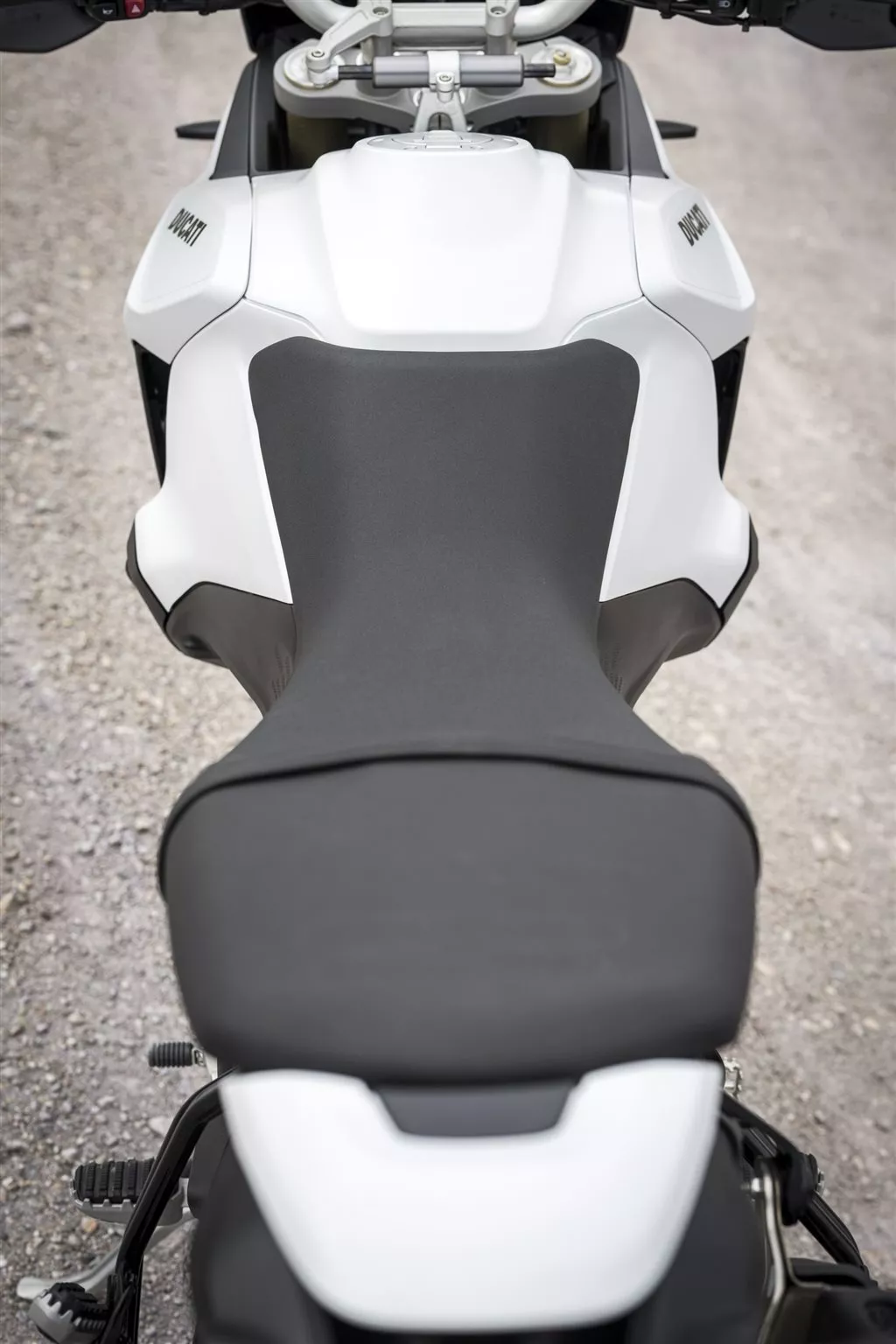
The newly shaped tank, slightly more front-wheel-biased ergonomics and the far-forward-extending seat improve the standing position.
Why the new DesertX rides better off-road
In summary, I feel even more confident off-road on the new DesertX than before. You can tell the focus has shifted more strongly towards this use case. The biggest difference and the biggest improvement show up in technical terrain, at slow speeds and while riding at low revs. Where the old engine demanded concentration and constant momentum, the new DesertX actively helps out. It makes it easier not to be perfect. It doesn't completely mask mistakes, but it punishes them less harshly and gives the rider more time and more control. This is exactly where my initial disappointment slowly turns around. This bike hasn't become much lighter, but it rides better, more controllably and more confidence-inspiringly off-road.
Ducati DesertX 2026 on the road
On asphalt, the engine is also a joy. Above all, its revviness conjures a grin under the helmet. The shorter gearing makes the DesertX wonderfully dynamic, yet you needn't worry about needing too many gear changes. The gears and the tractable engine are elastic enough to circle through corners in second or third gear for longer stretches, or to hold the throttle open up to the redline at 10,000 rpm. Only the occasionally interfering quickshifter dampens the joy somewhat. That could be user error from overly bulky boots, or oversensitivity of the sensor. The chassis also shines on paved roads. With the standard-fit Pirelli Scorpion Rally STR tires, you can throw the bike into corners very briskly. The chassis remains stable at all times, delivers clear feedback about grip levels, and makes it easy to follow the intended line. Maximum lean angle is also plentiful. The 21/18-inch tubeless spoked wheels with Pirelli Scorpion Rally STR tires come as standard.
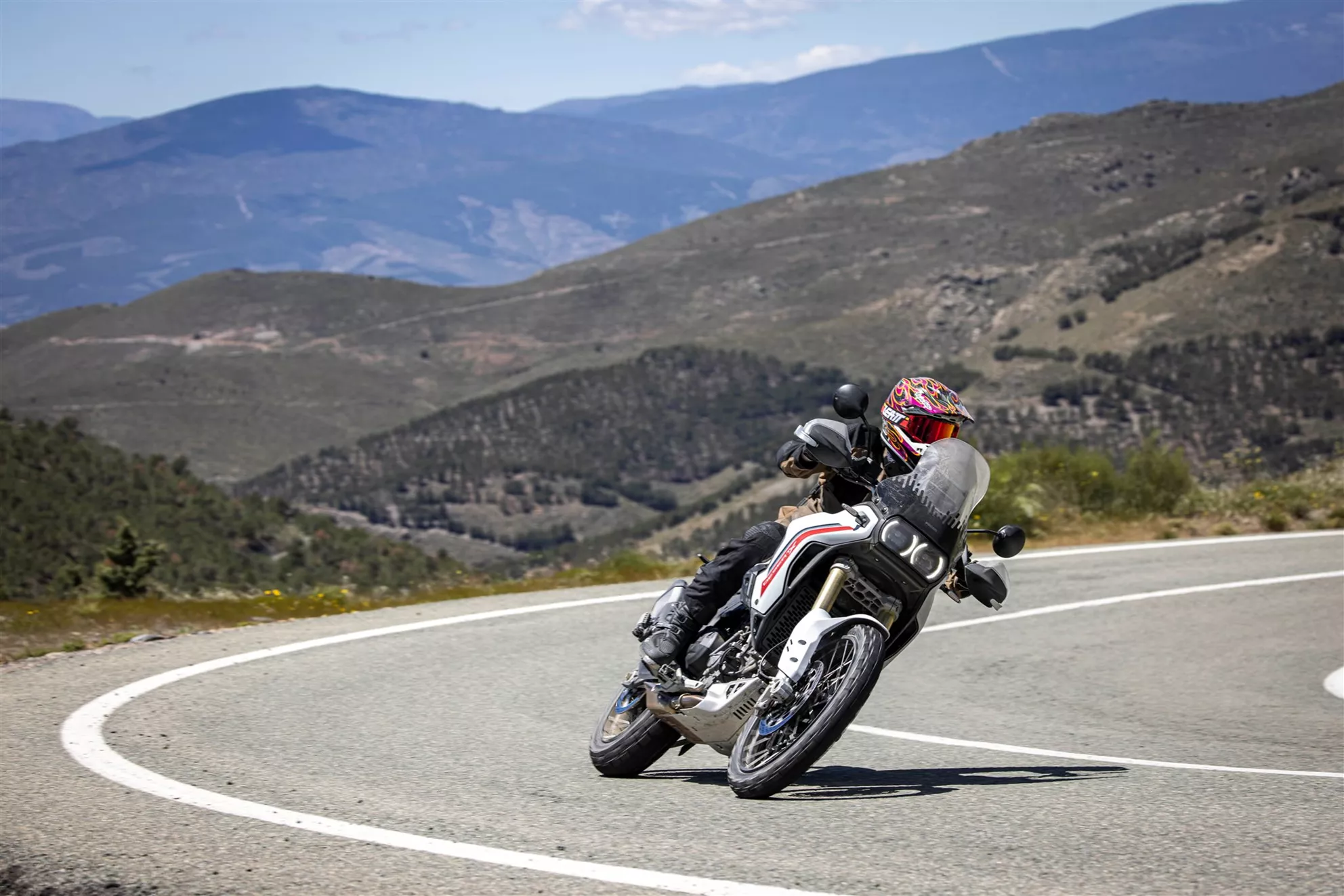
Engine, chassis and the standard-fit Pirelli Scorpion Rally STR tires provide a wide grin under the helmet when leaned over in corners.
Brakes and rider aids on asphalt
The brakes, despite being smaller, are potent enough thanks to premium Brembo hardware. The pressure point at the front is initially soft but then quickly and precisely builds up pressure. As a result, not much force is needed for hard deceleration. The electronics also work very well on asphalt. Southern Spanish roads are constantly broken up and littered with treacherous patches of gravel. Traction control and ABS aren't overly sensitive and allow you to extract as much as possible from the available grip. If you do briefly start sliding on that loose gravel, the systems intervene subtly but reliably and lightning-fast. Thanks to the multi-stage configuration options, the intervention behavior can be very precisely adapted to your own preferences.
Ducati DesertX 2026 test - comfort & long-distance capability
One day of riding isn't enough to definitively judge long-distance capability. The first impression is passable, but this is exactly where the DesertX has the most room for improvement. The reworked wind protection is only moderately successful. At my height of 1.85 meters, the helmet stands fully in the wind from the chin down, and the shoulders also get a lot of airflow. The low windshield matches the sporty look, but an adjustment mechanism would help on the highway and long distances without ruining the appearance. The Multistrada models in particular have one of the best windshield adjustment mechanisms on the market. Perhaps something could be borrowed from there. Exemplary, on the other hand, is the standard equipment with cruise control, quickshifter as well as USB-A and USB-C as standard. Likewise, the rev level at highway speed deserves praise. While the lower gears were shortened, sixth gear became 6.4% longer. This lets you cruise relaxed at 130 km/h with just 5,500 rpm.
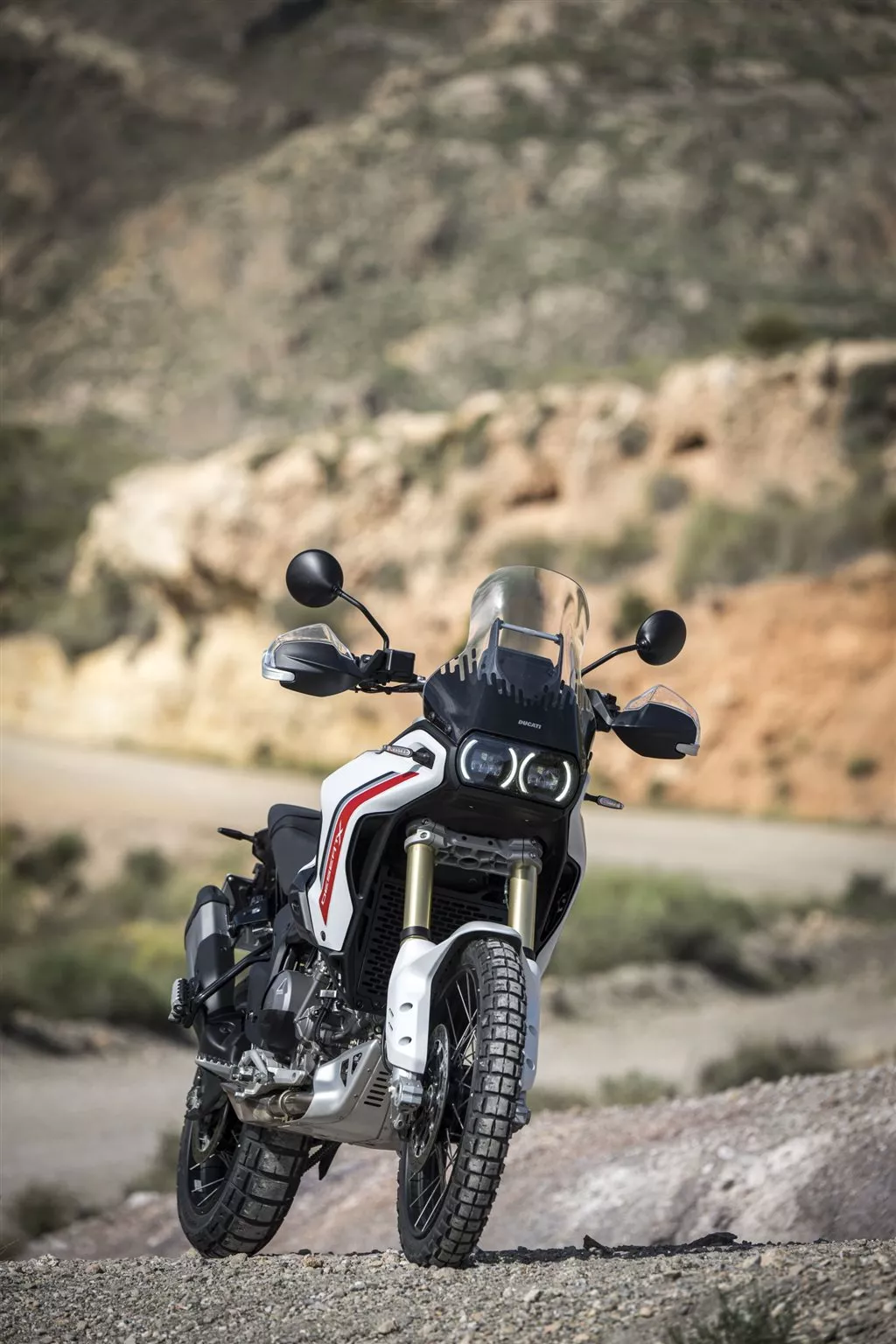
The factory equipment on the DesertX is exemplary, the wind protection rather less so.
Range also remains a topic. Fuel consumption at a first presentation isn't representative, but according to the onboard computer, after 192 kilometers the display showed 6.3 liters per 100 kilometers. With the 18-liter tank, a consumption of around six liters would mean a range of about 300 kilometers, probably somewhat less in reality. Anyone who finds that insufficient will find an interesting technical solution in the accessories catalog: an 8-liter auxiliary tank at the rear. It looks a bit bulky but is practical. Also interesting in the accessories range are the tall front fender and the Mosko Moto soft luggage. Officially, Ducati also lists the 18-liter main tank and the optional 8-liter rear tank as part of the accessories program.
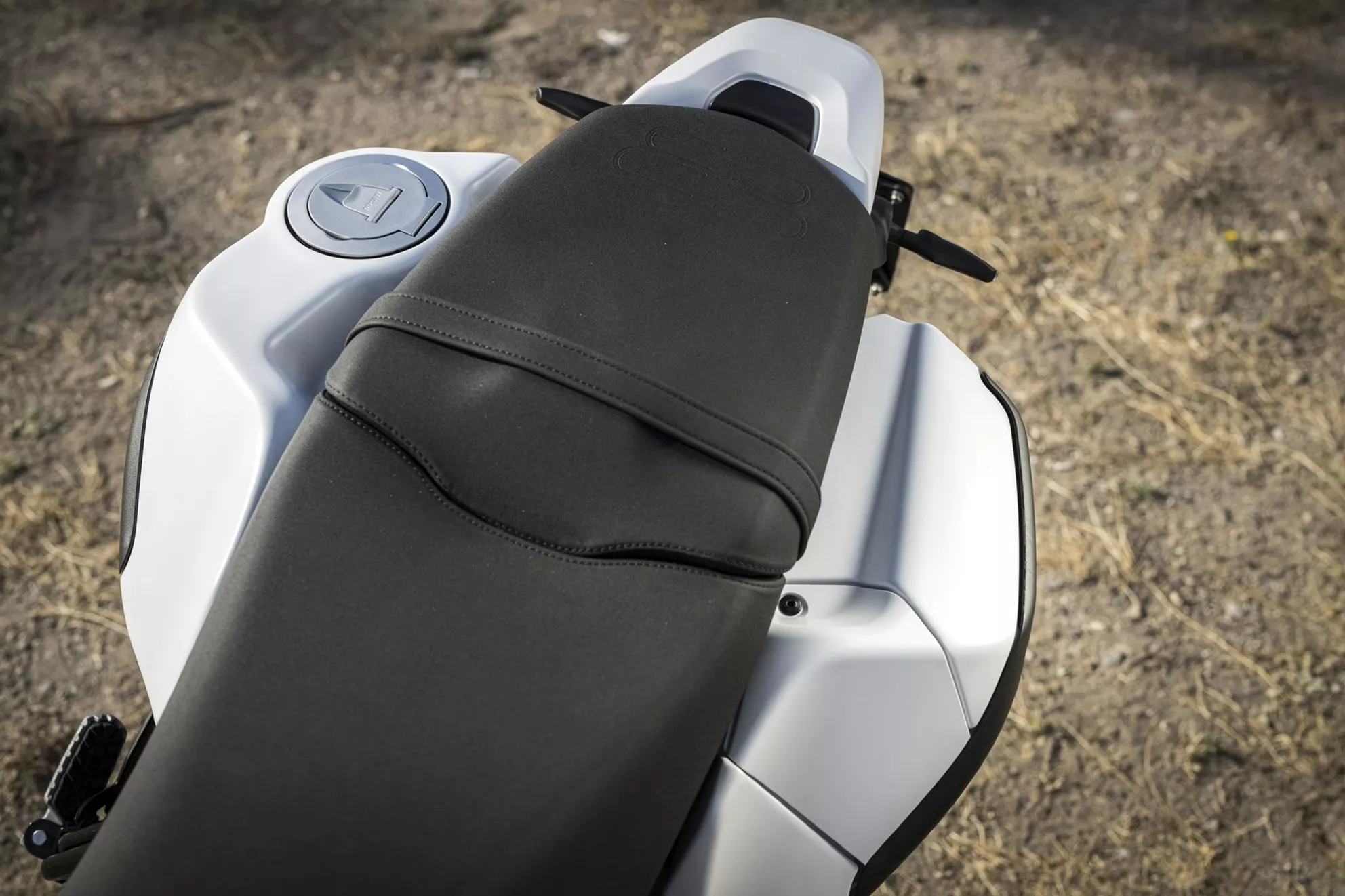
8-liter auxiliary tank at the rear of the Ducati DesertX.
Data isn't everything! The DesertX teaches me a lesson
The successful ride through the beautiful Spanish landscape, paired with a very well-rounded evolution of the DesertX, has finally dispelled the skepticism I arrived with. Less weight would of course still be nice. But the kilograms saved on the engine were apparently reinvested elsewhere for good reasons, for example in the shock linkage or the reworked, higher-quality fork legs. So the DesertX hasn't become as light as I had hoped. It's also not a radically lightweight adventure bike. But it's better than ever and makes an enduro rider's heart beat faster. The numbers on the spec sheet, after all, aren't the whole truth.
Ducati DesertX 2026 price and availability
And then there's a pleasant surprise regarding the price. Although motorcycle development is very expensive, the new DesertX will be cheaper in Germany and Austria than its predecessor. In Germany, the DesertX 2026 costs 16,390 euros, 700 euros less than the previous model. In Austria, it becomes more than 1,000 euros cheaper and is now available from 19,795 euros. However, the DesertX is only available in one color, namely Matt Star White Silk. Market launch in Europe is announced for April 2026.
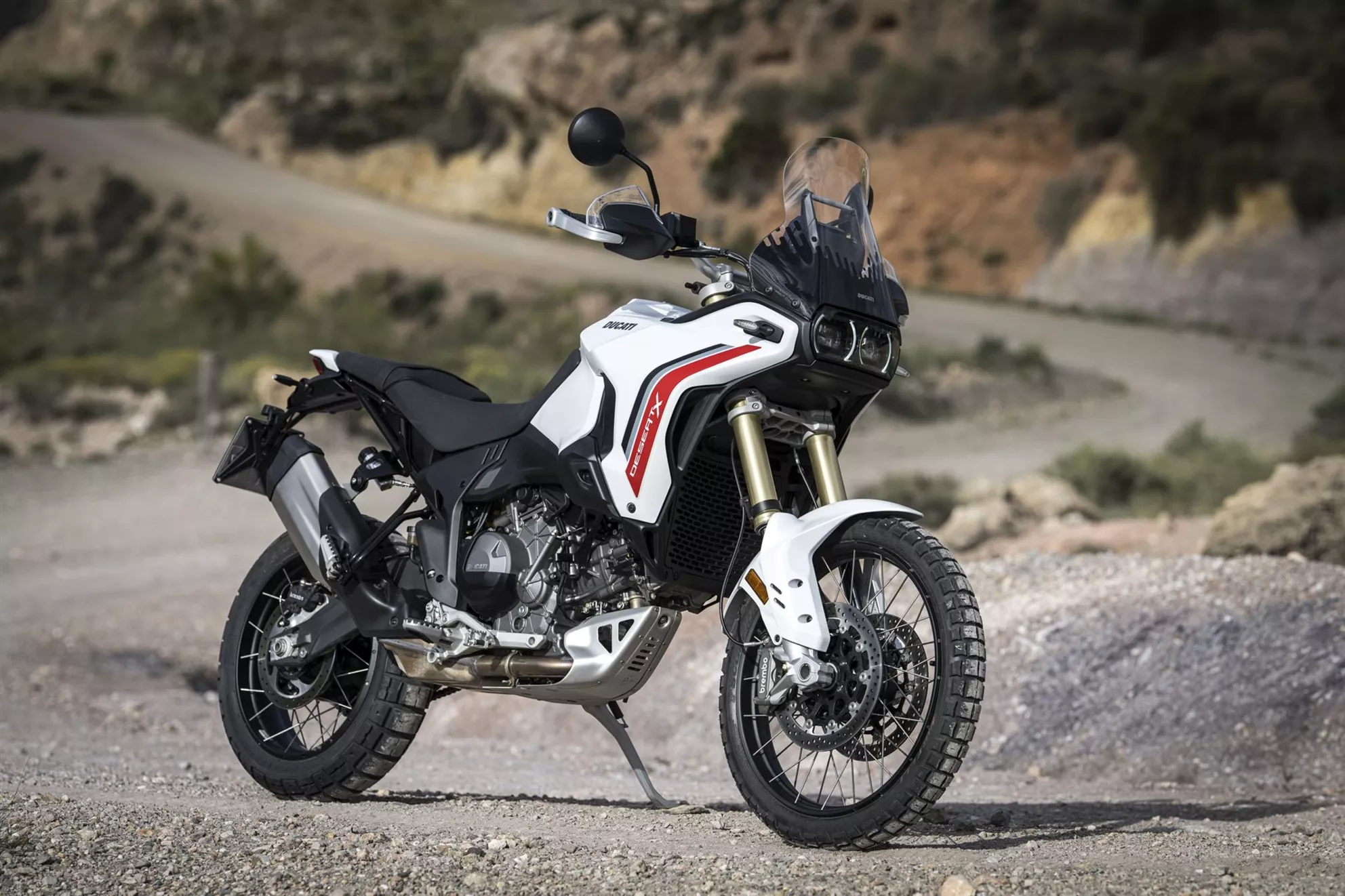
Matt Star White Silk is the only color design of the new DesertX
- How much does a Ducati DesertX cost?
- Here you will find an overview of the price level of new and used motorbikes!
&width=60&height=60&bgcolor=rgba_39_42_44_0&mode=crop "Author: Gregor")
Ducati DesertX 2026 - Experiences and Expert Review
Gregor
The new DesertX is the last Ducati model to be built on the new 890 V2 engine. And it's also the model that benefits most from the new engine. It remains as sporty, adventurous and stable as before, but thanks to the tractable engine can also score points in everyday use or in more technical terrain. The most room for improvement is in long-distance comfort, but that's complaining at a high level. The new DesertX is a very well-rounded overall package, with plenty of performance on and off asphalt and hardly any notable weaknesses.
More from 1000PS Magazine
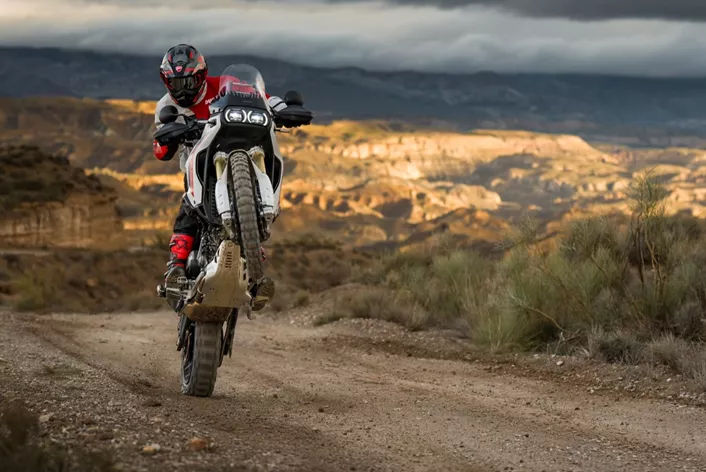
First disappointed, then thrilled! - Ducati DesertX 2026 test Images
Source: 1000PS