HJC RPHA 72 Carbon Review

HJC RPHA 72 Carbon Review

The New Sport Touring Helmet in the 1000PS Performance Check

Lighter, sleeker, and noticeably more premium than its predecessor: The new HJC RPHA 72 Carbon aims to blend touring comfort with sporty stability. 1000PS has put this high-end helmet through its paces in everyday use, on the highway, and through twisty backroads.

nopain

nopain

published on 5/25/2026

8,525 Views

HJC RPHA 72 Carbon – Focus on Weight, Comfort, and Everyday Use

Sport touring helmets today need to embody versatile prowess. They should be lightweight, not cause fatigue on long rides, remain stable at high speeds, accommodate modern communication systems, and maintain a modern, sleek design. It's within this challenging balance that HJC positions the new RPHA 72 Carbon.

This new helmet replaces the well-known RPHA 71 and indirectly succeeds the popular RPHA 70. Many touring riders resisted switching from the ultra-light RPHA 70 to the RPHA 71, as the latter became noticeably heavier and bulkier due to the stricter ECE 22.06 testing standards. With the RPHA 72 shedding significant weight, it precisely fills the gap left by its predecessor.

First Impressions: Sportier and More Premium Than Ever

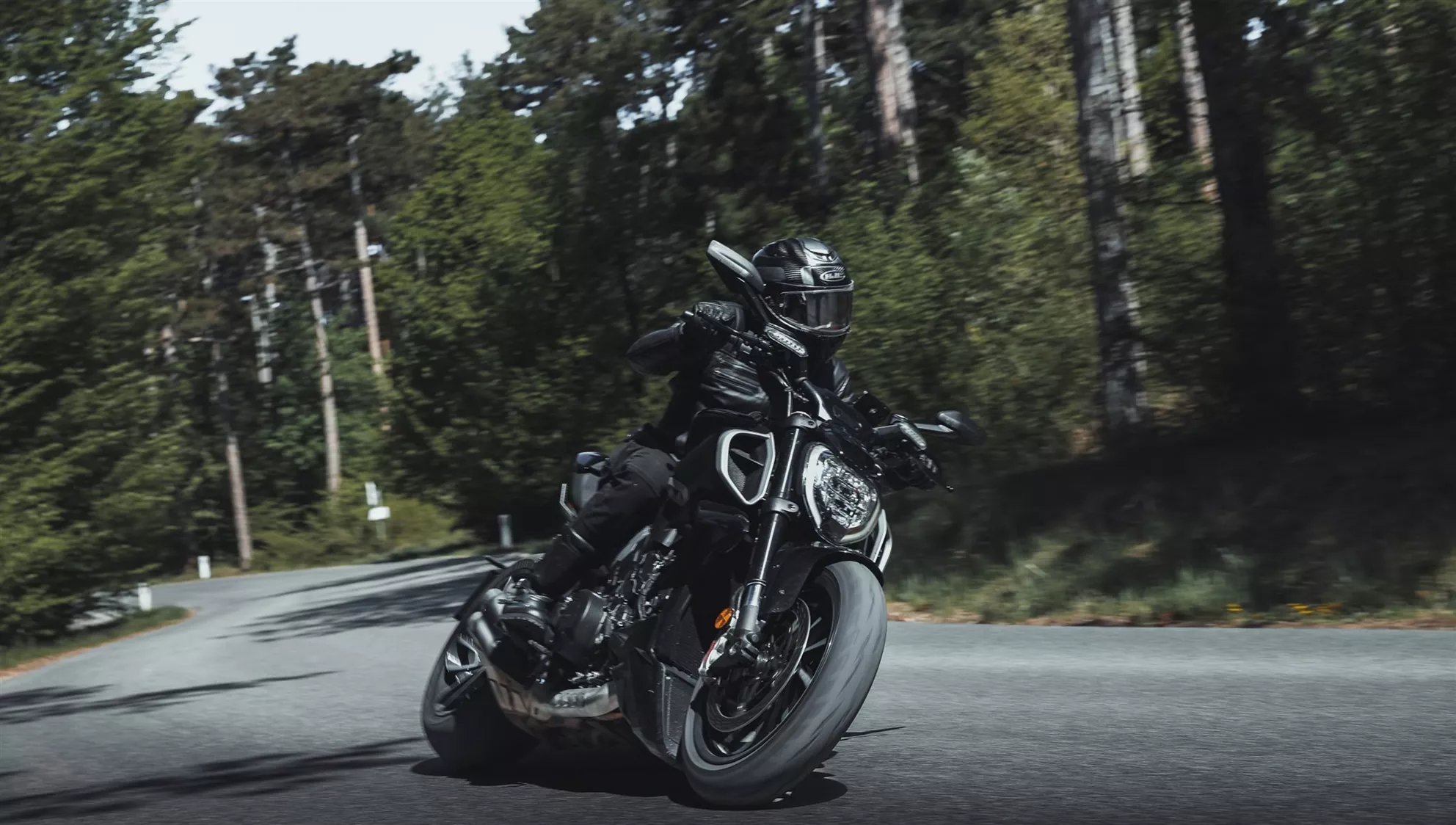
Right out of the box, the compact design of the new HJC RPHA 72 Carbon is immediately noticeable. The helmet looks modern and surprisingly sporty. Especially when compared directly to the RPHA 71, you can instantly see the sleeker and more aggressive lines. The ventilation elements are more harmoniously integrated, and the overall shape is more aerodynamic.

Overall, the RPHA 72 resembles a very sporty full-face helmet with high long-distance capability, rather than a classic touring helmet. The carbon structure under the clear coat is finely crafted and neatly painted. Gaps, visor mechanics, and meticulous design features are clearly in the premium segment despite the affordable price.

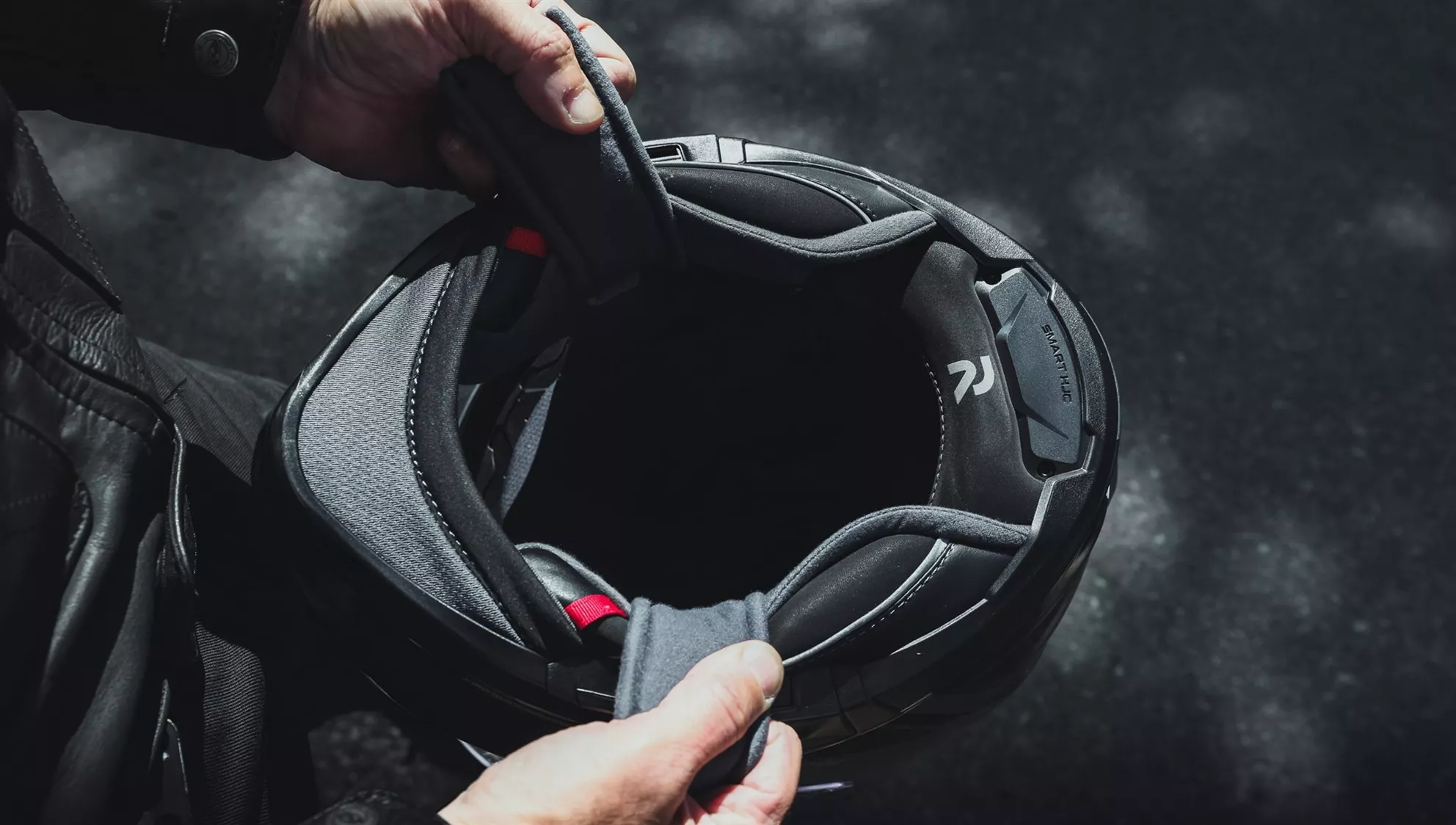
The interior lining stands out positively. The padding feels more premium than many competitors in this price range. Particularly, the side and rear padding attachments leave an excellent impression. Everything clicks firmly into place, and nothing shifts when putting on or taking off the helmet.

Frequent riders know the issue well: cheek pads tend to come loose during hectic rides, or the interior shifts. With the RPHA 72, everything stays exactly in place even after frequent donning and doffing.

HJC RPHA 72 Carbon Helmet

Technical Specifications of the HJC RPHA 72 Carbon

FeatureDescription
ModelHJC RPHA 72 Carbon
Helmet TypeFull-Face Sport Touring
StandardECE 22.06
MaterialFiberglass-Carbon-Aramid Matrix Combination
Shell Sizes3
SizesXS-2XL
ClosureTitanium Double-D
VentilationACS Advanced Channeling Ventilation System with chin and forehead inlets and two rear outlets
VisorHJ-48 Visor Pinlock Ready, 99% UV Protection, anti-fog with Pinlock, lockable
PinlockIncludes Pinlock 120 XLT Anti-Fog Lens DKS642
Visor MechanismTool-free
Sun VisorIntegrated
Interior LiningComfort Interior – antibacterial, removable, and washable
Glasses FriendlyYes
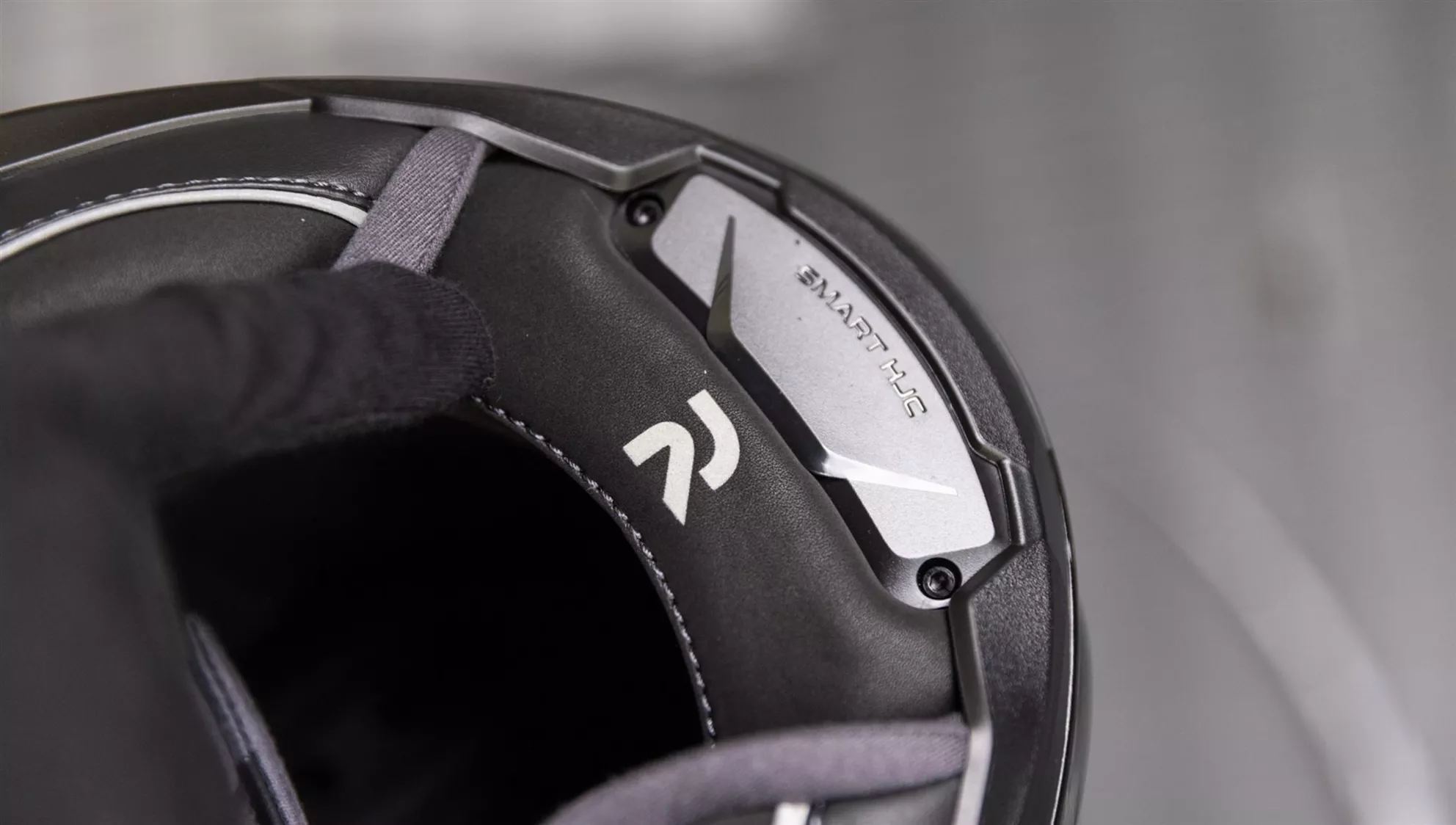
Communication ReadyPrepared for Smart HJC 11B, 21B & 50B Bluetooth (sold separately).
WeightApprox. 1,450 g in size Large (1,404 grams measured in size Medium)
Prices (MSRP)559.90 Euro (Carbon Solid), 599.90 Euro (Carbon with graphics)

HJC RPHA 72 Carbon Helmet

HJC RPHA 72 Carbon – Progress Through Reduced Weight

The lightweight design is one of the greatest strengths of the new helmet. Compared to the RPHA 71, the new RPHA 72 sheds approximately 150 grams. While that may not sound dramatic on paper, it's immediately noticeable in practice.

On long tours, the reduced weight significantly lessens the strain on your neck and shoulders. This is particularly evident during sporty riding or extended highway stretches. On the move, the helmet feels even lighter than the scale would suggest. It also remains pleasantly neutral during shoulder checks, causing minimal drag.

HJC RPHA 72 Carbon Helmet

Fit and Comfort of the HJC RPHA 72 Carbon

The fit is also a notable improvement over its predecessor. The helmet sits snug and stable on the head without any uncomfortable pressure. Particularly around the cheeks, the shape is much more harmoniously balanced than in the RPHA 70.

The new aerodynamic skirts at the bottom effectively seal the helmet against incoming wind, creating a calmer airflow inside the helmet.

However, these skirts do have a minor drawback. On the first wear, the helmet feels unusually tight. The inner lining needs to be deliberately adjusted outward with the straps during donning, otherwise, the skirts can be a bit irritating or tight, especially when new. After a short adjustment period, this becomes a non-issue, but it's worth mentioning.

The helmet's compatibility with glasses is particularly noteworthy. Glasses' arms can be inserted without any trouble, provided the helmet's fit generally matches the wearer's head shape.

HJC RPHA 72 Carbon Helmet

HJC RPHA 72 Carbon – Stability Beyond Highway Speeds

On country roads, the helmet feels extremely stable and neutral. Even at swift speeds, there are hardly any disruptive movements. Only from around 200 km/h does the helmet start to feel slightly lighter and pull minimally at the strap. However, this behavior is expected of a sporty touring helmet with a sun visor.

More important than sheer high-speed stability is the calm airflow in everyday riding. And this is where the HJC excels. Particularly impressive is the minimal amount of unpleasant air turbulence around the ears. Some other helmets might be objectively quieter but produce annoying frequencies or pressure fluctuations. The RPHA 72 effectively avoids these issues.

Noise Level: Not Whisper Quiet, But Acoustically Pleasing

The topic of noise levels is always a widely debated topic with touring helmets. The new HJC RPHA 72 Carbon is not the quietest helmet in its class. Especially when compared to the older RPHA 70, it seems subjectively a bit louder.

This is likely due to the less bulky carbon construction: a smaller shape, thinner outer shell, less weight, and consequently a bit more sound permeability. However, the noise level should not be dramatized.

What's crucial is not just the raw decibel count, but the type of noise. And this is where the RPHA 72 excels. There are hardly any disruptive turbulences, no annoying whistling, and no unpleasant pressure frequencies. The riding sounds are even and minimally stressful.

For a sporty touring helmet, the overall noise insulation is at a very good level.

HJC RPHA 72 Carbon Helmet

Sun Visor and Main Visor: Excellent Sun Protection and Precise Mechanics

The integrated sun visor is one of the helmet's standout features. It extends far down and covers an impressively large field of view. Even riders with larger noses or mustaches won't have any issues. At the same time, it maintains enough distance to prevent fogging.

Operating the sun visor is reliable but requires a bit more effort. The mechanism clicks into place securely, though the sound when deploying and retracting feels somewhat clunky ("plasticky"), which doesn't quite match the otherwise premium function of the system.

In contrast, the main visor is entirely convincing. The mechanism operates precisely and smoothly. The visor clicks firmly into place, conveying a high-quality feel. Initially, opening the visor requires some practice as the latch is relatively firm. However, once secured, the visor remains absolutely stable during rides.

The Pinlock system is also a highlight of the helmet. Installation is easy and straightforward, and its effectiveness is excellent.

HJC RPHA 72 Carbon Helmet

Good Ventilation and Wide Field of View Without Distortions

The HJC RPHA 72 offers a pleasantly wide field of view. Especially during shoulder checks or sporty riding, the helmet provides a comprehensive sense of security. We detected no distortions in the peripheral areas.

The ventilation performance is also impressive in everyday use, as the temperature inside the helmet closely matches the outside temperature. The two front air intakes are intuitive and comfortable to operate. Crucially, the airflow is managed effectively without creating unpleasant drafts inside the helmet.

HJC RPHA 72 Smart HJC Helmet

Exemplary Preparation for Communication Systems

The preparation for the HJC Smart System is, in our opinion, one of the best solutions on the market. Many helmets feel incomplete without an integrated intercom or have speakers that press uncomfortably against the ears. Not so with the RPHA 72. Everything is neatly integrated and practically designed.

Additionally, the helmet offers ample space between the mouth and chin guard. This is a real advantage for MotoVloggers. Even with a built-in microphone, there's ample room available. No annoying contact with the lips, no space issues with action cam mounts.

HJC RPHA 72 Helmet Padding

Optimal Fit Through Post-Adjustment of the Interior Lining

A motorcycle helmet can only fully deliver its protective effect if size, fit, and head shape align optimally. The outer shell distributes impact energy, while the EPS inner lining absorbs shocks and reduces rotational forces. If the helmet is too loose, it can shift or, in the worst case, even come off. Conversely, if it's too tight, pressure points, headaches, and concentration issues can arise during longer rides.

Overview of Head Shapes in Relation to Motorcycle Helmets

Particularly important is the individual head shape, as not every head conforms to the classic intermediate oval standard. NoPain's head shape falls between intermediate and long oval, which is why a different head pad (7 mm instead of 12 mm) was tested with the HJC RPHA 72 in size M. Unlike with the HJC RPHA 70, this swap was more of a "nice-to-have" rather than an absolute necessity this time. The helmet would likely have worked fine with the standard padding since the basic fit was already significantly better.

RPHA 72 Carbon Size Chart

SizeSize (cm)Shell SizeCheek Pads (mm)Head Pads (mm)
XS54-5513512
S55-561309
M57-5823012*
L58-5923012
XL60-6133012
2XL62-633207

* To efficiently reduce forehead pressure on our test helmet in size M, we swapped the 12 mm head pad for a 7 mm one.

High-quality helmets like the HJC RPHA 72 offer an easy way to customize the fit with different padding thicknesses, without requiring major modifications.

HJC RPHA 70 Helmet

Differences from the HJC RPHA 71 and RPHA 70

In direct comparison to its predecessor, the RPHA 71, the new RPHA 72 boasts numerous detailed enhancements. HJC has consistently developed the popular sport tourer further, optimizing it in key areas.

Key innovations at a glance:

  • Reduced Weight: Noticeably lighter for maximum comfort on long rides.
  • Sleeker Build: Overall volume reduced by approximately 4%.
  • Modern Design: Fresh, dynamic lines with an aerodynamically optimized front section.
  • Enhanced Aerodynamics: Air resistance reduced by 19.7%, lift by 6.2%.
  • Improved Fit: The helmet wraps around the head more ergonomically.
  • Premium Interior: The lining feels premium and pleasant on the skin.
  • Effective Weather Protection: Improved wind sealing at the bottom minimizes drafts.

HJC's shift from four to three outer shells with the RPHA 72 is the result of a fundamental redesign. To ensure a perfect fit and maximum safety for every head despite fewer shell sizes, the interior has been significantly upgraded. The helmet now uses five separate EPS cushioning cores (polystyrene inner shells) with varying densities. Thus, precise size adjustment is achieved more efficiently through the high-tech interior rather than the outer dimension. The result: A slimmer silhouette with excellent, stable fit and high ride stability.

Riders still using the RPHA 70 will notice a massive difference in overall ride feel when switching to the RPHA 72. The new model feels remarkably stable in the wind, appears more premium in all aspects, and is aerodynamically more refined. The only notable difference is in acoustics: subjectively, the RPHA 72 is somewhat louder than the 70. However, this is offset by a much more pleasant sound profile and the absence of disruptive turbulence or whistling.

HJC RPHA 72 Carbon Helmet

Practical Impressions and Conclusion on the HJC RPHA 72 Carbon

The new HJC RPHA 72 Carbon excels in everyday scenarios as a modern sport touring helmet with a very wide range of applications. It combines lightweight design, sporty aerodynamics, and high-quality craftsmanship with practical features like an integrated sun visor, communication readiness, and excellent long-distance suitability.

The combination of good aerodynamics, a stable fit, and high-quality interior creates a notably positive impact. The helmet fits snugly on the head without any uncomfortable pressure, provides excellent wind sealing, and delivers a stable and secure riding experience even at higher speeds. Additionally, it features precise visor mechanics, an excellently functioning Pinlock system, and a pleasantly wide field of view without annoying distortions.

The preparation for communication systems is equally well-executed, not standing out negatively in terms of aesthetics or ergonomics in everyday use.

HJC RPHA 72 Carbon Helmet

Compared to the RPHA 71 and the popular RPHA 70, the new RPHA 72 appears more modern, compact, and aerodynamically refined. The significantly reduced weight is immediately noticeable on longer rides, markedly reducing the strain on the neck and shoulders.

As a minor downside, the noise level is more on the sporty side rather than at a maximum quiet touring level. Additionally, the aero skirts require some getting used to when putting on the helmet, and the sun visor demands a bit more effort to operate compared to some competing systems.

Nevertheless, the HJC RPHA 72 Carbon delivers an exceptionally cohesive package, coming across as refined and balanced in nearly every aspect. For those seeking a modern sport touring helmet with low weight, high-quality craftsmanship, excellent everyday usability, and a sporty orientation, the HJC RPHA 72 Carbon should definitely be on your shortlist.

Plus

  • Very low weight
  • High-quality interior
  • Excellent fit
  • Effective wind sealing
  • Wide field of view
  • Precise visor mechanics
  • Very good Pinlock system
  • Ample space for microphones and intercom
  • Modern, sleek appearance

Minus

  • Not the quietest touring helmet
  • Sun visor requires some effort
  • Aero skirts need some initial adjustment time

HJC RPHA 72 Carbon Review Images

Source: 1000PS

HJC RPHA 72 Carbon Review - Image 1
HJC RPHA 72 Carbon Review - Image 2
HJC RPHA 72 Carbon Review - Image 3
HJC RPHA 72 Carbon Review - Image 4
HJC RPHA 72 Carbon Review - Image 5
HJC RPHA 72 Carbon Review - Image 6
HJC RPHA 72 Carbon Review - Image 7
HJC RPHA 72 Carbon Review - Image 8
HJC RPHA 72 Carbon Review - Image 9
HJC RPHA 72 Carbon Review - Image 10
HJC RPHA 72 Carbon Review - Image 11
HJC RPHA 72 Carbon Review - Image 12
HJC RPHA 72 Carbon Review - Image 13
HJC RPHA 72 Carbon Review - Image 14
HJC RPHA 72 Carbon Review - Image 15
HJC RPHA 72 Carbon Review - Image 16
HJC RPHA 72 Carbon Review - Image 17
HJC RPHA 72 Carbon Review - Image 18
HJC RPHA 72 Carbon Review - Image 19
HJC RPHA 72 Carbon Review - Image 20
HJC RPHA 72 Carbon Review - Image 21
HJC RPHA 72 Carbon Review - Image 22
HJC RPHA 72 Carbon Review - Image 23
HJC RPHA 72 Carbon Review - Image 24
HJC RPHA 72 Carbon Review - Image 25
HJC RPHA 72 Carbon Review - Image 26
HJC RPHA 72 Carbon Review - Image 27
HJC RPHA 72 Carbon Review - Image 28
HJC RPHA 72 Carbon Review - Image 29
HJC RPHA 72 Carbon Review - Image 30
HJC RPHA 72 Carbon Review - Image 31
HJC RPHA 72 Carbon Review - Image 32
HJC RPHA 72 Carbon Review - Image 33
HJC RPHA 72 Carbon Review - Image 34
HJC RPHA 72 Carbon Review - Image 35
HJC RPHA 72 Carbon Review - Image 36
HJC RPHA 72 Carbon Review - Image 37
HJC RPHA 72 Carbon Review - Image 38
HJC RPHA 72 Carbon Review - Image 39
HJC RPHA 72 Carbon Review - Image 40
HJC RPHA 72 Carbon Review - Image 41
HJC RPHA 72 Carbon Review - Image 42
HJC RPHA 72 Carbon Review - Image 43
HJC RPHA 72 Carbon Review - Image 44
HJC RPHA 72 Carbon Review - Image 45
HJC RPHA 72 Carbon Review - Image 46
HJC RPHA 72 Carbon Review - Image 47
HJC RPHA 72 Carbon Review - Image 48
HJC RPHA 72 Carbon Review - Image 49
HJC RPHA 72 Carbon Review - Image 50
HJC RPHA 72 Carbon Review - Image 51
HJC RPHA 72 Carbon Review - Image 52
HJC RPHA 72 Carbon Review - Image 53
HJC RPHA 72 Carbon Review - Image 54
HJC RPHA 72 Carbon Review - Image 55
HJC RPHA 72 Carbon Review - Image 56
HJC RPHA 72 Carbon Review - Image 57
HJC RPHA 72 Carbon Review - Image 58
HJC RPHA 72 Carbon Review - Image 59
HJC RPHA 72 Carbon Review - Image 60
HJC RPHA 72 Carbon Review - Image 61
HJC RPHA 72 Carbon Review - Image 62
HJC RPHA 72 Carbon Review - Image 63
HJC RPHA 72 Carbon Review - Image 64
HJC RPHA 72 Carbon Review - Image 65
HJC RPHA 72 Carbon Review - Image 66
HJC RPHA 72 Carbon Review - Image 67
HJC RPHA 72 Carbon Review - Image 68
HJC RPHA 72 Carbon Review - Image 69
HJC RPHA 72 Carbon Review - Image 70
HJC RPHA 72 Carbon Review - Image 71
HJC RPHA 72 Carbon Review - Image 72
HJC RPHA 72 Carbon Review - Image 73
HJC RPHA 72 Carbon Review - Image 74
HJC RPHA 72 Carbon Review - Image 75
HJC RPHA 72 Carbon Review - Image 76
HJC RPHA 72 Carbon Review - Image 77
HJC RPHA 72 Carbon Review - Image 78
HJC RPHA 72 Carbon Review - Image 79
HJC RPHA 72 Carbon Review - Image 80
HJC RPHA 72 Carbon Review - Image 81
HJC RPHA 72 Carbon Review - Image 82
HJC RPHA 72 Carbon Review - Image 83
HJC RPHA 72 Carbon Review - Image 84
HJC RPHA 72 Carbon Review - Image 85
HJC RPHA 72 Carbon Review - Image 86
HJC RPHA 72 Carbon Review - Image 87
HJC RPHA 72 Carbon Review - Image 88
HJC RPHA 72 Carbon Review - Image 89
HJC RPHA 72 Carbon Review - Image 90
HJC RPHA 72 Carbon Review - Image 91
HJC RPHA 72 Carbon Review - Image 92
HJC RPHA 72 Carbon Review - Image 93
HJC RPHA 72 Carbon Review - Image 94