HJC RPHA 72 Carbon Tested: Lighter New Sport Touring Helmet

HJC RPHA 72 Carbon Tested: Lighter New Sport Touring Helmet

The new full-face helmet in the 1000PS Performance Check

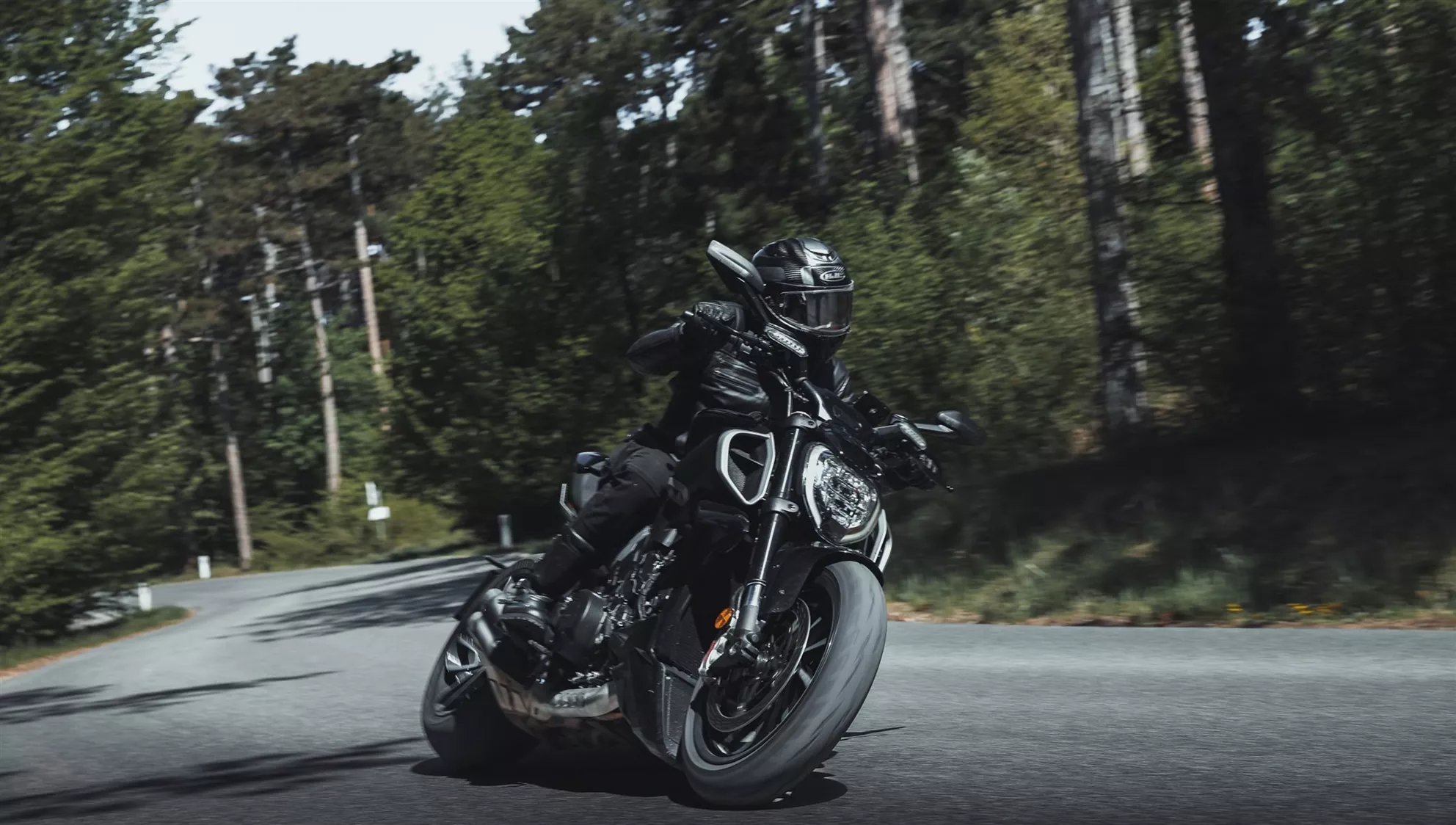
Lighter, slimmer, and noticeably more premium than its predecessor: the new HJC RPHA 72 Carbon aims to combine touring comfort with sporty stability. 1000PS put the high-end helmet through intensive testing in everyday use, on the highway, and in the twisties.

NoPain

NoPain

published on 5/25/2026

15,712 Views

HJC RPHA 72 Carbon – Focus on Weight, Comfort and Everyday Use

Sport touring helmets today need to do almost everything. They should be light, not tiring on long stretches, remain stable at high speed, accommodate modern communication systems, and still look sporty. It's exactly within this tension that HJC positions the new RPHA 72 Carbon.

The new helmet replaces the well-known RPHA 71 and thus also indirectly succeeds the popular RPHA 70. Many touring riders had refused to switch from the extremely light RPHA 70 to the RPHA 71, since the latter turned out significantly heavier and bulkier due to the stricter ECE 22.06 test standard. Since the new RPHA 72 has now lost a massive amount of weight, it fills exactly the gap left by its predecessor.

First Impression: Sportier and More Premium Than Ever

Even when unboxing, it's noticeable how compactly the new HJC RPHA 72 Carbon has been designed. The helmet looks modern and surprisingly sporty. Especially in direct comparison to the RPHA 71, you immediately notice the slimmer and more aggressive lines. The ventilation elements appear more harmoniously integrated and the whole shape more aerodynamic.

Overall, the RPHA 72 is much less reminiscent of a classic touring helmet, and much more of a very sporty full-face helmet with high long-distance capability. The carbon structure under the clear coat is finished to a high standard and cleanly painted. Gap tolerances, visor mechanics, and numerous detail solutions clearly operate in the premium segment despite the down-to-earth price.

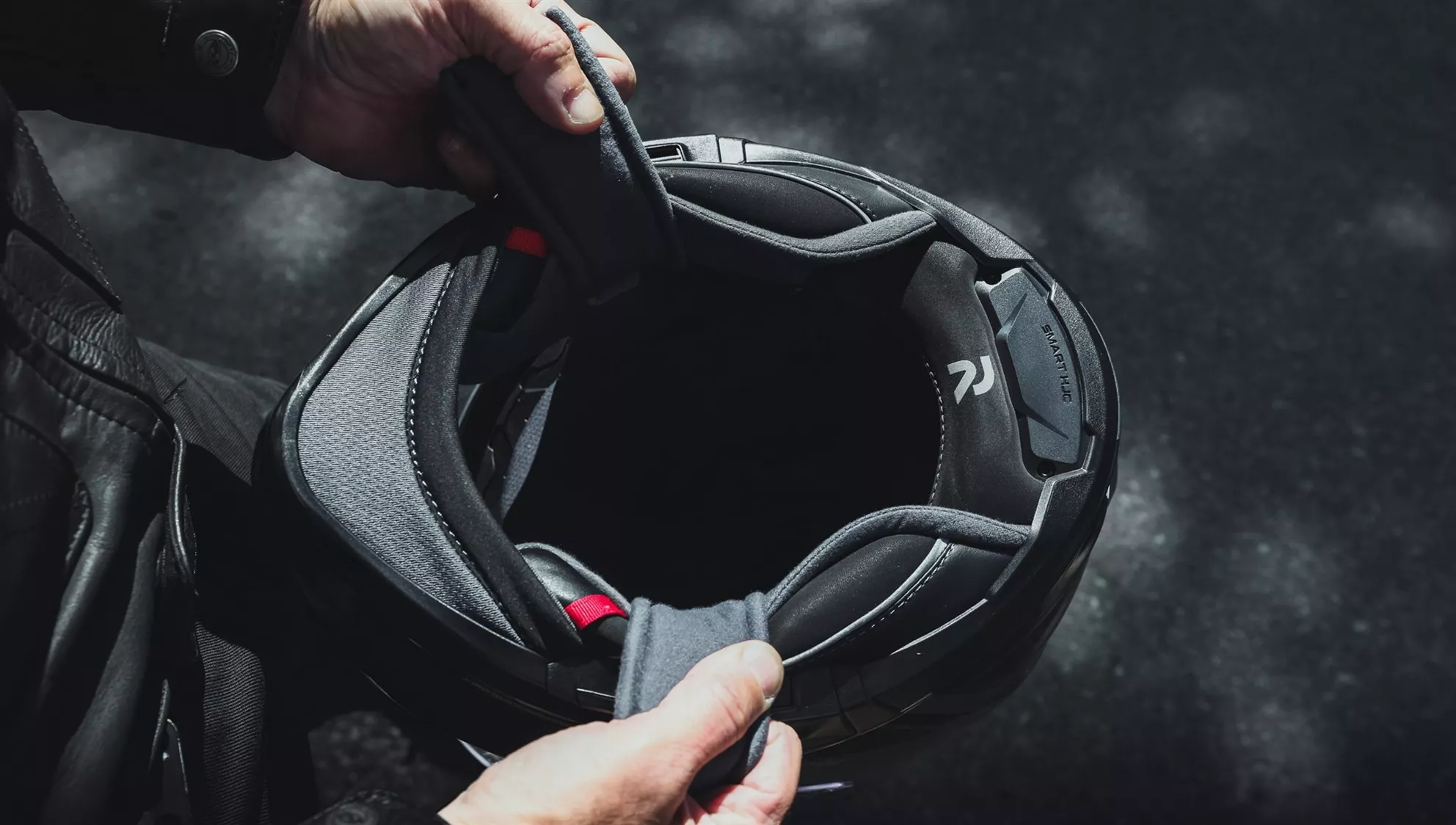
The interior fittings are particularly positive. The liner feels more premium than that of many competitors in this price class. Above all, the lateral and rear attachments of the padding leave an excellent impression. Everything clicks in firmly, nothing shifts when putting the helmet on or taking it off.

High-mileage riders in particular know the problem: in the heat of the moment, cheek pads tend to come loose or the interior shifts. With the RPHA 72, everything stays exactly in place even after frequent putting on and taking off.

HJC RPHA 72

Technical Data of the HJC RPHA 72 Carbon

FeatureDescription
ModelHJC RPHA 72 Carbon
Helmet typeFull-face sport touring helmet
StandardECE 22.06
MaterialCombination of fiberglass-carbon-aramid matrix
Shell sizes3
SizesXS-2XL
ClosureTitanium double-D
VentilationACS Advanced Channeling Ventilation System with intakes at the chin and forehead and two outlets at the rear
VisorHJ-48 visor, Pinlock ready, 99% UV protection, anti-fog with Pinlock, lockable
PinlockIncludes Pinlock 120 XLT anti-fog lens DKS642
Visor mechanismTool-free
Sun visorIntegrated
Interior linerComfort interior liner - antibacterial, removable and washable
Suitable for glasses wearersYes
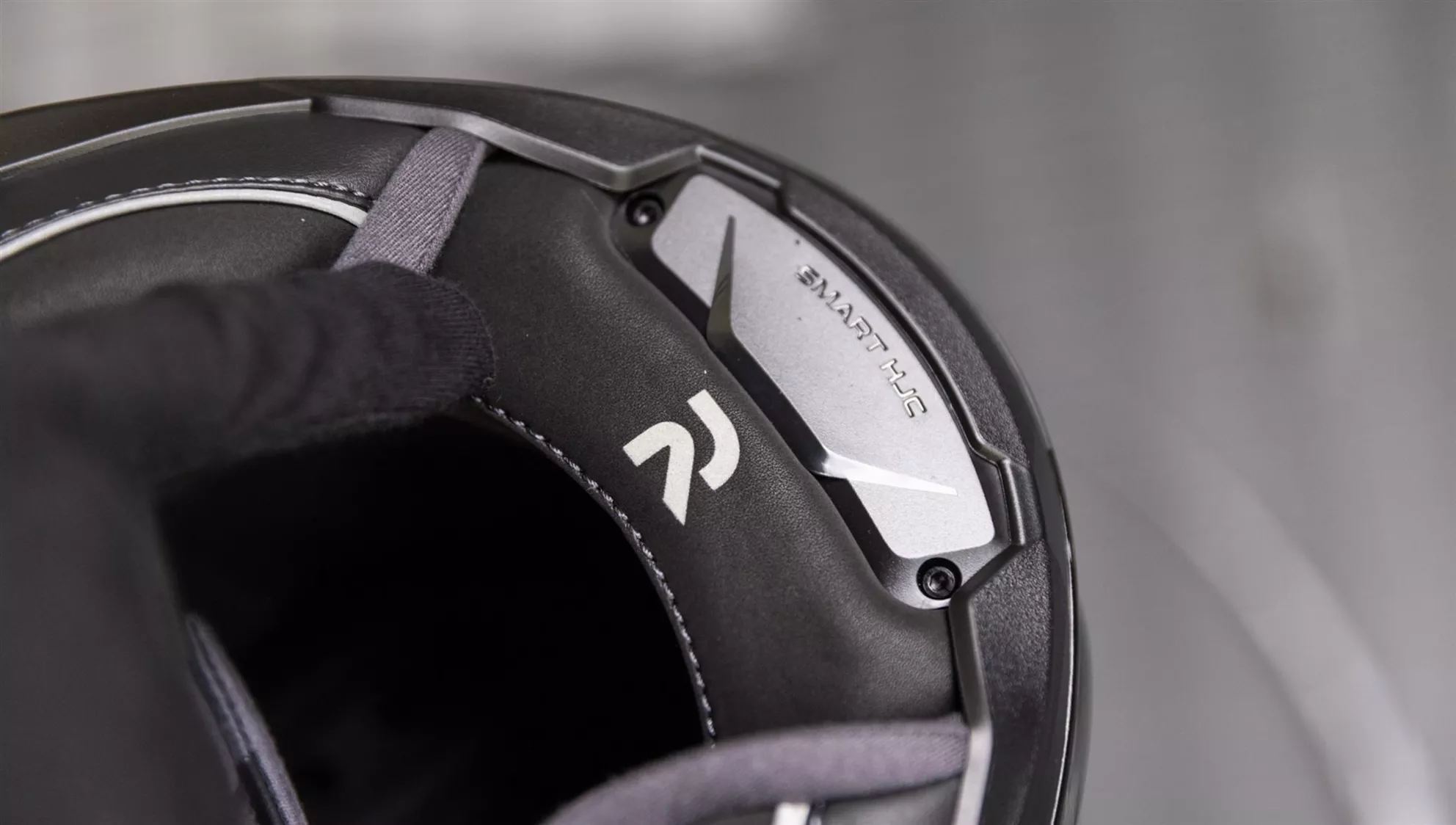
Communication preparationPrepared for Smart HJC 11B, 21B & 50B Bluetooth (available separately).
WeightApprox. 1,450 g in size Large (1,404 grams weighed in size Medium)
Prices (RRP)559.90 euros (Carbon Solid), 599.90 euros (Carbon with graphic)

HJC RPHA 72

HJC RPHA 72 Carbon – Progress Through Less Weight

The low weight is one of the biggest strengths of the new helmet. Compared directly to the RPHA 71, the new RPHA 72 saves around 150 grams. On paper that doesn't sound dramatic at first, but in practice it's immediately noticeable.

Especially on long tours, the low weight reduces strain on the neck and shoulders. This is especially noticeable during spirited riding or longer highway stretches. But while riding, the helmet feels even lighter than the scale would actually suggest. Even during a shoulder check it stays pleasantly neutral and creates hardly any inertia.

HJC RPHA 72

Fit and Comfort of the HJC RPHA 72 Carbon

The fit is also among the clear improvements over the predecessor. The helmet sits firmly and stably on the head without pressing uncomfortably. Especially around the cheeks, the shape is noticeably more harmoniously tuned than on the RPHA 70.

The new aero cuffs in the lower area seal the helmet very effectively against incoming wind. This creates a calmer airflow inside the helmet.

However, these cuffs also have a small drawback. On first putting it on, the helmet feels unusually tight. When putting it on, the interior liner needs to be deliberately pushed outward with the straps, otherwise the cuffs, especially when new, can slightly irritate or press. After a short break-in period this works without issue, but it's worth mentioning.

Glasses compatibility stood out very positively. Temples can be inserted without problems, provided the basic helmet fit generally matches your own head shape.

HJC RPHA 72

HJC RPHA 72 Carbon – Stability Well Beyond Country Road Speeds

On country roads the helmet feels extremely stable and neutral. Even at brisk speeds, hardly any disturbing movements occur. Only from around 200 km/h does the helmet start to feel slightly light and pull minimally at the strap. This behavior is absolutely within the range expected of a sporty touring helmet with a sun visor.

More important than pure high-speed stability is airflow calmness in everyday use anyway. And here the HJC delivers strongly. Particularly impressive: hardly any unpleasant air turbulence occurs around the ears. Some other helmets might be objectively quieter but produce unpleasant frequencies or pressure fluctuations. The RPHA 72 avoids exactly that very well.

Noise Level: Not Whisper-Quiet, But Acoustically Pleasant

Noise level is always discussed intensively with touring helmets. The new HJC RPHA 72 Carbon is not the quietest helmet in its class. Especially compared to the older RPHA 70, it subjectively feels somewhat louder.

This is likely due to the less voluminous carbon construction: smaller shape, thinner outer shell, less weight, but somewhat more noise transmission. Still, the noise level should by no means be dramatized.

Because what matters isn't just the raw decibel number, but the type of noise. And here the RPHA 72 gets a lot right. Hardly any disturbing turbulence occurs, no annoying whistling, and no unpleasant pressure frequencies. The riding noise feels even and not very stressful.

For a sporty touring helmet, the overall noise insulation operates at a very good level.

HJC RPHA 72

Sun Visor and Main Visor: Good Sun Protection and Precise Mechanics

The integrated sun visor is one of the most successful solutions on the helmet. It lowers far down and covers an immensely large field of view. Even riders with a larger nose or a moustache don't hit it. At the same time, enough distance remains so nothing fogs up.

Operating the sun visor works reliably but requires somewhat more force. The mechanism clicks in cleanly, though the sound during extension and locking feels somewhat clunky ("plasticky") and doesn't quite do justice to the otherwise high-quality function of the system.

The main visor, on the other hand, is fully convincing. The mechanism works precisely and cleanly. The visor locks in firmly and conveys high quality. When opening, the mechanism initially requires some practice because the latch works relatively firmly. In return, the visor sits absolutely stable while riding.

The Pinlock system is also among the highlights of the helmet. Installation is simple and uncomplicated, and the effect is excellent.

HJC RPHA 72

Good Ventilation and Wide Field of View Without Distortion

The HJC RPHA 72 offers a pleasantly wide field of view. Especially during a shoulder check or spirited riding, the helmet conveys an all-round secure feeling. We could not detect any distortion in the peripheral area.

Ventilation performance also convinces in everyday use, as the temperature inside the helmet corresponds almost one-to-one to the outside temperature. The two front air intakes can be operated intuitively and comfortably. Particularly important: the airflow works effectively without creating unpleasant drafts inside the helmet.

HJC RPHA 72 Smart HJC

Exemplary Preparation for Communication Systems

In our opinion, the preparation for the HJC Smart System is one of the best solutions on the market. Many helmets feel unfinished without a built-in intercom or press uncomfortably on the ears with speakers. None of that is noticeable with the RPHA 72. Everything is cleanly integrated and solved in a practical way.

Additionally, the helmet offers exceptionally much space between the mouth and chin bar. This is a real advantage especially for motovloggers. Even with a built-in microphone, enough free space remains. No annoying contact on the lips, no space problems with action cam mounts.

HJC RPHA 72 Head Pad

Optimal Fit Through Subsequent Adjustment of the Interior Liner

A motorcycle helmet can only fully develop its protective effect when size, fit, and head shape optimally match. The outer shell distributes the impact energy, while the EPS interior liner absorbs shocks and reduces rotational forces. If the helmet sits too loosely, it can shift or, in the worst case, even come off. If it's too tight, on the other hand, pressure points, headaches, and concentration problems arise on longer rides.

Overview of Head Shapes in Relation to Motorcycle Helmets

The individual head shape is particularly important here, since not every head corresponds to the classic medium-oval standard shape. NoPain's head shape lies between medium- and long-oval, which is why a different head pad (7 mm instead of 12 mm) was tested on the HJC RPHA 72 in size M. Unlike previously with the HJC RPHA 70, this swap was this time more of a "nice-to-have" than an absolute necessity. The helmet would probably have worked fine with the stock padding too, since the basic fit already harmonized noticeably better.

RPHA 72 Carbon Size Chart

SizeSize (cm)Shell sizeCheek pads (mm)Head pad (mm)
XS54-5513512
S55-561309
M57-5823012*
L58-5923012
XL60-6133012
2XL62-633207

* To effectively reduce the pressure on the forehead, we swapped the 12 mm head pad for the 7 mm head pad on our test helmet in size M.

High-quality helmets like the HJC RPHA 72 nevertheless offer, through different padding thicknesses, a simple way to fine-tune the fit individually without major modifications.

HJC RPHA 70

Differences to the HJC RPHA 71 and RPHA 70

Compared directly to the predecessor RPHA 71, the new RPHA 72 shows numerous detail improvements. HJC has consistently further developed the popular sport touring bike and optimized it in the decisive areas.

The most important innovations at a glance:

  • Less weight: Noticeably lighter for maximum comfort on long distances.
  • Slim design: Overall volume was reduced by about 4%.
  • Modern design: Fresh, dynamic lines with an aerodynamically optimized forehead area.
  • Optimized aerodynamics: Drag was reduced by 19.7%, lift by 6.2%.
  • Better fit: The helmet wraps around the head even more ergonomically.
  • Premium interior: The interior fittings feel high-quality and pleasant on the skin.
  • Effective weather protection: Improved wind sealing in the lower area minimizes drafts.

The fact that HJC has switched from formerly four to now three outer shells on the RPHA 72 is the result of a fundamental redesign. To guarantee a perfect fit and maximum safety for every head despite fewer shell sizes, the interior was massively upgraded: the helmet now uses five separate EPS damping cores (styrofoam inner shells) with different densities. Precise size adaptation is thus achieved more efficiently through the high-tech interior than through the outer dimensions. The result: a slimmer silhouette with excellent, stable fit and high running smoothness.

Anyone still riding the RPHA 70 will experience a massive difference in the overall riding feel when switching to the RPHA 72. The new one sits noticeably more stable in the wind, feels higher quality and more aerodynamically refined in all respects. Only in acoustics is there a small difference: subjectively, the RPHA 72 is somewhat louder than the 70. However, this impression is offset by a noticeably more pleasant noise character as well as the absence of disturbing turbulence or whistling.

HJC RPHA 72

Practical Impression of the HJC RPHA 72 Carbon

The new HJC RPHA 72 Carbon presents itself in everyday use as a modern sport touring helmet with a very broad range of applications. It combines low weight, sporty aerodynamics, and high-quality workmanship with everyday features such as an integrated sun visor, communication preparation, and high long-distance capability.

What particularly sticks in mind is the combination of good aerodynamics, stable fit, and high-quality interior fittings. The helmet sits firmly on the head without pressing uncomfortably, offers very good wind sealing, and conveys a stable and secure riding feeling even at higher speeds. In addition, there is a precise visor mechanism, an excellently functioning Pinlock system, and a pleasantly wide field of view without disturbing distortion.

Equally successful is the preparation for communication systems, which doesn't negatively stand out either visually or ergonomically in everyday use.

HJC RPHA 72 Carbon

Conclusion: HJC RPHA 72 Carbon

Compared to the RPHA 71 and also to the popular RPHA 70, the new RPHA 72 Carbon feels more modern, more compact, and more aerodynamically refined. The significantly reduced weight is immediately noticeable on longer rides and noticeably reduces strain on the neck and shoulders. As a small drawback, the noise level operates more on a sporty than a maximally quiet touring level. In addition, the aero cuffs require a bit of getting used to when putting the helmet on, and the sun visor also demands somewhat more force to operate than some competing systems. Still, the HJC RPHA 72 Carbon delivers an extremely coherent overall package and feels refined and balanced in almost every area. Anyone looking for a modern sport touring helmet with low weight, high-quality workmanship, high everyday usability, and a sporty orientation should definitely put the HJC RPHA 72 Carbon on their personal try-on list.


Very low weight

High-quality interior fittings

Excellent fit

Effective wind sealing

Wide field of view

Precise visor mechanism

Very good Pinlock system

Plenty of space for microphones and intercom

Modern, slim looks

Not the quietest touring helmet

Sun visor requires some force

Aero cuffs take some getting used to at first

FAQ on the HJC RPHA 72 Carbon

How much does the HJC RPHA 72 Carbon cost?

According to the manufacturer's RRP, the HJC RPHA 72 Carbon costs 559.90 euros as Carbon Solid and 599.90 euros in the graphic variant. Included in the scope of delivery is already the Pinlock 120 XLT lens DKS642, plus the integrated sun visor and the titanium double-D closure as standard. A communication system is not included; the prepared Smart HJC modules cost extra.

How heavy is the HJC RPHA 72 Carbon?

HJC states around 1,450 grams in size L; our test helmet in size M weighed, as measured, 1,404 grams. Compared to the RPHA 71, the new helmet thus saves about 150 grams. On long stretches this noticeably relieves the neck and shoulders; during a shoulder check the helmet stays neutral and builds up hardly any inertia. While riding it even feels lighter than the scale would suggest.

What is the fit of the HJC RPHA 72 Carbon like?

The RPHA 72 Carbon sits firmly and stably without pressing uncomfortably, and distributes sizes XS to 2XL across three outer shells. Fine-tuning is done via the padding thicknesses: on our test helmet in size M we swapped the stock 12-millimeter head pad for the 7-millimeter variant, because NoPain's head shape lies between medium- and long-oval - unlike previously with the RPHA 70, this swap wasn't absolutely necessary this time though. On first putting it on, the helmet feels unusually tight due to the new aero cuffs; you have to deliberately push the interior liner outward with the straps. Glasses temples can be threaded in without problems, provided the basic fit matches your own head shape.

How loud is the HJC RPHA 72 Carbon?

The RPHA 72 Carbon is not the quietest helmet in its class; subjectively it's even a bit above the older RPHA 70. The more compact carbon construction with a thinner outer shell likely plays a role here. What matters in everyday use, though, is the type of noise, and here the result holds up: no whistling, no unpleasant pressure frequencies, and hardly any turbulence around the ears. For a sportily oriented touring helmet, the insulation thus operates at a very good level.

Which communication system fits the HJC RPHA 72 Carbon?

The helmet is prepared from the factory for the separately available Smart HJC systems 11B, 21B, and 50B. The recesses are so cleanly solved that the helmet feels finished even without a built-in intercom, and the speakers don't press on the ears - for us one of the best preparations on the market. There is also exceptionally much space between the mouth and chin bar, which benefits motovloggers with a microphone and action cam mount.

What is the difference between the HJC RPHA 72, RPHA 71, and RPHA 70?

The RPHA 72 replaces the RPHA 71 and closes the weight gap that had kept many touring riders from switching. It is about 150 grams lighter than the 71, the overall volume shrinks by about 4 percent, drag drops by 19.7 percent, and lift by 6.2 percent. Instead of four outer shells there are now only three; five EPS cores with different densities now handle the precise size adaptation. Anyone switching from the RPHA 70 will especially notice the higher running smoothness and the higher-quality workmanship; acoustically only, the old 70 remains subjectively a touch quieter.

HJC RPHA 72 Carbon Tested: Lighter New Sport Touring Helmet Images

Source: 1000PS

HJC RPHA 72 Carbon Review - Image 1
HJC RPHA 72 Carbon Review - Image 2
HJC RPHA 72 Carbon Review - Image 3
HJC RPHA 72 Carbon Review - Image 4
HJC RPHA 72 Carbon Review - Image 5
HJC RPHA 72 Carbon Review - Image 6
HJC RPHA 72 Carbon Review - Image 7
HJC RPHA 72 Carbon Review - Image 8
HJC RPHA 72 Carbon Review - Image 9
HJC RPHA 72 Carbon Review - Image 10
HJC RPHA 72 Carbon Review - Image 11
HJC RPHA 72 Carbon Review - Image 12
HJC RPHA 72 Carbon Review - Image 13
HJC RPHA 72 Carbon Review - Image 14
HJC RPHA 72 Carbon Review - Image 15
HJC RPHA 72 Carbon Review - Image 16
HJC RPHA 72 Carbon Review - Image 17
HJC RPHA 72 Carbon Review - Image 18
HJC RPHA 72 Carbon Review - Image 19
HJC RPHA 72 Carbon Review - Image 20
HJC RPHA 72 Carbon Review - Image 21
HJC RPHA 72 Carbon Review - Image 22
HJC RPHA 72 Carbon Review - Image 23
HJC RPHA 72 Carbon Review - Image 24
HJC RPHA 72 Carbon Review - Image 25
HJC RPHA 72 Carbon Review - Image 26
HJC RPHA 72 Carbon Review - Image 27
HJC RPHA 72 Carbon Review - Image 28
HJC RPHA 72 Carbon Review - Image 29
HJC RPHA 72 Carbon Review - Image 30
HJC RPHA 72 Carbon Review - Image 31
HJC RPHA 72 Carbon Review - Image 32
HJC RPHA 72 Carbon Review - Image 33
HJC RPHA 72 Carbon Review - Image 34
HJC RPHA 72 Carbon Review - Image 35
HJC RPHA 72 Carbon Review - Image 36
HJC RPHA 72 Carbon Review - Image 37
HJC RPHA 72 Carbon Review - Image 38
HJC RPHA 72 Carbon Review - Image 39
HJC RPHA 72 Carbon Review - Image 40
HJC RPHA 72 Carbon Review - Image 41
HJC RPHA 72 Carbon Review - Image 42
HJC RPHA 72 Carbon Review - Image 43
HJC RPHA 72 Carbon Review - Image 44
HJC RPHA 72 Carbon Review - Image 45
HJC RPHA 72 Carbon Review - Image 46
HJC RPHA 72 Carbon Review - Image 47
HJC RPHA 72 Carbon Review - Image 48
HJC RPHA 72 Carbon Review - Image 49
HJC RPHA 72 Carbon Review - Image 50
HJC RPHA 72 Carbon Review - Image 51
HJC RPHA 72 Carbon Review - Image 52
HJC RPHA 72 Carbon Review - Image 53
HJC RPHA 72 Carbon Review - Image 54
HJC RPHA 72 Carbon Review - Image 55
HJC RPHA 72 Carbon Review - Image 56
HJC RPHA 72 Carbon Review - Image 57
HJC RPHA 72 Carbon Review - Image 58
HJC RPHA 72 Carbon Review - Image 59
HJC RPHA 72 Carbon Review - Image 60
HJC RPHA 72 Carbon Review - Image 61
HJC RPHA 72 Carbon Review - Image 62
HJC RPHA 72 Carbon Review - Image 63
HJC RPHA 72 Carbon Review - Image 64
HJC RPHA 72 Carbon Review - Image 65
HJC RPHA 72 Carbon Review - Image 66
HJC RPHA 72 Carbon Review - Image 67
HJC RPHA 72 Carbon Review - Image 68
HJC RPHA 72 Carbon Review - Image 69
HJC RPHA 72 Carbon Review - Image 70
HJC RPHA 72 Carbon Review - Image 71
HJC RPHA 72 Carbon Review - Image 72
HJC RPHA 72 Carbon Review - Image 73
HJC RPHA 72 Carbon Review - Image 74
HJC RPHA 72 Carbon Review - Image 75
HJC RPHA 72 Carbon Review - Image 76
HJC RPHA 72 Carbon Review - Image 77
HJC RPHA 72 Carbon Review - Image 78
HJC RPHA 72 Carbon Review - Image 79
HJC RPHA 72 Carbon Review - Image 80
HJC RPHA 72 Carbon Review - Image 81
HJC RPHA 72 Carbon Review - Image 82
HJC RPHA 72 Carbon Review - Image 83
HJC RPHA 72 Carbon Review - Image 84
HJC RPHA 72 Carbon Review - Image 85
HJC RPHA 72 Carbon Review - Image 86
HJC RPHA 72 Carbon Review - Image 87
HJC RPHA 72 Carbon Review - Image 88
HJC RPHA 72 Carbon Review - Image 89
HJC RPHA 72 Carbon Review - Image 90
HJC RPHA 72 Carbon Review - Image 91
HJC RPHA 72 Carbon Review - Image 92
HJC RPHA 72 Carbon Review - Image 93
HJC RPHA 72 Carbon Review - Image 94