Jet helmets have an image problem. Many look technically outdated, are loud, sometimes cheaply made, and some try to disguise these weaknesses with retro looks. HJC takes a different path with the RPHA 40. No retro gimmick, no unnecessary add-on parts, no exaggerated lifestyle marketing. Instead, a pared-down premium jet helmet with a clear design language and a surprisingly grown-up presence.
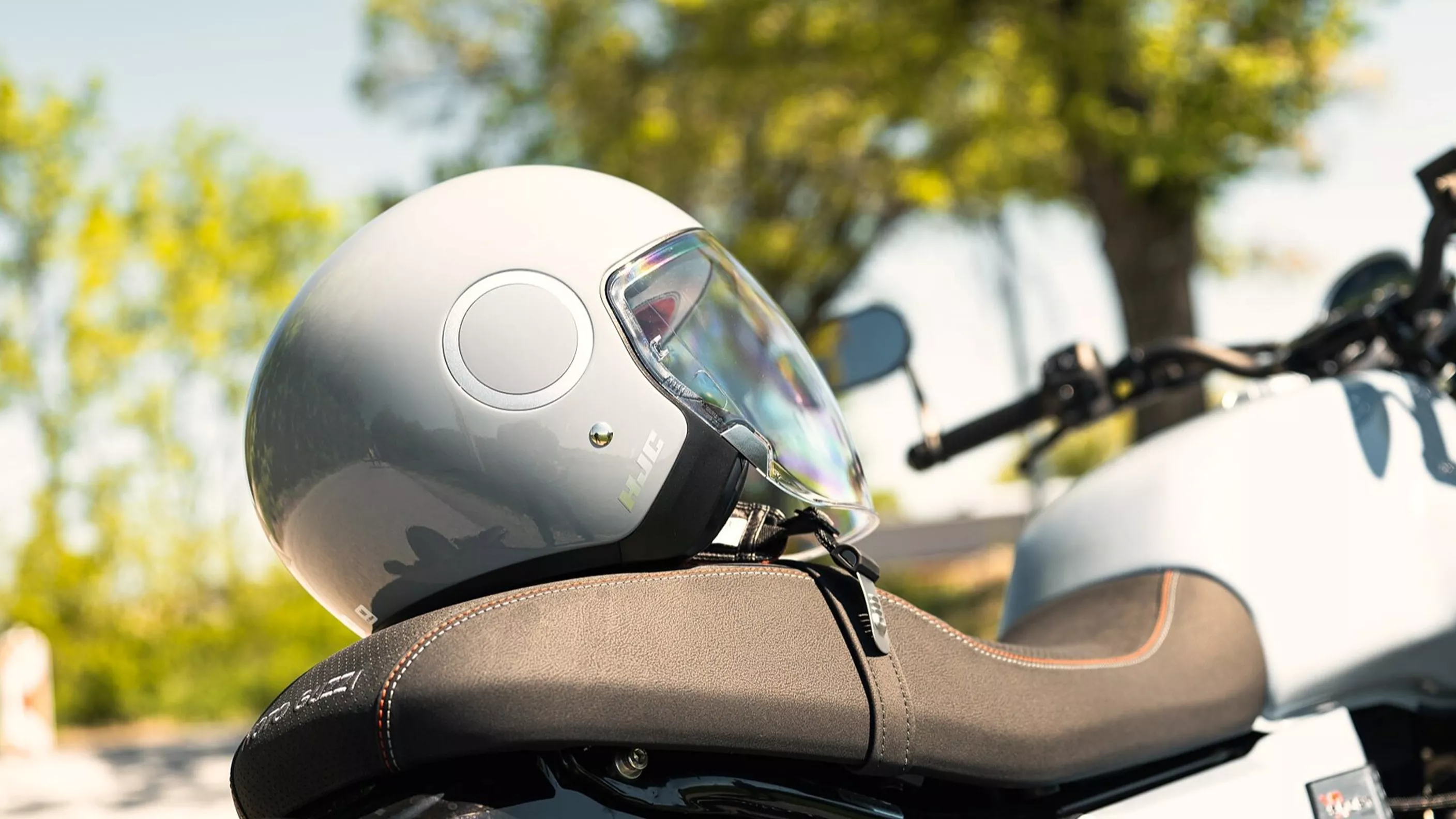
HJC RPHA 40 Test - Jet Helmet by Porsche Design
Grown-up premium jet helmet without retro theatrics
Jet helmets have a bad reputation: loud, unsafe, often visually forced into nostalgia. The new HJC RPHA 40 is different. What can the new premium jet helmet do? We put it to the test!
&width=72&height=72&bgcolor=rgba_39_42_44_0&mode=crop "Author: Poky")
Poky
published on 5/14/2026
11,675 Views
Minimalism instead of a lifestyle costume
You notice it from the very first contact: the RPHA 40 is more than a classic city jet helmet. The lines are clean, the shape flawless, and the whole appearance too high-quality to be a coincidence - the design was developed in collaboration with the Porsche Design Studios. It's exactly this sober, functional styling that runs consistently through the entire helmet.
Other jet helmets try desperately to look nostalgic. Visible screws, fake leather, chrome details or artificially aged surfaces have almost become standard practice by now. The RPHA 40 does exactly the opposite. The shell looks smooth, reduced, almost industrial. Particularly striking is the slim unibody silhouette, which looks noticeably more compact than on many other open-face helmets.
Compact shell despite ECE 22.06
Open-face helmets in particular often struggle with bulky outer shells - the classic Calimero look, since current safety standards have to be met. Despite ECE 22.06, the HJC surprisingly adds very little bulk on the outside. That's exactly what makes it visually interesting. On my rather round head the RPHA 40 sits comfortably and closes eerily well; on classic naked bikes or modern retro machines like the Moto Guzzi V7 it cuts a good figure and even at higher country-road speed it convinces with a low noise level. True to its segment, the RPHA 40 offers a huge field of vision, and the visor is relatively long.
The paintwork also leaves a strong impression. The surfaces look high-quality, cleanly finished and more refined than on other urban helmets in this price class. Together with the fully integrated metal visor mounts, this creates an overall high-quality impression clearly aimed at the premium segment. The linkage looks filigree but is machined entirely from metal and guides the visor mechanism solidly into the shell. Whether you flip the visor up or down with one or both hands, everything clicks in cleanly and firmly, and the visor seals perfectly.
PIM shell brings a real weight advantage
Technically, the RPHA 40 is based on HJC's second-generation Premium Integrated Matrix construction, or PIM for short. Behind this lies a multi-layer shell structure with special fiber materials and epoxy resin - exactly the construction method otherwise known from the brand's racing or high-end sport helmets.
In everyday use, you notice this above all in the weight. The helmet feels light, and at 1250 grams it is. Especially in city traffic or on longer day trips, this results in a noticeably more relaxed wearing feel. The helmet sits pleasantly neutral on the head and even after longer riding times develops hardly any of that typical neck strain known from open-face helmets.
Then there's the aerodynamic shape. Sounds like typical marketing Latin - but it actually makes sense. Slim shape without add-on parts or hinges = less turbulence = less strain from wind pressure and therefore also quieter.
HJC RPHA 40: Quiet even at higher speeds
The helmet plays its biggest trump card at higher speed on country roads. Despite its open-face design, the RPHA 40 stays surprisingly calm even at higher speed. Of course, in terms of safety it doesn't replace a good full-face helmet. But compared to many other jet helmets it feels noticeably quieter and can at least acoustically compete with a full-face helmet.
It's precisely on the (urban) motorway that you can see how cleanly the shape works. The helmet generates hardly any turbulence and sits pleasantly neutral in the airflow. Riders who regularly cover short cross-country or motorway stretches will be very satisfied with the RPHA 40. Here it plays in the absolute top league.
High-quality interior with no cost-cutting
The high-quality impression continues on the inside as well. The interior lining feels noticeably more refined than on many other jet helmets. The materials are soft, cleanly finished and convey more of a sport-helmet feel than a scooter-helmet atmosphere.
Particularly pleasant for glasses wearers: the helmet gets along well with sunglasses or everyday glasses. This isn't a given, especially with jet helmets, since many models press against the temples or become uncomfortably tight. On the RPHA 40 this works without any problems.
The fit overall also feels very balanced. The helmet sits snugly without building up uncomfortable pressure points. Particularly in the cheek area, HJC achieves a good compromise between a stable fit and long-distance comfort.
The classic double-D closure also fits well with the overall character of the helmet. It feels high-quality, secure and mechanically trustworthy - even if it's a bit slower to operate in everyday use than modern ratchet solutions.
No advantage without a drawback: here's where the HJC RPHA 40 still has room for improvement
Naturally, the design also brings some weaknesses. An integrated sun visor (which would require an external control on the helmet) is completely missing. Anyone who often rides in changing light conditions will therefore either have to work with interchangeable visors (which really cost extra money) or sunglasses.
On top of that comes the generally high price level. The RPHA 40 clearly plays in the premium segment with an RRP of 399 euros - and you notice that when buying.
HJC also completely does without a classic ventilation system. On hot summer days this could certainly become even more noticeable than during my test in early May. Jet helmets with well-functioning ventilation are generally rare anyway; HJC doesn't even attempt it with the RPHA 40 and instead scores, as mentioned, on the turbulence front.
Test verdict HJC RPHA 40: one of the most interesting premium jet helmets
Despite the upscale design house and corresponding looks, the HJC RPHA 40 is not a pure lifestyle jet helmet. It's aimed at riders who want to ride an open-face helmet but demand the very best when it comes to noise and wind slipperiness. Anyone who can do without ventilation and a sun visor will hardly find a higher-quality daily companion than the RPHA 40. It's one of the few open-face helmets that still work really pleasantly even at motorway speed.
Further big strengths lie in the elegant, understated design and the high-quality finish. Add to that the compact shape, good compatibility with glasses, and an interior fit-out that's clearly above average in quality.
Strengths:
- high-quality finish
- very low noise level for a jet helmet
- compact helmet shell
- high-quality materials
- good compatibility with glasses
- hardly any turbulence
- elegant design language from Porsche Design
Weaknesses:
- no integrated sun visor
- no active ventilation
- confident price
- double-D closure time-consuming in everyday use
FAQ about the HJC RPHA 40
Is the HJC RPHA 40 also suitable for motorway riding?
Yes. For a jet helmet, the HJC RPHA 40 is surprisingly quiet and produces hardly any turbulence even at higher speeds.
Does the HJC RPHA 40 have an integrated sun visor?
No. The HJC RPHA 40 does completely without an integrated sun visor.
How heavy is the HJC RPHA 40?
Thanks to its PIM shell construction, the HJC RPHA 40 is among the lighter premium jet helmets.
Is the HJC RPHA 40 suitable for glasses wearers?
Yes. The HJC RPHA 40 gets along very well with sunglasses and everyday glasses and creates hardly any pressure at the temples.
Which safety standard does the HJC RPHA 40 meet?
The HJC RPHA 40 meets the current ECE 22.06 standard.
Does the HJC RPHA 40 have a ventilation system?
No. The HJC RPHA 40 does without classic active ventilation openings.
What use is the HJC RPHA 40 best suited for?
The HJC RPHA 40 is especially suitable for riders looking for a high-quality open-face helmet for city, country roads and occasional motorway stretches.
Conclusion: HJC RPHA 40: Premium jet helmet for speed and calm
The RPHA 40 is a pared-down premium jet helmet whose greatest strength shows at higher speed. Despite its open-face design, it stays surprisingly calm on country roads and urban motorways, produces hardly any turbulence, and sits neutrally in the airflow. Acoustically, it can compete with some full-face helmets. At 1250 grams and with its multi-layer PIM shell construction, it sits light and neutral, and even after longer stretches there's hardly any of the typical neck strain of open-face helmets. The compact unibody shell adds little bulk despite ECE 22.06 and avoids the Calimero look. Finish, paintwork, metal mounts and interior lining feel high-quality and more refined than on many urban helmets in this class. It gets along without any problems with sunglasses or everyday glasses. Due to its design, it lacks an integrated sun visor and any active ventilation, which becomes noticeable on hot days. The double-D closure feels secure but costs time in everyday use. At an RRP of 399 euros, it clearly plays in the premium segment. Recommended for riders looking for an open-face helmet for city, country roads and occasional motorway riding who can do without ventilation and a sun visor, because it's hard to beat when it comes to noise level.
HJC RPHA 40 Test - Jet Helmet by Porsche Design Images
Source: 1000PS


