Buying an old Vespa is rarely a purely rational decision. In my case, it was even a deliberately risky one: no test ride, almost two years of sitting idle and a few obvious problem areas. So the question was clear from the start: had I landed a bargain – or parked an expensive problem in my garage?
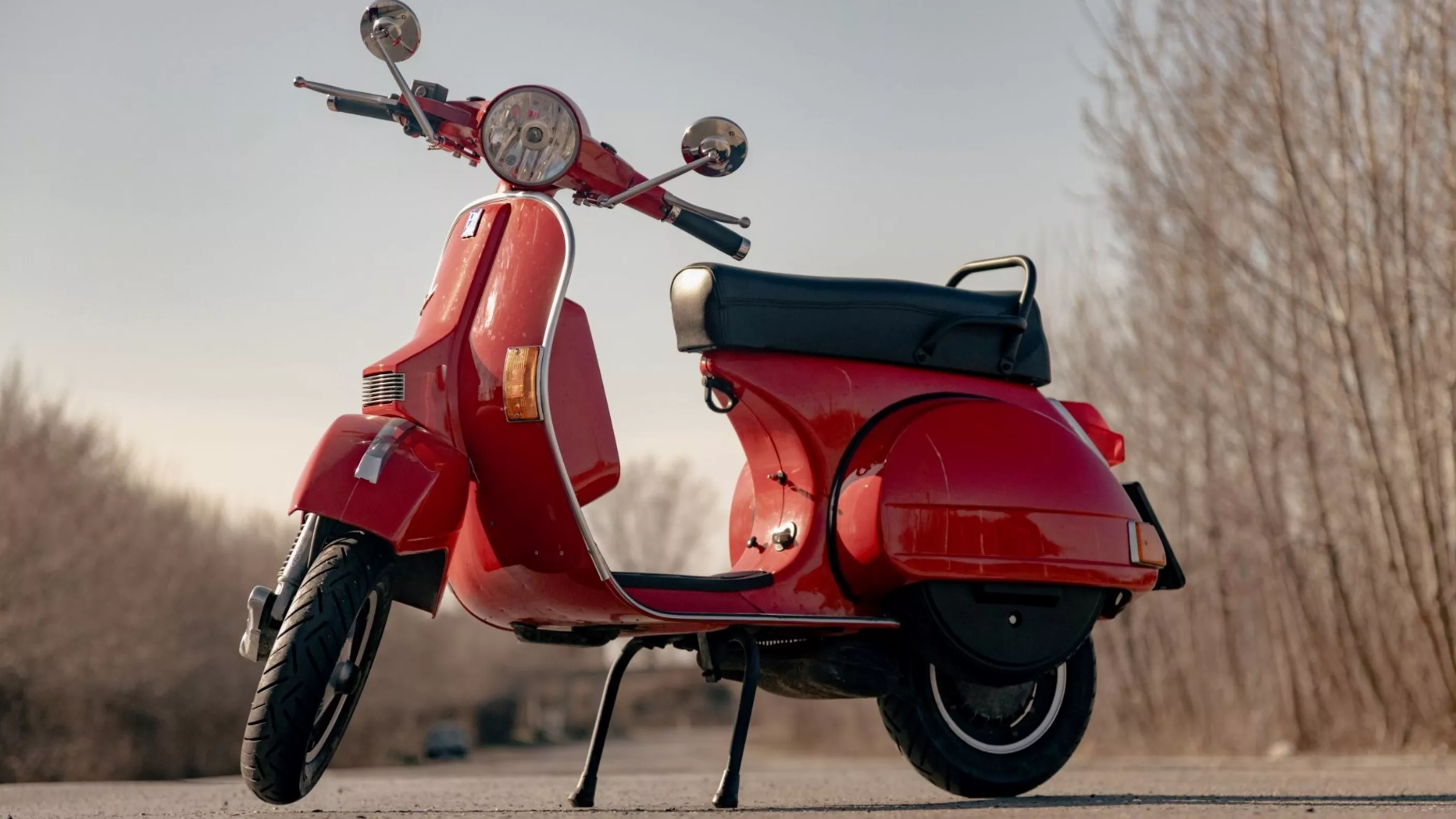
Vespa PX bought without a test ride: a risk with a happy ending?!
Two years off the road: is this Vespa PX still worth it?
A Vespa PX bought in winter, without a test ride and after two years of sitting idle: sounds risky. Why I did it anyway, how the scooter held up and whether it turned out to be a lucky find or a bad buy.

Der Horvath
published on 5/15/2026
6,520 Views
Buying without a safety net
The Vespa had been sitting for around two years. It was deregistered, the tyres were flat, there was air in the brake system – and overall it looked more like a project than a roadworthy vehicle. So a test ride wasn't possible, and not just because of the snowfall in early January. What still spoke in favour of buying it:
The engine started right away The bodywork was in good condition The price was fair
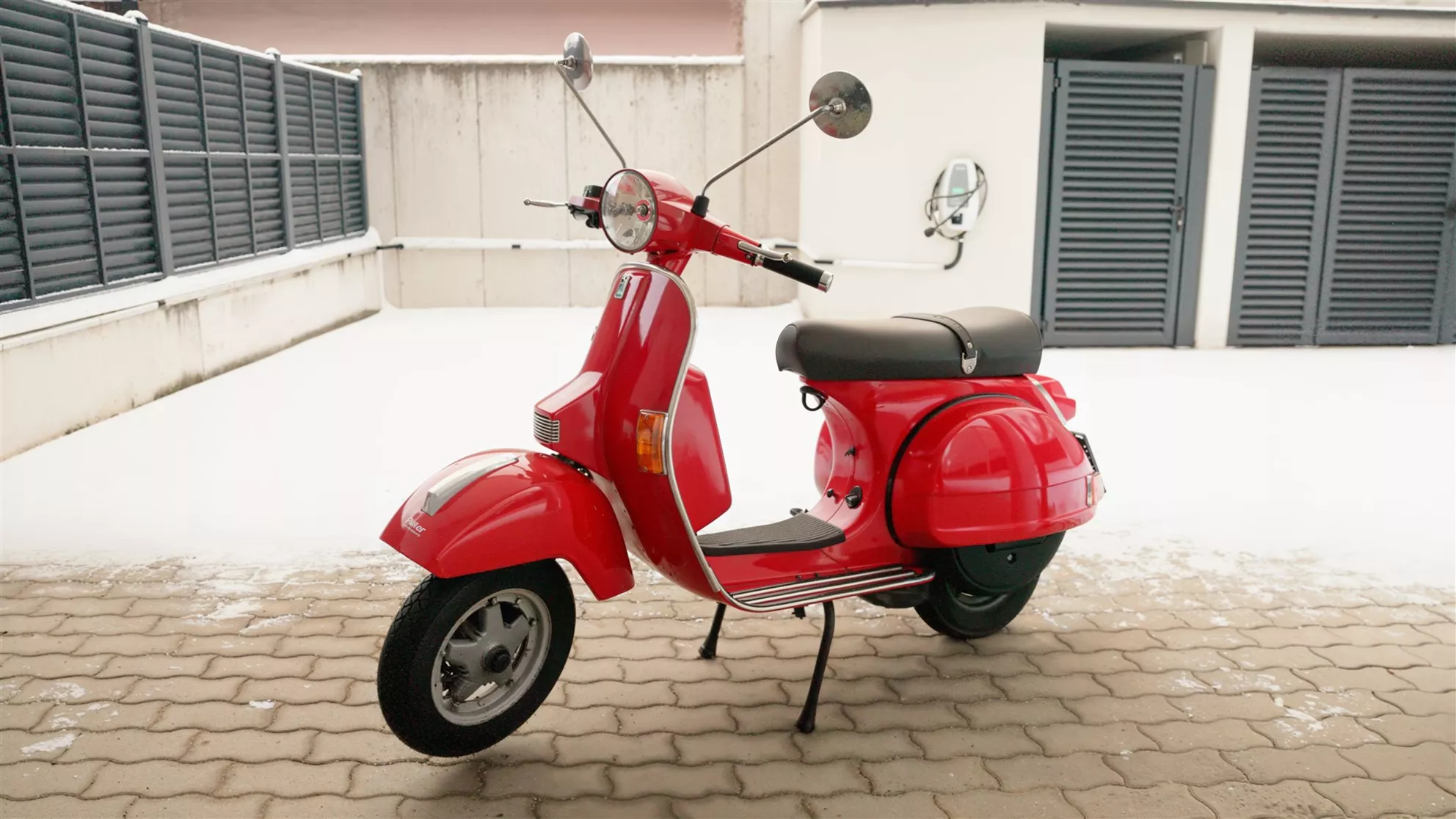
Bought in winter, in snow and sub-zero temperatures. A test ride was out of the question.
And perhaps just as important: gut feeling. Anyone into classic vehicles knows the feeling. You develop a sense for when a risk might be worth taking. With vehicles like this, you rarely get away without any risk anyway.
Why a Vespa PX in the first place?
Quite apart from this specific offer, I'd been interested in a Vespa PX for a while. For me, the appeal lies above all in the combination of classic engineering and timeless looks. A 2-stroke engine with a manual gearbox can no longer be bought new – and that's exactly what gives these scooters their character. Add to that the unmistakable design, which has worked for decades and hasn't lost any of its fascination to this day.
That's why the PX had been on my personal wish list for quite some time. At the same time, there's a very pragmatic argument too: I don't believe these models will get any cheaper in future (listings and offers for the Vespa PX range). So I seized the opportunity and pulled the trigger in winter. A nice side note: Vespa is celebrating its 80th anniversary this year. That wasn't the deciding factor for the purchase, but in hindsight it fits the story rather nicely.
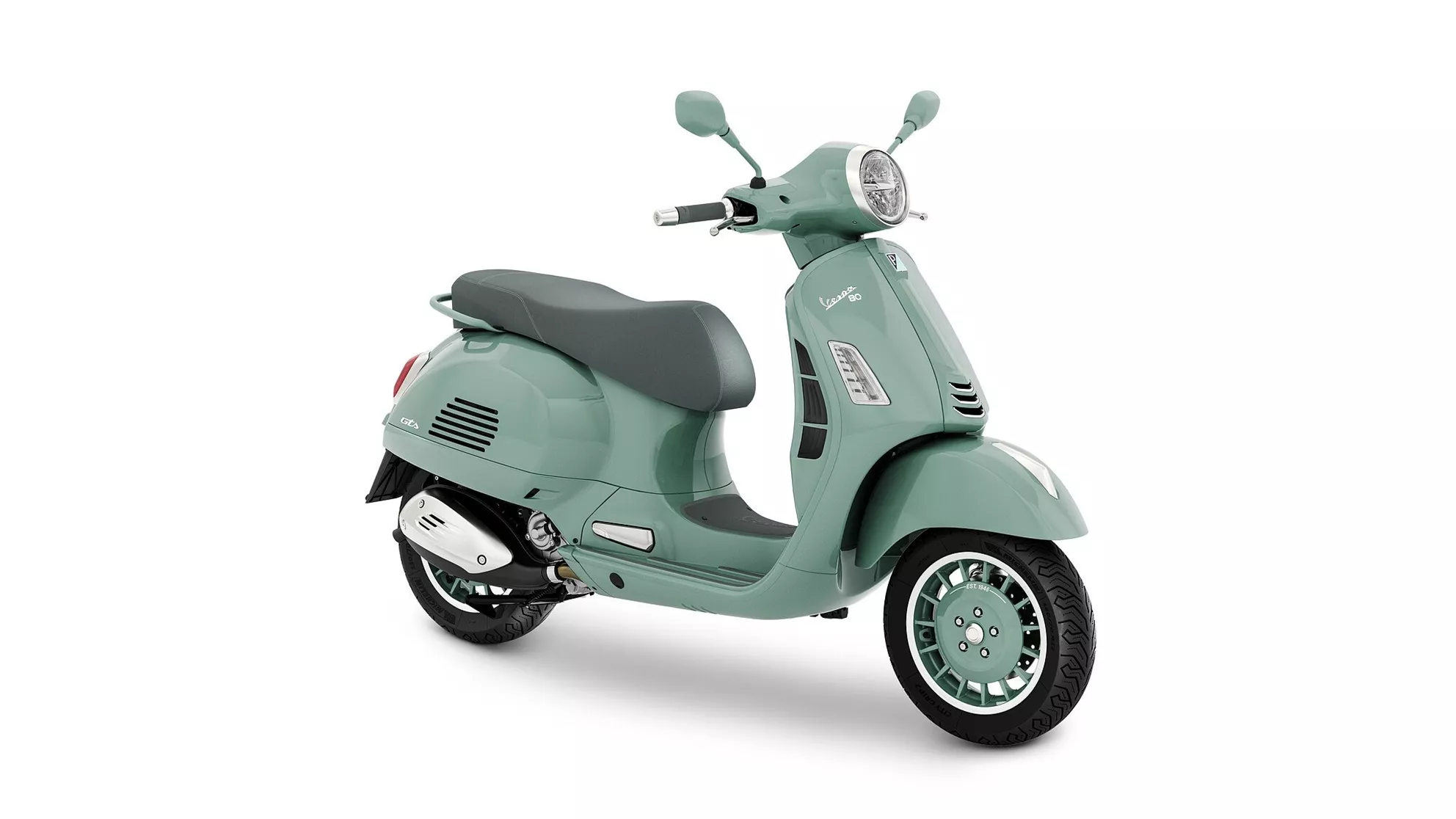
This is how Vespa celebrates: with the 80th Anniversary models.
Experience helps – but it's no substitute for certainty
This wasn't my first project of this kind. A while ago, I also bought a Honda Helix without a test ride – and it turned out well. Experiences like that naturally influence the decision. Still, one thing is clear: an engine that starts is far from proof of a healthy vehicle.
After a long period of standing, problems can be hiding anywhere:
Carburettor and fuel system Gaskets and oil seals Bearings Brake system Tyres
Before riding was even on the cards, the classic revival was due: a service, an inspection and then the roadworthiness test (the Austrian 'Pickerl'). Without building unnecessary suspense: the Vespa passed this step. But only then was it clear that it really was a usable base.
First ride: trust has to be earned
Even after the service and roadworthiness test, a certain degree of uncertainty remains. That's why the first real ride is always a special moment. How does the scooter feel under load? Do the brakes, chassis and engine work together? Are there any hidden problems? With every kilometre, trust grows – or it doesn't.
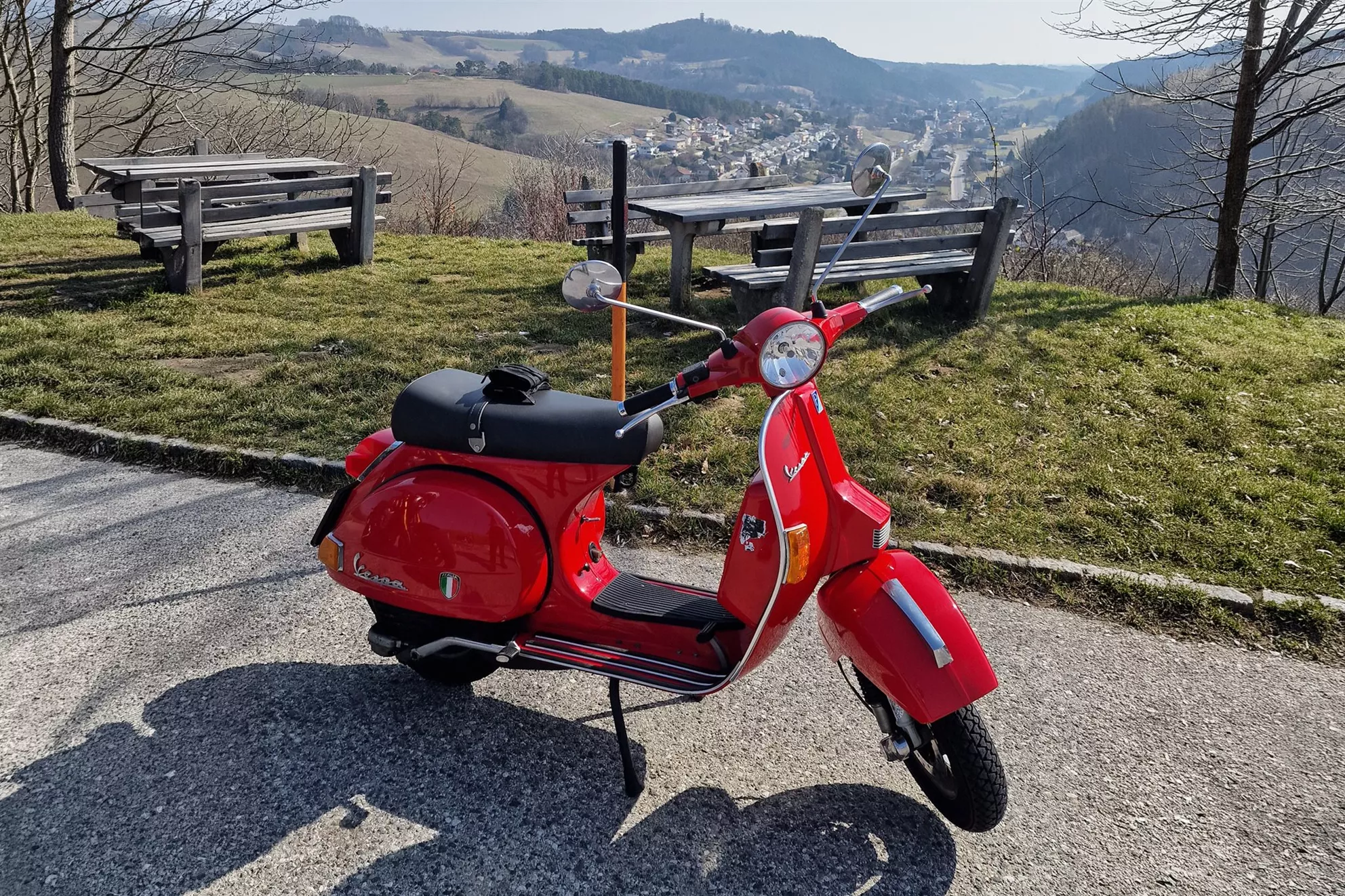
In this case, it quickly became clear: the Vespa doesn't just run, it runs well. Not in perfect condition, but a solid base to build on.
The next step: modifications
As soon as it was clear that the mechanicals were sound, it was time for the next steps. Partly out of necessity, partly out of conviction. The following points were optimised:
SIP Scootershop
Having already looked into the topic of the Vespa PX at SIP Scootershop back in 2025, I knew I'd have to place an order with the Vespa accessories specialist from Landsberg am Lech too. Alongside cosmetic items – such as the short mirrors and a touch-up paint pen for minor repairs – my shopping basket mainly contained technical upgrades. First and foremost, the new rims, which not only add visual accents but also replace the old, rusty originals.
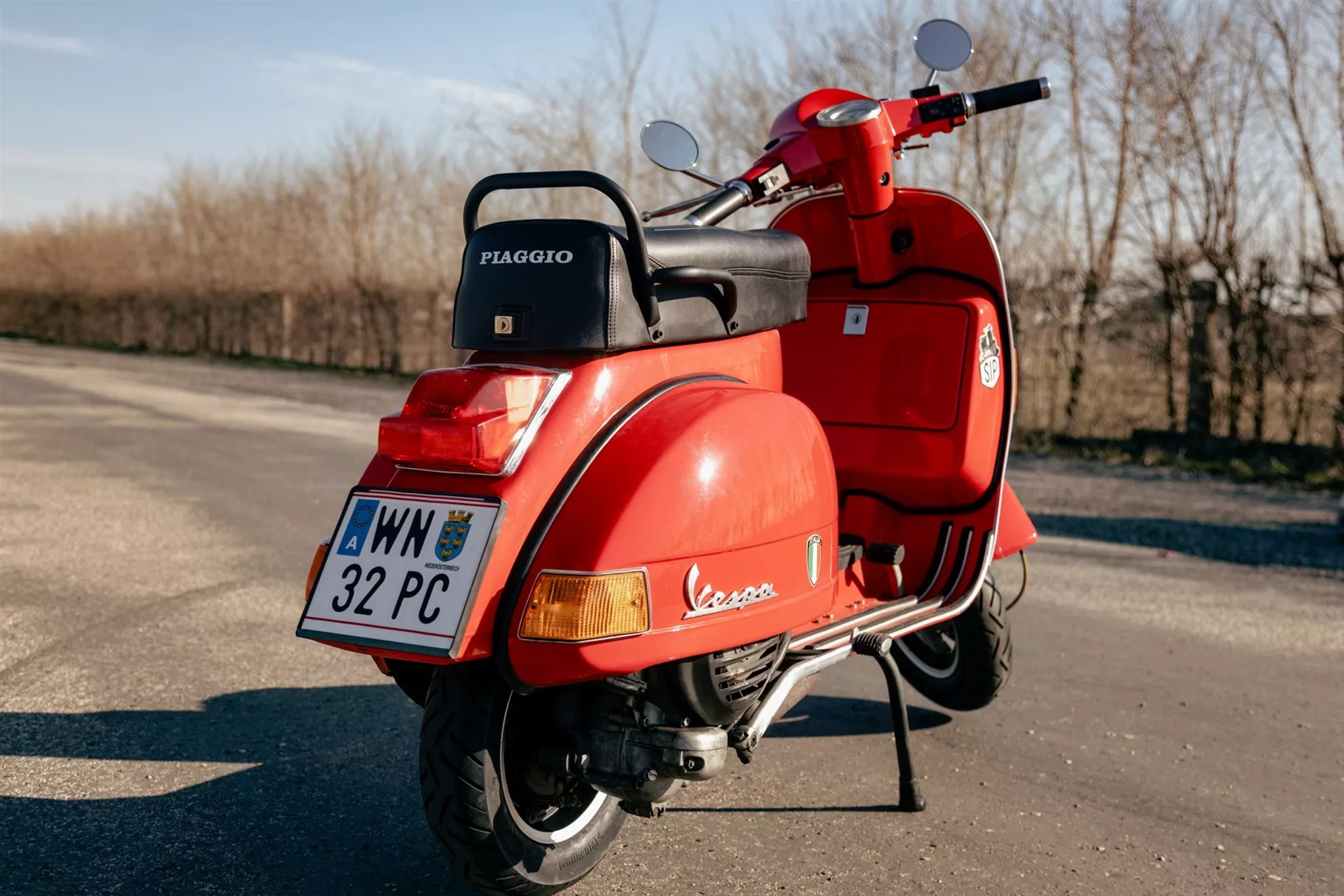
Another new addition: the seat.
The seat cushion also had to be replaced. Partly for visual reasons, but also because the original foam had become too soft after 15 years. For an elegant look and more comfort, I fitted a SIP seat with Piaggio lettering and grab handle, which has noticeably improved the riding experience. Last but not least, I also ordered a paddock stand, which now rides along in the glovebox. Should I ever need to jack up the rear, the stand is perfect for the job.
ContiScoot tyres
The new rims naturally needed fresh rubber too. Here I rely on the ContiScoot, which I've already ridden on both modern and classic Vespa scooters. The ContiScoot is a high-quality scooter tyre that impresses with neutral handling, good grip in both wet and dry conditions and high comfort. A reliable everyday solution with stable performance and pleasant inherent damping – a real plus given the Vespa PX's simple suspension setup.

Modern tyres can significantly improve the riding performance of classic vehicles.
YUASA scooter battery: STC9-B
I'm a big fan of bringing a classic Vespa to life with the kickstarter, but luckily my 2011 example already has an electric starter. However, it only does its job if it gets enough juice from the battery. The installed battery was deeply discharged, though, so not even a charger could save it. A new YUASA battery, type STC9-B, solved the problem, and now the PX starts absolutely reliably – without the kickstarter.
Verdict: a risk that paid off
So was it a mistake to buy this Vespa without a test ride?
No – but it could have been.
The purchase was a calculated risk. The decisive factors were the honest condition of the bodywork, an engine that started right away and the realistic price. And last but not least: experience and gut feeling. In the end, the effort paid off. The Vespa runs, it has been technically refurbished and visually personalised – and has become exactly what you hope for from a project like this.
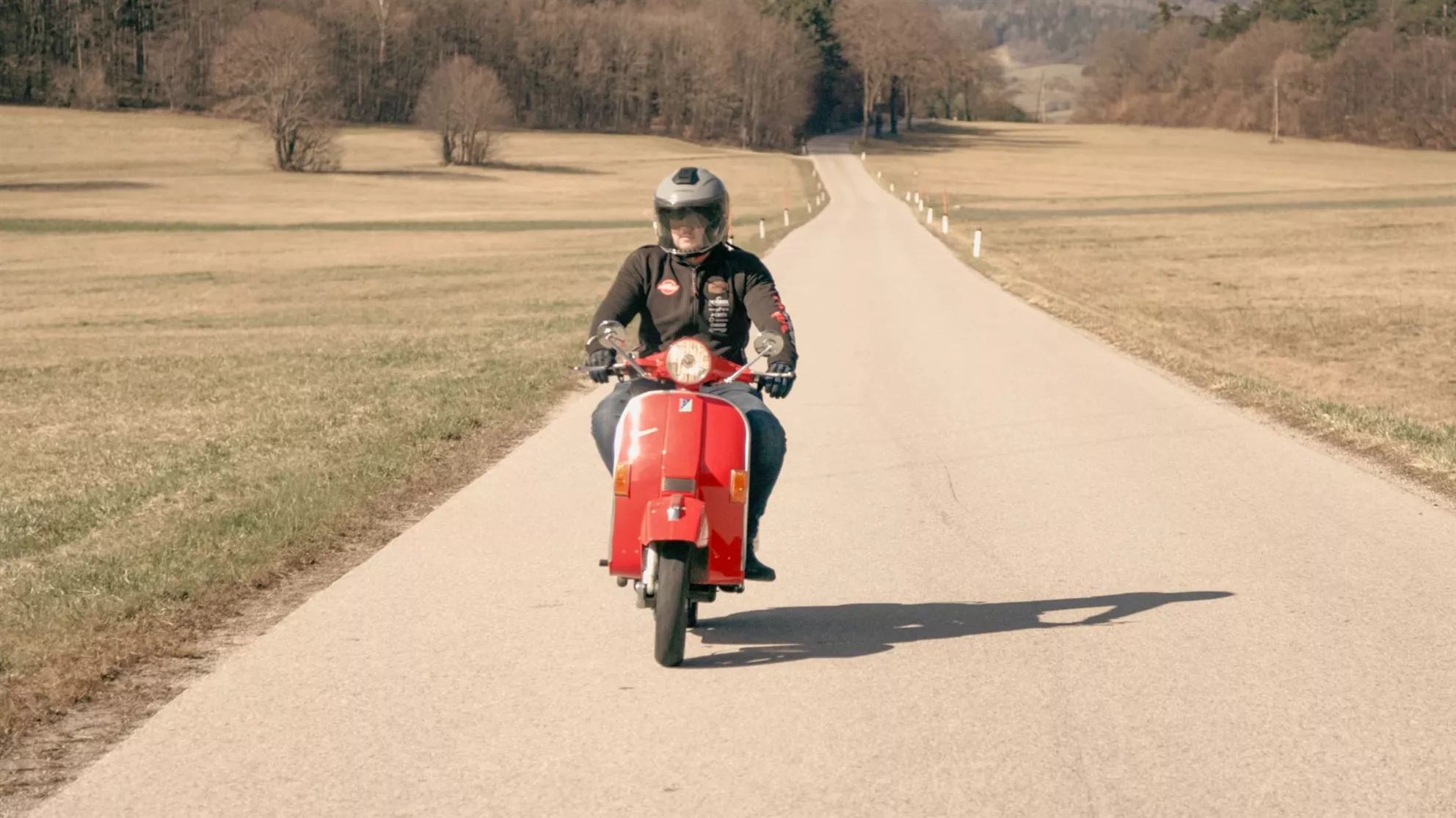
The most important thing about this story, however, is that a vehicle that spent two years in a garage is now back out on the road. After such a long time unused, the PX is once again buzzing around – and better than ever.
- How much does a Vespa PX 125 cost?
- Here you will find an overview of the price level of new and used motorbikes!
Vespa PX bought without a test ride: a risk with a happy ending?! Images
Source: 1000PS


