“Dress for the slide, not for the ride” is a phrase every motorcyclist has likely heard. It underscores the ever-present danger on two wheels, as even at low speeds or on short trips, a crash can have serious consequences. Riding unprotected often leaves you at a disadvantage on the road, regardless of who’s at fault. Yet, most bikers are familiar with the inner laziness that hesitates to gear up in full protective wear. Especially in high temperatures, for quick errands or the daily commute, full gear can feel bulky, too warm, and downright impractical.

Bowtex Motorcycle Gear Review: Invisible Protection for Riders
Baselayer vs. Textile Jacket - Does It Really Work?
Can invisible motorcycle gear truly offer real protection? We put the Bowtex Elite Baselayer to the test in everyday scenarios to find out just how much safety it really provides.
&width=72&height=72&bgcolor=rgba_39_42_44_0&mode=crop "Author: Gregor")
Gregor
published on 3/29/2026
4,978 Views
Furthermore, motorcycle gear isn't always considered particularly stylish off the track. While leather suits might look perfectly natural and cool on the circuit, there are riders such as supermoto enthusiasts, supersport lovers, and retrobike aficionados who prefer hoodies, sneakers, or fashionable alternatives, often at the expense of safety. This is where Bowtex steps in. The manufacturer aims to merge protection, comfort, and everyday usability without compromising personal style. Instead of traditional outer layers, they focus on technical baselayers that can be worn under regular clothing. We had the chance to test these products during our winter escape to Spain, exploring whether this concept truly has the potential to encourage more riders to consistently opt for better protection.
Understanding Safety Standards: What's Behind Motorcycle Gear Certification?
To properly assess the performance of modern motorcycle gear, it's worth examining the underlying testing standards. In Europe, the EN 17092 standard serves as the foundation for evaluating protective clothing for motorcyclists. It defines how well a garment protects against abrasion, tearing, and impact forces during a crash. Instead of a blanket assessment of the entire garment, a differentiated evaluation of various body areas is conducted. This is based on a zonal system that divides the human body into different risk areas.
Zone 1 includes the most exposed areas such as shoulders, elbows, knees, and hips. These are the parts most likely to hit the asphalt first in a crash and therefore must meet the highest standards. Zone 2 describes adjacent areas like the outer sides of arms and legs, which are also important but subject to slightly lower stresses. Finally, Zone 3 covers less vulnerable areas, such as the torso or the inner sides of the limbs, where comfort and mobility can be prioritized.
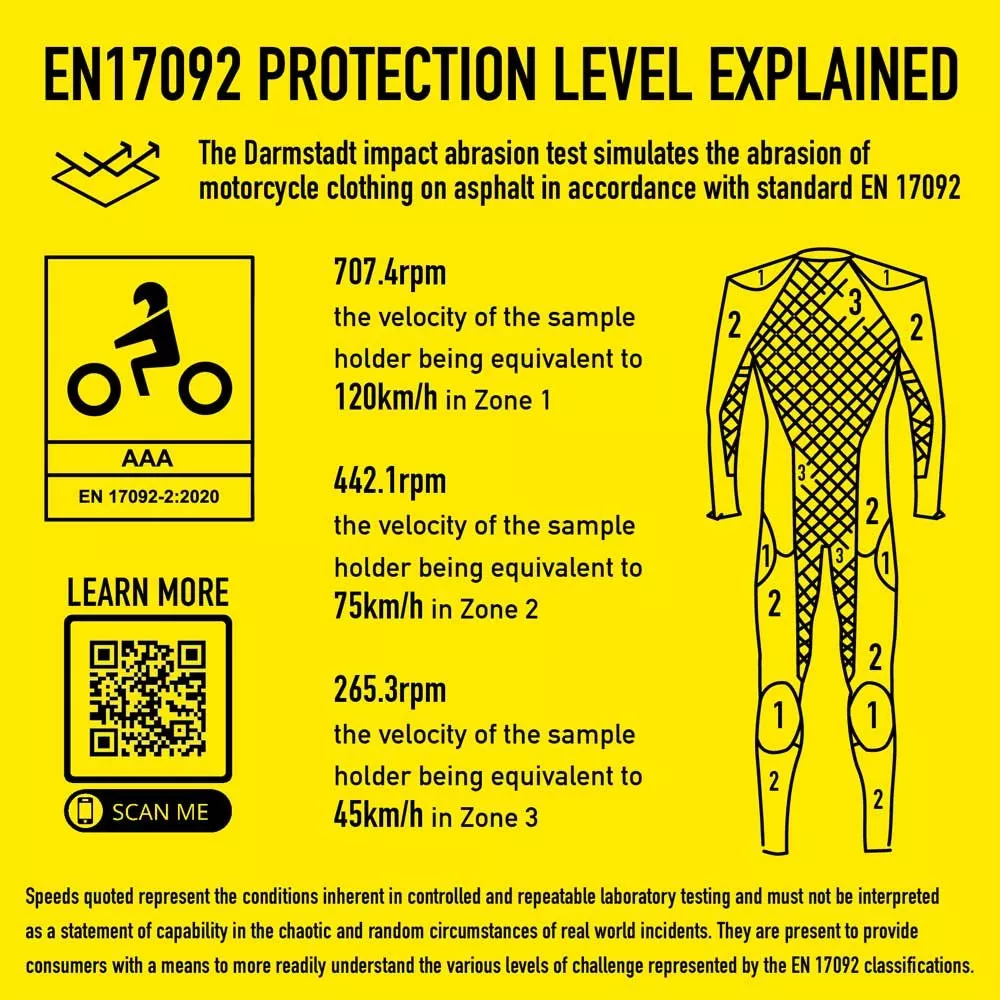
The certification of motorcycle gear is quite a hocus-pocus, but it aims to ensure that the rider is reliably and accurately protected.
The core of the standard is the test known as the Darmstadt abrasion test. During this test, material is pressed against a rotating asphalt surface under controlled conditions to simulate realistic sliding movements. The key factor is how long the material withstands before wearing through. The results are categorized into protection classes ranging from A to AAA. While Class A is more suited for urban use, AAA represents the highest tested level of protection under the standard. It's important to note that these tests are conducted under laboratory conditions and can only approximate real-world accidents. Nonetheless, they provide an objective basis for comparing different products.
Against this backdrop, the certification of individual products becomes increasingly significant. When a manufacturer like Bowtex achieves a AAA classification for certain models, it's a clear indication that the materials used and the construction offer a very high level of tested protection—especially in a field traditionally dominated by heavy, classic motorcycle apparel.
Technical Overview of Bowtex
Bowtex takes a different approach compared to traditional motorcycle apparel manufacturers. Instead of designing a garment and then adding protective materials, the development starts right at the fiber level. At the core is Dyneema, a material based on UHMWPE (Ultra High Molecular Weight Polyethylene), which is one of the most high-performing fibers on the market. It is extremely lightweight while offering very high abrasion and tear resistance. Depending on the product, it's complemented by other high-performance fibers like Kevlar, creating a construction where protection isn't just an addition but an integral part of the material itself.

The Bowtex material feels so light and soft that it's hard to believe the described properties.
This "technical-first" approach results in a distinctly different type of product. Bowtex doesn't view its apparel as traditional motorcycle gear but as protective baselayers. The individual pieces are designed to be worn close to the body and disappear under regular everyday clothing. This creates a modular system that can be flexibly adapted to various use cases—from daily commuting to longer tours. At the same time, the products meet the requirements of the EN 17092 standard and, depending on the version, even achieve the highest protection class AAA.
Production takes place in Western Europe, which not only allows for short supply chains but also ensures a certain level of control over manufacturing quality and sustainability. Overall, this results in a technical concept that focuses less on classic motorcycle aesthetics and more on material innovation and everyday usability. The goal is clear: to provide as much protection as possible with minimal weight and maximum flexibility.
Test Impressions on Bowtex's Wearing Comfort
In our test, we had the Bowtex Elite Leggings V2 and the Elite Shirt V2. The initial impression is surprising because, given the promised level of protection, you would intuitively expect a much sturdier, perhaps even stiffer material. Instead, the fabric feels light and soft, almost inconspicuous. Once on, the top initially reminds you of a lightweight off-road protector vest with soft protectors. The clothing fits snugly on both the torso and legs without feeling uncomfortable. There are no noticeable pressure points or irritating seams.
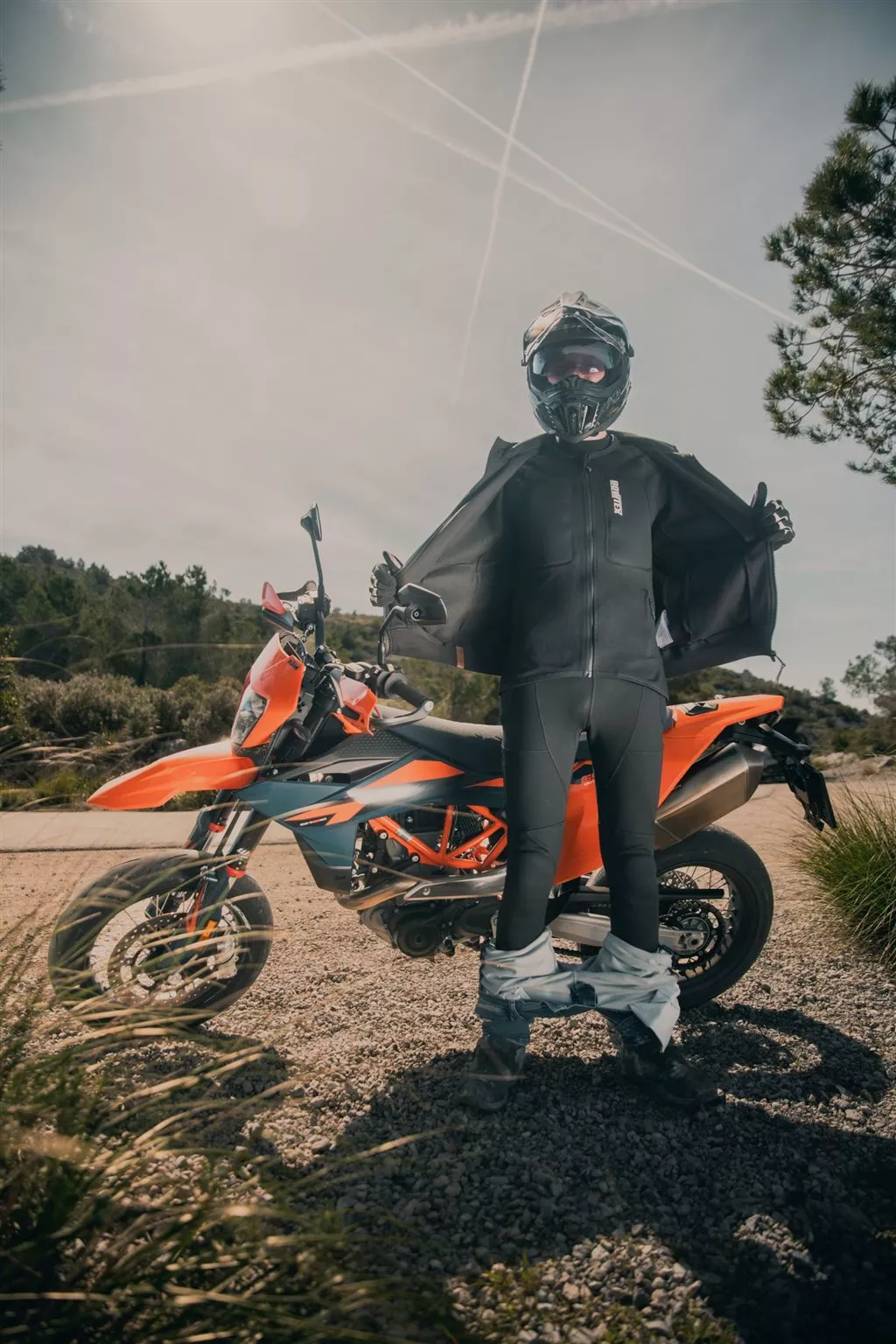
I never thought I'd have to drop my pants for 1000PS. However, the inconspicuous Bowtex Elite V2 Shirt and Leggings are otherwise nearly invisible.
The elastic properties ensure full range of motion. Even with integrated Level 2 protectors, nothing feels bulky or restrictive. The protectors themselves are surprisingly flexible and conform well to the body, further enhancing comfort. This is where the baselayer concept really shines: the clothing virtually disappears under regular everyday attire. With a hoodie and jeans on top, you get the appearance of a casually dressed rider, while underneath lies a comprehensive protection system.
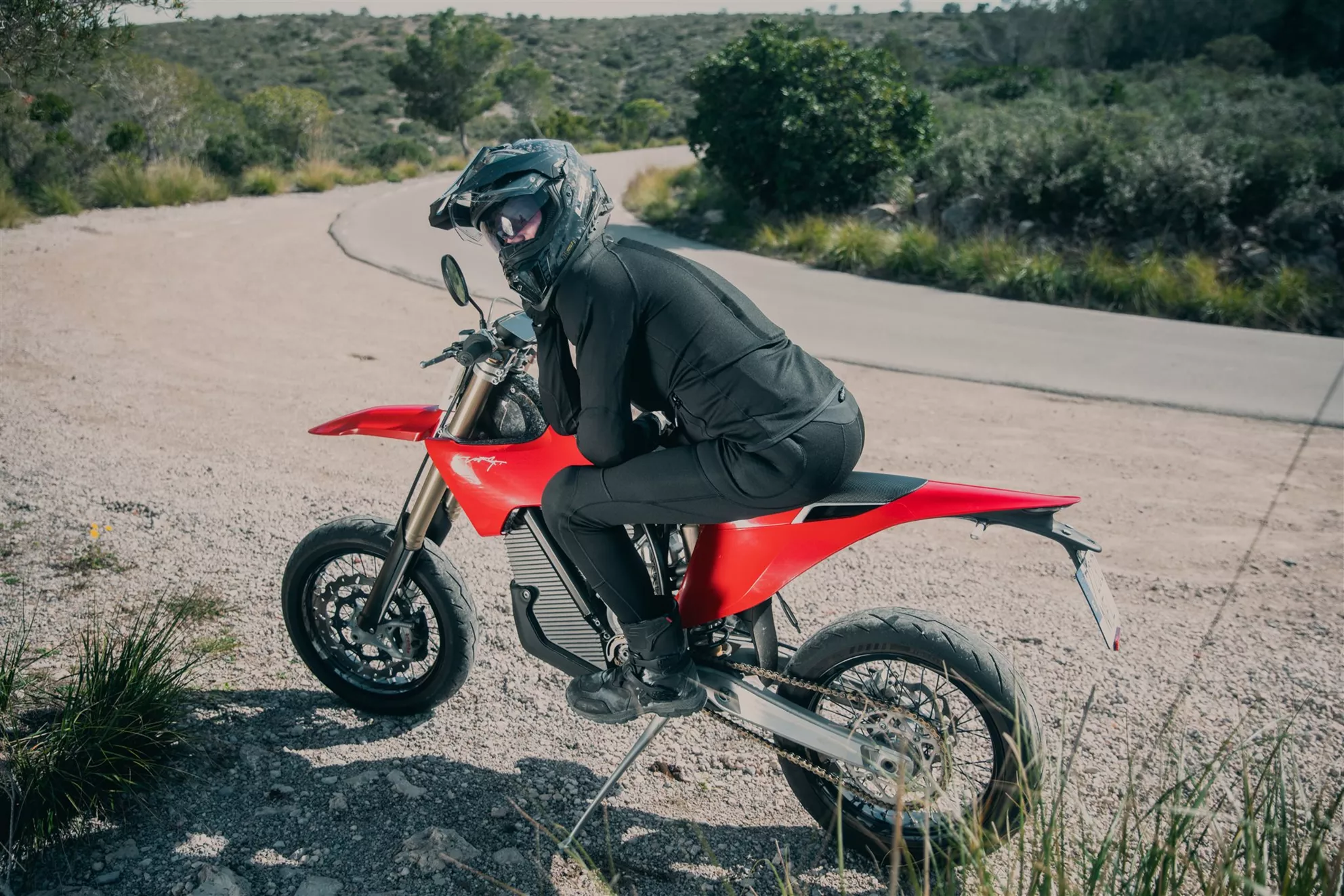
The airy Bowtex Elite Baselayers can also serve as outer layers in warm temperatures. However, with the form-fitting design, you'll clearly be showing off what Mother Nature gave you... or didn't.
Alternatively, the shirt can be used as an outer layer, especially in high temperatures, as the material is highly breathable. The leggings, however, are cut to be very form-fitting. Anyone wishing to wear them without an additional layer will need a fair amount of confidence. In practice, combining them with regular clothing will likely remain the more realistic use case for most people.
Assessment of Potential and Conclusion on Bowtex Elite Motorcycle Clothing
When comparing Bowtex to other motorcycle undergarments, the prices of €399 for the Elite V2 Shirt and €329 for the Leggings are indeed substantial. However, when you look at the price tags of AAA-certified textile suits, it seems more like a bargain. Considering the protection offered and comparing it to traditional motorcycle apparel, the perception changes quickly. This is especially true when you consider the intended use: Bowtex is specifically aimed at riders who often go without full protective gear in everyday life. For this target group, the step towards a protective baselayer is not just about the price, but also about comfort and aesthetics. This alone makes Bowtex much more suitable and its use more likely than opting for a full textile suit.
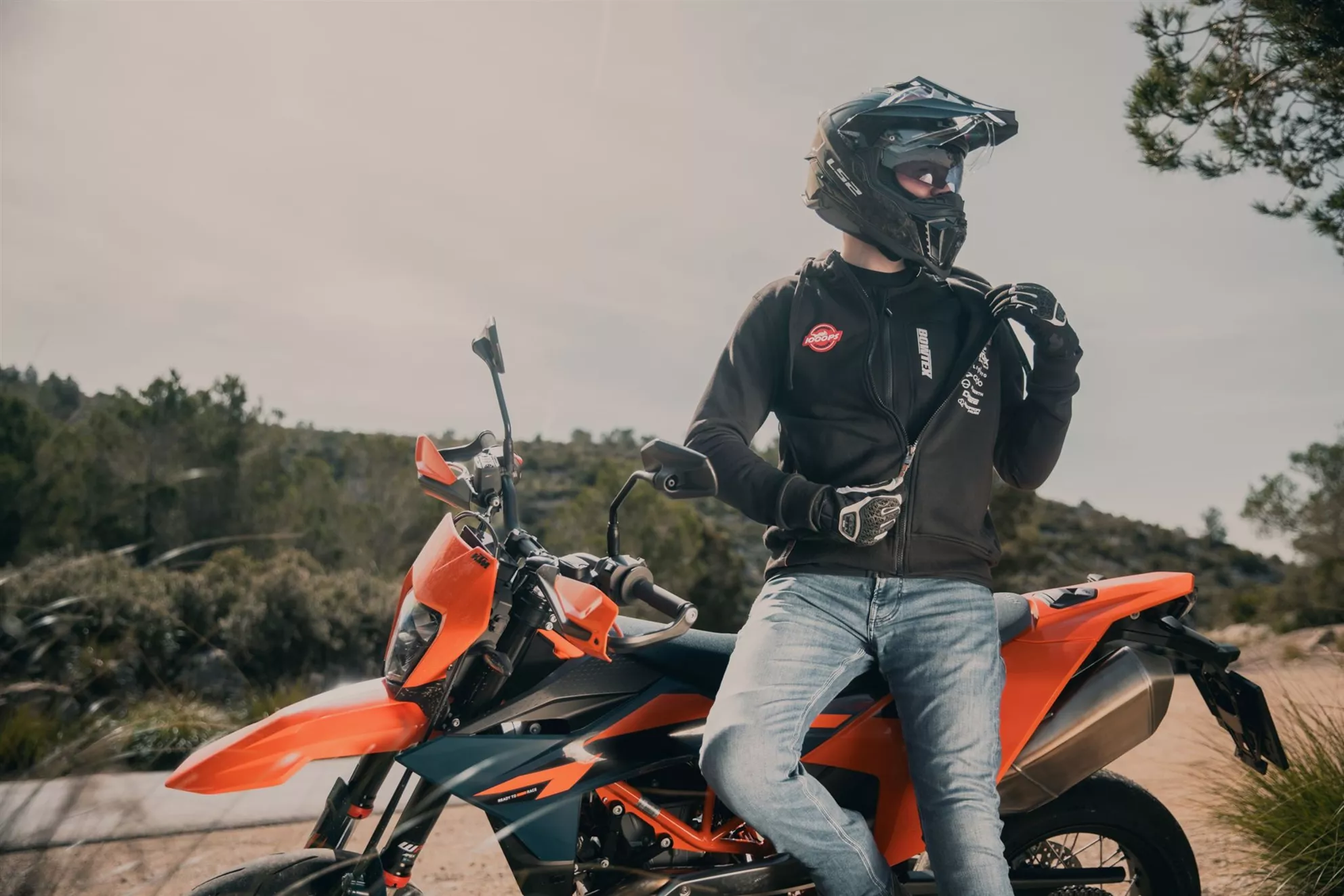
The nearly invisible Bowtex baselayers combine comfort, safety, and style!
This is precisely where the brand's potential lies. Bowtex doesn't aim to replace existing solutions but to fill a gap. Those who have previously foregone protection for comfort or style now have an alternative that integrates almost seamlessly into everyday life. The increase in safety doesn't come at the cost of significant extra effort when dressing. However, whether this concept gains long-term traction in the market depends not only on technical features or rational arguments. Motorcycling is emotional, habits are deeply ingrained, and not everyone is easily swayed by safety considerations.
Nevertheless, Bowtex demonstrates that it's possible to rethink protection. Even if not every rider makes the switch, a small percentage of users could already make a noticeable difference. If such concepts prevent even a few serious injuries, the product has already fulfilled its purpose. Fortunately, during our test, we didn't experience any crash situations, but we were convinced by the idea and its implementation. Bowtex offers an interesting approach that can significantly simplify access to protective clothing—and that's precisely where its strength lies.
Bowtex Motorcycle Gear Review: Invisible Protection for Riders Images
Source: 1000PS


