There are motorcycles that take you from A to B. And then there are motorcycles that transport you to another time—out of the everyday grind or straight into another decade. It's precisely this feeling that has made retro motorcycles so successful over the years. On our leisurely tour with three very different retro bikes, we aimed not just to test in the traditional sense, but to feel: Which machines truly deliver the blend of nostalgia and riding pleasure without demanding compromises in daily life? And why the Royal Enfield Classic 650 might just be the best retro concept of our time becomes evident on the miles from Vienna through the Vienna Woods to the Wachau.
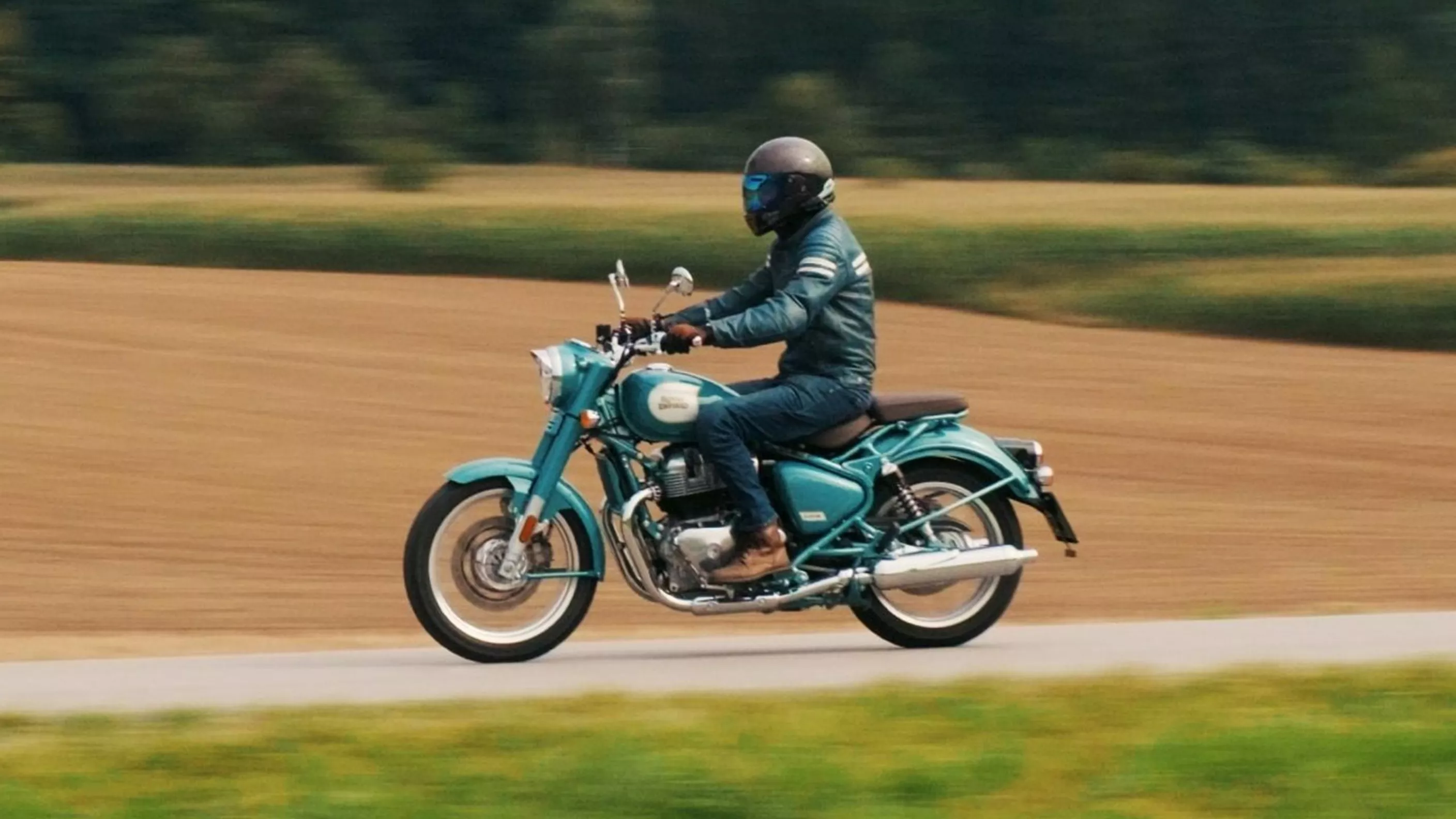
Royal Enfield Classic 650 Review: The Ultimate Retro Naked Bike?
Nostalgia with Punch: Why the Classic 650 Hits the Mark
Retro bikes are booming – taking us back to the essence of motorcycling. On a leisurely ride from Vienna to the Wachau, the Royal Enfield Classic 650 demonstrates why it might just be the ultimate retro concept of our time: stunningly beautiful, relaxing, yet perfectly practical for everyday use.
&width=72&height=72&bgcolor=rgba_39_42_44_0&mode=crop "Author: Gregor")
Gregor
published on 12/24/2025
25,231 Views
The Magic of Vintage Motorcycles and Why Retro Bikes Are Booming
Vintage motorcycles have a magic all their own. While I'm primarily an enduro rider and usually on modern machines, I've had my fair share of adventures on a 1988 Kawasaki KLR. An old motorcycle carries the scent of history. The vibrations speak of adventures, road trips, and freedom. It's a completely different riding experience: no high-tech, no sharp lines, just a machine with a soul you can feel in its purest form. Retro motorcycles capture this magic. They are a homage to bygone eras and iconic bikes—and they are booming for a good reason.
The approach varies significantly. Some brands reimagine retro entirely, while others strive to resurrect the past as authentically as possible. Royal Enfield is among those manufacturers that need to fake nostalgia the least. For them, it's not about copying a bygone era—Royal Enfield was, and still is, right at the heart of it all.
Royal Enfield History: Why This Brand Doesn't Need to Play Retro
To understand the Royal Enfield Classic 650, you need to know its roots. Royal Enfield isn't a brand that mimics retro— it is retro, or rather, what today's vague term "retro" embodies. Founded in 1901 in England, Royal Enfield was building motorcycles long before many of today's manufacturers even existed. It's no wonder they are considered the oldest continuously operating motorcycle brand.
After World War II, Royal Enfield developed motorcycles that are now considered icons. The legendary Bullet, introduced in 1948, shaped the image of the classic British motorcycle. Then, as now, it stood for robustness, simplicity, and a certain elegance in engineering. Starting in 1955, Royal Enfield began producing motorcycles in India—a move that influences the brand to this day. There, the Bullet evolved into a vibrant motorcycle culture, moving hundreds of millions of people from the Himalayas to Kerala and far beyond India's borders.
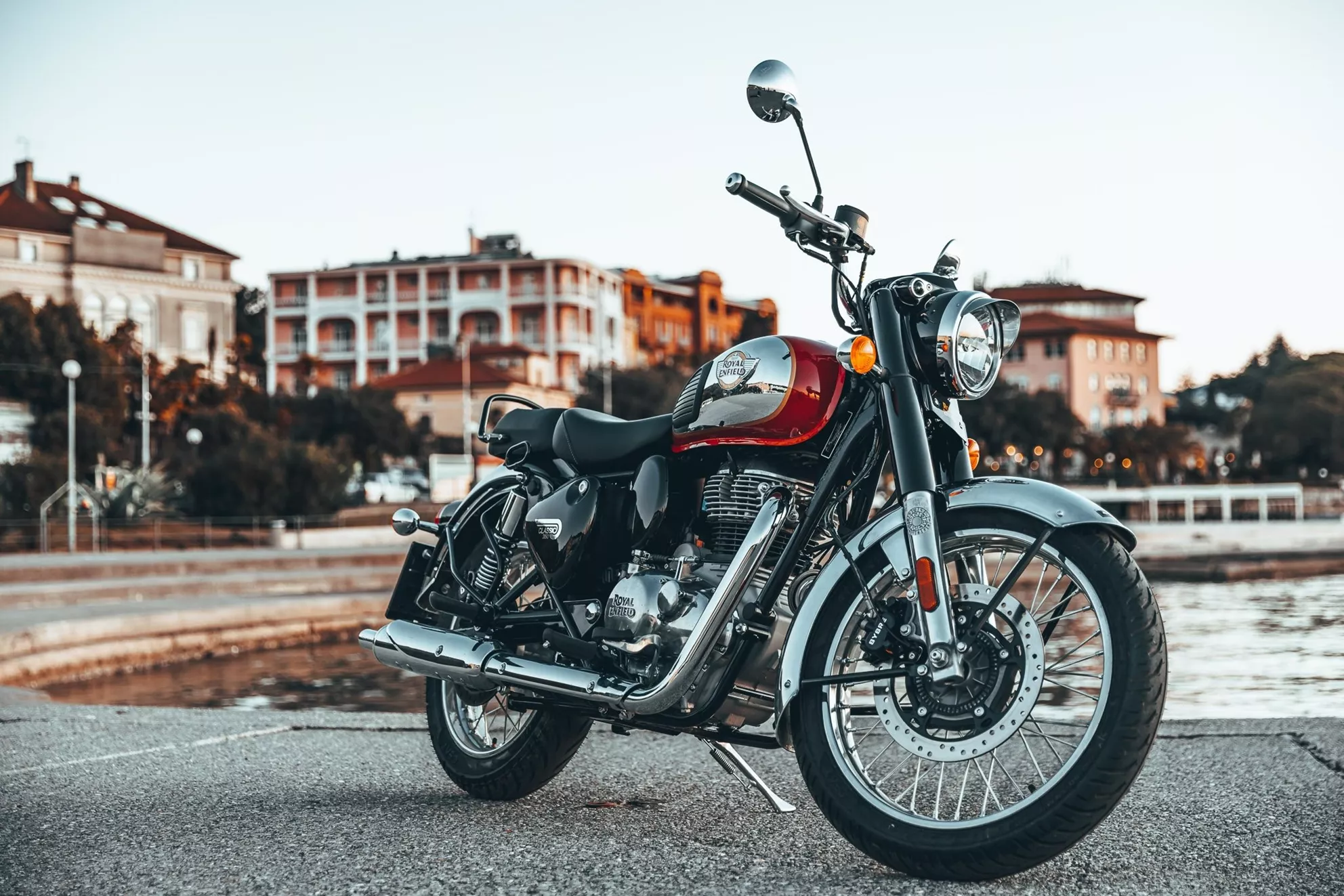
Among the Royal Enfield models, the Classic 350 represents the bridge between tradition and modernity.
Many years later, in 2009, the next pivotal step was taken: the Classic 350 and Classic 500 series emerged, consciously capturing the 1950s look—with teardrop tanks, round chrome headlights, and distinctive seats. The concept was clear: the charm of the past combined with modern technology. One might say these were Enfield's first retro models. The Classic series became a global success. Since 2021, due to emission regulations, only the modernized Classic 350 remains in the lineup, still very much adhering to the old Bullet formula. And now, the Classic 650 picks up right there: it continues the legacy of these machines, capturing the silhouette and emotions of the old days—elevating them to a new level.
Retro Bikes as Time Capsules: Why Striking the Balance Is Tough
Retro motorcycles face a significant challenge: they need to be more than just pretty time capsules. I don't know about you, but when I first glance at a bike and see a high-tech, liquid-cooled engine, wiring harnesses, and electronics, it feels only marginally retro to me. Too much modernity, and the connection to the past is lost. Too much authenticity, and suddenly you're riding a machine that may look great but feels sluggish and impractical for everyday use.
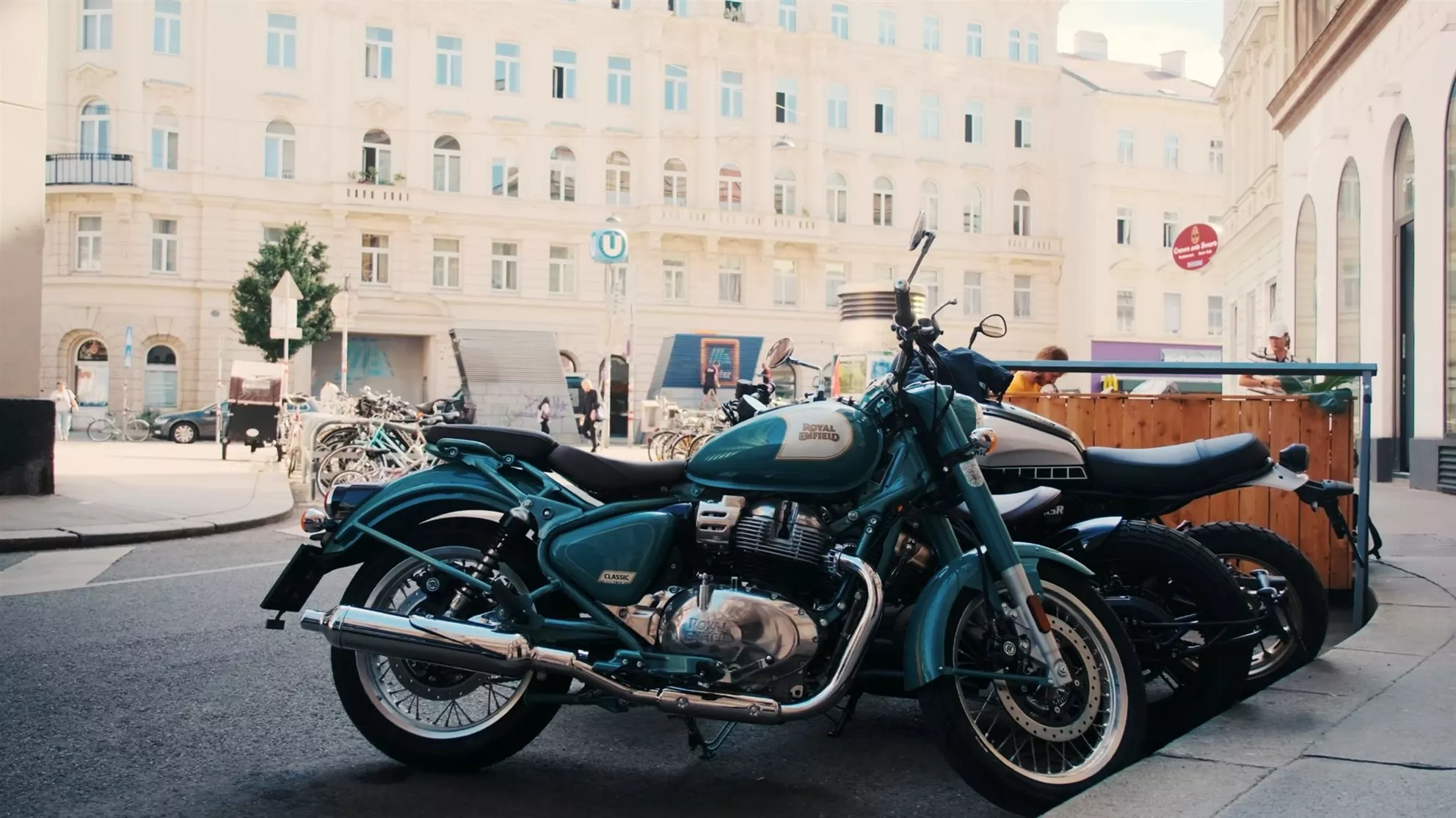
In the modern world, having some power isn't a bad thing. Is 48 horsepower the sweet spot?
Let me be clear: I love bikes like the Classic 350. You rarely find such a level of relaxation. But, in the modern European world with its wide-open roads and powerful cars around us, 20 horsepower can be quite limiting. This is exactly why the Classic 650 is so intriguing.
Traditional Looks, Plenty of Punch: What Makes the Classic 650 Stand Out
The Royal Enfield Classic 650 uncompromisingly adheres to retro virtues: a teardrop tank, round chrome mirrors, and smooth lines—all of which look like they've been imported straight from the fifties. Yet beneath this classic exterior lies a modern, straightforward, and character-rich engine. The 649cc parallel-twin, familiar since 2018 from the Interceptor and Continental GT models, runs smoothly, offering a solid punch of 52 Nm of torque and over 46 horsepower—enough power to cruise effortlessly through the winding roads of the Vienna Woods.
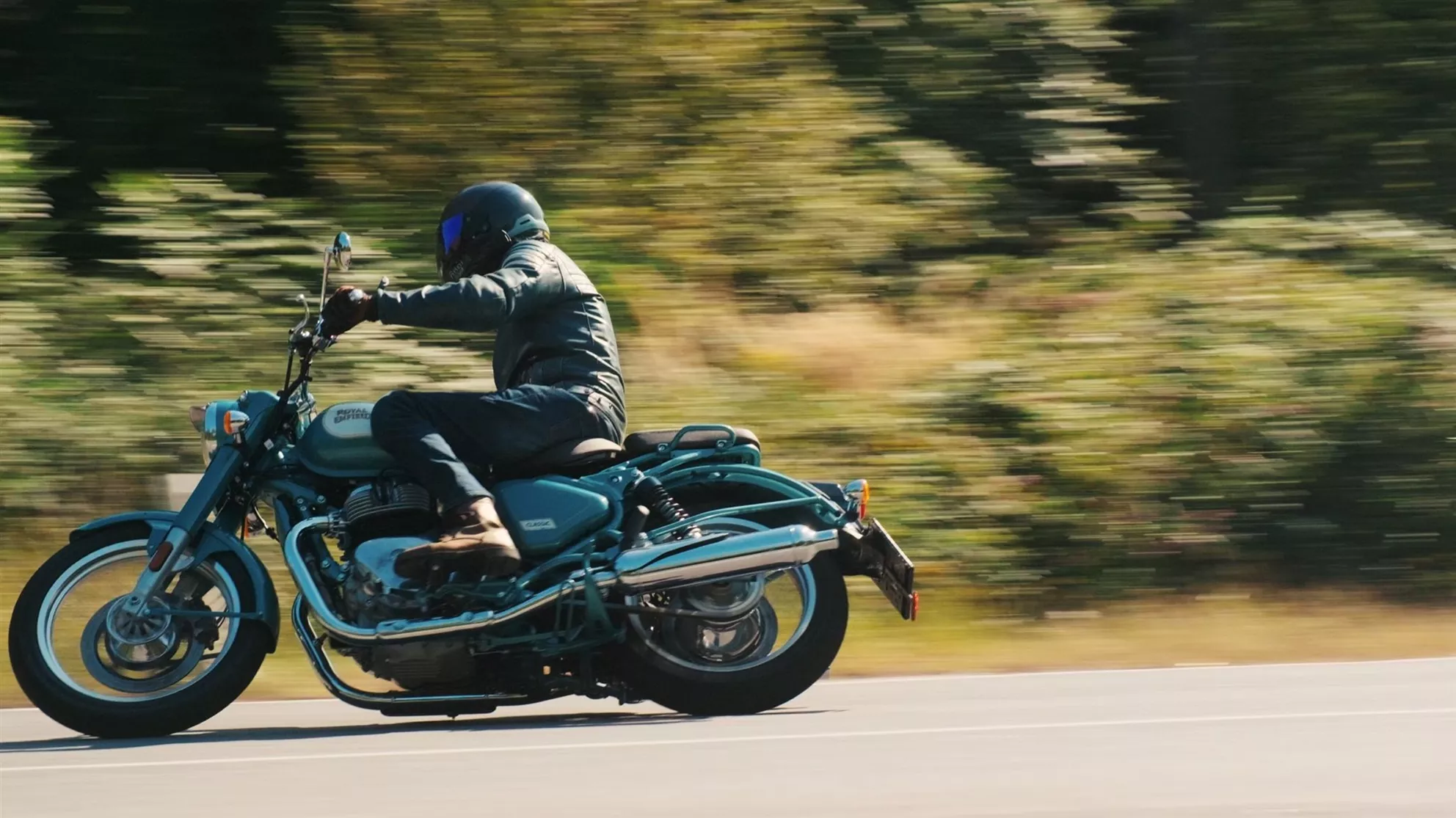
The Classic 650 is far from being a sport motorcycle, yet it is equally far from being boring.
As an oil-air-cooled engine with iconic cooling fins, it visually complements the traditional look of the Classic perfectly and offers more than just relaxation on winding country roads. The Classic 650, with its 245 kilograms, is certainly not a sport motorcycle, but it steers willingly, the suspension is comfortably stable, and thanks to the extra horsepower, you can easily overtake or tackle a stretch of highway. It's this combination that makes it so compelling: classic appearance, yet enough reserves for real-world riding.
Technical Specifications of the Royal Enfield Classic 650 in Detail
The Royal Enfield Classic 650 is powered by a 649cc parallel-twin engine, familiar from the Interceptor and Continental GT models, and features an oil-air-cooled design with cooling fins for a classic appearance. It delivers around 46 horsepower and 52 Newton meters of torque, housed in a motorcycle that weighs approximately 245 kilograms. While the Classic 650 isn't a lightweight option, it excels with a characterful engine and ample reserves for overtaking maneuvers or short highway stretches.
Royal Enfield Classic 650 2025 - Key Facts
Engine and Drive Train
| Engine type | In line crankpin offset |
|---|---|
| Bore | 78 mm |
| Stroke | 67.8 mm |
| Engine power | 47 HP |
| Rpm at Max. Power | 7250 rpm |
| Torque | 52.3 Nm |
| Rpm at Torque | 5650 rpm |
| Compression Ratio | 9.5 |
| Fuel system | Injection |
| Starter | Electric |
| Clutch Type | Multiplate in oil-bath |
| Ignition | Digital |
| Transmission | Chain |
| Transmission Type | Gearshift |
| Number of gears | 6 |
| Cylinders | 2 |
| Strokes | 4-Stroke |
| Valves | OHC |
| Cooling | Oil-air |
| Displacement | 648 ccm |
Suspension Front
| Front suspension | Telescopic fork |
|---|---|
| Diameter | 43 mm |
| Travel | 120 mm |
Suspension Rear
| Suspension | Swing arm |
|---|---|
| Shock absorber | Dual Shock |
| Travel | 90 mm |
| Material | Steel |
Chassis
| Frame | Steel |
|---|---|
| Frame type | Central tube |
Brakes Front
| Type | Single disk |
|---|---|
| Diameter | 320 mm |
| Piston | Double piston |
| Shock mount | Floating caliper |
Brakes Rear
| Type | Disc |
|---|---|
| Diameter | 300 mm |
| Piston | Single piston |
| Shock mount | Floating caliper |
Assistance Systems
| Advanced Rider Assistance Systems | ABS |
|---|
Dimensions and Weights
| Front tyre width | 100 mm |
|---|---|
| Front tyre height | 90 % |
| Front tyre diameter | 19 inch |
| Rear tyre width | 140 mm |
| Rear tyre height | 70 % |
| Rear tyre diameter | 18 inch |
| Length | 2318 mm |
| Width | 892 mm |
| Height | 1137 mm |
| Wheelbase | 1475 mm |
| Seat Height | 800 mm |
| Kerb Weight (with ABS) | 243 kg |
| Fuel Tank Capacity | 14.8 l |
| License compliancy | A2 |
| Range | 343 km |
| Combined CO2 emissions | 104 g/km |
| Combined fuel consumption | 4.66 l/100km |
| Stationary noise | 86 dB |
| Maximum authorized weight | 407 kg |
| Ground clearance | 154 mm |
Equipment
| Equipment | LED-Headlights |
|---|
Riding Experience in the Wachau: Capturing the Feel-Good Vibes
In the Wachau, the Classic 650 truly begins to shine. The engine purrs along smoothly, and each beat from the twin-cylinder sounds like a heartbeat. Before us, the road winds through vineyards and past old villages. The scent of late summer lingers in the air, with the blue ribbon of the Danube on one side and forests, meadows, and sky reflecting in the gleaming chrome of the tank on the other. After several hours in the saddle, certain quirks become noticeable. For instance, the gear shifts can be imprecise, and the rear brake bites so disproportionately compared to the soft front brake that the best way to stop the Classic 650 is almost like braking a car.
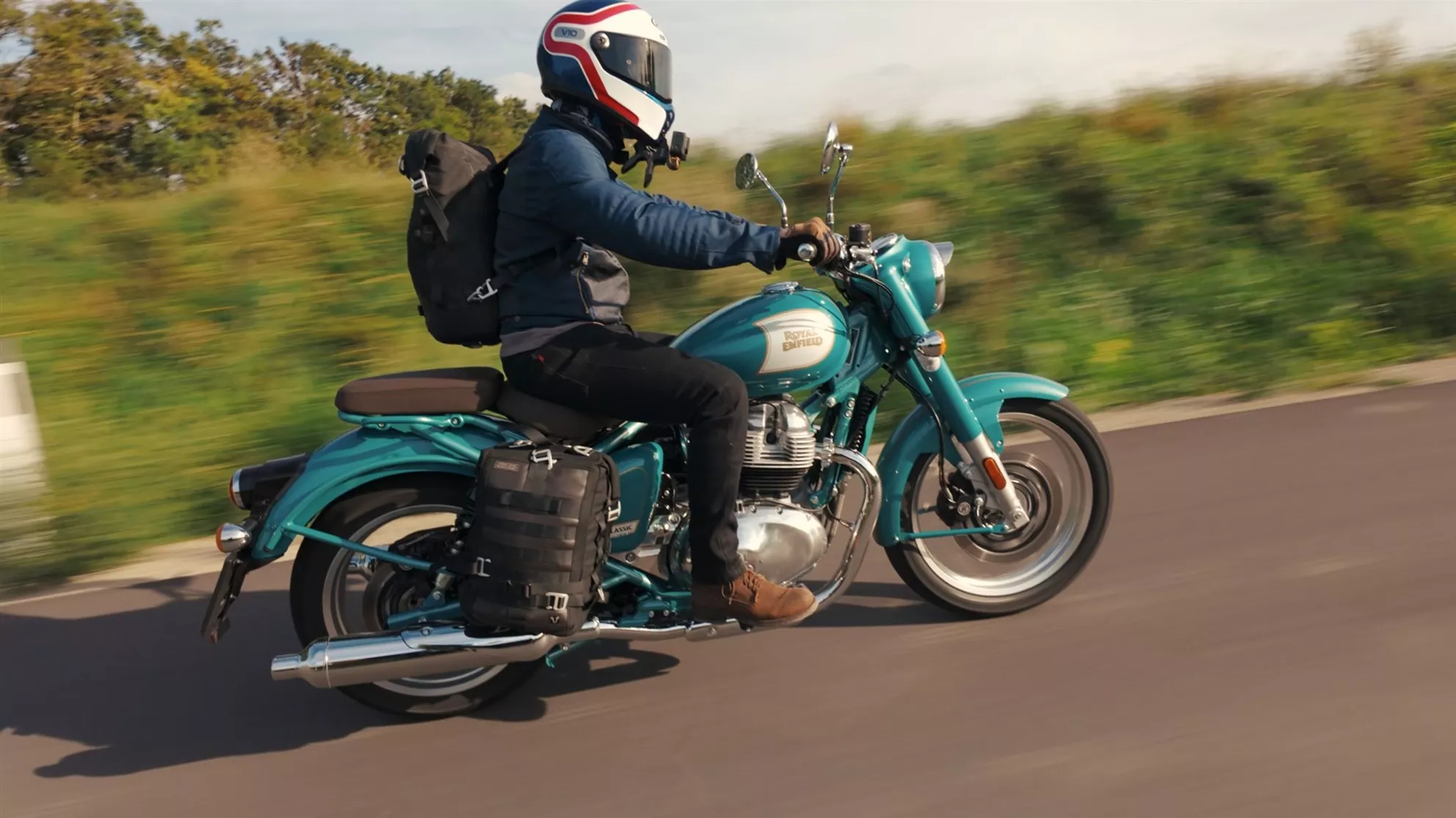
The Royal Enfield Classic 650 has a few weaknesses, but they're forgivable. The main thing is that it soothes the soul while riding.
Yet in the saddle, while leisurely taking in the country roads and surroundings, these minor flaws hardly matter. Instead, you relish the relaxed seating position that you can maintain for hours, the view of the classic, partly analog cockpit, or the engine's crackle when you take a well-deserved break. These feel-good vibes clearly prevail.
Maria Taferl and MoHo: The Perfect End to a Leisurely Tour
As the day draws to a close, the last rays of sunlight bathe the Wachau in a golden glow. We leisurely head to Maria Taferl, as this historic place offers not only a fitting backdrop for historic bikes but also ensures every good riding day has an equally good ending. We stop at the MoHo Motorradhotel Rose. Here, as bikers, we are not only welcomed and appreciated, but we can also reflect on our day's journey from a bird's-eye view.
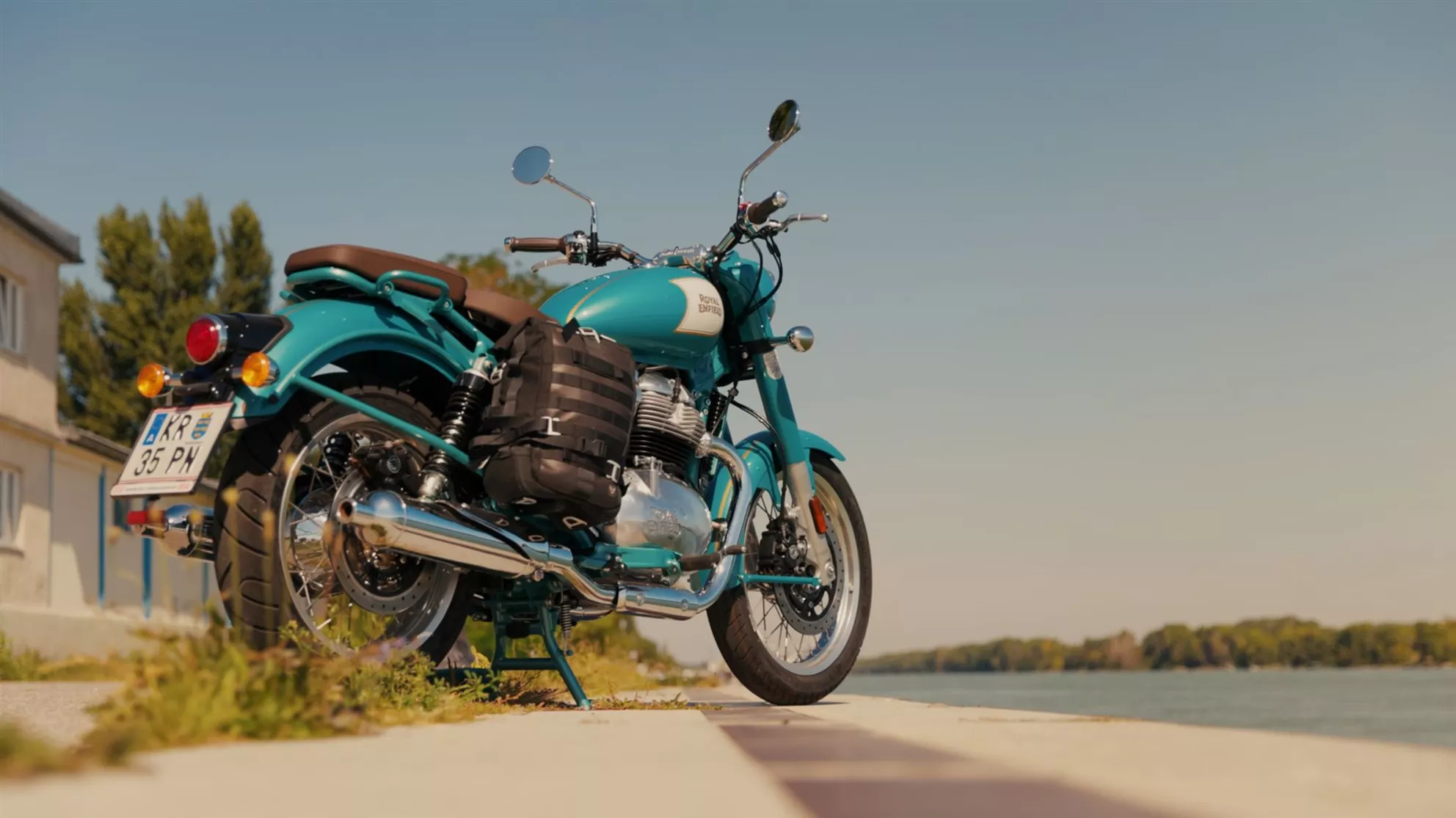
Barely dismounted, you're already drawn back to the stylish saddle of the Classic 650.
With food and drink, we enjoy the breathtaking view from the terrace over the Danube, the rolling hills of the Wachau, and all the way to the distant Alps. The Classic 650 has performed excellently, massaging the soul while still offering delightful riding pleasure. From axle to axle, it consistently embodies its history, providing plenty of old-school virtues and making life easy for me, from hectic city traffic to the twisties. Now it rests, still warm and gently crackling from the day, but honestly, there's already an itch in my fingers to ride again.
Who Is the Classic 650 Perfect For—and Who Isn't It For?
The Classic 650 doesn't just beckon you into the saddle for a leisurely, laid-back tour. Thanks to its characterful simplicity, it works just as well for everyday tasks, whether commuting to work or running errands to the supermarket. That's precisely why it might be the perfect retro bike: a full dose of history and nostalgia, with a look that's 100% consistently vintage, yet technically and in operation, modern and hassle-free. Feel-good vibes in every situation. This concept could appeal to many retro fans who want to do more than just look—they want to ride.
- How much does a Royal Enfield Classic 650 cost?
- Here you will find an overview of the price level of new and used motorbikes!
&width=60&height=60&bgcolor=rgba_39_42_44_0&mode=crop "Author: Gregor")
Royal Enfield Classic 650 2025 - Experiences and Expert Review
Gregor
The Classic 650 combines consistent retro styling with everyday riding fun and genuine character. It has a few minor flaws, but they're forgivable. You also have to get used to its relatively high weight. In return, it offers relaxation without limitation, is full of character, reliable, and delivers exactly the feel-good vibes that retro fans seek—both on tours and in everyday life.
More from 1000PS Magazine
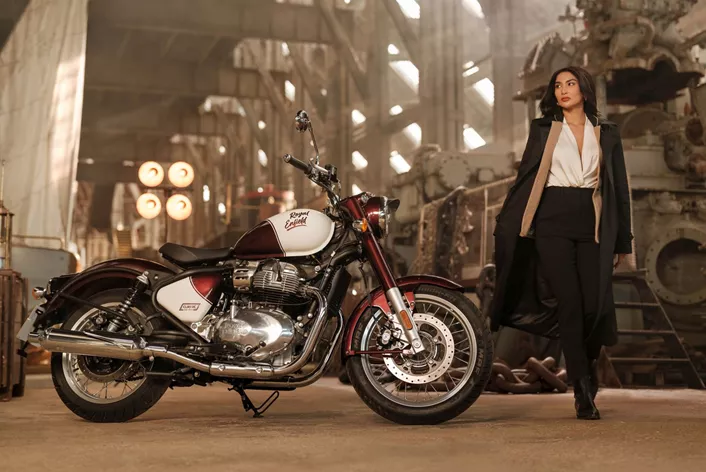
Royal Enfield Classic 650 Review: The Ultimate Retro Naked Bike? Images
Source: 1000PS


