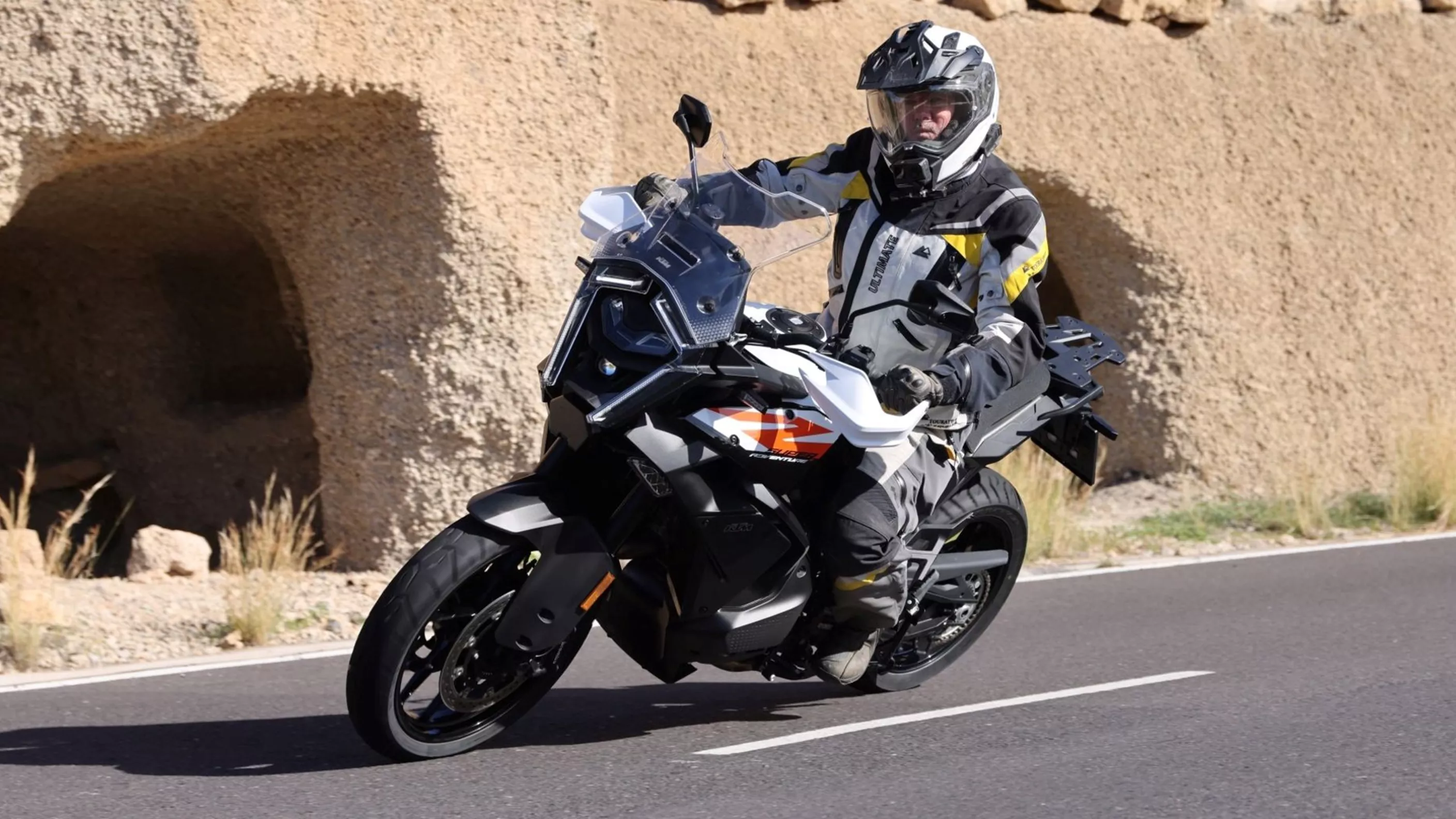
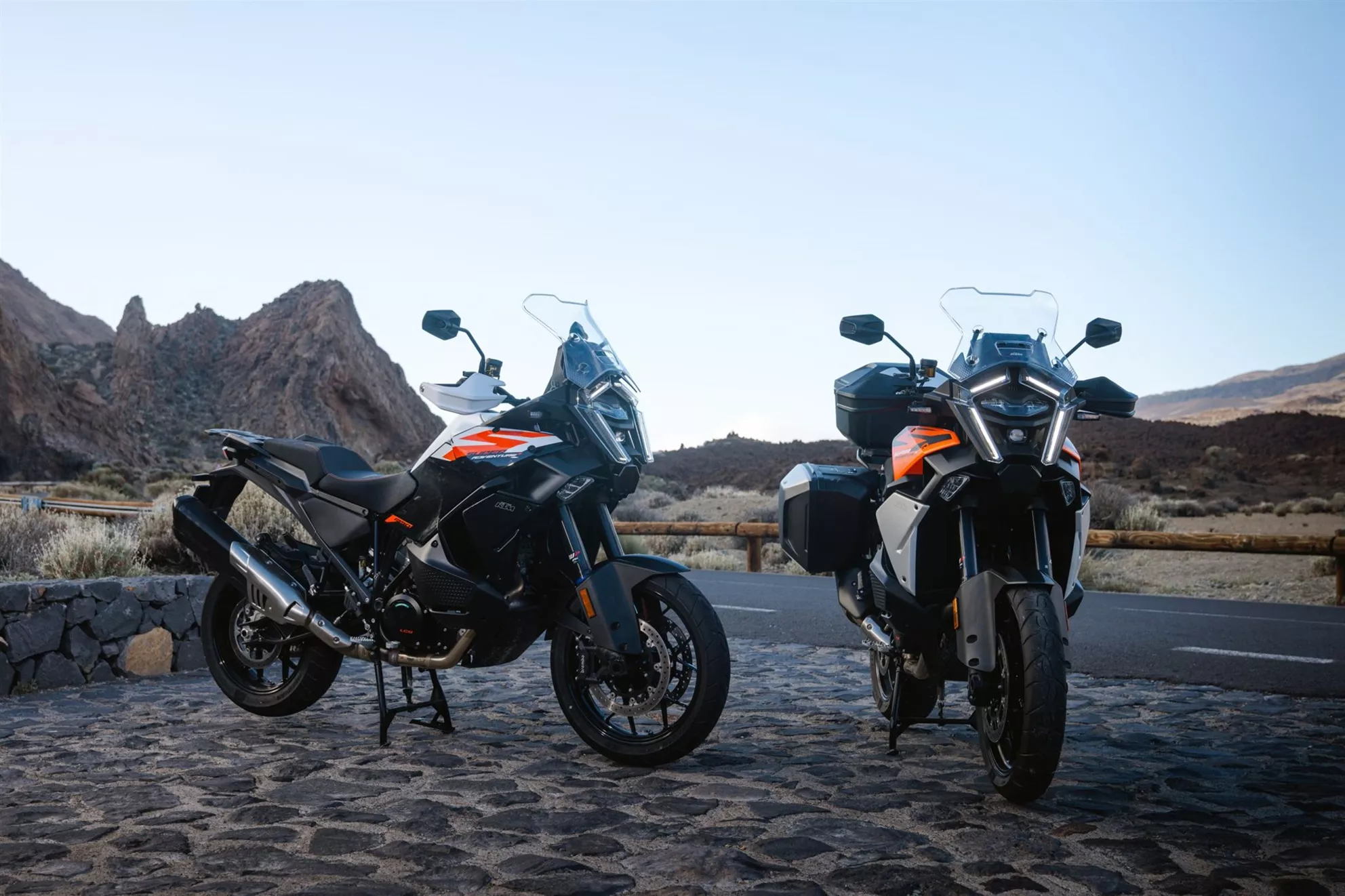
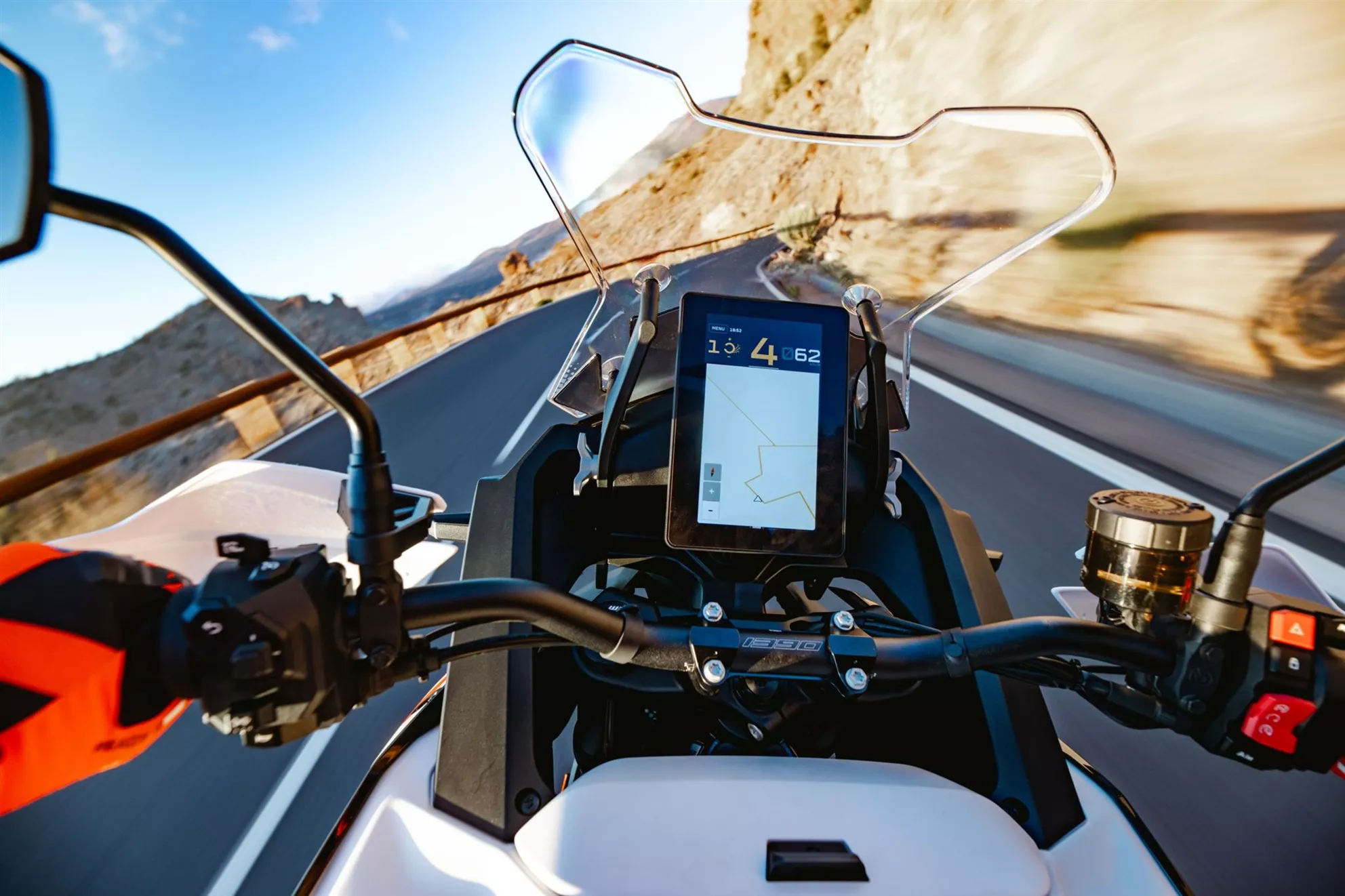
The biggest innovation, or rather revolution, is the new AMT. KTM calls it an "automated manual transmission," but you can simply call it an automatic. What? An automatic in a KTM? Ready to Race? Seriously? Whether the market and the riders will embrace it remains to be seen, but the system works so well that it doesn't detract from the bike's sportiness. Instead, it significantly boosts comfort. Riding in manual mode is reminiscent of using a Rekluse clutch, which isn't a huge leap technically. However, there's no clutch lever in this setup. You can still switch to manual shifting at any time, with several options: a traditional foot lever, paddle shifters on the left handlebar, or simply by briefly closing the throttle to downshift. It functions like riding with a quickshifter, but the longer the test ride went on, the less I found myself using that feature because the automatic works incredibly well. Shifts are never unexpected, and the system inspires instant confidence, allowing the gears to slip in seamlessly. Three shift modes are available: Comfort, Street, and Sport, each differing by how high the engine revs before shifting and always linked to the respective riding mode. In Sport, it really lives up to the name, almost too much so on winding roads, whereas the two more moderate modes offered a smoother, but not necessarily slower, ride through the turns. Moderate might be an overstatement; even Comfort mode is not sluggish and proved to be the most pleasant shifting option for me. If you intervene in the automatic mode with the foot lever or paddle shifters, you stay in manual mode for four seconds before the system returns to automatic. Naturally, you can't stall the bike in manual mode either; if you don't do it yourself, the system shifts to neutral when coming to a stop. Alongside the six gears, there's an eighth position, P for Park, which locks the rear wheel.
&width=72&height=72&bgcolor=rgba_39_42_44_0&mode=crop "Author: wolf")
&width=60&height=60&bgcolor=rgba_39_42_44_0&mode=crop "Author: wolf")


