Communication systems are becoming increasingly popular among riders. I too have been using them for many years now, whether to pass the time on boring motorway stretches, or to "have a laugh" (=fool around) with friends riding along on tour. Generally speaking, there are two types of communication systems. First, the universal systems, which are attached to the outside of the helmet in various ways. However, the legal regulations for helmets and accessories have become stricter in recent years, which is why more and more helmet manufacturers are switching to the second group of systems, the integrated communication systems. Schuberth was one of the pioneers in this segment and now offers three different variants of the SC system.
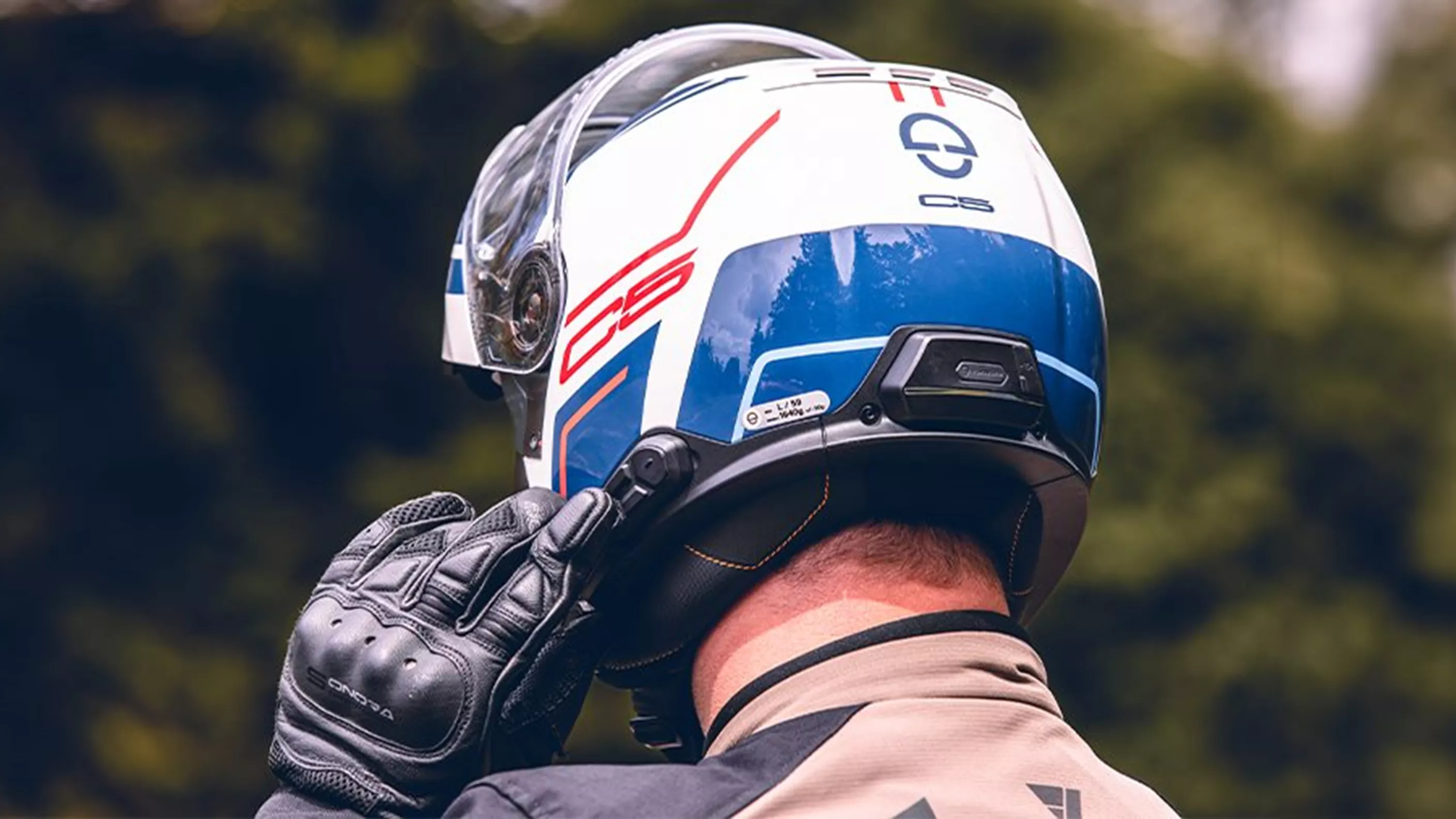
Schuberth SC2, SC2 Standard & SC Edge Compared
What Is the Best Communication System for Your Schuberth Helmet?
Almost all current Schuberth helmets are prepared for communication systems. There are now three different versions of the latest generation of this system, called SC2. We explain how they differ and which advantages each system offers.
&width=72&height=72&bgcolor=rgba_39_42_44_0&mode=crop "Author: Gregor")
Gregor
published on 8/7/2025
42,950 Views
Integrated SC Communication System for Schuberth Helmets - Here's How It Works!
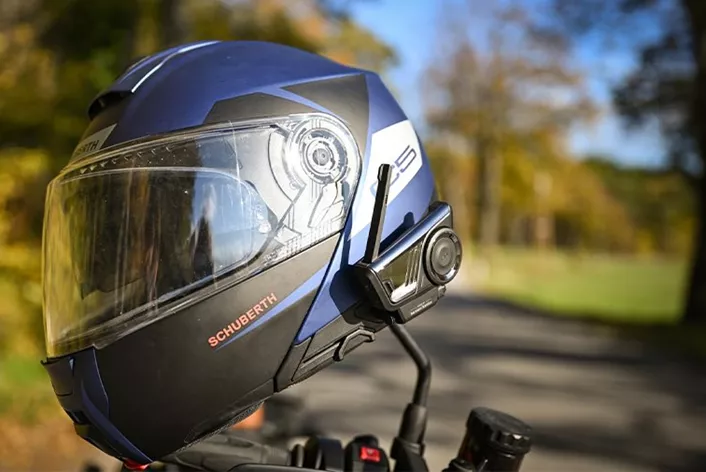
For anyone who hasn't had any contact with the Schuberth system yet, here's how it basically works. The Schuberth SC communication system is specially developed for the current C5, C5 Carbon, E2, S3 and J2 helmet models. These helmets are already fully prepared for retrofitting straight from the factory: three antennas for Bluetooth, mesh intercom and FM radio, as well as HD speakers, are integrated inside the helmet shell. This eliminates the need for elaborate cable routing or external mounting brackets - the technology is seamlessly embedded into the helmet design and visually unobtrusive.
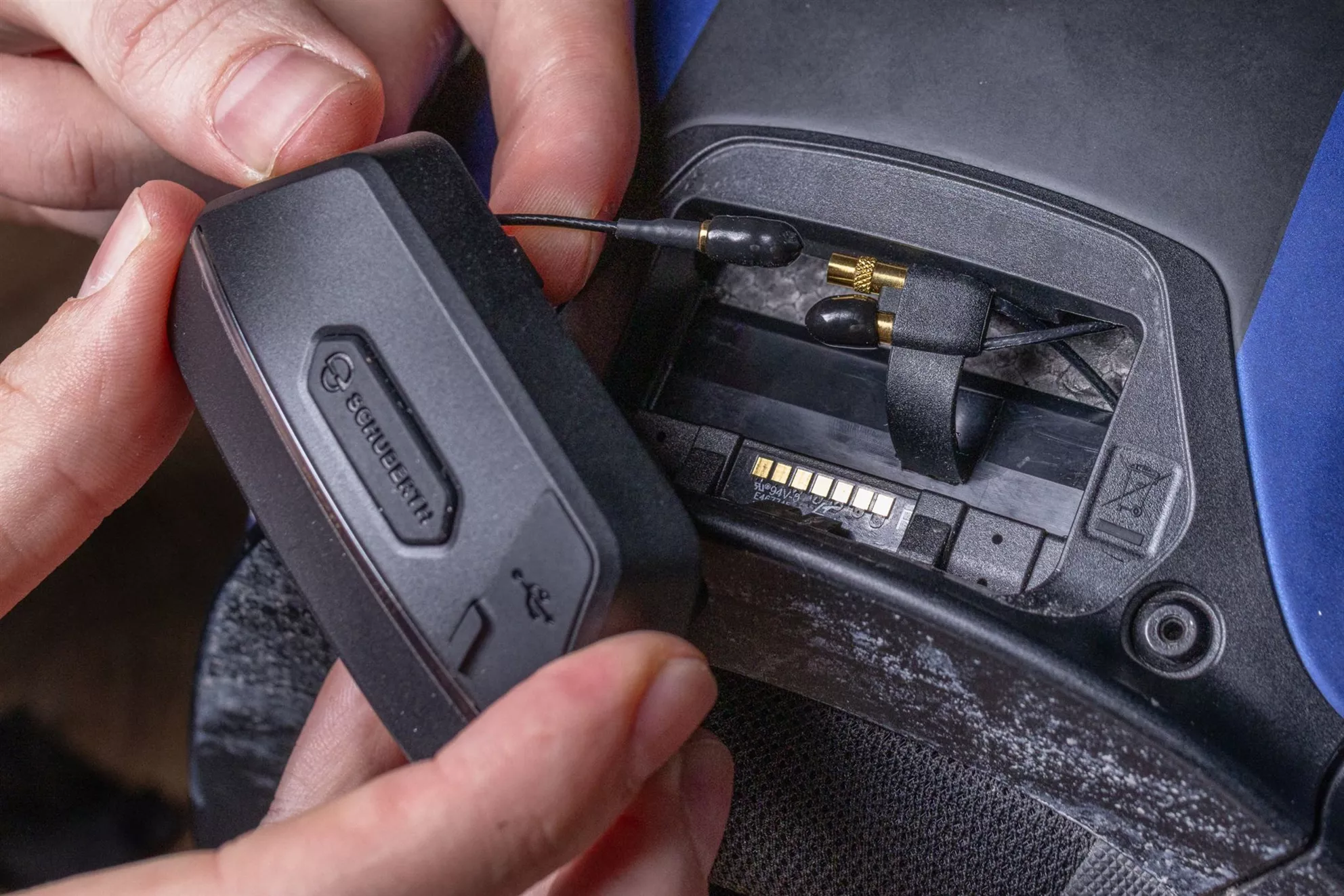
Installing the SC2 system in the Schuberth helmet only takes a few minutes and requires no tools.
Installing the system is particularly simple and requires no tools. First, the covers for the microphone, the side remote control and the main unit are removed. Then the boom microphone and the control unit are inserted into their designated mounts, before the main unit is fitted to the back of the helmet. Once the modules click into place, the system is immediately ready for use and can be configured either via the associated smartphone app or directly via the remote control mounted on the helmet. This plug-and-play system is very well thought out, and installation could hardly be simpler. I have just one suggestion for improvement for future versions: if the side remote control also had a small cable connection, you could save yourself the hassle of checking the button cell battery as well as the sometimes tedious pairing of the remote control and main module. Apart from that, though, installing SC systems is child's play.
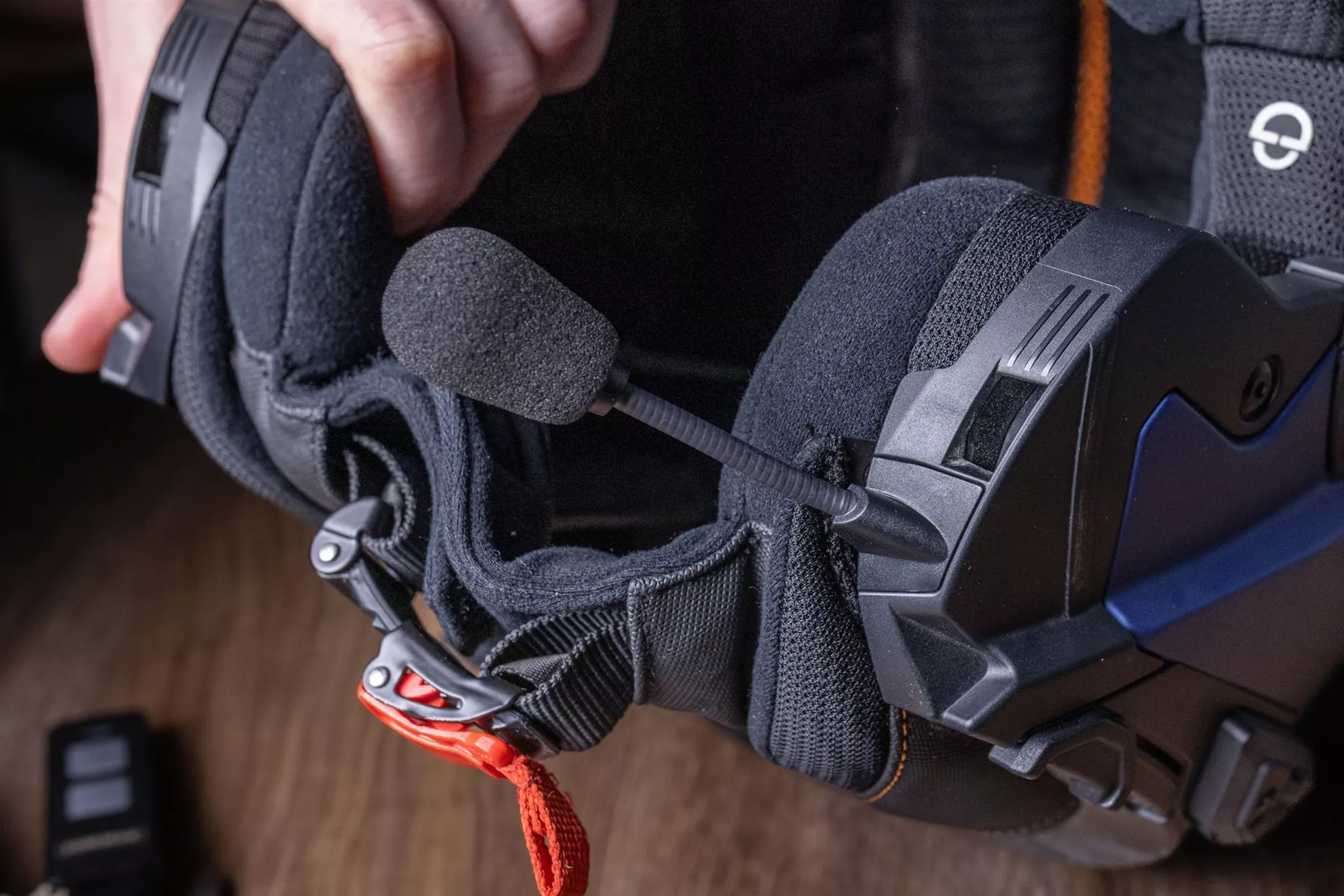
Just like the microphone, all components of the communication system blend seamlessly into the overall look of the helmet.
Schuberth SC2 – SENA-based Mesh Communication
The Schuberth SC2 is Schuberth's SENA-based premium solution. It relies on Bluetooth 5.0 and Mesh 3.0 technology, which allows up to 24 riders to be connected in a Group Mesh. In addition, Open Mesh offers the option of switching between 9 communication channels, similar to a radio network. The range is up to 2 km in open terrain, with the integrated antennas for Bluetooth, Mesh and FM radio optimising connection quality. Besides audio multitasking and excellent HD audio quality, the SC2 supports multilingual voice commands as well as integration with Siri and Google Assistant. The system is configured via the Schuberth SC2 app, while operation is handled directly via the remote control ergonomically integrated into the helmet. The SC2's battery is said to last 8 hours in mesh operation. Without mesh, battery life is 12 hours.
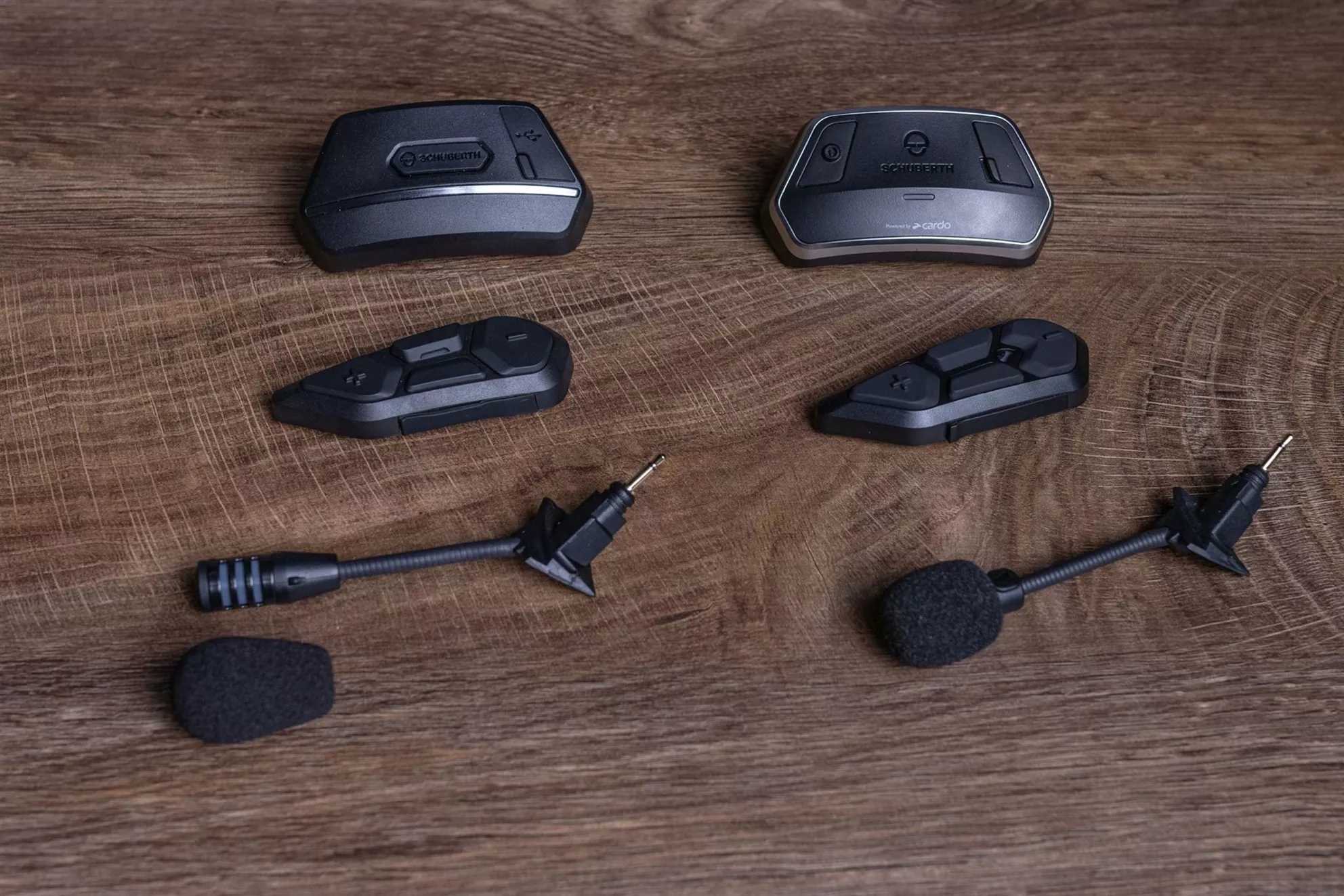
On the left, the SENA-based SC2; on the right, the SC Edge with Cardo technology. Visually, the differences are limited.
Schuberth SC Edge – Cardo Technology with Dynamic Mesh
The SC Edge is based on Cardo PACKTALK Edge technology and extends integration to the C5 Carbon, E2 Carbon, C5, E2, S3 and J2 models. It uses Bluetooth 5.2 as well as 2nd-generation Dynamic Mesh Communication (DMC), which enables particularly easy pairing and an automatic, self-healing network for groups of up to 15 participants. The intercom range is 1.6 km in open terrain and can be extended through mesh relaying between participants. With Natural Voice, functions can be controlled hands-free via voice command, and firmware updates are conveniently carried out over the air. As with the SC2, integrated HD speakers and microphone ensure clear communication, and the Cardo Connect app additionally scores with an equalizer, easy group configuration and intuitive operation. The SC Edge is said to offer 13 hours of battery life before it needs recharging. In addition, unlike the Sena systems, it can also be charged while in use.
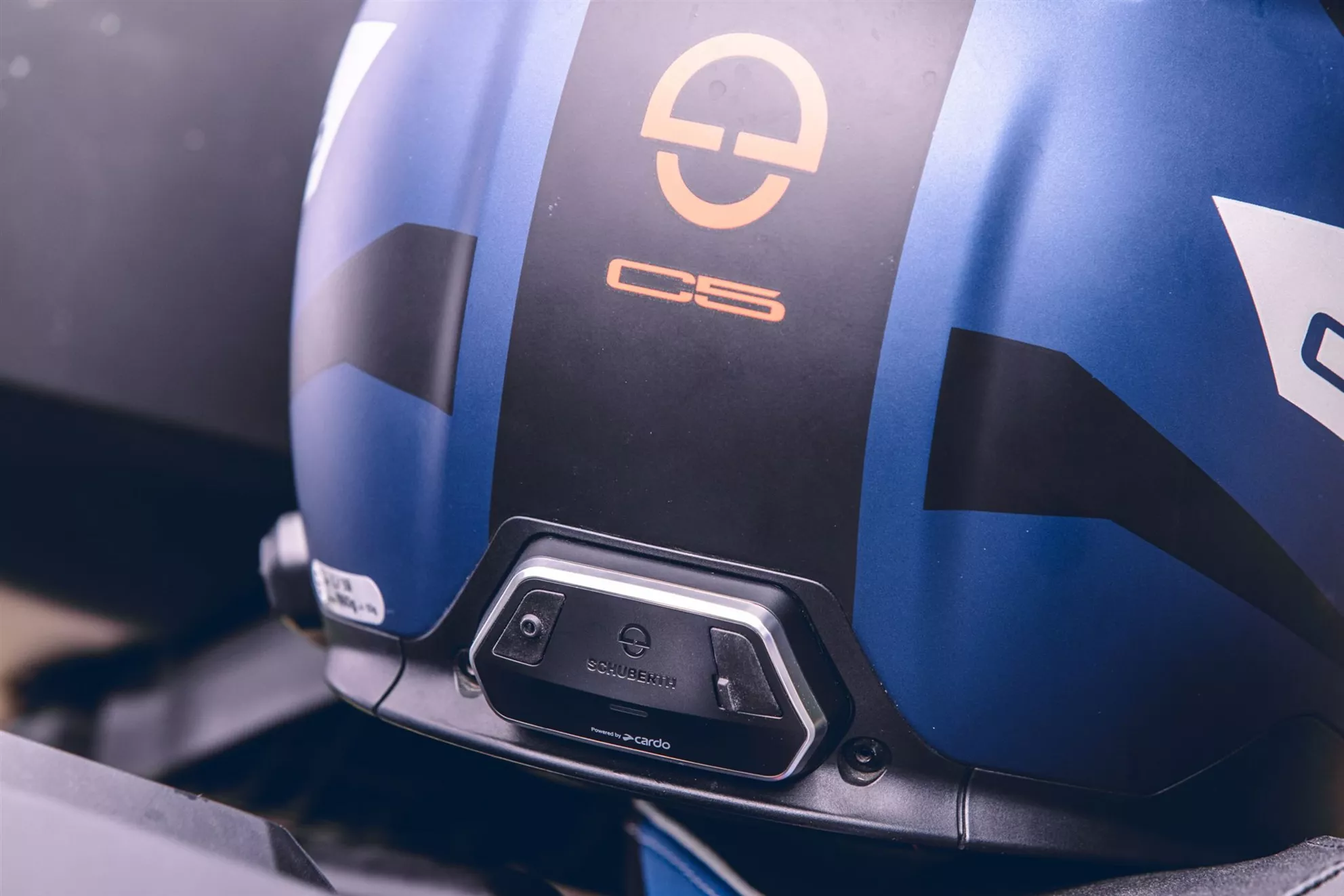
Schuberth C5 with SC Edge
Schuberth SC2 Standard – Bluetooth Communication for Smaller Groups
The Schuberth SC2 Standard is based on SENA 10S technology and is of interest to those who don't intend to connect with large groups, but instead only want to stay in contact within a small team or even just two-up on one bike. The SC2 Standard offers a classic Bluetooth 5.1 connection with 4-way intercom. The range is up to 1 km in open terrain, but no communication network like mesh is established, meaning the signal drops out more quickly when there are obstacles or greater distances between group members. In addition, the SC2 Standard features an integrated FM radio and the option to control it via Siri or Google Assistant. Unlike the mesh-based variants, the SC2 Standard relies entirely on tried-and-tested Bluetooth pairing, but otherwise scores with equally simple operation and straightforward integration into the Schuberth helmets.

Anyone who stays close together and only rides in small groups can also opt for the cheaper SC2 Standard system with Bluetooth communication.
With a RRP of €259, the SC2 Standard is significantly cheaper than the €369 mesh systems. In my opinion, given its focus on Bluetooth, the system is best suited for couples riding either close together on separate bikes or together two-up on one bike. This way you don't miss the range of mesh, but can still talk to each other, listen to music and more.
SC2 or SC Edge for Schuberth Helmets. Sena or Cardo - Which Variant Is Right for You?
The choice between the SENA-based SC2 and the Cardo-based SC Edge depends mainly on personal preference and which system is more common among your riding circle. Although they are, in principle, compatible with systems from the other manufacturer, both systems fundamentally work best within their own ecosystem. So if you already have friends or fellow riders who use Sena, you should stick with the SC2. If, on the other hand, you ride in a group that already uses Cardo, you're better off with the SC Edge. Connecting to other manufacturers remains possible, but the full range of features - particularly in mesh operation - only unfolds within the same brand.
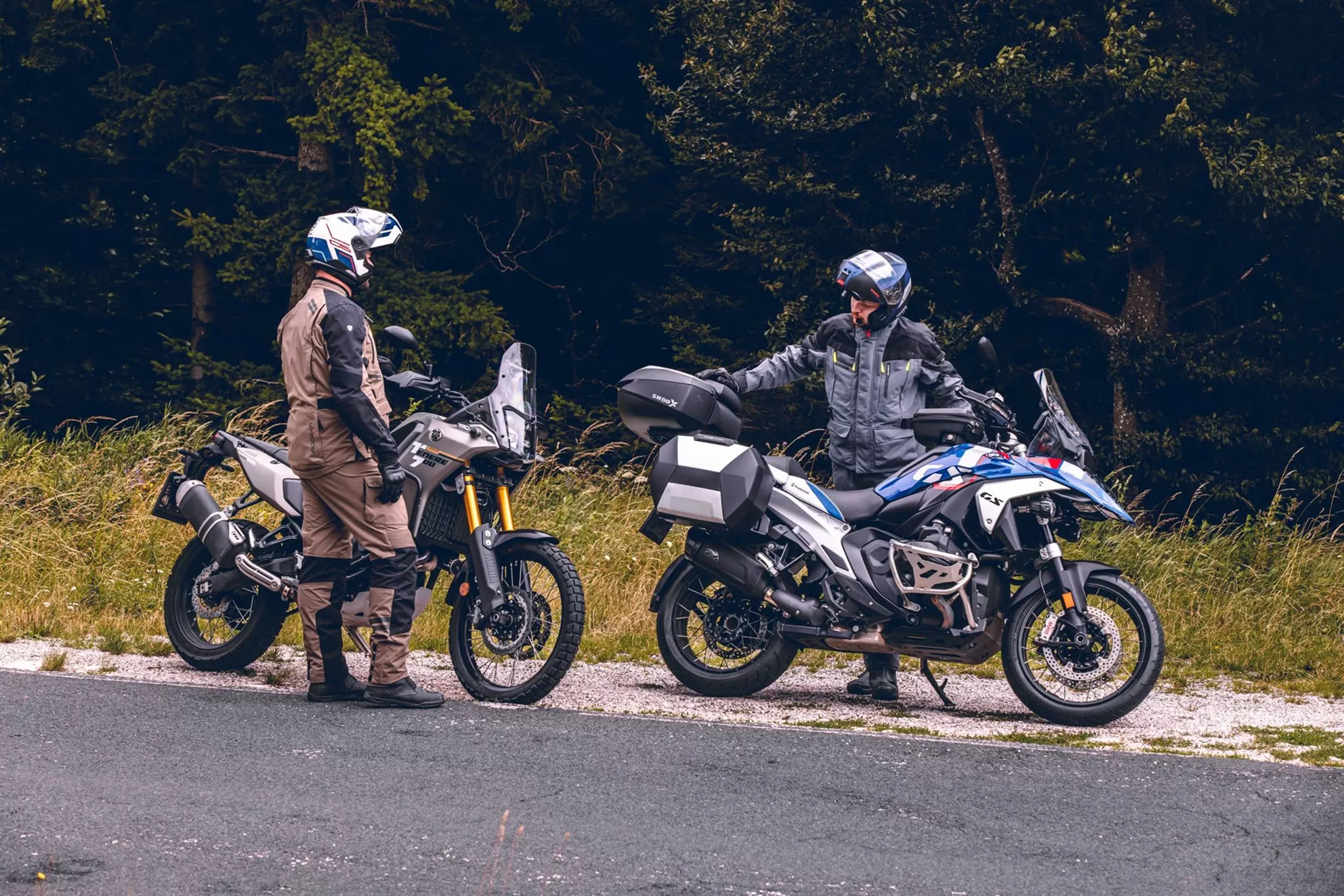
To be able to use as many of the mesh technology's features as possible, it's advisable to choose the same communication system manufacturer as the friends riding with you.
Beyond that, the systems differ mainly in their operating concept, without one being clearly better than the other. Both require a certain amount of getting used to in order to use more complex functions such as pairing multiple riders or sharing music. Simple commands and basic functions, on the other hand, are quickly learned and reliably executed on both. While the SC2 is managed via the Schuberth app, the SC Edge relies on the Cardo Connect app. I personally prefer the latter, as I've been using it for longer and appreciate its intuitive layout. A clear advantage of the Cardo solution is also the option for over-the-air updates, which keep the system up to date without hassle and regularly bring new improvements.
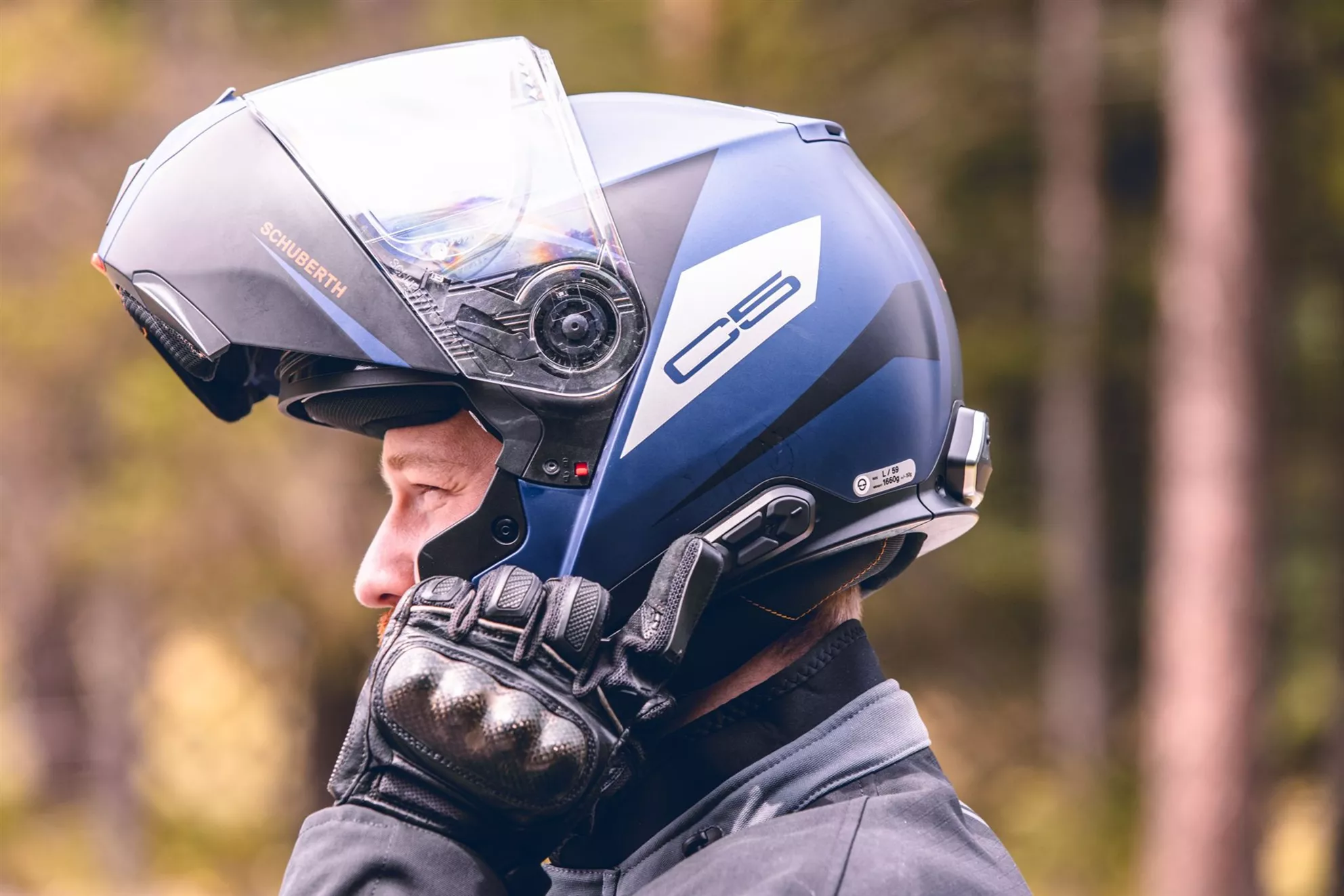
When it comes to the operating concept, it's mainly about personal preference. "Learning" the system is necessary with both Cardo and Sena.
When it comes to audio quality, both systems are locked in a duel at the highest level. The excellent noise insulation of the Schuberth helmets - especially the C5 - noticeably improves this result even further. Both systems offer a clear sound at whatever volume you prefer. The transmitted voice quality is also impressive. Only in very loud environments, such as on bikes without a windscreen on the motorway, does the SC Edge show a slight advantage: the strongly directional microphone of the Cardo technology offers particularly reliable noise suppression here, improving speech intelligibility even under difficult conditions. Overall, though, both systems offer an impressively high technical standard, so the decision essentially comes down to your preferred platform and your existing communication environment.
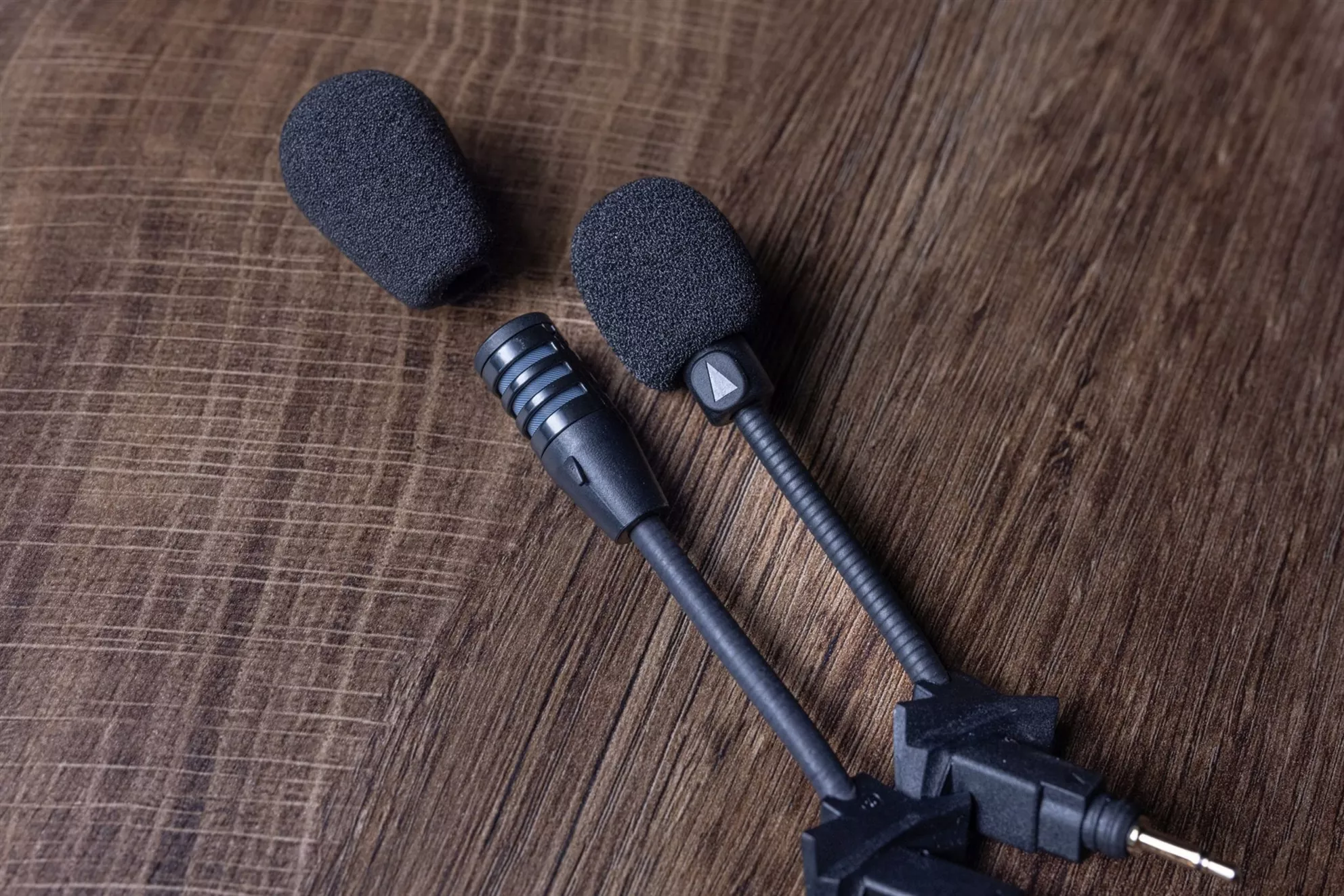
One of the few concrete differences: the Cardo microphone is strongly directional (recognisable by the small arrow, which must point towards the mouth), enabling better speech quality amid loud background noise.
More Information on Schuberth SC Systems and Other Communication Systems
If, after this product overview, you're interested in learning more about Schuberth's SC systems, we recommend a visit to the Schuberth website. There you'll find not only the latest prices and technical data on the various SC systems, but you can also browse through the ample range of accessories to tailor a communication package to your own needs.
Our Reports on Communication Systems for Motorcyclists
Conclusion: Schuberth SC2, SC2 Standard and SC Edge Compared
The Schuberth SC systems are well-thought-out, tool-free plug-and-play solutions for the pre-prepared C5, E2, S3 and J2 helmets, whose installation could hardly be easier thanks to integrated antennas and speakers. The SENA-based SC2 relies on Mesh 3.0 with up to 24 riders, around 2 km range and about 8 hours of mesh battery life. The Cardo-based SC Edge offers self-healing DMC mesh for up to 15 participants, over-the-air updates, charging while in use, and a longer battery life of 13 hours. Both deliver clear sound and good voice quality at the highest level; in very loud environments without a windscreen, the SC Edge's strongly directional Cardo microphone narrowly edges ahead in noise suppression. The 10S-based SC2 Standard costs significantly less at 259 euros compared to the 369-euro mesh variants, but doesn't build a network, meaning the signal drops out more quickly when there are obstacles. Both mesh systems work best within their own ecosystem, so the choice depends on which system is more common in your riding circle. For couples or small teams riding at short distances, the affordable SC2 Standard is sufficient, while for large groups the mesh is worthwhile, since only there does the full range and stability come into play.
Schuberth SC2, SC2 Standard & SC Edge Compared Images
Source: 1000PS


