Who is ready to claim the throne of the touring all-rounders? Three Japanese comfort heavyweights head to the motorcycle paradise of Slovenia. Amidst the finest asphalt curves around the MoHo Hotel Grof and postcard-worthy panoramic roads, the contenders line up: Honda NT1100 DCT ES, Kawasaki Versys 1100 SE, and Yamaha Tracer 9GT+. Which character will prevail – and why?
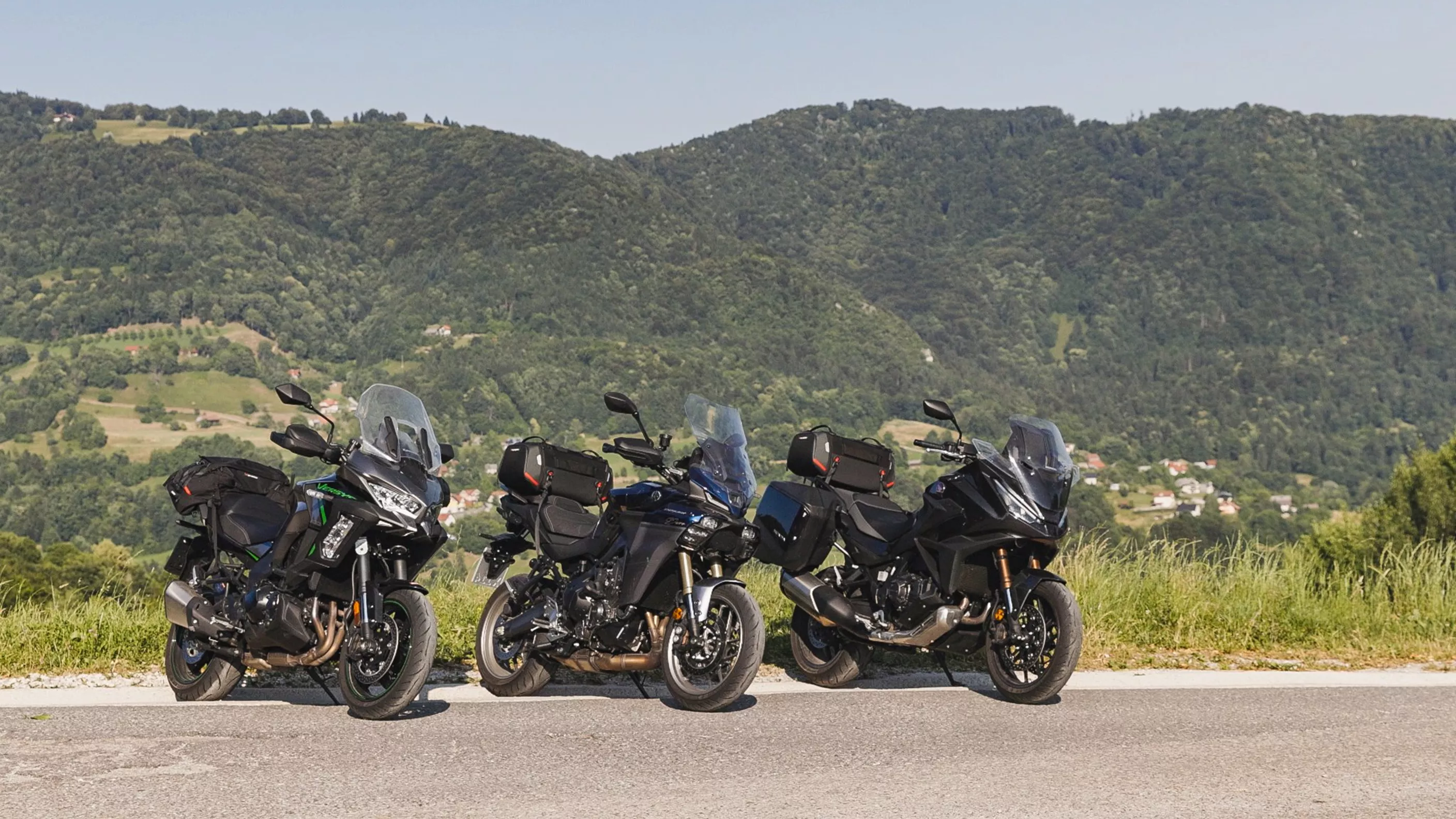
Honda NT1100 DCT ES-Kawasaki Versys 1100 SE-Yamaha Tracer 9GT+: A Battle of Japanese Touring Bikes
Comparative Test of Japanese Touring Motorcycles with a Unique Edge
Three Touring Concepts, One Goal: Top-Level Comfort, Dynamics, and Everyday Usability. In Slovenia's twisty wonderland, the NT1100, Versys 1100 SE, and Tracer 9GT+ go head-to-head.
&width=72&height=72&bgcolor=rgba_39_42_44_0&mode=crop "Author: Poky")
Poky
published on 8/24/2025
27,328 Views
Three Touring Philosophies: The Ultimate Character Test
In a segment as heavily influenced by personal preferences as this one, it becomes clear: the technical execution of comfort, dynamics, and everyday usability can take vastly different paths. The Honda NT1100 presents itself as a comfort guarantee with silky-smooth DCT, newly electronic suspension, and a robust twin-cylinder engine. The Kawasaki Versys 1100 SE scores with unrefined four-cylinder power, a cleverly tuned semi-active suspension, and a comfortable seating architecture. And the Yamaha? The Tracer 9GT+ aims to bridge the gap between dynamics and a feature-packed experience with high-tech, sporty agility, radar-based cruise control, and the automated Y-AMT gearbox in a compact chassis.
Long-Distance Capability: Aerodynamics and Comfort on the Road
On long rides, it becomes evident that wind and weather protection offer more than just comfort. Each motorcycle provides adjustable windshields and heated grips, with the NT1100 and Tracer 9 GT+ also featuring standard luggage.
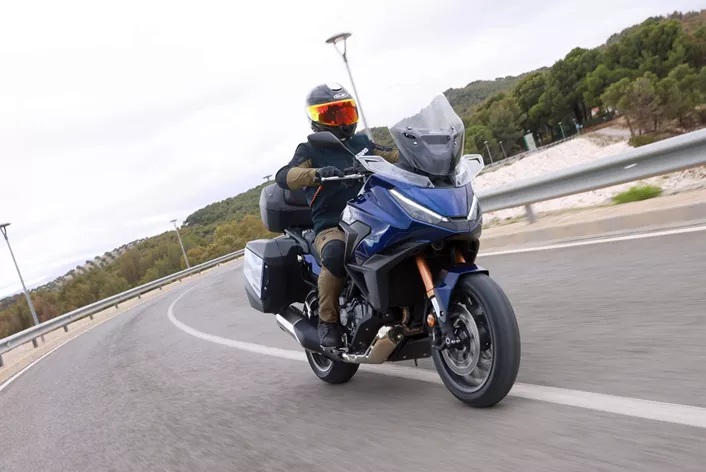
The NT1100 shone until 2024 with a thoughtfully aerodynamic design; our 2022 endurance test confirmed it had the best wind protection on the market, though the adjustment mechanism left much to be desired. Thus, for 2025, a redesign was introduced: a single-handed adjustable screen, integrated deflectors, and a wind guide that reliably offers protection. However, if you're over 1.85 meters, the shield creates an unpleasant drumming on the helmet even at its highest setting. Another downside of the comprehensive wind protection reveals itself on hot early summer days in Slovenia. Even in the lowest position, airflow is significantly restricted, while the engine generates massive heat directed straight at the rider's legs. All in all, the black test bike was a real heat trap.
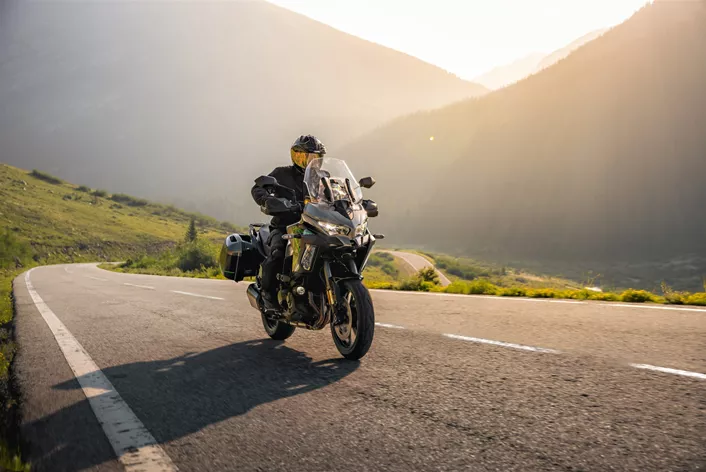
The Kawasaki Versys counters with an even more voluminous protection area and superior seating ergonomics, particularly for medium to tall riders, although the windscreen adjustment in 2025 feels somewhat outdated. Two lockable screws, left and right—more development work could have been invested in the upgrade from the 1000 to 1100 model.
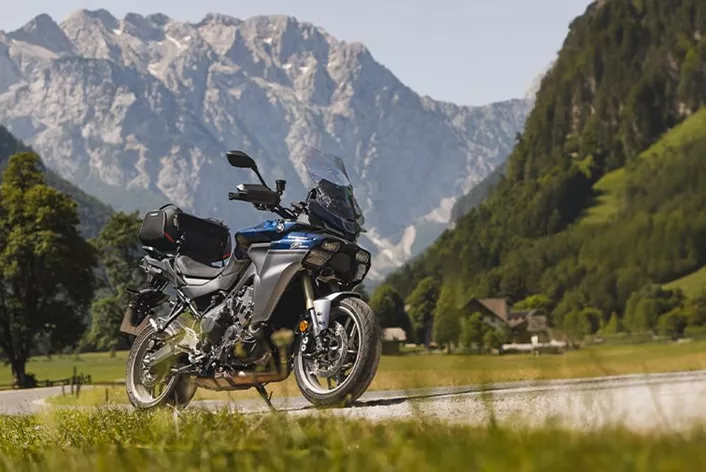
The Yamaha, despite having the slimmest silhouette, also provides excellent wind protection and comfortable seating, yet high-frequency vibrations in the footpegs make long stretches less pleasant, and its limited payload restricts two-up long-distance travel. The most acute knee angle of the trio also comes into play here, whereas the top-notch radar cruise control is a real relief in heavier highway traffic.
Traveling Together: Passenger Comfort Zone
If any motorcycle could be called a sofa, it would be the Kawasaki Versys 1100 SE. Its passenger seat feels like a second living room—long, soft, with an upright position and thoughtfully designed grab handles. The sheer length of the rear is impressive, comfortably accommodating two-up travel even with a larger tail bag like our SW-Motech Cargobag. The maximum load capacity is 212 kg.
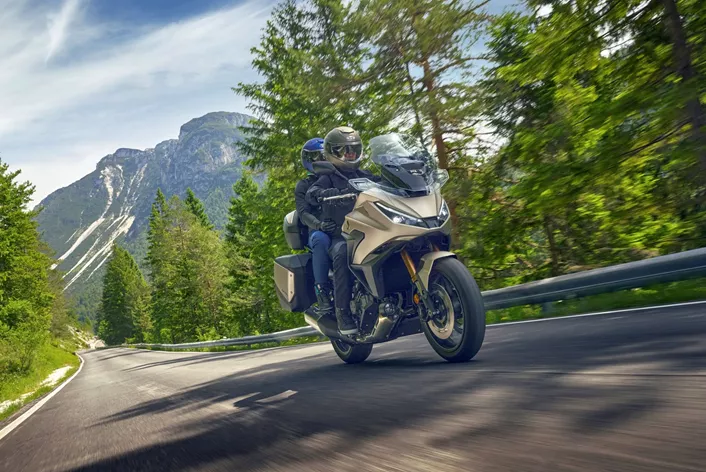
The Honda NT1100 is a close second—the DCT smooths out load changes, and the suspension remains composed even when loaded (preload adjustment is quick and easy via the TFT touchscreen), offering the passenger significant comfort. There’s also ample room for the passenger's boots even with the standard side cases mounted. However, the 194 kg load limit might curtail the fully-loaded fun for two.
The Yamaha Tracer 9 GT+ offers noticeably less movement freedom and seat space for the passenger in comparison. Although the padding is comfortable, the sport-focused design limits passenger suitability on the Tracer. The load limit of 193 kg is also reached quicker than a traveler might like. On the plus side, the AMT gearbox shifts smoothly, and the notorious helmet bumping shouldn't be an issue here.
Corner Chasing: Agility in Giant Form
- How much does a Kawasaki Versys 1100 SE cost?
- Here you will find an overview of the price level of new and used motorbikes!
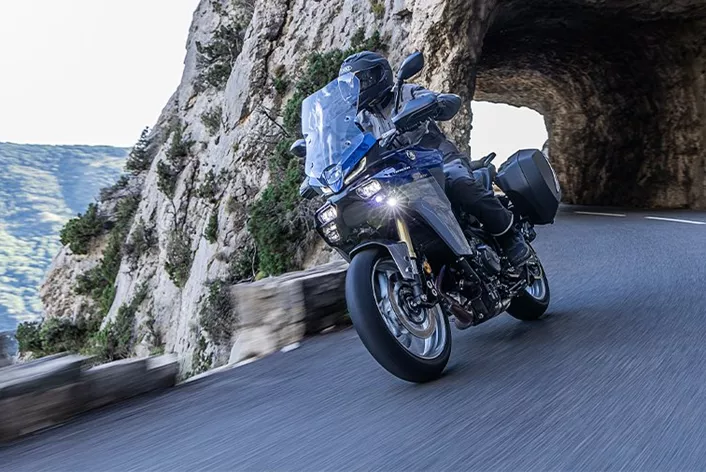
Nimble through the twisties? The surprise: all three manage it. The Tracer 9GT+ is the expected corner-carving machine. Its CP3 triple-cylinder propels it with vigor through bends, and its relatively light weight combined with an optionally firm suspension harmonizes perfectly. Despite some criticism of the AMT gearbox in automatic mode, shifting manually with a button feels great and happens swiftly—a perfect match for this agile corner predator.
The Versys impresses with its precision: despite its considerable mass, it remains neutral, stable, and reliable, even when leaned over. In Sport mode, all parameters from the engine to the suspension are perfectly tuned, and for those wanting more, the user mode allows for further customization. The thrilling four-cylinder scream just begs for more. A true gazelle in a hippo suit.
And the Honda? Almost mind-controlled. The NT1100 turns in better than the specs suggest—particularly due to the excellent interplay between the DCT, low center of gravity, and highly harmonious suspension. Compared to its predecessor, it's a massive leap forward, even though the NT is still not a speed demon, nor does it intend to be. The engine is powerful and sounds great, but it’s better to shift up and ride the torque wave rather than revving it out to the limit.
Urban Daily Life: Commuting, Maneuvering, Visibility
In the city, the real test begins—at least theoretically. The Tracer initially seems like a favorite due to its lightest weight, but the Y-AMT makes city life difficult. Gears are held too long, and rider inputs are ignored. The excellent engine would have no problem cruising quietly in fifth gear through urban areas, but neither mode D nor D+ allows for that. Only in manual mode can the engine's potential be fully utilized. It's a shame. At least, thanks to its lighter weight, it's easy to hoist the Tracer onto the center stand, and the central locking for the cases is a very practical feature that the competition doesn't offer.
The NT1100, on the other hand, shines: very accessible DCT, low center of gravity, high steering angle—it’s the most relaxed city companion. However, getting it on or off the center stand requires some strength and balance. Even when maneuvering, it remains confident; once you’ve internalized the interplay between the rear brake and DCT, tight turns are a breeze.
The Versys 1100 requires a bit more effort here but remains practical thanks to a well-adjustable clutch and a decent steering angle. Challenges arise when standing or handling the bike without the engine running, but the center stand is standard here as well.
Assist Systems & Electronics: Who Delivers, Who Annoys?
One of the most exciting categories—modern assist systems are meant to help, not hinder. Here, opinions are divided. The Honda NT1100 offers a future-ready system with a touchscreen, Apple CarPlay, Android Auto, and numerous configuration options, but it suffers from sluggish response times and a somewhat convoluted display layout. The intervention of ABS and traction control, now lean-angle sensitive compared to its predecessor, is only noticeable during extremely sporty riding, with short intervention intervals.
The Tracer 9GT+, on the other hand, shows a bold approach to innovation: thumb-operated indicators left and right, Matrix LED, and a well-laid-out 7-inch TFT screen. The blind spot monitor and radar cruise control are pioneering in this class, and the initial implementation is superbly executed, making them 100% practical. Yamaha's assist systems operate at the highest level.
The Kawasaki Versys excels dynamically—the electronic suspension is in a class of its own, and the quickshifter operates smoothly. However, the display looks outdated, and the mode switching has a delay of several seconds between input and execution. Delays are a no-go in 2025. The intervention of the assist systems is not as subtle as the competition, and an update for 2025 would have been desirable here too.
Engine Character: Three Concepts, Three Souls
The Versys's four-cylinder is the gentleman of the trio—powerful, assured, and sophisticated. It pulls like a freight train even at low and mid-range RPMs, which is unusual for this type, but always remains calm and precisely controllable. At higher revs, it just keeps going. An engine that's truly fun to ride.
The Tracer counters with maximum emotion: the CP3 revs, screams, and delivers. Especially in manual mode, you can shamelessly enjoy the punch out of the corners, complete with an exhilarating soundtrack.
The Honda opts for solid torque from the get-go: the parallel-twin offers plenty of low-end power, which pairs excellently with the DCT. The throaty sound of the twin-cylinder, thanks to its crankpin offset, is a real pleasure. It doesn't rev as eagerly as its one or two-cylinder counterparts but provides consistent and robust thrust. A fantastic travel companion.
Fuel Consumption and Range: The Third Race
- How much does a Honda NT1100 DCT Electronic Suspension cost?
- Here you will find an overview of the price level of new and used motorbikes!
The Yamaha surprises with a real-world fuel consumption of just 4.4 liters—an absolute standout given the sporty riding style during the test. The heavier competitors aren't much thirstier: Honda comes in at 4.9 liters, half a liter more than the Tracer 9GT+, while the Versys 1100 consumes 5.5 liters, 1.1 liters more than the Yamaha, but it also offers the most power. In terms of range, all three, as expected for touring bikes, exceed 300 km, with the Tracer slightly in the lead.
Gear for the Slovenia Test
35 degrees in the shade, downpours like a pressure washer, and sweat-inducing filming rides in between—our crossover tour put not only the riders and bikes but also the gear to a tough test. Both Gregor's Aeris II suit, Amelie's Striker III Lady suit, and my Modeka Lucano suit excelled with pragmatic qualities like well-distributed pockets, cooling ventilation zones, and comfortable wear. Meanwhile, our perpetually sweaty heads were adorned with HJC F100 Carbon helmets, which are more comfortable to wear than traditional flip-up helmets due to their flip-back system, and significantly lighter at just 1500 g in size M thanks to the generous use of carbon. We could directly exchange information about the route, riding impressions, and more during the ride using the Cardo Packtalk Pro communication systems on our helmets. The storage space on the tourers was suitably expanded for the week-long trip with the soft luggage solutions from SW-Motech long tested by the 1000PS editorial team.
Metzeler ROADTEC 02 in a 1500 km Touring Test as the Standard Tire
For this comparison, we aimed for uniformity and equipped all three contenders with the Metzeler ROADTEC 02. This new "Super Sport-Touring" tire promises a balance of sporty feedback and touring comfort—and it delivers on that promise. The ROADTEC 02 is the direct successor to the well-known ROADTEC 01 SE, but with new materials and technologies, it brings significantly more dynamism to the table. Up front, a full-silica compound ensures quick warm-up times, while at the rear, a Cap&Base construction with dual compound is used. The highlight is the Dynatread technology: as lean angles increase, parts of the tread close, noticeably contributing to stability.
In practice—over 300 km of continuous rain, above 30-degree temperatures, and lean angles on passes and relaxed city and country road stages—the tire proved consistently predictable. Even on slick wet markings, the ROADTEC 02 remained reliable, and when quickly changing directions, it stayed neutral. Particularly noteworthy was how quickly the tires reached temperature—a significant safety advantage in everyday riding. Even after more than 1500 km, the tread depth was hardly affected—a quality feature for frequent riders. Metzeler has created an all-rounder with the ROADTEC 02 that seamlessly fits into the characters of the three tourers with its confident handling and reliable feedback.
Test Conclusion: Three Bikes, Three Personalities – Which Rider Fits Which Tourer?
The Honda NT1100 DCT ES is the perfect motorcycle for frequent riders who appreciate stress-free touring with high technical integration. Those who love long hauls, want minimal interaction with clutch and gearshift, and value clear, comfort-oriented ergonomics will find long-term happiness with the NT. It's especially suitable for riders with high safety needs and a penchant for forgiving, reliable technology.
The Kawasaki Versys 1100 SE is aimed at experienced touring riders who want to travel sportily and assertively, even with full luggage and a passenger. Its confident four-cylinder, well-tuned suspension, and immense stability make it the ideal companion for ambitious trips with a comfort factor—even for tall riders. Those who value classic motorcycle mechanics, space, and suspension quality will be more than satisfied with the Versys.
The Yamaha Tracer 9GT+ appeals to sport-oriented tourers who want to combine dynamic riding with electronic assistance. Its light weight, emotional CP3 engine character, and modern assist architecture make it attractive for riders who combine technological curiosity with sporty riding. It's ideal for riders with a passion for curves who are looking for an agile and efficient touring tool and want full visibility even at night.
Note: The following individual conclusions are from the latest single test reports of the three touring motorcycles.
- How much does a Yamaha Tracer 9 GT+ Y-AMT cost?
- Here you will find an overview of the price level of new and used motorbikes!
&width=60&height=60&bgcolor=rgba_39_42_44_0&mode=crop "Author: Poky")
Kawasaki Versys 1100 SE 2025 - Experiences and Expert Review
Poky
With the new Versys 1100 SE, Kawasaki firmly stakes its claim in the touring segment. With a solid engine and well-functioning systems, the Greens definitely counter in terms of price/performance ratio. The high riding comfort will surely expand the new Versys 1100 SE's fan base and more than live up to the timeless slogan "Let the good times roll."
Honda NT1100 DCT Electronic Suspension 2025 - Experiences and Expert Review
Poky
The Honda NT1100 has evolved significantly from 2022 to 2025, despite already being a satisfactory bike. While maintaining the core concept of a comfortable, reliable, and efficient tourer, numerous improvements have made the new NT1100 even better suited for long journeys. Those who liked the 2022 model will love the 2025 version. With its sleek appearance, effortlessly light handling, and touring capabilities, it appeals to both young and old, beginners and seasoned bikers, inviting them to explore the world.
Yamaha Tracer 9 GT+ Y-AMT 2025 - Experiences and Expert Review
Poky
The Yamaha Tracer 9 GT+ 2025 impressively demonstrates how technology can be effectively utilized to make touring easier, safer, and more exciting. For experienced long-distance riders, tech-savvy enthusiasts, and anyone seeking a well-thought-out motorcycle with style, system, and substance, it is a revelation.
More from 1000PS Magazine




Honda NT1100 DCT ES-Kawasaki Versys 1100 SE-Yamaha Tracer 9GT+: A Battle of Japanese Touring Bikes Images
Source: 1000PS


