

Yuasa shows how to prevent it

Yuasa shows how to prevent it

Heat Stress for Motorcycle Batteries

When summer comes, it's not just the mood that rises. Temperatures during motorcycle use climb too - and that has consequences for the battery. While tires, oil, and cooling are regularly in focus, the power supply is often only noticed once the starter reacts reluctantly. Yet the rule is: heat is at least as critical for motorcycle batteries as winter cold - just on quieter feet.

AJay

AJay

published on 7/31/2025

6,627 Views

What Happens Inside

A motorcycle battery is no simple energy store, but a small chemical power plant. And like any chemical system, it's sensitive to temperature. In summer heat, the electrochemical processes speed up. In the short term this can even be positive, since the battery delivers more power. In the long term, however, this leads to a faster aging process. The exact consequences:

  • Increased water loss in classic lead-acid batteries.
  • Swelling and gassing in AGM and gel batteries due to overheating.
  • Faster self-discharge when the bike stands for longer periods.

You don't feel the result right away. Only when the bike starts more sluggishly, the onboard voltage drops, or the battery visibly "works" - for example through a deformed casing - does it become clear: summer takes its toll.
The Typical Summer Traps

Heat isn't a problem for the ride itself - it's a problem for the "in-between." Bikes that often sit out in the open during summer are hit twice as hard. Dark seats heat up the surrounding area even further, and under the seat it quickly gets as hot as an oven. Even high-quality batteries lose lifespan month by month as a result.

On top of that: many riders use the season for short trips. Short commutes or after-work loops barely give the alternator a chance to fully charge the battery. Combined with heat and additional electronics - navigation devices, heated grips in early autumn, USB charging ports - an energy deficit builds up that eventually ends in a quiet "click" at the start.

Prevention Is Easier Than a Jump Start

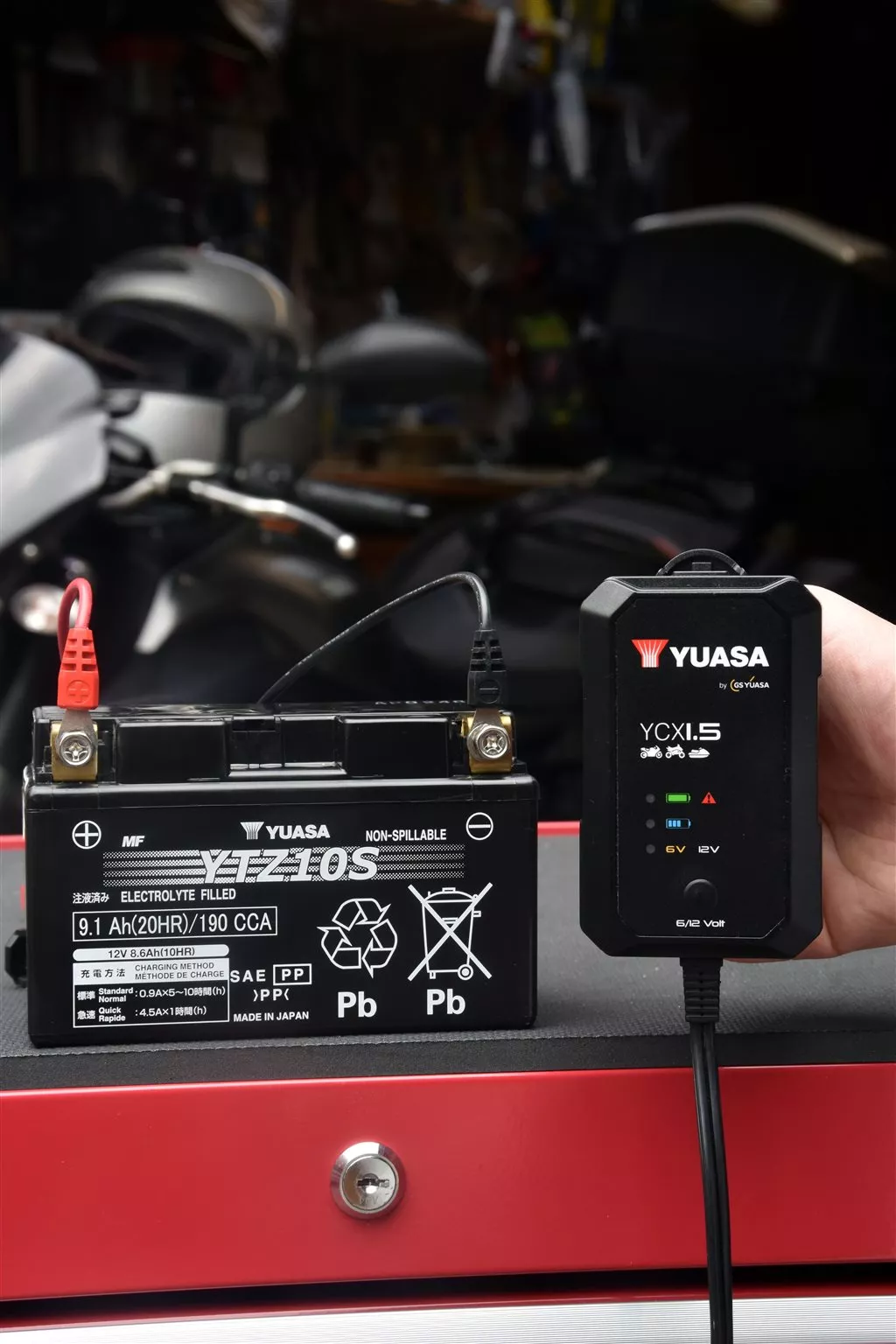
The good news: summer stress on the battery can be avoided if you follow a few simple rules. Regular voltage checks help keep an eye on the state of charge. Modern chargers like the Yuasa YCX1.5 Smart Charger work automatically through six charging phases, adjusting voltage and current and preventing overcharging. A quick battery check should also be part of every workshop inspection - ideally with a logged record. This way, impending failures can be detected before the customer gets stranded. And anyone who has the option of parking the bike in the shade or using additional heat protection measures relieves the battery further.

The Yuasa YCX1.5 is an example of how battery maintenance can be integrated into everyday use. It's suitable for all common lead-acid batteries, including AGM and gel, and works fully automatically. Besides classic summer care, it plays a second role in winter: as a trickle charger that keeps the battery constantly at an optimal level - without manual intervention. For workshops, this means fewer complaints and a clear recommendation for customers who expect a ready-to-ride bike regardless of the season.

Yuasa YCX1.5 charger in use with a motorcycle battery

Yuasa YCX1.5 charger in use with a motorcycle battery

Conclusion: Take Summer Heat Seriously, Avoid Starting Problems

The battery is one of the most underestimated wear parts on a bike. Especially in summer, the strain is high - not dramatic, but continuous. Anyone who checks in time, charges regularly, and uses modern chargers saves themselves the hassle of an unexpected failure.

Or put another way: with the right battery care, only the rider sweats in summer - not the electrics. Information on the products is available on the official Yuasa website.

Conclusion: Yuasa YCX1.5 Smart Charger against summer heat

The Yuasa YCX1.5 Smart Charger takes the manual work out of battery care in both summer and winter. It operates fully automatically through six charging phases, adjusts voltage and current, and prevents overcharging, thereby absorbing the heat-related stress that ages batteries month after month. Especially under the seat, a battery is under constant strain on hot days, resulting in accelerated self-discharge and increased water loss, while the alternator barely recharges it on short trips. The charger is suitable for all common lead-acid types including AGM and gel and additionally takes over trickle charging at a constant level in winter. For workshops, this means fewer complaints and a clear recommendation for customers who expect a ready-to-start bike regardless of the season. For high-mileage riders with a short-trip profile and for anyone who parks their bike outdoors, the device pays off because it stops the slow, unnoticed aging of the battery before it ends up as just a click at the start.


Fully automatic six-phase charging

Protection against overcharging

Suitable for lead-acid, AGM and gel

Trickle charger in winter

Does not repair an already damaged battery