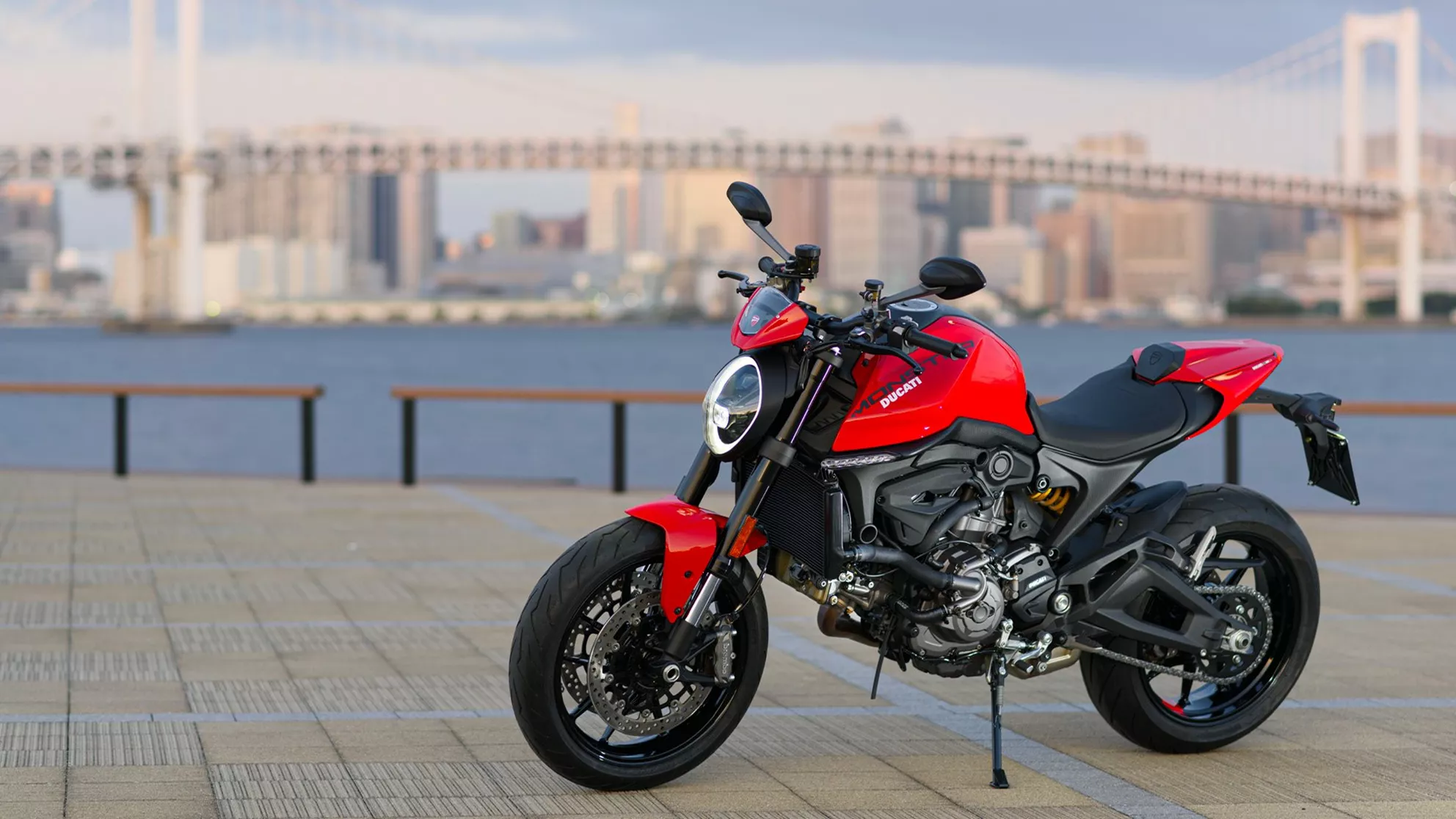
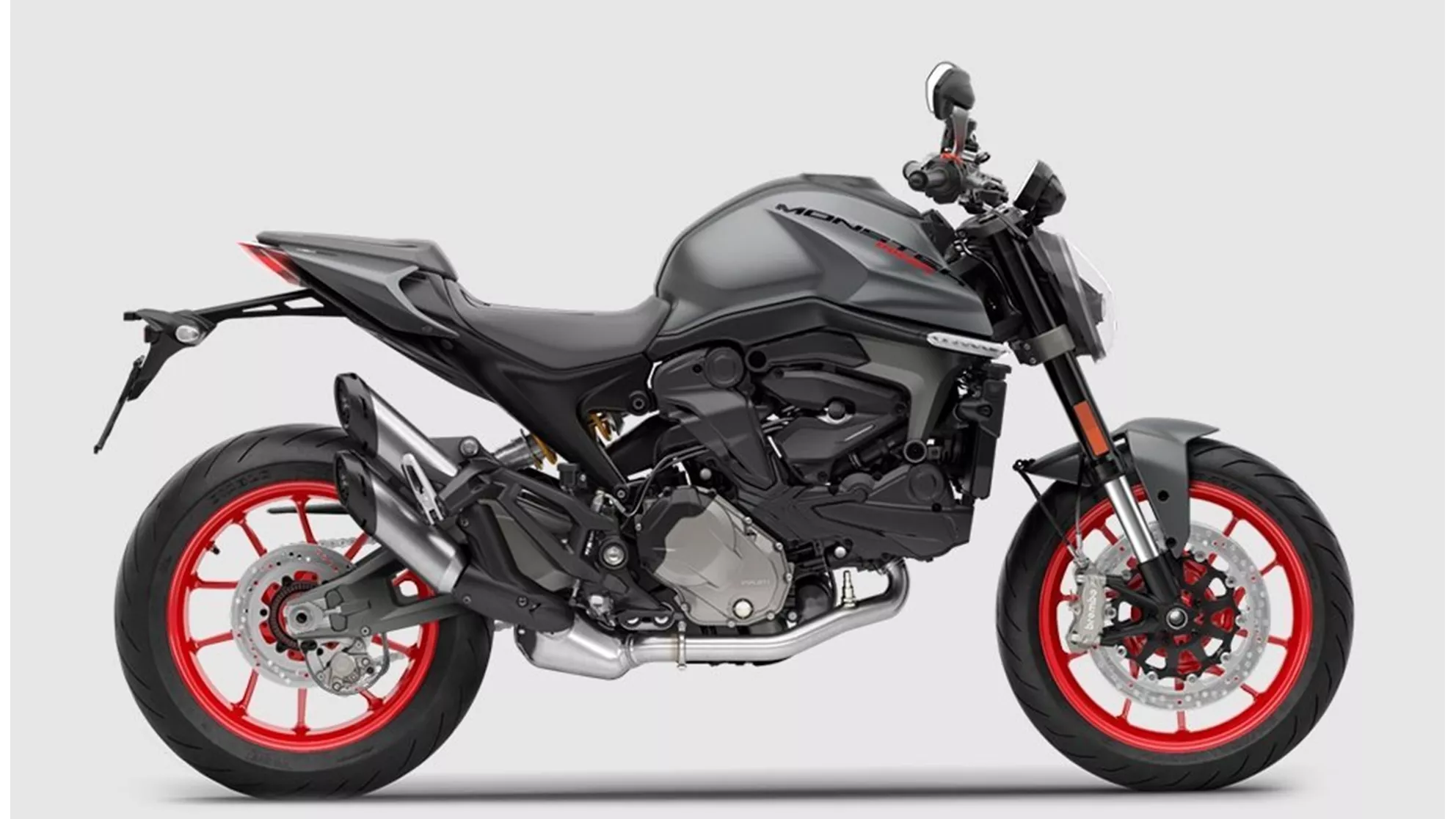
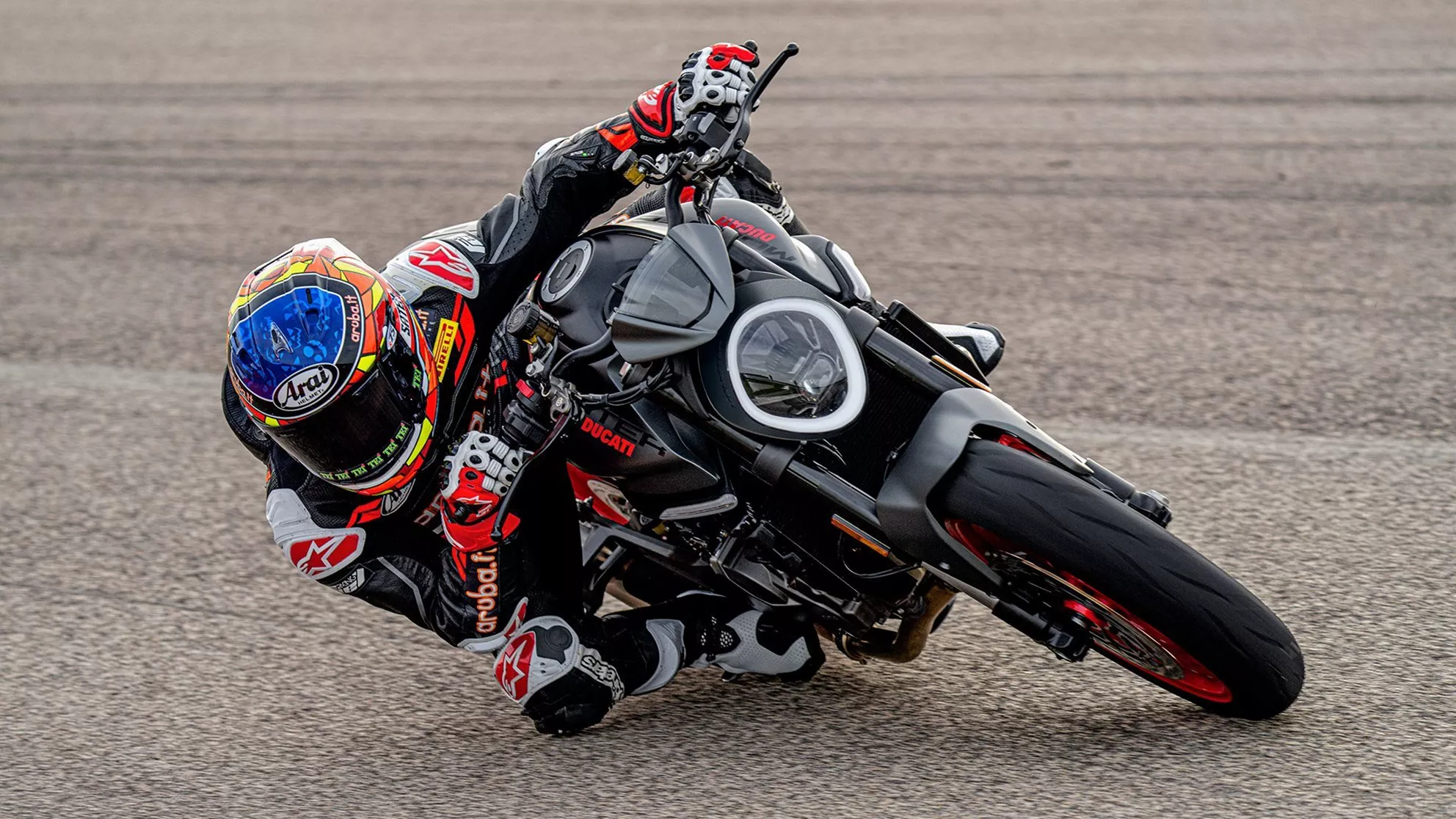
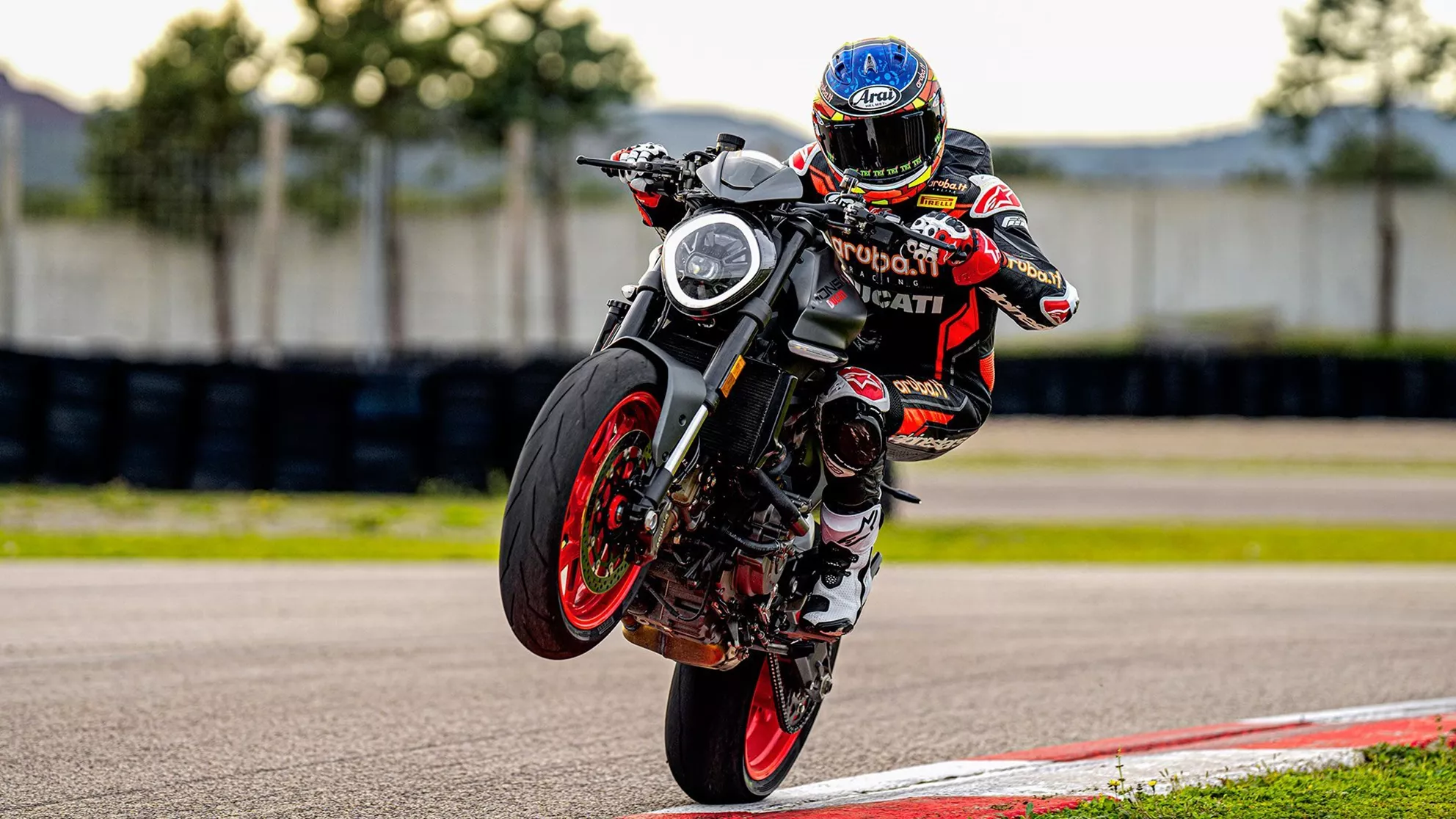
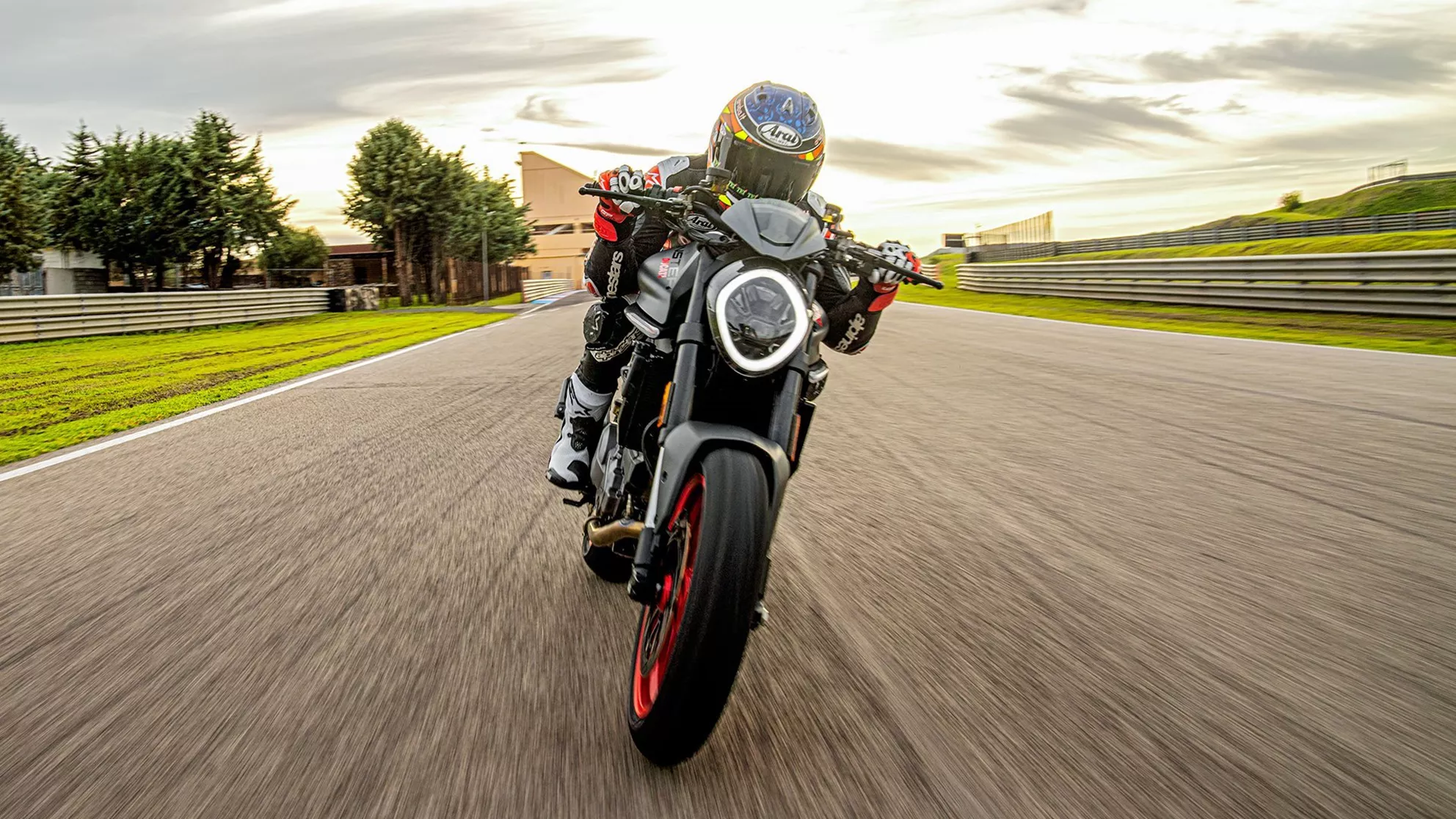
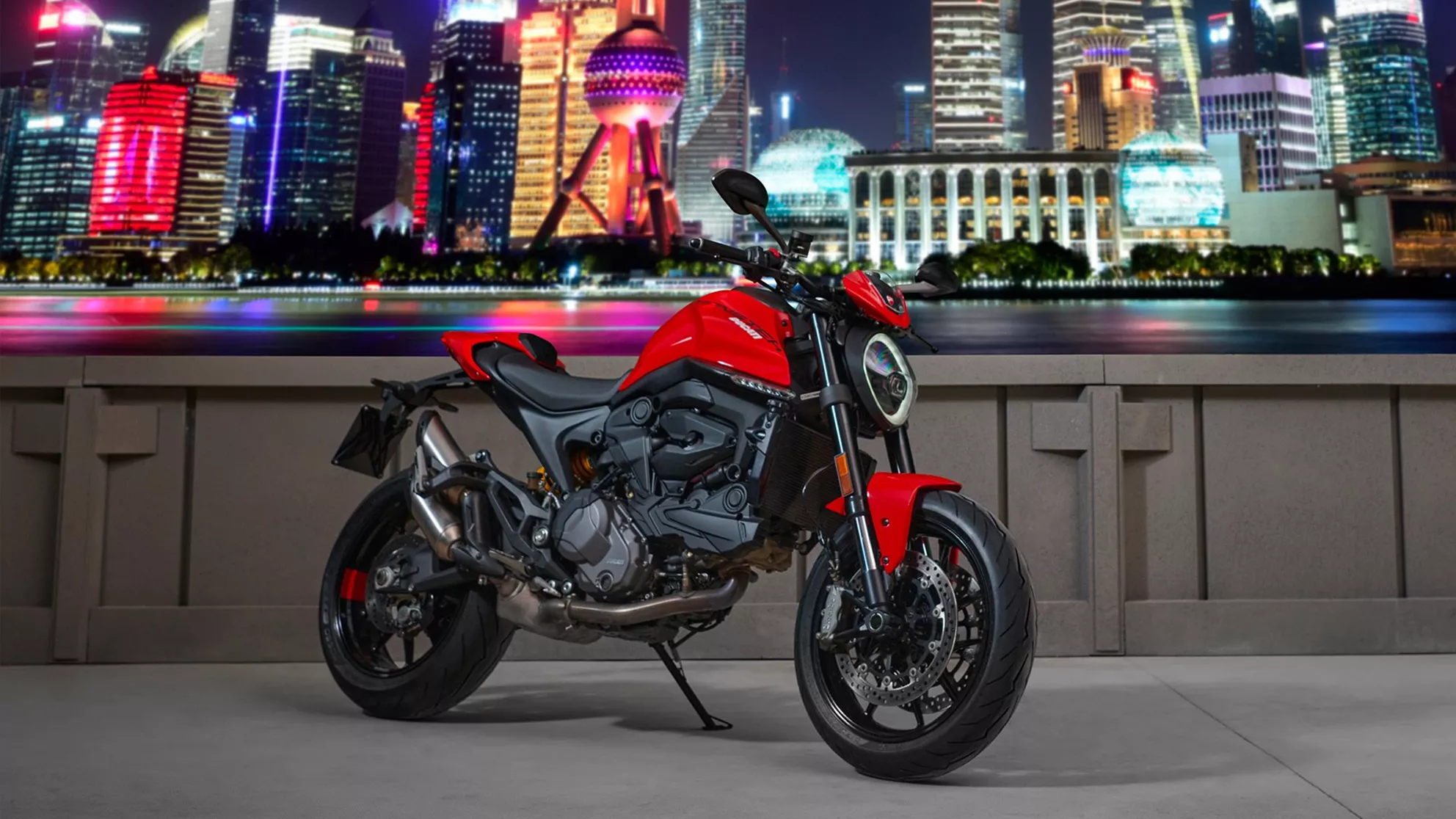
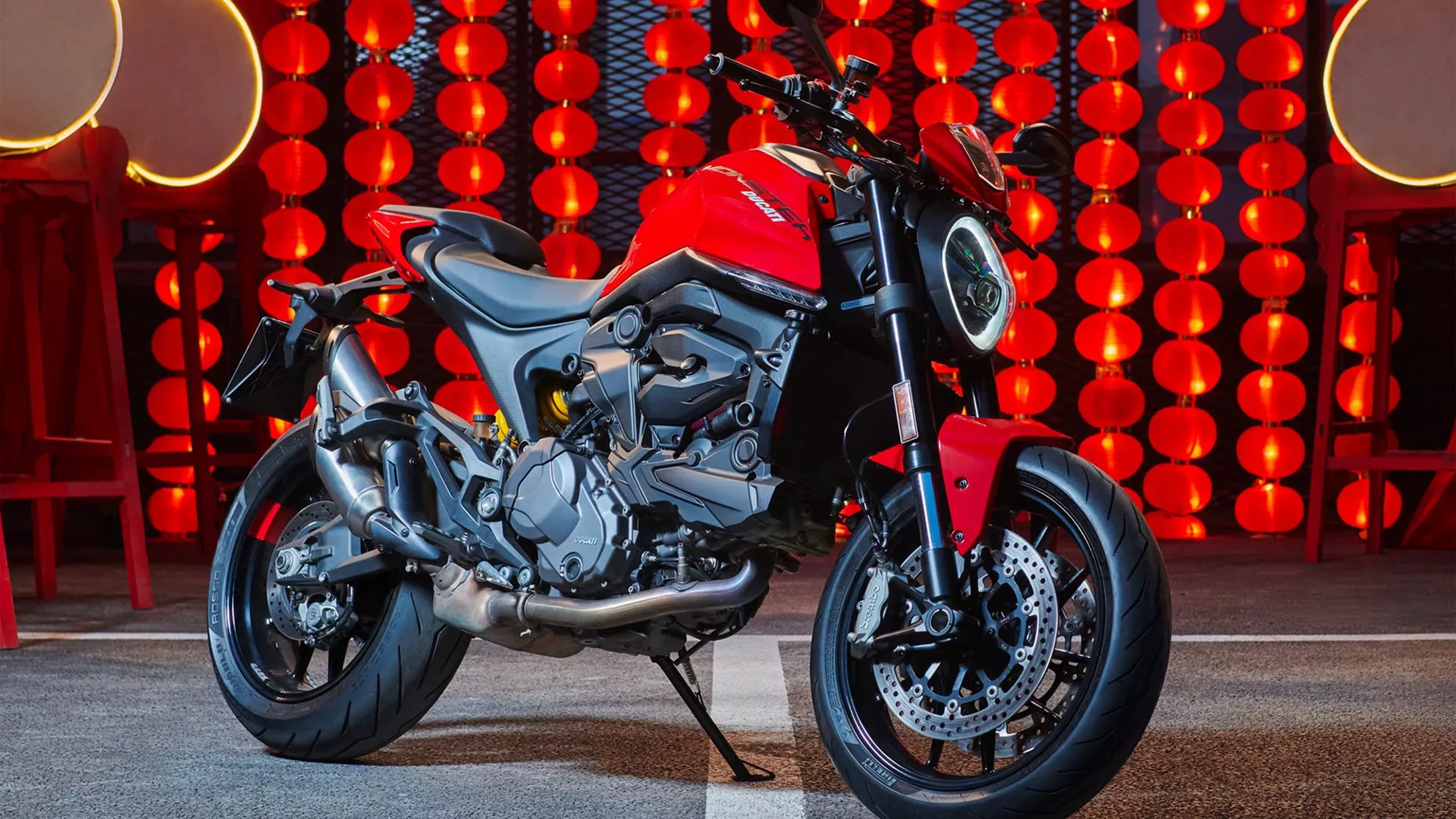
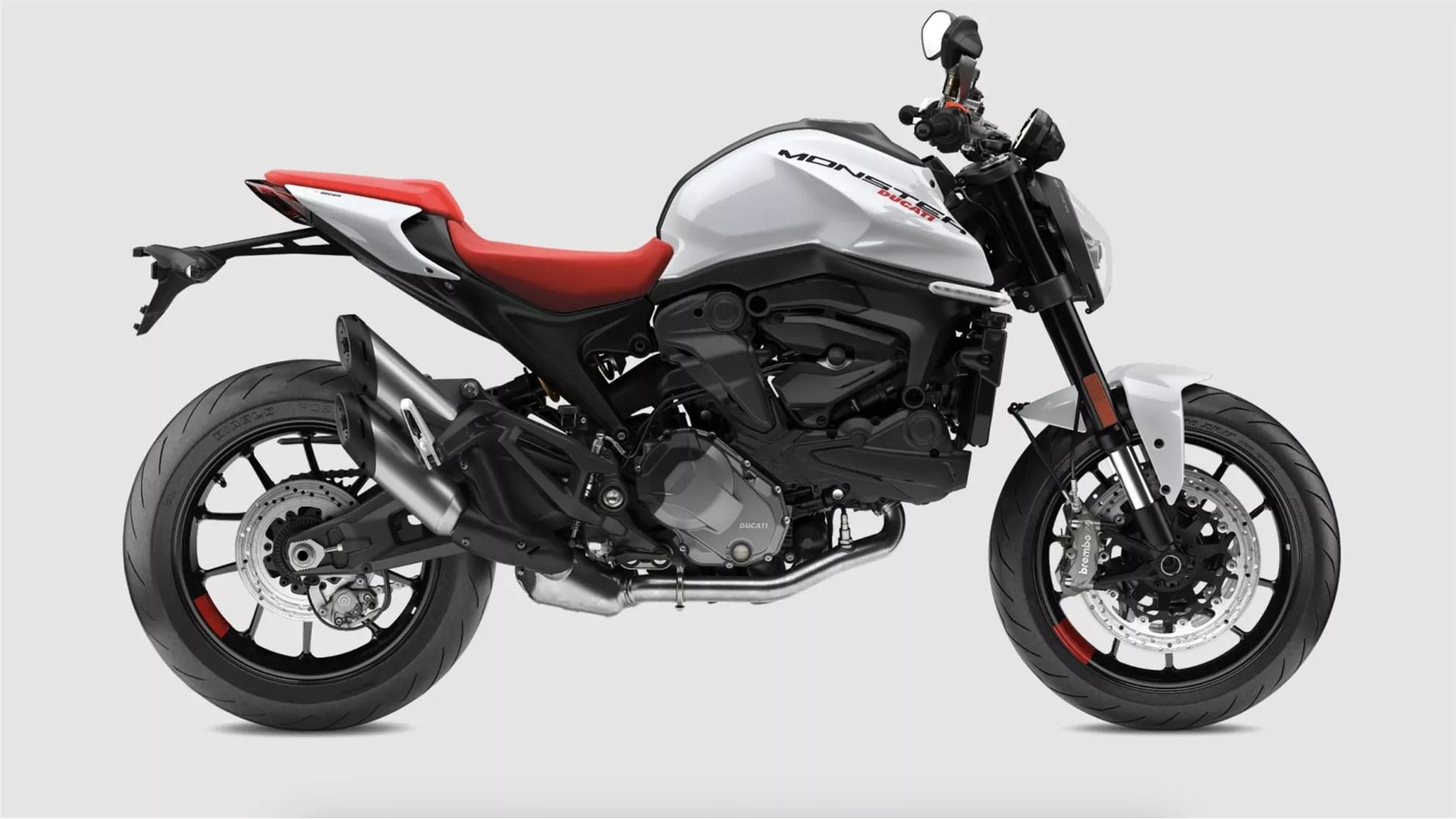
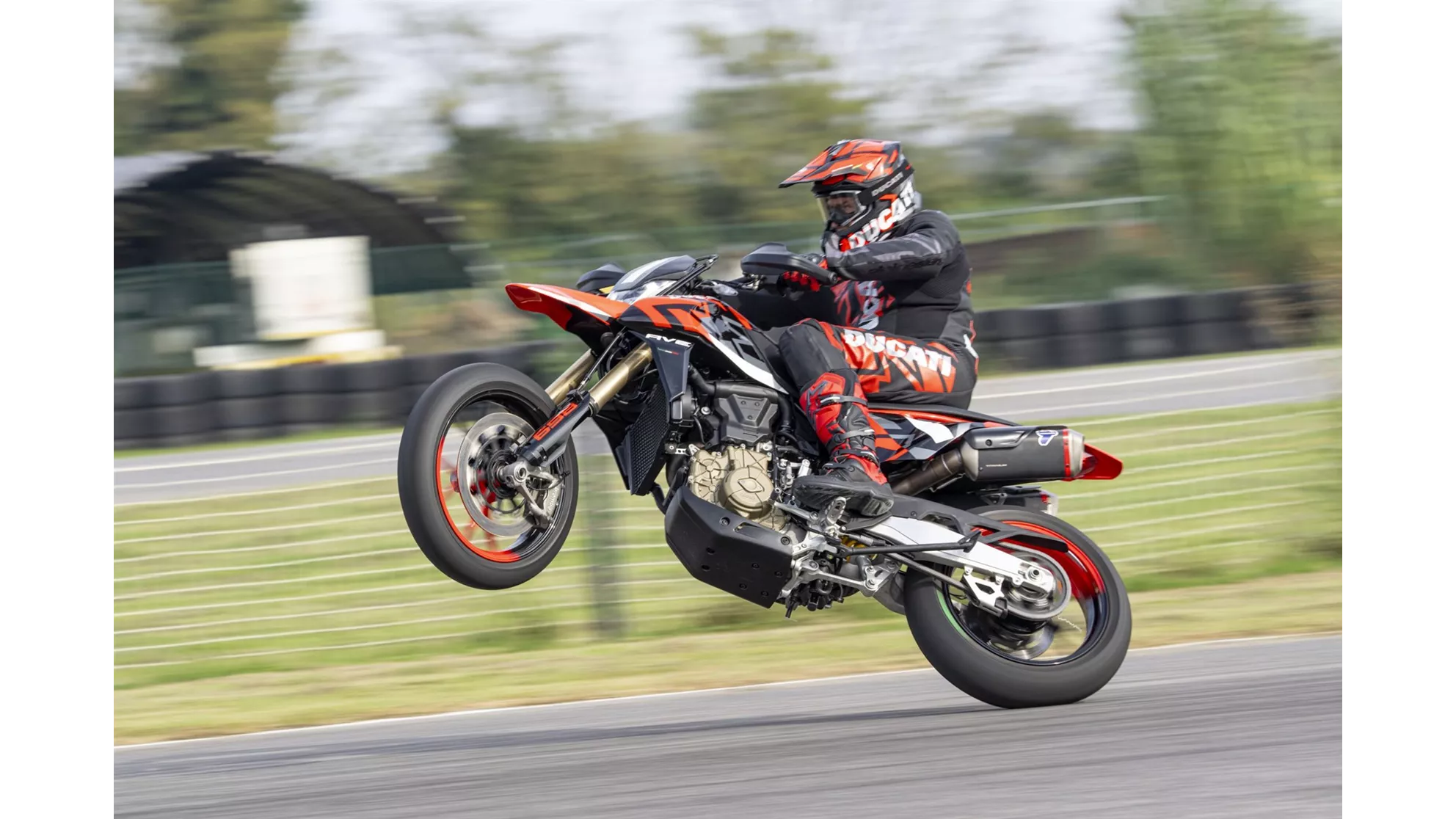
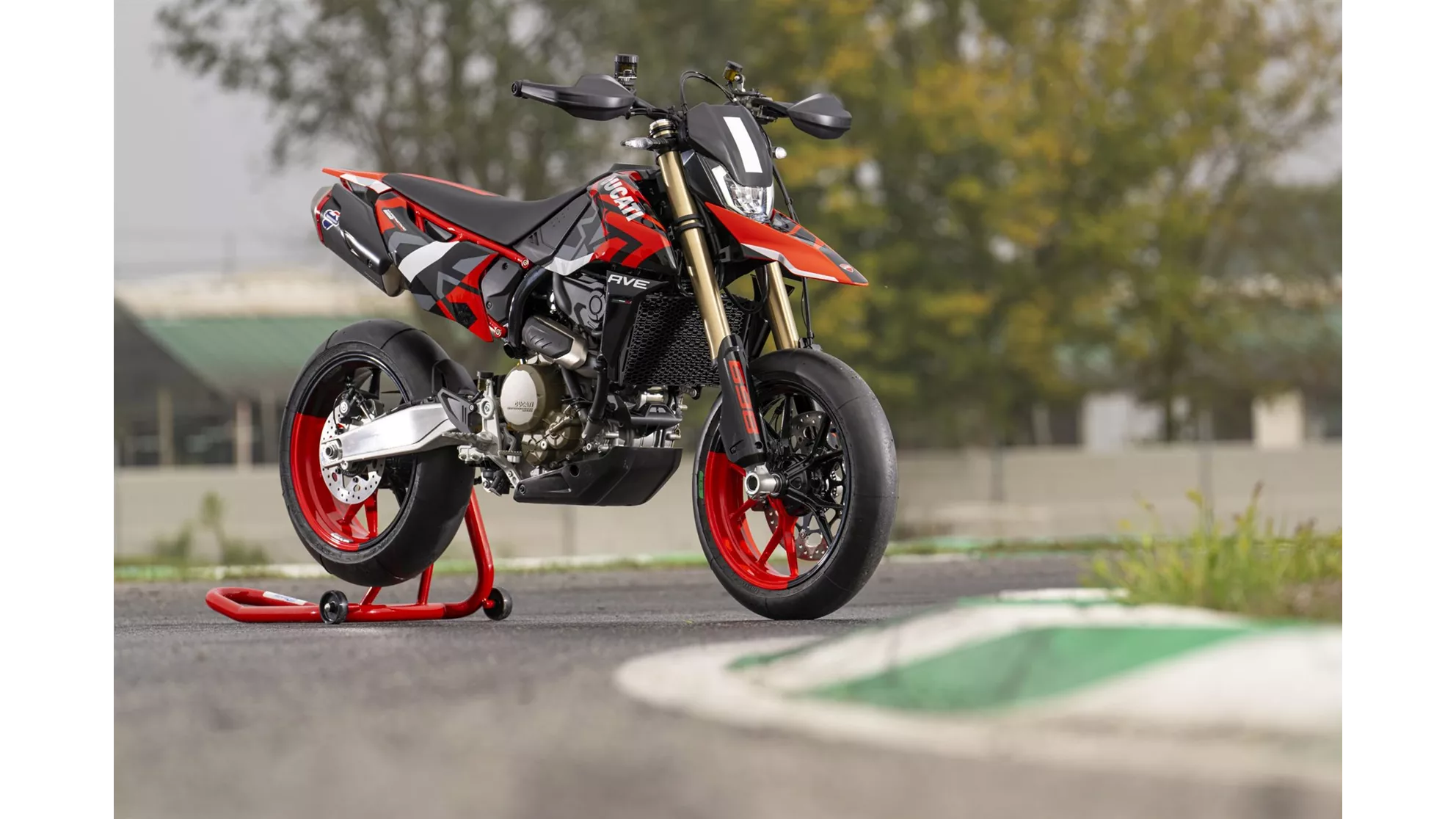
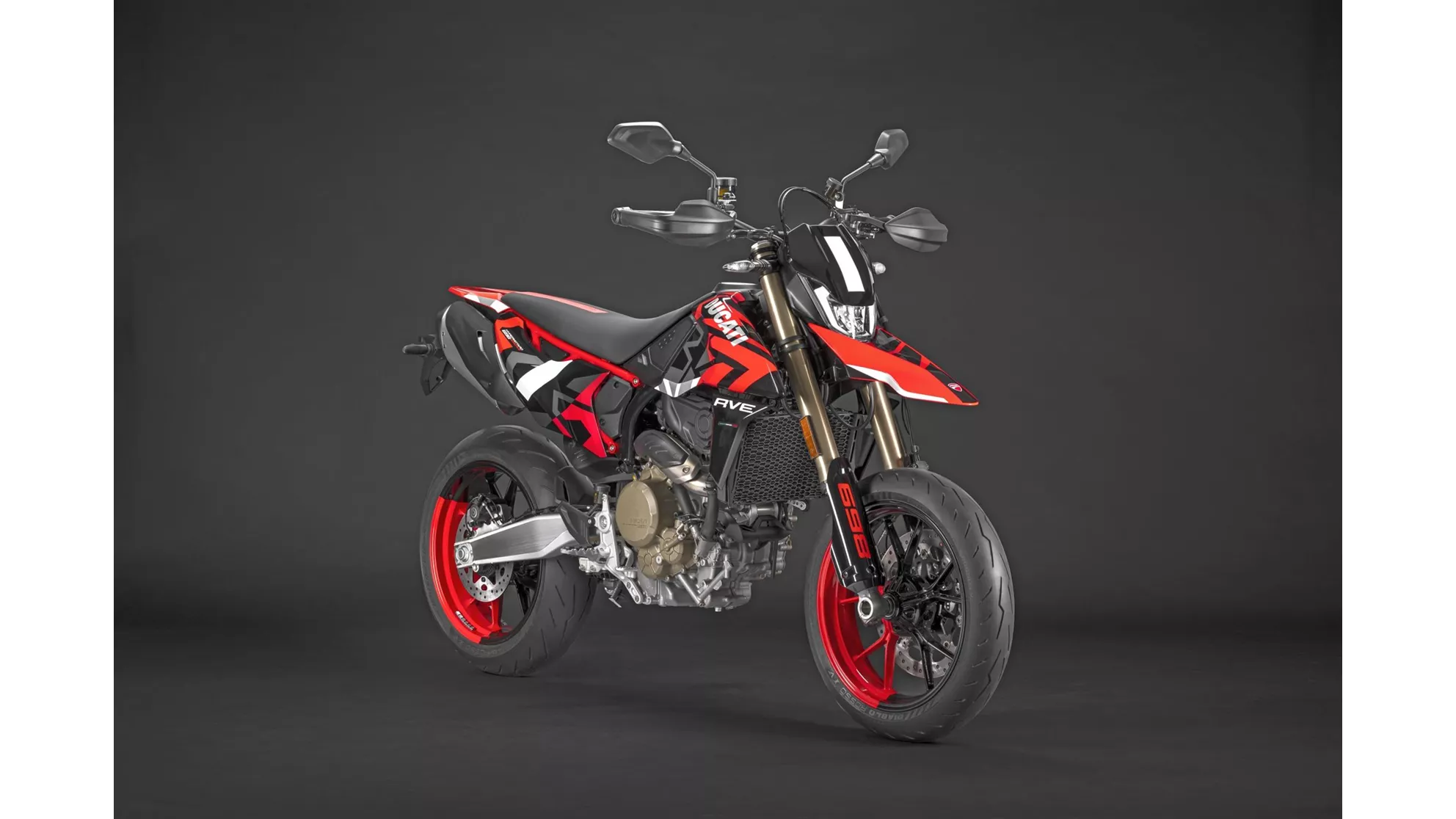
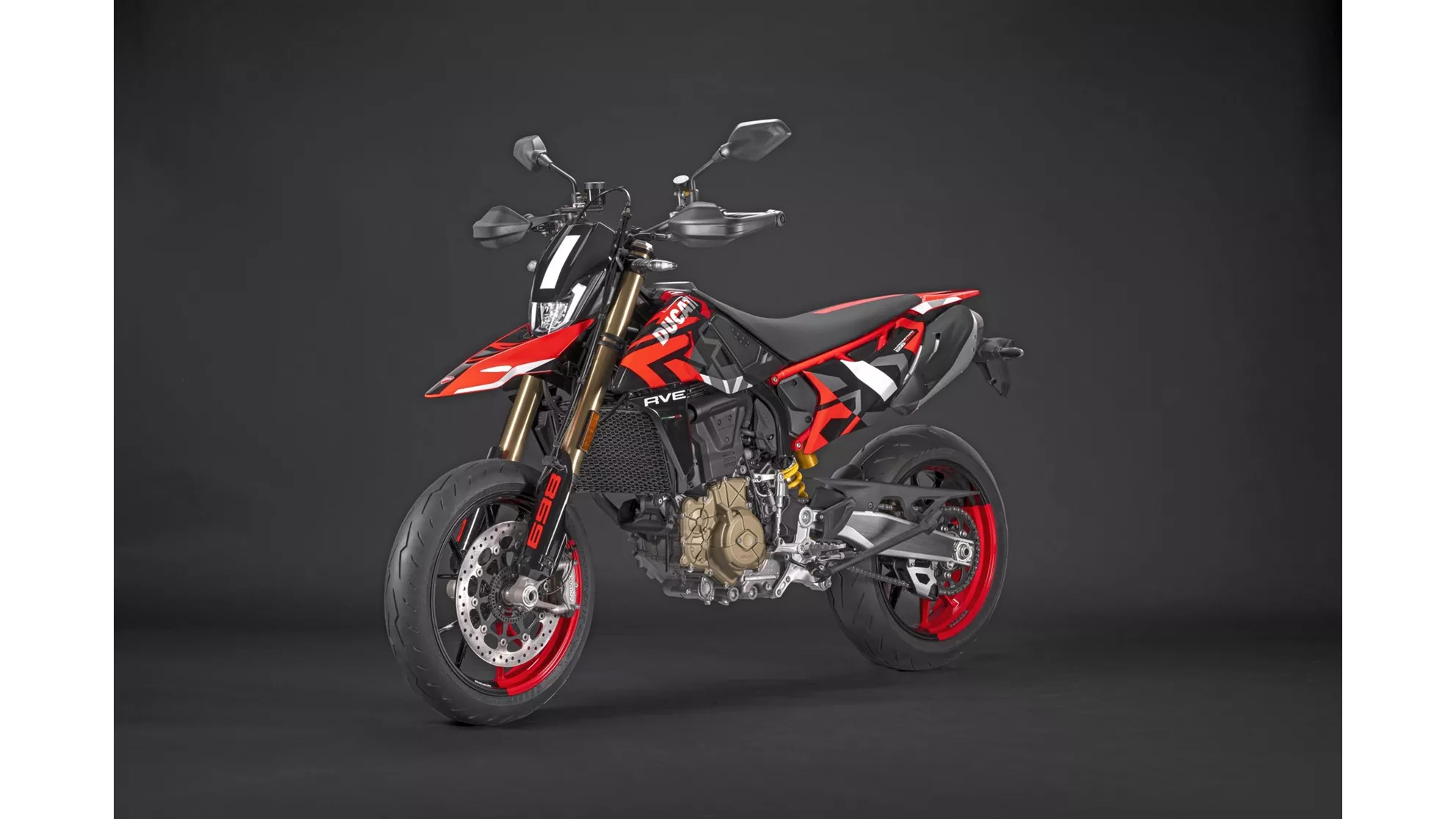
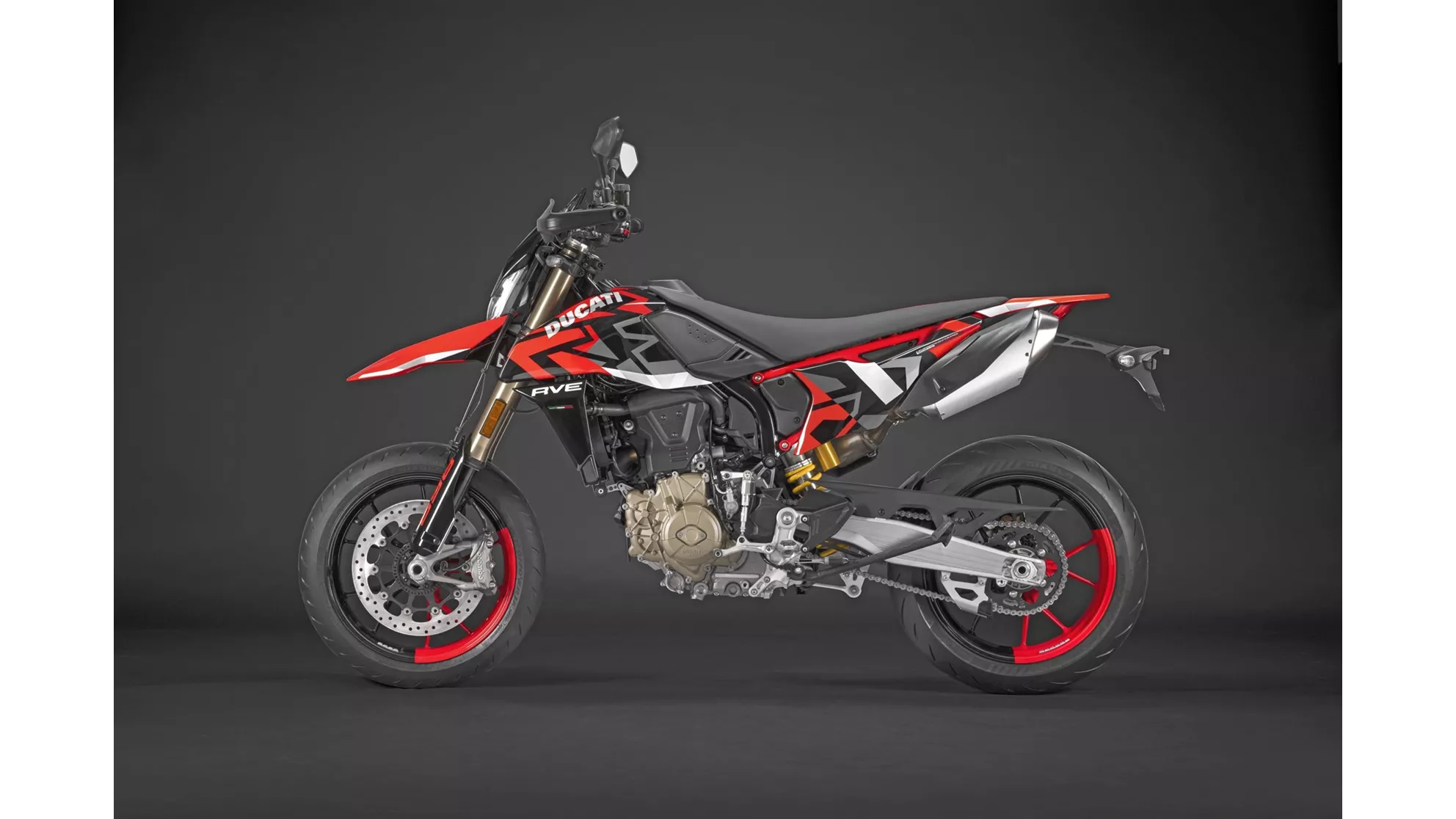
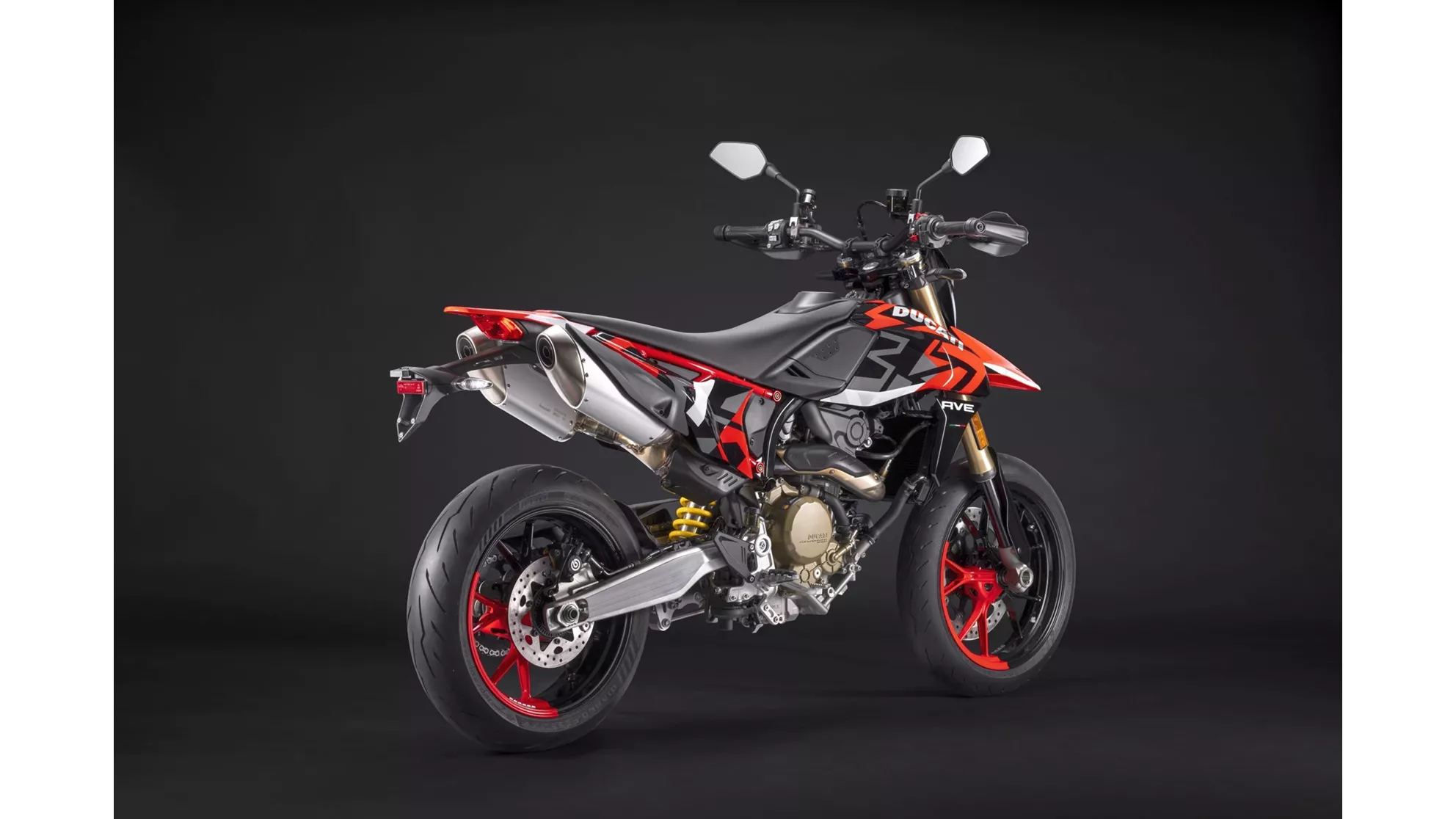
Sensible, economical and down-to-earth? No. The Ducati Hypermotard 698 Mono RVE and the Ducati Monster represent the cheapest entry into the sporty Ducati world and are among the more accessible models in terms of power delivery and everyday usability, but they're not exactly cheap. Entry prices stand at 13,390 euros for the Mono RVE and 12,390 euros for the Monster in Germany. However, buyers get a lot for their money: alongside Italian flair, cutting-edge technology and solid resale value, both bikes have a sporty DNA that's unmistakable. Whether you go for the Mono or the Monster - both bikes offer an impressive power-to-weight ratio, electronic features, and high-quality chassis, brakes and tires that make no compromises when riding dynamically on twisty roads.
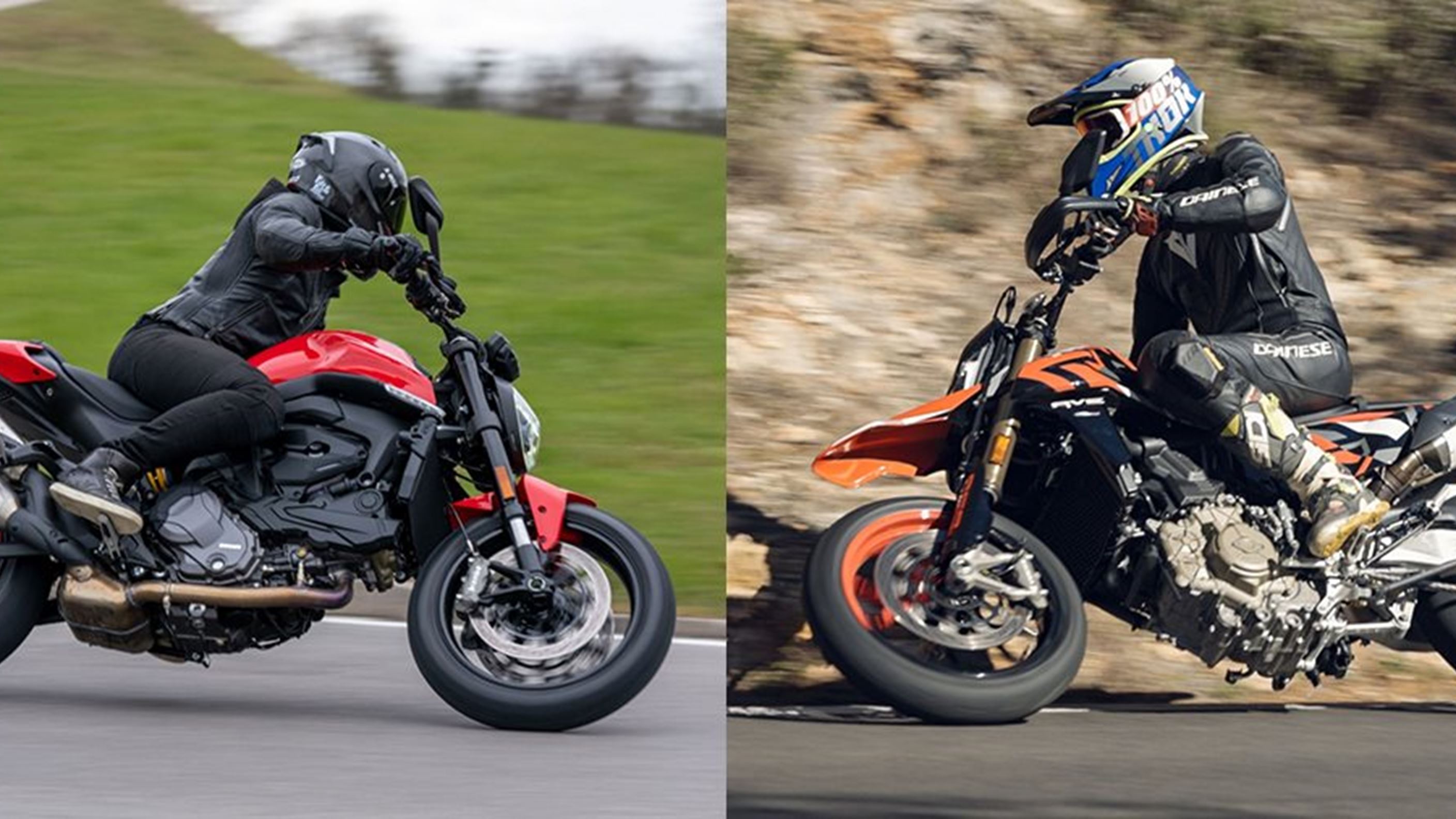
Concept comparison: Ducati Hypermotard 698 Mono RVE vs. Monster
A thrilling in-house duel of the two sportiest entry-level models
During the World Ducati Week, we took the opportunity to run an exciting ride test with Ducati's current Monster and the brand-new Hypermotard 698 Mono. In doing so, we worked out the differences between the two models and examined how well each is suited to city traffic, twisty roads, longer tours, or the race track.
&width=72&height=72&bgcolor=rgba_39_42_44_0&mode=crop "Author: NoPain")
NoPain
published on 8/11/2024
Single or twin? It depends…
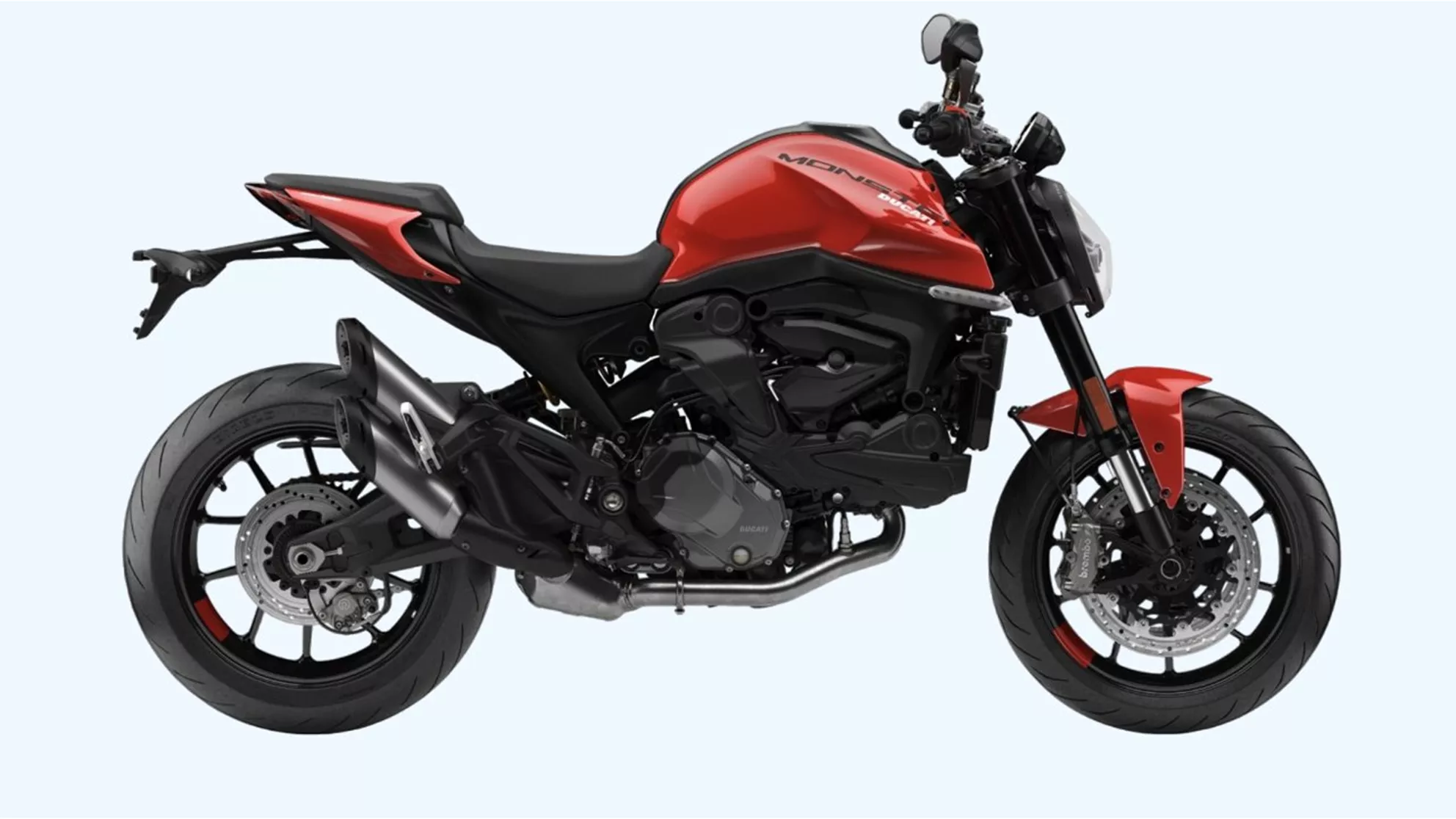
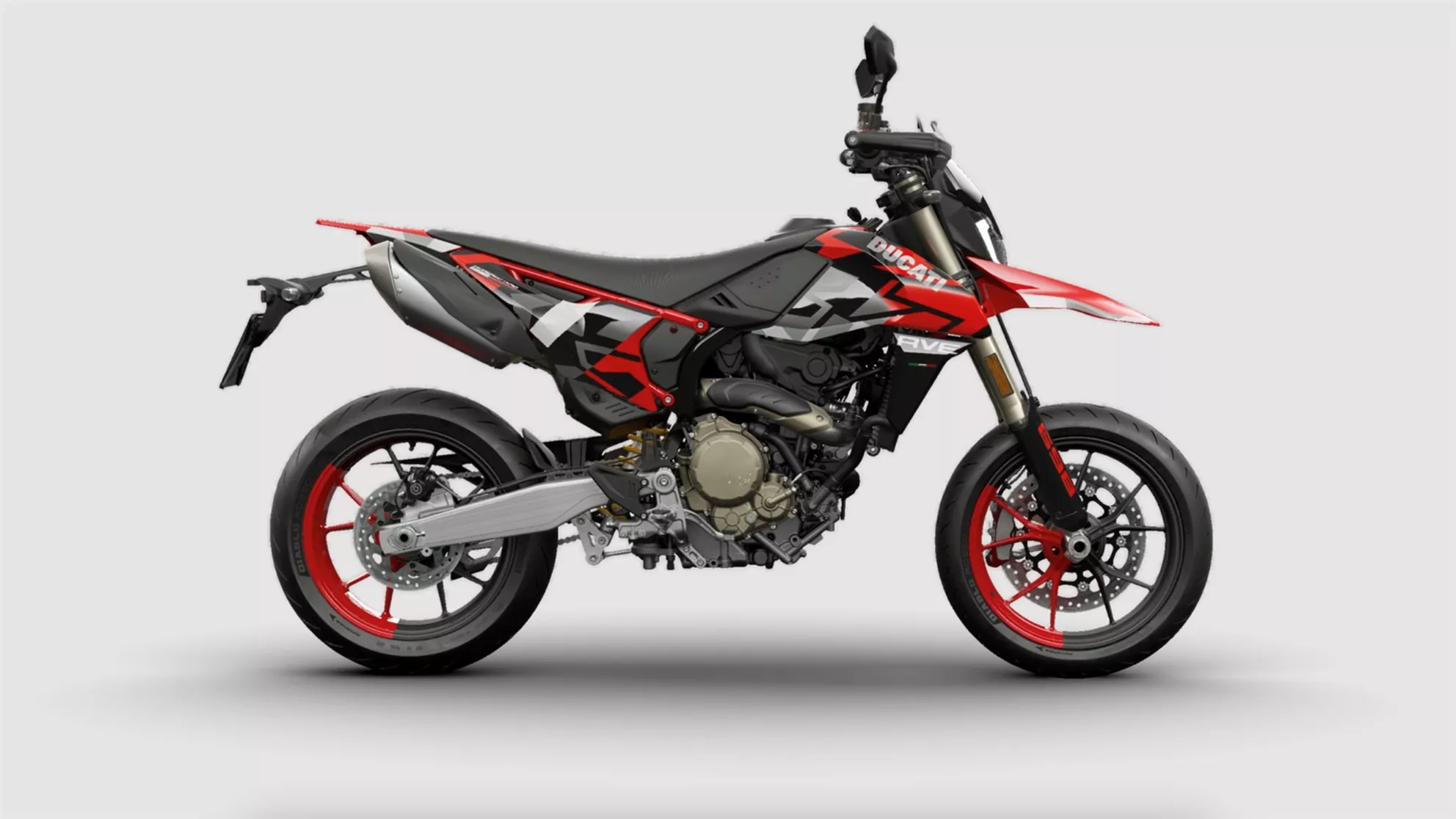
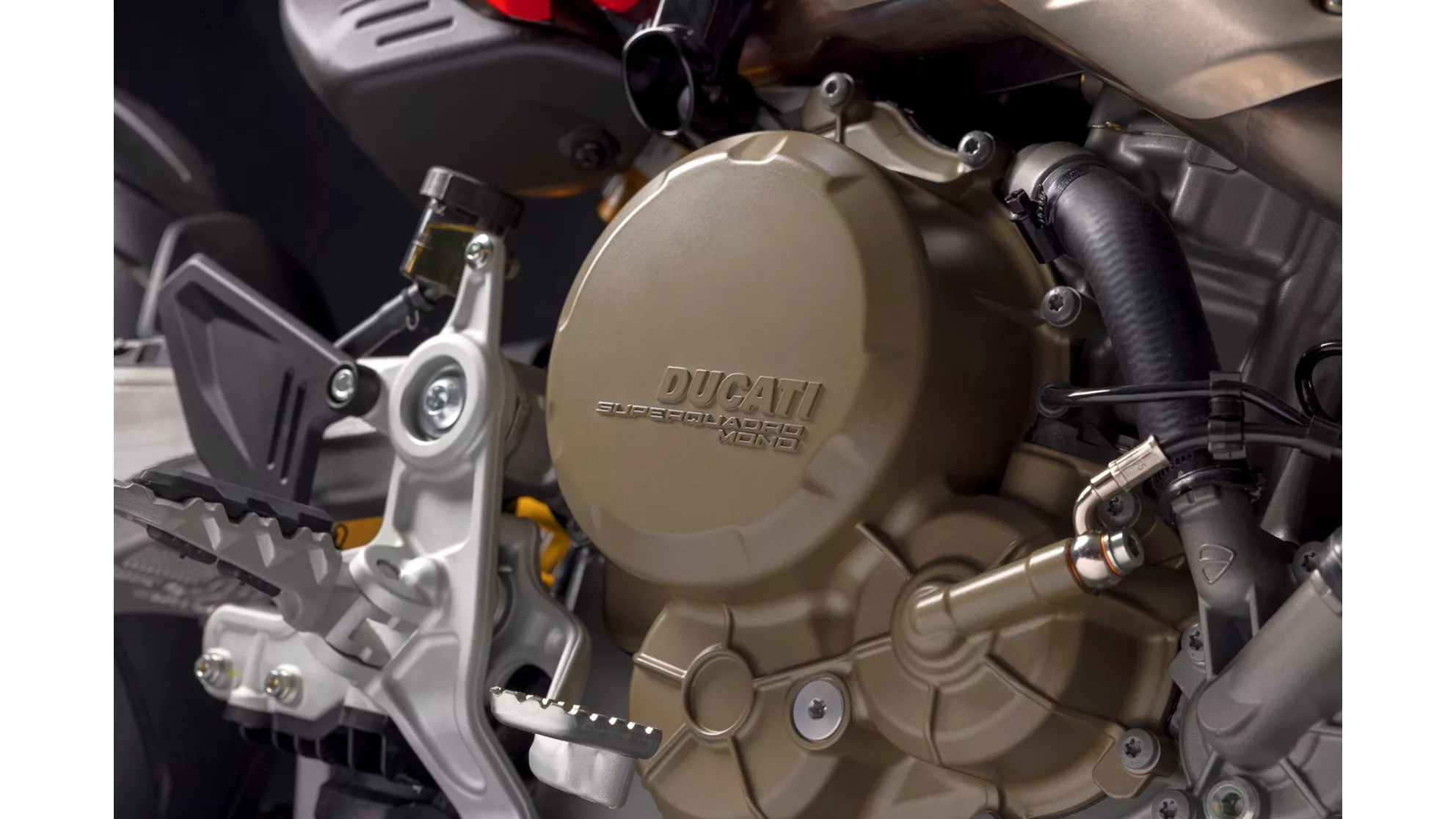
The heart of the Mono is the newly developed Superquadro Mono, a single-cylinder engine with 659 cc, 77.5 hp at 9,750 rpm and a maximum redline of 10,250 rpm. Max torque is 63 Nm at 8,000 rpm and the wet weight is 151 kg. Dividing power by weight gives us 0.51 hp/kg; that's quite a statement for a single. The Monster, on the other hand, is powered by Ducati's proven Testastretta 90° V2, a twin with 937 cc, 111 hp at 9,250 rpm and 93 Nm at 6,500 rpm. With a wet weight of 179 kg, that works out to 0.62 hp/kg, meaning a power-to-weight ratio that's 20% higher than the Mono's.
And yet, if you set aside the different pros and cons of the two concepts, the geometry, the handling and the rest of the equipment, in practice there's hardly any difference in performance between the two bikes. Despite the gap of 33.5 hp and 30 Nm, they're absolutely on par when it comes to acceleration and pull on twisty roads.
It's all about the gearing!
But how is that possible? The answer lies in the gearing. We analyzed the primary, transmission and secondary gearing and found that the Mono is geared roughly 20% shorter in the relevant gears. This heavily offsets its 20% lower power-to-weight ratio, resulting in better acceleration. The Monster's taller gearing, on the other hand, potentially allows for higher top speeds and delivers a smoother ride. In other words: the Mono is ideal for those who value agility and rapid acceleration, while the Monster suits riders who prefer a relaxed ride, comfortable cruising without constant shifting, and higher top speeds.
Everyday usability and performance in the city
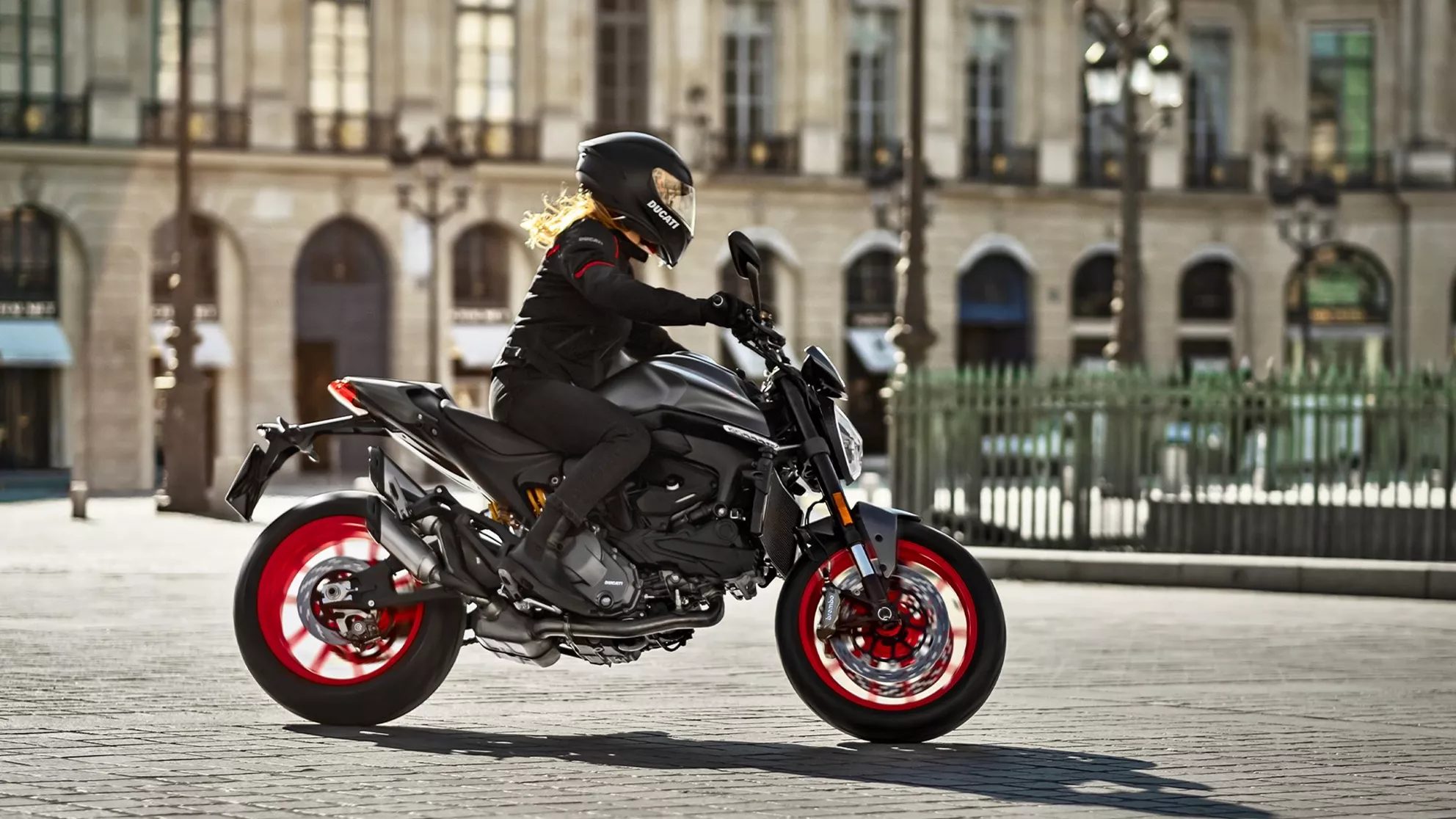
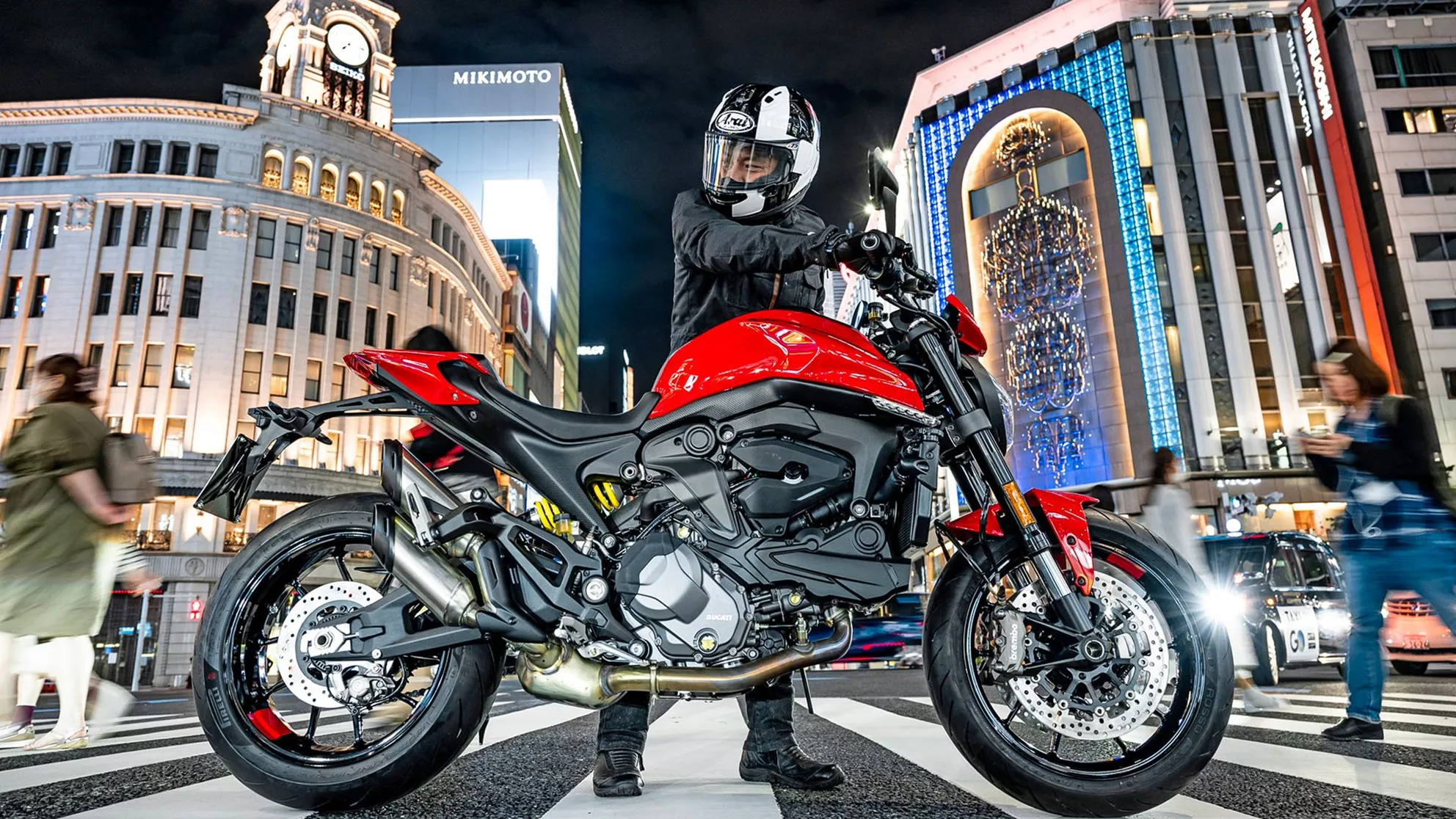
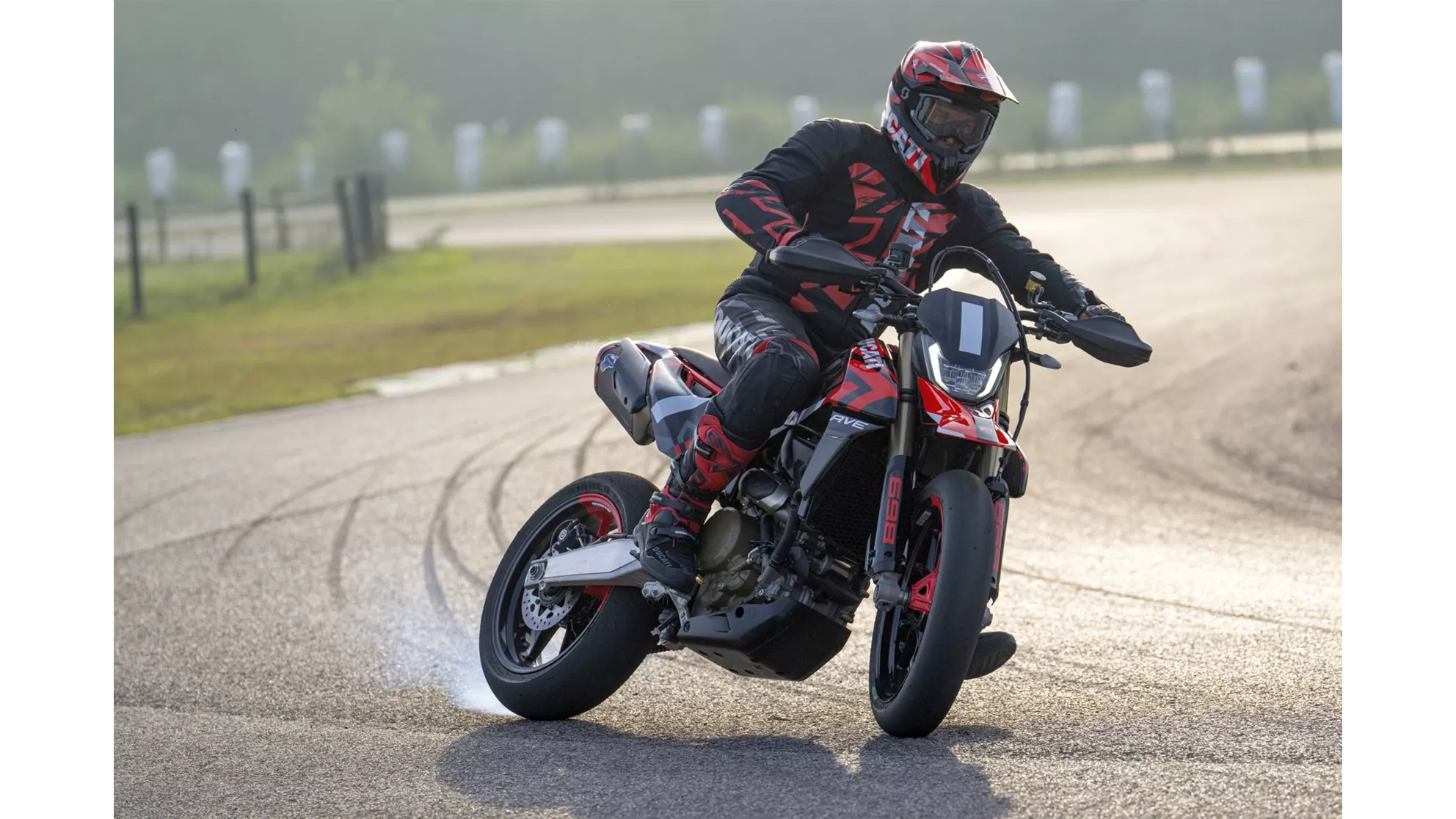
The Mono's shorter gearing brings real performance benefits on twisty roads, but can quickly become impractical in city traffic. First gear is mainly suited for pulling away, while second gear tends to judder at low rpm or feels very aggressive at higher rpm. It's therefore advisable to use third gear, which causes a slight surging in stop-and-go traffic up to about 45 km/h. The strong heat buildup from the header in traffic jams or at traffic lights also shows that the Mono is a pure-bred race bike that wants to be ridden. The Monster shows more everyday usability in these areas, not least thanks to its taller gearing. It also offers good visibility, high agility, and an excellently functioning quickshifter that smoothly blips down from second to first gear as well.
Seat heights and riding comfort
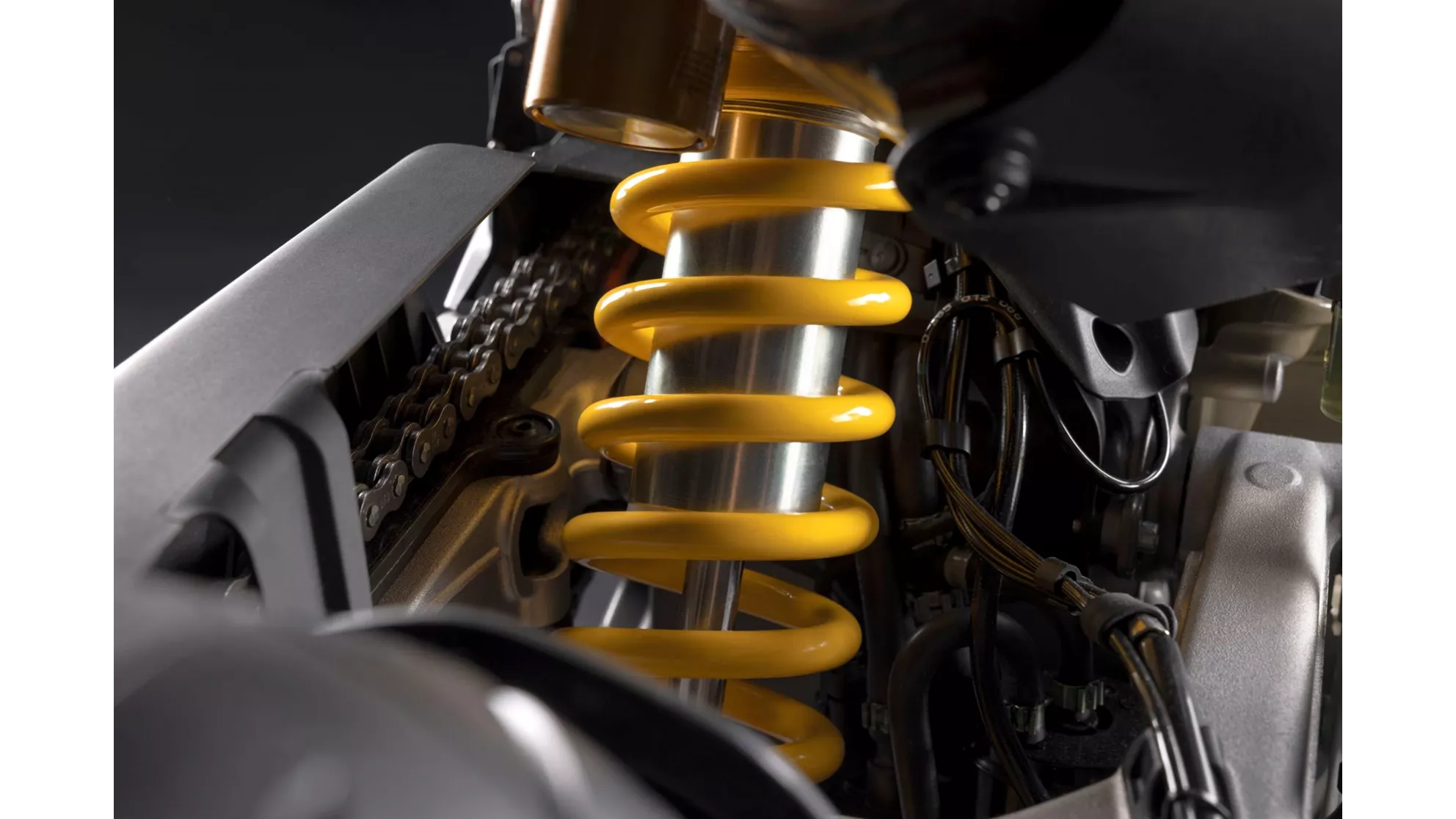
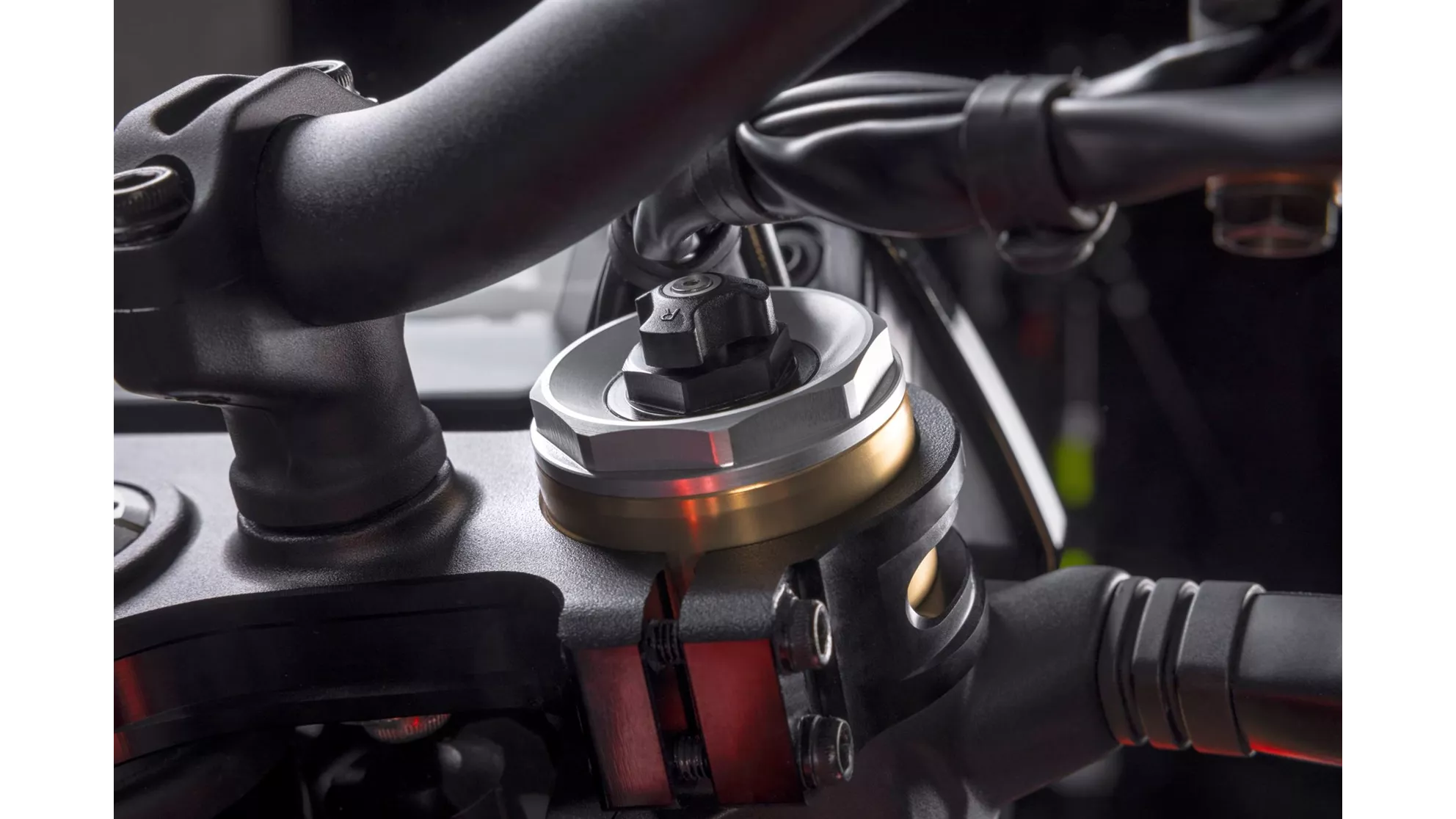
For some riders, the Mono's seat height might be off-putting, as it measures 904 mm with the standard seat. However, that figure is relative, since the 45 mm Marzocchi USD fork with 215 mm of travel and the Sachs monoshock with 240 mm offer significant negative travel, causing the bike to sink noticeably when you sit on it. With optional Ducati accessories, the seat height can also be reduced to 849 to 889 mm. The Mono's chassis is tuned sporty and firm, allowing high speeds and precise front-end feedback on good asphalt. On rougher road surfaces, however, a weakness shows: the fork isn't very comfortable and doesn't sufficiently absorb bumps. Still, the suspension is fully adjustable front and rear, allowing individual fine-tuning. Seat comfort is rather low, and pillion suitability is limited. Pillion footpegs aren't fitted as standard, but are only supplied as part of the accessory package.
It's different with the Monster. This bike has a significantly lower seat height of 820 mm, which can be adjusted to 775 to 800 mm with optional Ducati accessories. The Monster's chassis is tuned more towards comfort, which is especially beneficial on longer tours. However, the front end diving heavily under hard braking can be a bit disconcerting. In the standard version of the Monster, only the spring preload on the rear shock is adjustable; no other adjustments are possible. Connoisseurs or the well-heeled therefore opt for the SP variant, which comes with a fully adjustable Öhlins suspension.
Tank capacity and consumption
- How much does a Ducati Monster cost?
- Here you will find an overview of the price level of new and used motorbikes!
An important point for longer tours that stands out on the Mono is its 12-liter tank compared to the Monster's 14-liter tank. At a consumption of 4.8 l/100 km for the Mono and 5.2 l/100 km for the Monster, the difference might seem small at first, but the Mono's thirst rises noticeably as speed increases. The fuel reserve warning kicks in at around 180 km ridden, and from 200 km you really should refuel, while the Monster can comfortably go another 50 km further.
On the race track
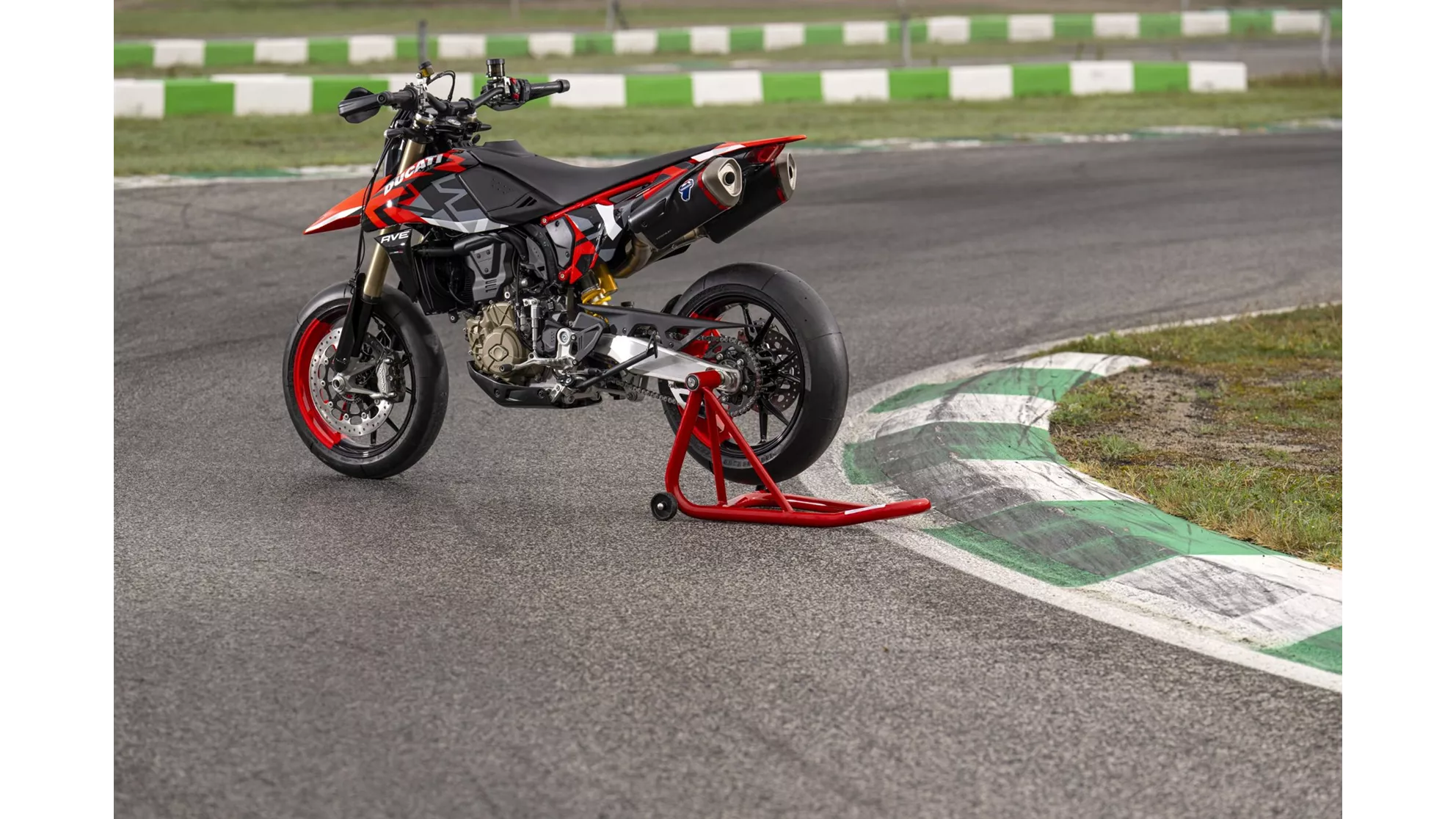
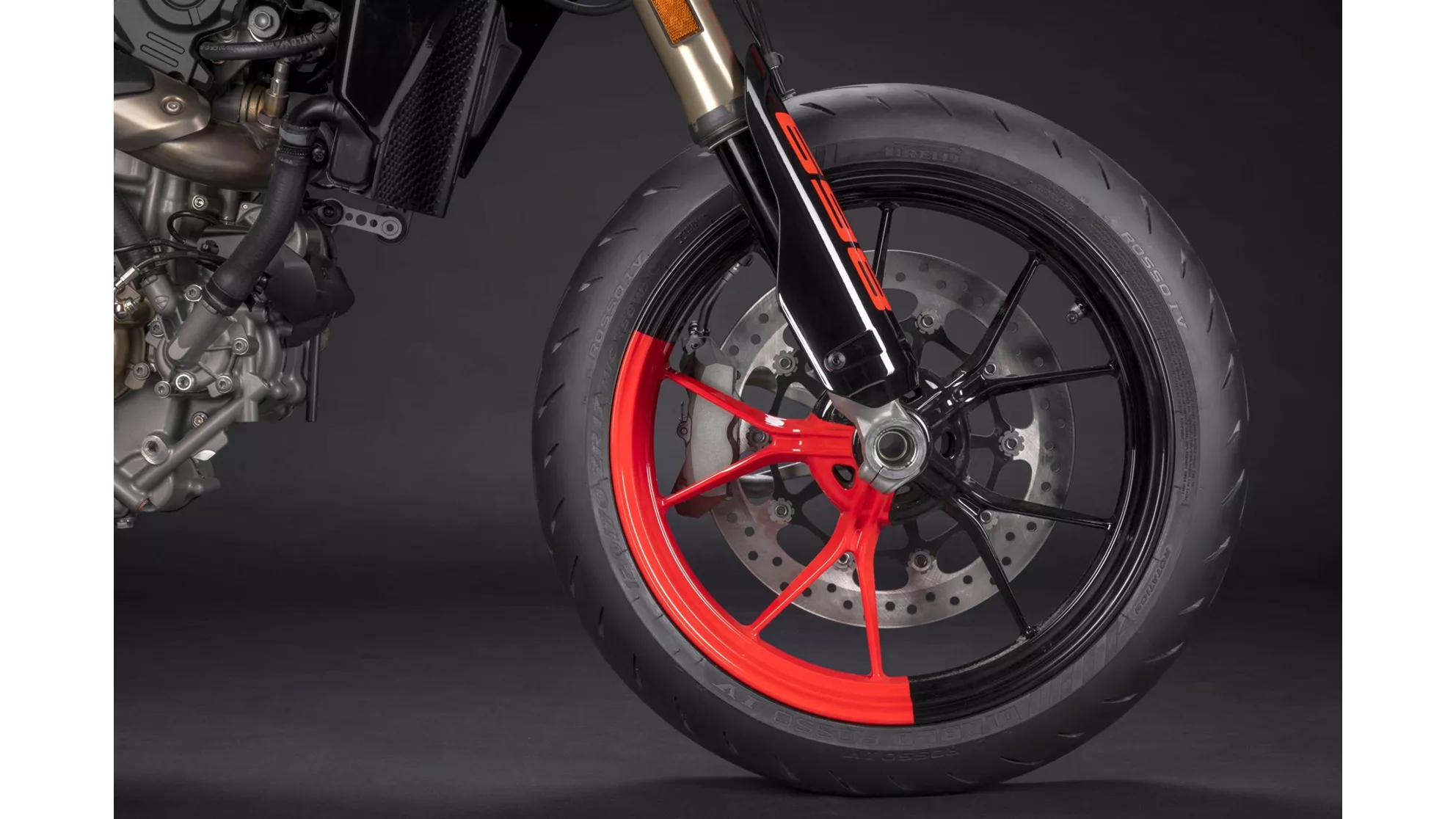
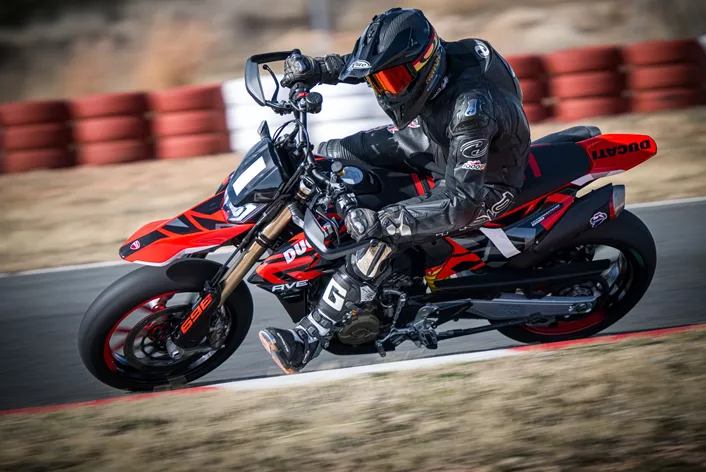
For fast supermoto or kart tracks, the Mono is nearly race-ready. The brake setup, featuring a radial 4-piston Brembo M4.32 and a specially developed 330 mm mono disc with an aluminum flange, offers excellent initial bite, precise modulation and strong stopping power both on the road and on the race track. The 17-inch Y-design light-alloy wheels, combined with Pirelli Diablo Rosso IV tires (120/70 ZR17 front and 160/60 ZR17 rear), deliver an all-round enjoyable riding experience. For even sportier demands, tires like the Pirelli Diablo Supercorsa SC V3, the ContiAttack SM 2 or the Michelin Power GP 2 can be fitted to really give it the beans on the track even without tire warmers. For genuine racing ambitions, supermoto slicks in special dimensions are even an option, and the rear gearing can be adjusted according to track requirements. The "TYRE CALIBRATION" function in the settings ensures that the electronics and quickshifter continue to work flawlessly even after a tire change or a change to the final gearing. It's important to know, however, that any change to the final gearing voids the warranty and means the bike may no longer be ridden on public roads.
If slicks are used, special supermoto slicks with the softest compound should definitely be chosen, since superbike slicks like the SC1 or SC2 can't always be kept at optimal temperature depending on the track. An additional note concerns the mirrors: Ducati has bolted the clutch and brake fluid reservoirs to the Brembo clamps via the mirrors, so the reservoirs can't easily be secured with the mirrors removed. There are, however, plenty of simple and inexpensive solutions to this issue - you just need to sort it out ahead of your trackday.
The Monster presents itself as somewhat less sporty than the Mono, but is by no means unsporty. Here too, essentially the same applies: mirrors off, license plate off, and off to the race track. The Pirelli Diablo Rosso III are perfectly adequate for trackdays in the green or blue groups, and thanks to the solid engine and taller final gearing, the Monster also cuts a good figure on faster tracks like the Pannoniaring, Slovakiaring, or Brno. For even more riding pleasure, tires like the Pirelli Diablo Supercorsa, the Conti SportAttack, or the Michelin Power GP 2 could be advantageous. Those who don't shy away from tire warmers will find, for example, that the Michelin Power Slick 2 offers very hassle-free performance in terms of temperature and asphalt grip. On the Monster too, the rear sprocket can be changed according to the owner's manual, and both the electronics and the blipper can be calibrated. It should be noted, however, that this voids the warranty and road-legal registration under the StVO.
Worth mentioning is the Monster's somewhat tame brakes. The 320 mm dual-disc setup with radial Brembo M4.32 monoblock calipers offers good modulation and adequate deceleration, but could bite a bit sharper initially. The standard Monster's brake system is clearly designed for everyday usability, which is why a bit more hand force is required.
Electronics - twice everything
When it comes to electronic aids, the Mono RVE has a slight edge. It offers a 3.8-inch black-and-white LCD that's excellently legible, plus a comprehensive electronics package with ride-by-wire, four riding modes (Sport, Road, Urban, Wet), four-stage cornering ABS with "Slide-by-Brake", Ducati traction control, four-stage wheelie control, Ducati Power Launch, full LED lighting with daytime running lights, dynamic brake light, USB port, and a lithium-ion battery under the seat. The standard quickshifter allows both up and down shifts. The Monster essentially offers a similar range of functions, but with a 4.3-inch color TFT display, without the supermoto-specific ABS/DWC functions, and without a lithium battery.
| Hyper 698 Mono RVE | Monster | Comparison | |
|---|---|---|---|
| Engine | Superquadro Mono single-cylinder 659 cc | Testastretta V2-90° twin 937 cc | Matter of taste | Power | 77.5 hp at 9,750 rpm (max. 10,250 rpm) | 111 hp @9,250 rpm | Monster +33.5 hp | Torque | 63 Nm @8,000 rpm | 93 Nm @6,500 rpm | Monster +30 Nm | Weight (wet) | 151 kg | 179 kg | Mono -28 kg (!) | Power-to-weight ratio | 0.51 hp/kg | 0.62 hp/kg | Monster +20% | Gearing | Primary ratio: 1.968:1 Gears 1=36/13, 2=35/17, 3=32/20, 4=29/22, 5=24/21, 6=26/25 Secondary ratio: 42/15 | Primary ratio: 1.85:1 Gears 1=37/15, 2=30/17, 3=28/20, 4=26/22, 5=24/23, 6=23/24 Secondary ratio: 43/15 | Mono geared roughly 20% shorter for maximum acceleration, Monster with taller gears for higher top speed | Sound (Euro 5) | Good | Satisfactory | Mono sounds more brutal | Seat height | 904 mm (849-889 mm) | 820 mm (775-840 mm) | Monster lower | Seats | 2 | 2 | Monster pillion-suitable | Tank capacity | 12 liters (4.8 l/100 km) | 14 liters (5.2 l/100 km) | Monster slightly more range | Wheelbase | 1,443 mm, rake 26.1°, trail 108 mm | 1,474 mm, rake 24°, trail 93 mm | Matter of taste: agility vs. stability | Front suspension | 45 mm Marzocchi 215 mm, fully adjustable | 43 mm USD 130 mm | Mono fully adjustable | Rear suspension | Sachs monoshock 240 mm, fully adjustable | Monoshock 140 mm, preload adjustable | Mono fully adjustable | Front brakes | Brembo M4.32 single disc 330 mm, 4-piston, radial, cornering ABS | Brembo M4.32 dual disc 320 mm, 4-piston, radial, cornering ABS | Tie: depends on intended use | Rear brakes | Brembo 245 mm, 1-piston, cornering ABS | Brembo 245 mm, 2-piston, cornering ABS | Monster ahead on paper, tie in practice | Wheels | Y-shaped 5-spoke light-alloy wheels 17" | Light-alloy wheels 17" | Mono with lighter wheels | Tires | Pirelli Diablo Rosso IV 120/70 ZR17 front, 160/70 ZR17 rear | Pirelli Diablo Rosso III 120/70 ZR17 front, 180/55 ZR17 rear | Mono with newest tire generation | Electronics package | 3.8-inch black-and-white LCD, ride-by-wire, riding modes (Sport, Road, Urban, Wet), cornering ABS (4-stage with "Slide-by-Brake"), DTC, DWC (4-stage), EBC, DPL, full LED with daytime running lights, DBL, USB, lithium-ion battery | 4.3-inch color TFT, ride-by-wire, riding modes, cornering ABS, DTC, DWC, full LED with daytime running lights, DBL, USB | Fairly balanced, Mono with special supermoto features for the race track | Quickshifter | Yes, standard | Yes, standard | Tie | Accessories (prepared) | Alarm system, Ducati Multimedia System, heated grips, and Termignoni Racing full exhaust incl. racing air filter for 84.5 hp at 9,500 rpm | Alarm system, Ducati Multimedia System, heated grips | Prices | D: € 13,390 A: € 15,595 CH: CHF 14,290 | D: € 12,390 A: € 14,695 CH: CHF 13,190 |
Conclusion and buying tip
Mono or Monster? This question can only be answered individually, as it depends heavily on the type of rider and their own demands on the bike. The 698 Mono is a genuine performance fun bike, particularly well suited for solo riding. It offers impressive acceleration, high agility, and is ideal for spirited riding on twisty roads as well as regular outings on the supermoto track. The twin-cylinder Monster also impresses with sporty performance on twisty roads, but is additionally suited to longer two-up tours and city rides. Trackdays on faster race tracks are also perfectly possible with the Monster.
- How much does a Ducati Hypermotard 698 Mono RVE cost?
- Here you will find an overview of the price level of new and used motorbikes!
&width=60&height=60&bgcolor=rgba_39_42_44_0&mode=crop "Author: NoPain")
Ducati Monster 2024 - Experiences and Expert Review
NoPain
You can always argue about the looks and the missing trellis frame, but the current Monster is anything but ugly. Fundamentally, it would make a great everyday naked bike with comfortable ergonomics and brakes that won't surprise even inexperienced riders. The rather soft suspension can also be seen as an acceptable compromise, though on a Ducati it's still quite surprising that at least the front fork wasn't tuned a bit stiffer. Unfortunately, the characterful engine bucks noticeably at low rpm and only really shows off its glorious V2 character on twisty roads. Overall, though, this reflects the Monster's overall picture quite well: a typical Ducati that, in terms of chassis and brakes, is also well suited for daily riding.
Ducati Hypermotard 698 Mono RVE 2024 - Experiences and Expert Review
NoPain
With the Hypermotard 698 Mono, Ducati has crafted an incredibly good first effort! The bike takes all the qualities you look for in a road-legal supermoto and elevates them to a state-of-the-art, mature level. In terms of the engine, you'd search in vain today for a comparable single, while the electronics package rounds off the concept. Yet it still feels pure, unreasonable and playful - like a genuine rowdy bike.
More from 1000PS Magazine
Concept comparison: Ducati Hypermotard 698 Mono RVE vs. Monster Images
Source: 1000PS