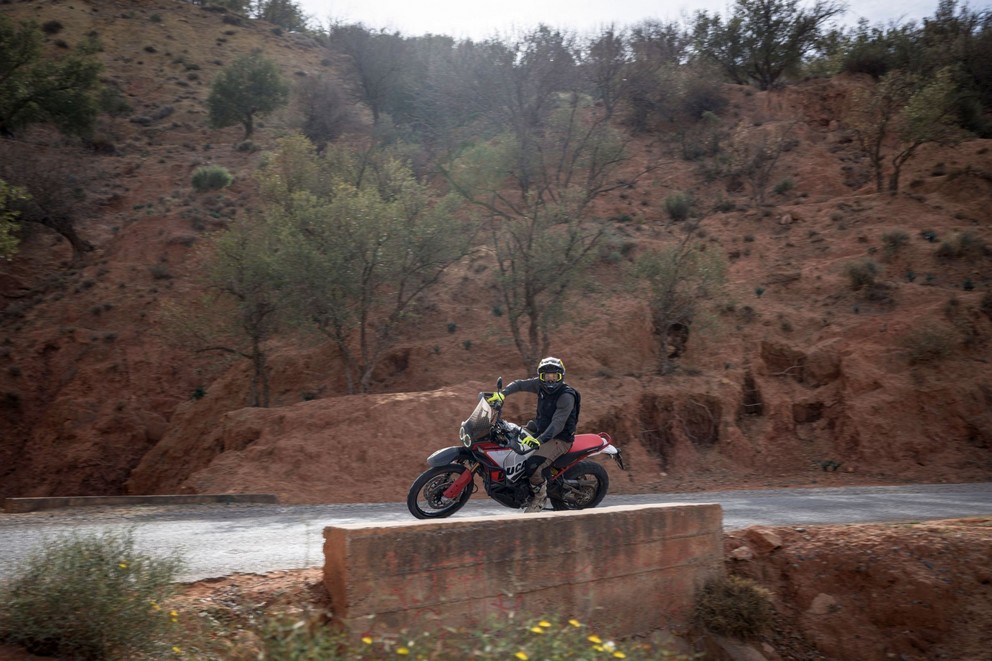
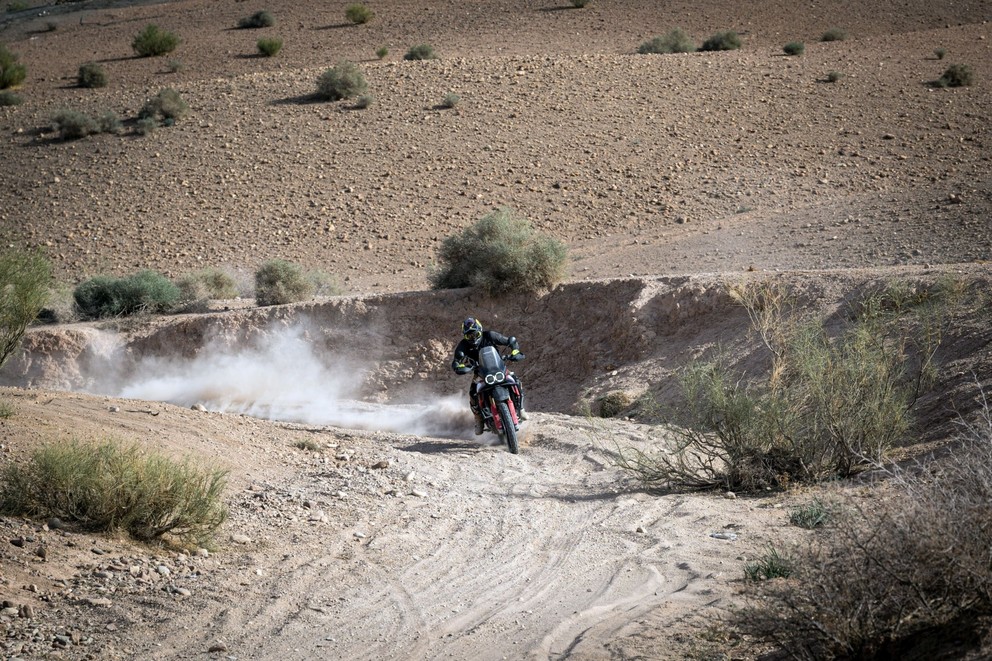
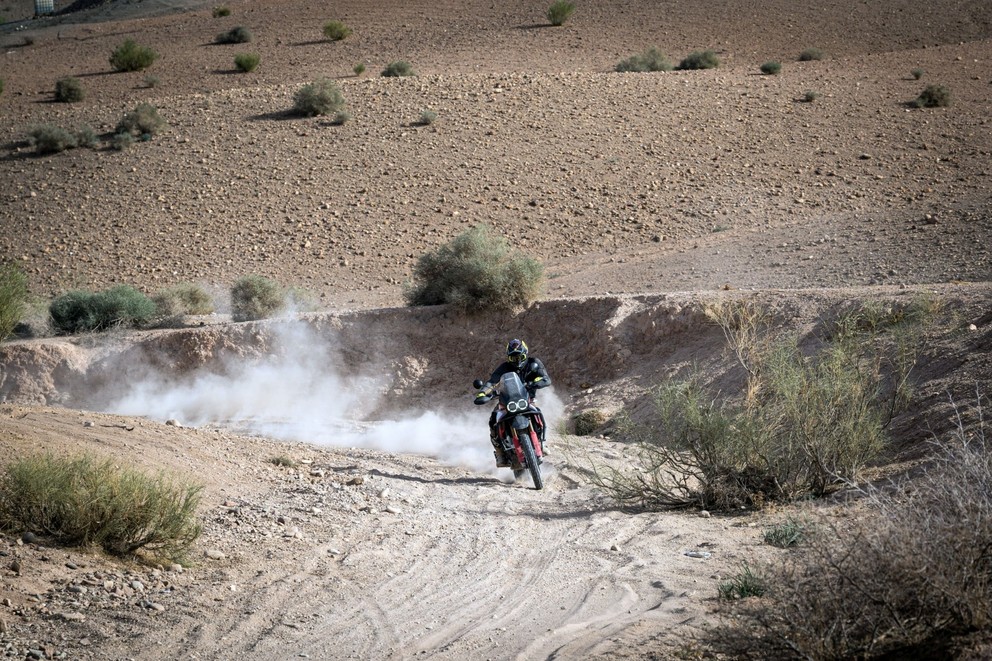
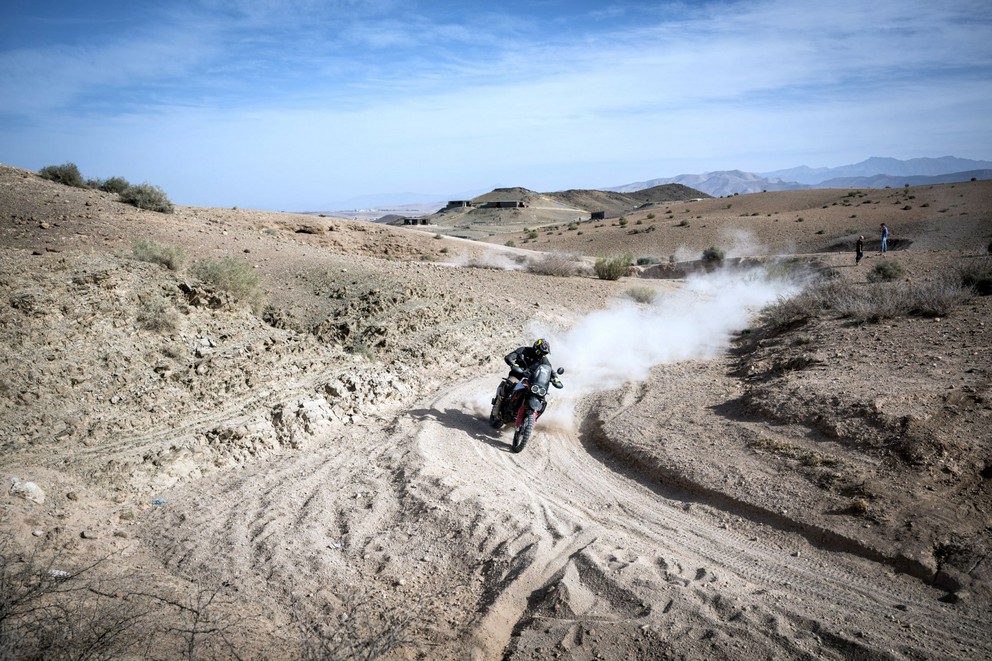
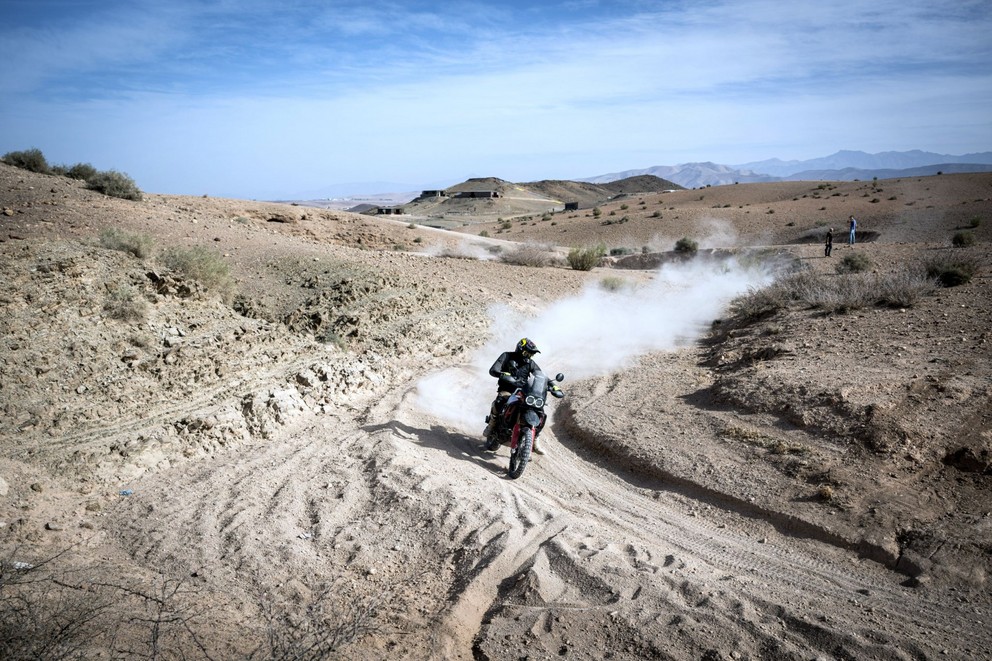
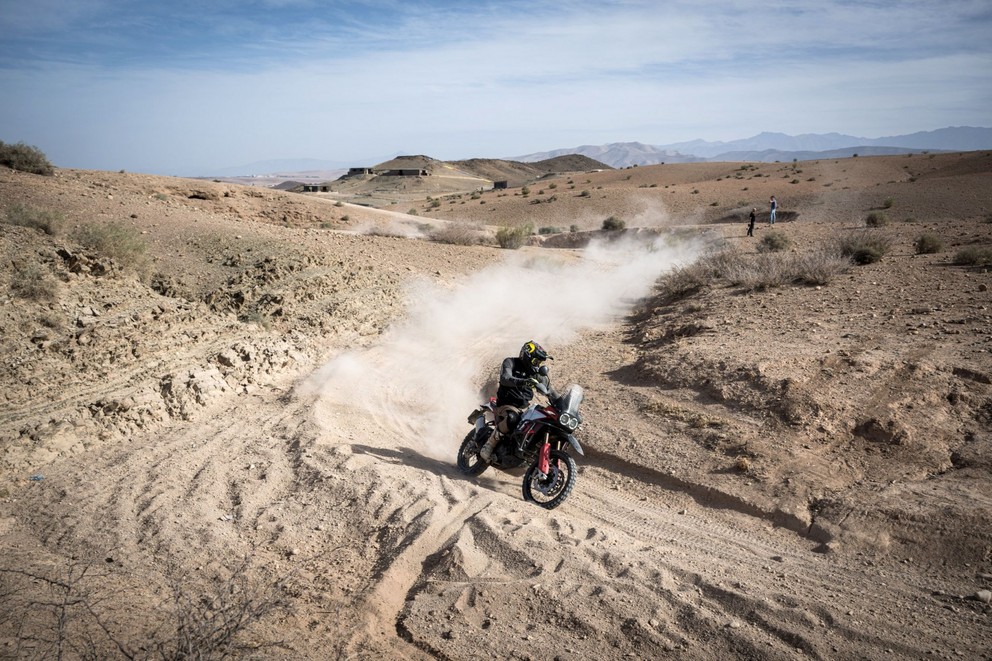
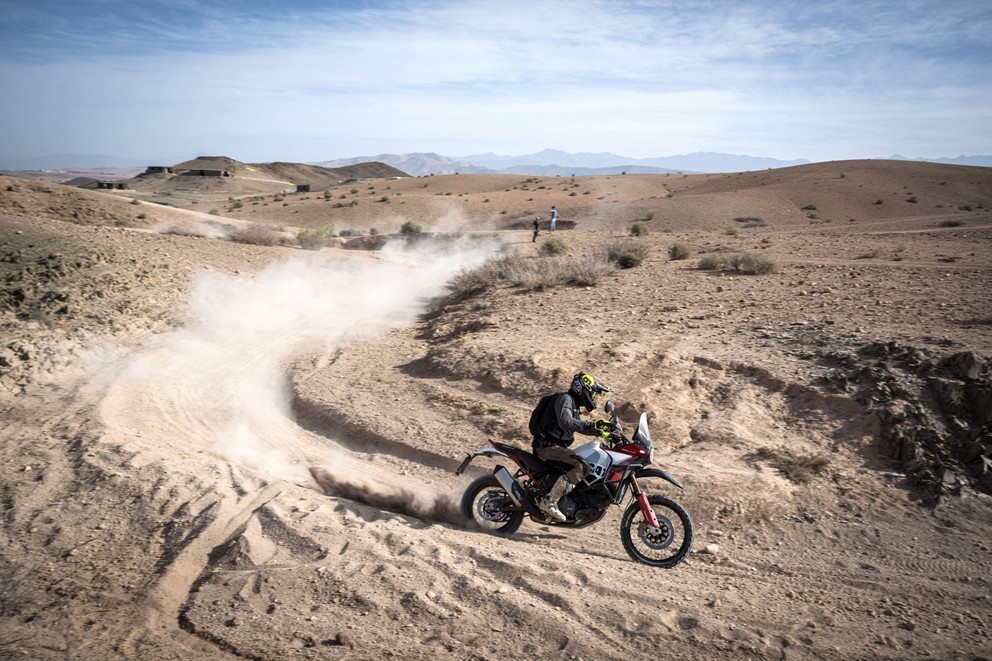
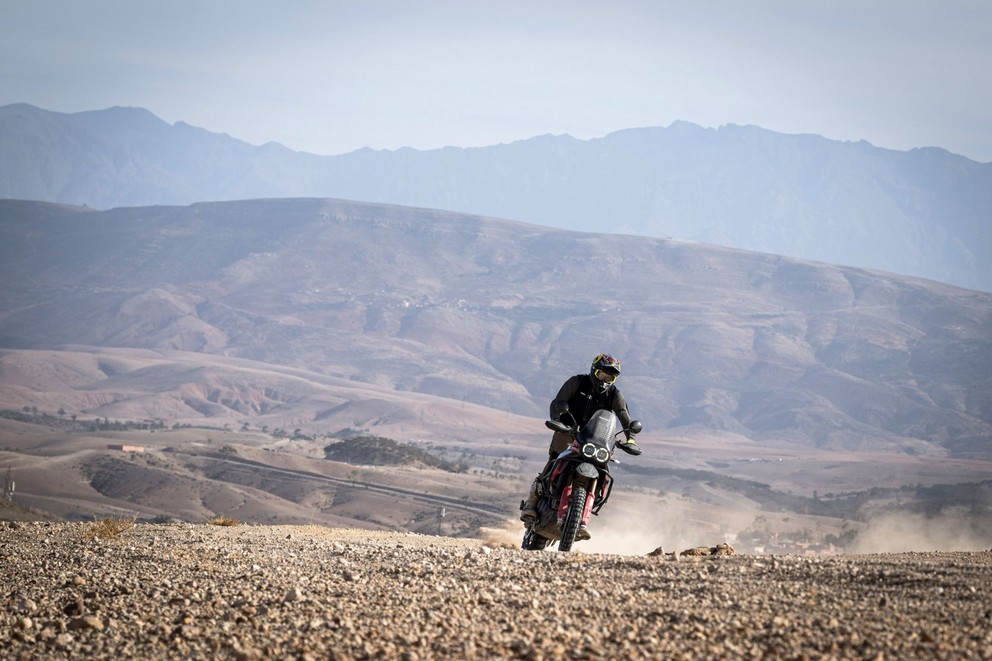
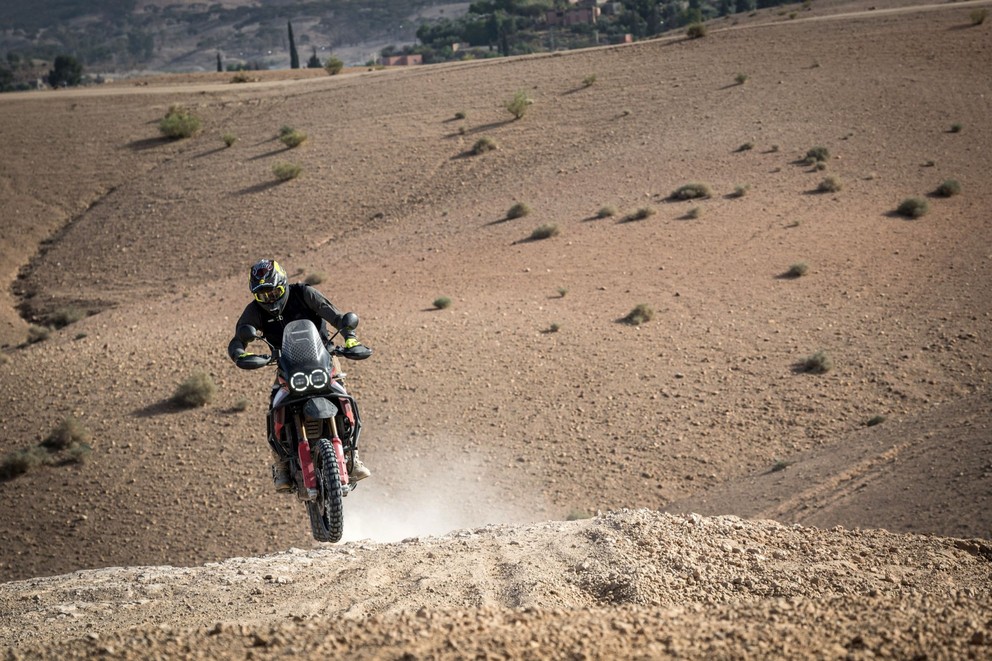
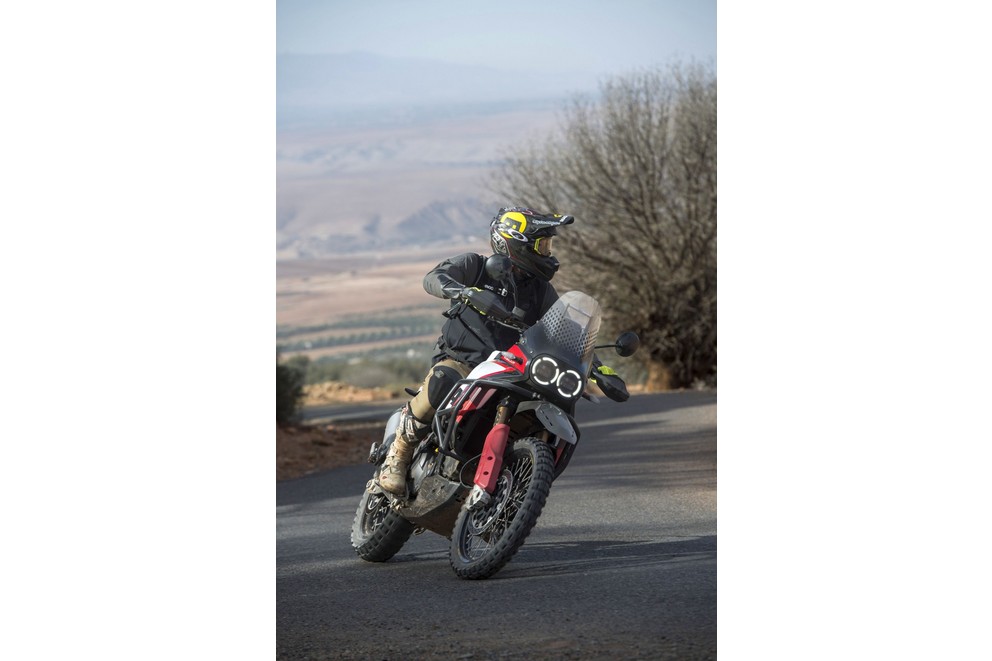
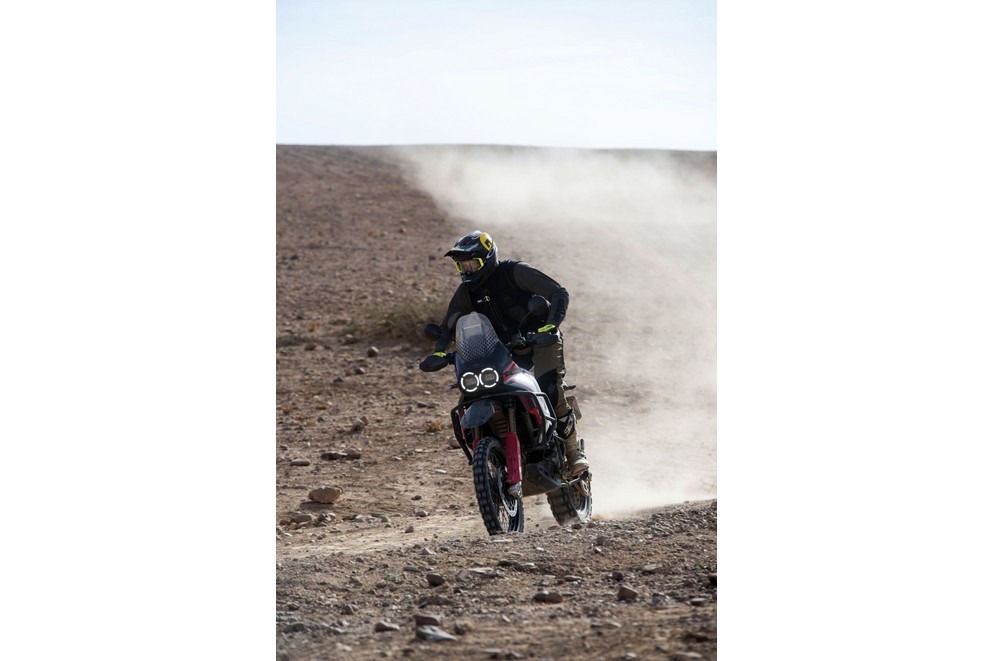
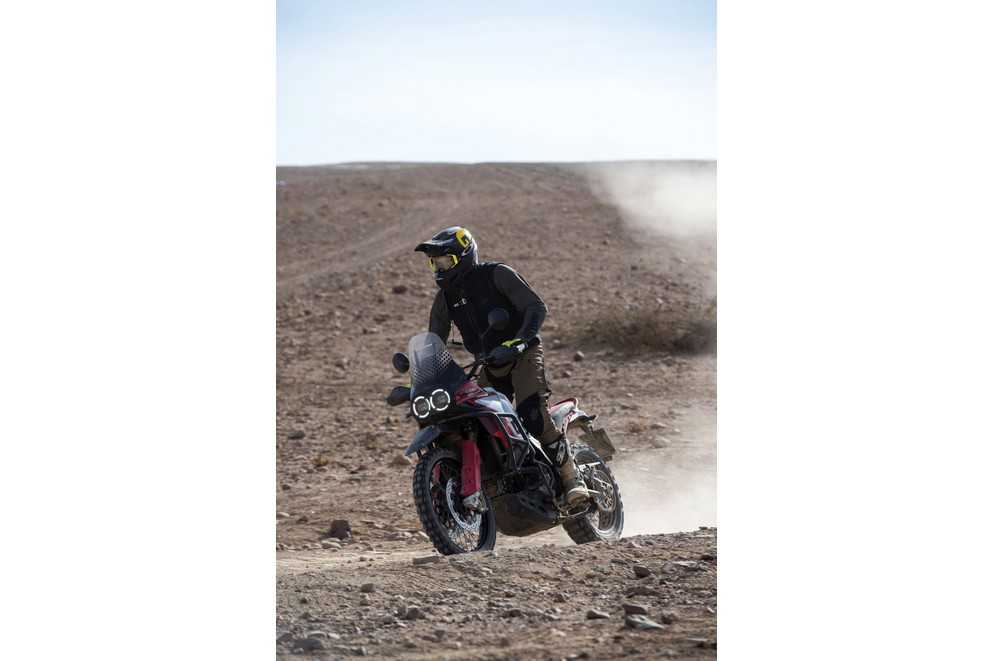
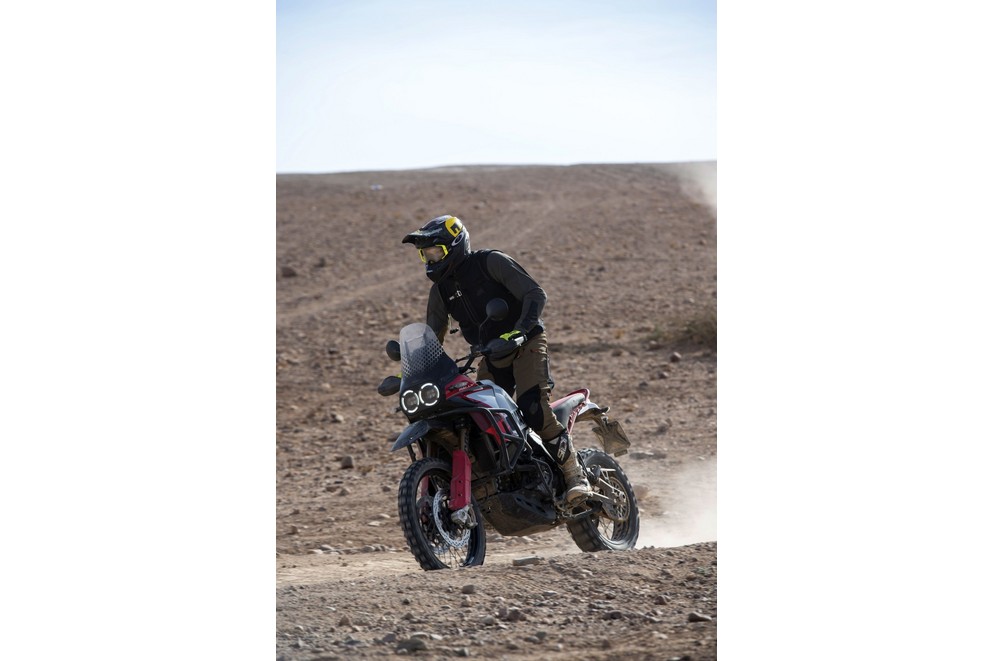
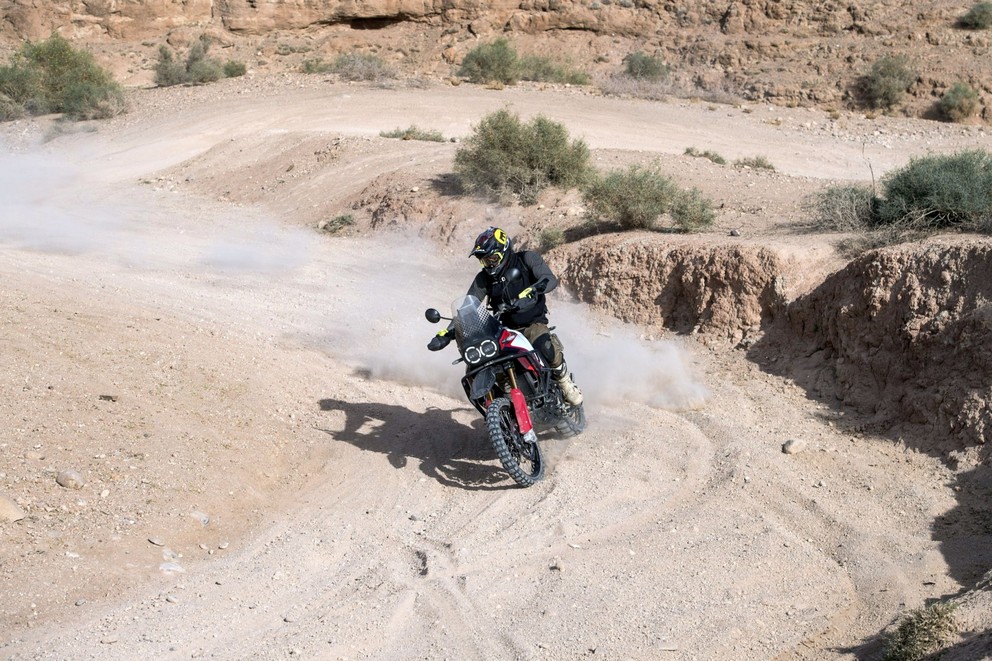
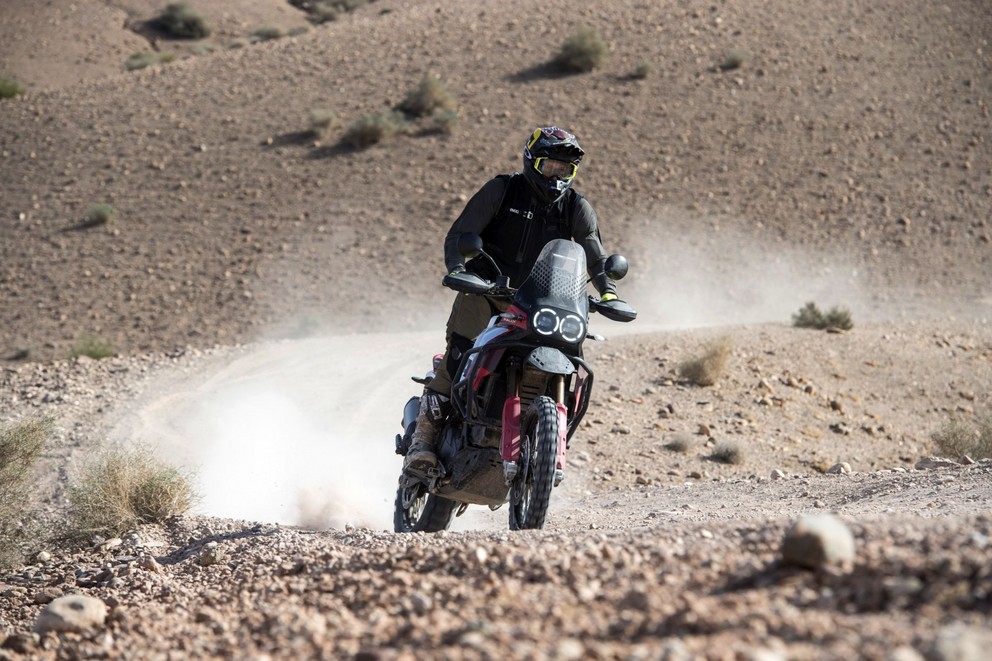
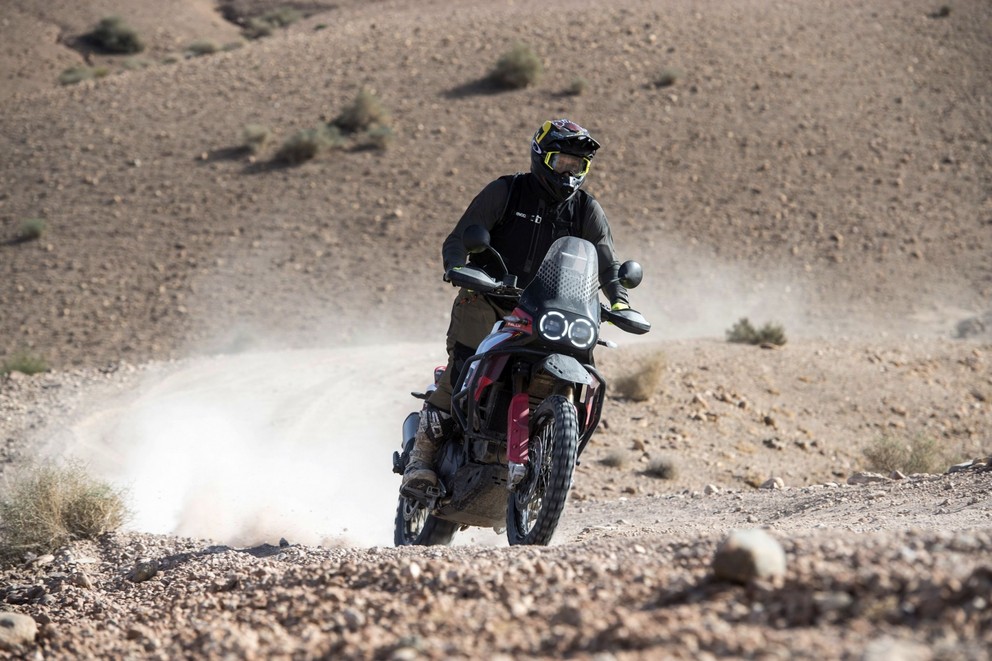
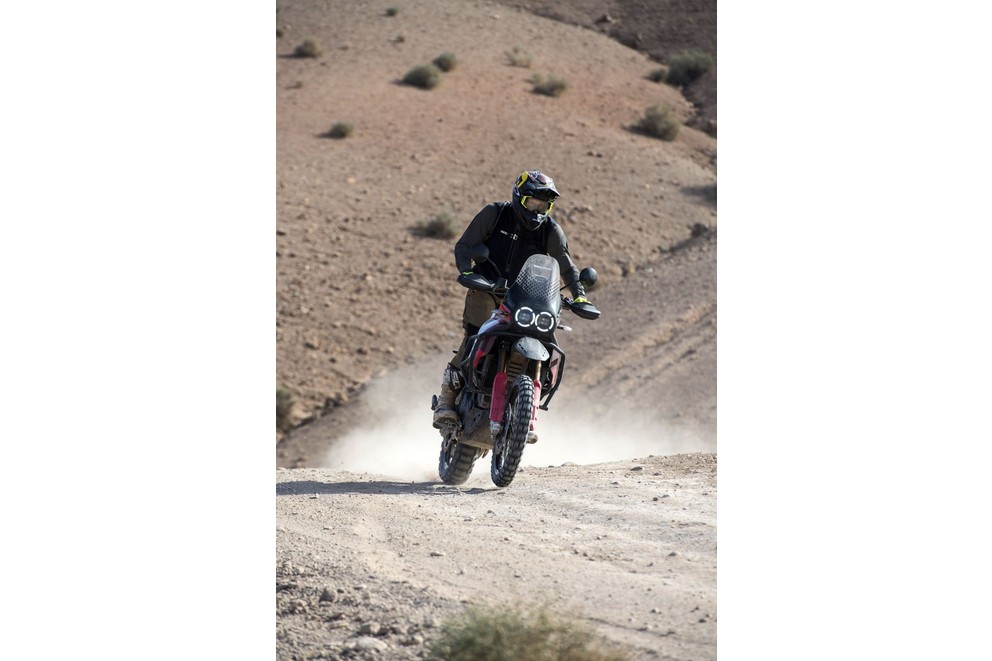
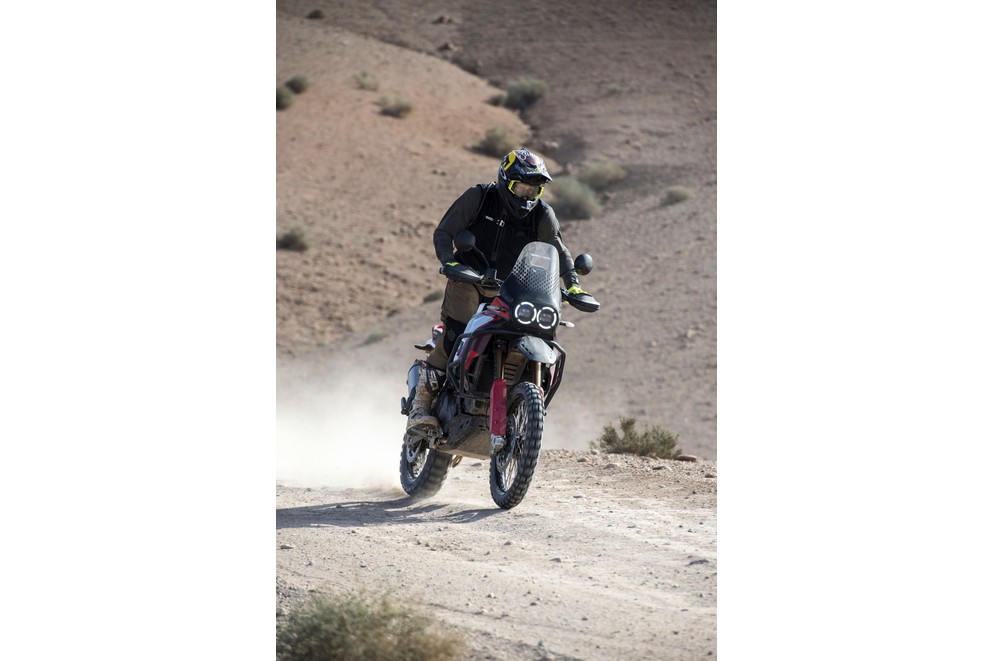
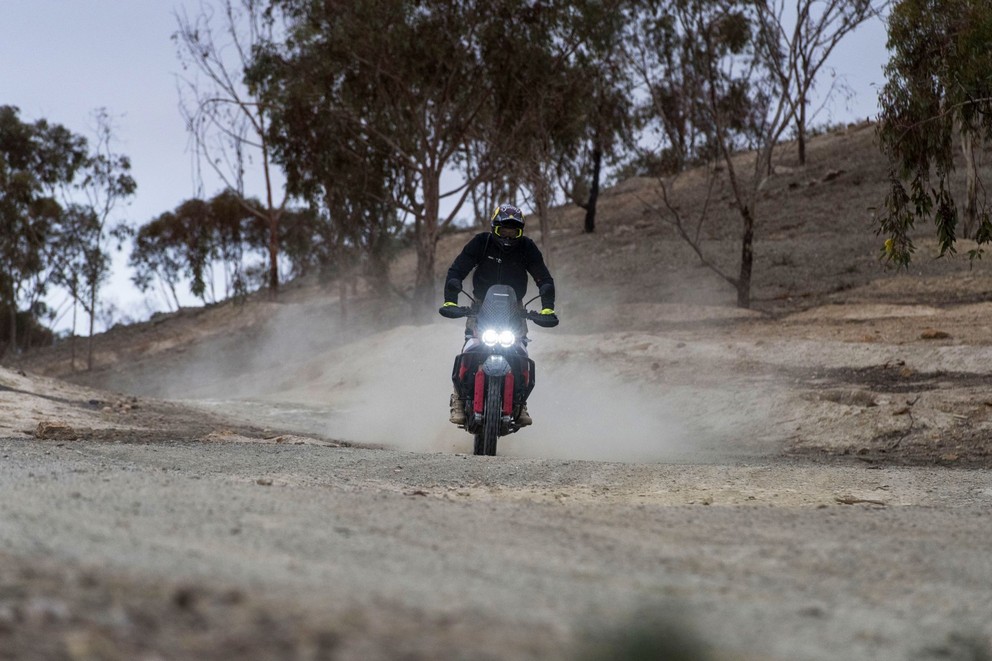
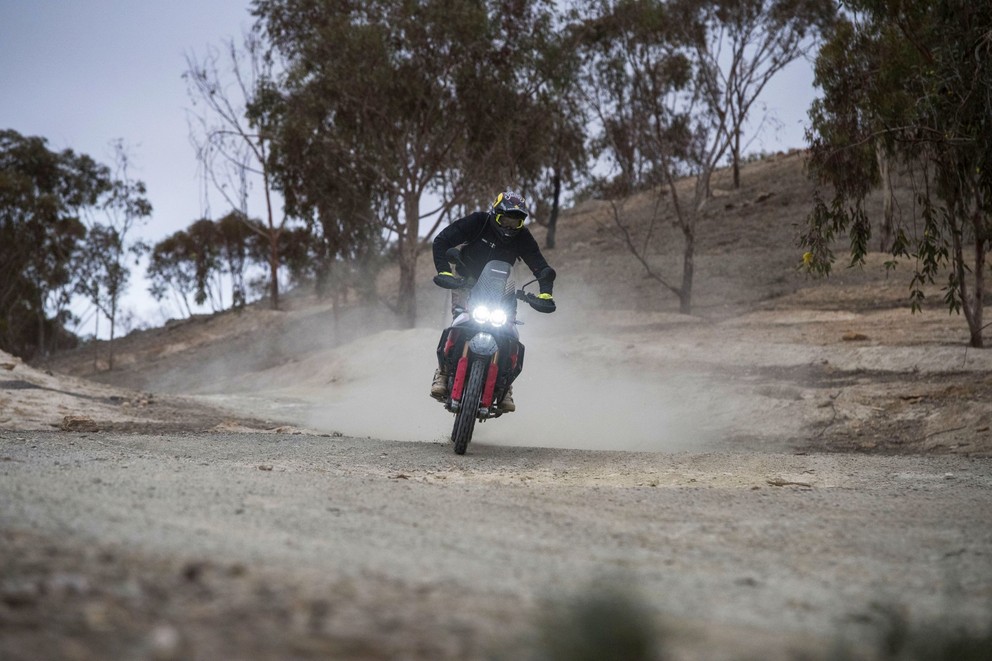
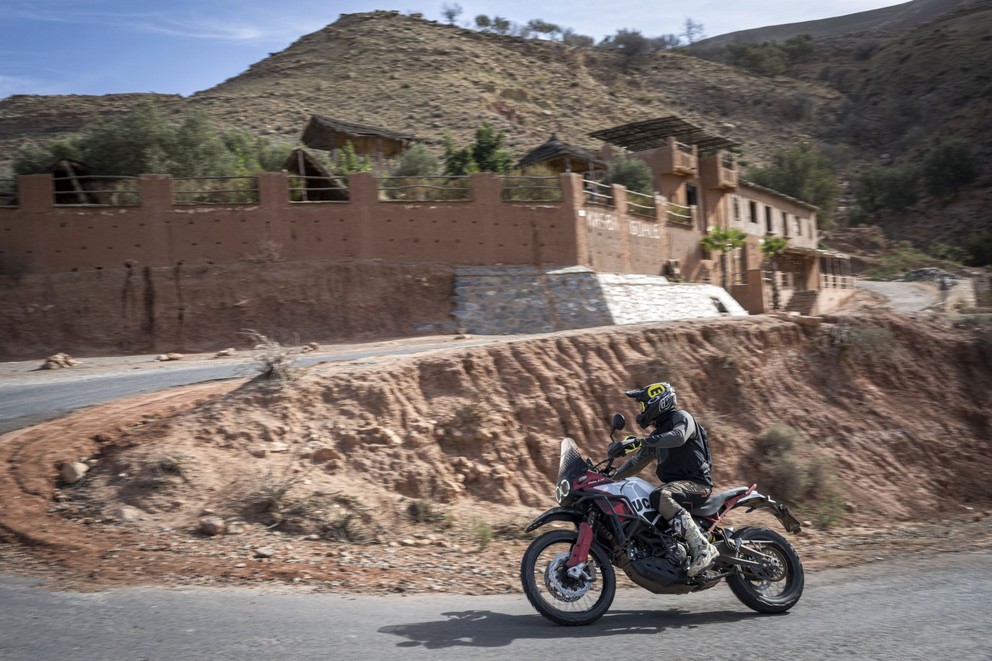
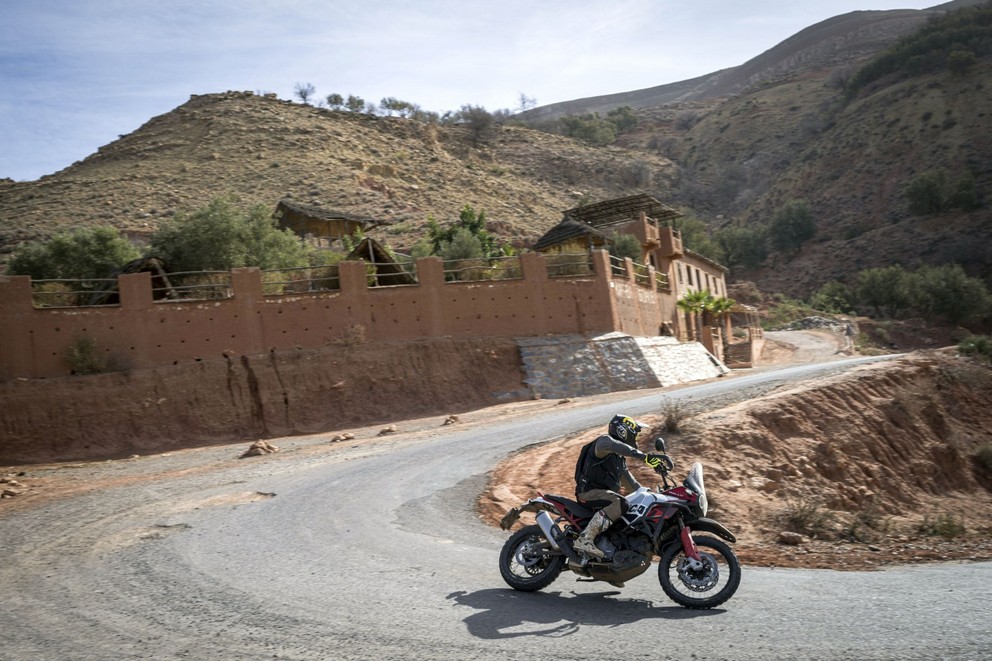
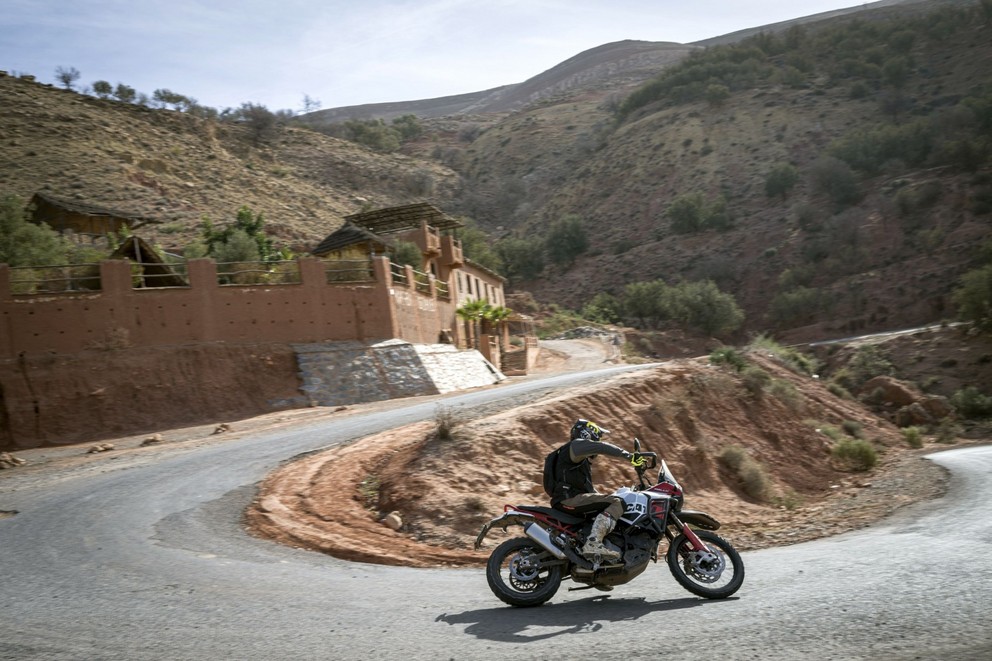
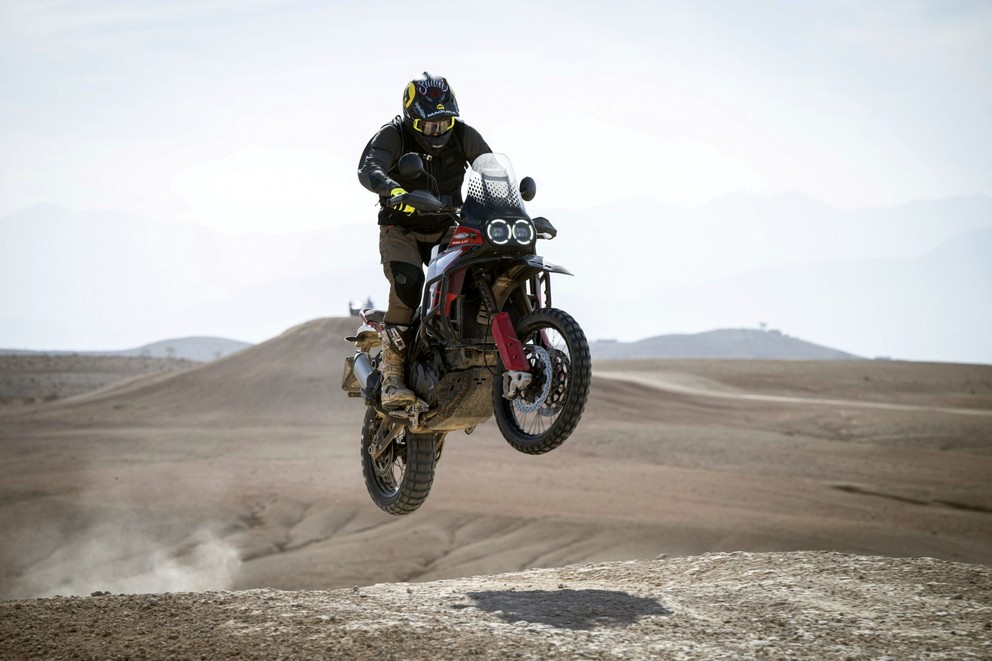
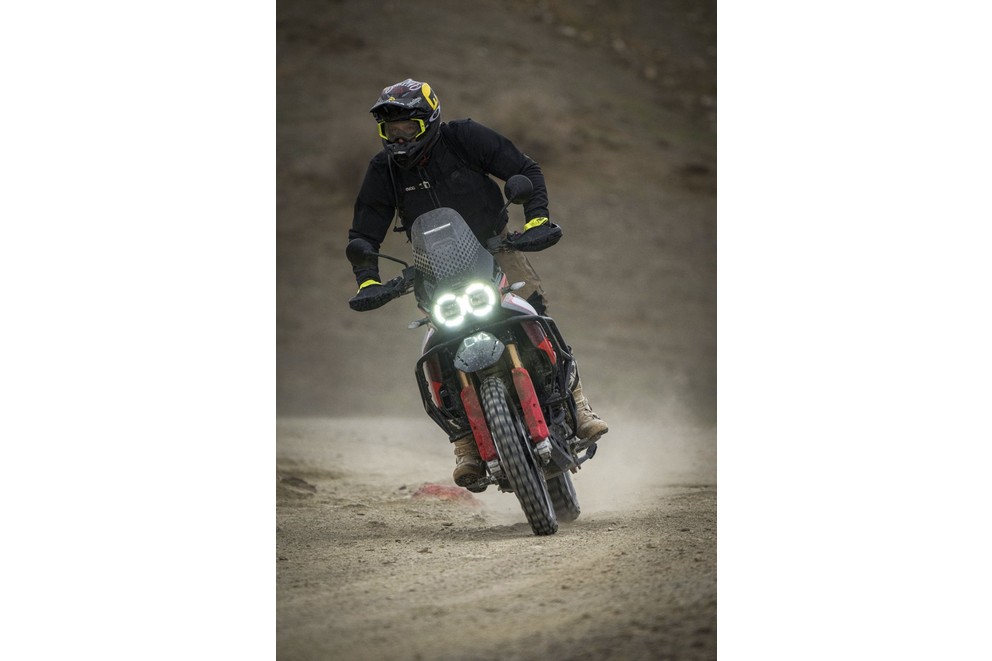
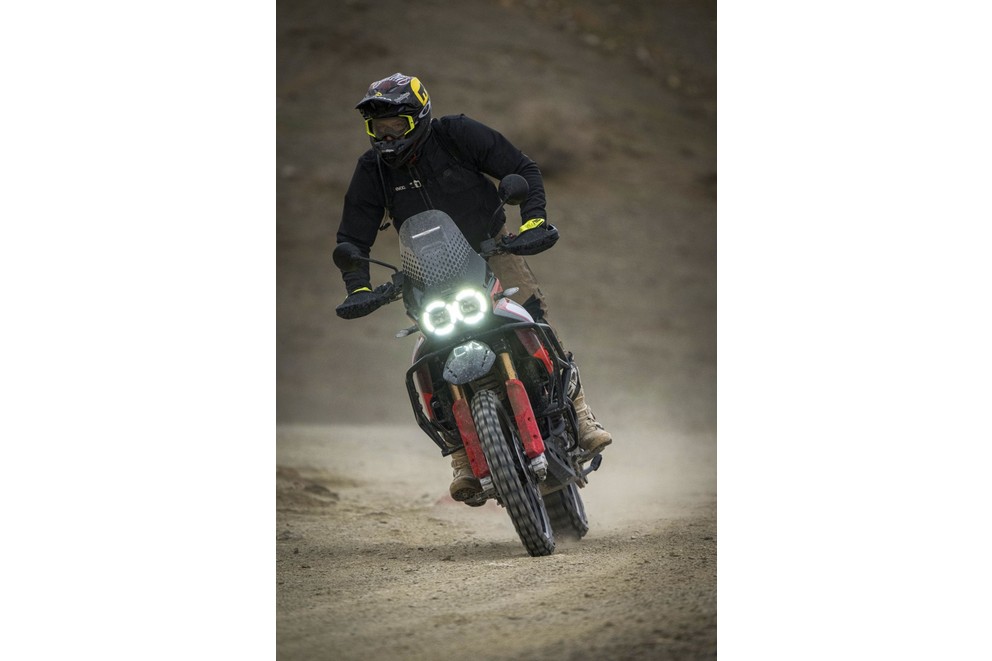
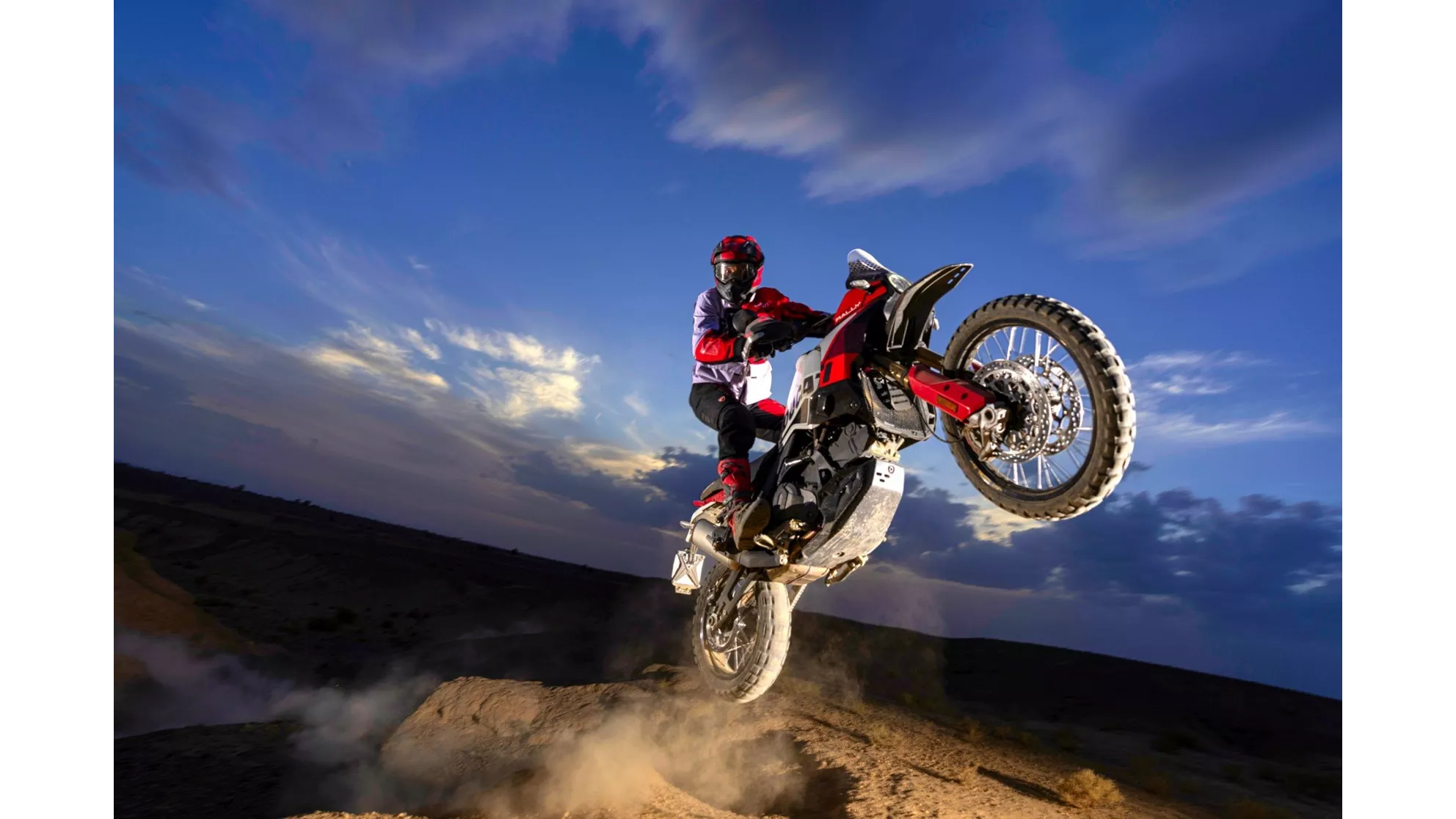
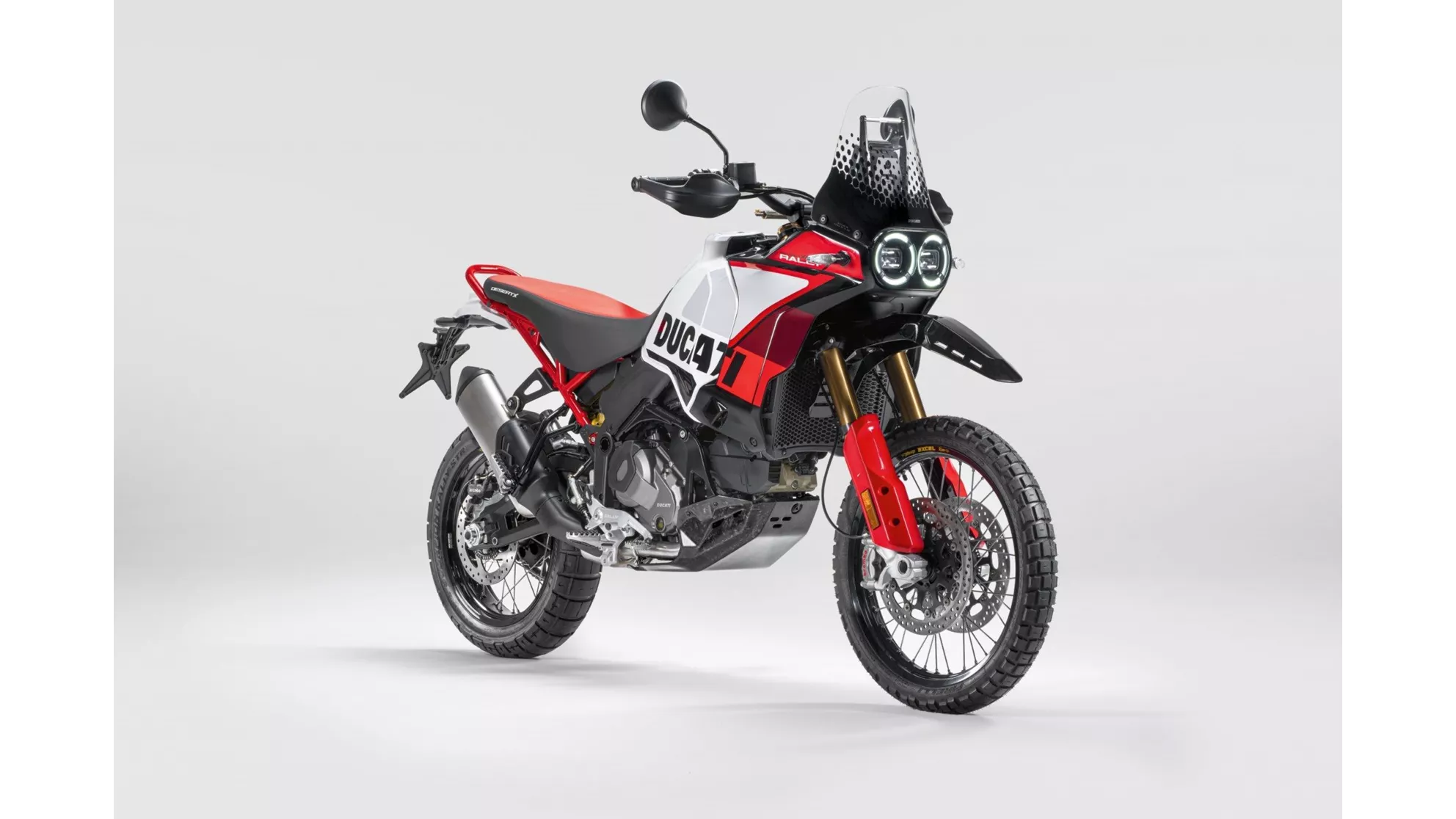
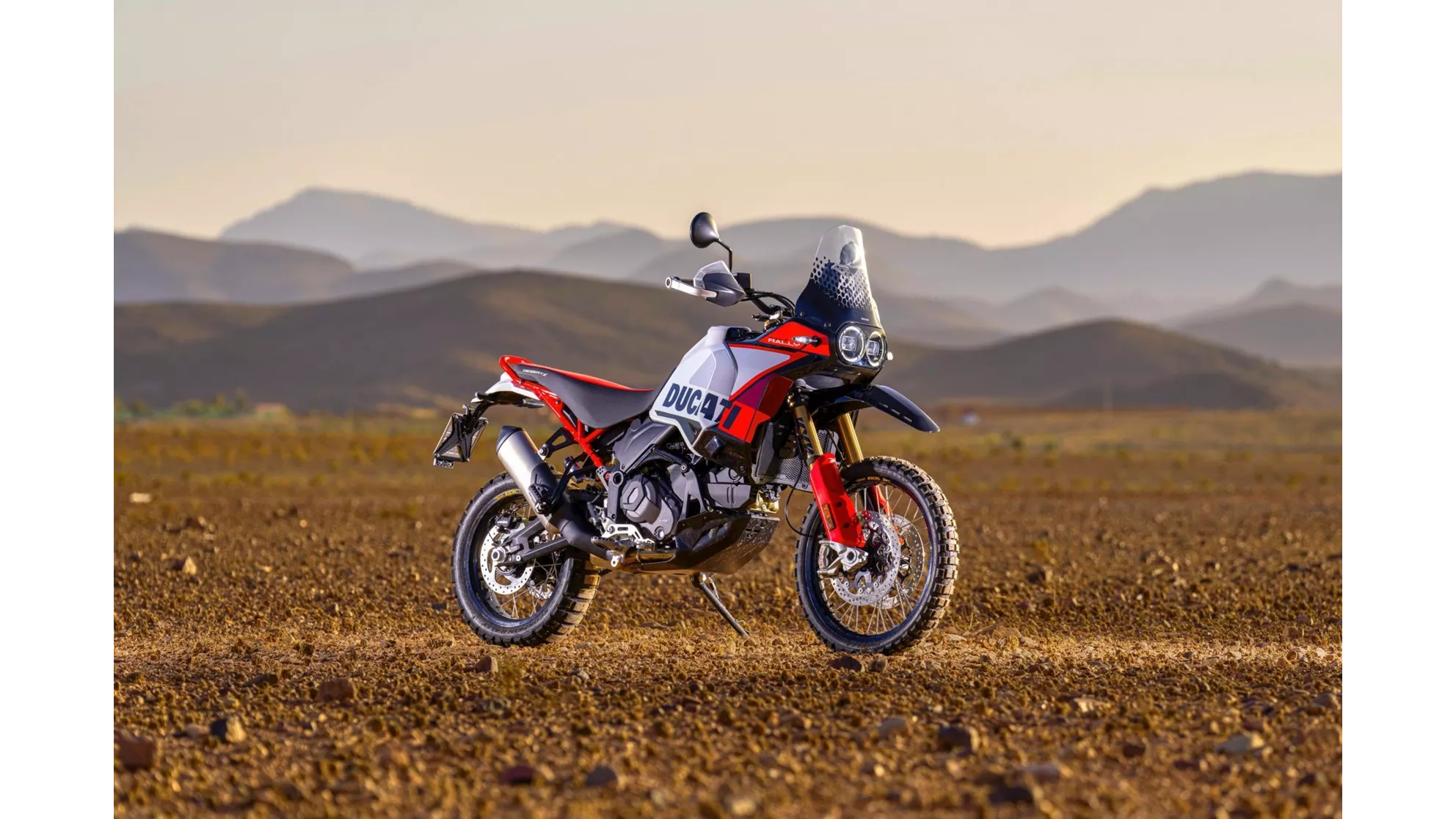
I'm as hot as fry oil when I get the invitation to Marrakech for the launch of the DesertX's highlight model. Our winter here in Lower Bavaria is very snowy and cold. Just the thought of testing the top model, the Ducati DesertX Rally, in Morocco and presenting it to you melts the snow in my brain.
Ducati DesertX Rally 2024 Tested
The extreme adventure bike in the desert
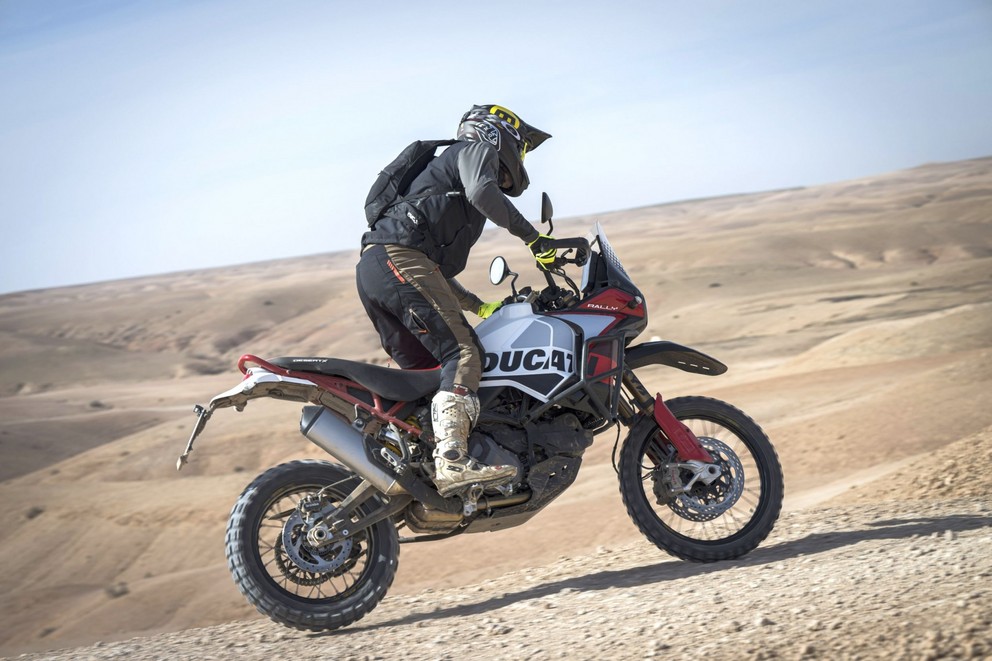
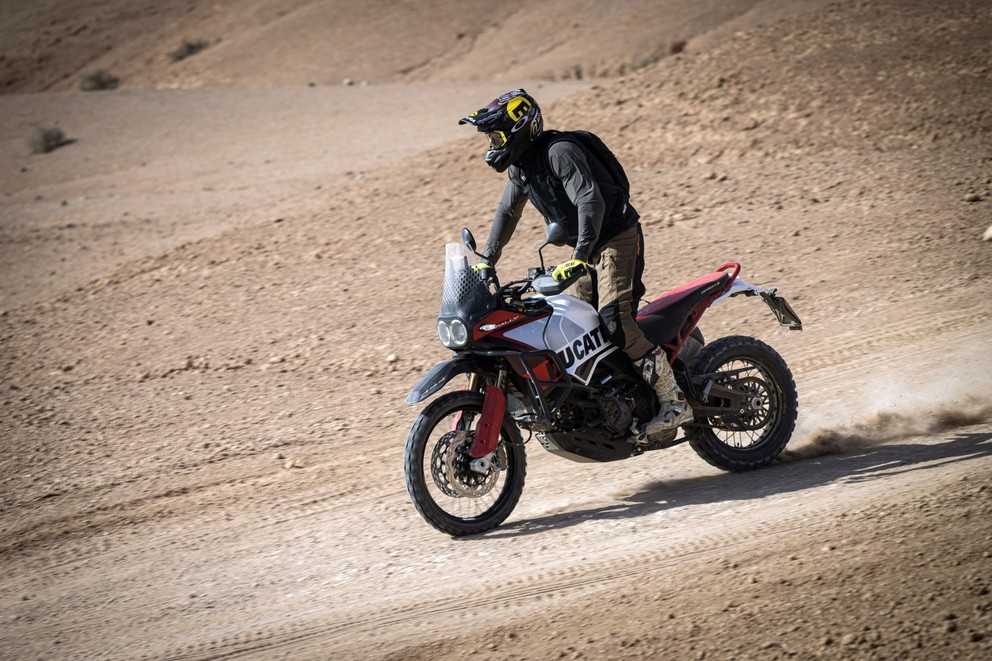
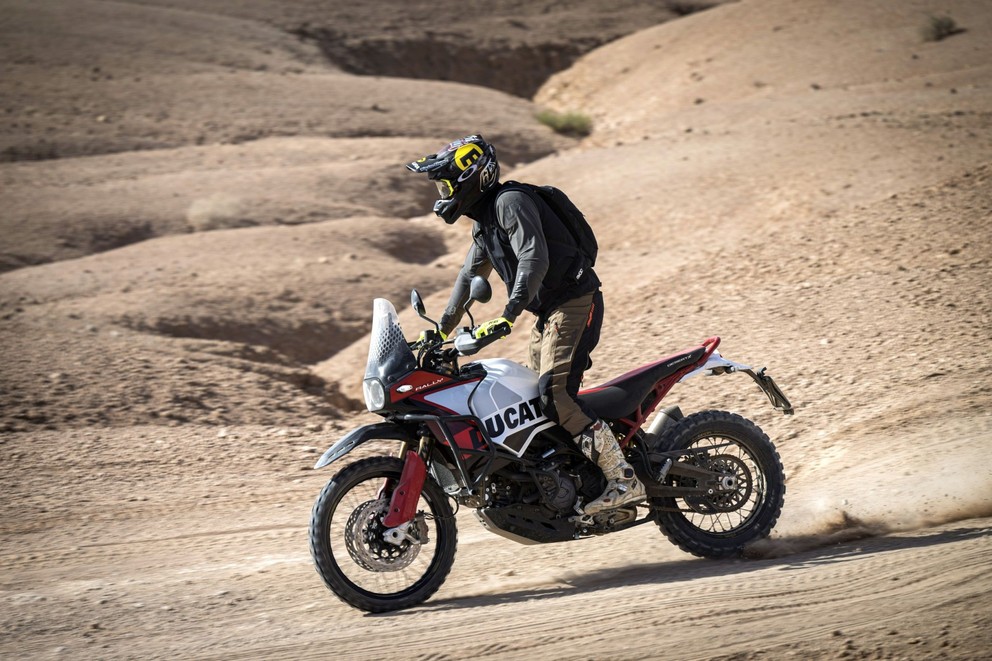
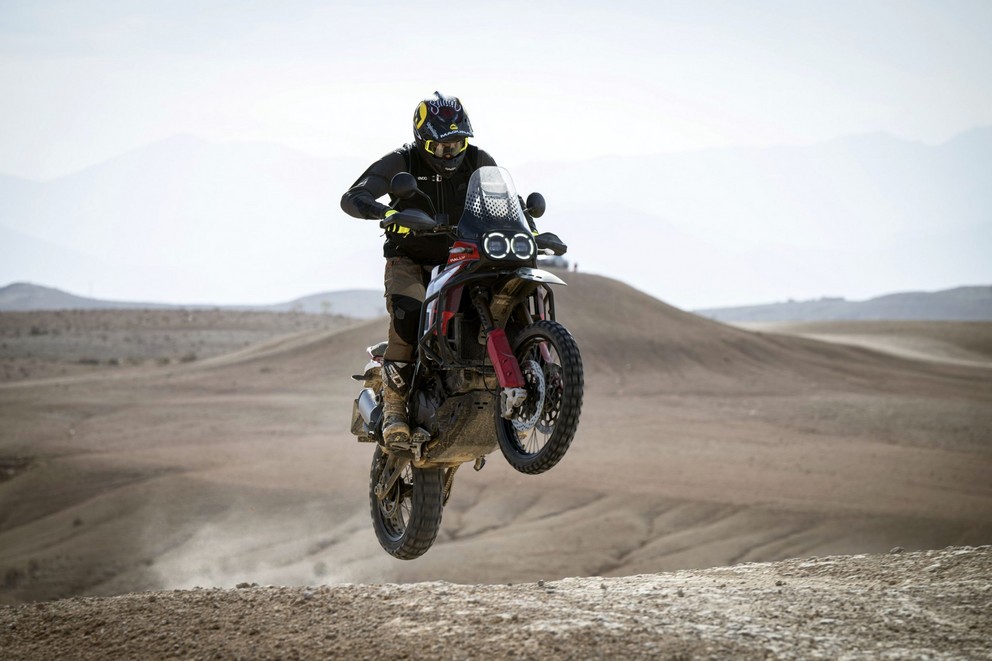
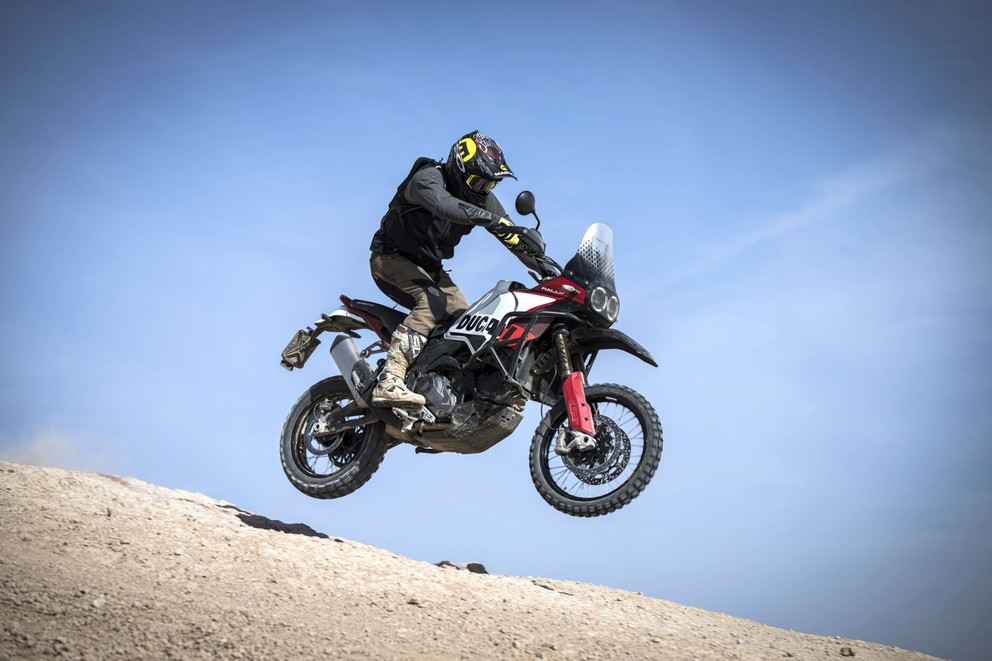
Stress test for the new Ducati DesertX Rally! The Italians let us ride the new adventure bike in the desert. Tibor gives it his all on the premium travel machine.
&width=72&height=72&bgcolor=rgba_39_42_44_0&mode=crop "Author: tiborsimai")
tiborsimai
published on 1/25/2024
53,215 Views
First contact with the Ducati DesertX Rally
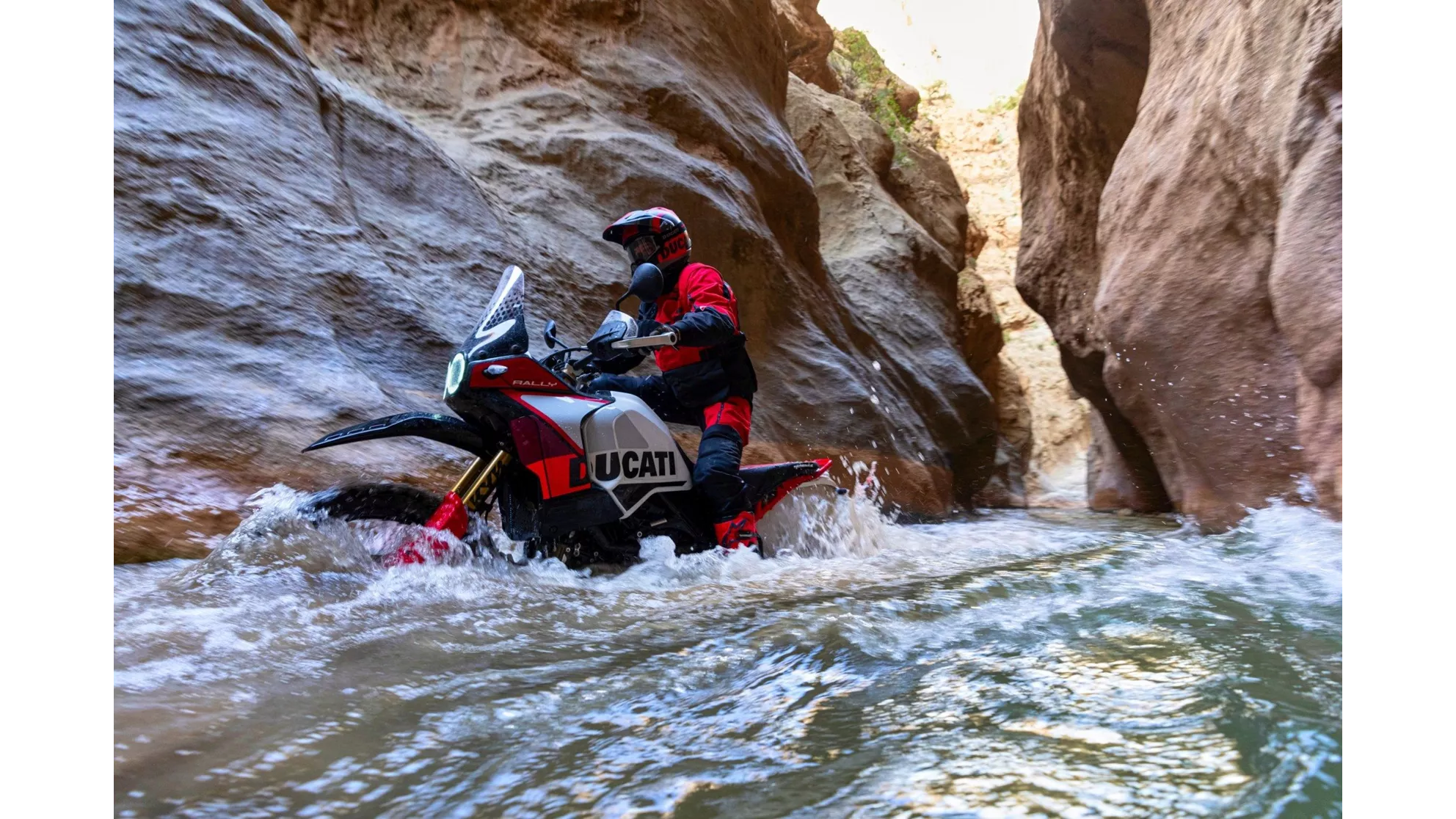
February 17, 2024, 7 pm: The press launch of the new DesertX Rally and the schedule for the next two days are presented to us. There's plenty of technical talk as everyone scrutinizes the bike's highlights. Side effect: instant want. Especially when the Erzbergrodeo bike, which they used for the prologue, stands nearby, marked with dirt in the most authentic way. Early the next morning, all the bikes of the first journalist groups stand lined up in neat rows.
There's no briefing... The bike was already presented a few years ago in its successful base version, the DesertX. Have I ridden that one? No, I wanted to borrow one from the local dealer, but I picked up a few injuries in 2023, so it never happened.
What do I like about jumping in at the deep end? I approach the new Rally like Sherlock Holmes. I question everything and scrutinize every last detail, as far as possible in the two days of riding time, covering about 220 km across Morocco's desert near the Atlas Mountains.
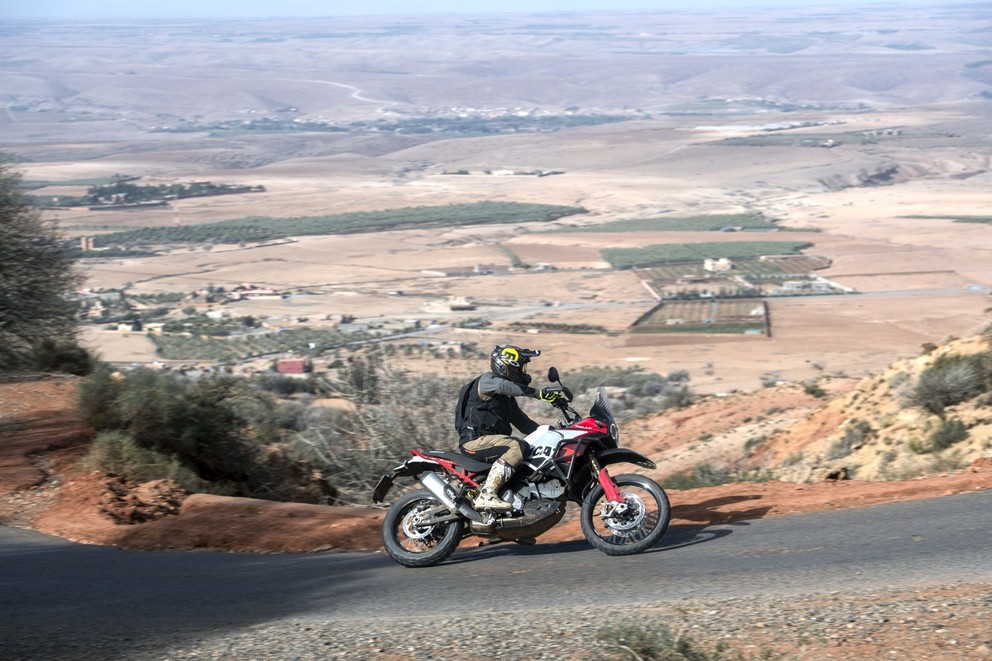
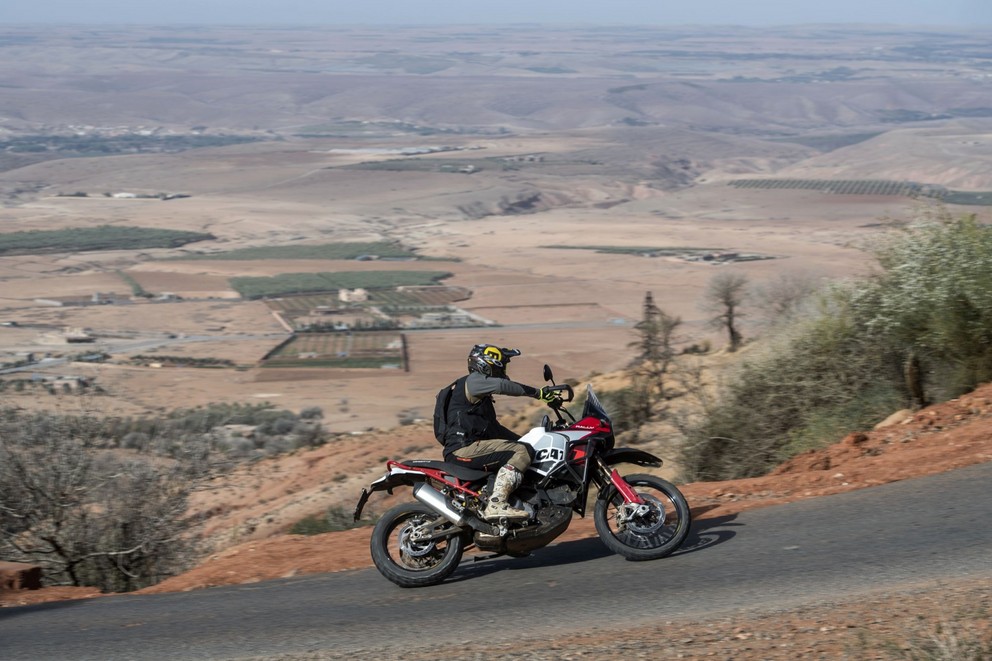
Morocco as a motorcycle destination?
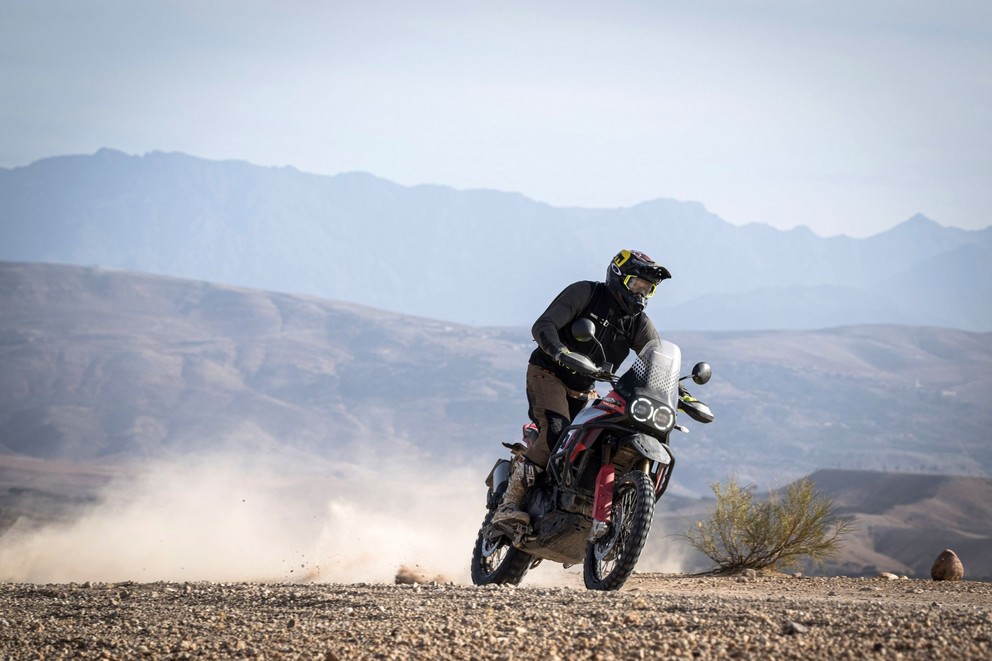
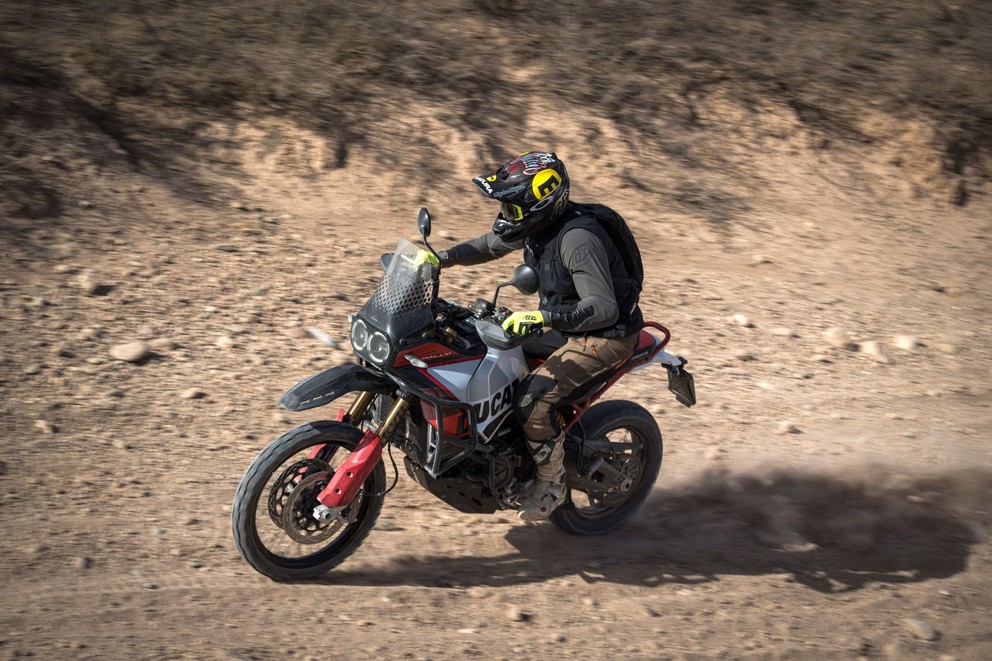
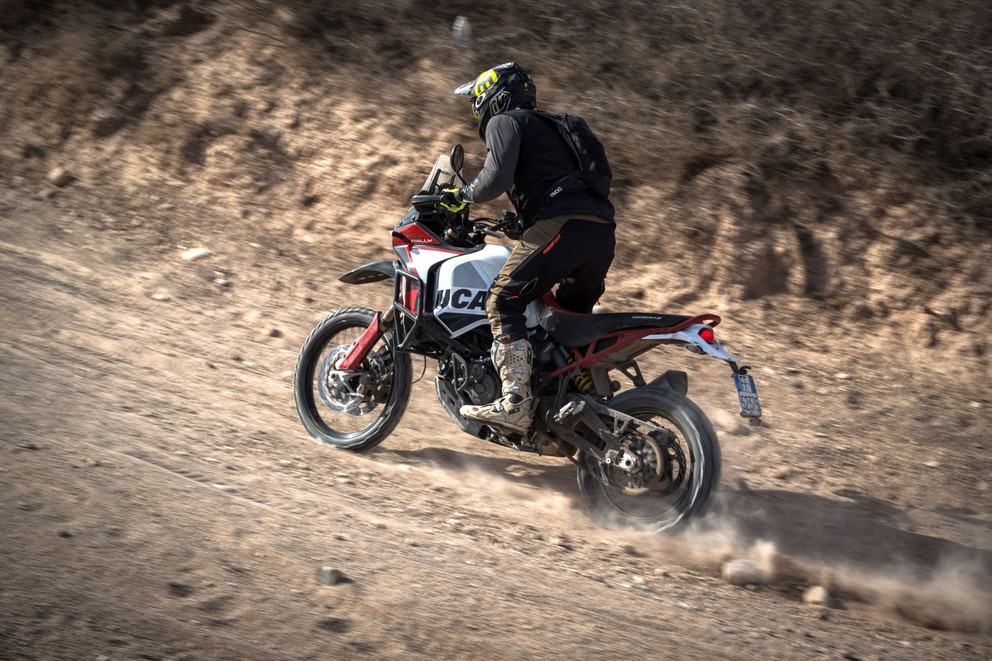
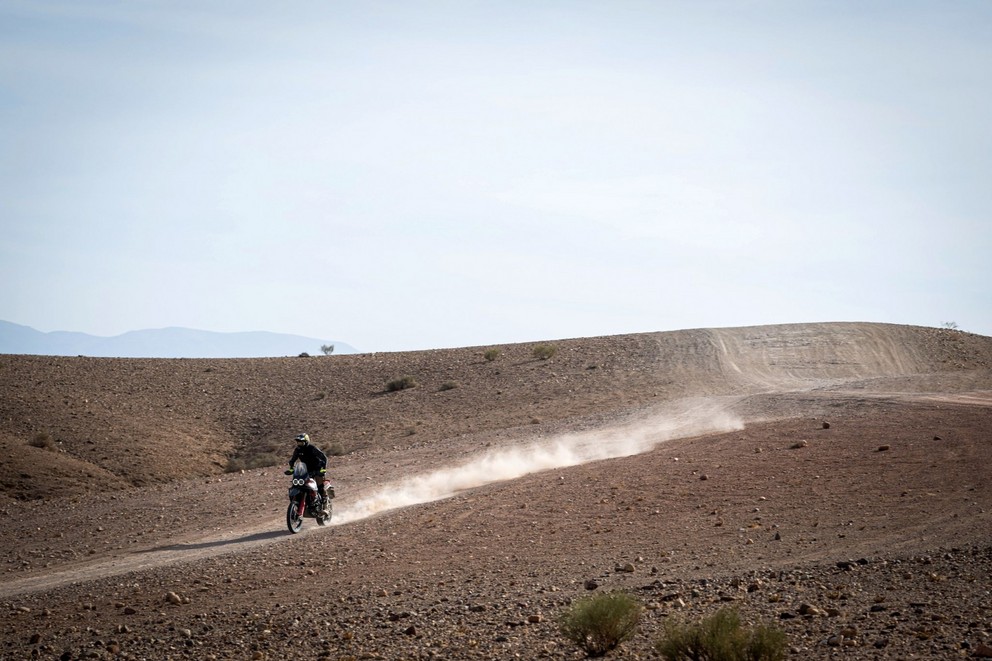
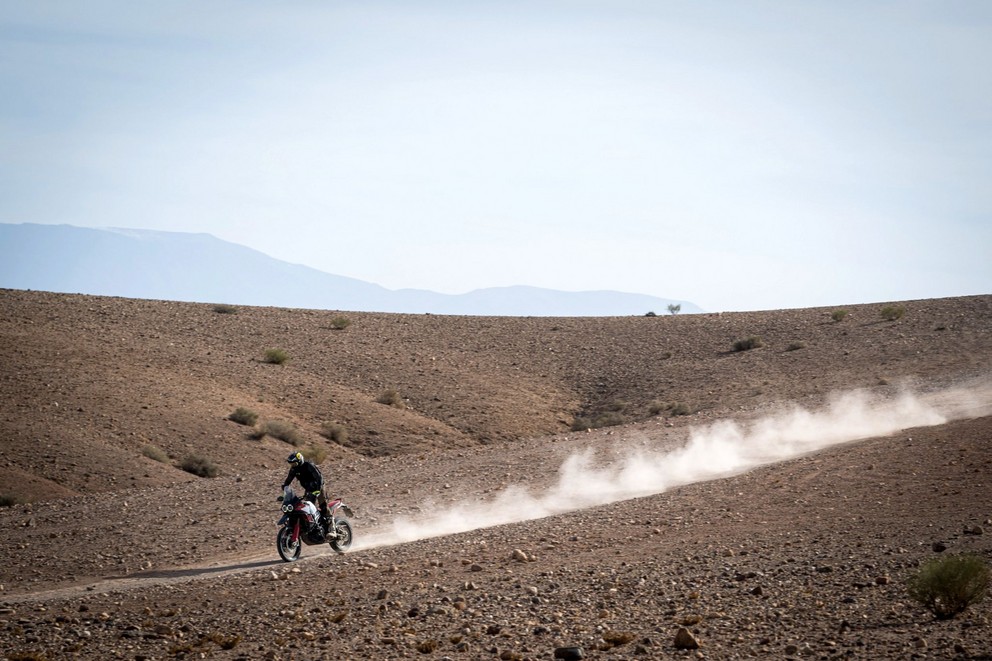
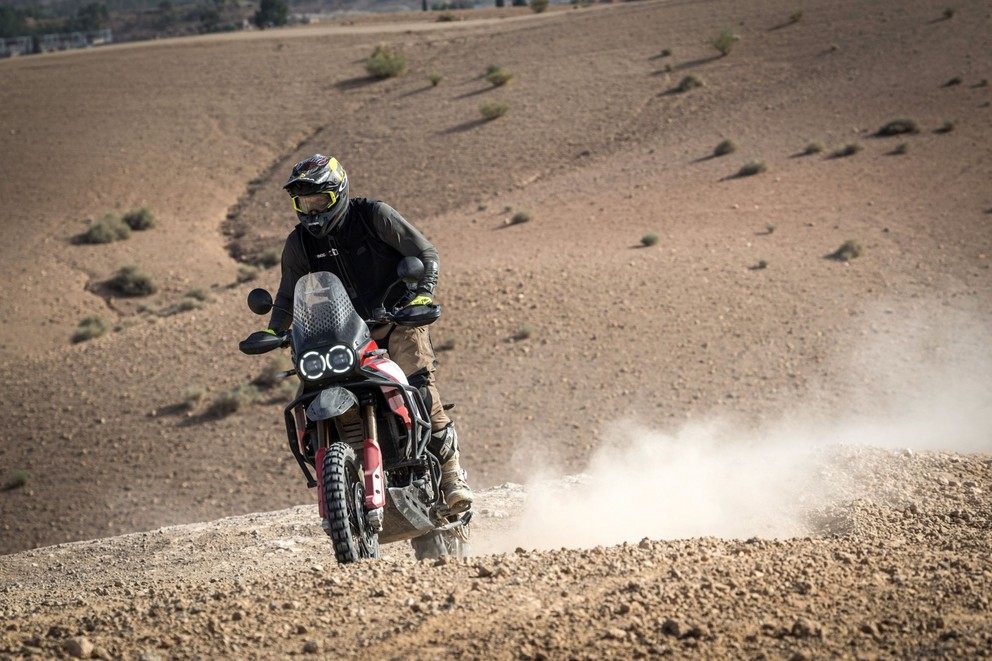
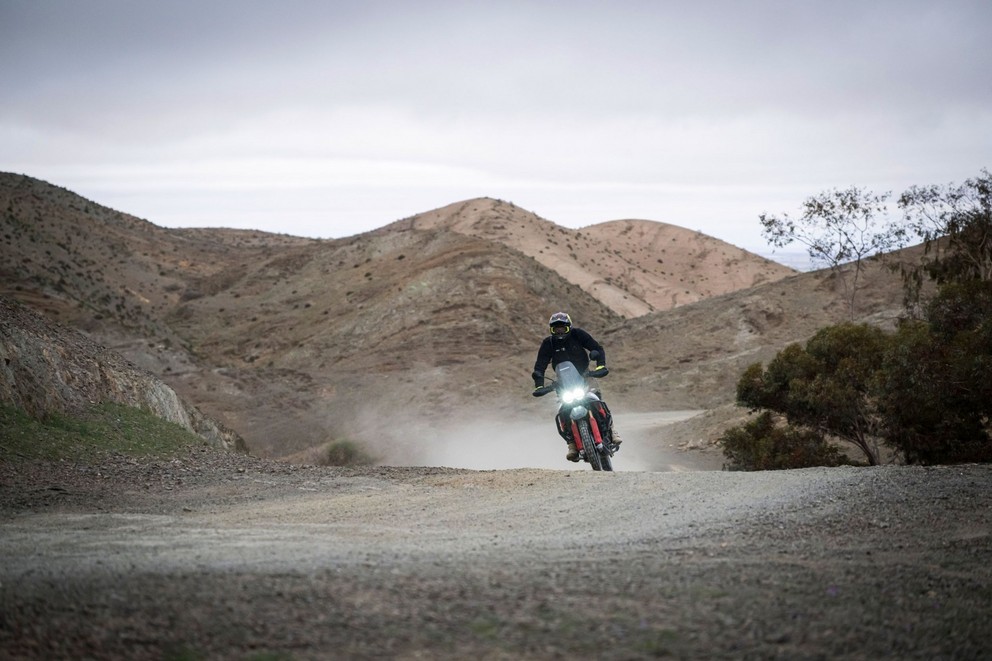
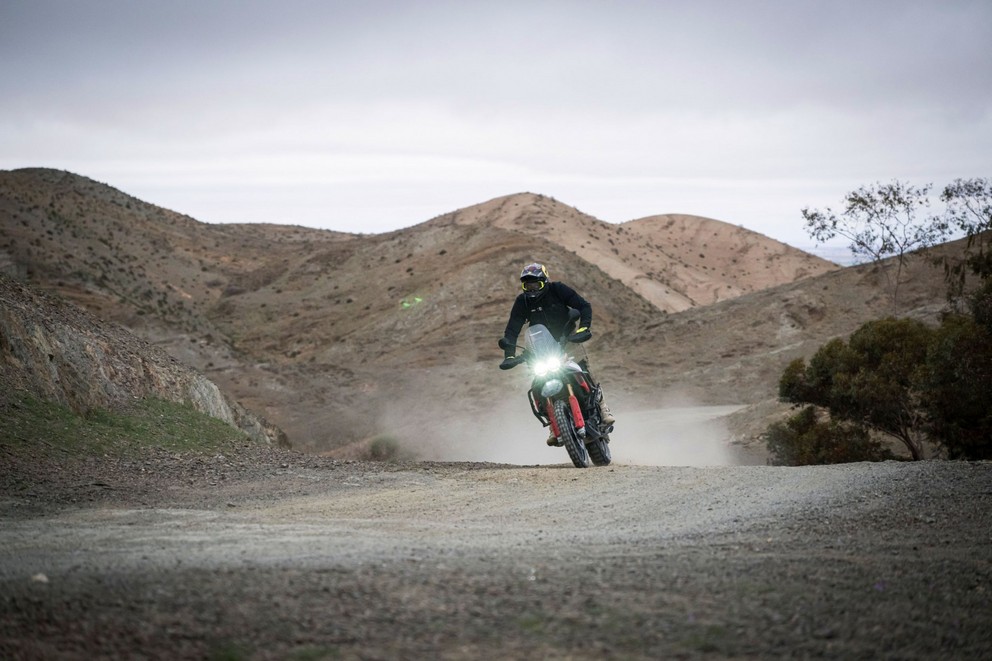
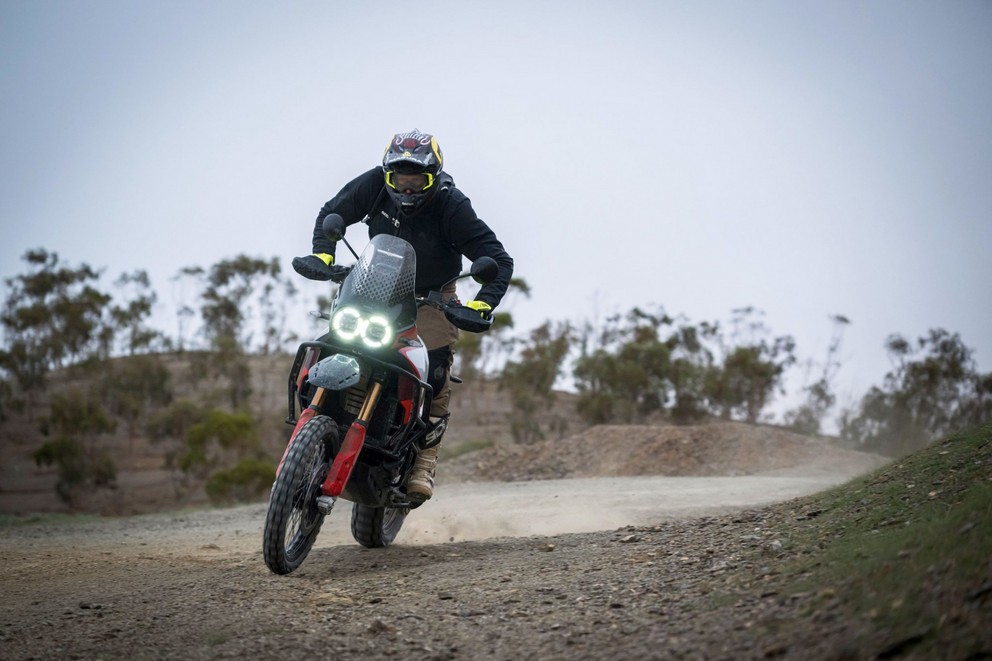
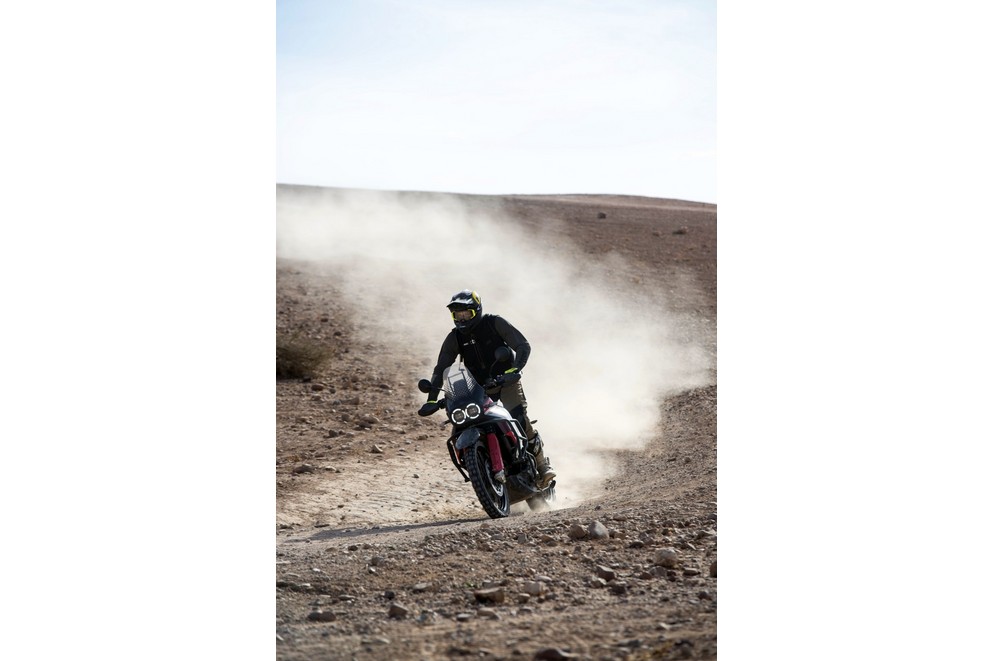
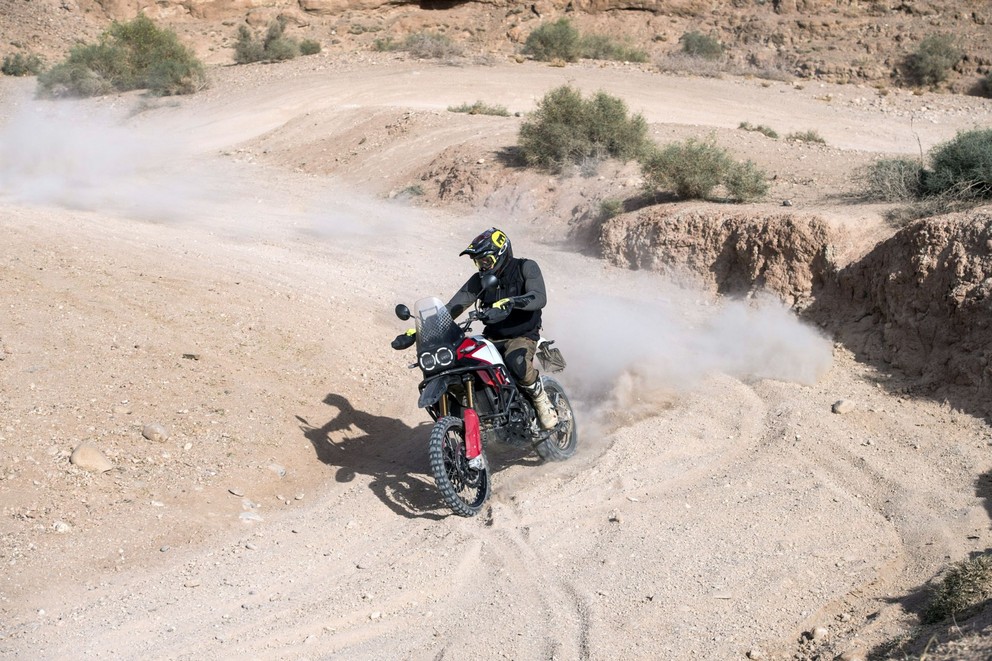
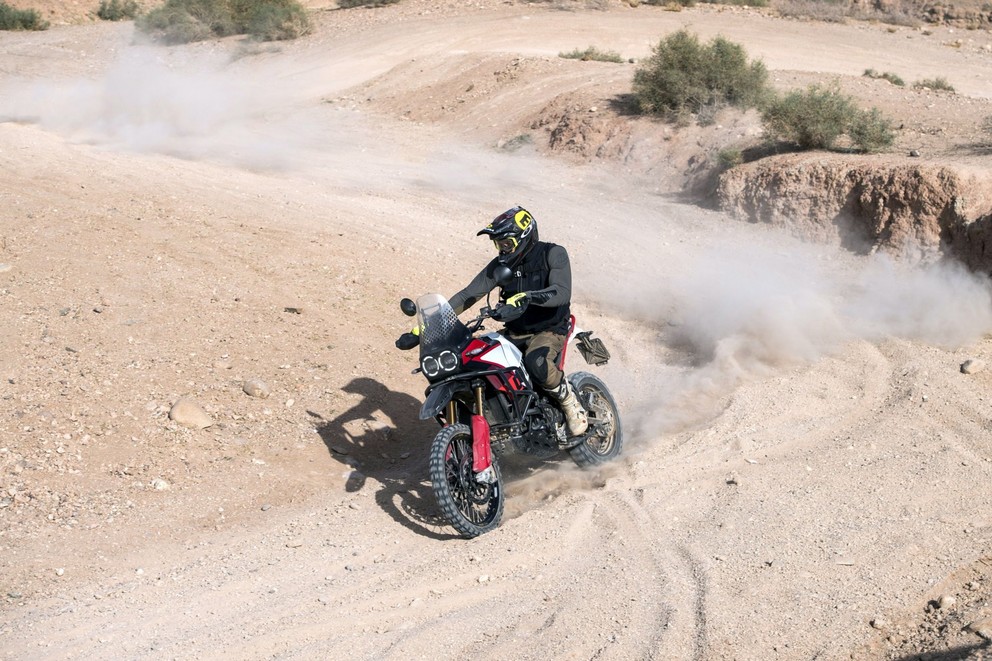
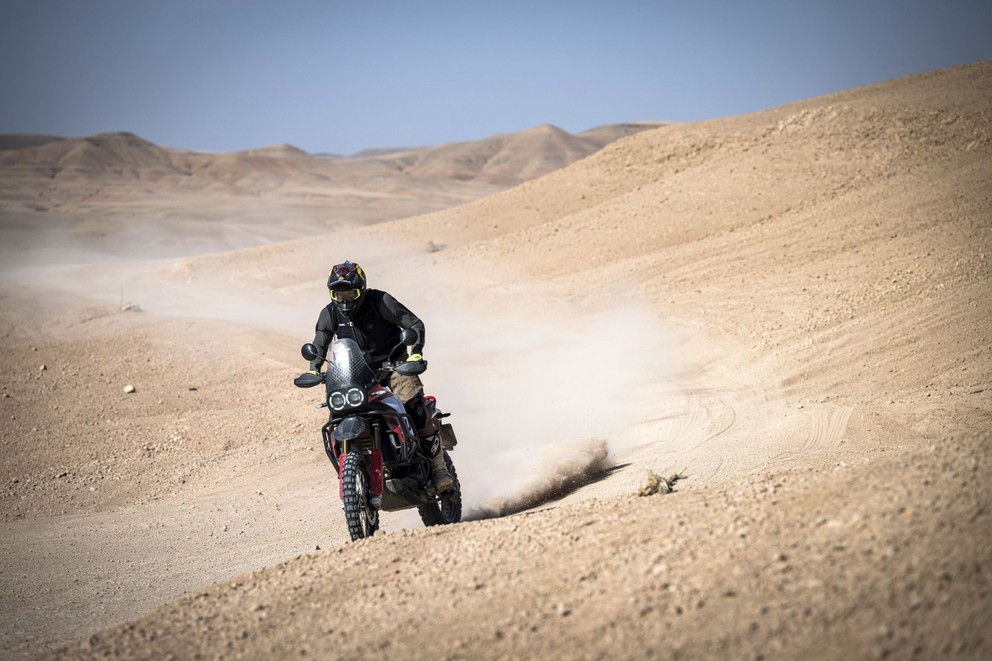
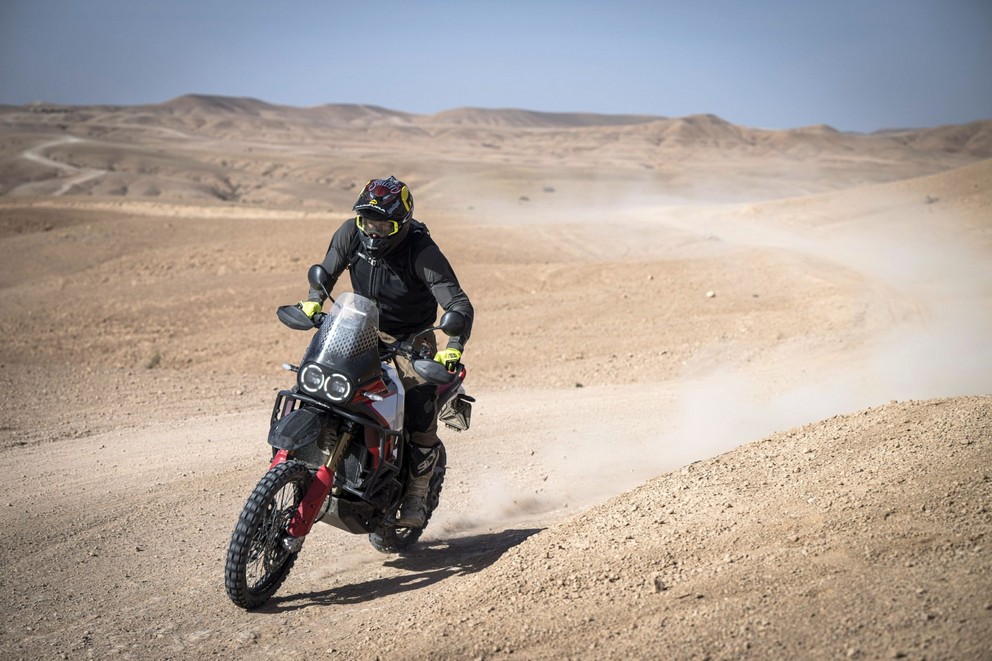
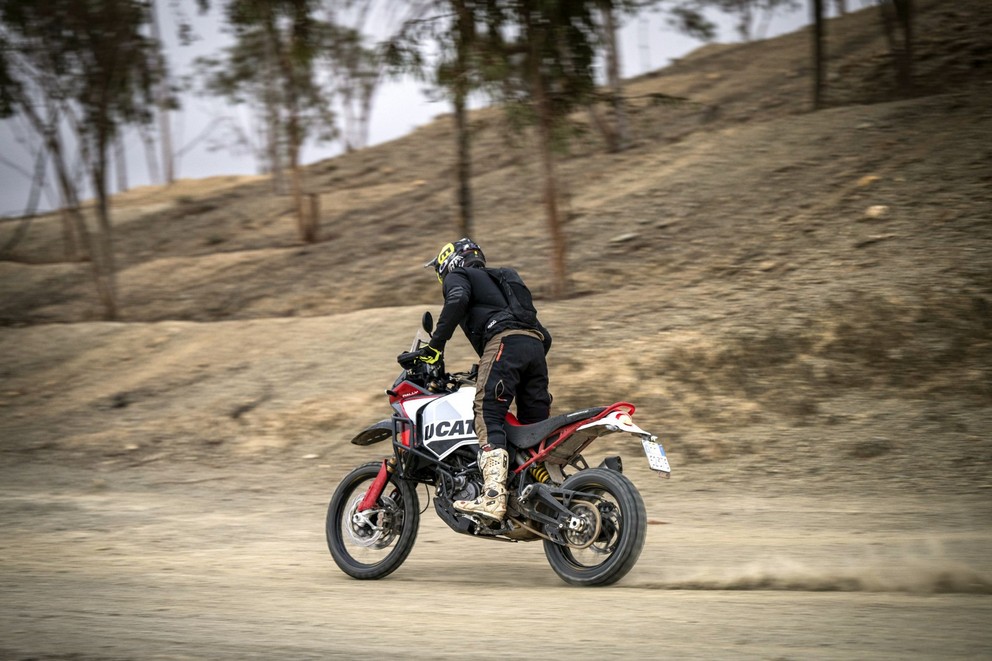
What about switching riding modes? A German colleague quickly helps me out. So everything set to RALLY. Engine power to full and everything else OFF. Except the quickshifter, which was automatically set to ON. Quite a lot of power on loose ground. Whatever, let's see how it all behaves. You have to imagine Morocco's tracks as looking roughly the same everywhere - really, everything looks the same. Any change in color or landscape out here in the outback happens only in nuances. That's what makes it so difficult for the rider, even for the Dakar Rally competitors who passed through here a few years back.
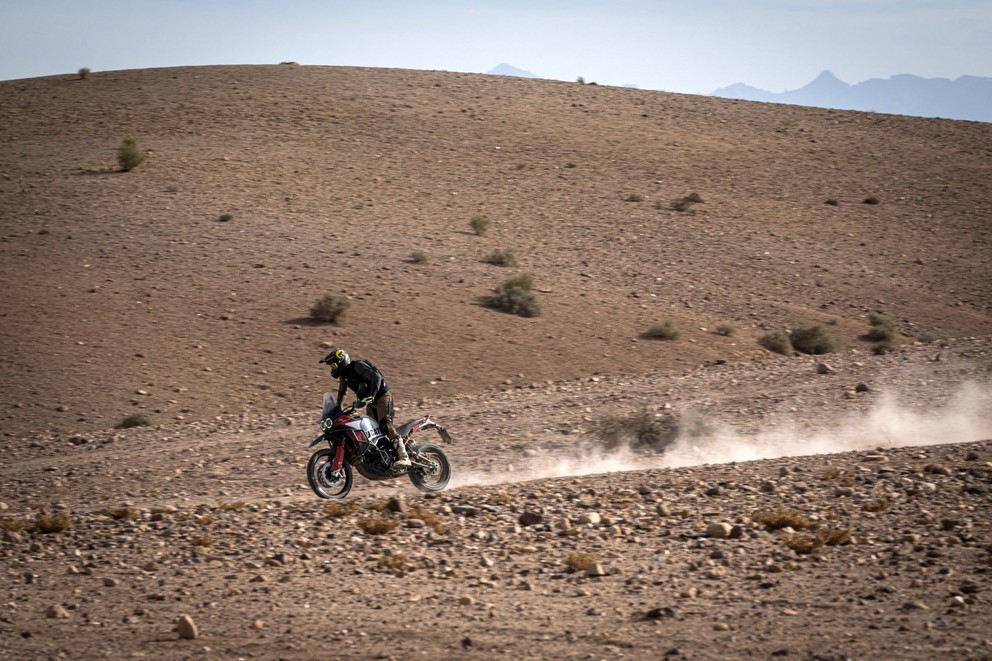
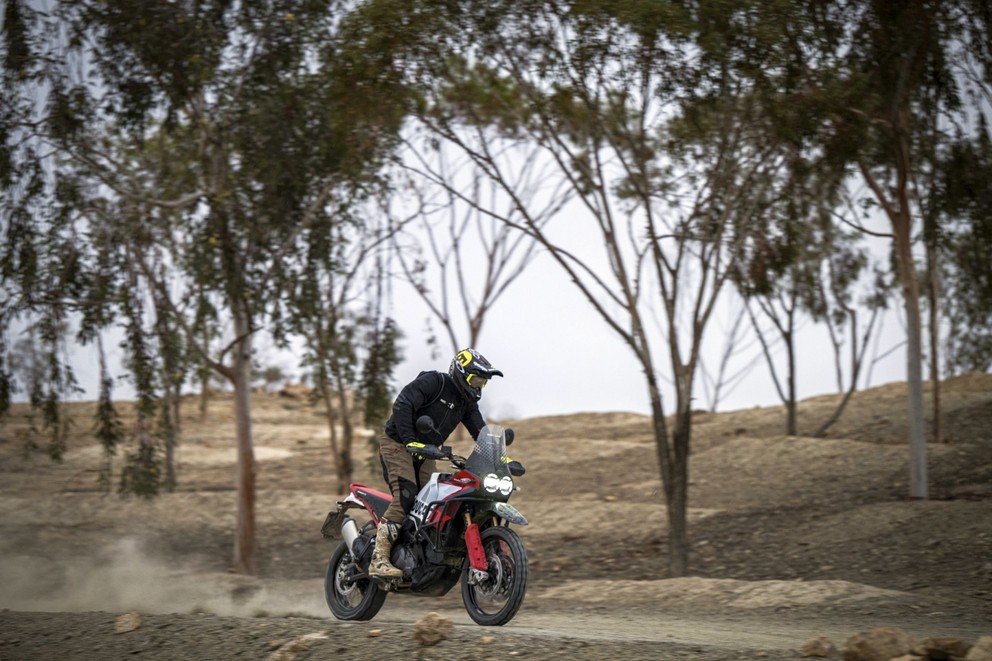
From deep sand to long gravel tracks, it's all there, and you always have to stay wide awake. Who knows how deep or how rocky it gets around the next corner? After about 1.5 hours of settling in with our group, which is riding briskly, I grab the guide and don't leave his rear wheel again. First, I have no desire to eat dust, and second, I want more. More throttle and more bike. What does it do? How does it behave? What's the quality like? Can I feel differences? Draw comparisons?
First, the facts:
Ducati DesertX Rally 2024 - Key Facts
Engine and Drive Train
| Engine type | V |
|---|---|
| Bore | 94 mm |
| Stroke | 67.5 mm |
| Engine power | 110 HP |
| Rpm at Max. Power | 9,250 rpm |
| Torque | 92 Nm |
| Rpm at Torque | 6,500 rpm |
| Compression Ratio | 13.3 |
| Fuel system | Injection |
| Degrees | 90 |
| Starter | Electric |
| Clutch Type | Multiplate in oil-bath, Antihopping |
| Transmission | Chain |
| Transmission Type | Gearshift |
| Number of gears | 6 |
| Cylinders | 2 |
| Strokes | 4-Stroke |
| Valves per cylinder | 4 |
| Valves | Desmodromic, DOHC |
| Cooling | liquid |
| Can be restricted for A2 licence | Yes |
| Displacement | 937 ccm |
Suspension Front
| Front suspension | Upside-Down telescopic fork |
|---|---|
| Technology | Closed Cartridge |
| Brand | Kayaba |
| Diameter | 48 mm |
| Travel | 250 mm |
| Adjustment | Compression, Rebound |
Suspension Rear
| Suspension | Swing arm |
|---|---|
| Shock absorber | Monoshock |
| Brand | Kayaba |
| Travel | 240 mm |
| Adjustment | Compression, Preload, Rebound |
| Material | Aluminium |
Chassis
| Frame | Steel |
|---|---|
| Frame type | Tubular |
| Rake | 62.4 degree |
| Trail | 122 mm |
Brakes Front
| Type | Double disk |
|---|---|
| Diameter | 320 mm |
| Piston | Four pistons |
| Shock mount | Semi-Schwimmsattel |
| Actuation | Hydraulic |
| Technology | radial, Monoblock |
| Brand | Brembo |
Brakes Rear
| Type | Disc |
|---|---|
| Diameter | 265 mm |
| Piston | Double piston |
| Shock mount | Floating caliper |
| Brand | Brembo |
Assistance Systems
| Advanced Rider Assistance Systems | Riding modes, Cornering ABS, Ride by Wire, Shift assistant with blipper, Cruise control, Traction control, Anti-wheelie |
|---|
Dimensions and Weights
| Front tyre width | 90 mm |
|---|---|
| Front tyre height | 90 % |
| Front tyre diameter | 21 inch |
| Rear tyre width | 150 mm |
| Rear tyre height | 70 % |
| Rear tyre diameter | 18 inch |
| Wheelbase | 1,625 mm |
| Seat Height | 875 mm |
| Seat Height up to | 910 mm |
| Dry Weight (with ABS) | 211 kg |
| Fuel Tank Capacity | 21 l |
| License compliancy | A2, A |
| Range | 375 km |
| Combined CO2 emissions | 133 g/km |
| Combined fuel consumption | 5.6 l/100km |
Equipment
| Equipment | Connectivity, Heated grips, LED daytime running lights, LED-Headlights, TFT display |
|---|
Ducati DesertX Rally chassis
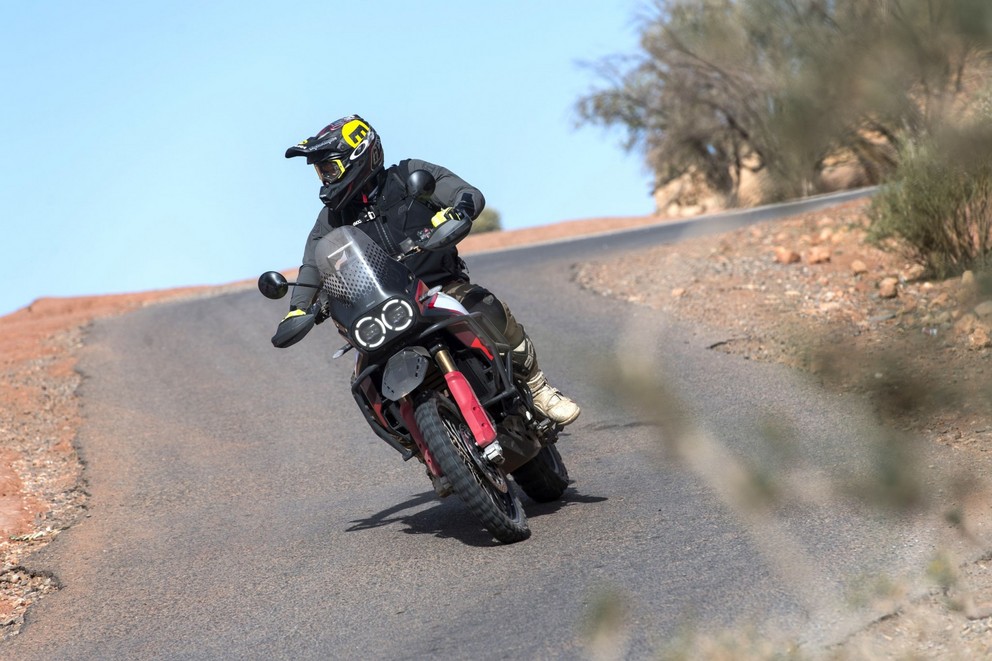
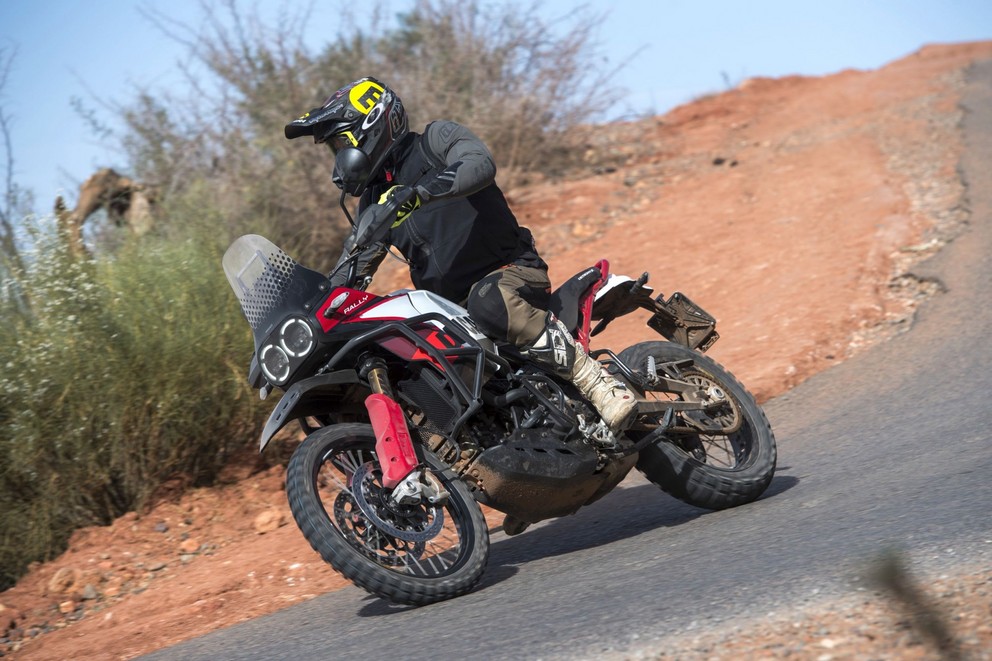
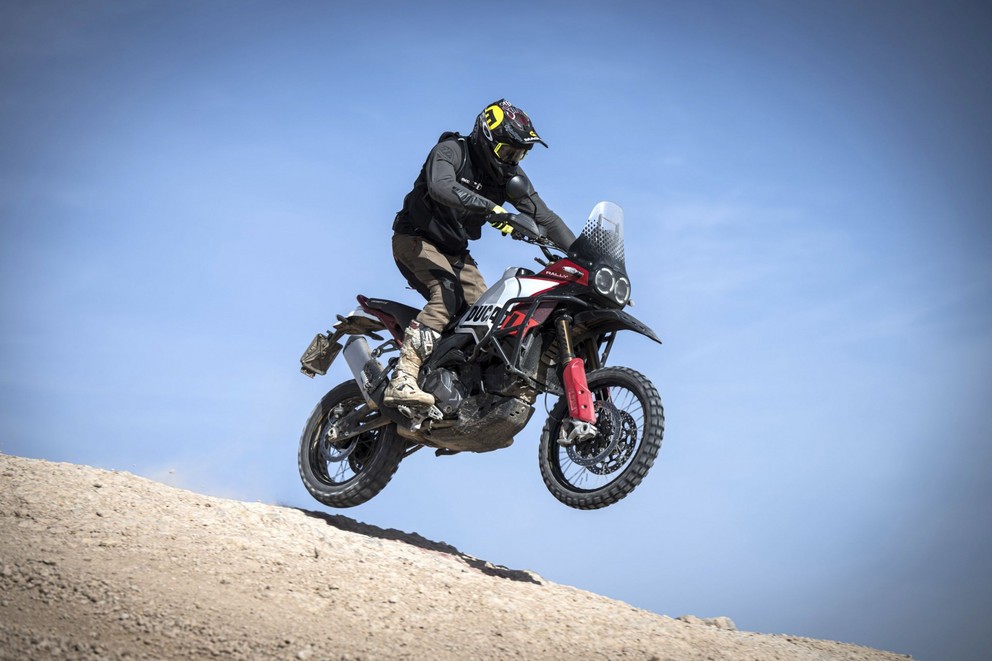
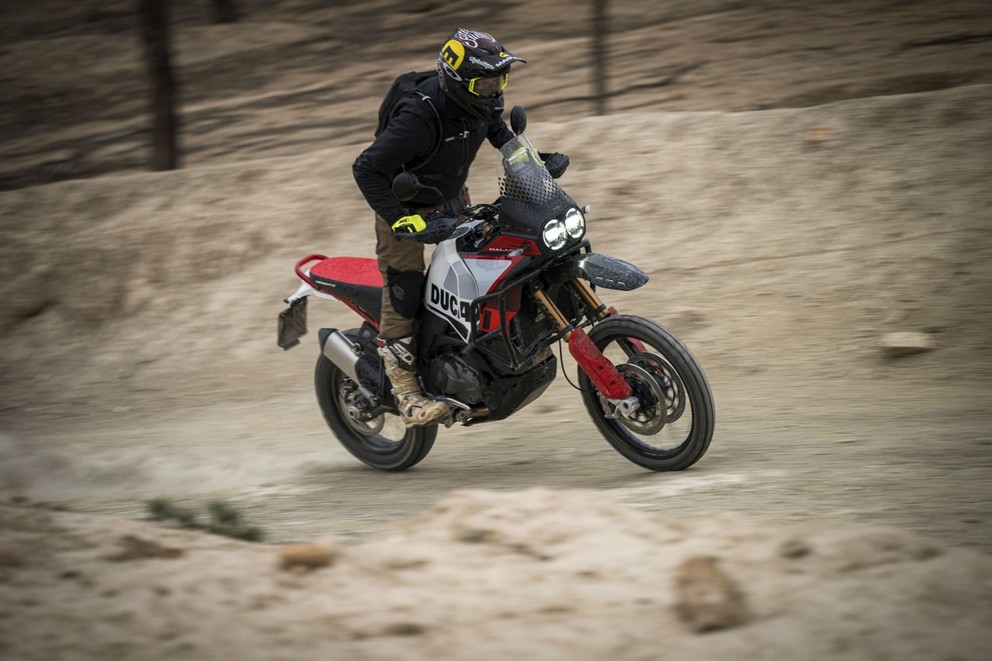
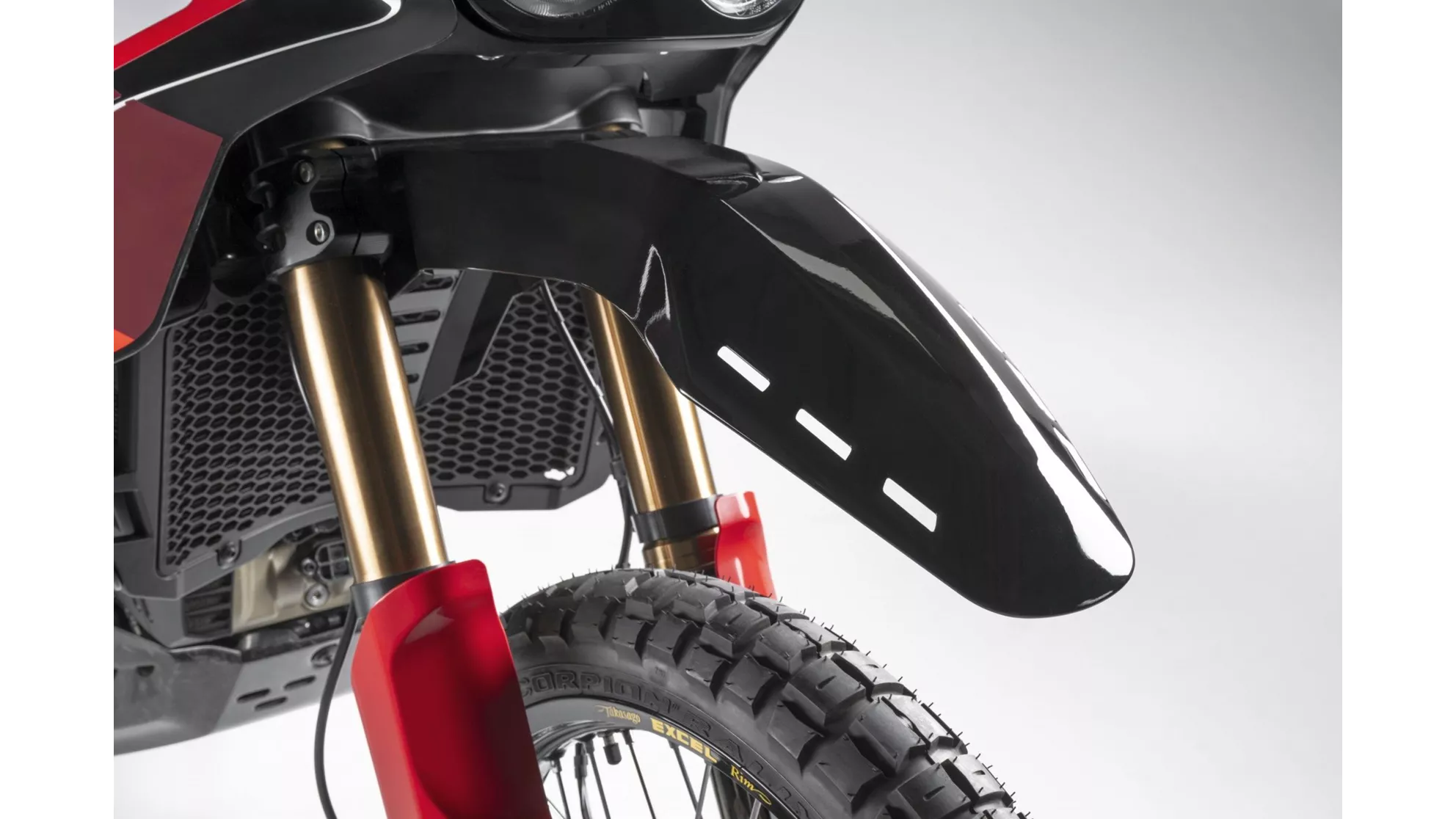
With the braaap (opening the throttle), my test and inspection brain also comes up to temperature. The new KYB (Kayaba) upside-down fork with now 250 mm of travel is not just an eye-catcher with its 48 mm diameter, the Kashima coating on the stanchions, and the DLC coating (diamond-like carbon coating) on the sliders. The setup from the Ducati folks in Borgo Panigale was too soft for a heavyweight like me. Using a tool clipped in place under the seat, I increased the base setup by 6 clicks on the spring preload, marked toward H. Not only the fork but also the shock is fully mechanically adjustable.
Also of the finest KYB quality and with 240 mm of travel, the piston rod has grown by 2 mm in diameter. The shock on the DesertX Rally is also adjustable in high- and low-speed preload. Here I increased the base preload setting to 5 clicks toward H, and the small screw at the bottom of the shock got half a turn toward Hard. Great bonus: ground clearance grows from 260 mm to 280 mm thanks to the extra travel. The chassis now irons out everything I want it to while still retaining a silky-smooth response.
The only thing that's now unavoidable is the seat height of 910 mm. I see this as a plus, since ground clearance is always important to me. But anyone wanting to ride the bike in road traffic would probably need to look into a lower seat.
Stress test for wheels and tires
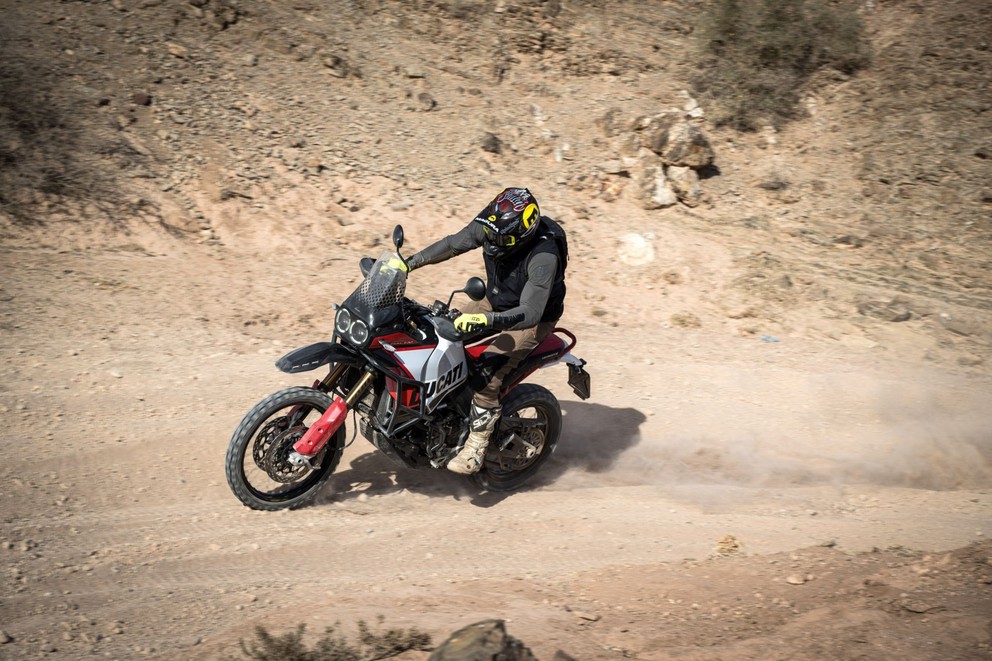
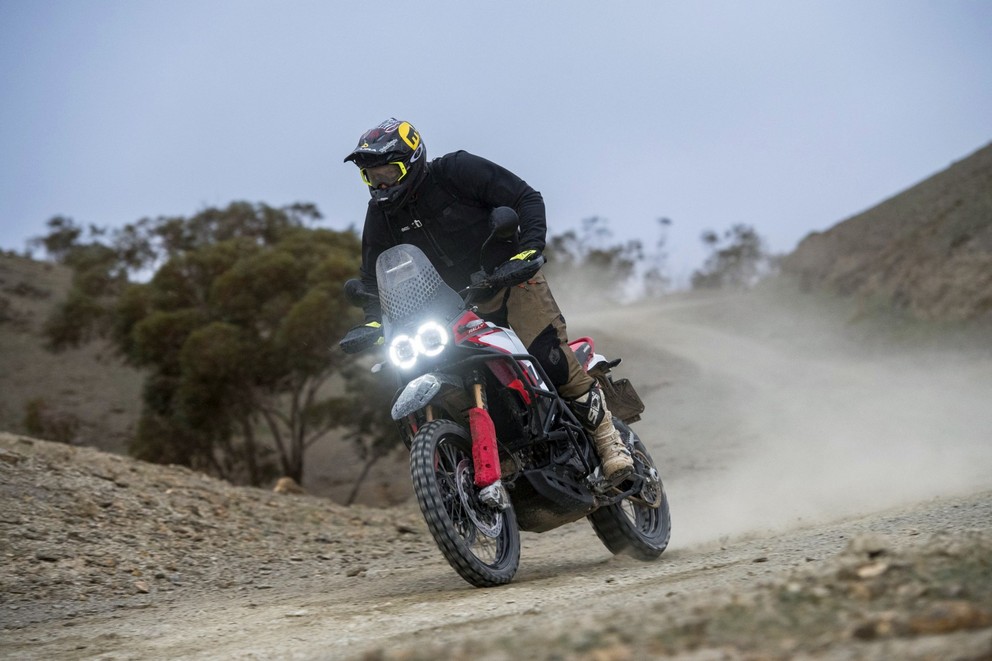
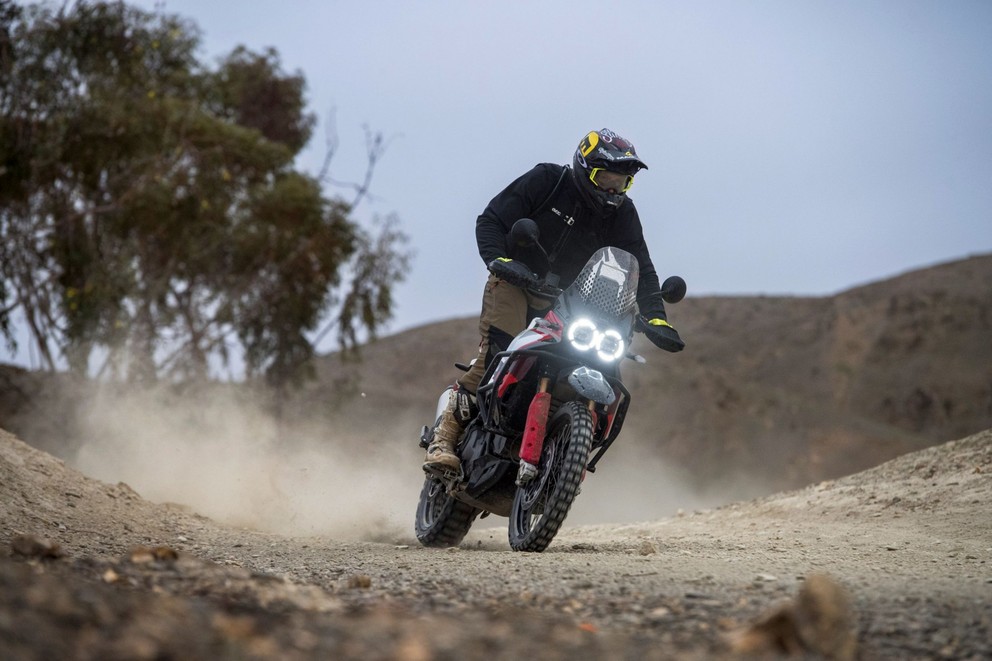
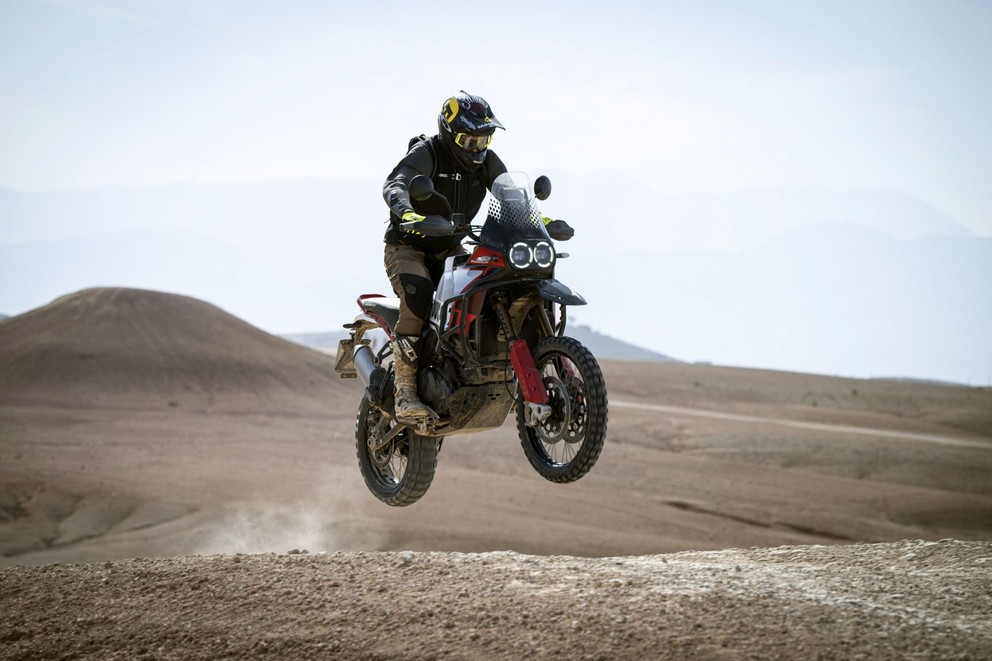
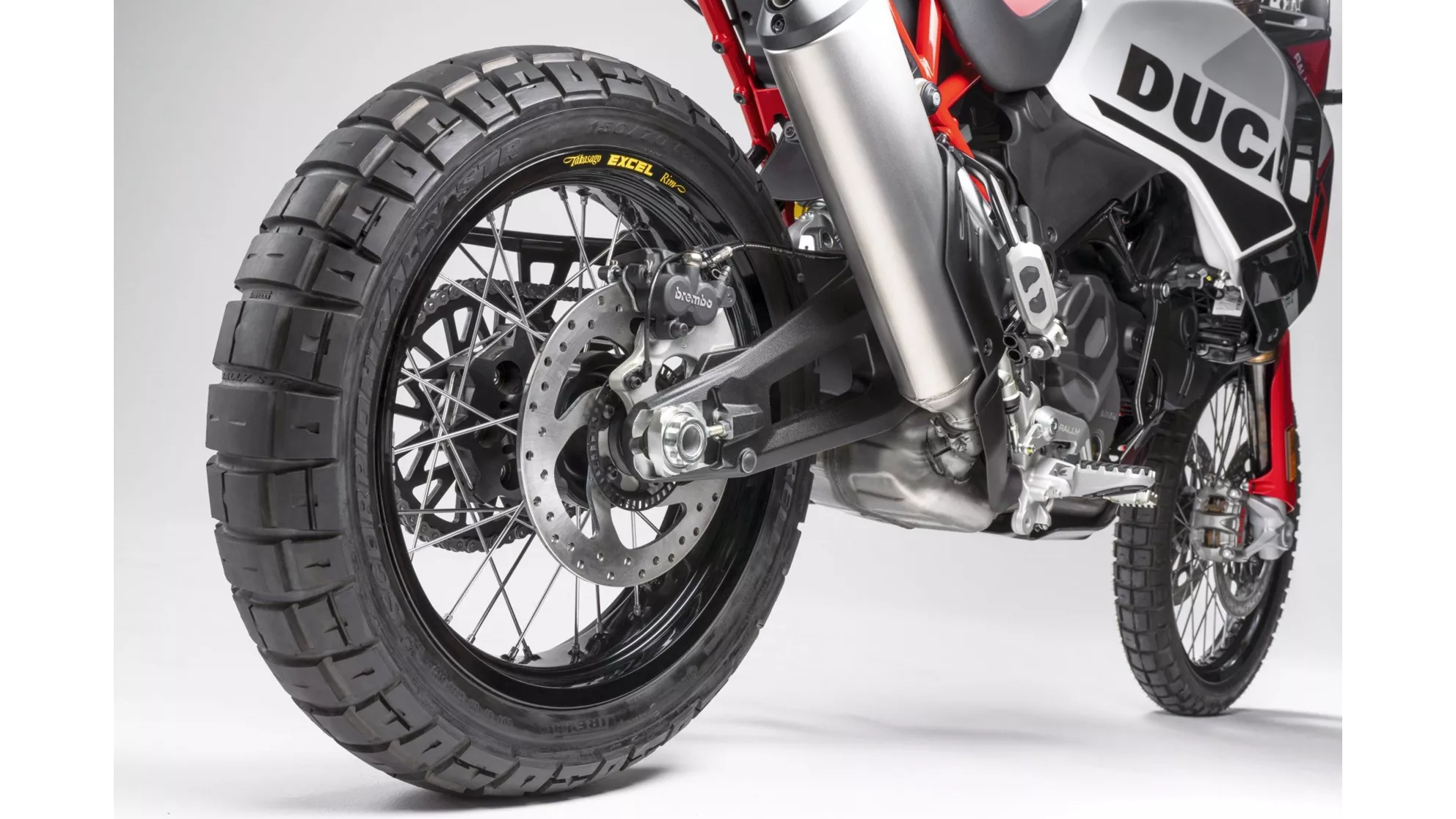
As a former mountain biker and off-road enthusiast, I want more. The only drawback: the Pirelli Scorpion Rally isn't the optimal tire for our test kilometers. The front tire doesn't want to give me any grip or hold on the loose ground. Whenever possible, I let myself bounce back and forth off the ridges cut into the tracks... it feels a bit like small banked corners, and that works perfectly for me. With a tire pressure of 1.8 bar, the rubber conforms quite pliably to the rougher rocks while also providing good puncture resistance. At nearly 90 km/h I overlook a rock ledge sticking out of the ground and take what feels like a hard bottoming-out hit. Did anything happen? Nothing, absolutely nothing. Neither the Pirelli tires nor the noble, high-quality wheel set with finest Japanese goods that goes by the name Excel took any damage. The spokes and the CNC-machined hubs provide perfect stability.
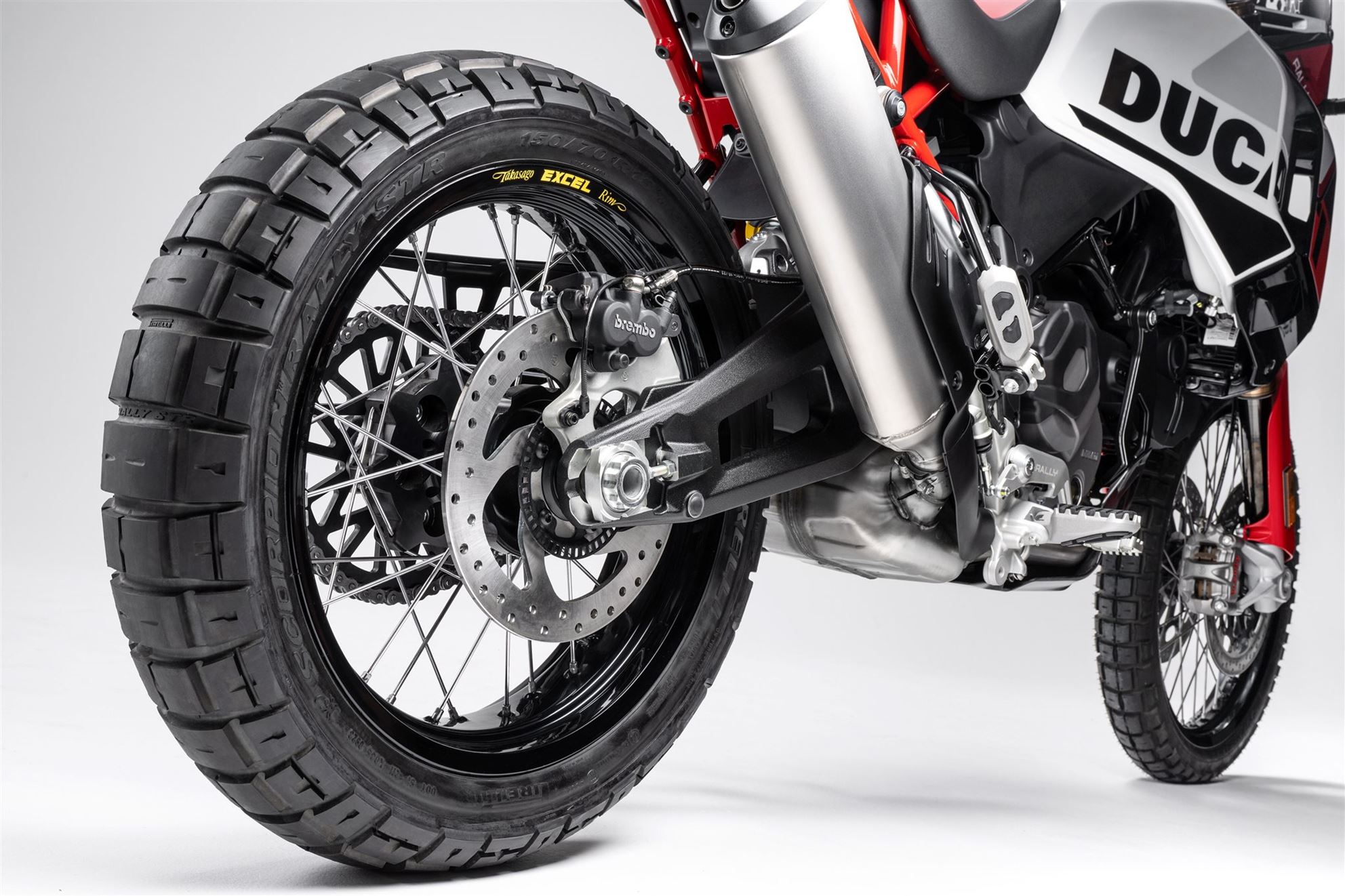
The Pirelli Scorpion Rally comes fitted from the factory on the DesertX Rally.
Switching sensibly from city to off-road
A skid plate made from forged carbon sounds decadent in a way (other companies make a car roof out of this stuff!), but it saves plenty of weight. The Rally's weight increases due to the more robust components, which are there to generate optimal durability. The weight saving from the skid plate may make sense, but I'd recommend anyone riding the bike off-road use something made from a more durable and cheaper material.
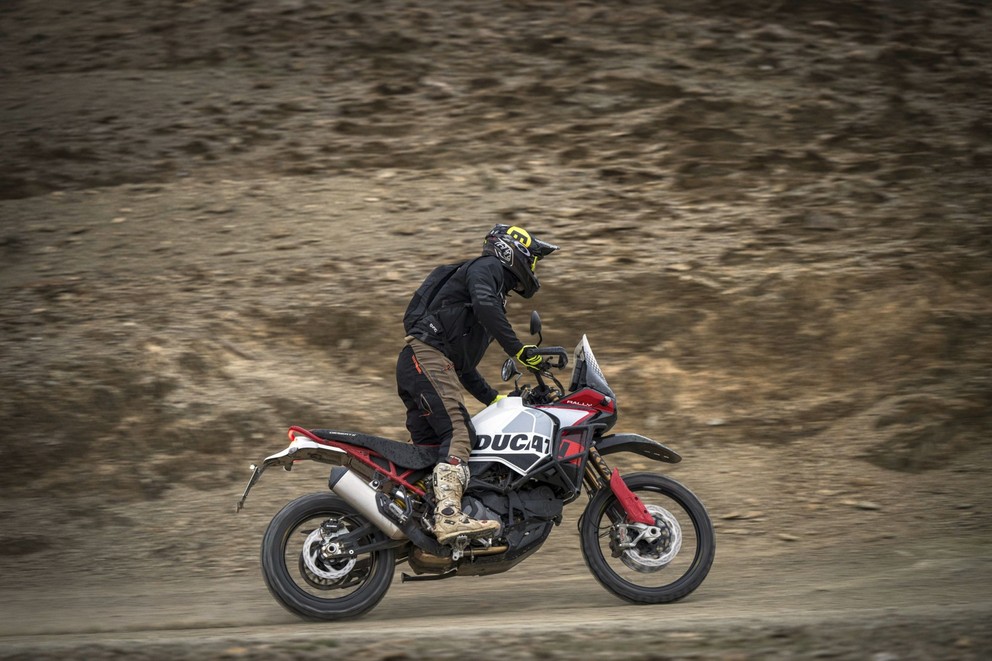
To really make the switch from city to off-road ergonomic, Ducati scores with a smart rear brake solution. The basic shape of the CNC-machined foot brake lever is made from a steel frame with a footpiece adjustable by 90 degrees. To do this, you pull out the footpiece, which is held in place by a spring, and let it click into the city or off-road mode. Naturally, we ride almost exclusively standing up, so the off-road setting takes priority for me.
Ducati DesertX Rally ergonomics
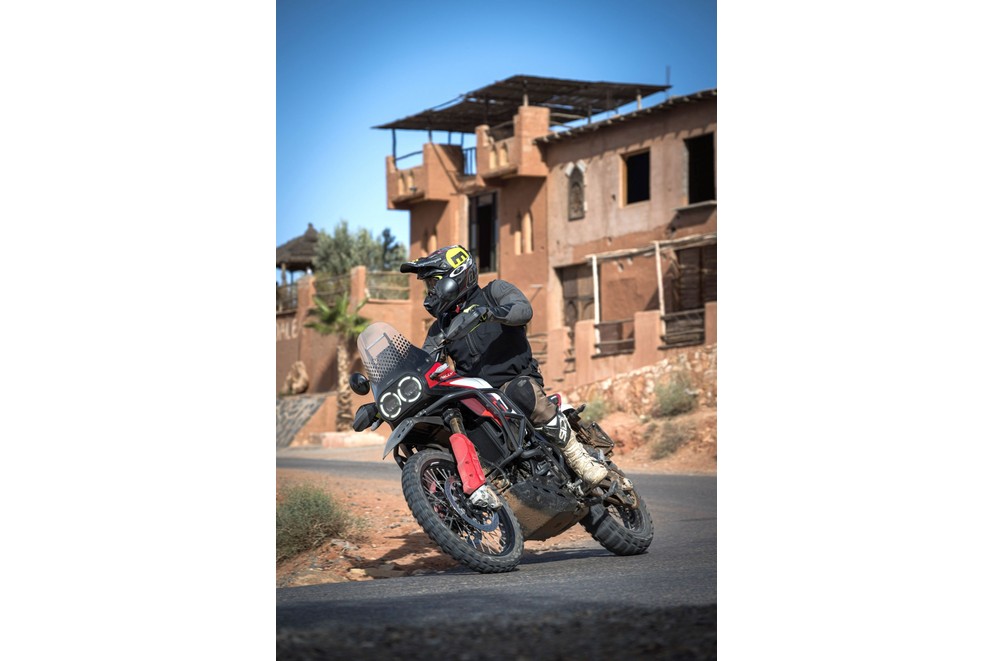
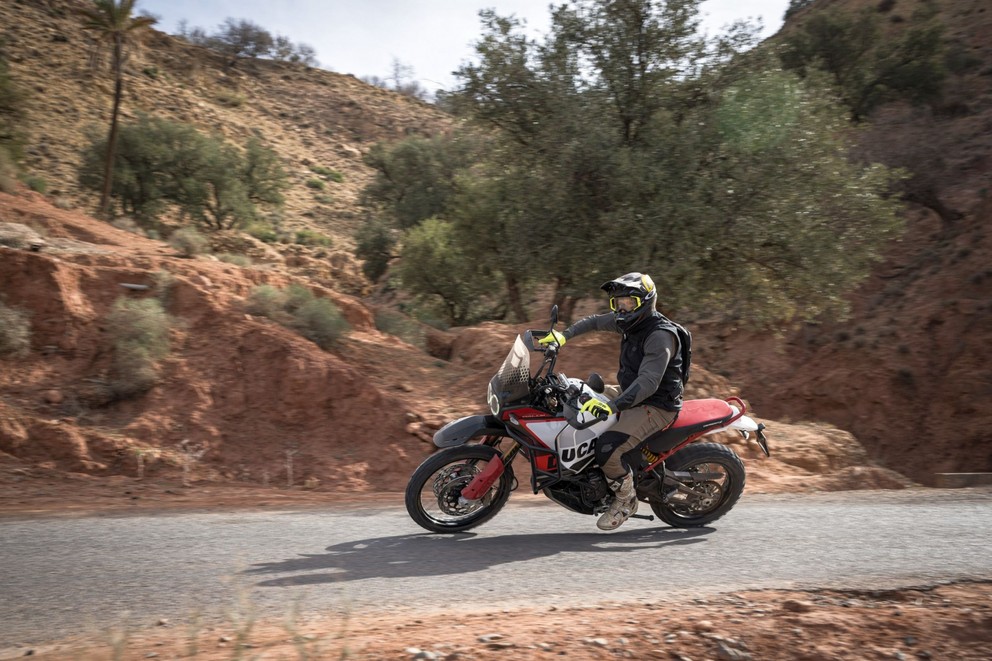
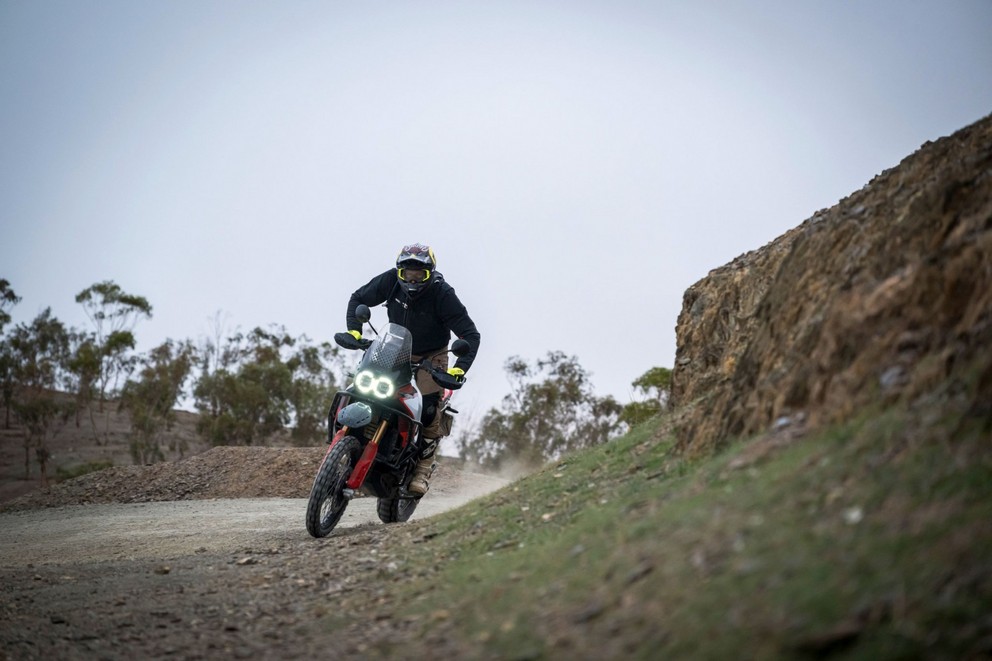
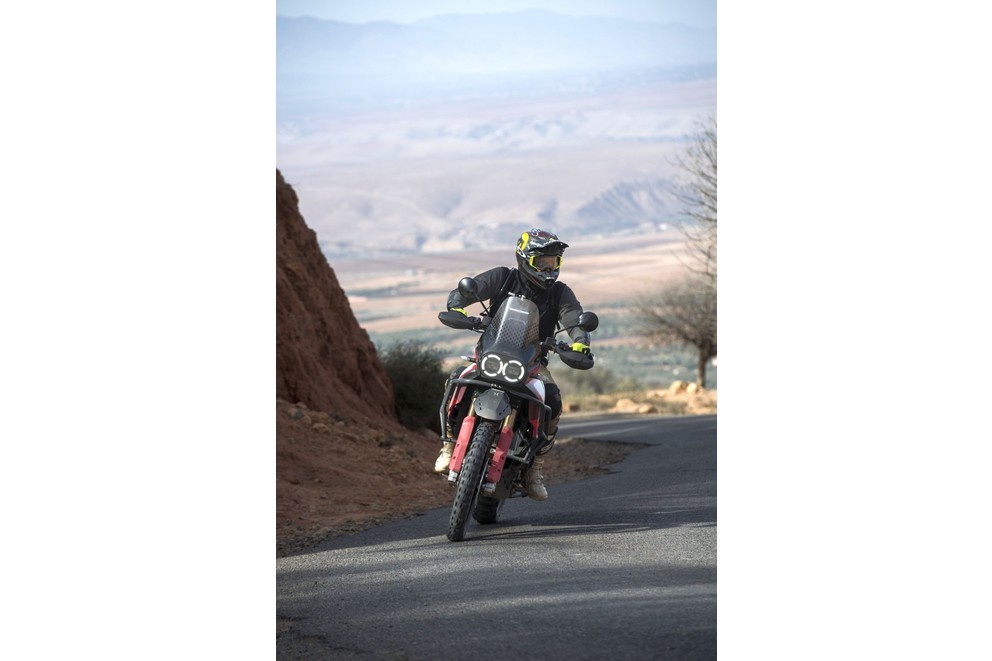
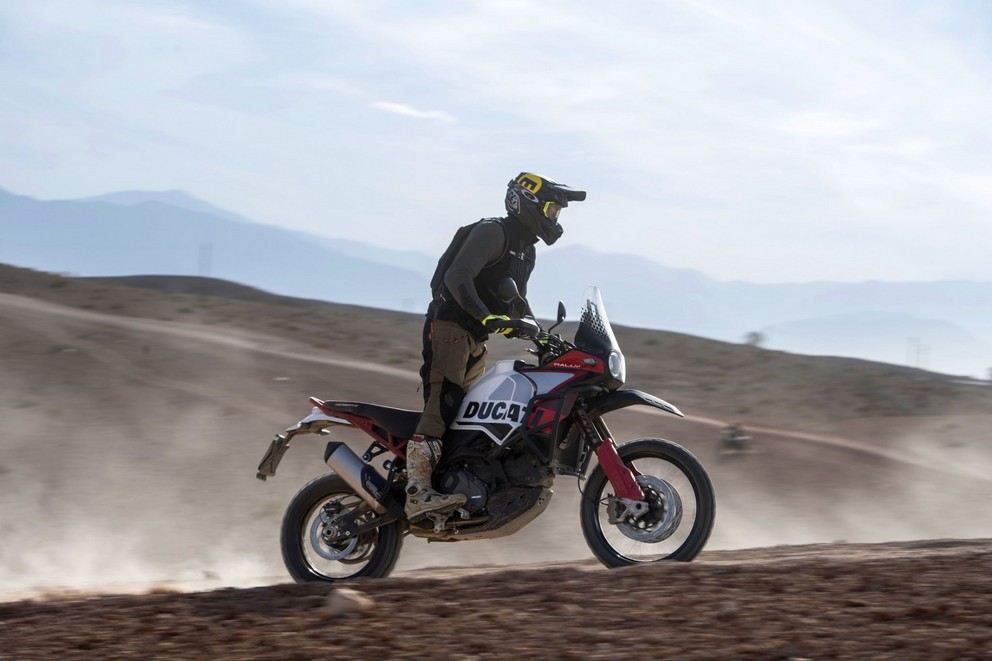
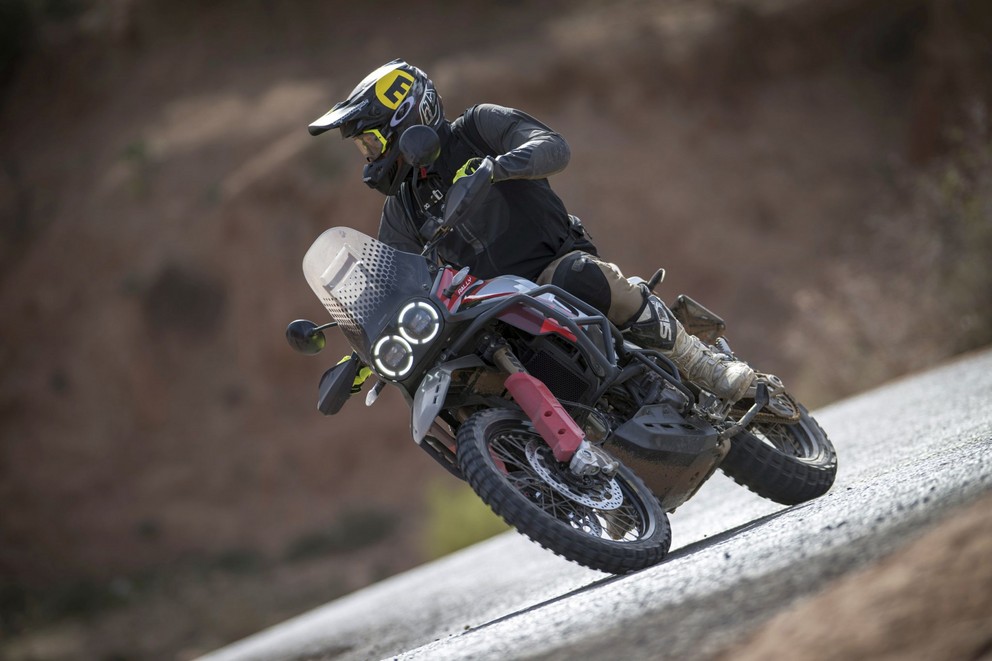
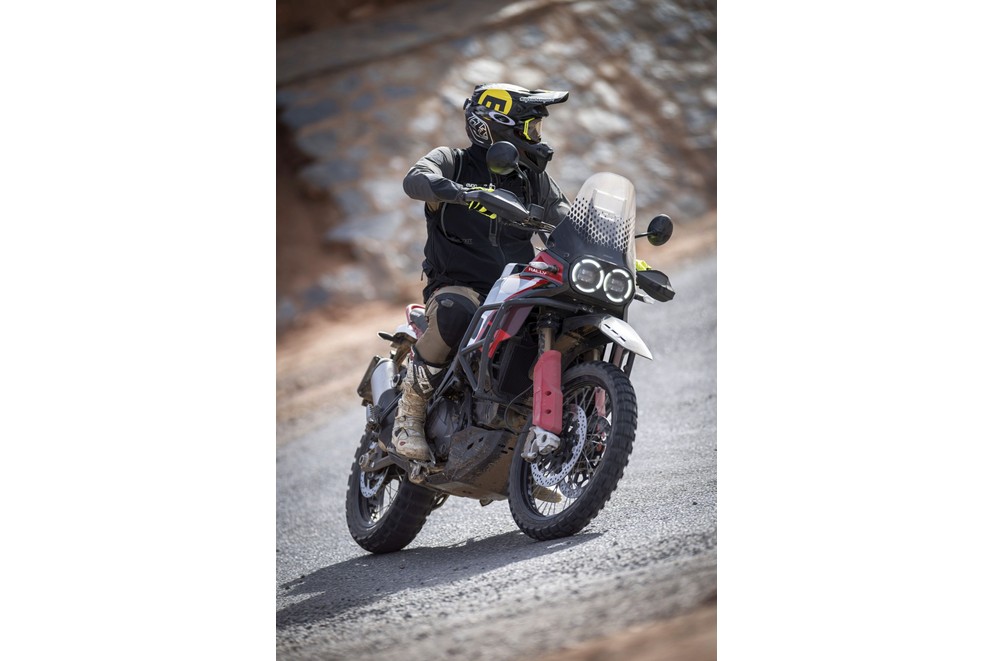
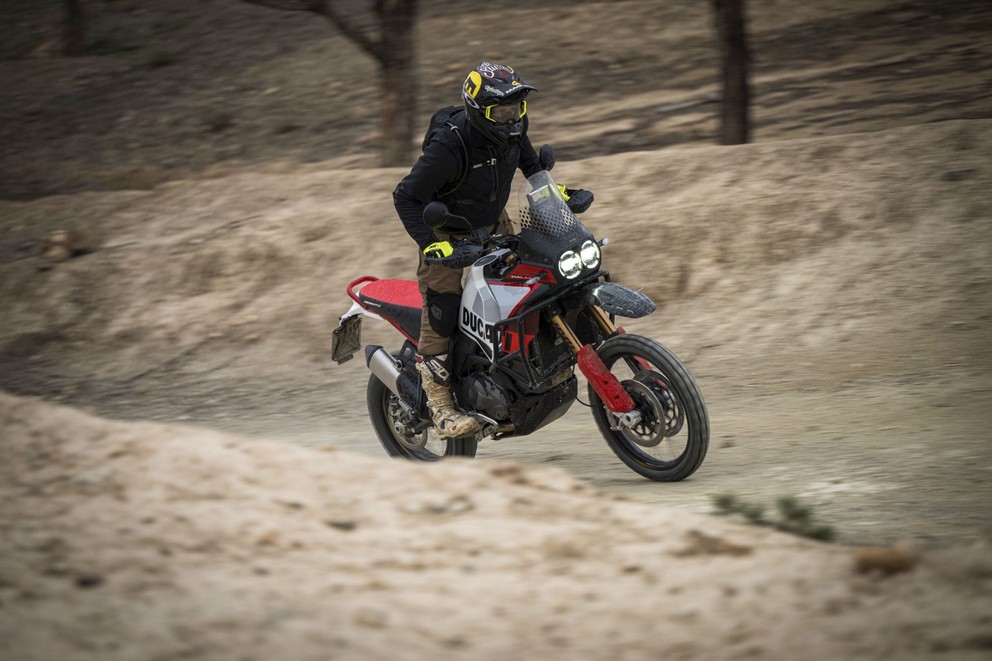
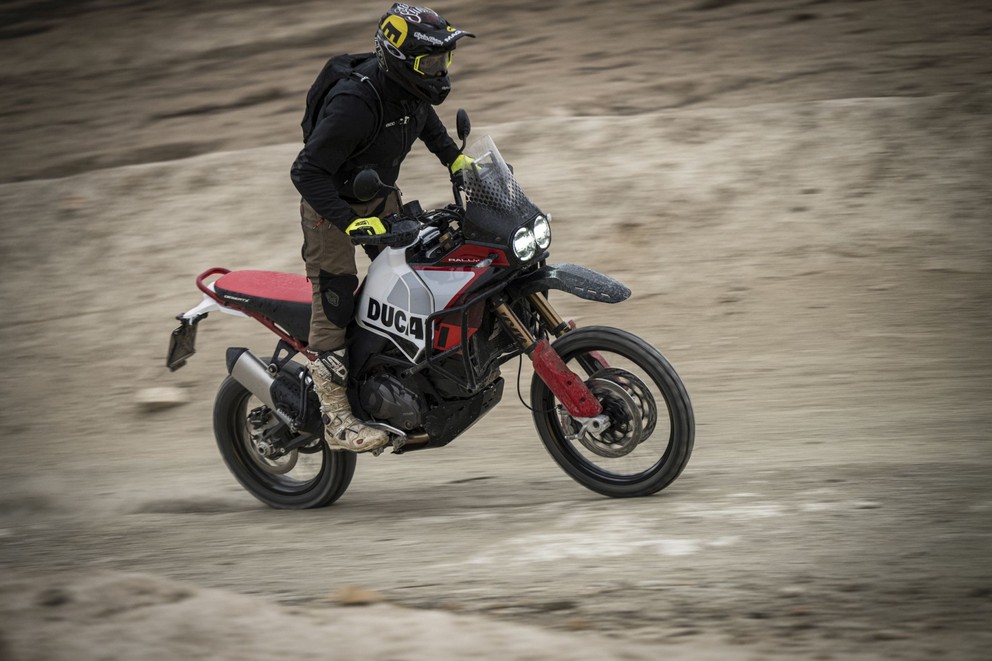
Which brings me straight to the ergonomics of the riding position. At just under 1.83 m tall, I look comfortably over the windscreen, and in an active standing riding position I barely notice the high fender, which is meant to give more clearance for mud - we didn't have much of that. I feel really at home. I'm the pilot, not the passenger. The handlebar supports me in this feeling. Both the height of the bar and its bend to the rear and upward - back- and upsweep - are chosen so that, for the first time, I don't need to reach for a wrench. At the same time, and this is what I celebrate most, the handlebar still allows the clutch and brake units to be adjusted inward.
As you know, I'm a cyclist and a big fan of the law of leverage. That means pushing the controls as far inward as possible and operating the levers only with the index fingers. It gives me more grip on the bar and better modulation on the levers. Here I'd just wish for a bit more adjustment range on the Brembo components (levers toward the bar/grip).
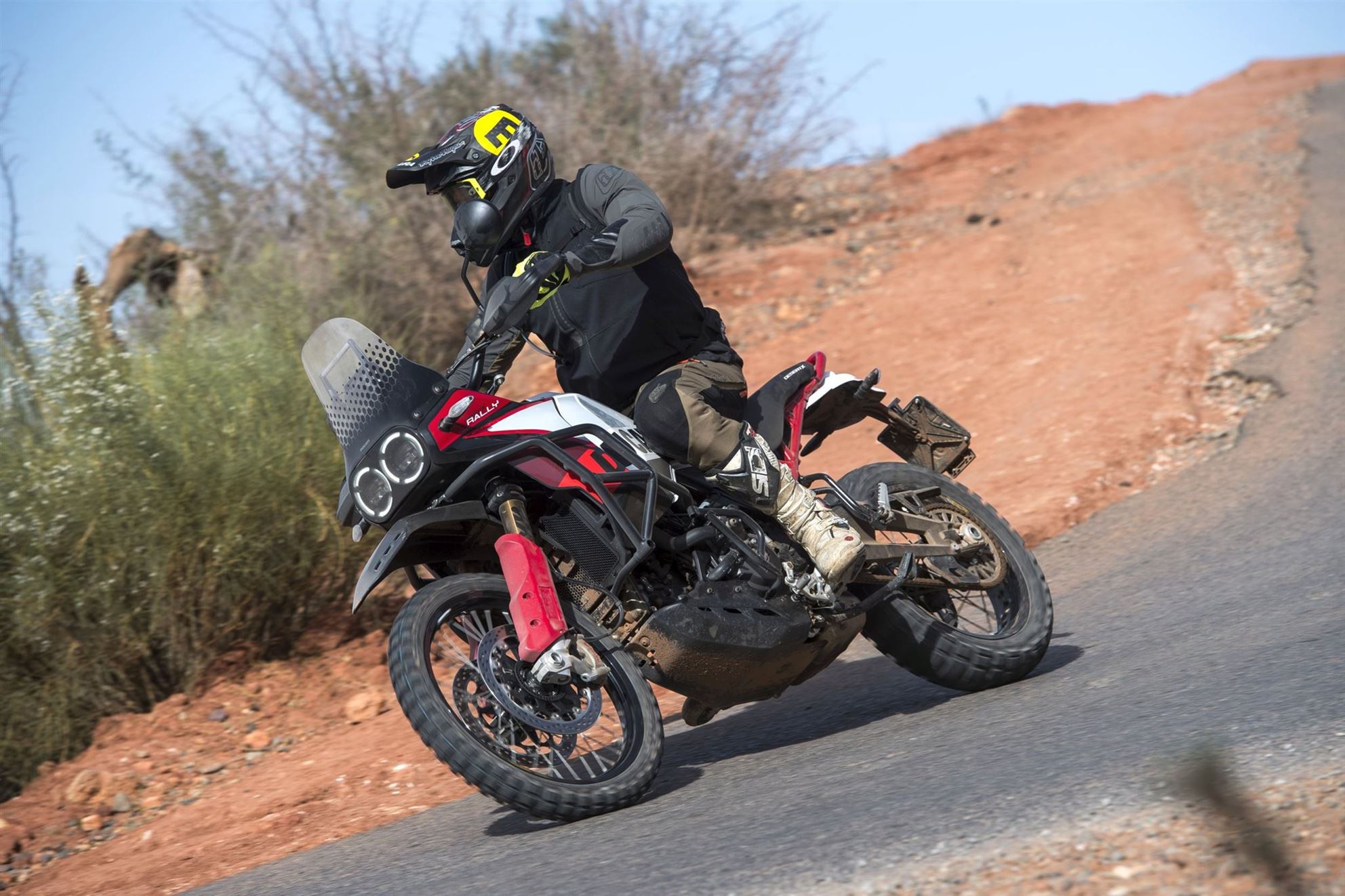
The ergonomics on the Ducati DesertX Rally.
Still, the manufacturers from Curno don't skimp and start with the finest gear: two Brembo radial 4-piston calipers on the front wheel and a 2-piston floating caliper on the rear. Braking up front is handled by 320 mm aluminum-core semi-floating brake discs. At the rear, a 265 mm disc is completely sufficient. It's bound to brake with real authority.
The 21-liter tank blends into a perfect symbiosis with the seat. Even though I ride with carbon knee braces, I have plenty of room to move the bike beneath me without getting stuck. I've never had that before. The seat, which narrows toward the tank, works in my favor here. With my strong legs and a rather narrow gap in the crotch area, I have almost as much room here as on a sport enduro.
Which accessories for the Ducati DesertX Rally?
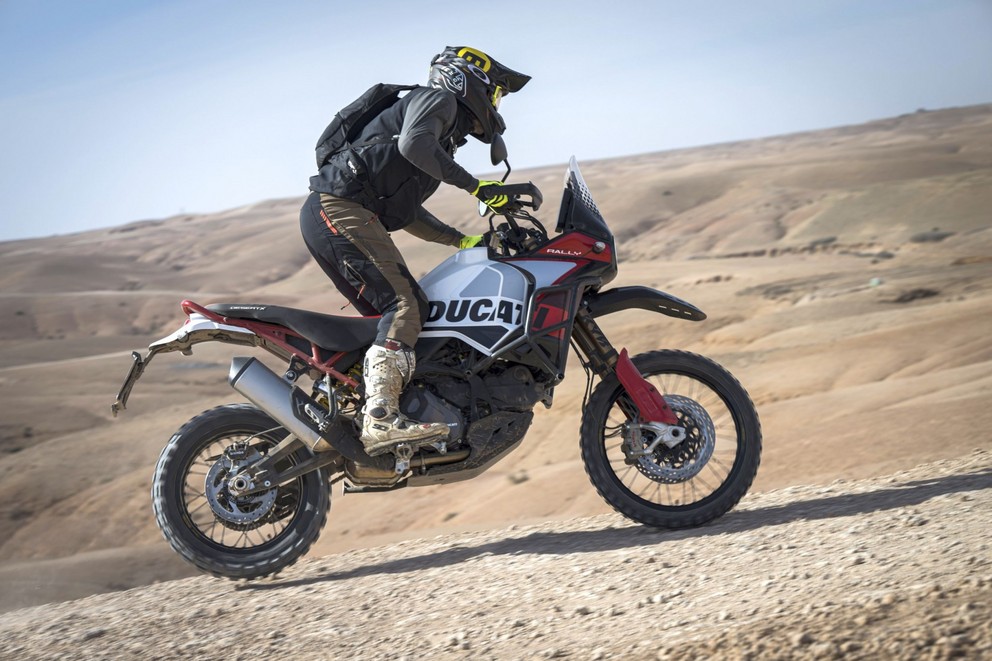
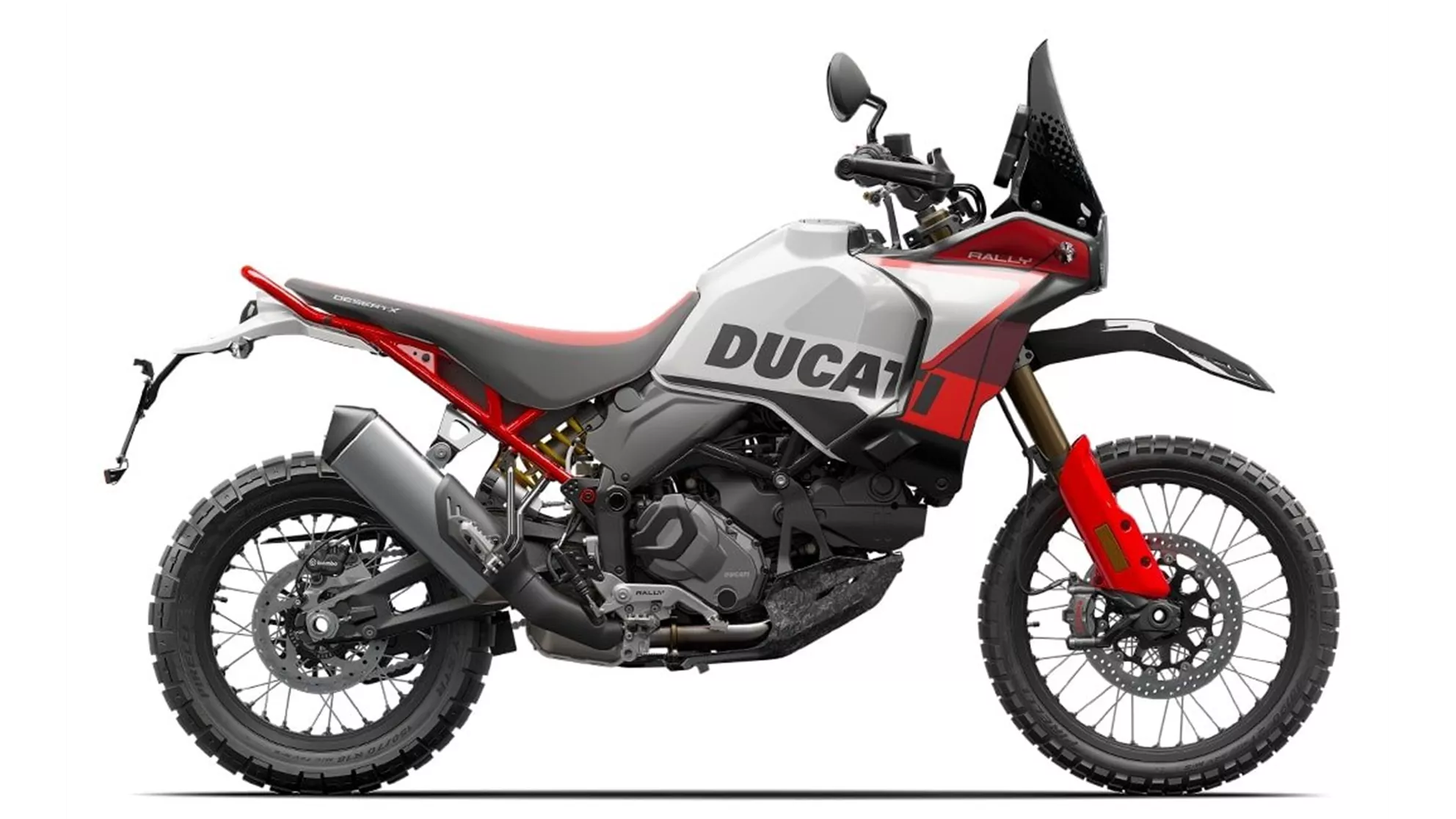
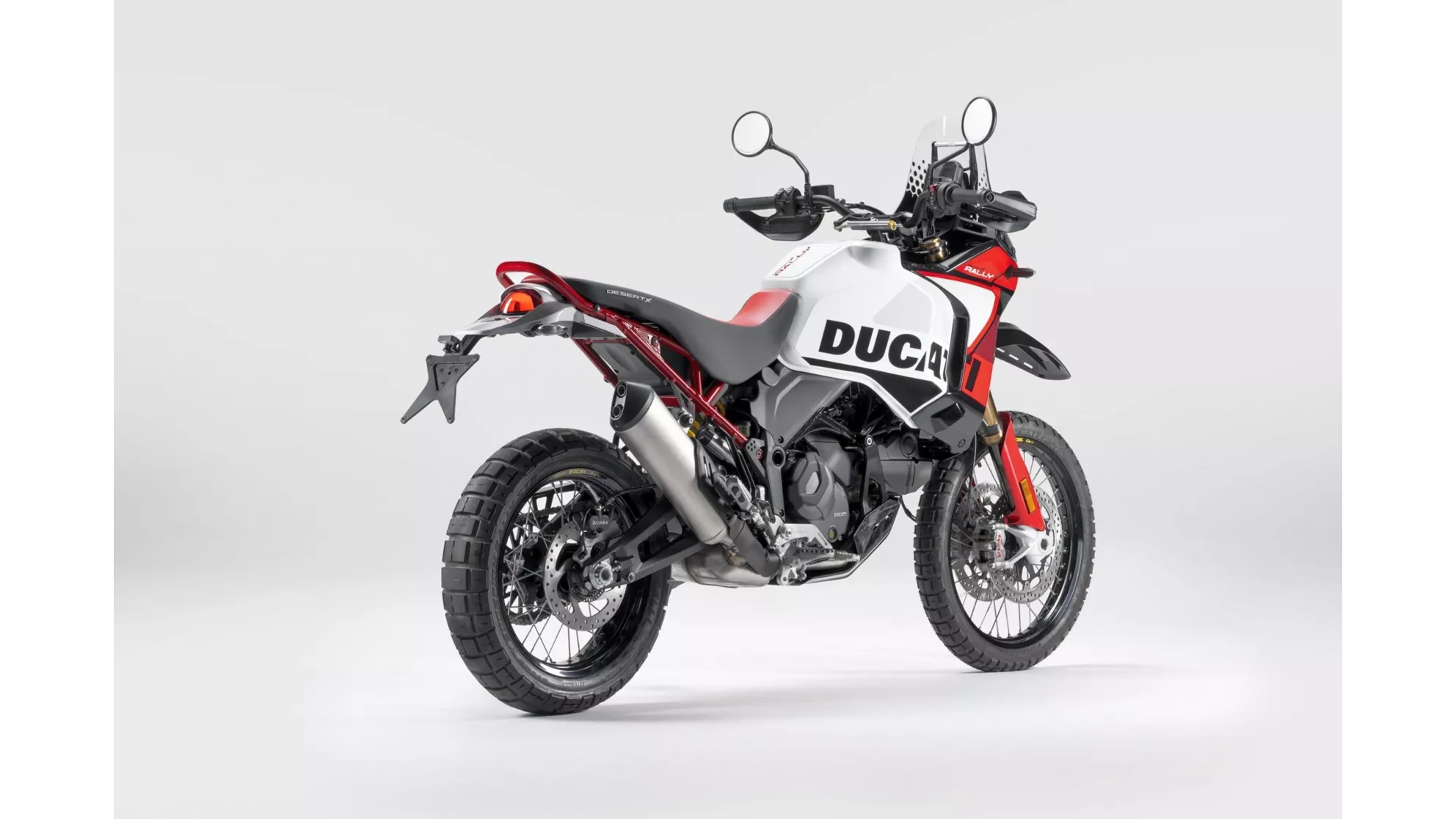
In the Ducati configurator, there's of course also a solo seat available. For me, though, there's no reason to fit it, either from an ergonomics or a styling perspective. With the DesertX Rally, styling and weight are meant to be combined with durability. So all the decals are thick-quality like on sport enduros and are meant not only to look cool but also to be more durable and act as a protector. I would just wish for the edges to be a little more rounded. Everyone knows how it goes - as soon as one corner chips, it just keeps going from there. We're promised that not only the stickers/decals but also all the plastics are cheaper to replace. Plastic??? Exactly, only the tank is made of metal. The rest is made of lightweight, flexible sport enduro plastic. So that genuinely sturdy things like the CNC-machined utility bar or even the standard-fit radiator guard don't add to the weight.
Is there room for improvement?
Now two things I would change: the pillion footpegs rattle on all the bikes, and their bolts feel about a centimeter too long. Why do I mention this? Because rattling on any vehicle is annoying. So, ego mode on, and unscrew it. The side stand also feels too long. On a straight, paved road that's fine. But as soon as you're on a slope or even on uneven terrain, I as a rider have to adjust. Especially because we've been trained for years with side stands that are always "too short." But if you fit a side stand foot extension and only ride in sand, the long side stand is ideal... Was that intentional, Ducati?
The sound of the Rally is supposed to be unchanged from the DesertX, and I find it very pleasant. Nice and rich when you get on the throttle, yet never unpleasant or over the top... every now and then a nice, subtle pop when you downshift or roll off the throttle. Pure emotion and power. The very slim end can sits atop a large central can, which is very cleverly hidden underneath the bike. Do I catch on this anywhere? Certainly not, given the ground clearance.
The DesertX Rally's weight at a glance
Let's do the math: 211 kg + 21 L of fuel - we ride exclusively with fully fueled bikes, which comes to about 800 g per liter of gasoline - plus an engine crash bar from the Ducati accessories catalog, as follows:
| Bike weight | 211.0 kg | Fuel 21L fully fueled | 16.8 kg | Engine crash bar | 6.4 kg | Test machine | 234.2 kg | Rider | 95.0 kg | Gear | 8.0 kg | Backpack with water | 2.8 kg | Total weight | 340.0 kg |
The only place I lose weight is by removing the reflectors on the fork. That doesn't bother me though, since I personally don't find them attractive, even though they're important for road traffic.
How do 340 kg move on loose ground?
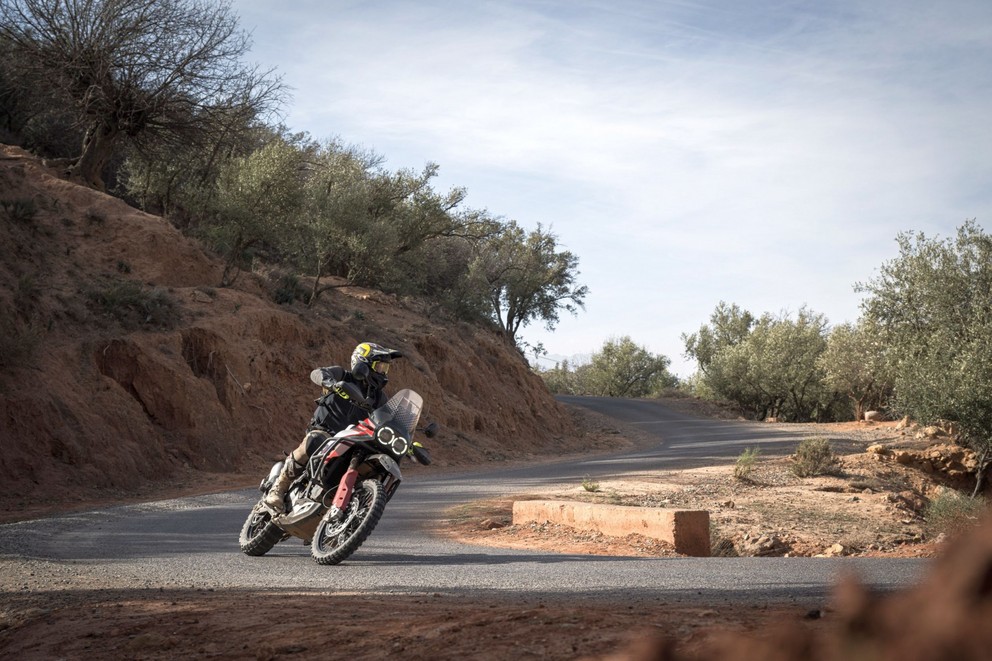
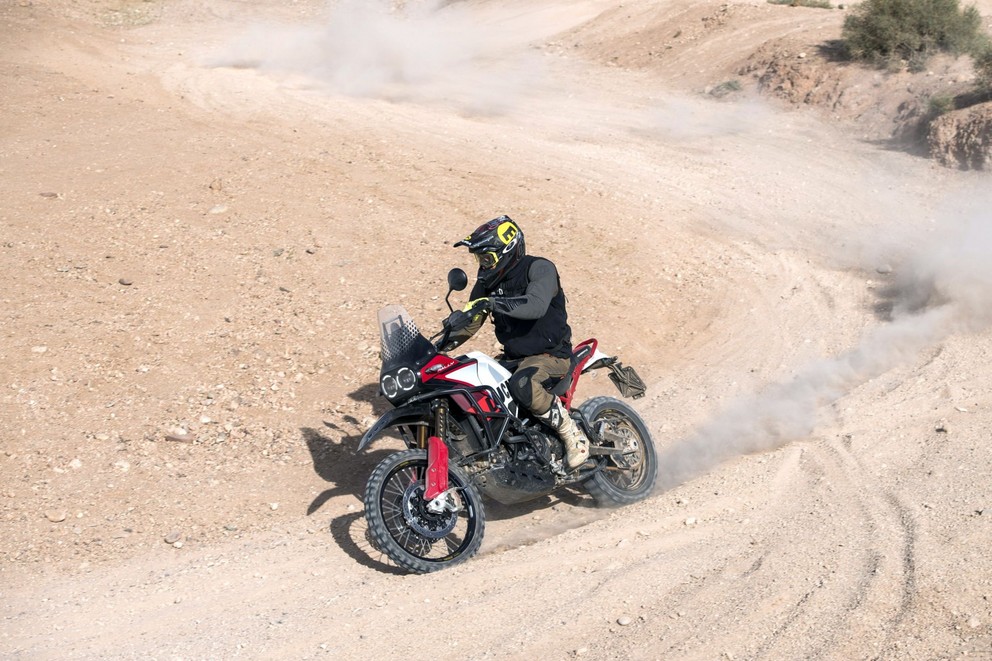
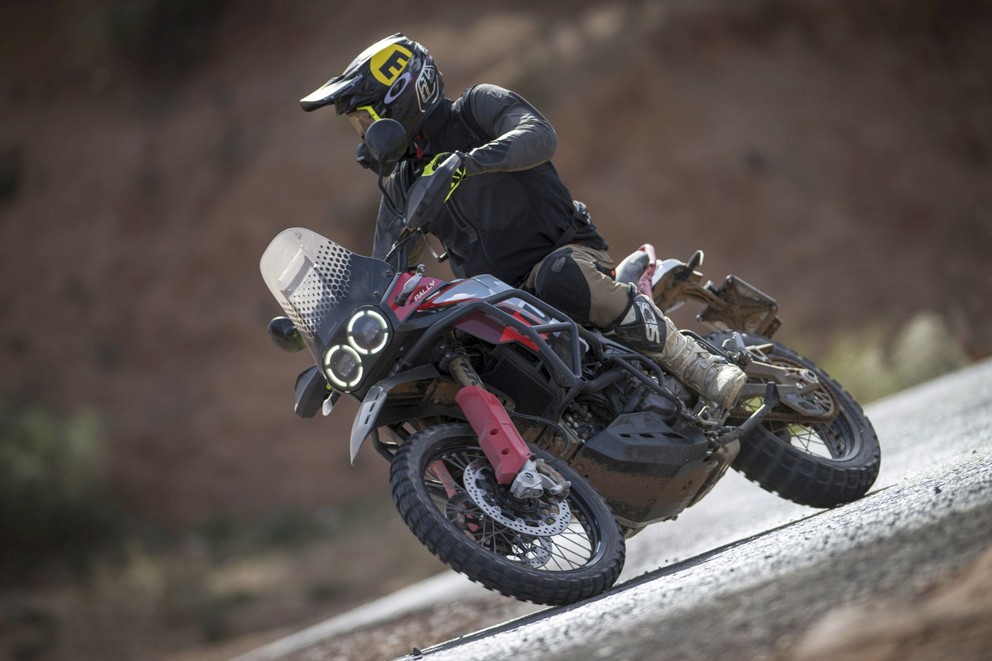
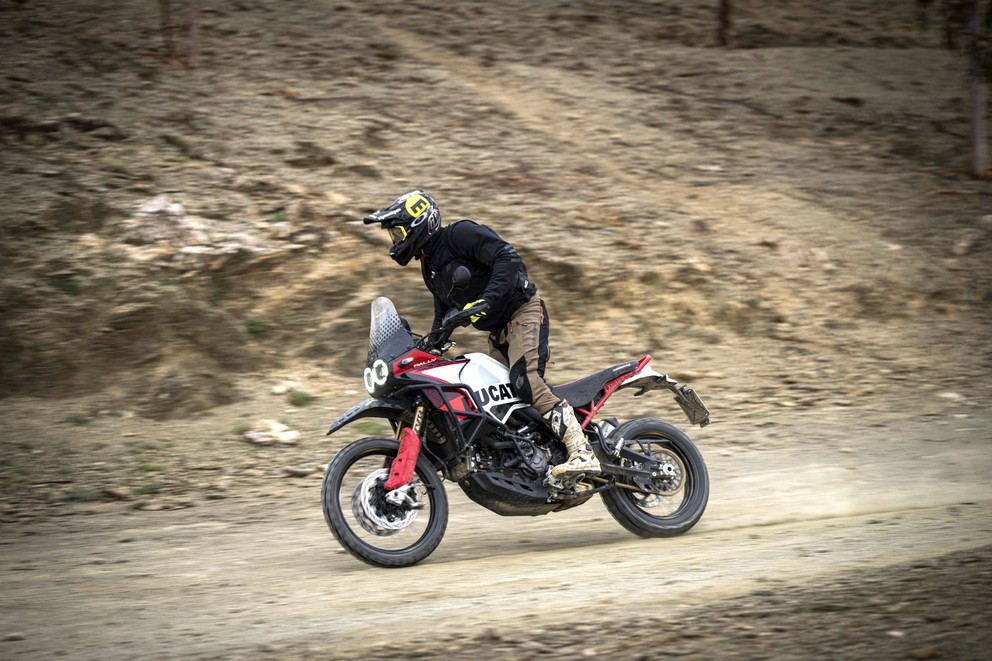
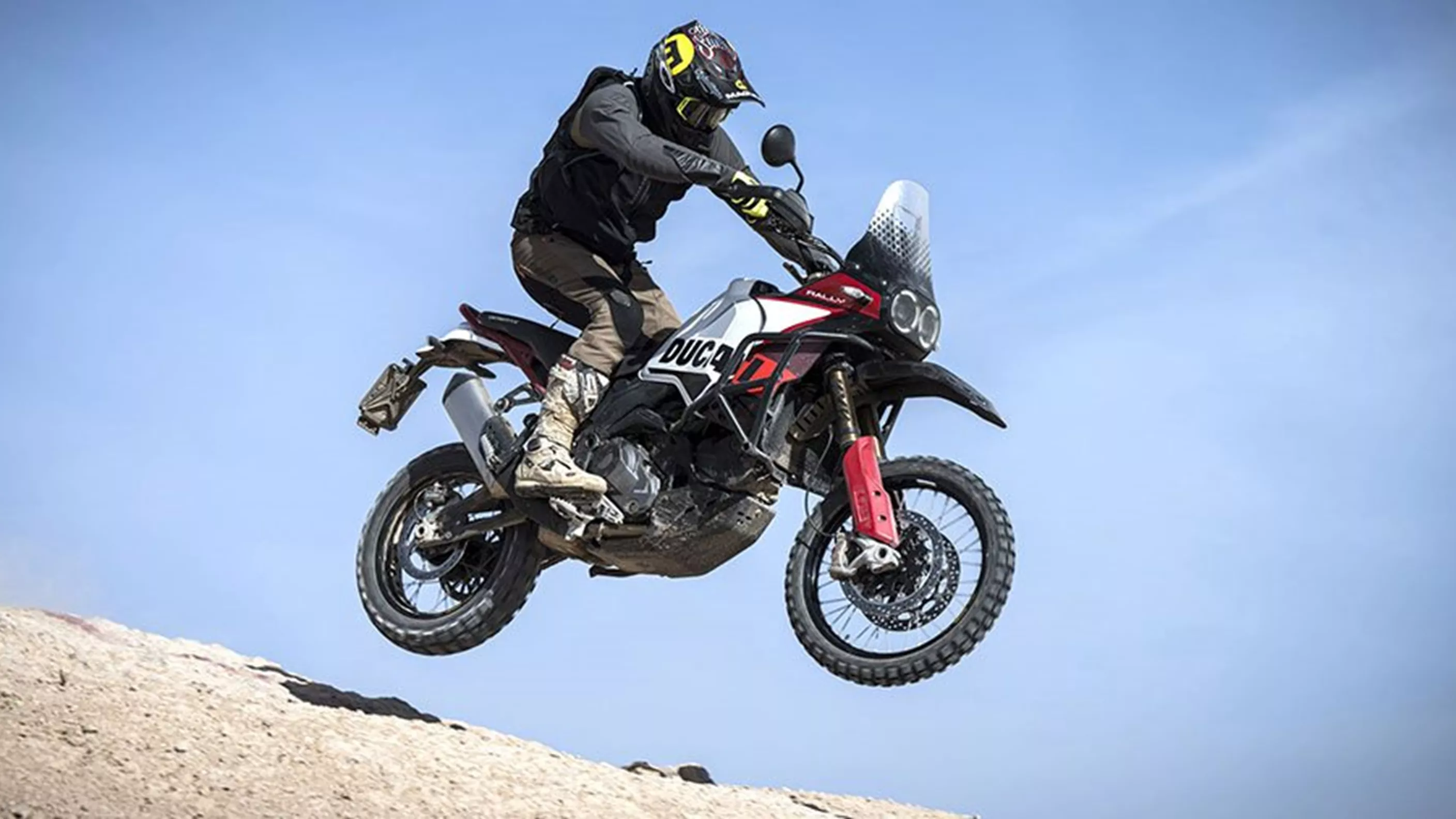
Despite the increased travel, the Rally's handling is very agile. Especially when I want to make load changes. Trail braking into tight direction changes comes easily. The power is definitely too much for me in Rally mode. Sure, that fits if you're blasting over dunes at 150 km/h. So I switch right into the familiar Ducati Enduro riding mode and modify it beforehand. Here I go with engine power: strong, and throttle response: soft. That feels much more relaxed and, on sand - where everything happens a bit more delayed anyway - is the perfect setting for me.
Not that the engine no longer roars, but the power unfolds much more moderately. The only downside for me is that Ducati's quickshifter won't allow downshifting with the throttle open. I actually find that very helpful off-road, but there's also a clutch, as usual, as always.
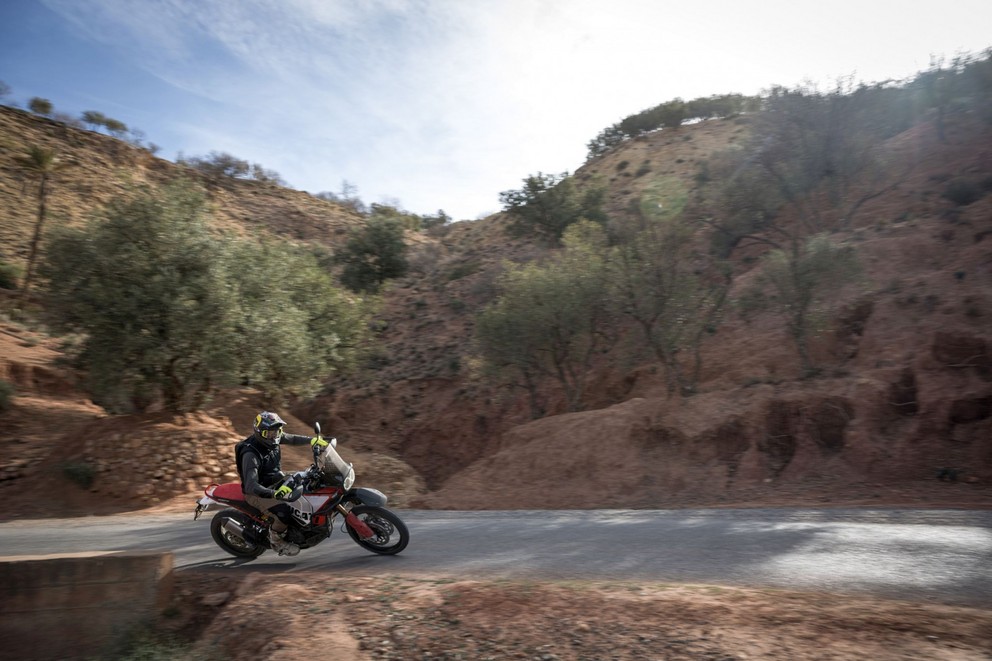
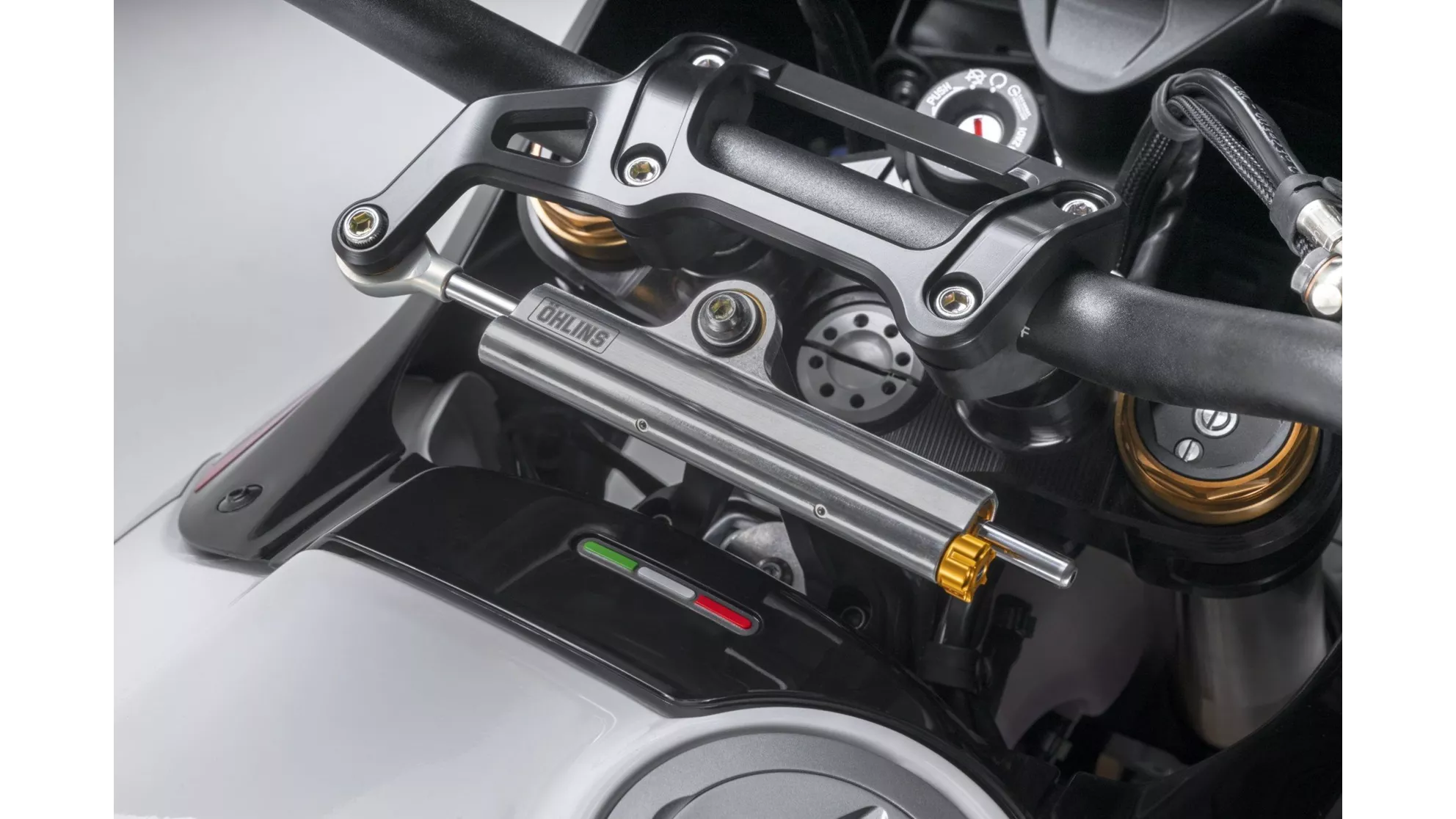
Please check out all the other modes like Sport, Touring, Urban with Nils in the video. I ride the Wet mode on the way back on day 2 for about 15 km. The claim that it takes power and agility out of the throttle for normal commuter traffic - sure, it probably does, but I can't test that in Moroccan traffic. I feel similarly about the Öhlins steering damper. I'd wish for more time on paved roads to really put it to the test.
It must have been a thorn in Öhlins' side that Ducati feels so comfortable with KYB for the chassis. Well, at least the spring on the KYB shock is yellow... maybe a little concession :)
- How much does a Ducati DesertX Rally cost?
- Here you will find an overview of the price level of new and used motorbikes!
&width=60&height=60&bgcolor=rgba_39_42_44_0&mode=crop "Author: tiborsimai")
Ducati DesertX Rally 2024 - Experiences and Expert Review
tiborsimai
The Ducati DesertX Rally impresses with its off-road performance and rugged design. With the Testastretta engine, the bike delivers impressive power on loose ground. The individually adjustable KYB upside-down fork and shock provide an optimal balance between comfort and traction. Ergonomically well thought-out and equipped with high-quality Brembo brake components, the DesertX Rally convinces as a versatile off-road bike. Minor flaws such as rattling pillion footpegs are put into perspective by the Ducati's overall performance.
More from 1000PS Magazine

Ducati DesertX Rally 2024 Tested Images
Source: 1000PS