Poky, Editor-in-Chief 1000PS: You are the first non-Japanese executive to lead this Honda region, aren't you? In practical terms, what changes when Europe is led by a European? Does the region gain more autonomy when it comes to deciding which motorcycles to develop?
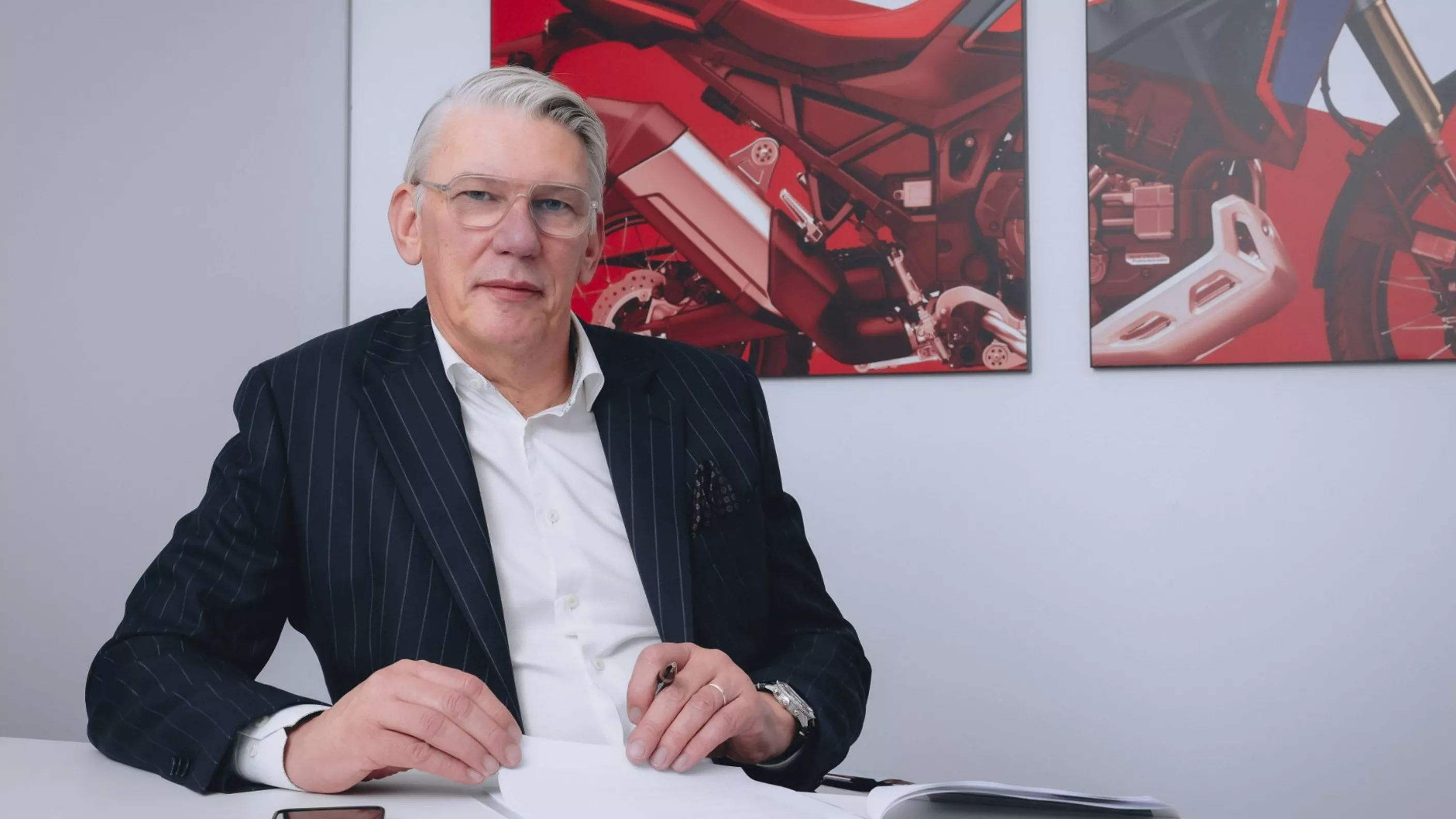
Honda will not enter the price war for the cheapest motorcycle
Europe Manager Hans de Jaeger on quality, competition from China
At EICMA 2026, Hans de Jaeger explains why quality and technology remain central to Honda. He talks to Poky about competition from China, the electric strategy and bringing new riders into motorcycling.

Poky
published on 28/11/2026
Hans de Jaeger, President of Honda Motor Europe and Head of the Europe, Africa and Middle East Regional Unit: Yes, I am the first non-Japanese person to hold this position. We have always believed that the head of a region should understand the local market and represent its customers' requirements. I have more than 33 years of experience at Honda, so I know the company and the markets reasonably well.
I was appointed partly because of that experience, but also because I can represent the needs of customers in Europe, Africa and the Middle East more directly. Let me give you an example: The more off-road-oriented Africa Twin Enduro Sports. We know European customers have been asking for that. I can bring that voice to Honda Motor in Japan.
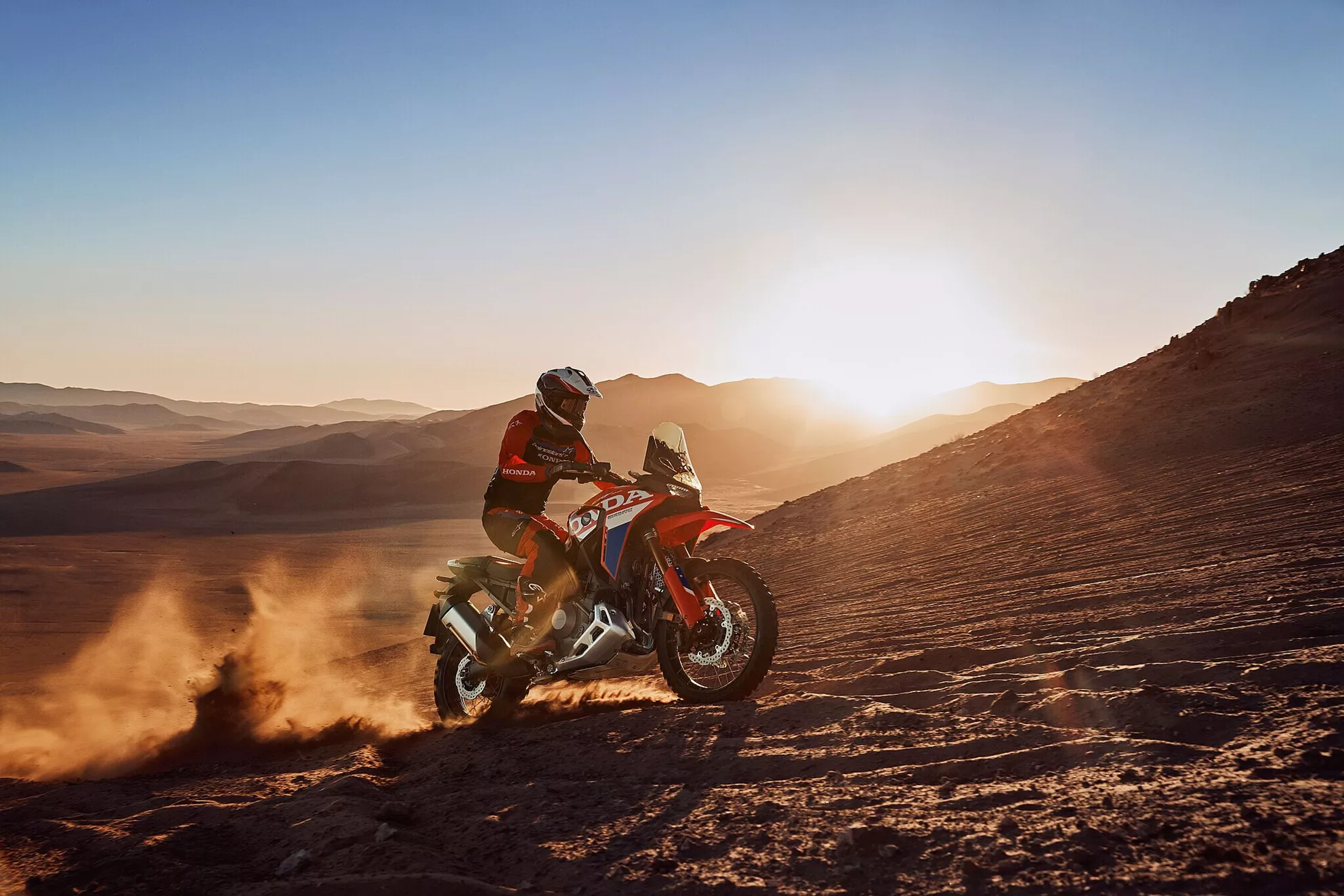
Tested around the world, developed for Europe: Honda Africa Twin 1150 Enduro Sports
In practice, that means many late-night meetings with Japan. They are conducted in Japanese, which I don't really speak beyond a few words, so we rely on translation. I also visit the engineering centres personally. A few weeks ago, for example, I was at one of our research and development centers in Japan, discussing which models we could bring to Europe.
Poky: Will Honda continue developing completely new combustion engines for Europe into the 2030s while expanding its electric range? How will you balance those investments, and what proportion of sales could realistically be electric by 2030?
de Jaeger: The motorcycle business is different from the car business. In cars, regulators have driven manufacturers very strongly towards battery-electric vehicles. In motorcycling, I believe we have taken a more customer-oriented approach. We start with what people actually want. If there is customer demand, we can develop a product.
Honda now has 16 electric models globally. Three of those are available in our European region. If we count an electric mountain bike as well, you could even say four. We introduce models according to local needs. We have done that with electric commuter products and, more recently, with the WN7, our first electric motorcycle aimed at recreational riding.
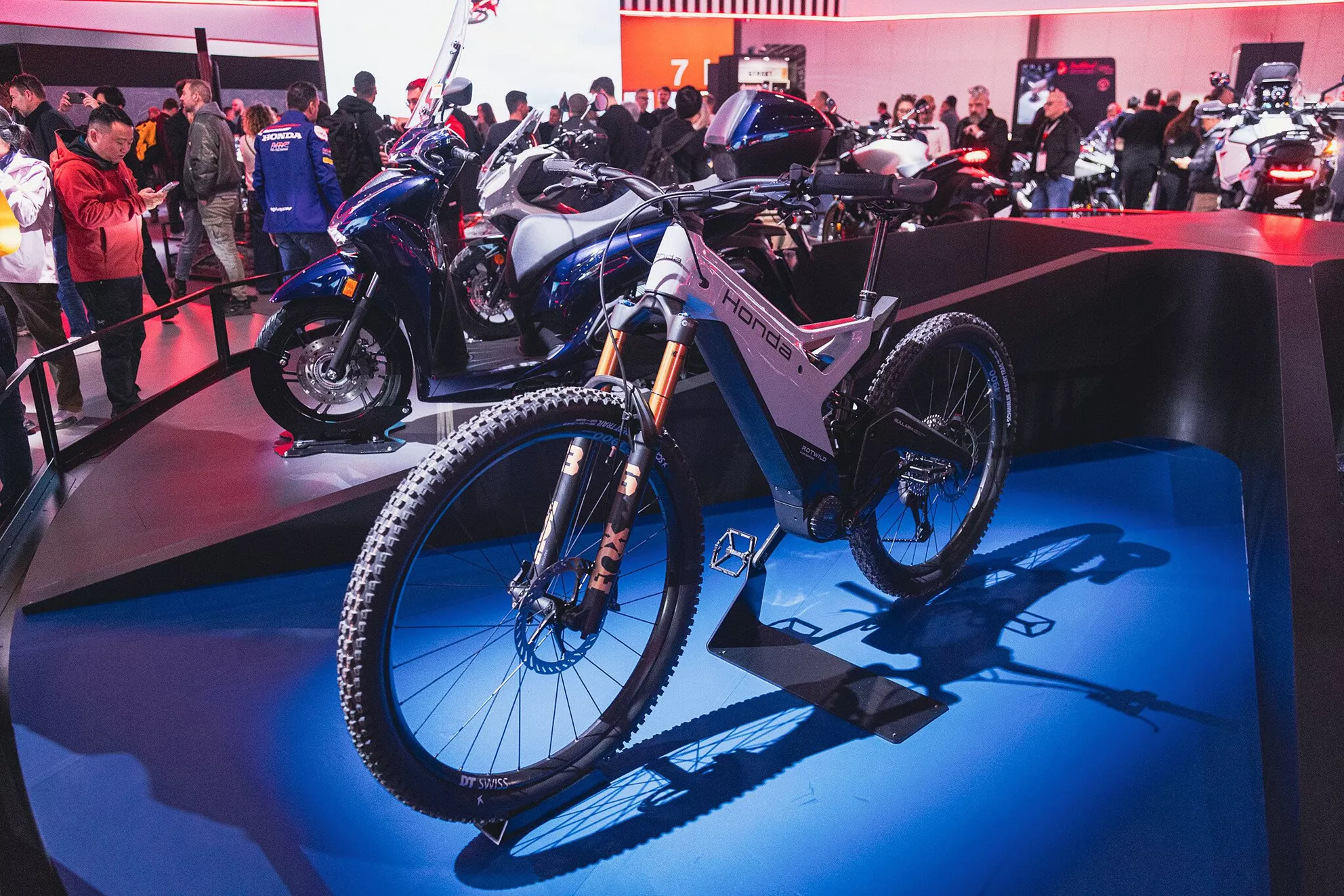
Newest member of Hondas electric familiy: The RN0 E-Mountainbike
Honda aims to achieve carbon neutrality for all motorcycle products during the 2040s. As an important means to achieve this, we are promoting the rollout of electric motorcycles. However, since the progress of electrification varies by region, we will flexibly introduce products while also assessing changes in the demand and regulations of each region.
Regarding electrification, we will steadily introduce appropriate products into markets where the need for electric motorcycles has materialized while also assessing the demands of those regions. Under our brand promise, while expanding the value of electric motorcycles unique to Honda, we will flexibly determine investments and product introductions according to market changes, advancing the establishment of a sustainable business foundation. In the medium to long term, we will further evolve our sales and service networks and strengthen relationships with customers that go beyond product sales. By expanding customer touchpoints through connected functions and digital services and providing experiences that enable customers to continue feeling the value after purchase, we will create new demand. In addition to advancing safety and environmental technologies, we will collaborate with companies in other industries to broaden the appeal of motorcycles themselves and continue delivering the freedom of mobility and the joy of riding. Through these initiatives, we aim to be No. 1 in both ICE and electric motorcycles in every country.
Poky: Europe emphasises sustainability, but here motorcycles are often leisure products. In other parts of the world they are everyday transport. Doesn't that make it difficult for Honda to predict demand and develop global products?
de Jaeger: Europe is actually the world's largest market for what we call the 'fun' segment of motorcycling. That gives the region a major influence on which recreational motorcycles are developed. You could see it in this year's world premieres. Europe is deeply involved in developing those models.
We also have research and development activities here in Italy, including a function based in Rome. There is now MotoGP development activity in Milan as well. Our Italian factory and development teams also contribute to commuter products. The X-ADV was developed here. European operations work on both recreational and commuter products. Because Europe is so important in the fun segment, we can help set the direction for its future.
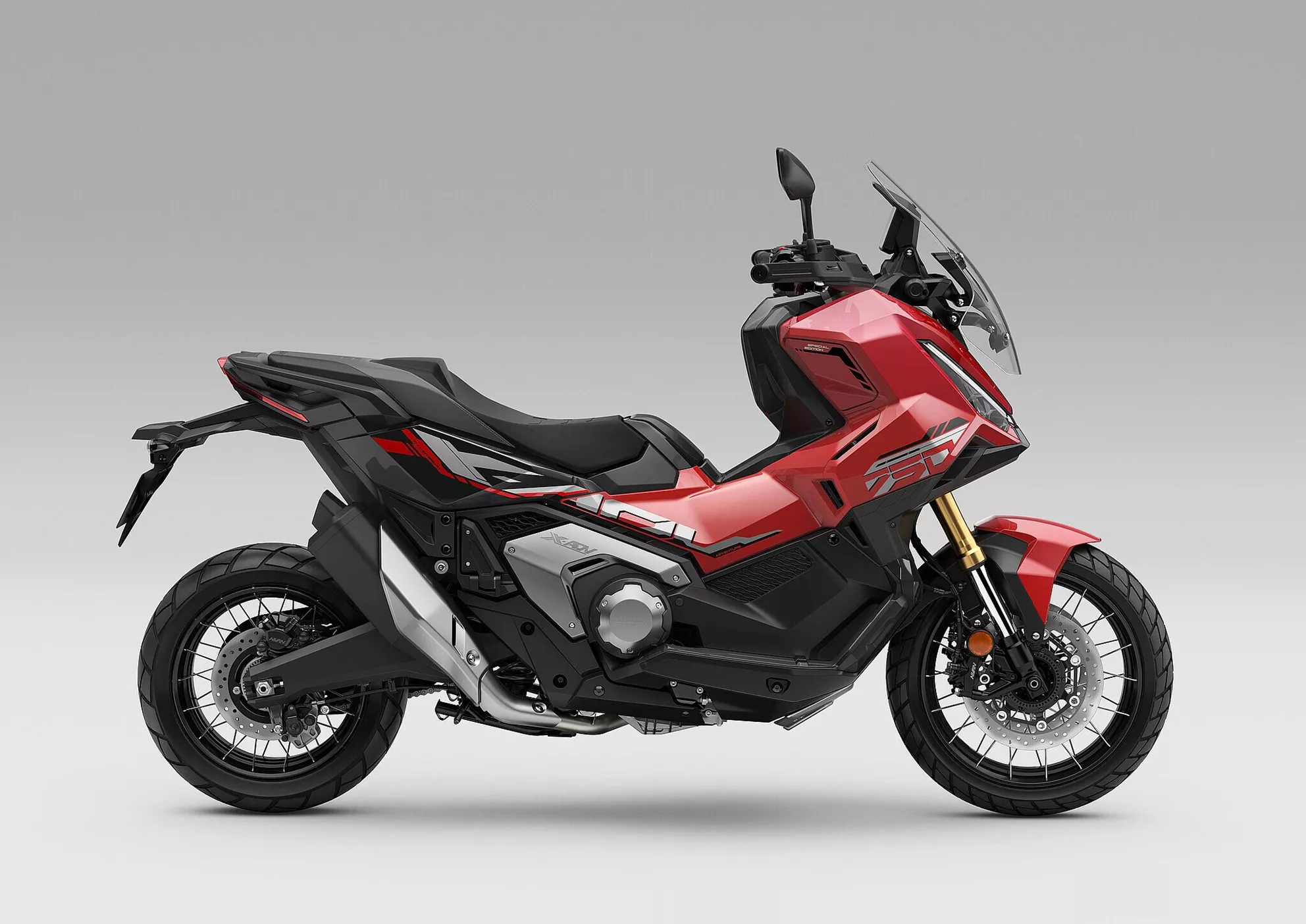
Build in and developed for Europe: Honda X-ADV
Poky: Honda is still a market leader in Europe, but the motorcycle market is growing by double digits while Honda's own sales seem relatively flat. Are you worried about losing market share?
de Jaeger: Competition is definitely getting stronger and there are many new entrants. But one thing that gives us confidence is that about 20 percent of our new motorcycle sales go to female customers. That is an opportunity to attract even more people to motorcycling if we offer the right products.
I am proud that Honda has held the number-one position in major European markets for several years. If you combine commuter and recreational motorcycles, you might see one picture; when we look specifically at the recreational segment, we are strengthening our position.
We did have quality issues this year with some of the large CB1000 models. We responded quickly and are now back on track. We remain ambitious about increasing both our market share and the number of people who enter motorcycling. Women riders in particular represent an important opportunity for growth.
Poky: Do you think positioning the CB1000 Hornet at such an aggressive price - a 1,000 cc motorcycle for under €10,000 - meant compromising some traditional Honda quality standards? Did that contribute to the engine problems?
de Jaeger: No, absolutely not. The quality problem had nothing to do with the product's price or an effort to reduce costs. It had a different origin. We have even replaced complete engines on affected motorcycles. You can imagine what that costs.
Honda has always put quality first, and that will not change. We want our motorcycles to be sporting and exciting, but quality and reliability are just as fundamental to our brand. We would never give that up to reach a particular price.
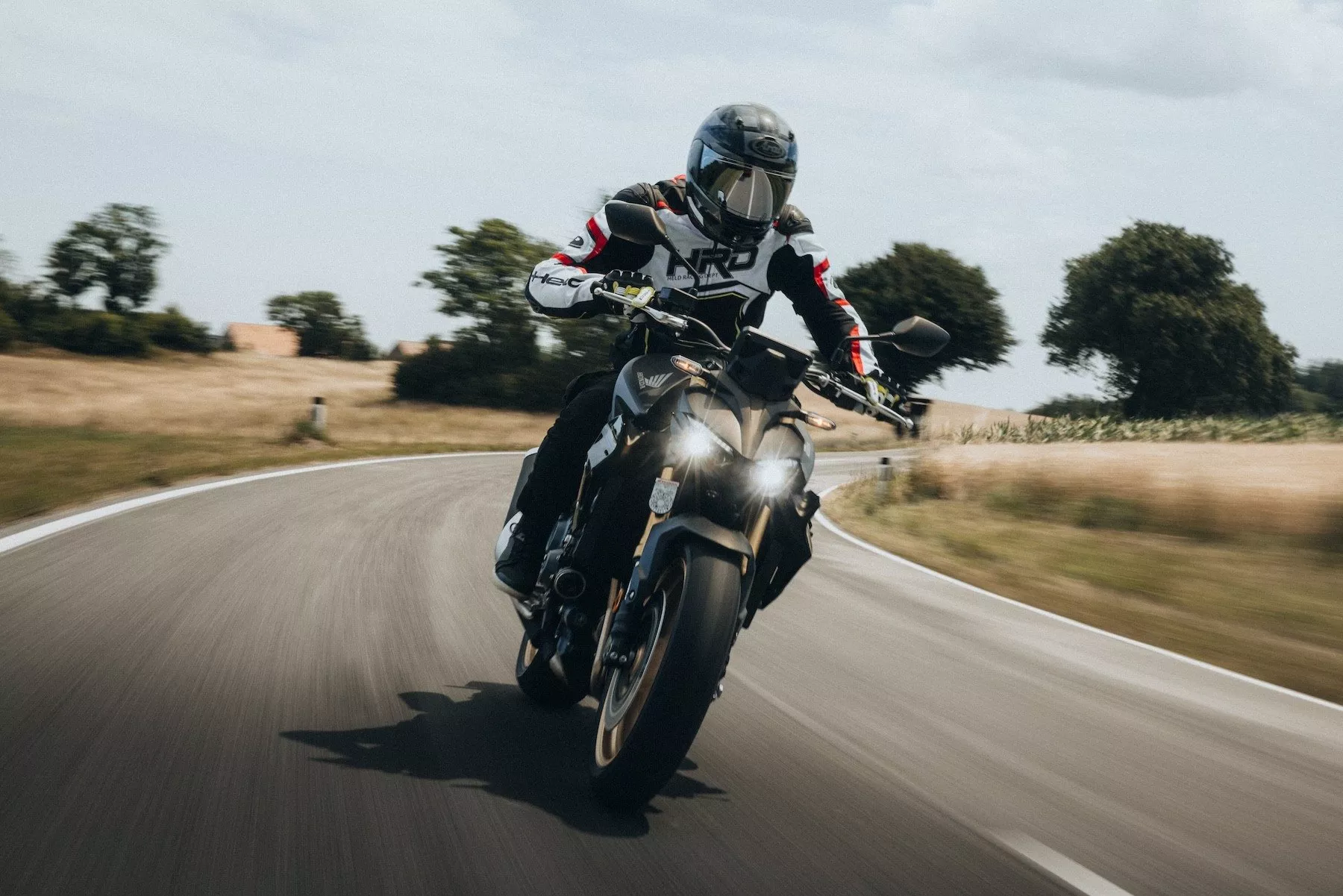
Honda Quality must not be given up on, even on affordable bikes like the CB1000 Hornet.
Poky: Chinese motorcycle brands are appearing everywhere at this show, and their products are becoming more sophisticated. Does Honda feel growing pressure from these new manufacturers?
de Jaeger: The market is changing. When I first came to EICMA many years ago, Chinese brands were a niche presence. Today they are much stronger. Of course, that creates competition.
But let me be very clear: I do not want Honda to compete to offer the cheapest motorcycle on the market. That is not a battle we intend to fight. We begin with the customer and ask what technology and ownership experience we can offer. That experience includes the motorcycle itself, the brand and aftersales support.
We want to offer something distinctive. Think of DCT, E-Clutch or the new sensing technologies we presented for the Africa Twin. We want innovations that make riding more enjoyable and safer. We have many decades of experience understanding motorcycle customers. I believe that still matters.
We cannot ignore the new competition, of course. In some ways it motivates us to challenge ourselves even more. I like to use the expression 'Dream Further'. That is what we want to do: keep introducing new technology.
Safety is a central part of that ambition. Honda has set an objective of eliminating fatalities involving its vehicles by 2050. Sensing systems, adaptive cruise control and technologies that help detect other road users are examples of how we want to move towards that goal. We still need to find the right balance between what customers can afford and the value they receive, but we are confident in our strategy.
Poky: 1000PS is spending 6 weeks in Barcelona every year. Spain has become one of the key European motorcycle markets. What is Honda learning from Spain, and how important is Southern Europe more generally?
de Jaeger: Southern European countries have become increasingly important for us, especially Spain and Italy.
Honda has faced recent production disruptions following a fire at the Montesa Honda facility in Spain.
But the wider lesson from Spain, and also from Italy, is how important it is to bring younger customers into motorcycling. At the presentation we showed an additional small adventure-style commuter product the ADV125. Models such as the SH and PCX are already extremely popular. We want to expand the entry-level range with motorcycles and scooters that young people find attractive.
The objective is not just to sell someone their first commuter vehicle. We want to create a relationship with Honda that can last a lifetime, allowing them to move from smaller machines to larger motorcycles as their needs change. These markets teach us how to attract the next generation in the first place.
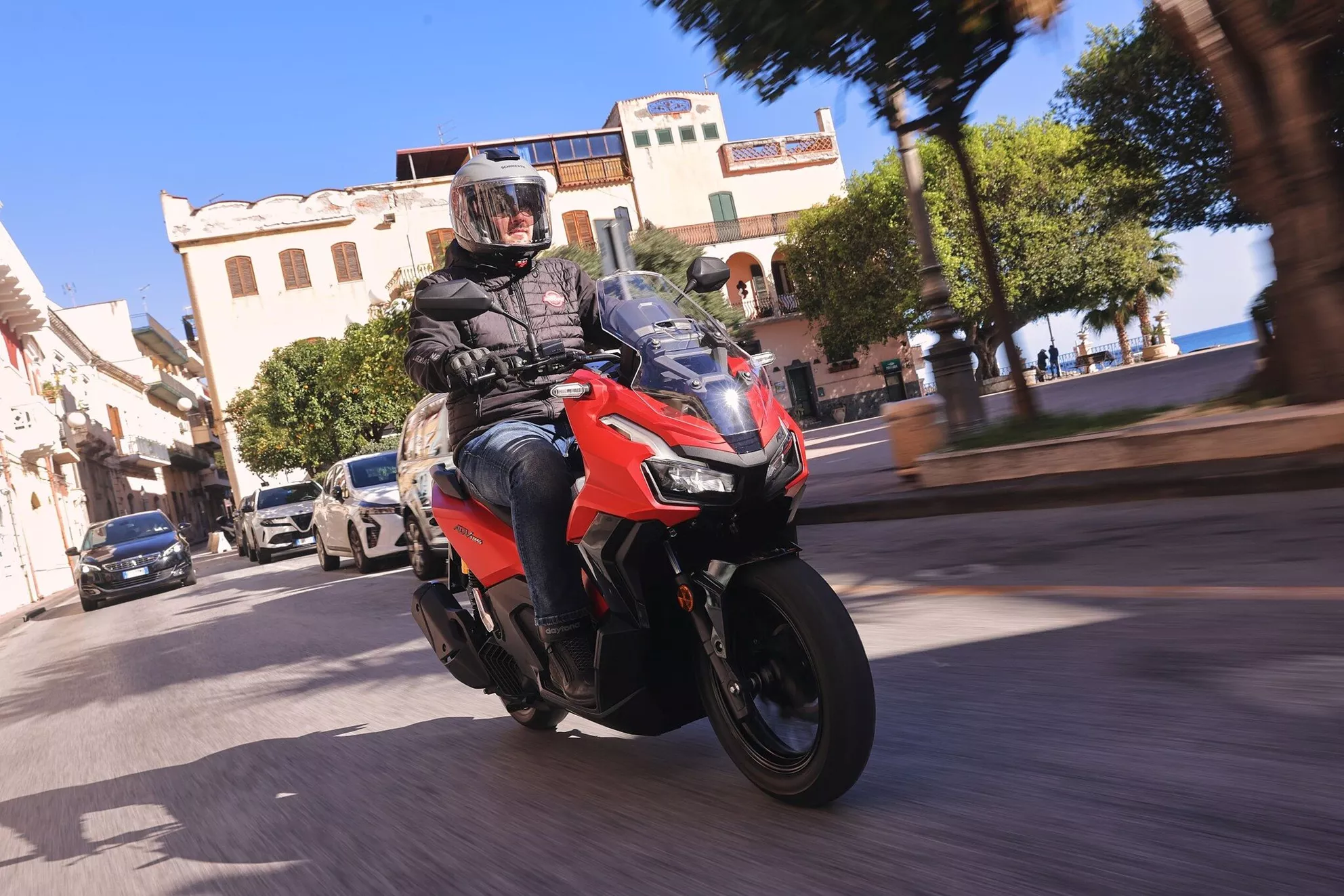
The ADV125 shall get a new generation of riders to Honda
Poky: You keep saying customer demand comes first. Looking back at the WN7, how satisfied are you with its first year? And what have you learned about making electric motorcycles more attractive at a more accessible price?
de Jaeger: Electric recreational motorcycles are still a new category. With the WN7, we tried to create a motorcycle that was easy to handle, attractive and offered an acceptable range. I must admit that the market reaction has been more positive than I personally expected.
Our initial expectations were deliberately limited. We regarded this as an opportunity to learn how customers respond to an electric fun bike. That response has been more encouraging than we anticipated, so we certainly want to develop further.
Honda wants to become number one in electric motorcycles, including the recreational segment. But we must keep listening to customers. If there is real demand, we can invest and expand the range. If the demand is not there, simply putting products on the market will not solve that problem.
Poky: How do you define success for the WN7 at this stage? Through sales volumes or through what customers say about it?
de Jaeger: If we immediately define success through sales, prices or profitability, we start in the wrong place. It is a new category for us and for many customers. First, we have to understand the customer experience and identify what makes someone want to ride an electric motorcycle.
Later, of course, volumes and profitability will matter. Today the most important thing is to find that 'sweet spot' where an electric motorcycle genuinely convinces people. We then use those lessons to develop the next product. We should not treat the WN7 only as a short-term profit or volume exercise.
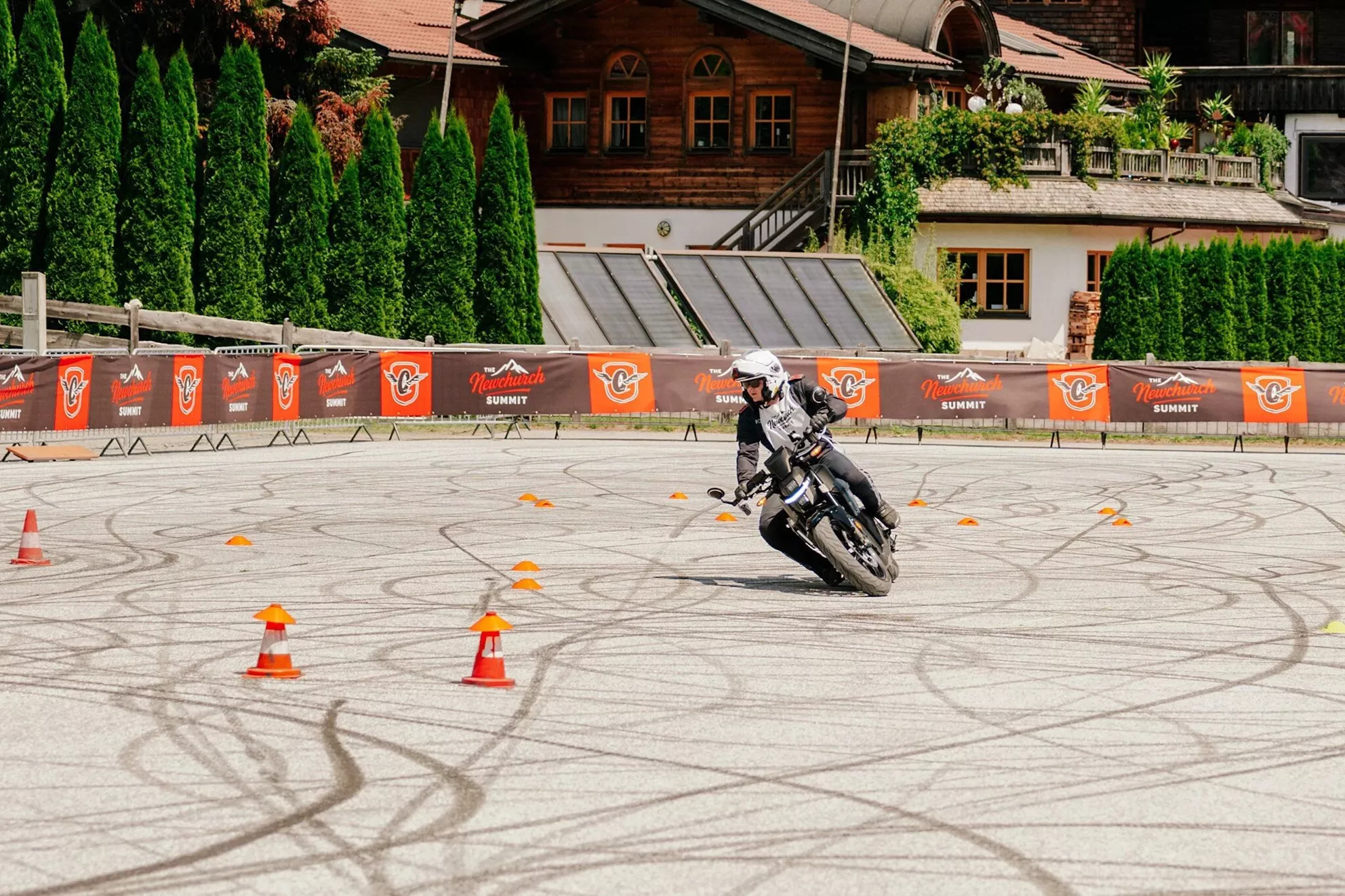
Hondas WN7 turned a lot of heads at The Newchurch Summit, but sales figures are low.
Poky: In Europe, and particularly the UK, the motorcycling population is ageing. Many existing riders can afford large leisure motorcycles, but fewer young people enter the market because of licensing, insurance and purchase costs. What is Honda doing to ensure there will still be customers when today's older riders stop?
de Jaeger: That is a very good question. One important part of our response is rider training. We operate safety-riding schools in several markets, including Spain and Germany, and we have activities in Turkey and the UK as well. We want to give more people who have never ridden a motorcycle the chance to learn in a safe environment.
This year, we aim to train up to 25,000 riders across Europe, complemented by a new rider-training initiative at our Atessa factory with the Honda Italia Industriale Safety Riding School.
Ideally, that opportunity should be available across our national markets. Training helps reduce the anxiety that people naturally feel when they first start riding. In fact, our training programmes are often fully booked.
We are also adapting products to new customer groups, including women, who as I mentioned account for around 20 percent of sales in the population we are discussing. And the commuter segment is particularly important for bringing new riders in. Think of the SH, PCX and other approachable vehicles. In congested cities such as London, a motorcycle or scooter can make a lot of sense.
We want to introduce people to the possibilities of two wheels, give them the skills and confidence to ride, and then keep them with Honda as their needs change.
Poky: Thank you very much.
de Jaeger: Thank you.
Honda will not enter the price war for the cheapest motorcycle Images
Source: 1000PS

Honda 750 Models 2027

Honda X-ADV 2027

Honda Forza 750 2027

Honda NC750X 2027

Honda CB750 Hornet 2027

Honda CB750 Hornet 2027

Honda CB750 Hornet 2027

Honda CB750 Hornet 2027

Honda CB750 Hornet 2027

Honda CRF450R 2027

Honda CRF450R HRC Works Edition 2027

Honda CRF450R Model Family 2027

Honda NT1100 2027

Honda NT1100 2027

Honda NT1100 2027

Honda NT1100 2027

Honda NT1100 2027

Honda E-Mountain Bike 2027

Honda E-Mountain Bike 2027

Honda E-Mountain Bike 2027

Honda E-Mountain Bike 2027

Honda SH110 2027

Honda SH110 2027

Honda SH110 2027

Honda SH110 2027

Honda SH110 2027

Honda GL1800 Gold Wing 2027

Honda GL1800 Gold Wing Tour 2027

Honda GL1800 Gold Wing Tour 2027

Honda GL1800 Gold Wing Tour 2027

Honda CMX500 Rebel 2027

Honda CMX500 Rebel 2027

Honda CMX500 Rebel S 2027

Honda CMX500 Rebel S 2027

Honda CMX1100T Rebel 2027


