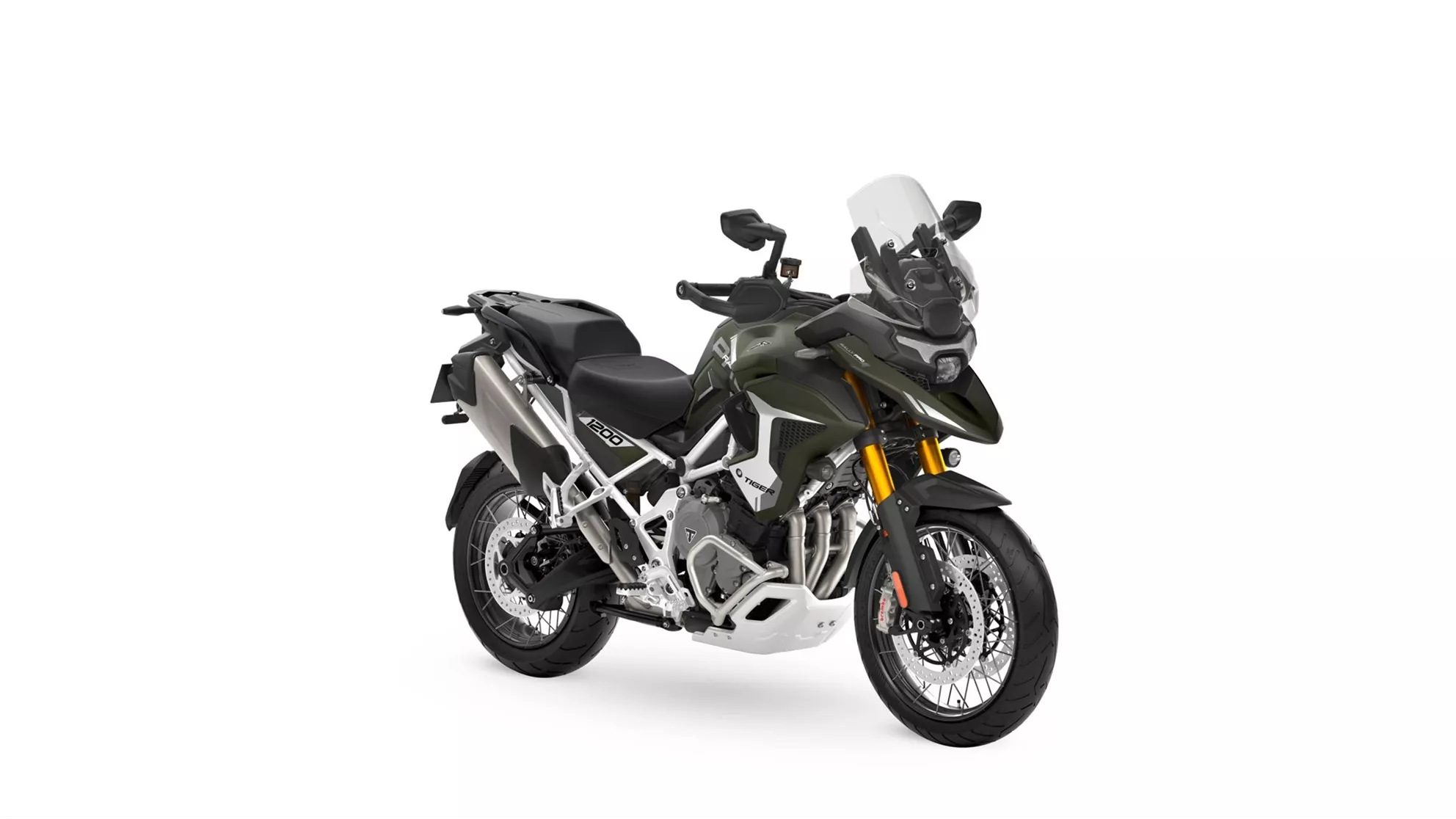
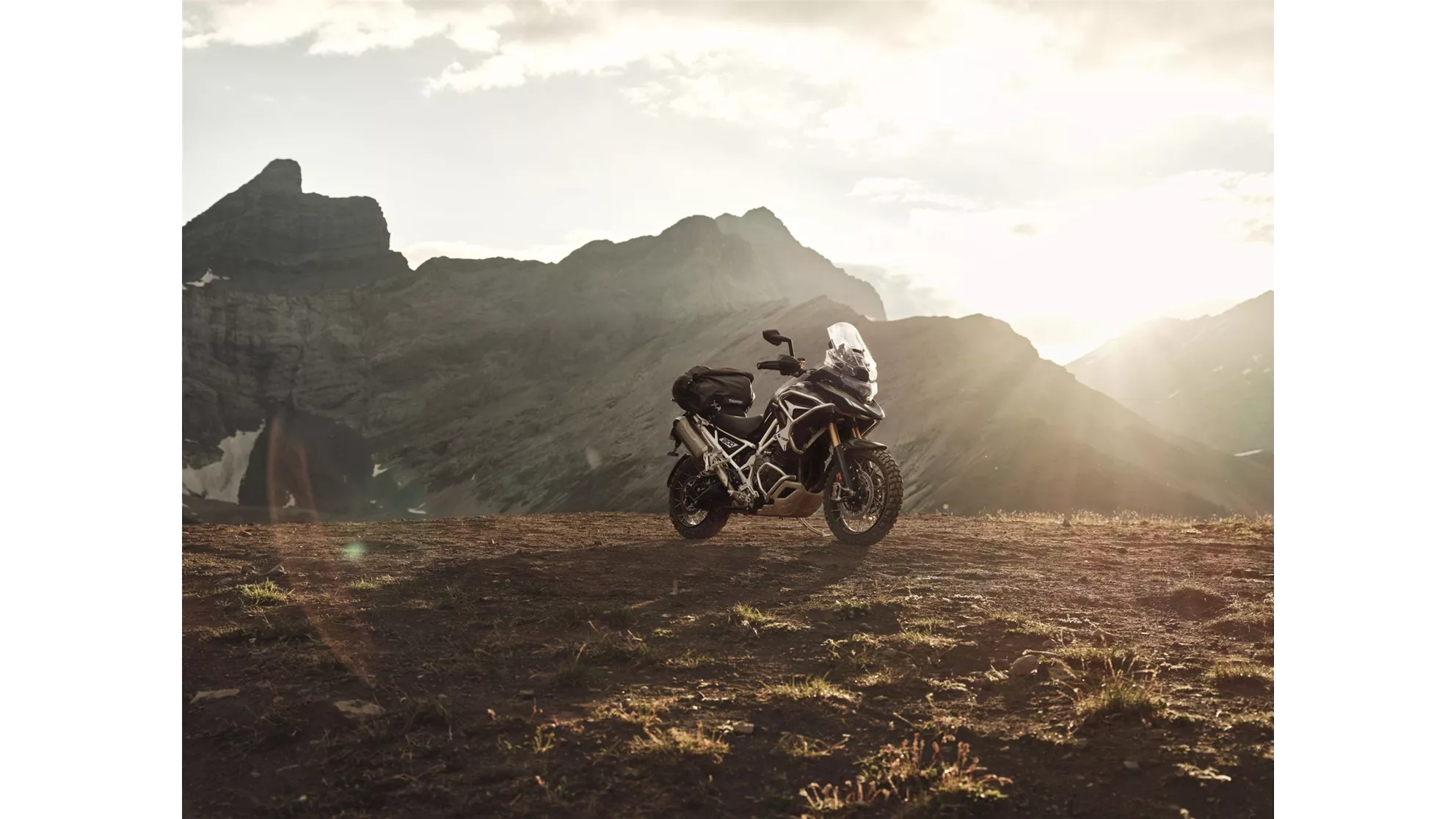
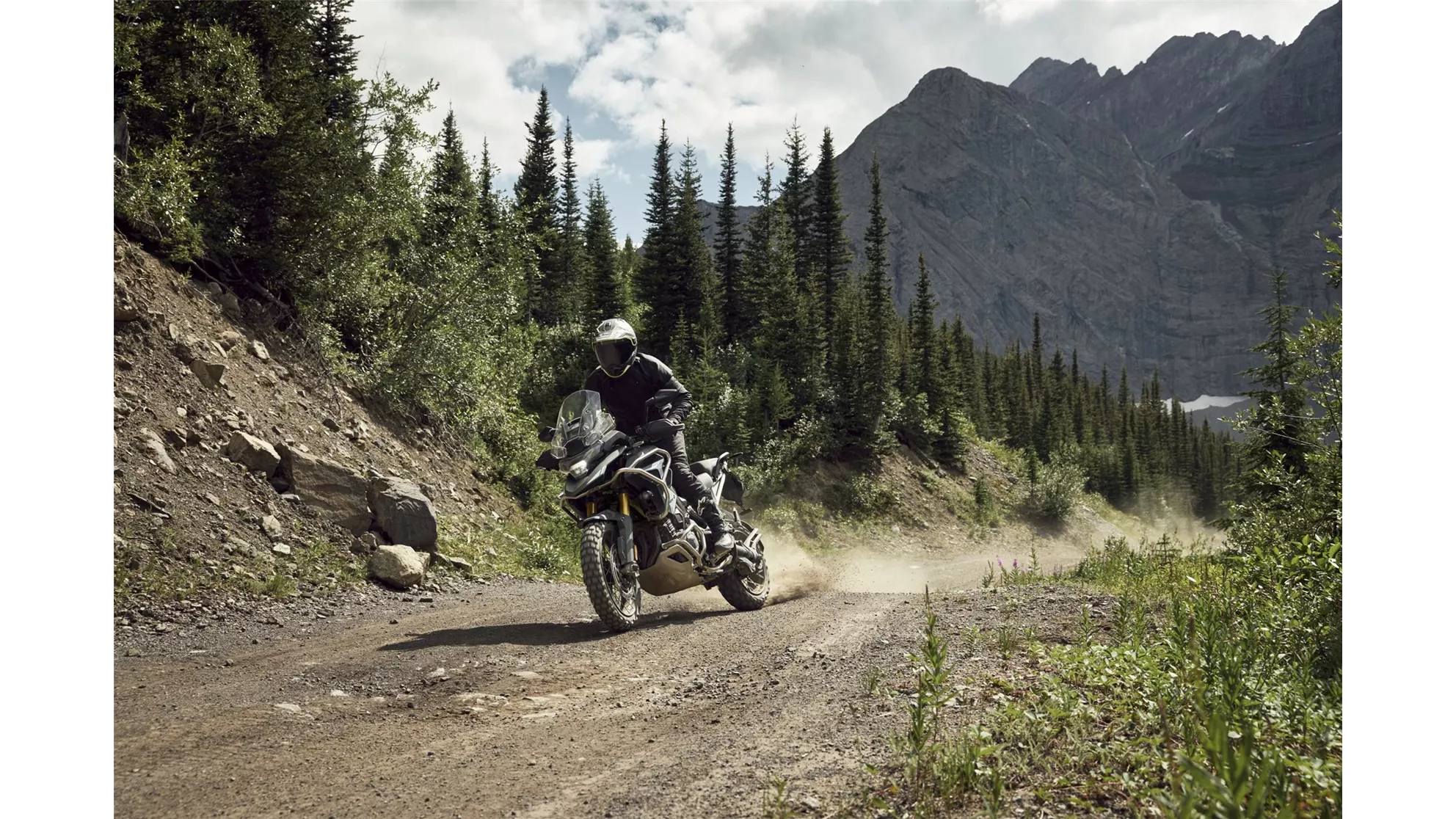
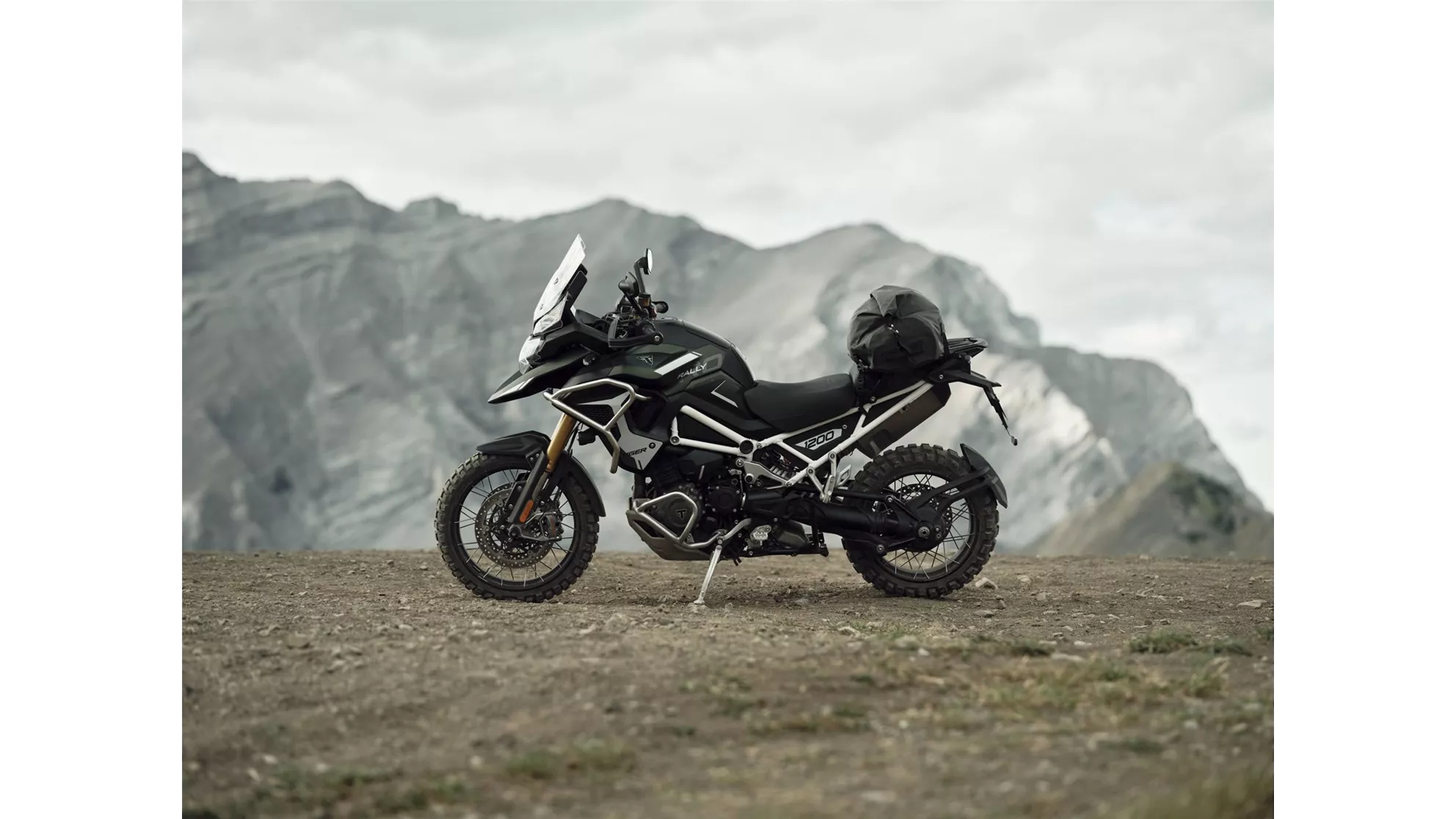
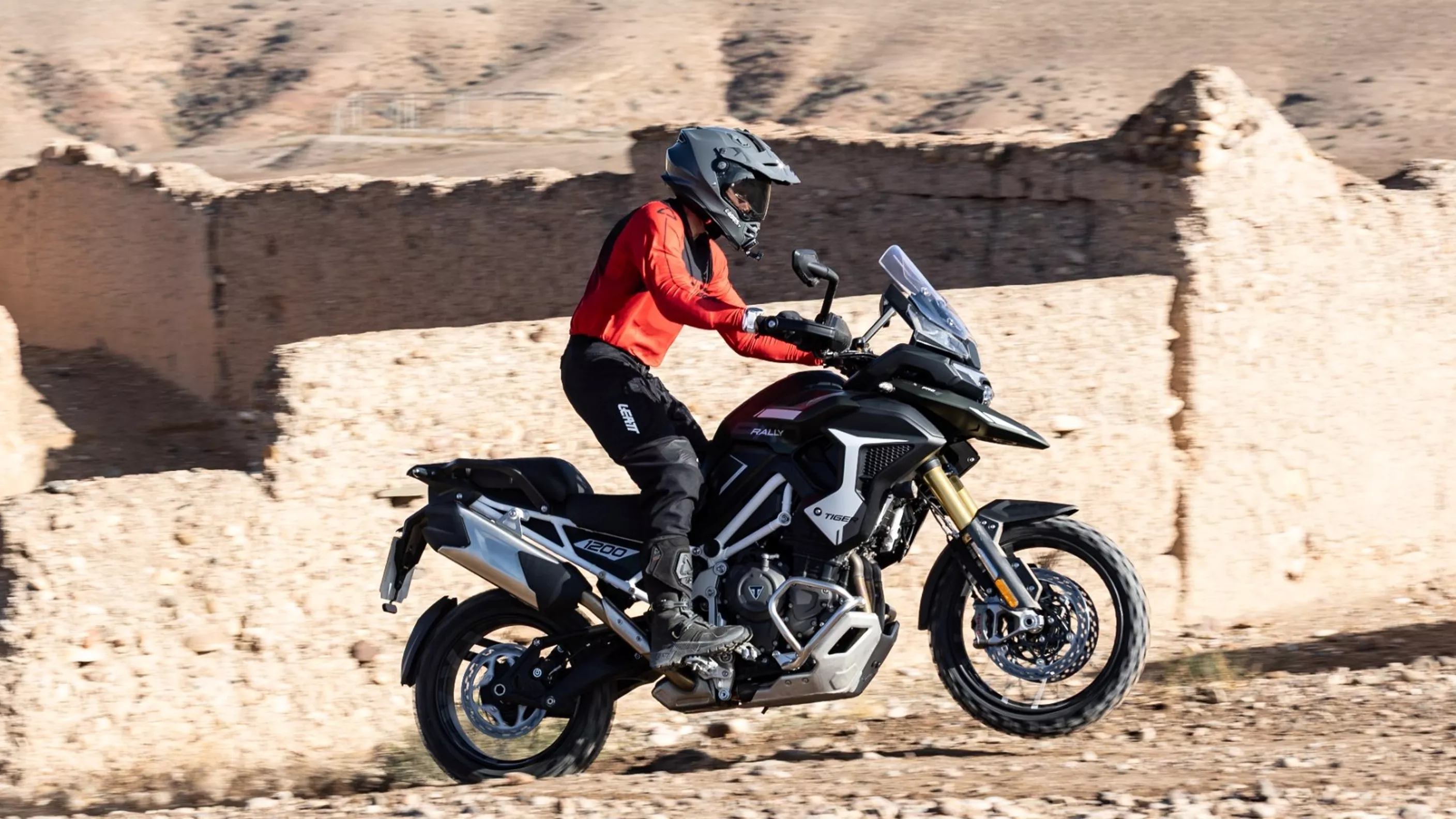
158 hp, a completely revised electronic suspension, state-of-the-art radar assistance and a cockpit that can finally handle Apple CarPlay and Android Auto: Triumph has left hardly a stone unturned on the Tiger 1200 for the 2027 model year. We tested three of the four variants for two days in Morocco – on twisty country roads and tricky gravel tracks.
Triumph Tiger 1200 Test 2027: 4 models put to work in Morocco
The gentle giant grows up
158 hp, new wheel sizes, a state-of-the-art Showa suspension, a new Bosch TFT and radar assistance: the Triumph Tiger 1200 has been comprehensively revised for 2027. Clemo tests the GT Pro, Rally Pro and Rally Explorer in Morocco and explains why the big adventure bike surprises above all away from the tarmac.

Clemo
published on 23/11/2026
2,255 Views
Four Tigers for different needs
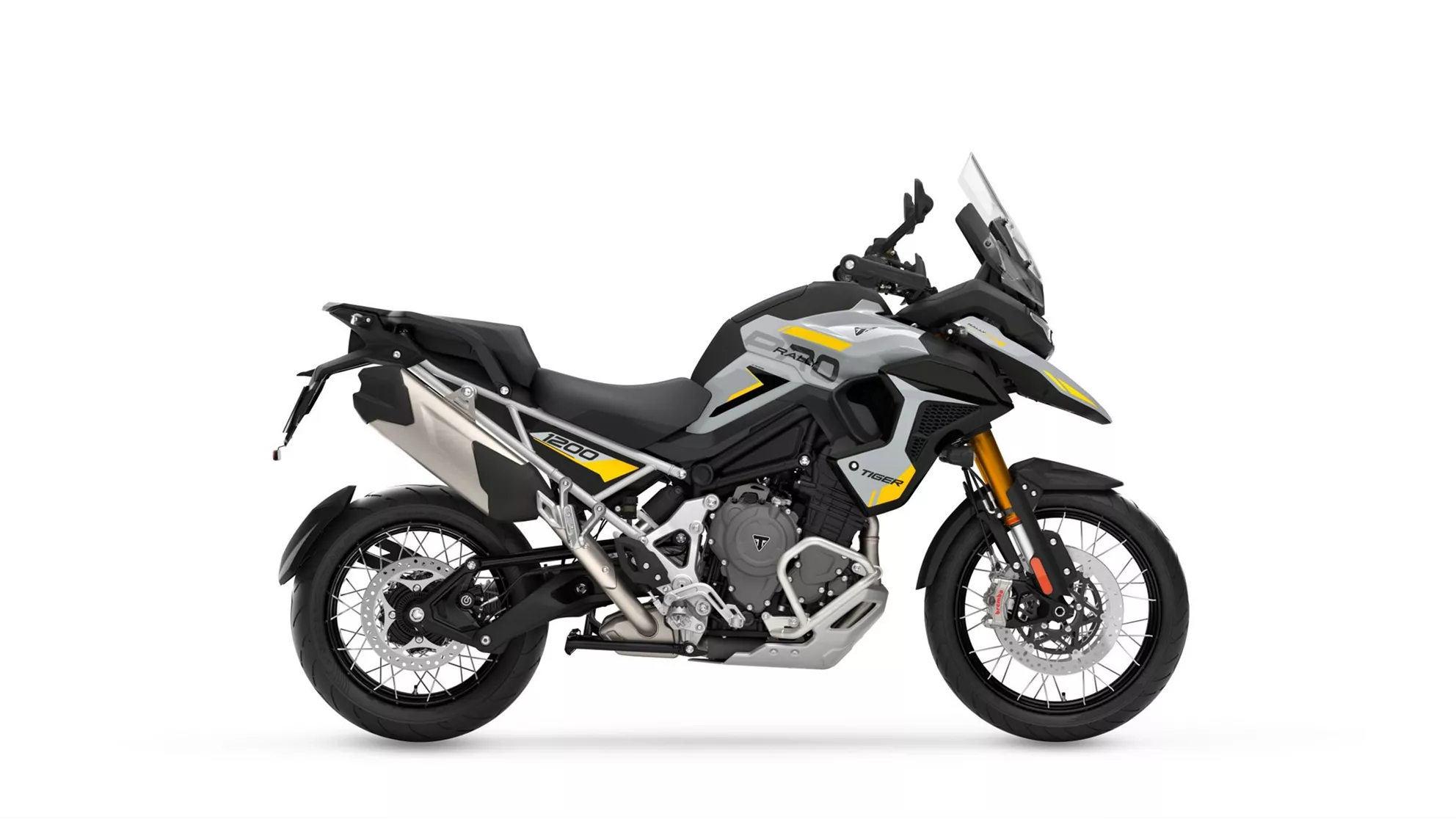
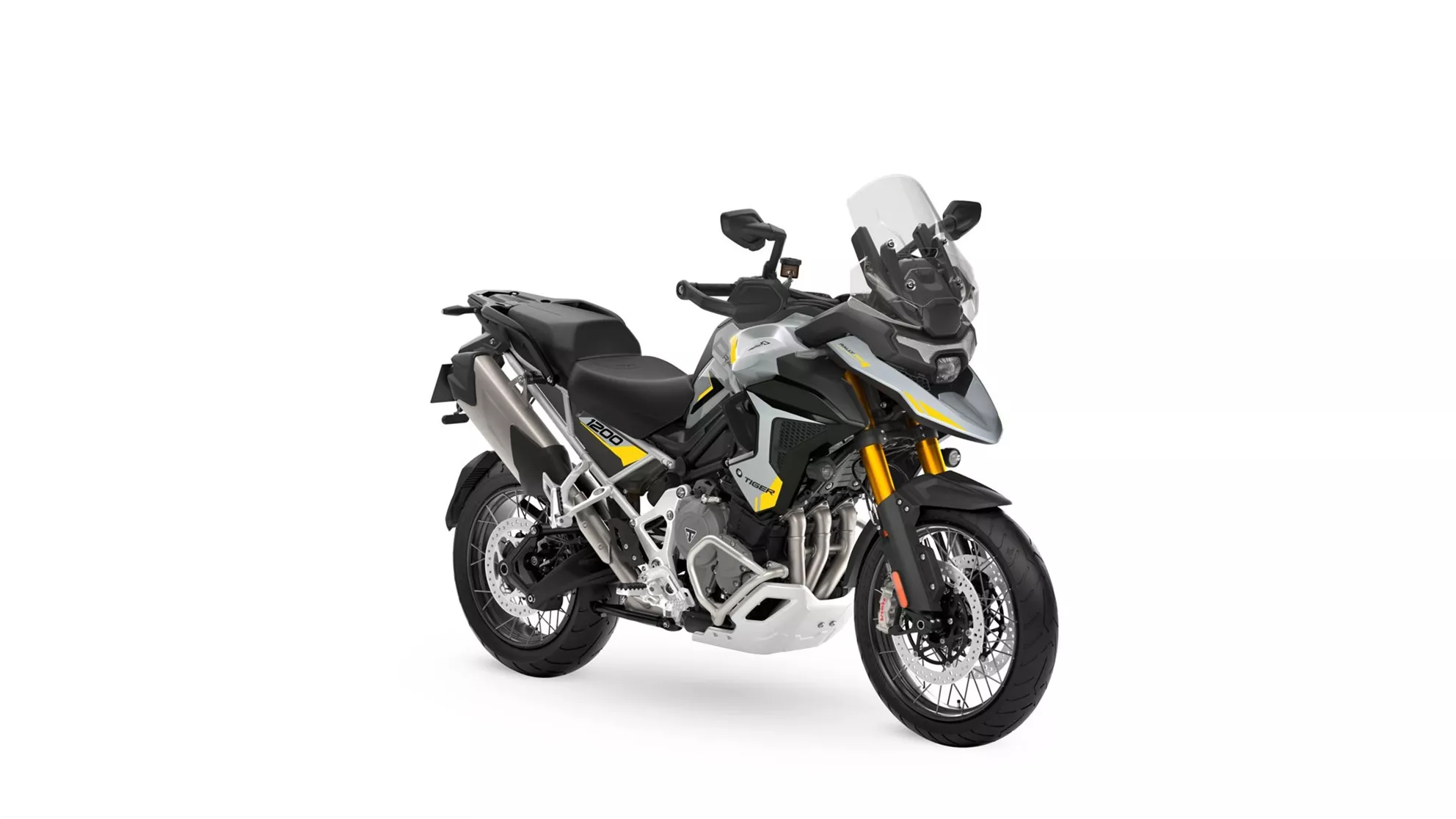
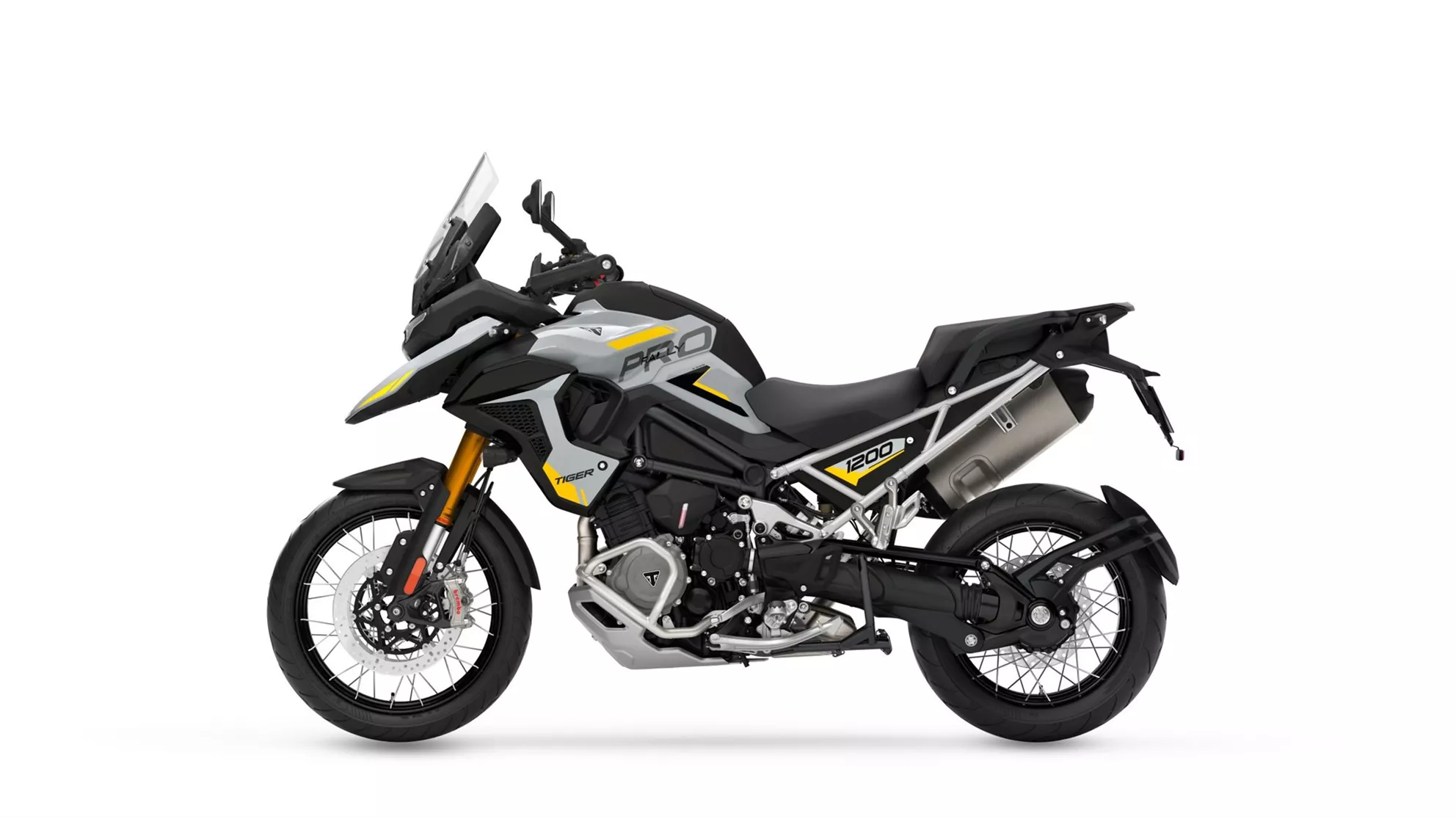
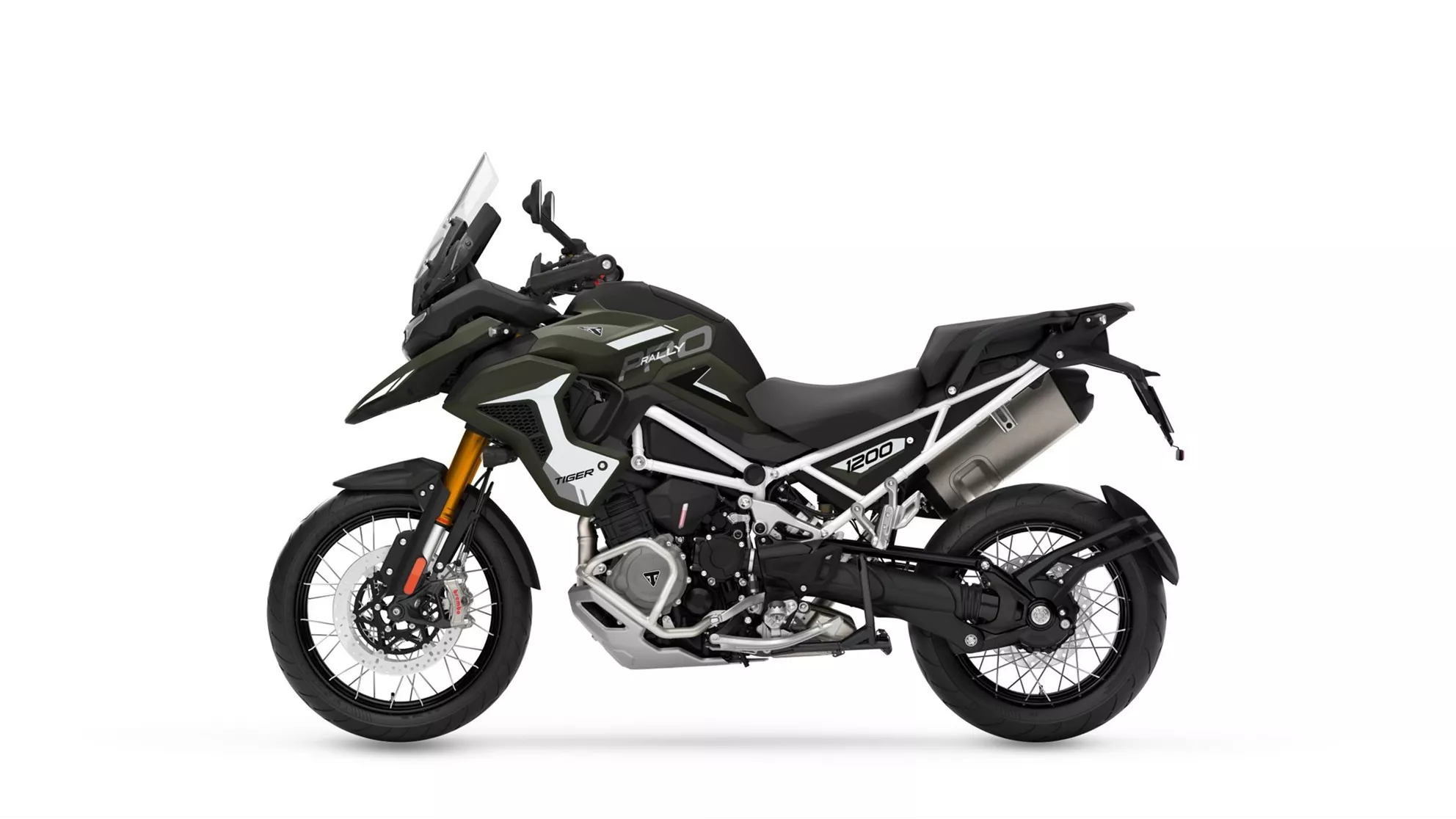
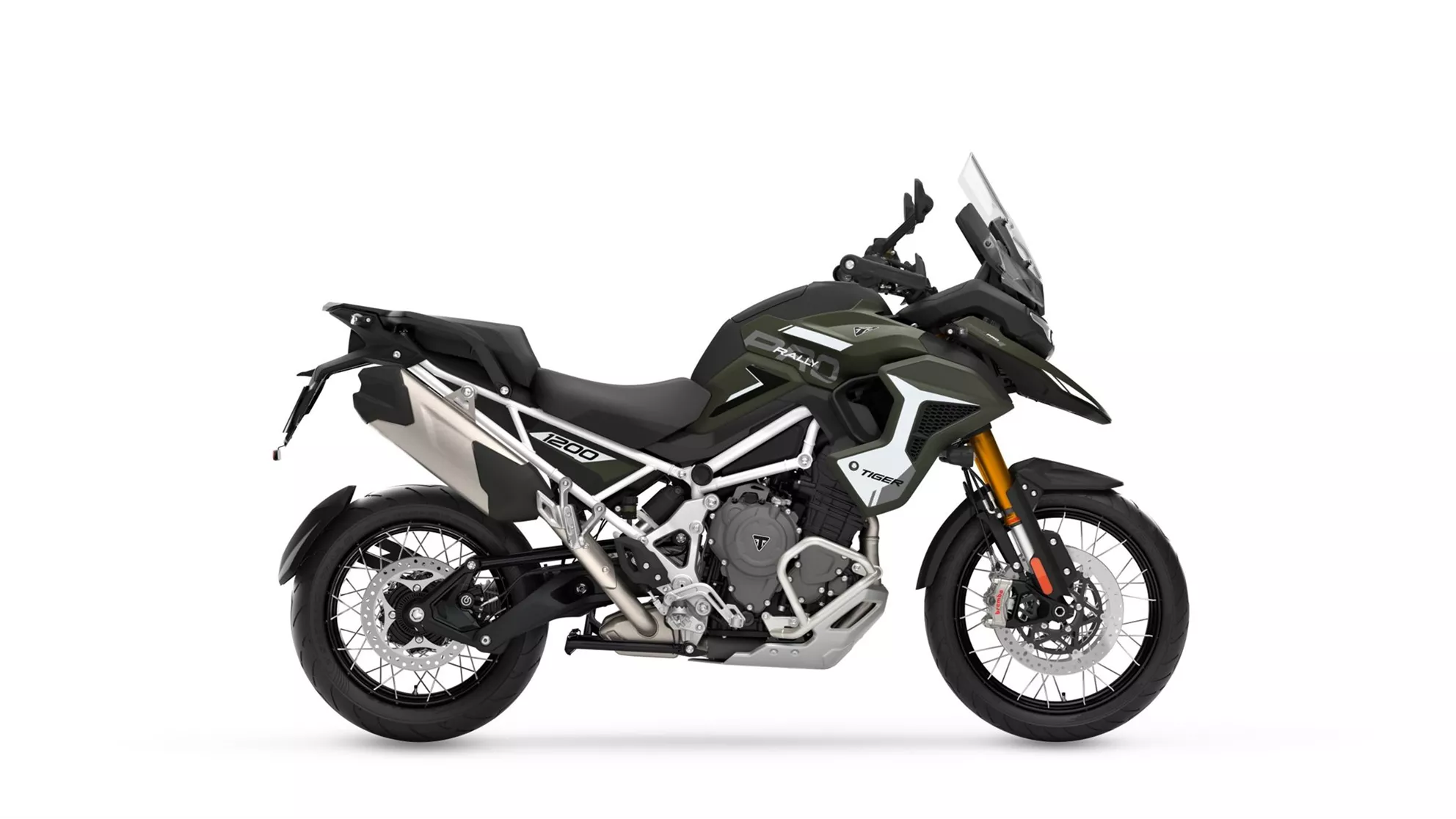
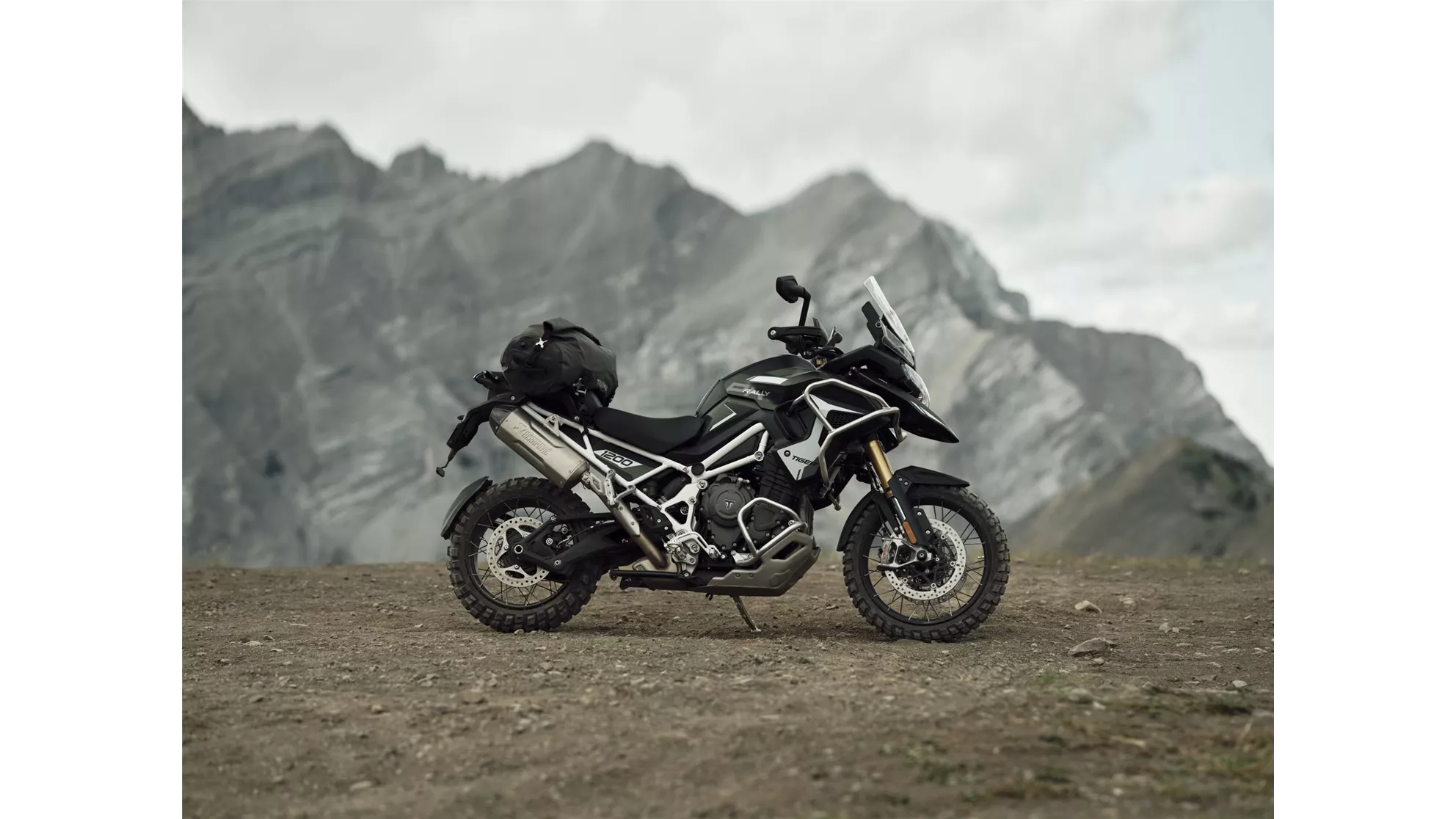
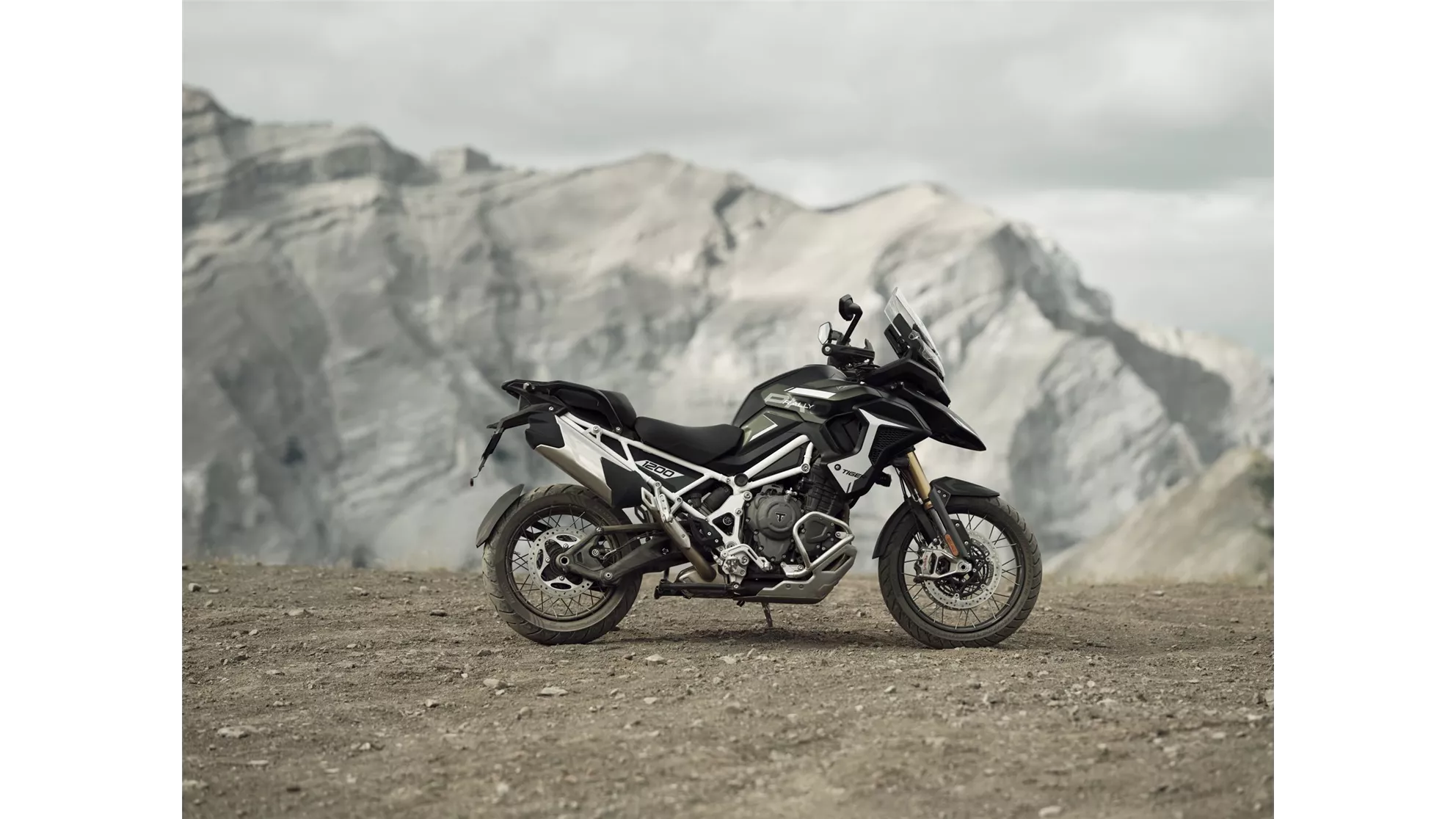
Thick fog hangs over the Agafay Desert, about an hour south-west of Marrakesh. The sun struggles timidly through the grey veil while the foothills of the Atlas Mountains rise up ahead of us. Not exactly the backdrop you'd hope for at a bike launch in Morocco. In return, the new Triumph Tiger 1200 awaits us – a bike that technically deserves almost as much attention as the spectacular landscape. And that is very much meant as a compliment. Triumph has comprehensively revised its big adventure bike for the 2027 model year. More power, a noticeably refined engine character, a new semi-active Showa suspension and an armada of electronic helpers are meant to make the Tiger even more attractive in the premium adventure bike class. At the same time, Triumph has said goodbye to some previous concepts. The Rally models in particular are taking a different path from now on, which is likely to spark debate among die-hard off-road riders. Before setting off, though, there's a fundamental decision to make. The Tiger 1200 continues to be offered in four variants: GT Pro, GT Explorer, Rally Pro and Rally Explorer. The GT models roll on cast aluminium wheels and are aimed mainly at road riders, while the Rally variants, with tubeless wire-spoked wheels, extra engine protection and a dedicated Off-Road Pro riding mode, are better prepared for off-road use. In addition, the Rally models feature, among other things, a height-adjustable rear brake pedal, which is an advantage especially when riding stood up. The second decision concerns tank capacity and a few equipment details. While the Pro models make do with a 20-litre tank, the Explorer versions hold a hefty 30 litres of fuel. They also add standard tyre pressure monitoring and a slightly different handlebar position, among other things. The basic electronic features, including the extensive radar assistance, are identical across all four models. So the agony of choice depends less on the technology than on how you intend to use the bike.
Farewell to the big front wheel
Probably the most drastic change concerns wheel sizes. Whereas the previous Tiger 1200 Rally came with a classic 21-inch front and 18-inch rear wheel, from the 2027 model year all four variants roll on a 19-inch front and 17-inch rear combination. At the same time, all now offer a uniform 200 mm of suspension travel. That's still a respectable figure for a full-size adventure bike, but for the Rally models it means a clear shift towards road ability. When I asked, Triumph's engineers justified this step with two arguments. First, the latest generation of the semi-active Showa suspension is now so capable that bigger wheels and longer travel are no longer strictly necessary for typical off-road use. Second, many customers had explicitly asked for lower seat heights. An understandable wish, as not everyone wants to fish for a secure footing on tiptoes at the lights or on uneven ground. The first twisty kilometres on the winding roads of the Moroccan hinterland certainly confirm that the new wheel combination has its advantages on the Rally. Where the old 21-inch front wheel, with its greater rotating mass, demanded a somewhat more determined steering input, the new Tiger willingly follows the chosen line. You think corner, and the bike turns in. Not hyper-agile, but remarkably neutral and without any trace of inertia.
More nimble, less enduro
Of course, this decision isn't without drawbacks. Anyone who regularly tackles demanding off-road terrain may miss a 21-inch front wheel. Larger wheels generally roll over obstacles more easily, and the choice of genuinely off-road-capable tyres is considerably wider for 18-inch rear wheels in particular than for the new 17-inch size. Triumph is deliberately accepting a compromise here that should appeal to the majority of customers, while particularly ambitious off-road riders may look back somewhat wistfully. After plenty of kilometres on Moroccan gravel roads, however, I can fully understand the decision. As long as you stay on reasonably moderate terrain, the big front wheel is surprisingly little missed. The Tiger rolls confidently over bumps, can be steered precisely and conveys a level of security you wouldn't necessarily expect from such a heavy bike. Nobody will seriously mistake it for a hard enduro anyway. Anyone who voluntarily turns into deeply rutted singletrails with more than 250 kilograms wet weight had better have a pretty good idea of their own abilities. The real strength of the new wheel combination therefore shows on tarmac. Here the Rally variant in particular gains noticeably in agility and riding pleasure, without revealing any significant drawbacks on ordinary gravel roads. All in all, Triumph has pulled off a thoroughly convincing compromise. The Tiger becomes more accessible, more nimble and better suited to everyday use, without completely hanging up its adventure ambitions.
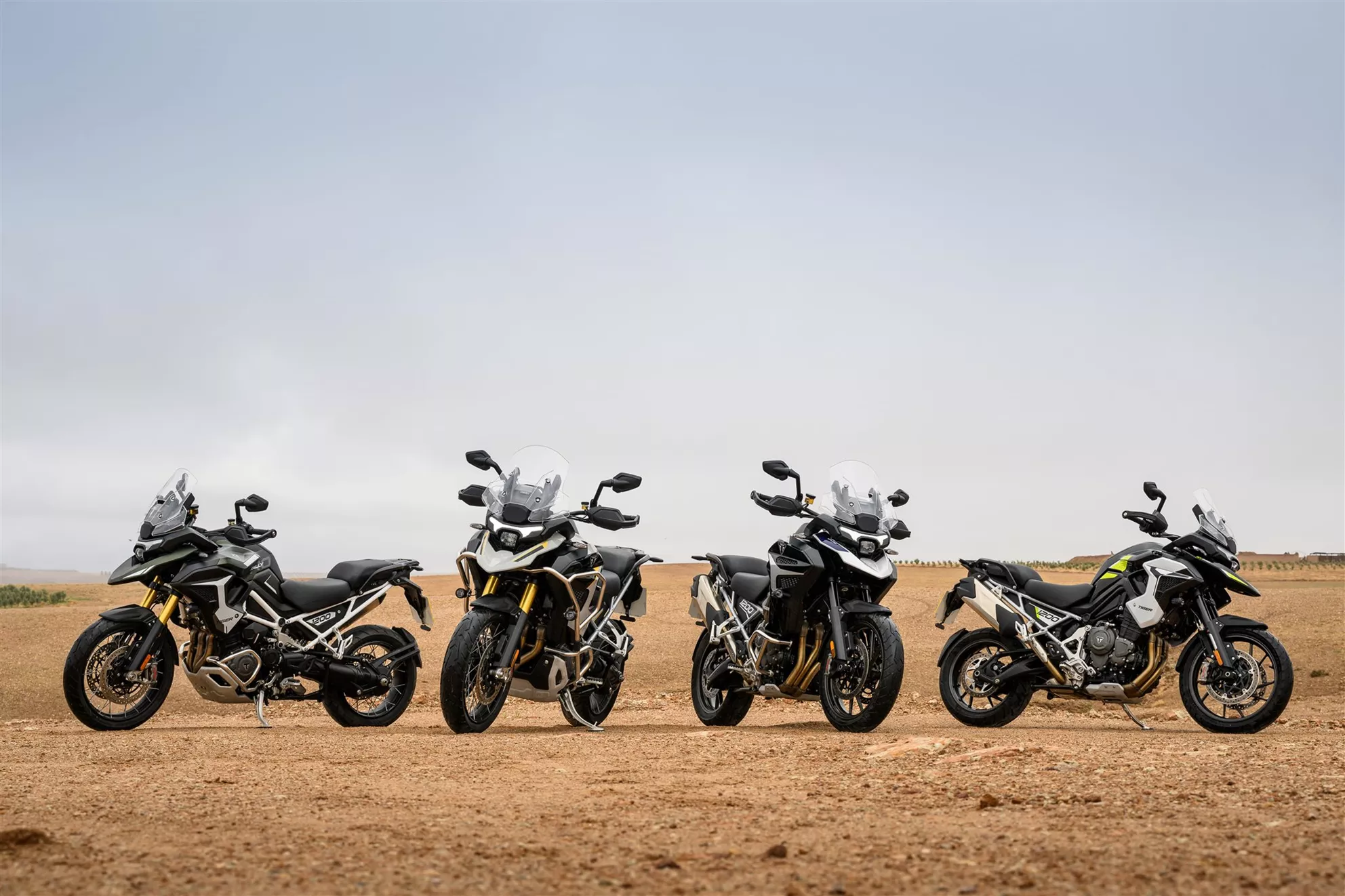
Triumph Tiger 1200 Family 2027
Triple with fresh refinement
As we slowly approach the Atlas Mountains, there's a chance to take a closer look at the revised triple. The liquid-cooled inline engine now draws 158 hp from its 1,160 cc – eight horsepower more than its predecessor. Maximum torque remains at 130 Nm. That makes the Tiger 1200 one of the most powerful shaft-driven adventure bikes. But the real improvement is by no means the increased peak output. Triumph has dug deep into its technical bag of tricks. Pistons, cylinder head, fuel injection, exhaust system and balancer shaft have all been revised to give the big triple better manners. And the Brits have succeeded brilliantly. After just a few kilometres you notice how refined the engine now runs. Vibrations at the footpegs are practically non-existent, and the seat is pleasantly calm too. Only at the handlebar do slight high-frequency vibrations become noticeable at very high speeds well beyond the legal range. The throttle response is even more impressive. Even in Sport mode, which we used frequently on our test ride, the engine reacts extremely smoothly to movements of the right hand. You'll look in vain for abrupt on-off throttle reactions. Power delivery is linear, predictable and so finely controllable that you feel completely at home with the powertrain after just a few kilometres. For a big-bore triple with shaft drive, that's anything but a given.
A gentle giant with 158 hp
In character, the revised triple is reminiscent of an exceptionally well-mannered muscleman. Low in the rev range it pulls smoothly and without complaint from the basement, accompanied by remarkable smoothness. Leisurely cruising through the countryside is just as enjoyable as relaxed touring on long stages. You can ride the Tiger being too lazy to shift without ever feeling you're torturing the engine. Open the throttle decisively, however, and the gentle giant shows its claws. The Tiger then pushes forward with a vehemence that is almost surprising given its refined basic character. Of course, nobody really needs 158 hp on public roads. But it's extremely pleasant to be able to call on them at any time. On open, clear stretches in particular, the triple conveys a sovereignty that is decidedly conducive to a broad grin under the helmet. Nevertheless, you shouldn't mistake the Tiger for an uncompromising sports bike. Power delivery always remains controlled and comparatively gentle, even when you really spur the engine on. The brutal punch of some particularly sporty rival engines isn't part of its repertoire. Triumph has deliberately opted for refinement and easily manageable drive. A character trait that fits the concept of a luxurious adventure bike perfectly.
The shaft drive impresses too
The revision of the shaft drive deserves special attention. On previous Tiger models, despite generally high quality, slight reactions in the drivetrain could occasionally still be felt, especially during delicate throttle transitions. On the new generation, practically nothing of that remains. Even when riding slowly on loose ground, the shaft translates throttle commands so smoothly that you could almost forget you don't have a chain drive beneath you. Off-road in particular, that's a significant step forward. There, unexpected on-off throttle reactions can quickly unsettle the chassis and compromise traction. The Tiger 1200, on the other hand, can be steered with astonishing precision via the throttle. What already worked well on its predecessor, Triumph has now raised to a level that can fairly be described as near perfect.
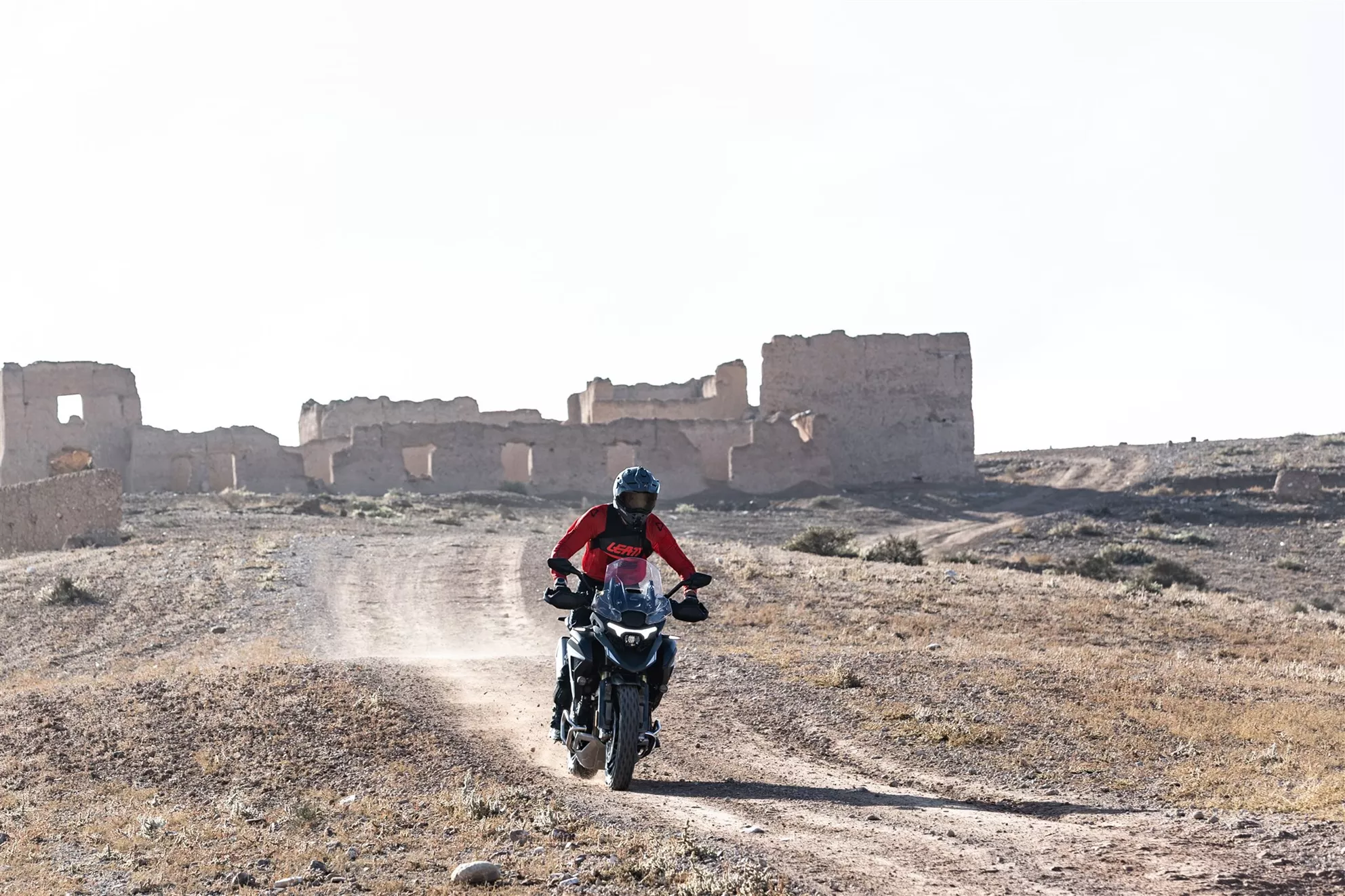
Triumph Tiger 1200 Rally Pro 2027
Shorter gears for more control
The six-speed gearbox didn't escape the update either. Triumph has in particular shortened the first three ratios to make the bike more controllable at low speeds. Off-road, this measure pays off especially well. During an off-road stage of around an hour, I was almost exclusively in second and third gear. Second proved to be a true all-purpose gear, handling both tight hairpins and slower climbs without any problems. Only when the pace picked up noticeably did the shift lever occasionally move into third. Thanks to the smooth throttle response and well-matched gearing, there was practically never any need to frantically switch between gears. As a result, the Tiger can be ridden in an extremely relaxed and energy-saving way. Added to this is a pleasantly light clutch that can easily be operated with a single finger even on longer off-road sections. All four models also come as standard with a quickshifter with blipper function. The shift assistant works convincingly on both upshifts and downshifts and blends seamlessly into the refined overall picture of the powertrain. What's particularly remarkable is that Triumph hasn't merely corrected individual weak points.
Surprisingly confident off-road
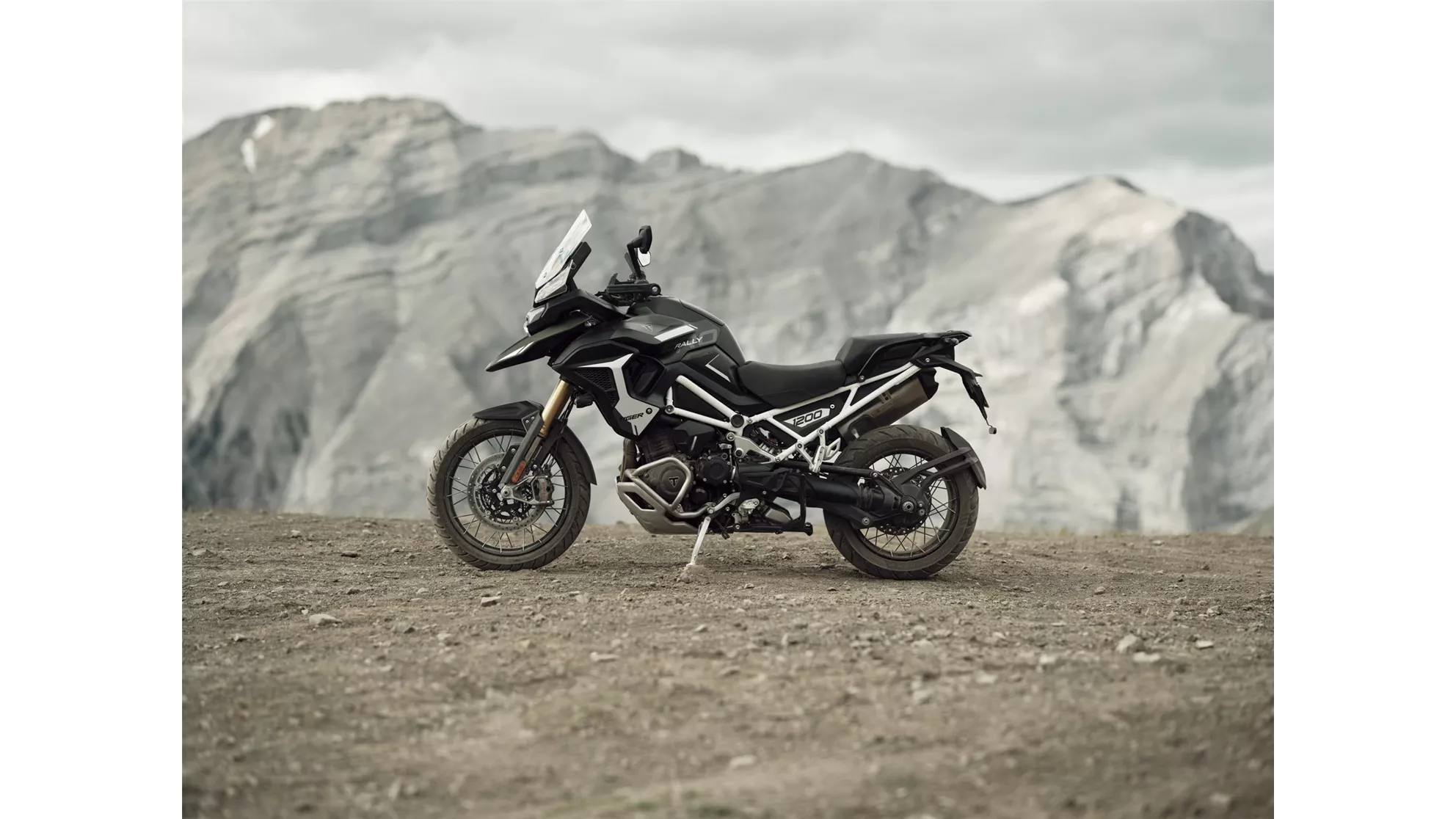
Hand on heart: from a bike weighing around 255 kilograms wet like the Tiger 1200 Rally Pro, you don't initially expect miracles off-road. Before the launch, I too had reckoned with a rather ponderous touring machine that can somehow be moved along on gravel but constantly reminds you of its generous dimensions. The Tiger proved me wrong. After just a few kilometres on loose ground, the feeling of steering a particularly heavy bike disappears. The reason lies in an exceptionally well-judged balance between centre of gravity, suspension setup and engine character. The Tiger feels astonishingly low-slung, sits planted on the ground and can be manoeuvred precisely even through tight gravel switchbacks. Of course, the mass doesn't miraculously vanish. When manoeuvring or pushing slowly, the 255 kg wet weight is clearly noticeable. But as soon as the bike is rolling, the weight fades astonishingly far into the background. The whole model family tips the scales at between 250 and 268 kg. That puts the Tiger roughly in the same weight class a fully grown Siberian tiger can reach. So why should the motorised version be any exception? What ultimately matters is less the bare figure on the spec sheet than how well that mass can be controlled in practice. And here Triumph delivers an extremely convincing performance.
Riding stood up without a struggle
A large part of the positive off-road impression is down to ergonomics. On the Rally Pro with its 20-litre tank, you find a pleasantly central standing position. The handlebar sits at a height that forces neither excessive leaning forward nor an unnaturally upright posture. Interestingly, Triumph uses the same handlebar on the Rally Pro as on the GT Pro. Even so, at no point during our off-road stages did I feel the need for a different bar bend or additional risers. Freedom of movement around the tank is also pleasingly generous. Knees and lower legs can guide the bike well without constantly bumping into bulky tank flanks. On longer stages stood up in particular, that's an advantage not to be underestimated. The distribution of effort between arms and legs is spot on, and the upper body can lean comfortably into the wind. After several hours off-road, I certainly had no notable signs of fatigue. With these ergonomics, I could well imagine riding rally-style through the desert for eight or nine hours without needing a chiropractor afterwards.
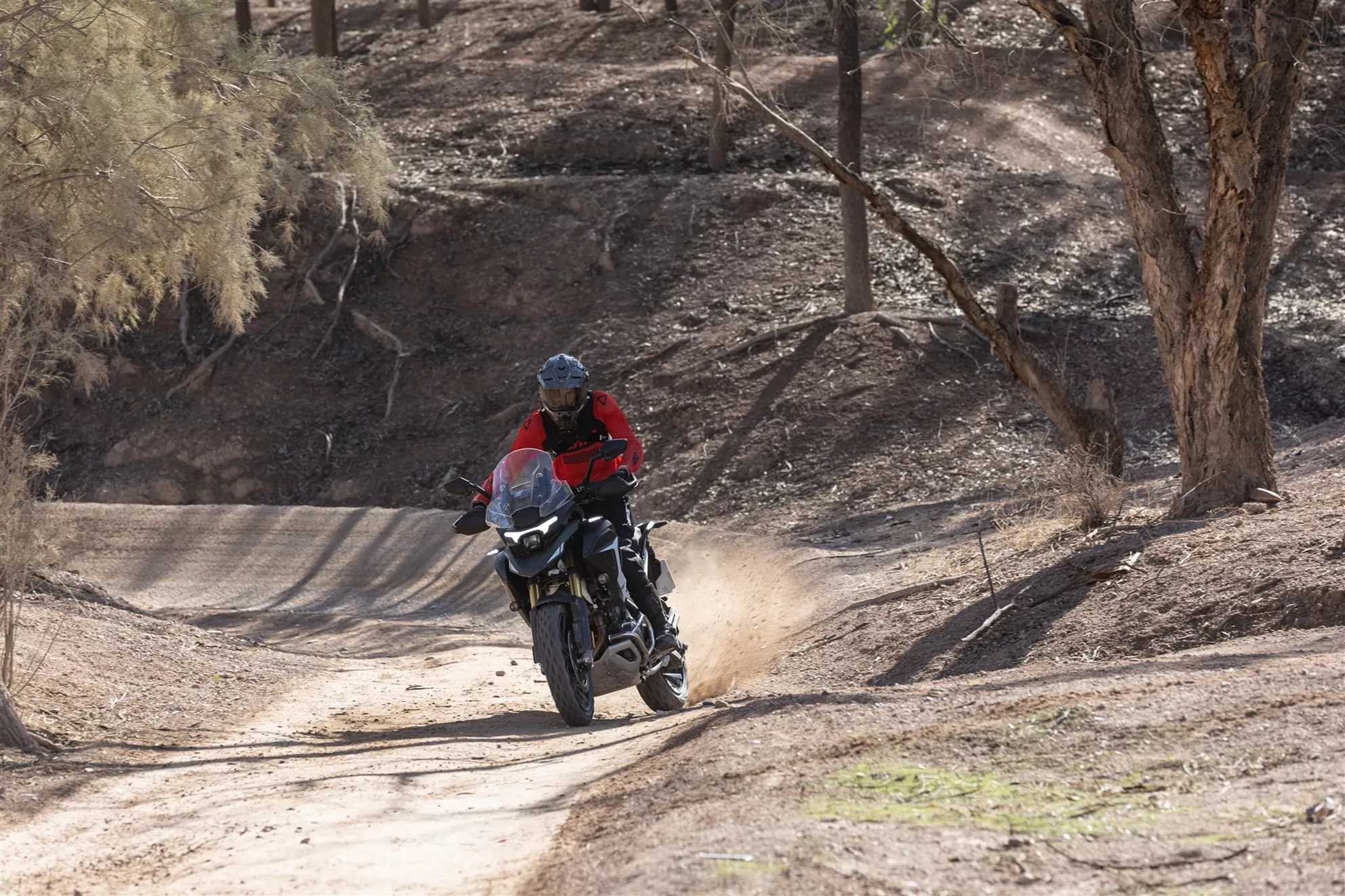
Triumph Tiger 1200 Rally Pro 2027
Twenty or thirty litres?
Tank capacity naturally divides opinion. With their 30 litres, the Explorer models offer an impressive reserve for extended trips through sparsely populated regions. Anyone regularly travelling far from civilisation will appreciate this extra range. For most European destinations, however, I personally consider the smaller 20-litre tank perfectly adequate. After all, the network of petrol stations here isn't so sparse that you'd have to worry about the next fuel source after every fill-up. In return, the slimmer tank of the Pro models offers noticeable advantages in freedom of movement. Especially when riding stood up, your legs can be positioned more freely, and the bike feels less bulky around the knees. I was also able to ride the Rally Explorer briefly during the launch, but only on tarmac. Seated, the difference between the tank shapes was surprisingly small. How the bigger Explorer behaves in more demanding off-road terrain I don't want to judge after the few kilometres I rode.
Showa suspension as the secret star
Alongside the new cockpit, the completely revised semi-active Showa suspension is among the most impressive innovations on the Tiger 1200. The latest generation of electronically controlled suspension offers 200 mm of travel and continuously adapts its damping to road conditions and riding situation. What initially sounds like yet another electronic gimmick on paper turns out in practice to be an extremely effective comfort and safety feature. On the bumpy country roads towards the Atlas Mountains, the system was able to demonstrate its qualities impressively. Small bumps, broken tarmac and rougher road damage are soaked up with a matter-of-factness you'd hardly expect from conventional suspension. The fine responsiveness is particularly impressive. The Tiger glides over bad roads without feeling spongy, while retaining the planted road holding that ensures relaxation on long touring stages. At the push of a button, three basic damping settings are available: Soft, Medium and Hard. Operation couldn't be simpler. If the road gets worse, a press of the relevant button is enough for the suspension to switch to the more comfortable setting. Even the firmest mode stays rather on the soft side for my taste. Anyone expecting a rock-hard sports setup won't find it here. For the intended purpose as a comfortable touring bike, however, this setup is extremely well judged.
Automatic lowering by 30 mm
A particularly practical detail is the new automatic ride-height adjustment of the Showa suspension. As soon as the Tiger approaches traffic lights or comes to a stop, the system lowers the seat height by up to 30 mm. The bike is also lowered when the side stand is folded out. For shorter riders or on uneven ground in particular, this extra ground contact can make the decisive difference between a secure footing and an awkward balancing act. When pulling away again, the system automatically increases the preload and restores the original ride height. How quickly this happens depends, among other things, on the speed when pulling away. In practice, it takes only a few moments before the Tiger once again provides its full ground clearance and the entire suspension travel. What's particularly impressive is how unobtrusively this process takes place. The bike rises and lowers without the rider having to consciously pay attention to it. Similar systems are now also known from other manufacturers. However, I've rarely experienced automatic ride-height adjustment tuned so smoothly and seamlessly. Triumph has integrated the function superbly into the overall system. For a heavy adventure bike that is often ridden with luggage or a pillion, this is far more than a technical gimmick.
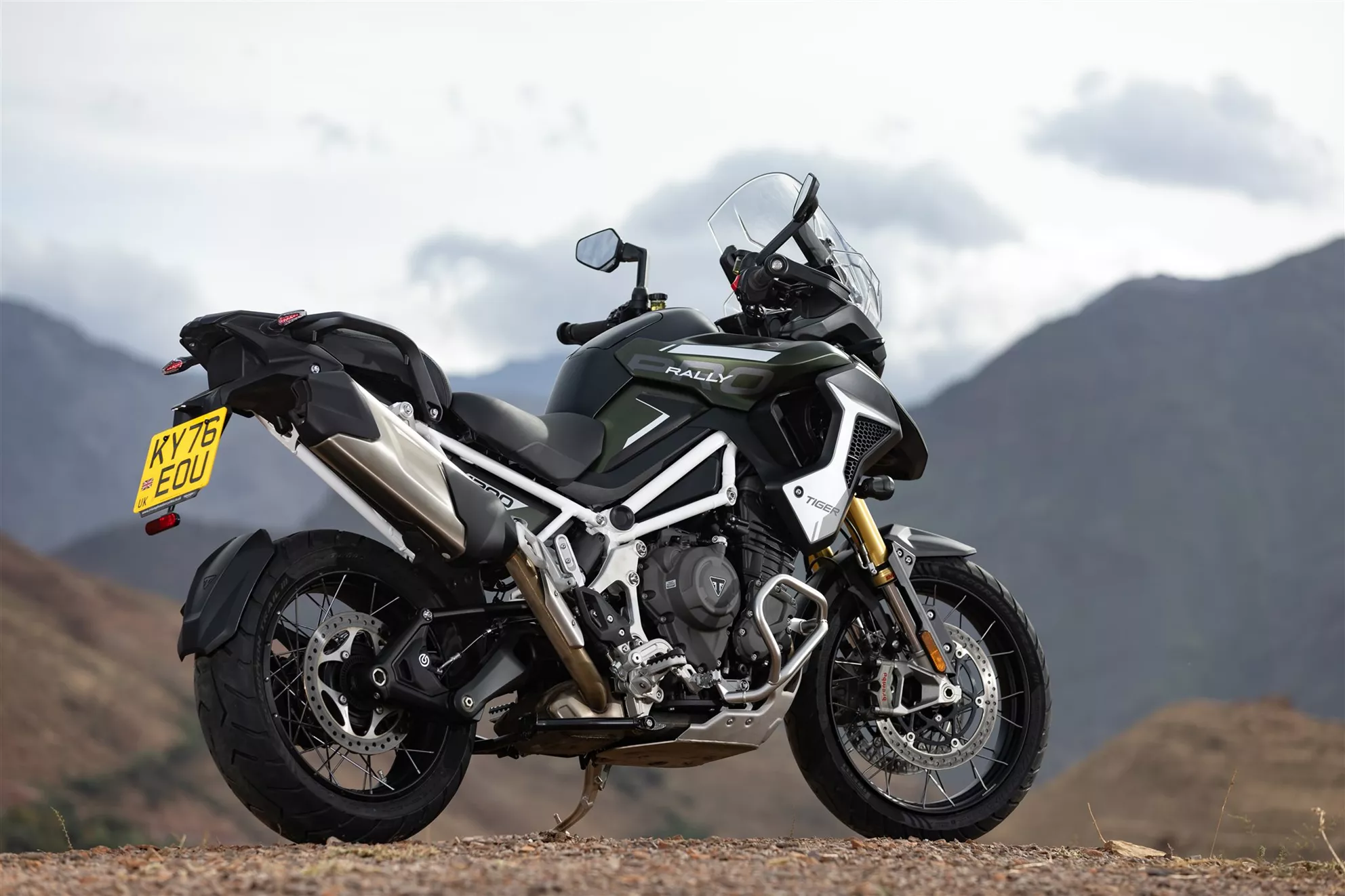
Triumph Tiger 1200 Rally Pro 2027
Preload without manual labour
At least as practical is the automatic adjustment of the preload. The suspension detects the respective load and sets the preload accordingly. Whether a rider weighing 60 kilograms gets on, a 160-kilogram rider takes a seat, or a pillion and luggage come aboard as well makes no difference to basic operation. The system handles the adjustment on its own and ensures that the chassis geometry stays as constant as possible. This means that laboriously turning a handwheel and manually setting the sag are things of the past in normal touring use. Especially with frequently changing loads, that's a considerable gain in comfort. The electronics also take various riding states into account, processing information on throttle position, acceleration and braking, among other things. Fortunately, as a rider you don't need to understand exactly how the individual control loops communicate with each other. What matters is the end result. And it works so well that you practically don't notice the sophisticated technology while riding. The Tiger stays remarkably composed on a wide variety of surfaces, responds sensitively to bumps and conveys a high degree of stability even at higher speeds. It's precisely this unobtrusive interplay of electronic systems that distinguishes a truly good setup from a mere fireworks display of features.
Brembo and Magura on top form
For the braking system, too, Triumph reaches deep into the shelf of high-quality components. Up front, Brembo Stylema calipers work in combination with a radial Magura HC1 master cylinder. The result convinces both on tarmac and on loose ground. The modulation in particular deserves high praise. Even with little hand force, braking can be controlled precisely without the brakes biting too aggressively on cautious inputs. Off-road in particular, this quality is worth its weight in gold. Brakes that bite brutally at the slightest touch of the lever may impress on grippy tarmac, but can quickly become unpleasant on loose gravel. The Tiger, by contrast, conveys an excellent feel for the available grip. In Off-Road Pro mode, which I mostly used during our off-road ride, the rear ABS can be deactivated. ABS control at the front is also reduced so far that there is practically no noticeable intervention any more. Triumph explained to us that a minimal residual function remains at the front wheel for regulatory reasons. However, you shouldn't rely on effective anti-lock protection in this mode. That makes the brakes' excellent modulation all the more important. It lets you adapt braking sensitively to the surface while always providing very transparent feedback. On tarmac this positive impression is confirmed. The Brembo-Magura combination slows the adventure bike, weighing more than 250 kilograms, with impressive force while remaining easily controllable at all times. The ABS calibration also left a convincing impression across all the riding modes tested. Triumph has done an awful lot right here in choosing the components and setting them up.
Traction control a little too cautious
I was less enthusiastic about the setup of the traction control. In principle, the system works reliably and intervenes effectively when slip threatens. However, even in Sport mode the control remains a little too defensive for my taste. If, for example, the rear wheel briefly reaches the limit of grip on a slippery patch, the electronics sometimes cut drive for considerably longer than would seem necessary from a riding dynamics point of view. What's particularly annoying is less the intervention itself than its duration. Even if the rider keeps the throttle open afterwards, it subjectively takes a small eternity before full power is released again. That fits the safety-oriented character of the Tiger, but in an explicitly sporty riding mode it feels somewhat overcautious. Here I'd like to see a quicker, more sensitive return of drive. For ordinary touring use, however, this criticism is no big deal.
Tyres for tarmac and gravel
For our off-road ride, Triumph had fitted the test bikes with Michelin Anakee Wild. These knobbly tyres aren't part of the standard OE fitment but were mounted specifically for the Moroccan off-road stages. They offered additional traction reserves on the gravel roads there and made it possible to explore the Tiger's off-road capabilities somewhat more intensively. On tarmac, by contrast, we rode on the standard Pirelli Scorpion Trail III. This much more road-oriented tyre harmonises excellently with the character of the Tiger 1200. Even on partly broken Moroccan tarmac, it delivered a clean riding feel, good grip and neutral turn-in. No annoying righting moment when braking in a lean was noticeable during our test ride.
The new cockpit is a delight
In the cockpit, Triumph fits a 7-inch Bosch touchscreen that finally offers the functionality I've wanted from a modern bike for years. I'm talking about full integration of Apple CarPlay and Android Auto. What has long been everyday in the car world has so far often only been achieved on bikes via cumbersome workarounds. Manufacturers demand their own apps, proprietary navigation software or additional connection programs. Triumph skips this detour and enables a direct, wireless connection to the smartphone. In practice this works pleasingly easily and opens up a wide range of possible uses. Google Maps, Waze, compatible off-road navigation programs or Spotify can be used directly via smartphone integration and are displayed in large format on the cockpit. For many riders, this eliminates the need to mount an additional sat nav or their own phone on the handlebar. On long trips in particular, that's a considerable gain in comfort. Navigation is right in your field of view, the display is clear and the whole integration feels pleasingly well thought out. When stationary, the screen can be operated directly by touch. As soon as the bike is moving, the touch function is deactivated for safety reasons. Control is then via a joystick on the left handlebar switchgear. This solution also works excellently after a short period of getting used to it. You can navigate menus and operate the most important functions without taking your hand off the bar. The operating logic is pleasingly straightforward and suits the overall relaxed character of the Tiger perfectly.
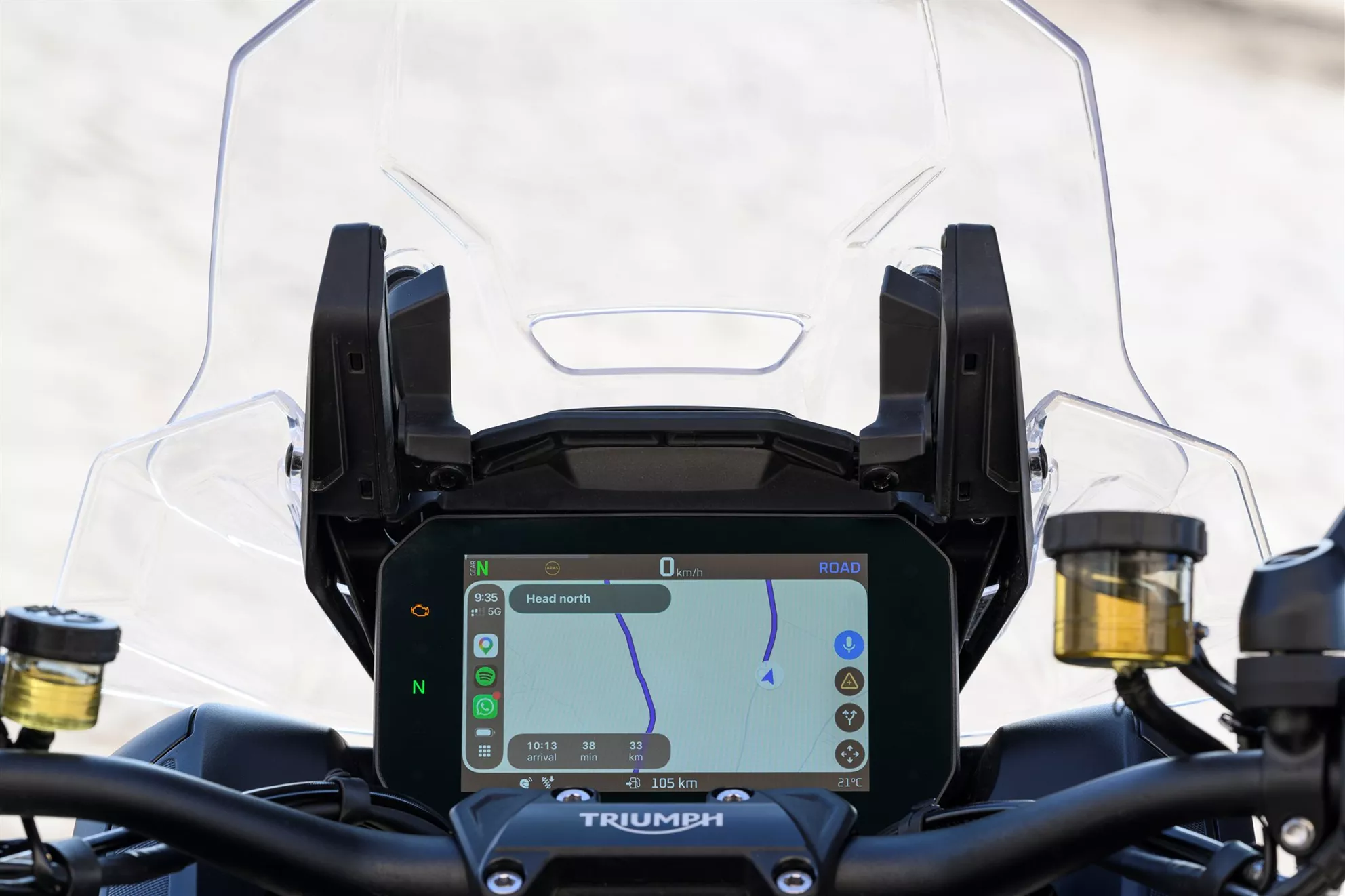
Triumph Tiger 1200 2027 TFT
A cooled home for your phone
Triumph's engineers have evidently put a lot of thought into stowing the smartphone. Under a flap in the tank area there's a generously sized compartment that can hold even larger phones. A USB-C port on the side allows charging while riding. The real highlight is hidden inside the compartment: an integrated fan to cool the smartphone. Anyone who has spent a long time riding with Android Auto or Apple CarPlay knows the problem. The phone sometimes gets uncomfortably hot from constant data transfer and simultaneous navigation. Add the heat generated by charging, and overheating with the resulting functional limitations can become a problem. Triumph tackles this with a solution that is as simple as it is effective.
A small weakness when zooming
That said, the new Bosch display isn't quite perfect either. When stationary, the map view can't be zoomed in or out with two fingers as usual. So-called pinch-to-zoom, which has been a given on smartphones for many years, doesn't work here. This is somewhat annoying, particularly when entering new destinations or quickly checking an overview map. According to Triumph, the reason lies in the touchscreen being designed for use with motorcycle gloves. The display only recognises a single touch point at a time, which is why the usual two-finger gesture isn't technically possible. For me, the cockpit nevertheless remains one of the most successful features of the new Tiger 1200. At last there's clean, fully integrated smartphone connectivity where you don't have to spend half an hour fiddling with various apps and connection settings before the navigation works.
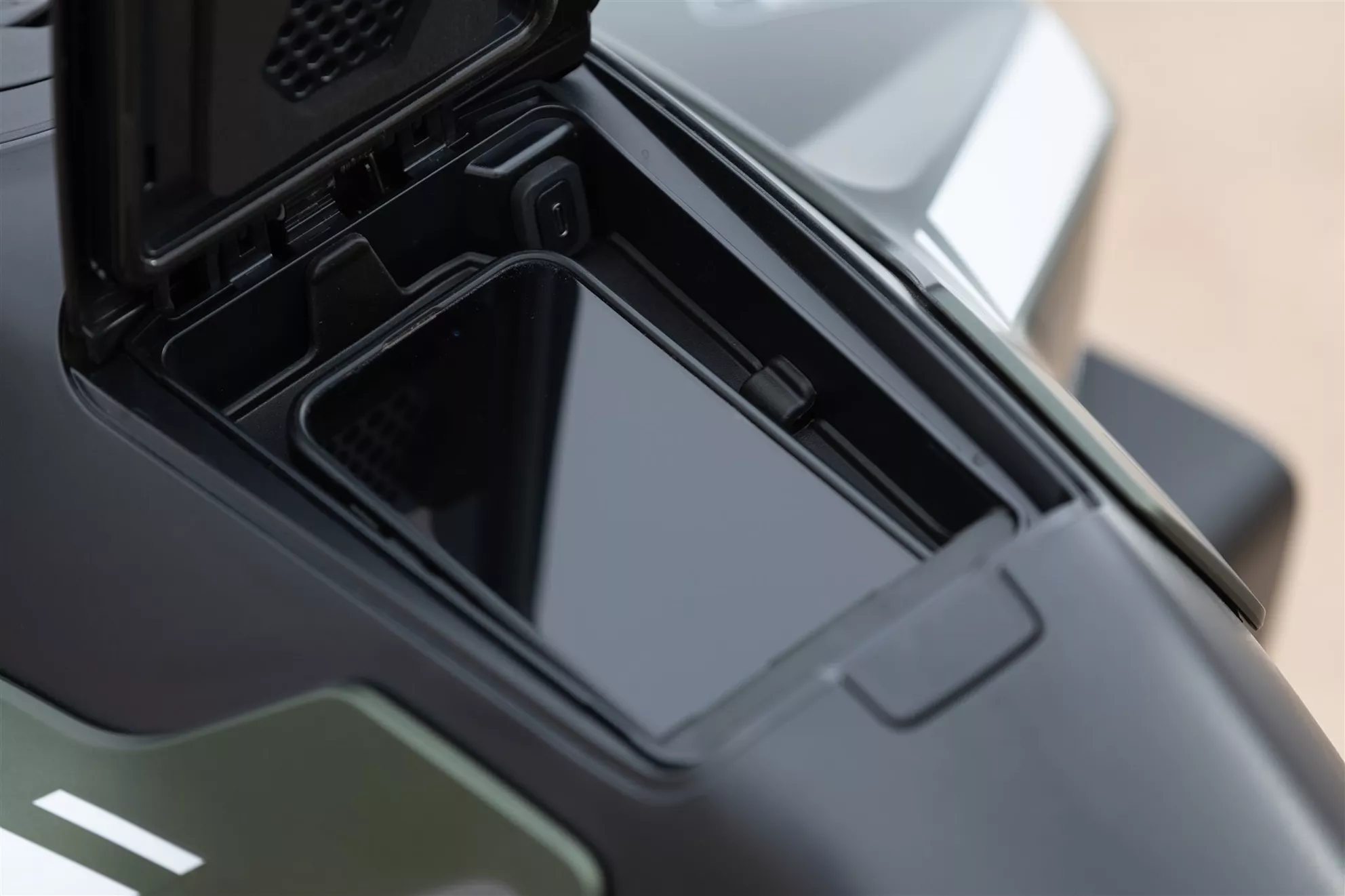
Cooled phone compartment on the Tiger 1200 2027
Bosch radar with numerous assistants
Another big chapter of the update concerns radar assistance. On the Tiger 1200, Triumph fits a system developed together with Bosch with sensors at the front and rear. The front radar sensor sits behind the corresponding fairing panel, while the rear system is housed in the tail section. All four variants have the same extensive radar equipment. The range of functions is impressive and is aimed mainly at riders who regularly cover long distances. The centrepiece is adaptive cruise control, which automatically adjusts speed to vehicles ahead and maintains a selected safety distance. On top of that come numerous other assistance functions designed to support the rider and detect potentially dangerous situations early. An interesting special feature is the so-called Group Ride Assist. With adaptive cruise control, the system takes into account the particular situation of a staggered group of bikes and adjusts its distance control accordingly. On group rides in particular, this function could be helpful, because conventional adaptive cruise control systems don't always react optimally to the staggered formation of several bikes. There's also a forward collision warning, an emergency brake assist and blind spot monitoring. The latter warns the rider via indicators in the mirrors of vehicles in the hard-to-see area beside the bike. I personally consider this function particularly useful, as it can offer a real safety gain in dense traffic.
Overtaking with electronic support
Also interesting is the predictive speed adjustment for corners. With adaptive cruise control activated, the system can automatically reduce speed before a corner. The intervention is meant to be as gentle as possible so as not to unsettle the chassis unnecessarily. On longer motorway or cross-country stages in particular, such a function can help ease the rider's workload. Another special feature is the overtaking assistant. If you approach a slower vehicle with cruise control activated and switch on the indicator, the electronics recognise the intention to overtake. The bike then begins to accelerate gently within the defined system limits, so that additional speed is already available when you pull out. Responsibility for the actual overtaking manoeuvre naturally remains with the rider. The package is rounded off by front and rear distance warnings as well as further assistance functions. Settings can be made via the left handlebar switchgear. How useful the individual systems really are in everyday life, however, depends heavily on your personal riding profile. Anyone who regularly covers long motorway stages will probably get more out of the electronic helpers than someone who spends their free time exclusively on twisty Alpine roads. Of all places, Morocco turned out to be a rather unsuitable destination for testing these new assistance systems. Our test routes led mainly over bumpy back roads and twisty sections, while longer motorway runs weren't on the agenda. As a result, I couldn't try out most of the radar functions under the conditions they were primarily developed for.
Wind protection and further comfort details
With the flood of electronic innovations, you almost run the risk of overlooking some of the less spectacular features that are at least as important in everyday use. These include, for example, the height-adjustable windscreen. It can be operated very easily with one hand, offering exactly the uncomplicated adjustment you'd expect from a premium touring bike. The extensive standard features also include cornering lights. On top of that come five preset riding modes and two individually configurable memory slots. These let you tailor different combinations of engine character, electronic control systems and suspension settings to your personal preferences. The Rally models additionally have the aforementioned Off-Road Pro mode, which opens up extra freedom especially for more ambitious off-road use.
Heated grips that could fry an egg
Triumph is generous with comfort features too. Three-stage heated grips are standard, as are heated seats. At the launch we were assured that the heated grips now heat up faster and more powerfully than before. Given the temperatures in the early Moroccan morning, there was a good opportunity to put this promise to the test. At an outside temperature of around 10 degrees, I activated the highest setting and was fairly surprised after only a short time. With my thin motocross gloves, level three got so hot that it felt like you could have fried an egg on the grips. Even the lowest setting delivered more than enough warmth. For someone like me who regularly suffers from cold fingers, that's an extremely pleasing result.
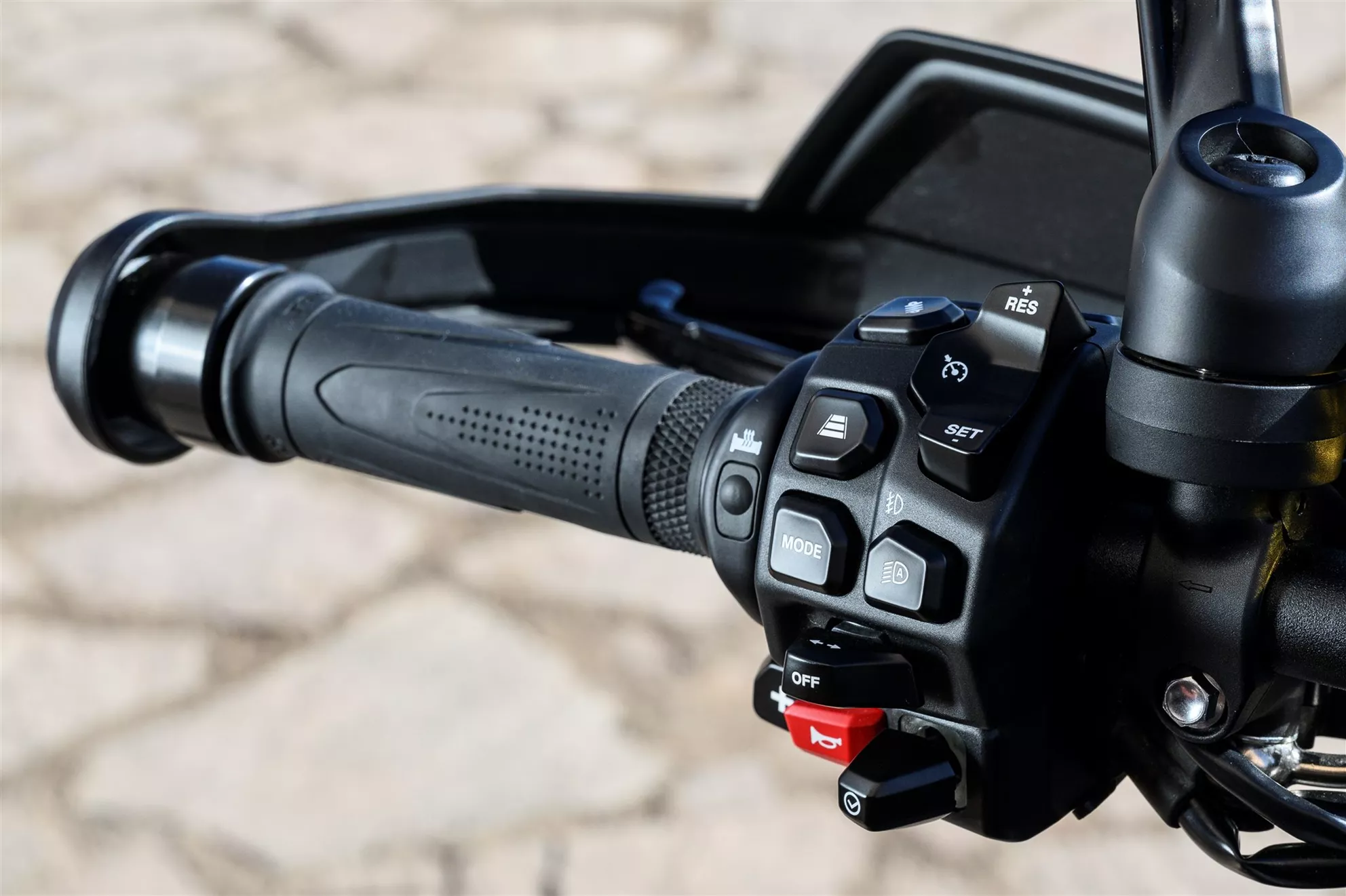
Three-stage heated grips - now even warmer
The knee angle could be more relaxed
As much praise as the new Tiger 1200 deserves, it doesn't escape entirely without criticism. One point concerns seating ergonomics. At 1.78 metres tall, I found the knee angle a little too tight after two long days of riding. And that despite already using the seat in its higher position. On a bike developed explicitly for long trips in particular, I'd like a bit more space between seat and footpegs. Anyone significantly taller, say 1.90 metres, could well experience similar or even greater discomfort on a week-long bike tour. A correspondingly thicker padded seat might help here. Of course, ergonomics is always a highly individual matter. Body proportions, personal preferences and your own flexibility play a significant role. What bothers me after two days needn't be a problem for another rider. Nevertheless, you should pay attention to this point on an extended test ride, especially if you're one of the taller riders.
Riding pleasure yes, sportiness within limits
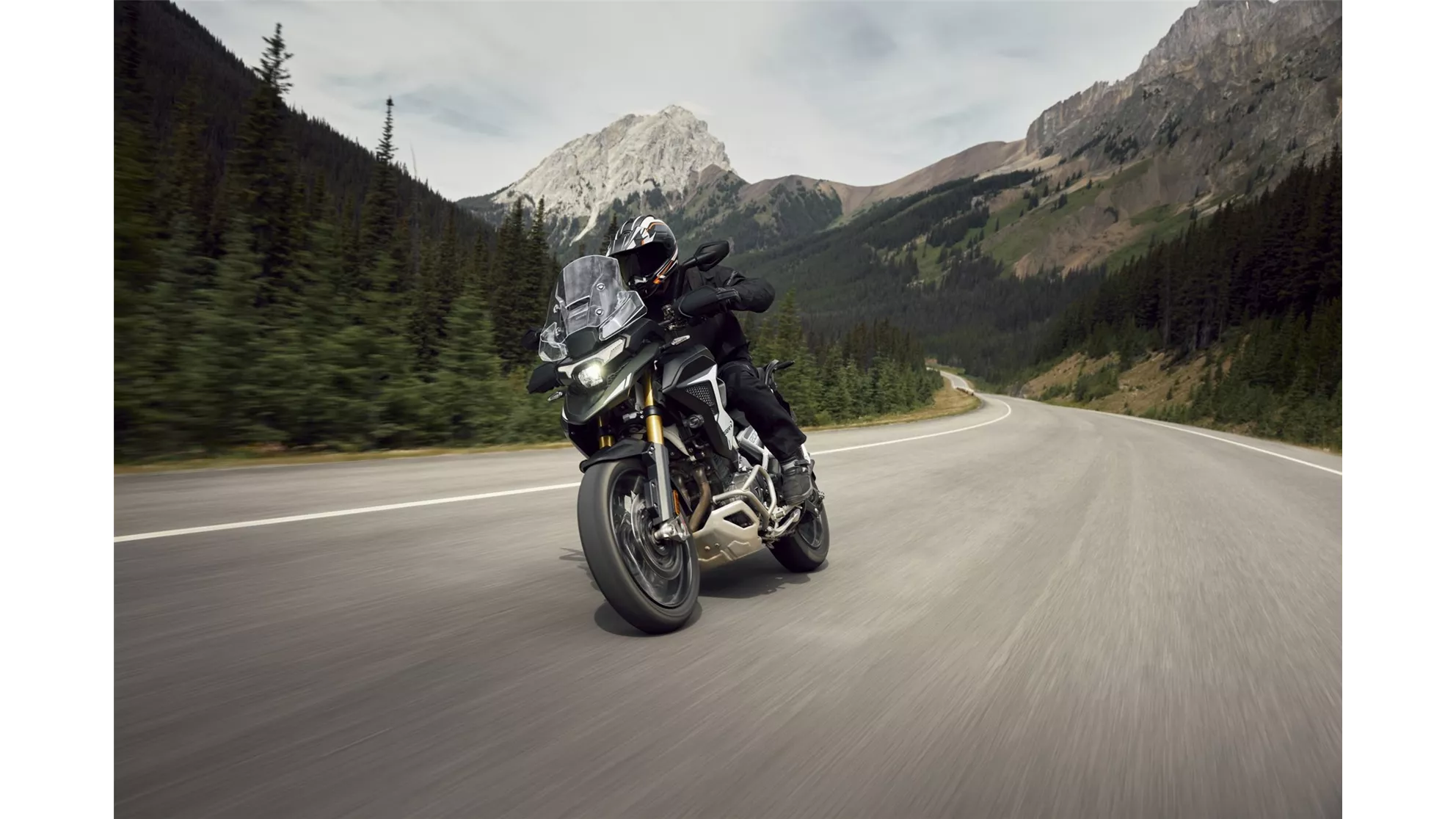
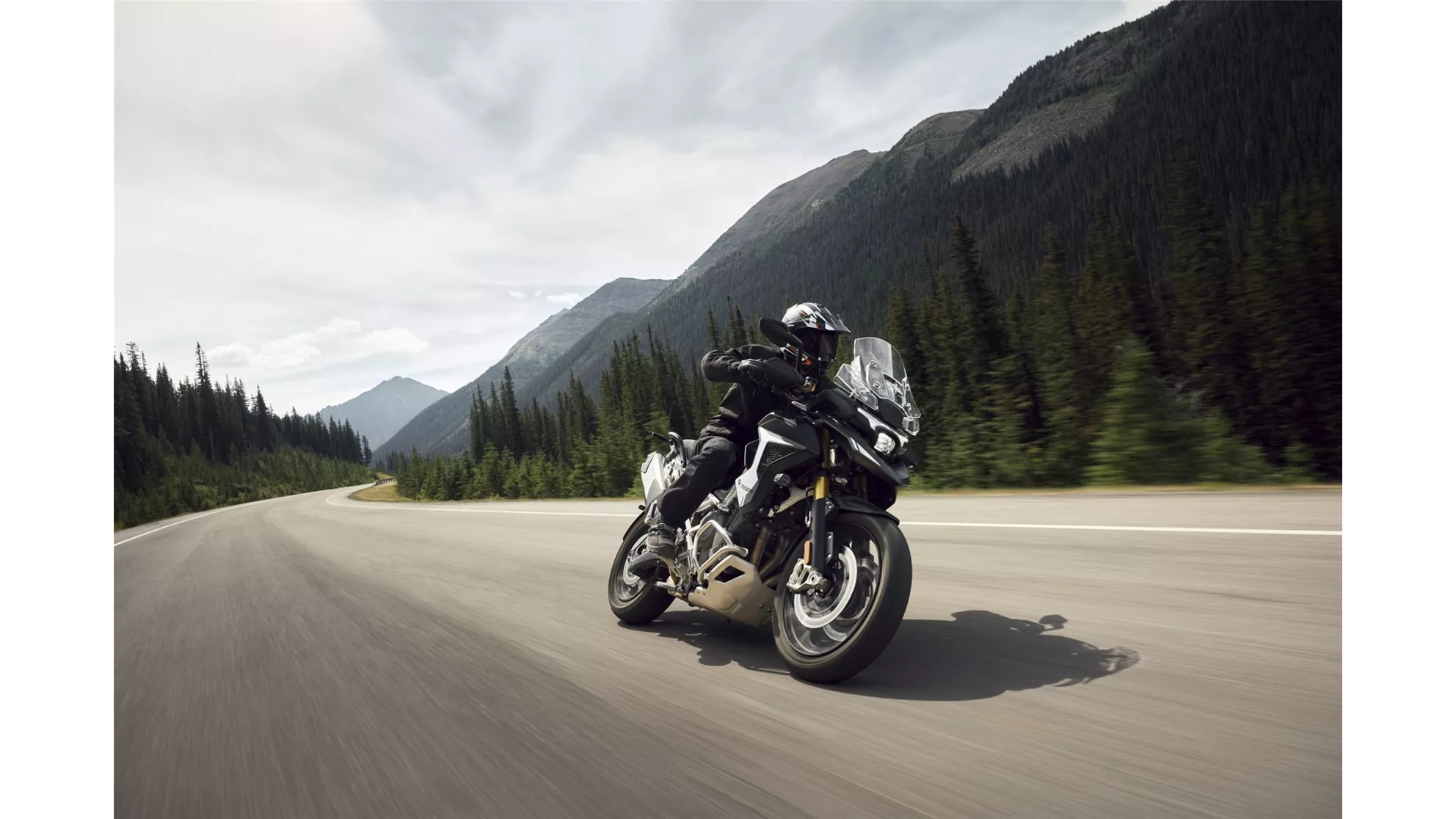
In terms of riding dynamics, too, you need to classify the Tiger's character correctly. The triple is strong, the suspension excellent and the braking system beyond any doubt. Even so, the Triumph doesn't convey the same uncompromisingly sporty impression you know from, say, a KTM Super Adventure or a Ducati Multistrada V4. That's less down to individual weaknesses than to the fundamental setup. The traction control intervenes comparatively early and for a long time, the suspension remains comfort-oriented even in its firmest setting, and the engine places more emphasis on refined pulling power than on particularly aggressive power delivery. Anyone who wants to ride as dynamically as possible on twisty roads will probably find a bit more riding pleasure among the sportier competition. Mind you, this isn't a direct comparison test but my subjective assessment after two days with the Triumph. The Tiger is by no means slow or boring. On the contrary: on winding roads you can ride it very briskly and have plenty of fun doing so. It simply delivers its dynamics in a more relaxed, less demanding way. And hand on heart: a bike doesn't have to turn every corner into a personal duel with physics to be fun. On public roads in particular, this calm sovereignty has its charm. Anyone who prefers to enjoy the scenery, flow smoothly through sweeping bends and occasionally call on the impressive power reserves will feel very much at home on the Tiger.
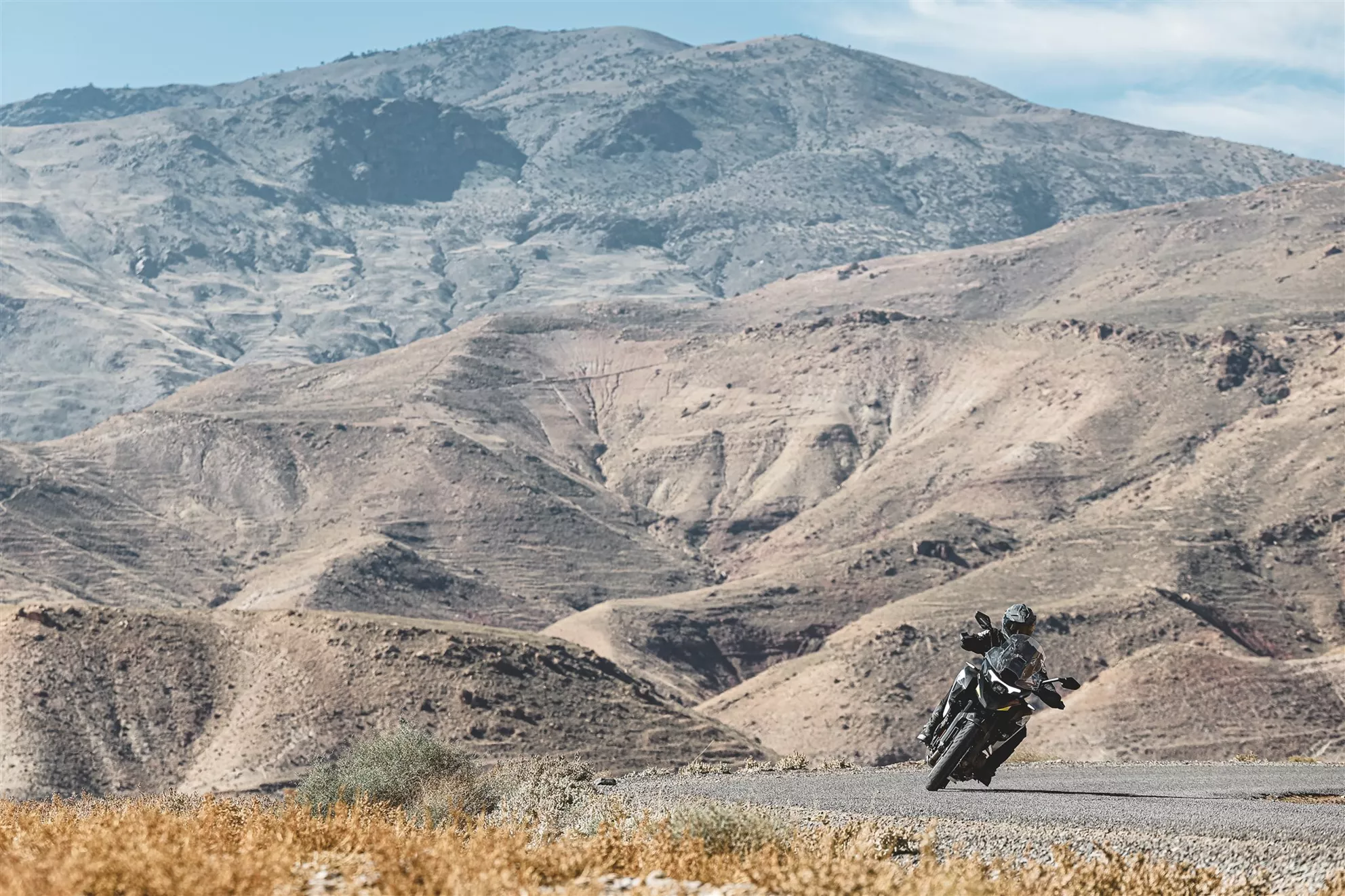
Triumph Tiger 1200 GT Pro in Morocco
Minor electronic teething troubles
Another point of criticism concerns some electronic error messages that occurred during our two-day test ride. Off-road, for example, the cockpit reported a fault with the automatic ride-height adjustment. The engine warning light also came on twice, and later an error message from the forward collision warning appeared, asking us to visit a Triumph workshop. In all the observed cases, the warnings disappeared after switching the ignition off and on again. The previously faulty ride-height adjustment also worked perfectly again afterwards. So no permanent functional failure could be identified during the test ride. Nevertheless, such messages are annoying and not exactly confidence-inspiring on a new bike in this price class. They may be software issues that Triumph can fix with an appropriate update. Whether and when that happens, however, remains to be seen.
GT or Rally?
During the launch I had the opportunity to ride the GT Pro and the Rally Pro extensively. I was also able to get to know the Rally Explorer over at least a few kilometres of road. The GT Explorer wasn't available for a separate riding impression. Since all four models share the same engine, the same electronic suspension concept and largely identical comfort features, the fundamental differences in riding performance are smaller than you might initially assume. Nevertheless, one interesting difference stood out. On twisty roads, the GT Pro turns in a little more easily than the Rally Pro. Subjectively, I'd estimate the difference at around 10 to 15 percent. That's expressly not a measured value but my personal riding impression. I suspect the cause lies mainly in the different wheels. The GT's cast aluminium wheels likely have an advantage in rotating mass over the Rally's wire-spoked wheels. Anyone who rides their Tiger mainly on tarmac will therefore probably be especially happy with the GT Pro. It combines excellent touring comfort with an extra dose of nimbleness. The Rally Pro, on the other hand, scores with its more off-road-capable features, the robust spoked wheels and above all the Off-Road Pro riding mode. Anyone who regularly rides gravel roads and wants to reduce electronic intervention off-road should therefore go for the Rally.
Who is the Explorer spec worth it for?
The Explorer variants are aimed primarily at high-mileage riders who want maximum range. With their 30-litre tank, they offer a full 50 percent more fuel capacity than the Pro models. On extended trips through remote regions, that can be a decisive advantage. In Europe, on the other hand, the extra supply is likely to be more of a pleasant reserve than an absolute necessity for many riders. In addition to the larger tank, the Explorer models have standard tyre pressure monitoring and additional features. The handlebar also differs slightly: it sits a little higher and is a little wider than on the Pro versions. On my short ride on the Rally Explorer, however, I hardly noticed this difference. In a blind test, I probably wouldn't even have noticed the changed bar position. Interestingly, the larger tank also feels less bulky when seated than you'd expect. The difference between the thighs is surprisingly small. Stood up, the extra width might be more noticeable, but I wasn't able to test the Rally Explorer off-road. Any verdict on that would therefore be pure speculation. Ultimately, the choice between Pro and Explorer depends heavily on your personal touring profile. Anyone who mainly rides in Europe and occasionally turns onto gravel roads will already find an extremely complete package in the Pro models. Anyone who regularly covers long distances fully loaded and wants to visit a petrol station as rarely as possible, on the other hand, will appreciate the Explorer's extra ten litres.
Prices and availability
As expected, the new Triumph Tiger 1200 is priced in the premium adventure bike class. Prices start at 24,595 euros for the GT Pro in Austria (Germany: 21,395 euros plus delivery costs). At the top of the range sits the Rally Explorer, which costs 27,295 euros (Germany: 23,995 euros plus delivery costs). The other two variants are positioned in between. That means there's around 2,700 euros between the cheapest and most expensive model. Given the largely identical basic technical equipment, your buying decision should therefore be guided less by the length of the features list than by your actual intended use. The Explorer's greatest added value lies in the extra tank capacity and supplementary features, while GT and Rally differ mainly in their wheels and off-road capabilities. Market launch is planned for early 2027. The service interval is 16,000 kilometres or twelve months, whichever comes first.
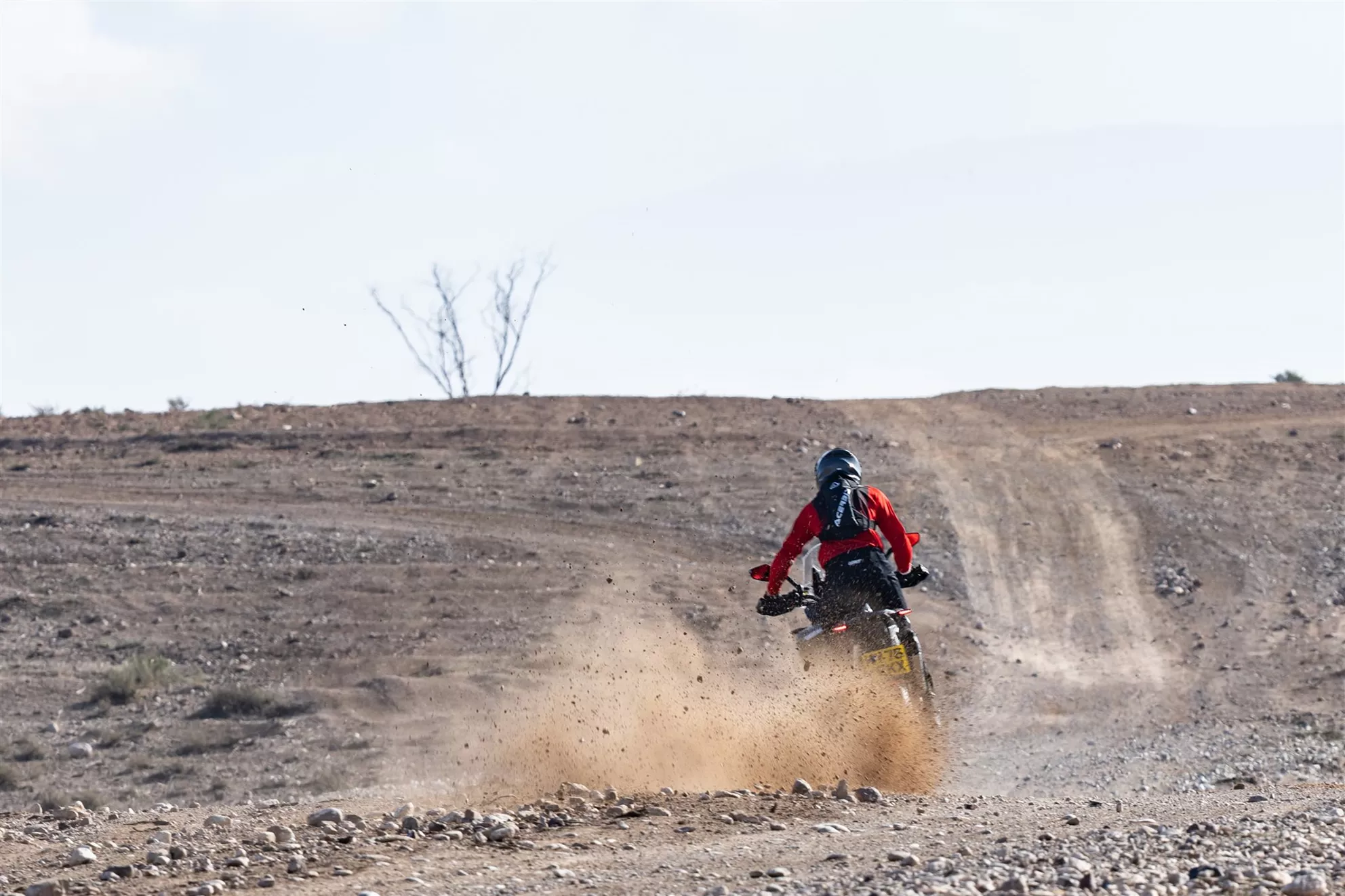
Verdict: surprisingly strong on gravel
After two intense days in Morocco, my verdict on the new Triumph Tiger 1200 is extremely positive. I deliberately want to distinguish between the impressions on tarmac and those off-road. Because while the Tiger met my already high expectations on the road, it genuinely managed to surprise me away from paved roads. Off-road I had expected a heavy, rather sluggish touring bike that can be ridden over gravel roads but constantly reminds you of its generous dimensions. Instead, the Rally Pro proved astonishingly nimble, superbly balanced and extremely easy to control. The smooth throttle response, the short lower gears, the sensitive suspension and the ergonomically well-judged standing position add up to an overall package that delivers far more off-road riding pleasure than you'd initially expect given its weight. Of course, the Tiger remains a big adventure bike and not a hard enduro. Truly demanding off-road sections require riding skill, and the new 19/17-inch wheel combination sets different priorities than the previous Rally models. On ordinary gravel roads and moderate off-road sections, however, the concept works excellently. Here Triumph clearly exceeded my expectations. On tarmac, by contrast, the Tiger shows exactly the qualities you expect from a premium long-distance bike. The triple is extremely refined, the suspension offers excellent comfort and the electronics take many tasks off the rider's hands without constantly pushing themselves into the foreground. You ride, enjoy the scenery, lay the bike into the corners in a relaxed manner and have the feeling that everything beneath you works as if by itself. However, anyone looking for a particularly aggressive, uncompromisingly sporty riding feel may be better served by a KTM Super Adventure or Ducati Multistrada V4. The Triumph sets its priorities differently. Its engine is a gentle giant, the suspension more comfortable than firm, and the electronic control systems are designed for safety and predictability. The few points of criticism – the somewhat tight knee angle, the defensive traction control, the missing two-finger zoom on the display and a few electronic error messages – can't significantly cloud the overall excellent impression. With the new Tiger 1200, Triumph has created an impressively mature touring bike that plays to its greatest strengths not in the fight for the last tenth of a second, but in relaxed covering of long distances. All in all, the 2027 Tiger 1200 is a bike for connoisseurs who nevertheless don't want to do without performance, modern technology and the occasional adventure off paved roads. And sometimes it's simply much nicer to roam relaxedly through the landscape with a tiger than to constantly have to bare your claws.
- How much does a Triumph Tiger 1200 Rally PRO cost?
- Here you will find an overview of the price level of new and used motorbikes!

Triumph Tiger 1200 Rally PRO 2027 - Experiences and Expert Review
Clemo
Off-road, the Tiger 1200 Rally Pro proves astonishingly nimble, superbly balanced and extremely easy to control. The smooth throttle response, the short lower gears, the sensitive suspension and the ergonomically well-judged standing position add up to an overall package that delivers far more off-road riding pleasure than you'd initially expect given its hefty 255 kg wet weight. Of course, the Tiger remains a big adventure bike and not a hard enduro. Truly demanding off-road sections require riding skill, and the new 19/17-inch wheel combination sets different priorities than the previous Rally models. On ordinary gravel roads and moderate off-road sections, however, the concept works excellently. On tarmac, the Tiger shows exactly the qualities you expect from a premium long-distance bike. The triple is extremely refined, the suspension offers excellent comfort and the electronics take many tasks off the rider's hands without constantly pushing themselves into the foreground. However, anyone looking for a particularly aggressive, uncompromisingly sporty riding feel may be better served by a KTM Super Adventure or Ducati Multistrada V4. The Triumph sets its priorities differently. Its engine is a gentle giant, the suspension more comfortable than firm, and the electronic control systems are designed for safety and predictability. With the new Tiger 1200, Triumph has created an impressively mature touring bike that plays to its greatest strengths not in the fight for the last tenth of a second, but in relaxed covering of long distances.
Triumph Tiger 1200 Test 2027: 4 models put to work in Morocco Images
Source: 1000PS