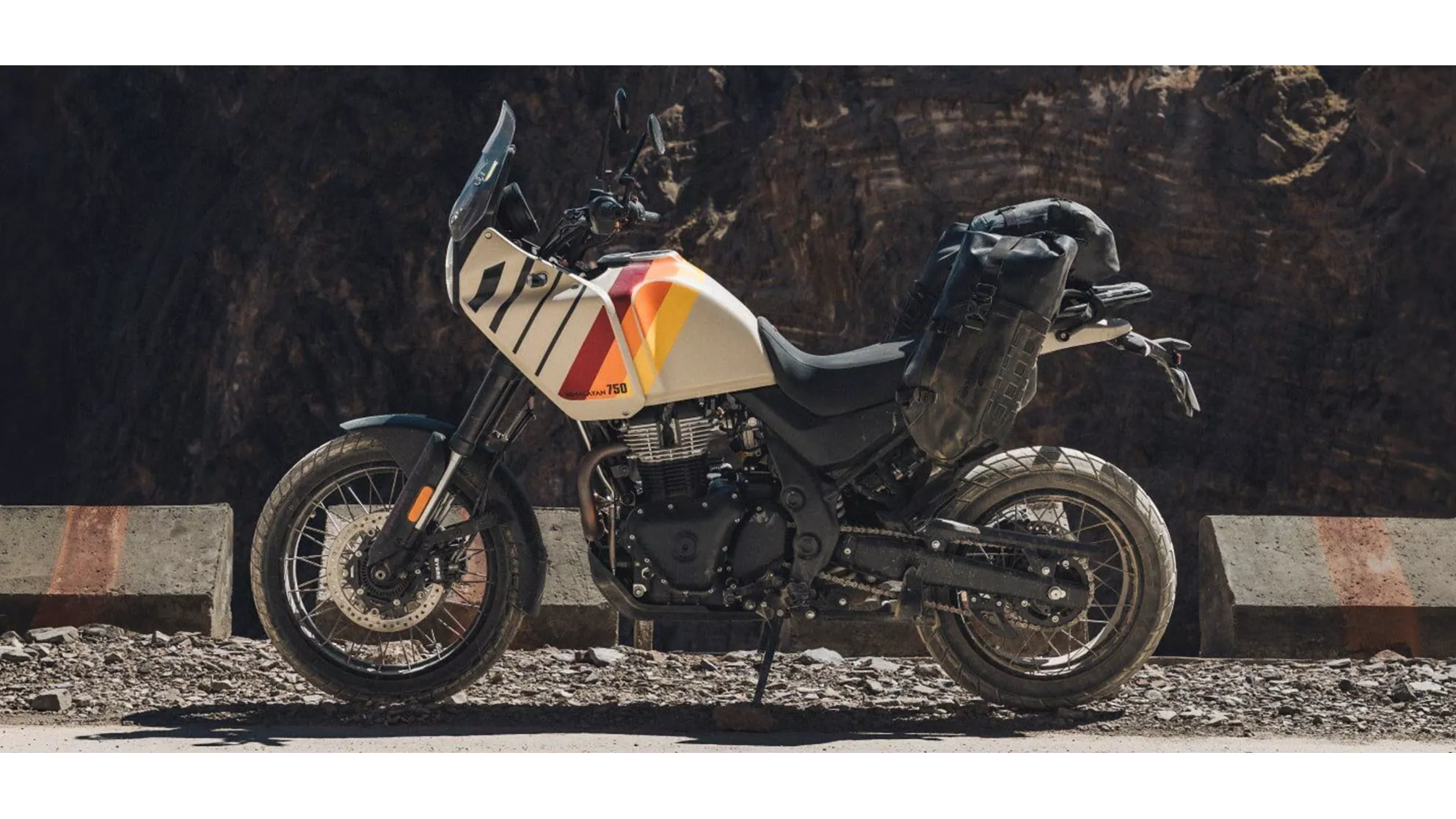
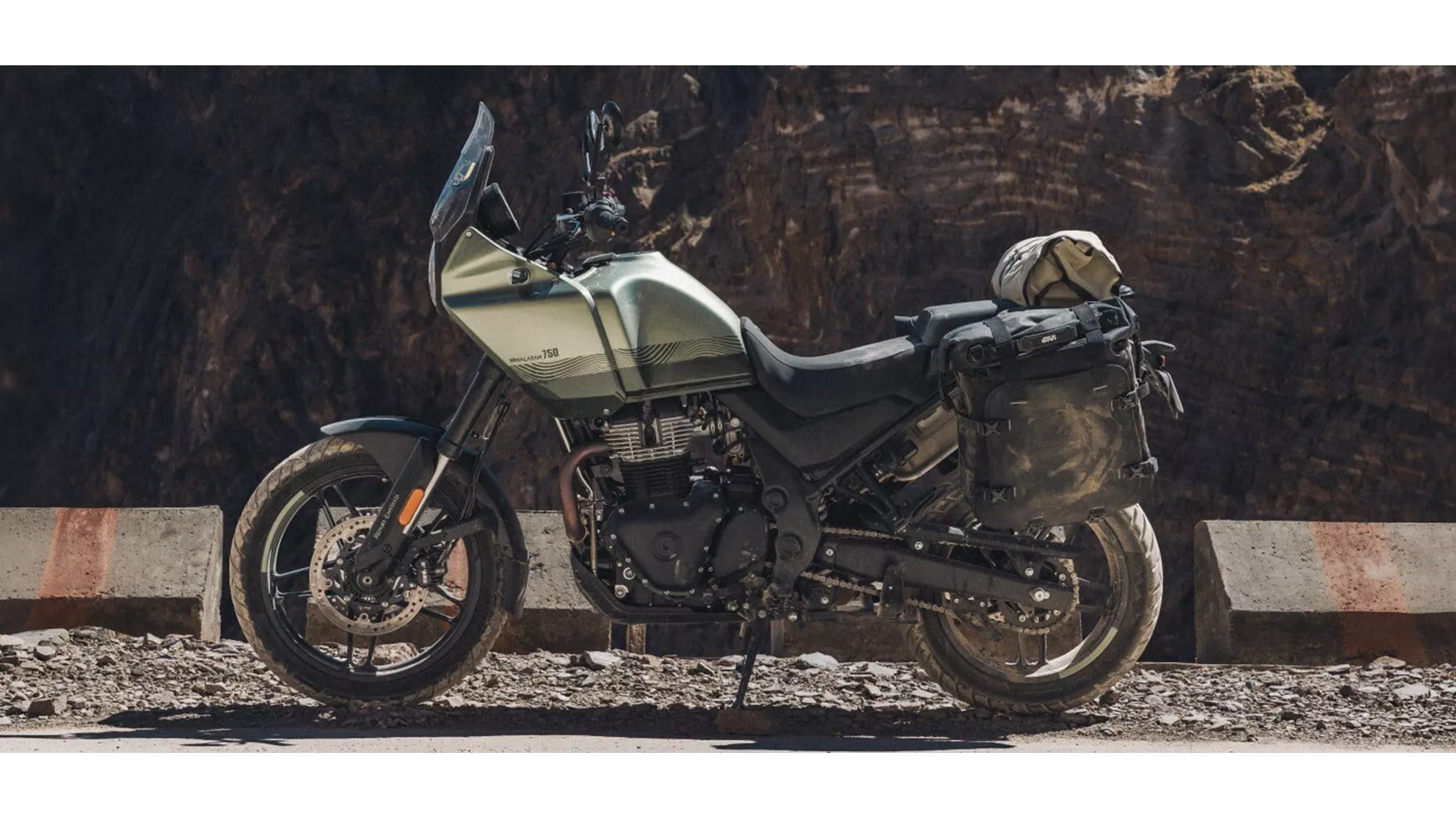
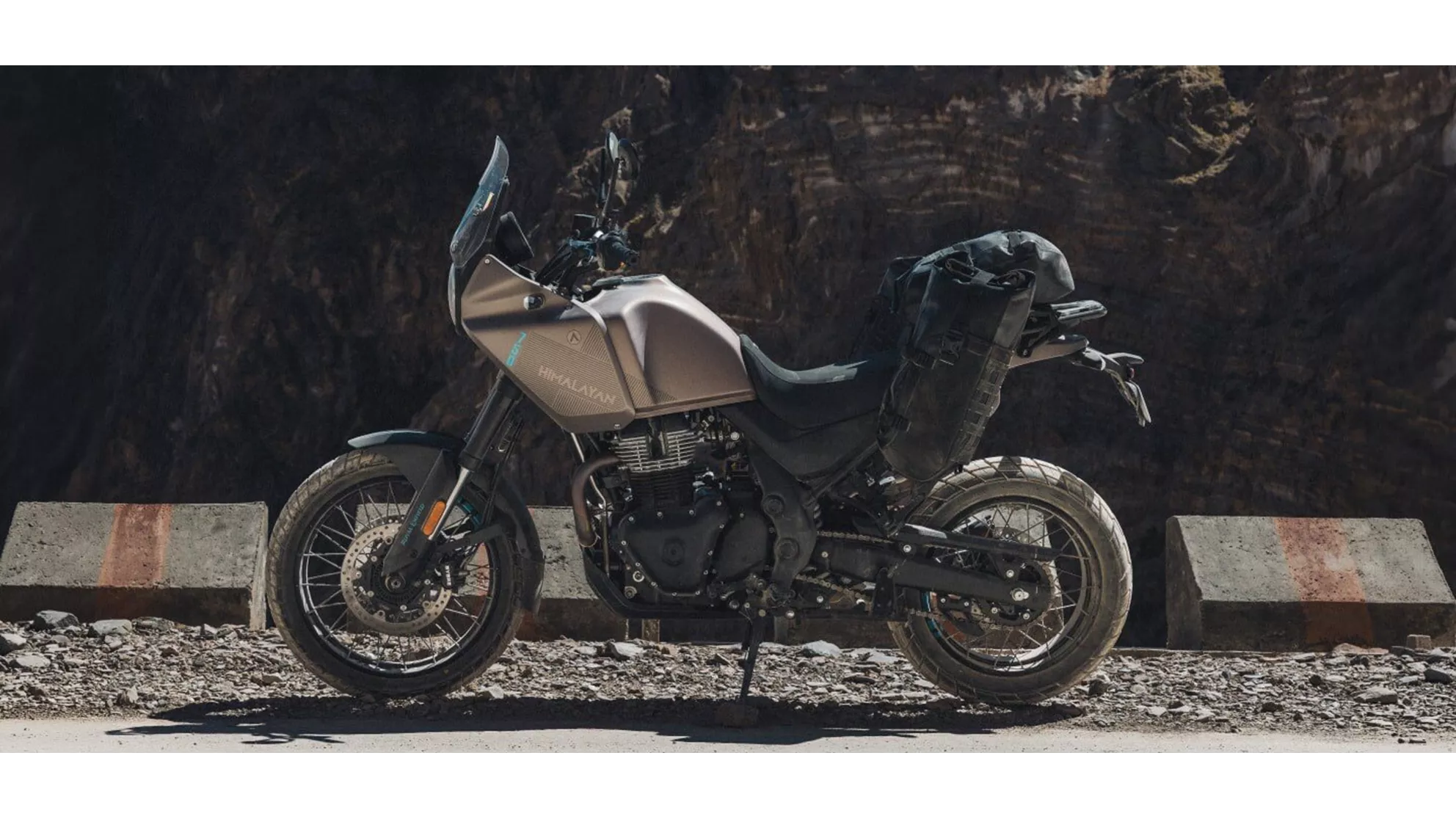
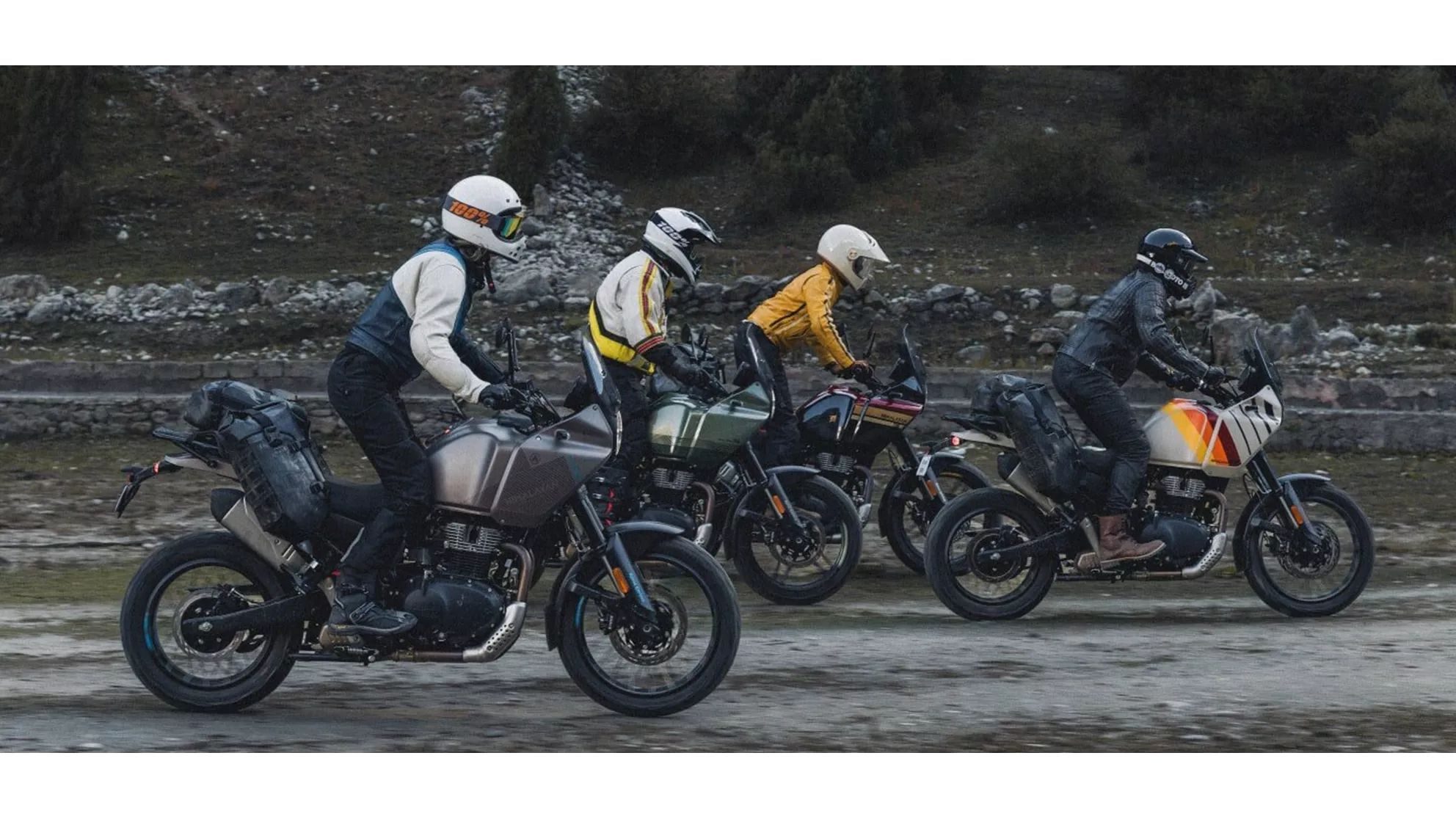
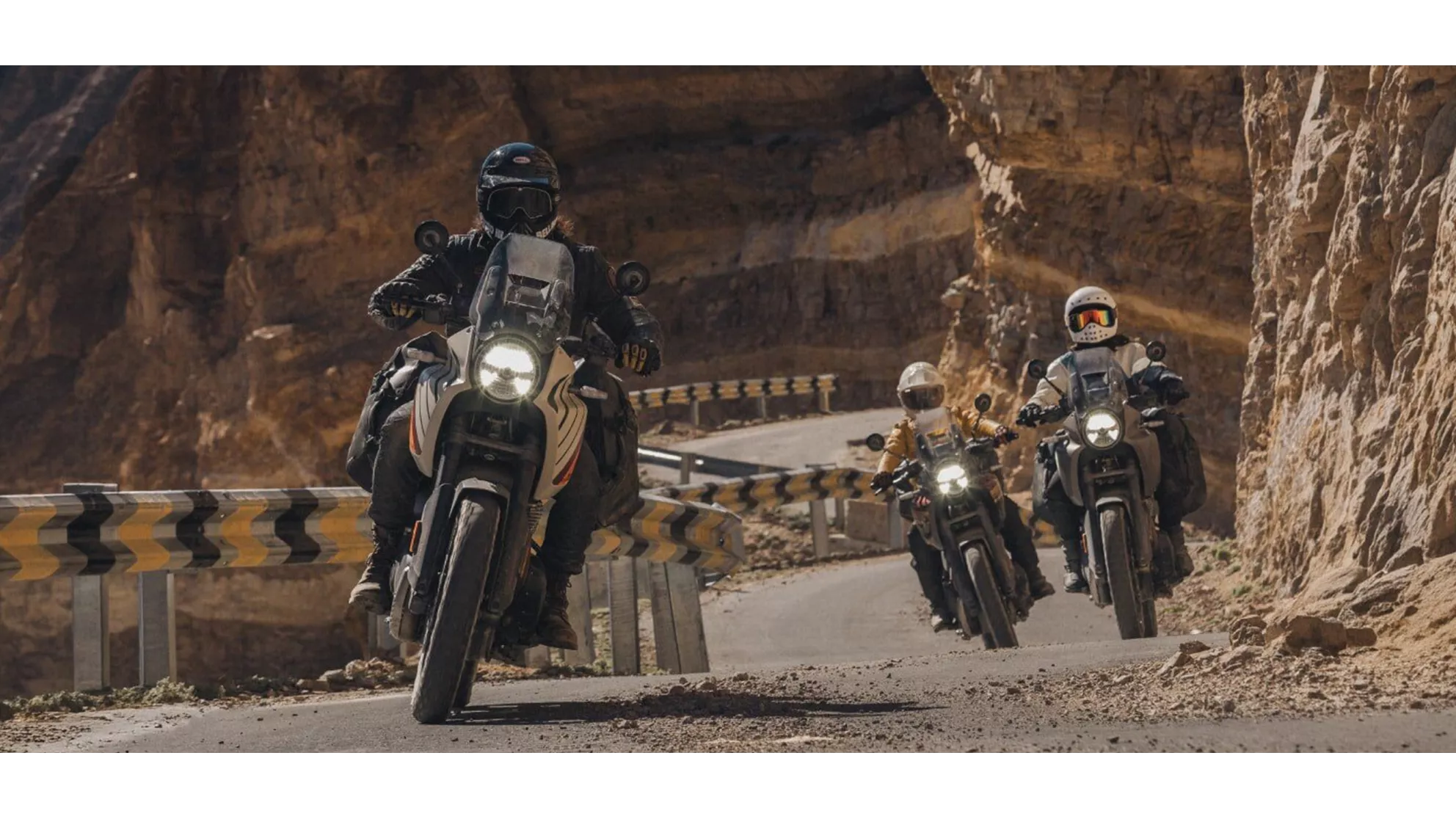
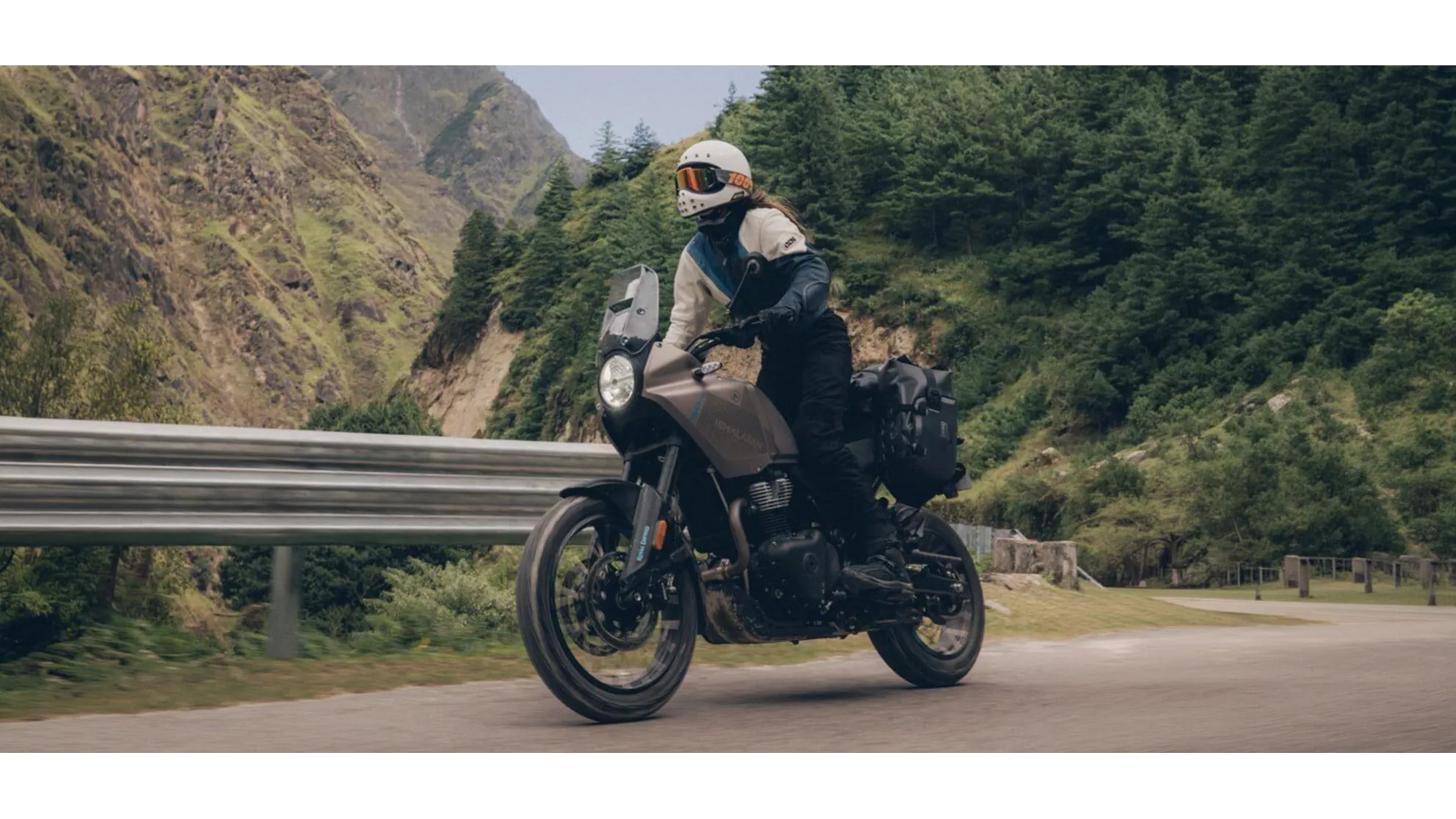
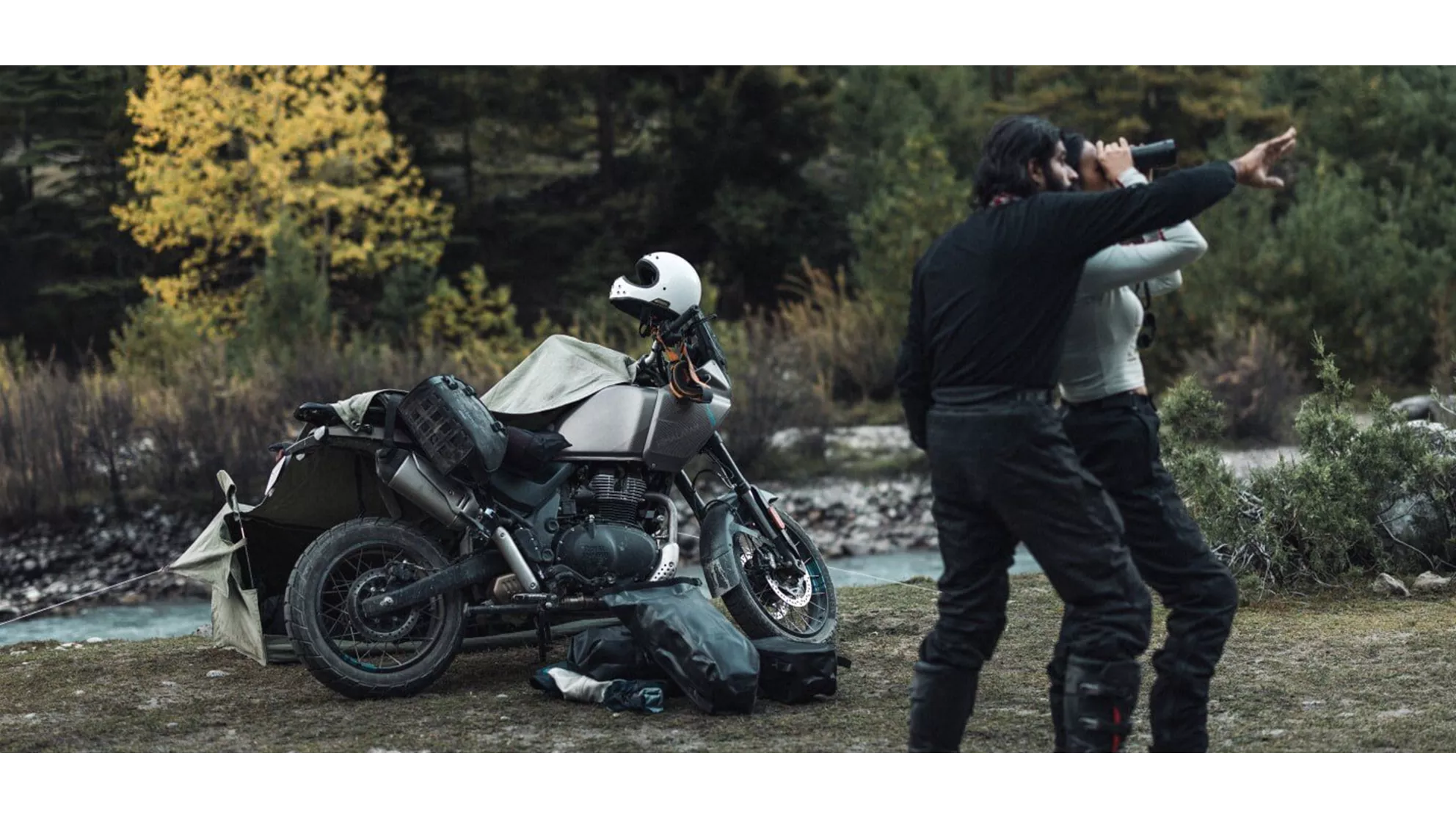
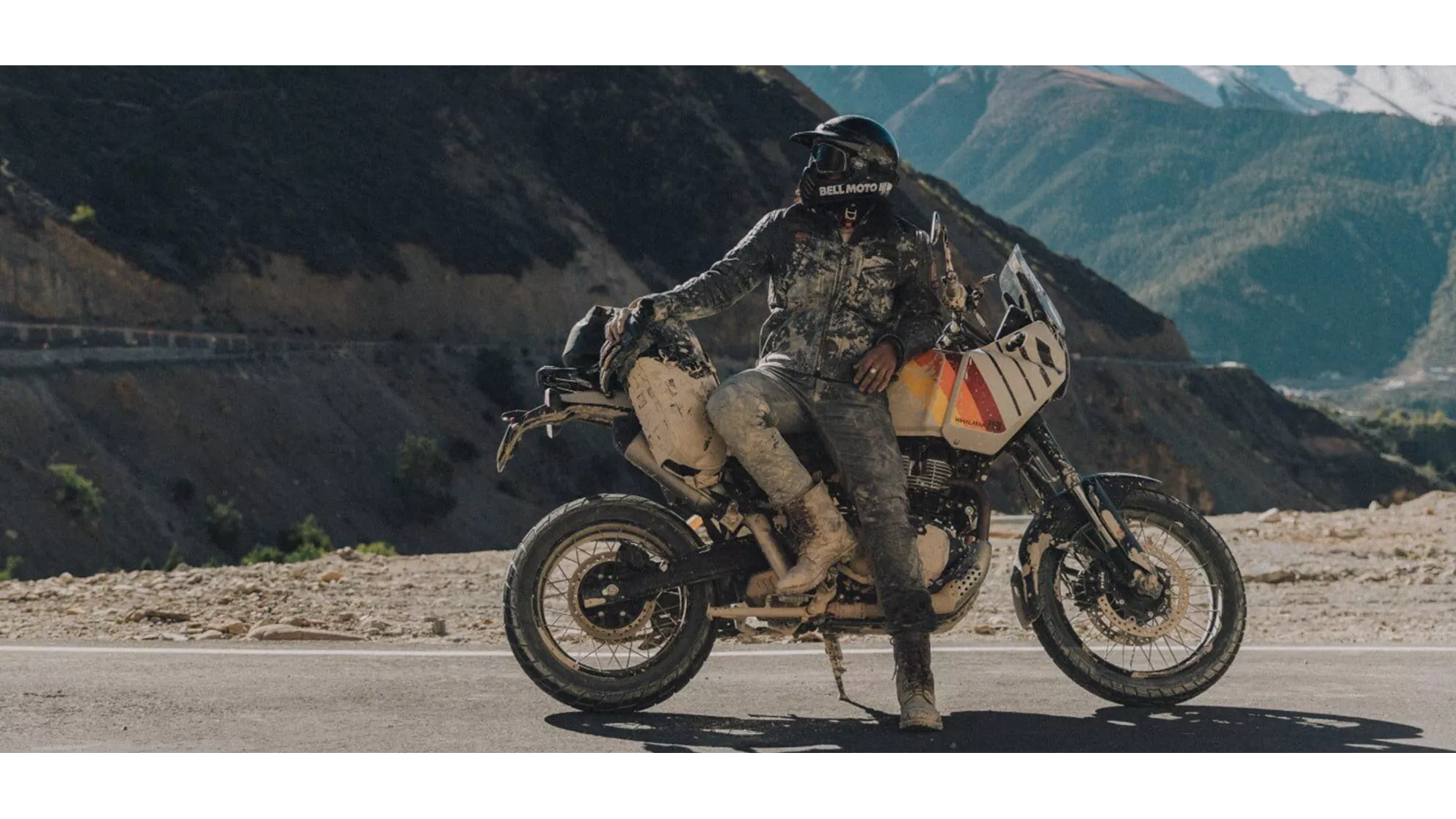
In Sicily, Royal Enfield's new adventure bike flagship stands in front of me. Its story, however, begins back in 2016 with the Himalayan 411. With its low seat height, easy handling and manageable power, it opened up the adventure world to people for whom the big adventure bikes are too much, too tall, too heavy. Then in 2018 came the Indian brand's second success story: the characterful 650 twin in the Interceptor and Continental GT models. Combining the two sounds obvious, but it wasn't actually planned. At Royal Enfield's European HQ in the UK, though, a few employees believed in the idea and, on their own initiative, built a welded-together prototype called "The Pig", which they rode on green lanes, tinkered with and ultimately used to win over the company's management. The exciting question is: how much of the original Himalayan idea survives when a twin moves into the bike?

Soul massage in ADV clothing - Royal Enfield Himalayan 750 Test
First test of the new touring twin for 2027
An air/oil-cooled twin, low seat height and a surprising amount of electronics: the Royal Enfield Himalayan 750 goes its own way. I ride the new flagship in Sicily and check whether the Himalayan recipe still works with two cylinders.

Gregor
published on 11/11/2026
743 cc with familiar twin character
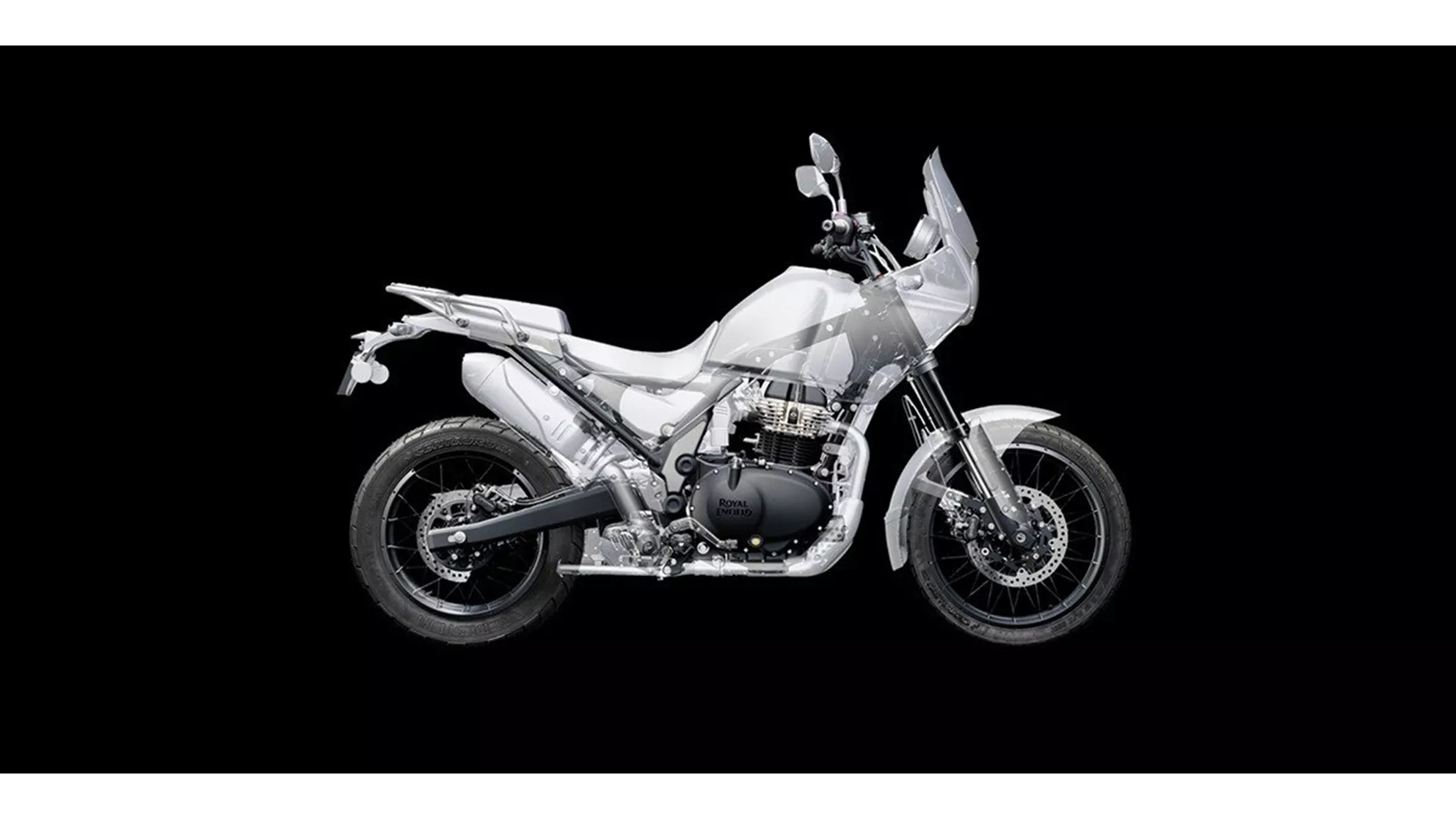
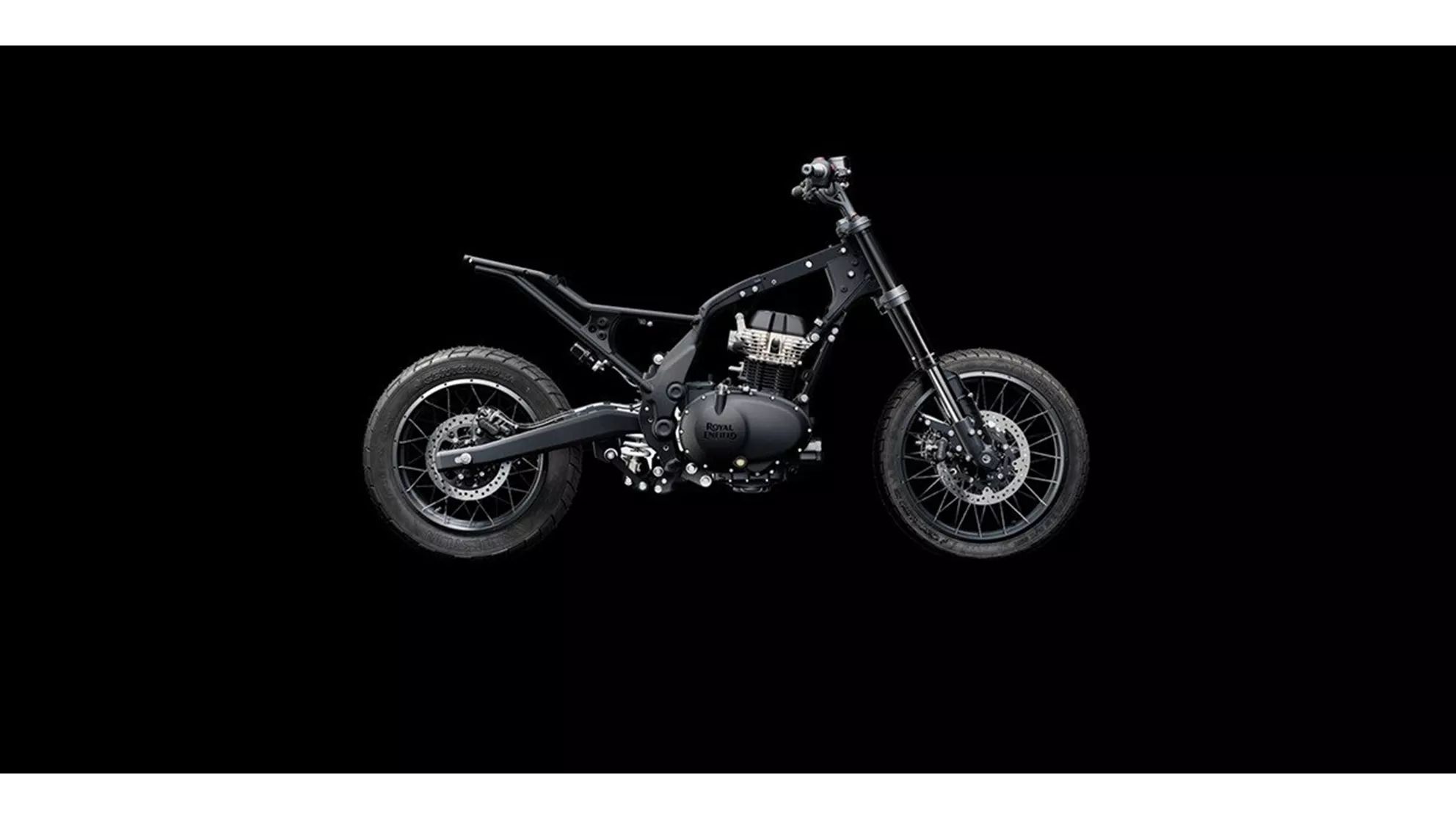
Not only did the twin move into the Himalayan, the decision was also made to give it a bit more power. So just bore out the familiar engine and drop it into the Himalayan frame? Of course it's not quite that simple. The 750 engine is around 90 percent newly developed. The air/oil-cooled twin grows to 743 cc. The bore increases from 78 to 83.5 mm, while the stroke stays the same, as does the 9.5:1 compression ratio. The result is 55 hp at 7,000 rpm and 63 Nm at 5,000 rpm. The character is meant to stay familiar, but changes are needed all around: to the fuel injection and intake, the cooling and the power supply. Smaller cooling fins and magnesium covers save weight, while a larger oil cooler is designed to ensure thermal resilience. On top of that comes a more powerful alternator for the equipment and additional electrical consumers on tour.
Royal Enfield Himalayan 750 2027 - Key Facts
Engine and Drive Train
| Engine type | In line |
|---|---|
| Bore | 83.5 mm |
| Stroke | 67.8 mm |
| Engine power | 55 HP |
| Rpm at Max. Power | 7,000 rpm |
| Torque | 63 Nm |
| Rpm at Torque | 5,000 rpm |
| Compression Ratio | 9.5 |
| Starter | Electric |
| Clutch Type | Multiplate in oil-bath |
| Transmission Type | Gearshift |
| Number of gears | 6 |
| Cylinders | 2 |
| Strokes | 4-Stroke |
| Valves | OHC |
| Cooling | Oil-air |
| Lubrication | Forced |
| Displacement | 743 ccm |
Brakes Rear
| Type | Disc |
|---|---|
| Diameter | 255 mm |
| Piston | Double piston |
| Shock mount | Floating caliper |
Suspension Front
| Front suspension | Upside-Down telescopic fork |
|---|---|
| Brand | Showa |
| Diameter | 43 mm |
| Travel | 190 mm |
| Adjustment | Compression, Preload, Rebound |
Suspension Rear
| Shock absorber | Monoshock |
|---|---|
| Shock mount | Deflection |
| Brand | Showa |
| Travel | 175 mm |
| Adjustment | Preload, Rebound |
Chassis
| Frame | Steel |
|---|---|
| Frame type | Backbone, Load-bearing engine |
| Rake | 27.9 degree |
| Trail | 121.5 mm |
Brakes Front
| Type | Double disk |
|---|---|
| Diameter | 280 mm |
| Piston | Double piston |
| Shock mount | Floating caliper |
| Brake disc mount | Floating |
Assistance Systems
| Advanced Rider Assistance Systems | ABS, Riding modes, Cornering ABS, Tire pressure monitoring system, Cruise control, Traction control |
|---|
Dimensions and Weights
| Front tyre width | 110 mm |
|---|---|
| Front tyre height | 80 % |
| Front tyre diameter | 19 inch |
| Rear tyre width | 150 mm |
| Rear tyre height | 70 % |
| Rear tyre diameter | 17 inch |
| Length | 2,185 mm |
| Width | 840 mm |
| Height | 1,450 mm |
| Wheelbase | 1,522 mm |
| Seat Height | 815 mm |
| Seat Height up to | 815 mm |
| Kerb Weight | 224 kg |
| Fuel Tank Capacity | 17.8 l |
| Payload | 194 kg |
| Ground clearance | 205 mm |
Equipment
| Equipment | Bluetooth, Connectivity, LED-Headlights, TFT display, USB-C socket, Integrated navigation system, Automatic turn signal reset, Multiple USB ports |
|---|
Smooth chugging instead of chasing revs
So how does it ride? Wonderfully unexcited. Chugging along in fourth gear at 30 km/h works without the Himalayan shaking me about. From around 1,500 to 1,800 rpm, the twin in our test already runs pleasantly smoothly. This is exactly the kind of engine where you shift up early and then just ride the torque wave. Most of the time I'm somewhere between about 3,000 and 5,000 rpm. If you want to overtake uphill, though, you'll have to drop a gear. Around 6,000 rpm it adds another little dollop of power, but winding the engine out to the rev limiter isn't worth it. The Himalayan 750 will never be an acceleration wonder anyway. After all, 55 hp meets 223 kg wet weight. So it's clearly about gliding enjoyment rather than adrenaline-fuelled blasting.
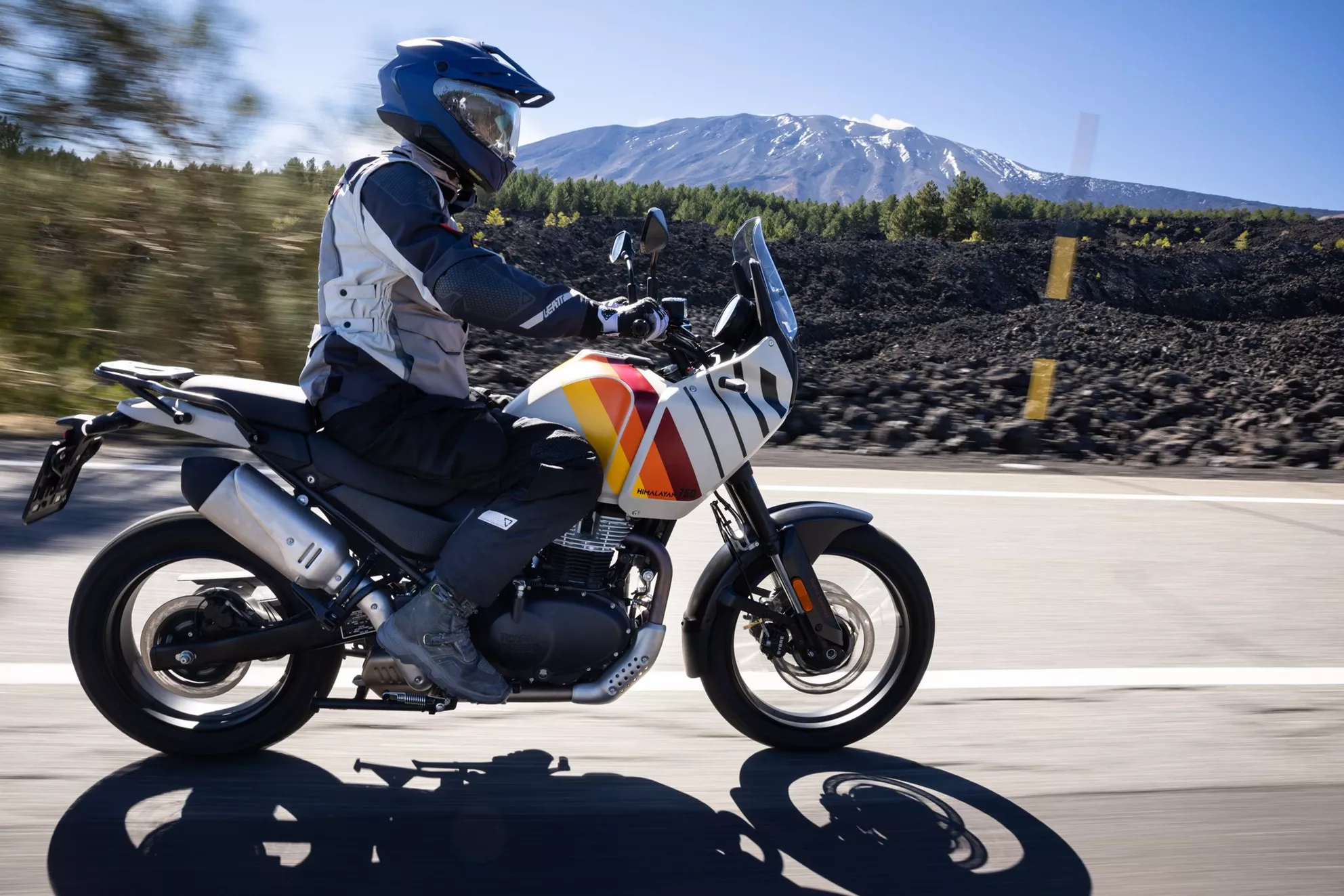
The smooth-running twin invites relaxed chugging along the roads around Etna.
A bassy growl as a selling point
Part of that enjoyment is clearly the sound. The twin burbles with a nice bassy tone, growls a little angrily under load and crackles here and there on the overrun. To me, that feels wonderfully honest and recalls the very quality that makes the 650 twins so appealing. You're not constantly riding around wondering when the next straight will finally come along so you can wind it out. You listen, play with the throttle and enjoy. In terms of the basic riding experience, it reminds me of a Moto Guzzi V85 TT: a bike where the engine is the heart and sets the tone. It's not about performance, but about pistons moving in a rhythm that massages the soul. A very purist form of motorcycling!

The upswept standard exhaust is part of the characterful look of the air/oil-cooled twin.
Low seat height with one compromise
But a well-rounded bike takes more than a characterful engine. Royal Enfield developed its own steel frame with a bolted-on steel subframe and kept the waist slim. The intake and fuel injection were also reworked for this. The two-into-one exhaust sweeps up towards the pillion footpeg. The standard seat height is 815 mm with 205 mm of ground clearance. With the lower accessory seat, even 795 mm is possible, while the touring seat sits 20 mm higher. That's pleasingly accessible for an adventure bike. At the same time, the aim was to keep the ground clearance, which is 185 mm, high enough for any off-road adventures. The price of this combination shows when you sit on it: at 1.85 metres tall it basically fits me, but the knee angle between the low saddle and the footpegs is tighter than on some other comfortable adventure bikes. The higher touring seat could help, but I didn't try it. Taller riders of 1.90 m+ in particular should pay attention to this before buying.

The side view shows the riding position and knee angle on the low Himalayan 750.
Neutral handling without surprises
The handlebar sits relatively close and low, and the front end also feels lower than on many rivals. As a result, the bike stays nicely underneath me and is easy to push into corners. Above all, though, the Himalayan turns in remarkably neutrally. It doesn't suddenly drop in, doesn't demand excessive force and builds lean angle cleanly with continuous input. At higher speeds, it needs a bit more pressure via the wide handlebar. For me, that fits the relaxed overall picture well. The 19-inch front wheel harmonises with this road feel, and the fitted Indian stock tyres work decently in the dry test conditions. That doesn't turn it into a scratcher, though. When the suspension sinks in during spirited cornering, the pegs scrape fairly quickly.

On the winding roads, the Himalayan can be leaned over neutrally and with good control.
Showa suspension and easily modulated brakes
The Showa suspension offers 190 mm of travel at the front and 175 mm at the rear. The USD fork is fully adjustable, while the shock offers rebound and preload adjustment, the latter conveniently via a handwheel. Overall, I'd describe the suspension setup as comfortable without becoming spongy. That it's not the highest-quality hardware becomes noticeable over short, sharp hits from manhole covers and cracked tarmac, some of which come through quite clearly. Larger bumps and undulations, on the other hand, the Himi soaks up pleasantly and comfortably. The front brake is easy to modulate and doesn't require much lever force, even during harder braking downhill. At the rear, modulation is slightly less fine, but still acceptable for me. Overall, this suits an adventure bike that puts comfort and controllability first.
Sicily suits this kind of bike
Around Mount Etna there are plenty of small, winding roads and, time and again, seriously rippled tarmac. For this first ride impression, that makes for an exciting playground. Above all, the area suits what the Himalayan tempts me to do: take the pace down a notch, let the twin work low in the rev range and actually take in the scenery now and then. The Etna volcano towers mightily over the landscape, and Sicily as a motorcycling region really leaves you wanting more. The combination of easily controllable riding performance and this engine makes for a lovely companion here.
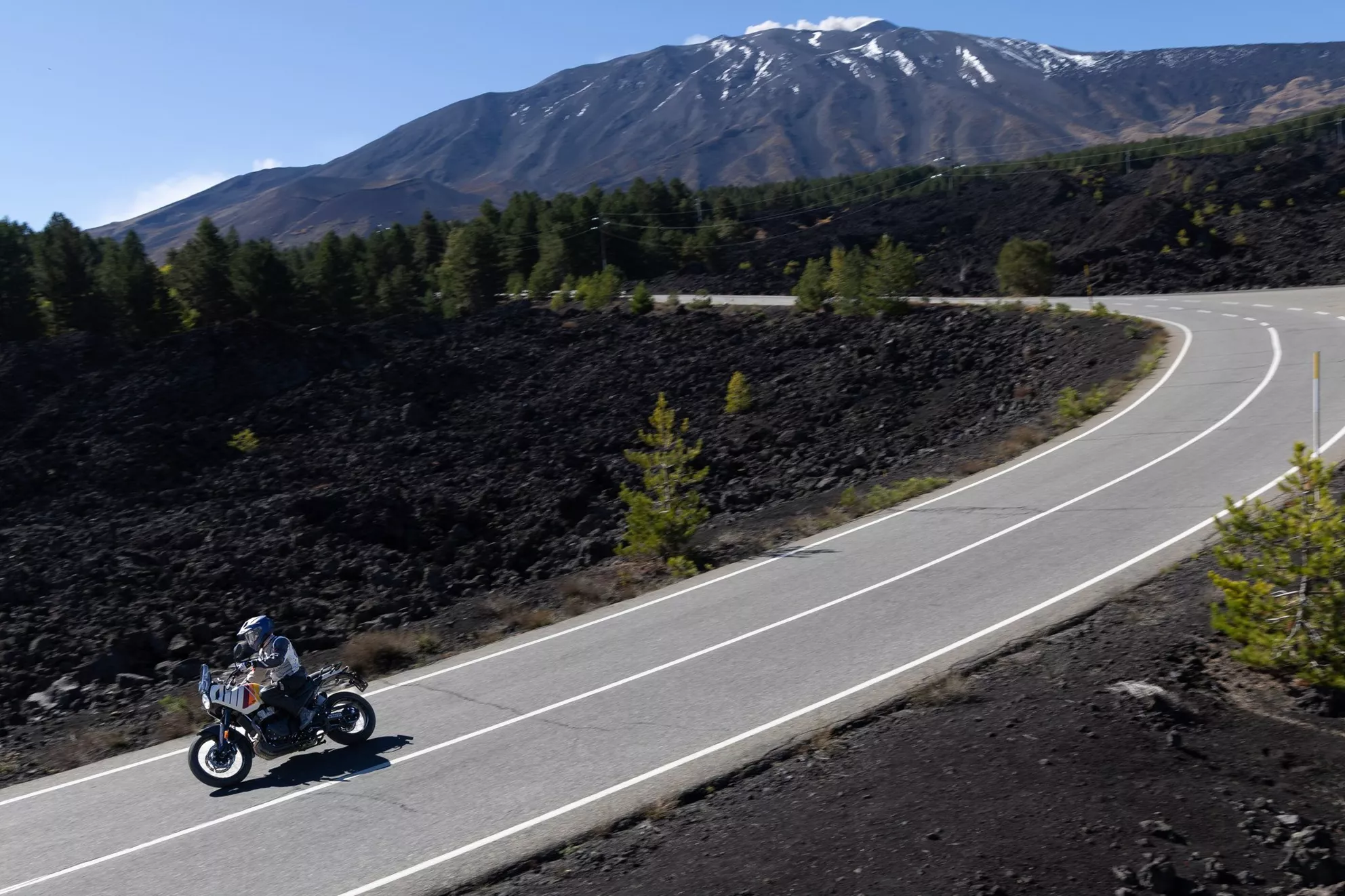
Volcanic landscape and small roads: around Etna, the Himalayan 750 finds a fitting playground.
Modern aids behind a classic façade
Air/oil cooling by no means indicates that Royal Enfield has put an outdated bike on wheels here. The Himalayan 750 is the first Royal Enfield bike to come with a six-axis IMU and lean-sensitive assistance systems. The five riding modes are called Road, Road Sport, Rain, Trail and Custom. They combine two throttle response maps with different settings for the aids, with maximum power remaining at 55 hp in each case. On top of that come three-level, switchable traction control and ABS that can be deactivated at the rear wheel. For me, that's a coherent approach: the engine gets to focus on its character, while a modern safety net works in the background. That makes sense on an accessible adventure bike in particular. After all, purism doesn't have to mean doing without aids that genuinely help in everyday riding or on changing surfaces.
Navigation, cruise control and clunky controls
I also like the round Tripper Dash carried over from the Himalayan 450. Via the Royal Enfield app, Google Maps navigation can be used on the display, without it being Android Auto or Apple CarPlay. With this revised version, the Tripper 2.0, the smartphone screen can now be locked, and the connection is also said to use 30 percent less battery. Tyre pressure monitoring and cruise control are also on board. I'm particularly pleased about the latter, even though I barely try it out on the twisty roads. Less pleasing are the controls. Despite a new five-way joystick and a dedicated ABS switch, the switchgear still feels clunky. When changing modes, error messages sometimes appear, even though all you actually need to do is close the throttle. At least such minor software teething troubles can be conveniently fixed in future via over-the-air updates.
Wingman 2.0 adds an extra eye on the bike
Wingman 2.0 is a topic in its own right. The optional subscription service links the app with monitoring and anti-theft functions. A GPS module in the bike enables tracking, and with geofencing you can define an area that triggers a notification when the bike leaves it. Even remotely immobilising a stolen bike is supposed to be possible. For travellers who regularly park their bike out of sight, I find the basic idea interesting. A practical check of the service, however, wasn't part of this first riding day. Specific subscription costs and terms are not yet known in detail either. But I already like the idea as an optional feature.
Standing up, the ergonomics really work
With 19 inches at the front and 17 inches at the rear, the 750 doesn't aim to be an uncompromising off-road machine. For more off-road-focused demands, the Himalayan 450 remains in the line-up. Nevertheless, the big sister surprises me positively on the few kilometres away from the tarmac. The waist is slim, and with my size 45 boots, my heels hit neither exhaust parts nor the pillion footpegs. That's not a given even on more expensive adventure bikes. The handlebar, relatively low for my height, allows an active stance when climbing or when a section calls for more body input. Despite rather road-oriented tyres and road tyre pressures, I feel comfortable on loose surfaces.

Standing up leaves plenty of freedom of movement, and the slim waist supports an active stance.
Torque helps on loose surfaces too
Off-road, I like engines that still pull me out of the dirt even when I've just picked a gear too high. That's exactly what this twin is good at. According to the presentation, 90 percent of peak torque is already available at 3,500 rpm, and the tall gearing is surprisingly unobtrusive at the speeds we rode. In Trail mode, the traction control works at its lowest level. It intervenes somewhat roughly, but allows enough slip to remain usable even on looser gravel. With 55 hp the feature wouldn't be strictly necessary, but at the same time it's a helpful safety net if you as a rider don't want to rely solely on your own throttle hand. The suspension also absorbs the hits well enough that I can roll over bigger rocks a bit more enthusiastically. Beyond that, this short off-road excursion doesn't allow any further conclusions yet.

The short off-road section leads over loose and rutted tracks.
Touring comfort at low revs
Of course, the small roads around Etna are no substitute for a real long-distance test. The seat and damping feel pleasant, while the tighter knee angle remains the open question for tall riders on long stages. For my 1.85 metres, the wind protection is mid-pack: air hits the shoulders and the sides of the helmet, and slight turbulence forms at eyebrow level. What I really like, on the other hand, is the one-handed screen adjustment. The tall gearing also suits relaxed touring. At 100 km/h, the engine turns at just around 4,000 rpm, which harmonises nicely with its smoothness. Royal Enfield quotes consumption of 4.44 l/100 km, which I can't measure myself here. The tank holds 17.8 litres, which should allow ranges of up to over 400 km.

An upright posture and the wind protection shape the first comfort impression on the road.
Royal Enfield Himalayan 750 accessories
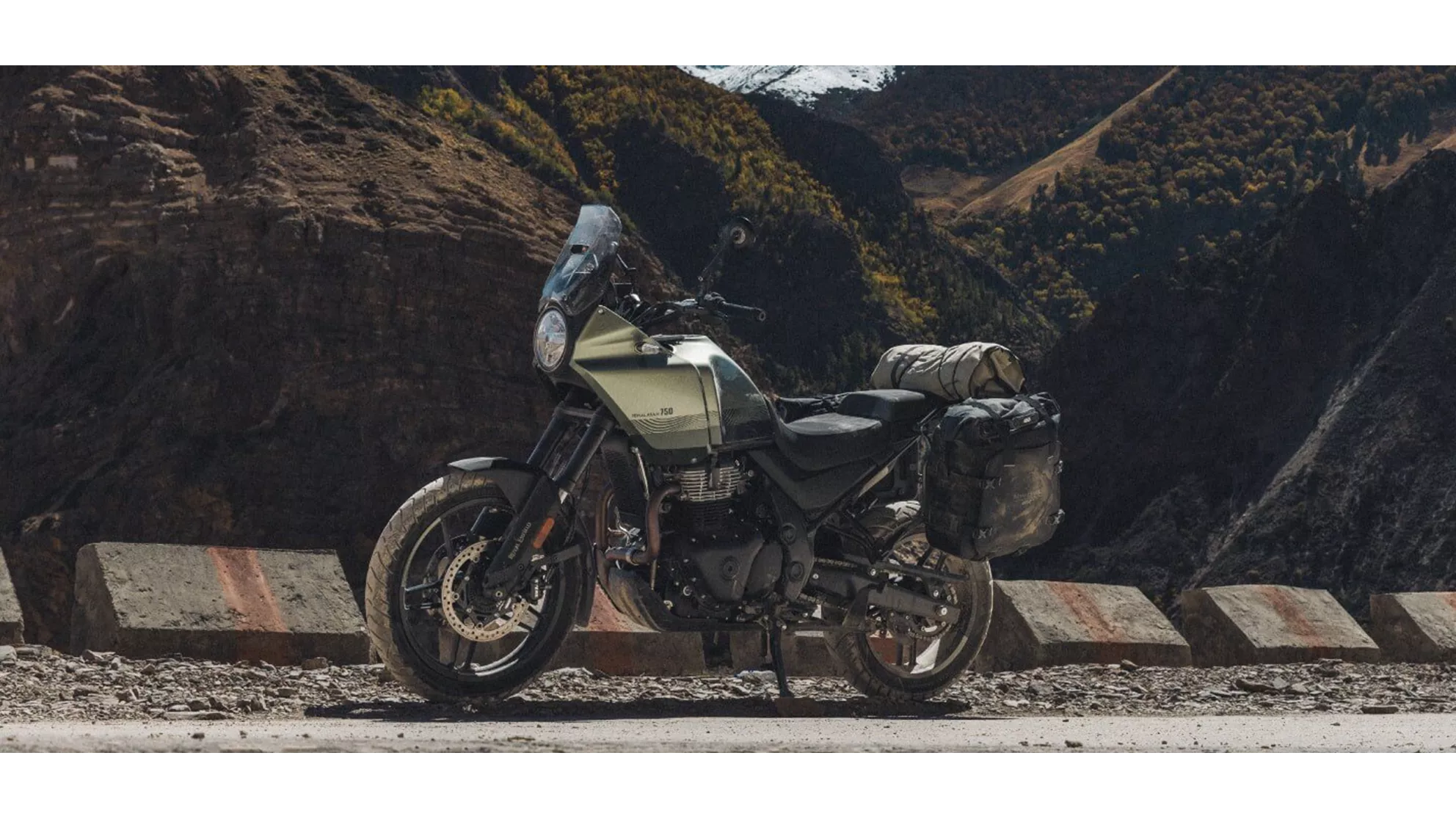
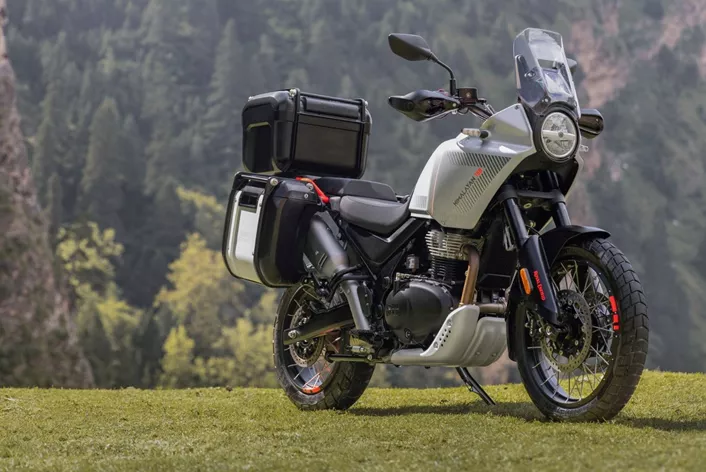
Royal Enfield was already thinking about luggage and pillion use during the bike's development and tuned the reinforced rear end accordingly. A luggage rack and a centre stand come as standard. The permitted payload is 195 kg, which I'd rate as usable but not generous. For accessory development, Royal Enfield brought Givi on board. The jointly developed solutions range from rackless luggage systems for off-road use to large top cases and hard panniers. This is intended to improve integration and take into account specific wishes of the bike's developers. How well that works in everyday use, I can't say yet. I didn't try the luggage solutions on this riding day, so here the partnership is a features and development topic, not an accessory test.

Side cases and top case show one of the luggage configurations on offer. The systems were not tested on the riding day.
Arrow aims to make the twin even more audible
Another development partnership involves Arrow. Together with the exhaust manufacturer, a slip-on is being created that is meant to emphasise the twin's character acoustically. I like the idea, because this very sound makes up a big part of the appeal for me. Anyone who already likes the 650 twin for its burble can probably relate. But an honest assessment also includes the limits of this first test: I neither rode nor heard this accessory can. Whether it actually sounds better, how big the difference to the stock system is and which version will be offered in each market can't be derived from my riding day. The positive sound impression above refers to the bike I rode with its standard exhaust.
Price open, character already clear
At the time of testing, I don't yet know the binding prices. My expectation of just under or around 8,000 euros is explicitly a personal estimate, not a confirmed retail price for Austria or Germany. Accordingly, the final value-for-money assessment still depends on the actual offer. After this first riding day, though, the bike itself already has a clear profile. With 55 hp, the Himalayan 750 sits slightly above the usual A2 power limit without wanting to become a sporty middleweight adventure bike. It leaves room for an engine character of its own and combines it with a low seat height, easily controllable handling and sensible features. Anyone mainly looking for maximum acceleration for their money will set other priorities. Anyone who wants to ride relaxed with some character under their backside should take a closer look at this Himalayan.
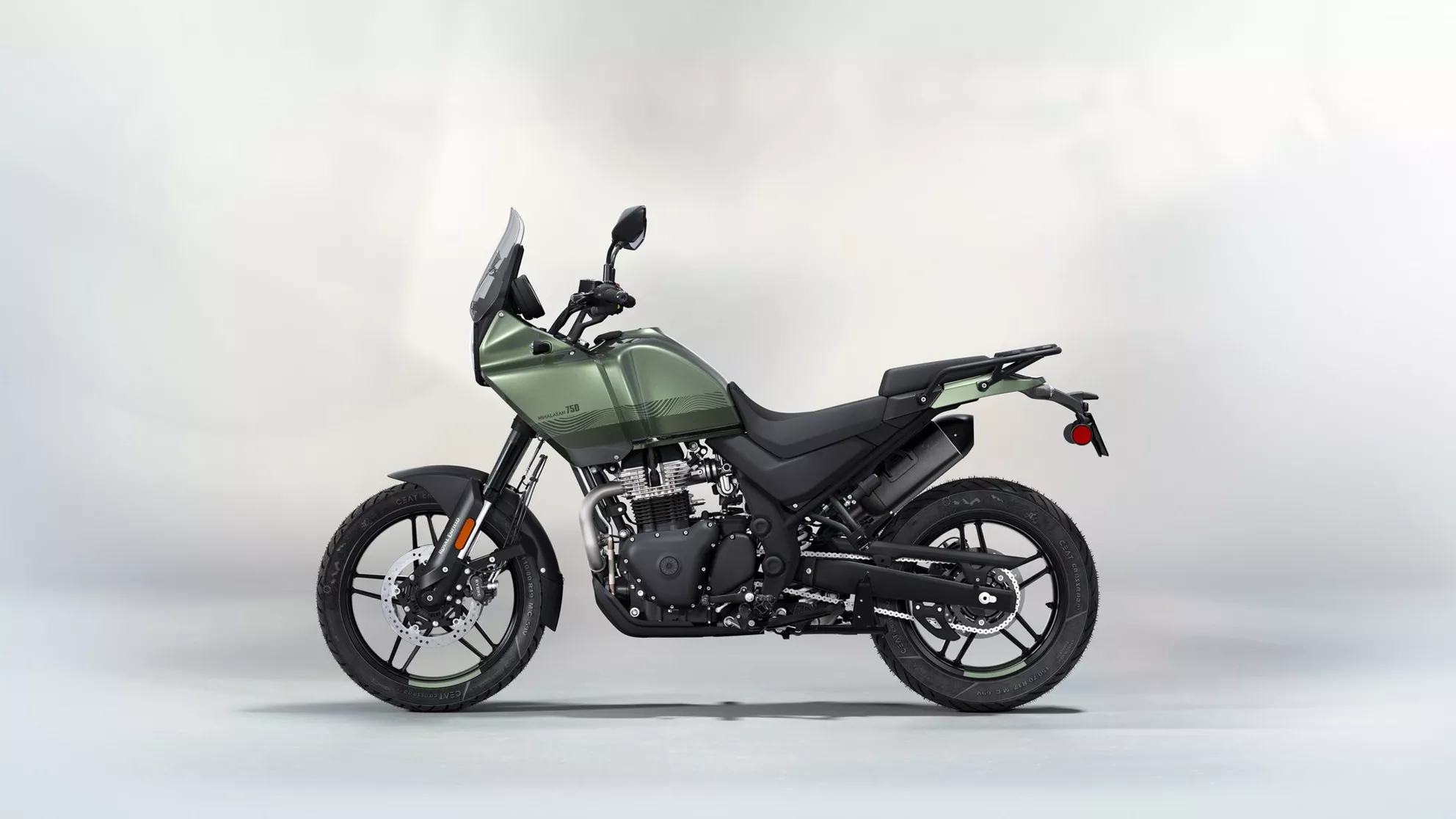
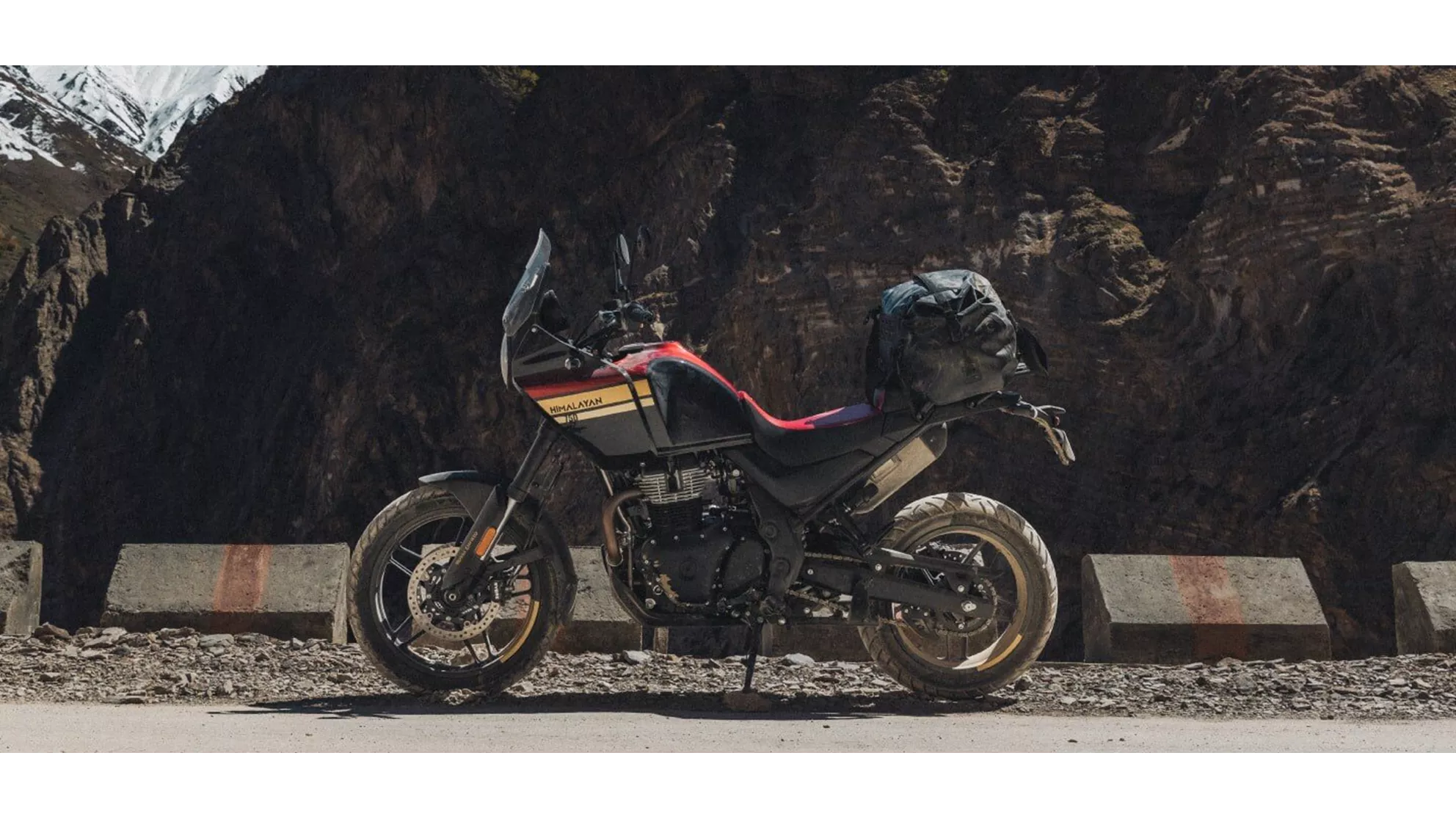
The Himalayan 750 combines classic styling with a distinctive adventure bike concept.
Who is the Himalayan recipe right for?
So does the big Himalayan stay true to the original idea? For me, yes. It makes getting into the adventure bike world pleasant with its low seat height and good-natured riding performance, and puts a wonderfully smooth, bassy-growling twin at the centre. The switchgear feel, suboptimal wind protection and tighter knee angle are honest but not really dramatic points of criticism. Anyone who has had enough of the constant race for displacement and peak power gets a bike with a rhythm of its own here. To me, this enjoyment is reminiscent of a Moto Guzzi V85 TT, just in a smaller power class. The Himalayan 750 invites you to chug along, take in the view and keep riding. And that's exactly where its appeal lies.
- How much does a Royal Enfield Himalayan 750 cost?
- Here you will find an overview of the price level of new and used motorbikes!

Royal Enfield Himalayan 750 2027 - Experiences and Expert Review
Gregor
The Royal Enfield Himalayan 750 combines a characterful, remarkably smooth-running twin with a low seat height and very neutral handling. It appeals to riders who want to tour in a relaxed way and enjoy an engine rather than constantly calling up peak power. Cruise control, navigation and lean-sensitive assistance systems sensibly round off the accessible overall package. Standing up, the slim waist impresses with plenty of freedom of movement. Limits are set by the modest power-to-weight ratio, the tighter knee angle for tall riders and the suspension's less refined response over short, sharp hits. The clunky switchgear feel and sometimes unclear display messages also deserve criticism. A distinctive adventure bike for connoisseurs, whose final value-for-money rating depends on the respective market price.
More from 1000PS Magazine
Soul massage in ADV clothing - Royal Enfield Himalayan 750 Test Images
Source: 1000PS

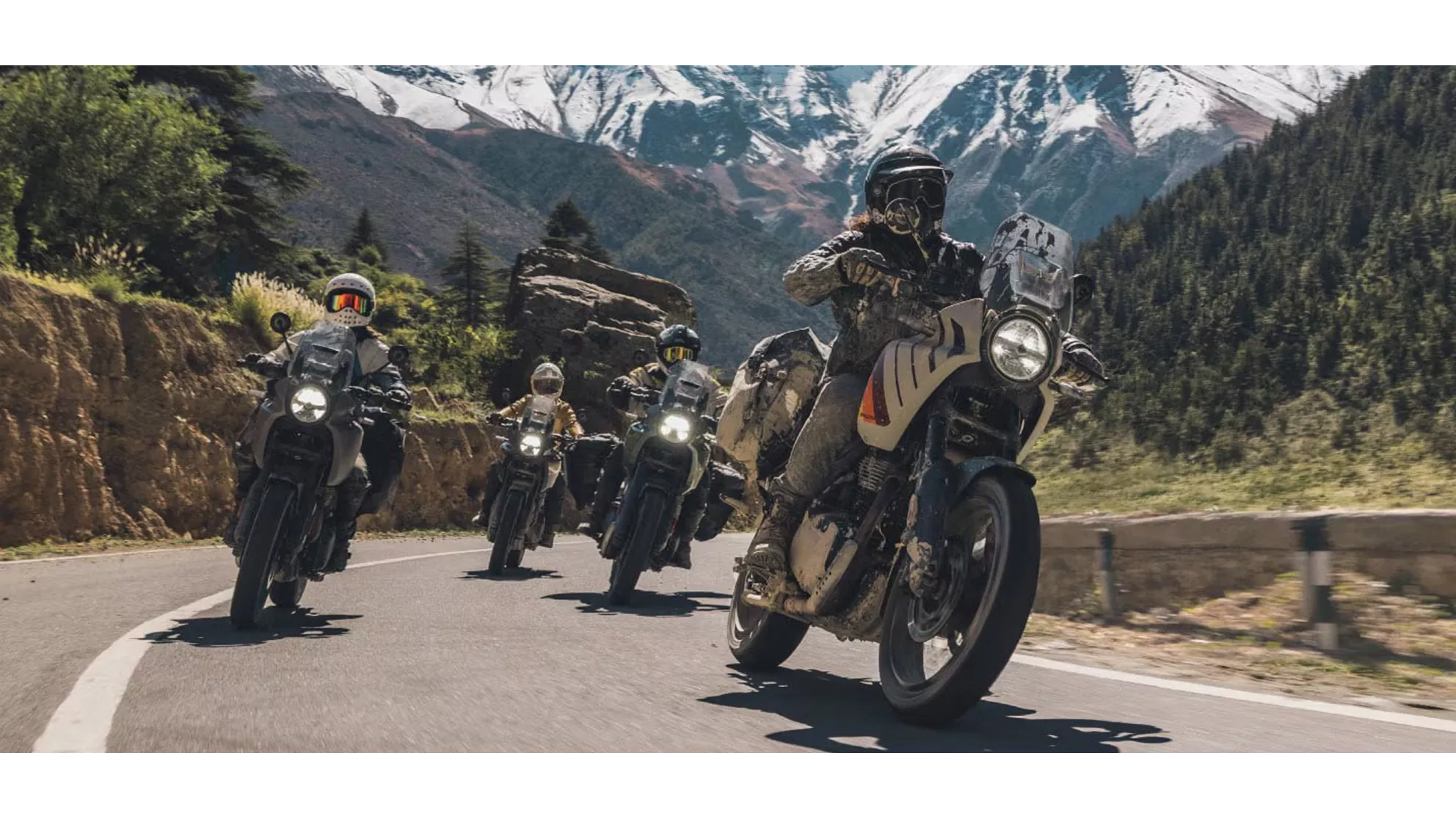
Sicily’s twisty roads are part of the Himalayan 750’s first test.

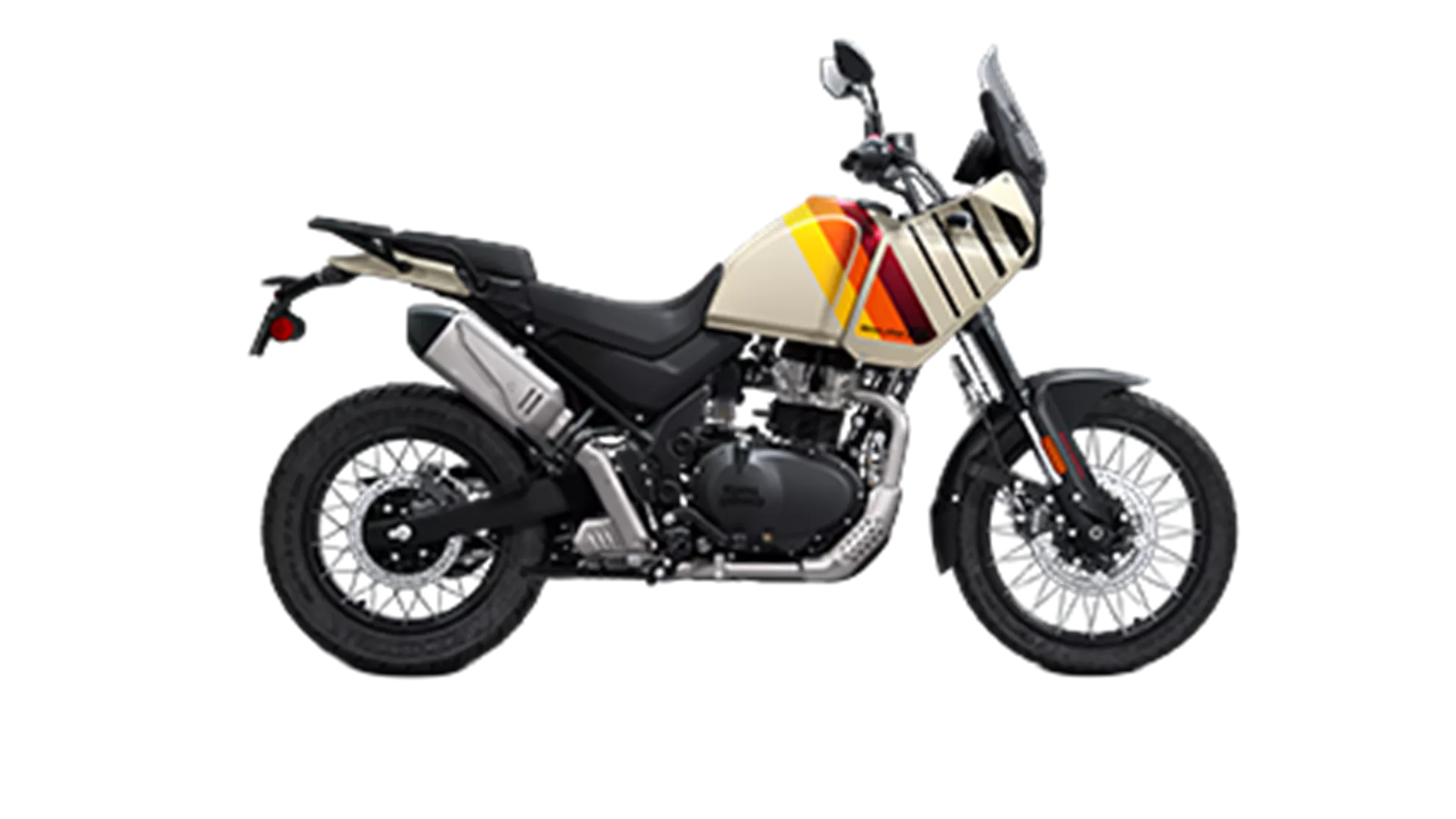
The static side view shows Royal Enfield’s new adventure flagship.

Around Mount Etna, vast volcanic landscapes meet narrow, winding roads.

We also get our first impressions of the Himalayan 750 off the tarmac.

At the heart of the new concept is a 743 cc air-/oil-cooled twin-cylinder engine.

The twin is happy to lug along at low revs in the test.

With smooth, even power delivery, the engine is well suited to relaxed road riding.

55 hp and 63 Nm define the new twin-cylinder model.

The high-mounted stock exhaust is clearly visible in this rear view.

The twin’s deep, bassy exhaust note is part of the appeal for Gregor.

The side-on riding shot shows the knee angle and how close the rider sits to the handlebars.

At 1.85 m tall, Gregor fits comfortably, though his knees are more tucked in than on some rivals.

The left-side view gives a clear look at the seat and footpeg positions.

The top view shows the narrow waist between the tank and seat.

The Himalayan turns in with a remarkably neutral feel in this first test.

The wide handlebars make it easy to control lean angle.

The lower-profile front stays comfortably tucked beneath the rider through corners.

On dry asphalt, the tyres fitted to the bike feel well suited to the task.

The focus is more on control than outright agility.

The 750 invites you to flow through the twisties.

The 19-inch front and 17-inch rear wheels suit its road-focused setup.

The front view shows the windscreen, round headlight and front wheel.

Lava rock lines the roads around Mount Etna.

The scenery is just as much a part of the ride as the motorcycle itself.

Sicily sets the scene for the first road test.

Beneath the classic styling, modern rider aids provide a safety net.

The riding position stays active when standing, without the bars sitting excessively high.

The slim waist gives the rider room to move on loose terrain.

The short off-road section complements the predominantly road-focused impressions.

The standing riding position helps you balance on unpaved trails.

The Himalayan 750 is riding along a well-worn trail here.

On loose surfaces, the engine delivers its power in a smooth, predictable way.

The torque-focused twin makes for smooth, steady progress off-road.

The off-road section is brief and is not a comprehensive enduro test.

The deep ruts demand careful line choice.

We also get our first riding impressions on rougher terrain.

On the road, the focus is on relaxed touring.

The windscreen adds to the initial impression of comfort, but long-distance comfort remains to be tested.

The upright riding position is ideal for relaxed rides.

The manufacturer quotes a fuel tank capacity of 17.8 litres.

The panniers and top case illustrate one of the available luggage configurations.

Royal Enfield develops its luggage solutions in collaboration with Givi.

The rear view shows off the wide touring setup with panniers.

The top-down view shows the layout of the seat, panniers and top case.

The luggage options are part of the accessory range and were not tested during this ride.

The Himalayan 750 enters the middleweight adventure bike segment with a concept all its own.

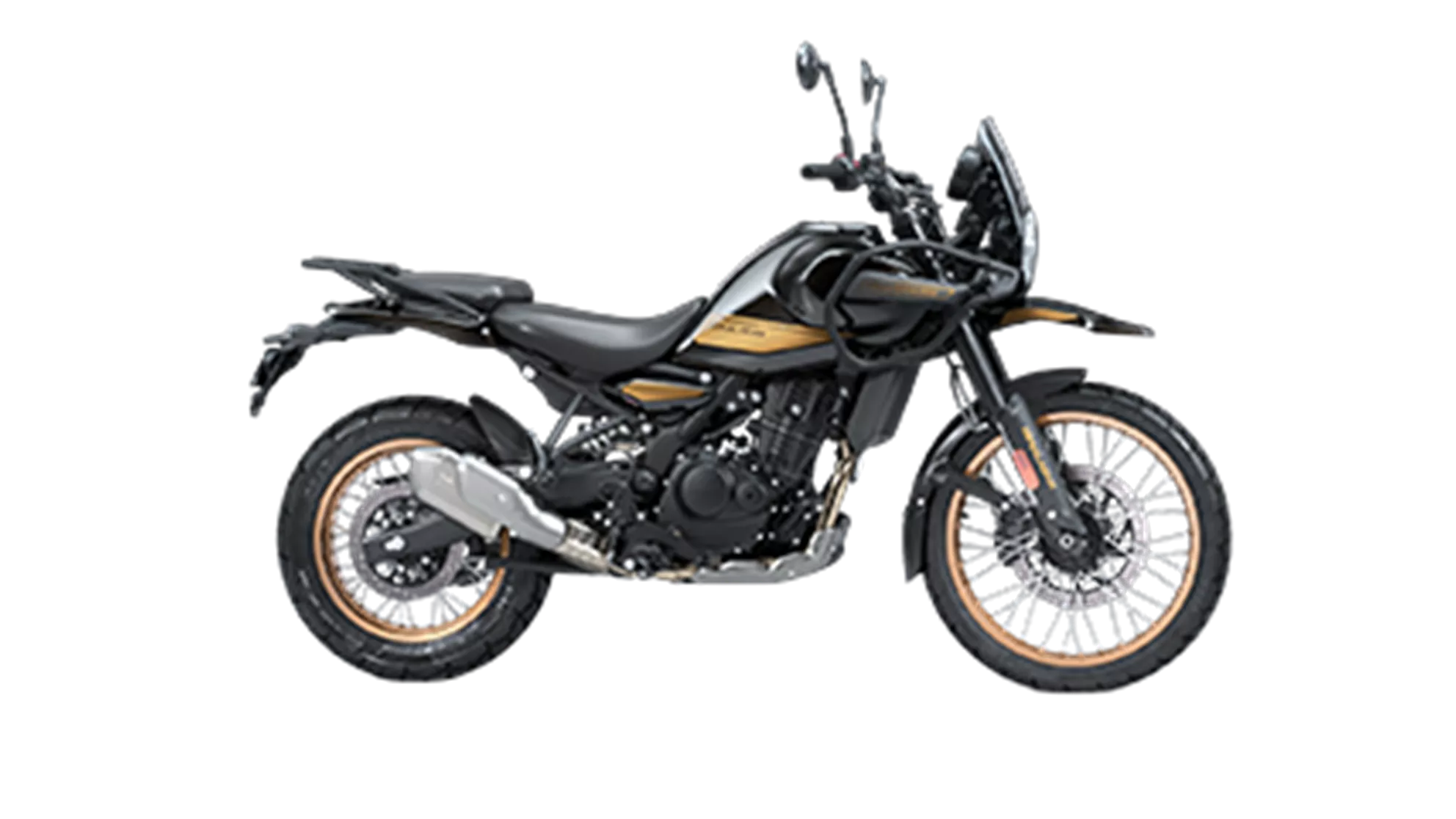
Different colors change the look, but the bike’s fundamental character remains the same.

The big Himalayan is aimed at riders who want to tour at a relaxed pace.

Character and riding enjoyment take priority over peak power with this twin.

The Himalayan 750 expands Royal Enfield’s adventure bike lineup for the 2027 model year.