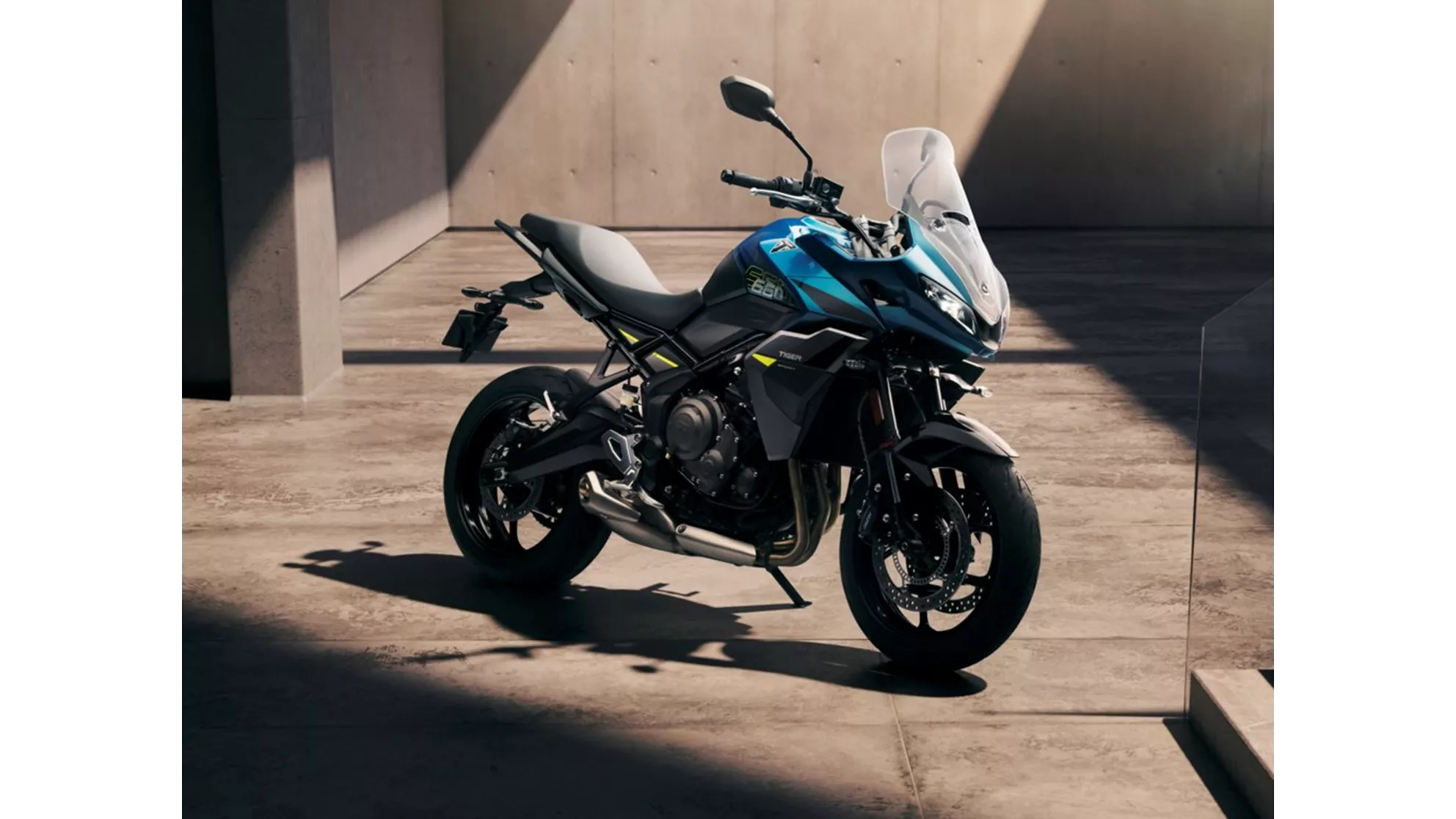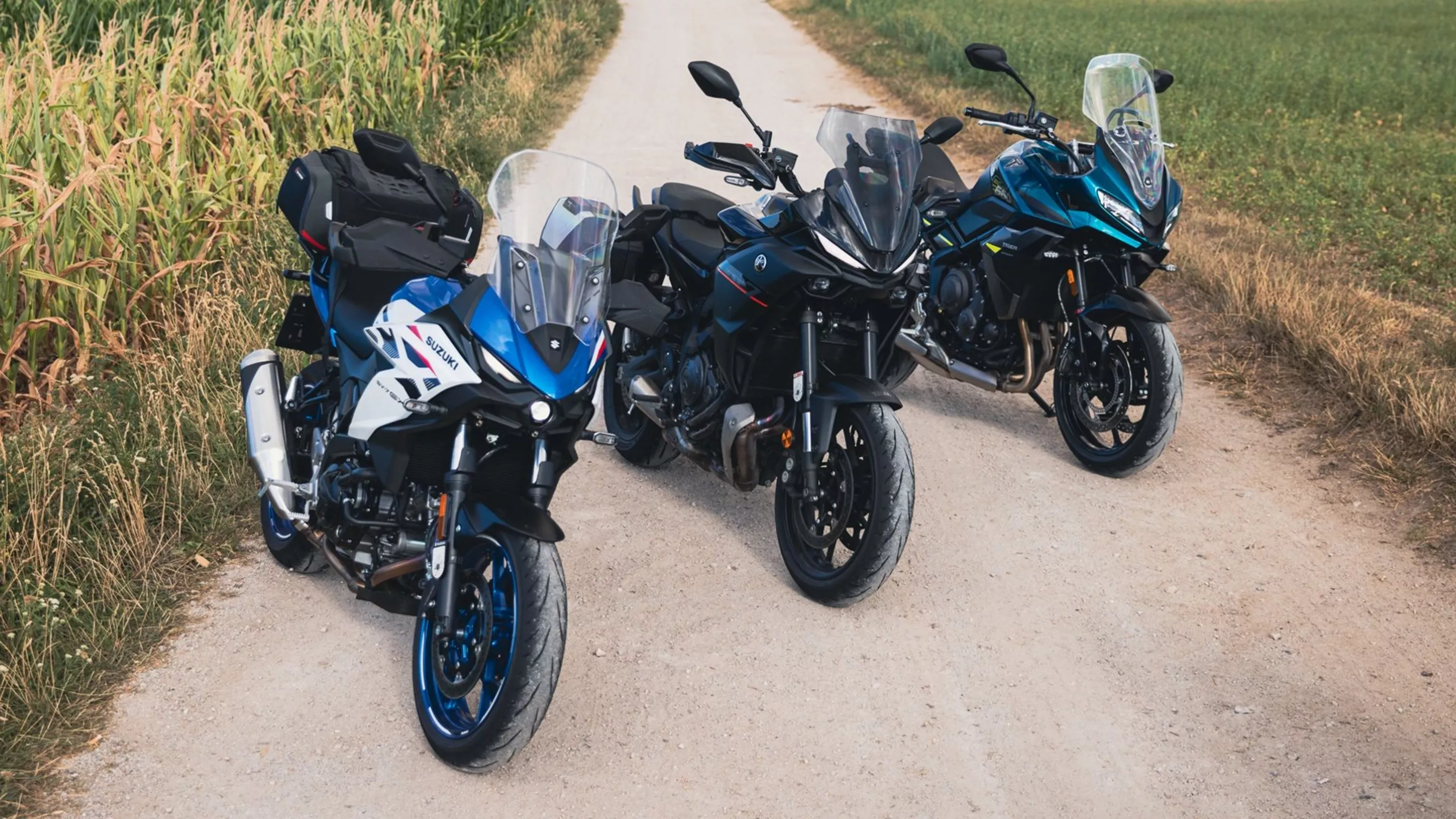
Three mid-range crossovers head to head

Three mid-range crossovers head to head

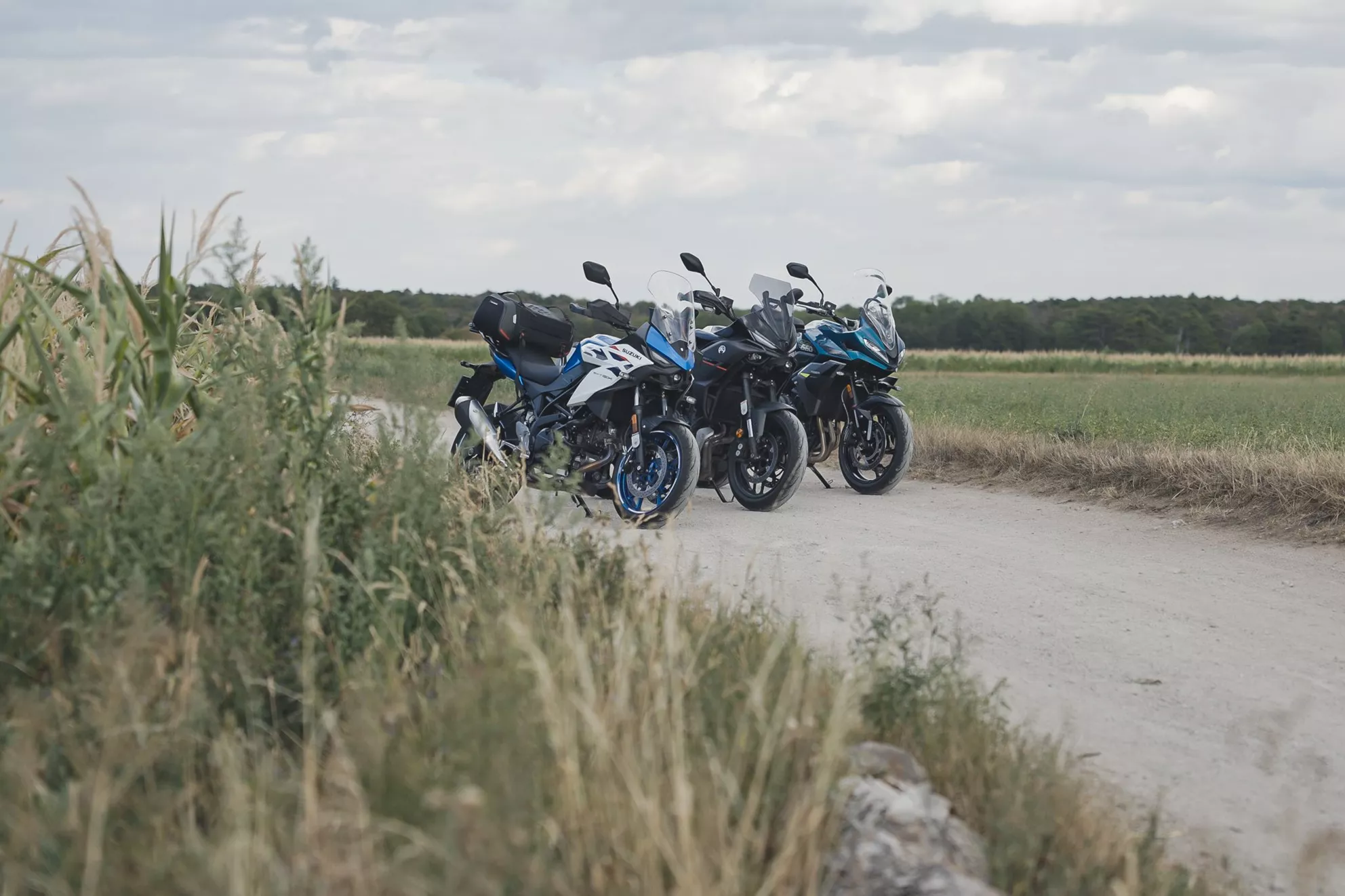
SV-7GX vs. Tiger Sport 660 vs. Tracer 7 Y-AMT

Three crossovers, three engine concepts and a surprisingly tough choice. Which bike convinces in everyday riding, on the motorway and in the twisties?

Schaaf

Schaaf

published on 27/11/2026

5,180 Views

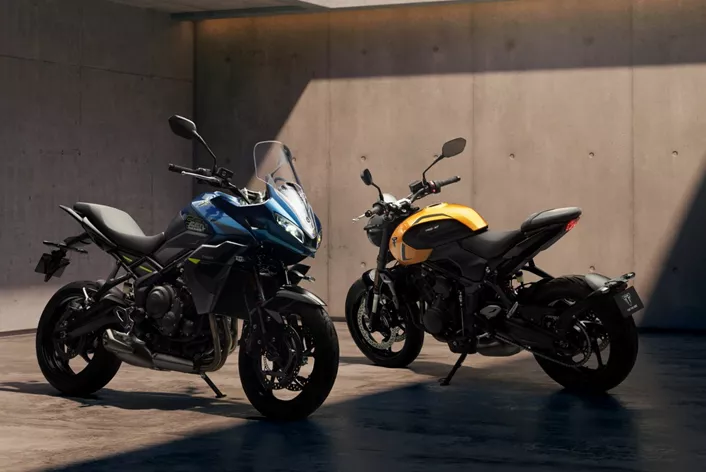
The three test bikes promise the same attractive balancing act: uncomplicated in everyday life, relaxed over long distances and with enough dynamism for a wild chase through the twisties. Yet the technical recipes could hardly be more different. Suzuki relies on a V2 steeped in tradition, Yamaha combines the popular CP2 engine with an automated gearbox, and Triumph sends its characterful three-cylinder into battle.

In this head-to-head, the three mid-range crossovers now have to show how these differences actually make themselves felt on the road. We assess ergonomics and accessibility as well as suspension comfort, wind protection and long-distance impressions. Added to that are engine character, gear changes, assistance systems, brakes, handling and maximum lean angle at a brisk pace. Which concept offers the most cohesive riding experience – and which bike best suits your own needs?
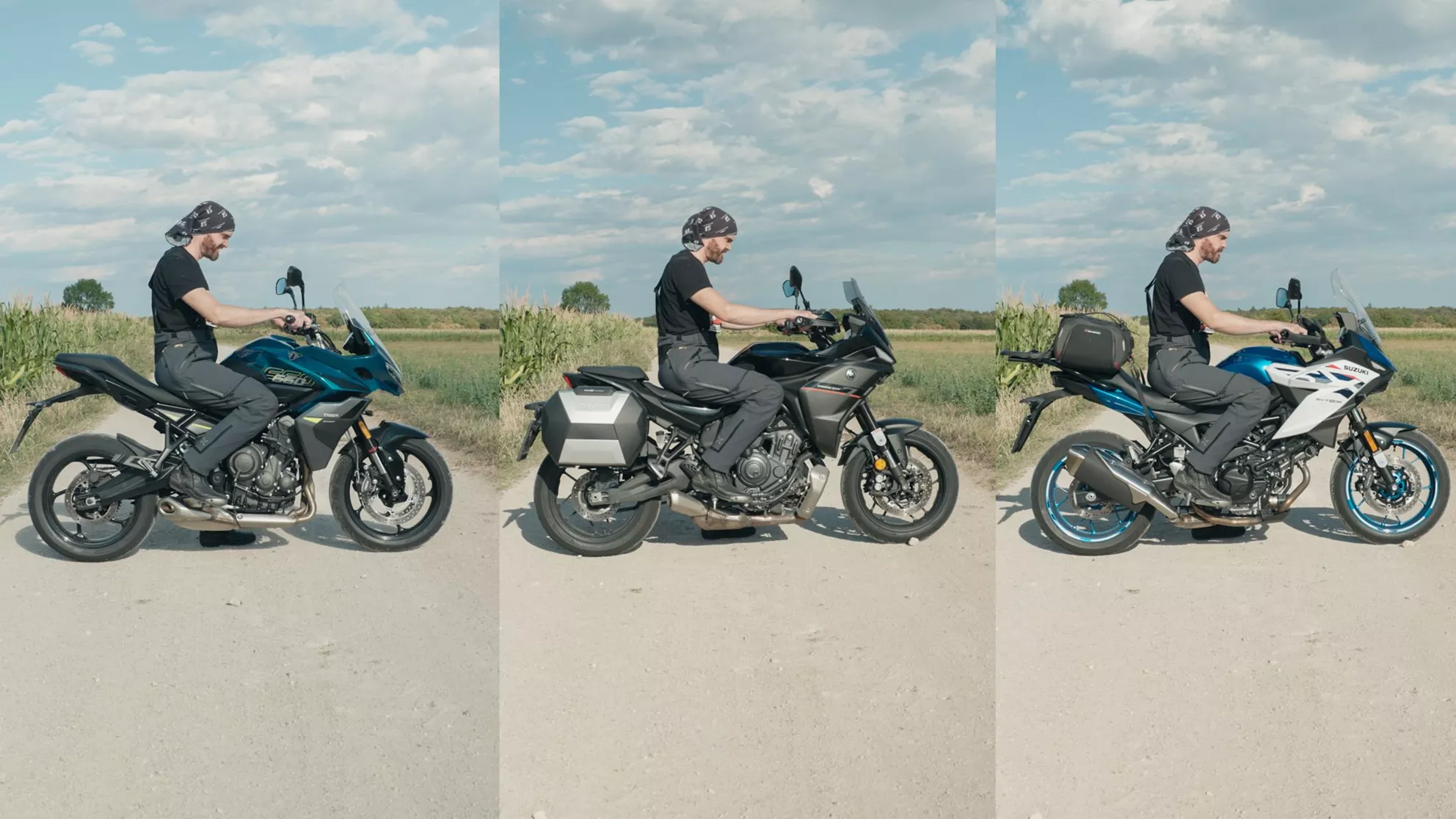
Ergonomics compared

All three bikes offer a typical crossover riding position: the upper body stays very upright, the reach to the handlebar is rather short and the knee angle is pleasantly relaxed. Still, there are noticeable differences.

The Suzuki SV-7GX combines the narrowest handlebar in the comparison with a remarkably slim silhouette between the legs. This makes it feel especially compact and accessible. The Triumph Tiger Sport 660 is a touch wider around the legs and also has the wider handlebar, but its basic riding position feels very similar.

Only the Yamaha Tracer 7 is considerably bulkier around the tank. That gives it more presence and a stronger sense of security, but in direct comparison it takes away some of the playfulness of its two rivals.

Ergonomics of the Suzuki SV-7GX, Triumph Tiger Sport 660 and Yamaha Tracer 7 compared

This is how relaxed you sit on the 3 crossovers.

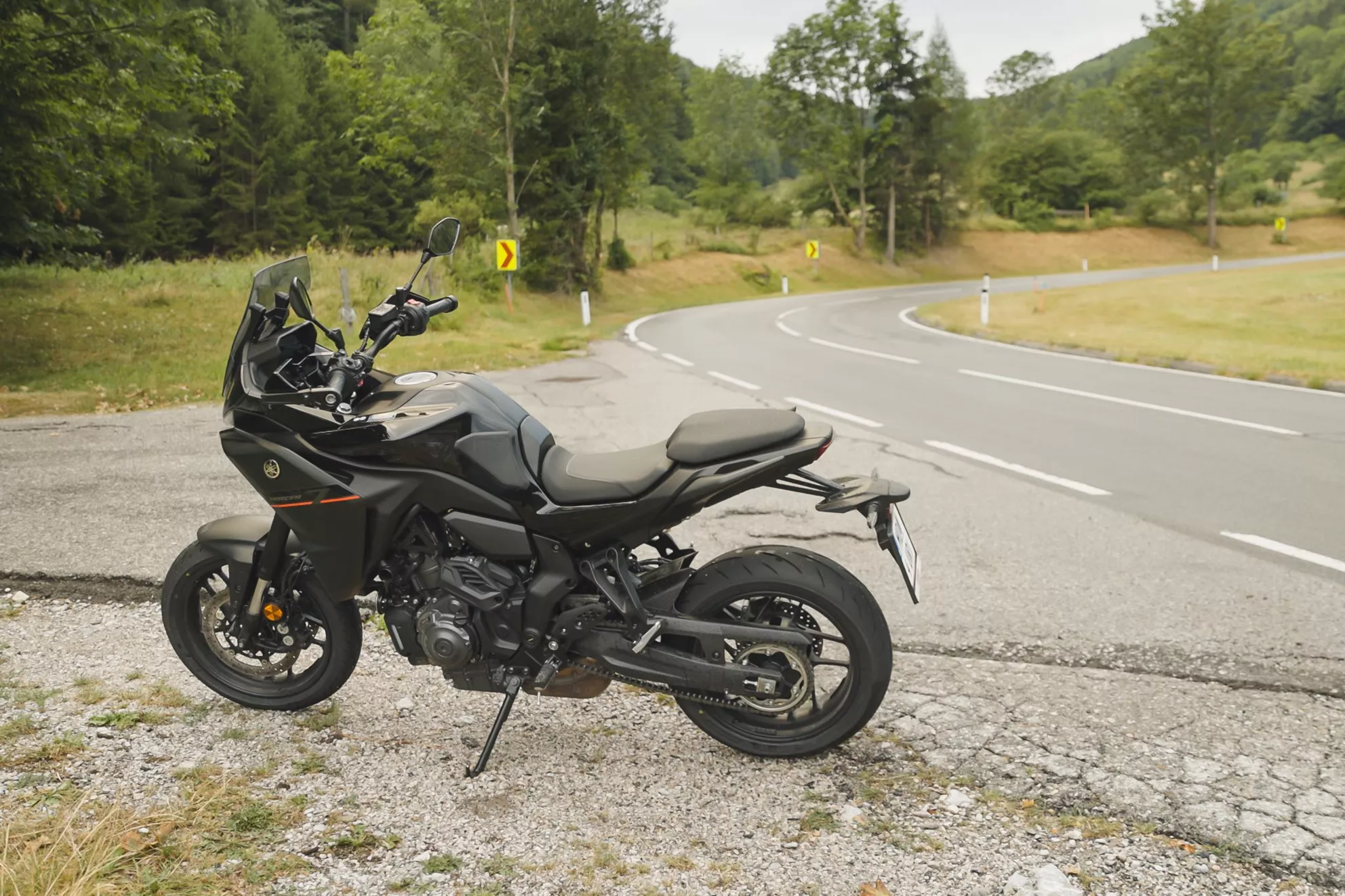
Yamaha Tracer 7 Y-AMT: automatic version with limited comparability

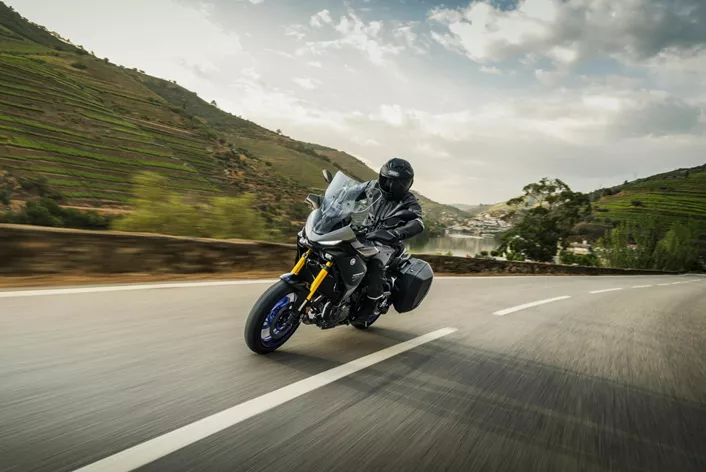
The Yamaha didn't line up with a conventional manual gearbox, but as the Tracer 7 Y-AMT. The difference from the standard version only affects everything related to the clutch and gear changes, so the comparison remains meaningful in all other areas: ergonomics, engine character, chassis, wind protection, brakes and handling can all be assessed independently of the automated gearbox.

Left side view Yamaha Tracer 7 Y-AMT

The Tracer 7 Y-AMT has no foot gear lever.

Everyday riding and city traffic: three uncomplicated mid-range crossovers

After setting off and covering the first few metres, including tight turns, what stands out most is how unobtrusively well all three bikes behave in town. They are wonderfully easy to move around and show no stubbornness whatsoever.

Despite a few extra kilograms, the Suzuki feels particularly beginner-friendly. That's down to its slim build and the perfectly controllable V2. As standard, the SV-7GX's seat is around three centimetres lower than the competition's. The test bike, however, was fitted with the comfort seat, which is two and a half centimetres higher. At 1.84 metres tall, the knee angle with the standard seat could become a little tight over time. Shorter riders, on the other hand, will find the Suzuki especially welcoming.

The Triumph scores with similarly effortless handling and a high-quality-feeling seat. The only thing that takes some getting used to is the clutch modulation, because the Tiger Sport 660 raises the revs quite strongly on its own when engaging the clutch. In return, its cruise control can already be activated from 30 km/h - an extremely useful detail in long 30 km/h zones.

The Suzuki lacks this feature entirely, despite ride-by-wire. For a bike with clear touring ambitions, doing without cruise control is a genuine shortcoming.

Tracer 7 Y-AMT in town: relief from the very first metre

The automated Tracer naturally makes everyday riding the easiest, since there's no need to work the clutch or shift by hand. The system requires practically no familiarisation: the engine engages and disengages smoothly, throttle response is just as jerk-free as on the competition, and the reduced workload is noticeable from the very first metre.

The touring features are not quite perfect, though. The cruise control only accepts speeds from 47 km/h upwards, so it's no help in slower speed limits. On top of that, the seat is pretty hard, as is typical for Yamaha.

Unfortunately, how the three seats affect comfort over several days of touring couldn't be reliably assessed during the comparison ride of several hours. That would require a dedicated touring test.

Yamaha Tracer 7 with SHAD side cases

Unfortunately, the excellent SHAD cases stayed almost empty - there was no time for an extended trip.

Automatic and quickshifter at a relaxed pace

At slightly higher speeds the Yamaha continues to shift sensibly, although some gear changes feel a bit clunky and cheap. Anyone who sticks strictly to the speed limit in town and deliberately rides at very low revs will also occasionally be held back by the system. Y-AMT apparently prioritises long-term engine protection and consistently keeps the engine in a technically appropriate rev range. Even manual inputs are immediately overridden in some situations.

This criticism, however, is at a high level. Overall, the small Tracer's automated gearbox is convincing, and in town it even works more intelligently than the system on the larger Tracer 9.

Despite the almost historic V2, the Suzuki's quickshifter works extremely well at a leisurely pace. There's a clear detent felt through the foot, and the pressure required for upshifts is just right. Only for downshifts does the lever need a bit more force.

On the Triumph, the effort required is right in both directions. On the other hand, the gears engage with slightly less tactile feedback. The electronic intervention seems stronger and more sophisticated, because even at very low and actually unsuitable revs, gears are engaged surprisingly smoothly without the clutch.

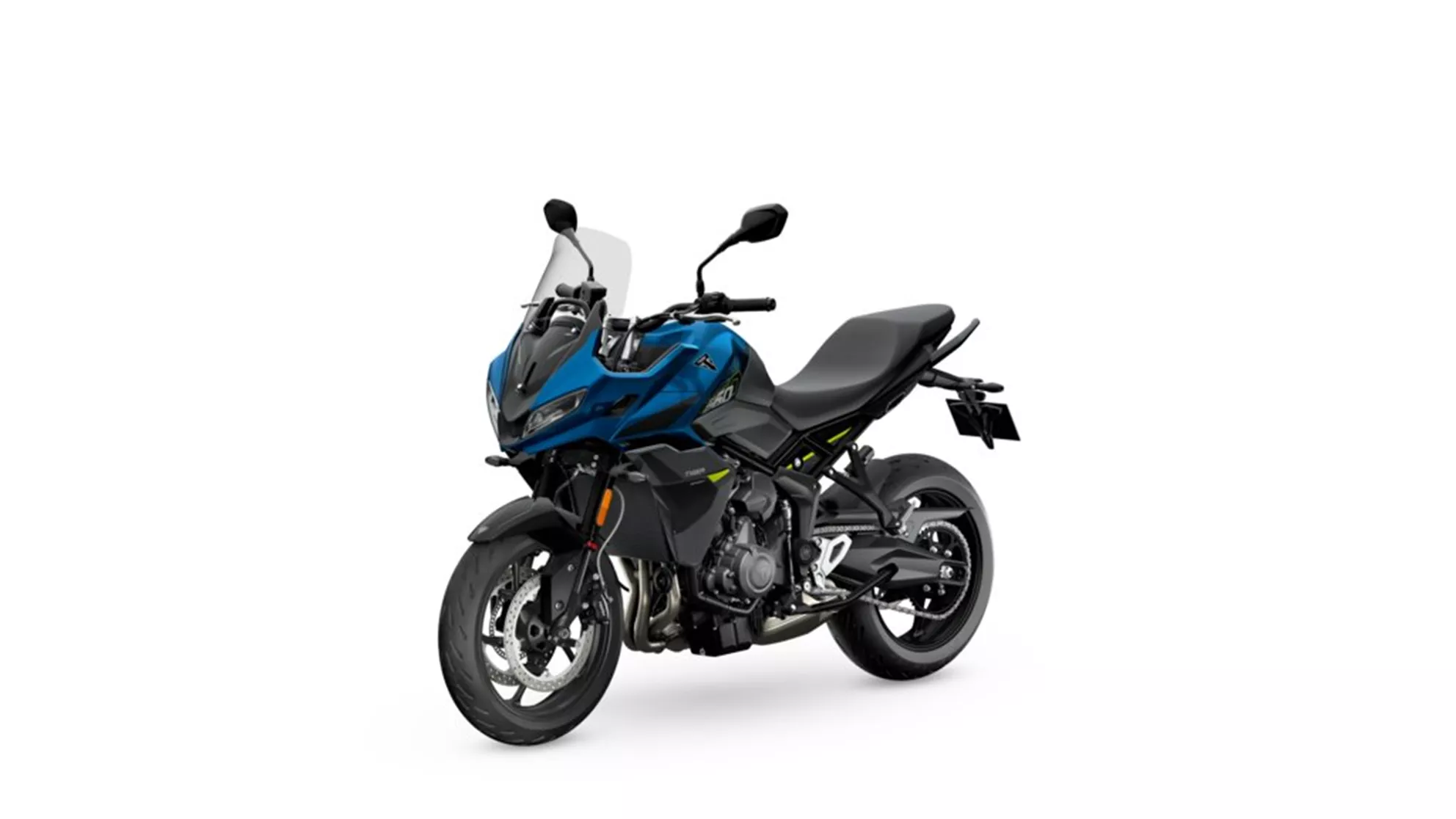
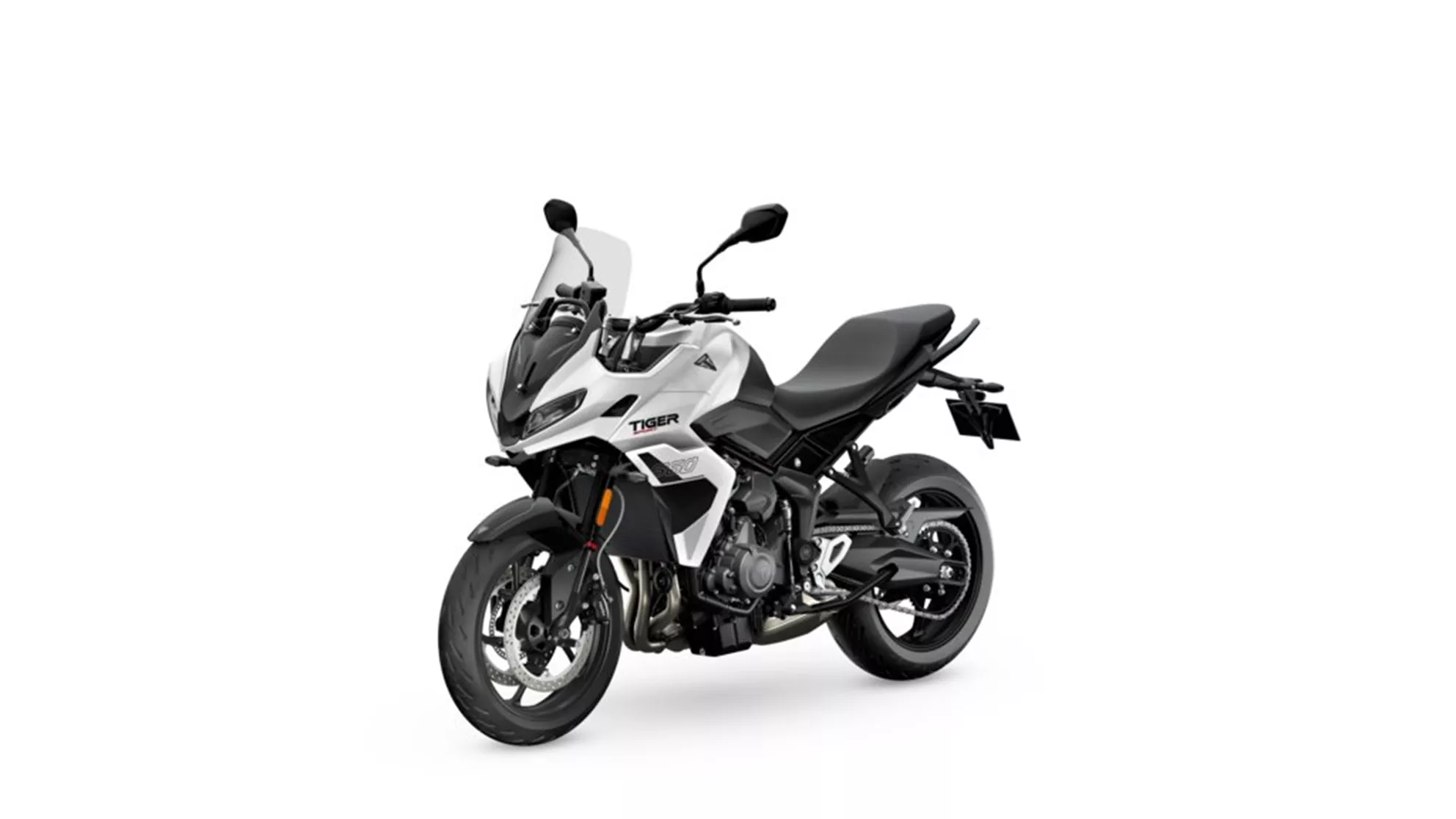
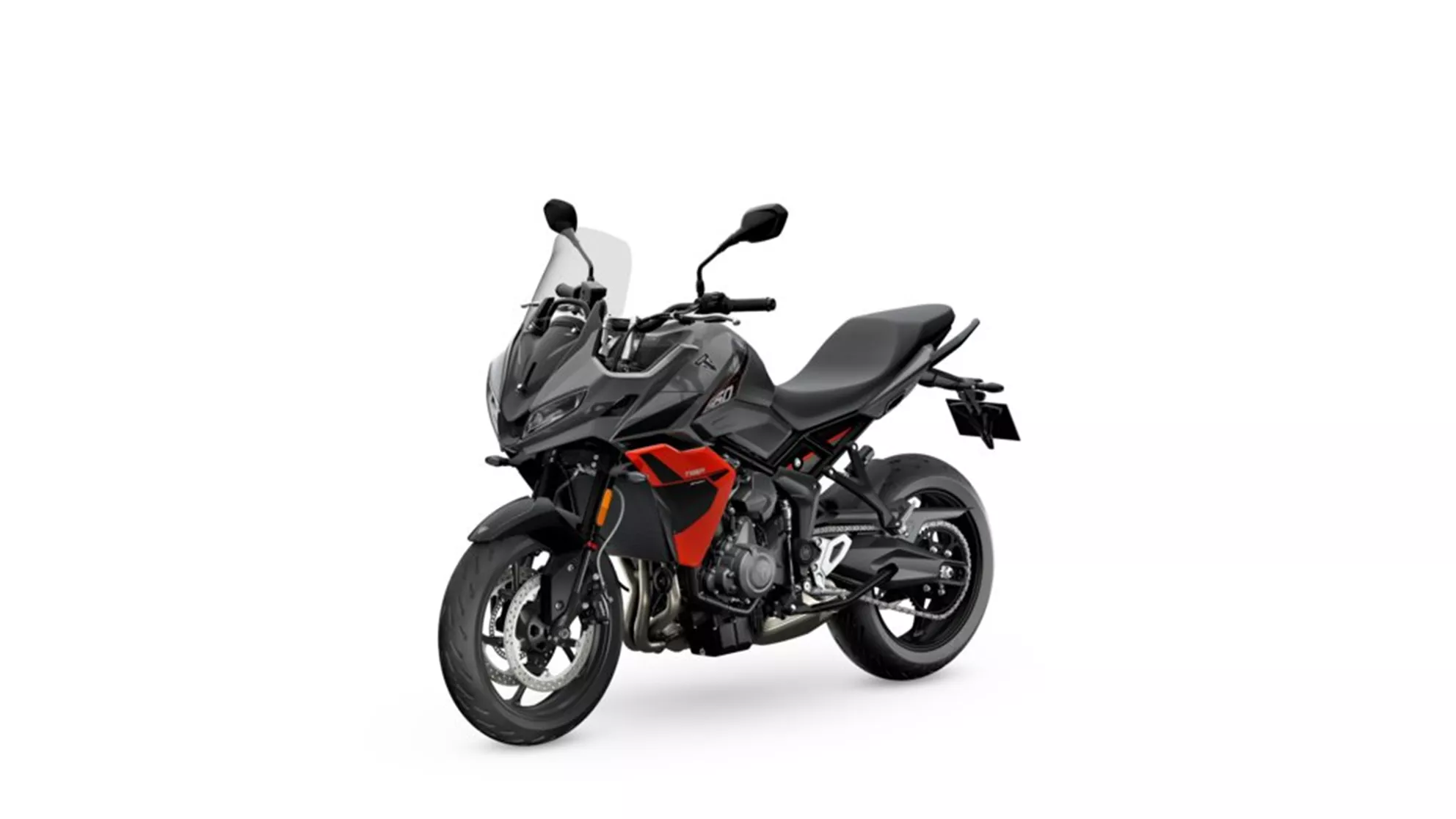
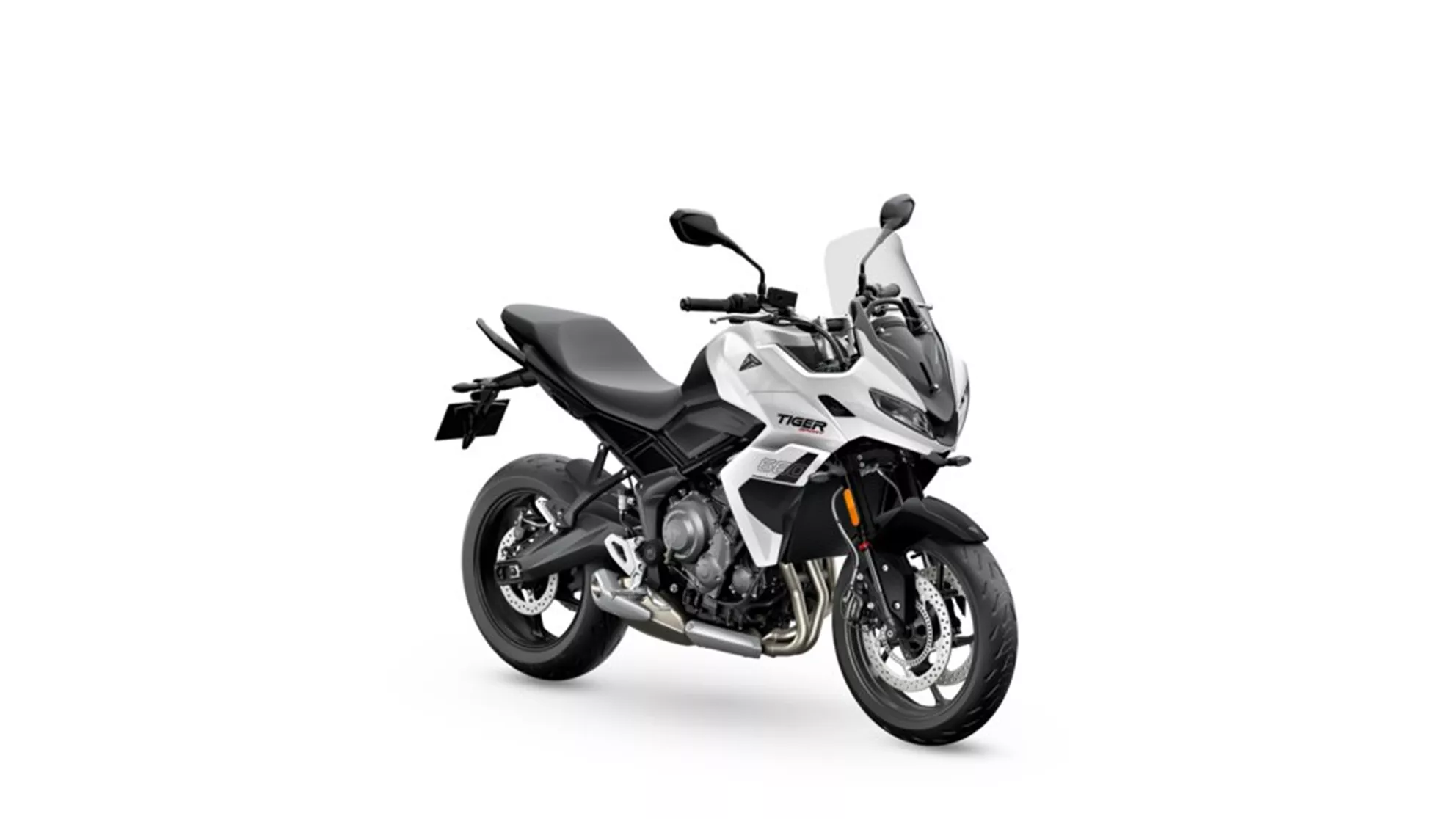
How much does a Triumph Tiger Sport 660 cost?
Here you will find an overview of the price level of new and used motorbikes!
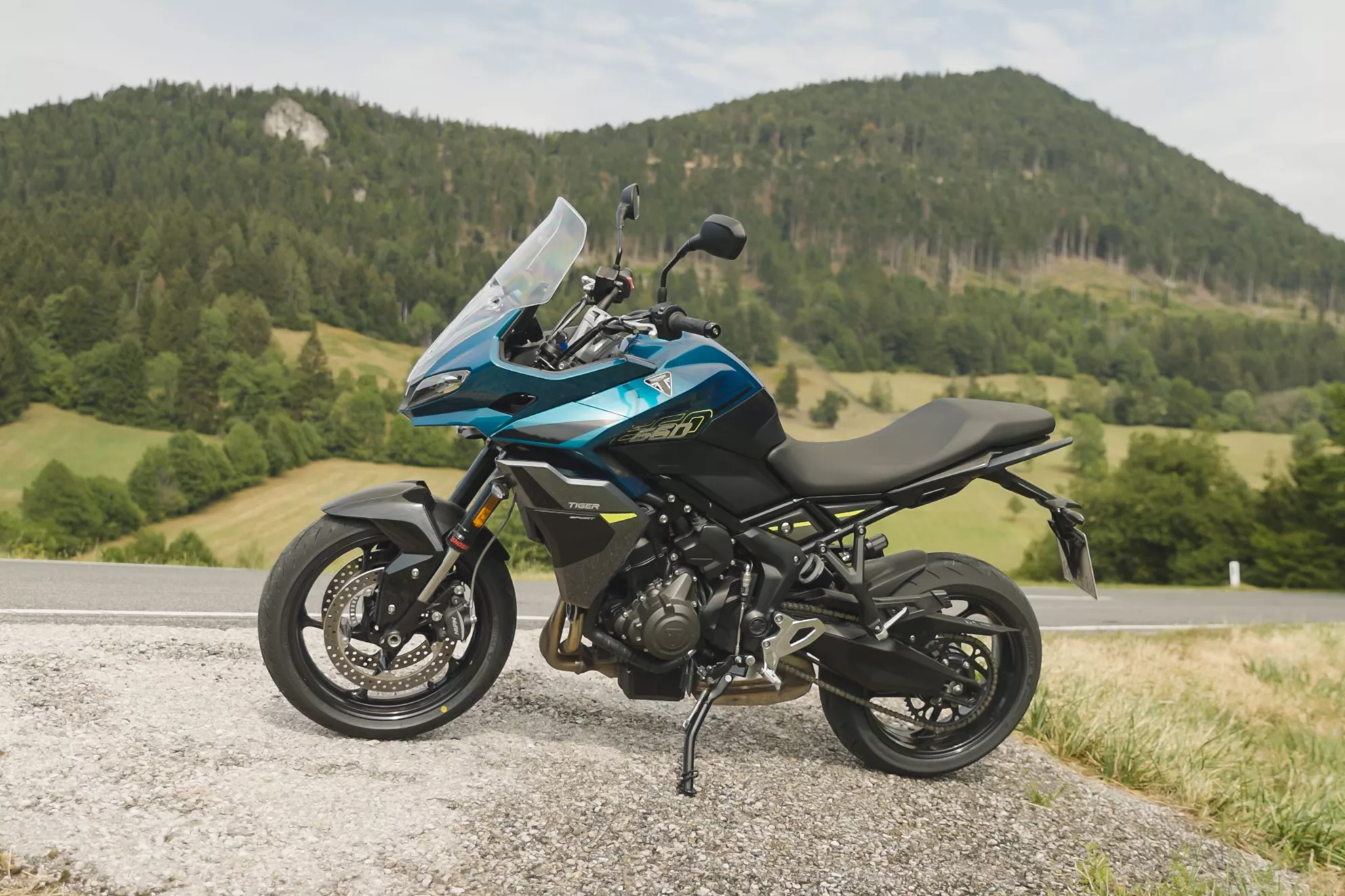
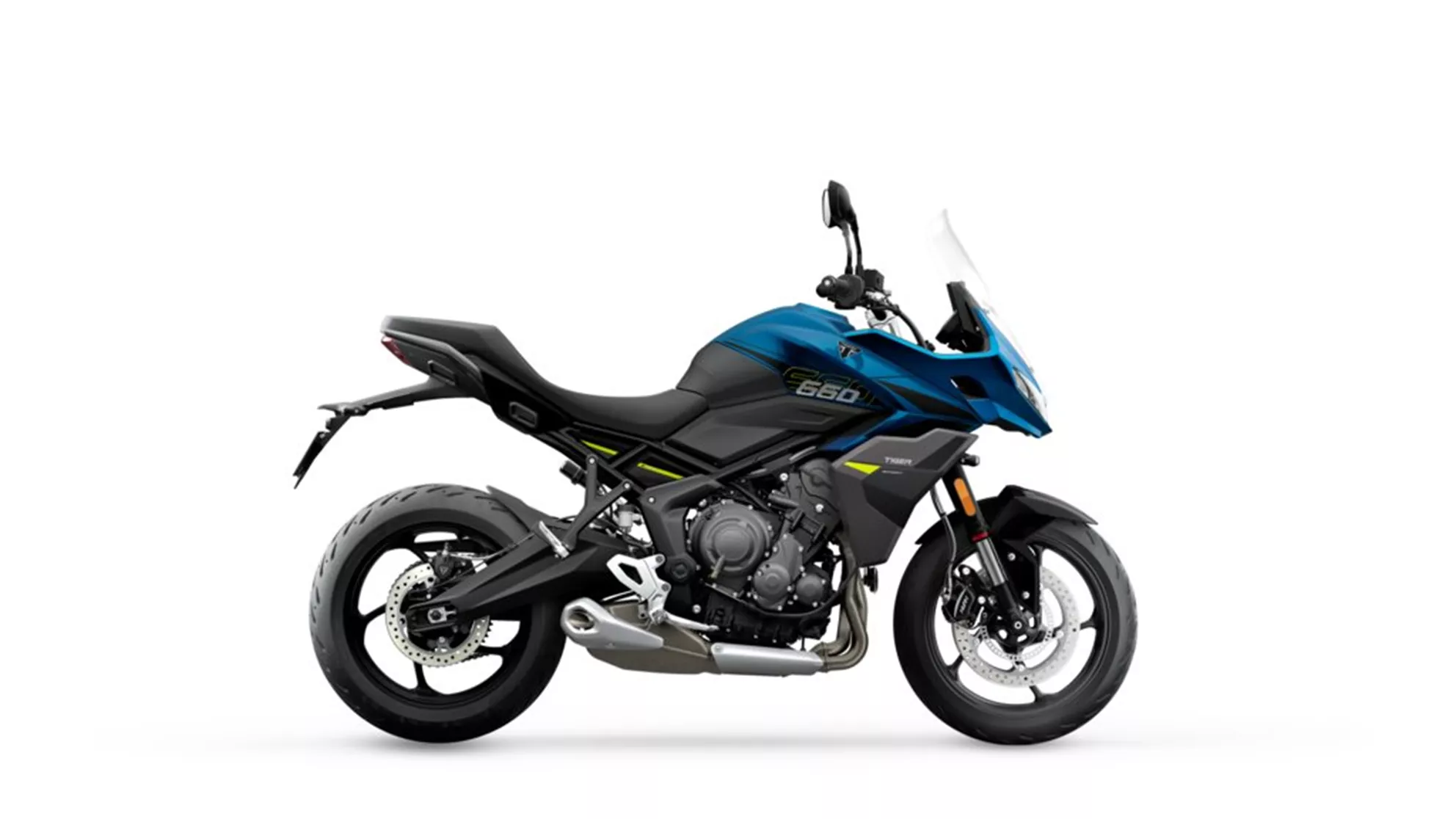
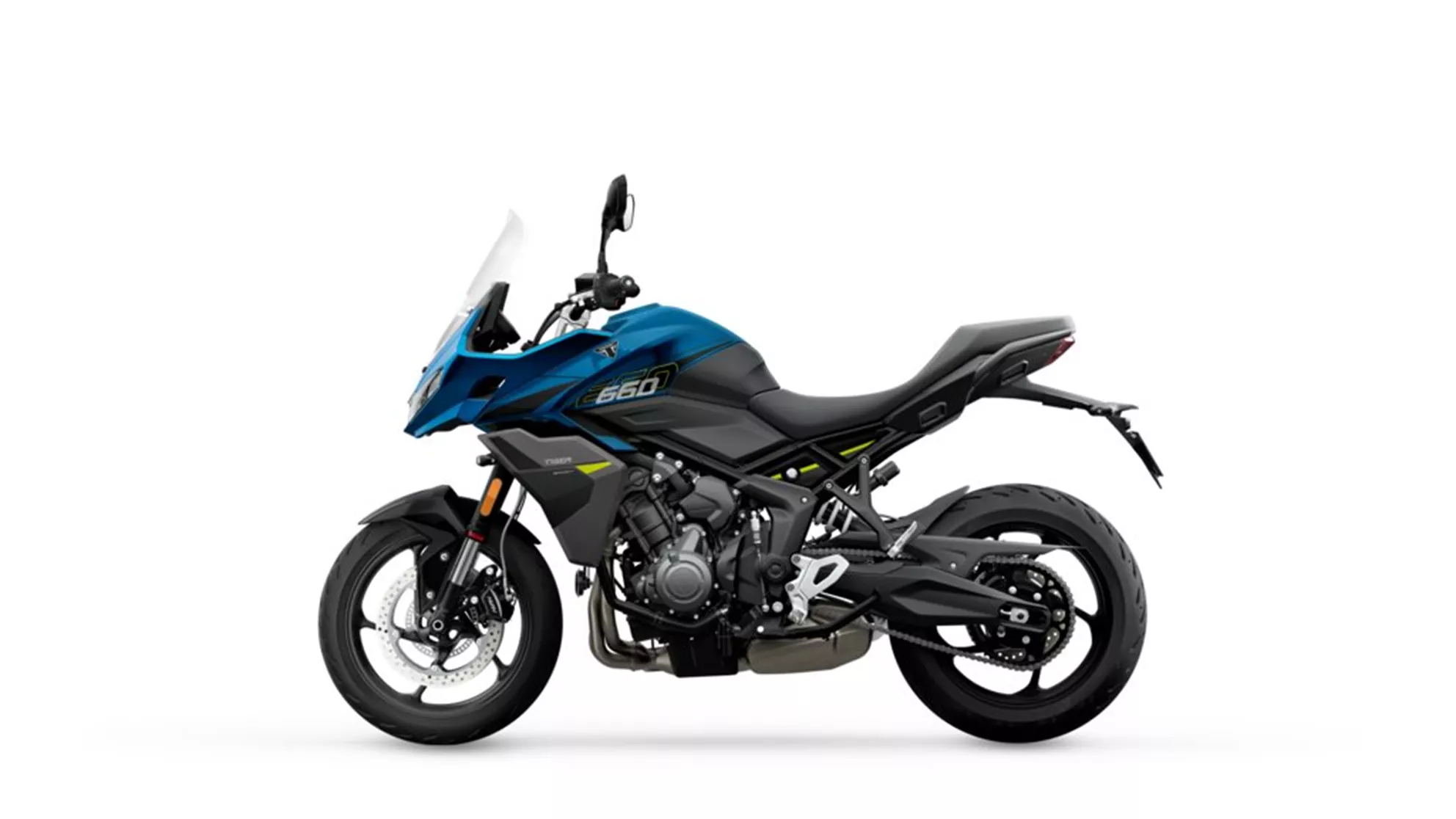
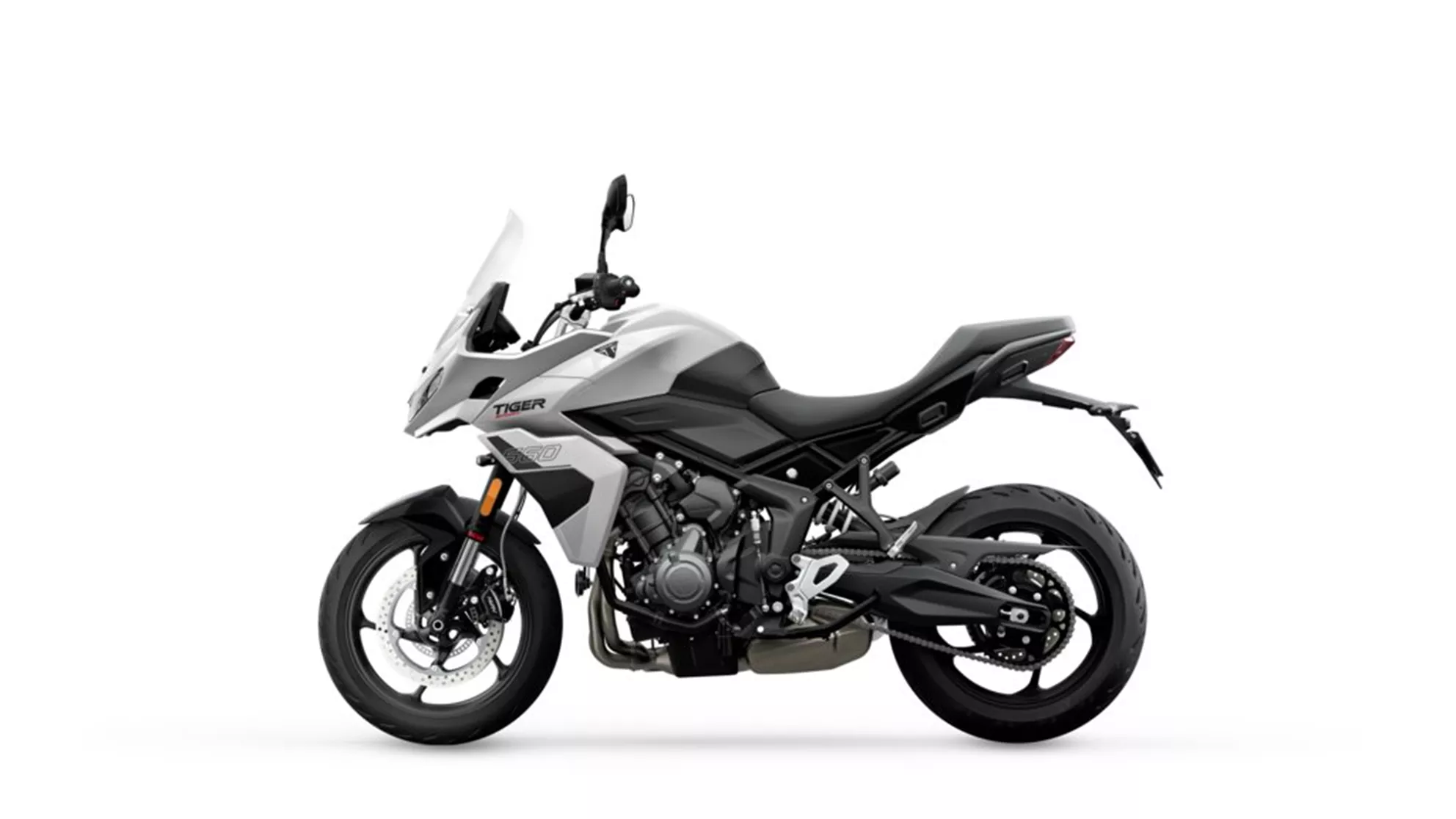
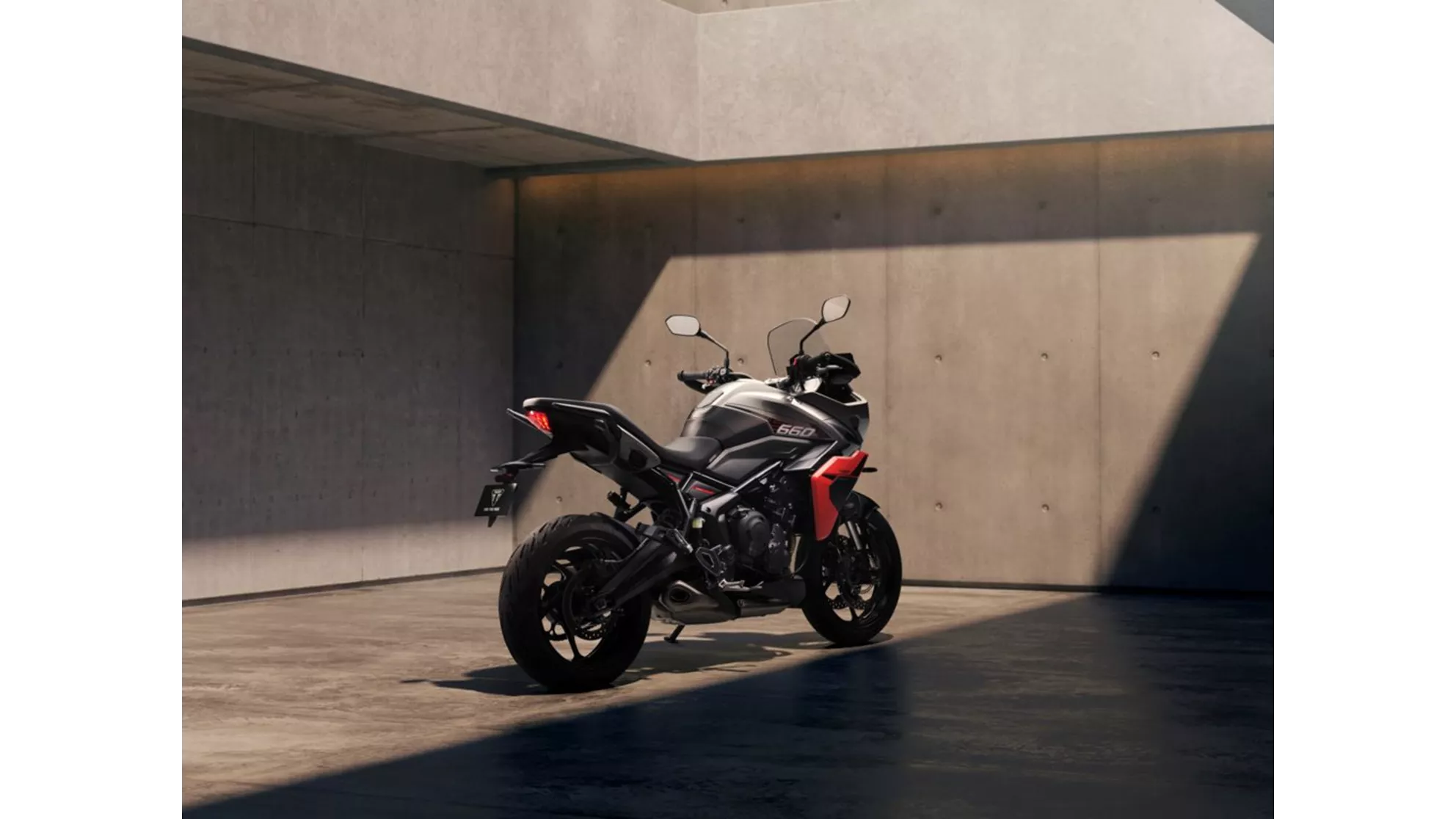
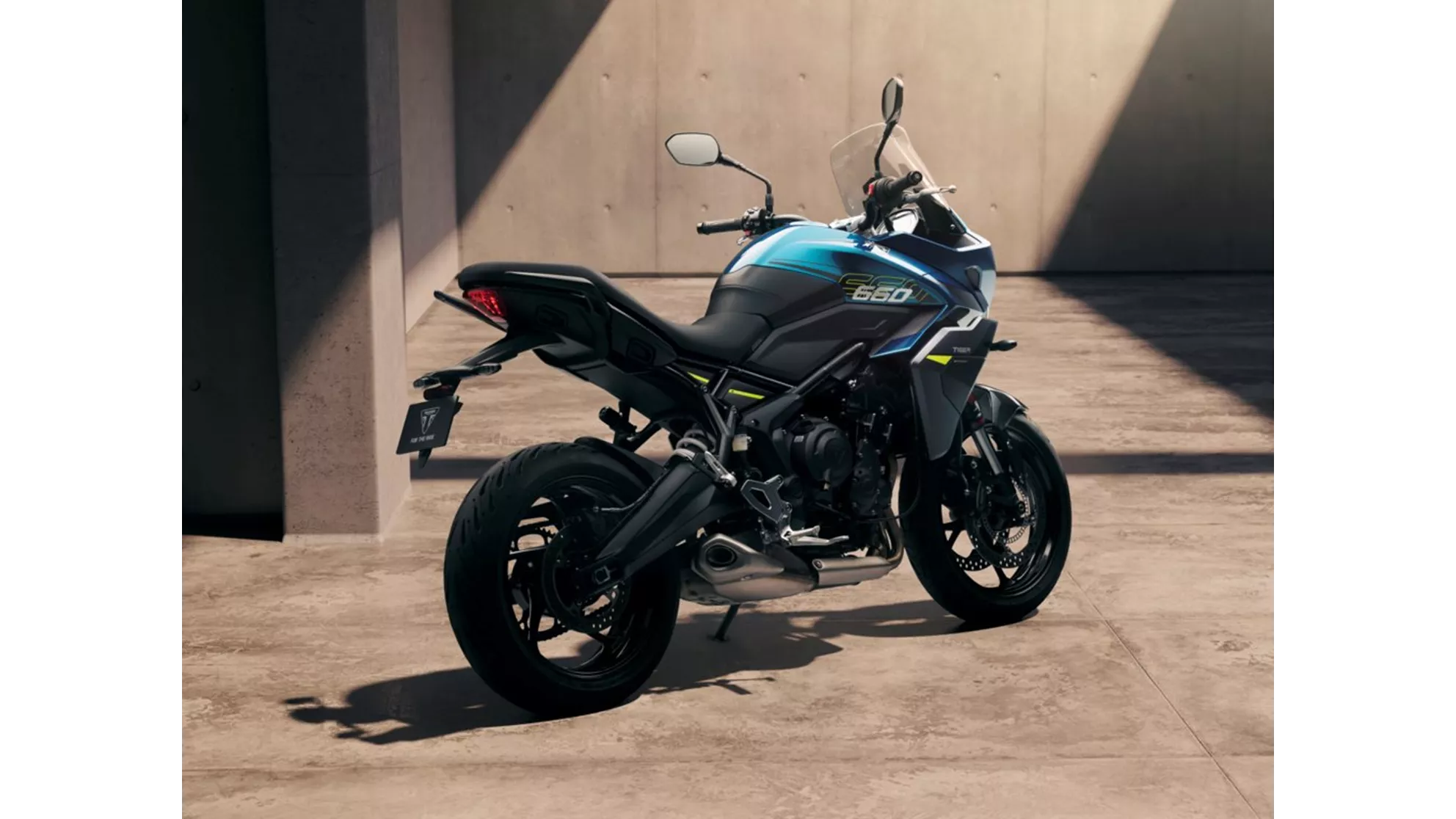
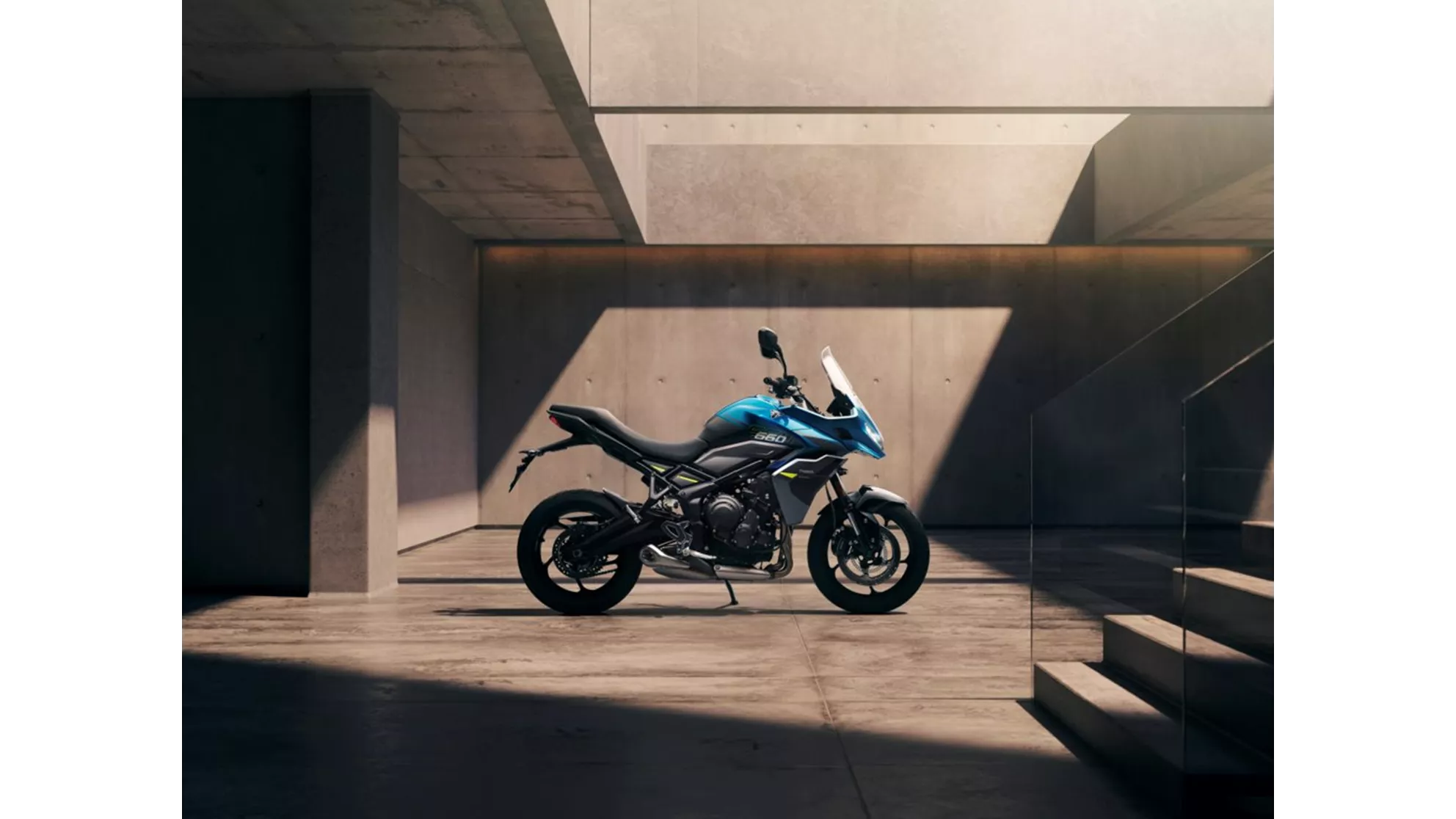
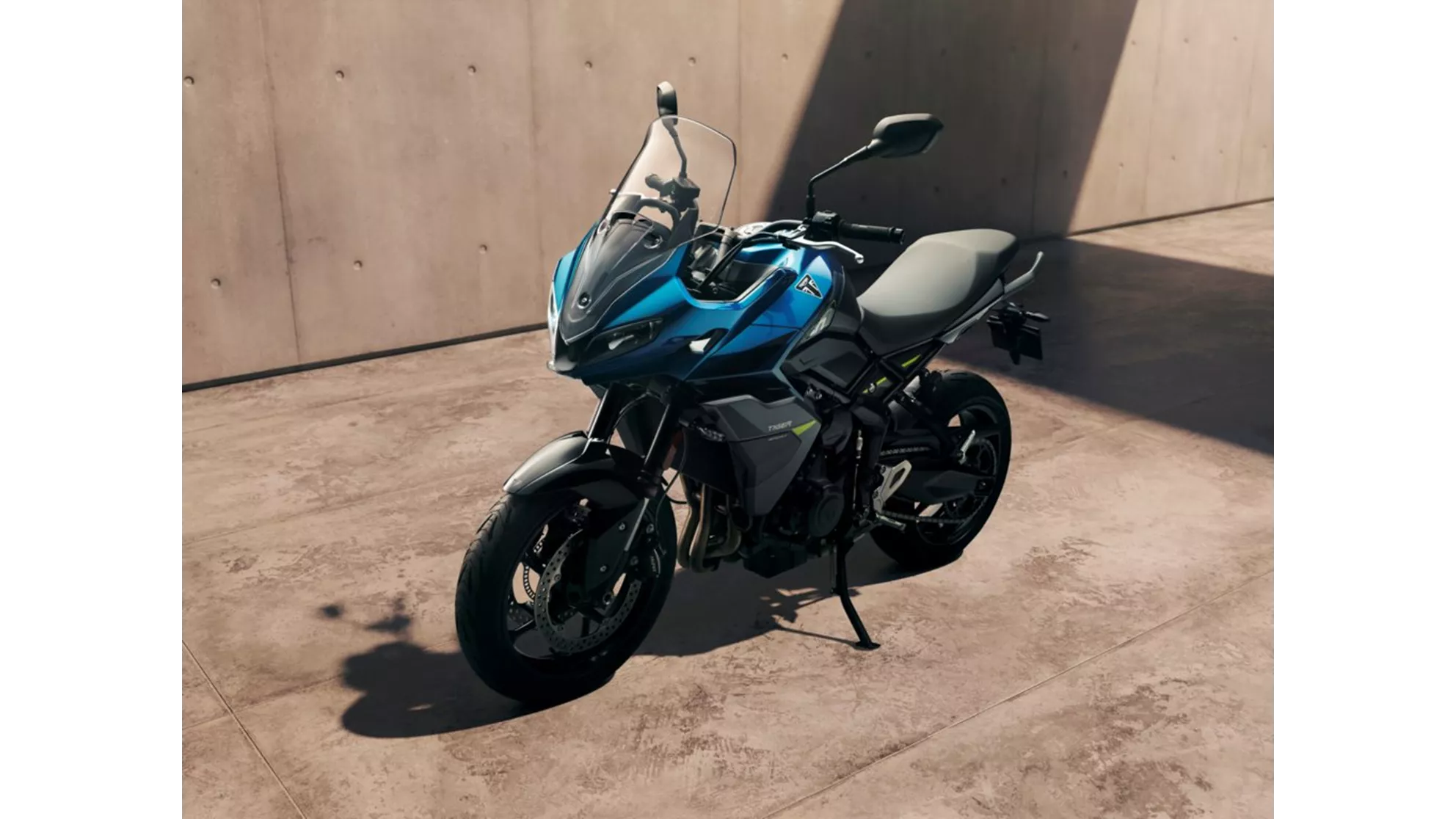
Left side view Triumph Tiger Sport 660

The Triumph Tiger Sport 660 has a really easy-to-use quickshifter

Suspension comfort: Suzuki SV-7GX sets the benchmark

The Suzuki wins the suspension comfort chapter - despite its old-fashioned-looking fork and the shortest suspension travel in the comparison. Bumps and undulations are softly ironed out with very good responsiveness. The soft comfort seat further enhances the almost luxurious riding feel.

The Tracer 7 feels considerably firmer. A sporty touch is noticeable over bumps, without the setup ever feeling cheap or harsh. The Yamaha is the only bike in the comparison with adjustable suspension. As is often the case in this price class, though, it changes the riding experience only marginally. Even in the softest setting, individual bumps are passed on similarly harshly. On undulating surfaces the Tracer rides a little more pleasantly, because the slower rebound allows a slight bobbing.

The Tiger Sport 660 initially feels quite comfortable, probably helped by its 150 millimetres of suspension travel. On closer observation and after longer riding, however, it becomes clear that the suspension doesn't respond quite as finely as the competition's. It never becomes really bothersome, and the overall impression remains predominantly pleasant.

Engines in the lower rev range

All three engines offer sufficient pull from the bottom of the rev range. The Triumph's three-cylinder naturally delivers somewhat less immediate grunt than the two twins, but remains perfectly adequate for everyday riding. In return, it naturally offers noticeably more punch up top than its Japanese rivals.

Suzuki SV-7GX, Triumph Tiger Sport 660, Yamaha Tracer 7 Y-AMT

None of the three leaves you starving for power low in the rev range

Wind protection and vibrations on the motorway

On the motorway, all three bikes get loud. This is down neither to the helmet worn nor to particularly pronounced engine noise, but to the respective windscreens. All three direct the airflow towards the head, at least for a rider who is 184 cm tall.

Triumph and Yamaha offer quick adjustment, with the Yamaha's solution being easier to operate. On the Tiger Sport 660, the screen in its lowest position keeps the upper body very well out of the wind. The turbulence, which is only noticeable acoustically, is quietest there. In higher positions, however, it gets unpleasantly loud.

The experience on the Tracer 7 is very similar, but overall the Yamaha feels a touch more pleasant on the motorway. It feels wonderfully planted and calm, while the wider tank shape conveys a stronger sense of security.

The assessment of the Suzuki's wind protection remains provisional. The test bike was fitted with an optional, taller windscreen, set in the lowest of three positions that can only be adjusted with tools. In this configuration, the result is similar to that of the competition. There was no time to change it during the test.

Sustained higher motorway speeds couldn't be tested legally either. All observations on straight-line stability and wind protection therefore refer to speeds of 130 to 140 km/h.

You almost have to go looking for vibrations on the Tracer 7. The Suzuki vibrates minimally more, but also remains completely unproblematic. The Triumph's three-cylinder is much more present. Its vibrations reach the hands and especially the left footpeg. Sensitive riders could end up struggling with numb limbs on longer stages.

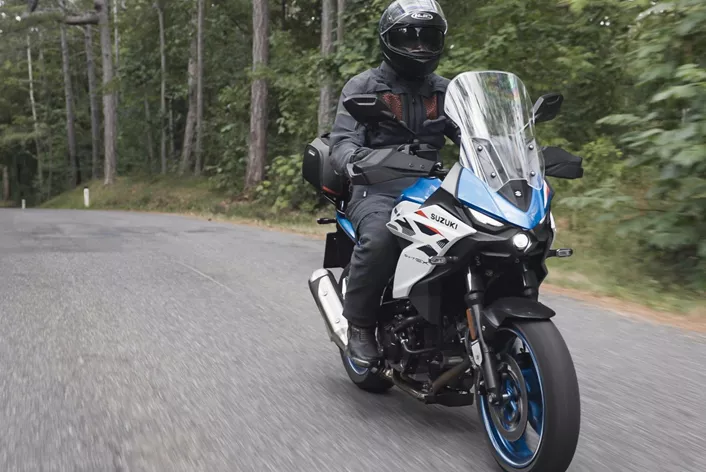
Suzuki SV-7GX with optional touring windscreen

The Suzuki was delivered with a larger touring windscreen.

Bridgestone Battlax S23 changes the comparison and adds sportiness

None of the three test bikes ran on its standard tyres. Instead, all of them rolled on the Bridgestone Battlax S23. This is certainly something to keep in mind when evaluating the riding impressions.

The S23 tends to give a bike more stability, but often takes away some of its playfulness. The inherently agile mid-range crossovers benefit from this character, because the tyre helps exactly where the basic design falls a little short. Grip is enormous, while turn-in remains light-footed and neutral despite the added stability. The S23 also works very well in the wet. Especially when riding hard, it is clearly superior to the respective original tyres.

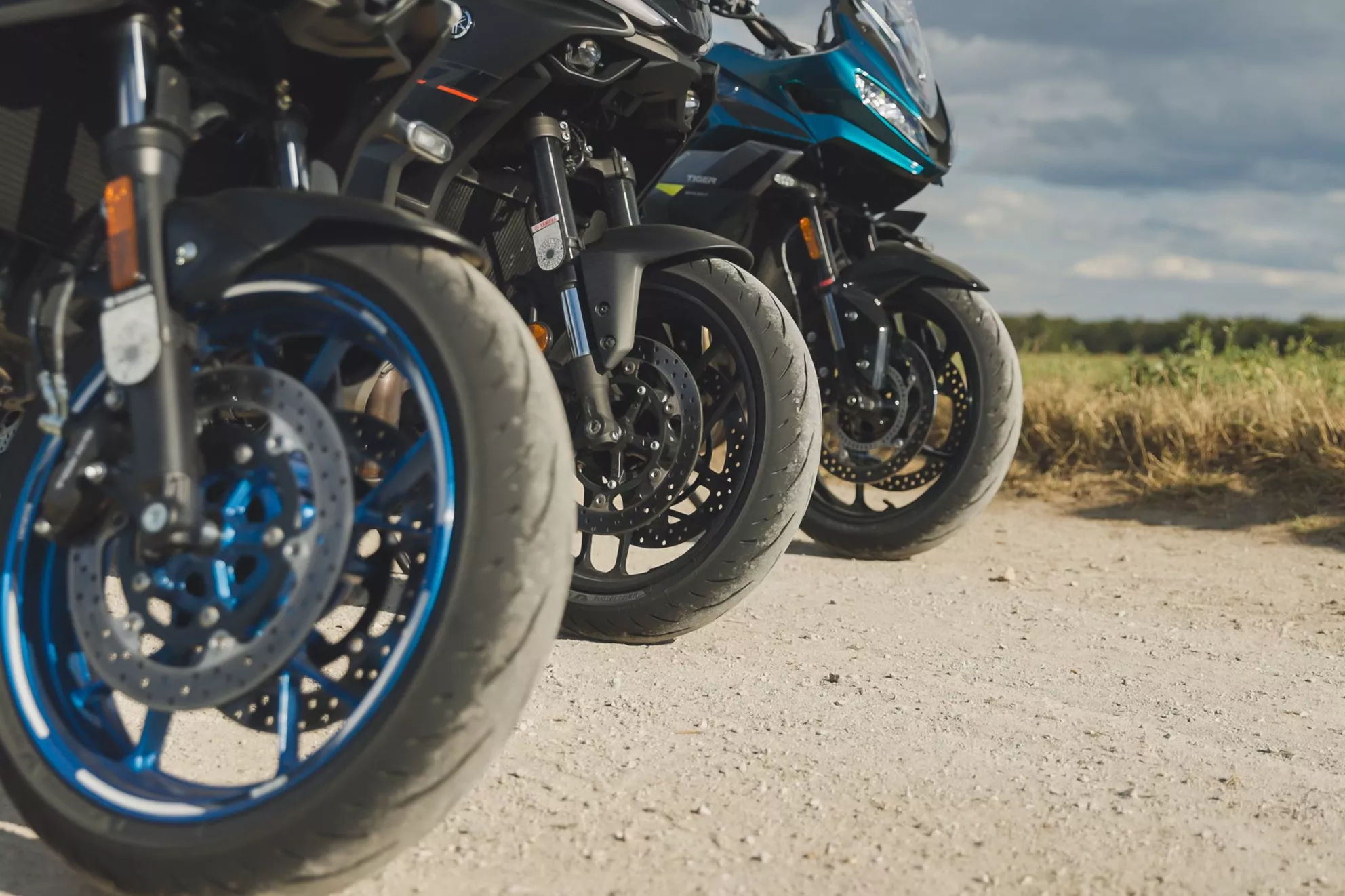
Bridgestone S23 on crossover bikes

Identical Bridgestone S23 tyres for more grip and better comparability

Engine character at a brisk pace: V2, CP2 twin and Triumph triple compared

With the throttle wide open, the Suzuki presents its harmlessly clattering V2 with plenty of power and a small peak at the very top of the rev range. So winding it out pays off.

Things look different with the Yamaha's almost legendary CP2 engine. It delivers fantastic grunt from the bottom up to the upper midrange, after which it increasingly runs out of breath. The sound remains unspectacular throughout. Unlike the MT models, the Tracer has no so-called sound enhancers. These air ducts treat the rider to a prominent intake sound at bigger throttle openings, which is barely audible on the Tracer.

The Tiger Sport 660 feels the sportiest and thus lives up to its name. After pulling away from the bottom of the rev range somewhat more reservedly, the three-cylinder pulls hard, offers an enormously grunty midrange and logically keeps further reserves up top. The perceived power does build a little more sluggishly there, but the Triumph still delivers the biggest racing feel, above all of course thanks to its clear power advantage over the competition. Shorter gearing could make the Tiger even more entertaining.

When it comes to throttle response, none of the three bikes shows any notable weakness.

How much does a Yamaha Tracer 7 Y-AMT cost?
Here you will find an overview of the price level of new and used motorbikes!
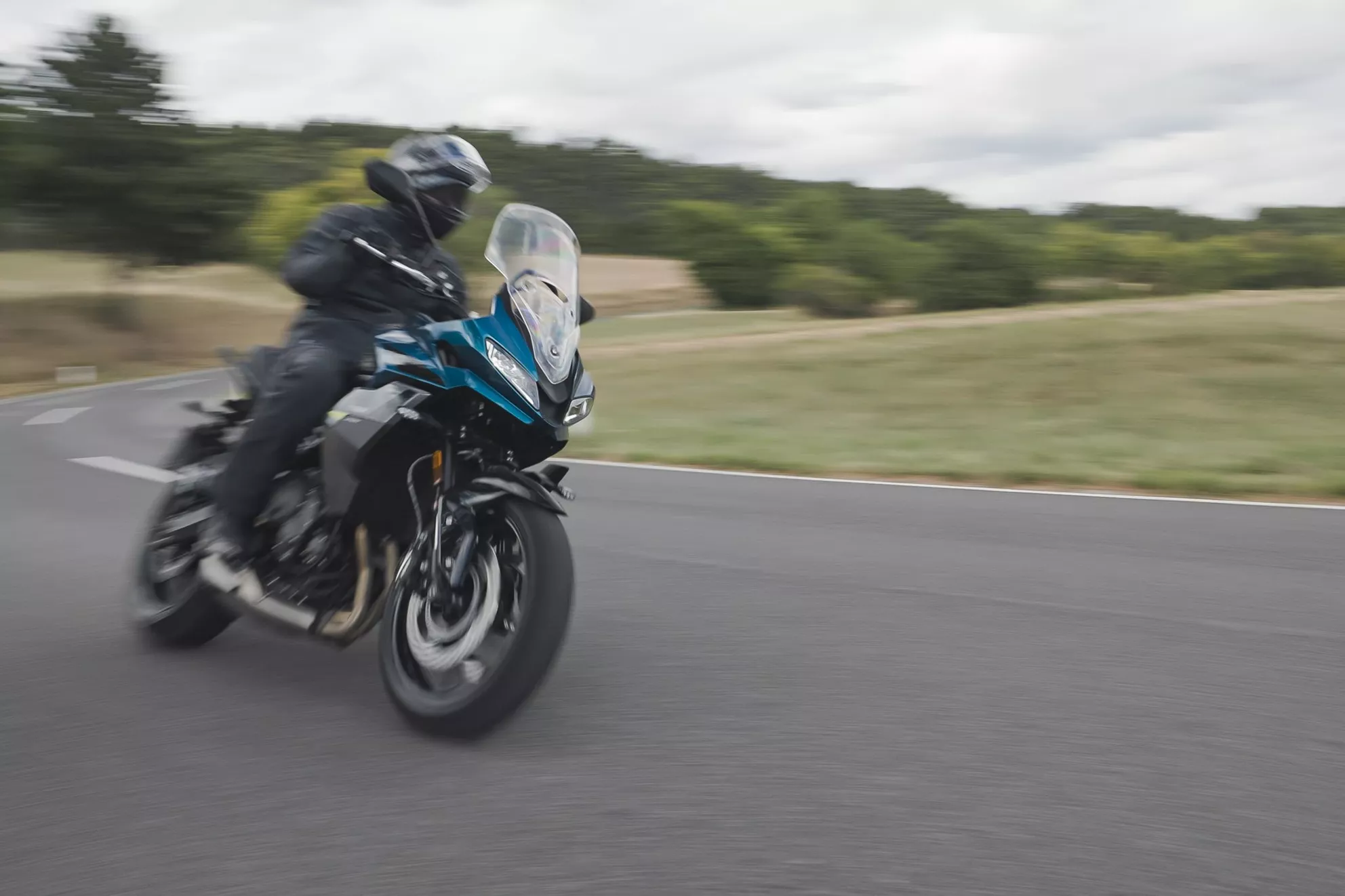
Triumph Tiger Sport 660 being ridden hard

The Tiger Sport lives up to its name and makes spirited riding a real treat!

Quickshifter and Y-AMT when riding hard

The quickshifters of the Suzuki and Triumph also work quickly and are a joy at a brisk pace. Under these conditions, however, the Yamaha absolutely should be ridden in manual shift mode and shifted with the left hand.

There is a sportier automatic mode, D+, but even this is only of limited use for committed cornering. Because the Tracer lacks an IMU, it sometimes changes gear even at maximum lean. That's less dramatic than it sounds at first, but it still feels unpleasant.

On a slippery section, the Yamaha's assistance systems allowed a considerable rear-wheel slide - of all things in D+ mode, which is actually supposed to intervene earlier. The brand-new, not yet scrubbed-in tyre probably posed a particular challenge for the system. Once the tyre was scrubbed in and the road completely dry, there were neither patronising nor alarming interventions.

The assistance systems of the Suzuki and Triumph didn't restrict the ride negatively either. The ABS worked unobtrusively on all three bikes.

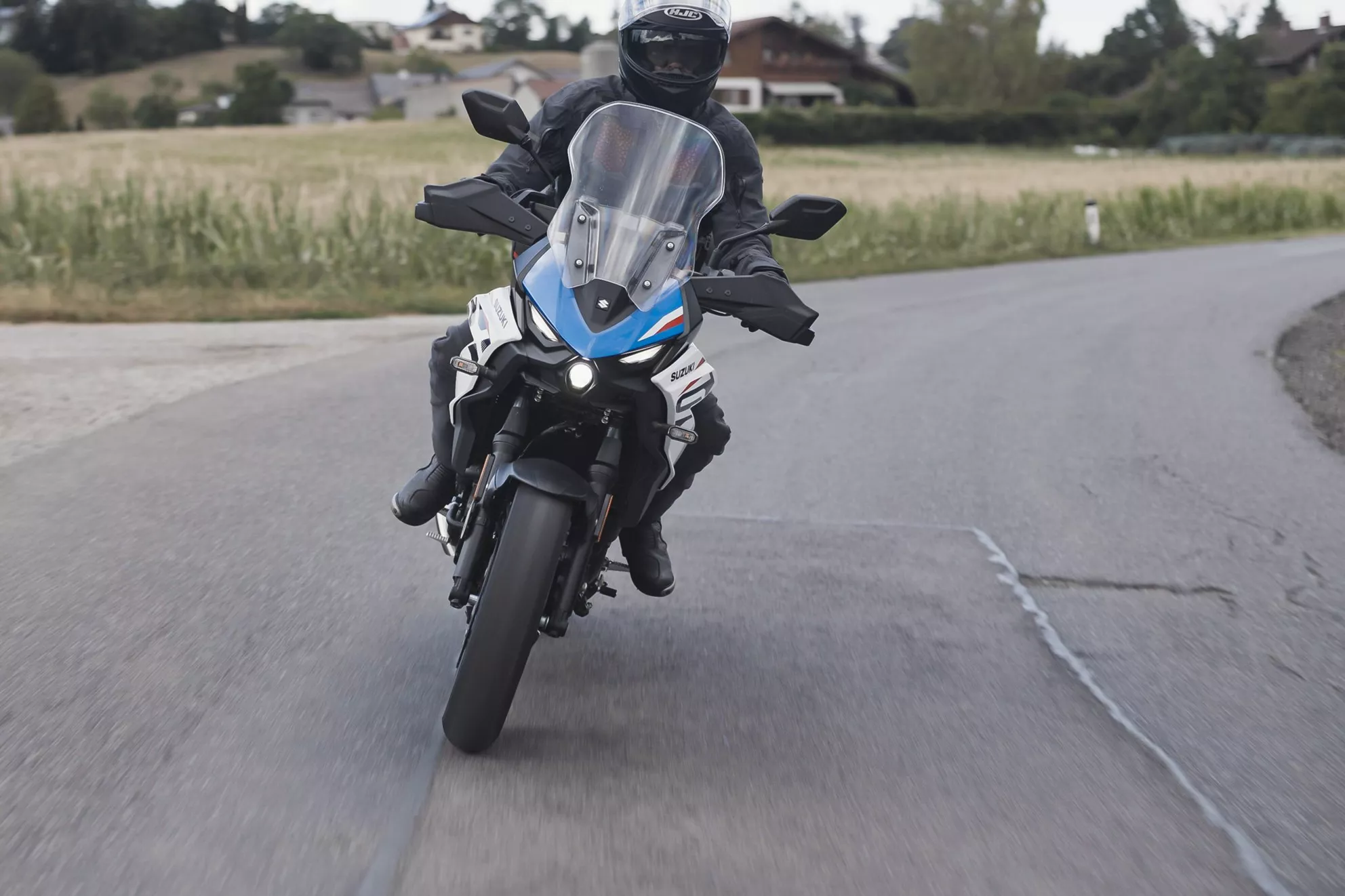
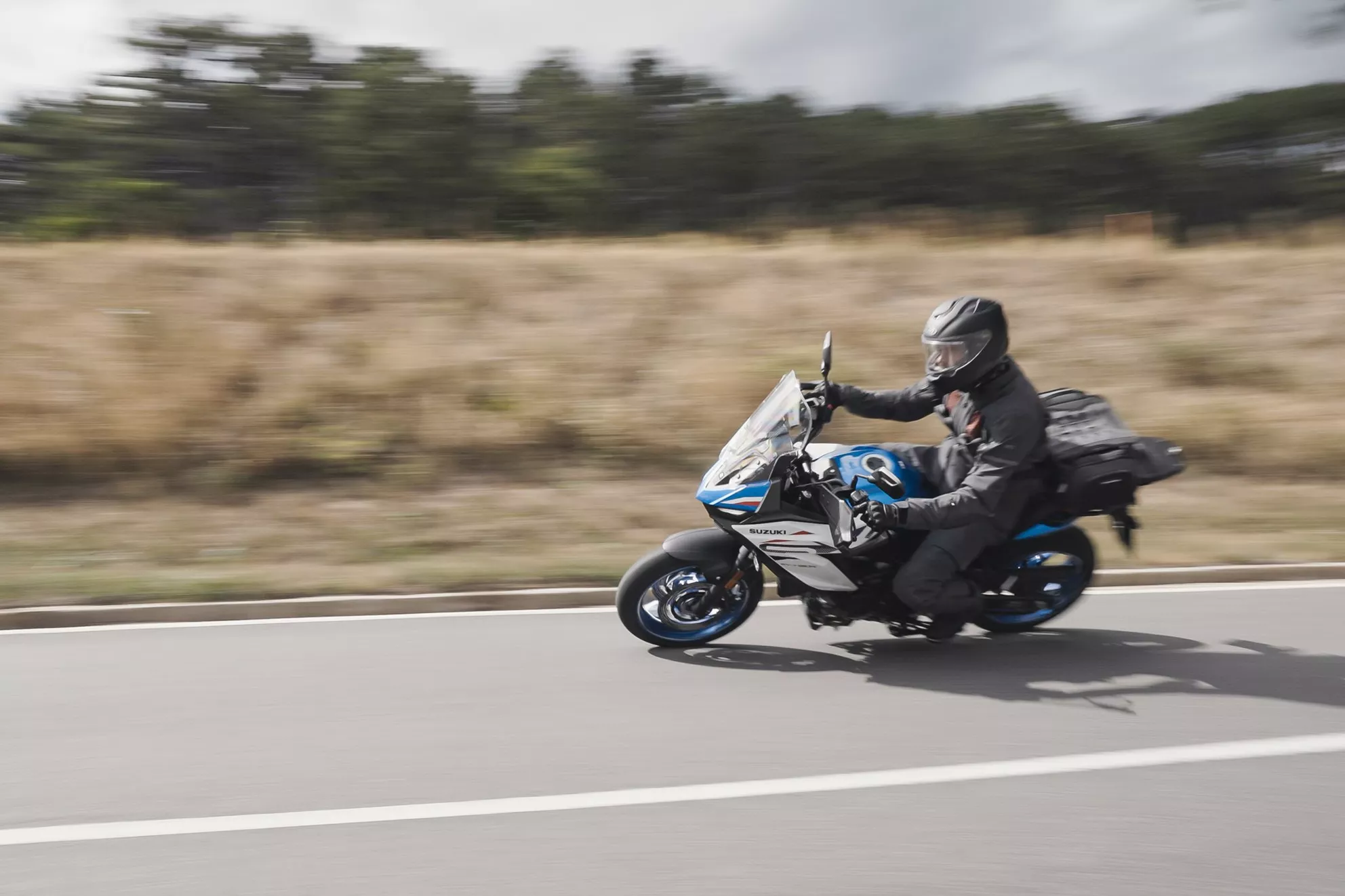
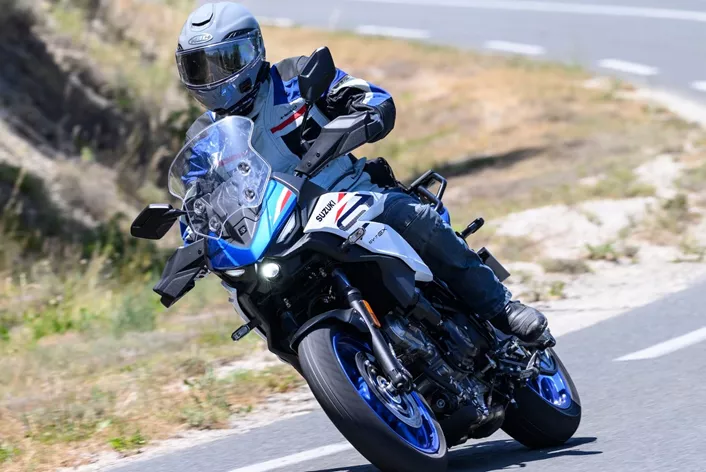
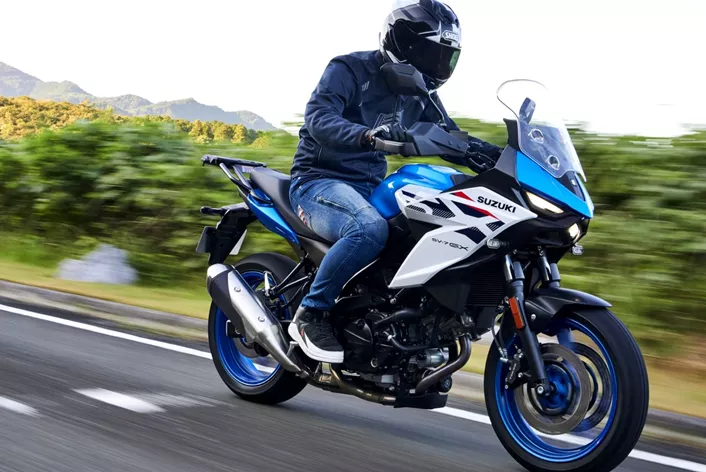
Suzuki SV-7GX being ridden hard

The SV-7GX's assistance systems are up to date - no nasty patronising from the traction control!

Brakes compared

Braking performance is satisfactory on all three machines. The Suzuki does have a soft pressure point, but remains easy to modulate and bites hard.

The Yamaha's brakes leave the best impression. They also combine very good stopping power with a firmer and even easier-to-modulate pressure point.

Only the Triumph demands more finesse at brake pressures beyond roughly 50 percent. At a brisk pace, its braking system is less easy to modulate in this range than those of its two rivals.

Handling and maximum lean angle

In terms of handling, all three crossovers are willing and neutral when leaned over. The Suzuki is the most agile bike in the comparison, while the Yamaha and Triumph feel somewhat more stability-oriented. At a quick but not race-track pace, all three chassis hold firm and reliably stay on the chosen line.

Once again, the Suzuki stands out particularly positively. Despite its comfortable and soft basic setup, it also handles very well at a brisk pace and doesn't start to wallow unpleasantly at all.

Because of the long hero blobs on its footpegs, the Tracer feels like it has slightly less maximum lean angle than the Suzuki. The Triumph's pegs scrape a little later than on both Japanese bikes.

Confidence at lean differs only marginally. The Tracer's firmer setup and harder seat may convey a little more feedback. Fundamentally, though, the upright riding position and agile design of all three bikes make clear feedback from the tyres difficult. Confidence therefore comes mainly from familiar asphalt conditions, the very grippy Bridgestone S23 and the touching-down hero blobs.

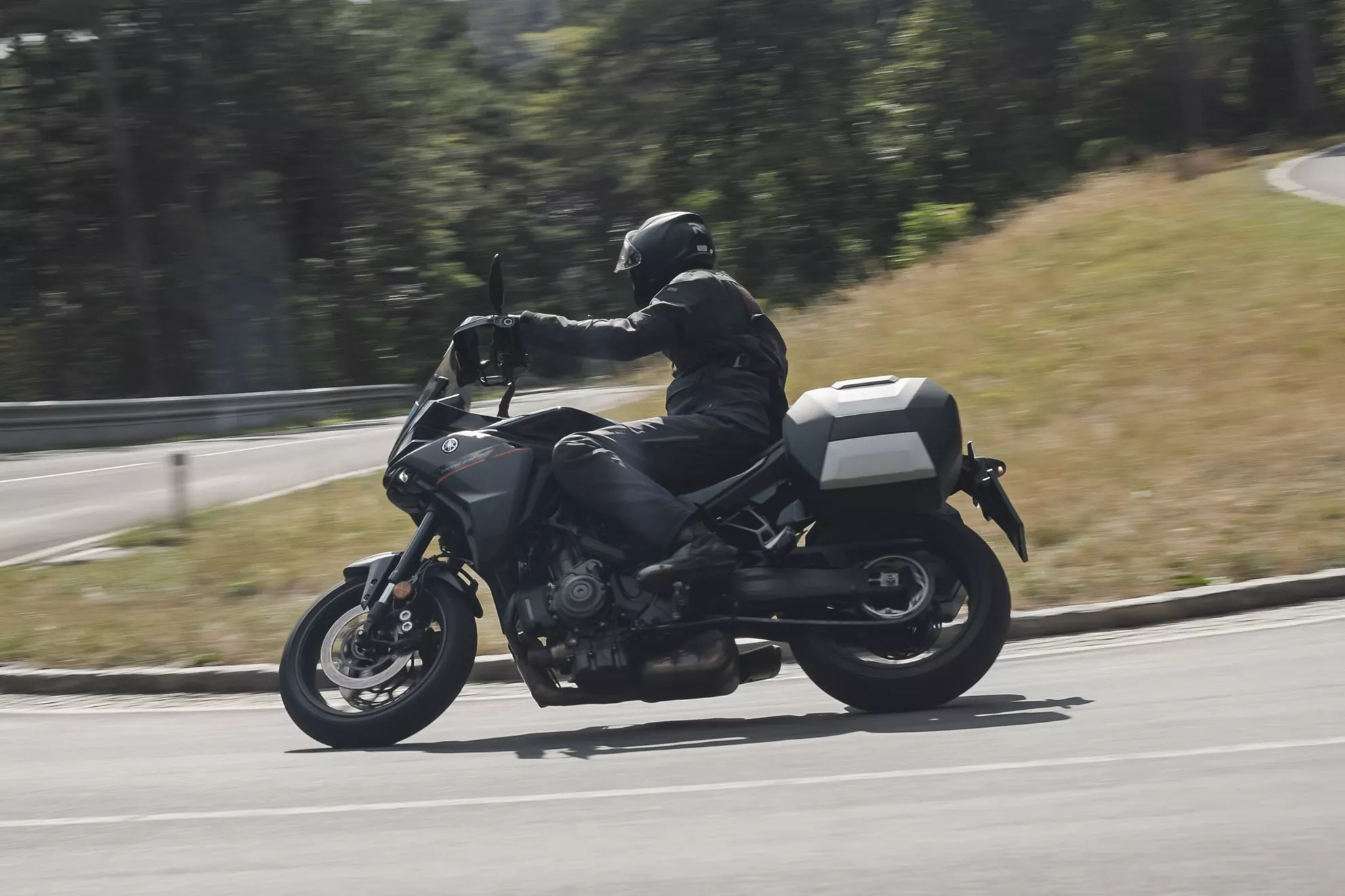
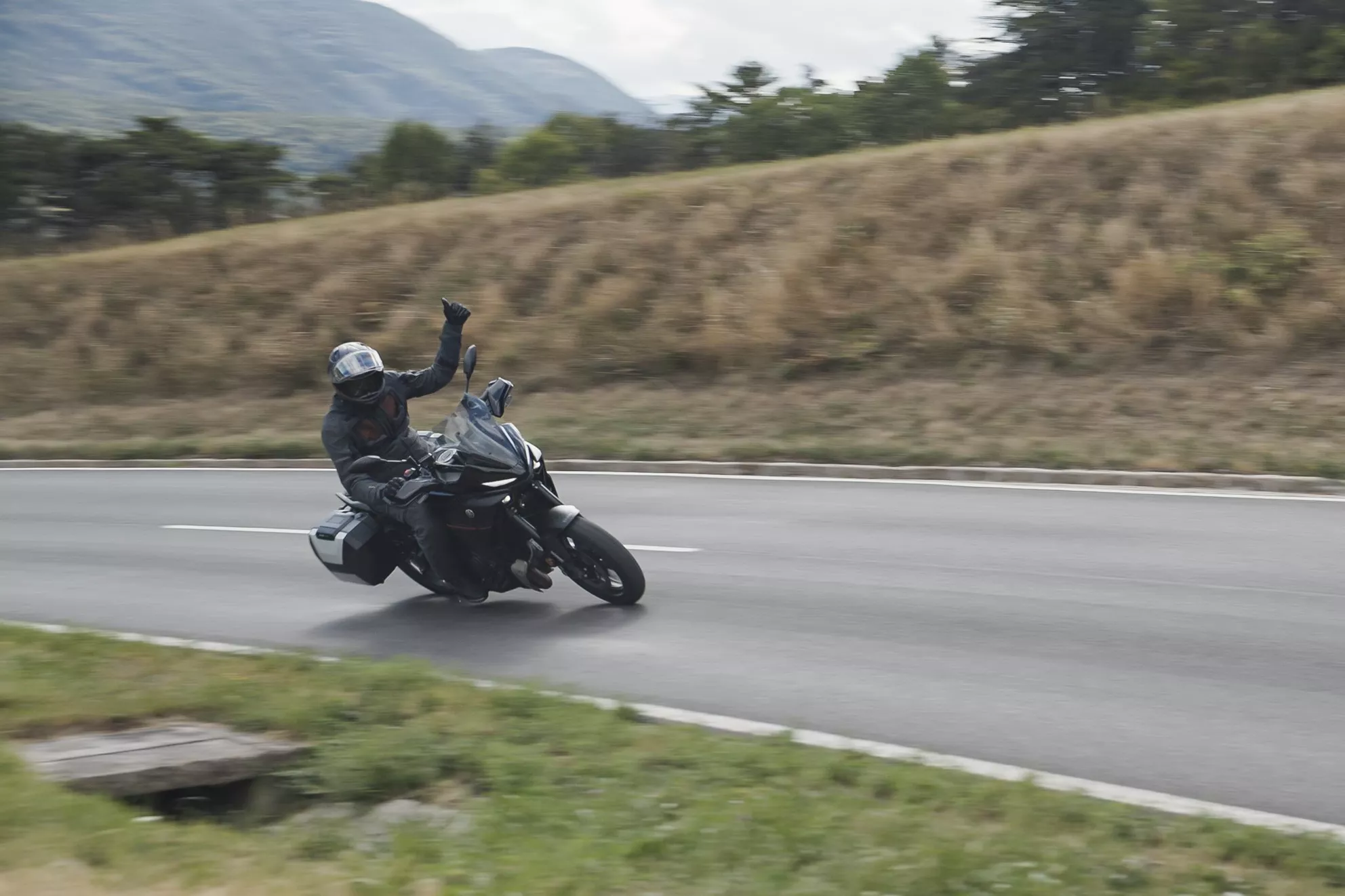
Yamaha Tracer 7 Y-AMT being ridden hard

The Bridgestone S23 delivers plenty of confidence at lean

Average fuel consumption compared

Fuel consumption was measured on a test loop made up of around 20 percent brisk riding, 20 percent motorway, 20 percent town and 40 percent country roads. With an average of 4.7 litres per 100 kilometres, the Yamaha Tracer 7 Y-AMT achieved the lowest figure. The Suzuki SV-7GX needed 5.1 litres, while the Triumph Tiger Sport 660 came in at 5.4 litres per 100 kilometres.

Suzuki SV-7GX vs. Yamaha Tracer 7 Y-AMT vs. Triumph Tiger Sport 660 - who comes out on top?

The Suzuki SV-7GX, Yamaha Tracer 7 Y-AMT and Triumph Tiger Sport 660 are closer together than their different engines and concepts would suggest. All three are easy to ride, sufficiently powerful, comfortable enough for everyday use, and stable as well as entertaining at a brisk pace.

With its slim ergonomics, softly responding suspension and the most agile handling, the Suzuki places the strongest emphasis on comfort and accessibility. The Yamaha impresses with confident motorway stability, its punchy CP2 engine, the best brakes and a Y-AMT system that works well in everyday riding. The Triumph delivers the sportiest experience with its three-cylinder, but combines it with somewhat coarser suspension response, stronger vibrations and slightly more demanding brake modulation.

A clear test winner genuinely can't be derived from this. All three bikes fulfil their purpose convincingly and can be recommended without fundamental reservations. The decision depends less on objective superiority than on personal priorities regarding comfort, gearbox, engine character and sportiness.

How much does a Suzuki SV-7GX cost?
Here you will find an overview of the price level of new and used motorbikes!
Schaaf

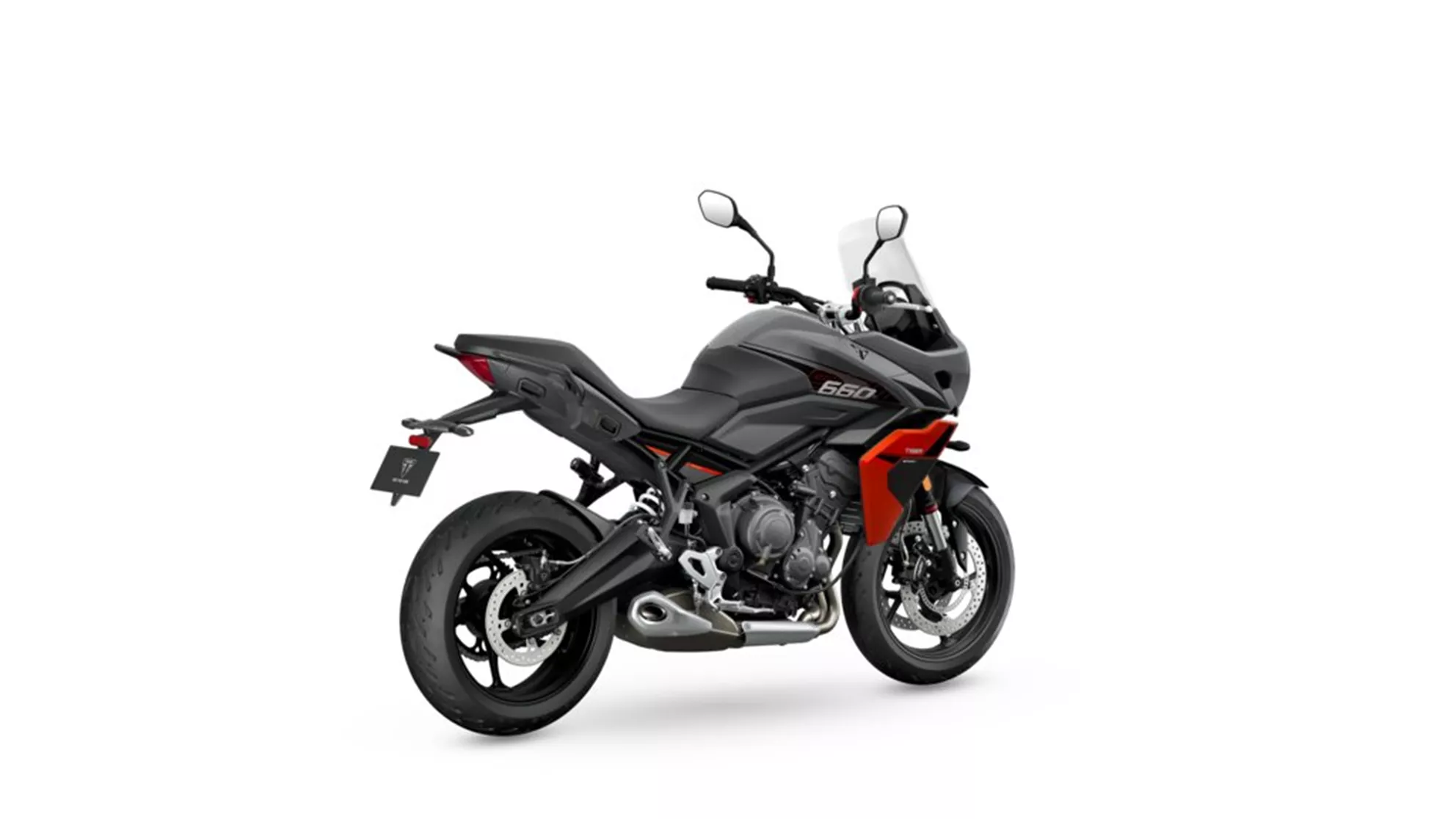
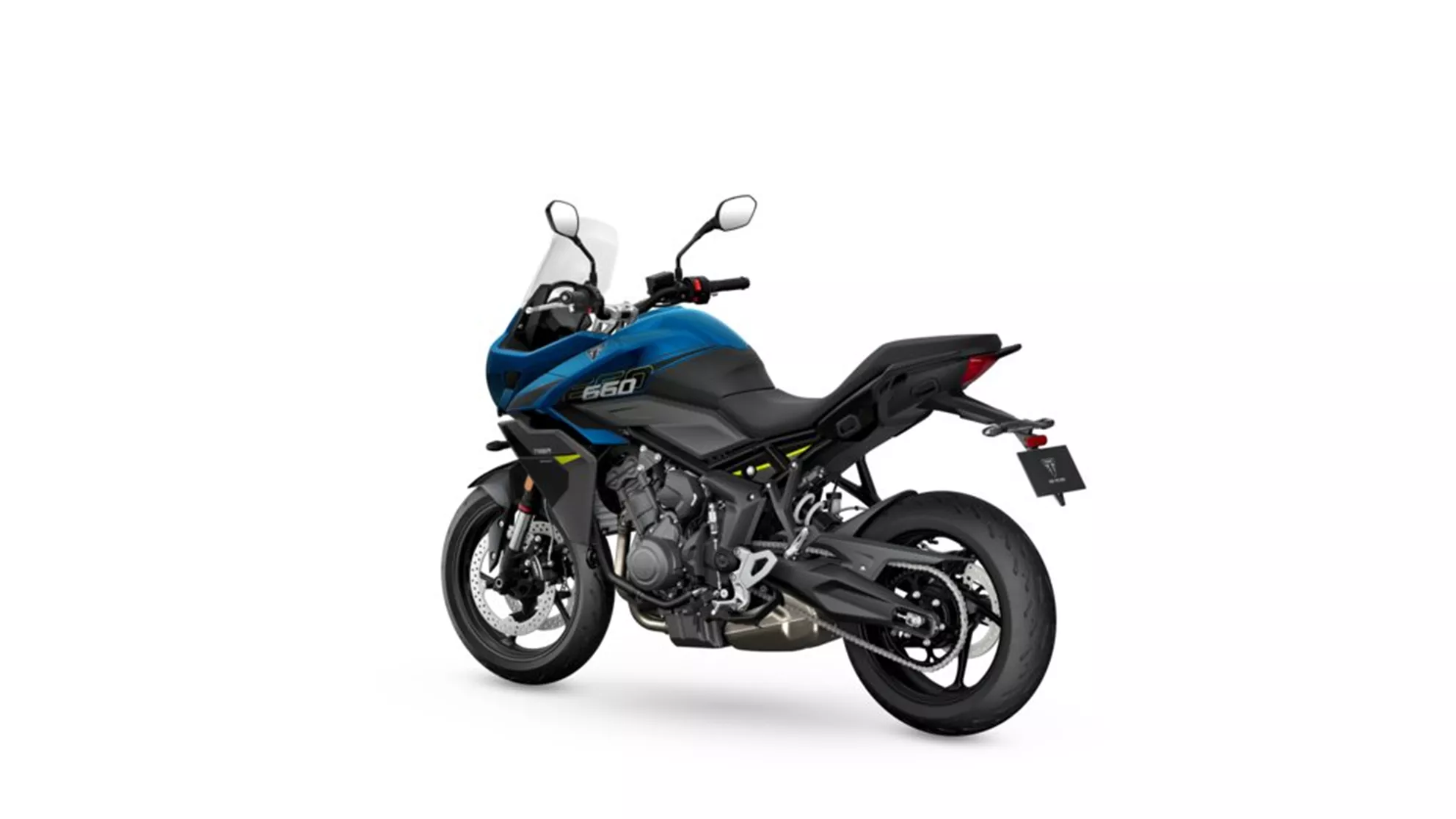
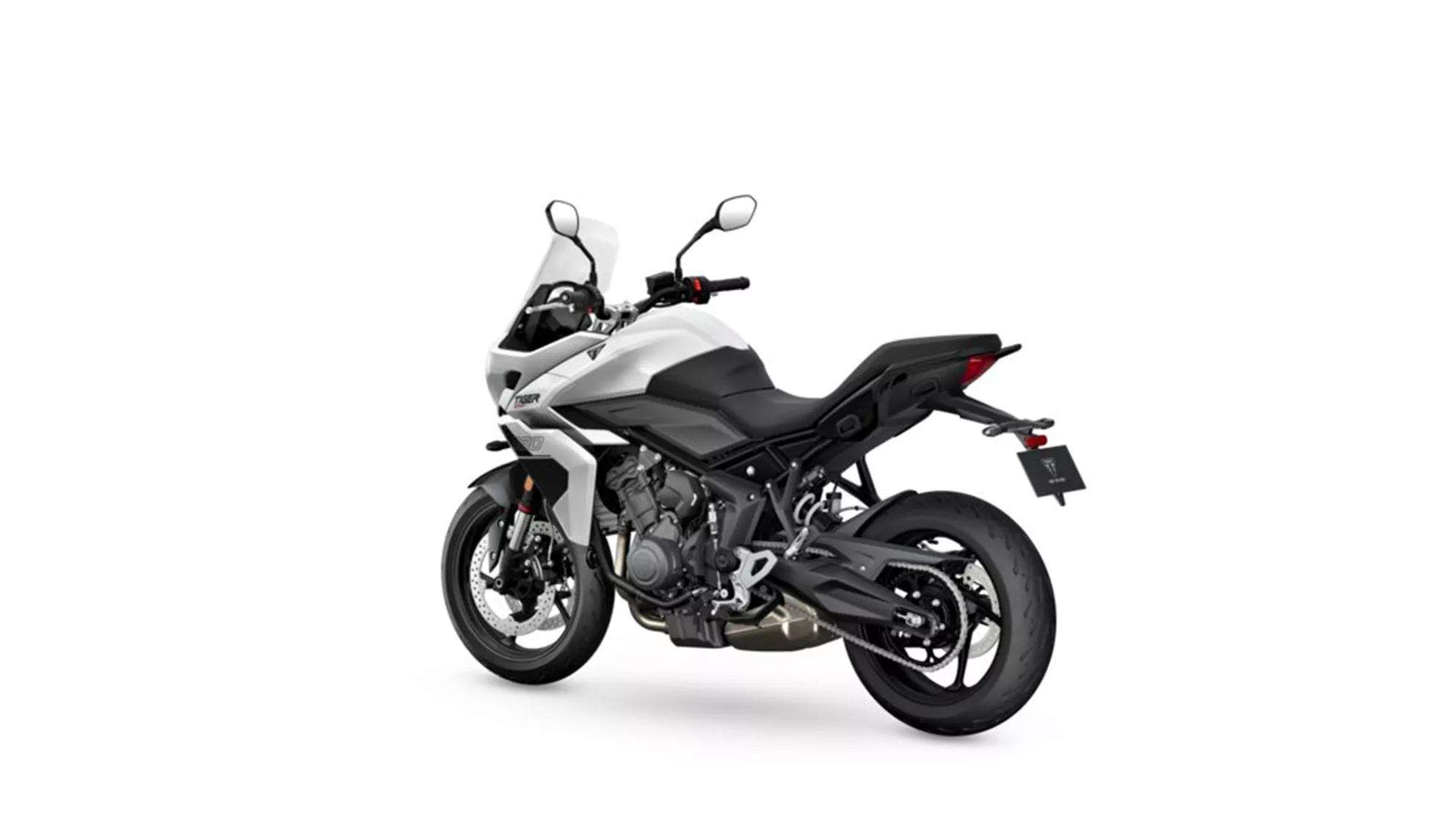
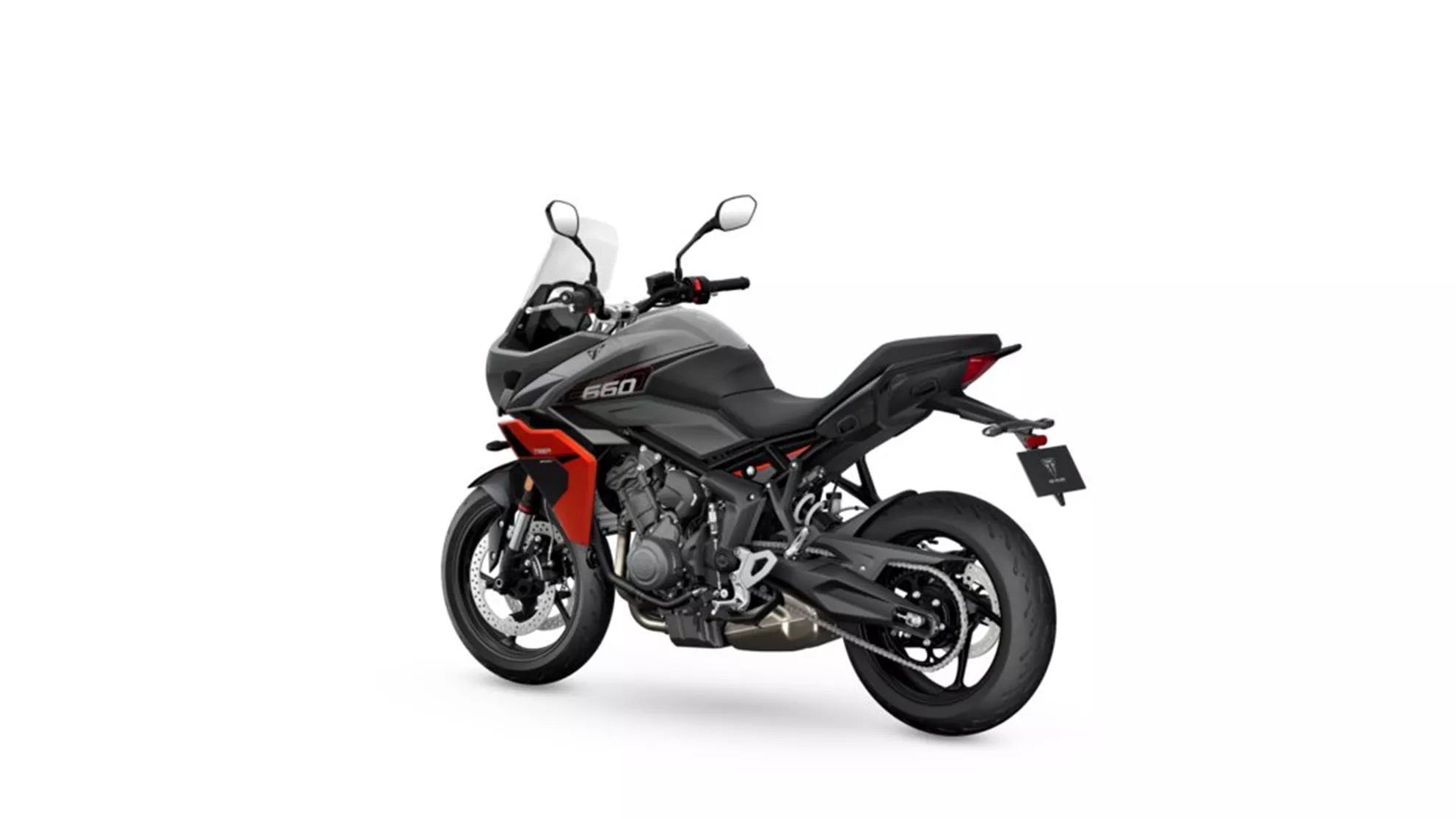
Triumph Tiger Sport 660 2026 - Experiences and Expert Review

Schaaf

4.5 / 51000PS Test Verdict based on 2 articles, 2026

Its three-cylinder thrills with a strong midrange, reserves in the upper rev range and an impressive soundtrack. The quickshifter works smoothly even at unsuitable revs, the ergonomics are accessible and the cruise control can be used from as low as 30 km/h. On the other hand, there are stronger vibrations, slightly less refined suspension response and somewhat more demanding modulation at high brake pressures. Anyone looking for everyday-friendly racing feel and triple character will find what they're after here - and be happy!


characterful three-cylinder with grunty midrange and reserves up top

sporty sound

very smooth quickshifter

neutral and stable cornering

generous maximum lean angle

cruise control usable from 30 km/h

more noticeable vibrations at the hands and left footpeg

suspension responds slightly less finely than the competition's

brake pressures above about 50 percent require a bit of finesse

longer gearing robs the three-cylinder of some spontaneity

Schaaf

Yamaha Tracer 7 Y-AMT 2026 - Experiences and Expert Review

Schaaf

The Yamaha Tracer 7 Y-AMT impresses as a confident and remarkably uncomplicated mid-range crossover. The punchy CP2 engine, high motorway stability and strong, easy-to-modulate brakes add up to a well-rounded overall package. The automated gearbox works surprisingly smoothly in everyday riding and requires practically no getting used to. When riding hard, however, manual mode is recommended, as even D+ can allow awkward gear changes at lean. The hard seat, the cruise control only usable from 47 km/h and the limited maximum lean angle due to long footpeg feelers are worth mentioning, but can't spoil the genuinely positive overall impression.


punchy CP2 engine in the low and mid rev range

Y-AMT is a real help in everyday riding

excellent motorway stability

strong and easy-to-modulate brakes

uncomplicated handling with neutral behaviour at lean

easy-to-use windscreen adjustment

barely noticeable vibrations

relatively hard seat

automatic modes only of limited use for very fast cornering

gear changes sometimes feel cheap and clunky

long footpeg feelers limit the perceived maximum lean angle

Schaaf

Suzuki SV-7GX 2026 - Experiences and Expert Review

Schaaf

4.0 / 51000PS Test Verdict based on 3 articles, 2026

The Suzuki SV-7GX impresses with playful handling, high ride comfort and a likeable and genuinely versatile V2. Quickshifter, brakes and assistance systems work solidly - only the missing cruise control leaves you shaking your head. Anyone who wants to tour in a relaxed and playful way, but also ride really fast through the twisties, will find it an absolutely recommendable mid-range crossover.


tame, smooth V2 that still never gets boring

truly agile

no annoying interventions from the assistance systems

very good value for money

pleasantly damped suspension that also offers plenty of stability

no cruise control

hardly any room for really tall riders

More crossovers:

Three mid-range crossovers head to head Images

Source: 1000PS

Mid-Size Crossovers Compared - Image 1
Mid-Size Crossovers Compared - Image 2
Mid-Size Crossovers Compared - Image 3
Mid-Size Crossovers Compared - Image 4
Mid-Size Crossovers Compared - Image 5
Mid-Size Crossovers Compared - Image 6
Mid-Size Crossovers Compared - Image 7
Mid-Size Crossovers Compared - Image 8
Mid-Size Crossovers Compared - Image 9
Mid-Size Crossovers Compared - Image 10
Mid-Size Crossovers Compared - Image 11
Mid-Size Crossovers Compared - Image 12
Mid-Size Crossovers Compared - Image 13
Mid-Size Crossovers Compared - Image 14
Mid-Size Crossovers Compared - Image 15
Mid-Size Crossovers Compared - Image 16
Mid-Size Crossovers Compared - Image 17
Mid-Size Crossovers Compared - Image 18
Mid-Size Crossovers Compared - Image 19
Mid-Size Crossovers Compared - Image 20
Mid-Size Crossovers Compared - Image 21
Mid-Size Crossovers Compared - Image 22
Mid-Size Crossovers Compared - Image 23
Mid-Size Crossovers Compared - Image 24
Mid-Size Crossovers Compared - Image 25
Mid-Size Crossovers Compared - Image 26
Mid-Size Crossovers Compared - Image 27
Mid-Size Crossovers Compared - Image 28
Mid-Size Crossovers Compared - Image 29
Mid-Size Crossovers Compared - Image 30
Mid-Size Crossovers Compared - Image 31
Mid-Size Crossovers Compared - Image 32
Mid-Size Crossovers Compared - Image 33
Mid-Size Crossovers Compared - Image 34
Mid-Size Crossovers Compared - Image 35
Mid-Size Crossovers Compared - Image 36
Mid-Size Crossovers Compared - Image 37
Mid-Size Crossovers Compared - Image 38
Mid-Size Crossovers Compared - Image 39
Mid-Size Crossovers Compared - Image 40
Mid-Size Crossovers Compared - Image 41
Mid-Size Crossovers Compared - Image 42
Mid-Size Crossovers Compared - Image 43
Mid-Size Crossovers Compared - Image 44
Mid-Size Crossovers Compared - Image 45
Mid-Size Crossovers Compared - Image 46
Mid-Size Crossovers Compared - Image 47
Mid-Size Crossovers Compared - Image 48
Mid-Size Crossovers Compared - Image 49
Mid-Size Crossovers Compared - Image 50
Mid-Size Crossovers Compared - Image 51
Mid-Size Crossovers Compared - Image 52
Mid-Size Crossovers Compared - Image 53
Mid-Size Crossovers Compared - Image 54
Mid-Size Crossovers Compared - Image 55
Mid-Size Crossovers Compared - Image 56
Mid-Size Crossovers Compared - Image 57
Mid-Size Crossovers Compared - Image 58
Mid-Size Crossovers Compared - Image 59
Mid-Size Crossovers Compared - Image 60
Mid-Size Crossovers Compared - Image 61
Mid-Size Crossovers Compared - Image 62
Mid-Size Crossovers Compared - Image 63
Mid-Size Crossovers Compared - Image 64
Mid-Size Crossovers Compared - Image 65
Mid-Size Crossovers Compared - Image 66
Mid-Size Crossovers Compared - Image 67
Mid-Size Crossovers Compared - Image 68
Mid-Size Crossovers Compared - Image 69
Mid-Size Crossovers Compared - Image 70
Mid-Size Crossovers Compared - Image 71
Mid-Size Crossovers Compared - Image 72
Mid-Size Crossovers Compared - Image 73
Mid-Size Crossovers Compared - Image 74
Mid-Size Crossovers Compared - Image 75
Mid-Size Crossovers Compared - Image 76
Mid-Size Crossovers Compared - Image 77
Mid-Size Crossovers Compared - Image 78
Triumph Tiger Sport 660 2026 - Image 79
Triumph Tiger Sport 660 2026 - Image 80
Triumph Tiger Sport 660 2026 - Image 81
Triumph Tiger Sport 660 2026 - Image 82
Triumph Tiger Sport 660 2026 - Image 83
Triumph Tiger Sport 660 2026 - Image 84
Triumph Tiger Sport 660 2026 - Image 85
Triumph Tiger Sport 660 2026 - Image 86
Triumph Tiger Sport 660 2026 - Image 87
Triumph Tiger Sport 660 2026 - Image 88
Triumph Tiger Sport 660 2026 - Image 89
Triumph Tiger Sport 660 2026 - Image 90
Triumph Tiger Sport 660 2026 - Image 91
Triumph Tiger Sport 660 2026 - Image 92
Triumph Tiger Sport 660 2026 - Image 93
Triumph Tiger Sport 660 2026 - Image 94
Triumph Tiger Sport 660 2026 - Image 95
Triumph Tiger Sport 660 2026 - Image 96
Triumph Tiger Sport 660 2026 - Image 97
Triumph Tiger Sport 660 2026 - Image 98
Triumph Tiger Sport 660 2026 - Image 99
Triumph Tiger Sport 660 2026 - Image 100
Triumph Tiger Sport 660 2026 - Image 101
Triumph Tiger Sport 660 2026 - Image 102
Triumph Tiger Sport 660 2026 - Image 103
Triumph Tiger Sport 660 2026 - Image 104
Triumph Tiger Sport 660 2026 - Image 105
Triumph Tiger Sport 660 2026 - Image 106
Triumph Tiger Sport 660 2026 - Image 107
Triumph Tiger Sport 660 2026 - Image 108
Triumph Tiger Sport 660 2026 - Image 109
Triumph Tiger Sport 660 2026 - Image 110
Triumph Tiger Sport 660 2026 - Image 111
Triumph Tiger Sport 660 2026 - Image 112
Triumph Tiger Sport 660 2026 - Image 113
Triumph Tiger Sport 660 2026 - Image 114
Triumph Tiger Sport 660 2026 - Image 115
Triumph Tiger Sport 660 2026 - Image 116
Triumph Tiger Sport 660 2026 - Image 117
Triumph Tiger Sport 660 2026 - Image 118
Triumph Tiger Sport 660 2026 - Image 119