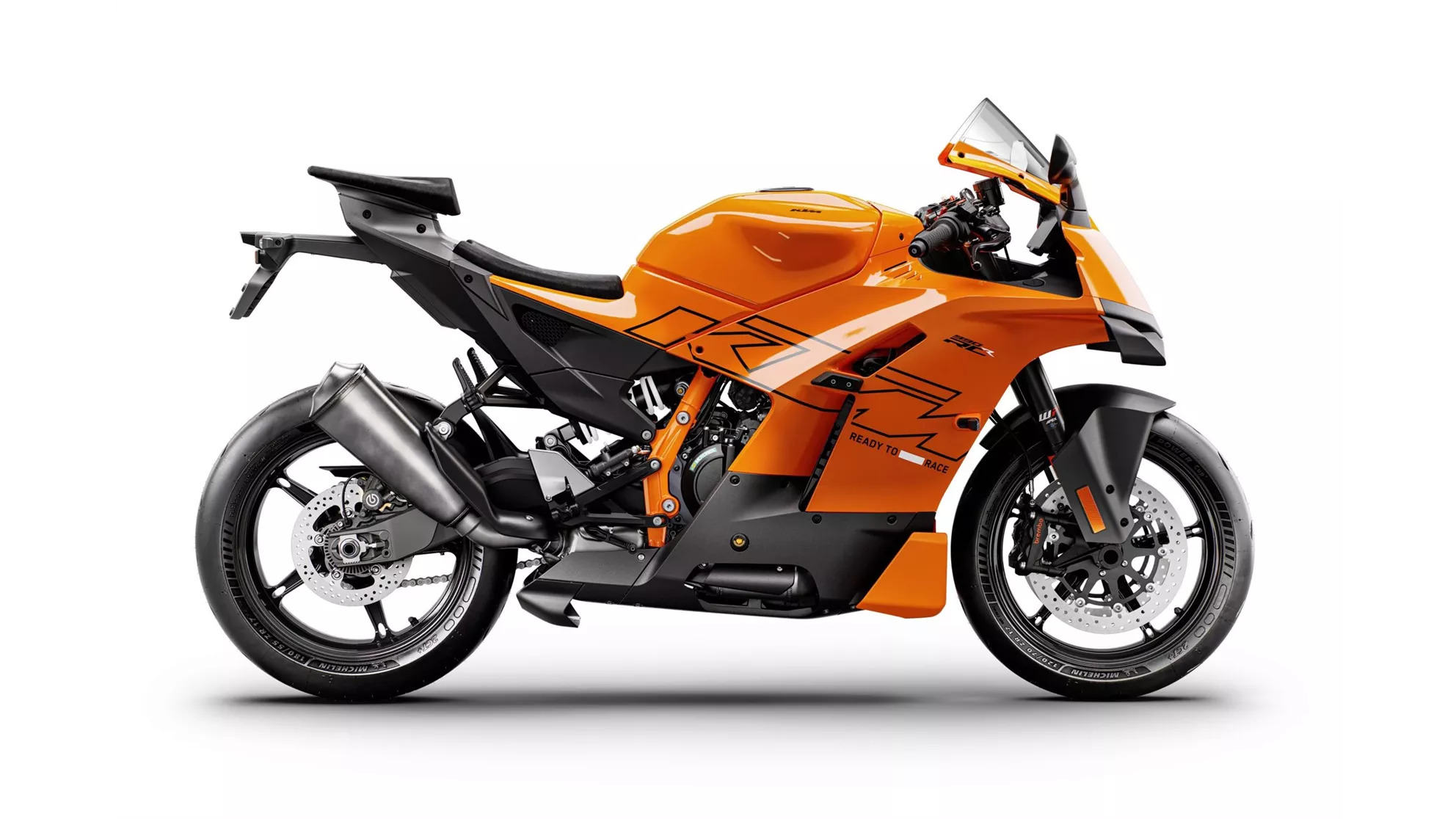
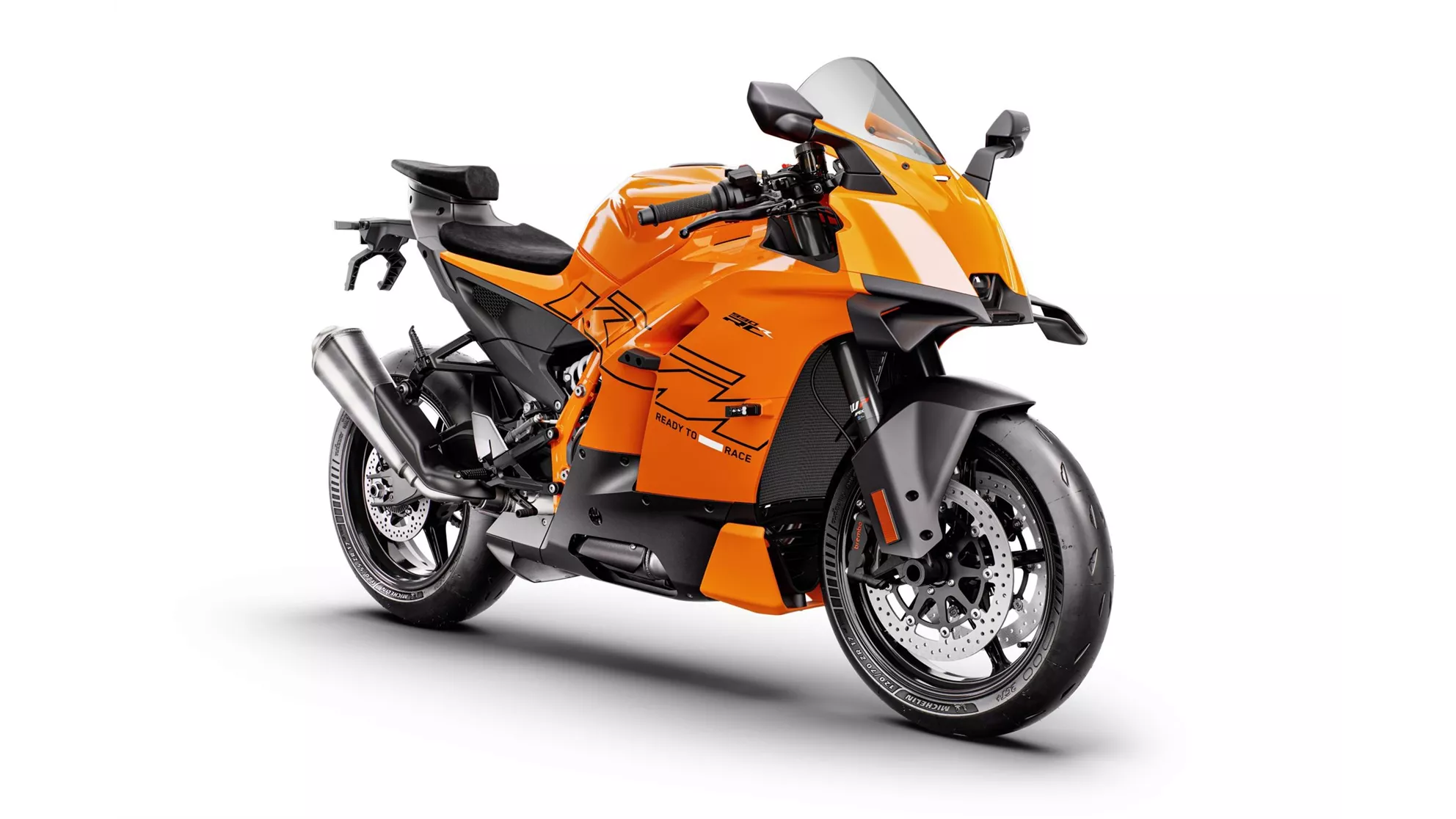
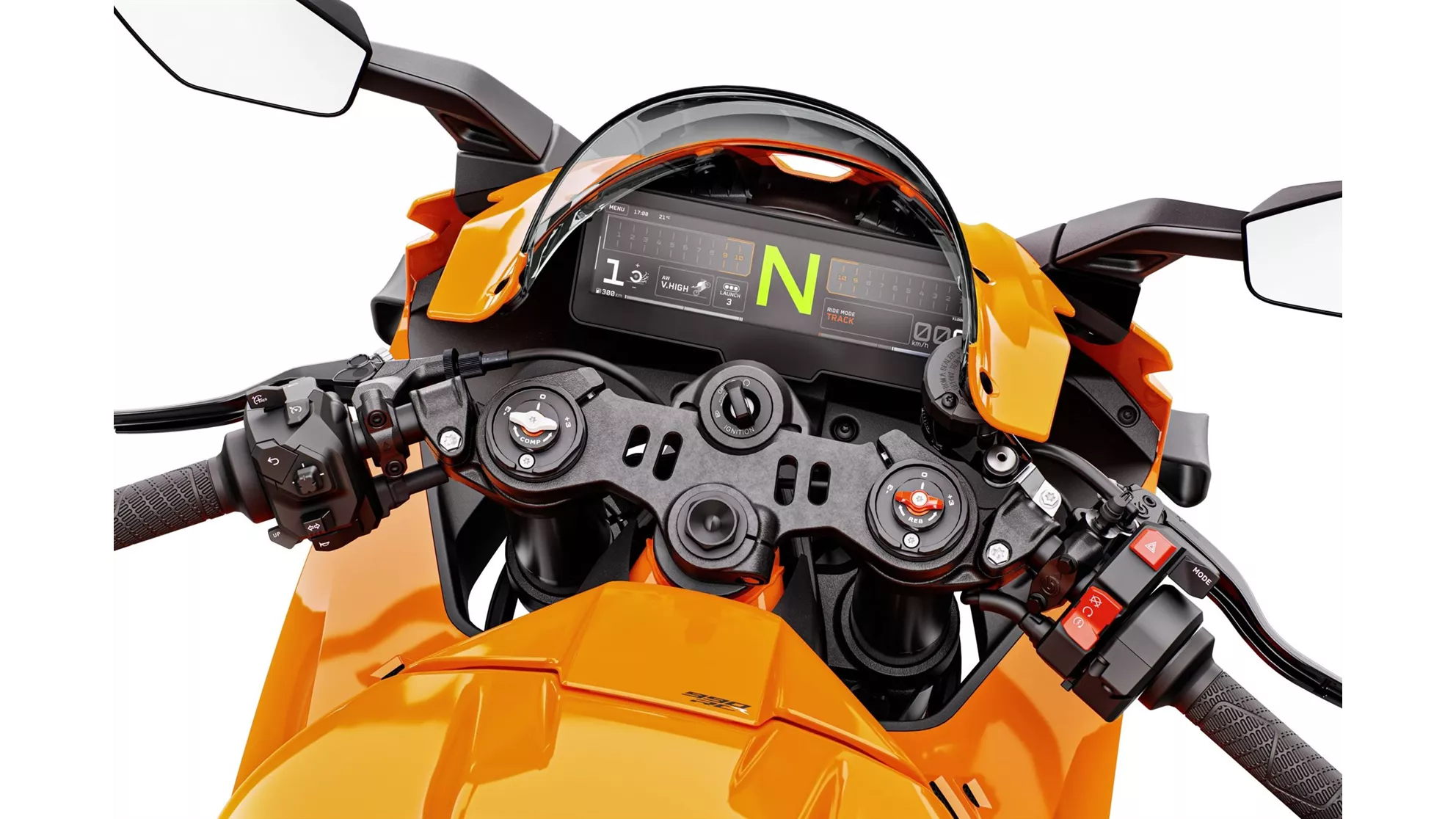
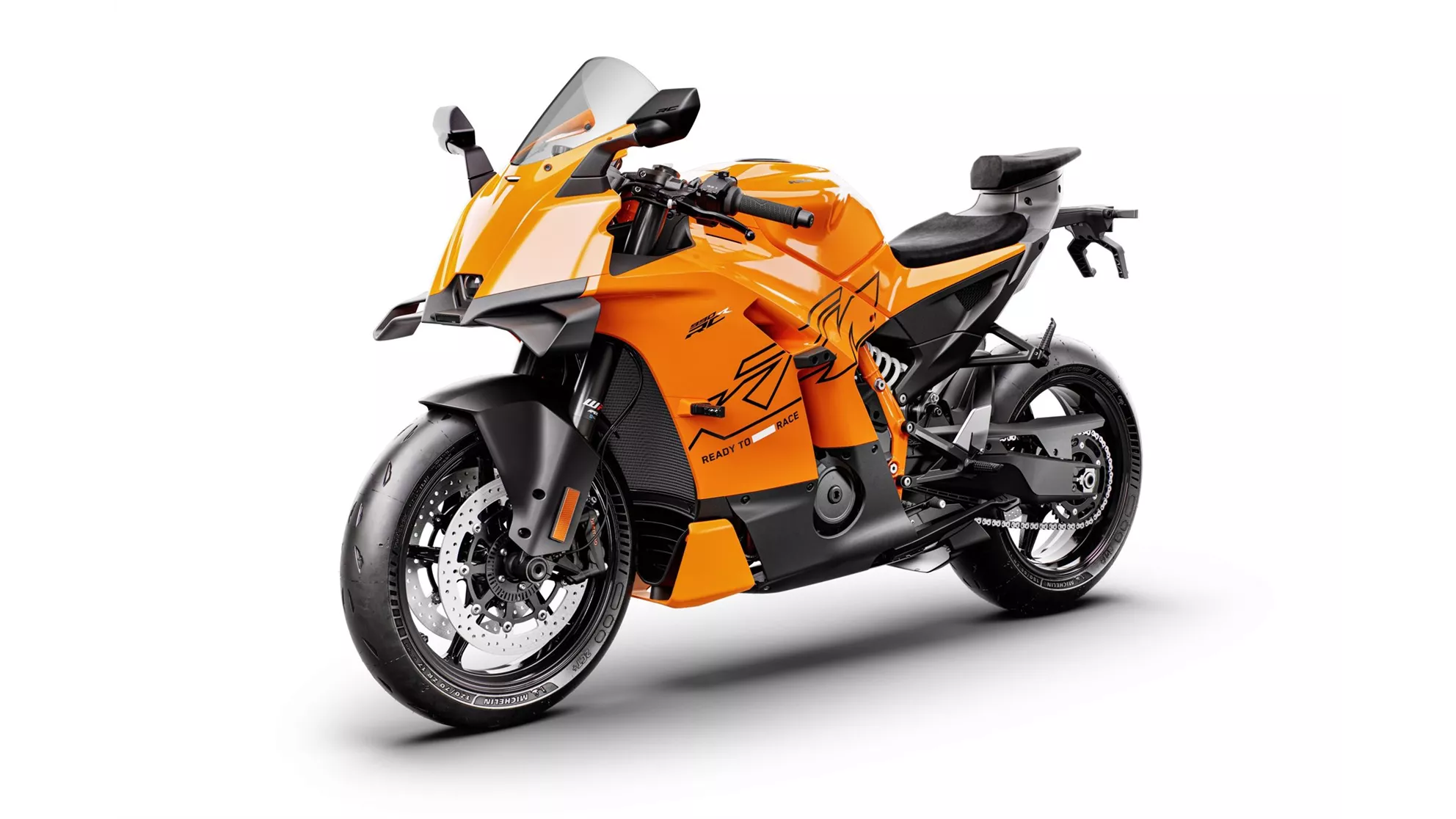
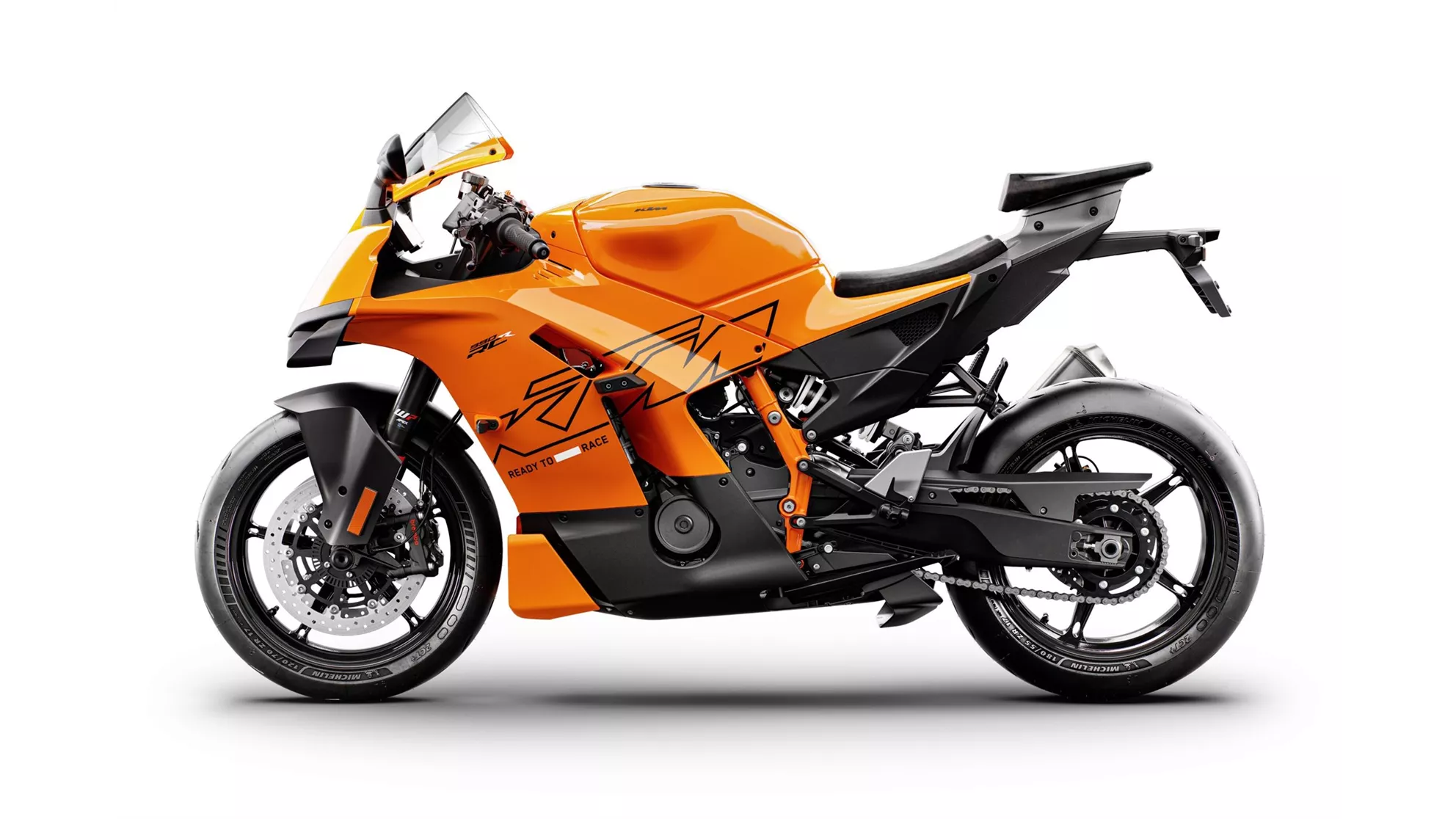
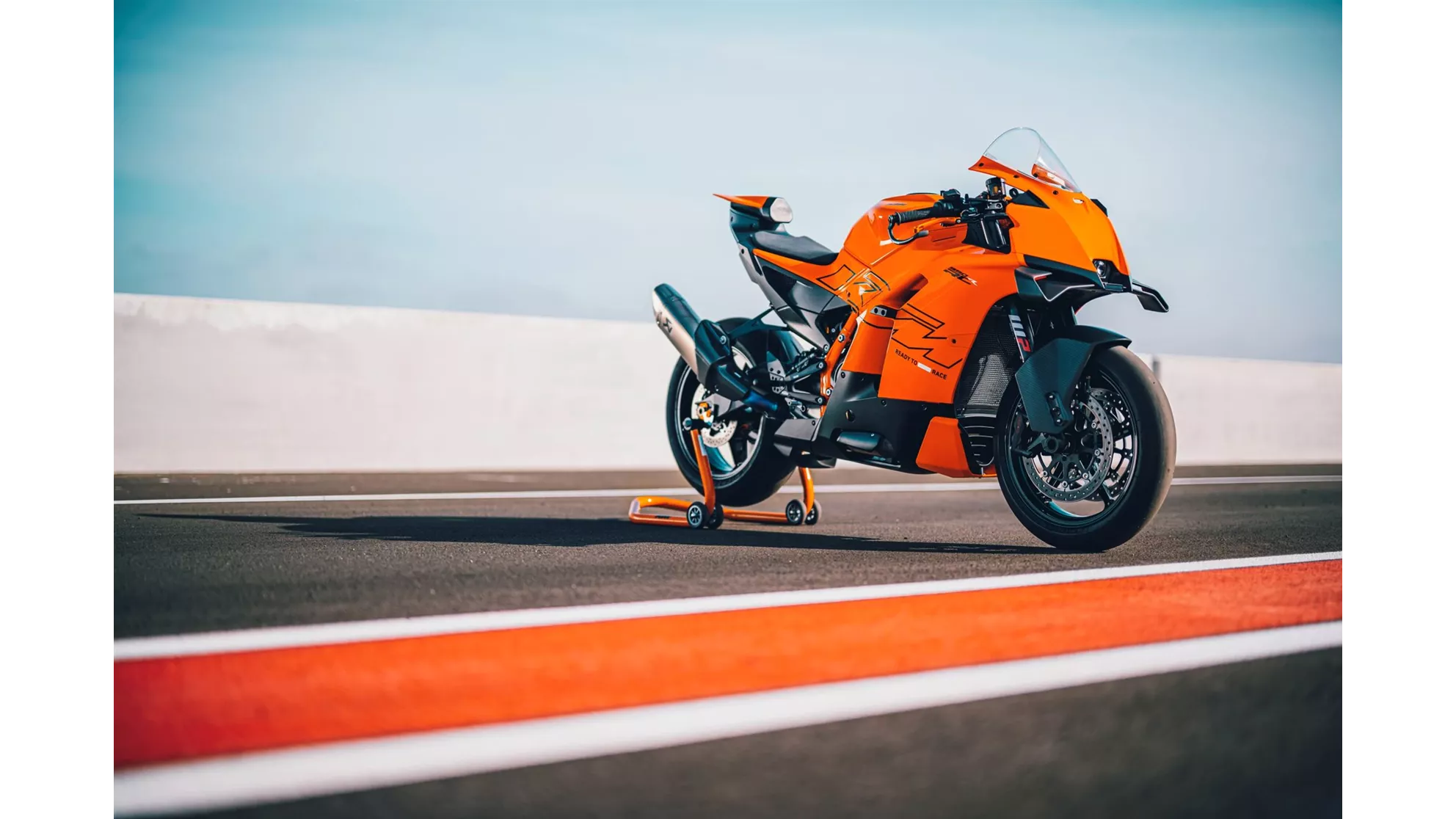
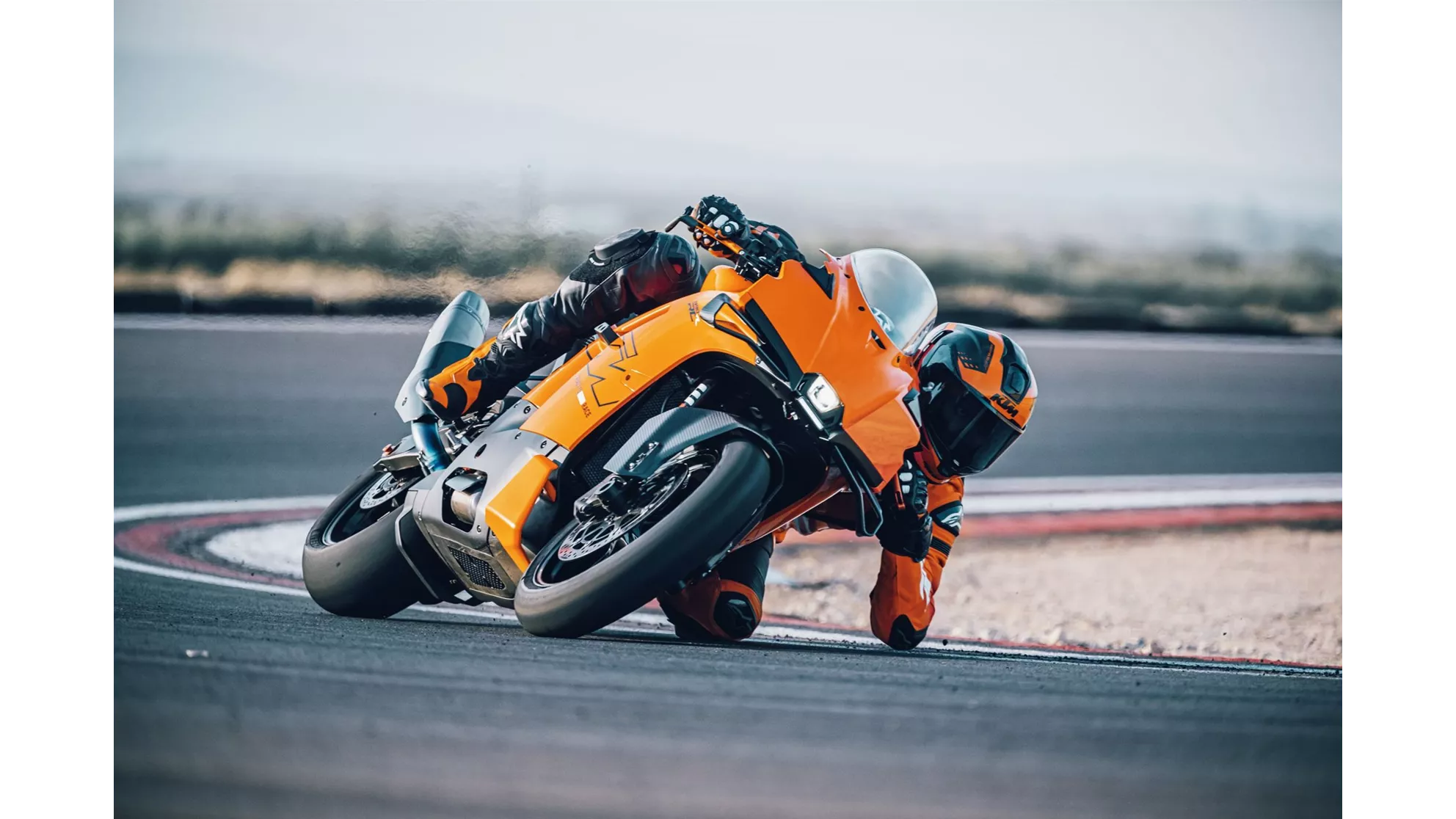
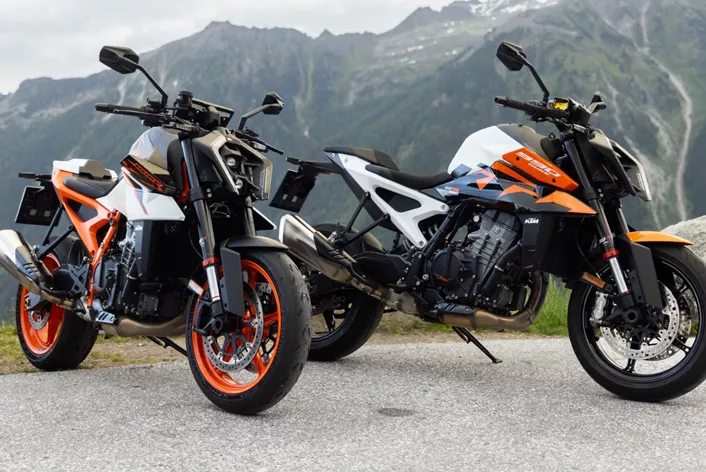
On paper, the two KTMs are closely matched. The 2026 RC R and Duke R both carry the 947 cc twin, rated by KTM at 127.84 hp and 103 Nm. We fitted both with the same Michelin Power Cup 2; final drive ratio and electronics were also identical in the test. The difference therefore lies essentially in ergonomics – exactly what matters to us in this comparison: on the RC R your upper body sits lower and further forward, while on the Duke you sit much more upright. The Duke's five-kilogram weight advantage without fuel helps with quick direction changes. On top of that, the Duke's wide handlebar makes it even easier to feed steering inputs into the chassis. But how much of that is left on the stopwatch? This comparison aims to answer the frequently asked question of which of these concepts performs better when it comes to covering ground quickly. Of course, the bikes need to be ridden accordingly, and we found a good pairing for that. In Supermoto World Champion Bernd Hiemer we have the right rider when it comes to going fast on supermoto-style bikes. Since the Duke leans heavily in that direction, Bernd should be able to wring everything out of it. My job is to ride the supersports RC R fast and try to give Bernd on the Duke a run for his money. So much for the setup – all that's missing now is a suitable playground.

Which is faster? KTM 990 RC R vs. 990 Duke R compared
Supersports versus naked bike on two race tracks
Same engine, same tyres, two concepts: Martin Bauer and Bernd Hiemer test the 2026 model year KTM 990 RC R and 990 Duke R on the tight circuit in Bad Fischau and the fast Slovakia Ring. The lap times show where ergonomics and aerodynamics make the difference.

Martin_Bauer
published on 13/11/2026
Same drivetrain, two very different riding positions
The supermoto track rewards the line out of tight corners
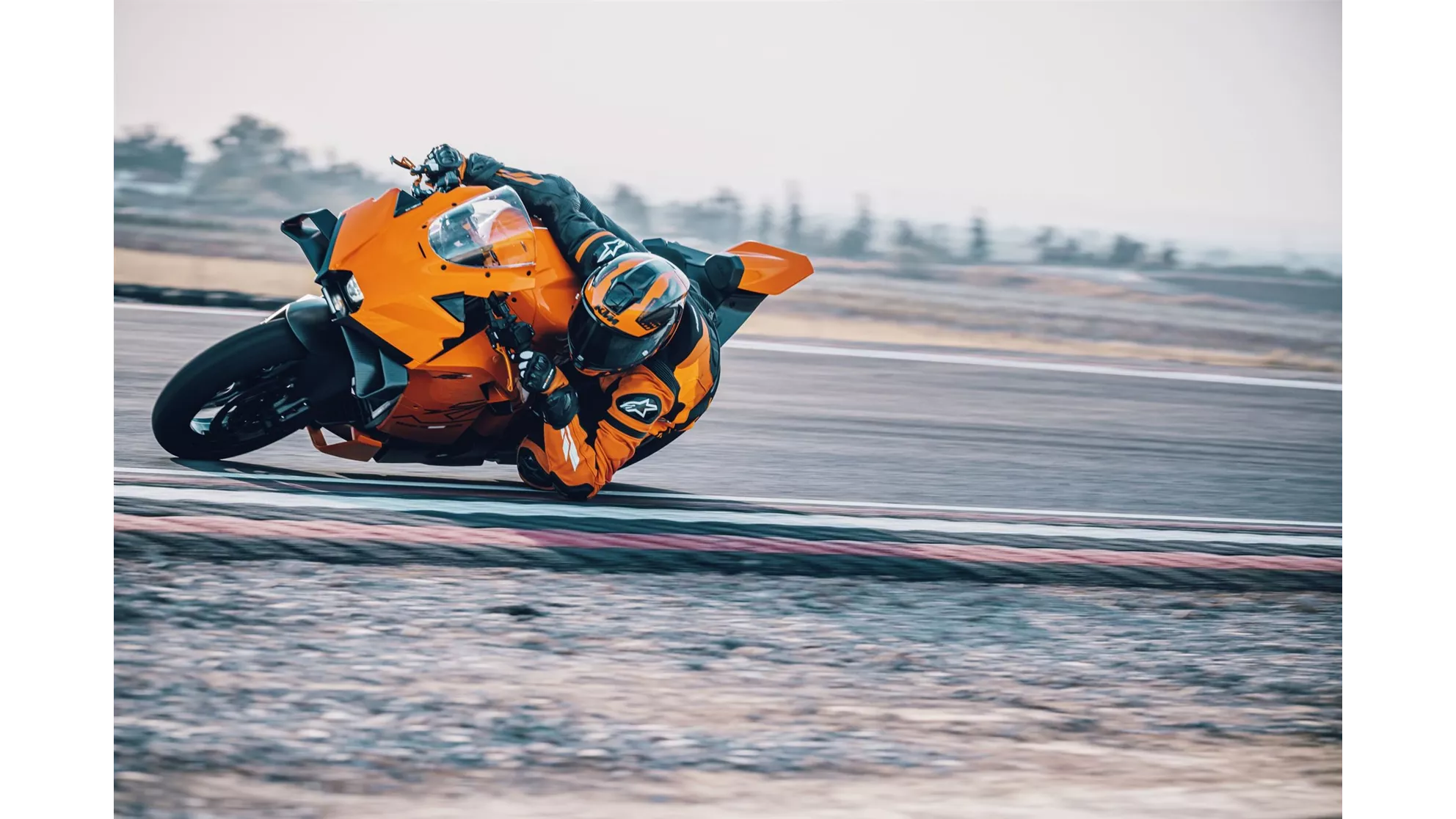
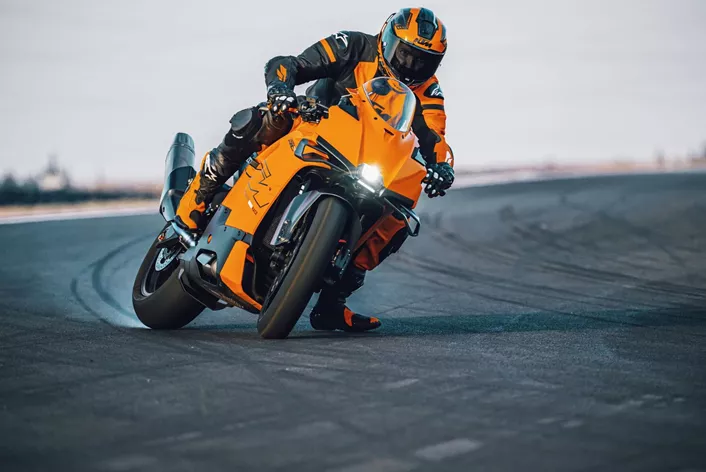
To get a comparison that is also meaningful on ordinary roads, it was important not to judge the bikes on race track performance alone. So we also had to find a track that resembles riding on normal roads. The SM track in Bad Fischau, at 1,075 metres long with a longest straight of 150 metres, is an extremely tight circuit and therefore comparable to the twisty home roads right outside your door. Here it's more about handling than high-speed performance. As an SM specialist, Bernd Hiemer can make full use of his experience on the Duke. In the slow corners he lightly braked the rear wheel, got the bike pointed in the direction of travel earlier and was able to accelerate sooner. On the RC R I braked later at some braking points and sometimes carried more speed into the corner. In return, I had to accept a wider arc. The GPS data shows several times that the Duke's better corner exit is where the time comes from, even though the corner entry wasn't always faster. In the end, Bernd was ahead by three tenths of a second. The Duke's more upright seating position and wide handlebar help to steer the vehicle more precisely around the radius, especially in the slow corners. With corners below 30 km/h, it's less about exploiting the limit and more about maintaining balance. Anyone who has ever tried to get a bike into deep lean angles at such low speeds knows what I mean.

The upright seating position and wide handlebar define how the Duke R performs on the tight circuit.
ABS intervention: lap time versus safety margin
On the bumpy handling circuit, I tried the Supermoto ABS on the RC R. With our setting, ABS intervention remains active at the front wheel, while the rear wheel is allowed to move more freely. With the standard setup, the ABS released early at certain points and cost braking power, adding delay. Bernd also felt early intervention at late braking points on the Duke, so he too opted for the Supermoto ABS setting. Overall, the systems worked well for us. On public roads, the priorities are different: there, in my view, full ABS intervention is the right choice. We used the freer rear wheel to gain tenths of a second on a closed circuit. In normal road use, however, it's not just maximum braking performance that counts but also maintaining stability under braking. This helps less experienced riders in particular build the confidence to really grab a handful of brake. In our case, though, we want a rear wheel that steps out a bit to get around tight corners better.

The front brakes of the two KTMs in a direct detail comparison.
At the Slovakia Ring, the RC R plays its composure card
- How much does a KTM 990 RC R cost?
- Here you will find an overview of the price level of new and used motorbikes!
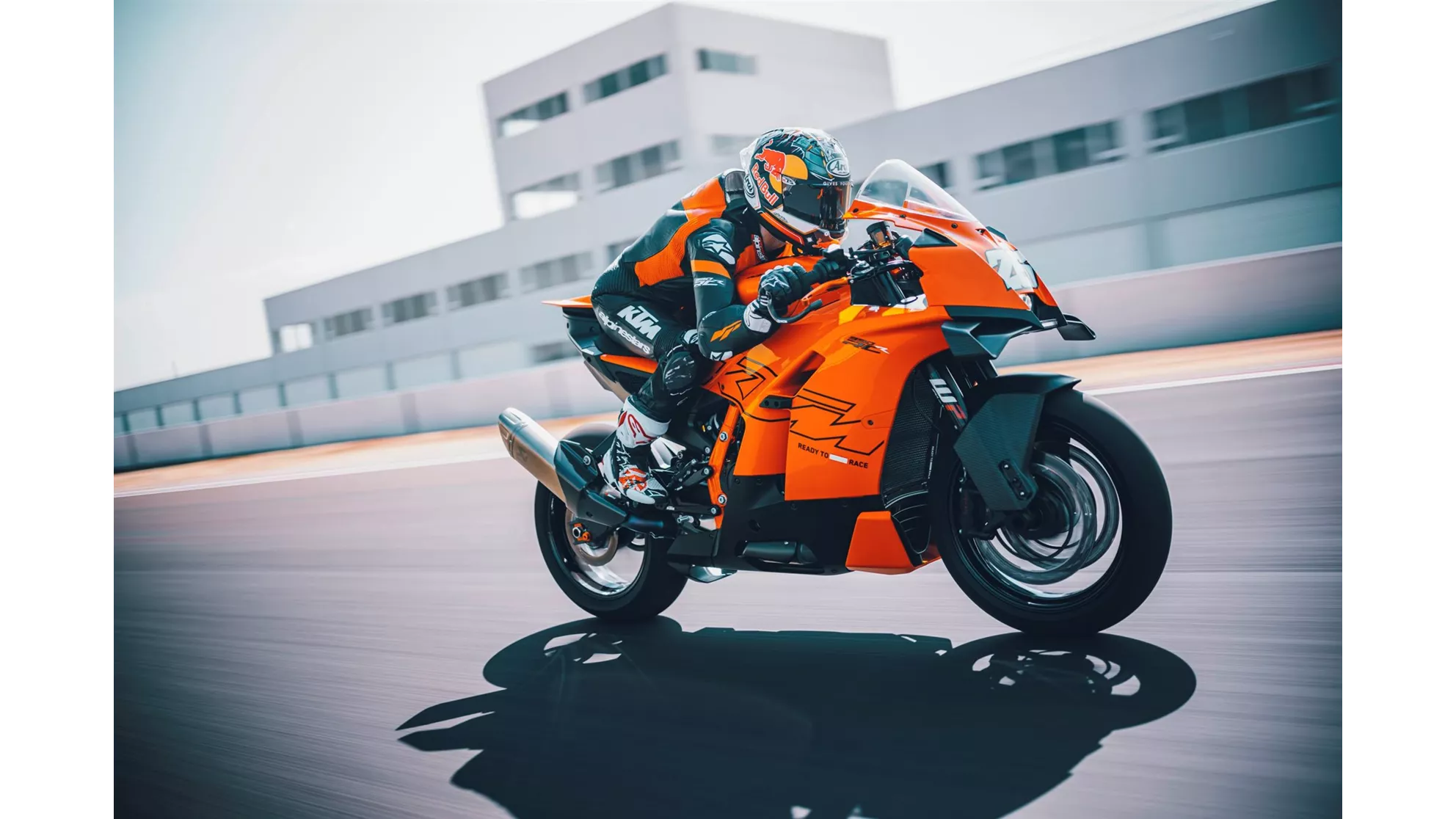
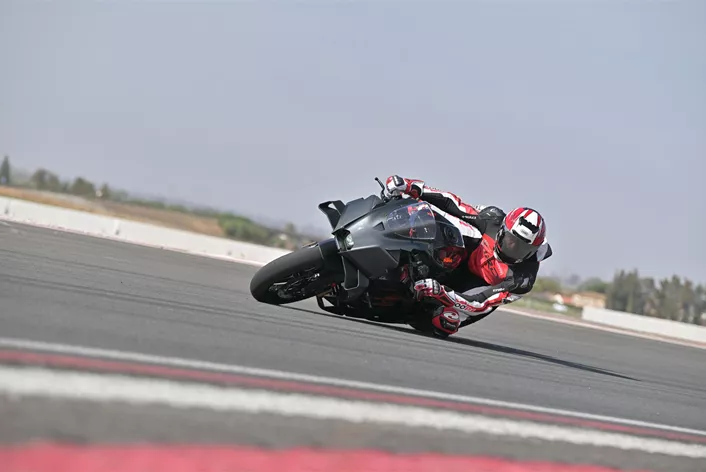
The Slovakia Ring is 5,935 metres long, with a longest straight of 900 metres. On the start/finish straight we reached around 240 km/h according to the test – a completely different scenario and a good counterweight in our comparison to the very tight and playful track in Bad Fischau. Thanks to the higher speeds, the RC R's fairing and aerodynamics became noticeably more valuable. Especially on the fast straights, my upper body stayed calmer, and I had a more precise feel for the front wheel when turning into the fast sections. On the race track, that's exactly what you need when riding fast. It's all about feeling out the limit, and good feedback from the front wheel is indispensable for that. Bernd got on well with the upright Duke but had to fight the wind pressure considerably harder with his neck. In addition, stability suffers from the wind forces, and the wide handlebar feeds more unrest into the vehicle. Top speed also suffers from the Duke's poor wind management – the difference was sometimes as much as 10 km/h. In the data analysis, however, braking zones and apexes were often closer together than expected. The bigger gap came from accelerating out of corners and on the straights. I was a few seconds faster on the RC R, although the pure top speed advantage turned out smaller than either of us had expected. To feel these differences first-hand, we then decided to swap bikes.

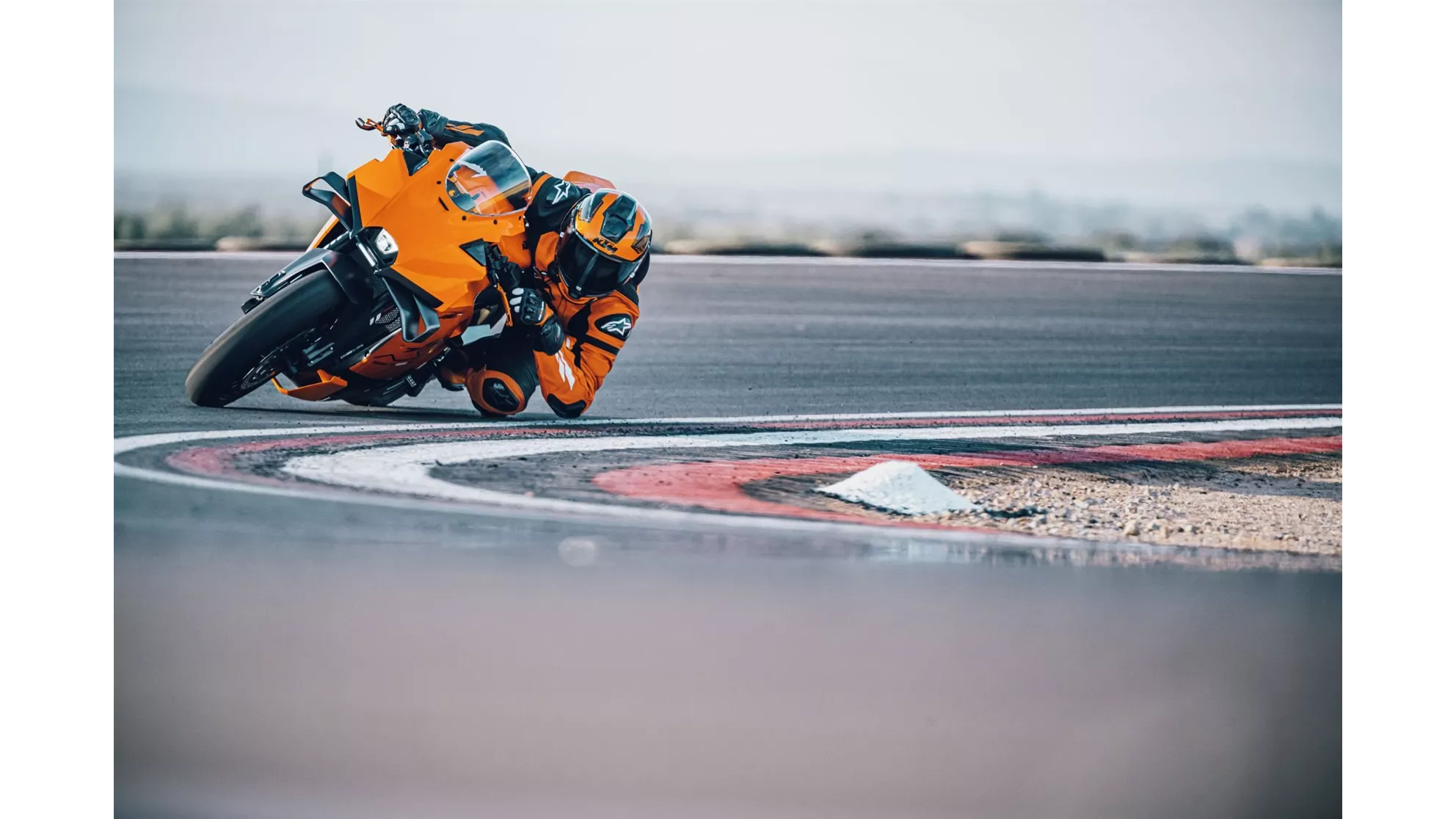
At the Slovakia Ring, the RC R's low riding position comes into its own.
Rider swaps and used tyres put the times into perspective
A lap time is never down to the bike alone. Bernd knew Bad Fischau but was riding the Slovakia Ring for the first time; I was more familiar with the fast track. On top of that, we each initially chose the bike that matched our own racing experience. When I also rode the Duke at the Slovakia Ring, the gap shrank. This confirms the influence of rider and track knowledge, without explaining away the differences in riding feel. The tyres weren't fresh by the end either: we used the same sets on both days and estimated their mileage at around 50 laps. At higher temperatures the grip dropped off. The absolute best times are therefore not a tyre test under ideal conditions, but a realistic comparison of the vehicle concepts on used rubber.

The RC R's rear tyre shows the marks of track use.
Which KTM suits the tight circuit, and which the trackday?
On the tight circuit, the Duke was easier to point towards the corner exit. The RC R demanded more work there, but on the fast Slovakia Ring it gave me the calmer and more precise front-end feel. For an occasional trackday, Bernd considered the accessible Duke a good choice. Anyone who wants to regularly lap race tracks fast and can live with the lower position will find the RC R the more fitting tool. The times don't deliver a universal winner, because rider and track are always along for the ride. But they show very clearly what difference a different seating position and fairing can make with a similar drivetrain. Overall, I was surprised how well I could stay with Bernd on the RC R on the tight supermoto track, and how well the Duke's upright seating position worked on the race track too.

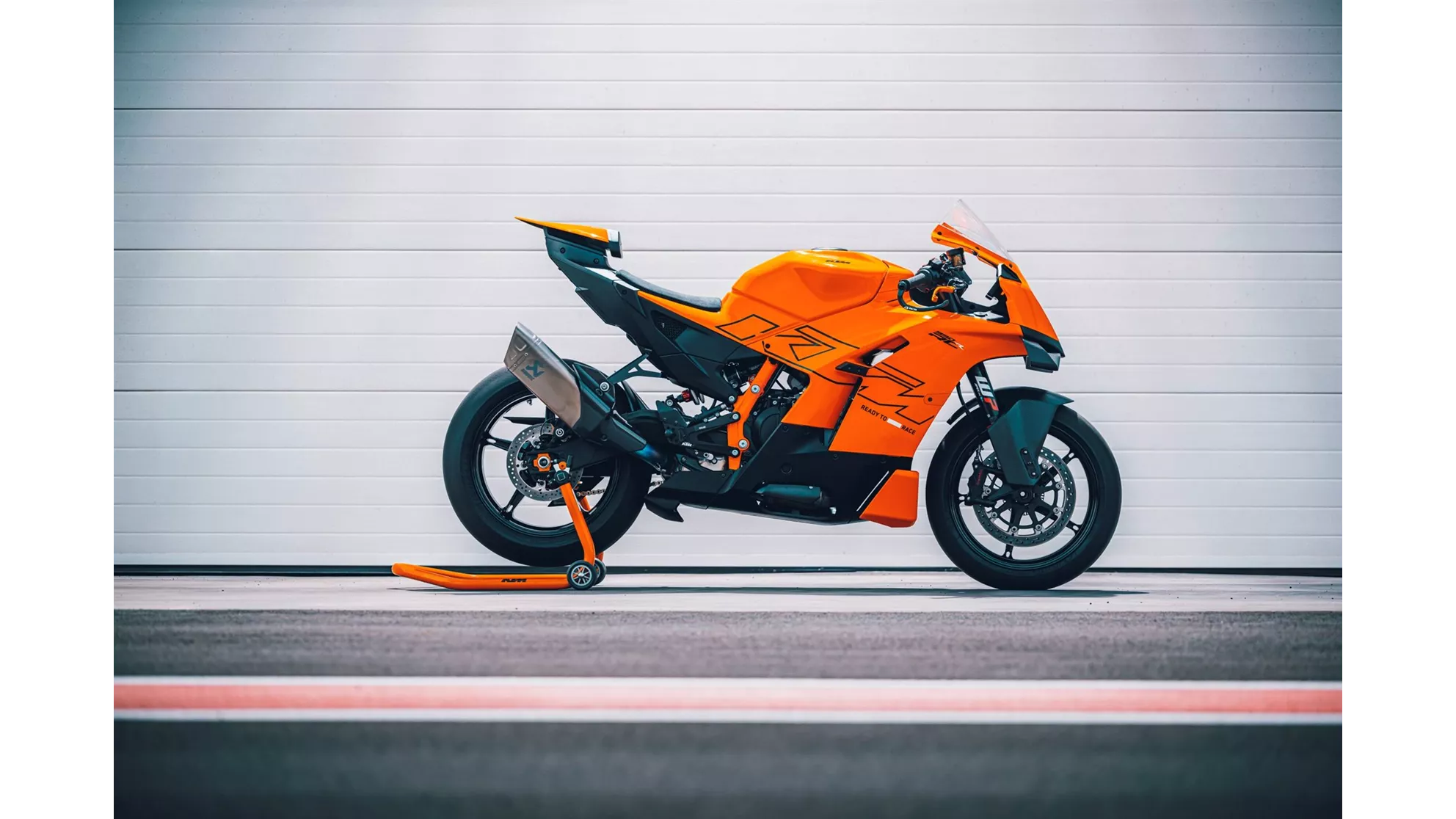
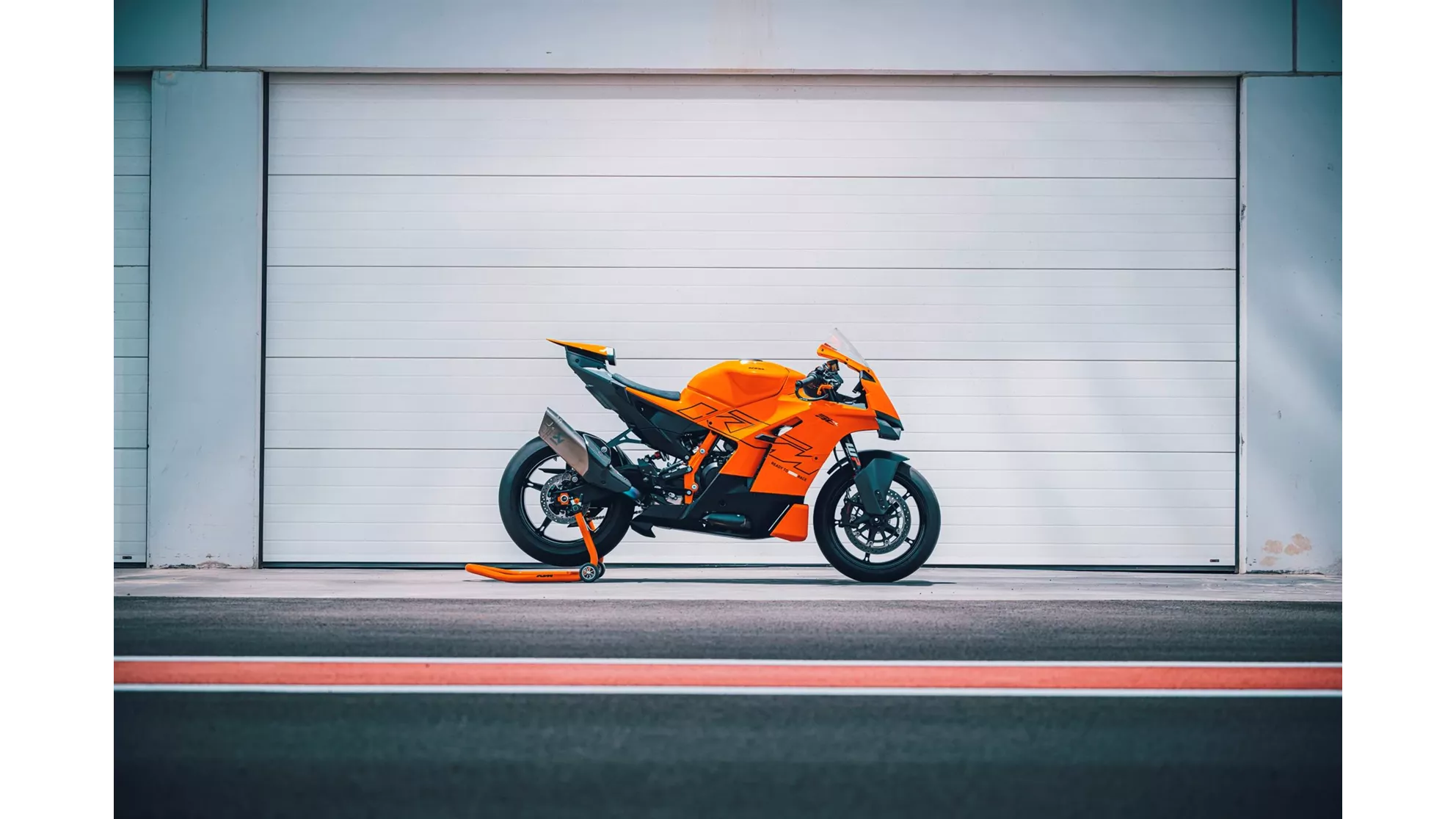
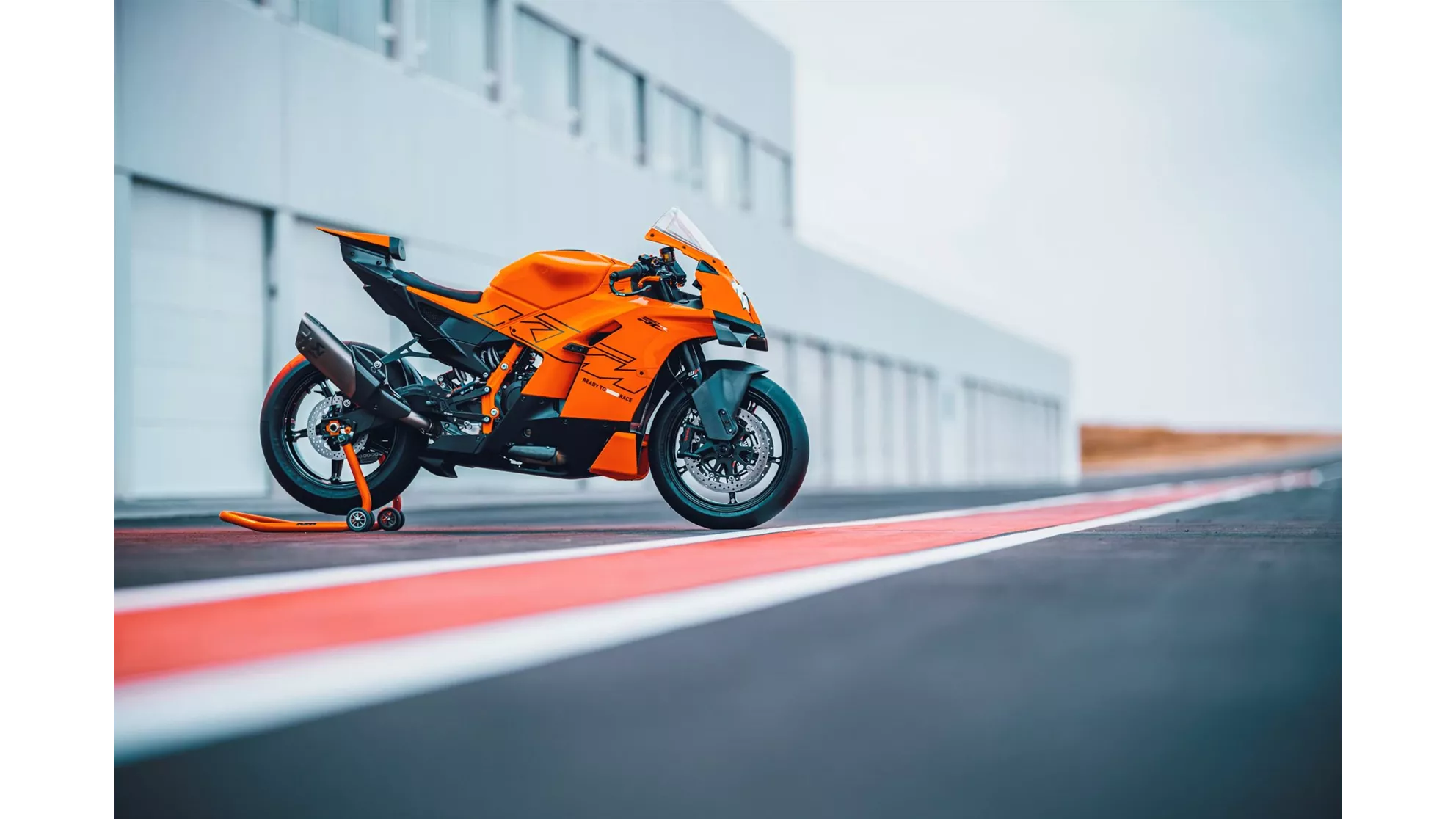
KTM 990 Duke R and KTM 990 RC R represent two different concepts with a similar drivetrain.
- How much does a KTM 990 Duke R cost?
- Here you will find an overview of the price level of new and used motorbikes!

KTM 990 RC R 2026 - Experiences and Expert Review
Martin_Bauer
The KTM 990 RC R is a supersports bike that never denies its roots, yet it can do far more in everyday use than you'd give it credit for at first glance. On the race track it impresses with high stability, plenty of feedback, a punchy, easily controllable engine and ergonomics that support ambitious riding. In everyday use it scores above all with its excellent touch display, integrated navigation and surprisingly good motorway manners. At the same time, it demands a willingness to compromise from its rider: heat in city traffic, the sporty seating position and a brake requiring somewhat high lever effort make it clear that comfort was never the top priority here. But that's exactly where its appeal lies: the 990 RC R is no sensible everyday bike, but an emotional supersports bike that makes even ordinary journeys special.
KTM 990 Duke R 2026 - Experiences and Expert Review
Martin_Bauer
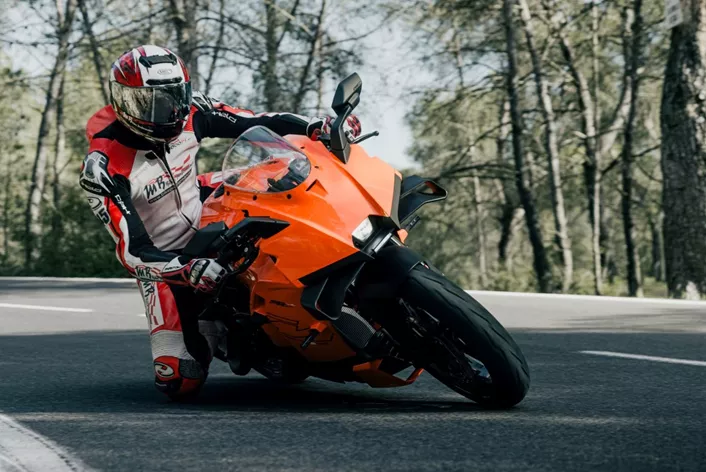
The KTM 990 Duke R is a more versatile road bike. Its 947 cc twin delivers strong, cleanly controllable thrust from just above idle and combines 103 Nm with remarkably refined running. The upright, supermoto-style ergonomics and wide handlebar make it playful on mountain passes, without the nervousness that sometimes characterised earlier Dukes. Brakes, chassis and electronics are all at a high level. For everyday riding, country roads and fast pass runs, it is therefore the clear recommendation.
More from 1000PS Magazine

Which is faster? KTM 990 RC R vs. 990 Duke R compared Images
Source: 1000PS