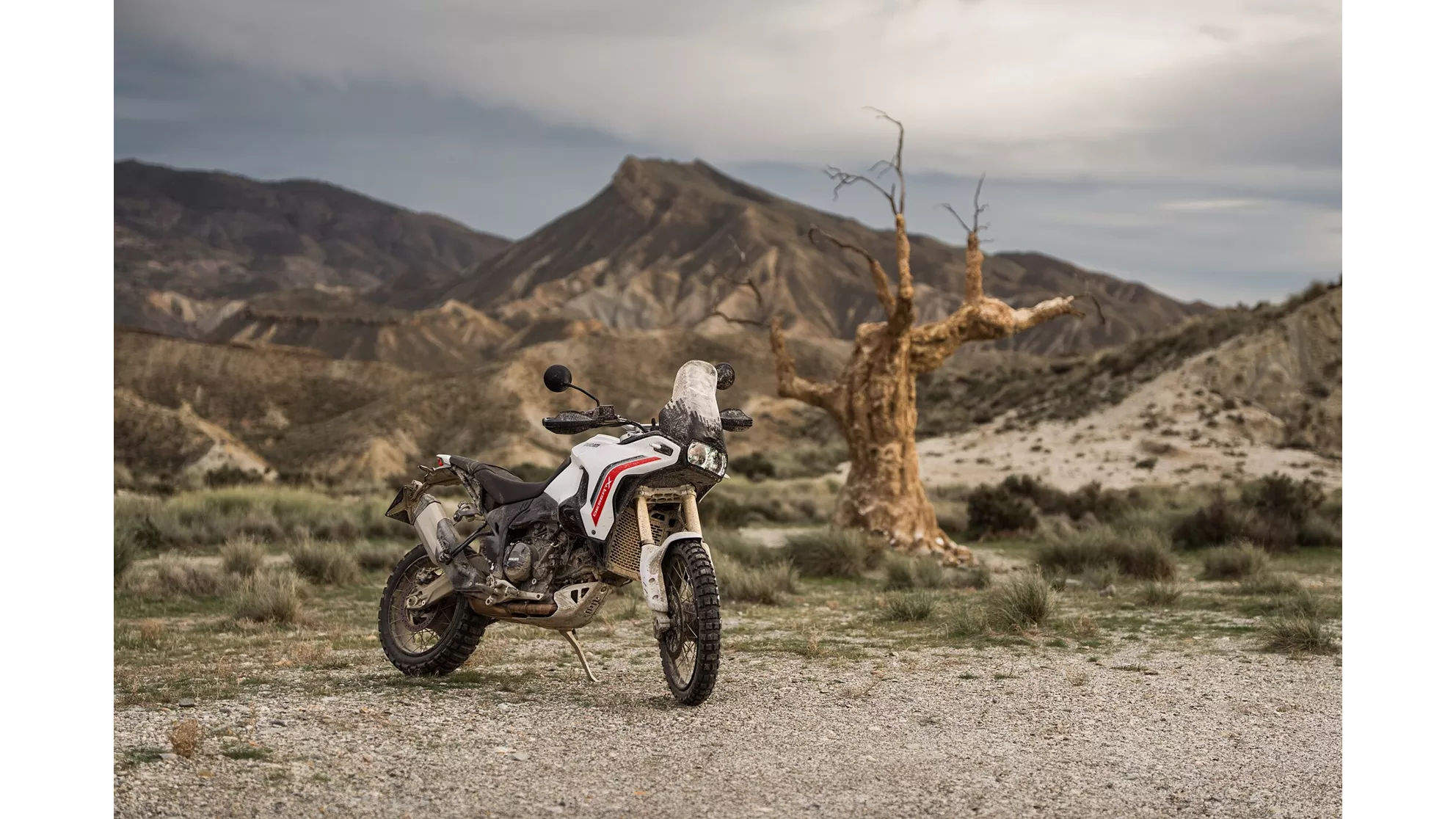
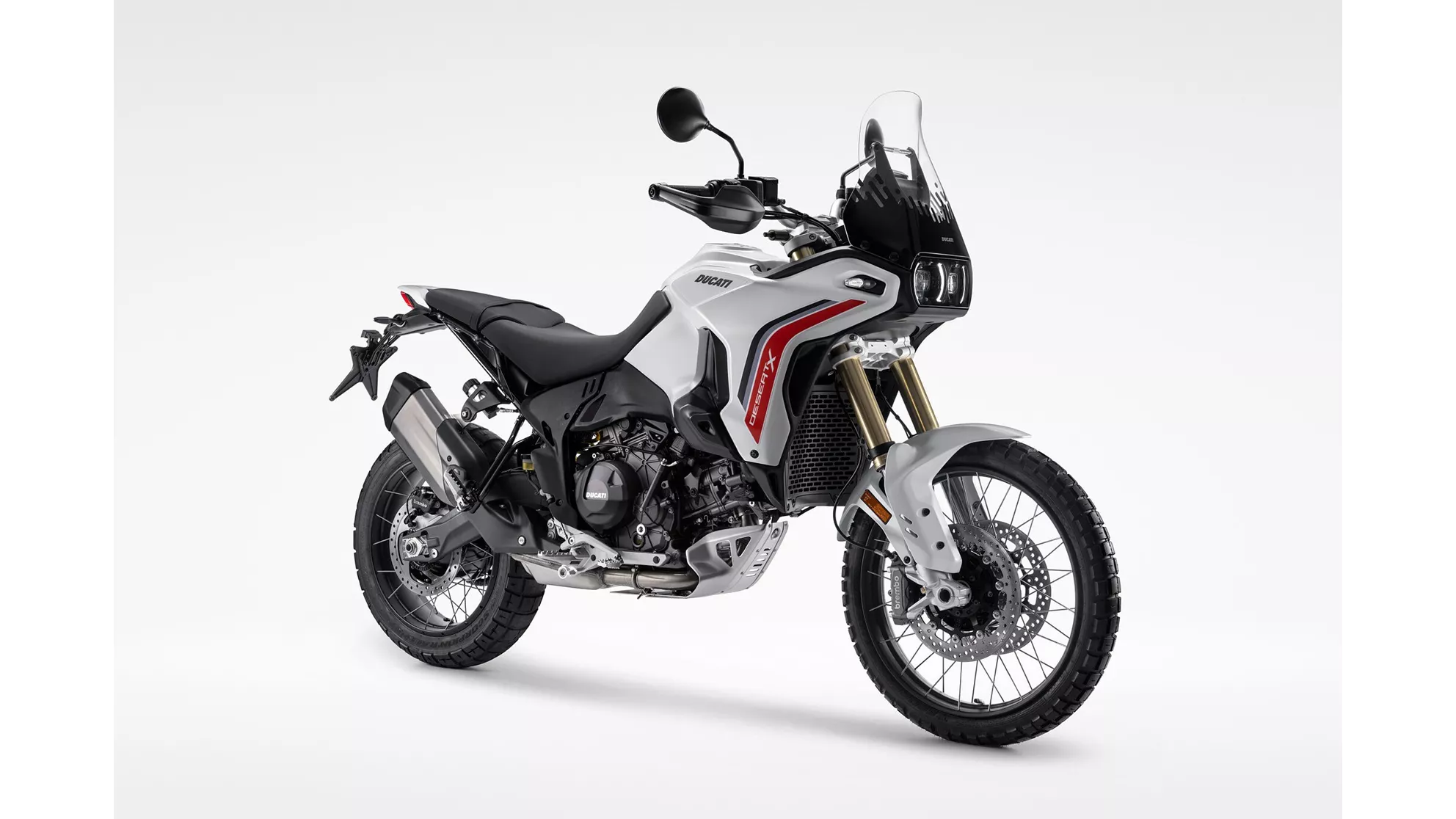
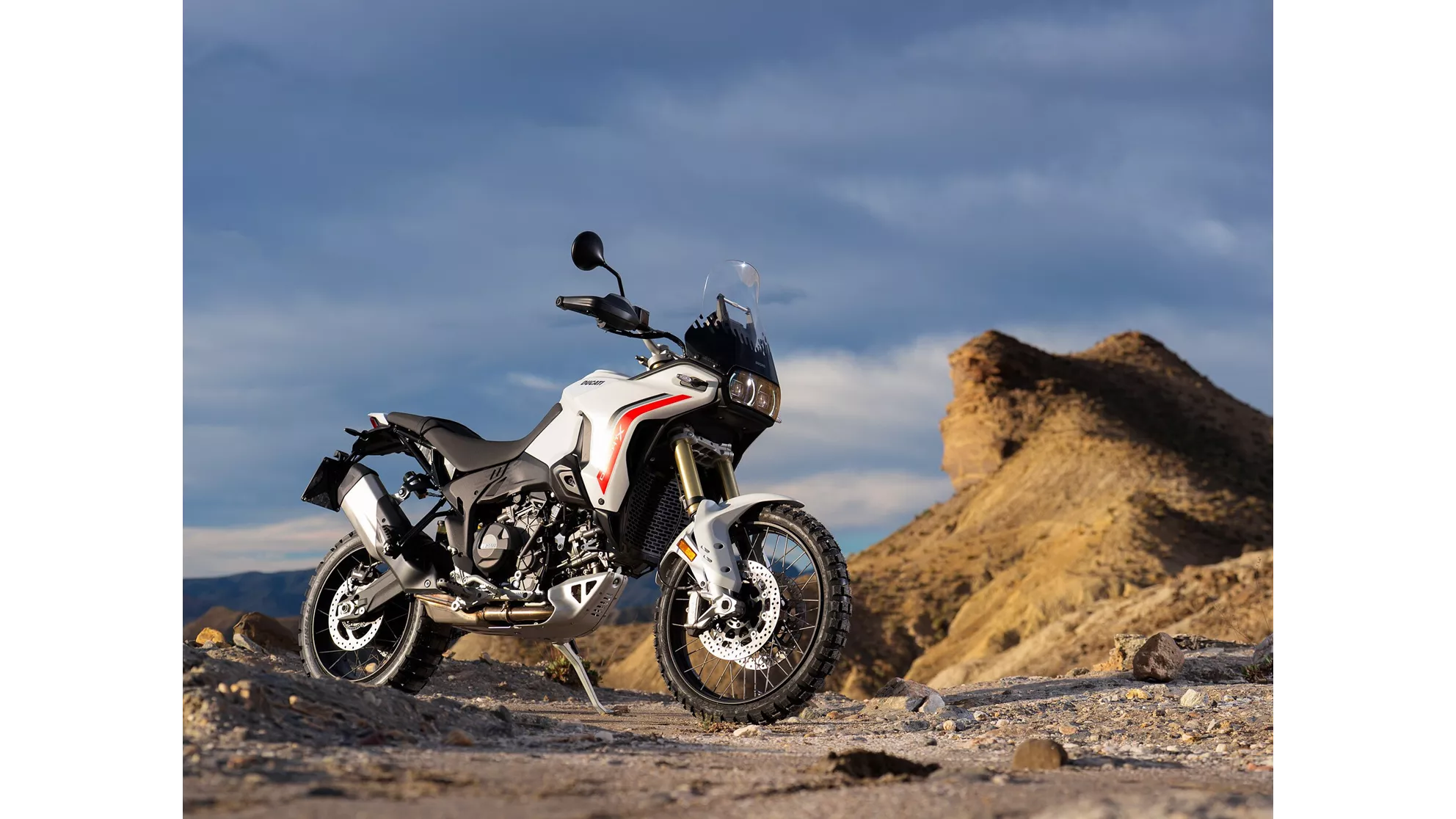
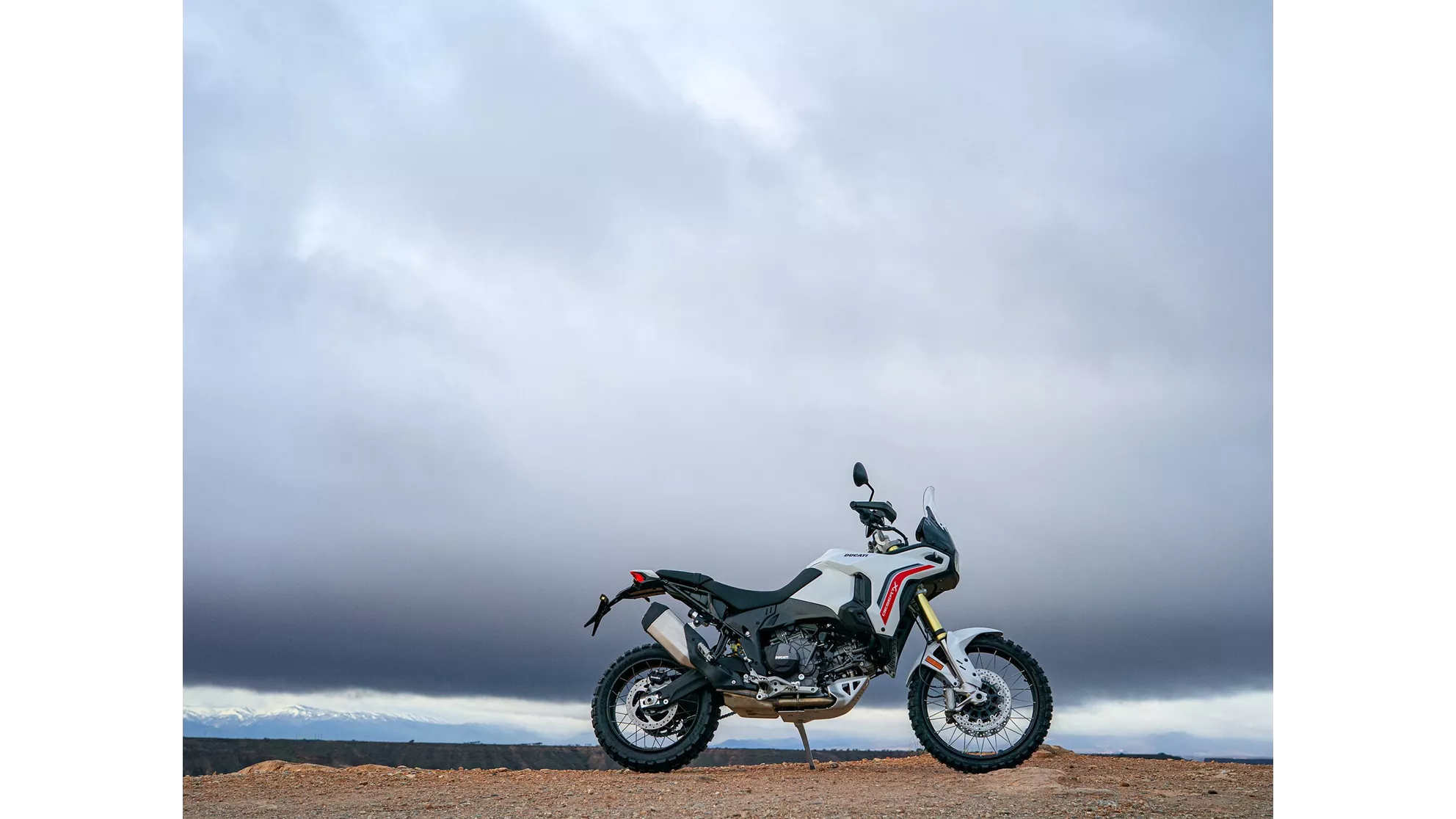
Hot nights in Spain are lovely, but not necessarily the best basis for a long-term relationship. At the, as always, rather brief first presentation in Almería, Spain, the new DesertX won me over. But does the passion survive a longer fling? Now the 21-inch adventure bike has to prove itself on home turf: three days, two nights, around 170 kilometres of travel from Wiener Neustadt via Vienna, followed by a colourful mix of narrow roads, bad tarmac and legal gravel sections. Our base is the MoHo Gasthof-Pension Drei Hacken in the Yspertal, where host Andi serves up not just great food but top route tips as well. Navigation pro Jakob Weinknecht guides us to the gravel lanes that are extremely rare in Austria, legal (!) and pretty well hidden. Here the DesertX can't just look pretty in front of the hotel; it has to work as an adventure bike. Is there true love left after the Spanish flirt?
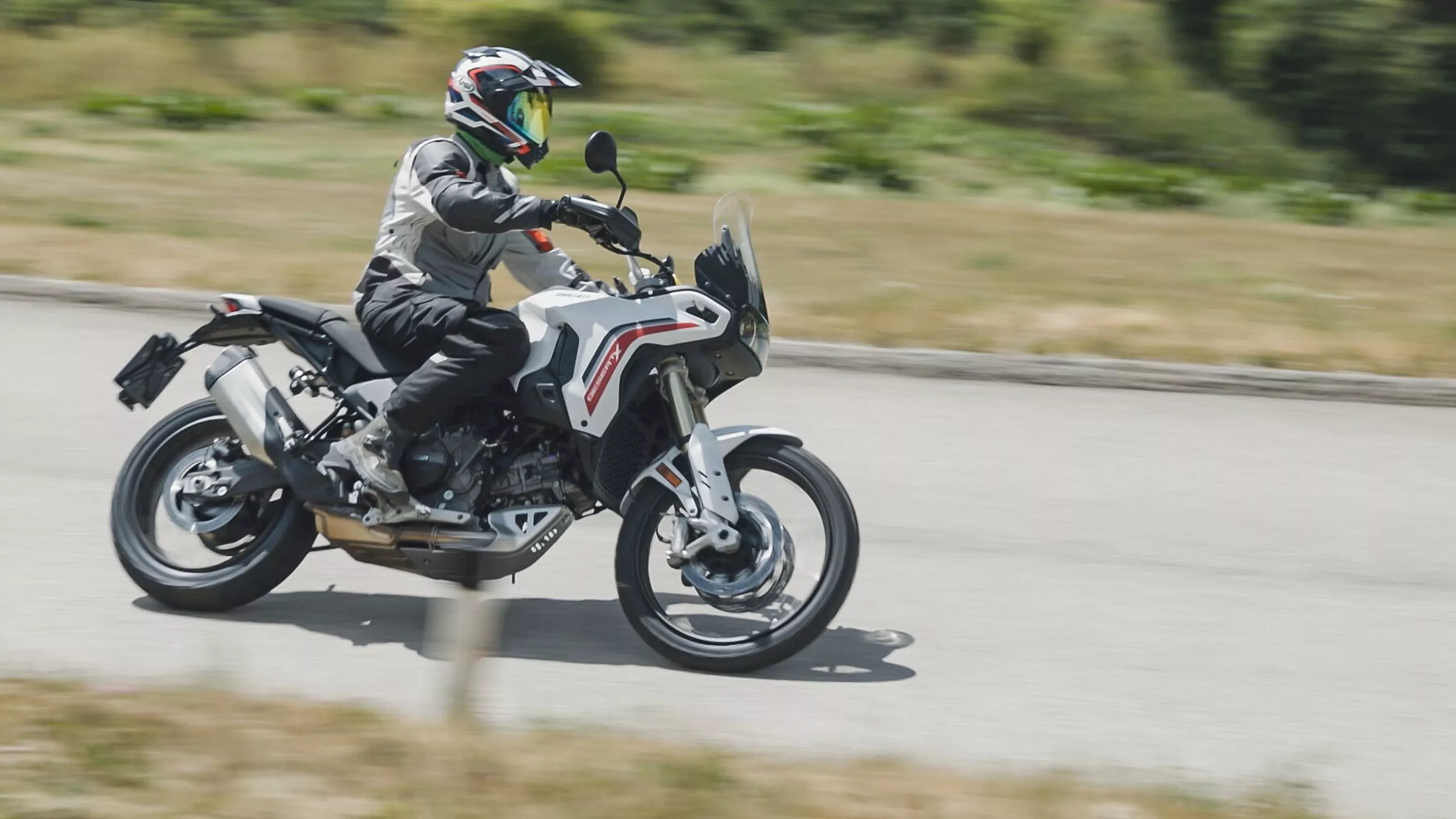
Ducati DesertX 2026 review: love after three days?
Three days between motorway, corners and gravel
At the presentation in Spain, the new Ducati DesertX won me over. Now three days in the Waldviertel with motorway, twisties and gravel reveal whether the hot affair turns into a lasting relationship.
&width=72&height=72&bgcolor=rgba_39_42_44_0&mode=crop "Author: Gregor")
Gregor
published on 02/10/2026
The Waldviertel becomes a truth serum
On the motorway, the wind is the main annoyance
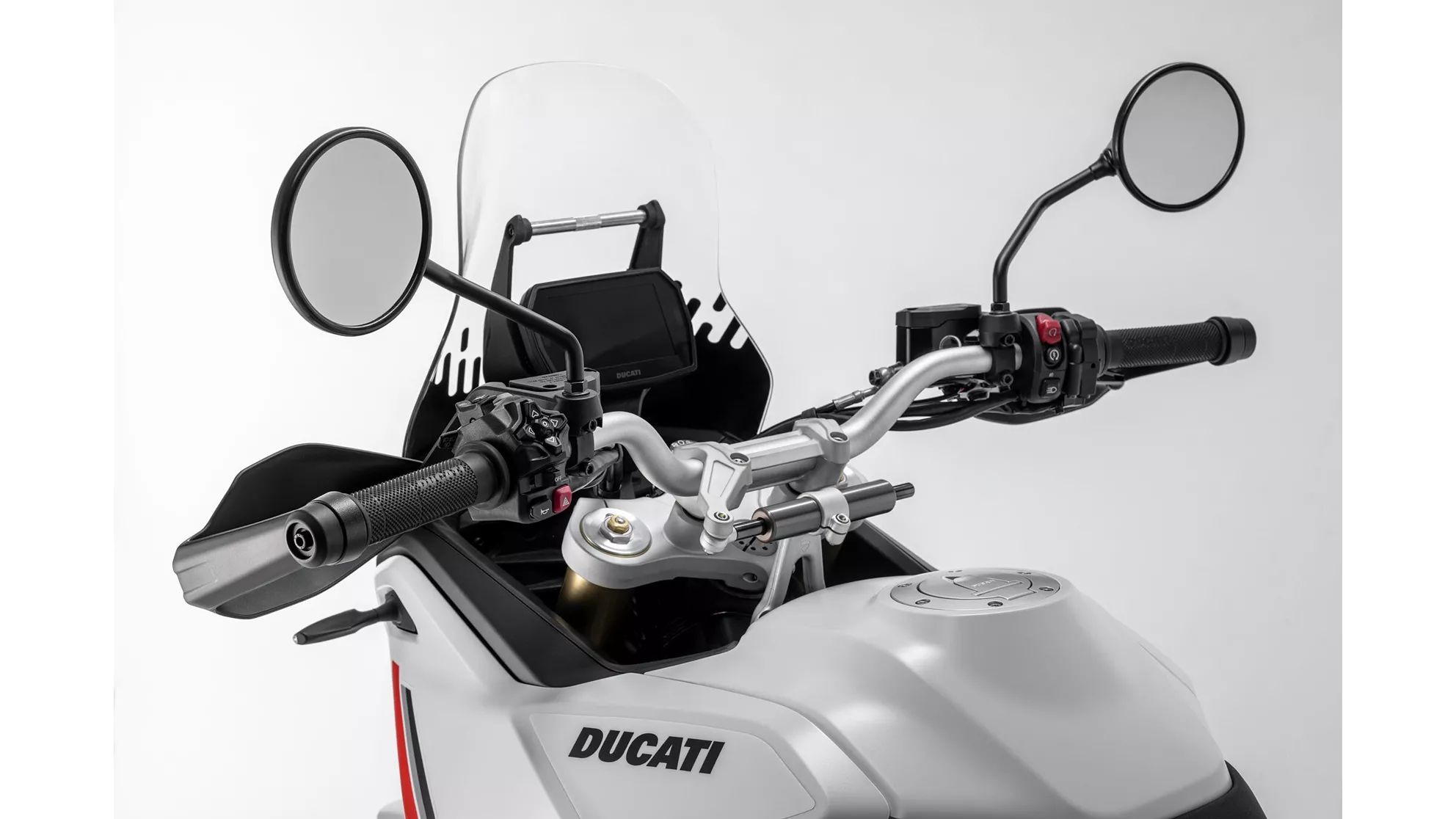
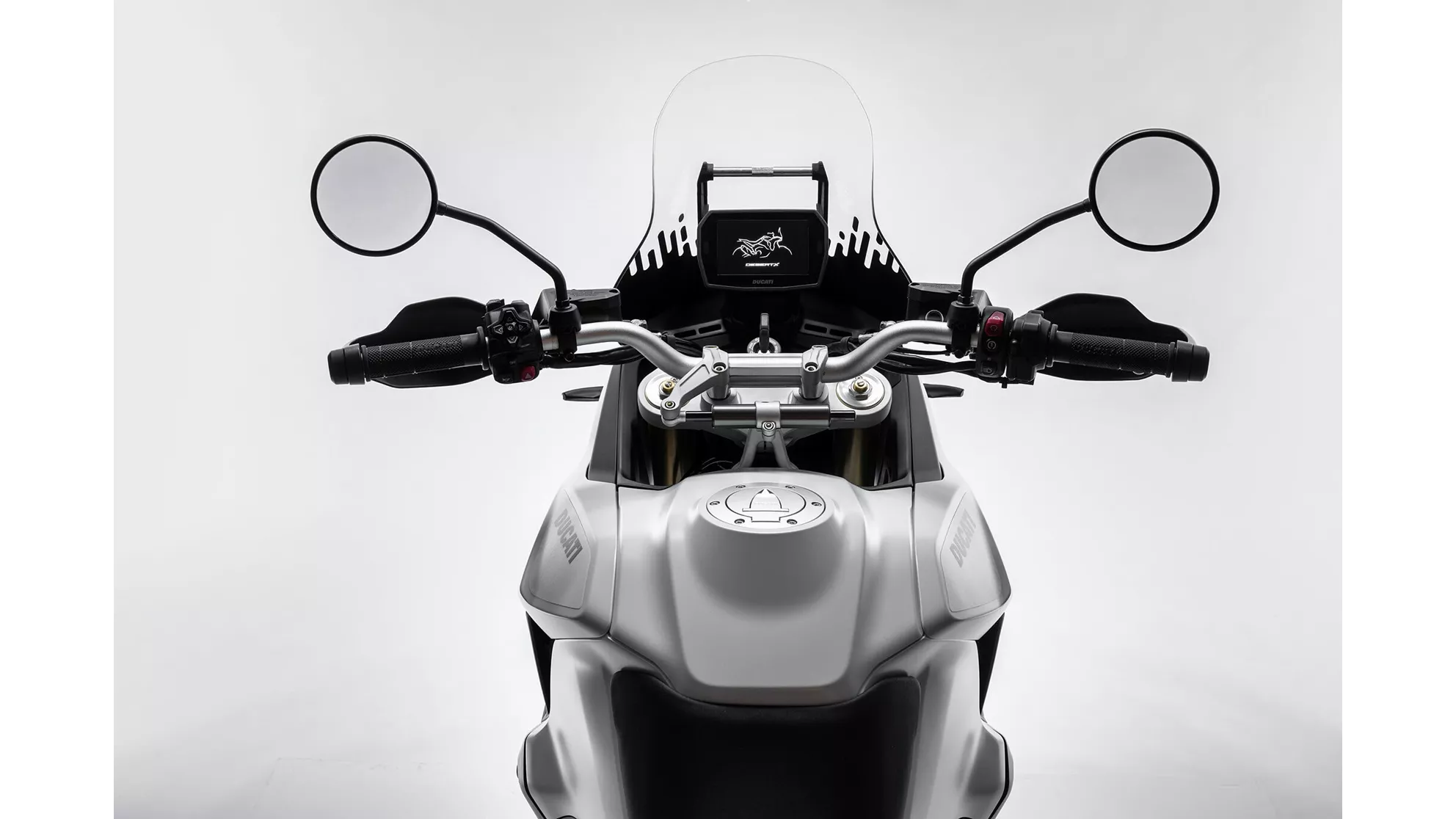
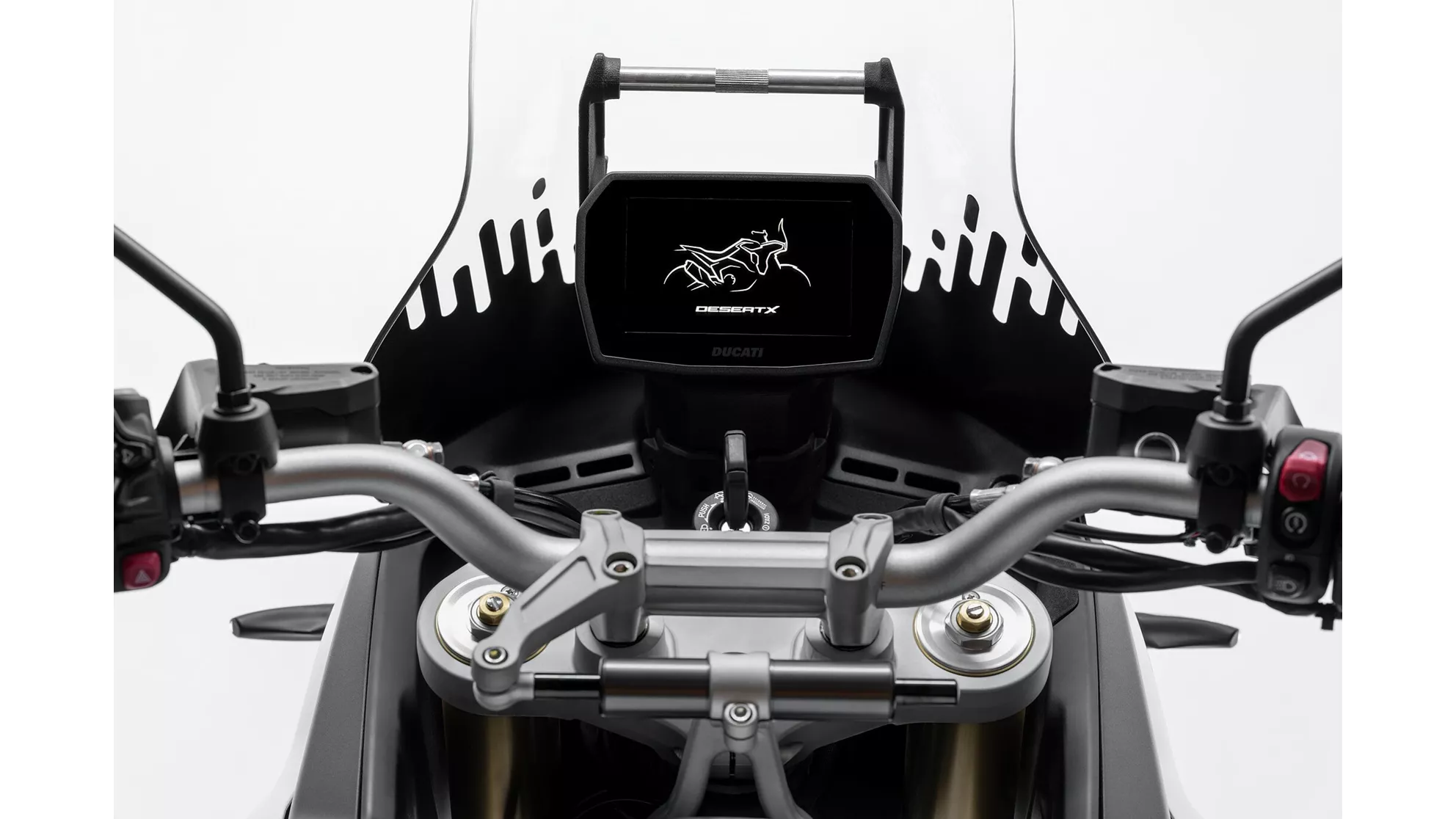
The ride there first answers the unsexy but important question of long-distance suitability. The seat and knee angle had worried me in Spain, but after the roughly two-hour motorway stint there are neither pressure points nor aches. The sporty chassis doesn't clatter over Austrian road damage either, and the DesertX stays stable during quick lane changes. Despite temperatures above 35 degrees, neither engine heat nor vibrations bother me. No numb hands. The standard cruise control helps when cruising along, too. Only the wind protection remains mediocre. At my 1.85 metres, turbulence hits my helmet and shoulders loudly, even though I'm wearing earplugs. The fitted Adventure windscreen isn't adjustable. Anyone who rides a lot of motorway and is sensitive to wind noise will probably have to upgrade - even if a taller screen might somewhat spoil the lovely rally front.
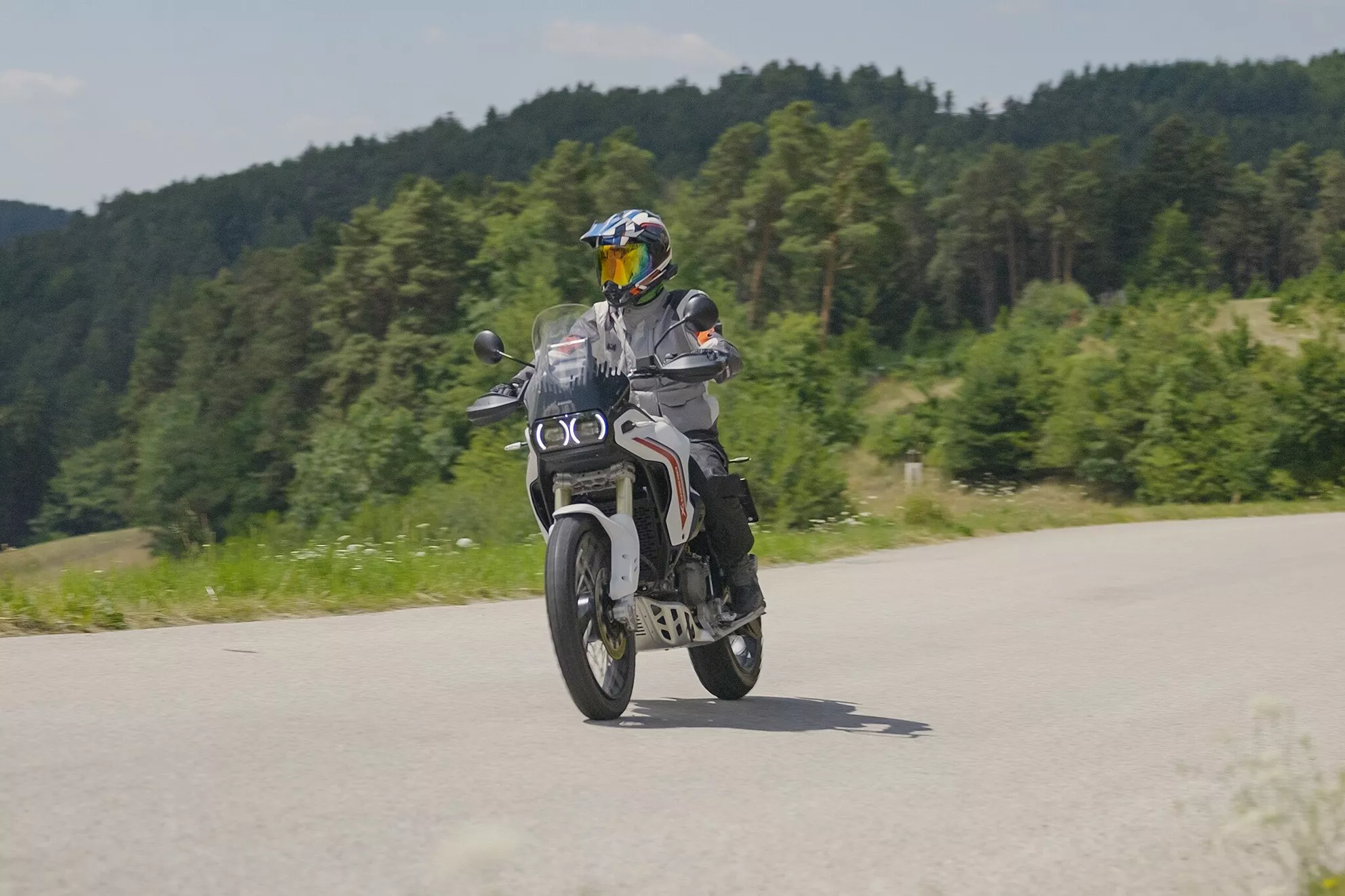
On the ride there, the DesertX is comfortable enough, though no sedan chair. Only the rather loud turbulence at the helmet is a bit annoying, especially with an off-road helmet.
The new V2 trades rawness for breadth
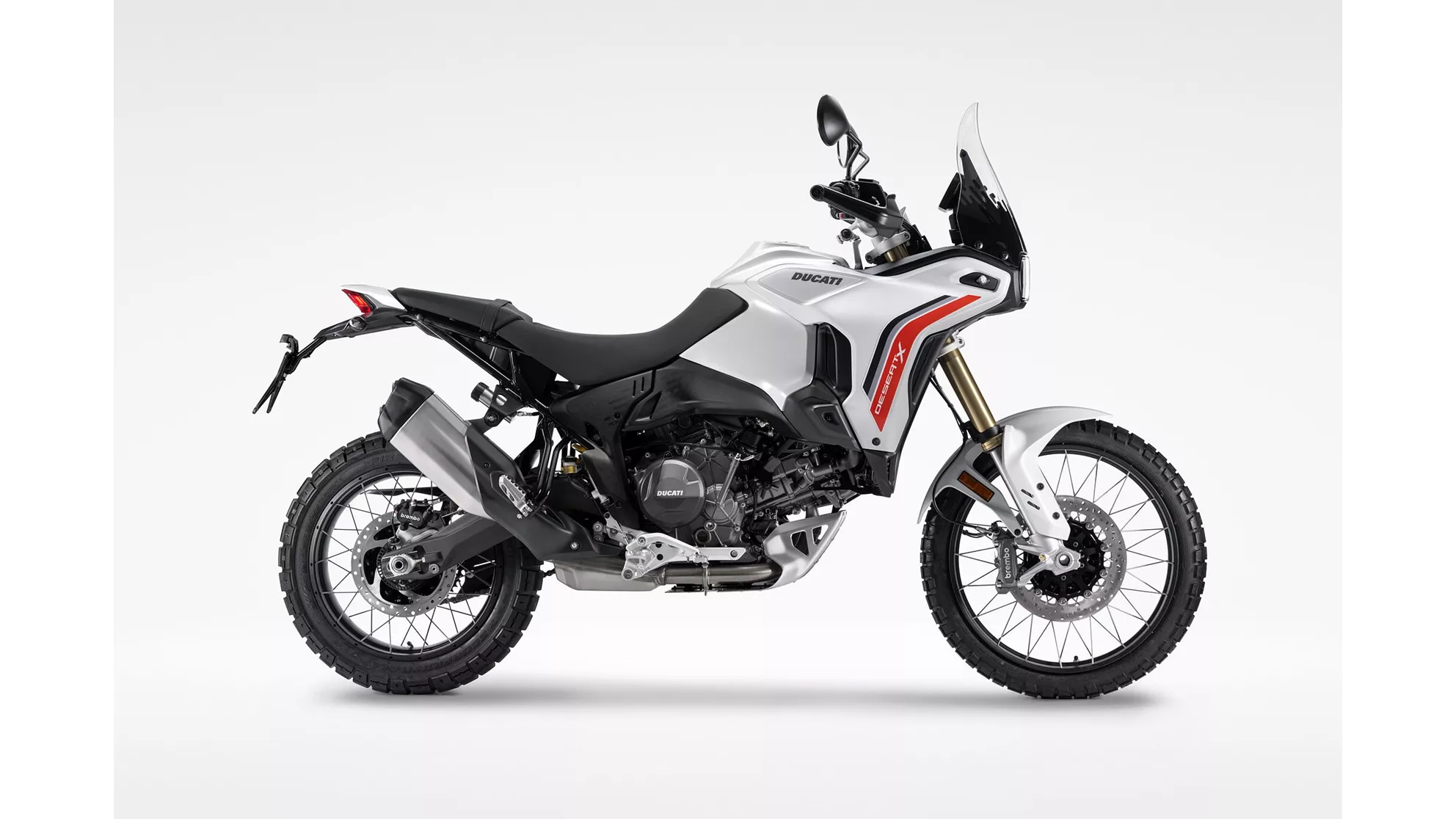
The Testastretta V2 that previously beat inside the DesertX had more edges and a more distinctive pulse. Anyone who, like colleague Schaaf, enjoys riding sportily and likes a rawer engine might miss it. But in tight twisties, in town and on slow gravel hairpins, the new Ducati V2 shows why the swap is a net gain. Its 890 cc, 110.3 hp and 92 Nm aren't just spec-sheet fodder. It takes throttle cleanly even at low revs, doesn't shake the rider about in a huff if you're accidentally in too high a gear, and still fires willingly out of corners with the shorter gearing. Up top, variable valve timing lets it pile on another helping. The sound stays Euro 5+ compliant but lets out a pleasant roar. After three days, this engine doesn't feel characterless at all, but remarkably broad-based: docile down low, punchy up top and precisely for that reason damn well suited to an adventure bike.
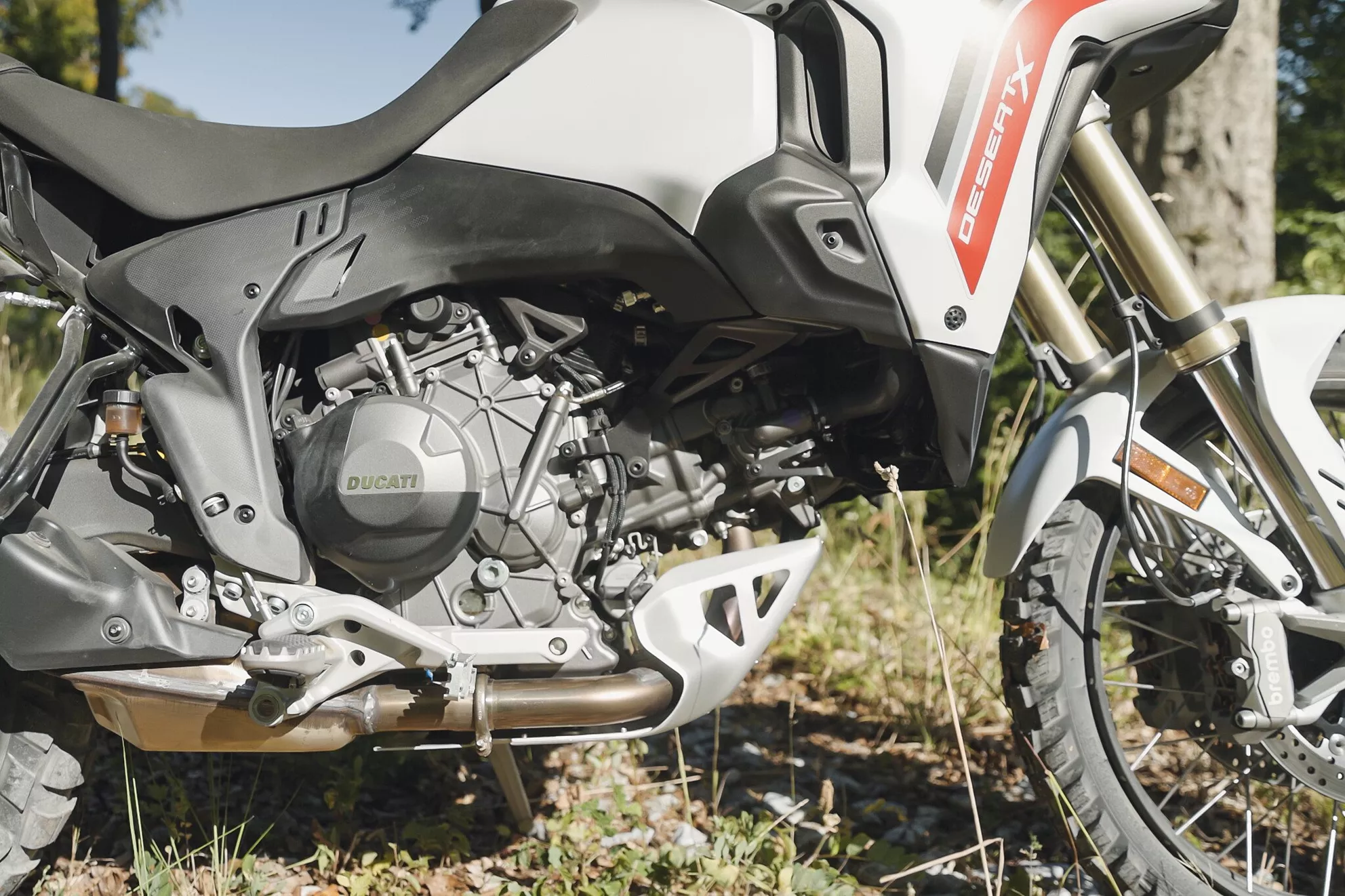
The new 890 V2: less character, but much more everyday comfort and punchy drive at the same time.
Ducati DesertX 2026 - Key Facts
Engine and Drive Train
| Engine type | V |
|---|---|
| Bore | 96 mm |
| Stroke | 61.5 mm |
| Engine power | 110.3 HP |
| Rpm at Max. Power | 9,000 rpm |
| Torque | 92 Nm |
| Rpm at Torque | 7,000 rpm |
| Compression Ratio | 13.1 |
| Fuel system | Injection |
| Throttle Bore | 52 mm |
| Degrees | 90 |
| Starter | Electric |
| Clutch Type | Multiplate in oil-bath, Antihopping, Clutch systems |
| Transmission | Chain |
| Transmission Type | Gearshift |
| Number of gears | 6 |
| Cylinders | 2 |
| Strokes | 4-Stroke |
| Valves per cylinder | 4 |
| Cooling | liquid |
| Can be restricted for A2 licence | Yes |
| Displacement | 890 ccm |
Brakes Rear
| Type | Disc |
|---|---|
| Diameter | 265 mm |
| Piston | Double piston |
| Shock mount | Floating caliper |
| Brand | Brembo |
Suspension Front
| Front suspension | Upside-Down telescopic fork |
|---|---|
| Brand | Kayaba |
| Diameter | 46 mm |
| Travel | 230 mm |
| Adjustment | Compression, Preload, Rebound |
Suspension Rear
| Suspension | Swing arm |
|---|---|
| Shock absorber | Monoshock |
| Shock mount | Deflection |
| Brand | Kayaba |
| Travel | 220 mm |
| Adjustment | Compression, Preload, Rebound |
| Material | Steel |
Chassis
| Frame | Aluminium |
|---|---|
| Frame type | Monocoque |
| Rake | 27 degree |
| Trail | 114 mm |
Brakes Front
| Type | Double disk |
|---|---|
| Diameter | 305 mm |
| Piston | Four pistons |
| Shock mount | Fixed caliper |
| Actuation | Hydraulic |
| Technology | radial, Monoblock |
| Brand | Brembo |
Assistance Systems
| Advanced Rider Assistance Systems | ABS, Riding modes, Cornering ABS, Engine drag torque control, Ride by Wire, Quickshifter, Shift assistant with blipper, Cruise control, Traction control, Anti-wheelie, Modern electronics, Comfort, EBC, Engine management, Variable valve timing, Ducati Quick Shift DQS, DTC |
|---|
Dimensions and Weights
| Front tyre width | 90 mm |
|---|---|
| Front tyre height | 90 % |
| Front tyre diameter | 21 inch |
| Rear tyre width | 150 mm |
| Rear tyre height | 70 % |
| Rear tyre diameter | 18 inch |
| Wheelbase | 1,615 mm |
| Seat Height | 880 mm |
| Dry Weight (with ABS) | 209 kg |
| Fuel Tank Capacity | 18 l |
| Range | 333 km |
| Combined CO2 emissions | 125 g/km |
| Combined fuel consumption | 5.4 l/100km |
| Euro Norm | Euro 5+ |
| Maintenance interval | 15,000 km |
Equipment
| Equipment | LED daytime running lights, LED-Headlights, TFT display, USB socket, Modern electronics, Automatic turn signal reset, Charging & power, Lighting |
|---|
Karoo 4 and electronics work hand in hand
Our test bike runs the Metzeler Karoo 4, and this 50/50 tyre suits the mixed programme brilliantly. On gravel, its distinctive tread blocks build up confidence-inspiring grip; on tarmac it rolls without excessive vibration and turns in surprisingly eagerly. At big lean angles you naturally feel the knobblies working, and 110 ponies can certainly overwhelm the rear tyre. But the limit announces itself predictably. The finely tuned electronics catch the rest. The traction control intervenes so smoothly that sometimes you only notice it through the missing acceleration. As the bike straightens up, it releases the power again. Enduro and Rally modes, cornering ABS and further control systems can be configured extensively. Almost too smooth, you could say. Where's the learning effect in that?
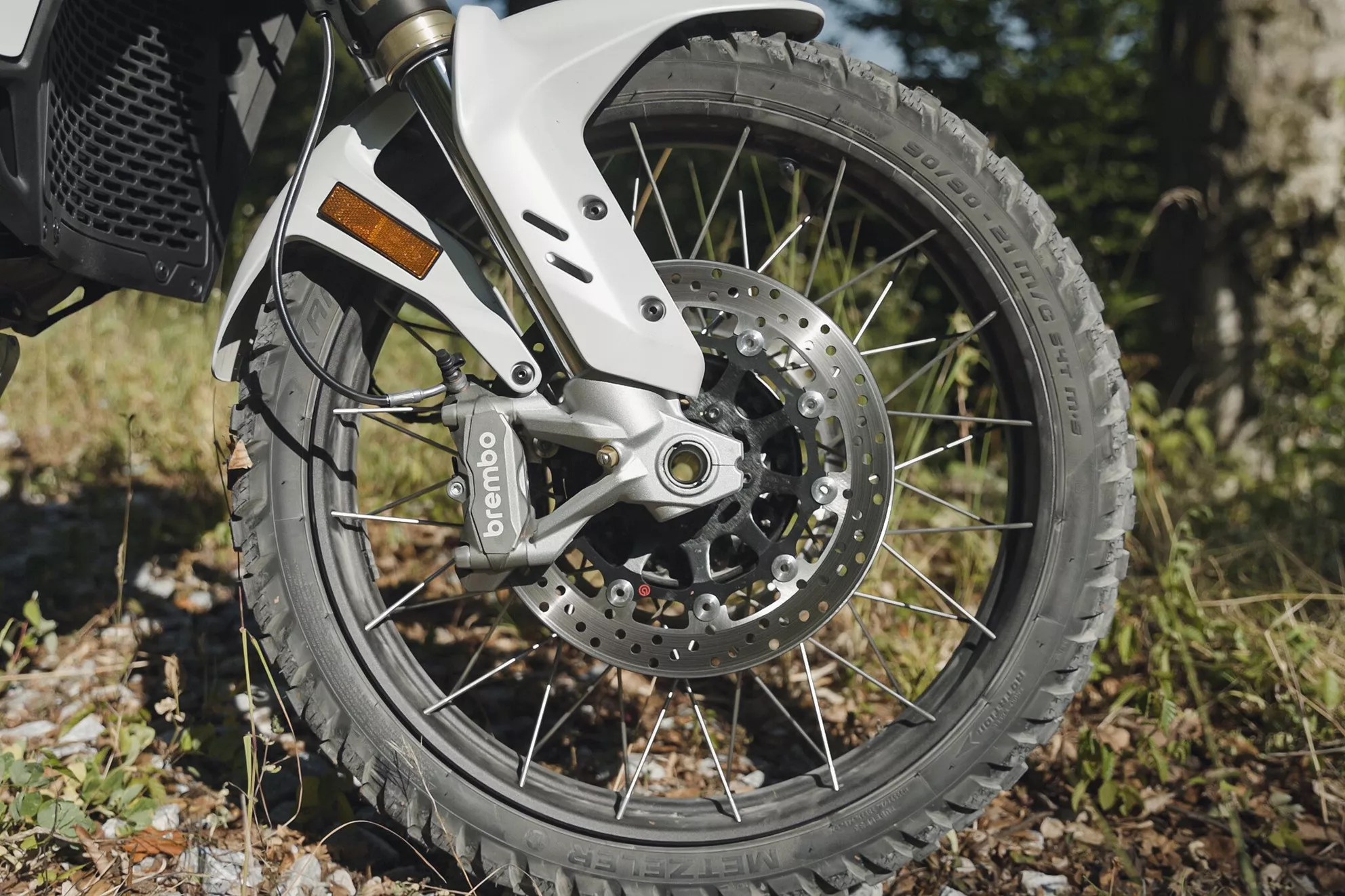
In my opinion, the Metzeler Karoo 4 is one of the best 50/50 tyres on the market.
The quickshifter is too sensitive
One big exception clouds the shiny electronic picture. The Ducati Quick Shift 2.0 no longer carries its sensor on the outside on the shift linkage, but inside the gearbox. That's supposed to work more precisely, but for me it repeatedly reacted oversensitively. Especially when upshifting from second to third, and occasionally in other gears too, the system cut drive abruptly. The gear engaged, but the ignition cut felt like it lasted forever. Mid-corner, that gives you a fright. Ducati explained this phenomenon, already noticed at the presentation, by saying the rider must give a clean shift impulse and mustn't leave the boot on the lever too long. Maybe so. On the three other bikes in this comparison test, the Honda Africa Twin, CFMOTO 1000MT-X and Husqvarna Norden 901, it didn't happen to me, though. If a system only works with a one-hundred-percent perfect foot, it lacks some error tolerance in everyday use.
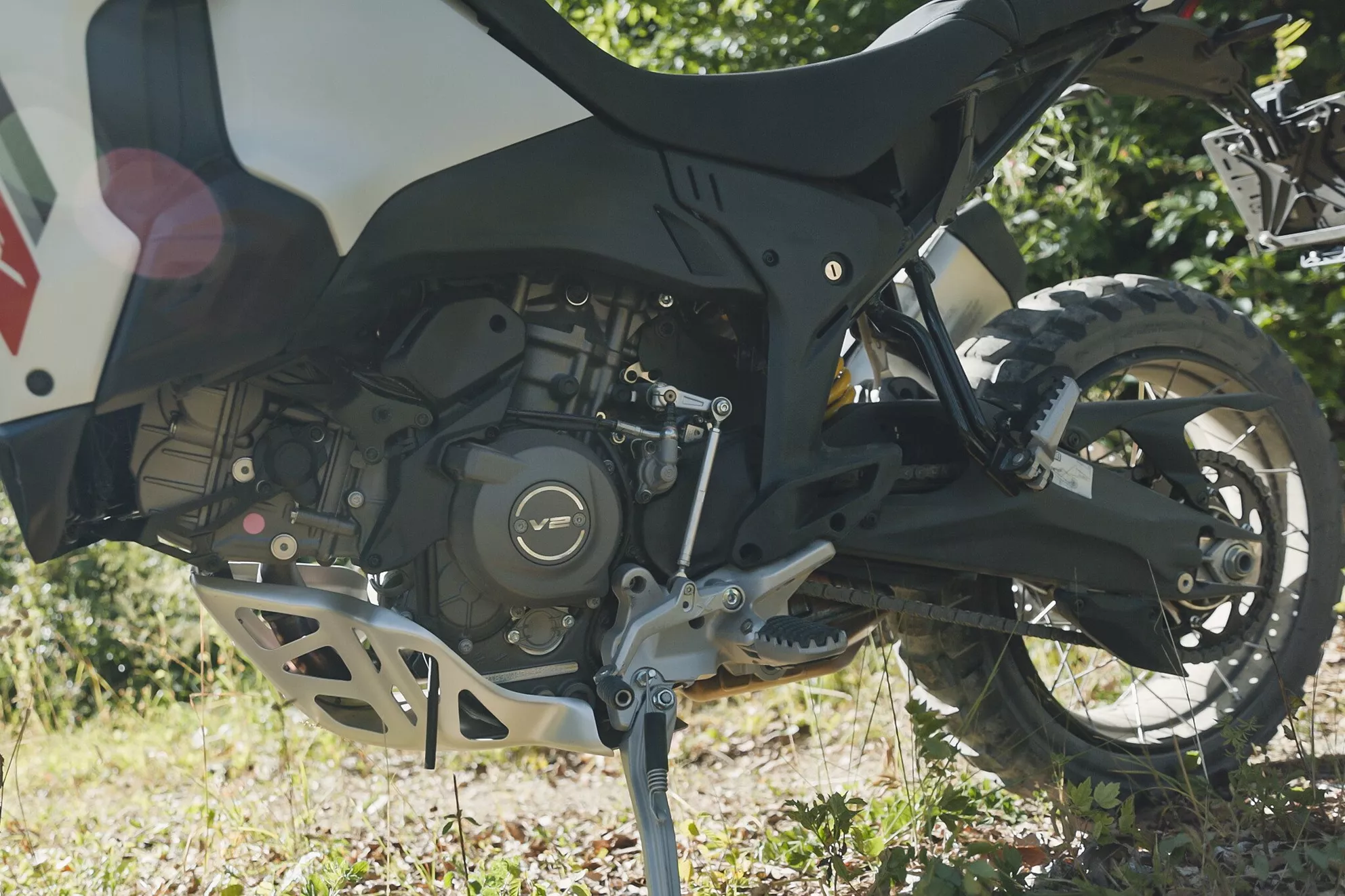
The Ducati Quick Shift 2.0 basically shifts crisply and quickly, but demands perfectly precise shifts. Not always easy with chunky enduro boots.
The chassis loves precision, not plushness
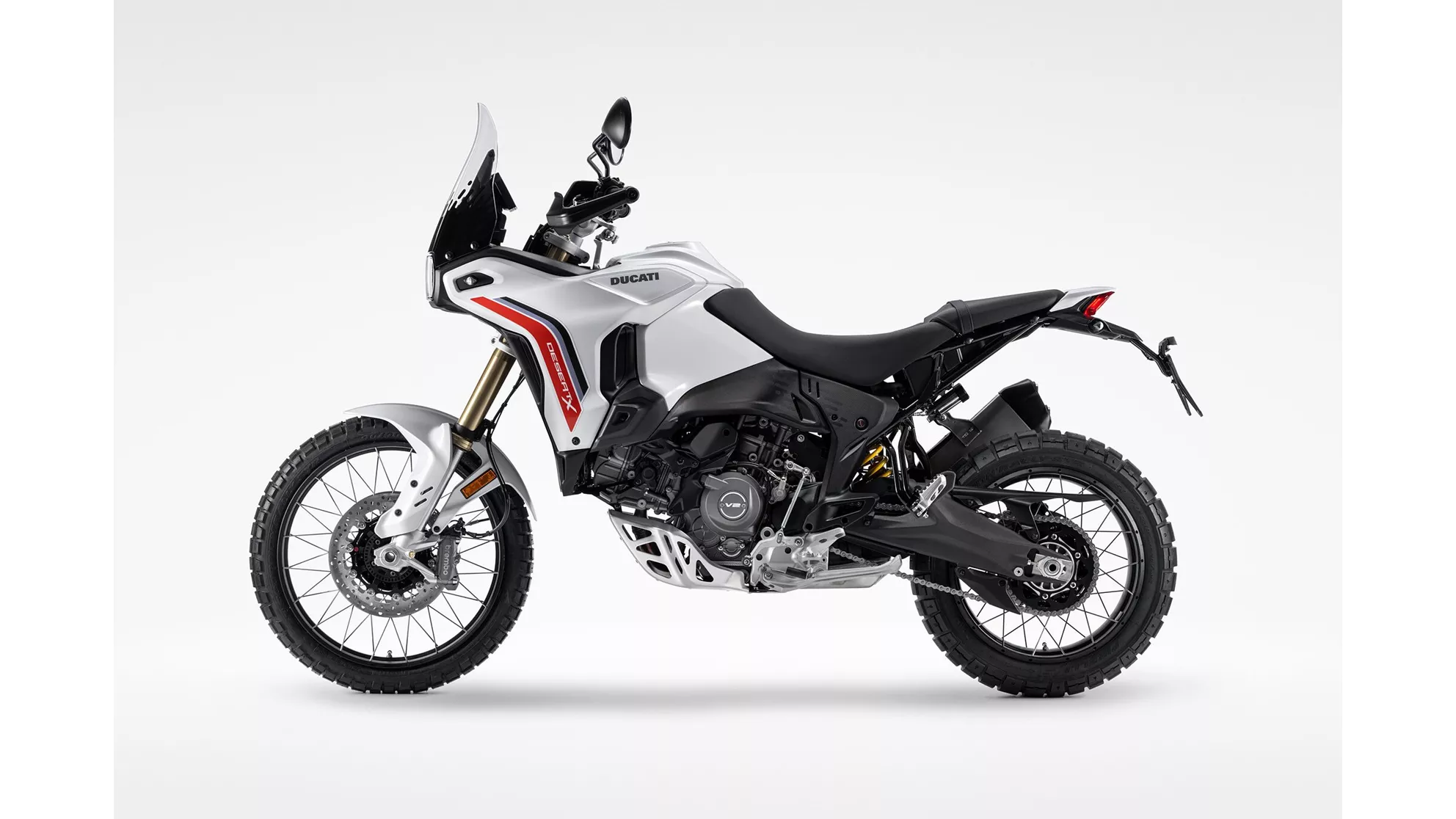
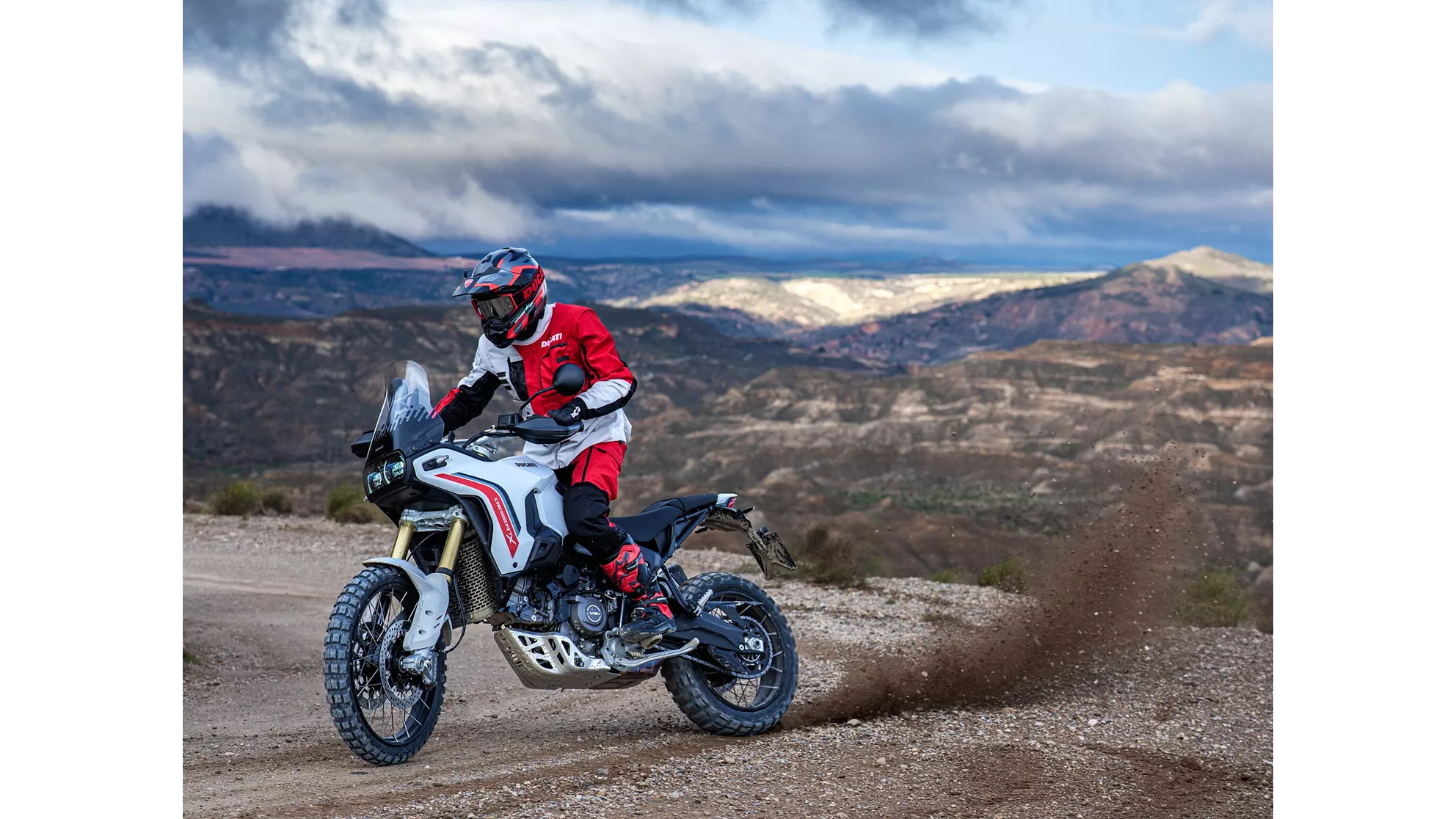
With the fully adjustable KYB suspension, on the other hand, my verdict remains clearly positive. It sits on the sportier side and doesn't hide the surface under a thick comfort blanket. That's exactly what I like: you feel what's happening under the tyres. Even so, the setup never became unpleasant on our tour. Solo and with light luggage for two nights, it offered enough comfort without going soft when devouring corners at pace. With a full touring load or a sensitive pillion, you'd probably need to readjust. That wasn't part of this test. In the twisties, the firm basic character pays off. The DesertX can be placed precisely on line, stays stable and conveys plenty of feel for the front wheel. Its ergonomics also strike a good balance: neither perched exposed on top of the bike nor sunk deep into it. Riding relaxed, there's no pressure on the arms; when pushing on, a slight forward lean of the upper body and extended elbows are enough for more front-end feel. A real joy in the twisties!
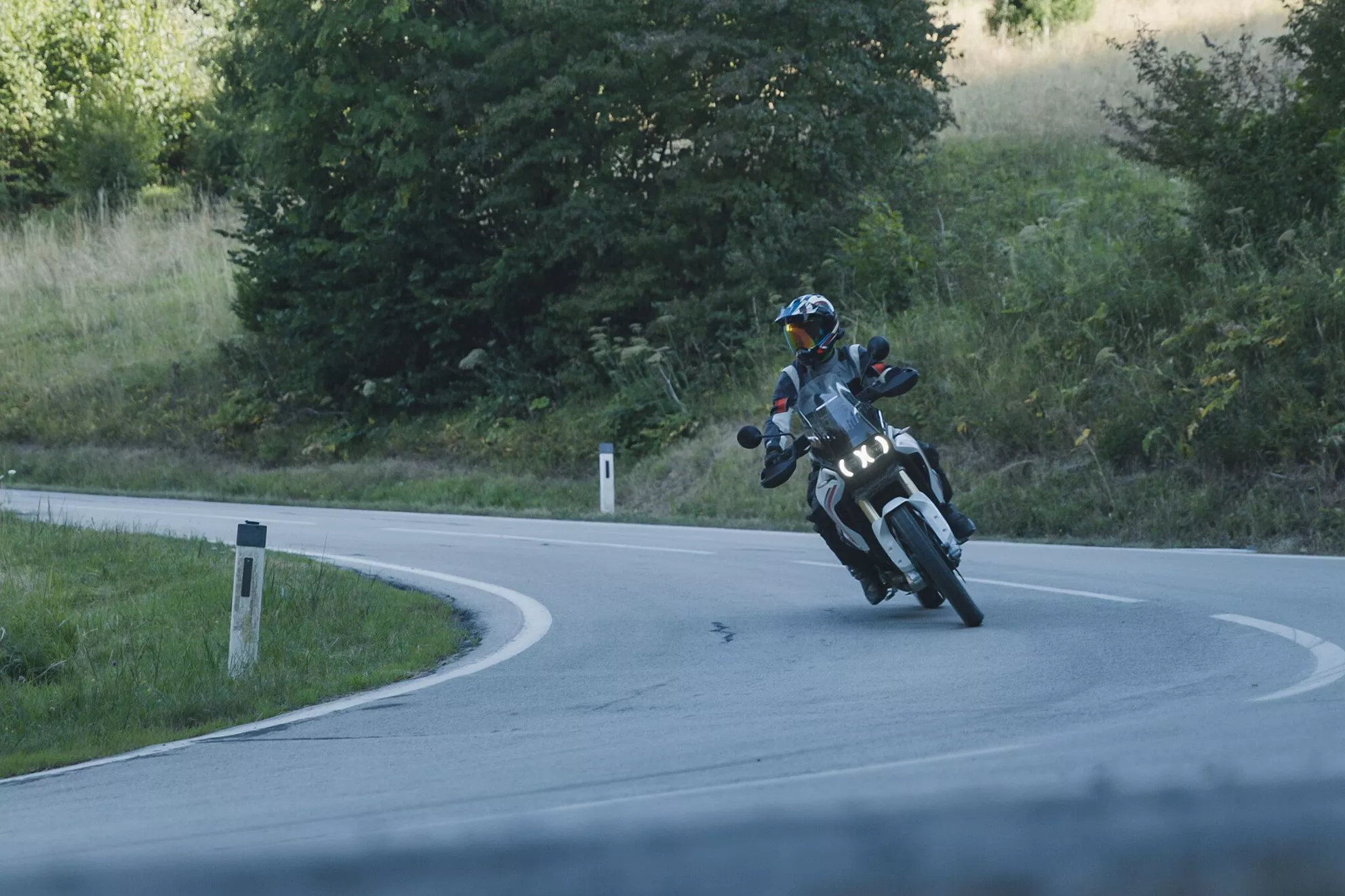
At lean, the KYB suspension gives a real feel for the grip situation. Even on knobbly tyres, you can whip round corners briskly.
The brakes suit both tarmac and gravel
The Brembo system strikes the same successful middle ground. Up front there's a crisp pressure point with enough bite for fast tarmac work, without getting grabby on loose surfaces. That means you can drop anchor hard on the road and still modulate finely on gravel. Only the rear brake demands rather a lot of lever travel before noticeable braking sets in. That's complaining at a high level, but on an expensive adventure bike it isn't entirely irrelevant.
Ducati DesertX off-road - true gravel joy
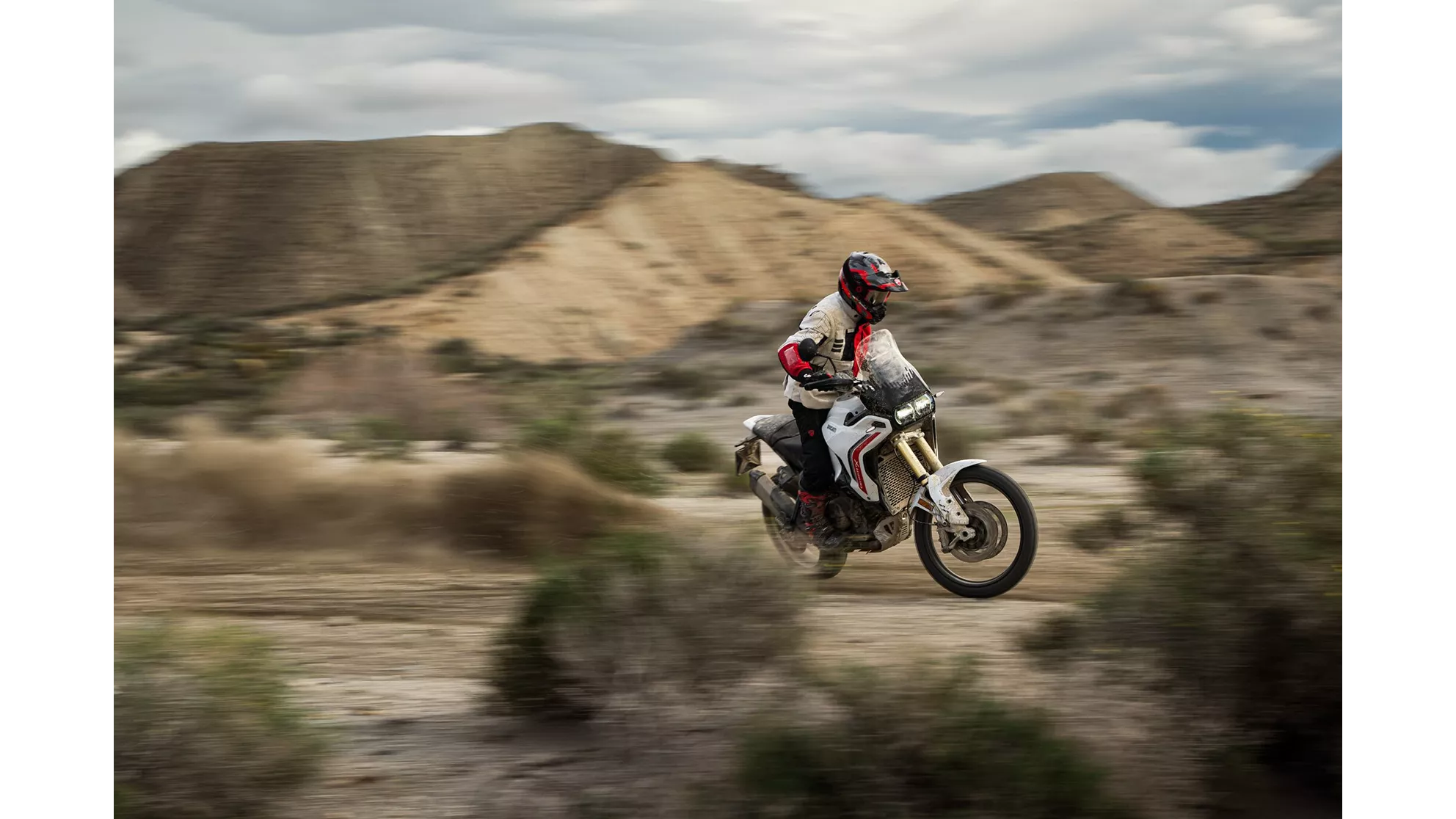
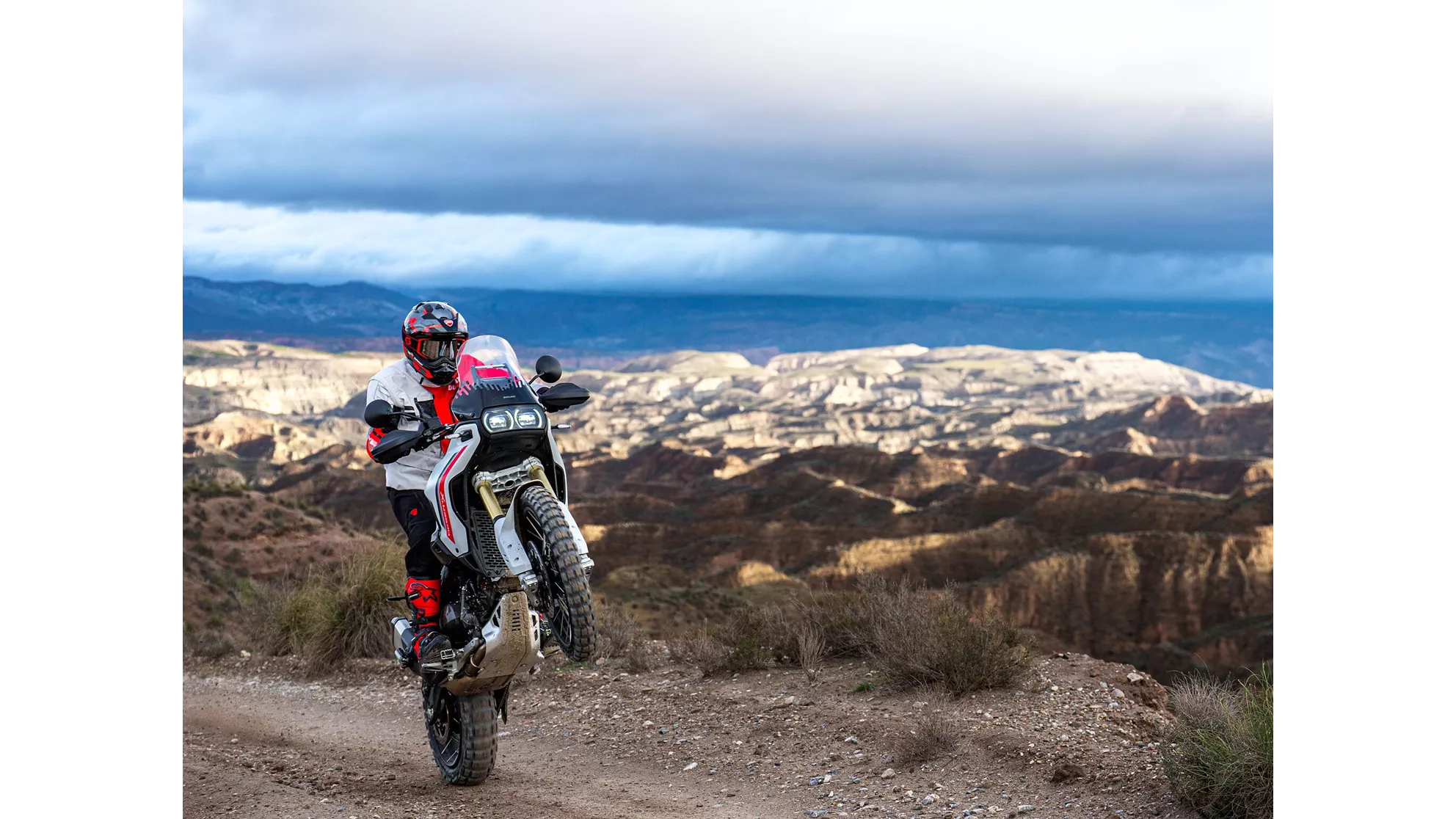
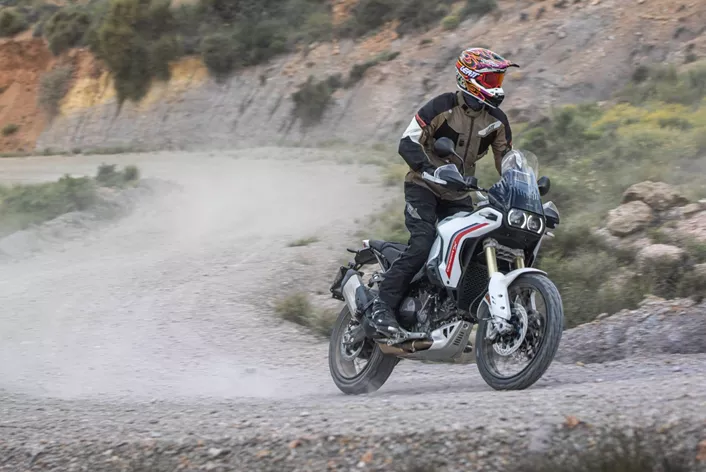
Under Jakob's guidance, we also ride some legal gravel roads. These belong to the unpublished TET Austria and may not be real off-road, but they're a bit rougher and more demanding than the graded gravel highways. Just like in Spain, the DesertX is a joy on loose surfaces here too. It was before, but the engine is now even more approachable, stronger on torque and therefore more fun for me. It never runs roughly, delivering precise drive whenever you want it. Add to that the excellent ergonomics, the capable chassis and the mature electronics, which either spread a wide safety net or stay out of the game, as you wish. Overall, the DesertX feels so coherent because engine, chassis, ergonomics, tyres and control systems mesh together brilliantly. It's no comfy sedan chair, nor a nervous sports machine on stilts. It remains a Ducati that loves being ridden briskly, but with the new engine it makes slow and tricky sections much more relaxed than its predecessor did.
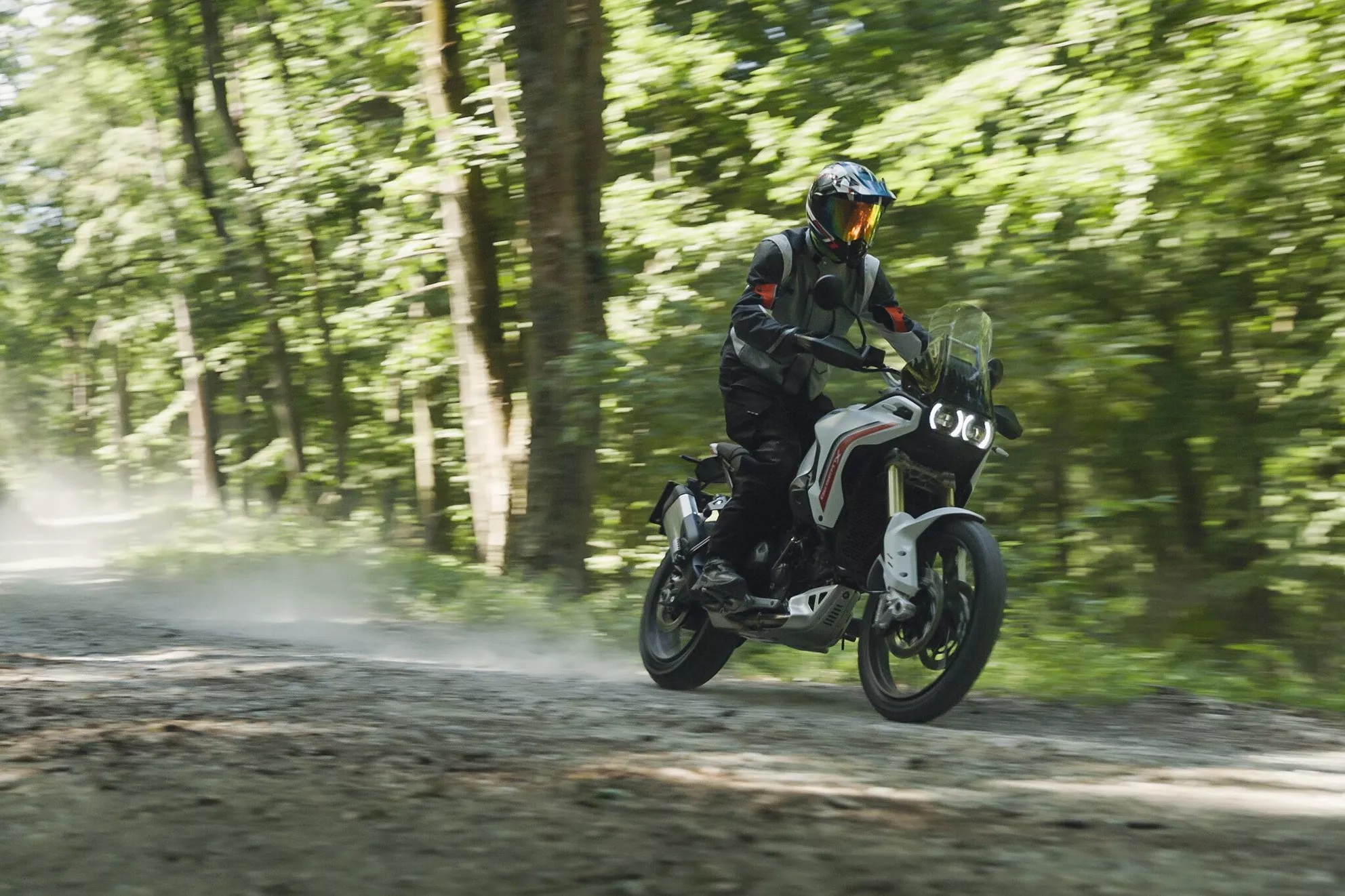
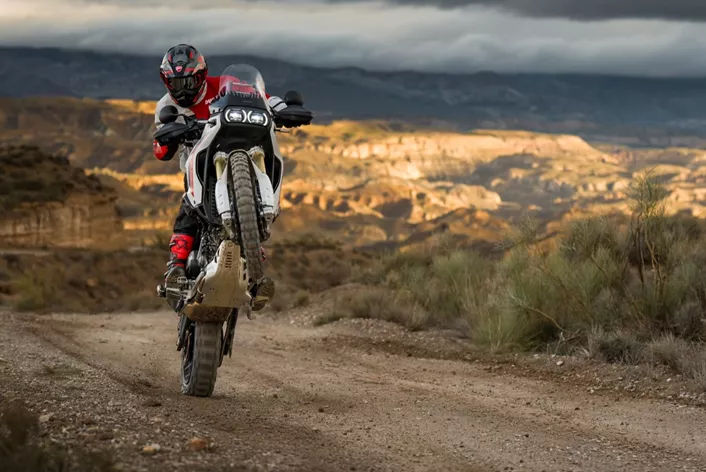
The new DesertX is better suited than ever to adventures off the tarmac.
The price changes the verdict depending on the country
In Germany, the DesertX starts at 16,390 euros plus delivery costs. That's competitive among powerful adventure bikes. In Switzerland, Ducati quotes 18,290 francs. In Austria, the base price is currently 19,995 euros. Largely responsible for that is the extra NoVA tax, calculated based on fuel consumption. But that also shifts the benchmark on the Austrian market. For almost 20,000 euros, the DesertX can hardly afford excuses for the sensitive quickshifter and the mediocre wind protection. Fortunately, it rides well enough that you overlook these minor problem areas pretty quickly. Still, the buying recommendation depends more on the country than usual. In Germany the package looks attractive; in Austria it takes a noticeably fatter wallet and more love for the Italian.
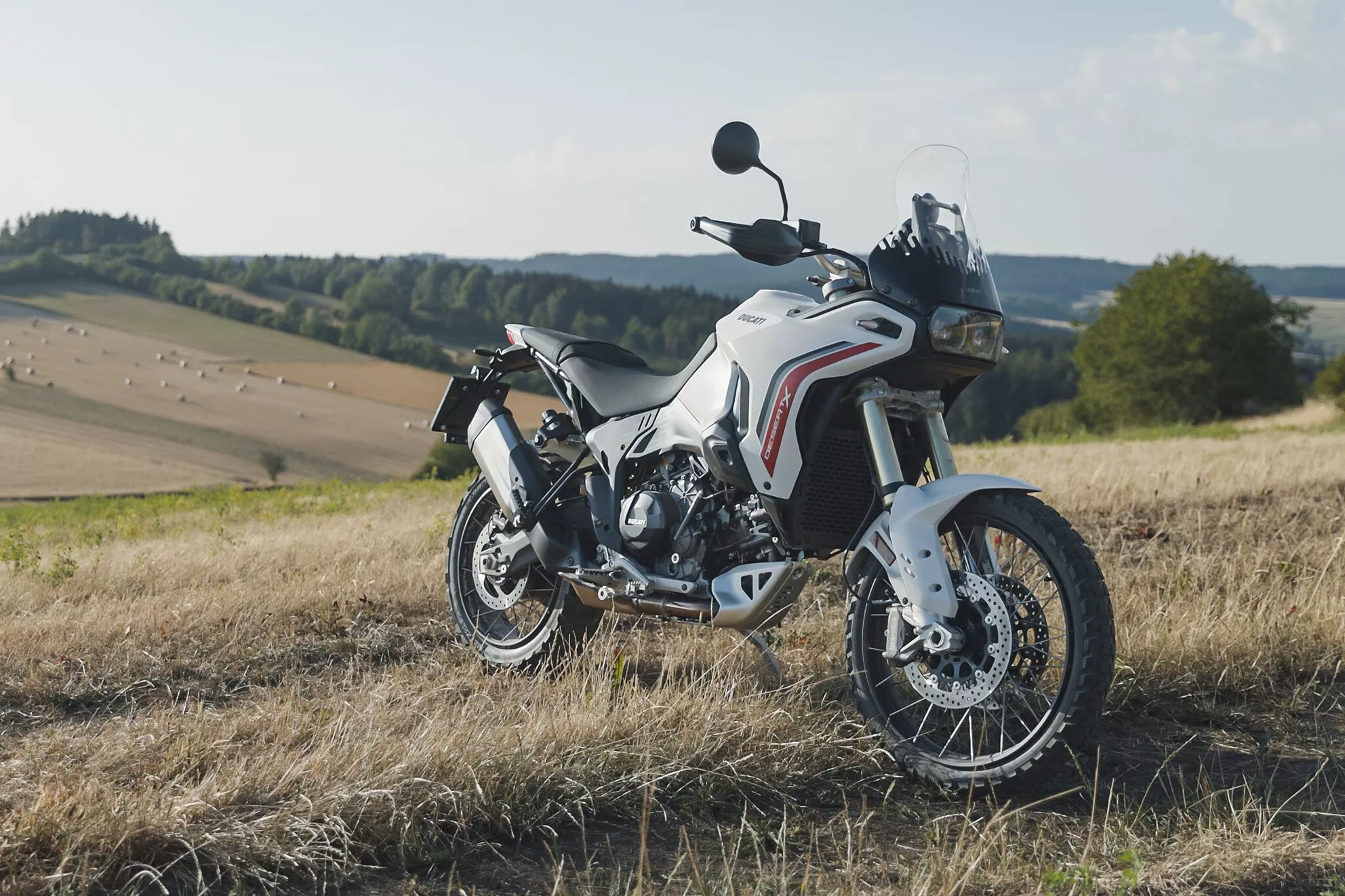
In Austria you really have to value the great package of the Ducati DesertX. In Germany, it's priced closer to the competition and a hot tip in the upper mid-range of adventure bikes.
The hot fling turns into true love
After three days, the key question is answered: my enthusiasm from Spain was no brief holiday fling. The Ducati DesertX 2026 can do motorway, even if the wind protection is annoying. It tackles narrow, bumpy roads with glorious precision. And on gravel it makes life easier for less experienced enduro riders, because the engine and electronics don't punish every little mistake, while at the same time offering seasoned off-road cracks a whole lot of performance and appetite for adventure. The old Testastretta had more V2 braapapap, but the new engine suits this bike better as an overall package. The sensitive quickshifter remains the clearest technical weakness, the Austrian price the toughest hurdle. Anyone looking for a plush touring sedan chair will find more suitable bikes. Anyone who likes riding actively on and off the tarmac without constantly fighting a temperamental engine will find a damn versatile life partner here.
- How much does a Ducati DesertX cost?
- Here you will find an overview of the price level of new and used motorbikes!
&width=60&height=60&bgcolor=rgba_39_42_44_0&mode=crop "Author: Gregor")
Ducati DesertX 2026 - Experiences and Expert Review
Gregor
The new DesertX is the last Ducati model to switch to the new 890 V2 engine. And it's also the model that benefits most from the new engine. It remains as sporty, adventurous and stable as before, but thanks to the approachable engine it can now also score in everyday riding and in more technical terrain. The biggest room for improvement lies in long-distance comfort, but that's complaining at a high level. The new DesertX is a very well-rounded package, with loads of performance on and off the tarmac and hardly any weaknesses worth mentioning.
Adventure bikes similar to the Ducati DesertX

Ducati DesertX 2026 review: love after three days? Images
Source: 1000PS