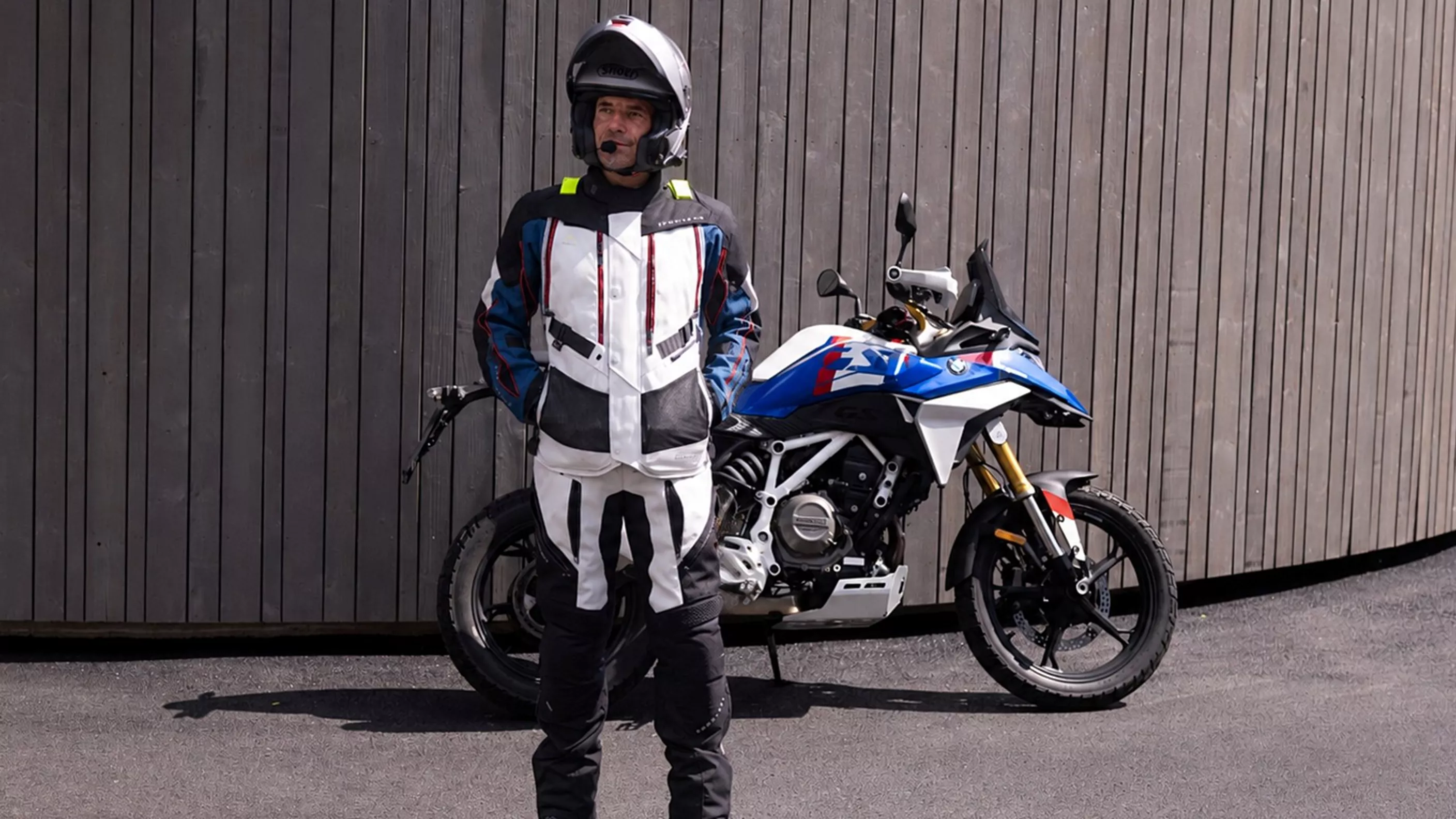

Rebelhorn Hardy 3.0 touring jacket and pants tested

Rebelhorn Hardy 3.0 touring jacket and pants tested

Three-layer principle for touring connoisseurs and outdoor pros

Anyone starting out in cool mountain air in the morning, sweating by midday and riding through rain in the evening needs a flexible system: the Rebelhorn Hardy 3.0 combines an outer suit, in-and-out membranes, thermal layers and large-area ventilation. With AA certification and Level 2 protectors, it offers all-round protection for any weather.

nopain

nopain

published on 25/08/2026

3,283 Views

Who is Rebelhorn?

Rebelhorn hails from Poland and, according to its own claims, has been developing motorcycle apparel for more than 20 years, designed in Europe, tested under real riding conditions and continuously refined. The range now includes jackets, pants, gloves, boots and other protective gear for various uses. Modern materials, high protection standards and fair prices form the basis of the range.

What matters, however, is not how many technologies and brand names appear on a product page, but how well the individual components work together in everyday use. This is especially true for a three-layer suit: membrane, thermal lining, protectors, ventilation panels and adjustment options can create an impressively wide operating window, but can also mean extra effort and more material on the body. That's why, with the Hardy 3.0, we look not only at the scope of features but above all at handling, mobility, ventilation and how well the numerous layers work together.
First impression: Rebelhorn Hardy 3.0

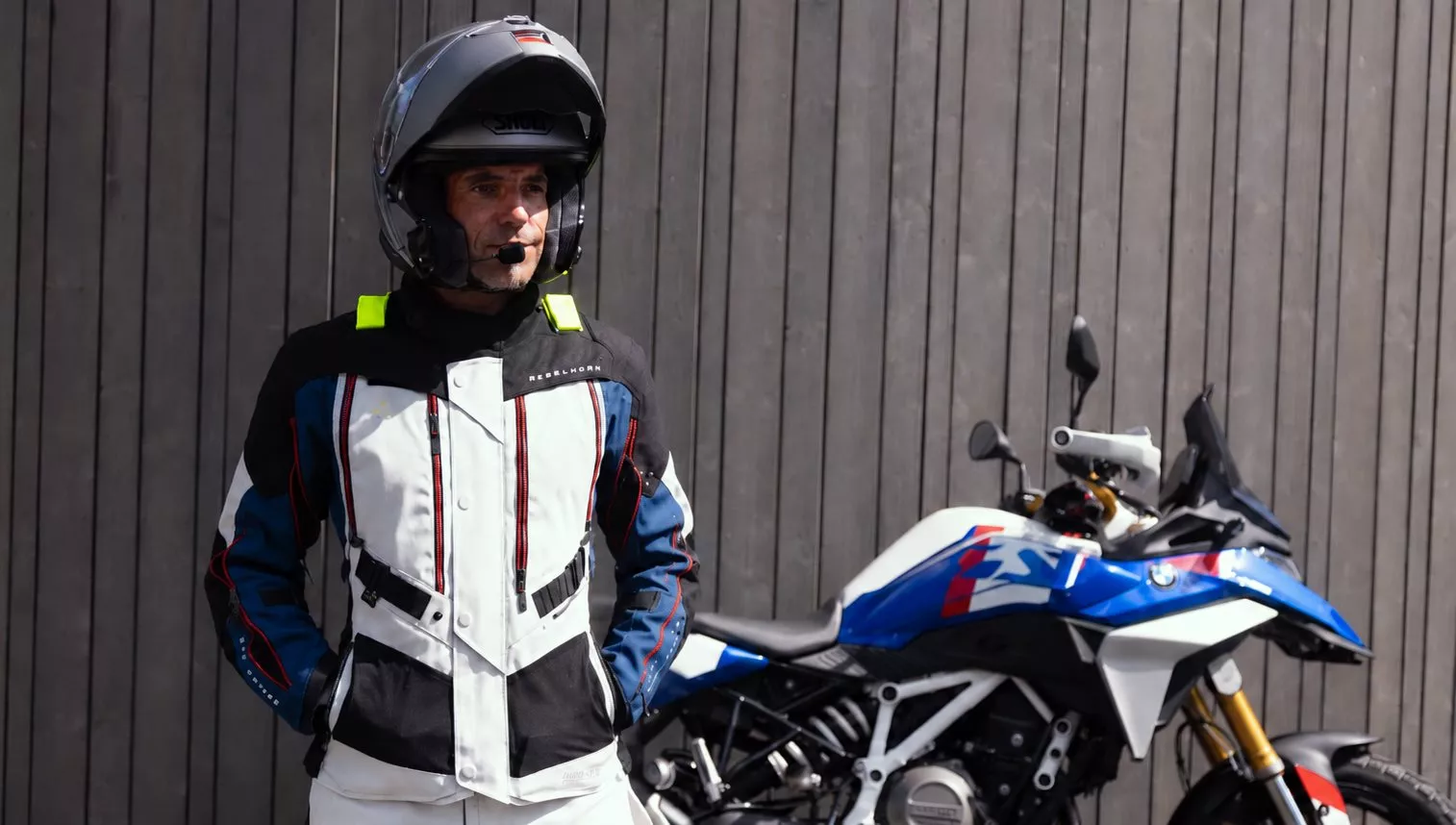
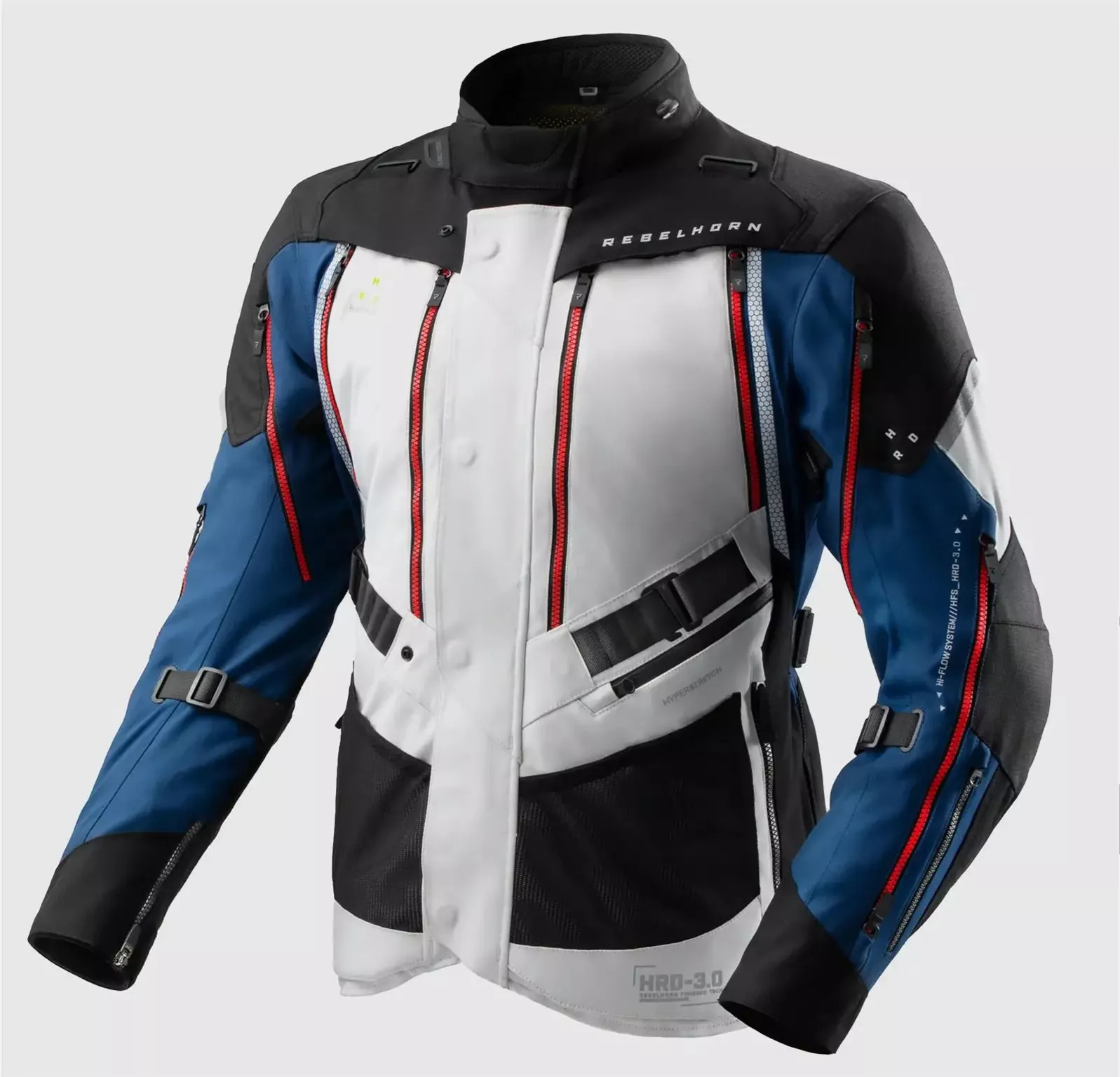
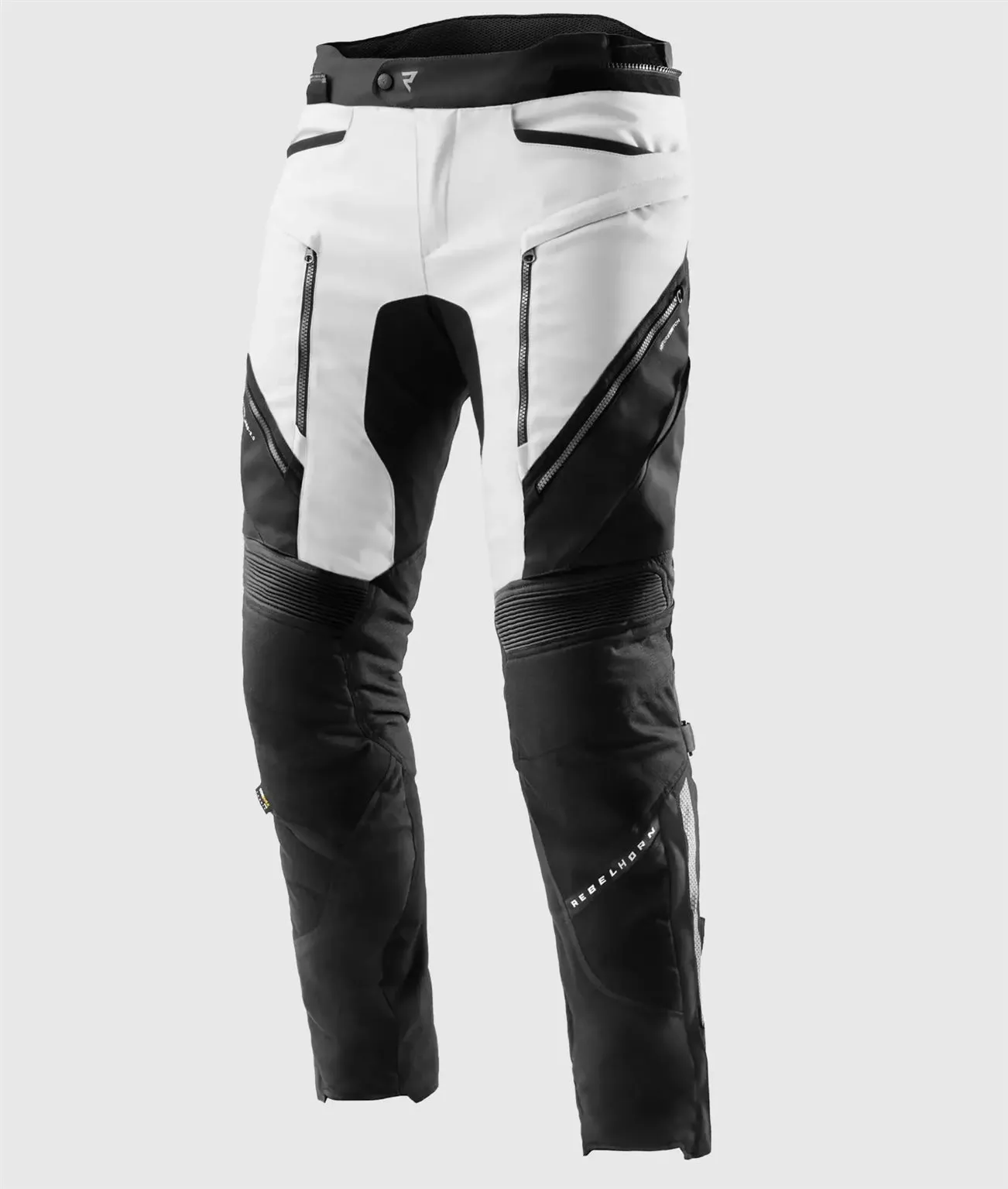
The Hardy 3.0 doesn't try to pass itself off as understated casual gear. Large pockets, visible adjustment straps, closable ventilation panels, reflective elements and the long touring cut already make clear visually what this ensemble is intended for. Jacket and pants look like equipment for serious enduro riders and long-distance travelers who cross several climate zones in a single day and want to configure their gear accordingly.

At the same time, the Hardy 3.0 feels less cumbersome than its extensive construction might initially suggest. HyperStretch forms large parts of the outer shell, while Cordura ripstop is used exclusively in areas subject to greater stress. This is exactly where the difference lies compared to the stiffer, more Cordura-dominated predecessor: the third generation moves noticeably more flexibly without making any compromises on protection class.

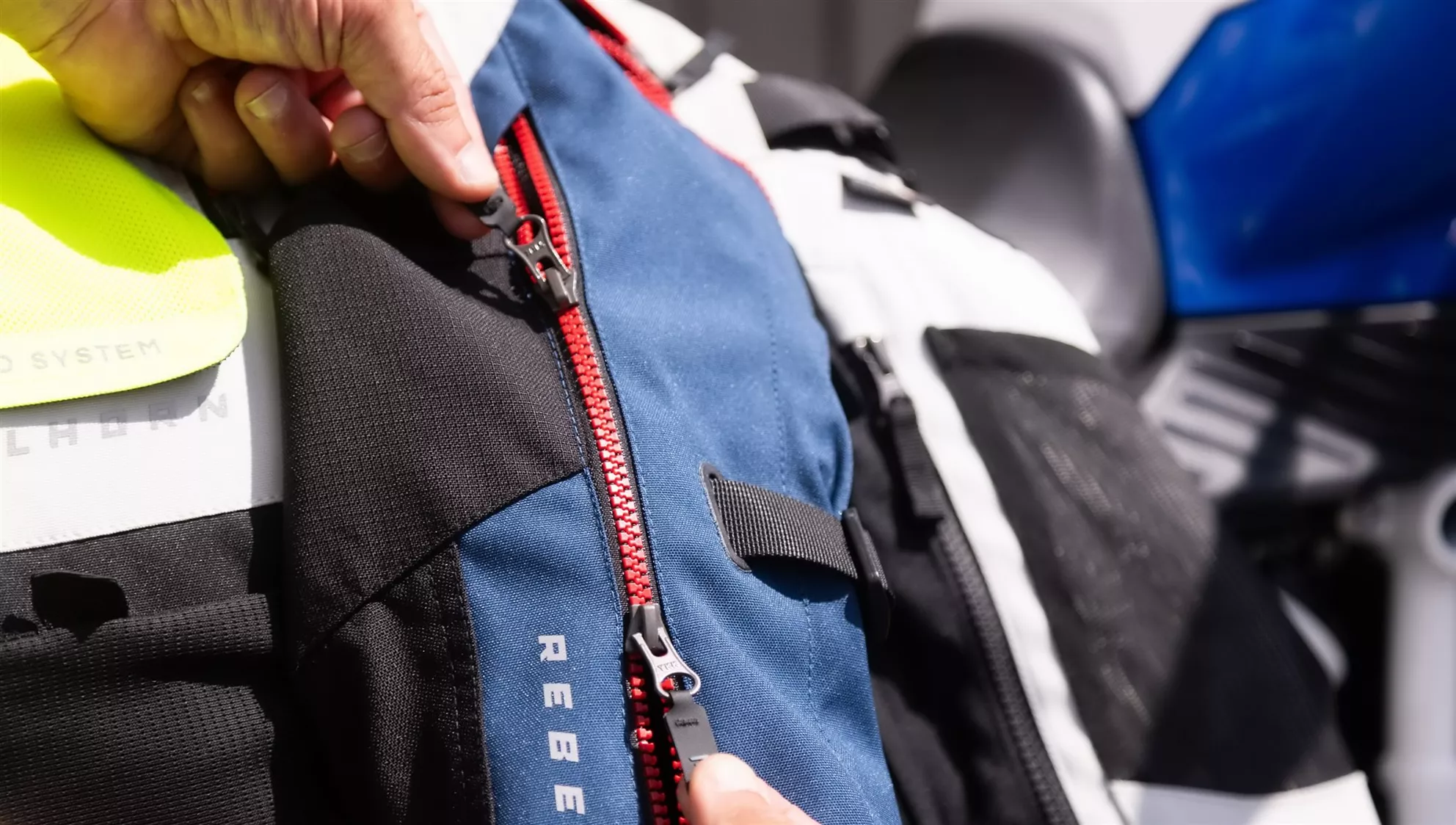
On closer inspection, however, it also becomes clear that the Hardy 3.0 requires some familiarization. Jacket and pants feature numerous zippers, magnets, tabs, panels and attachment points. The workmanship leaves a high-quality impression – zippers run smoothly, are sensibly placed and don't seem like they would give up after a few dusty days of touring. Still, one should take the time before the first big trip to figure out which opening actually ventilates, which pocket has a dual function, and how the membrane is attached on the outside.

Rebelhorn Hardy 3.0 jacket

Technical data: Rebelhorn Hardy 3.0 jacket

FeatureDescription
Product typeThree-layer touring motorcycle jacket
Intended useTouring and adventure
SizesDepending on color, XS to 7XL, black version up to 10XL
CutRegular fit
Outer materialHyperStretch, Cordura Ripstop, polyester and nylon
Water protectionRemovable HydraShield PRO in-and-out membrane
Membrane performance18,000 mm water column and 9,000 g/m²/24h breathability according to manufacturer
Thermal layerRemovable thermal vest, wearable separately
Inner liningQuickDry lining
CertificationProtection class AA
Elbow protectorsArmanox 302 E/K Level 2, three-way positionable
Shoulder protectorsArmanox 402 S Level 2
Back protectorArmanox 203-L FB Level 2, included as standard
Front ventilationTwo large flip-open front panels
Sleeve ventilationFour ventilation channels
Back ventilationLarge openable exhaust panel
Additional ventilationCentral ventilation channel with magnetic cover
AdjustmentBiceps, forearms, waist, hip, collar and cuffs
Protector adjustmentPosition of elbow and back protector adjustable
Connecting zippers360-degree and short 8VST connecting zipper
VisibilityReflective membrane and attachable fluo vest on the back
PocketsComprehensive system of front, back, sleeve, QuickDry and waterproof inner pockets
Price (RRP)*379.95 Euro

* Data and prices as of: August 2026 (no guarantee of accuracy).

Rebelhorn Hardy 3.0 pants

Technical data: Rebelhorn Hardy 3.0 pants

FeatureDescription
Product typeThree-layer touring motorcycle pants
Intended useTouring and adventure
SizesDepending on color and availability, up to 10XL
CutRegular fit with pre-shaped riding position
Outer materialHyperStretch, Cordura Ripstop and Cordura Fire Resistance
Water protectionRemovable HydraShield PRO in-and-out membrane
Membrane performance18,000 mm water column and 9,000 g/m²/24h breathability according to manufacturer
Thermal layerRemovable thermal lining
Inner liningQuickDry lining
CertificationProtection class AA
Knee protectorsArmanox 302 E/K Level 2, position adjustable
Hip protectorsArmanox 501 H Level 2
Tailbone protectionPocket for optional protector available
Thigh ventilationTwo large front panels
ExhaustTwo channels on the back of the legs
Lower legTwo ventilation channels at the lower leg with openable insert for optimal temperature control
Pocket ventilationSide pockets can serve as additional air intakes
AdjustmentWaist and multiple leg circumference adjustments
Connecting zippers360-degree and short 8VST connecting zipper
PocketsTwo classic front pockets and two large zippered pockets
Price (RRP)*259.95 Euro

* Data and prices as of: August 2026 (no guarantee of accuracy).

Rebelhorn Hardy 3.0 material mix

Rebelhorn Hardy 3.0 material mix

The structural core of the Hardy 3.0 is the combination of flexible HyperStretch and strategically placed Cordura Ripstop. Instead of making the jacket and pants entirely from tough but often relatively stiff fabric, Rebelhorn uses durable material primarily in exposed areas such as shoulders, elbows, knees and legs. In between, HyperStretch ensures the suit doesn't feel like a freshly starched work suit when standing up on the pegs, spreading the elbows wide, or frequently switching between sitting and standing riding positions. Nevertheless, the Hardy 3.0 remains certified as class AA as a complete garment.

On the inner leg areas, Rebelhorn relies on heat-resistant Cordura Fire Resistance, since these zones regularly come into contact with boots, frame, engine covers or exhaust parts. The special fabric specifically protects against friction and heat wear there.

Rebelhorn Hardy 3.0 layers

Hardy 3.0 – three layers, numerous configurations

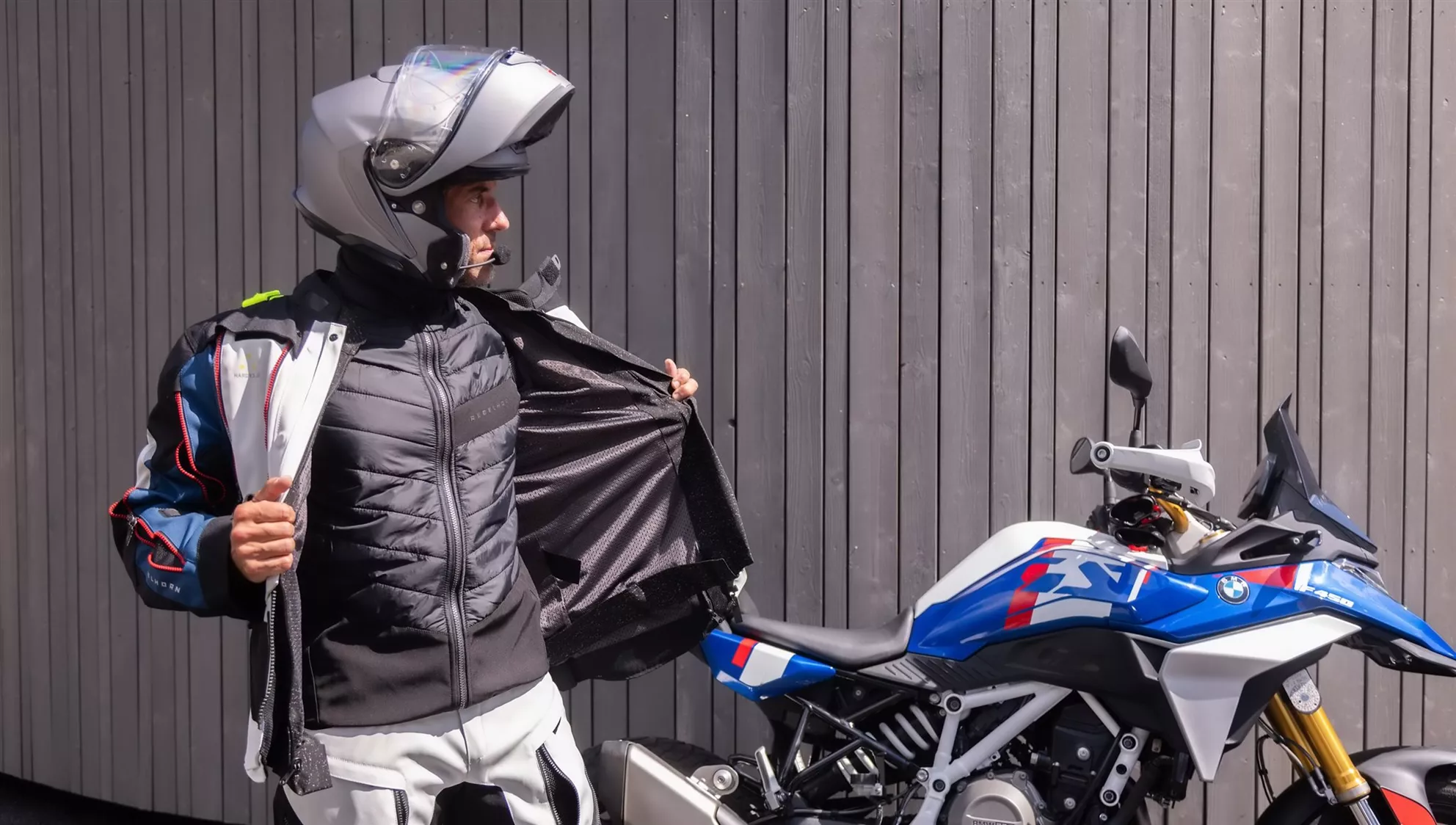
The outer shell forms the abrasion-resistant protective layer and carries all the protectors. Beneath or above it, the HydraShield PRO membrane can be worn, while a thermal vest and pants lining provide additional insulation. This already results in several sensible combinations: outer suit alone, outer suit with thermal layer, membrane inside, membrane outside, or the complete package of all three layers.

The in-and-out construction is more than just an entry on the features list. When the membrane is worn inside, the outer suit's look is preserved and the waterproof layer sits close to the body. In prolonged rain, however, the outer textile layer can soak up water, even though the rider stays dry underneath. Worn outside, the membrane catches the rain before it reaches the protective clothing. A fold-out extended back section improves coverage, while reflective prints are meant to increase visibility in poor weather. The pants have correspondingly long side openings for outer use.

Rebelhorn states a water column of 18,000 millimeters and breathability of 9,000 g/m² within 24 hours for the HydraShield PRO. These figures come from the manufacturer and place the membrane on paper clearly above a simple emergency rain layer, but on their own they say nothing about how warm the complete system feels under high physical exertion.

The jacket additionally features a thermal vest that can also be worn separately. Unlike a full thermal jacket, it mainly insulates the upper body without adding another thick layer to the arms. This saves volume and reduces material build-up in the sleeves, but may require a suitable functional layer on the arms at particularly low temperatures. The pants, on the other hand, use a classic removable thermal lining.

Rebelhorn Hardy 3.0 panels

Temperature range of the Hardy 3.0: not a fixed value, but a setup

A blanket promise of an exact minimum-to-maximum temperature would be rather dubious for motorcycle gear. Wind, humidity, fairing, physical activity, base layers and personal sensitivity to cold shift the usable range considerably. As a rough guideline, the Hardy system with the full layer setup is usable down to around ten degrees and can be configured with fully open panels even for hot summer days. Provided one consistently uses the available options.

We experienced this ourselves at 15 degrees with panels partially open: we'd rather shiver a bit than pull over again and reconfigure. That describes the logic – and the necessary discipline – of this system quite accurately: the Hardy 3.0 offers numerous options, but it doesn't automatically choose the right configuration. Anyone who leaves the membrane and thermal layer out as temperatures drop will get just as cold in a wide-open touring combo as in any other ventilated jacket.

The Hardy 3.0 covers an enormous weather range, but requires a rider who makes optimal use of its layers and ventilation.

NoPain, 1000PS test editorial team

Rebelhorn Hardy 3.0 ventilation

Rebelhorn Hardy 3.0 ventilation

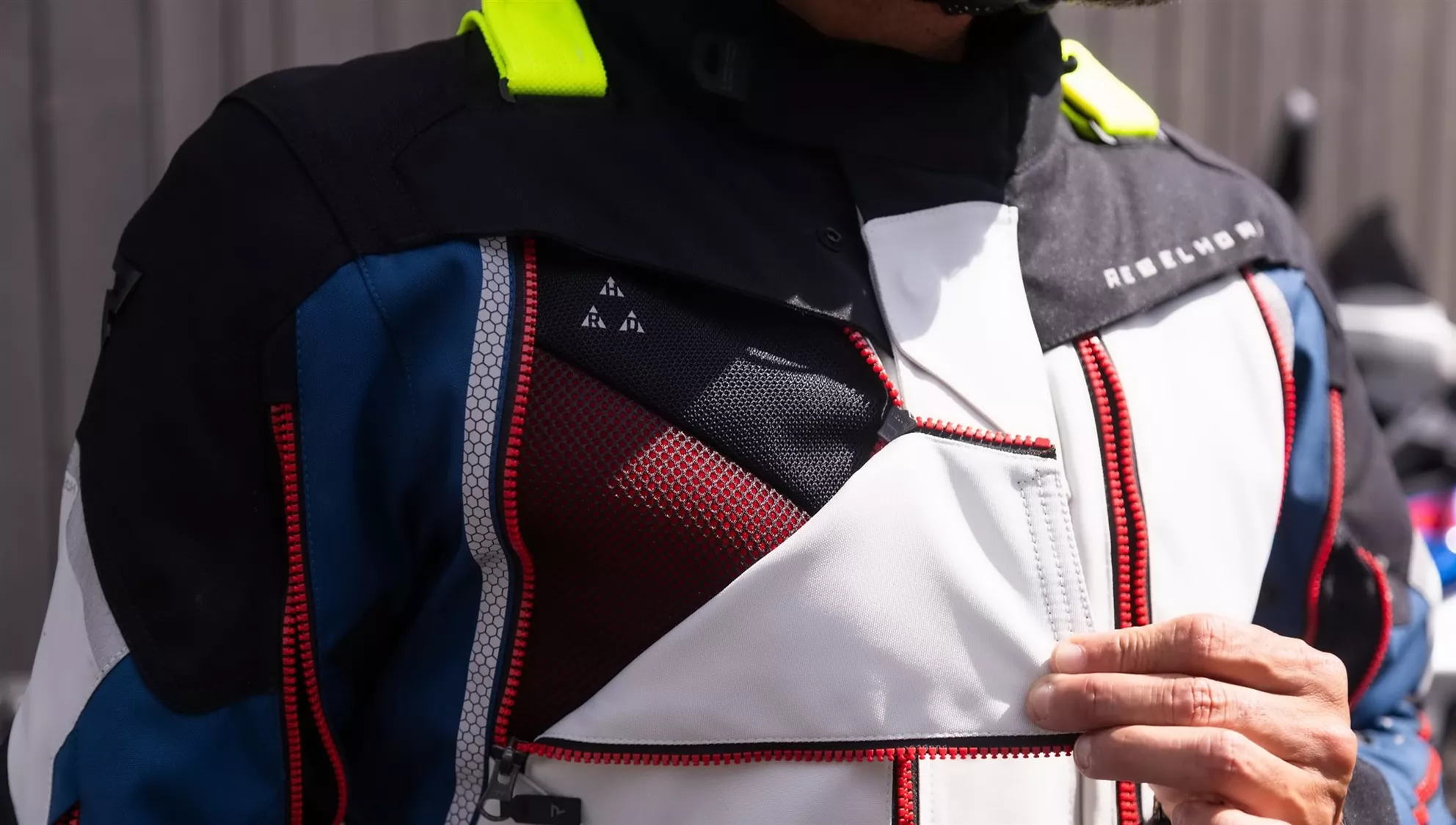
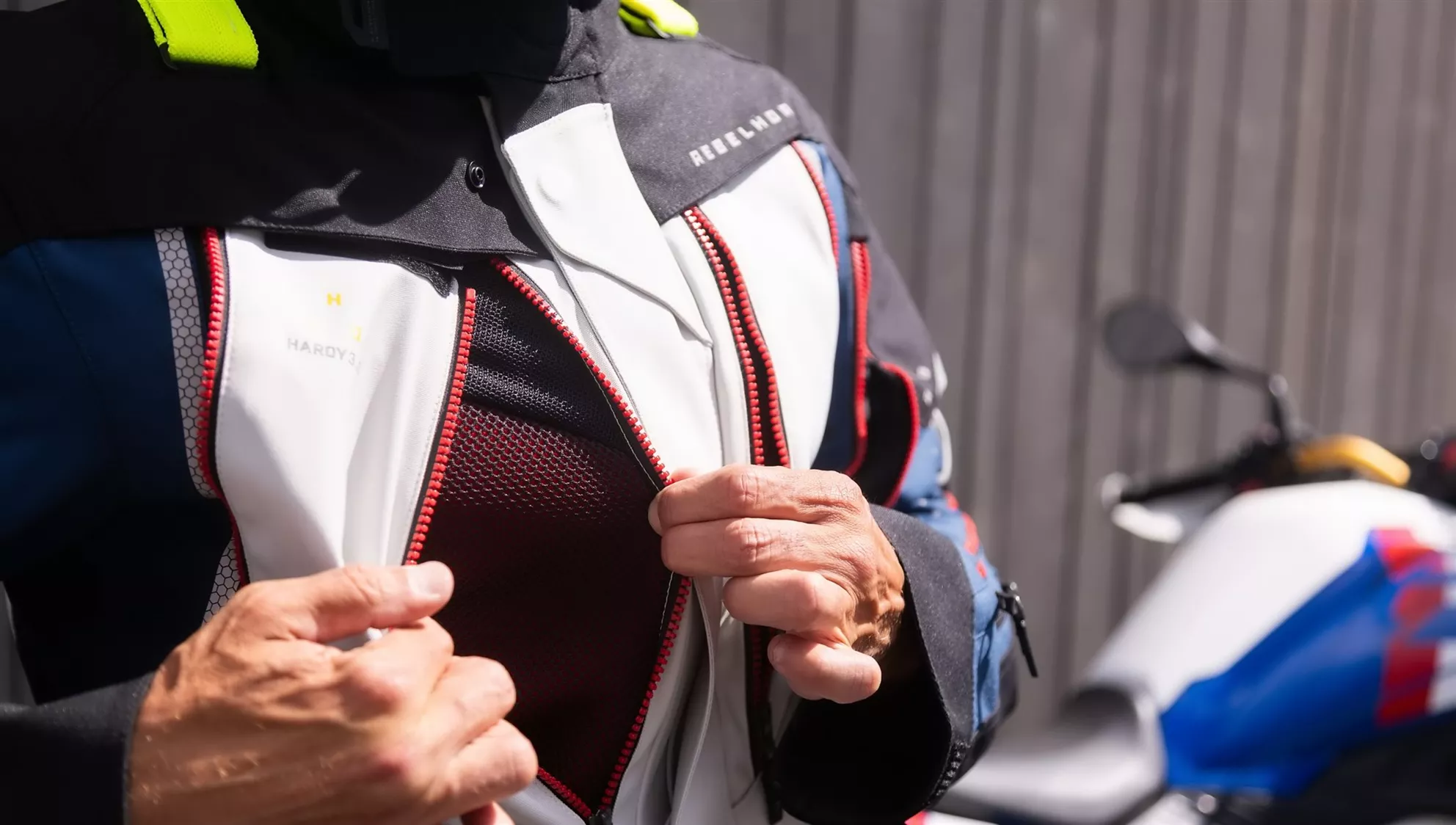
On the jacket, two large panels on the chest handle the main air intake. Added to this are four channels on the sleeves as well as a central ventilation path behind the front cover. On the back, a large panel can be opened so incoming air doesn't just sit inside but can escape again behind the rider. The magnetic closure system keeps open covers out of the airflow and makes operation with gloves easier.

The pants work on the same principle. Large openings on the thighs channel air onto the legs, channels on the back create a draft, and additional openings at the lower leg extend the cooling. Particularly unusual are the large side pockets, which can also serve as air intakes when needed. Anyone carrying a smartphone, wallet and keys in them, however, has to choose between storage space and maximum airflow.

With all panels open and the membrane and thermal layers removed, the Hardy 3.0 doesn't quite turn into an almost fully open mesh combo like the Scandal 3, but for a three-layer touring suit it offers a remarkably large open area. This makes the system better suited to hot stretches than classic touring combos, which only feature two narrow chest zippers and a small back opening.

The multitude of openings does, however, bring additional operating effort. Before a quick weather change, it's not just one or two zippers that need closing. Front panels, sleeve channels, back opening, pants ventilation and, where used, pockets serving as air intakes all need to be checked. The smooth-running and logically positioned zippers prevent this from becoming a mechanical test of patience. Still, the enormous range of options doesn't function without some engagement with the gear.

Rebelhorn Hardy 3.0 protectors

Hardy 3.0 protection, protectors and adjustment

The Hardy 3.0 jacket and pants are certified as complete garments to protection class AA. This rating assesses, among other things, abrasion resistance, seam strength and structural integrity of the entire construction. Separate from this is the Level 2 classification of the protectors, which describes their ability to reduce impact energy. On the jacket, corresponding protectors at the shoulders, elbows and back are included in the delivery. The fact that the back protector is also included as standard saves the often necessary follow-up purchase and prevents the protection concept from ending at the factory with a thin foam insert. The pants come equipped with Level 2 protectors at the knees and hips; an additional pocket is provided for the tailbone, though the matching insert is not included as standard.

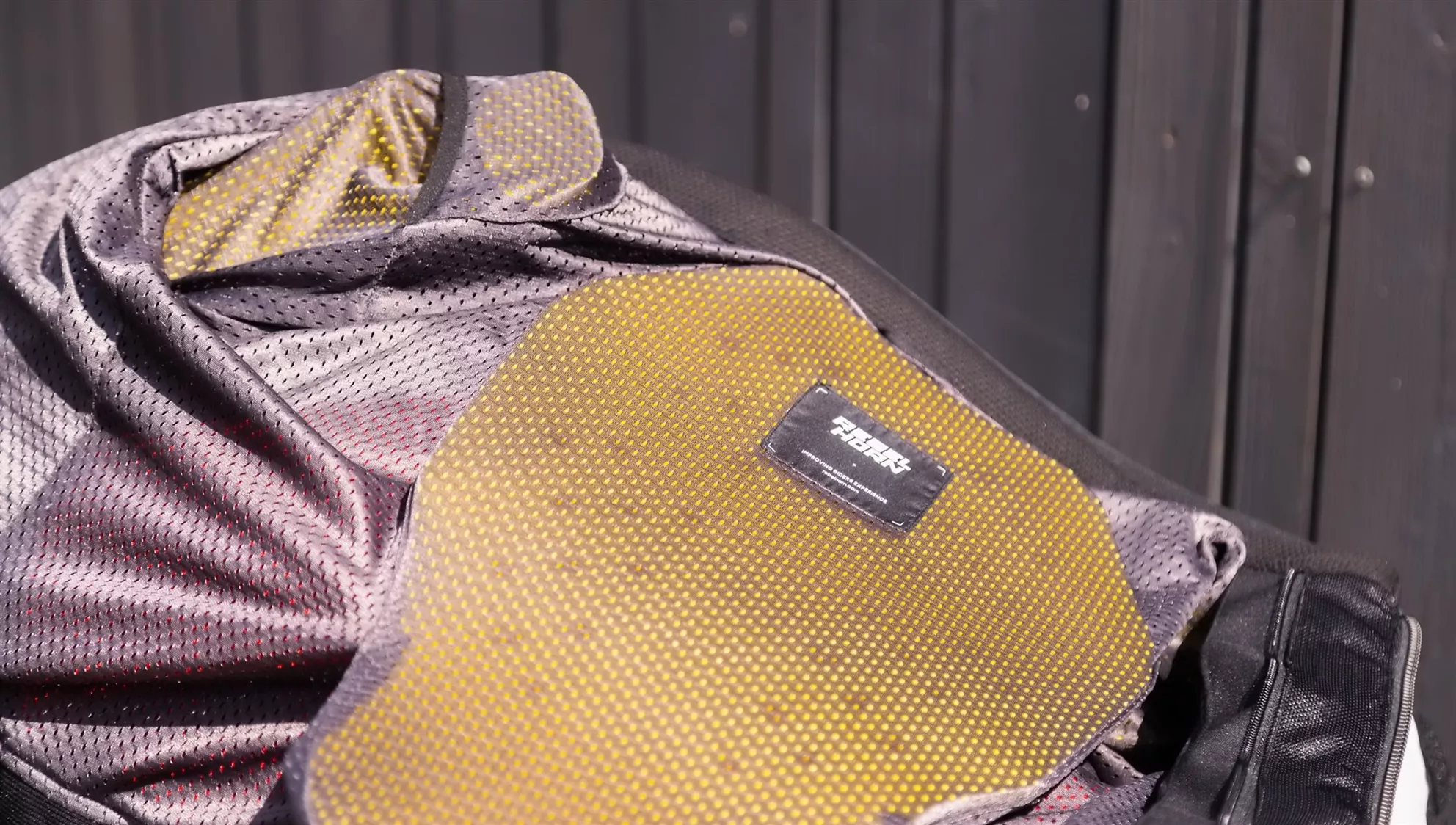
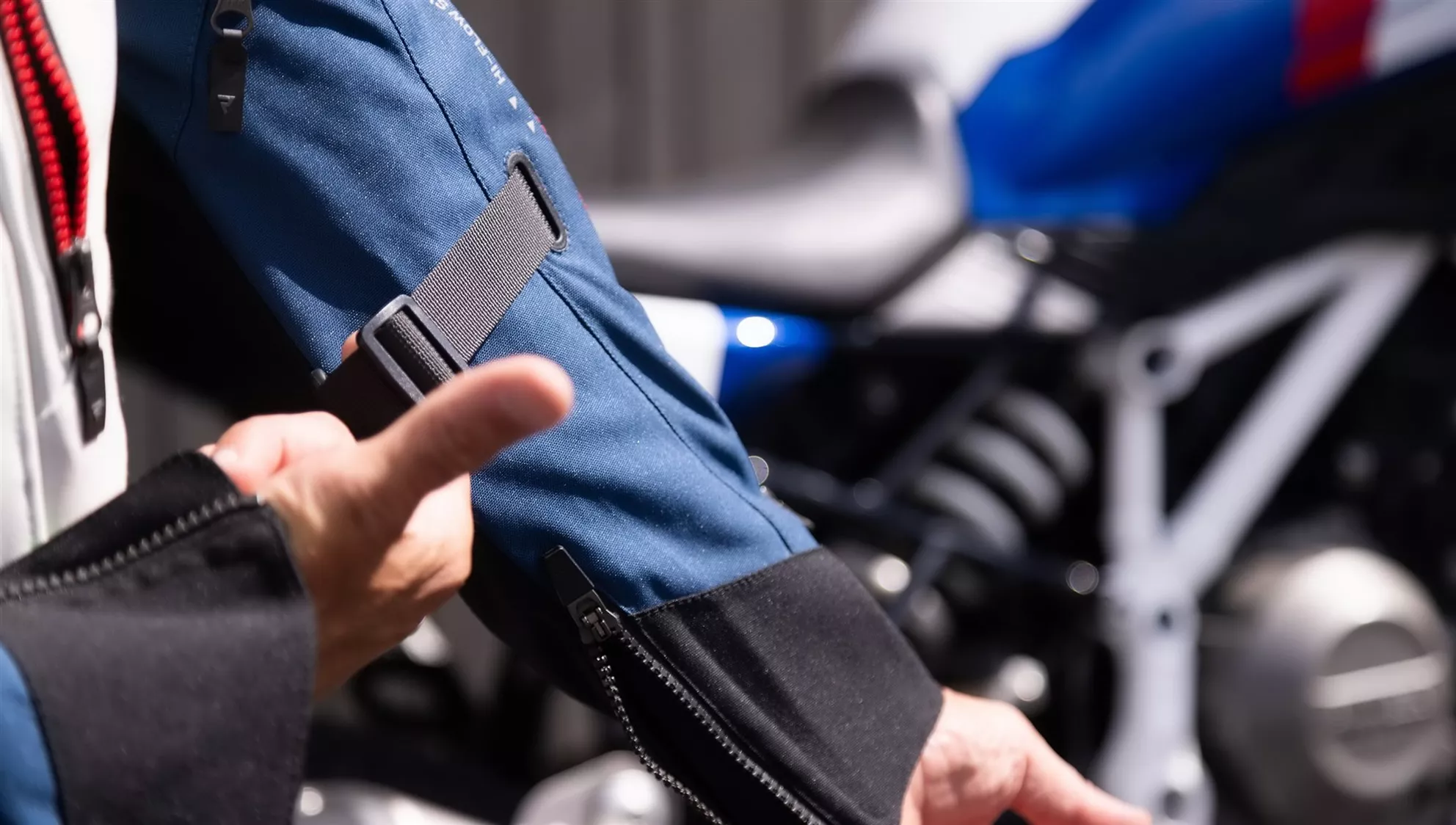
Especially with a three-layer suit, good protector equipment alone is not enough. When the membrane and thermal layer are removed, the free space between the body and the outer shell inevitably grows, which could allow the protective parts to shift more easily. Rebelhorn addresses this problem with numerous circumference adjustments and separate straps. On the jacket, the biceps, forearms, waist, hip area, collar and cuffs can be adjusted, while the elbow protectors can be positioned in three ways, allowing better alignment with different arm lengths. The back protector, too, can be pulled closer to the body instead of hanging loosely in a generously cut pocket. The Armanox protectors feel more substantial than particularly thin, heavily perforated inserts, yet remain flexible enough not to become unpleasantly noticeable even on long stretches.

Rebelhorn Hardy 3.0 adjusters

On the pants, adjustments at the waist and legs serve the same purpose. An additional strap below the knee stabilizes the position of the knee protector when the removable layers aren't worn. Long zippers at the leg ends make it easier to put the pants on over touring or enduro boots. The circumferential 360-degree zipper allows the jacket and pants to be connected into a closed ensemble; for shorter rides, a compact connecting zipper is also available.

Also practical is the attachable fluo vest on the back of the jacket. Its mesh construction is designed not to fully block the large exhaust vent, but it increases visible area in rain, fog and darkness. If the extra signal color isn't needed, the vest can be removed without affecting the rest of the suit's function.

Rebelhorn Hardy 3.0 in action

Rebelhorn Hardy 3.0 in practice

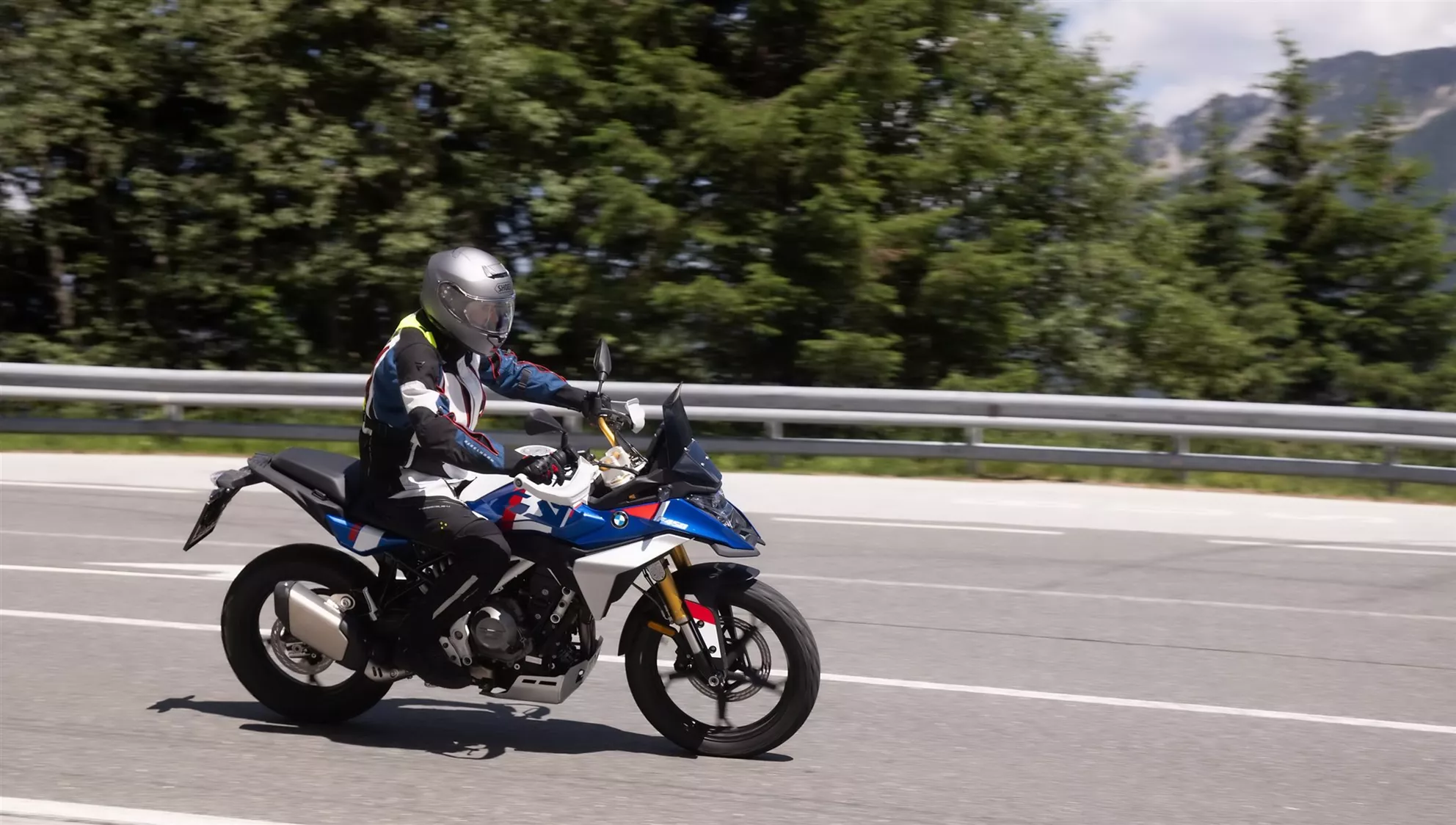
The Hardy 3.0's greatest strength is also the reason it won't make every rider happy. Hardly any area is without an adjustment or reconfiguration option. Anyone who enjoys tailoring a combo exactly to weather, route and bike gets an unusually broad range of options. Those who just want to jump into their gear in the morning and not give it another thought until evening might feel overwhelmed by the number of layers, zippers and panels.

In the 1000PS check, the zippers impressed with smooth operation and sensible placement. Opening the large panels doesn't feel like carefully fiddling with delicate outdoor zippers, but like robust motorcycle gear that's meant to be reconfigured regularly. The membrane, too, can be attached logically once you've gone through the system calmly once.

The most problematic area is at the wrists. When outer sleeve, membrane, possibly another functional layer, and glove cuff all meet in a tight space, the underlying material can push outward when putting the gear on. Anyone who works carefully, smooths the layers, and pulls the sleeves on one after another cleanly gets this under control without issue. In a hurry, especially when forearms and inner material are already sweaty, everything can jam together and turn into an unexpectedly stubborn finger exercise.

The pants are just as well thought out structurally. The pre-shaped cut supports the typical riding position with bent legs, HyperStretch makes standing up on the pegs easier, and the leg adjustments keep the knee protectors in place at the joint even without inner layers. The pocket ventilation is a clever dual use of existing space, but requires some discipline: when the storage space is needed, the corresponding air channel is only available to a limited extent.

With the membrane worn outside, the ensemble is used most sensibly during sudden rain, since the outer shell doesn't have to get soaked first. Pulling it over naturally takes more time than closing a permanently laminated membrane. In return, the Hardy 3.0 stays much more variable in dry weather and can fully exploit its large direct ventilation. The decision, therefore, isn't "better or worse," but "maximum simplicity versus maximum adaptability."

Since the third generation is still brand new on the market, we naturally lack real long-term experience. The first tours were consistently positive, but how magnets, zippers and membranes hold up after many seasons of dust, endless rain and washing machine cycles remains to be seen.

Rebelhorn Hardy 3.0

Conclusion: Verdict: Rebelhorn Hardy 3.0 touring jacket and pants

The Rebelhorn Hardy 3.0 is an exceptionally comprehensive touring ensemble for riders who don't just put on their gear but consciously configure it. HyperStretch removes much of the stiffness that often accompanies classic Cordura touring combos, while reinforcements in exposed areas provide the necessary structure. AA certification, full Level 2 equipment including back and hip protectors, and the 360-degree connecting zipper add up to a coherent protection package. Its greatest strength is its range. Membrane inside or outside, separate thermal layers, large front and back panels, sleeve and leg ventilation, and pockets usable as air intakes open up numerous possibilities between cool tour starts, rainy stretches and hot summer days. The smooth-running zippers and sensibly placed fastenings ensure these functions don't merely exist on the spec sheet. The downside lies in the effort involved. All the advantages have to be actively used, the many adjustments require some familiarization, and at the wrist several layers can bunch up when putting the gear on. The membrane worn outside is less elastic than the HyperStretch outer shell and has no pockets of its own. Anyone looking for an uncomplicated laminate combo that's simply closed in the morning and opened again in the evening will probably find more suitable solutions. At 379.95 Euro for the jacket and 259.95 Euro for the pants, the complete ensemble costs 639.90 Euro at the time of research. That's no impulse buy, but given three layers, in-and-out membranes, large-area ventilation and the full Level 2 protector package, it's understandably calculated. The Hardy 3.0 is aimed at serious touring riders, enduro riders and gear enthusiasts who want to cover as many weather conditions as possible with a single ensemble and are willing to engage with its possibilities.


Very broad range of use thanks to three layers

HydraShield PRO membrane wearable inside/outside

Extensive direct ventilation on jacket and pants

Flexible HyperStretch construction

AA certification for jacket and pants

Complete Level 2 protector package

Numerous adjustment options

High-quality, smooth-running zippers

360-degree connection between jacket and pants

Thermal vest wearable separately

Reflective membrane and optional fluo vest

Good ratio of equipment to overall price

Many functions require active operation

Membrane material not very elastic

Possible material bunching at the wrists

Membrane jacket without its own pockets

Outer shell gets wet in prolonged rain when membrane is worn inside

Quick weather changes require more reconfiguration than with a laminate combo

Rebelhorn Hardy 3.0 touring jacket and pants tested Images

Source: 1000PS

Image 1
Image 2
Image 3
Image 4
Image 5
Image 6
Image 7
Image 8
Image 9
Image 10
Image 11
Image 12
Image 13
Image 14
Image 15
Image 16
Image 17
Image 18
Image 19
Image 20
Image 21
Image 22
Image 23
Image 24
Image 25
Image 26
Image 27
Image 28
Image 29
Image 30
Image 31
Image 32
Image 33
Image 34
Image 35
Image 36
Image 37
Image 38
Image 39
Image 40
Image 41
Image 42
Image 43
Image 44
Image 45
Image 46
Image 47
Image 48
Image 49
Image 50
Image 51
Image 52
Image 53
Image 54
Image 55
Image 56
Image 57
Image 58
Image 59
Image 60
Image 61
Image 62
Image 63
Image 64
Image 65
Image 66
Image 67
Image 68
Image 69
Image 70
Image 71