How a pure aero-engine manufacturer became the brand that still stands for the boxer today is shown more vividly in the big 1000PS video than in any textbook. In it, 1000PS editor ZONKO meets Fred Jakobs — the man you can safely call the keeper of the Holy Grail of BMW motorcycle history. It was filmed right inside the very first factory hall. And what the two of them unpack is truly mind-blowing.
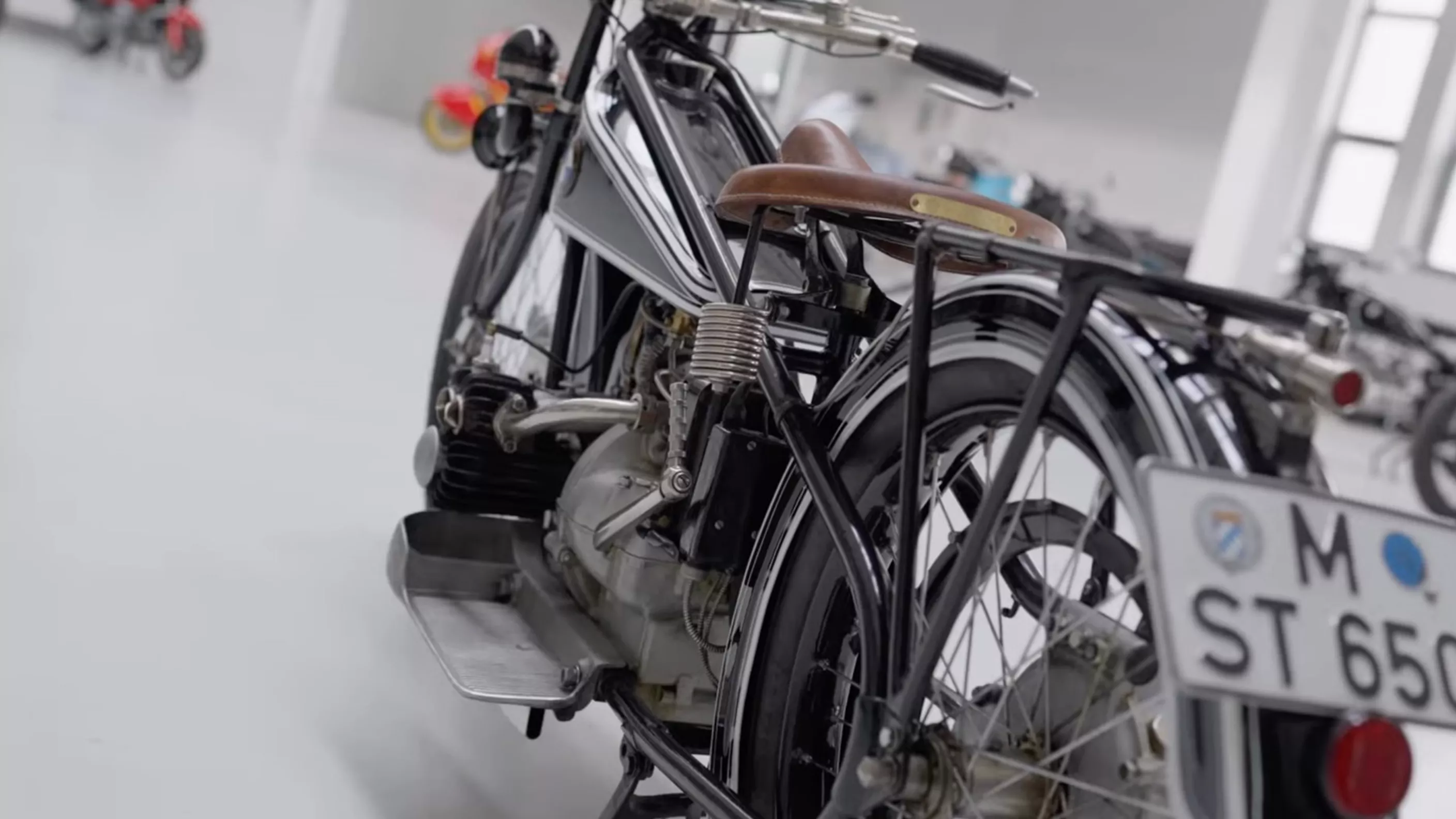
Why BMW invented the boxer
The R32 and the leap from the sky to the road
In 1923 BMW used its aero-engine know-how to build the R32 – boxer, shaft drive, premium price. In the 1000PS video, Fred Jakobs explains why this concept still shapes the brand today.

nastynils
published on 29/07/2026
11,709 Views
Not an aircraft maker — an aero-engine maker
Right at the start, Fred Jakobs clears up a common misconception: BMW didn't build aircraft, it built aircraft engines. In the very hall where the conversation takes place, Max Friz once designed an ingenious high-altitude engine. The big problem in the First World War was the thin air at high altitude, where engines lost power — and Friz pulled off a massive leap here. BMW landed a huge order from the air force and built this factory.
Then came the Treaty of Versailles, and Germany was no longer allowed to do anything related to aviation — neither aircraft engines nor aircraft, apart from a few exceptions for the coast guard. So they looked at what else was possible: the huge aircraft engines gave way to truck and boat engines, initially inline six-cylinders. But the 100-metre-long production hall with its powerful foundry was never running at full capacity, not even with outside contracts and castings for other manufacturers.
A foreman, a Douglas — and an idea
And now comes the moment that, according to Fred Jakobs, changed everything. In Germany, motorisation on two wheels arrived later than elsewhere. Many manufacturers came from bicycle building — they could build frames, but engines were uncharted territory for them. This is exactly where BMW smelled a business opportunity.
A foreman named Stolle privately rode an English Douglas with a boxer engine and came up with the idea of building something like it as a new line of business. Using the Douglas as a template, they designed their own boxer engine. That wasn't exotic: the trade press saw the future of the motorcycle engine in the boxer anyway, thanks to its smooth running and low centre of gravity.
At first, BMW only supplied these engines — the biggest customer was Victoria in Nuremberg. But because there was a serious rivalry between Franconia and Bavaria, Victoria eventually poached the staff and built its own engines. So Max Friz sat down over the winter and designed a complete bike. In 1923 the R32 was finished — the first BMW motorcycle.
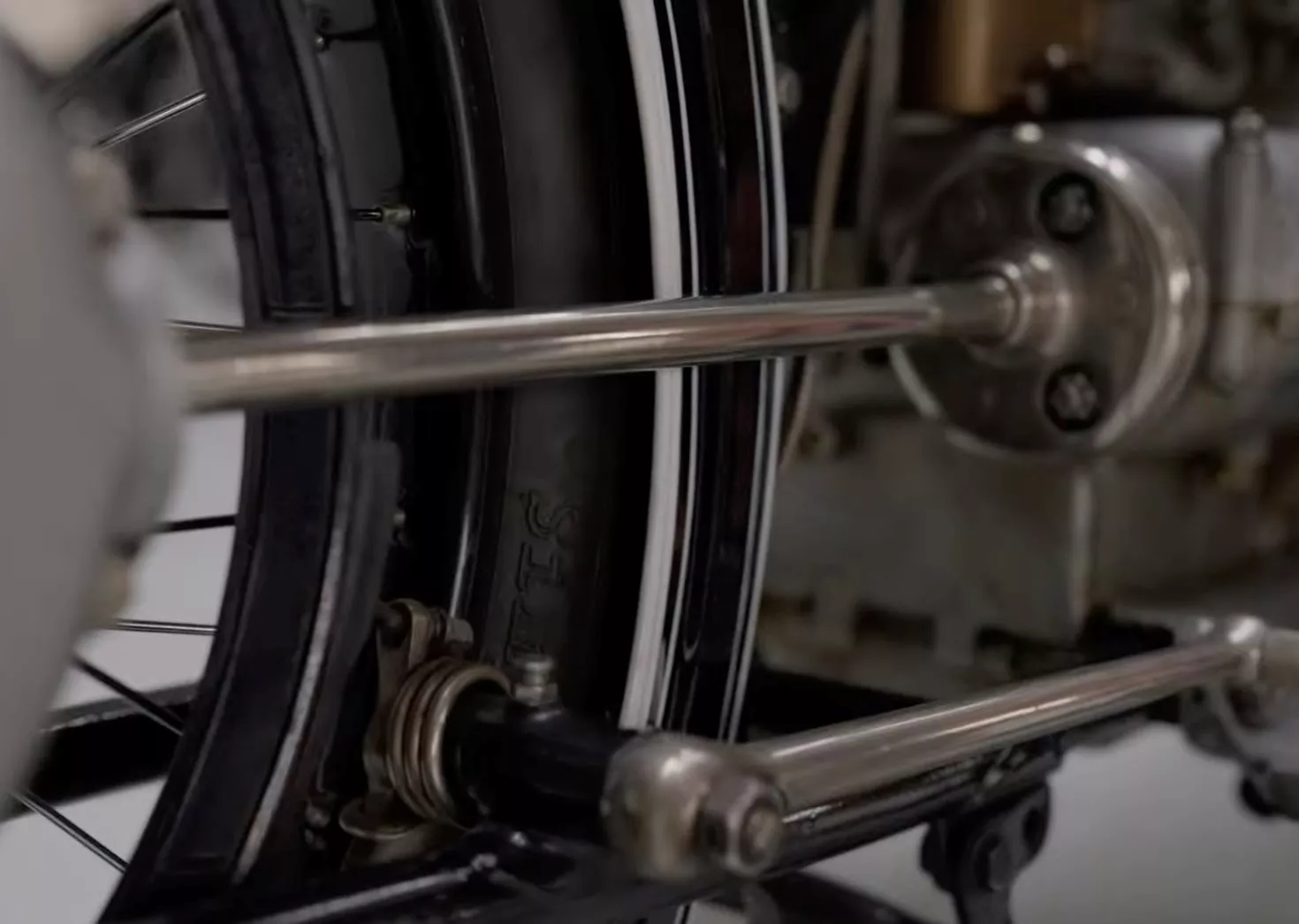
Quirky and original: the R32's wooden brake rim – collectors still argue today about the best brake wood.
The R32: a boxer you'd barely recognise
ZONKO makes a nice point in the video: this is the first BMW boxer that even an expert wouldn't immediately recognise as a BMW boxer. It's a side-valve, 500 cc, with square dimensions of 68 by 68 millimetres bore and stroke — a dimension that carried through on the 500s until the end of the '60s. The side valves make the engine simpler and more robust, but cost power: 8.5 hp, and a good 100 km/h according to the papers. Anyone riding one of these today does a good 90.
The big difference from the others: BMW mounted the cylinders transversely, while most installed the boxer longitudinally and then had cooling problems at the rear cylinder. Add to that the shaft drive — strictly speaking not yet a true cardan shaft, since the universal joint is missing, but the spare parts list already said "cardan shaft". One detail that sparks enthusiasm in the video is the wooden brake rim. Among collectors there are heated debates about which wood delivers the best braking performance — currently something exotic from Africa. And the triangular shape of the frame was extremely modern for its time. According to Fred Jakobs, you can even find this iconic design 100 years later in the R18.
Premium — as early as 1923
Things get exciting when it comes to premium. BMW did a great deal in-house — its own carburettors from aero-engine production, high vertical integration. The paintwork: black with fine double pinstriping, and instead of a big name on the tank, just the logo. Carbide lamps, speedometer, two lights and a proper horn instead of a cheap bulb horn — all at extra cost. Fully equipped, the R32 was the most expensive bike on the German market, even though imports from England and the USA sometimes offered twice the power.
Why such a bold appearance? Because BMW came from an aero-engine background. The first product bearing the BMW logo was an aircraft engine from 1917, and two years later came an altitude world record at almost 10,000 metres. Measuring itself against the best in the world — that's in BMW's DNA. More than 3,000 R32s were built. Fred Jakobs once adjusted the price for inflation: this was upper-class territory, roughly what you'd spend on an M5 today.
Hand-set ignition, wooden brake — riding like it's 100 years ago
The most fascinating thing in the video is how it's operated. The R32 has no throttle cable in today's sense. Instead there's the ignition advance and two levers for the mixture — one for air, one for rich/lean. So you adjust ignition and mixture yourself while riding. That had a real advantage: if you knew what you were doing, you could ride up into the mountains to 2,000 to 2,500 metres, where others ran into trouble. Add to that a hand shift and a clutch that takes a bit of work.
And yet it was "Freude am Fahren" — sheer riding pleasure — as Fred Jakobs stresses. Because unlike the chains of the day, which snapped and constantly needed re-tensioning, with shaft drive you didn't have to worry about that sort of thing. The cables routed internally through the inverted grips are also nicely done. And the button on the handlebar isn't an electric starter but the horn — an e-starter didn't exist yet.
One detail says everything about BMW's way of thinking: the first patent Fred Jakobs found for the R32 is the so-called crash mushroom, which protects the engine in a fall. So it's nothing new that BMW fears a journalist will hop on and drop the bike — that was already par for the course in 1923. And the side valves can be serviced via accessible screws, an elegant solution in its own right. If you want to see the ignition advance and hand shift in action, you'll find the relevant scenes in the embedded video. This first BMW wasn't just a bike, it was a statement.
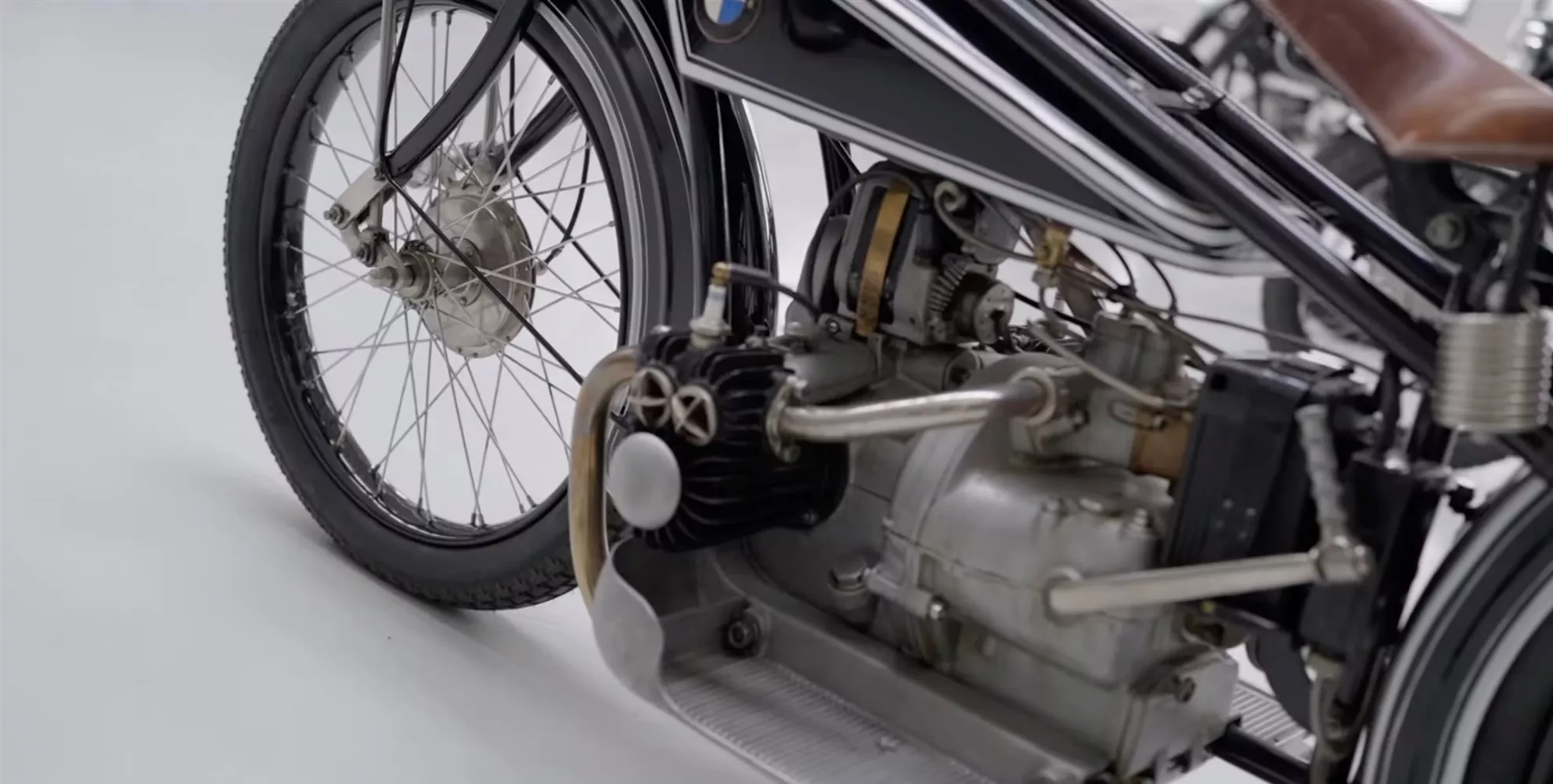
The first BMW boxer engine
This extensive video was made possible by the passion and dedication of ZONKO, the BMW Motorrad team and our partners: