For three days, the route leads from Barcelona across the Spanish Pyrenees to Toulouse. In between lie hundreds of kilometers of asphalt and gravel, off-road training sessions with Honda works riders Tosha Schareina and Kirian Mirabet, demanding climbs, spectacular landscapes, and participants from all over the world. For me, there's an additional challenge: while many of my fellow riders are experienced off-road pilots, I'm still breaking new ground on loose surfaces with an adventure bike. The coming days will therefore not only answer the question of what the new Honda Transalp 750 with E-Clutch can do. They will also show how quickly an off-road rookie can learn, how much technology actually helps, and why even the best rider assistance systems can never replace one thing: experience.
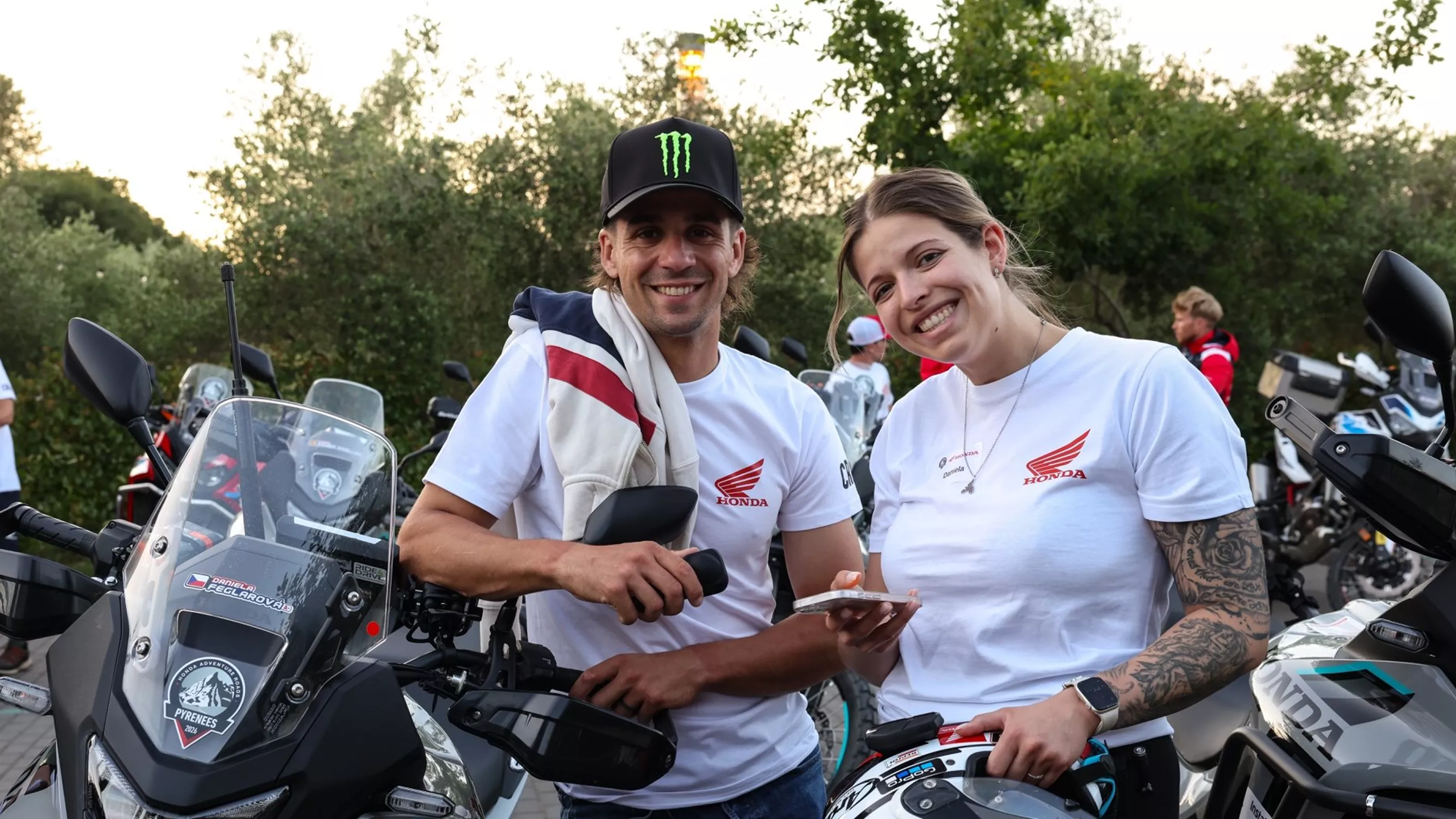
Honda Adventure Roads Pyrenees 2026
From Rookie to Off-Road Pro in Three Days with the E-Clutch?
Barcelona, the dusty tracks of the Spanish Pyrenees, and finally Toulouse. The Honda Adventure Roads promises not only a spectacular route but also an experiment: can the Honda E-Clutch help turn an off-road rookie into a significantly better rider within just a few days?
&width=72&height=72&bgcolor=rgba_39_42_44_0&mode=crop "Author: AJay")
AJay
published on 13/07/2026
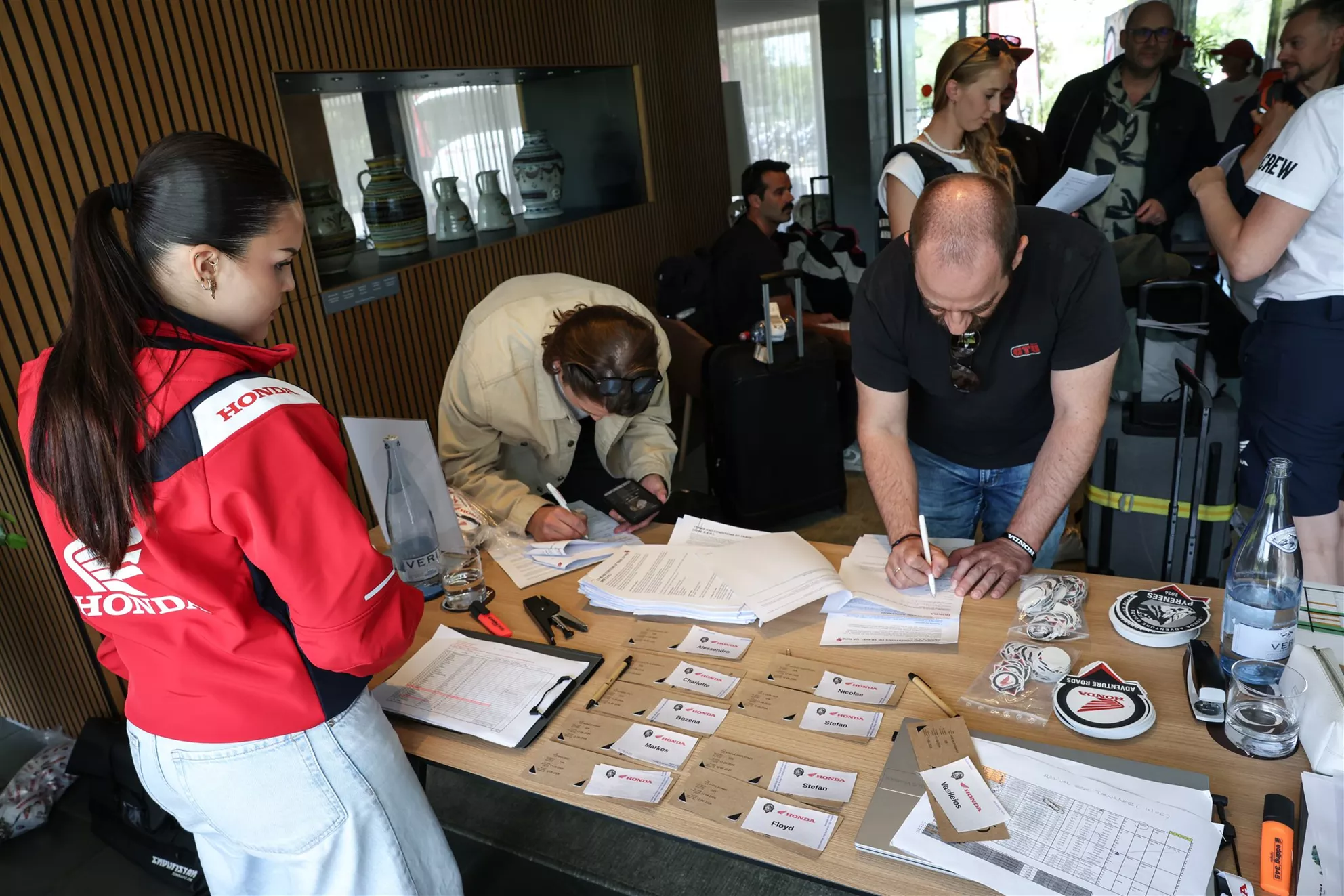
Honda Adventure Roads: Preparing for the Big Adventure
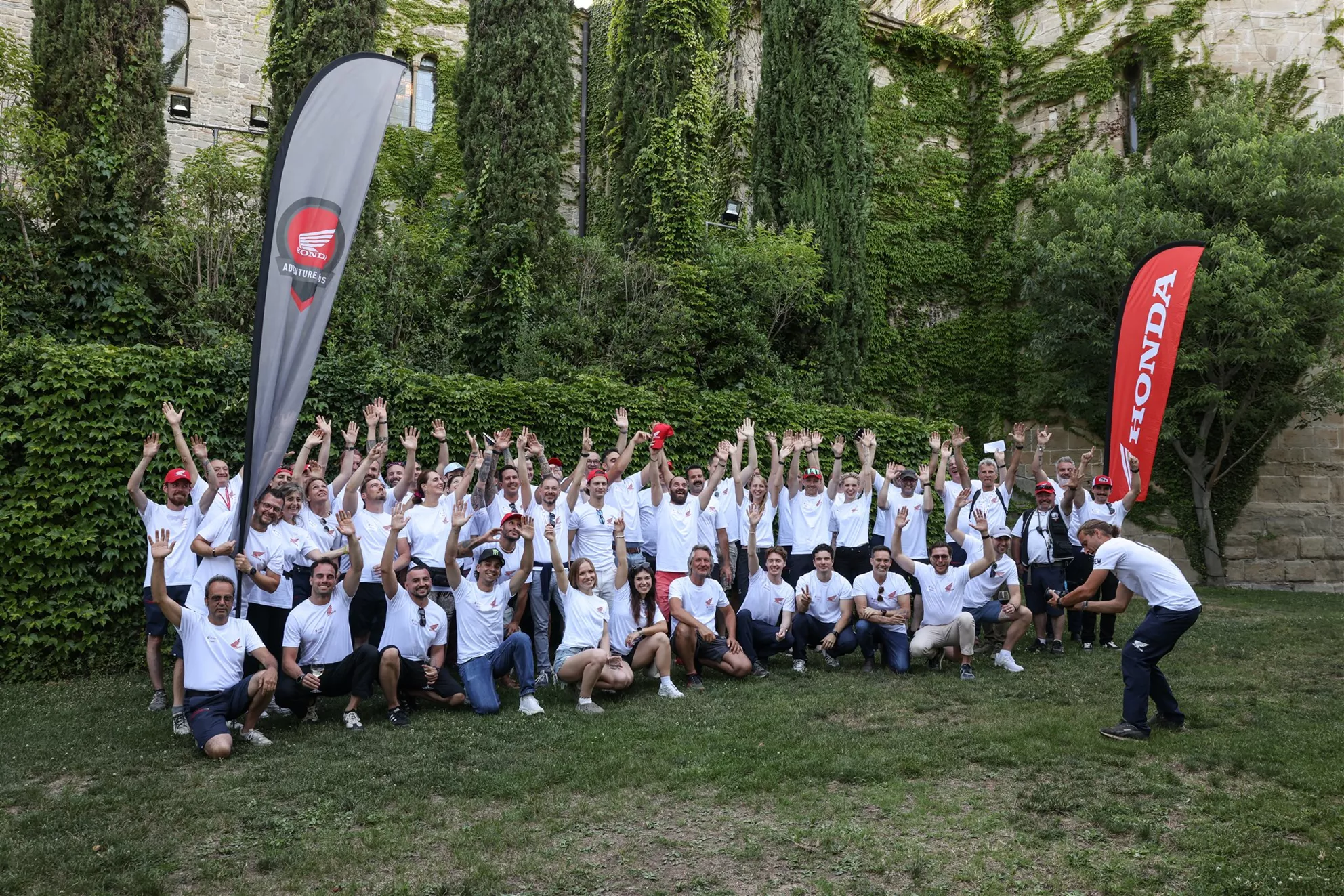
Before the first gravel tracks of the Pyrenees roll under our wheels, the journey begins surprisingly relaxed. After landing in Barcelona, the shuttle takes us to the first hotel. We spend the first few hours by the pool before the official briefing takes place in the evening in a beautiful castle garden. Here, the entire team behind the Honda Adventure Roads is introduced: the organizers, the media team, the marshals and guides who will accompany us through Spain and France over the coming days, as well as the two coaches Tosha Schareina and Kirian Mirabet. There's clearly a lot more behind an event like this than just a group of riders and a planned route. Along with the crew introduction, we receive our first task: learning how to use the Tripy GPS system. Unlike a classic guided tour, we don't simply follow a guide here. Every participant navigates independently along the route, orienting themselves by the waypoints, actively involved in the adventure from the very first kilometer. A rough overview of the coming days heightens the anticipation even further before the extensive dinner against the beautiful backdrop of the castle garden. Ahead of us lie hundreds of kilometers through the Pyrenees, changing surfaces, and the challenge of taking our own off-road skills to a new level.
Day 1: Coaching at the Nasser Racing Camp
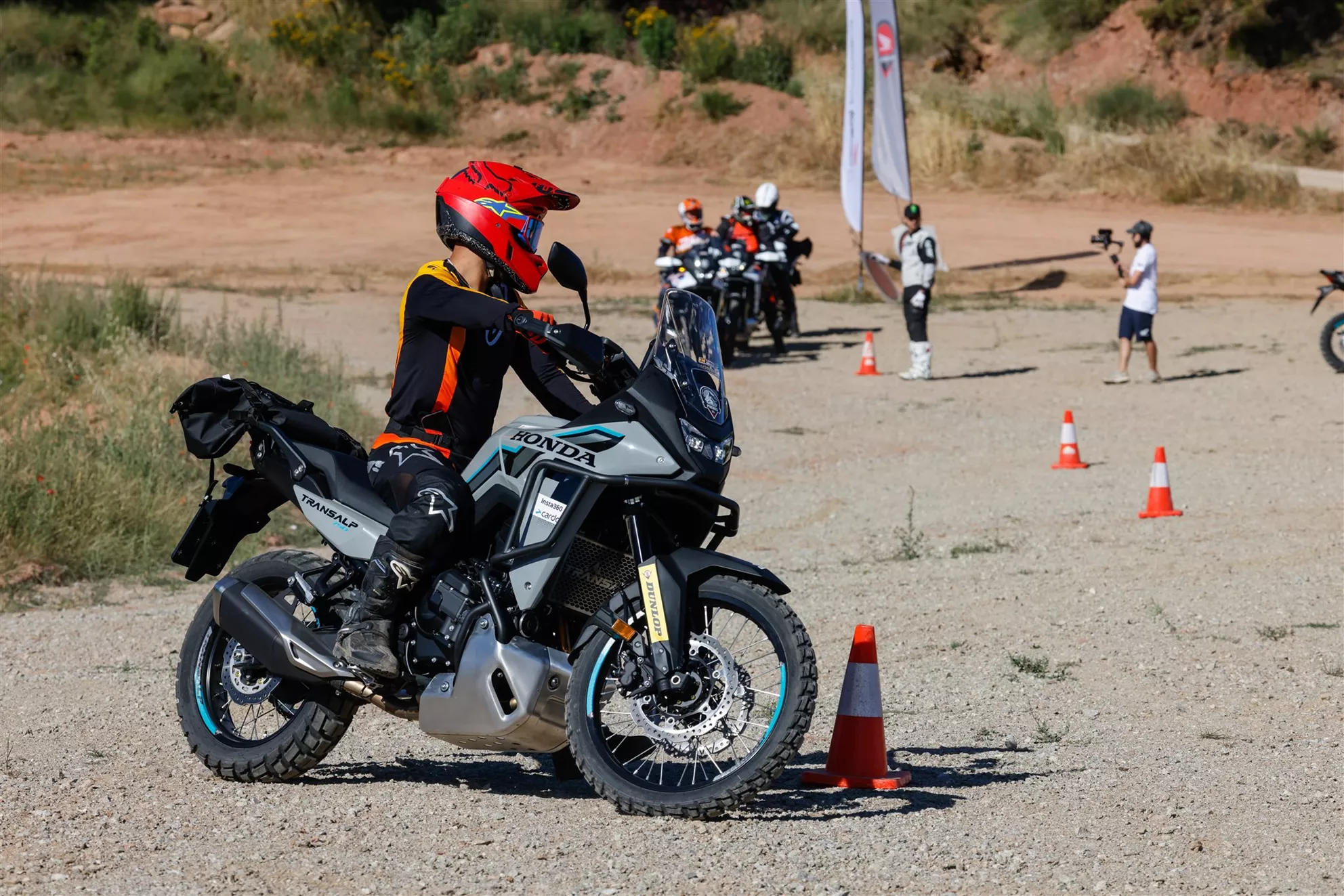
The next morning starts early. At 8 a.m., after breakfast, we head off towards the Nasser Racing Camp. The ride there already serves as a first exercise: every participant navigates independently using the Tripy system, gaining their first experience with digital route guidance. After just 5 minutes, I'm amazed at how easy navigation turns out to be this way. Compared to a paper roadbook, our device is a real blessing. A quick glance is enough to know the next step, its distance, and potential hazards. Everything updates automatically within a matter of seconds. Once we arrive at the camp, the warm-up phase is over. Before heading out on the long off-road stages, coaches Tosha Schareina, Kirian Mirabet, and Arnauld take us under their wing. Intensive training begins on the Honda Transalp 750, laying the groundwork for the coming days. First, we ride through cone courses seated and standing. We practice looking ahead, weight shifting, and getting a feel for how an adventure bike behaves on loose surfaces. The exercises then become more demanding: braking maneuvers on gravel, finding the right braking point, clean cornering, and controlled acceleration out of corners are all on the program. The session concludes with an enduro course that every participant tackles alone. Now there's no direct guidance over radio or from someone standing next to the bike. Everything learned in the previous hours has to come together: correct body position, choice of line, clean and consistent throttle control, and above all, trust in your own abilities. It's exactly at this point that it becomes clear for the first time, in full force, why the question about the E-Clutch is so exciting. Off-road, countless things happen simultaneously. You're looking for the line, watching the surface, working with your body position, and reacting to every movement of the bike. Every task that requires less mental capacity creates more room for what really matters: learning to ride better. Another factor, the importance of which I've experienced time and again throughout my career - and which becomes noticeable again now - is the tires. On our tour, both Dunlop and Enduristan are official partners. The Transalp is fitted with the Trailmax Raid, which gives me a confident and precise feeling both on asphalt and off-road. It doesn't feel like a tire that does everything half-decently but nothing really well - quite the opposite. With the Trailmax Raid, I open the throttle properly on the road in between, tip in quickly, ride at a genuinely sporty lean angle, and at no point does the tire reach its limits. No slides, no greasy feeling despite high temperatures and long stages, no spongy feedback. I don't want to claim to be an experienced off-road expert, but from the perspective of a dynamic young rider, the performance off the beaten path is confidence-inspiring too. Especially as a rookie, a secure basic feeling as well as the right gear is important. And here, everything has been done right. The Enduristan tail bag, which every rider found in their room right at the start, also proves to be an uncomplicated travel companion. Lashing and fastening the straps and buckles takes just two minutes, and the storage space offers more than enough room for any utensils. Many riders use it to store their water bottle, headwear, spare batteries for the camera, and above all, their second layer of clothing. After all, mornings are a few degrees cooler than later in the day. Goodies like this bag make an already fantastic trip even more pleasant - otherwise, I would have had to carry my backpack the whole time.
The First Off-Road Kilometers: Reality Hits the Ground Fast
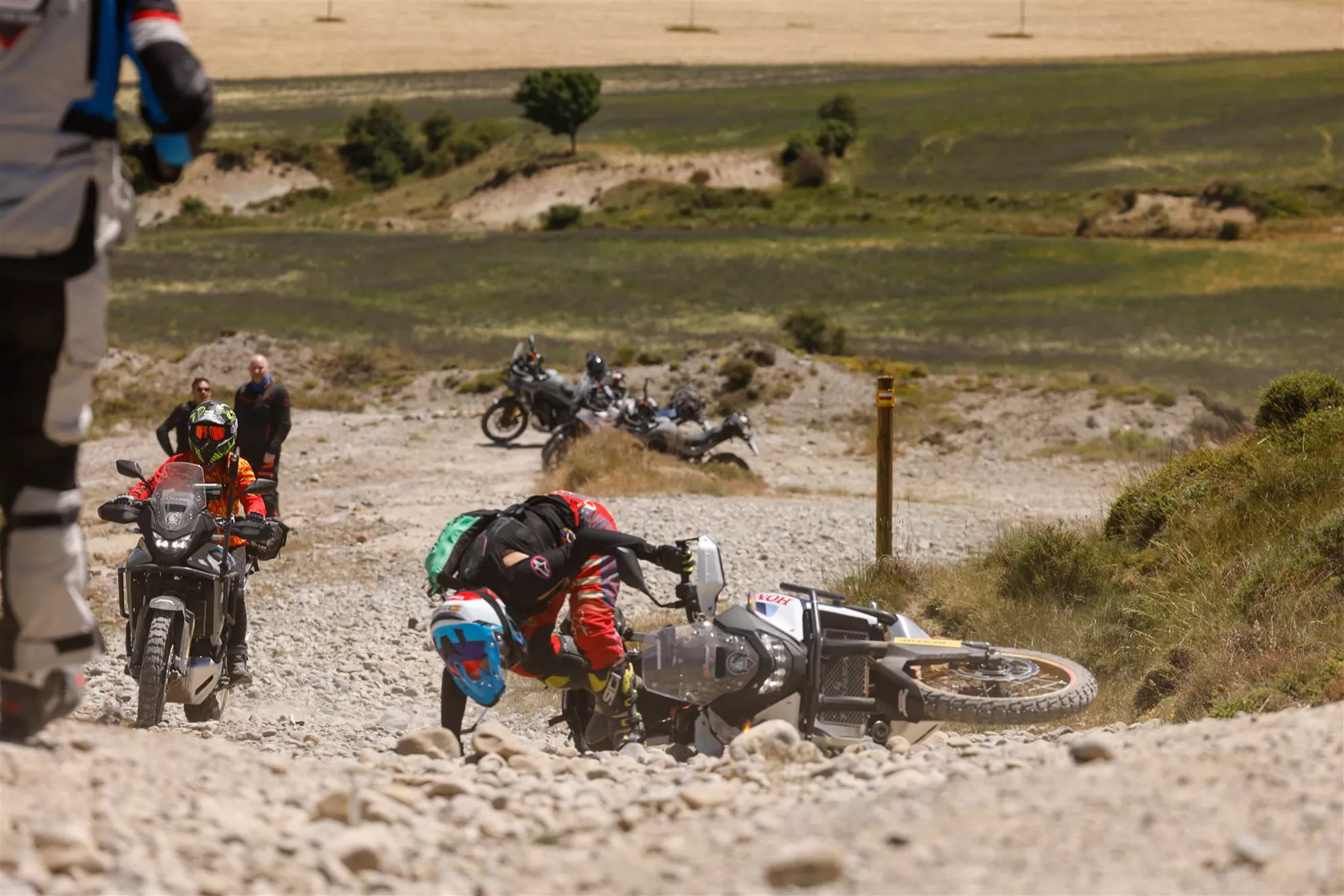
After training at the Nasser Racing Camp, it's finally time for the first real stage. About 70 kilometers separate us from the lunch stop, and we leave the site at our own pace. The first section leads straight back off-road. And there, I learn my first important off-road lesson faster than expected. Going into a corner a bit too ambitiously, I carry too much speed in and, seconds later, find myself lying flat out in the Spanish dust. Luckily, it stays a brief encounter with the ground: brush off the dust, quickly check that all body parts are where they should be, and get back on. A reassuring feeling comes from the excellent organization of the tour. The marshals and fellow riders are ready at any time to stop and help if questions or problems arise. In addition, a medical truck and a mechanic with a fully equipped workshop trailer permanently accompany us. Should a Transalp ever take an involuntary trip to the ground, it can be repaired right on the spot. For me, it stays at this one slip until the lunch break. And that's perhaps the biggest difference between road and off-road: mistakes happen noticeably faster here. What matters is what you take away from it. Already after the first few kilometers, I learn to approach corners on loose surfaces with more calm, better visual focus, and a more precise choice of line. Here, too, the advantage of the E-Clutch shows itself again. While my head is busy processing all the new impressions, part of the coordination workload disappears. I don't have to constantly think about whether I'm pulling in the clutch at the right moment or stalling the engine, and can instead concentrate on the real challenge: reading the terrain correctly.
Between Gravel, Tapas, and First Lessons Learned
At the lunch stop, it becomes clear that even the best protective gear can have its small weak points. The scrapes that snuck in along the sides of my protector vest are thoroughly treated by the medical team. Luckily, my first shining performance leaves me with nothing more than a few superficial souvenirs. At 30 degrees in the shade, the tapas and an ice-cold Coke afterwards taste even better. The first layer of dirt decorates our boots, and the conversations revolve around just one topic: the first real off-road kilometers. I also learn another lesson after just a few kilometers: when it comes to gear, you shouldn't compromise in the off-road sector. My Arai Tour-X5 with visor is an excellent choice on the road and for touring, but in the fine dust of the Spanish tracks, dirt keeps getting behind the visor and into my eyes. My contact lenses protest accordingly loudly. Switching to classic motocross goggles brings an immediate, noticeable improvement. My tip for anyone planning similar tours: go straight for off-road goggles and save yourself the unnecessary hassle. What stands out especially in the conversations around me: the consensus in the group is clear. Although many participants arrive with very different levels of off-road experience, riding on loose surfaces feels surprisingly quickly accessible in this environment. The combination of professional coaching, well-thought-out organization, and the good-natured, nimble Honda Transalp 750 ensures that even demanding sections don't feel intimidating but rather leave you wanting more. Of course, the first half-day takes its toll. The unfamiliar movements on the bike demand a lot from body and mind, and the dust slowly works its way into every crevice of the gear. During the course of the training, I personally develop an increasingly lush, sand-colored beard, which brings a smile not just to my own face. Together, we laugh about the first minor spills and look forward to the second stage of the day. This eventually leads us to our hotel for the night: a lush green golf club in the middle of a picturesque valley. After hours on dusty tracks, a shower feels almost luxurious. The dirt disappears from our hair, the muscles finally relax, and even the last small cliques among the participants continue to dissolve. What makes the Honda Adventure Roads special becomes clear not only on the bike: although everyone can ride the route at their own pace and completely alone, nobody remains an outsider. During breaks, at dinner, and by the pool, warm conversations spring up between people who, in some cases, didn't even know each other's names that morning. Individual riders slowly turn into a community, bonded by shared experiences and the realization that stepping out of your comfort zone in the right company can be truly addictive.
Day 2: Where It All Comes Together
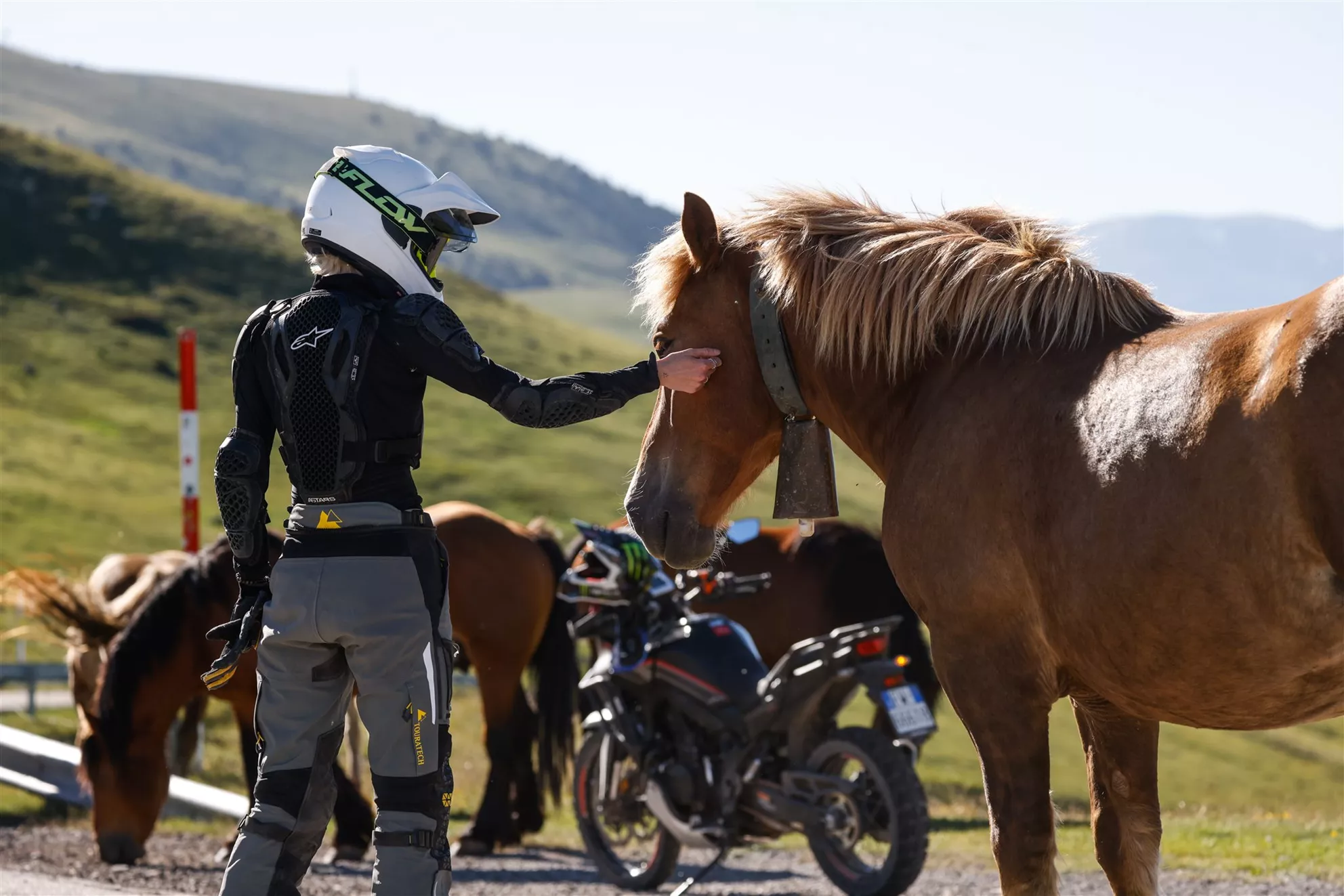
The next morning, we gather again at 8 a.m. for the daily briefing. The mood is relaxed, the excitement of the first day has faded. Instead, the first tired muscles are making themselves known. We're told that the next off-road section awaits us after just a few kilometers, and that we should take it easy at first. After all, our bones feel a little heavier than the day before, and the morning air is still cool. This feeling doesn't last long, though. The temperature soon climbs back up, and we sweat in our jerseys as road and gravel wind their way through the impressive Spanish landscape. By now, the Honda Transalp 750 feels almost second nature. The model update for 2026 fits the character perfectly: the new front design looks more modern, the revised display provides all the important information at a glance even while standing on the pegs, and the E-Clutch increasingly shows why it plays to its strengths especially on trips like this. As the route increasingly moves up and down and the climbs become more demanding, I notice that I'm thinking less and less about the bike itself. The E-Clutch doesn't take away any task that's fun. It only takes away work that costs attention. I still shift gears myself, still decide on gear choice and pace, but I have to deal with clutch work noticeably less often. This leaves more capacity for looking ahead, body positioning, and finding the right line. Soon, the next challenge awaits us. Ahead of us lies a rather steep and, above all, loose climb. The task is simple: ride up the switchbacks and reach the top. Before I start, Kirian Mirabet gives me one last tip: "Take it easy, Amelie. This will be a little more tough." Inwardly, I brace myself for spinning rear wheels, unplanned bursts of throttle, and the odd unplanned trip to the ground. But as I set off, something unexpected happens. I stop thinking about every single movement. My body works together with the bike. The Transalp moves beneath me, the rear repeatedly drifts slightly over the loose surface, and I react to it intuitively instead of tensing up. For the first time, something like a flow state emerges. The mountain no longer feels like an obstacle, but like a dance partner. A little later, I'm the first to reach the top. Of course, this isn't a competition. Still, this moment feels amazing. Less than two days ago, I was still rolling unsteadily through cone courses; now I move on loose surfaces with a confidence that surprises even me. Perhaps that's exactly the greatest strength of this concept. The Honda Adventure Roads don't turn a rookie into a pro overnight. But they create an environment in which progress becomes noticeable incredibly fast. After a short interview about the last section and my impressions of the E-Clutch, we continue on.
At first, everything goes just as splendidly as before. Five minutes. Ten minutes. Fifteen minutes. Then a message appears on my Tripy GPS: "Climb ahead. Stay to the right." Another climb rises up ahead of me. Steep. Loose rubble. Exactly the kind of section that demands respect. I take a deep breath, stay to the right as instructed, and clear the first section without any problems. In my head, I'm already celebrating and mentally patting myself on the back. A decision that comes back to bite me seconds later.
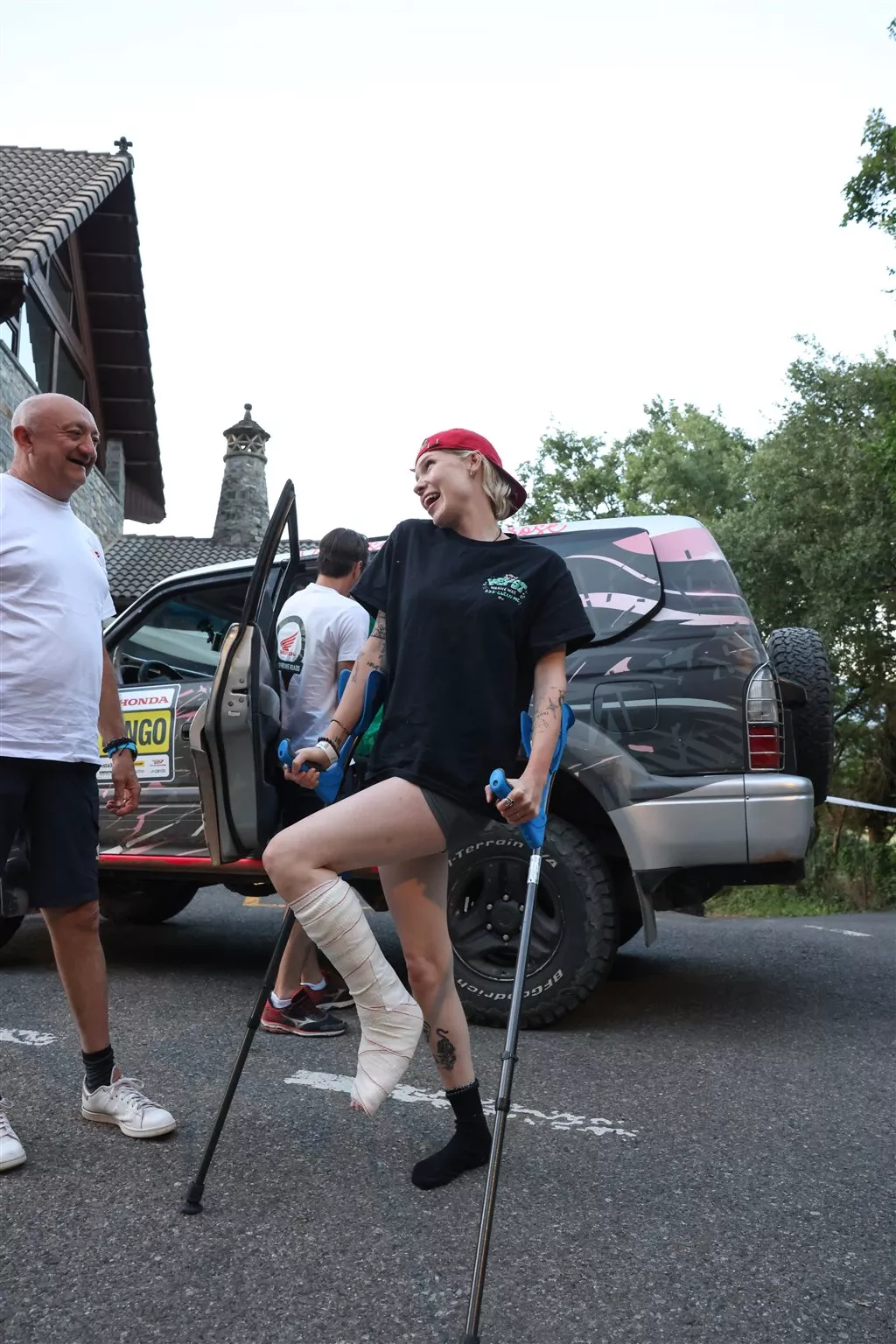
One of the most important lessons in motorcycling is that every millisecond of lost concentration can have consequences. My front wheel hits a pile of loose rocks, I instantly lose control, and crash. I don't have enough time to jump clear, and the Transalp presses my foot into the ground at an unfavorable, decidedly unhealthy-looking angle. Even before the bike has completely gone down, I know something is wrong. I roll onto my back and stay down for a moment. What happens next says more about the Honda Adventure Roads than any presentation or press kit ever could. Within moments, other participants stop next to me and offer water, help, or simply some shade. Daniela (a fellow rider) and two marshals immediately take care of me and even stretch a towel above me so I don't have to lie in the blazing midday sun. Shortly after, the medical team arrives, examines my foot, and gives me a pain-relieving inhaler - one I wouldn't mind having at home, too. Shortly after that, my boot is carefully removed. A fracture can't be ruled out, so I head to the hospital in the medical truck. Despite the circumstances, even this ride sticks in my memory as a positive one. Maybe it's because old Toyota Land Cruisers are among my favorite vehicles, maybe it's the painkillers and the conversations they spark. Probably a combination of both. At the hospital, Honda crew member and doctor Clément accompanies me through all the examinations and makes sure the findings are correctly interpreted. That turns out to be worth its weight in gold, because at first we're sent off with a diagnosis of a sprained ankle. A short while later comes the correction: a metatarsal bone is broken, and I need a cast. Later, sitting in the back seat of the truck with my foot wrapped up, enjoying the evening sun on the way to that day's destination, I'm above all relieved. No surgery. No worse injuries. When we finally reach the sprawling campsite with its bungalows and natural stone buildings, however, another surprise awaits me. Participants, organizers, marshals, videographers, and even the people running the camp are standing in front of the restaurant, greeting me with applause and a standing ovation. Anyone who knows me knows that I'm not usually quick to get emotional. In this moment, though, tears well up in my eyes anyway. I've never experienced this kind of team spirit on a motorcycle tour before. All evening long, I'm hugged by participants and crew members, asked how I'm doing, and made to laugh again and again. A day that could have ended my adventure instead turns into one of the most impressive moments of the entire trip - maybe even of my life. With good food, plenty of jokes about what happened, and a group of people who feel like old friends after just two days, a day I hope I'll never forget comes to a close.
Day 3: The End of the Journey, Not the Story
The last day of the Honda Adventure Roads begins a bit differently than the previous ones. While the other participants start up their bikes and prepare for the final stage towards Toulouse, I take a seat in the passenger seat of one of the support vehicles. After the events of the previous day, this time I'm left with only the role of spectator. At least in theory. Because even from inside the van, the magic of this trip can still be felt. The route once again winds through a landscape that, over the past days, has continually shifted between rugged, wild, and almost impossibly picturesque. Behind every corner, new views await of valleys, mountains, and small villages that look as though they've fallen straight out of a travel guide. Add to that the company of Philippe, my driver, who surprisingly quickly turns what could have been a frustrating drive back into an enjoyable part of the adventure. The burning coals I'm sitting on as I watch the bikes ride off in the morning gradually turn into warm massage stones. Of course, I would have preferred to ride myself. At the same time, I become aware of just how lucky I've been despite the broken metatarsal. Our destination is a beautiful lake not far from Toulouse, where the farewell dinner takes place. Since we arrive a bit earlier than the riders, I take the opportunity to film the last arrivals and welcome the group. It doesn't take long before the first Transalp appears, and the familiar faces gradually emerge from under the helmets. You can tell from the participants that the past few days have left their mark - though not in the way one might now assume. Dust, sunburn, and at the same time that grin and sparkle in the eyes that you only get after experiencing something that has shaken you out of the same old daily routine in the best possible way. Before the meal, everyone gets the chance to shower. Afterwards, we gather on a terrace right by the water. The bikes now stand still, the adventure is practically over, and perhaps that's exactly why the conversations become even more enjoyable than on the previous evenings. We look back over the past days, share our favorite moments with each other, laugh about small mishaps, and exchange contact details. Within just a few days, real friendships have grown out of a group of participants. To finish things off, one last surprise awaits: a huge Honda cake that almost looks too good to cut into. Almost. As we eat together, it becomes clear to me that the Honda Adventure Roads are indeed more than just an ordinary motorcycle tour with a catchy name. The route is spectacular. The landscape impressive. The organization runs perfectly. But what truly stays with you are the people and the experiences you share with one another. A little later, we're taken to the airport. Helmets are packed away, final hugs are given, and one goodbye follows another. I've never been a big fan of farewells. But this time, it's especially hard for me. Maybe because I'm saying goodbye to people I've truly taken to heart. Maybe because I'm saying goodbye to some of the most beautiful roads and gravel tracks I've ever seen. Or maybe because I've discovered something that had been missing until now. In the end, the Honda Transalp 750 and the Honda Adventure Roads don't just answer the question of whether the E-Clutch works off-road for me. They also answer a completely different question: why are people so passionate about adventure biking? Because it's not just about reaching a destination. It's about the moments in between. About the small victories, the mistakes. The people who help you when something goes wrong. About places you would otherwise never have seen. And about that feeling when bike, landscape, and rider suddenly merge into a single motion. I come home with a broken metatarsal. And at the same time, with considerably more than I brought with me.
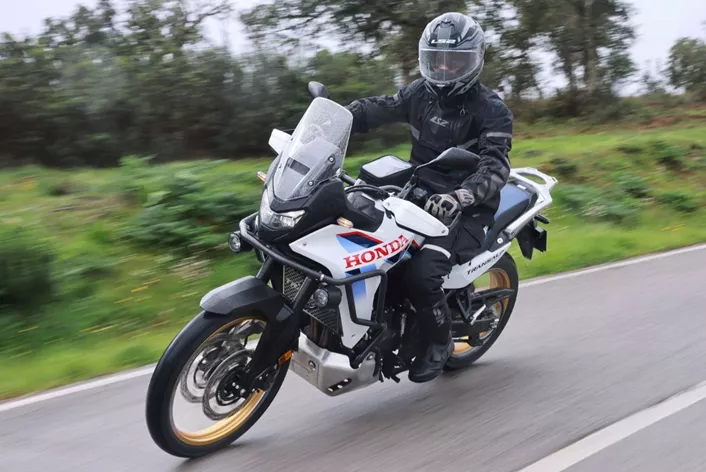
- How much does a Honda XL750 Transalp E-Clutch cost?
- Here you will find an overview of the price level of new and used motorbikes!
More from 1000PS Magazine
Honda Adventure Roads Pyrenees 2026 Images
Source: 1000PS


