How much does the HJC RPHA 72 Carbon cost?
According to the manufacturer's RRP, the HJC RPHA 72 Carbon costs 559.90 euros as Carbon Solid and 599.90 euros in the graphic variant. Included in the scope of delivery is already the Pinlock 120 XLT lens DKS642, plus the integrated sun visor and the titanium double-D closure as standard. A communication system is not included; the prepared Smart HJC modules cost extra.
How heavy is the HJC RPHA 72 Carbon?
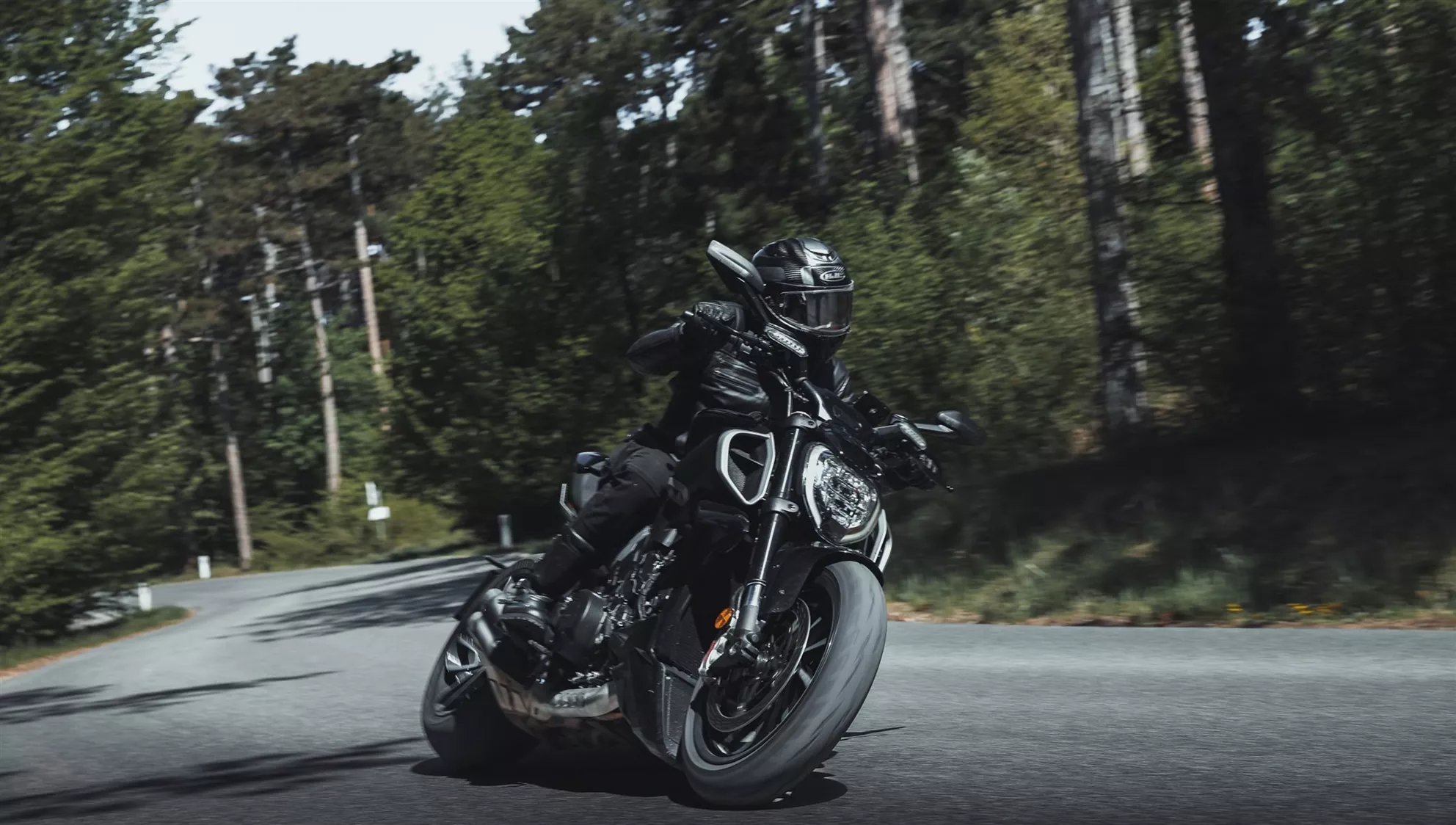
HJC states around 1,450 grams in size L; our test helmet in size M weighed, as measured, 1,404 grams. Compared to the RPHA 71, the new helmet thus saves about 150 grams. On long stretches this noticeably relieves the neck and shoulders; during a shoulder check the helmet stays neutral and builds up hardly any inertia. While riding it even feels lighter than the scale would suggest.
What is the fit of the HJC RPHA 72 Carbon like?
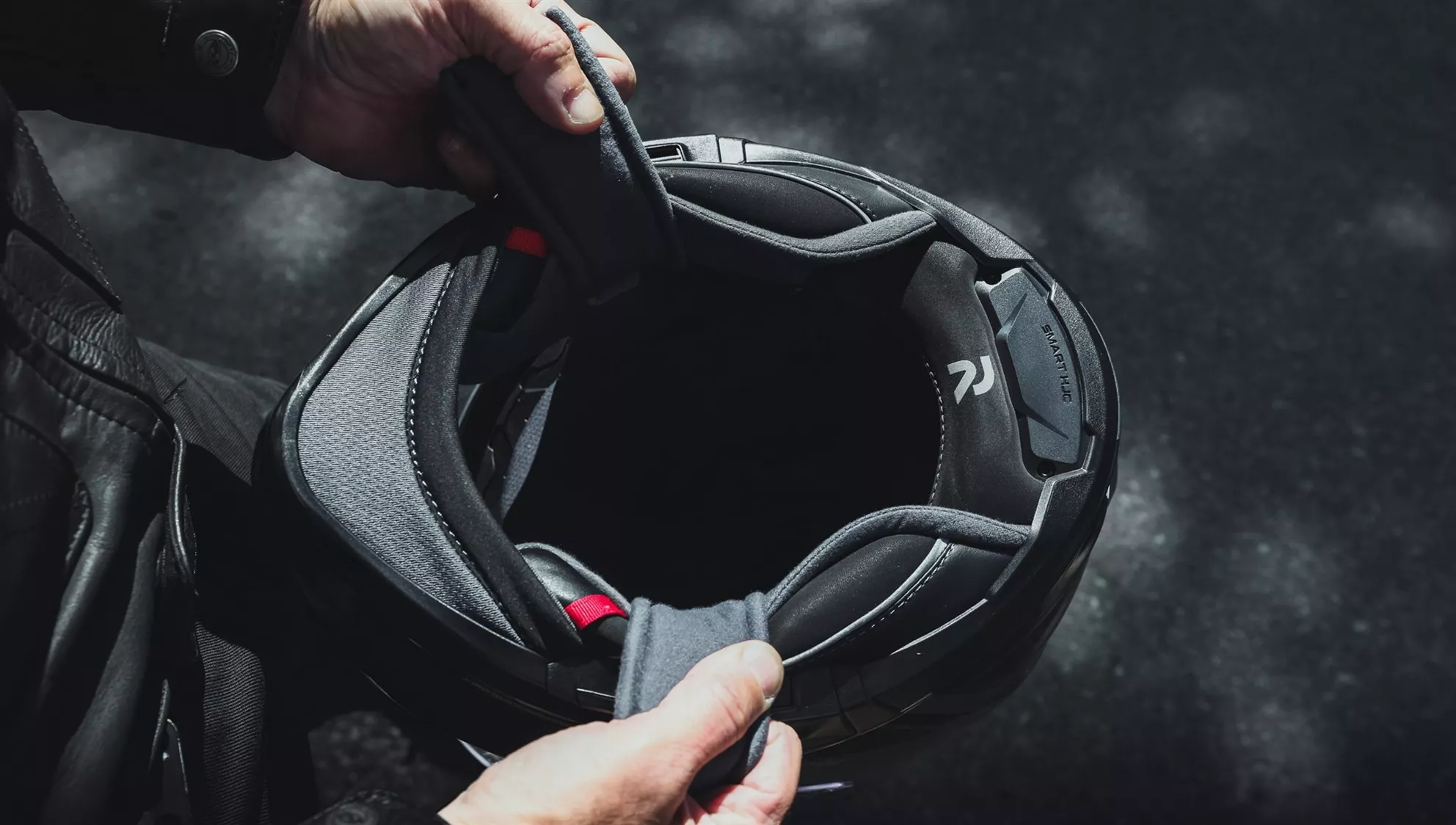
The RPHA 72 Carbon sits firmly and stably without pressing uncomfortably, and distributes sizes XS to 2XL across three outer shells. Fine-tuning is done via the padding thicknesses: on our test helmet in size M we swapped the stock 12-millimeter head pad for the 7-millimeter variant, because NoPain's head shape lies between medium- and long-oval - unlike previously with the RPHA 70, this swap wasn't absolutely necessary this time though. On first putting it on, the helmet feels unusually tight due to the new aero cuffs; you have to deliberately push the interior liner outward with the straps. Glasses temples can be threaded in without problems, provided the basic fit matches your own head shape.
How loud is the HJC RPHA 72 Carbon?
The RPHA 72 Carbon is not the quietest helmet in its class; subjectively it's even a bit above the older RPHA 70. The more compact carbon construction with a thinner outer shell likely plays a role here. What matters in everyday use, though, is the type of noise, and here the result holds up: no whistling, no unpleasant pressure frequencies, and hardly any turbulence around the ears. For a sportily oriented touring helmet, the insulation thus operates at a very good level.
Which communication system fits the HJC RPHA 72 Carbon?
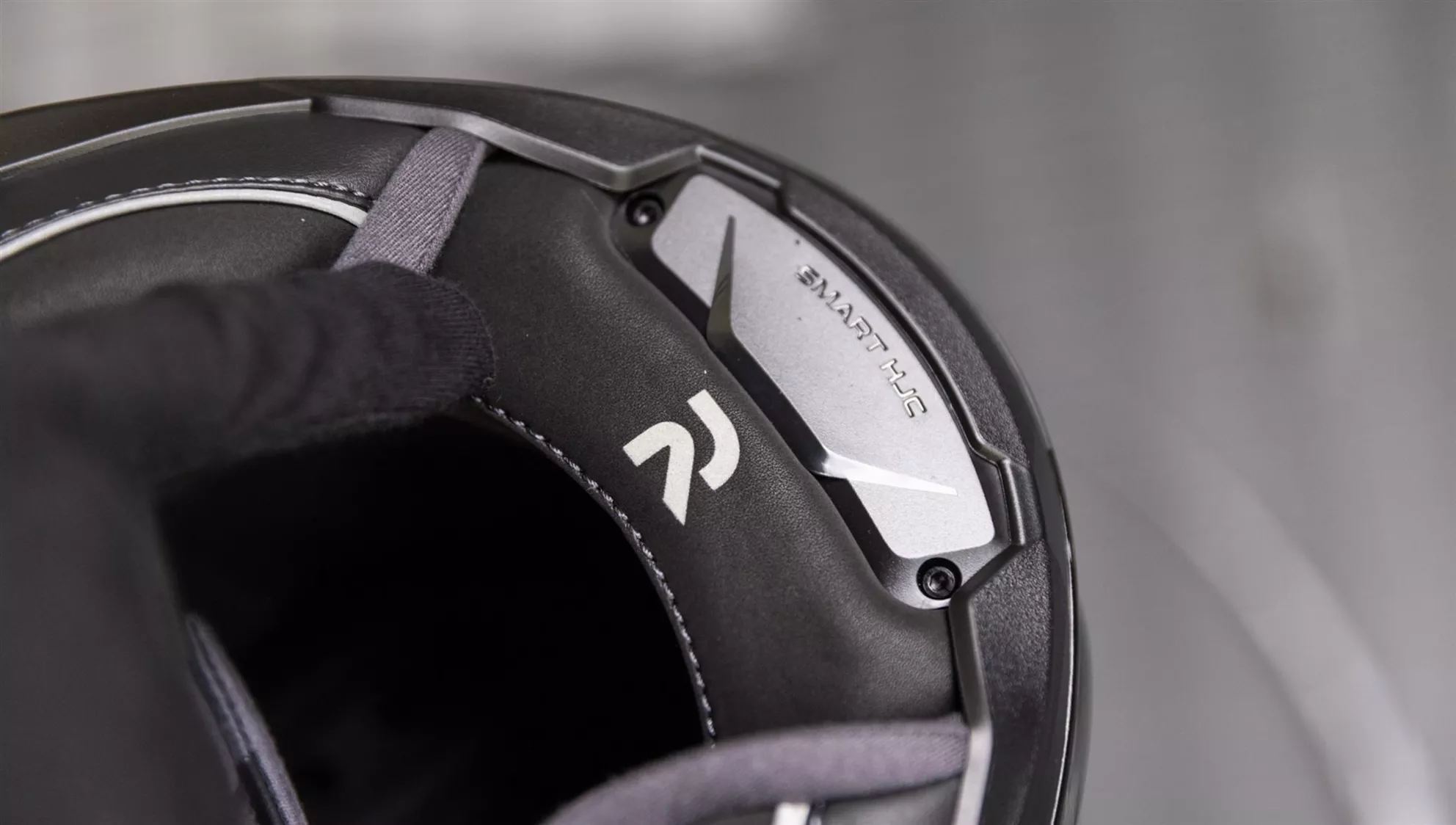
The helmet is prepared from the factory for the separately available Smart HJC systems 11B, 21B, and 50B. The recesses are so cleanly solved that the helmet feels finished even without a built-in intercom, and the speakers don't press on the ears - for us one of the best preparations on the market. There is also exceptionally much space between the mouth and chin bar, which benefits motovloggers with a microphone and action cam mount.
What is the difference between the HJC RPHA 72, RPHA 71, and RPHA 70?
The RPHA 72 replaces the RPHA 71 and closes the weight gap that had kept many touring riders from switching. It is about 150 grams lighter than the 71, the overall volume shrinks by about 4 percent, drag drops by 19.7 percent, and lift by 6.2 percent. Instead of four outer shells there are now only three; five EPS cores with different densities now handle the precise size adaptation. Anyone switching from the RPHA 70 will especially notice the higher running smoothness and the higher-quality workmanship; acoustically only, the old 70 remains subjectively a touch quieter.

&width=72&height=72&bgcolor=rgba_39_42_44_0&mode=crop "Author: NoPain")