&width=72&height=72&bgcolor=rgba_39_42_44_0&mode=crop "Author: nopain")
For most riders, they are truly indifferent to the type of chain mounted on their motorcycle in everyday life. When the stock OEM chain wears out, they often opt for the same specification again—simply because it works and requires no further thought.
However, in the tuning scene, things are a bit different. Here, riders often switch to narrower and lighter chains, typically in combination with new sprockets. The rationale is clear: less rotating mass should lead to more immediate responsiveness and better performance.
In practice, however, the picture is more nuanced. A lighter weight doesn't automatically translate to better overall performance. With narrower chains, the stress on each component increases, which can lead to accelerated wear—not just on the chain itself but also on the sprockets. Additionally, with increased mileage, friction often rises as well, gradually negating any performance gains from the reduced weight. The result: more maintenance, higher costs, and benefits that diminish over time.
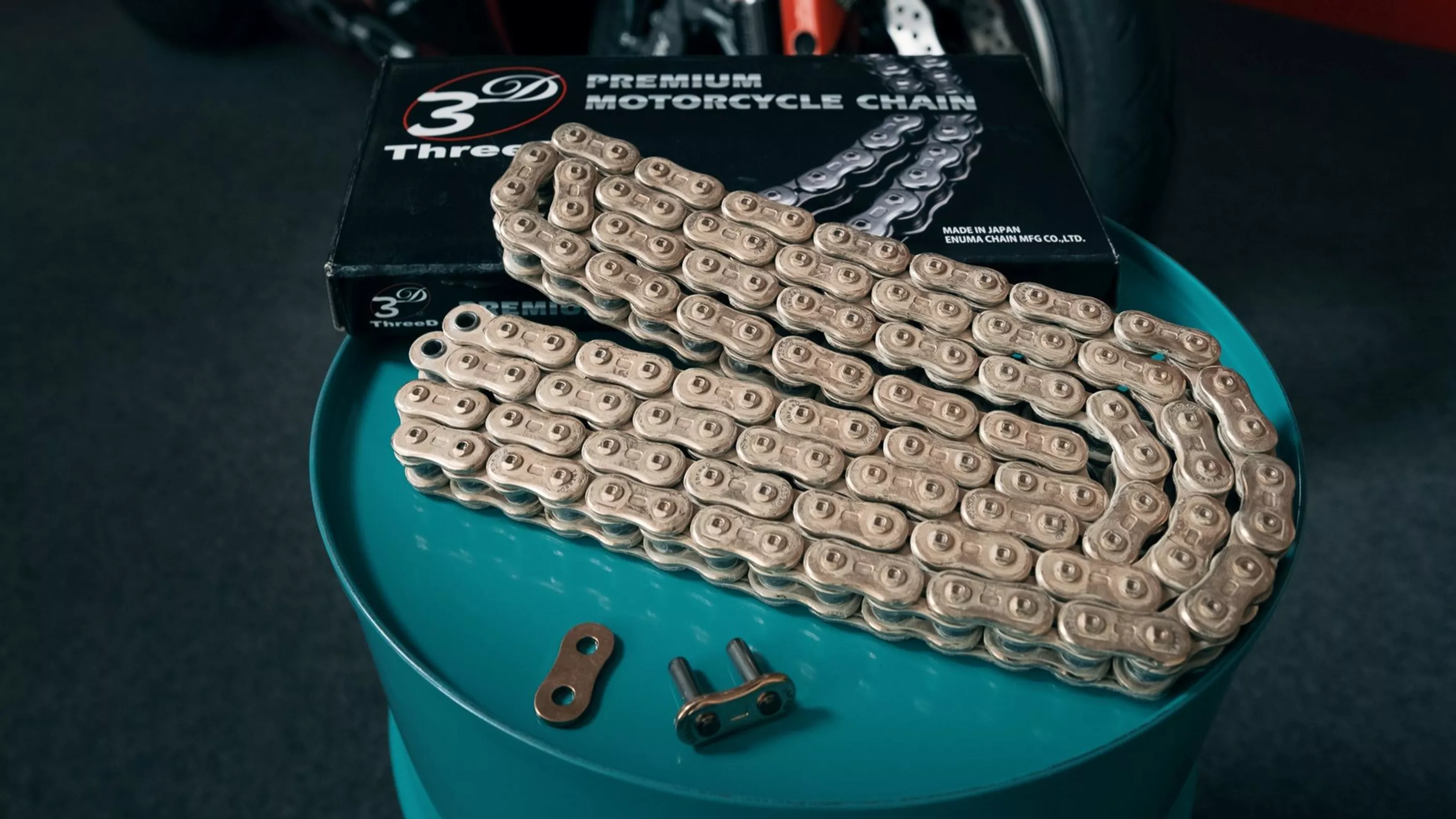
Especially for high-performance motorcycles, a different approach is advisable. Instead of opting for a lighter but potentially less durable solution, investing in a high-quality chain of the manufacturer's recommended size is worthwhile. This preserves load capacity while enhancing both efficiency and longevity.